
Do you know what this lovely objet is?
~~~~~~~~~~~~~~~~~~~~~~~~~~~~~~~~~~~~~~~~~~~~~~~
~~~~~~~~~~~~~~~~~~~~~~~~~~~~~~~~~~~~~~~~~~~~~~~
How about now?

~~~~~~~~~~~~~~~~~~~~~~~~~~~~~~~~~~~~~~~~~~~~~~~
~~~~~~~~~~~~~~~~~~~~~~~~~~~~~~~~~~~~~~~~~~~~~~~
Are you stumped? I’ll give you a clue.

Like a lot of the world’s best stuff, it comes from Italy. The objet under discussion actually comes from Venice.
Venice is home to many marvels. One of my favorites among them all is the Fortuny Museum.

If you are lucky enough someday to find yourself in Venice with a little extra free time, then consider yourself fortunate indeed! If this unusual scenario is yours, then you owe it to yourself and to the gods of fortune to get off the typical turista track and hightail it over to this museum in this fabulous old palazzo. Trust me, you’ll be glad you did.
For there you will find lots of this stuff.
Lots and lots of it. It is a textile.
You will find it in dresses.
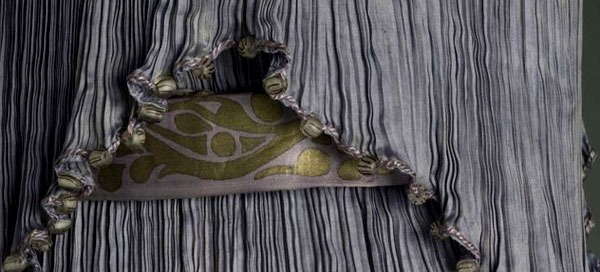
Lots and lots of very amazing dresses:
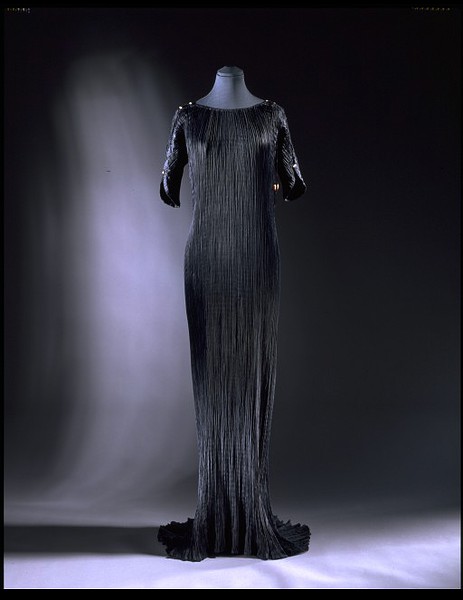


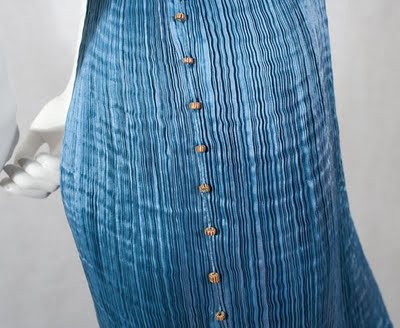


And all of it was designed by this one man, Mariano Fortuny.

Are you familiar with the amazing artistic career of Mariano Fortuny y Madrazo (1871-1949)? If not, you should be! Let’s get to work!

As you can see from this portrait, Fortuny was very “artistic!” Quote unquote! His contemporaries considered him to be a Renaissance man, for he was astoundingly creative and versatile, working in many media.
Fortuny was, like all of us, influenced by the contemporary styles and designs of his day. These fashions were informed by the latest aesthetic and functional concepts promoted by reformers of the applied arts, such as William Morris and Edward Burne-Jones. Leaders of the Arts and Crafts movement, the theories of these men and others called for a modern style freed from the restraints of convention.
Fortuny was born in Spain, the son of the painter Mariano Fortuny y Marsal. His mother was the daughter of another famous painter, Raimundo de Madrazo y Garreta, so Fortuny came by his artistic abilities naturally.
Sadly, Forturny’s father died when he was only three, but his mother supplied him with an extraordinary childhood. She moved her family to Paris after her husband’s death in Spain and in 1889 the family moved again, settling finally in Venice. Lucky Venice!
Fortuny’s mother was an inveterate collector of rich, oriental textiles and had collections of them from the various shops she had visited throughout Europe. Her son spent his childhood around these gorgeous fabrics and adopted his mother’s love for them. It is said that as a child he amused himself by tinting various fabrics to see what effects he could achieve.
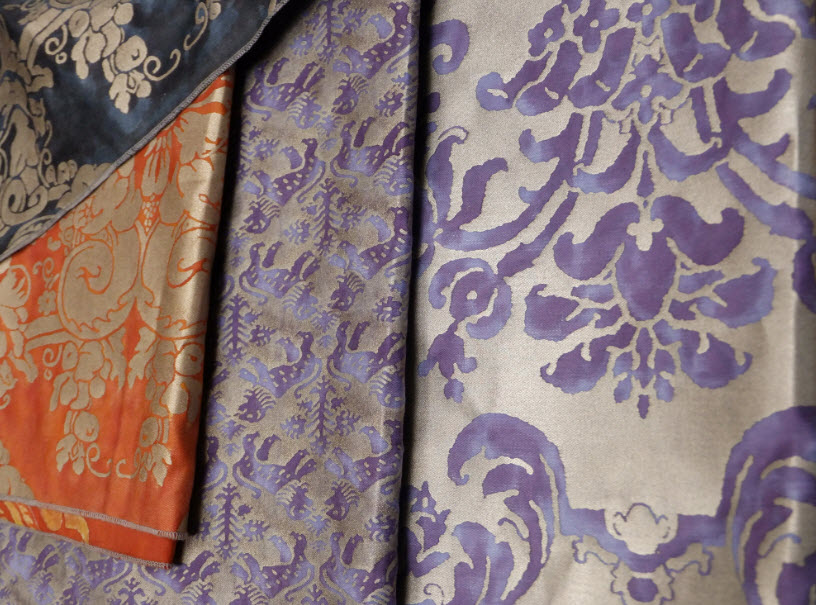
As Fortuny reached his maturity, it became apparent that he was an extremely gifted person with many artistic abilities. He was successful in an astounding number of media, including painting, photography, sculpture, architecture, printmaking and even theatrical stage lighting. His creativity led him to register and patent more than twenty inventions between 1901 and 1934.
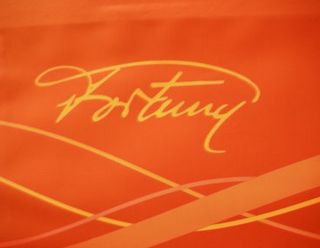
The world remembers him mainly, however, for his contributions to fabric design and for a few fabulous garments. He opened his house of couture in 1906.

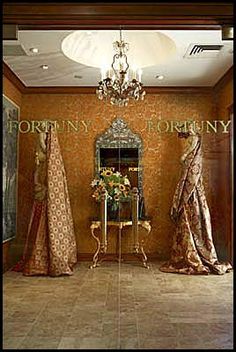
Fortuny is best remembered for his dress designs, which were fabricated from an innovative pleated silk, produced by machines designed and patented by the artist himself. Modern eyes will see Fortuny’s fabric and usage as a forerunner to Issey Miyake’s designs.
The artist:


These finely pleated fabrics fall to the floor in long vertical lines, while closely following the sleek figure below. This is the Fortuny manner. When you hear someone refer to a Fortuny dress, this is what they mean.


It is a lot of fun to have a Vogue Magazine clipping from 1912 which discusses the current trend of all things Fortuny in America.

It is almost impossible to read the Vogue article here, but you can find it online here: http://www.oldmagazinearticles.com/Mariano_Fortuny_Article_Knossos_Scarf_Vogue_Magazine_1912. Do you take time everyday to thank the gods of fortune for the internet? I do! I really do.
Vintage Fortuny gowns have labels like this:

and this:

Here’s a vintage Fortuny, with one of his jackets on top:

And another:

Every little once in a while, a Fortuny style gown is resurrected for current fashionistas:


Fortuny devoted his life to “Art” with a capital A, and was not only an accomplished dress and fabric designer, but he excelled in stage design as well general interior design.


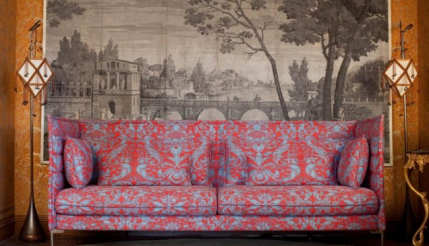


Fortuny invented methods of textile dyeing and printing, which allowed him to reproduce the depth of color and beauty of ancient brocades, velvets, and tapestries. In 1919, he he moved his textile workshop to a former convent on Giudecca, which is one of the many islands in the Venetian lagoon.

Luxe fabrics such as this one are signatures of Fortuny. The rich color is immediately suggestive of Venice in particular and Italy in general.
Here’s another:
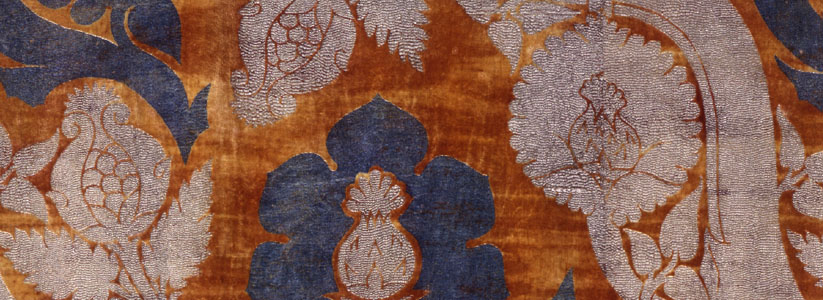
And another:

I could go on like this forever:
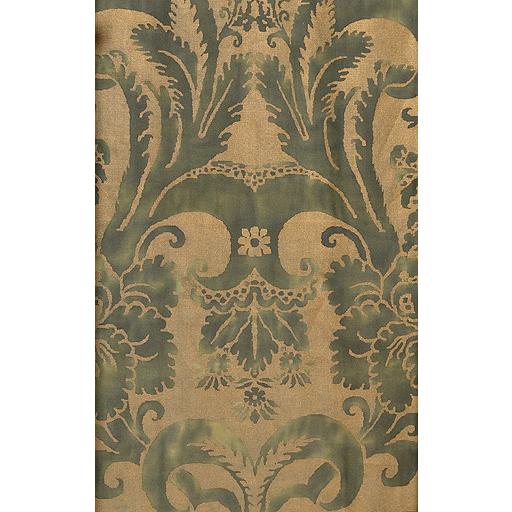
And ever:
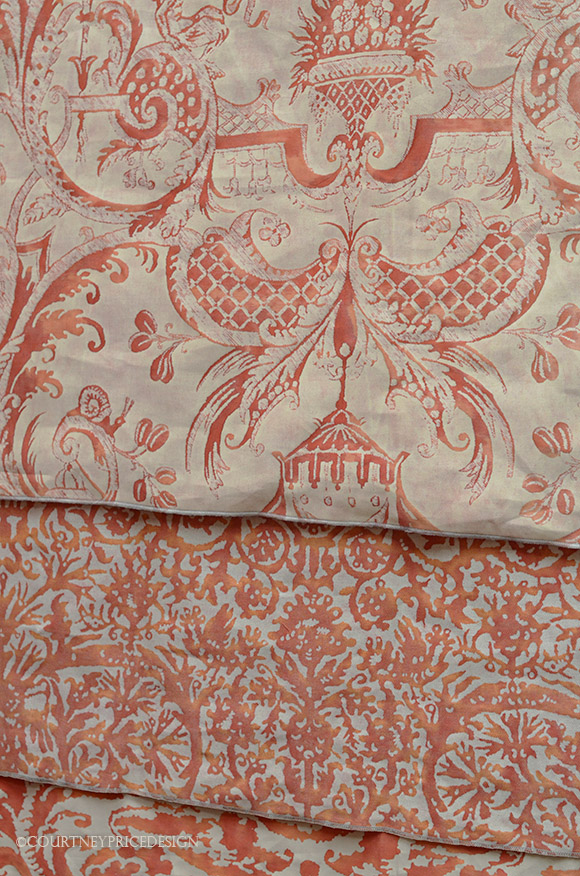


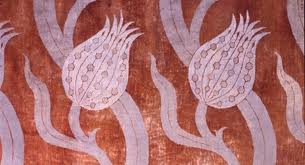
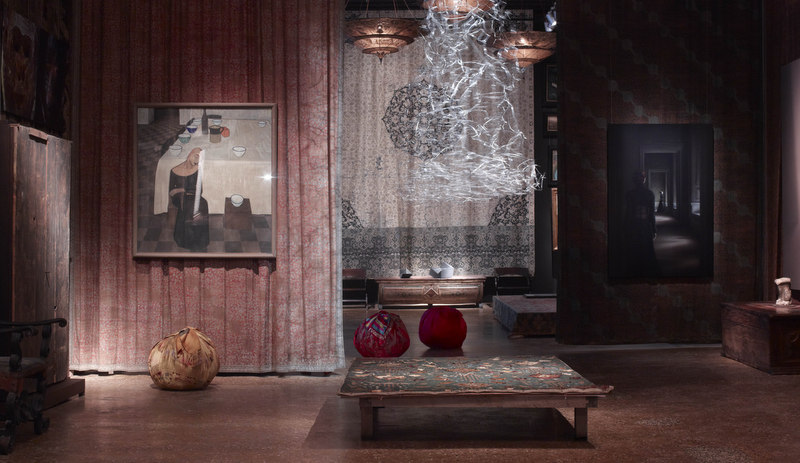
Here is another look at the Fortuny Museo:
A vintage shot of the artist in his library in his Venetian palazzo:

As if all of the above was not enough, Fortuny also created elegant lamps which diffused subtle light through opalescent silk shades, stretched over delicate wire form. The silk was hand-painted with gold motifs inspired by Oriental art and as a finishing touch, the lamps were decorated with glass beads and silk cording.
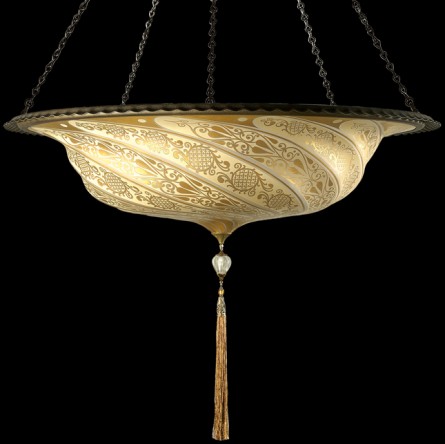
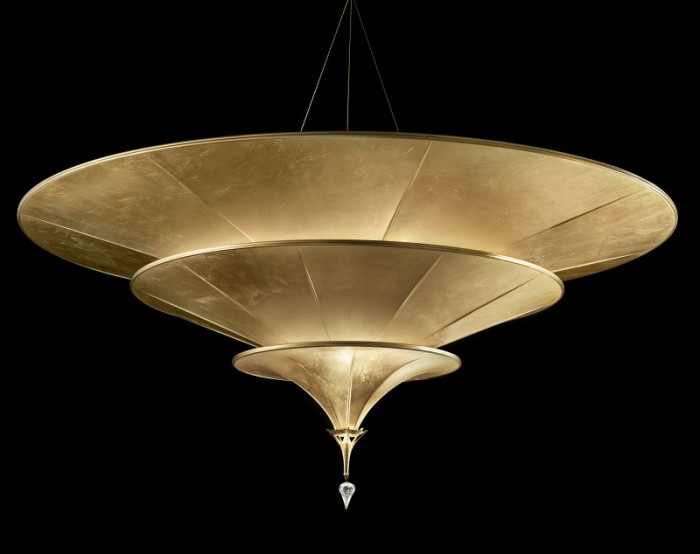
Here are two small lampshades for wall sconces.

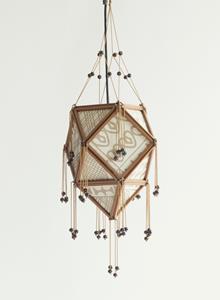
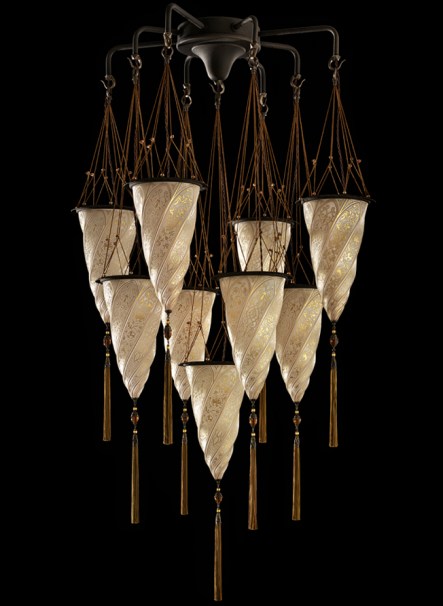
Fortuny’s life and work was a source of inspiration to the French novelist Marcel Proust. Not bad!
 get back, lauretta!

I’d heard of Fortuny but had no idea what a fantastic life he’d had so thanks for such a great blog post! I must find out more! Cheers!
Thank you! I am glad you enjoyed my post! Fortuny is one of my favorites of all time!