On a recent gorgeous afternoon, before my accident, I happened to be in Piazza Santa Maria Novells and the sky was so blue, the sun so warm but not hot like summer, I stopped to enjoy the experience of just being in this lovely space. While there I couldn’t help but notice this darling little bambina and capturing her interest in one of the only patches of green grass in the city. Children and green grass on a warm day: gorgeous! I just wish she could have gotten on it.
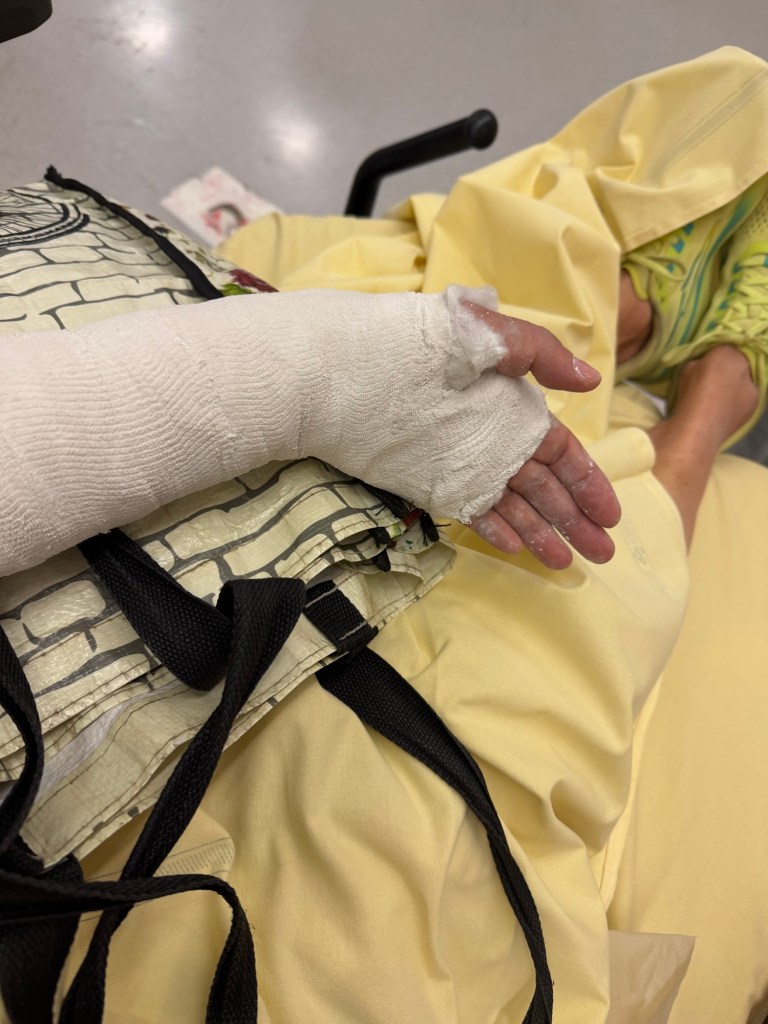
Doing my absolute best to hold my left forearm completely still and elevated so I hopefully can avoid surgery on it, my mind wanders.
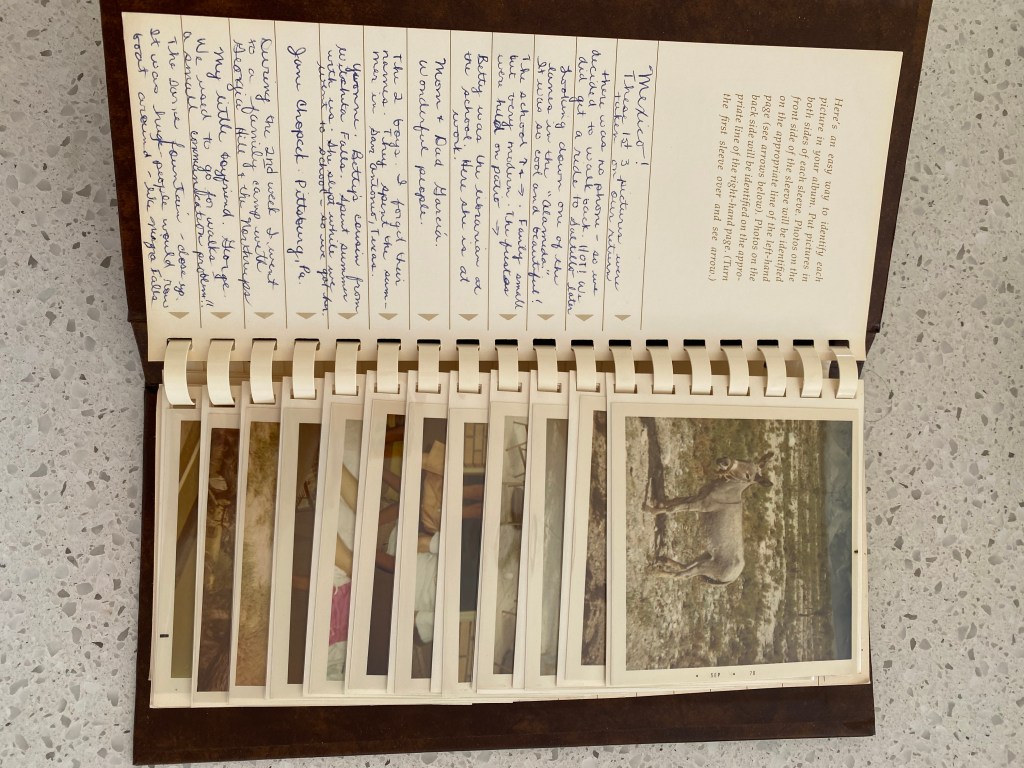
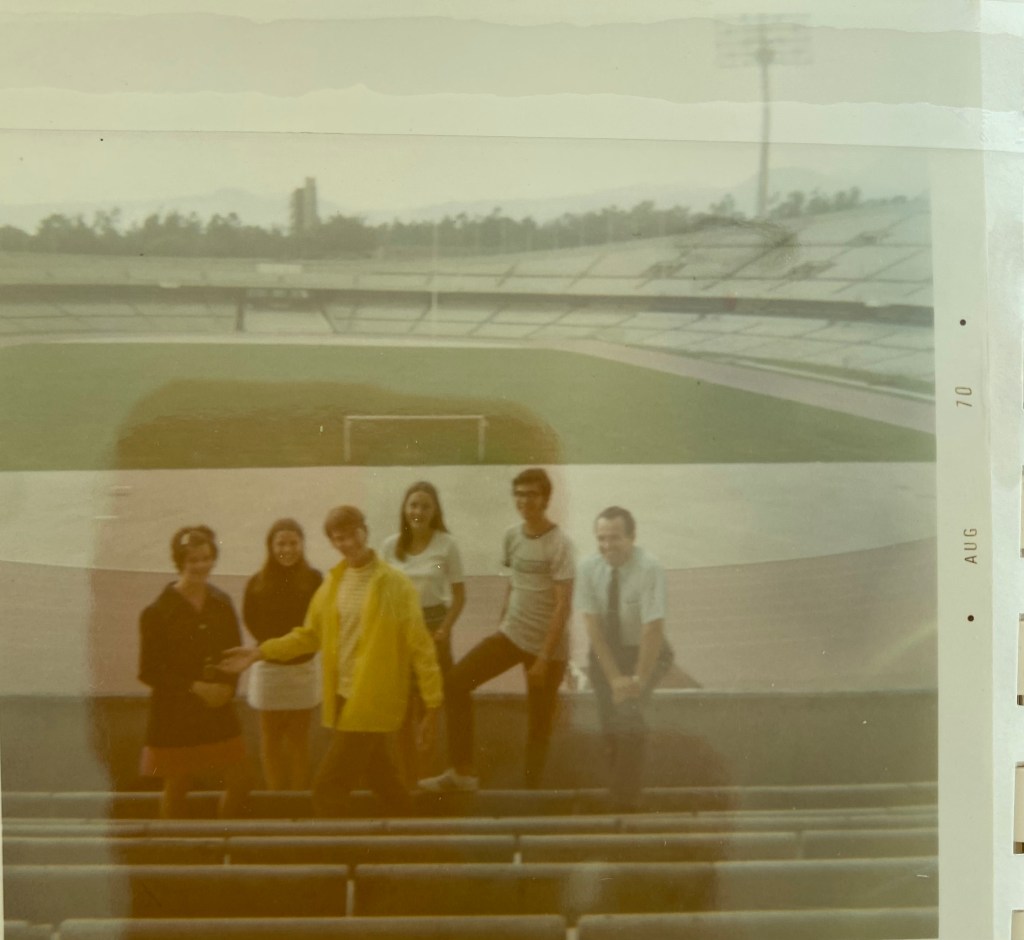
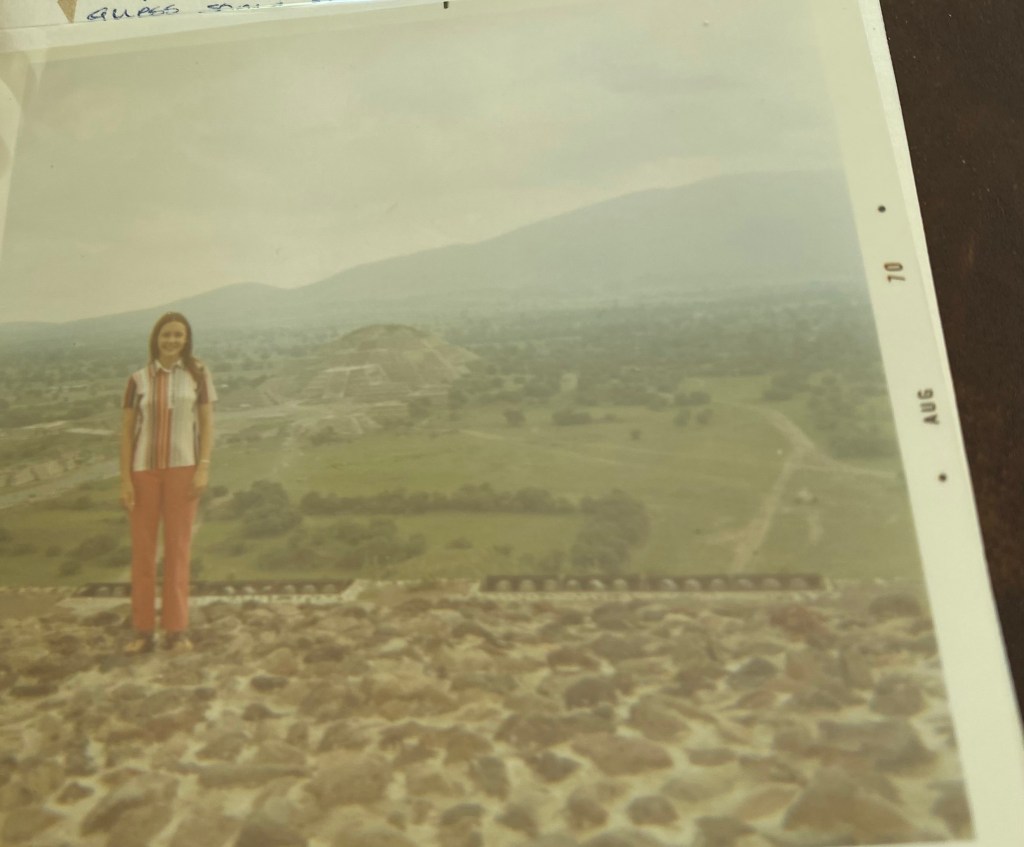
I remember Mexico! It was fabulous, and as always filled with ups (climbing atop an Aztec temple) and downs (so homesick I thought I would perish).
Can’t write much more, I’m typing one handed!
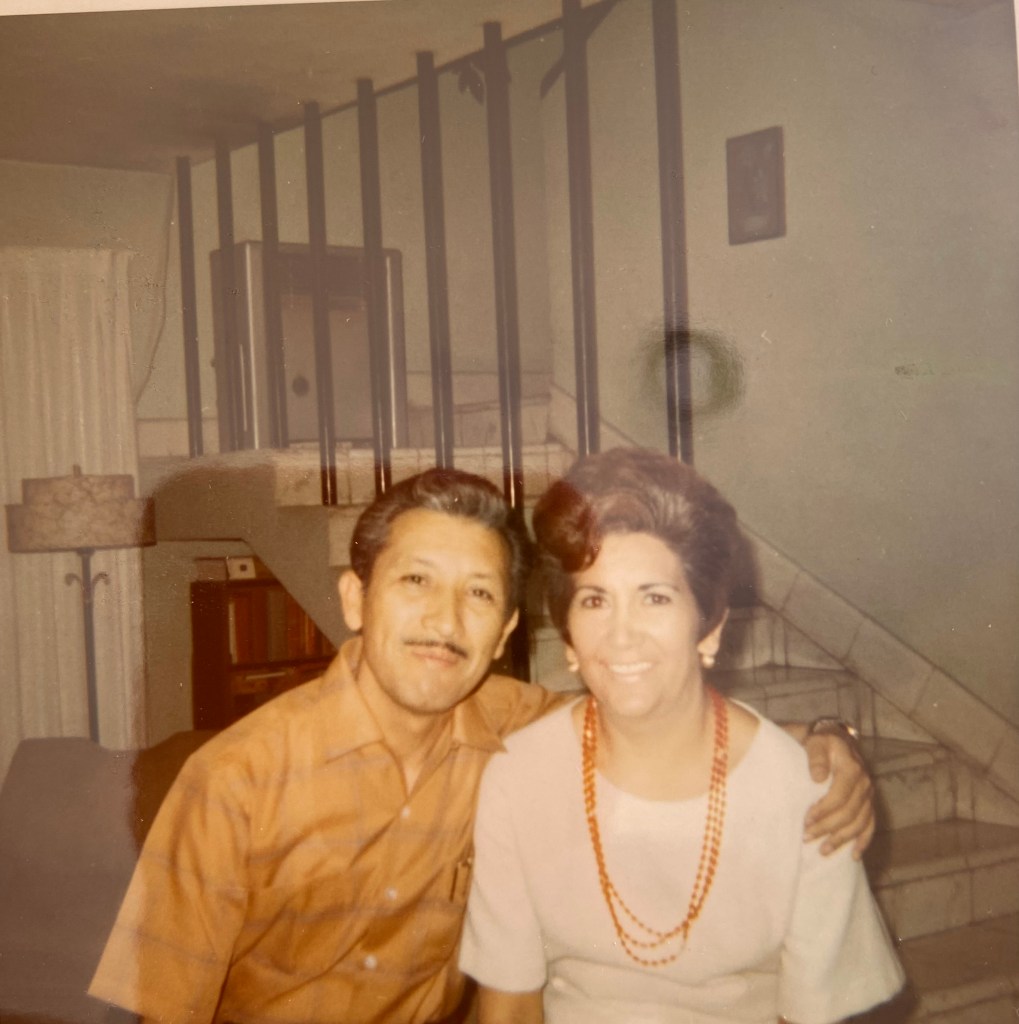
This lovely couple were hosts to us 4 very fortunate American high school girls for 6 weeks while we “studied” Spanish at a local school in Saltillo.
When I returned home and started my senior year of high school. my Spanish teacher thought I had really advanced in my language skills. I was pretty sure I hadn’t. But she asked me to be her conversation assistant for her junior high school classes and I actually learned a lot doing that!
As I also learned early in my art history career, teaching a subject really makes you collect and organize information in a way that focuses the mind like no other technique!
It was a fabulous summer to remember forever! I’m sending out a huge belated thank you to all of the people and organizations that helped me achieve this wonderful experience. Especially, and always, to my mom. It was her love of “old Mexico” that first made me thirst for that adventure, which happily led to many more. And, more to the point, that experience led me to where I am today, in this life in Florence.
I’m really happy to say that for my mom and me, decades after these pictures were taken, we went to Mexico together for her 70th birthday! At the time she was living in her favorite place, Boulder, Colorado and I was living in Boston. Her birthday fell in February and so, for both of us, a week in Mexico during winter felt like a triple treat! We were together, we were in Mexico!, and we were cheating winter of a week of its sting in both of our cold climes. Perfect!
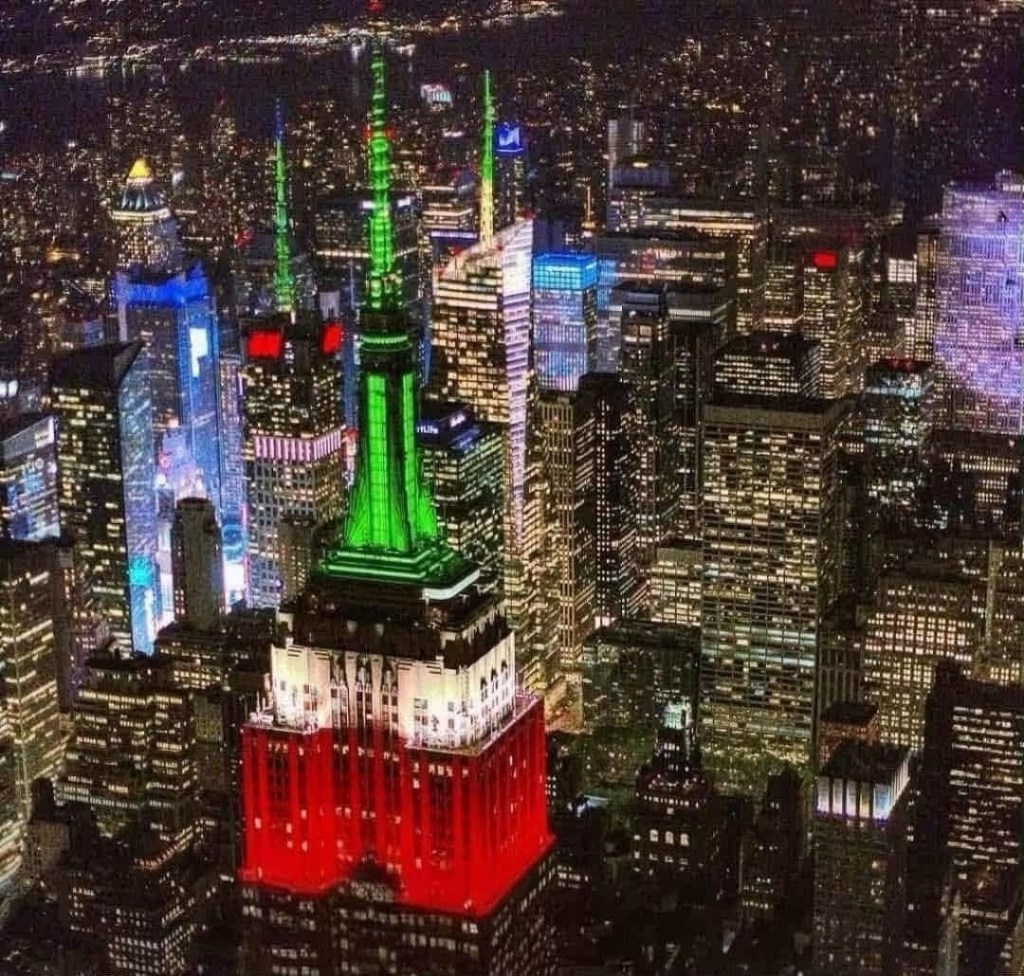
The Empire State Building is lit up in the colors of the Italian flag in honor of the month.
I don’t have genetic Italian heritage, but everyone knows I appreciate Italian culture!
And my name, Lauretta, is Italian. I’m named for my grandmother and thank my great grandmother often for her selection of names for her baby girl! Graziebisnonna!
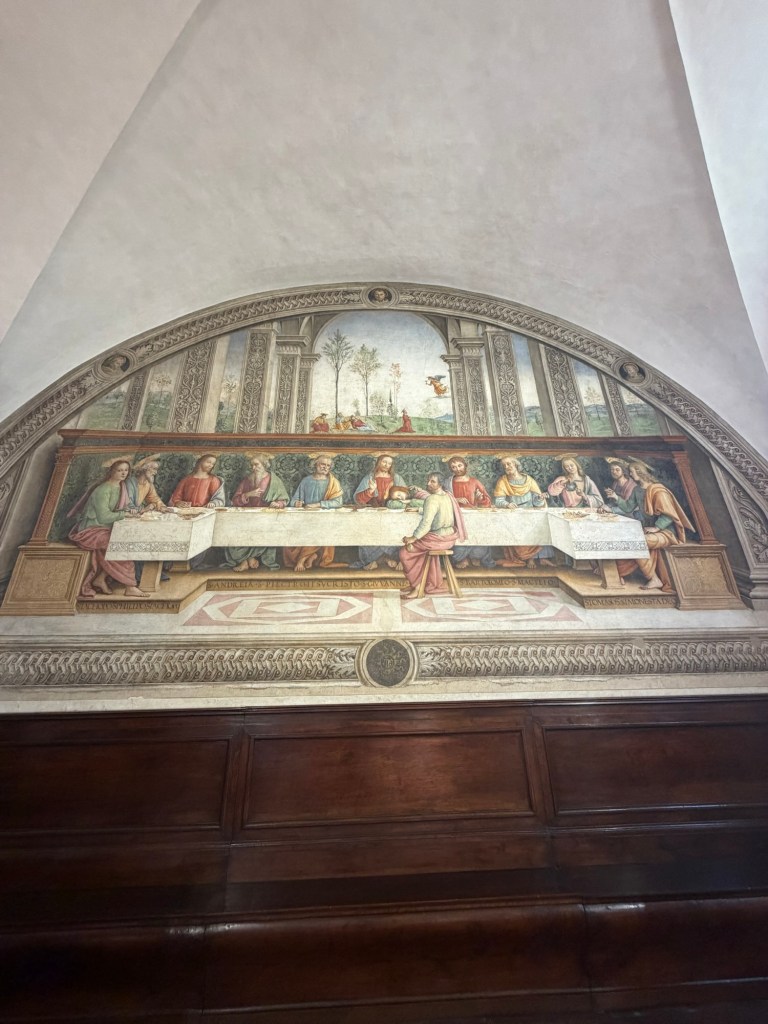
This Cenacolo, or Last Supper, is located in the dining room of the former convent of Sant’ Onofrio, also known as the Sisters of Foligno (yes, I am aware of the two spellings: Fuligno and Foligno), transformed into a “Conservatory for poor and honest girls” in 1980.
The refectory was renovated and embellished in the 15th century with some frescoes by Bicci di Lorenzo. There were some noble women who became nuns here including Onofria de’Conti degli Abruzzo and Giovanna di Onofrio degli Onofri who both gave considerable support.
Perhaps even more significantly, Il Magnifico, Lorenzo de’ Medici himself and the Lapaccini family both subsidized the cloistered sisters. One can tell from the number and quality of the artworks produced for this space that there were some pretty sophisticated patrons of the convent. The nun’s rooms were decorated in the period from 1480-85 by painters from the school of Perugino, which was quite prestigious.
And now to the monumental fresco, which was, almost unbelievably, only found in 1845!
It is of such high quality it was initially attributed to Raphael!
Today’s art scholars agree that the work was probably created by one of the pupils of Pietro Vannucci, known as “il Perugino”(1445/50-1523). The work was painted around 1493-96. Raphael had in fact studied painting under Perugino and absorbed his luminous technique so well that his early paintings are hard to tell apart from his teacher’s. So, for almost a century after its discovery, the student got the credit for the master.
Critics have also suggested that the work replaces a previous fresco of the same subject painted by Neri di Bicci (1419-1491). The fresco is considered to be one of the most important examples of the Umbrian culture in Florentine Renaissance. The Refectory today also preserves also some frescoes by Bicci di Lorenzo (1429) removed from other parts of the convent.
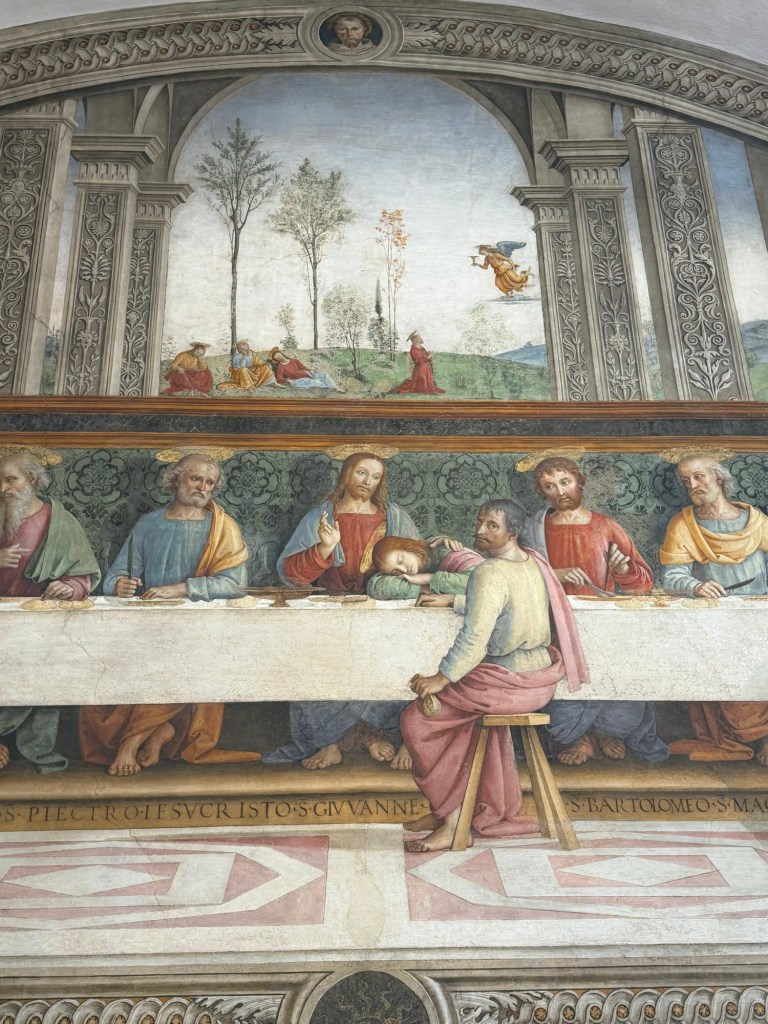
What I love about this particular Cenacolo (and there are many fine Renaissance ones still extant in Florence) is that the artist didn’t just paint the usual table and seated figures, even if that is all the subject matter calls for. Behind Christ and the Apostles is a fascinating landscape that actually contains a second subject: The Agony in the Garden. The painter has therefore given us, the viewers, the whole night before the crucifixion unfolding right before our eyes.
Judas sits apart from the others, turned toward the viewer, as he often does in this genre of painting. One of the Apostles seems to have fallen asleep while sitting next to Christ. That’s not the norm in these pictures!
But, what about the painted architecture! What an elaborate system of piers, decorated in relief sculpture. The painter went above and beyond what was required to represent a Cenacolo, and I for one appreciate the attention to superfluous detail!
Another aspect of this painting which I very much appreciate is the attention to the eating utensils. One assumes these instruments, including the common knife but also an item that looks a lot like one chopstick but seems to be used as a pick or a fork, were in common use in the mid 1490s, when the painting was created. I’ve not seen anything like it before and these are the kinds of details I adore!
All in all. viewing this impressive fresco for the first time what very much a Renaissance era treat, right here and now in 2026!
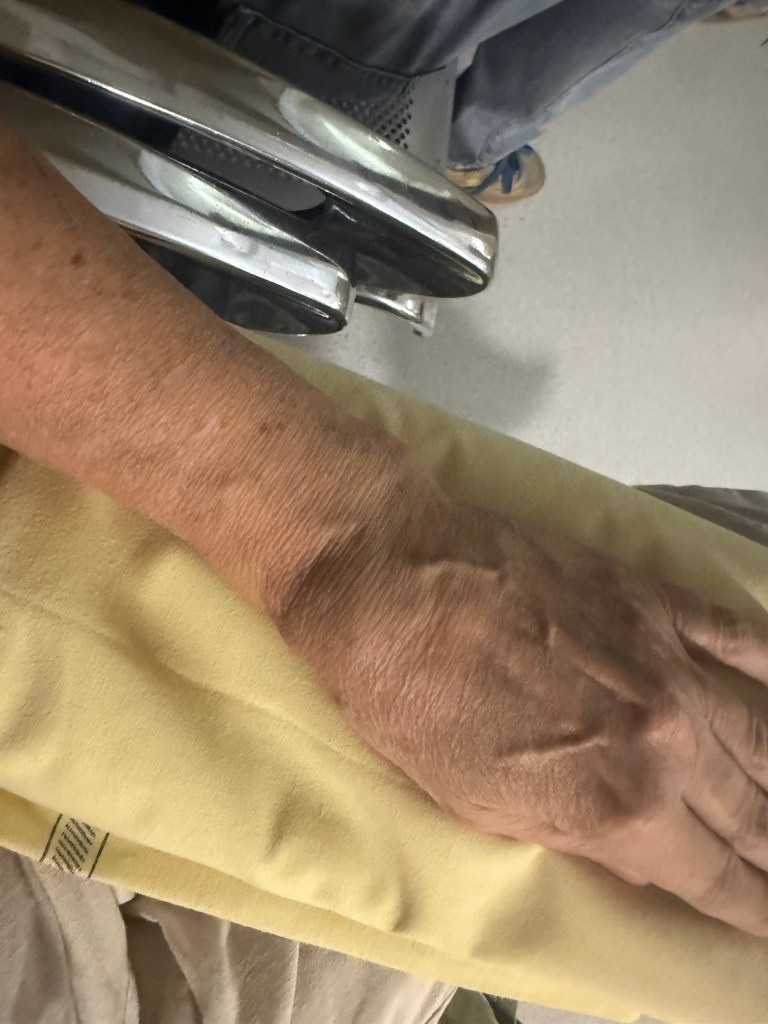
An unfortunate step sent me hurtling to the pavement yesterday as I tripped in a pothole. There were unfortunate consequences. I fell hard, landed on my two hands and broke one wrist badly.!
A good Samaritan saw me fall, helped me up, called an ambulance, got me an ice pack from a caffetteria and waited with me for the ambulance. It took 20 mins.
Thank you most sincerely to Leonardo who would accept no payment but was extremely kind and thoughtful!
I was delivered over Florence’s VERY BUMPY ROADS (you never realize it in a taxi with good springs, but with a sore limb and a van that has seen many days in service, you notice it all!) to the Pronto Soccorso at Santa Maria Nuova, the city’s oldest hospital founded in 1288 by a wealthy Florentine merchant, Leo de Ricovero Portinari (d. 1289). Coincidentally, it was his daughter, Beatrice, who was the unwitting muse for Dante’s Divine Comedy. Ah, Florence!
The naked eye could see things inside my arm were messed up and a set of Xrays revealed all the damages. I was told that I’d be put under and they would try to manipulate my shattered bones into place and put on a cast.
Then a 2nd xray was taken to see if the setting was adequate.
I was warned that surgery would likely be necessary because it was a bad break.
Very luckily for me the on-call orthopedic surgeon was talented and got the bones placed in order manually.
They took a second set of Xrays and said I was in good shape. I return to the hospital in a week for Xrays yo double check setting of bones.
On this first morning of my new normal I’m busy cancelling spectacular events I had planned for the entire month of October in Rome. So sorry to have to do it.
Bear with me, dear reader, as I accustom myself to to this new way of life for a couple of months. I suspect there will be many fewer blog posts, following my record year of daily blogs so far in 2026!
Oh! I do love autunno in Italy! The weather is absolutely perfetto!
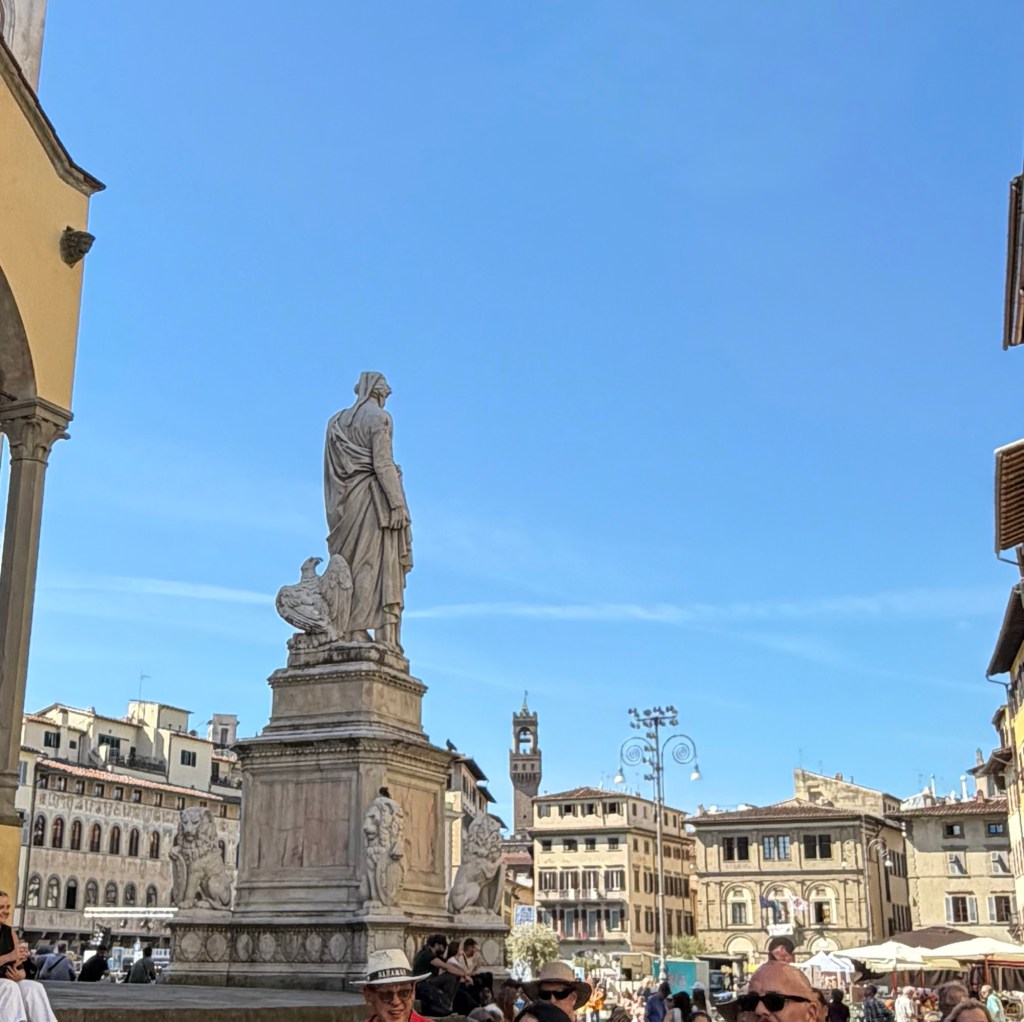
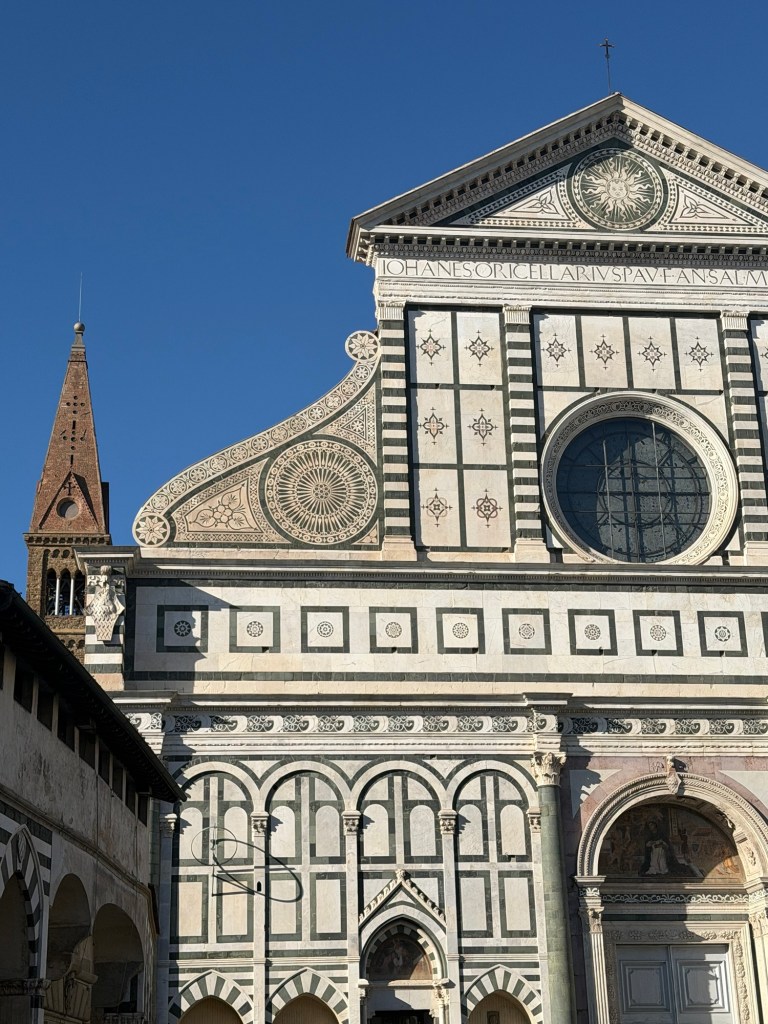
Walking from my Borgo into the center, I pass by this piazza and on this crisp, clear day, the monuments of the city were stunning!
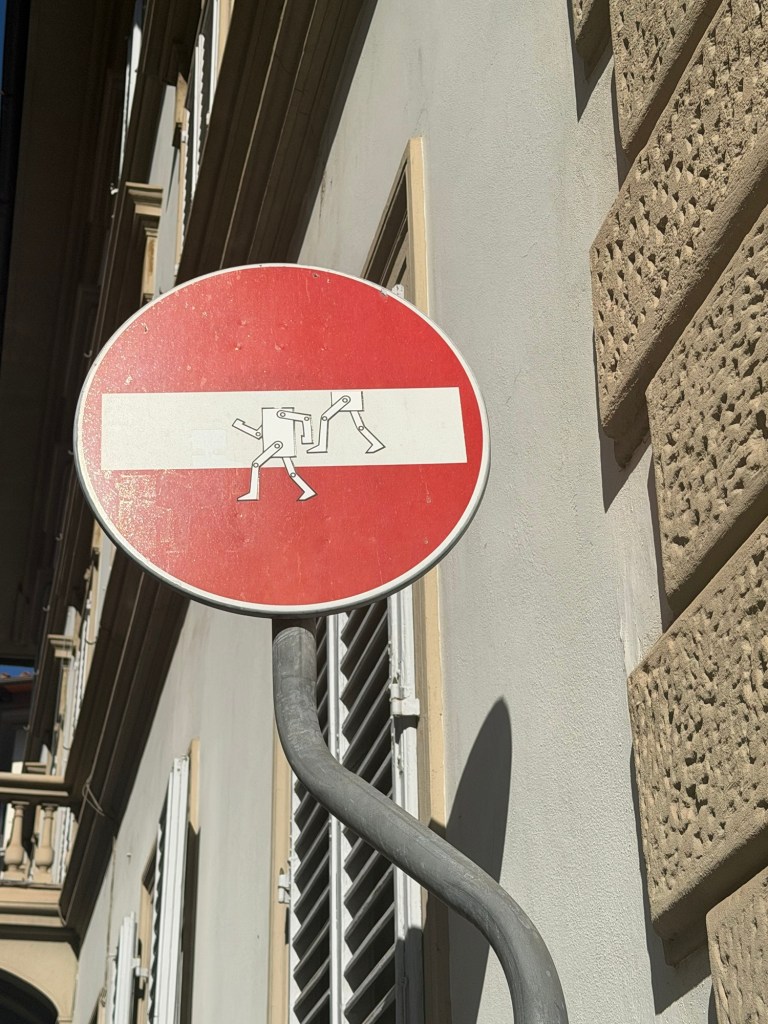
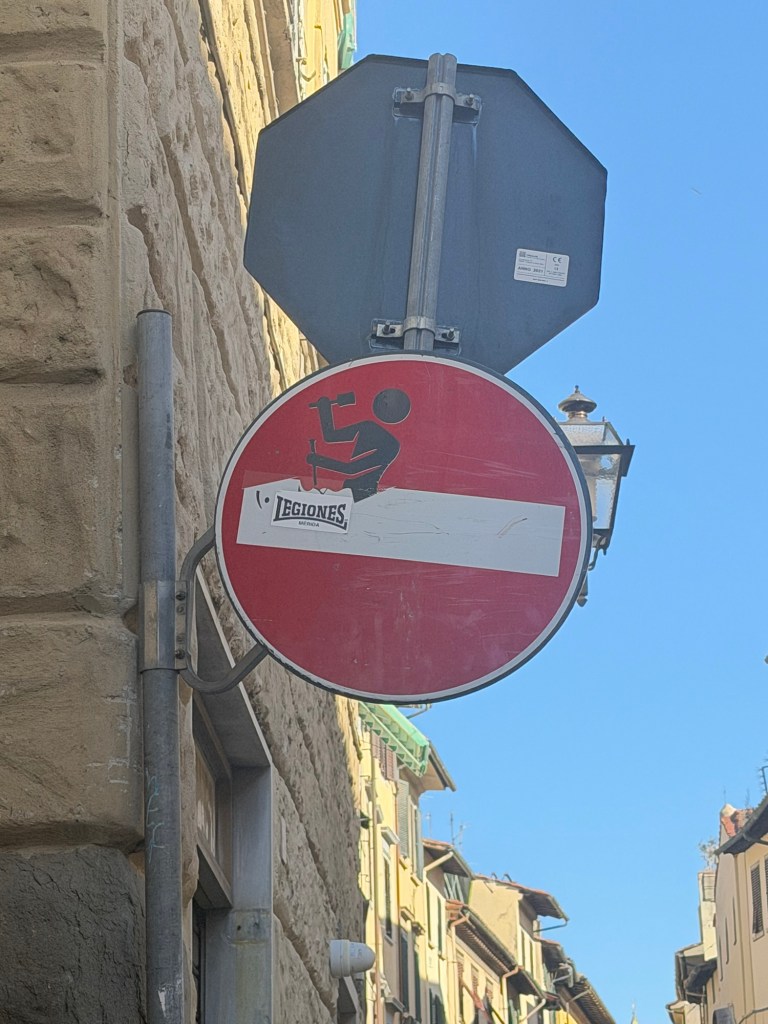
Later, as I was passing through the historic center, I noticed a couple of Clet designs I had not remembered seeing before.
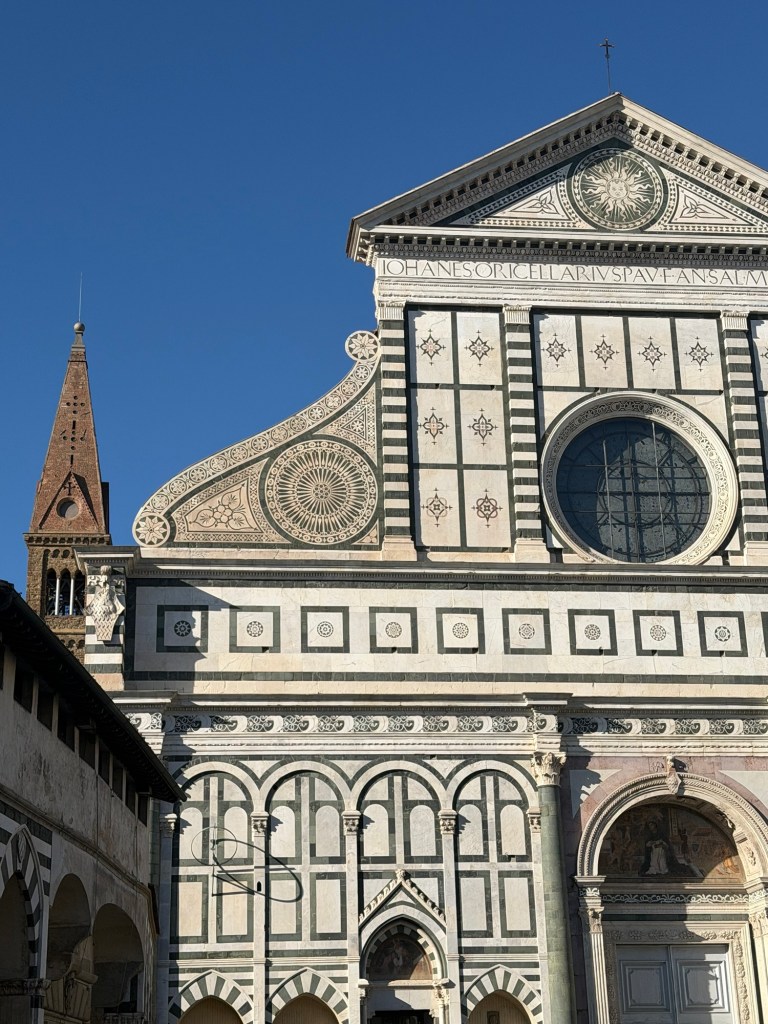
I had occasion to be in the Piazza Santa Maria Novella, which is one of my favorite Italian spaces of all times, and the marble and brick structures stood out to me in splendid relief!
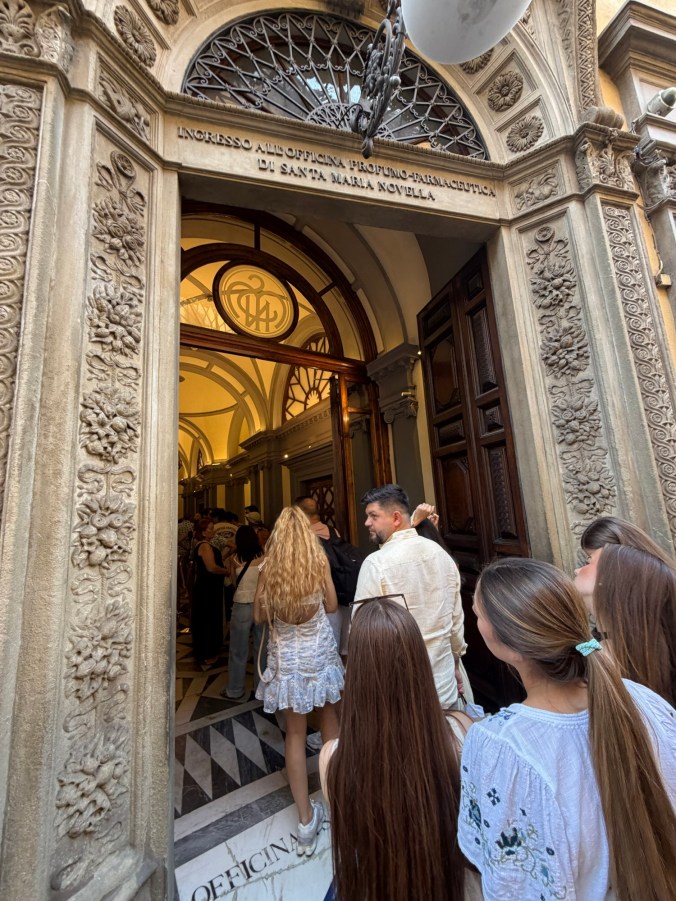
I passed by another favorite place, the Farmacia di Santa Maria Novella, but there was a long queue to enter and I decided to wait until later in the fall when the crowds will be thinner. This is one of the huge delights of living here. I can postpone and try again any old time I want to or need to. That is a luxury I can still hardly believe I possess.
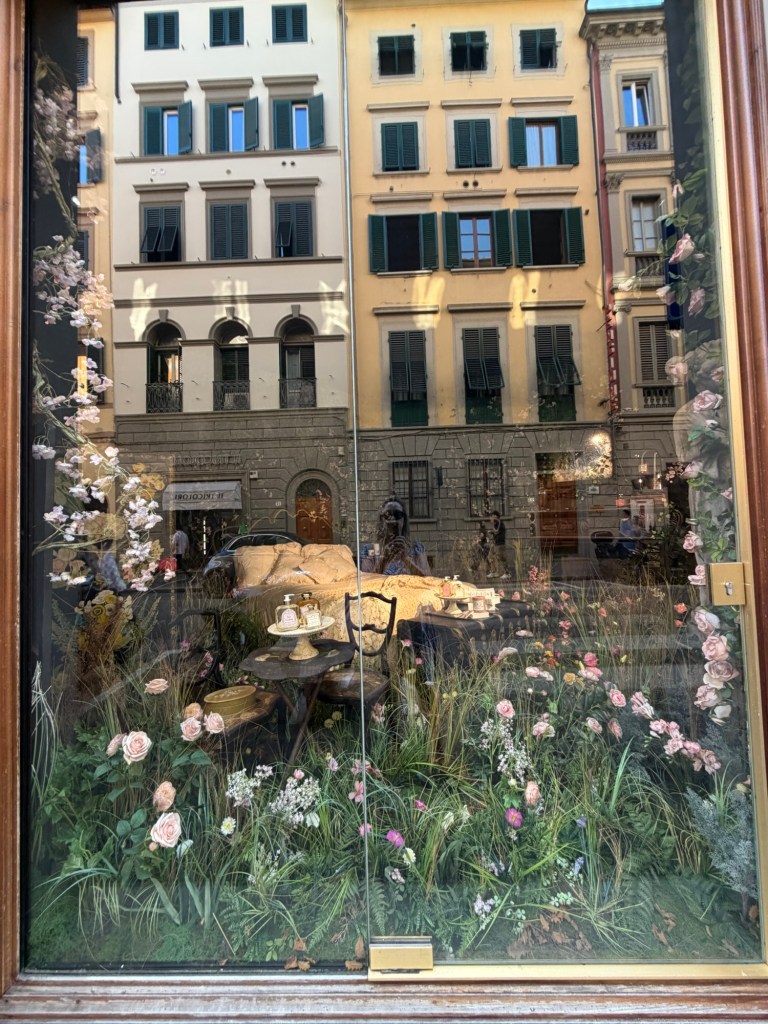
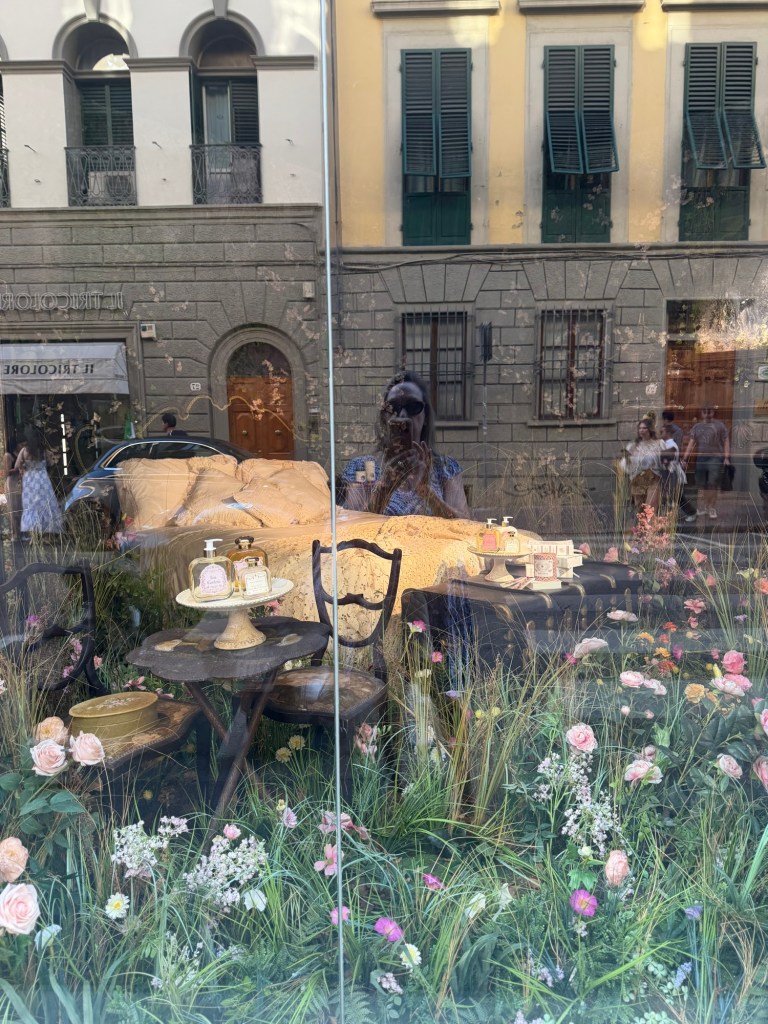
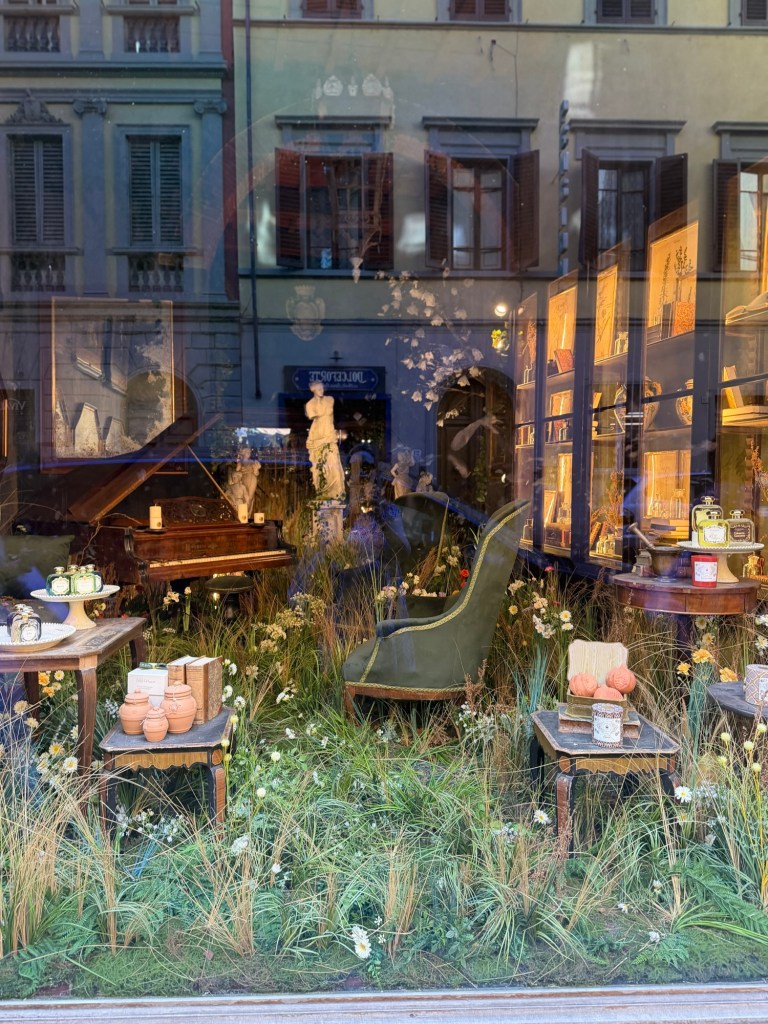
The next 3 images are from the windows of the Farmacia. The vetrine sported views into what looked like elegant interiors, which were created in a way to look as though they were set outside in a field of wildflowers. It took a lot of words to describe these windows, but they are complicated and rich.
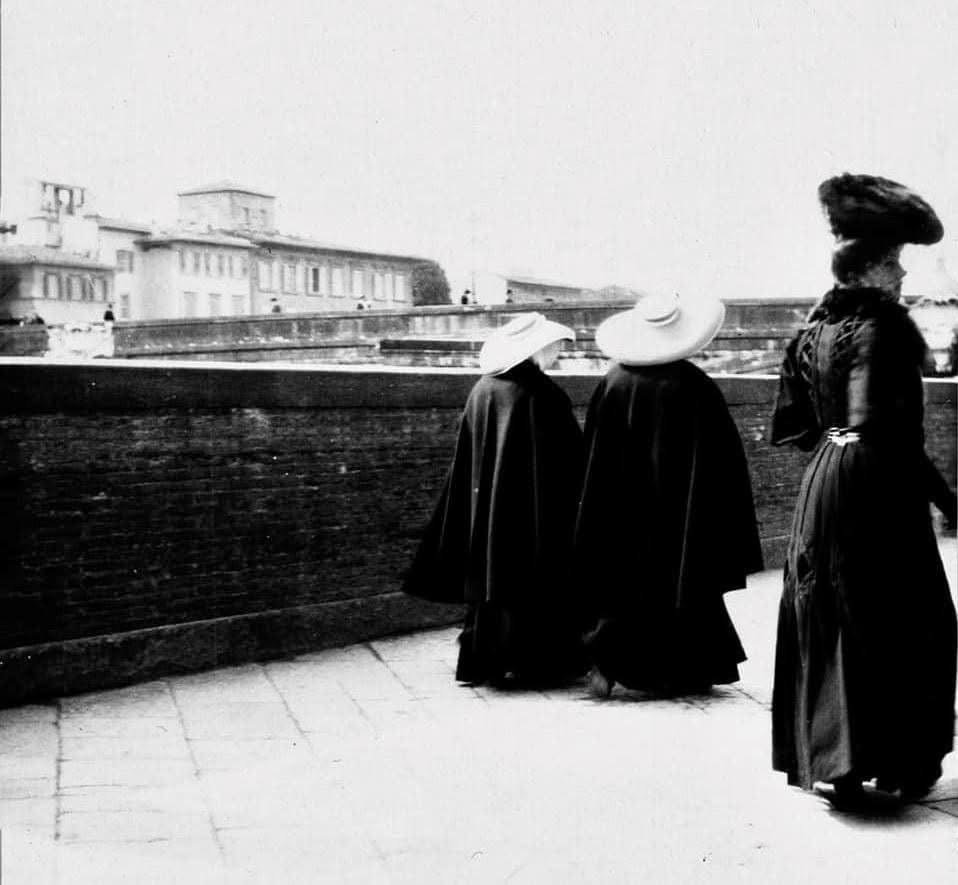
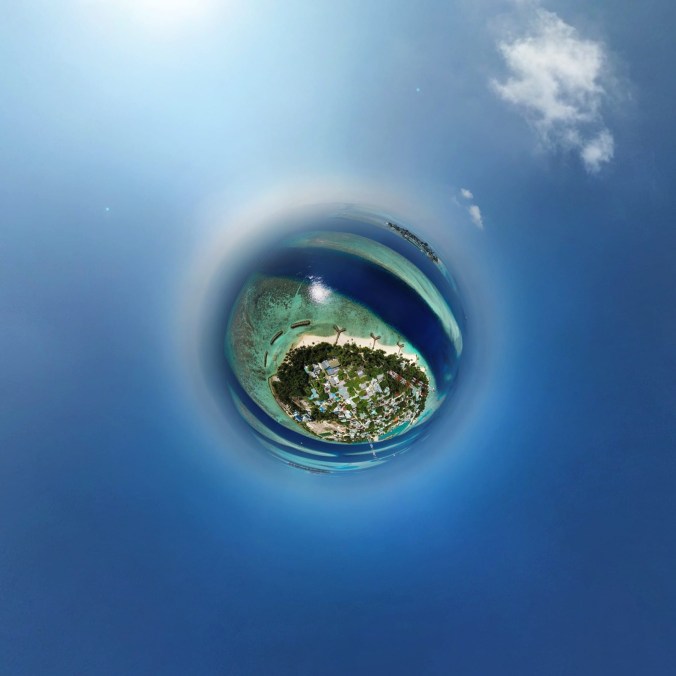
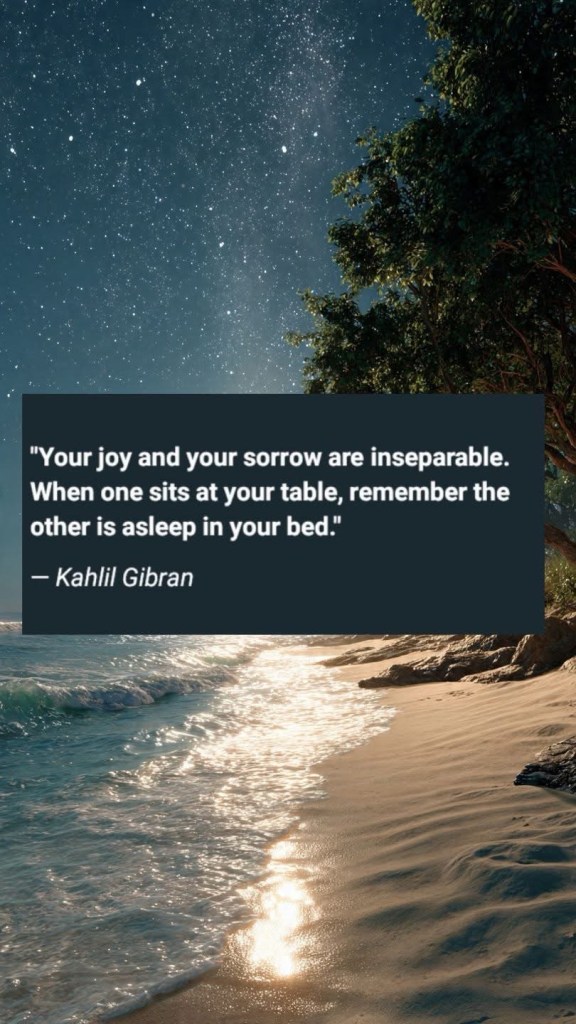
And lastly, a couple of really random images.
Speaking of random, the image above. I love it.
And finally, a new friend sent me this next image. It was taken from a drone over some place in Asia. I can’t take any credit for it, except as a happy recipient of the great image!
Moving all of one’s earthly possessions, one’s history, sacred and profane, from the USA to Italy is a lot of things. It’s a deep personal pleasure for me to really and truly make Italy my home, for this has been my heart’s desire since I was a young woman. But it is also a lot of work and not incidentally, it brings up a lot of emotions.
When packing up last summer in Colorado, I simply ran out of time before I had to leave the home I loved but finally sold and so I wound up shipping a lot of things that I might have culled.
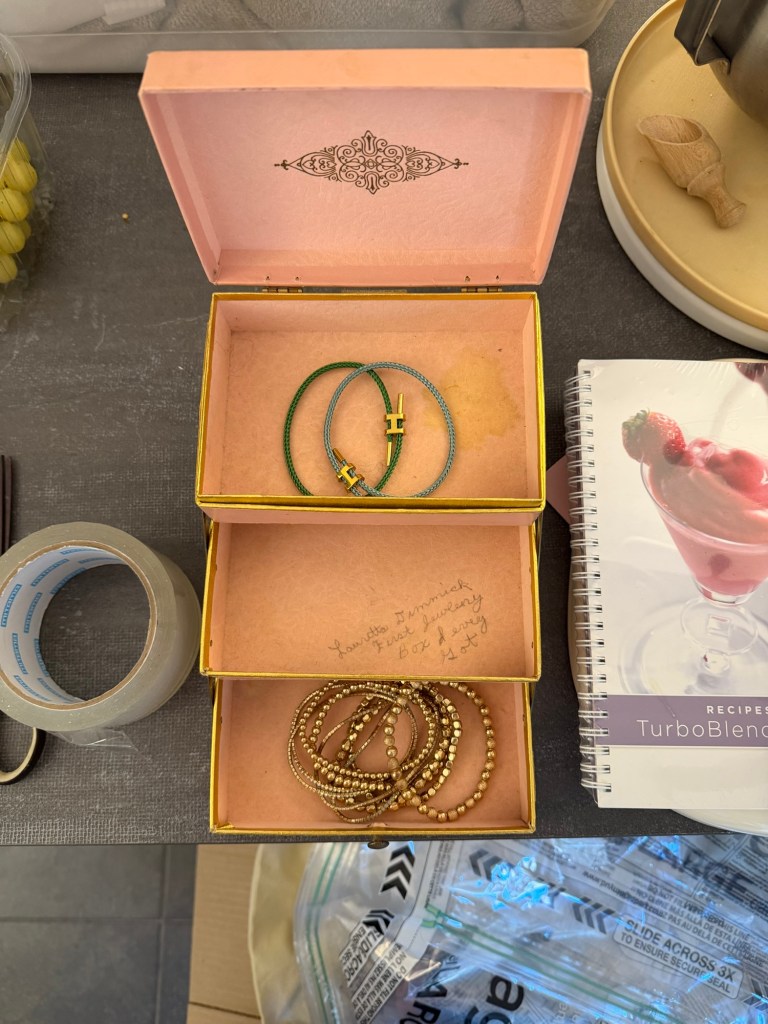
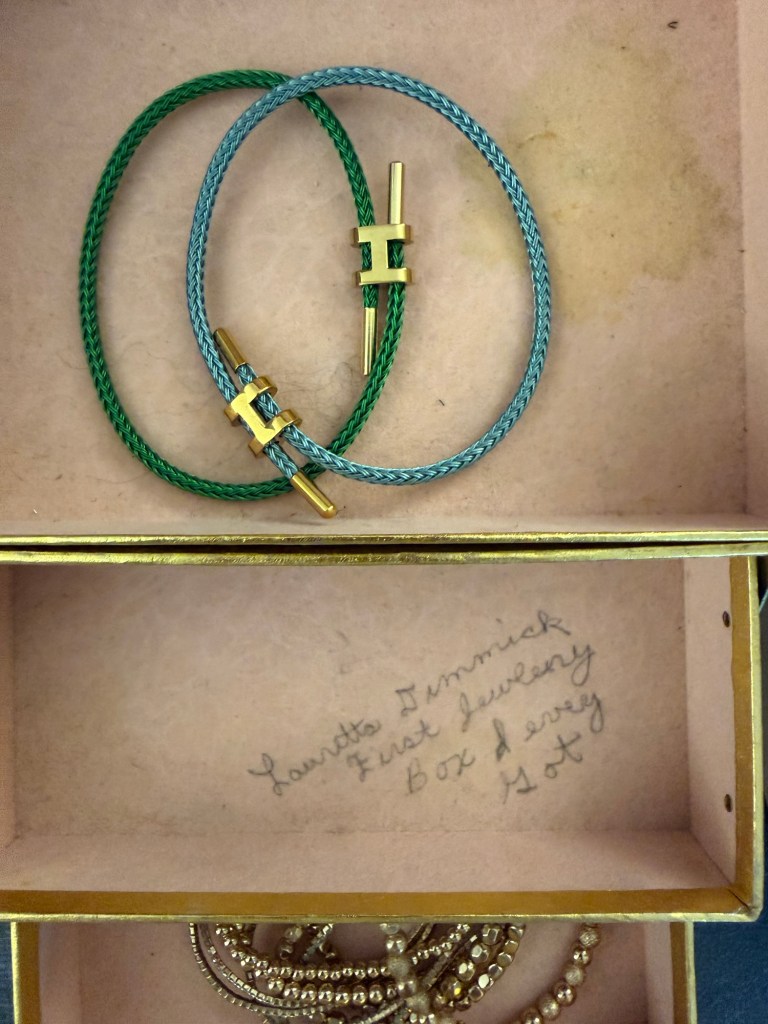
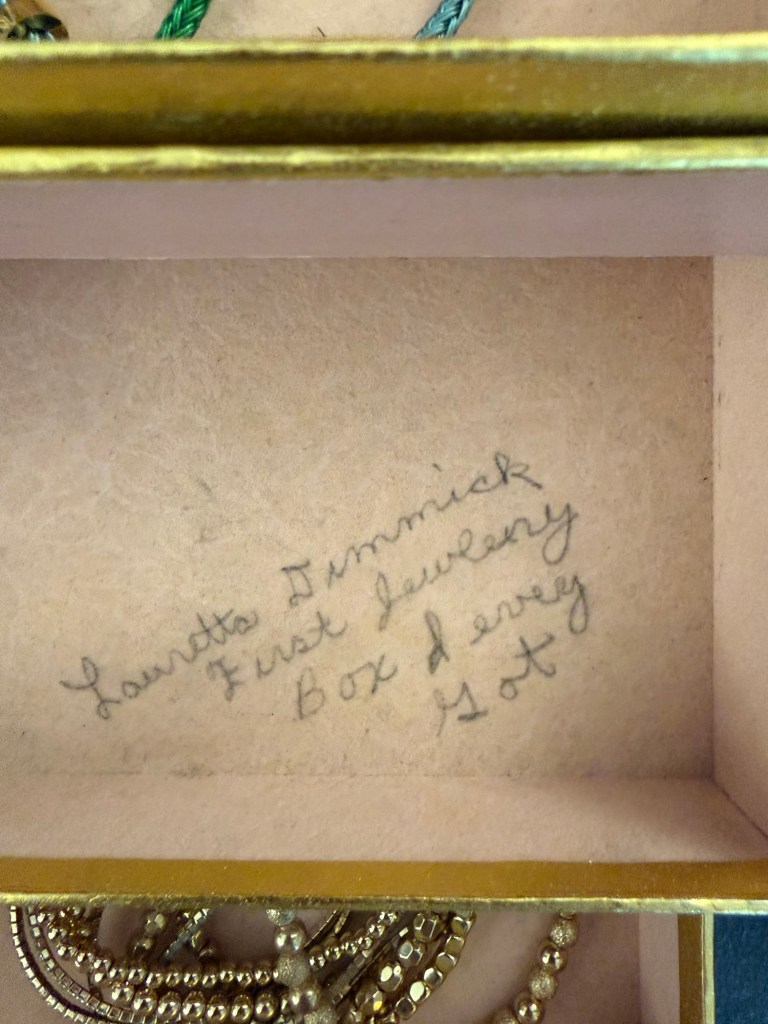
But, one of the unexpected joys has been putting my hands on things long stored but almost forgotten, such as this little pink jewelry box I had when I was in elementary school. I see I was a documentarian even then, for I felt the need to record the accession! Haha! So cute!
I wrote in pencil, not pen, as a future curator of art might know to do. I’m disappointed I didn’t record the date. I guess that was a skill I would learn later.
I emptied the box and decided to use it again now, because perche no?
The bracelets you see are ones I wear now, but underneath you can see my inscription. Can you read it?
Besides my name, there are 6 words, 2 misspelled. I love this little girl!
First J e w l e r y Box I evey (every?) Got
I love the implied expectation that future jewelry boxes would appear, hopefully bigger and better! May all your heart’s desires come true, little dreamy girl.
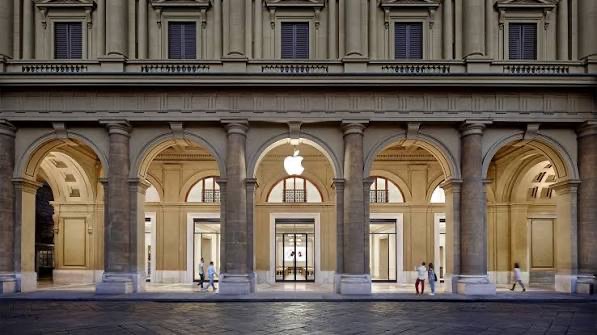
I had an appointment at the Genius Bar for help with storage in my laptop/external hard drive. It won’t surprise you to learn that I take so many photos and videos that managing them is a huge headache and as I move into creating longer videos, it’s only going to get more dire.
So I went, got a great “genius” and he helped me. When I explained what my issues were and how I wanted to move my images and videos off my computer, but to store them safely with quick access, he opined:
Nothing in this world is safe. If I needed to have a safe storage, I needed more than external hard drive, maybe several more because “anything can happen.” Something could, he continued, get stolen or damaged and the. Then where would I be!
I protested a bit and he continued. Italians, he said, invented the world’s first back-up.
I took a second to catch up.
It was the medieval monks, he expounded, working away as scribes in monasteries, that made (sometimes multiple) copies of ancient texts. Ok, I said, I follow.
And still, he said, the world lost Aristotle and Sophocles because despite multiple medieval back-ups, they all were lost.
I don’t know if I caught all he was saying but that was the gist of it. I don’t know if factually speaking the world lost Aristotle and Sophocles, but I knew what he meant.
What, I replied, are you doing in an Apple Store. You should be teaching at a famous university!
He was planning on it, he replied. In a month he’s changing jobs.



You must be logged in to post a comment.