
If I walk by this church and it is open, I enter. I cannot get enough of the Renaissance tabernacle that sits just inside the door of the basilica.
Map of the church and the convent
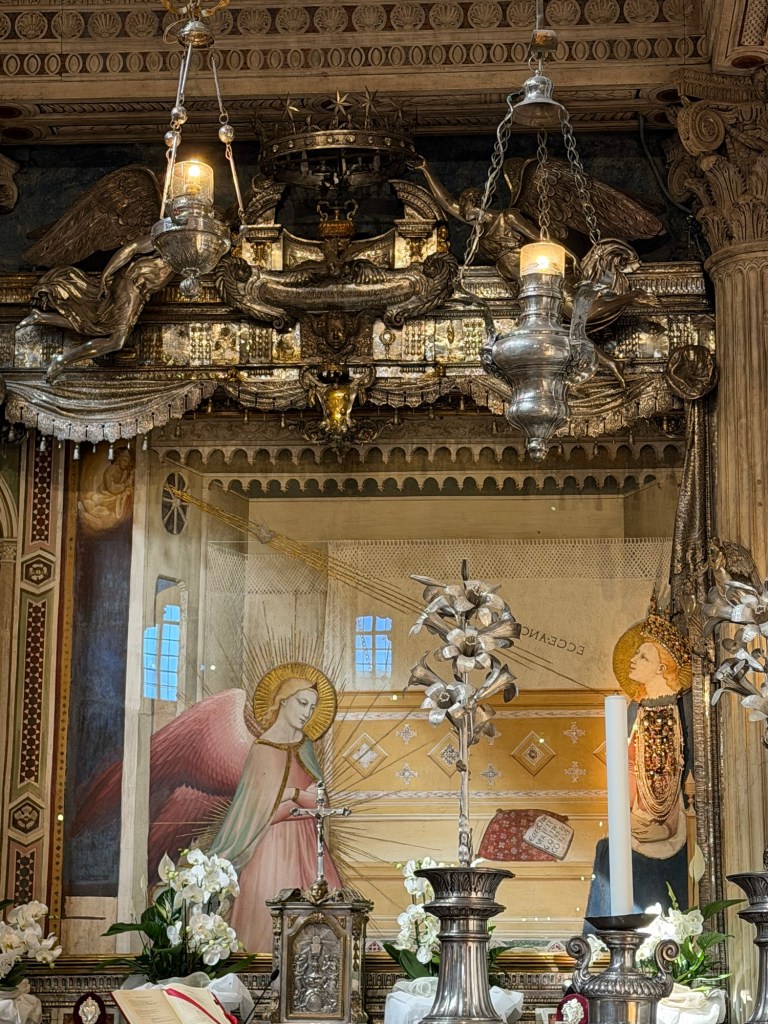
The church was founded in 1250 by the seven original members of the Servite Order. In 1252, a painting of the Annunciation was begun by a Friar Bartolomeo, commissioned by the Servite monks. It is said he despaired about being able to paint a virgin with a beautiful enough face, and fell asleep, only to find the painting completed when he awoke. He attributed this miracle he to an angel. And that, ladies and gentlemen, is how the church received its name, the most holy annunciation, since it was partly painted by an angel of God.
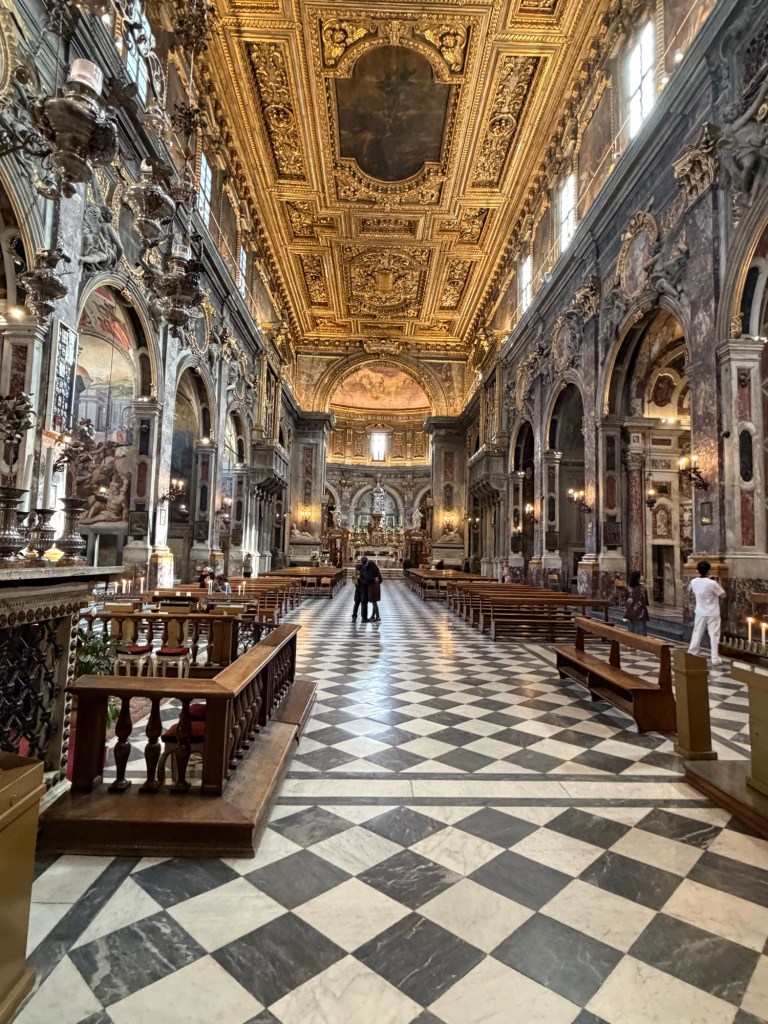
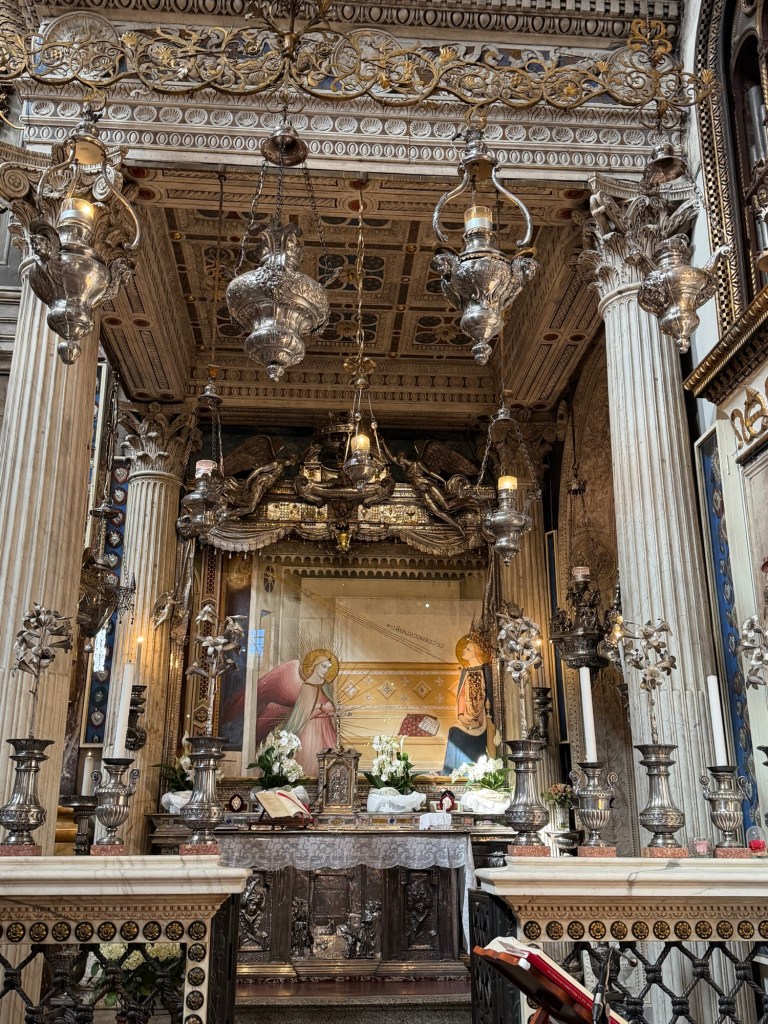
Below is a view of the basilica taken from the narthex area, looking toward the altar. The interior is very much Baroque in style, with the elaborate tabernacle in a 14th century Renaissance style, housing the fresco within, which is very Medieval in origin and style.
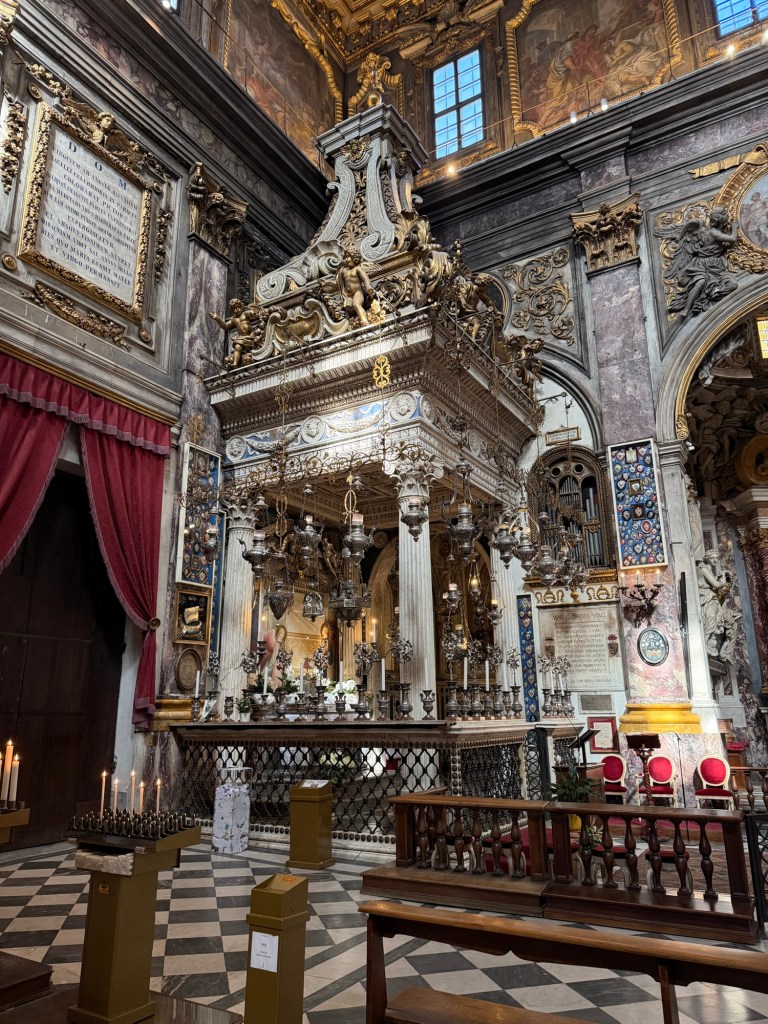
Here is your first view of the marble tabernacle constructed to encompass the so-called holy painting.
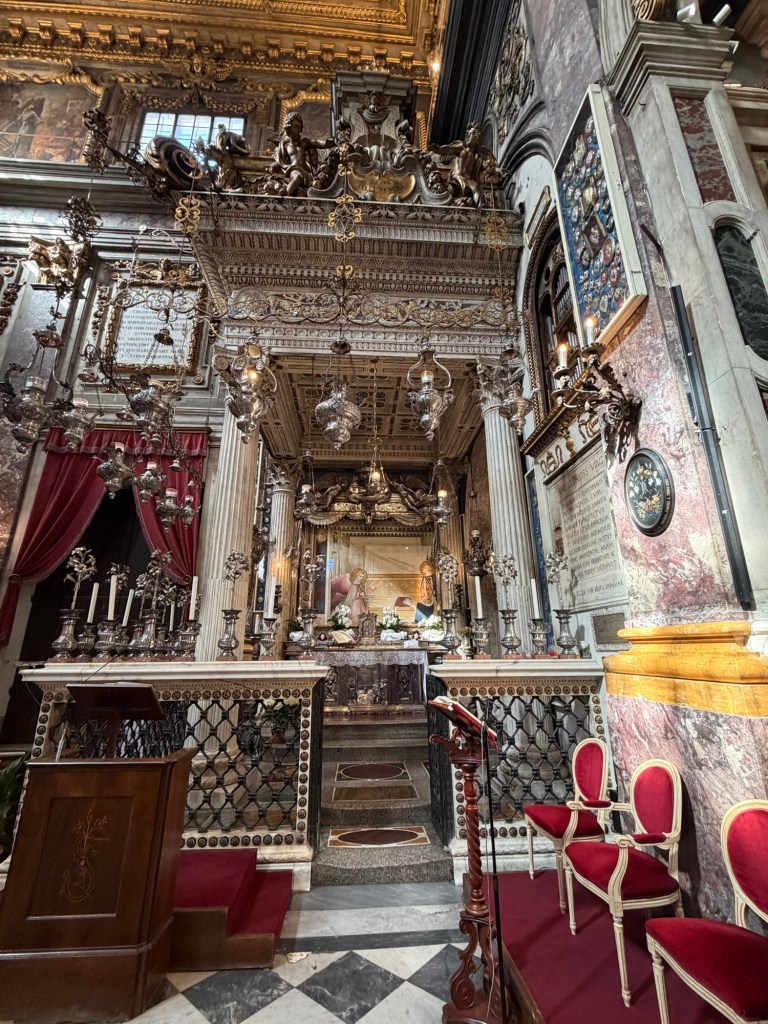
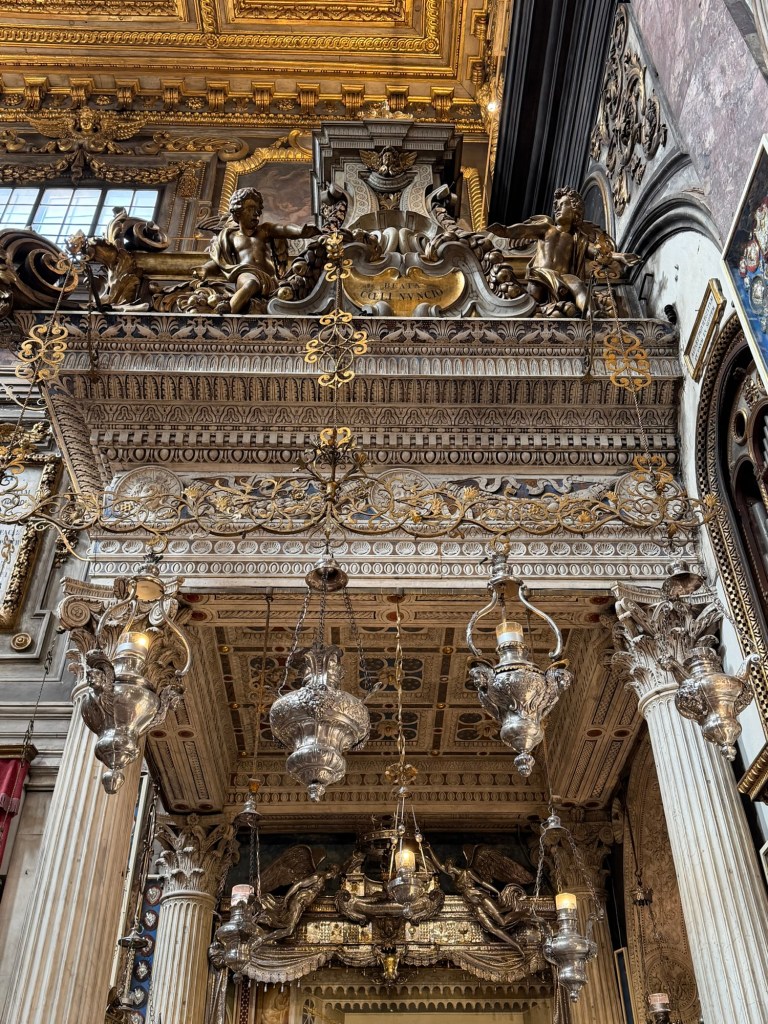
The actually quite modest painting, so famous because it was partly painted by an angel, acquired increasing veneration, such that in 1444 the Gonzaga family from Mantua financed a special tribute. Initially Michelozzo, who was the brother of the Servite prior, was commissioned to build it, but since Ludovico III Gonzaga had a special admiration for Leon Battista Alberti, this latter architect was given the commission in 1469. Alberti’s designs were constricted by the pre-existing foundations. Construction was completed in 1481, after Alberti’s death. Though the structure was refurbished in Baroque-style in the seventeenth century, the basic scheme of a domed circular space flanked by altar niches is still evident.

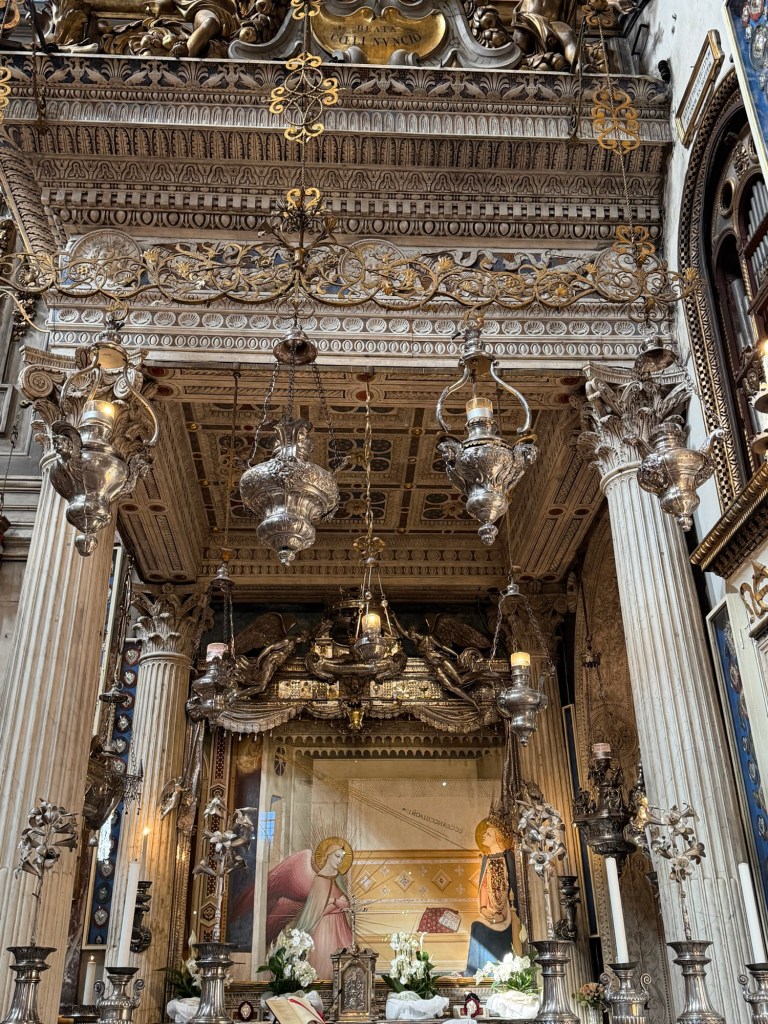
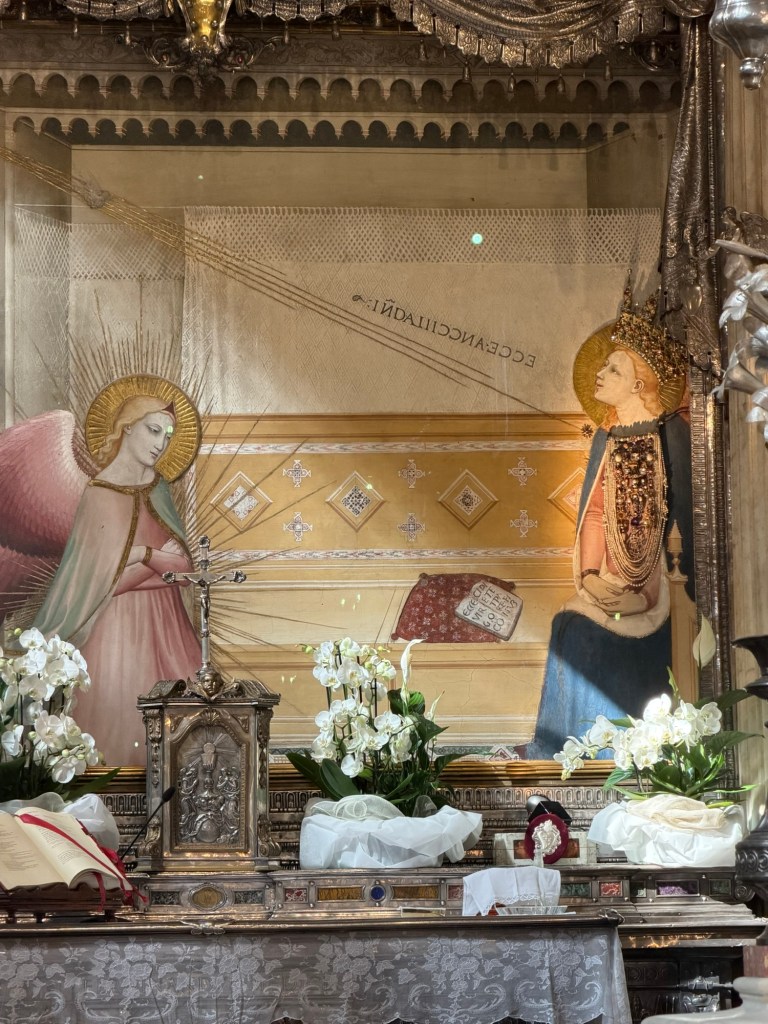
The fresco of the Annunciation after cleaning, 2020.
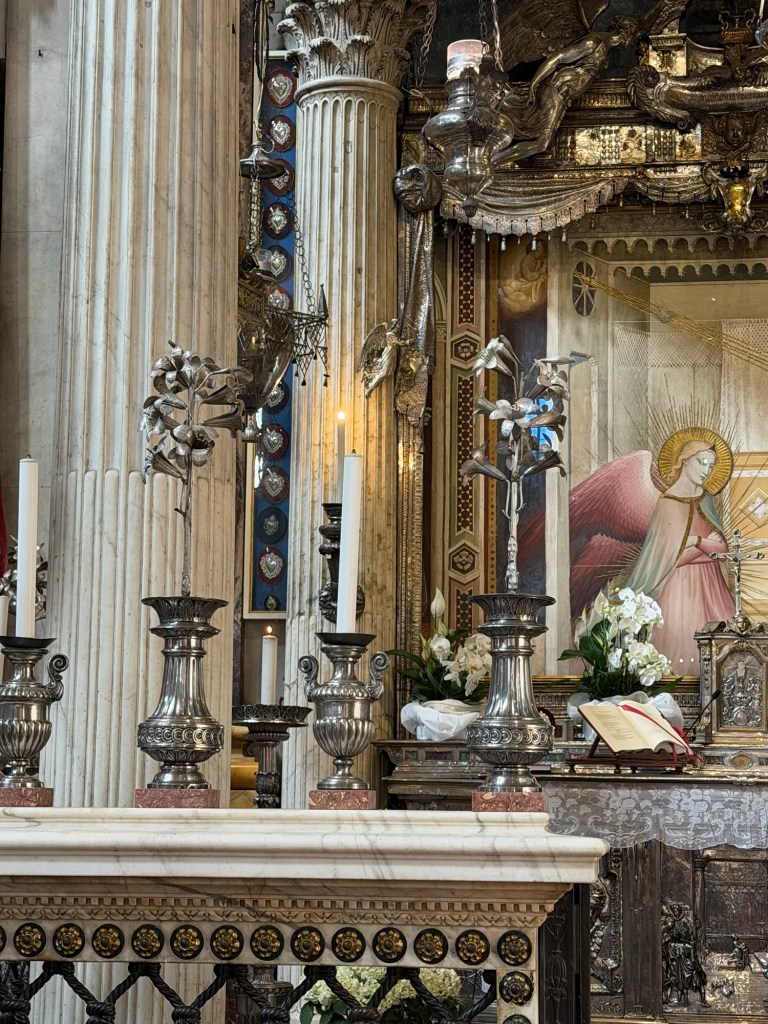
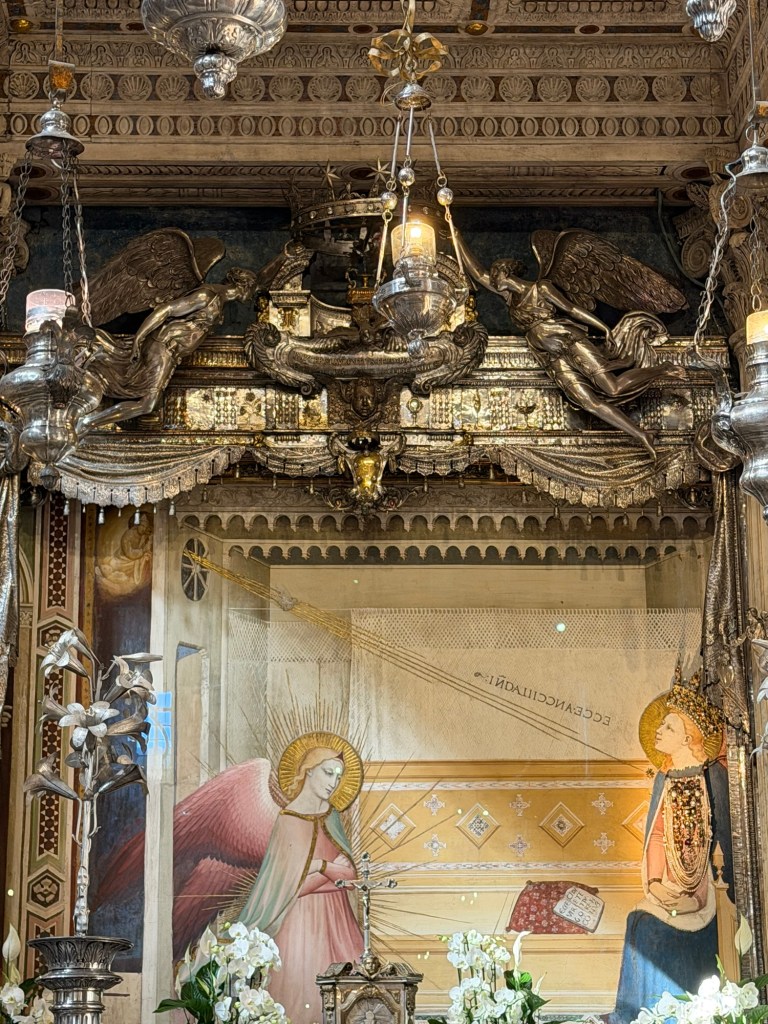
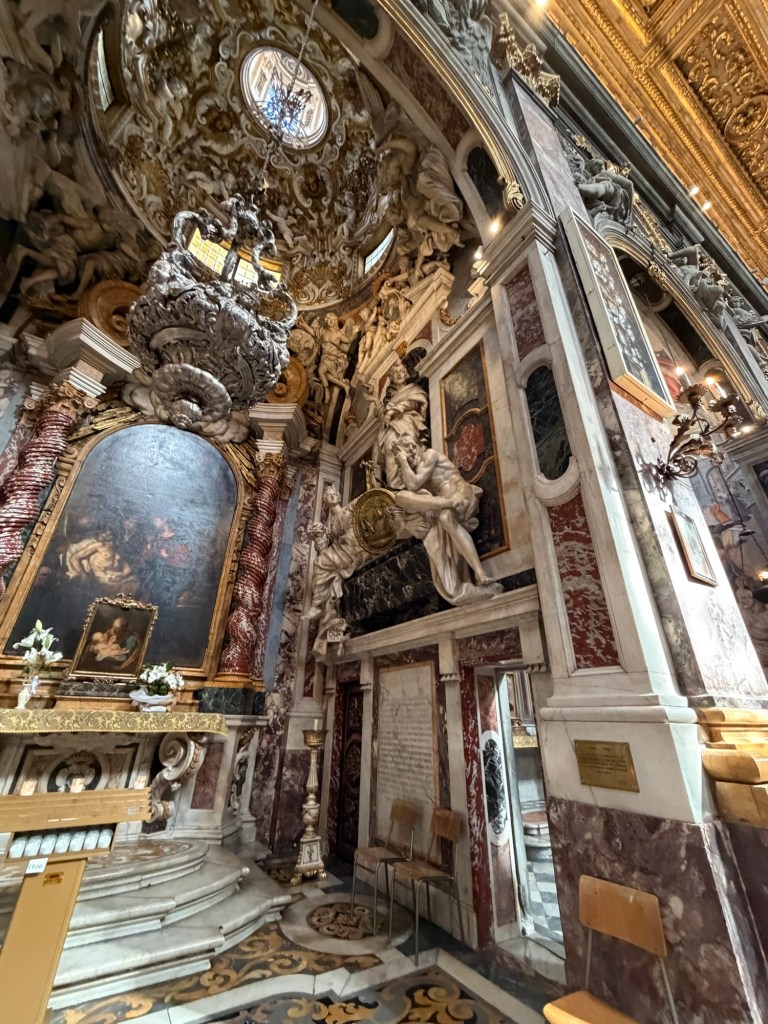
Below are a few photos of the chapel directly at the side of the of the tabernacle. I am leaving for Rome soon and I was thinking about all the Baroque monuments in Rome when I took these photos.
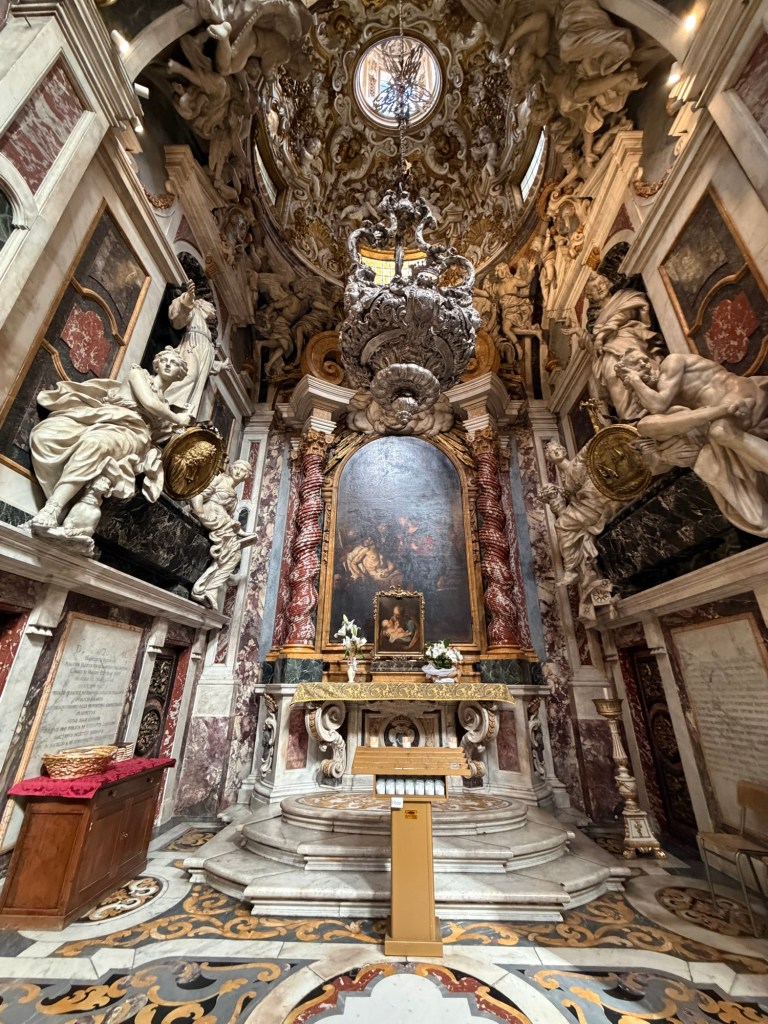
This chapel would be very much at home in a Roman church. Quite unusual for a Florentine church.
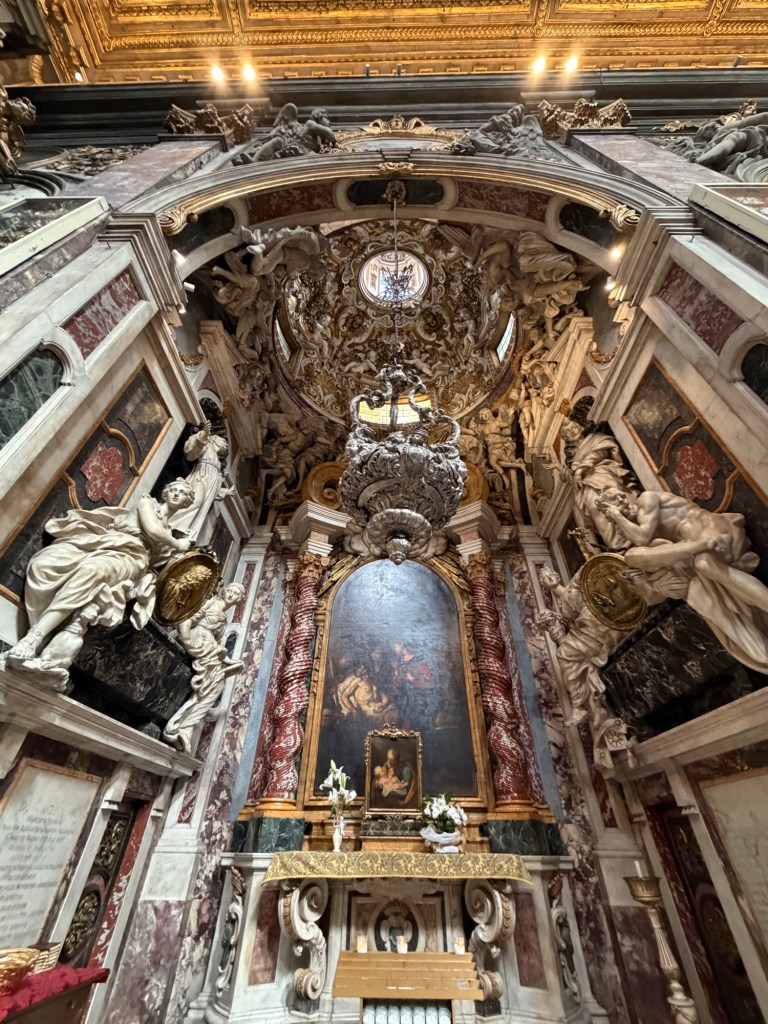
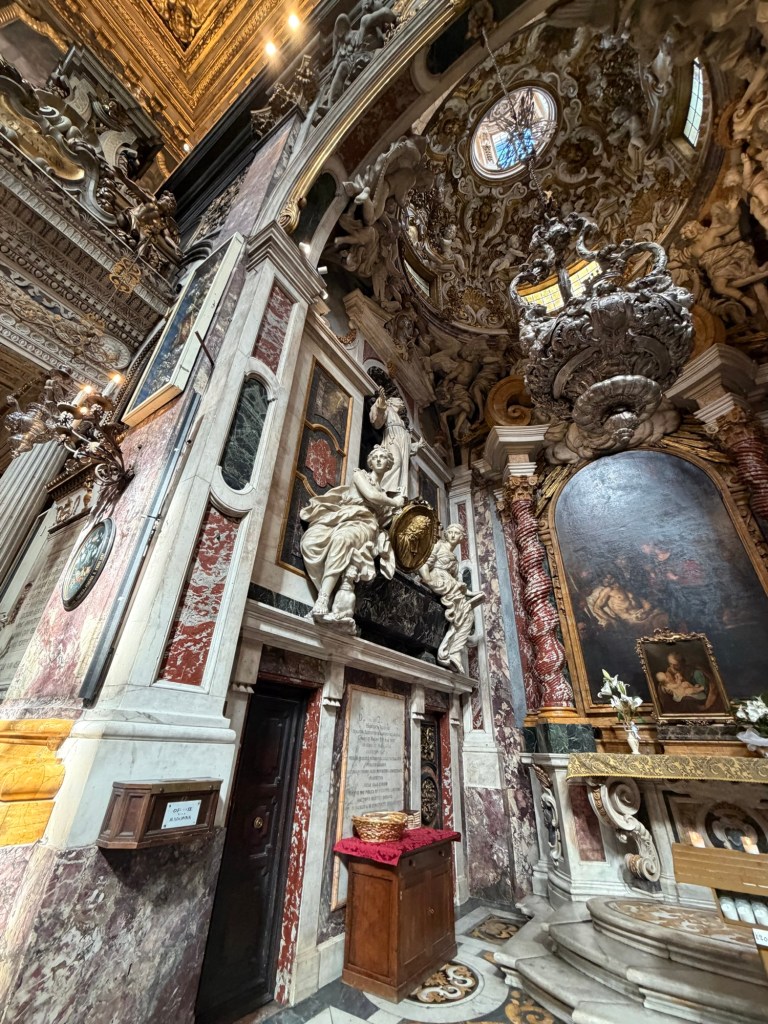
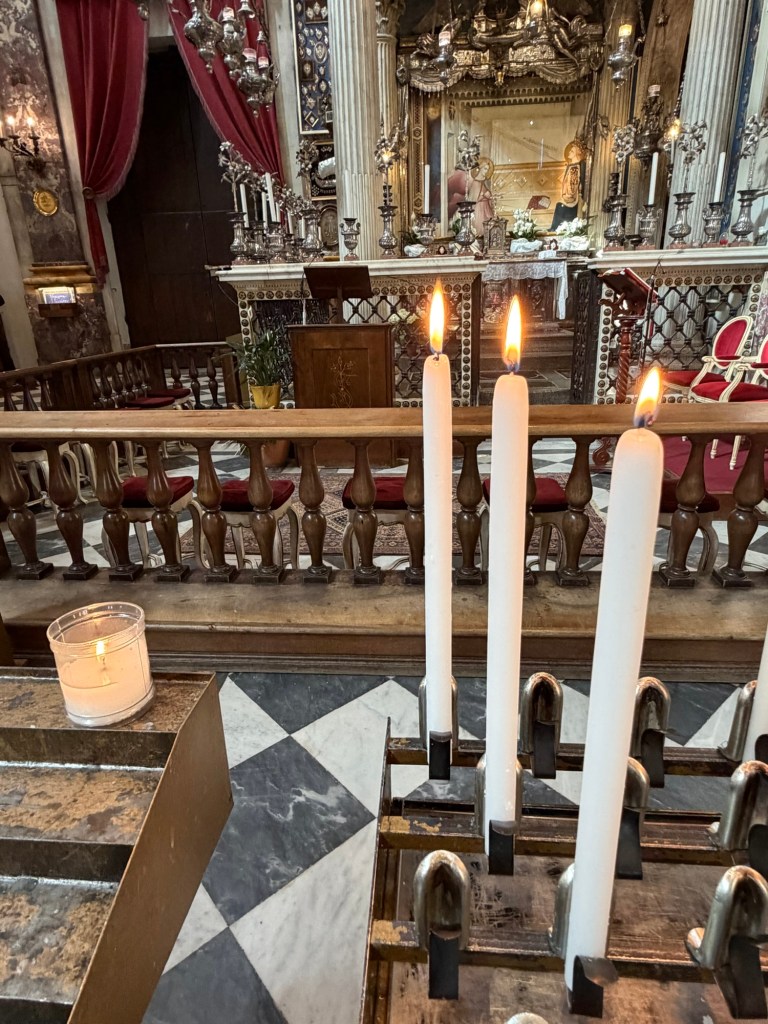
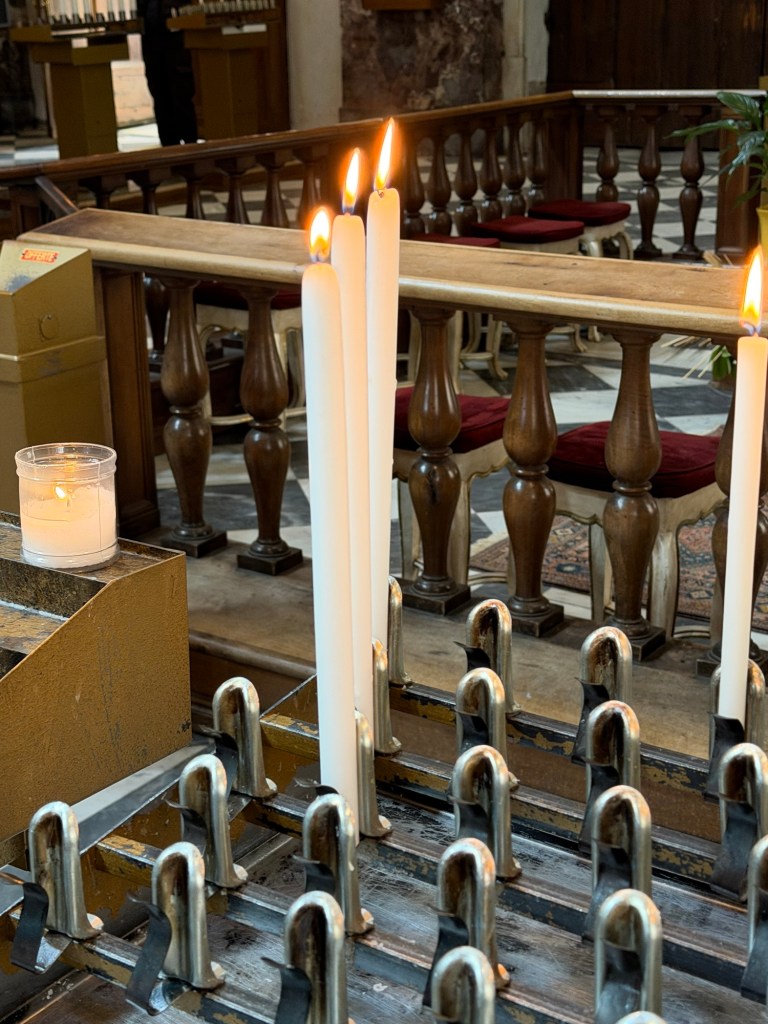
As almost always, I lit 3 candles for family members.
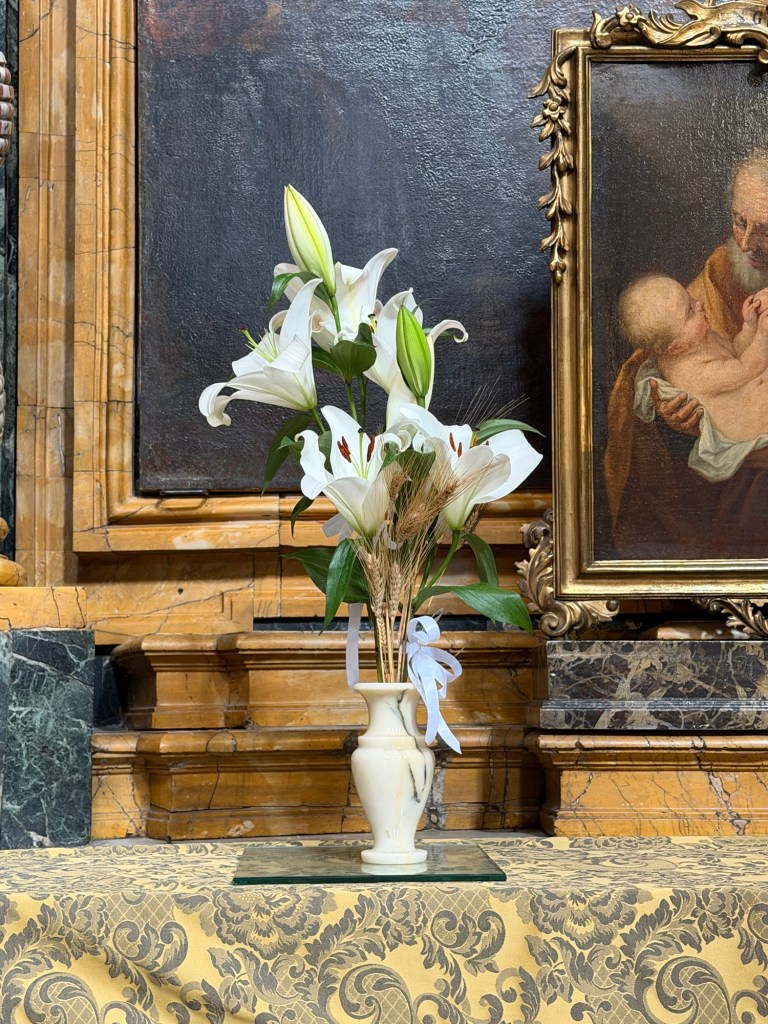
My eyes are accustomed to simple vases of lilies, the symbol of the Virgin Mary. This floral arrangement made me think of paintings of the Annunciation, in which the flowers so often appear.
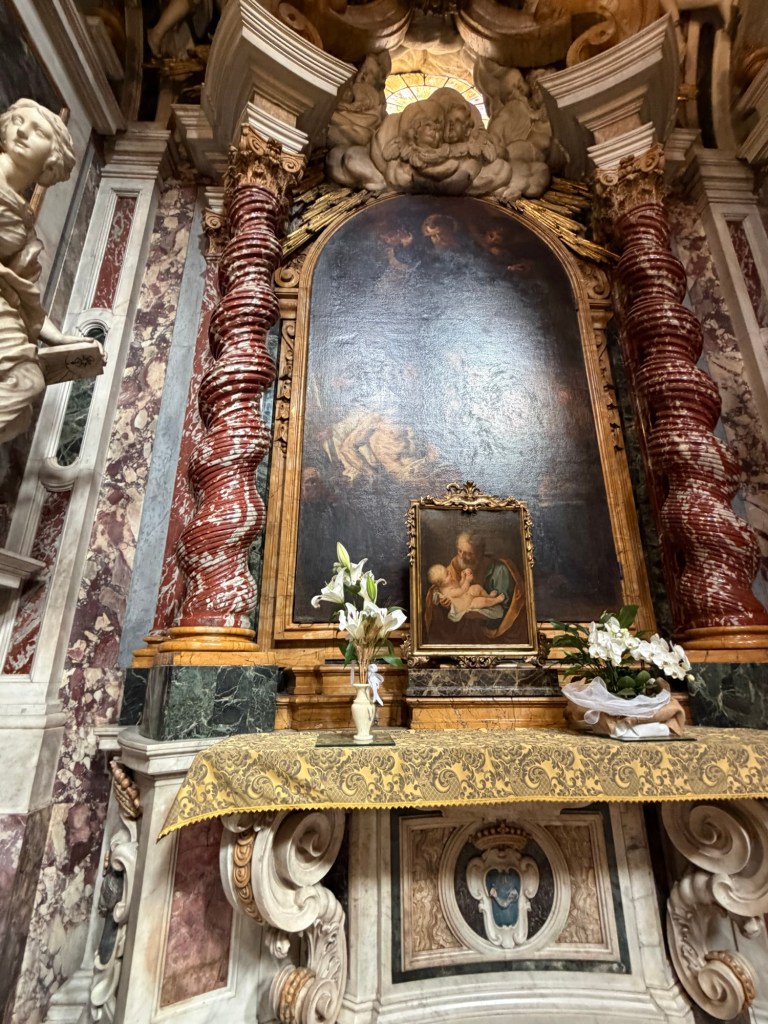
A quick look at another chapel.
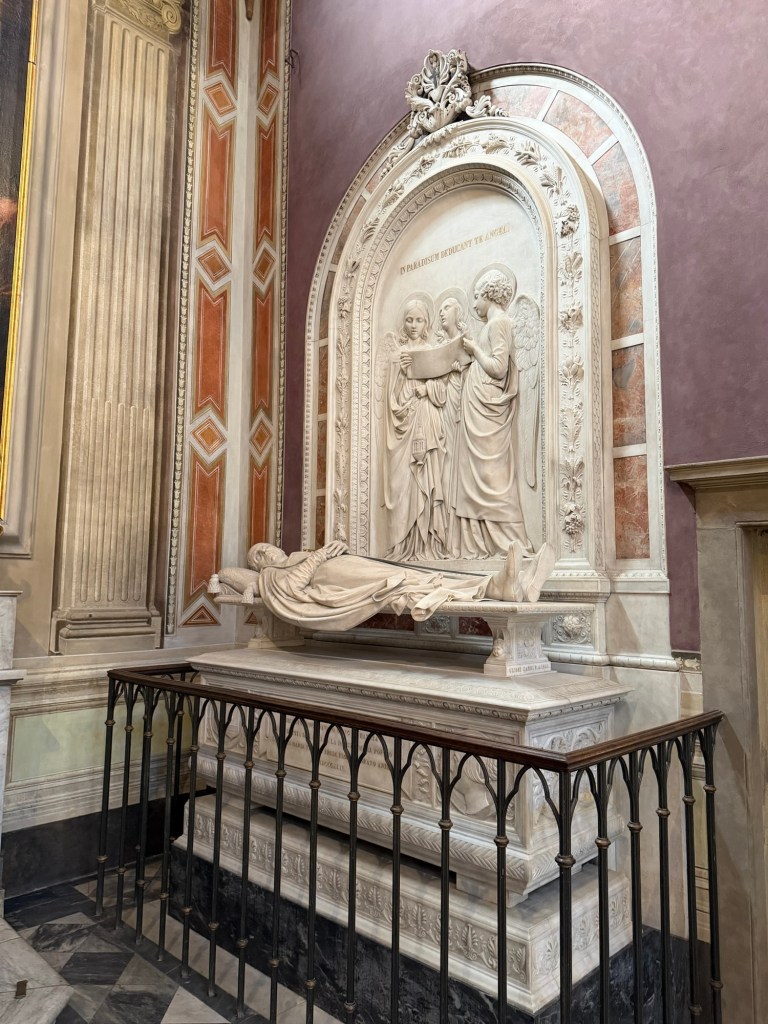
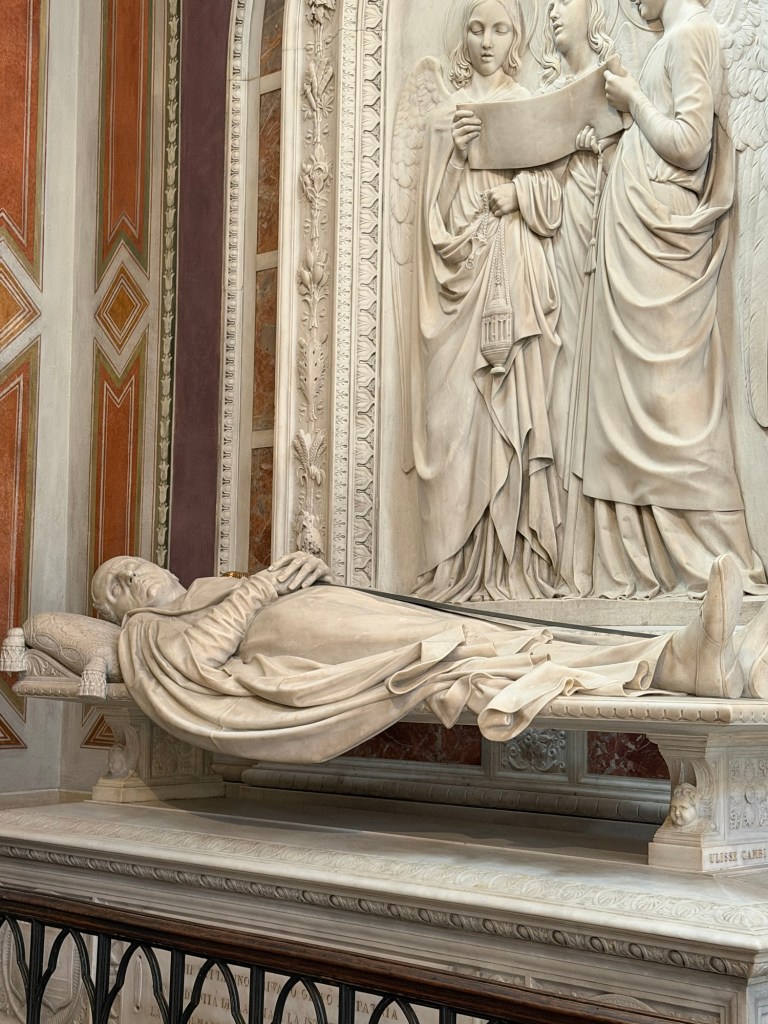
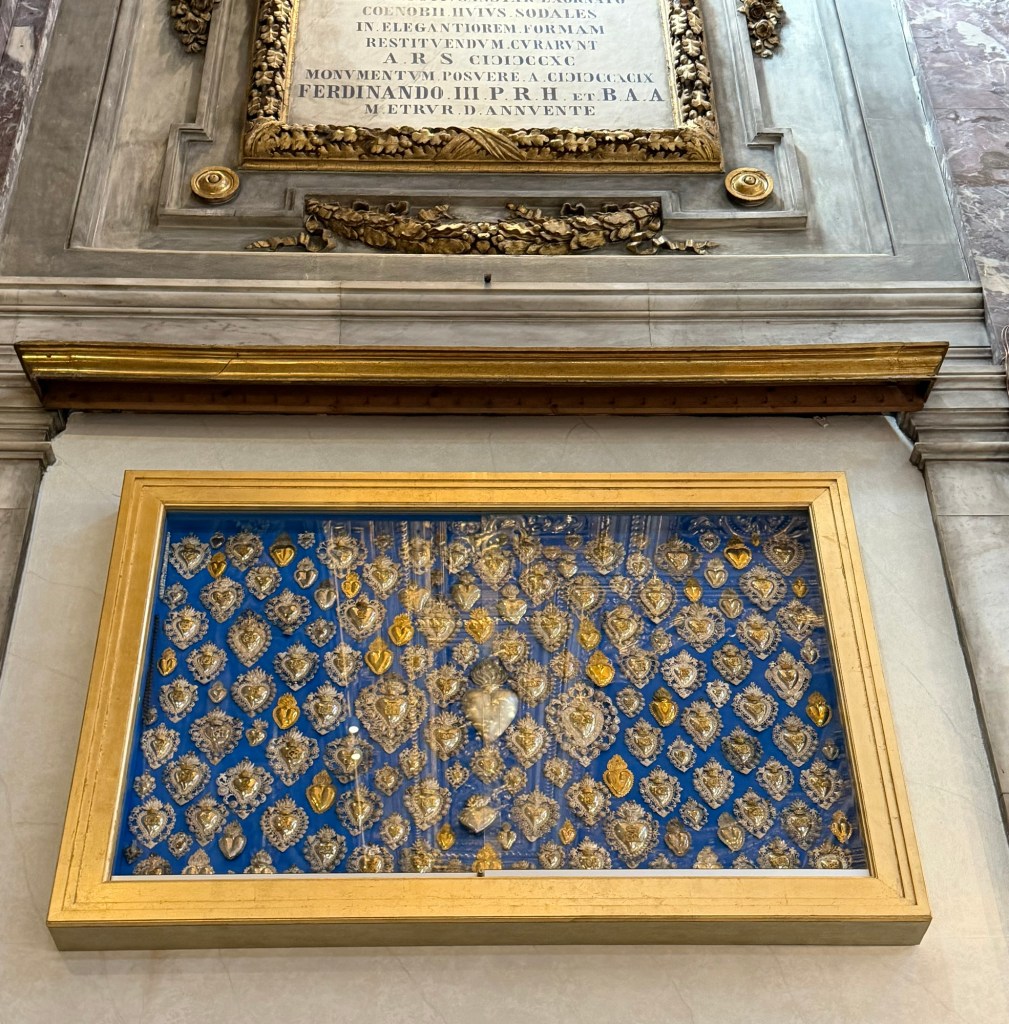
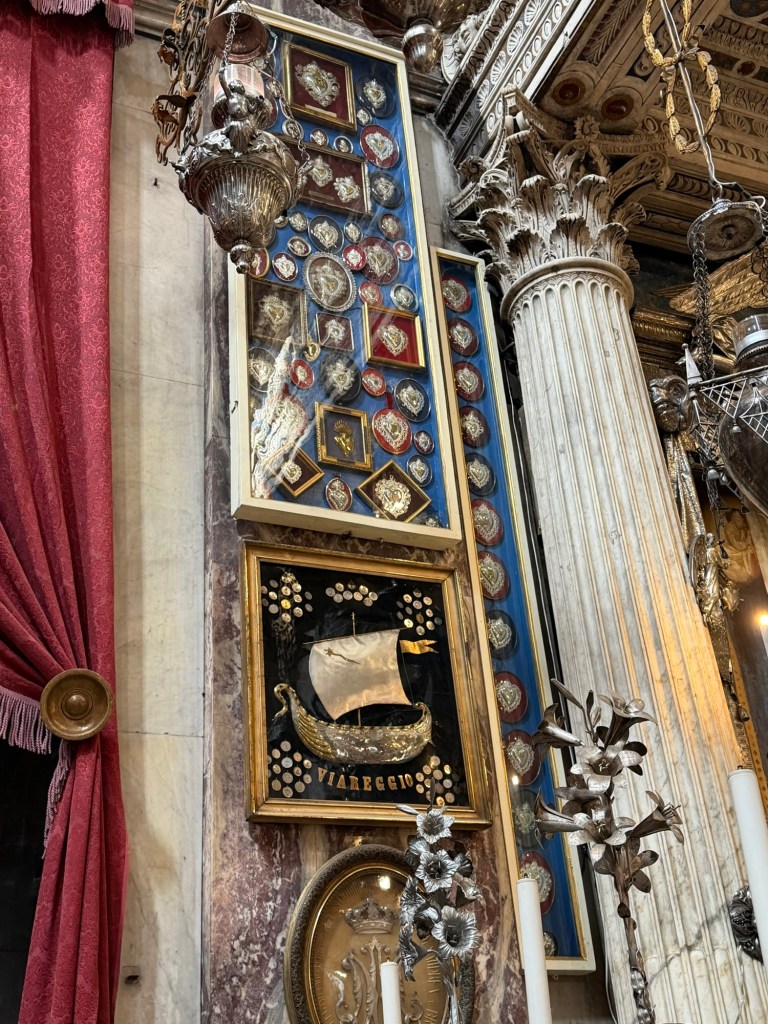
Back to the tabernacle. Some of the votive offerings left at the church as a prayer for help have been framed and are permanently displayed. Of the survey thousands of votives offered over the years, I wonder how these in particular were chosen for exhibition?
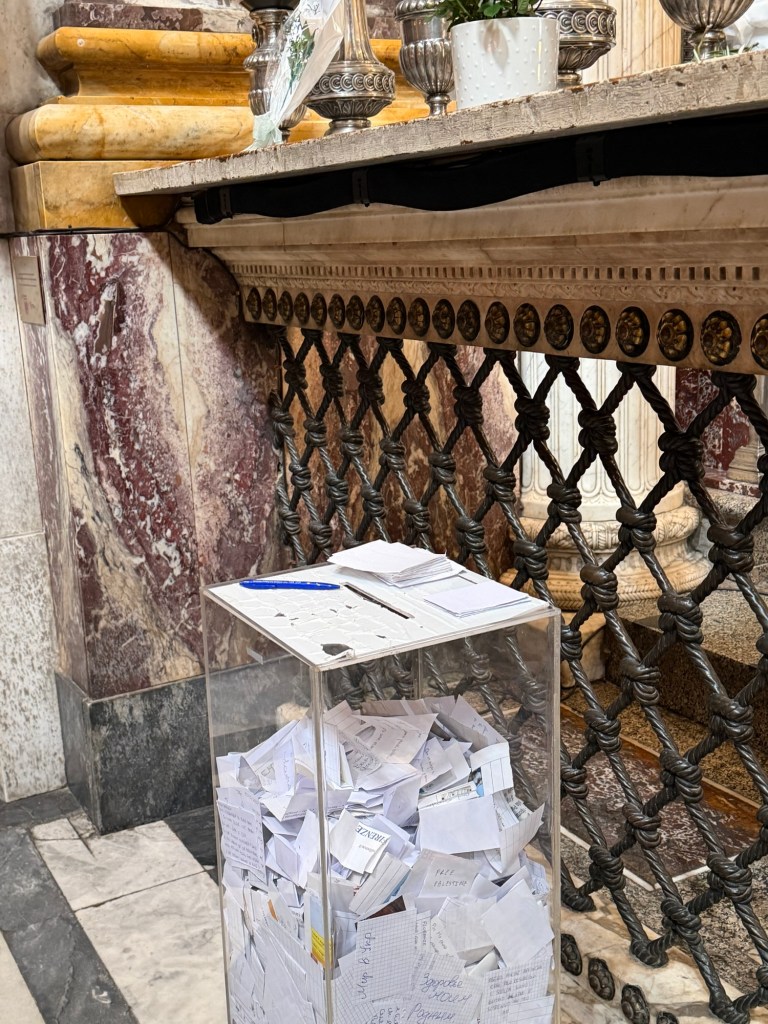
I took the opportunity to write a prayer for deliverance. You never know, it might be answered.
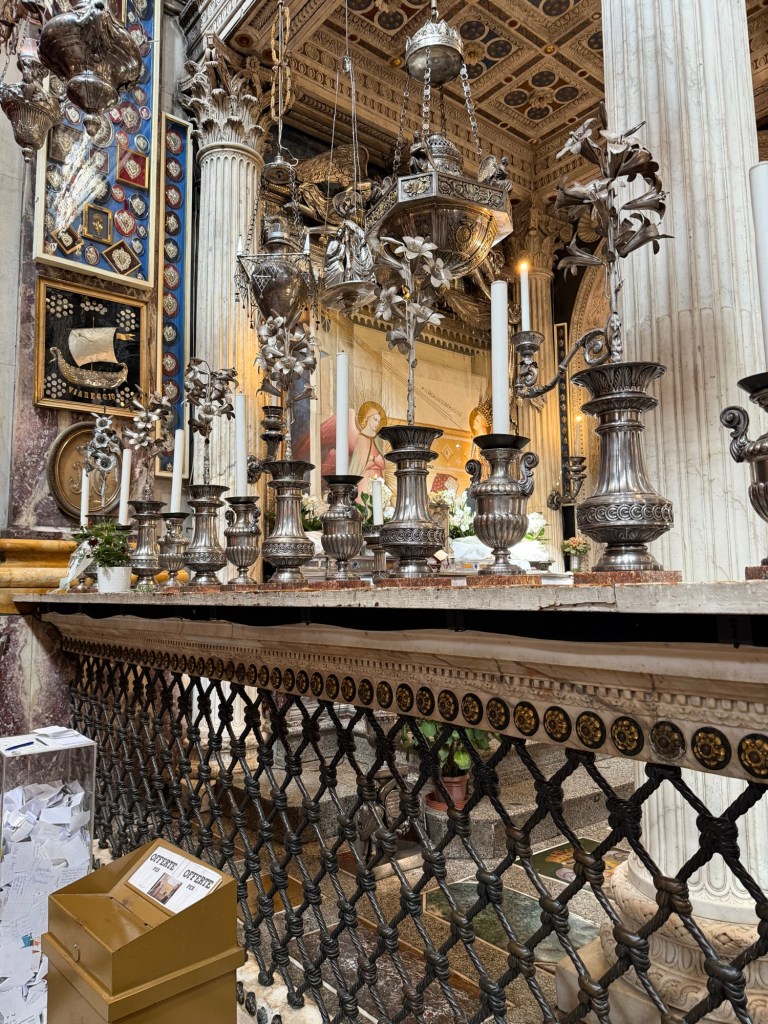
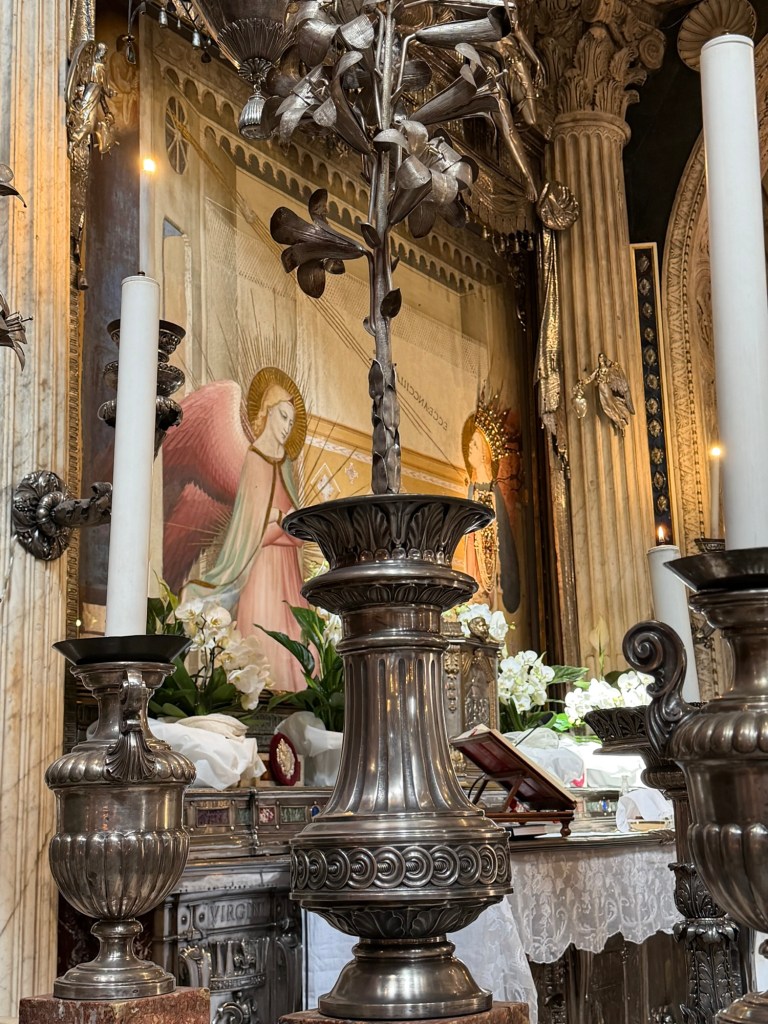
The metal vases of metal lilies are very striking to my eye.
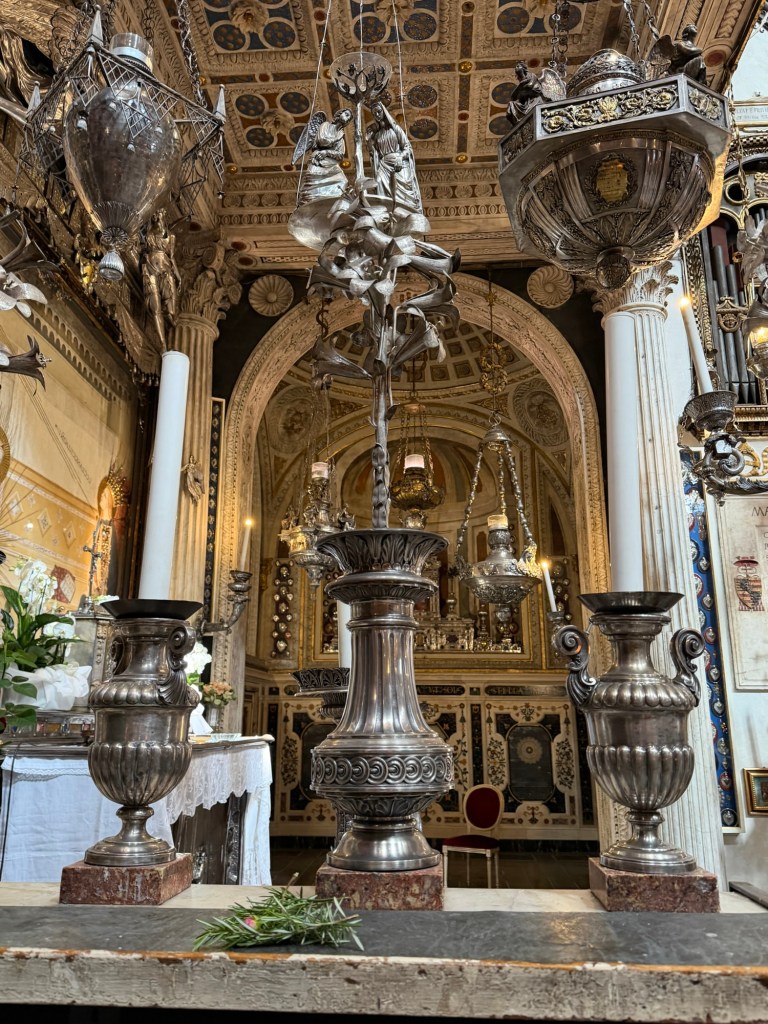
As ar the censors. So elaborate and quite beautiful.
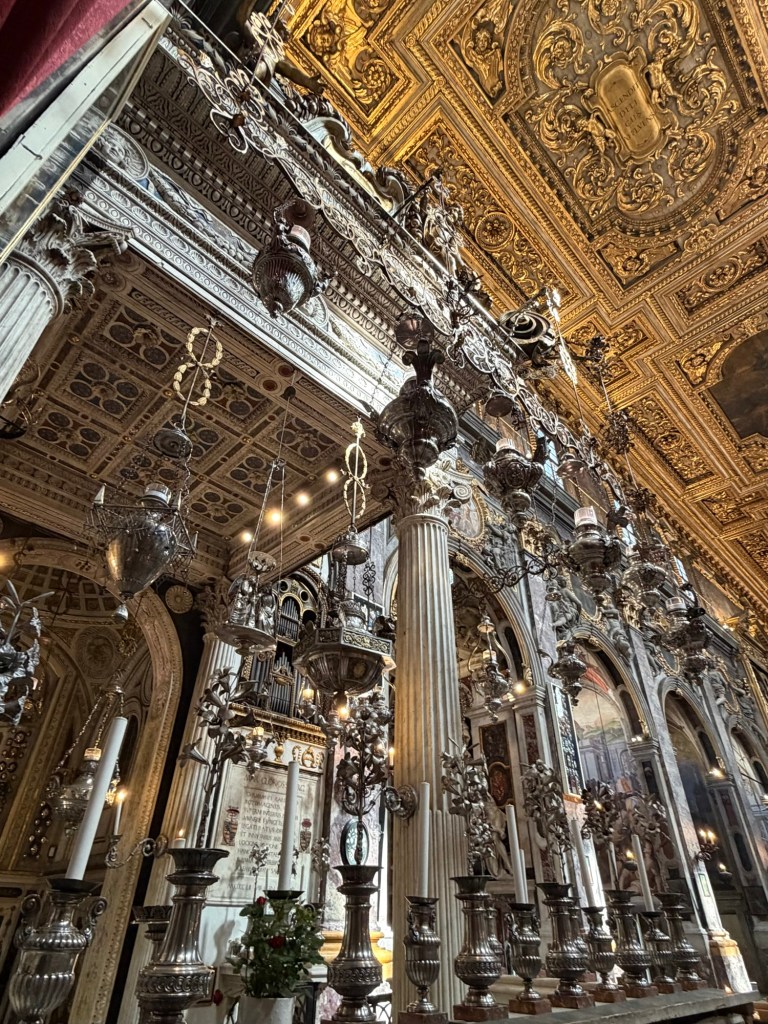
Walking out of the church, the duomo is only a stone’s throw away!
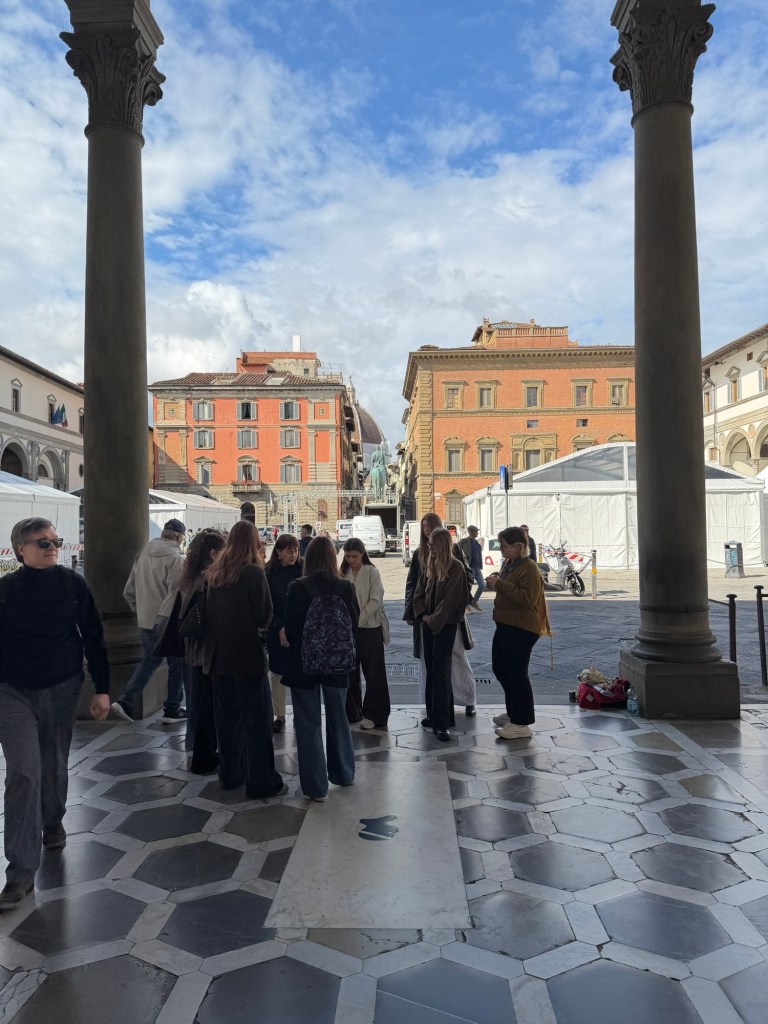
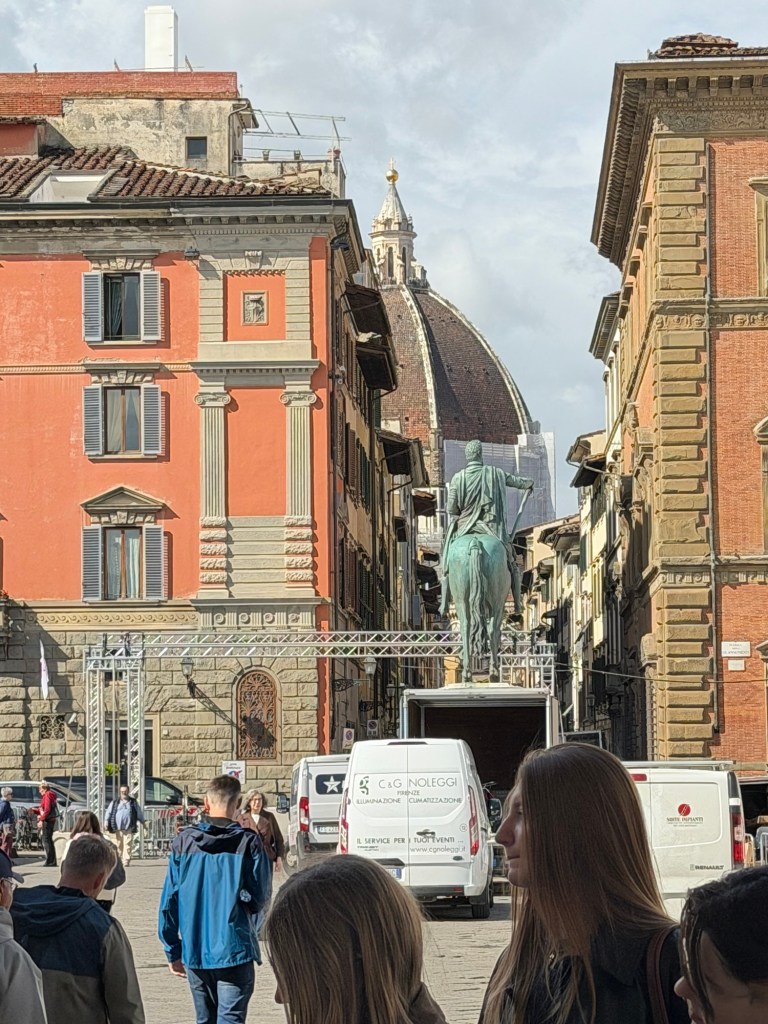
Ah, Firenze! I love you so!


Such glittery extravagence
You captured it in 3 words! Love that!