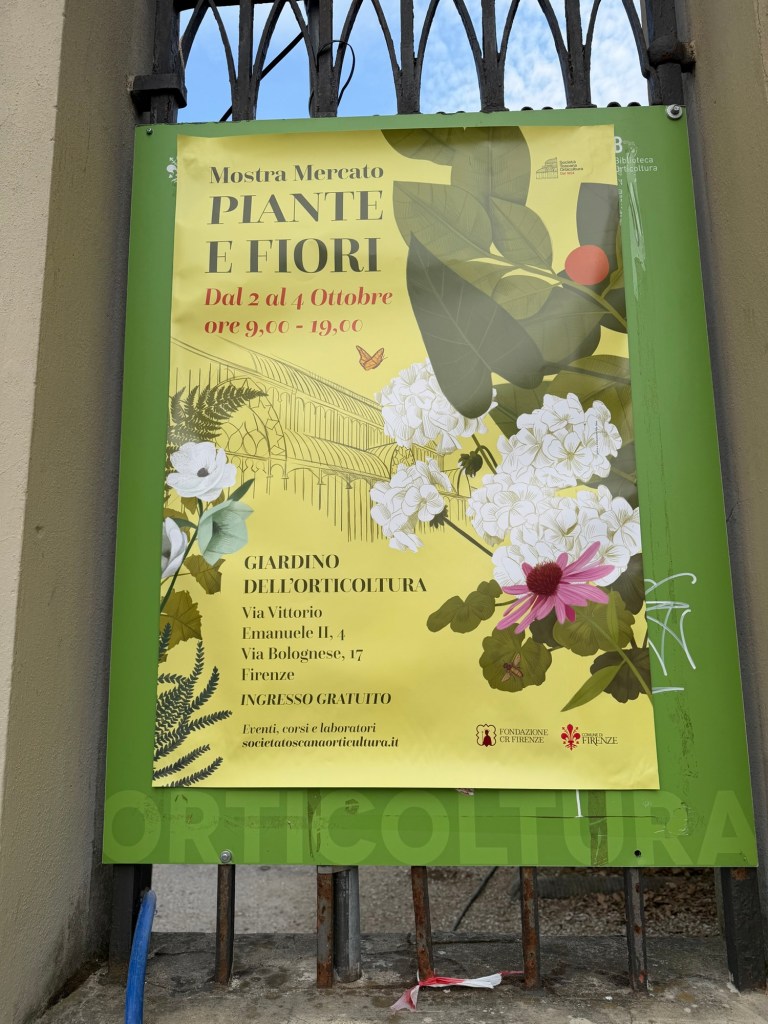
Atthelovely Giardinodell’ Orticultura, in my old neighborhood of Florence, one can enjoy the season’s finest weather and the greatest plant vendors in all of Florence!
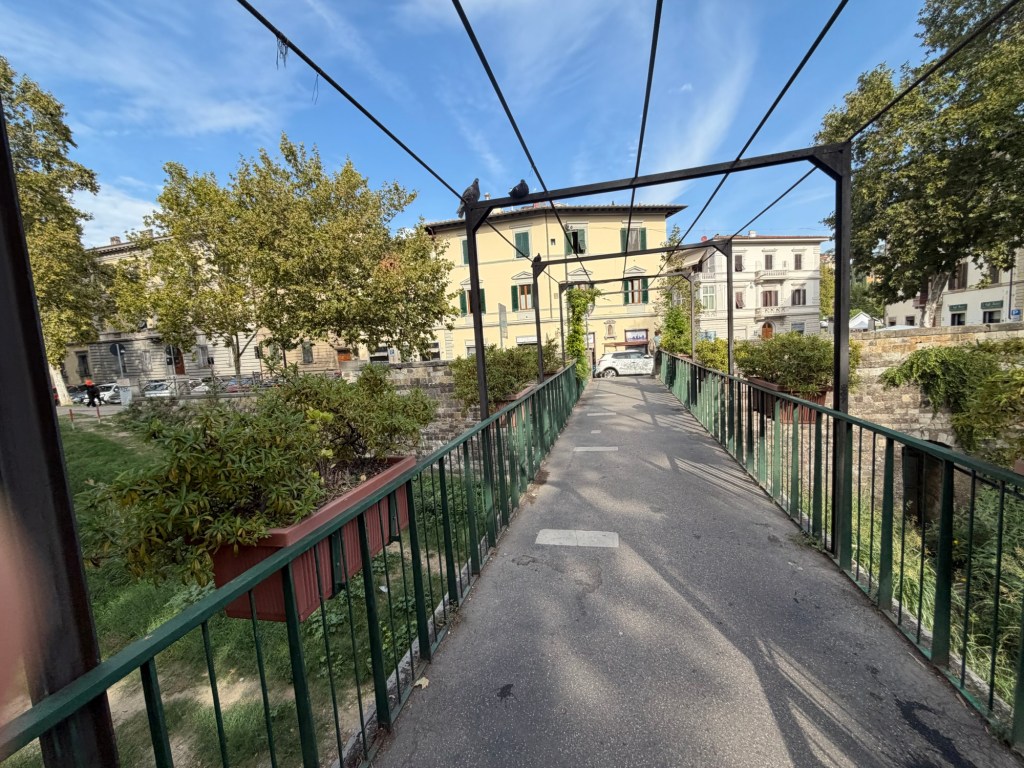
Here I am walking across the little bridge into this pretty zone where I was lucky to live before, during, and after-Covid. I love these passerelle over ilMugnone, the creek or torrente that runs along this section of Florence. It once demarcated the northern edge of the city, but no more.
Entering the garden:
I got there early, not a big crowd yet, just how I like it! And I love the little boy’s excitement at entering!
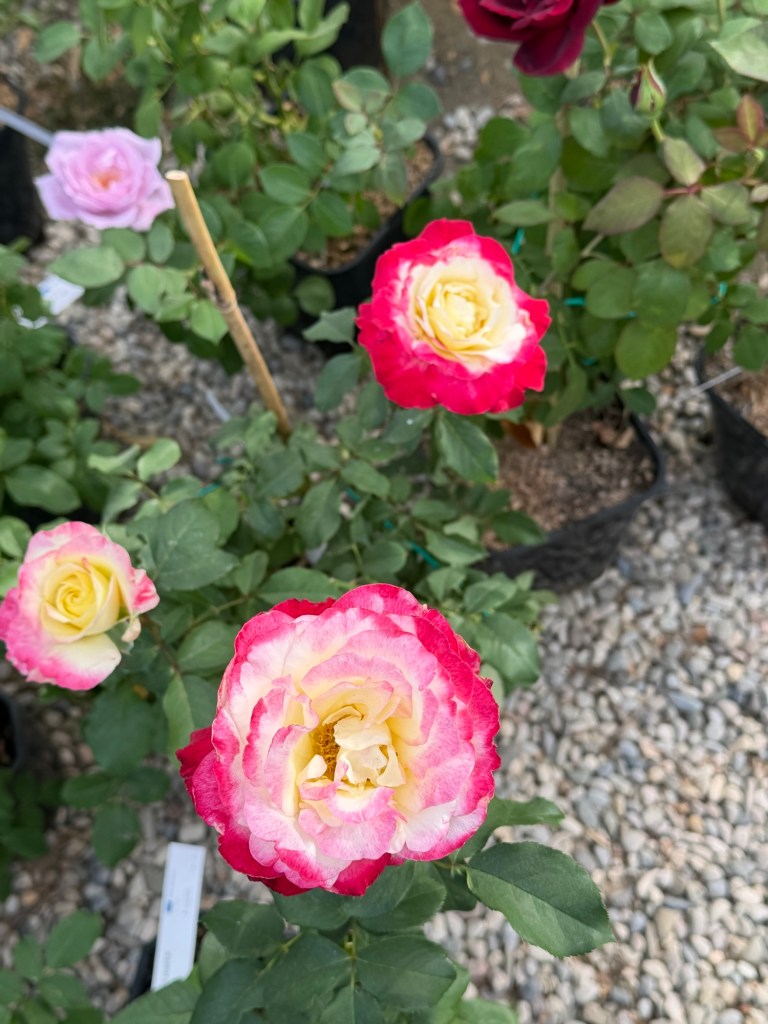
I was immediately arrested by the intensity of this rose!
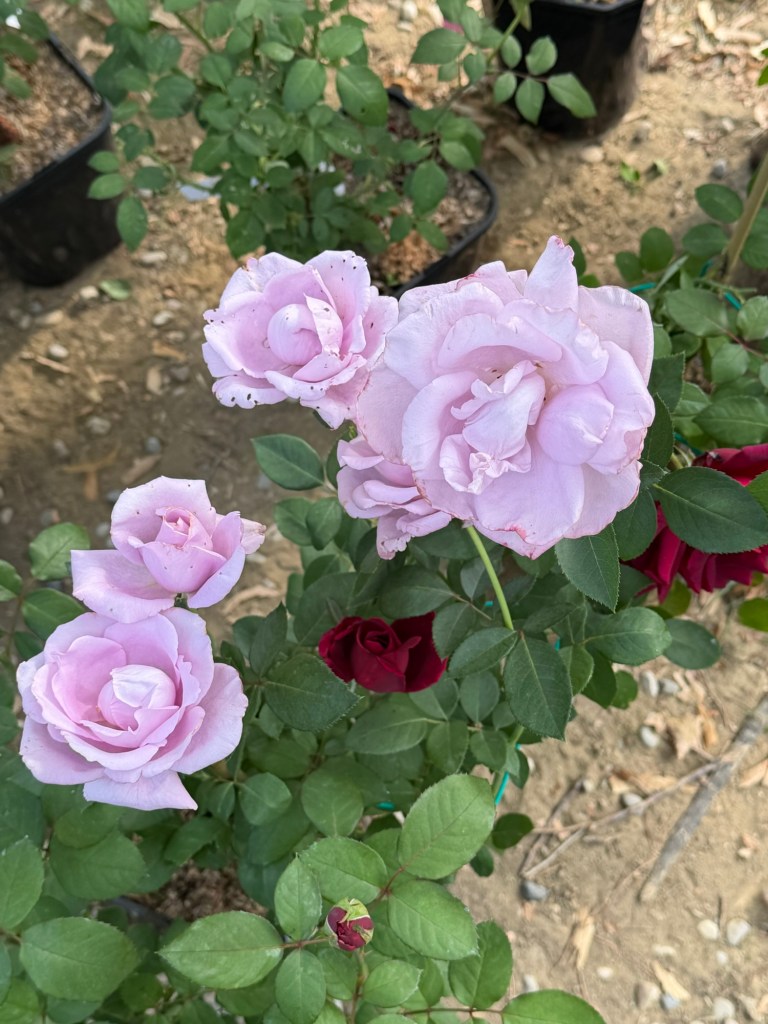
And equally drawn to the gentle pale color of this one.
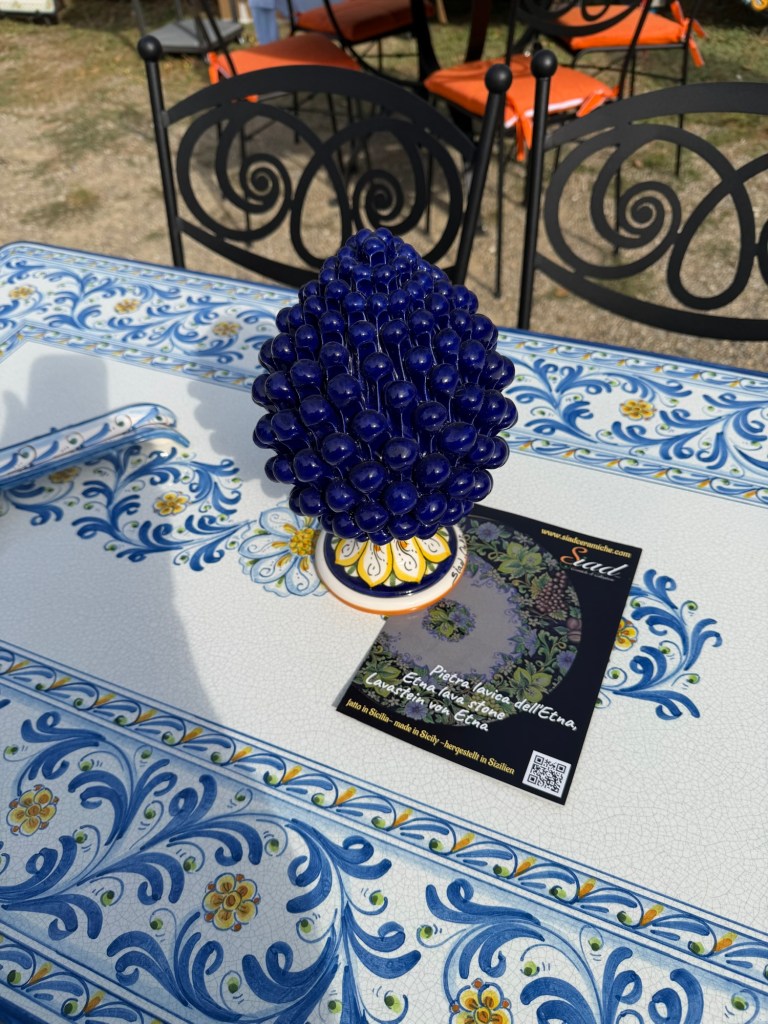
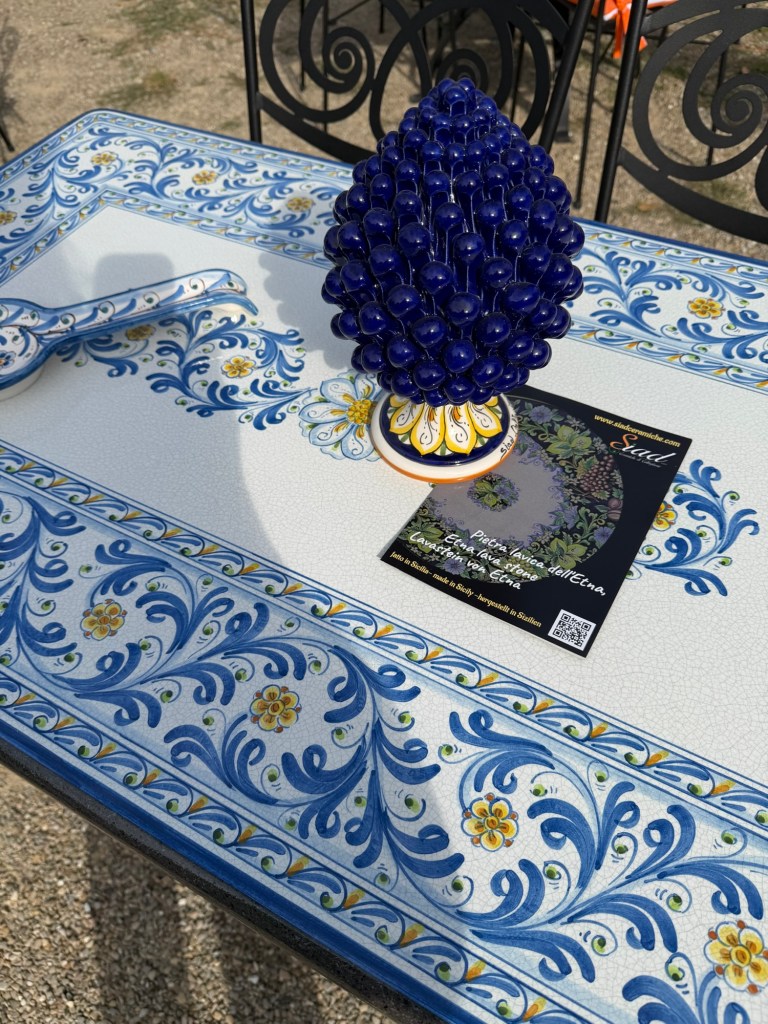
You can find artisan made ceramics here and other things associated with outdoor living, even some natural fiber clothing and accessories. But never have I ever seen this southern Italian symbol of hospitality and good fortune, the pine cone, in such an intense shade of blue!
Then I realized that the tabletop, some dishes and vases are also made by this ditta or business and I had to take a pic of the larger scene. But that blue!! I can’t get over it.
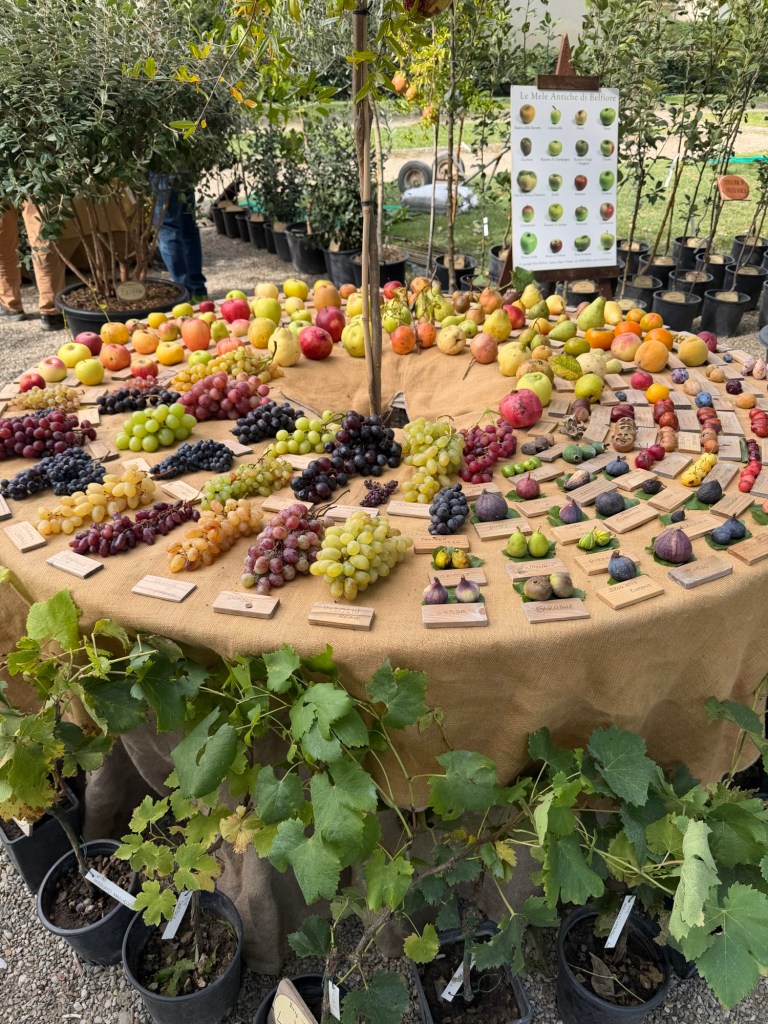
Always my favorite part of the fall show is the grouping of fruits. It takes me back to my childhood visits to our state fair. But, back where I come from we never had such a selection of fruits to grow. The plants would have died in their first month in that inhospitable climate. The Great Plains of the American West. Best for buffalos and buffalo grass.
We are definitely not in Kansas anymore (Kansas was not my home state, but it’s pretty much the same thing).
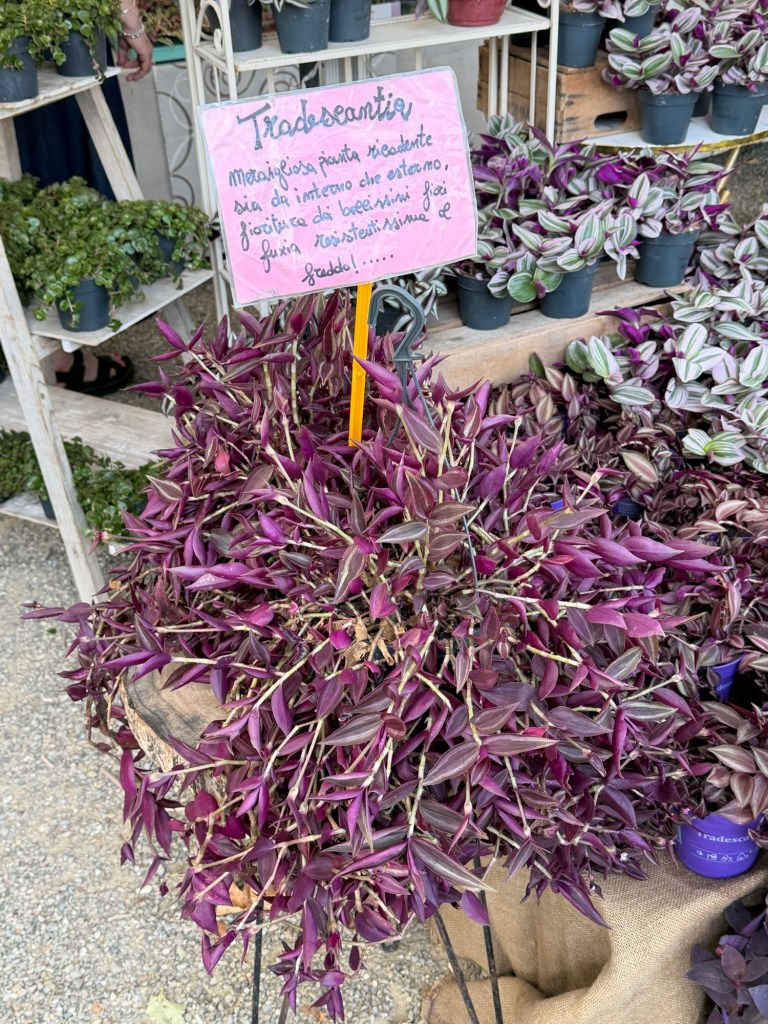
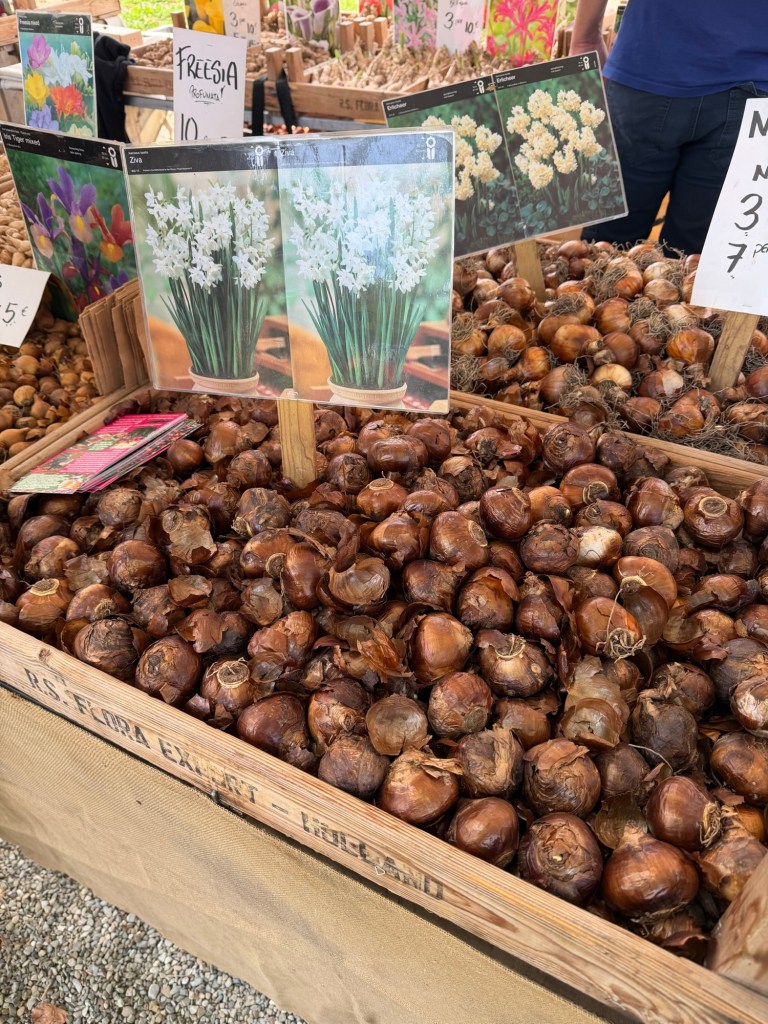
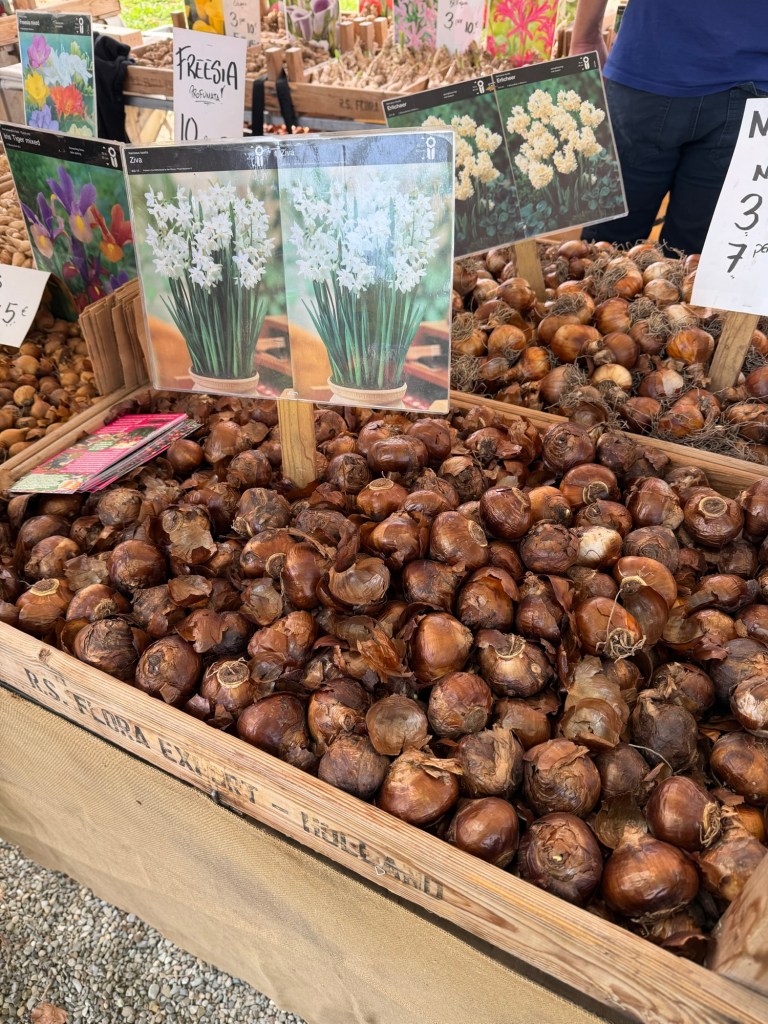
Bulbs are on offer here. Many of them and many types! I chose a few. I don’t really have the right kind of space for planting bulbs on my terrace, but as usual, I couldn’t help myself from buying a few.
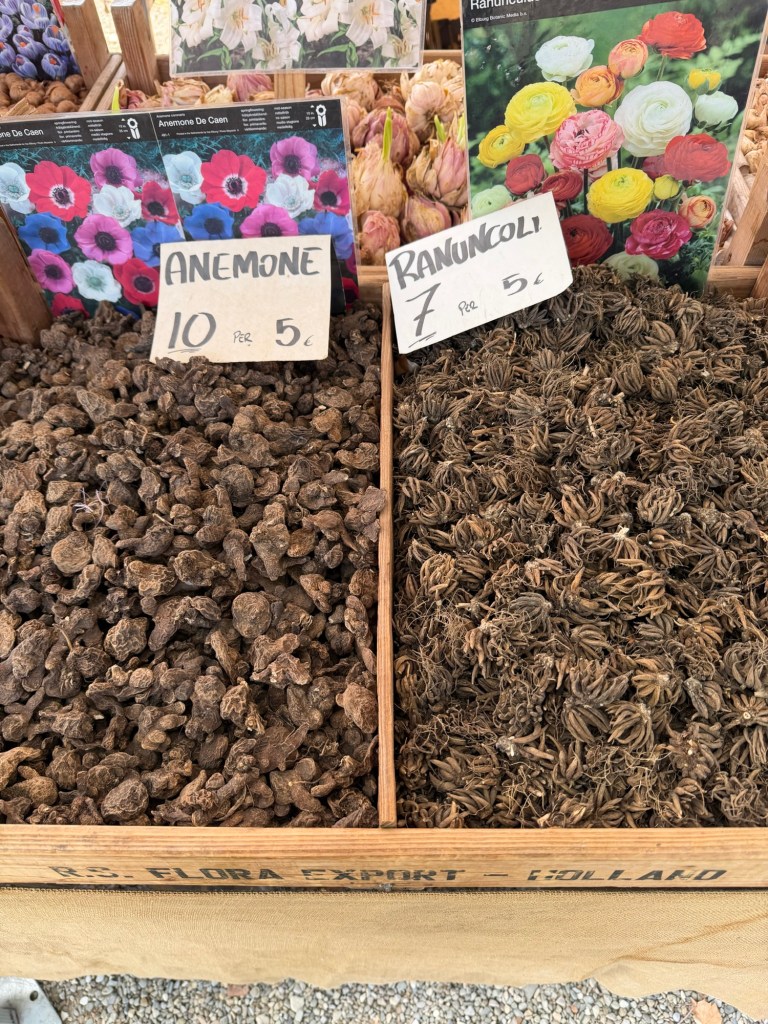
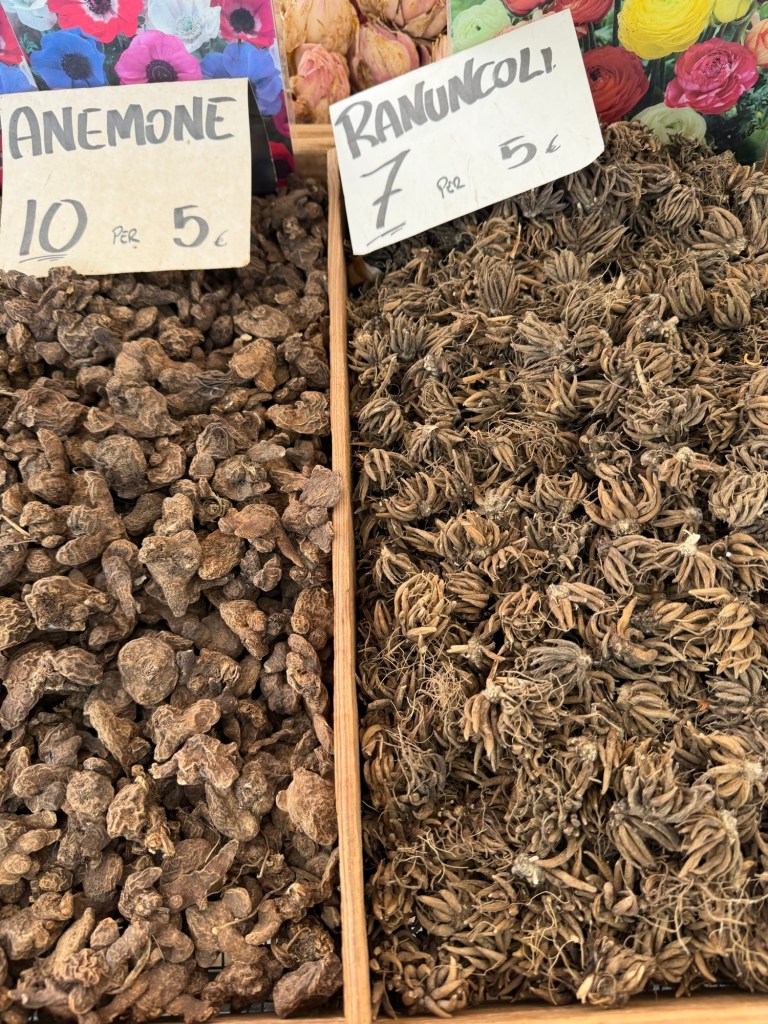
I bought some anemone and ranucoli (ranunculus) opportunities. You can’t really call them bulbs. And you can’t guarantee they will grow and produce the flowers you yearn for. When you buy a plant or bulb, I contend you are purchasing a dream. I hope my little dreams come true next primavera. I certainly will do my part. The vendor told me plant them in Novembre.Lofarò.
Hard to believe these dry little nubs have life in them. Can you imagine harvesting these? Painstaking work.
But I chose some paper whites as well to grow indoors at Christmastime. These are easier and more likely to perform as hoped. Fingers crossed.
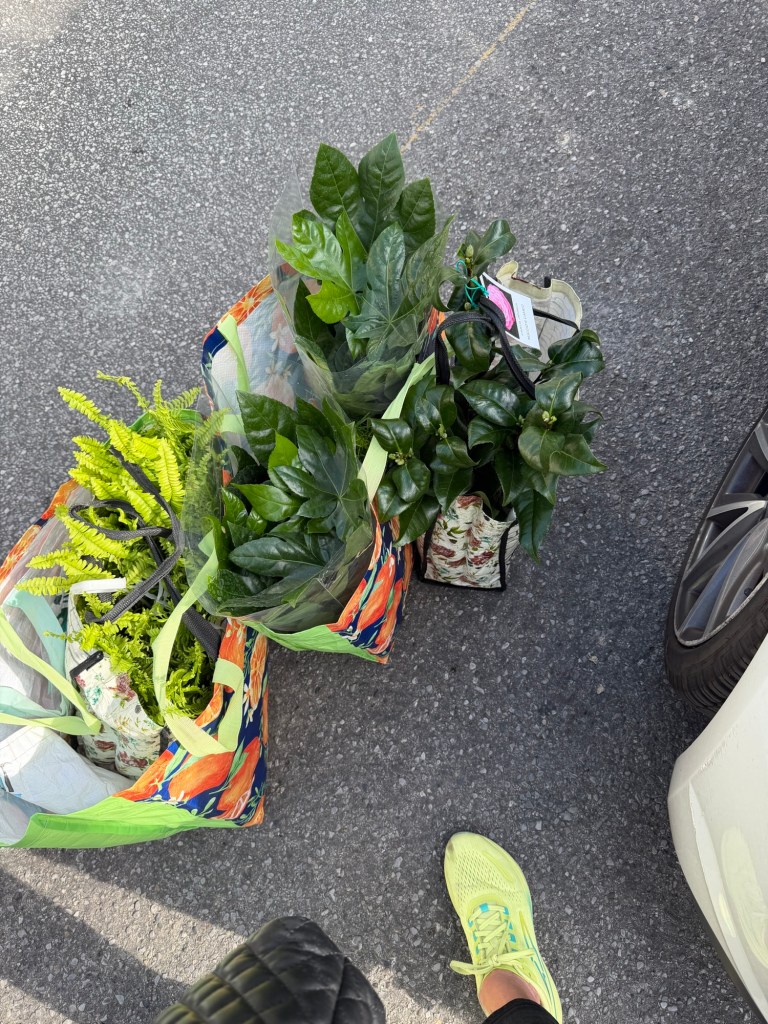
Here’s my haul.
I’ll catch the #13 bus that will take me home to my new neighborhood and terrace where I have pots and soil waiting to house the new additions to my collection.
These plants will grow just fine outdoors in the Tuscan winter, giving me something green (the color of hope) and pretty to look at on my terrace during the dull gray days of inverno.
The bulbs I bought are inside the bags but not visible to the naked eye.
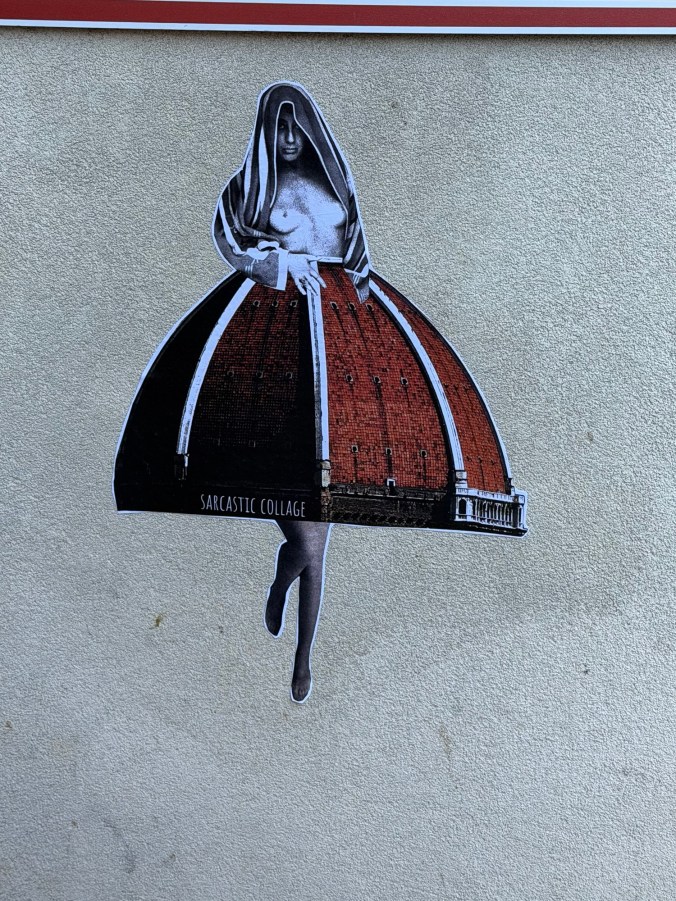
Today as I was walking briskly through the center of Florence, I was arrested by this image pasted upon an exterior wall. It stopped me in my tracks and I hurried back to make a photo.
This is a very unusual usage of the dome, and I highly approve! Bravo or brava, to whomever this idea first occurred!
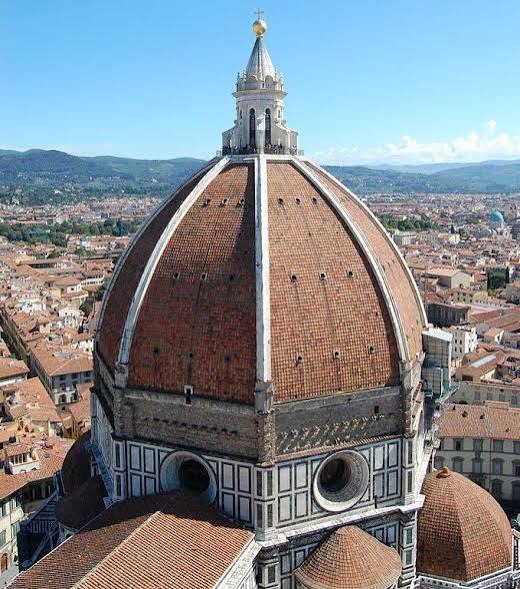
I realize the shape of the time is not fresh in everyone’s mind, so here’s a refresher:
I’d happily wear a skirt made in its shape!
I do already have an umbrella in the shape of the dome!
In the heart of the historic center of the city there are lots of these bucchette del vino, or wine windows embedded into the walls of buildings you pass on the sidewalks. They were built in the medieval age of the citta, allowing passersby to purchase a glass of wine as they walked by.
Some of them are operational again.
I spied a wine transaction going on recently and stopped to film it. First you ring the bell over the window to show your interest. Someone on the other side will great you, ready to offer you a selection of red, white, or rose wine, typically tailored to the season (it is Italy after all!). You pay, and presto! you are given your wine! That’s all there is to it to enjoy a Florentine tradition that dates back 700 years or more.
It you’ve been fortunate enough to travel to Italy, chances are good that you have been through the Stazione Termini in Rome. If you think about the name of the station, it would seem to be named Termini because it is the final stop or terminus of a journey.
But in fact, contrary to popular belief, the name for Roma Termini does not come from its being a train terminal or terminus. Instead, the name originates directly from the ancient Roman baths that stand right across the piazza from the station’s main entrance.
Here’s how the name evolved through a linguistic journey over the centuries:
The ancient Latin word for public baths is thermae.
In 306 AD, the colossal Baths of Diocletian (Thermae Diocletiani) were completed in this area. They were the largest public bath complex in the entire Roman Empire.
Over time, the Latin thermae evolved into the Italian word terme. The neighborhood built up around the ruins gradually became known as the Termini district.
Consequently, everything discovered or built on this specific hill, from the ancient residential complex (Villa di Termini) to the Renaissance estate (Villa Peretti Montalto) and finally the 1862 railway hub, adopted the Termini name simply because of its proximity to the ancient baths or thermae.
In 1860 Pope Pius IX decided to build Rome’s Central Railway Station in what was then the sprawling gardens of the Renaissance-era Villa Peretti Montalto. I wonder how he and his advisors chose this neighborhood for rebuilding the city? The whole concept just seems so foreign to me. Can you imagine Pope Leo XIV waking up one morning and saying he was going to install a new airport in a settled section of Rome?! But, times have changed since the 1860s. Prior to that, the popes and Roman rulers had dictated the shape of the city.
In 1862, while workers were clearing the massive earth embankments that had buried the ancient Servian Wall, they discovered ancient structures. What else is new? It is Rome after all!
After the annexation of Rome to the Kingdom of Italy in 1870, the new government decided to make the new railway Stazione (di) Termini a key element in the design of a “modern” capital and in 1888 the Casino of Villa Peretti and the long sequence of low buildings on its northern side were pulled down to make room for a large square.
When we walk over that square, which is called the Piazza dei Cinquecento, we are treading over two Roman insulae (multi-story apartment buildings in ancient Rome that housed the city’s common working and middle-class populations; the Latin word literally translates to “island,” likely because these large buildings stood isolated like islands surrounded by streets) and a later stately building form the Antoinine period (c. 2nd C AD).
These discoveries were made in 1947-49, during the construction of Rome’s first underground transit system (Metro B line), when archeologists initiated a systematic dig. They found a sprawling wing from the Antonine period, uncovering an entrance hall, an advanced thermal bath suite, a decorated nymphaeum (fountain room), and a massive apse-shaped hall. This phase yielded even later art, including 4th-century frescoes depicting bathers wearing loincloths.
Unfortunately, the original villa structures were demolished during the rapid urban expansion and railway construction of late 19th-century, early 20th-century Rome.
But we are extremely fortunate because the surviving decorations and frescoes from that ancient site are preserved and exhibited on the second floor of the Palazzo Massimo alle Terme, part of the National Roman Museum about which I have been going on and on about for several posts.
The detached fresco panels show elaborate perspective designs, delicate architectural frameworks, and decorative pavilions. The artwork represents the rich interior decoration styles used in high-society Roman residences during the peak of the empire. The gallery also exhibits geometric floor mosaics and black-and-white plant motifs recovered from the same Termini archaeological zone.
The frescos are outstanding because they illustrate the development of pictorial styles in the full Imperial Age. They represent refined examples of Roman painting, often characterized by illusionistic perspectives and fantastical settings typical of sumptuous urban residences.The paintings are very refined.
And, if you’ve got time, try this 1950s movie! Bet you’ve never seen it! https://youtu.be/_ZJbqmKE16k Imagine, an entire film set pretty much within the Stazione Termini.
Here’s a postscript about the film: Terminal Station (Italian: Stazione Termini, released in the United States as Indiscretion of an American Wife) is a 1953 romantic drama film directed and produced by Vittorio De Sica and starring Jennifer Jones, Montgomery Clift and Richard Beymer. Truman Capote was one of the screenwriters. It tells the story of the love affair between a married American woman and an Italian/American academic. The title refers to the Roma Termini railway station in Rome, where the film takes place. The film was entered into the 1953 Cannes Film Festival.
Terminal Station was the first Hollywood film by Italian director De Sica, as an international coproduction with American mogul David O. Selznick. The collaboration was fraught with constant and severe creative differences that resulted in two different versions of the film, an 89-minute Italian version and a 72-minute American recut version with a different name. After this experience, De Sica never again worked with a Hollywood producer, although he later directed English-language films with American actors.
The Eternal City, with its endless stories to tell.
Did you realize that just steps from the train station in Rome you can walk into a Roman era frescoed room, completely decorated in a way to make you feel you are in a lush exterior garden? Not only are the frescoes extraordinary, it is absolutely remarkable that they are so accessible (assuming of course that you can get to Rome).
So, let’s look and discuss!
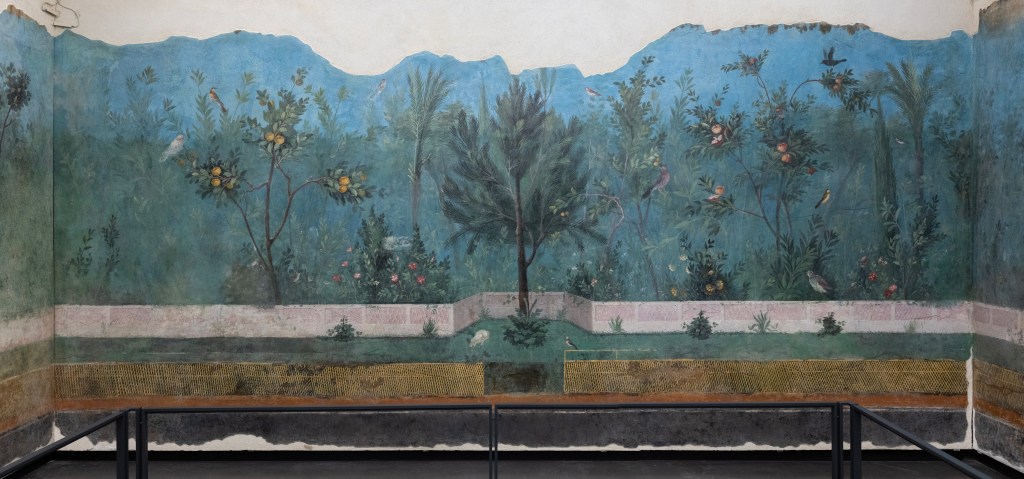
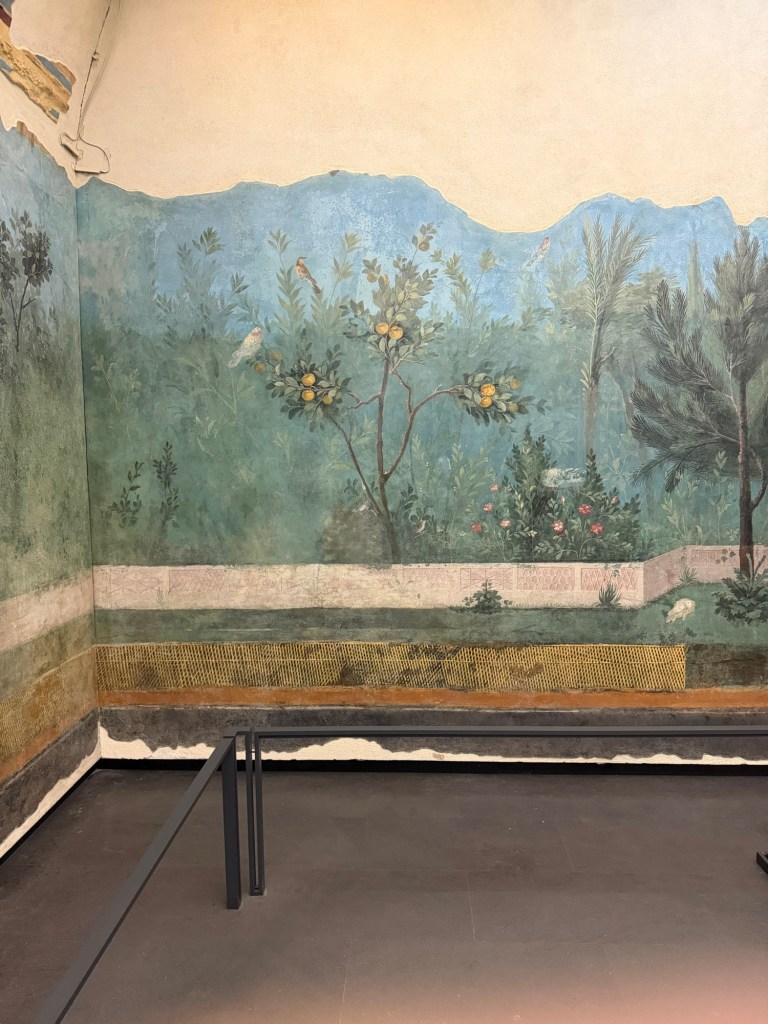
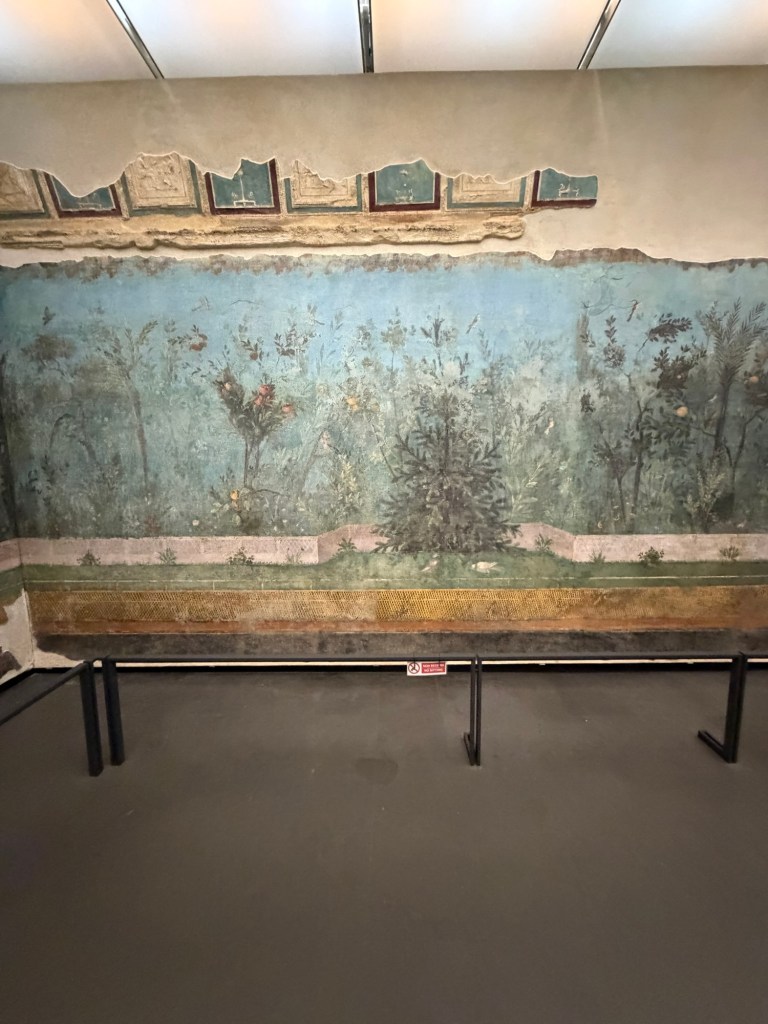
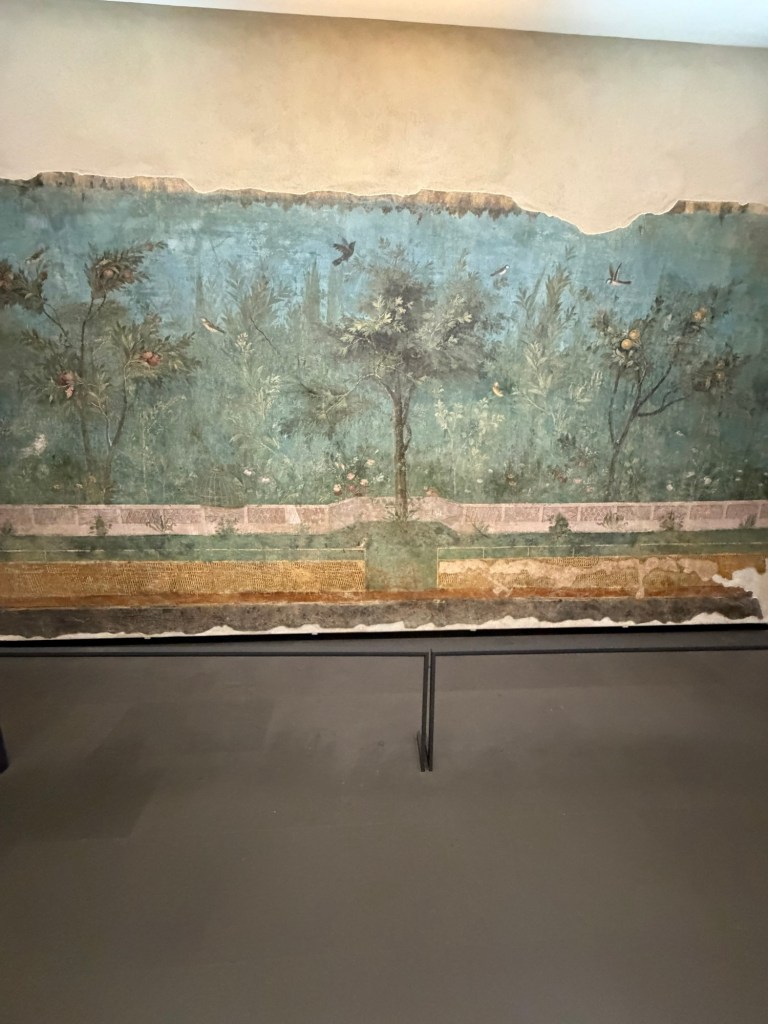
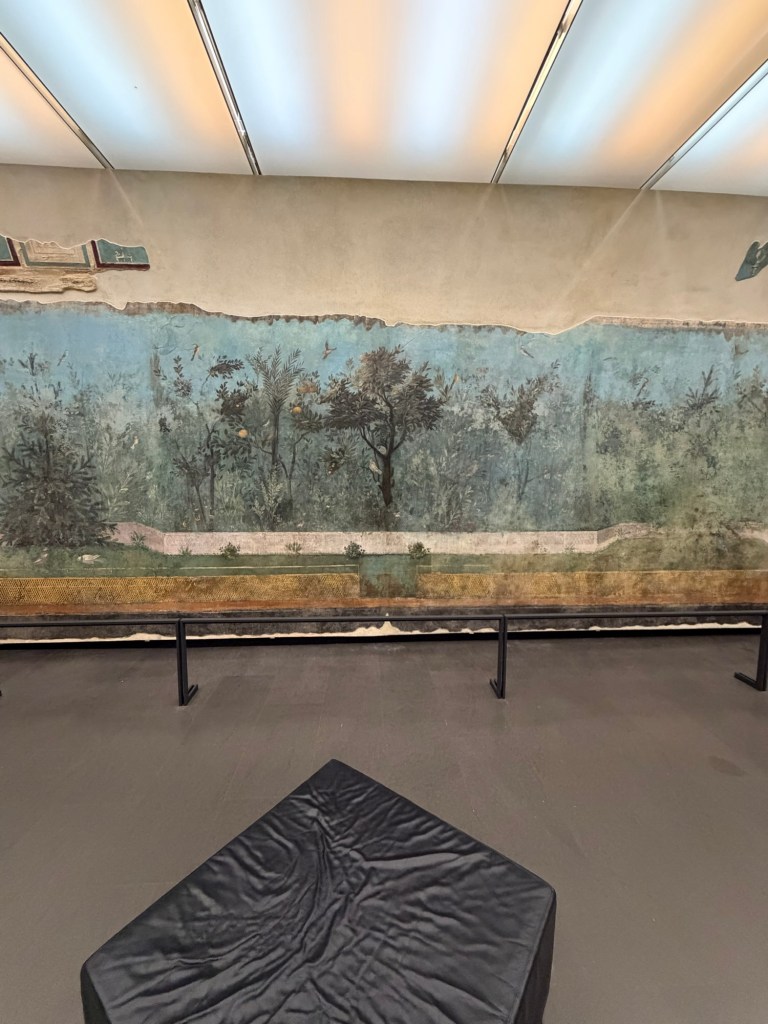
This lush painted garden decorated the triclinium or dining room of Livia, the wife of the Emperor Augustus, in her villa along the Via Flaminia. Did you know that it was from the laurel bushes grown in her groves at this villa that the leaves were taken to be used to create the triumphal crowns of the Roman Emperors? I mean, come on!
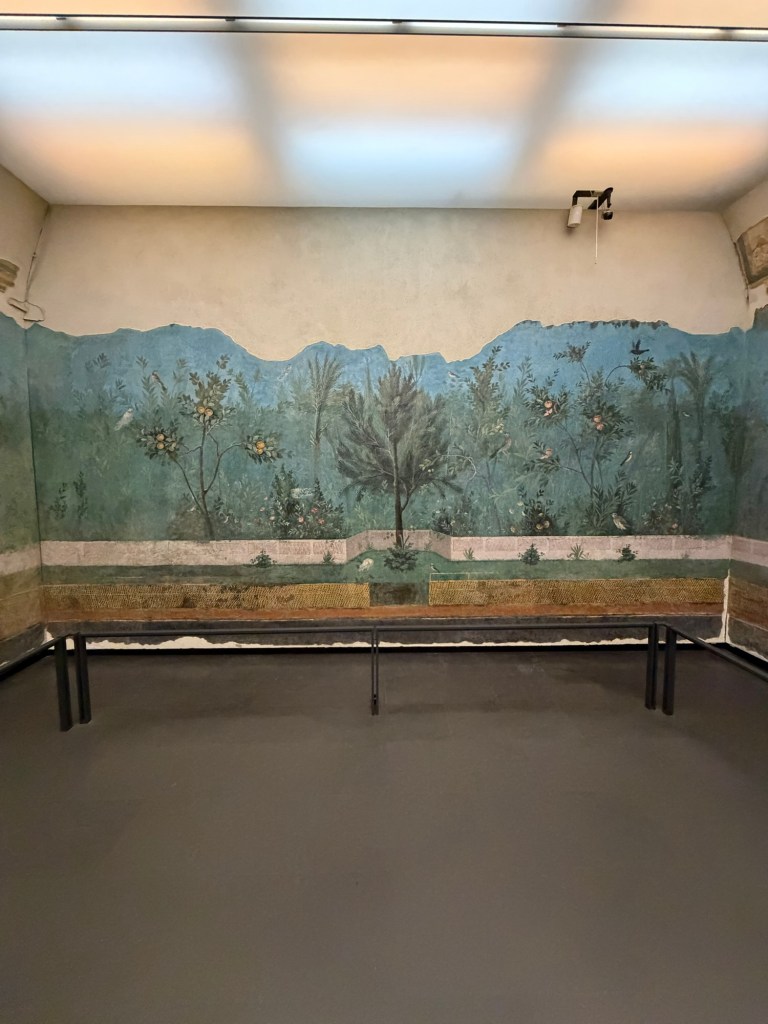
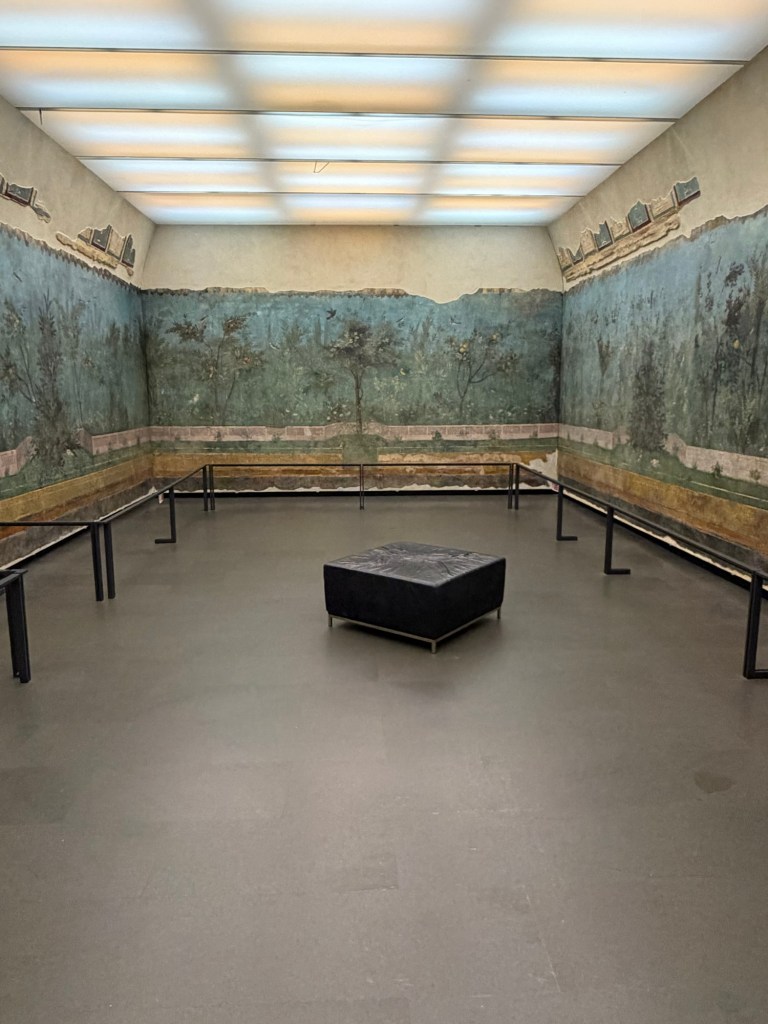
At the Palazzo Massimo near the Rome train station you can be immersed in this beautiful panted enclosure of 4 walls covered with blue skies and several types of trees including those bearing fruit and many other kinds of plants and an abundance of birds.
By Gleb Simonov – Own work, Public Domain
The ruins of the Villa of Livia still exist at Prima Porta, 12 kilometers north of Rome, Italy, along the Via Flaminia. The Villa may have been part of Livia Drusilla’s dowry that she brought when she married Octavian (later called the emperor Augustus), her second husband, in 39 BC. Some scholars believe that Livia may have received the site from her first husband, Tiberius Claudius Nero. However, most likely, it may also have been a gift given to her by Octavian upon their betrothal.
Ancient sources (Suetonius) tell us that Livia returned to this villa following the marriage. It was her sumptuous country residence complementing her house on the Palatine Hill in Rome. Livia was the original owner of the villa.
It was situated high up with a view down the Tiber Valley to Rome and the Apennine mountain rages. The upper terrace had a three sided portico with a belvedere over the valley. Some of the walls that retained the villa’s terraces can still be seen. It was originally built on a 20 meter plateau 14 kilometers north of Rome,
The location was strategically important due to the iron-rich cliffs of red tuff that approach the river Tiber at this point, the confluence of several roads, and the northern entrance to Rome. The name Prima Porta (First Door) came from an arch of the aqueduct over the Via Flaminia, which brought water to the villa and which travelers saw as the first indication of having reached Rome.
The villa was built and modified in nine phases, from the late republican age to the 6th century AD. After Livia, it remained an imperial residence.
Its Latin name, Villa Ad Gallinas Albas, referred to its breed of white chickens, which was said by Suetonius to have auspiciously omened origins. The area acclaimed the name Ad Gallinas Albas because of the legend of white fowl carrying a laurel branch in it beak that fell from the talons of an eagle and onto Livia Drusilla’s lap. It is said that the emperor kept the fowl and its offspring.
The villa and gardens have been excavated and can be visited. There are three vaulted subterranean rooms, the largest of which contained superb illusionistic frescoes of garden views in which all the plants and trees flower and fruit at once. These have since been removed to Rome, where, following cleaning and restoration, they have been installed in the Palazzo Massimo. The vault above the fresco was covered with stucco reliefs, some of which survive.
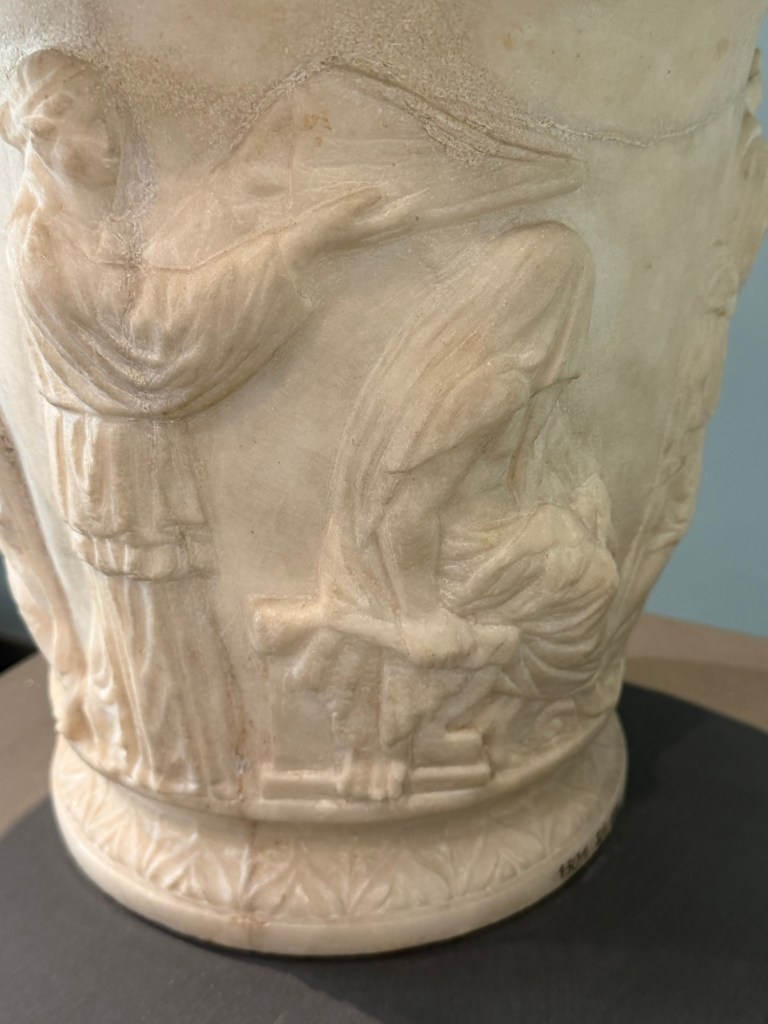
The site was rediscovered and explored as early as 1596, but it was not recognized as the Villa of Livia until the 19th century. In 1863–1864, a marble krater carved in refined low relief was discovered at the site. On 20 April 1863, the famous heroic marble statue of Augustus, the Augustus of Prima Porta, was found at the villa; it is now in the Vatican Museums (Braccio Nuovo). The magisterial Augustus is a marble copy of a bronze statue that celebrated the return in 20 BC of the military standards captured by the Parthians in 53 BC after the defeat of Crassus at Carrhae.
In the 19th century, the villa belonged to the Convent of Santa Maria in Via Lata.
A new series of more meticulous modern excavations was initiated in 1970. More modern scientific work began at the site in 1995, carried out by the Soprintendenza Archeologica di Roma and directed by Professor Gaetano Messineo, in tandem with the Swedish Institute in Rome.
New excavations starting from 2002 led to the discovery of the front of the platform structure (basis villae) crowned by a windowed portico (porticus fenestrata) and the rooms between this and the southern portico of a peristyle. An Augustan period peristyle was discovered in the central area. In the Flavian period a natatio (swimming pool) had been added in the garden of the peristyle and connected to the new baths. A mosaic featuring a marine thiasos was added later to the pool.
But, The Villa of Livia is most famously known for its frescoed wall in a partially subterranean room with a barrel vaulted ceiling. The frescoes were floor-to-ceiling continuous depiction of a lovely garden that fades into the distance.
Once accessed through a dark five meter long hallway obstructing a visitor’s vision as they adjust to the darkness and then the light again as they enter the room, visitors are transported to a garden paradise. This is believed to have created a space of relaxation and fun during the summer months as an escape from the heat outdoors, providing a greater feeling of refreshment. The room could have also retained heat in the winter months providing function throughout the year.
There are many conflicting beliefs concerning what the garden room was used for, however, it is most commonly believed that the space served as a triclinium, where guest were entertained, meals were served, and people could lie down on beds and cushions around a low central table.
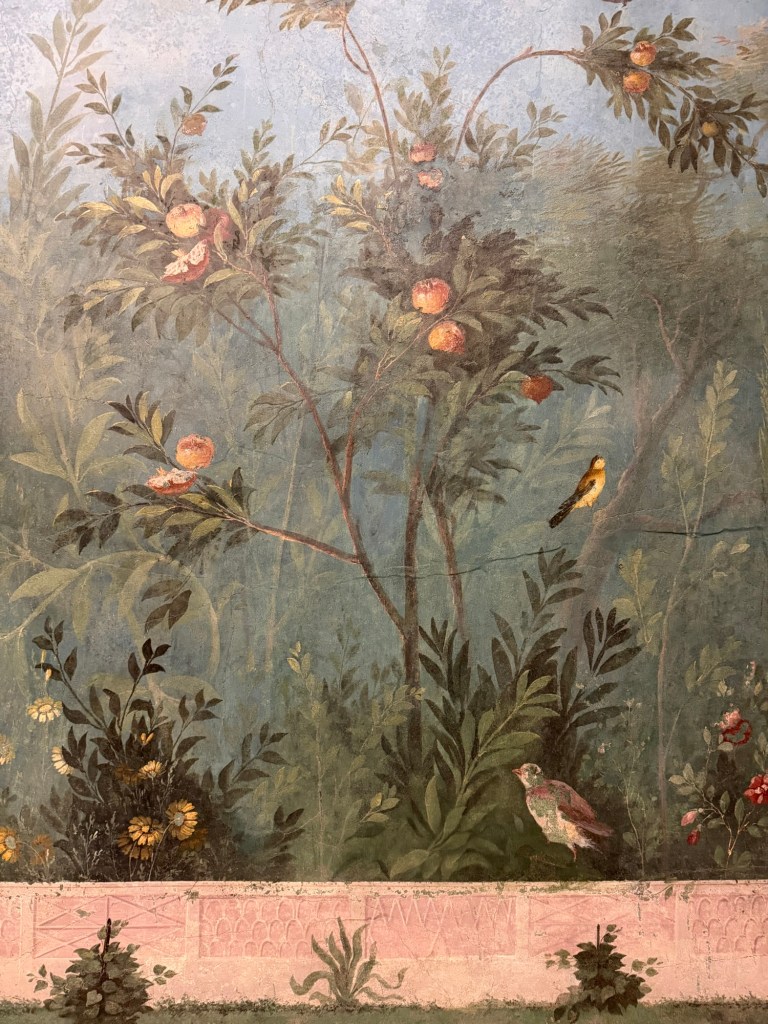
The purpose and layout of the Villa Livia are important. The Roman activity of “[d]ining was much more than the satisfaction of human need — it was a ritual of great social and political significance.” In terms of layout, the room is underground and measures 40 feet long by 20 feet wide. There are no separating moldings, no painted architecture, and no visible structural elements — the room unexpectedly transports the viewer “outside.” The enclosure is striking because of the spatial play of the room itself with its illusionistic quality, there is incredible accuracy of plant species, and the variety provides a landscape that in reality cannot exist as one garden. A low stone wall contains the thickest and largest plantings, and in between the viewer and the space rests another fence with a narrow grass walkway. The garden layout encompasses a “perfect combination of variety and abundance with stylization and order” as nature grows freely while simultaneous evidence of human activity is present, specifically as some birds exist in cages and a neatly manicured lawn is visible closest to the dining room space.
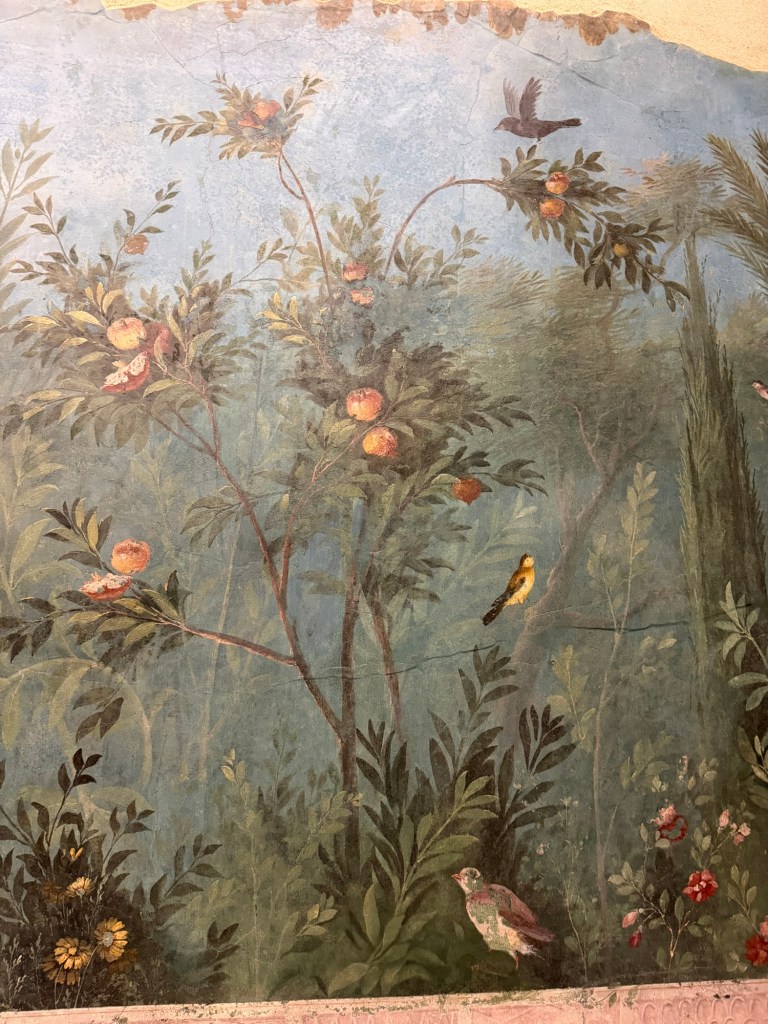
The trees in the background of the fresco become less detailed when compared to those in the foreground with tendrils falling over the painted stone wall. All flora in the room are in bloom and all fruits are ripe, even though in fact they would have flowered and ripened at different times of the year. This may symbolically represent the expected prosperity of the union between Livia and Augustus and the couple’s rulership of a new era in Roman history.
The taxonomic interpretation of the garden fresco reveal 24 different species of floras within twenty families including autochthonous, or indigenous, and exotic plants with the painterly precision of botany, as well as zoology. The fresco includes a variety of birds perched on tree limbs or in flight that creates movement along with a painted breeze that moves the foliage.
The background sky is painted with Egyptian blue which was a rare and expensive color at the time, making the room feel open and light, set in a lush, brightly colored, airy environment, despite being underground and indoors.
All of the videos and stills in this post were taken by me on my recent visit to this incredible installation. I hope you feel the same pleasure from viewing the work as I do.
The plant species depicted include: umbrella pine, oak, red fir, quince, pomegranate, myrtle, oleander, date palm, strawberry, laurel, viburnum, holm oak, boxwood, cypress, ivy, acanthus, rose, poppy, chrysanthemum, chamomile, fern, violet, and iris.
There is another amazing set of Roman era frescoes preserved at Palazzo Massimo! Their collection is simply superb!
Today’s post is centered on the antique discoveries found in Trastevere, at the incomparable Villa Doria Pamphili. While the 17th-century estate we can see today was designed as a modern Baroque escape, the villa sits directly atop and extensive ancient Roman necropolis and the ancient Via Aurelia Antica.
Frescoes from this necropolis and specifically its columbarium are the subject of today’s post. A columbarium holds funeral urns filled with the cremated ashes of deceased persons in ancient Rome. It takes its name from the Latin word for dove, columba, and is so-named because the niches look like dovecotes. The group of niches could be combined as a freestanding structure or a part of an underground burial place. They were often decorated with small paintings and might include an epitaph.
The ancient frescoes from the great columbarium discovered at Villa Doria Pamphili are now permanently displayed at Palazzo Massimo. These intricate wall paintings were recovered from the underground burial chambers that sit below the later constructed villa. This subterranean structure belonged to a wealthy Roman family or a burial society.
The frescoes feature miniature friezes that depict diverse themes, ranging from everyday life and Nilotic landscapes to exotic animals, Pygmies, and various mythological scenes painted directly above the niches meant for funerary urns. In the long walls of the burial building from the 1st century AD, landscape scenes alternate with burial niches for cinerary urns and inscriptions with the names of the dead. The walls featured detailed landscape scenes, floral motifs, exotic animals, theatrical masks, and mythical scenes such as Prometheus and the eagle. The ancient tombs were unexpectedly joyful, covered in vivid, delicate frescoes meant to resemble the interior of an elite Roman villa.
The discovery and extraction of the frescoes from the Villa’s necropolis is also a fascinating story; it spanned nearly a century, evolving from a private aristocratic excavation into a major state conservation effort.
The initial discovery in occurred in 1838 when the Great Columbarium was unearthed on the expansive grounds of the Villa estate. It was found on the slopes of the Janiculum Hill, close to the Casino del Bel Respiro. The excavation was commissioned directly by the noble family, who owned the property and often went looking for classical antiquities. This had. been a rewarding pastime for Romans since antiquity itself.
Excavators realized the columbarium was part of a vast Roman burial complex, running along the ancient Via Aurelia. Because the building was burned underground, its vibrant early Augustan-age paintings (dating to 30-20 BC) remained exceptionally well-preserved.
To protect the delicate wall paintings from deteriorating from environmental exposure inside the subterranean chamber, a team of specialized conservers officially detached the frescoes in 1922.
Following their removal, they became part of the state collections administered under the National Roman Museum. They were meticulously transferred onto new supports so they could safely be put on public display.
The historical significance of the site was further cemented in 1984. During the fast-tracked structural renovations of the Palazzina dell’Allgardi, (done to prepare the building to host the Italian Presidency of the Council of the European Communities (EC). Today, the building serves as an official representative office for the Italian Presidency of the Council of Ministers) on the villa grounds, architects accidentally rediscovered another beautifully pained adjacent structure, the Columbarium of Scribonius Menophilus, but Columbarium of Caius Scribonius Menophilus is a remarkably preserved tomb featuring an intricate black and white tile mosaic floor detailing the name of the freedman owner. However, that must be a subject for another day.
Today the main room of the original columbarium discovered in 1838 still stands hollowed out at the villa, but its artistic heart is fully reconstructed inside the climate-controlled rooms of wonderful Palazzo Massimo.
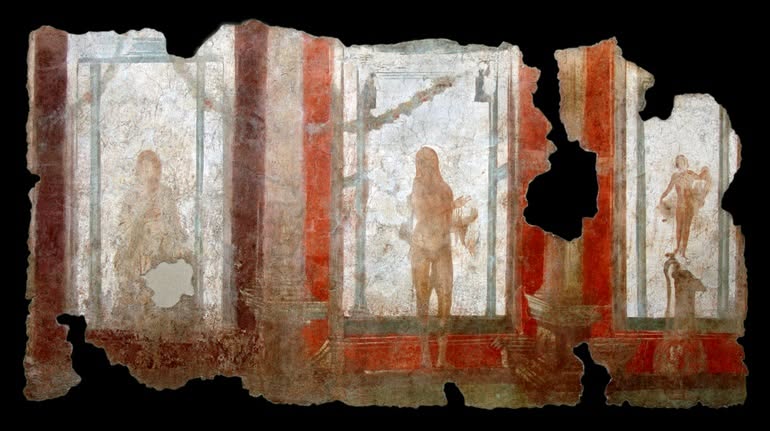
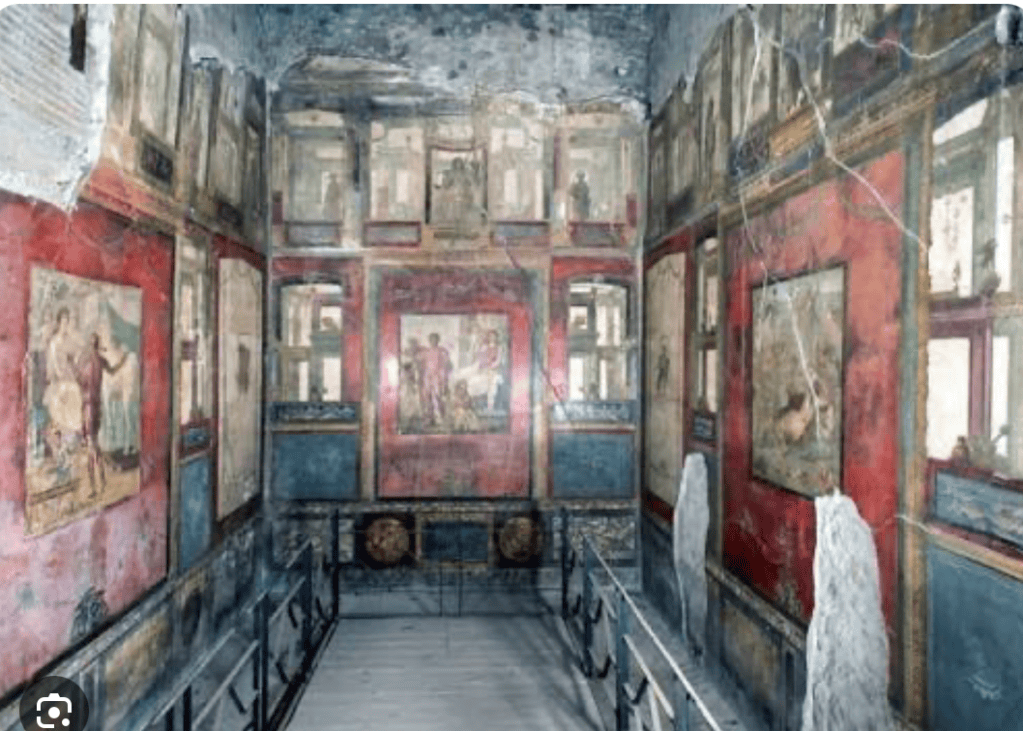
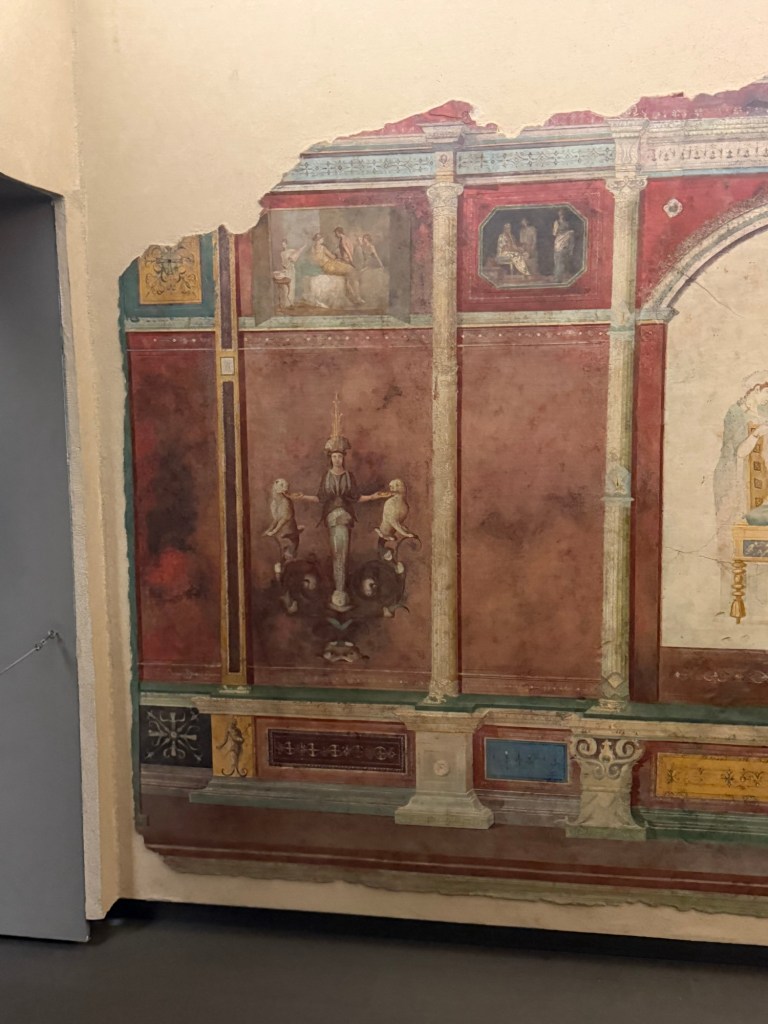
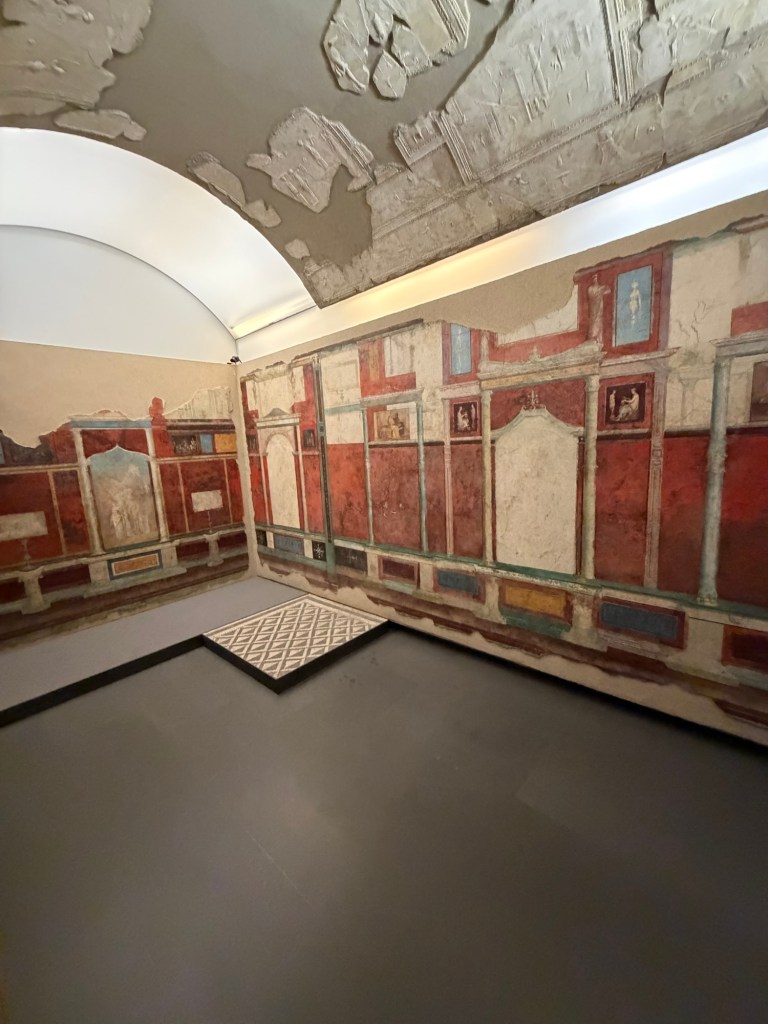
Among the rooms in the Roman era house known as the Casa Farnesina and now on view at Palazzo Massismo was a large hall featuring paintings set against a black background, organized into panels separated by slender, painted colonnettes.
The monochromatic background and the purely decorative function of the slender architectural framework place these paintings within the “Third Pompeian Style”—an anti-Baroque aesthetic where walls are conceived as unified surfaces rather than mere pretexts for perspectival illusionism. Furthermore, the sophisticated “patch-like” application of paint draws inspiration from 1st-century BC Egyptian artistic traditions.
These frescoes come from the Triclinium (dining room) of the Casa della Farnesina, dating back to the late 1st century BC (circa 20–10 BC). This complete room reconstruction is celebrated as one of the most sophisticated examples of the Third Roman Wall Painting Style, featuring a long, delicate narrative frieze overlaying a deep charcoal backdrop.
The pigment used to create these striking wall paintings was mixed using charcoal and glue, rendering the surface highly resistant to smoke and lamp soot from the oil lamps and fires used to heat winter banquets. The rich charcoal background was made by mixing carbon black soot (atramentum) derived from burning pitch, pine wood, or organic matter with water and animal glue. It was applied precisely over a wet white lime plaster base while using an intense polishing technique.
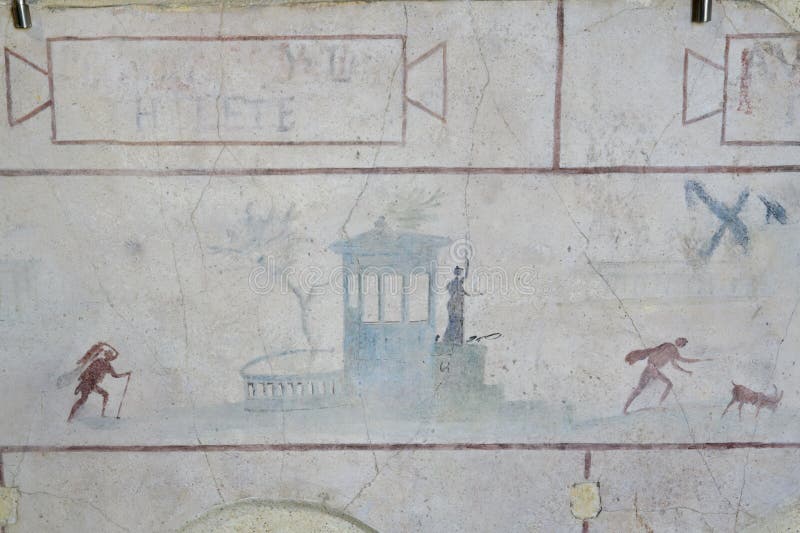
Running continuously along the center of the dark panels is a highly unusual, thin, sketch-like frieze depicting judicial and legal scenes. Painted with free, rapid, almost modern seeming brushstrokes, the tiny white and colored figures are shown gesturing, engaging in courtroom-style confrontations, holding trials, and enduring legal judgments. Scholars believe these scenes depict legendary legal cases or historical trials from the late Roman Republic, serving as an intellectual conversation starter for elite dinner guests.
The dado is adorned with meander patterns that run along the lower section of the walls. On the frieze are depicted Egyptian scenes—likely centering on the theme of the “wise judge”—which appear to illustrate an unknown literary text, perhaps a popular Alexandrian novel. Generally, the scenes are composed of two parts: the first shows the emergence of the dispute, while the second depicts the actual judgment.
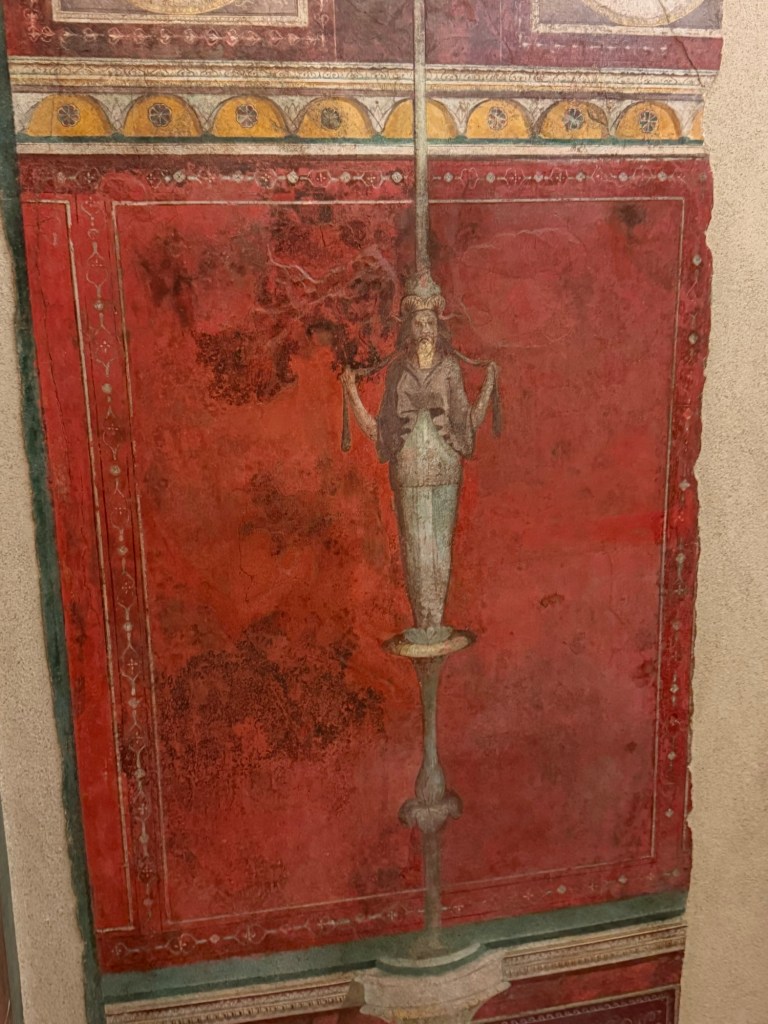
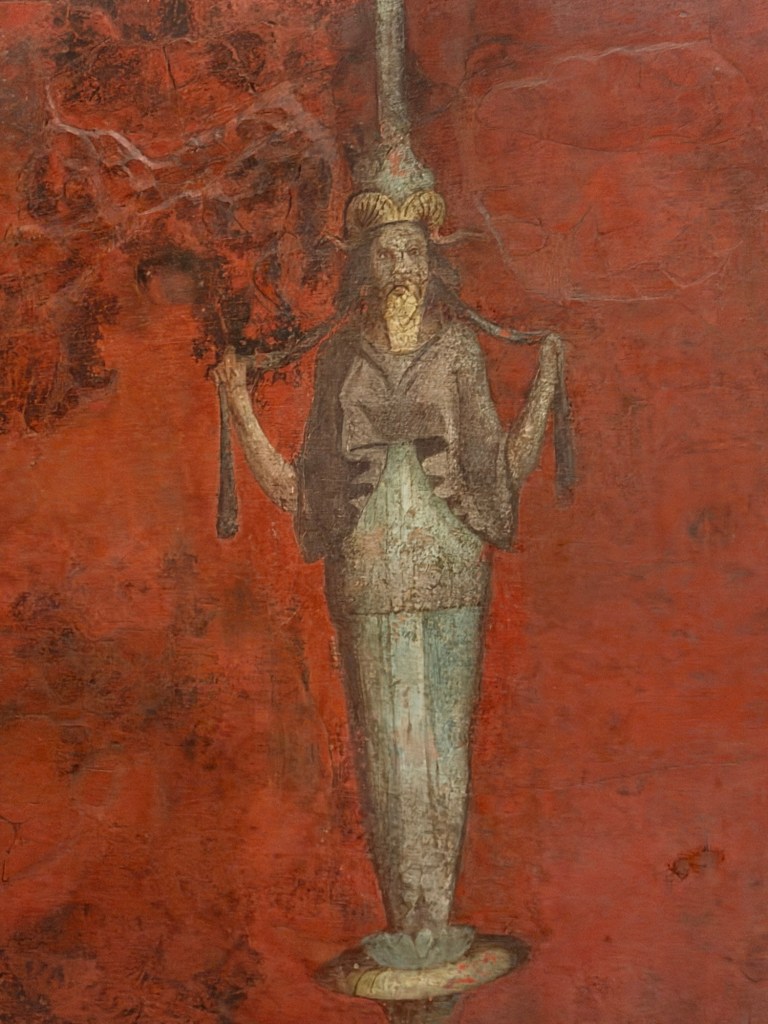
Flanking the legal scenes are thin, candelabra-like columns, delicate garlands, and floating architectural motifs that stand out sharply against the dark background. Interspersed among the linear decorations are small depictions of figures and mythical beasts, including sphinxes and griffins.
In the current museum installation, the black walls are paired with the villa’s original geometric mosaic floors, offering a fully immersive look into the contrasting light-and-dark aesthetic of an elite Roman household.
The black frescoes from Triclinium C of the Villa della Farnesina are recognized ed for their exceptional craftsmanship, preservation, and uniquely modern-feeling narrative style. Because they were protected by a purpose-built vault in the PalazzoMassimo alle Terme, visitors can step into the exact layout of this ancient Roman winter dining room.
How fortunate are we that we can time travel back to see some of the riches of antiquity in the glorious museum holdings in Rome! Alla prossima!
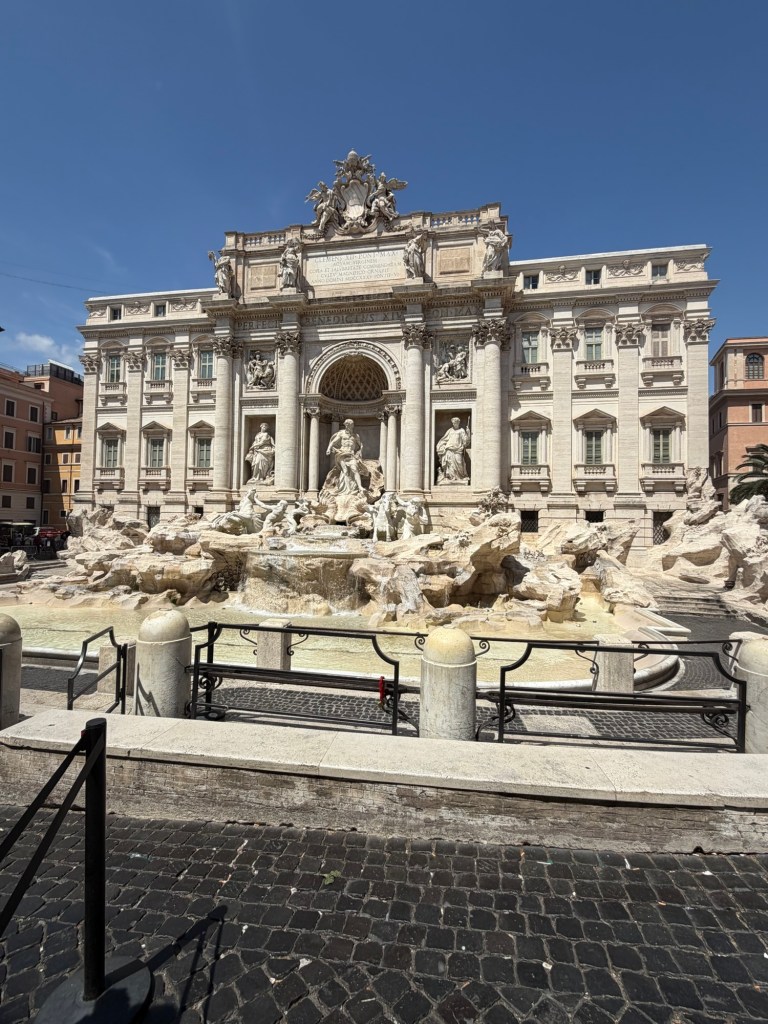
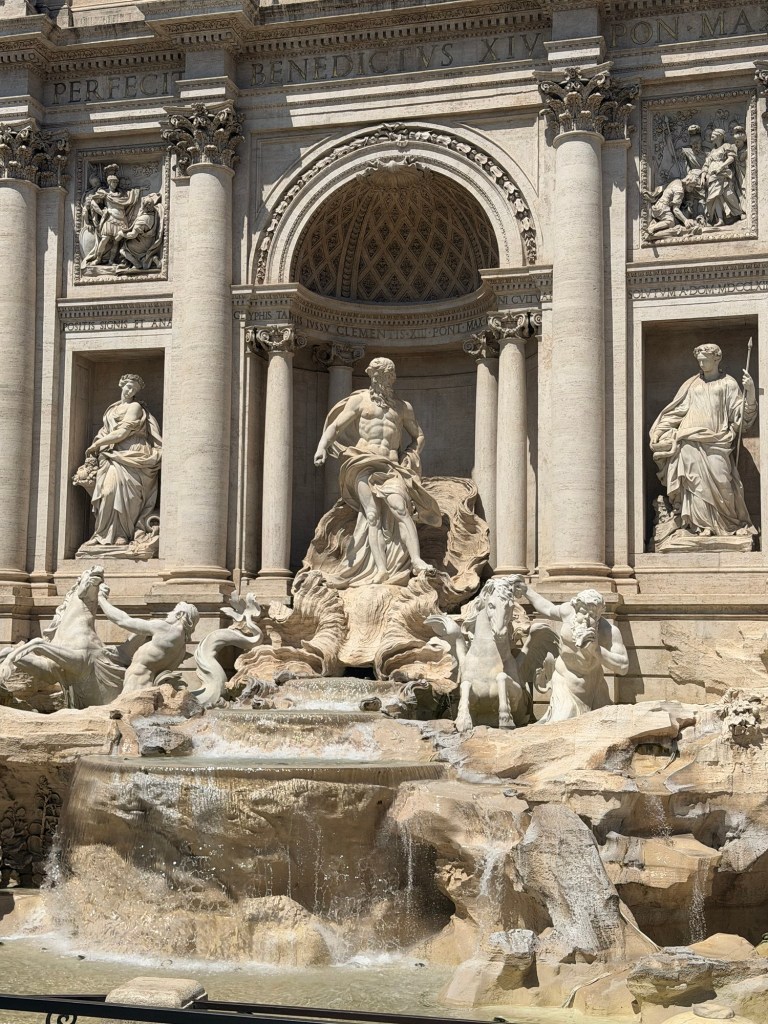
Yes! In case you were worried, it’s still there! Alive and well and flocked to by tourists from all over the world!
I joined their numbers in August of 2026 and paid my respects to this awesome wonder of the world.
Only now there is a team of matching t-shirt wearing young men who are scattered across the lower levels of the staircase leading to the fountain who will not let anyone up close and personal with the monument. Given mass tourism, I guess it was inevitable. But is sad, compared to yesteryear.
The world is a richer place because this monument exists!
I’m just an art historian, fascinated by and wading through the glories of Italian art in all its eras currently on view at the plethora of museums all over this incredible peninsula I’m lucky enough to live on.
Recently I viewed these amazing Roman era frescoes from The Casa della Farnesina, which the Palazzo Massimo now houses and in their literature it says “With its scenic location on the Tiber, this villa was decorated with fine frescos and elegant mosaics, testimony to the art of the early Imperial Age.”
It took some time and digging through many online rabbit holes, but I finally discovered the following:
The Casa della Farnesina is an ancient aristocratic residence in Rome, located in Trastevere; it lies partly beneath the gardens of the Renaissance era Villa Farnesina (from which it takes its name). The house features a complex floor plan and extraordinary wall paintings. The casa or house was only discovered by chance in 1880 during excavations for the construction of the Tiber embankments. To date, only the half situated beneath the gardens has been excavated, while the section lying beneath the buildings on Via della Lungara remains unexplored.
This absolutely blows my mind! If only the owner and builders of the Renaissance era Villa Farnesina had realized what lay beneath their new gardens, I think this information and the art buried there would have blown their minds! They were crazy for Roman discoveries. New antiques were being located all of the time. Michelangelo was said to have been present when the famous Roman era sculpture Laocoon and his Sons was discovered, for example. Imagine building a new villa atop a Roman era one and not knowing it!
Among the hypotheses regarding the owners of this urban casa (which is often and confusingly called a villa in the literature and leads to much confusion) is the theory that it was built for the wedding of Julia the Elder and Marcus Vipsanius Agrippa.
The house is oriented along a northeast-southwest axis parallel to the river; its layout centered on a magnificent exedra facing the water, creating an intriguing perspective. This structure was supported by three concentric walls, featuring an exterior façade with buttresses that extended beyond a river-facing portico onto the lateral projecting wings (or at least the right-hand wing, which is the one that has been excavated).
The side facing Trastevere, meanwhile, featured a long cryptoporticus with vaulted ceilings supported by pillars. Beyond this, along the street, lay a long row of rooms serving as small shops and storerooms.
The central part of the house contained a small courtyard, off which opened two cubicula (bedrooms) and an oecus (reception room). Another summer cubiculum opened onto the exedra. The remainder of the left projecting wing was occupied by less significant rooms and several open-air courtyards.
This Roman era casa invites comparison with the Villa of the Mysteries in Pompeii or the Horti Luculliani in Rome; all share a taste for Hellenistic-style theatricality—particularly in façades facing the sea or a valley (in this instance, a river)—where the central area is defined by exedrae framed by loggias. Such structures also frequently appear in the “landscape vignettes” found in Pompeian wall paintings.
Here’s the fascinating history of the discovery of the casa:
The casa’s paintings and stuccoes were detached during excavation and are now housed in the Palazzo Massimo, a museum within the National Roman Museum. They were only discovered in the 19th century because new retaining walls were being built to keep the Tiber River from overflowing the city’s riverbanks during periods of heavy rainfall. Had the paintings and stucco not been detached, they would have been destroyed. Fortunately, they were kept largely in tact and serve as a prime example of interior decoration in the so-called “Third Pompeian Style.” And, just think! You can visit Rome today and see Pomepeian style Roman painting without going to Pompeii.
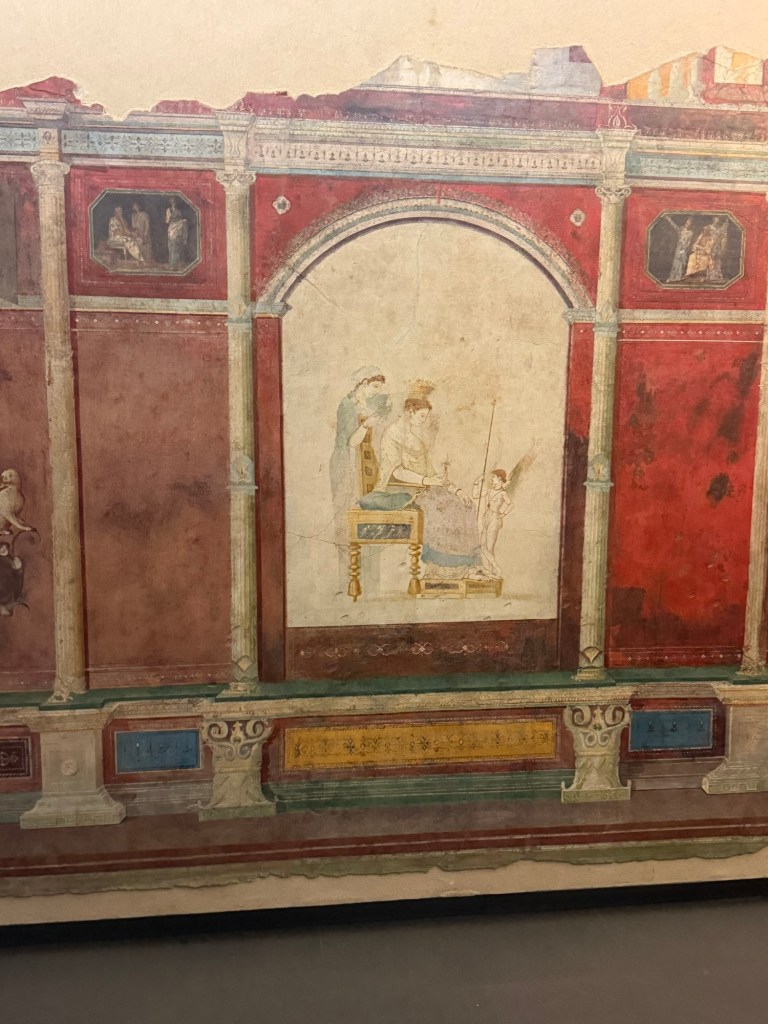
The themes of the frescoes: sophisticated architectural perspectives, sacred shrines, still lifes, naval motifs, and exquisite figures like caryatids holding garlands against white or Pompeian red backgrounds are fetured.
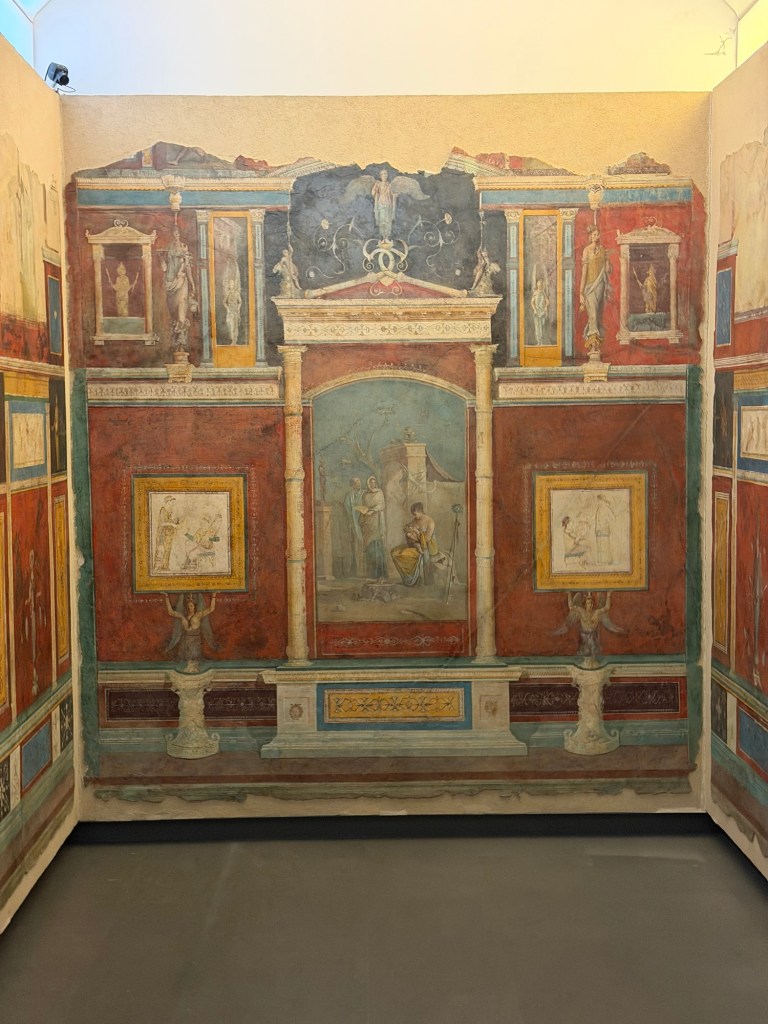
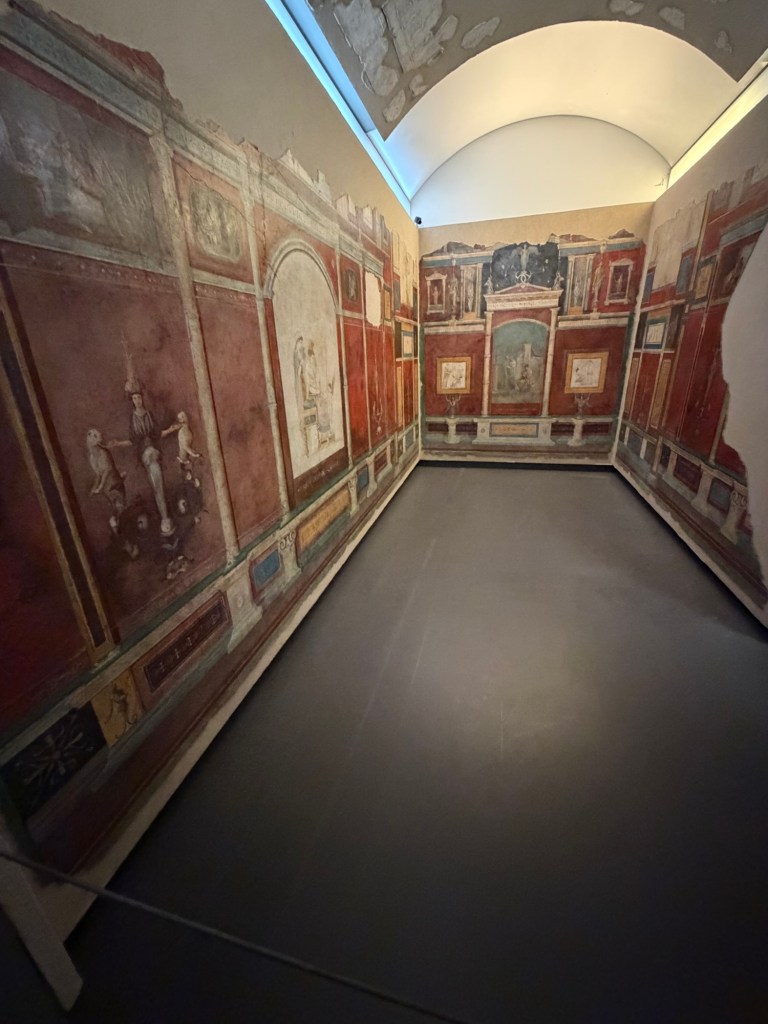
The so-called cubiculum “B” features a back wall with well-preserved paintings. A signature on the wall bears the name of one of the painters from the workshop that executed the decoration—Seleukos, a name of Syrian origin. The wall is vertically tripartite, following a standard layout, yet it lacks the illusionistic perspective typical of the Second Style. Indeed, the central section features a painted aedicule containing a picture that does not suggest a landscape lying beyond it.
At the bottom, a painted dado supports panels set against a red background; the upper central section is decorated with a pediment, while the side sections project outward, featuring niches and small aedicules. The upper central area presents a dark background against which slender winged Victories and a faintly sketched colonnade stand out.
The scene in the central painting depicts an episode from the childhood of Dionysus, based on a Greek original from the 4th century BC. Meanwhile, two smaller side panels—supported by winged female figures—feature white backgrounds and scenes of the gynaeceum (women’s quarters) drawn in an archaizing style inspired by 5th-century BC originals.
The eclectic nature of the decoration is striking: large expanses of color and the slender architectural framework typical of the Third Style, Neo-Attic ornamental details (winged figures, Victories, acroteria, floral scrolls, etc.), and large-scale reproductions of classical paintings. The classicizing aura of the artwork has led to the paintings being dated to 30–20 BC.
Garden Paintings Two fragments of garden paintings also originate from the Casa della Farnesina; they postdate—by only a short time—the earliest known example of this genre in Rome: the frescoes in the underground nymphaeum of the Villa of Livia (40–20 BC). These are two marble fountains shaped like vases, set in a green bed and surrounded by the recesses of a reed fence.
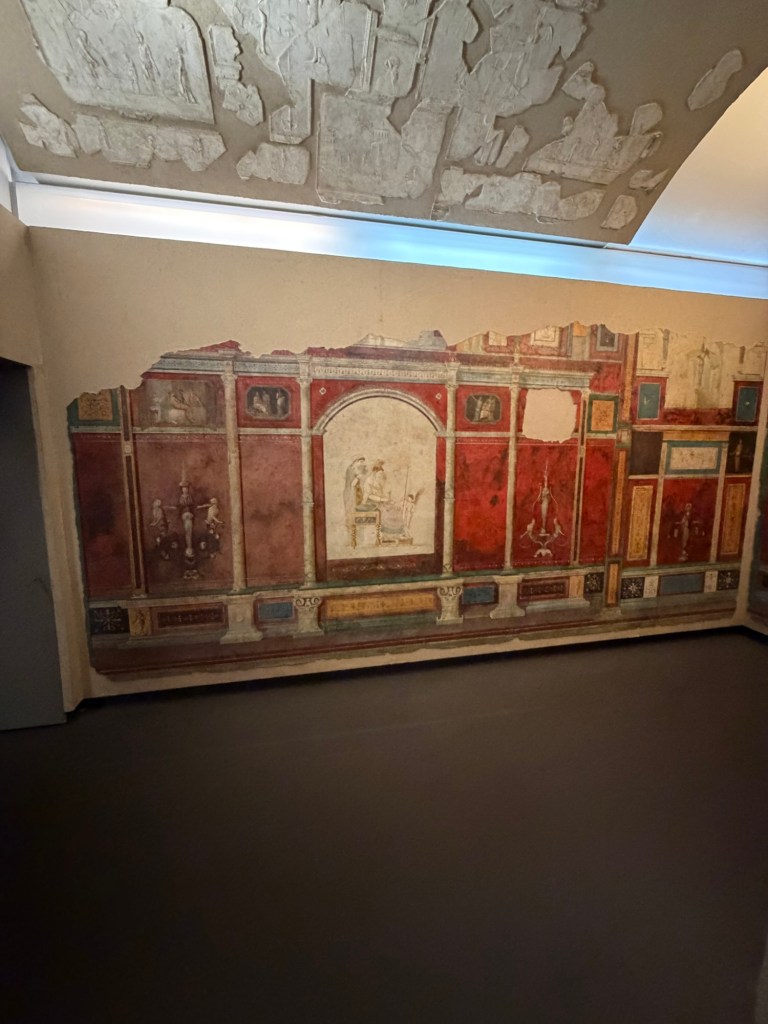
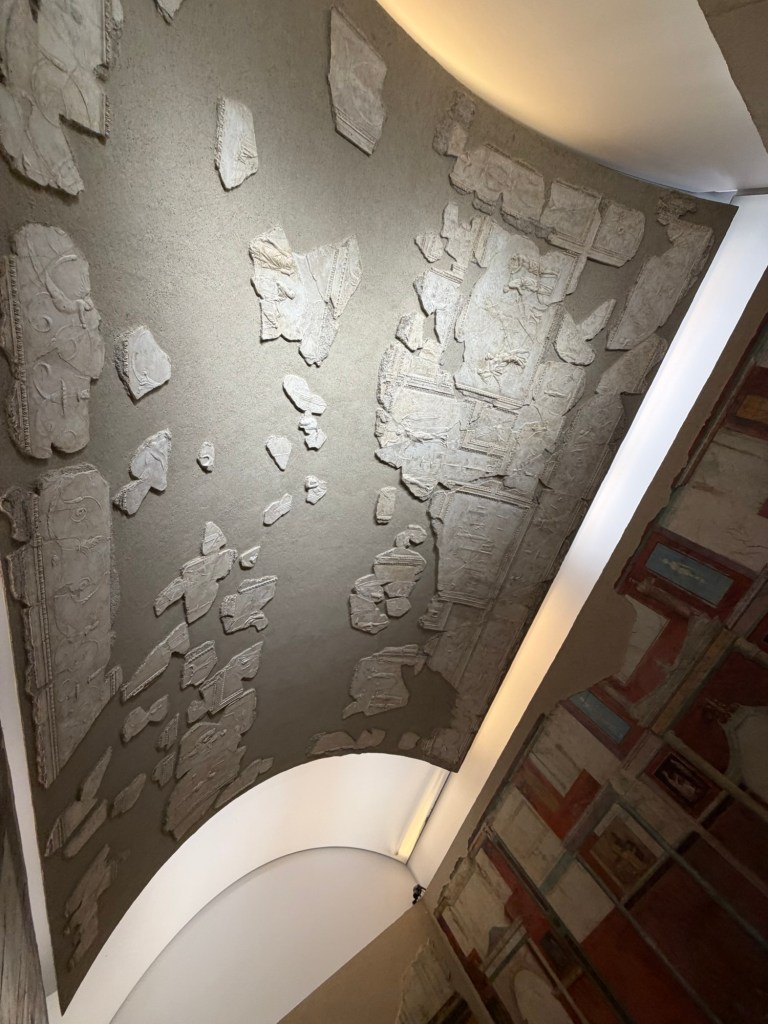
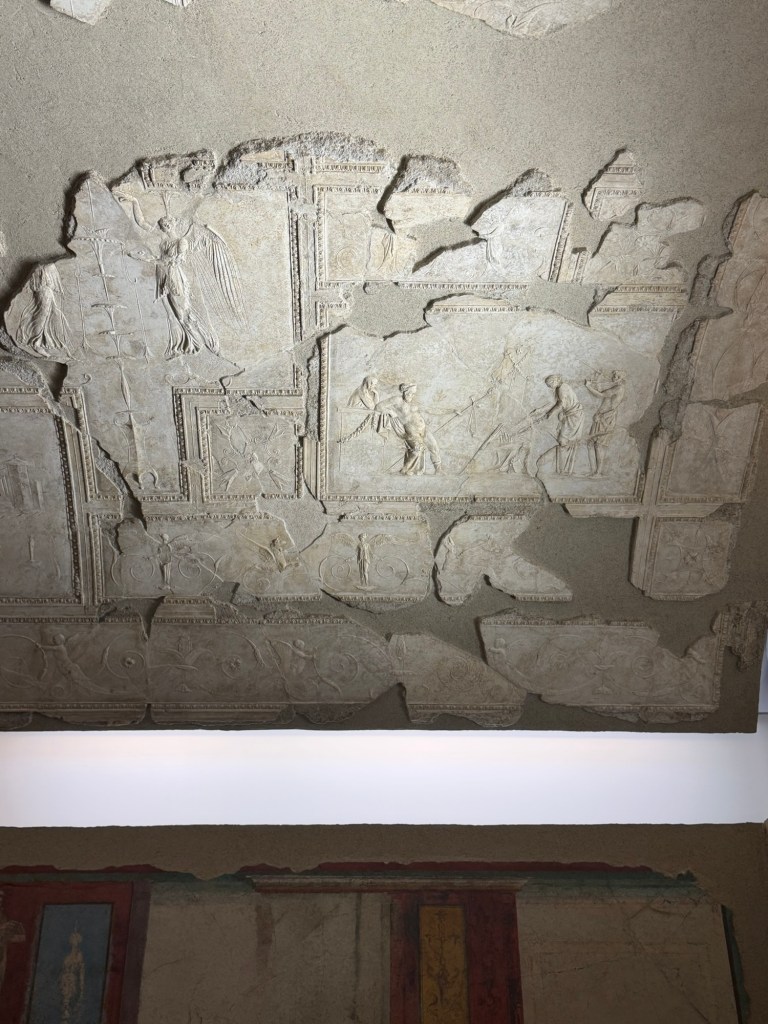
Cubicula “B”, “D”, and “E” featured barrel vaults adorned with stucco work—elements that have since been detached and are among the relics now preserved at the Palazzo Massimo delle Terme. The decoration is organized into small and large panels—square, rectangular, or meander-shaped—bordered by delicate kymatia (molding profiles). The smaller panels feature motifs of an archaizing or grotesque nature (Victories, cupids, griffins, Arimaspians, candelabra, and scrollwork). The larger panels, conversely, are decorated with idyllic landscapes (cubicula “B” and “D,” and the corners of “E”), cycles of Dionysian scenes (corners of cubicula “B” and “D”), and scenes from the myth of Phaethon (center of cubiculum “E”).
In cubiculum “D,” the central panel depicting a Dionysian initiation scene is particularly noteworthy; it shows a Silenus performing the mystica vannus (sacred winnowing-basket ritual) in the presence of a veiled youth—the initiate—a female sponsor, and an attendant. The background is minimalist, featuring a plane tree (a tree sacred to Dionysus), a pillar (on the left), and a backdrop of drapery (on the right). These scenes reflect trends also seen in painting, such as the thinning of forms and a more sparse, open composition. The symmetrical arrangement and the rendering of detail—despite the extremely low relief—are executed with great care, testifying to the high level of artistry achieved in this type of decoration during the Augustan age.
A vast amount of specific archaeological, stylistic, and thematic information is available regarding the frescoes from the Casa della Farnesina. Because the structures were entirely destroyed after the items were detached in 1879, these recovered sections represent one of the most complete and vital snapshots of high-status Roman interior design ever found outside of Pompeii.
The extensive collection on display at the Palazzo Massimo alle Terme reveals several unique details:
Room-by-Room Layout & Color Coding The museum reconstructs the original layout to scale, showing how the Romans used color zoning to designate the mood and purpose of each room:
The Black Room (Sala Nera): A magnificent summer dining room (triclinium) designed with deep, glossy black background walls. It features ultra-thin, delicate candelabra columns and a freeze detailing Egyptian-inspired courtroom and legal judgment scenes.
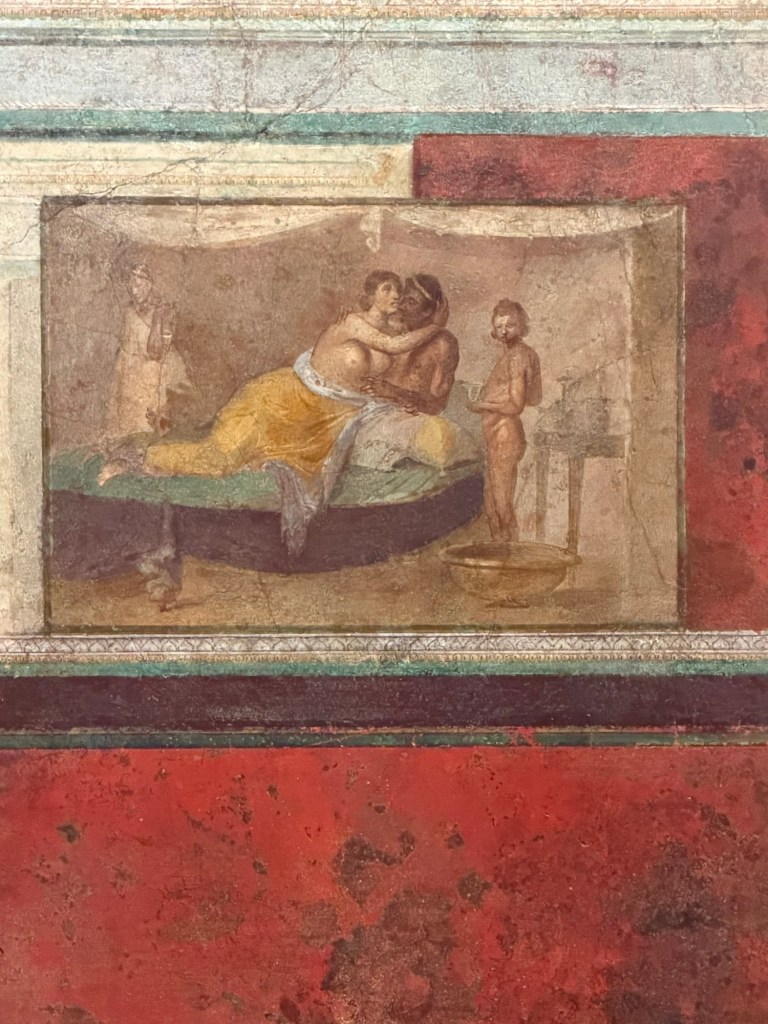
Cubiculum B (The Red and White Bedroom): Famous for its rich Pompeian red base bands and white central panels. The central paintings are designed as “panel pictures” (pinakes) that look like framed wooden art hanging on a wall, depicting intimate, sensual scenes like the Toilet of Aphrodite and Dionysian rituals.
Cubiculum D (The Neo-Attic / Egyptian Bedroom): Notable for explicitly blending Roman themes with Alexandrian and Egyptian motifs, reflecting Rome’s fascination with Egypt following Augustus’s conquest of Cleopatra in 30 BC.
Unique Stylistic Innovations The Cryptoporticus Garden Views: One of the long corridors (cryptoporticus) featured an early form of illusionistic garden painting. It depicts a realistic reed fence, realistic green foliage, and a water fountain—acting as a direct precursor to the famous garden room of Livia at Prima Porta.
Greek Masterpiece Replications: Many of the small, framed central mythological scenes are painted in a sketch-like, classicized Greek style using a white background. Art historians believe Roman painters directly copied these from famous, lost Hellenistic and Classical Greek panel paintings.
Graphic Historic Evidence: The walls contain ancient graffiti scratched into the plaster by original occupants, guests, or servants, providing a raw glimpse into daily Roman domestic life.
Associated Masterpieces:
Stuccoes and Mosaics The frescoes were only one part of the villa’s multimedia sensory experience:
When the Casa della Farnesina was discovered in 1879 along the banks of the Tiber River, 19th-century Italian engineers and archaeologists faced an urgent crisis. The ancient structure sat directly in the path of the massive new river embankments (muraglioni) being built to prevent devastating floods in Rome. Because the brick and mortar structures could not be salvaged, archaeologists relied on a meticulous, high-risk conservation practice known as wall painting detachment (distacco delle pitture murali).
At the time, this was executed through three foundational methods, varying by how deeply the wall behind the fresco was cut:1. The Stacco Technique (Plaster Detachment)This was the primary method used for the large, flat walls of the Casa della Farnesina.The Process: Conservators glued protective layers of heavy cotton canvas or linen strings (intelaggio) over the face of the painting using strong animal glue or flour paste. Once dry, the team carefully used long, thin chisels, specialized iron spatulas, and levers behind the wall.The Result: They separated the uppermost painted layer along with its undercoat of preparatory plaster (intonaco and arriccio) cleanly away from the underlying stone or brick masonry.
The Vaulted Stuccoes: Along with the wall panels, archaeologists saved highly detailed plaster ceiling relief sculptures (stuccoes). They showcase scenes of initiation rites, rural life, and mythical creatures carved with such low-profile elegance that they perfectly mirrored the delicate third-style paintings below.
The Mosaics: The floors featured stark, black-and-white geometric mosaics designed to structurally balance the intense colors of the walls.
I don’t know if you are like me, but when AI asked if I had any other questions, of course I did. How, I asked, were these frescoes detached from the ruins?
When the Casa della Farnesina was discovered in 1879 along the banks of the Tiber River, 19th-century Italian engineers and archaeologists faced an urgent crisis. The ancient structure sat directly in the path of the massive new river embankments (muraglioni) being built to prevent devastating floods in Rome. Because the brick and mortar structures could not be salvaged, archaeologists relied on a meticulous, high-risk conservation practice known as wall painting detachment (distacco delle pitture murali).
At the time, this was executed through three foundational methods, varying by how deeply the wall behind the fresco was cut:
1. The Stacco Technique (Plaster Detachment)
This was the primary method used for the large, flat walls of the Casa della Farnesina.
The Process: Conservators glued protective layers of heavy cotton canvas or linen strings (intelaggio) over the face of the painting using strong animal glue or flour paste. Once dry, the team carefully used long, thin chisels, specialized iron spatulas, and levers behind the wall.
The Result: They separated the uppermost painted layer along with its undercoat of preparatory plaster (intonaco and arriccio) cleanly away from the underlying stone or brick masonry.
2. The A Massello Technique (Full-Wall Extraction)
For intricate architectural corners, fragile architectural mockups, and the heavily contoured, three-dimensional vaulted ceilings (stuccoes), the stacco method was too risky. Instead, they used the ancient a massello method.
The Process: Workers constructed heavy wooden cages, structural braces, and support frames directly against the face of the fresco to absorb shock.
The Result: Laborers used heavy-duty saws and chisels to physically cut through the entire brick wall behind the painting. They extracted the fresco along with its massive, heavy stone-and-mortar structural backing intact. While it preserved the artwork perfectly, it resulted in massive, incredibly heavy blocks that required immense manpower to hoist out of the muddy Tiber mud pits.
3. The Strappo Technique (Pigment Tearing)
Though less frequently chosen for the Casa della Farnesina due to the high quality of the ancient mortar, the strappo technique was a highly popularized 19th-century innovation used when walls were too structurally decayed to chisel.
The Process: Conservators applied an ultra-strong animal glue to a heavy canvas layer on the fresco.
The Result: Once dried, they literally tore (strappare) the topmost paint film directly off the plaster backing. The pigment layer peeled off like a sticker, sticking entirely to the canvas fabric while leaving the ancient white plaster entirely blank on the wall.
Post-Extraction Re-mounting Once the panels were successfully pulled from the Tiber banks, the temporary canvas facings on the front were dissolved using hot water and alcohol sprays. The fragile plaster panels were then carefully stabilized by gluing them onto wooden lattices, wire meshes, or lightweight canvas canvas panels.
This allowed the National Roman Museum to reassemble them decades later into the full-scale rooms viewed by visitors today.
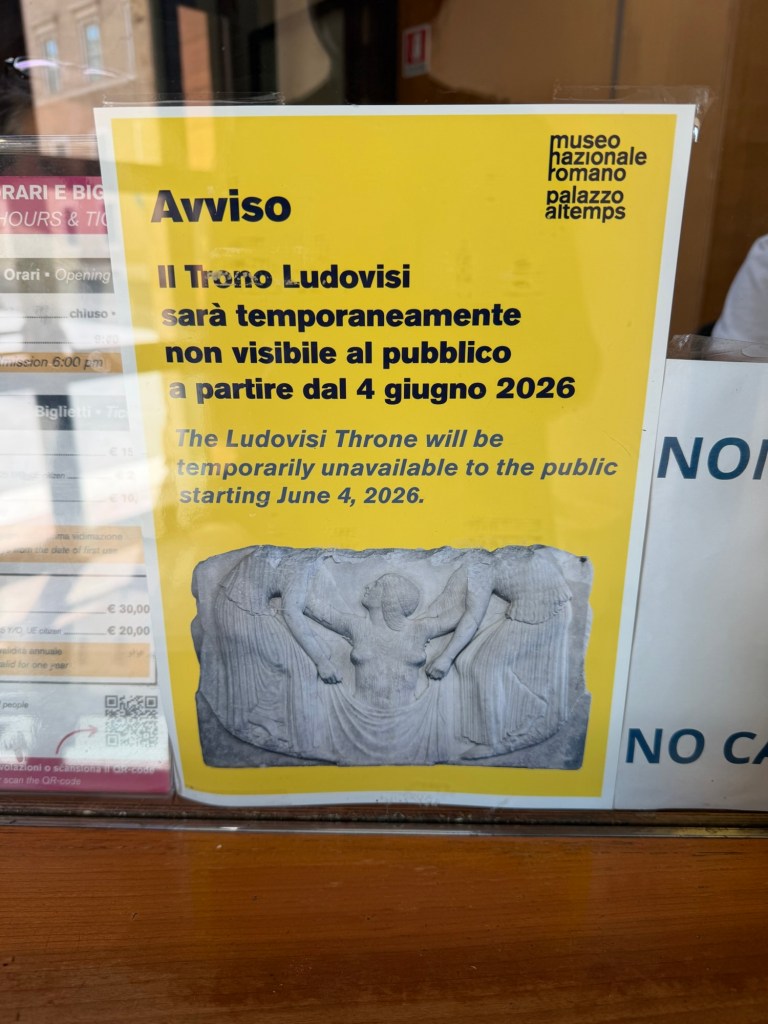
But when I got to the museum, this sign told me the sculpture was not on view. (Truth be told, I didn’t notice the sign. I went through the museum looking for the relief sculpture, couldn’t find it, asked about it, and was told it was on loan to Athens. Then I saw the sign. Haha. Typical.)
So, making the best of a trip to Rome to see fabulous sculpture, after filling my eyes, mind and heart with all the gorgeous artwork at the Palazzo Altemps, I left, had a delicious lunch of spaghetti carbonara seated al fresco in Rome, and went on to pay my first ever visit to the Palazzo Massimo alle Terme, another one of the 4 incredible museums directed by the National Museum in Rome. The Palazzo Massimo is such a treasure house, How fortunate the world is for these repositories!
And, was I ever rewarded!
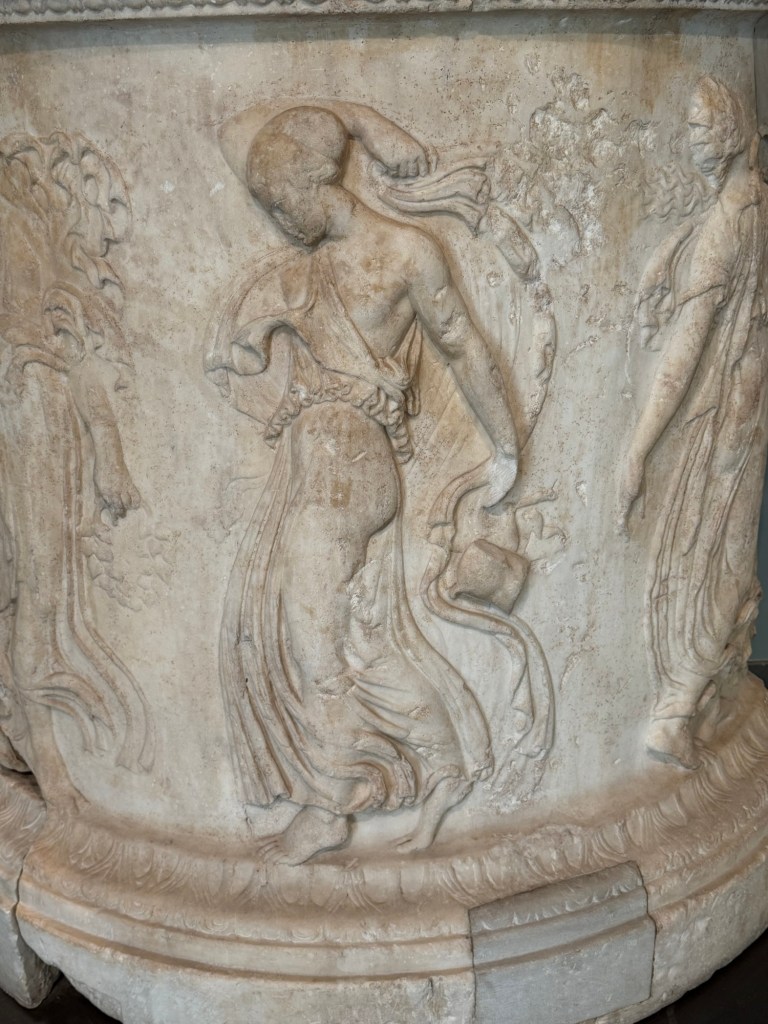
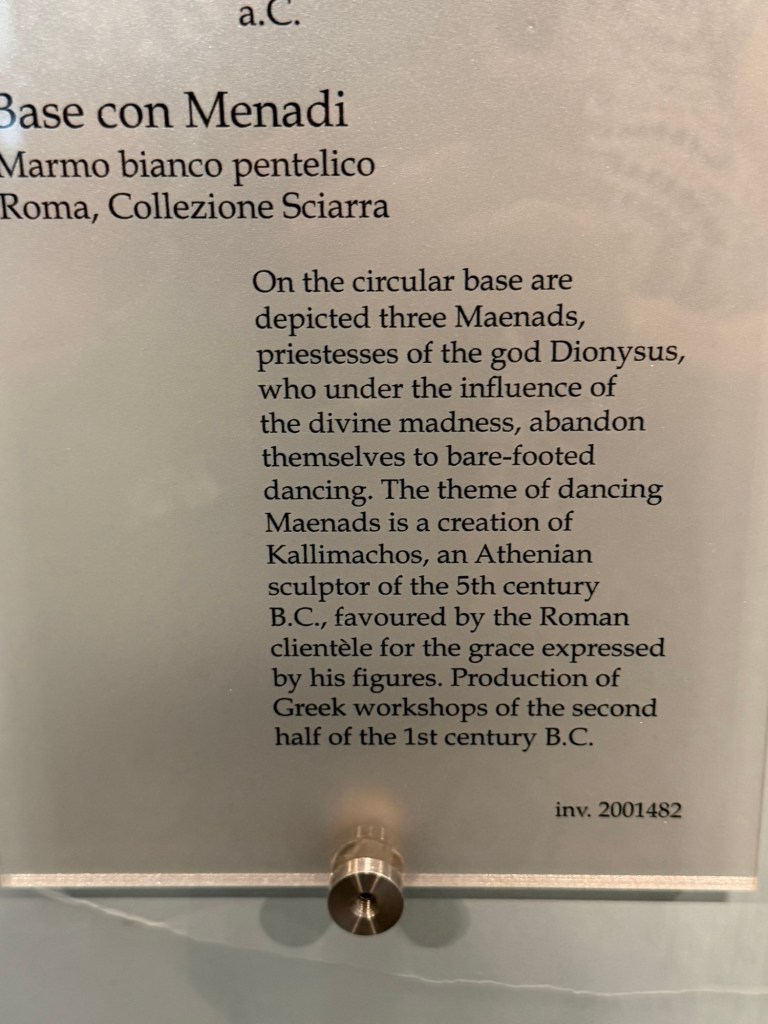
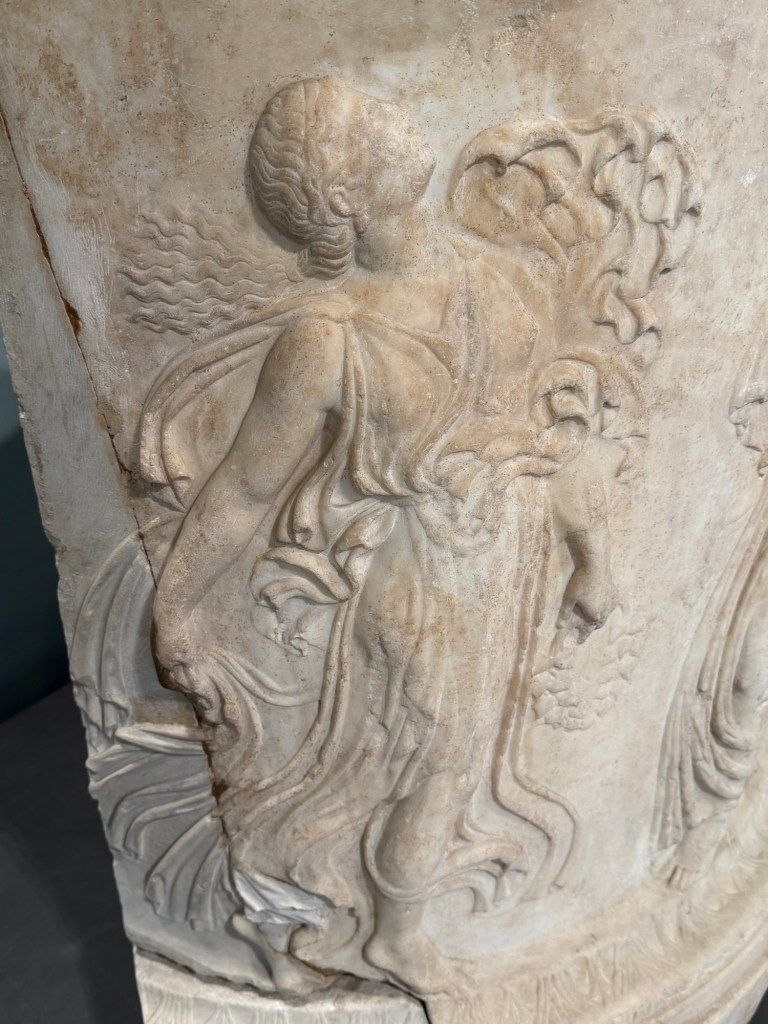
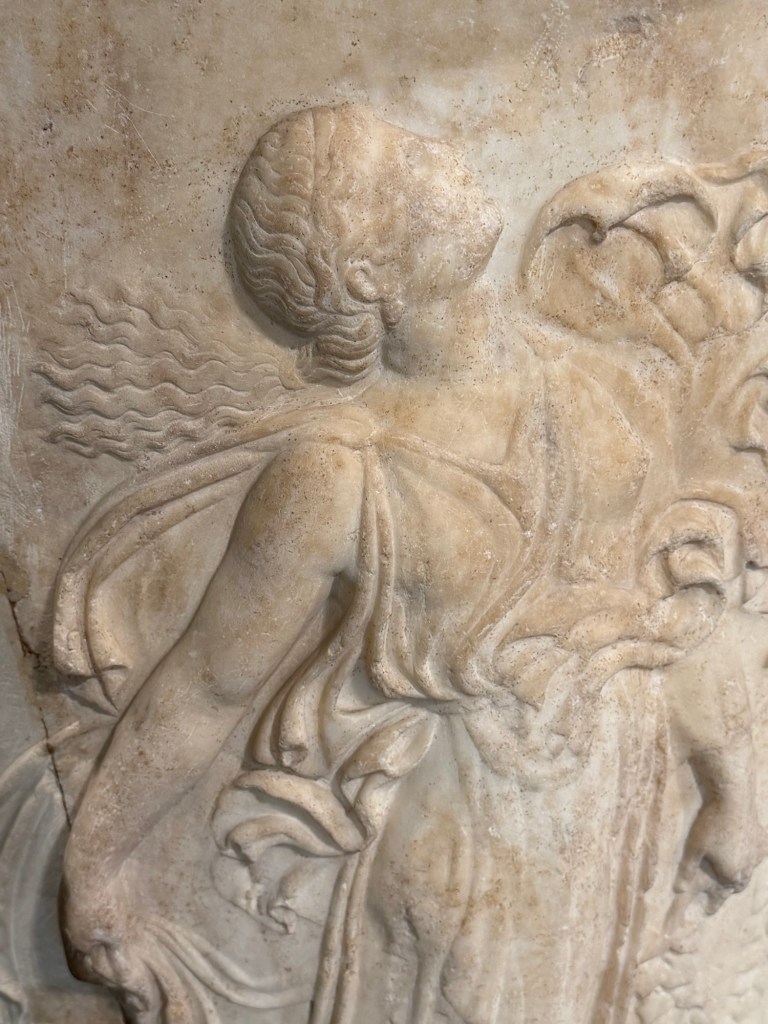
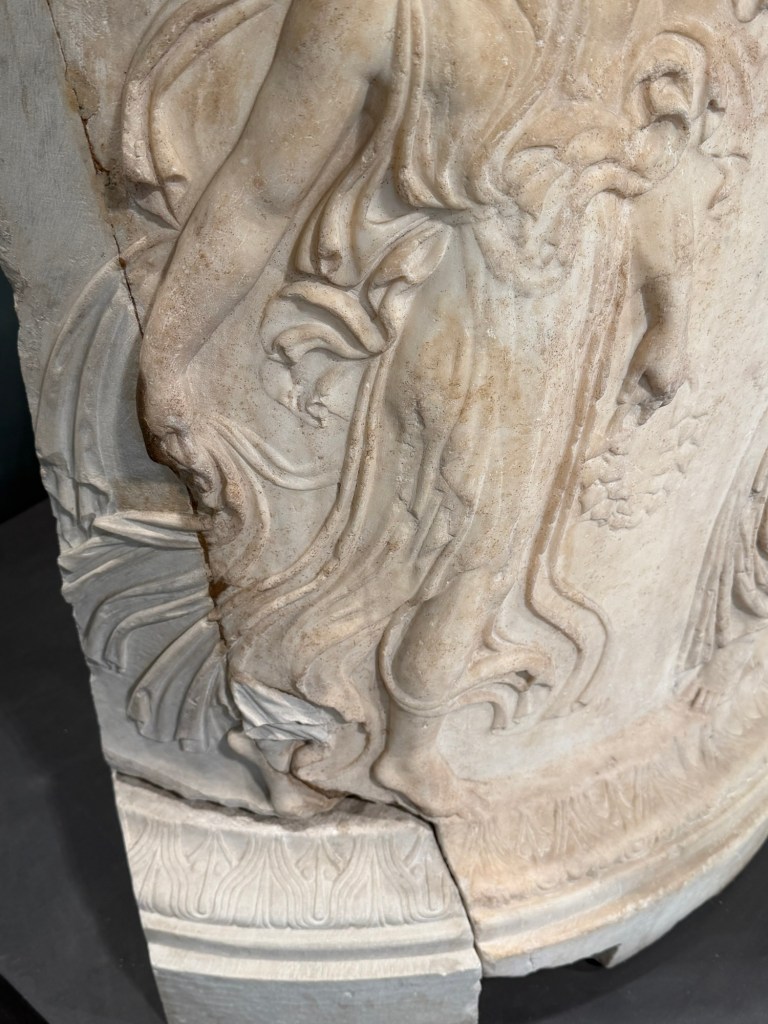
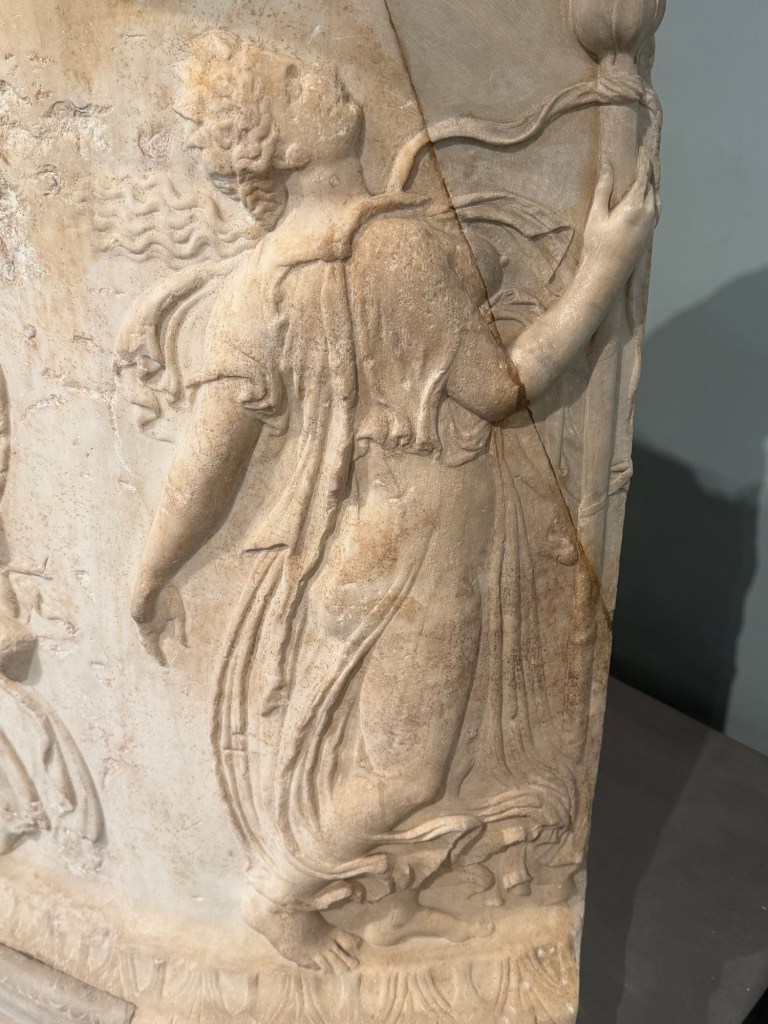
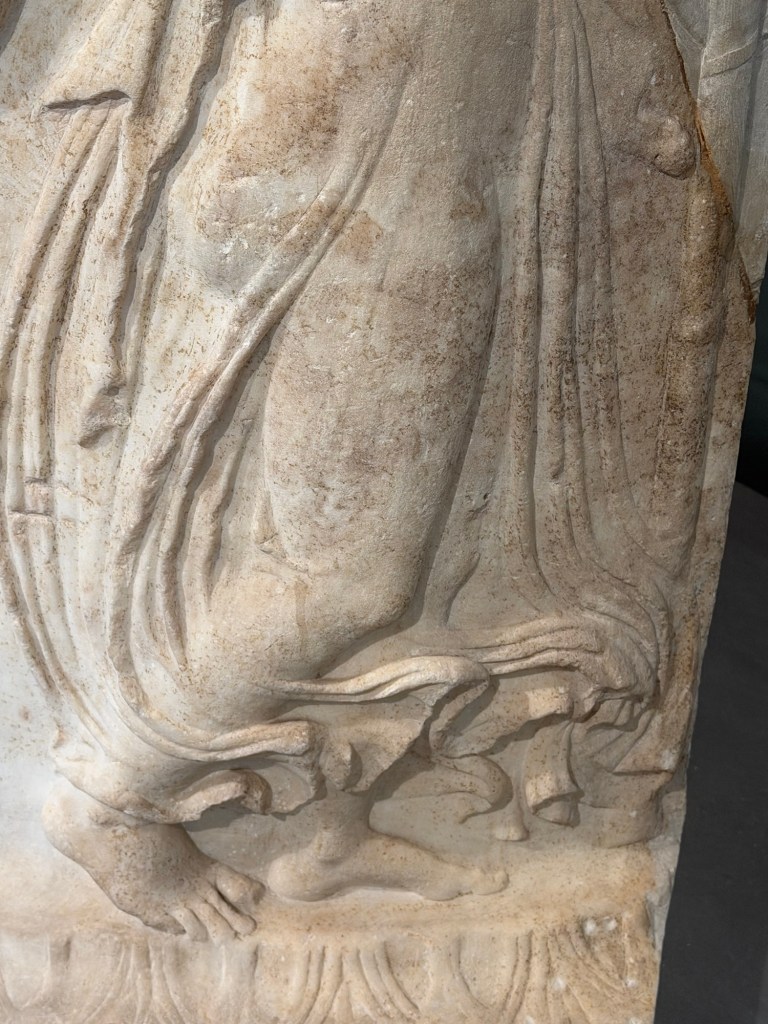
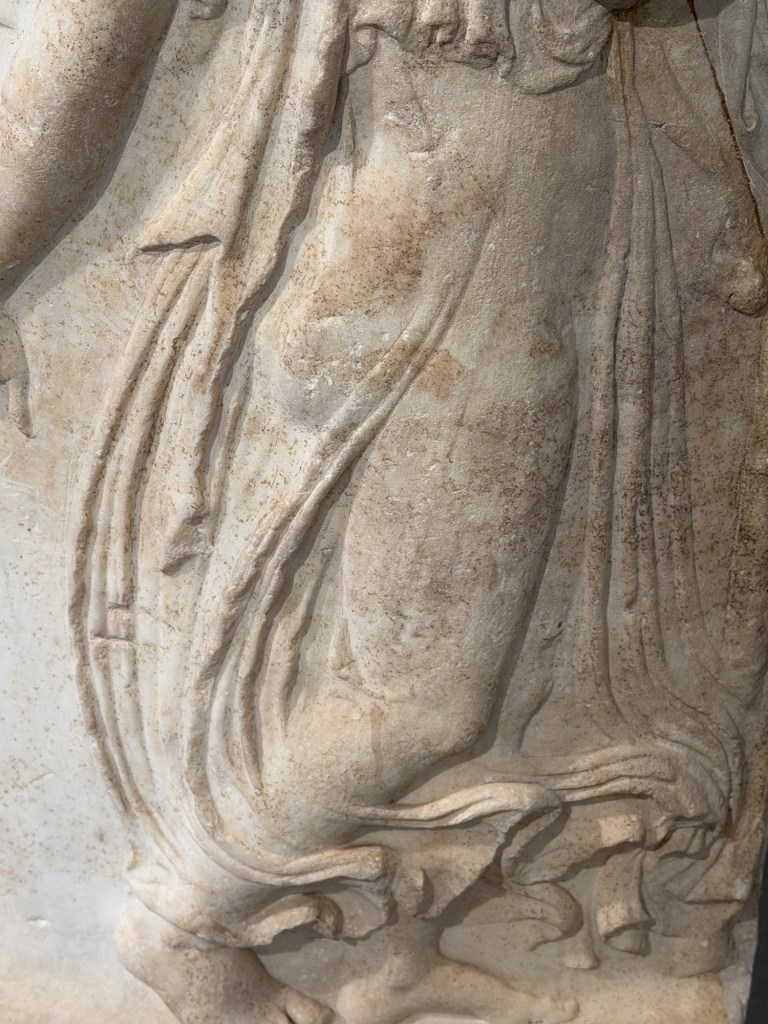
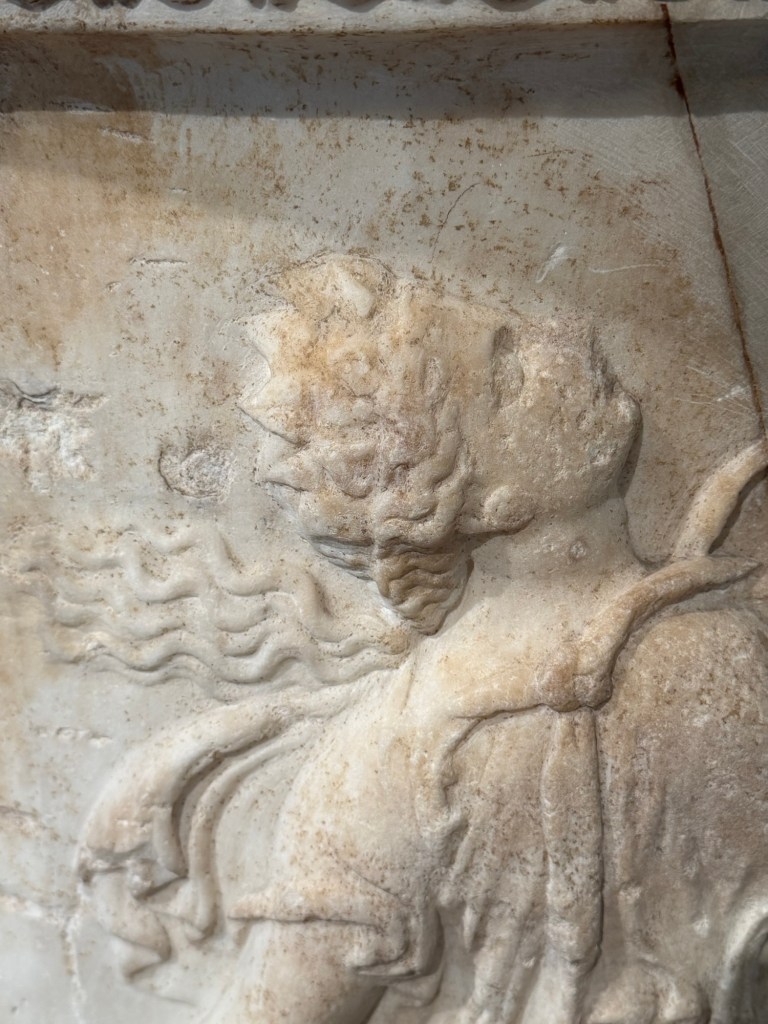
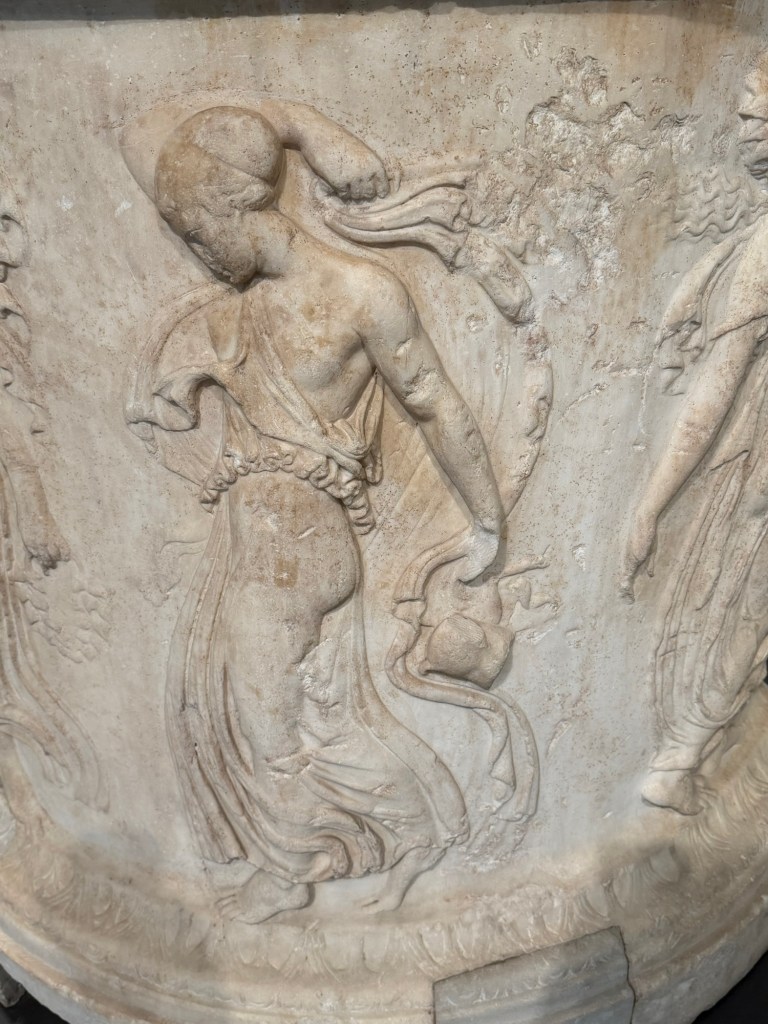
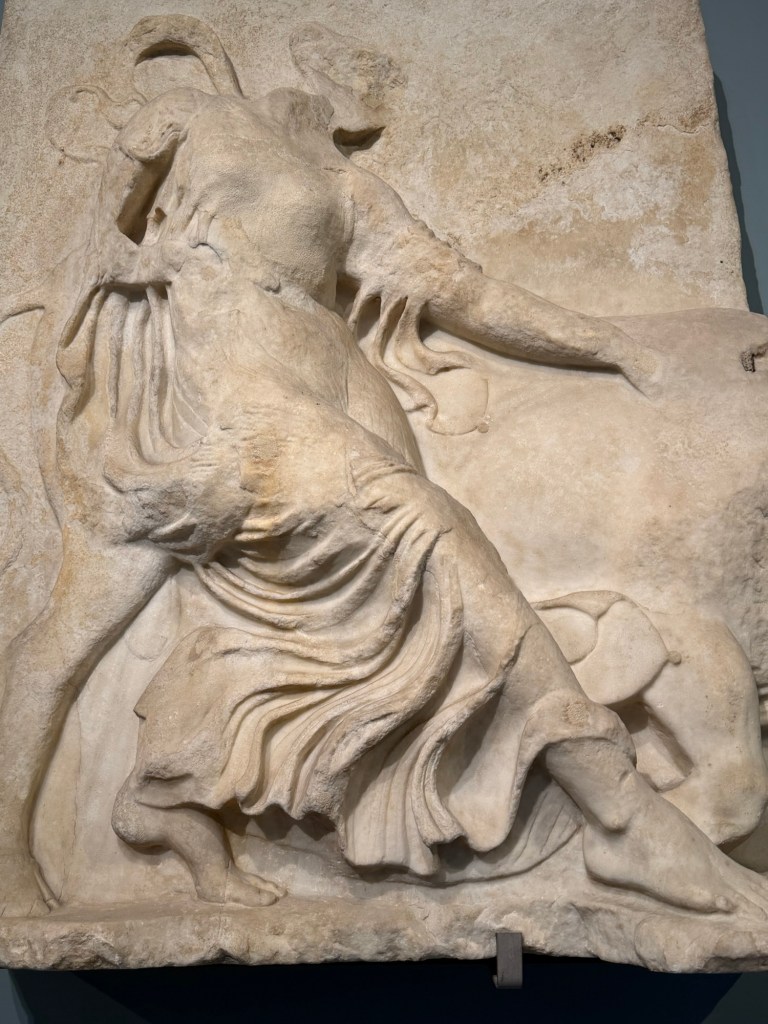
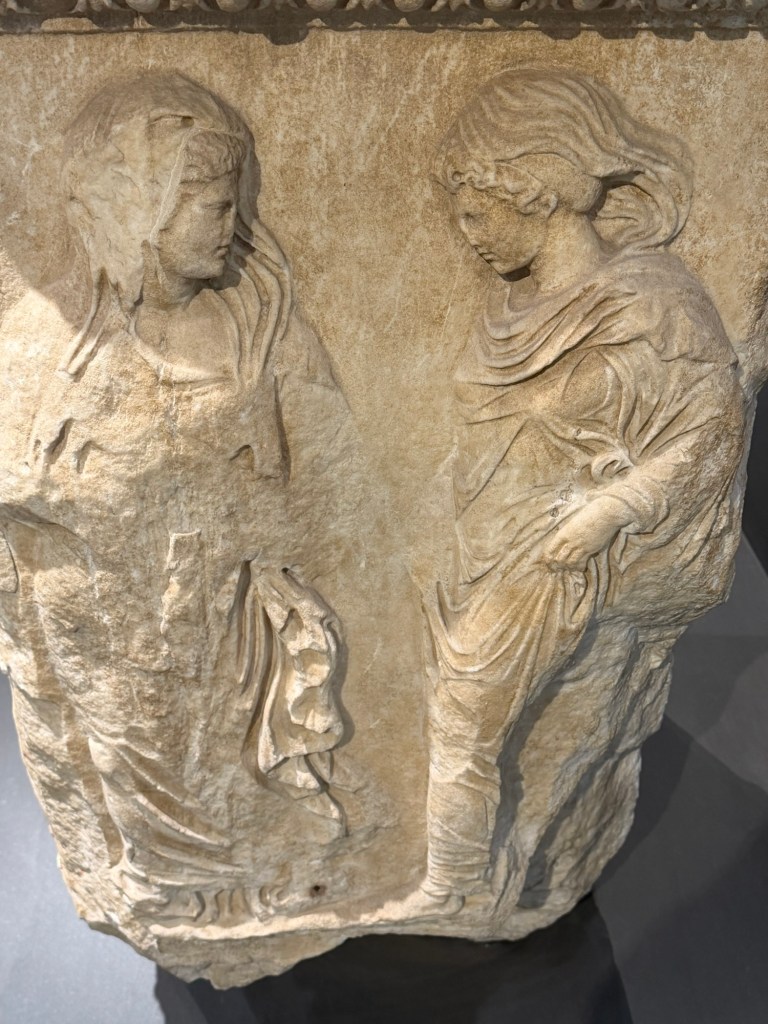
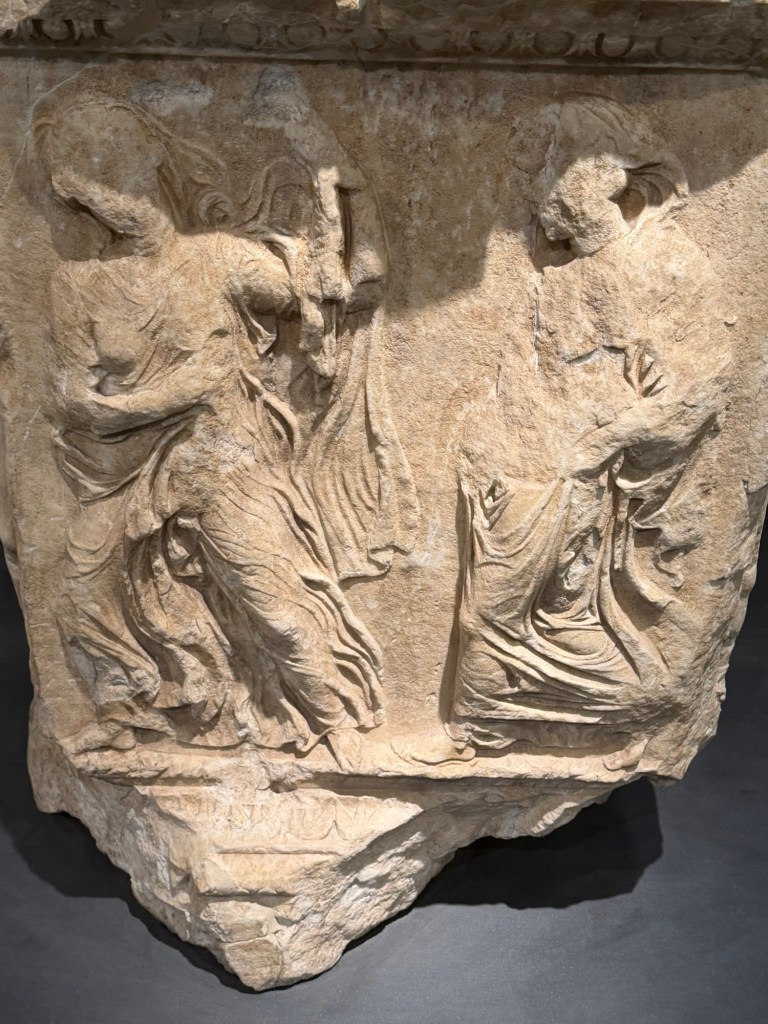
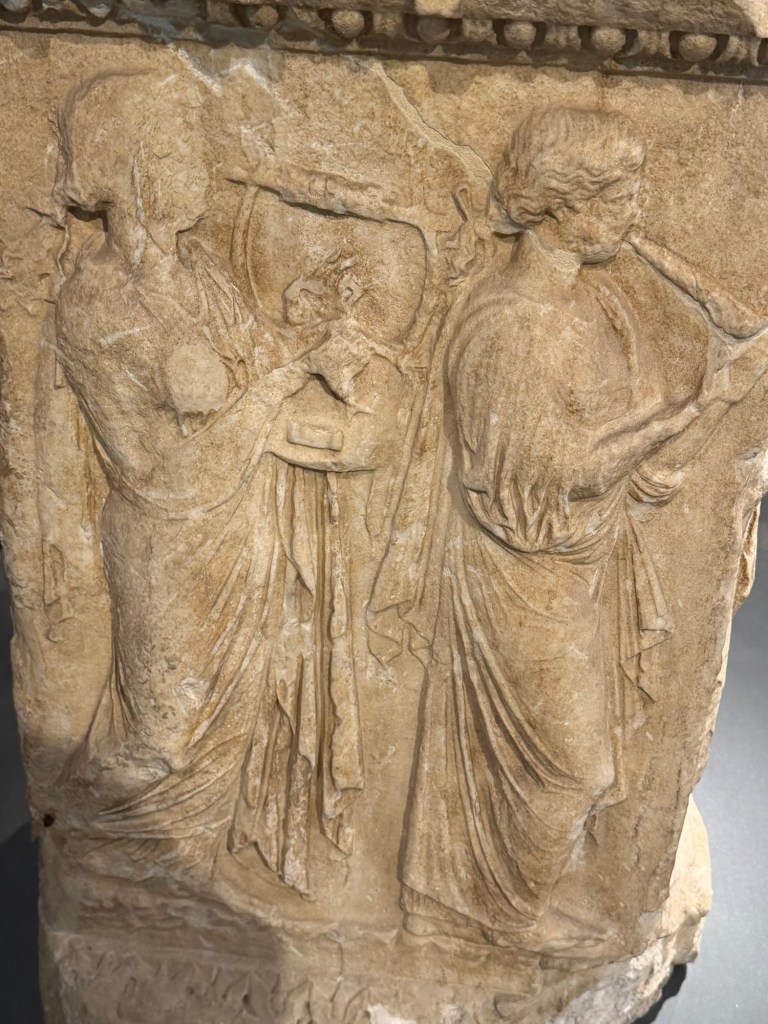
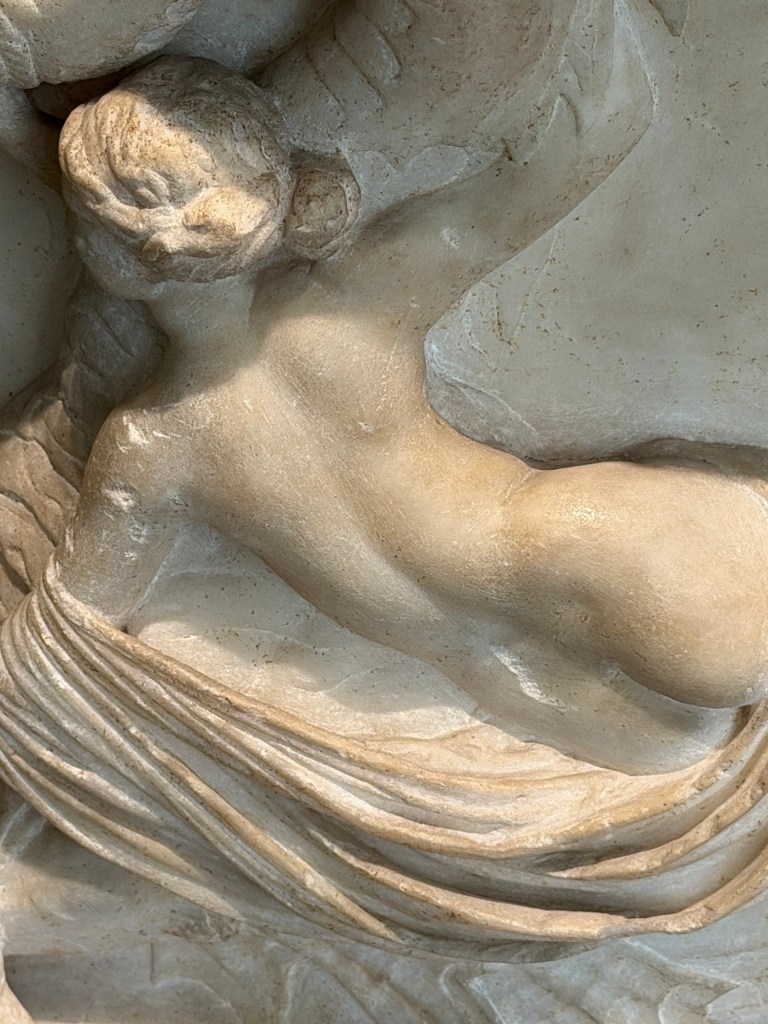
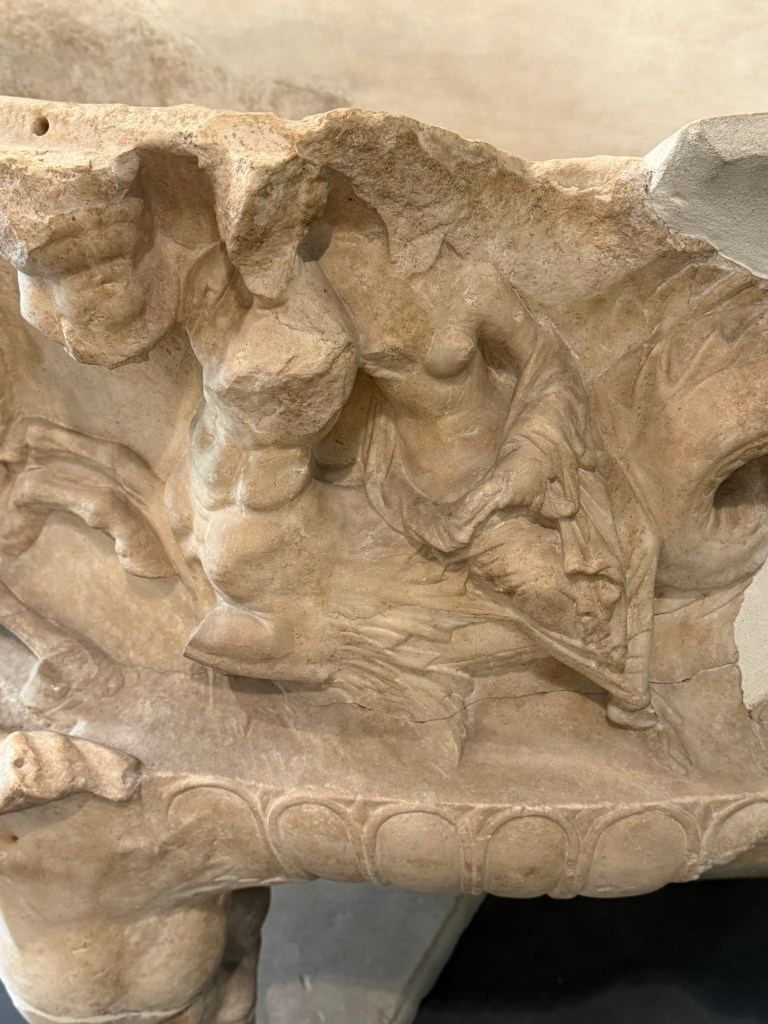
Just look with this beautiful group of sculpted maenads!
Maenad, priestesses of the god Dionysus
Feast your lucky eyes!
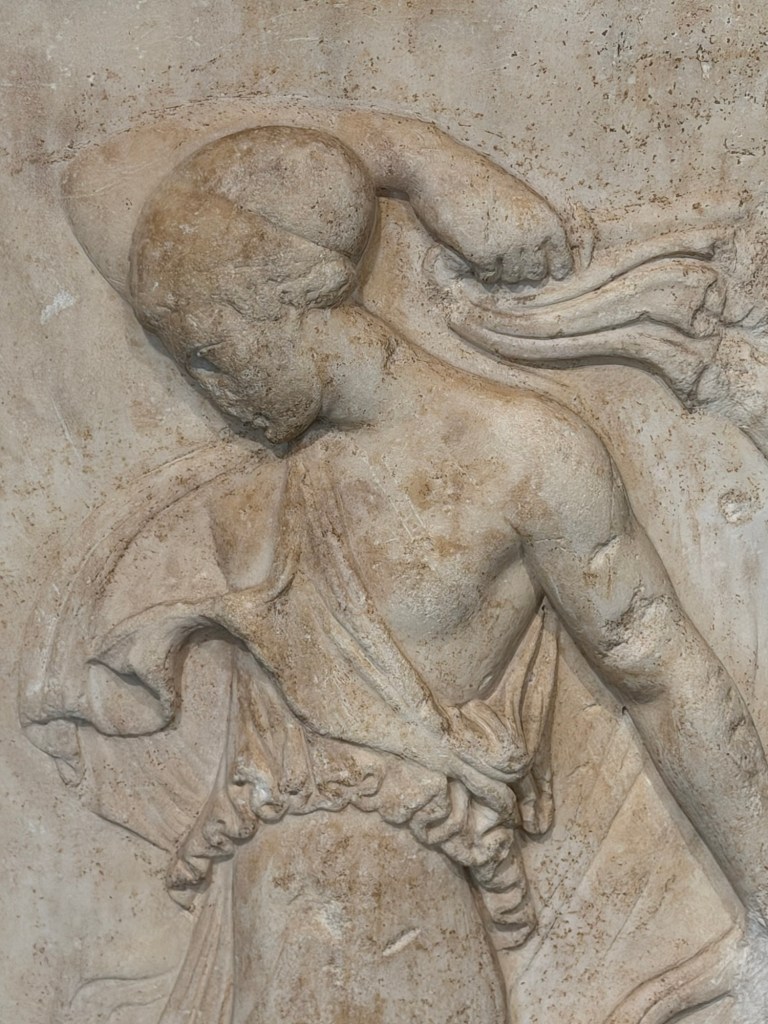
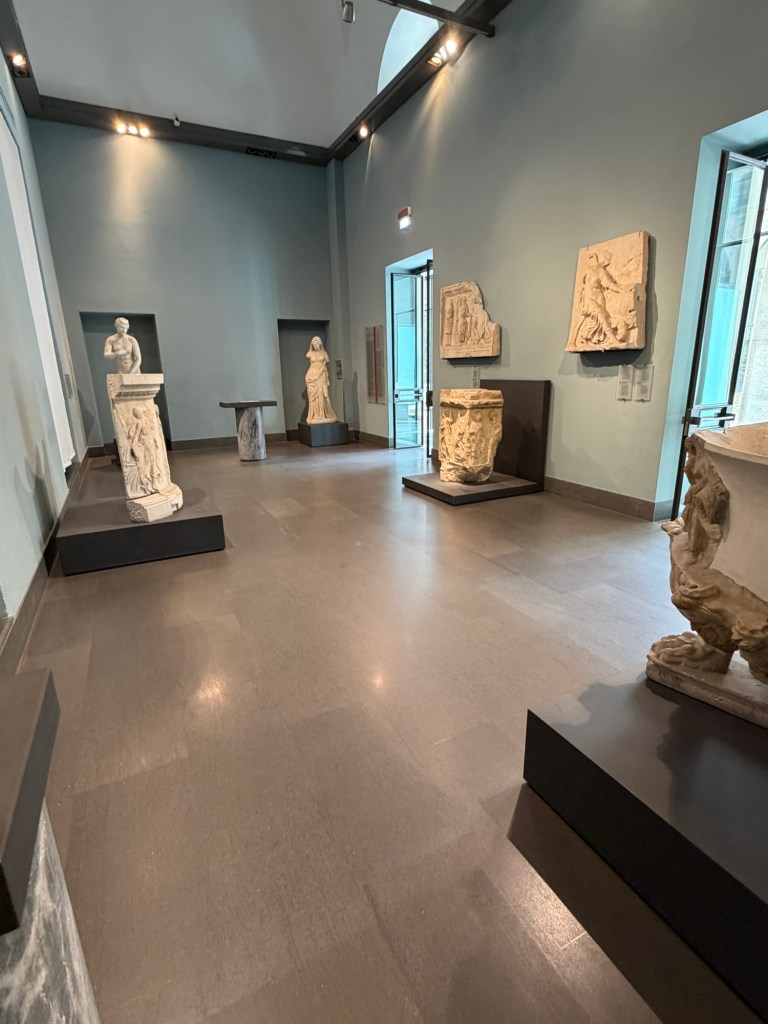
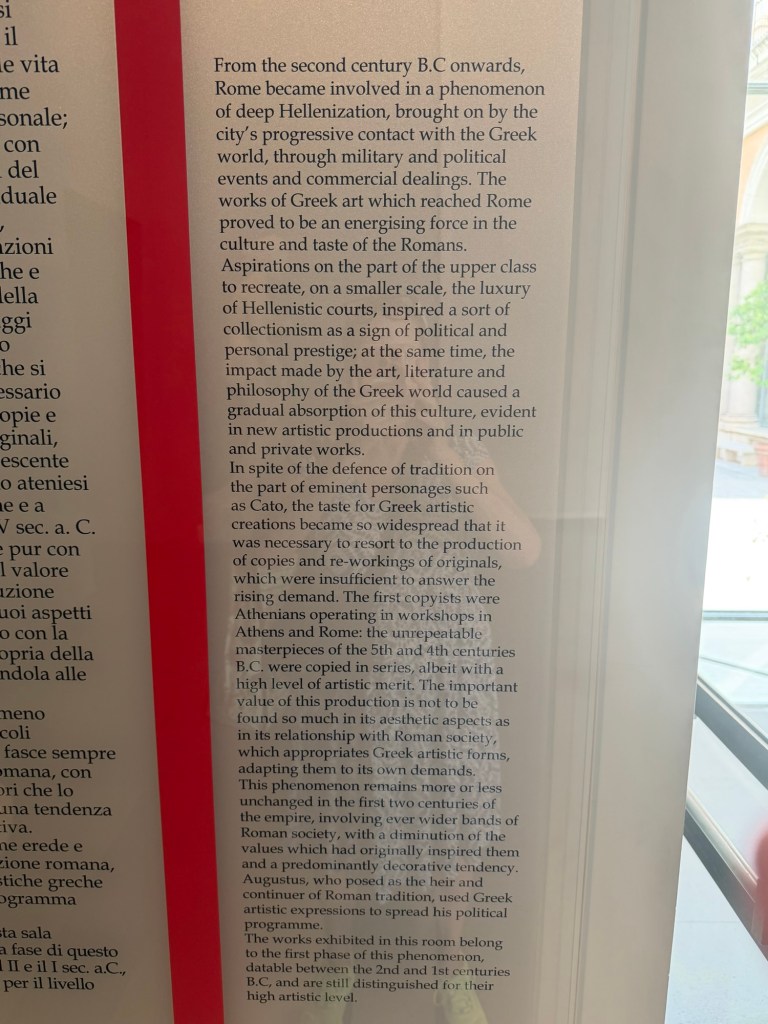
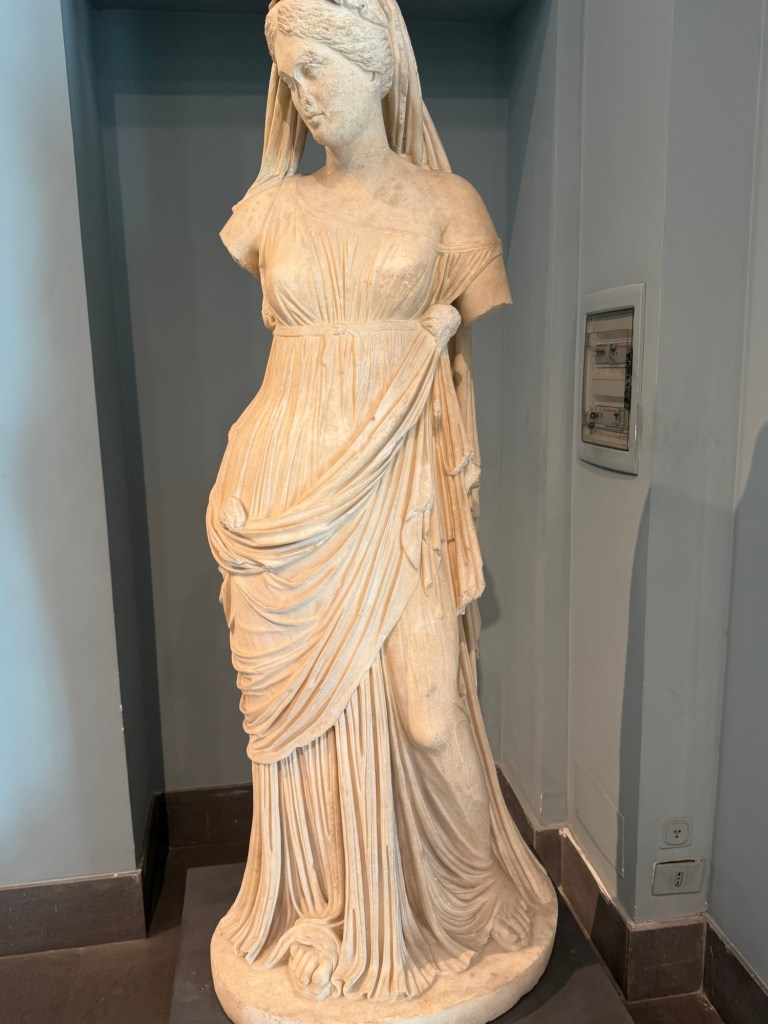
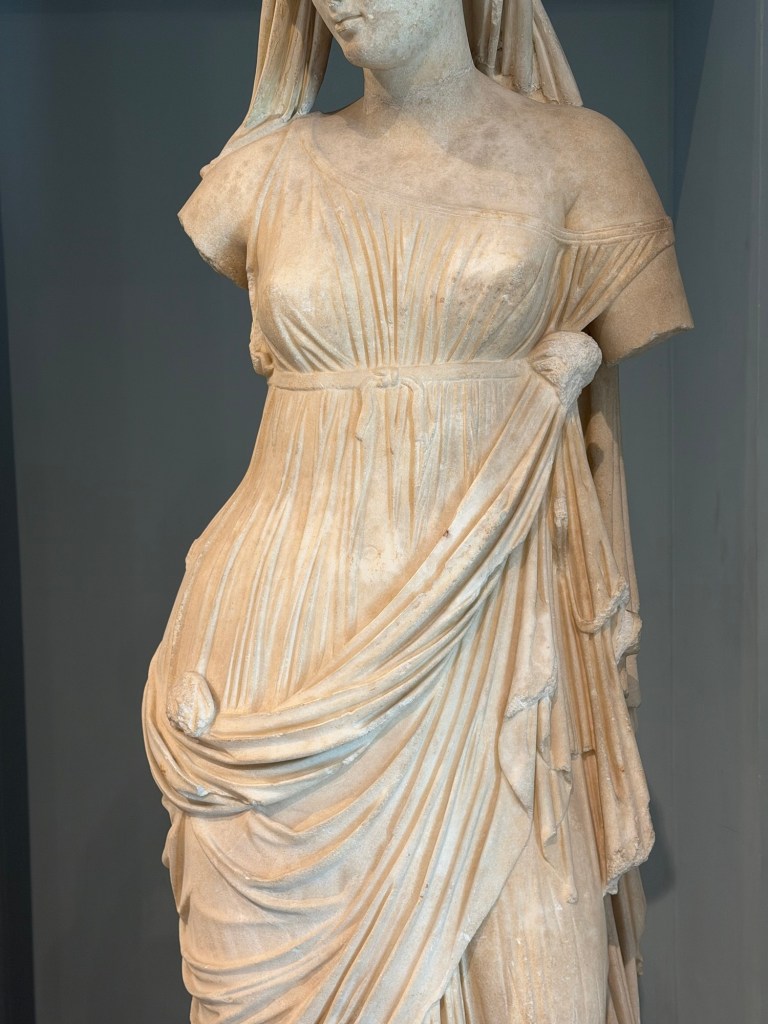
And, in the same gallery, were a few other examples of this period of Greek originals, all as lovely as the one before.
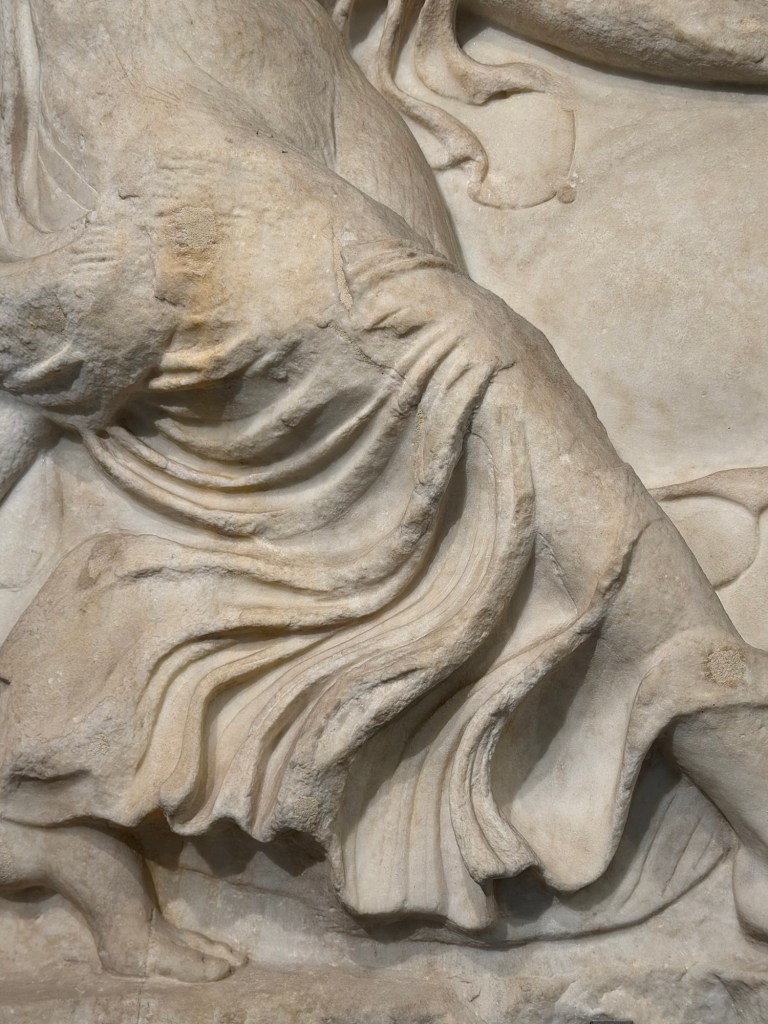
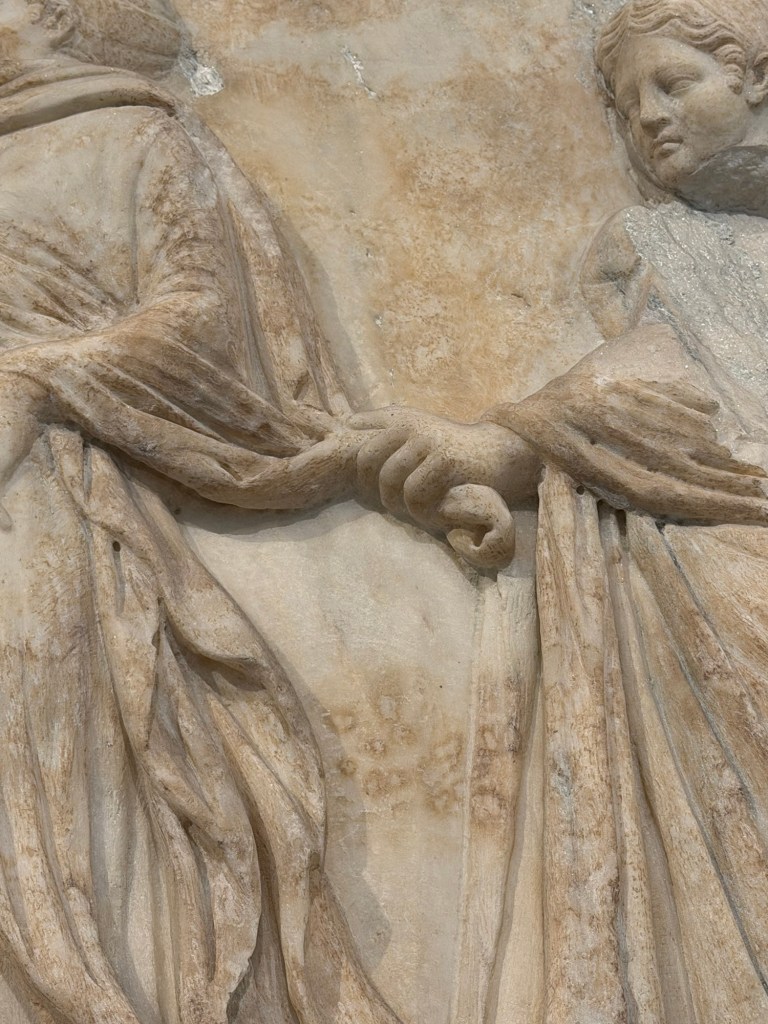
Ah! the loveliness of these figures! But it is the way the draperies are handled that takes my breath away. How mind-blowing it is that they survive at all!





You must be logged in to post a comment.