
Month: January 2015
All tied up?
Hate that feeling!

Love this photo of Houdini. :-)
The Palazzo Davanzati and musing about smart phones
My favorite museum in all of Florence, at least for today, is a great big dollhouse known as the Palazzo Davanzati.

It isn’t really a dollhouse, but to me it has always felt like a playhouse for life-sized historical living dolls, sort of like Williamsburg in the United States. I’ve been visiting this place for thirty years and I love it the very most out of all the musei in Firenze.
At least for today.
Because my love for beauty can be fickle; one day I like marigolds the most and the next day it is geraniums. Or, one day I like kinnikinnick the best and the next day it’s lantana. Today my favorite color could be green while tomorrow I realize I can’t live without orange.
My favorite line from opera is “La donna è mobile!” The lady is fickle. It’s probably a good thing I only had one beautiful child.
Anyway, back to the palazzo: when I wander through the building, starting in the lovely courtyard and then climbing the stairs to level after level, finding the kitchen, the bedrooms, the reception hall, I feel like I am a living doll from say about 1375, and I get lost in what I think it must have felt like to be the daughter in a wealthy household in Florence.
And I love it.
But, I already said that, didn’t I?
Well, I really do love it.
This great palazzo was constructed c. 1375 by the wealthy Davizzi family, who were operatives in Florence’s important wool guild. Life and society in Florence at that time were organized by the major and minor guilds. In order to be somebody who was anybody, you had to belong to a prominent guild.
After a century, plus or minus, the palace changed hands a couple of times, eventually being purchased by the Davanzati family. The palazzo remained in Davanzati hands until 1838. At that time, it looked like the palazzo might well have been razed, as many, many ancient buildings were being destroyed within the fabric of the city.
Fortunately for posterity, a wealthy antiquarian, by the name of Elia Volpi, purchased the palace, thus saving it from demolition. Signor Volpi restored the building to what he believed was its original style. So, in fact, when we visit this great palazzo, we are viewing an early 19th-century vision of what 19th-century antiquarians thought the lifestyle of the Renaissance looked like.
It is kind of like viewing a kaleidoscope through a kaleidoscope, if you see what I mean.
In 1951, the palace was purchased by the Italian state and in the current century it has been extensively shored up and restored.
The facade of the palace is a unified veneer which actually covers up a mixed bag of earlier, medieval tower homes. Signor Volpi had the vision in the 19th century to purchase all of them with the intent to blend them together as one palace. The facade is constructed in local sandstone and the topmost floor has an open loggia supported by four columns and two pilasters that was added in the 16th century.
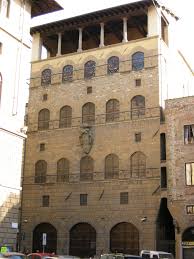
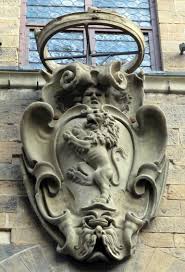
The Davanzati coat of arms appears on the facade and there are traces of other decorations as well.

Let’s go have a quick look! Andiamo!
The courtyard on the ground level is very nice.


I am absolutely fascinated by the bamboo looking vertical line that snakes down the wall. It is a water pipe, that collects water from the roof in a rainstorm and carries it down to the courtyard where it drains away.
Let’s climb to the first floor and take a look down into the courtyard from above.

I like the lion who stands guard, discouraging, or even keeping away, the wrong people from entering. I believe he is a version of the Marzocco, the heraldic lion symbol of Florence noted at the Bargello.

A view of the lion and the courtyard from the first landing. The vibrant red cyclamens caught my eye. They were much more vivid than this picture captured.
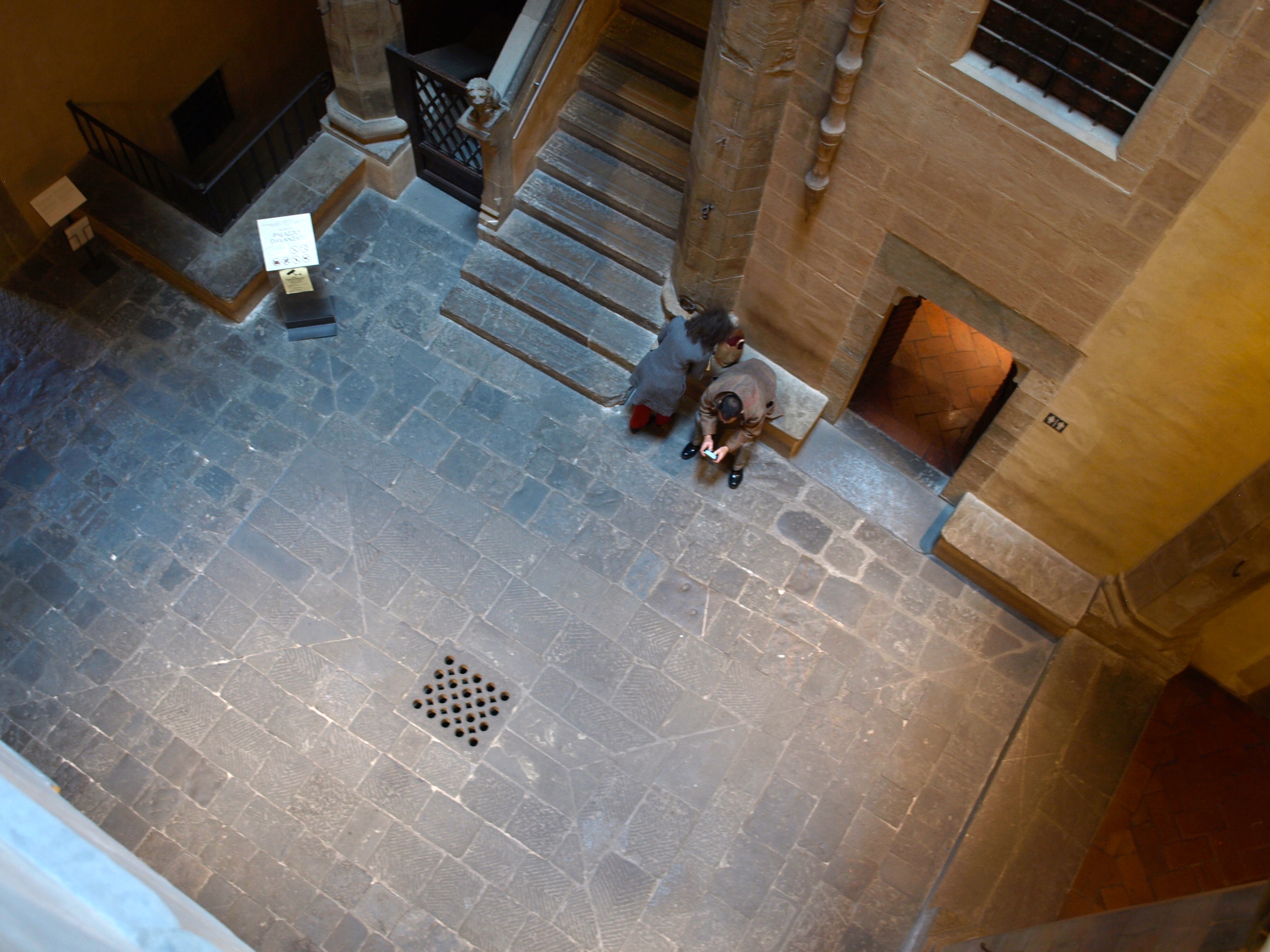
Our smart phones are the elephant in the room, that’s for sure.
OK, back to the palazzo. Here are a bunch of pictures for you to get a sense of this wonderful piece of living Renaissance history.
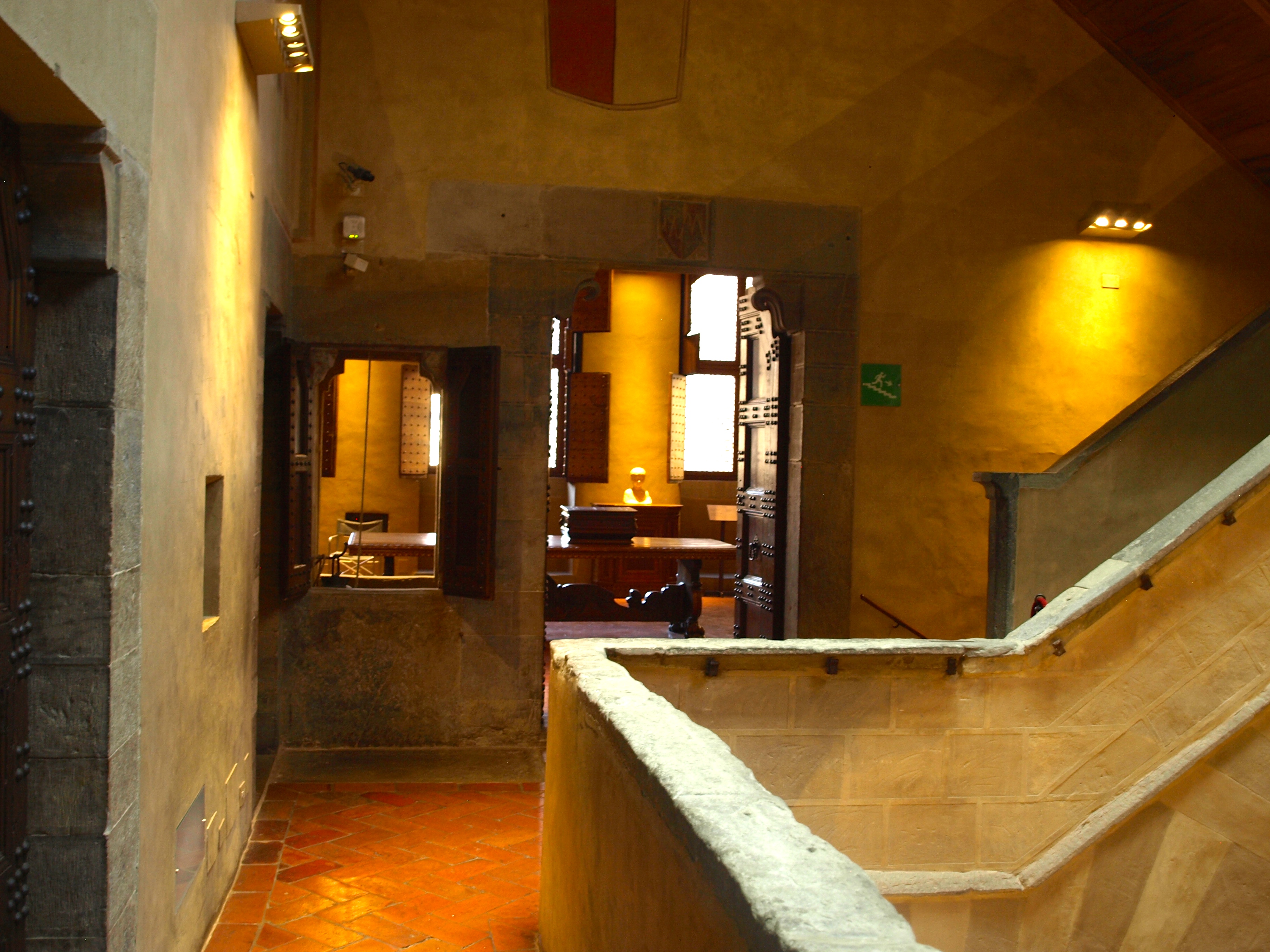
From the first landing you see directly into the grand front room. You can see a marble bust sitting inside on a console table between the two windows.
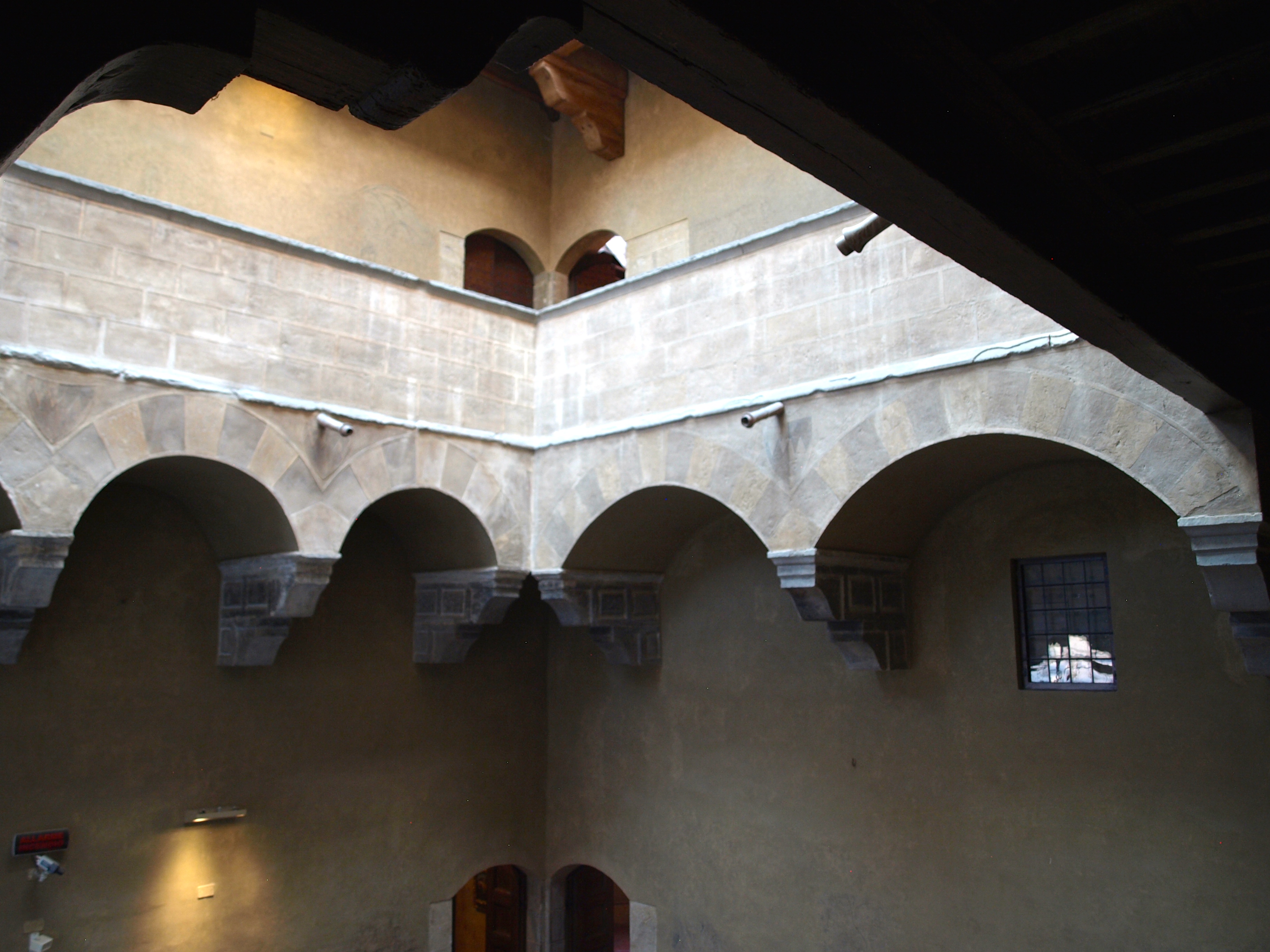

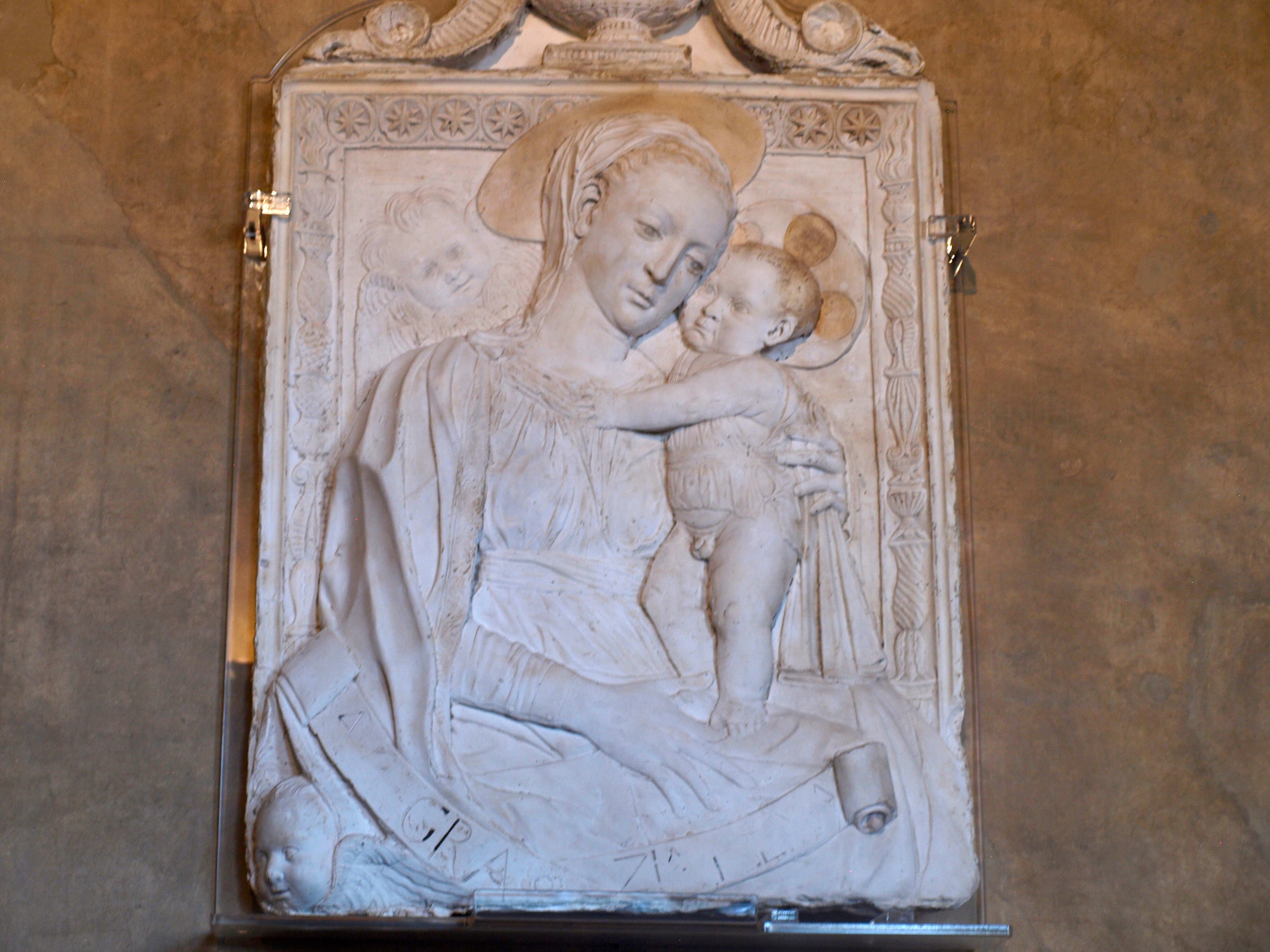


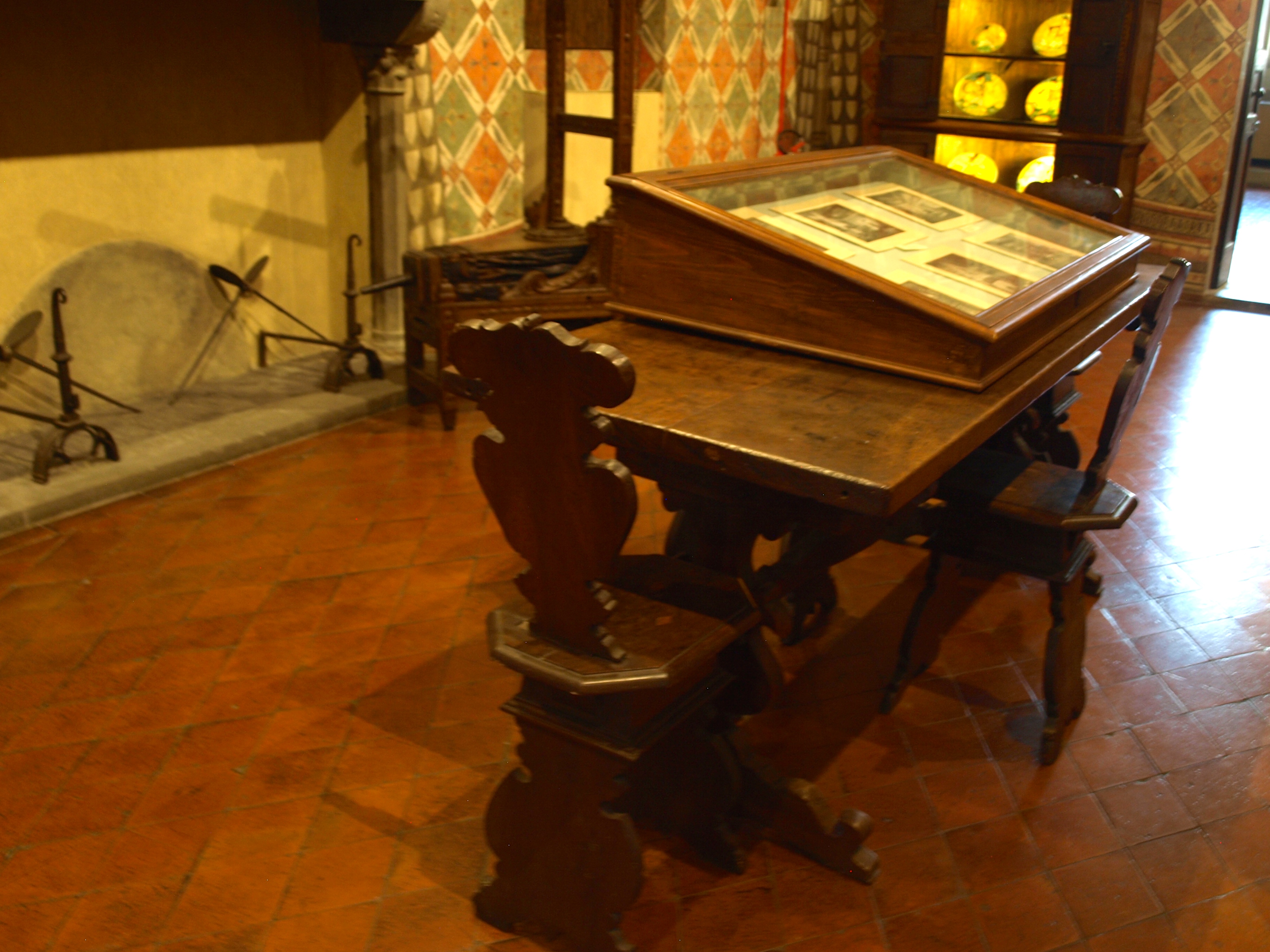

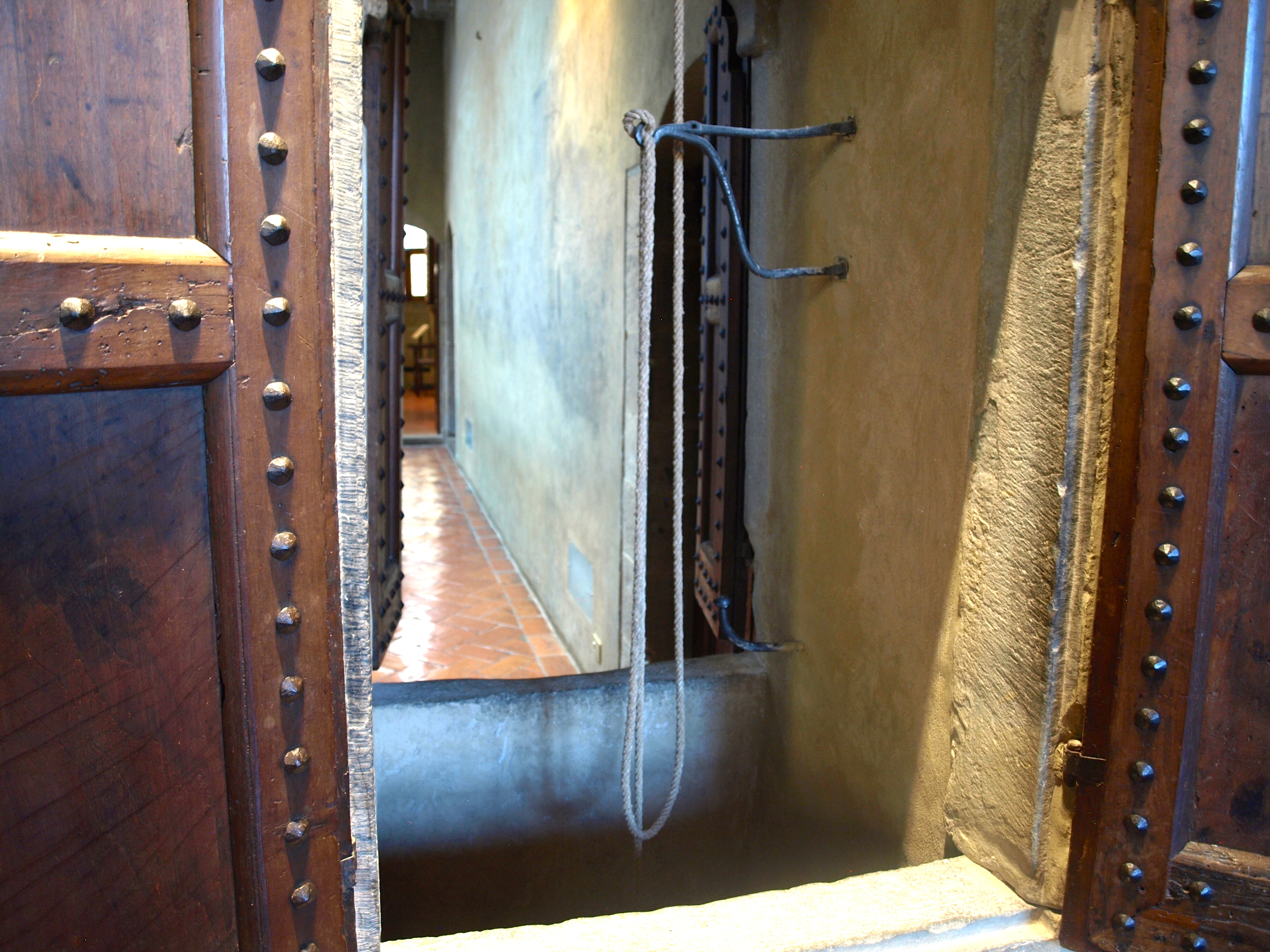
It is so interesting that there is a pully with a rope that would allow you to haul water or anything else up from the ground floor. You see the doors open to this dumbwaiter area and the rope hanging here. Below is what it looked like when I looked down inside the dumbwaiter space. Man, a living doll could have a lot of fun with this device! (when I was 3 my family moved into our newly constructed home and my favorite part of the whole thing was the laundry chute…that has got to be where the basis of my interest in the dumbwaiter started).


Art, 3 steps back.

Final shot of an insignificant artwork (that some talented male artist in Florence once created on a commission, using his trained and innate skills; tempus fugit and so does recognition for 95% of us regular humans. We each have our brief moment on the stage and then poof! we are gone [Thanks for the quote to Shakespeare] ). Remember to live in the moment. The wisest words probably ever spoken.
Ciao, bella! It was lovely to know you, however briefly. Knowing you enriched my life and I am grateful.
Was it worth the wait?
When I was a very young art historian in training, I fell head over heels in love with Italy. I’ve been pulled to Italy by some big magnet within my being pretty much my whole life. That magnetic pull is not something anyone can see, but everyone who knows me knows I feel.
And one of the objects of my desire has been the experience of walking through the so called Vasari Corridor that begins on an upper level of the Uffizi Gallery, snakes over the Ponte Vecchio, and travels all the way to the Palazzo Pitti on the other side of the Arno.
And while I have known for decades that the Corridor exists and is filled with treasure, and that only the elite and their entourages could access this long above-ground long, long hallway, I was not sure I would ever have the opportunity to view it myself. I might have had a chance in the early days of my career, when I was a Fellow at the Metropolitan Museum of Art, for then I had a hand signed letter from the Met’s director, Phillipe de Montebello, which worked pretty much like “open seasame” all around the world back then.
The letter invited anyone I presented it to allow me access for whatever I was asking for in the world of art. Coming from arguably the most important person in the art world at the time, the French director of New York’s Metropolitan Museum of Art, that letter had weight, figuratively as well as literally. I saw how people reacted to it. The letter was on thick, hand-made, old world letterstock, with the Met’s letterhead engraved upon it, and a gold seal affixed to it. That letter allowed me to climb the scaffolding erected for the conservators to clean the Sistine Chapel ceiling. That is how I can to be 5 inches away from Michelangelo’s “Drunkenness of Noah” panel, an experience I will never forget.
But as I was preparing for this winter, my winter in Italy that I have dreamed of almost all of my life, I discovered that the Vasari Corridor is now more or less open and that one can make a reservation in advance online and then visit. I have one of those tickets, and I am going there tomorrow, on my birthday. Happy Birthday to me!
I’ll let you know if it was worth the wait!
Now that’s what I call a wisteria vine!
Besides being on-call yesterday for the etiquette police (https://wordpress.com/post/48620893/7789/), I wandered around the Palazzo Medici-Riccardi, taking in as many of its many marvels as possible.
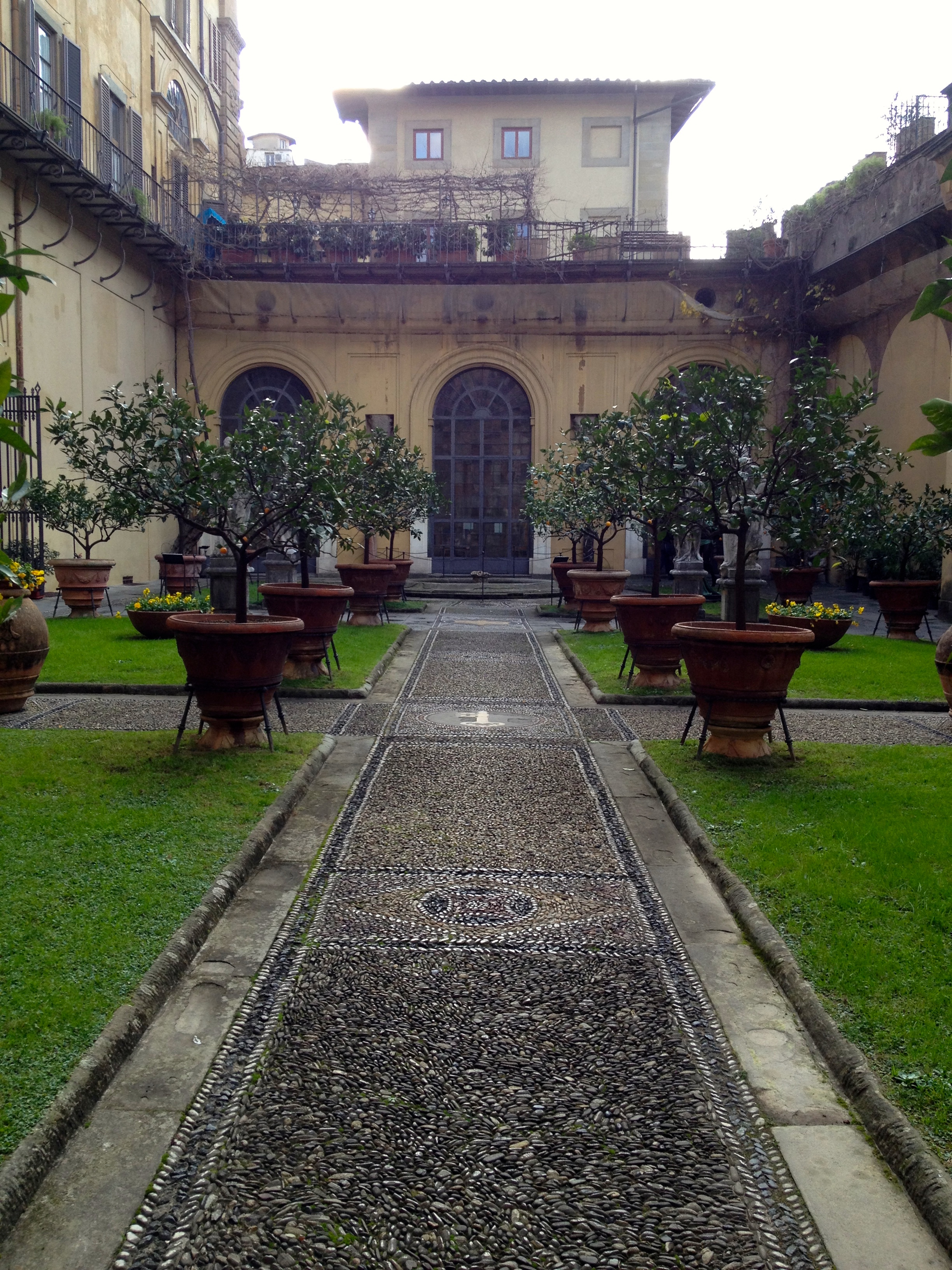
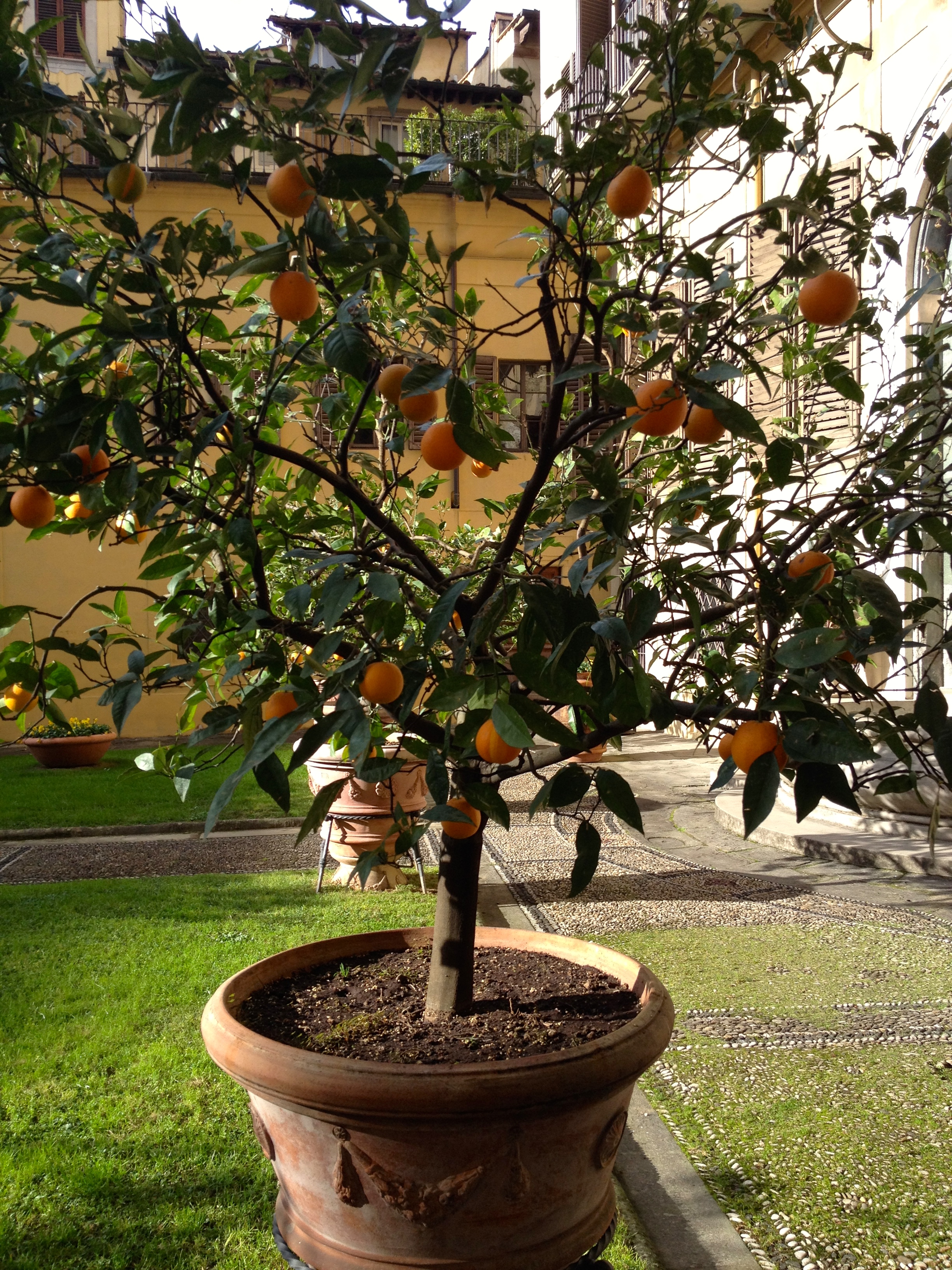
The potted orange trees were looking delightful, bearing their fruit like Christmas tree ornaments.
You know how much I love potted citrus trees in Italy in winter.
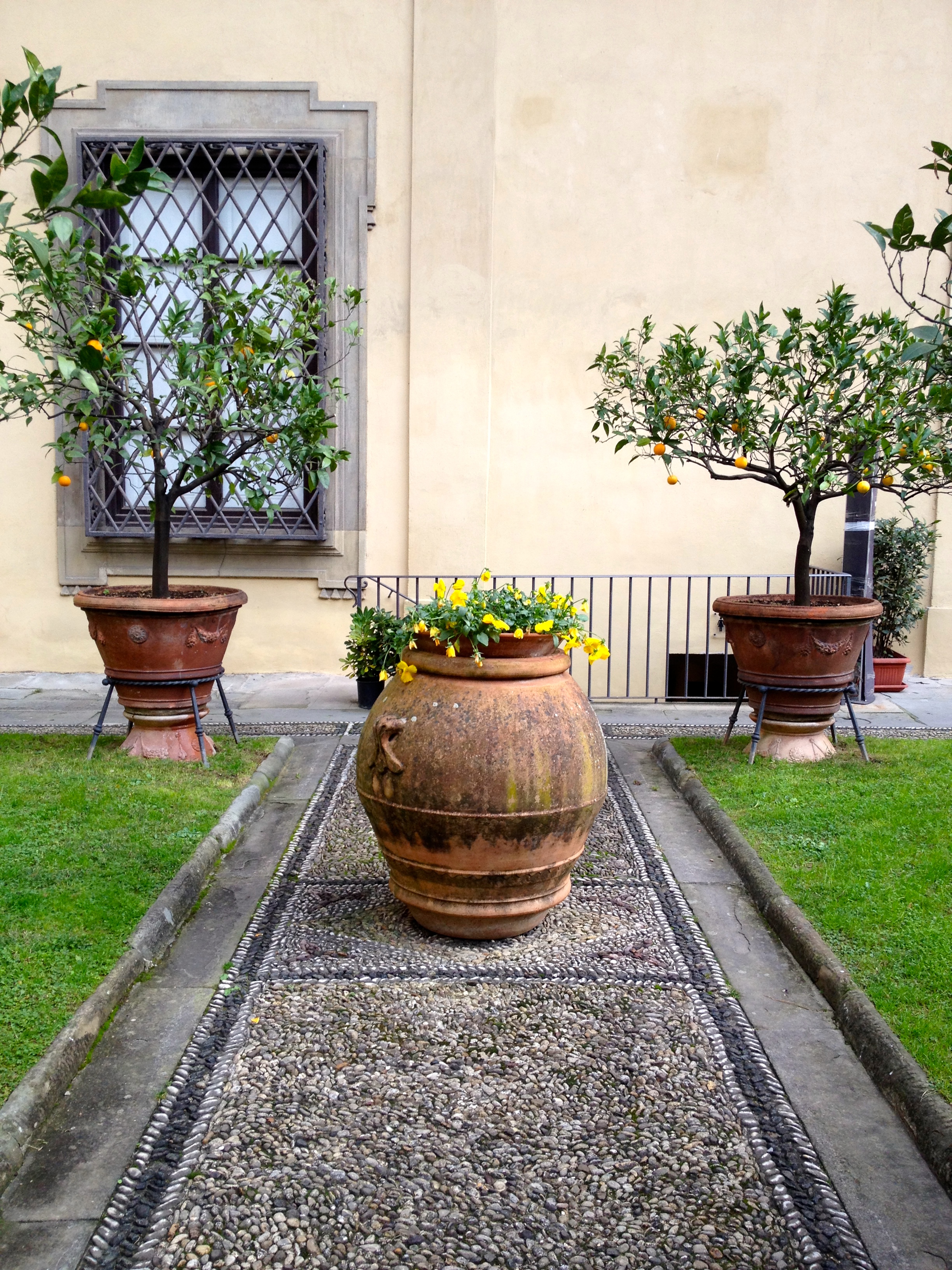
The pansies were holding their cheerful heads up very high, reaching for the warm rays of sunlight.

Much of the pathway system throughout the garden is made from these hand-set riverstones in concrete. I first saw this technique used in Japan, but obviously great cultures think alike when it comes to some things.
Hold that thought on the possible influence of Asian techniques for below.
I also like the way the moss has added its own organic modification to the image presented to us. You can really see the moss on the pavement 3 pictures up, the one of the close-up of the orange tree. Isn’t that moss wonderful! And it adds a slight earthy fragrance to the garden, and maybe a little humidity. Moss rocks!
And, at one end of the great formal garden, I noticed a very large and obviously very aged wisteria vine. It added a majestic contrast of wild nature into this otherwise very orderly landscaped space.

This wisteria trunk is magnificent, for its wildness and strength (wisteria can be a weed in some places). It’s being partially held up by a wire support as you can clearly see. All wisterias need supports, whether they’re in nature or in a man-made garden.
The vine has been severely pruned, obviously, over the centuries, and I couldn’t help but wonder if it were growing here when Lorenzo de Medici was living here in the quattrocento. It’s possible.
The picture below shows a younger vine trunk on the opposite side of the courtyard. The two vines are strategically placed so that they meet over one end of the courtyard, covering it with lavender colored blossoms in a manner I can only imagine for its stunning beauty.
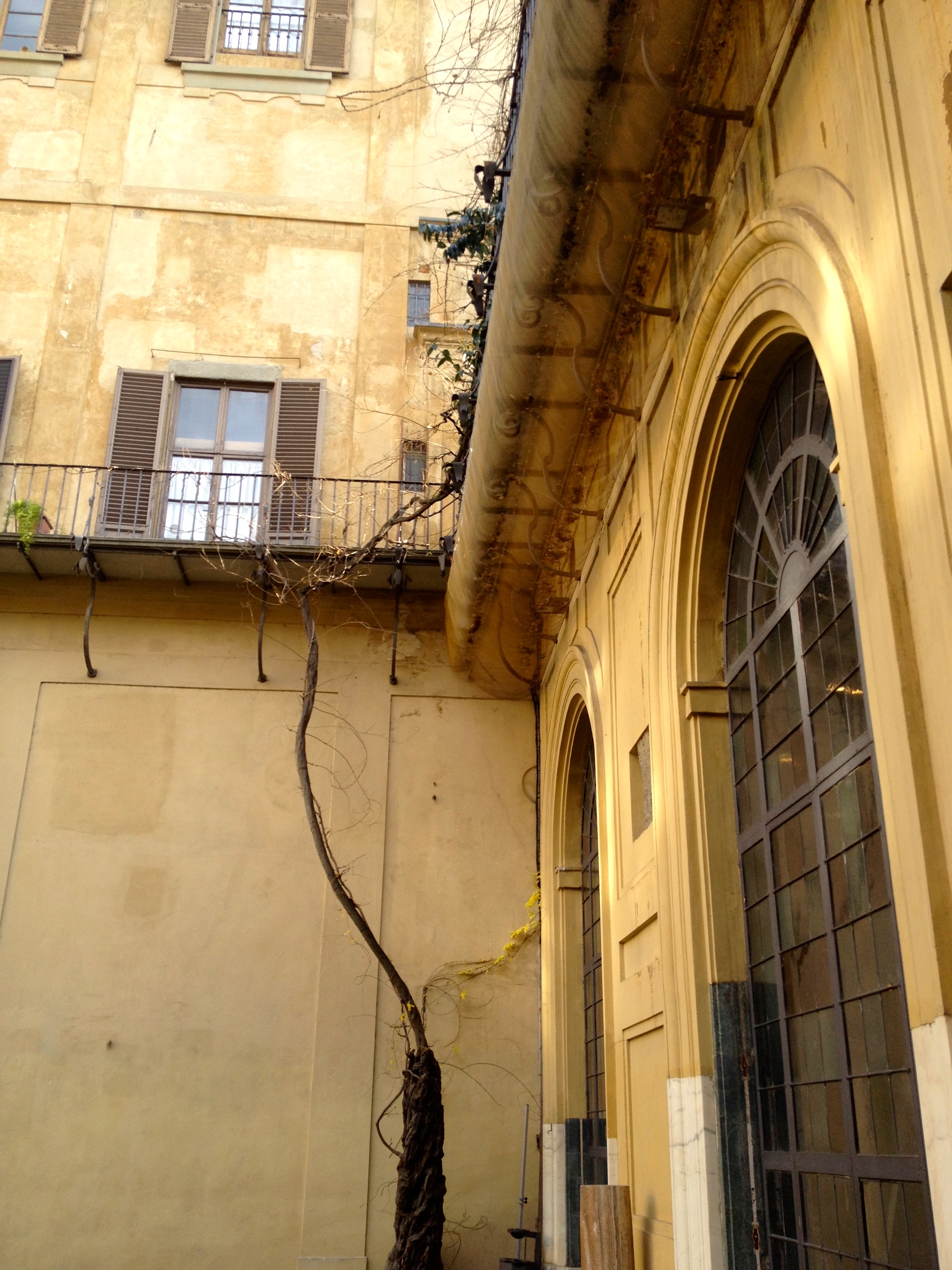
I know an old wisteria vine in Seattle quite well. When I give tours of the Seattle Japanese Garden to visitors, I never fail to walk them by the braided trunk of that vine and challenge them to guess how old it is. I don’t have a great picture of the Seattle vine trunk available right now, but if you look at the lower right corner in the following picture, you can make out some of the trunk’s volume and shape.

This Seattle wisteria plant is about 100 years old, for it was planted in the 1960s when it was already known to be about 40 years old. The landscape architect for the Japanese Garden hand-selected most if not all of the specimen in that landscape, and it is not a coincidence that an already mature wisteria plant was placed in the Seattle garden.
So, if the Seattle wisteria is about 100, with a diameter of the trunk at about 6 inches
Just imagine how old the Florence wisteria must be with its largest diameter at about 20 inches. I think you are starting to get the picture.
So, you see, it is possible that this plant has watched 600 years of human activity in and around it. We always say, “if walls could talk.” In this case, I wish plants could talk. Think what this vine could tell us about the people who lived and plotted here. It boggles the mind.
And, as far as aesthetics: well, for a person with a vivid horticultural imagination, my mind can go wild with visions of the Florence wisteria in bloom in a few months. As a reminder of wisteria’s glory, take a quick look at the Seattle Japanese Garden vine in bloom about 8 months ago.
Love, love, love. Pendulous racemes, as heavy with flower as a hanging bunch of grapes. Lavender color. Beauty.

POW! Gets me every time. A beauty knock-out!
OK, so one last point: remember the East meets West confluence I noted above with the inlaid riverstone pavement? Well, add this to the mix. The source, as always, is my home boy, Wikipedia:
Wisteria (also spelled Wistaria or Wysteria) is a genus of flowering plants in the pea family, Fabaceae, that includes ten species of woody climbing vines native to the Eastern United States and to China, Korea, and Japan. Some species are popular ornamental plants, especially in China and Japan.
Uh-huh, that’s right, wisteria, especially the ornamental type, is native to Asia. So, we can say with confidence that just as Italy (read Europe) was importing porcelains, teas, silks and exotic spices from the East, plant collectors were hustling hither and yon all over Asia, looking for plant sources that could be grown in Europe and which European would like to grow in their gardens.
I am an art historian by training and, as surely as we study provenance as a tool for determining a painting’s authenticity, horticulturalists study when and how plant materials were introduced to other continents. It is completely plausible that the paving river stones and the use of the ornamental wisteria informed the Medici patrons who built this palazzo, or the Riccardi family who later enlarged it–or perhaps just the garden designers and workers who created this formal giardino— with layers of culture that only the well-informed–then and now–can truly appreciate. I live for those people. I am one of those people.
And, finally, a wondrous yet superficial fact: did you know that you can tell if the vines are from China or Japan by whether the vine twines itself around its support in a clock-wise or counter-clockwise pattern. The Chinese varieties twine clockwise; the Japanese counter-clockwise. Isn’t nature grand! I just love it for its complications and patterns.
Now, if your mind works like mine does, you are going to ask me which way the Florence wisteria twines.
And I am going to admit that I have no idea, because I wasn’t thinking about that yesterday when I was there, and also because the vines had been so severely pruned that there was no obvious indicator of twining direction.
Which obviously means I will have to come back to Florence in May and June to get to the bottom of this mystery.
Ha ha. Don’t I wish!
C’est moi, or, sono io

What a lucky, lucky ragazza reflected in the window! She gets to spend her birthday in Florence! Woo hoo! She surely doesn’t feel as old as her birth date indicates! She feels more like the age indicated by her shoe size.
How not to behave when visiting the Palazzo Medici-Riccardi in Florence
Just answer me this: where are the etiquette police when you need them?
Sure, why not?


And I said nothing. That earns me a better place in heaven, correct?
Because it took every ounce of self control that I possess not to say a word.
I hoped she’d figure out I was taking her picture, but she was oblivious. Of course.
Half step forward, 2 steps back

There is so much art in Italy and Florence in particular that relief sculpture like this one goes unnoticed. It is nothing special. It was at eye level when I walked out of the Boboli Gardens and I just felt like playing around with the image. I was in a photography frame of mind and wanted to stay out in the winter sunshine as long as possible.
Art, one step back

 get back, lauretta!
You must be logged in to post a comment.