I had the great pleasure of visiting Prato for the first time yesterday. I am so sorry I waited so long to go! It is a hop, skip and a jump from Florence by train, for the high cost of 2.50 Euro! Best of all, it is a city full of great art! Va se può!
Yes, there is a large Chinatown in Prato and that development gets all of the attention for this fine, large city that is a neighbor of Florence. I’m here to talk about the art, come sempre!
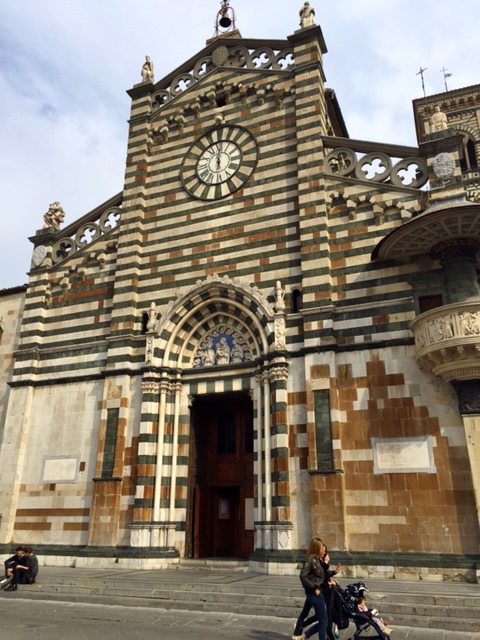
The duomo, or Cattedrale di San Stefano, is a lyrical design in the Gothic/Romanesque Tuscan vein. I found it beautiful! I am a huge aficionado of the striped marble facing many Tuscan churches.
The façade has a single central portal, surmounted by a lunette in glazed terra-cotta sculpture by Andrea della Robbia, depicting the Madonna with Saints Stephen and John.
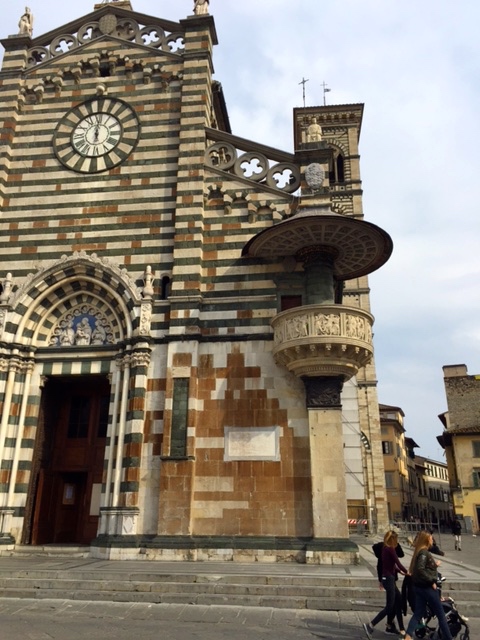
San Stefano has a very important relic, the Sacra Cintola or belt of the Virgin Mary, acquired during the 14th century. To house such an important relic, the church added a transept attributed to Giovanni Pisano, but probably the work of a pupil of Giovanni’s father, Nicola Pisano. The lavish interior Capella Cintola was also built at this time to house the relic.
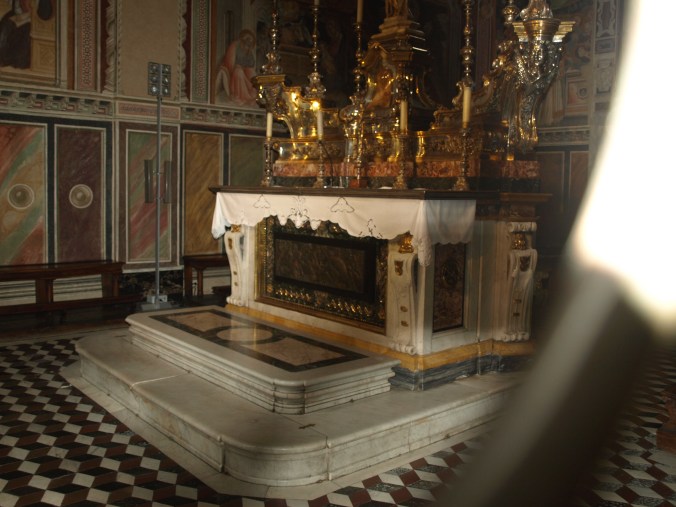
The picture below does no justice to this grand Capella. You notice it the second you walk into the lovely church.
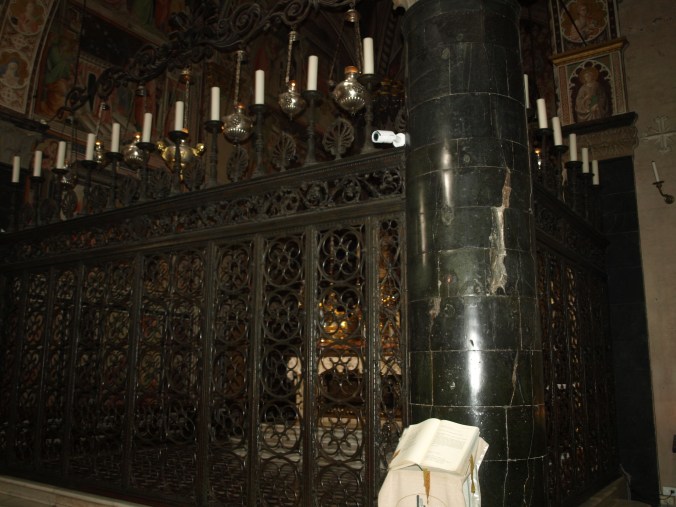
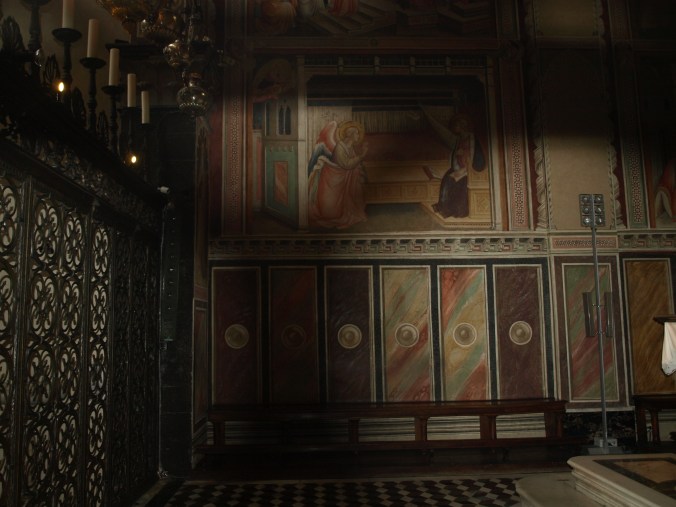
The picture below is of the interior of the Capella. Still no justice is done! The chapel was designed by Lorenzo di Filippo between 1386 and 1390.
The Sacra Cintola is a knotted textile cord meant to be used as a belt. According to a medieval legend, the belt was dropped by the the Virgin Mary as she lifted into heaven. She wanted Thomas the Apostle to have the belt, to prove to him (doubting Thomas) as proof of her assumption.
(For more on the miraculous belt, see https://en.wikipedia.org/wiki/Girdle_of_Thomas).
The legend of the belt dropping by Mary was frequently depicted in the art of Florence and indeed, all of Tuscany, and the keeping and display of the relic at Prato generated commissions for several important artists of the early Italian Renaissance.
One of the most interesting aspects of the the duomo is the exterior pulpit on the facade. I have never seen such a feature on any other church. It was designed by Michelozzo and decorated by Donatello with seven relief sculptures between 1428 and 1438.
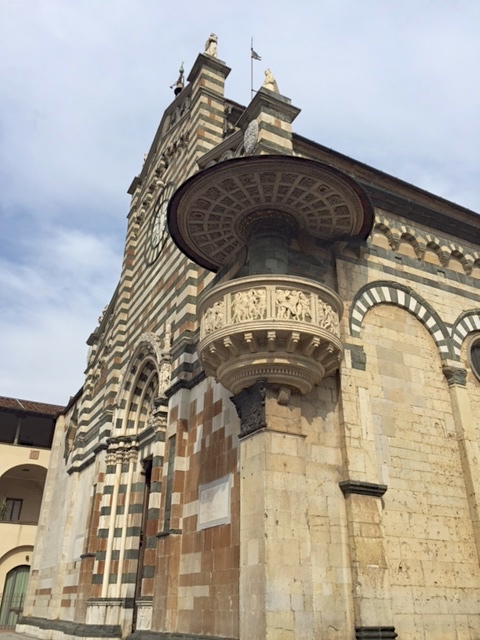
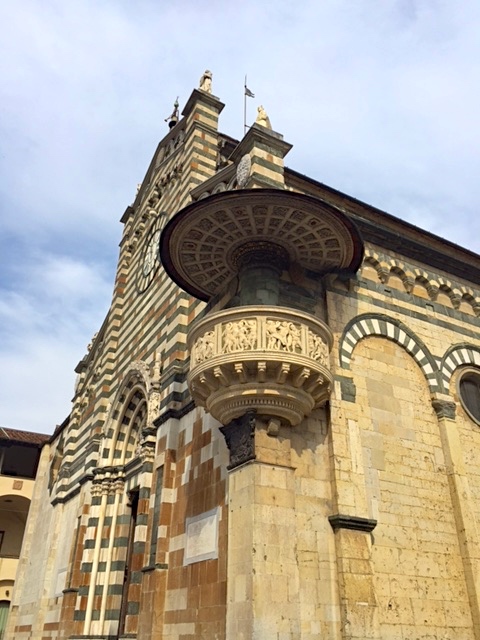
The seven original reliefs of the parapet were removed from the pulpit in 1967 and can be seen today in cathedral museum. This is a rather fortunate development for students of art history, because we can get up close and personal with the stunning sculptures by Donatello. It is possible to study the forms so closely you can sometimes see where the chisel landed on the marble.
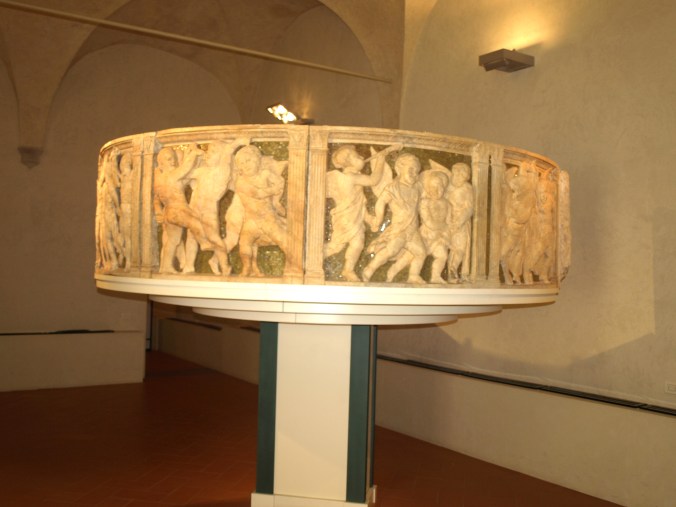
The subtle inlay of mosaic behind the shallow relief sculptures adds life to the forms.
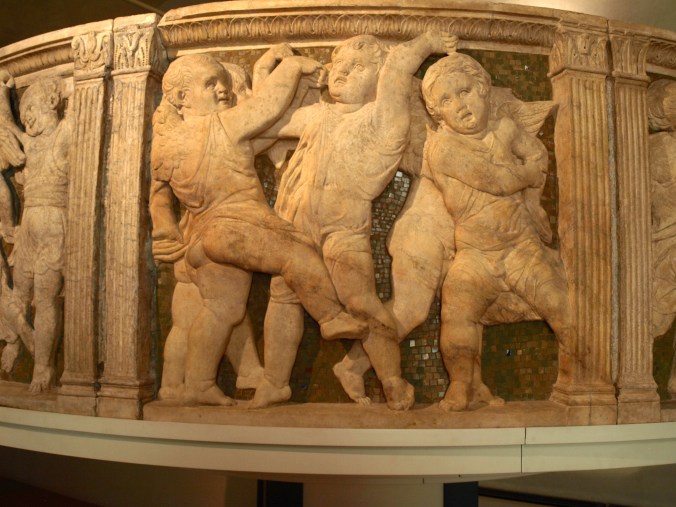
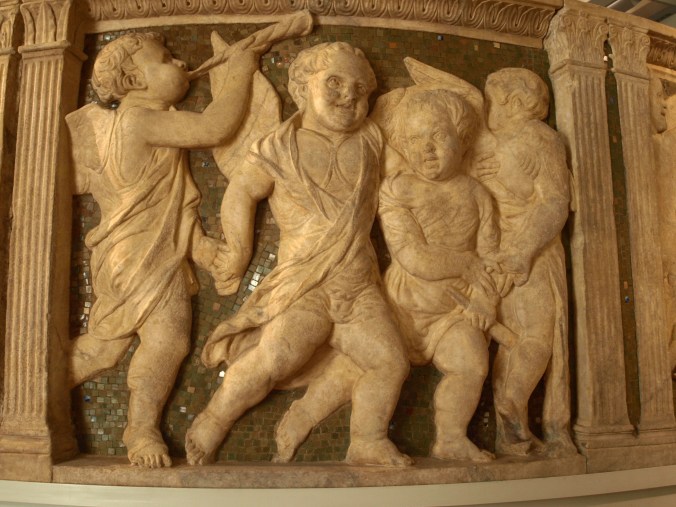
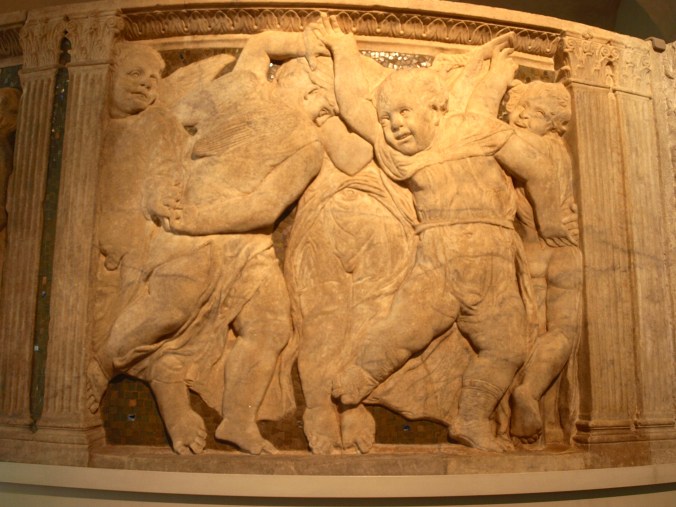
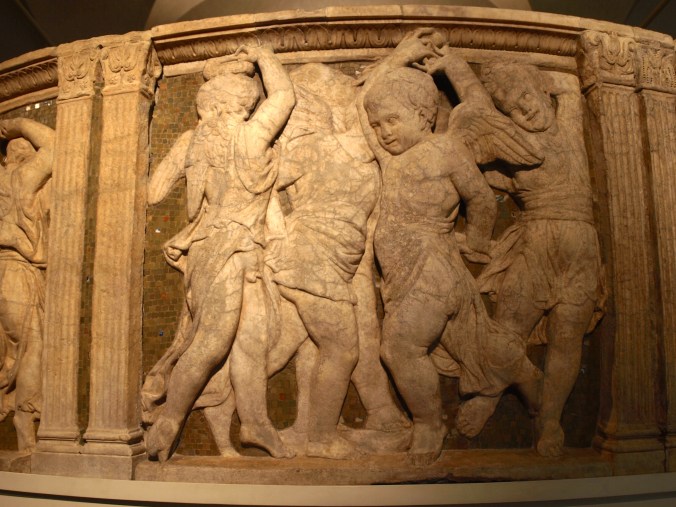
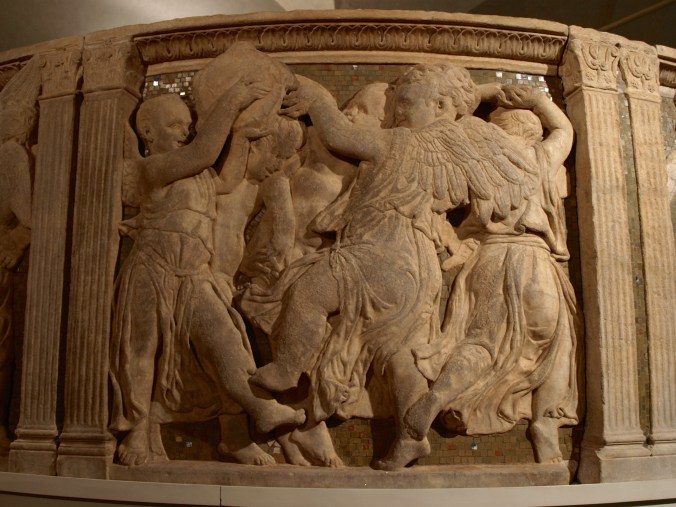
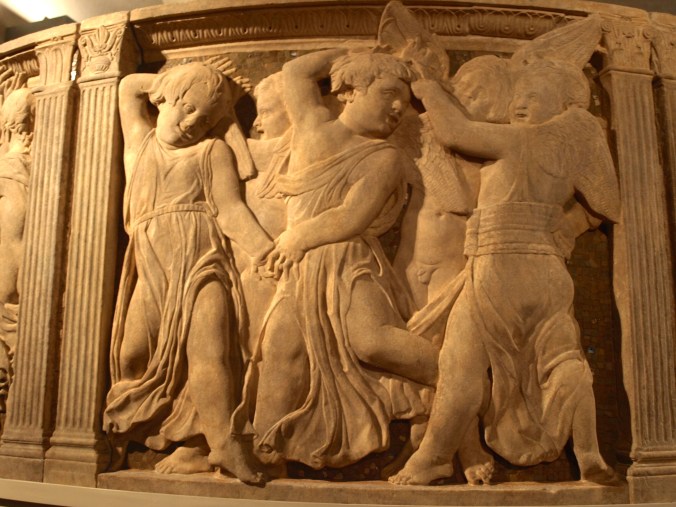
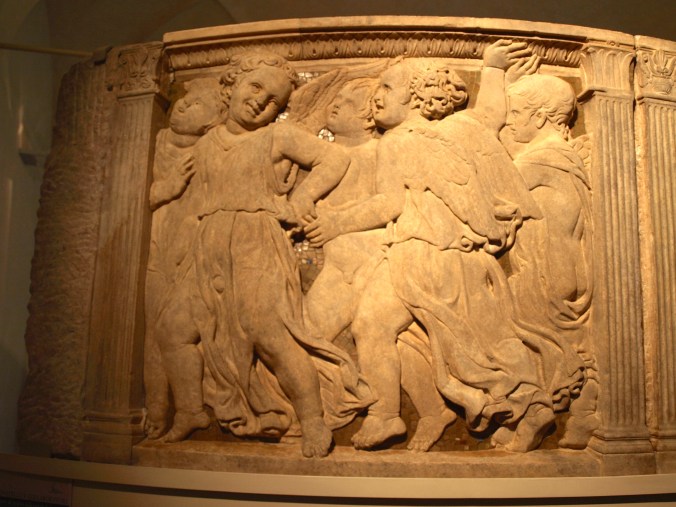
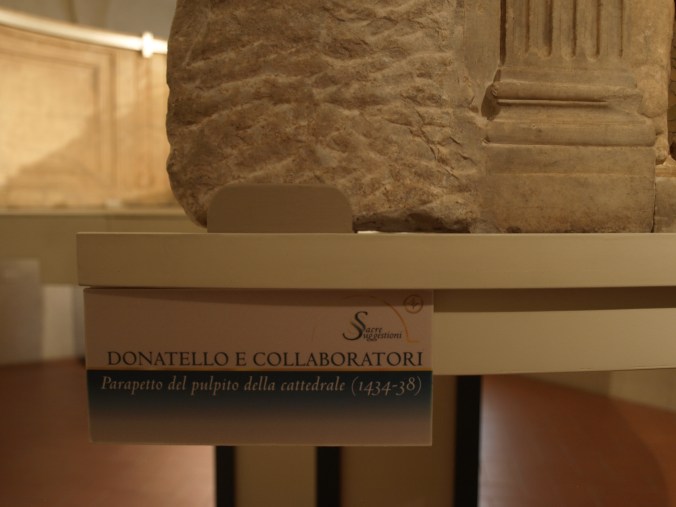
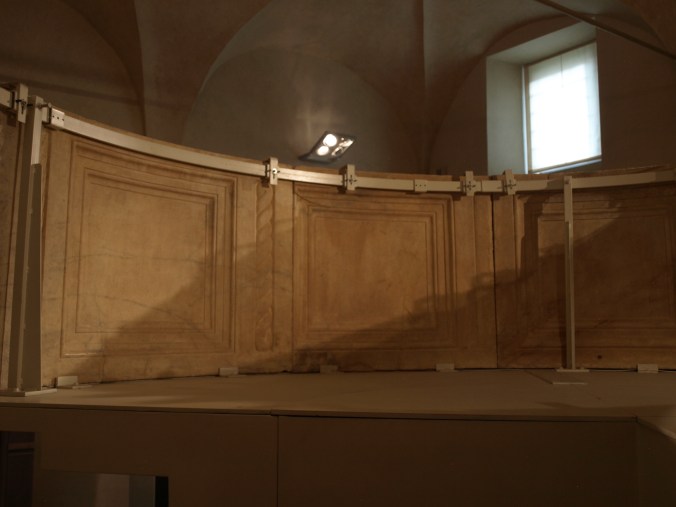
Another nice aspect about having the pulpit on display at eye level in the museum is the fact that one can see the interior of the pulpit as well, as below.
In the Middle Ages, few items of clothing were more symbolic than the belt from which important objects were hung, including a sword and keys. As the story of Mary’s belt in Prato spread, from about 1270 onwards, it prompted some of the most extraordinary iconography in the history of Renaissance art.
One such painting is Filippo Lippi’s Madonna of the Sacred Belt, in the collection of the Prato Civic Museum. Likewise, over the centuries, many illustrious pilgrims have visited Prato’s shrine, including Saint Francis of Assisi, Maria de’ Medici and several popes, including the late Pope John Paul II in 1986.
Each December 25, people flock to Prato to see the ceremony, which is repeated on four other occasions during the year as part of the Roman Catholic calendar:
Easter;
May 1, marking the month dedicated to the Virgin;
August 15, in celebration of Mary’s assumption;
and September 8, the day devoted to her nativity.
Following a procession through the city streets led by musicians and other people dressed in Renaissance costumes, a solemn mass is held in the cathedral, during which the archbishop of Prato will retrieve the Sacra Cintola from the casket using three keys (one key is always in his possession while the other two are kept in the mayor’s custody).
After passing an incense-burning censor over the relic, the prelate will then display it three times from Ghirlandaio’s loggia to the faithful seated inside the basilica before moving outside to the beautiful external pulpit decorated by Donatello. Here, he will hold it up high for the public in the piazza below to see, exhibiting it three times in three different directions.
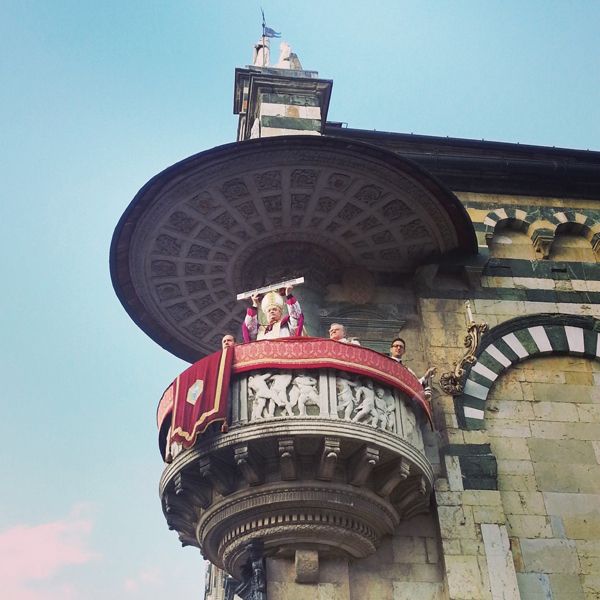
Finally, before the relic is returned to its vault, worshippers are invited to line up and kiss the reliquary.
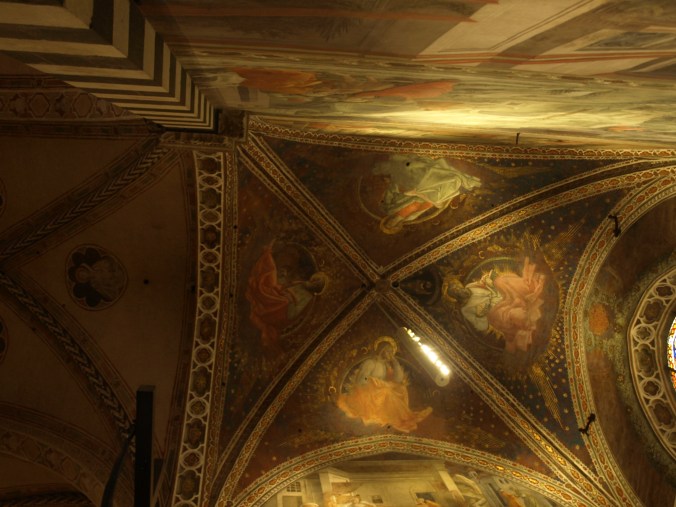
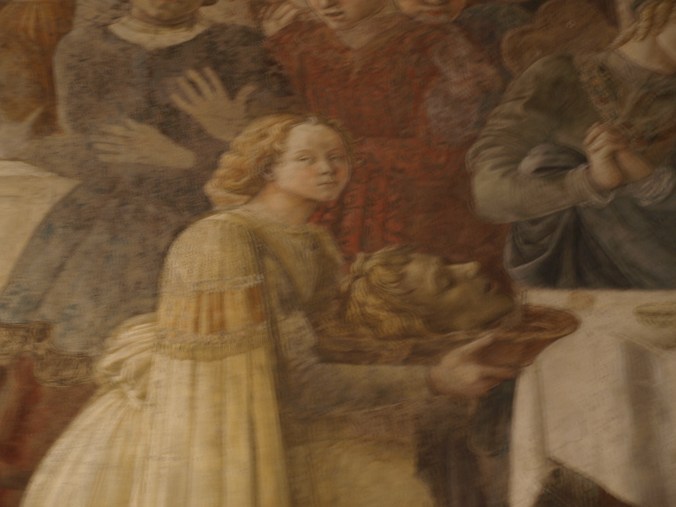
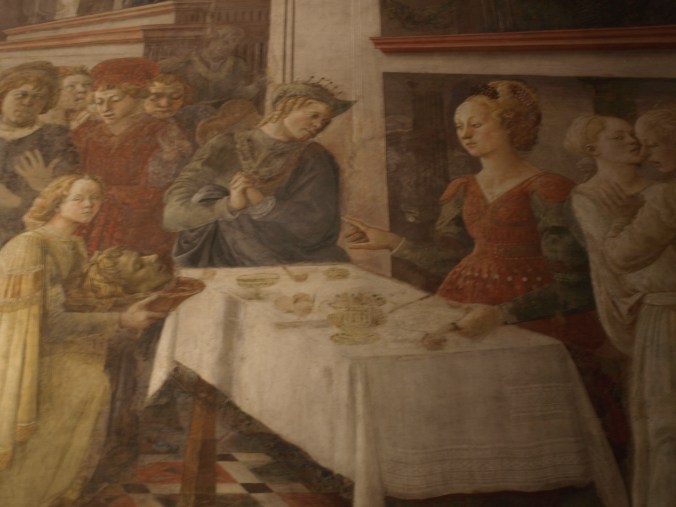
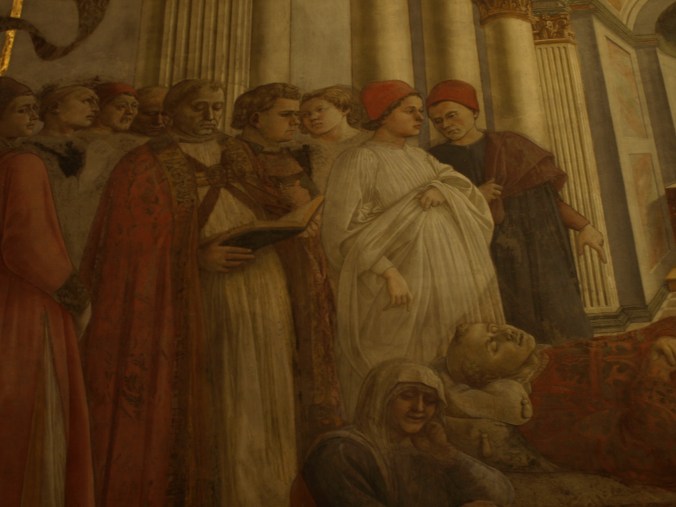
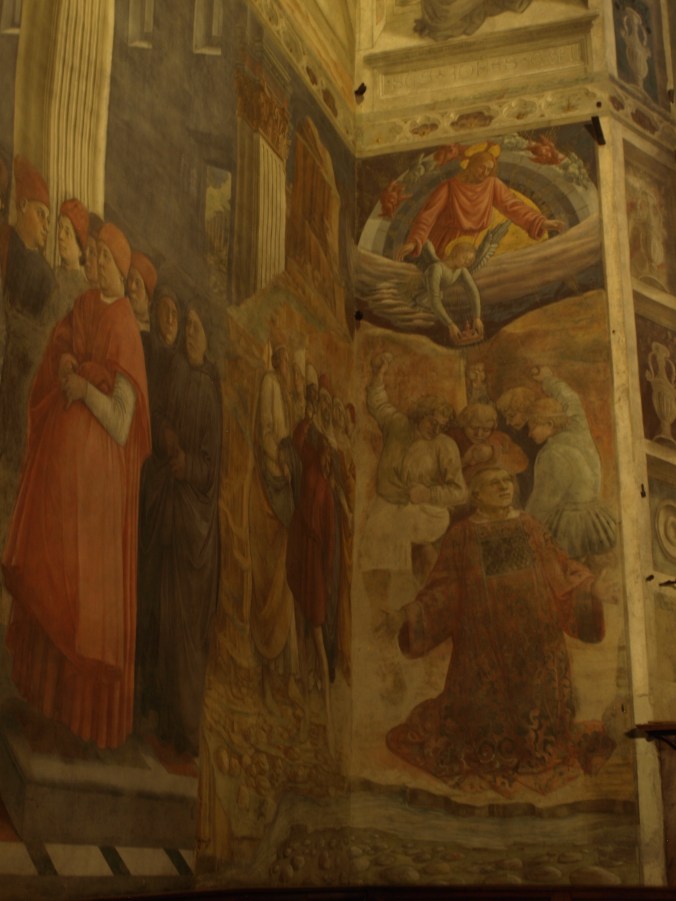
The Duomo houses yet another important treasure: a glorious fresco cycle depicting the stories of San Stefno and Saint John the Baptist by Filippo Lippi and his workshop from 1452 to 1465. The magnificent frescoes, which flank the main altar area, were restored in 2008.
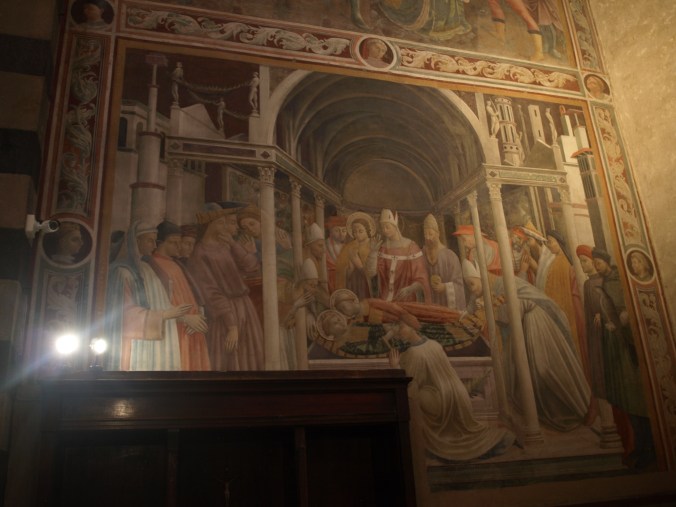
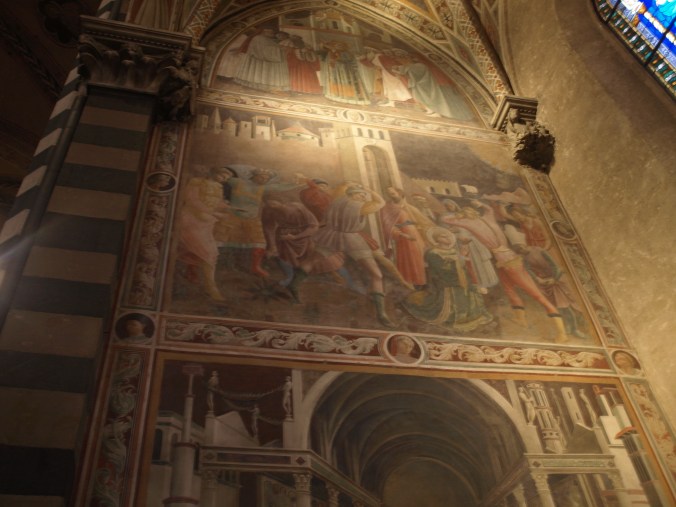
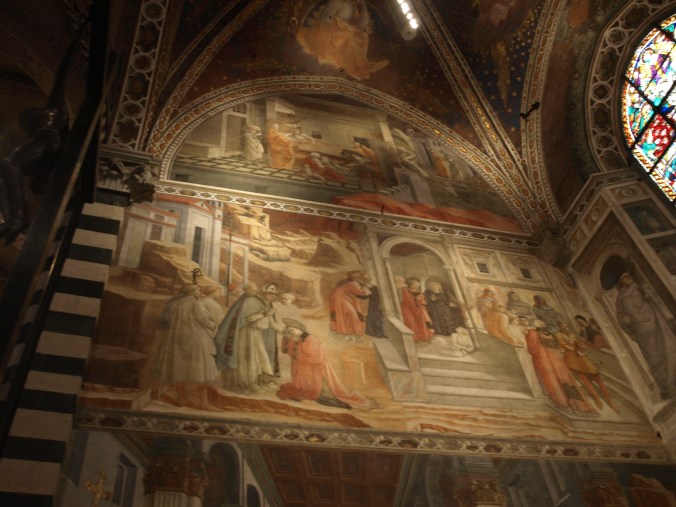


Scenes from the Madonna’s life and the story of the relic cover the chapel’s walls, frescoes done by Agnolo Gaddi in 1392-1395. Behind the additional protection of magnificent bronze gates created by Maso di Bartolomeo, Giovanni Pisano’s statue of the Madonna with Child looks down from the chapel’s altar.
 get back, lauretta!