The way Hadrian had assumed power only reinforced their opposition to him. Trajan adopted Hadrian on his deathbed; this was immediately cast in doubt, and when four military leaders, all Roman aristocrats who had been close to Trajan and hence possible contenders for the throne, were assassinated immediately after Trajan’s death, the senate immediately suspected Hadrian of having ordered the killings.
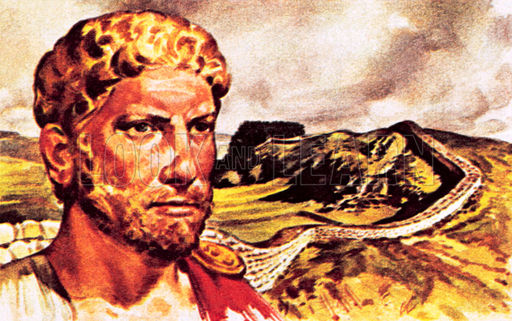
Hadrian didn’t return to Rome until eleven months after Trajan’s death, and denied any wrongdoing, but his relationship with the senate never recovered from the crisis. As a consequence Hadrian stayed very little in Rome. He travelled extensively throughout most of the empire in two prolonged periods, in 121-125 CE and in 128-134 CE, and when in Italy he avoided Rome. You see him in the picture above with a representation of his famous wall, built wherever he felt it was needed in his Empire.
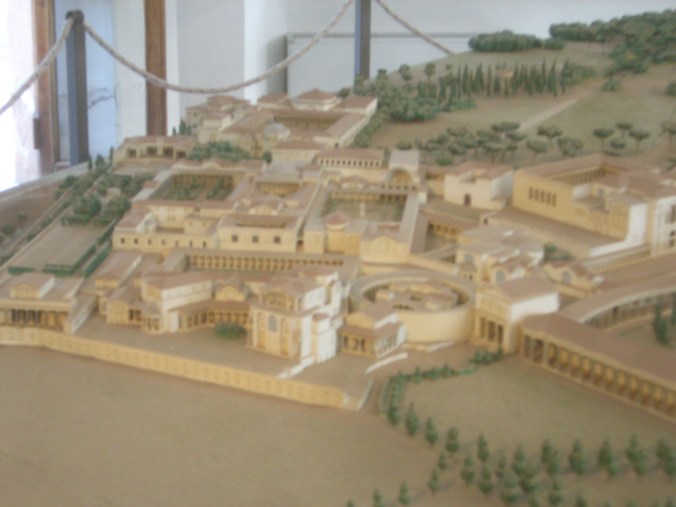
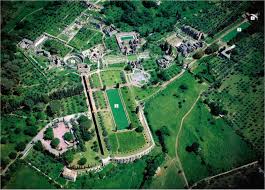
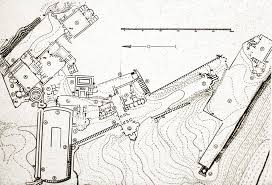
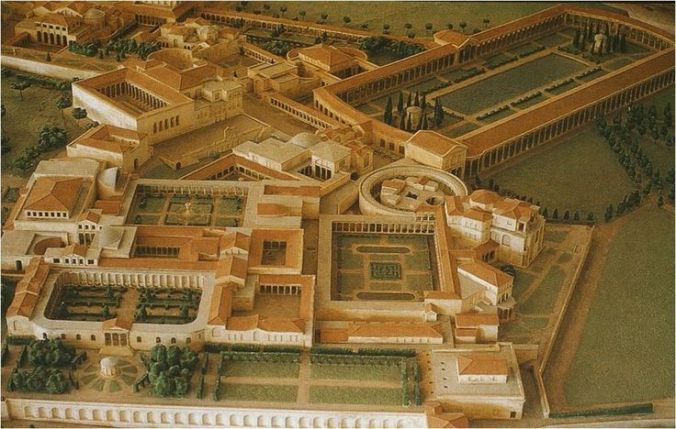
When he absolutely had to be in Rome, he had his villa in Tivoli. Located some 28 km E. of Rome, Tivoli stood on a hillside, surrounded by two minor tributaries to the Aniene. Thus Tivoli and the villa were easily reached from Rome by land via the Via Tiburtina and by boat on the Aniene, which was navigable at the time.
While I still don’t have access to my pictures from my camera, here’s what I can post until I get them.
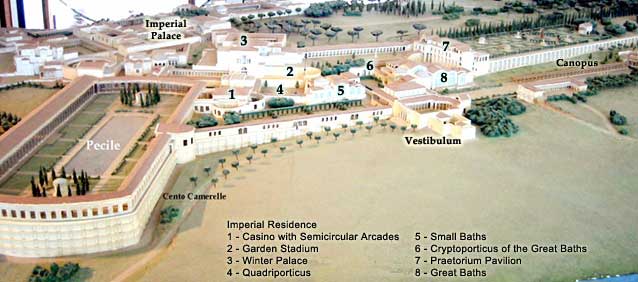
Tivoli – Hadrian’s Villa – Pecile

In fact, to show off his tastes and inclinations, Hadrian reproduced inside this residence the places and monuments that had fascinated him during his innumerable travels.
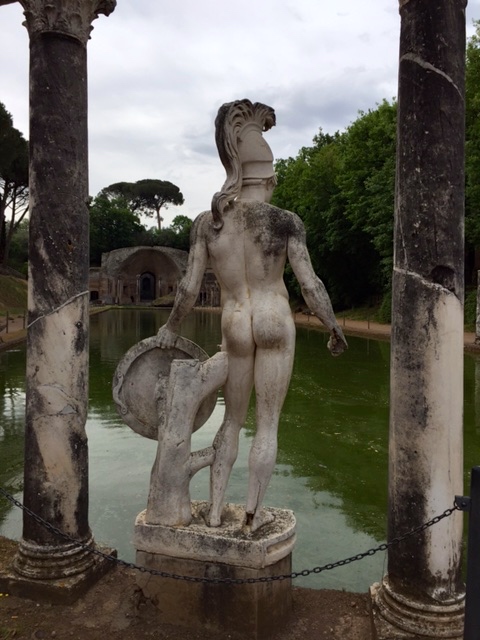
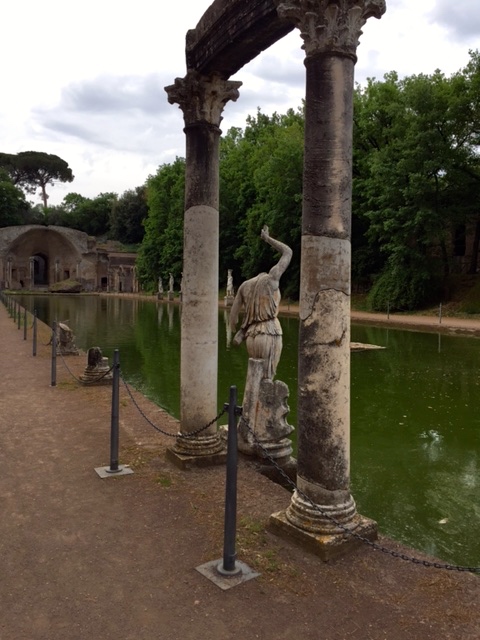
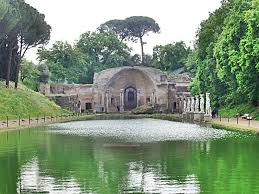
Then there is the Canopus, a long water basin embellished with columns and statues that culminates in a temple topped by an umbrella dome.
 get back, lauretta!