He was, when it came to his assessment of the forms of art, from highest to lowest.
For example, among the different varieties of sculpture, Leonardo believed stone-carving (which is what Michelangelo preferred as his medium) to be the lowest form: messy, unpleasantly physical, plebeian (a snobbish view that echoes Lodovico Buonarroti’s): The sculptor in creating his work [he wrote] does so by the strength of his arm and the strokes of his hammer by which he cuts away the marble or other stone in which his subject is enclosed – a most mechanical exercise often accompanied by much perspiration which mingling with grit turns into mud. His face is smeared all over with marble powder so that he looks like a baker, and he is covered with a snow-storm of chips, and his house is dirty and filled with flakes and dust of stone.

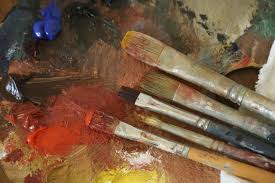
How different is the painter’s lot. ‘The painter’ – for whom, read Leonardo himself – ‘sits in front of his work at perfect ease. He is well dressed and moves a very light brush dipped in delicate colour.’
It is easy to imagine him discoursing with complete confidence on such matters while Michelangelo, wearing sober black, stood – in a phrase from one of his earliest poems – ‘burning in the shadows’ with irritation.
Gayford, Martin. Michelangelo: His Epic Life (pp. 183-185). Penguin Books Ltd. Kindle Edition.
 get back, lauretta!