Wealthy middle-class Italians of the 19th century seldom established art collections as their counterparts did in Britain and Germany. Their most conspicuous expenditure on visual art was on funerary sculpture, on the creation of vast, ornate, often beautiful monuments to deceased members of their families.
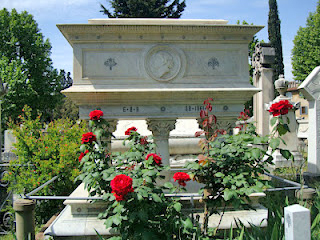 Tomb of Elizabeth Barrett Browning, Florence
The erection of these was traditionally a private matter even for public figures – the Venetian Republic did not provide them for its doges – except in the case of remote heroes such as Dante, who was awarded a dismal cenotaph in Florence’s Santa Croce in 1829.
The state concerned itself with public statues of heroic and exemplary men, works that could be seen not in a chapel or a cemetery but in the middle of a square.
Gilmour, David (2011-10-25). The Pursuit of Italy: A History of a Land, Its Regions, and Their Peoples (Kindle Locations). Farrar, Straus and Giroux. Kindle Edition.
 get back, lauretta!