Month: December 2018
Le Marais, Paris, partie un (1): Place des Vosges
Behold Le Marias!

This famous district began its life in the history of Paris as the home of the king and the capitol city’s many aristocrats. Le Marais spreads across parts of the 3rd and 4th arrondissements in Paris, on the Rive Droite.
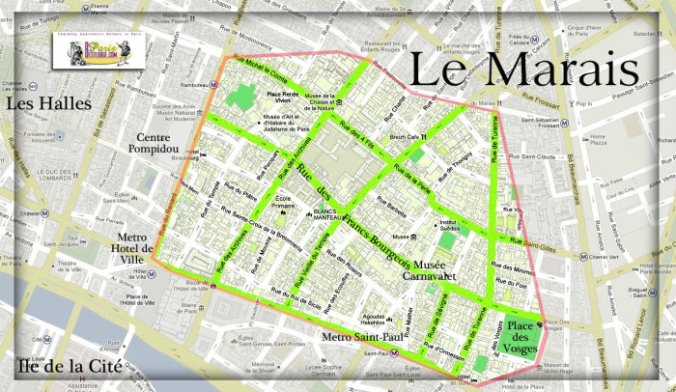
Today Le Marais is enjoying the latest of its many incarnations as the trendiest shopping district in Paris with the top stores in Rue des Francs-Bourgeois and Rue des Rosiers. The most famous stores are BHV Marais, Merci, and Uniqlo Le Marais.
From the 13th century forward, Le Marais was developed as the French nobility’s favorite place of residence. Things reached a crescendo in 1605 when King Henri IV of France built Place Royale (today called the Place des Vosges), and subsequently French nobles built their urban mansions, or hôtels particuliers, such as the Hôtel de Sens, the Hôtel de Sully, and the Hôtel de Beauvais, throughout the district, so they could be near the seat of power.

The Royal Square is also notable because it was the oldest planned square in Paris. Comprised as a true square (140 m × 140 m), the Place embodied the first European program of royal city planning.

One of the many new aspects about the Place Royale in 1612 was that the house fronts were all built to the same design, probably by Jean Baptiste Androuet du Cerceau.
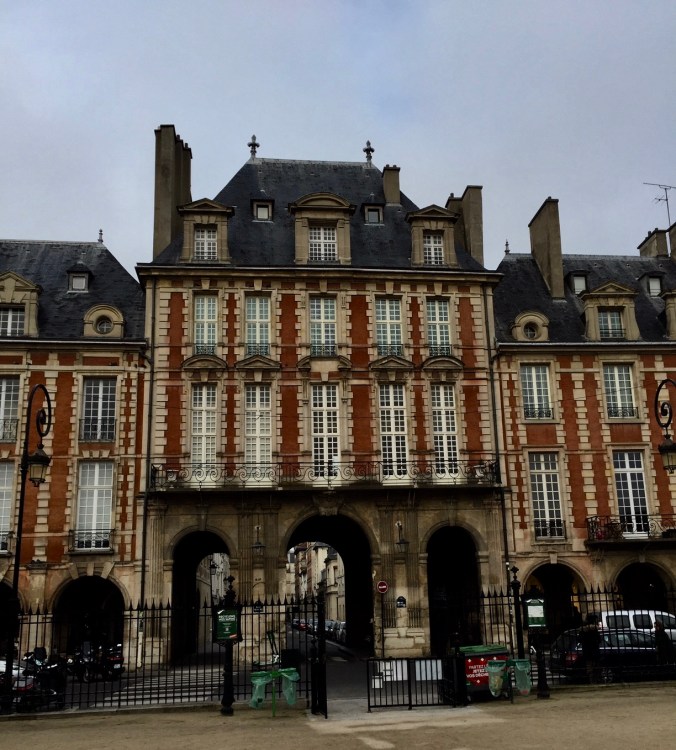
The facades are all composed of red brick with strips of stone quoins over vaulted arcades that stand on square pillars. The steeply-pitched blue slate roofs are pierced with discreet small-paned dormers above the pedimented dormers that stand upon the cornices.
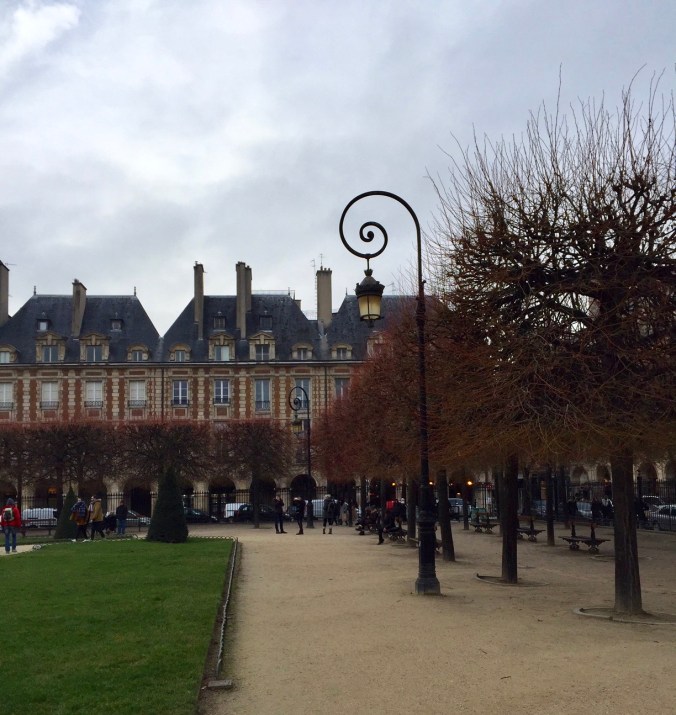
One section of the square’s 4 long vaulted arcades:
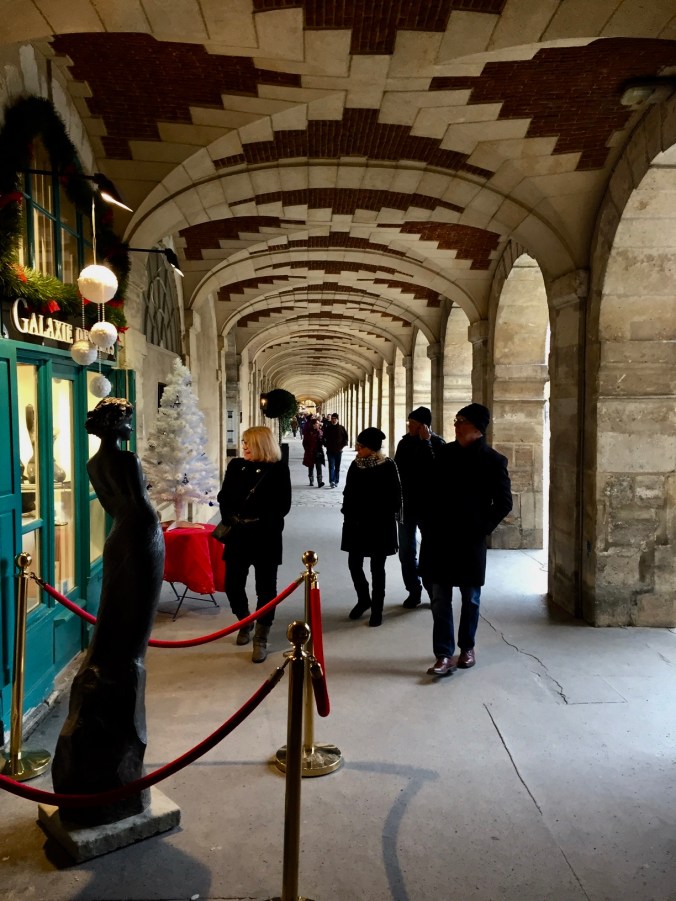
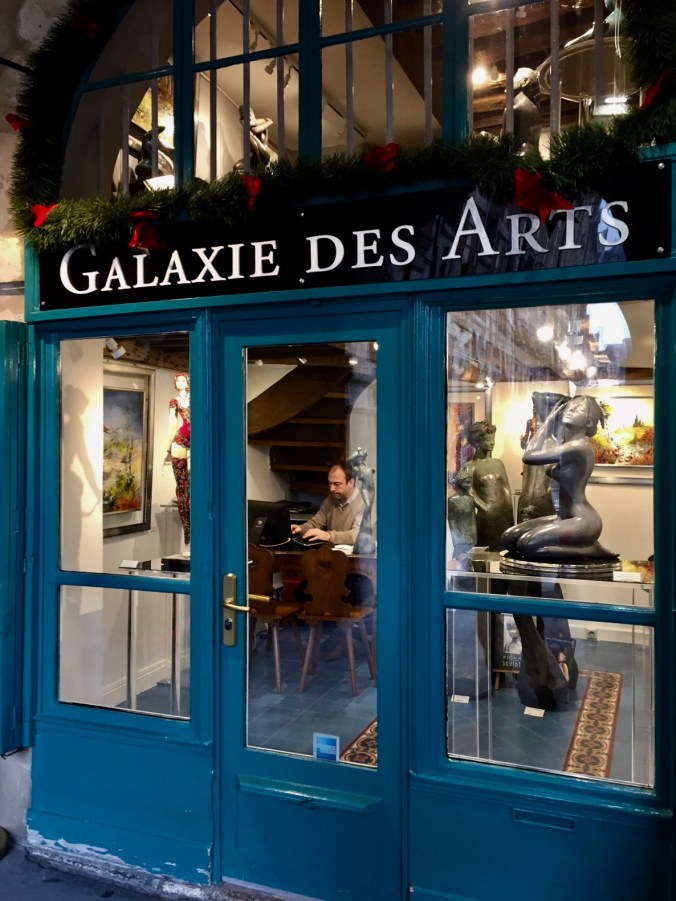
This section of the arcade is the home to this small but fine art gallery:
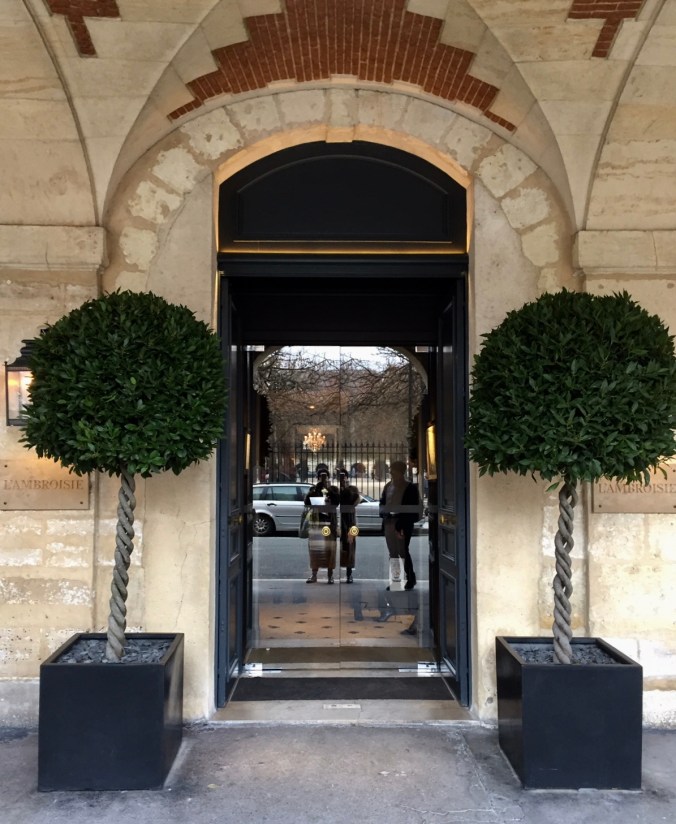
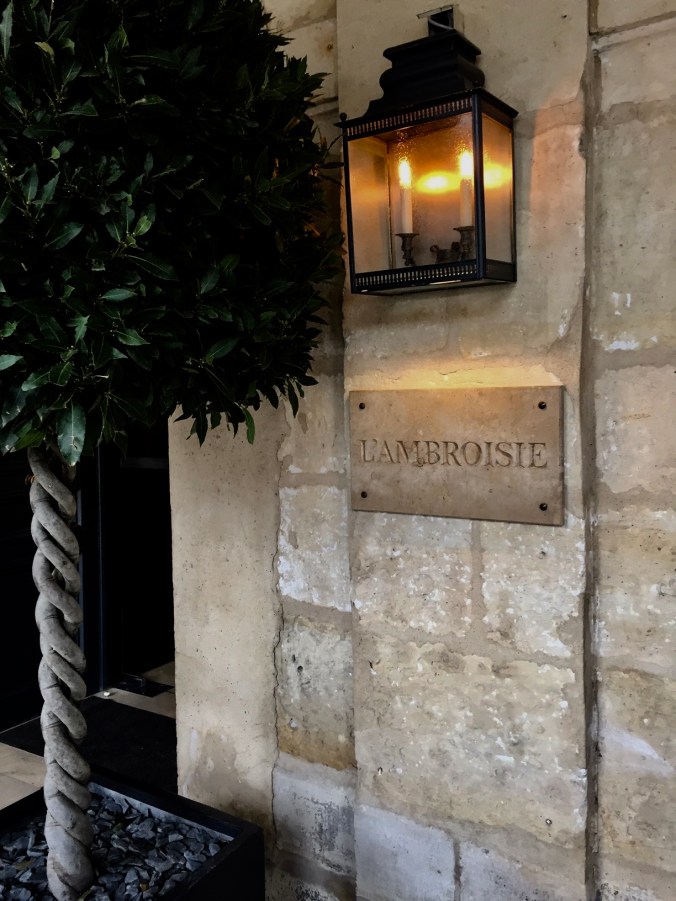
This section of the arcade is also home to one of the city’s most exclusive restaurants. Our guide told us that Michelle and Barack Obama were taken here during their state visit. He promised us that they won’t let Trump come there…just checking to see that you are still reading my text!
Le Marais is the closest you will get to the feel of medieval Paris and has more pre-revolutionary buildings and streets left intact than any other area in Paris. A glance at some of the beautiful buildings and houses indicates the wealthy status of the former residents. After the French Revolution, much of the area was abandoned by the rich, and poor bohemian types moved in. You should keep in mind that before Napoleon showed up the Marais is what most of Paris looked like— a labyrinth of cobblestone alleys.
The rest of Paris was razed by Napoleon and Haussman who wanted to build huge avenues and gigantic squares such as the Place Concorde. These are now the glory of Paris, but they were originally conceived so that armies and artillery could be moved around the city to keep the poor in check and defeat invaders.
On a more metaphysical level, the purpose of such broad space is to make the citizen feel small and powerless when faced with the giant civic machine of government, or an obedient army. In the Marais we are privy to the small and approachable Paris of the past, the place to wander in maddening circles and never find your way, the place to hole up and read Sartre or Camus in a café window or watch the Parisian life go by.
The Marais is also the most famous Jewish quarter in Paris and in much of Europe, still maintaining strong traditions.
The area was considered so squalid at this point it was nearly destroyed by city officials who wanted to modernize Paris. (A huge avenue cutting through the center of the Marais was only avoided by the start of WWI.) Fortunately, Le Marais was one of the first areas in Paris to establish very strict preservation laws. Beginning in the 1960’s, efforts have been made to restore and preserve the façades of historically important (in the case of The Hotel Albert for instance) and typically Parisian (in the case of charming early 20th-century boulangeries for instance). That’s why in this neighborhood, you’ll see bars with Boulangerie signs and a Nike store that looks like a bookstore from the outside.
.
Feeling French, neuf (9)
A little friendly fallafel competition
Walking through Le Marais yesterday, my guide pointed out 2 restaurants in the old Jewish quartiere. They are located across the street from each other and both specialize in fallafel. Each restaurant tries to outshine it’s main competitor, and, judging from the crowd size, I’d say that L’As du Fallafel is winning, at least it was yesterday!
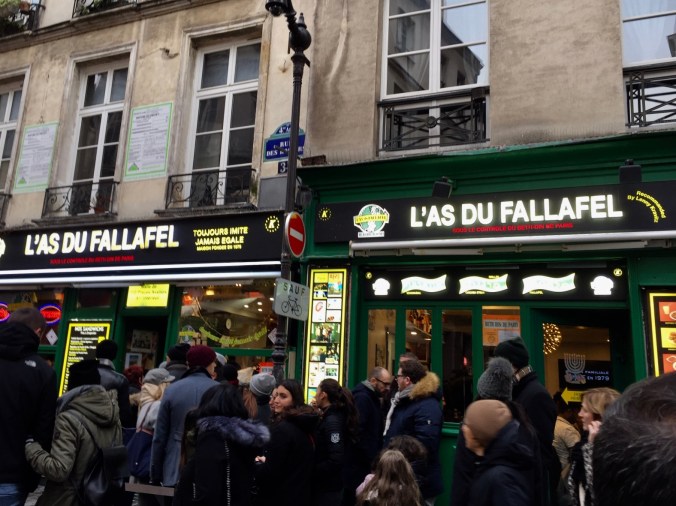
The competition is this place, Mi-va-mi. I love the fact that they are completely upfront in their quest: goutez et comparez (taste and compare).


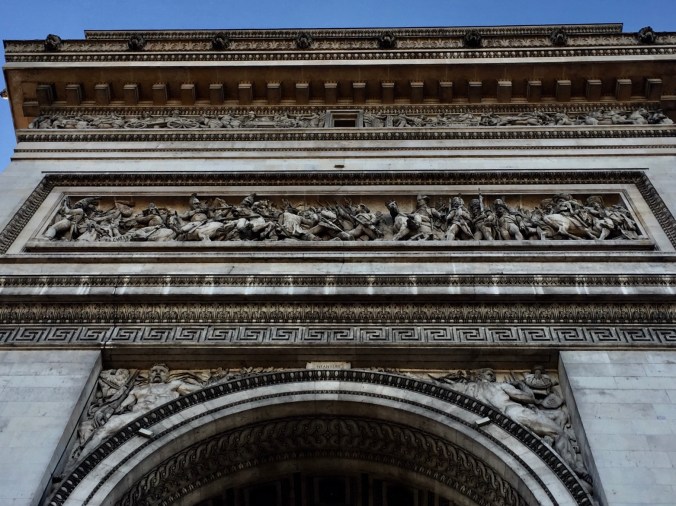
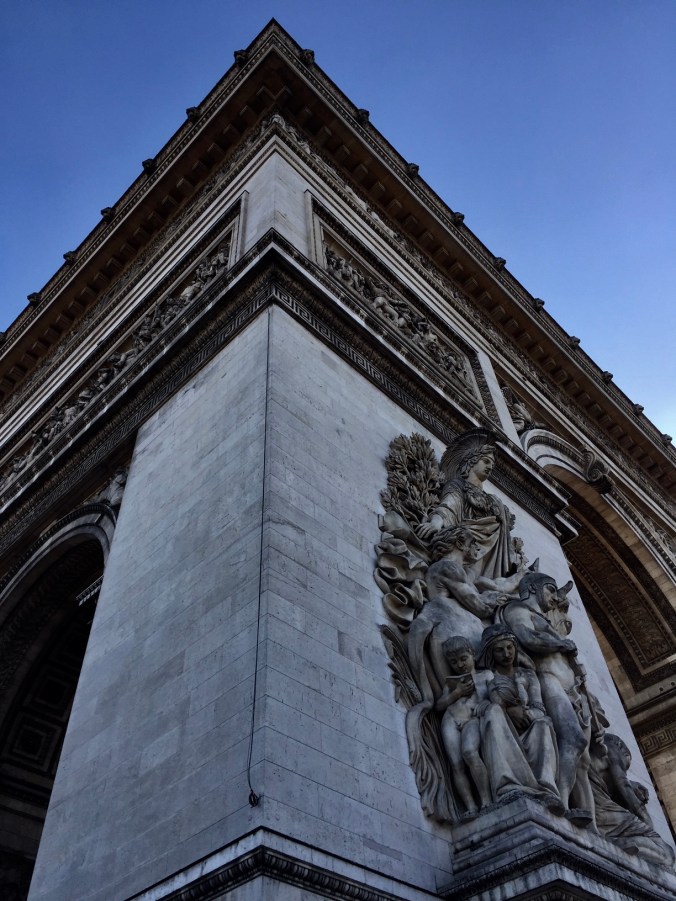
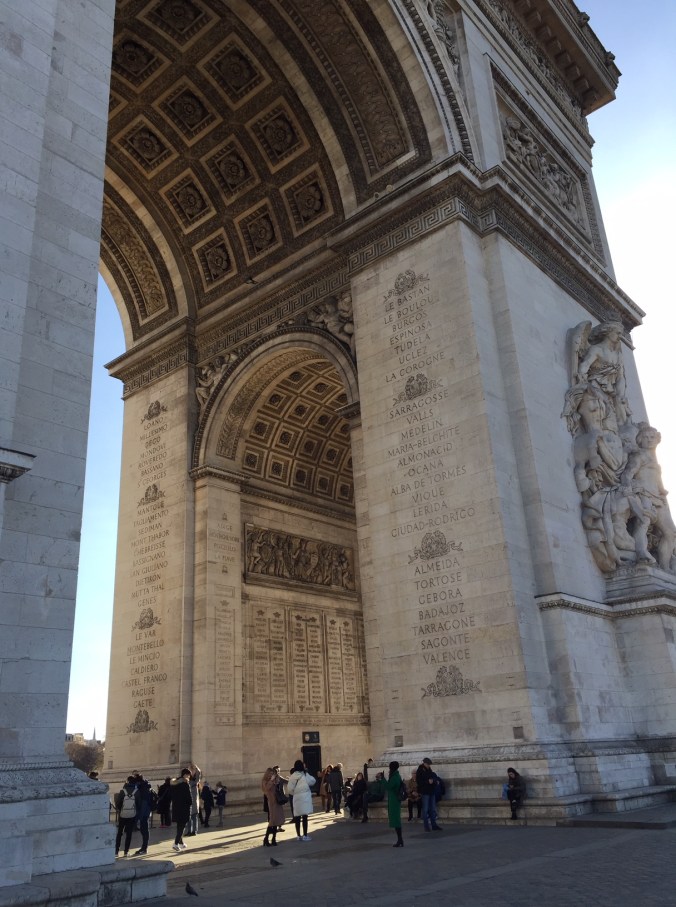
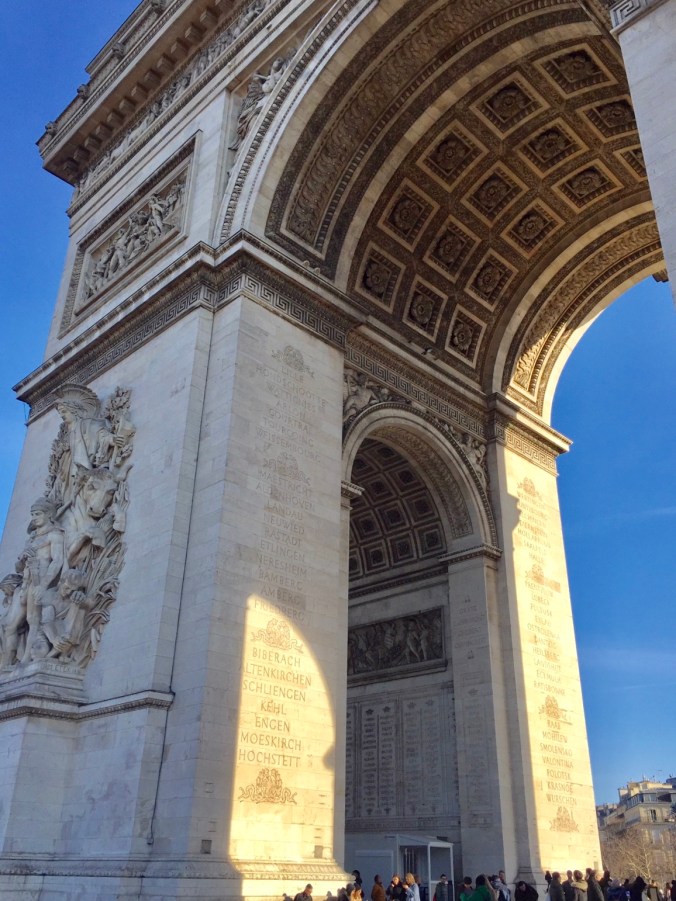
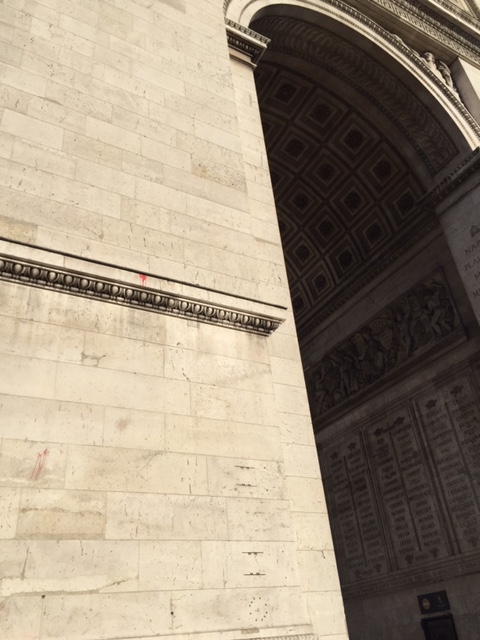
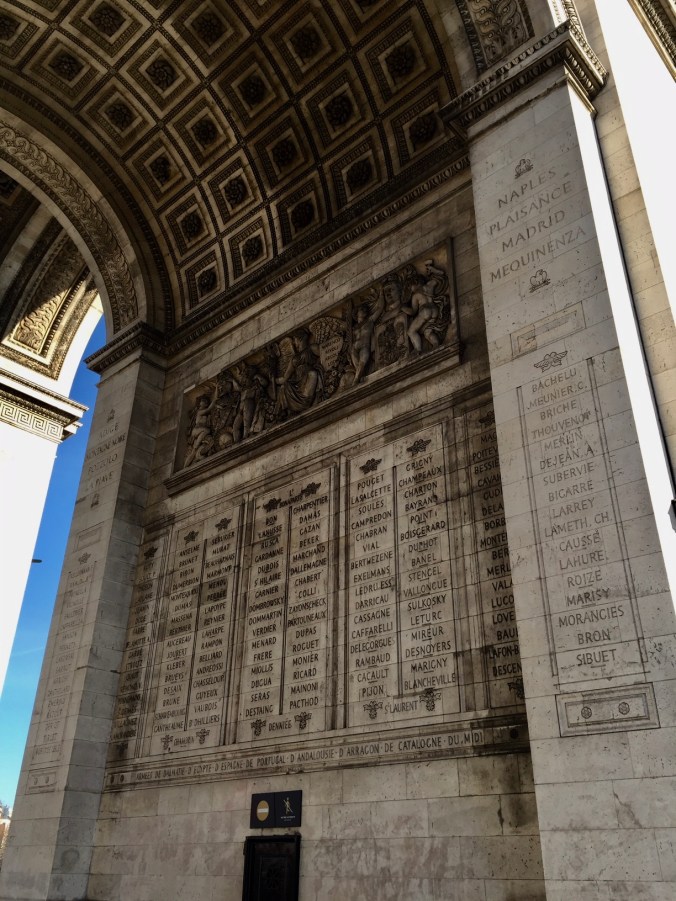
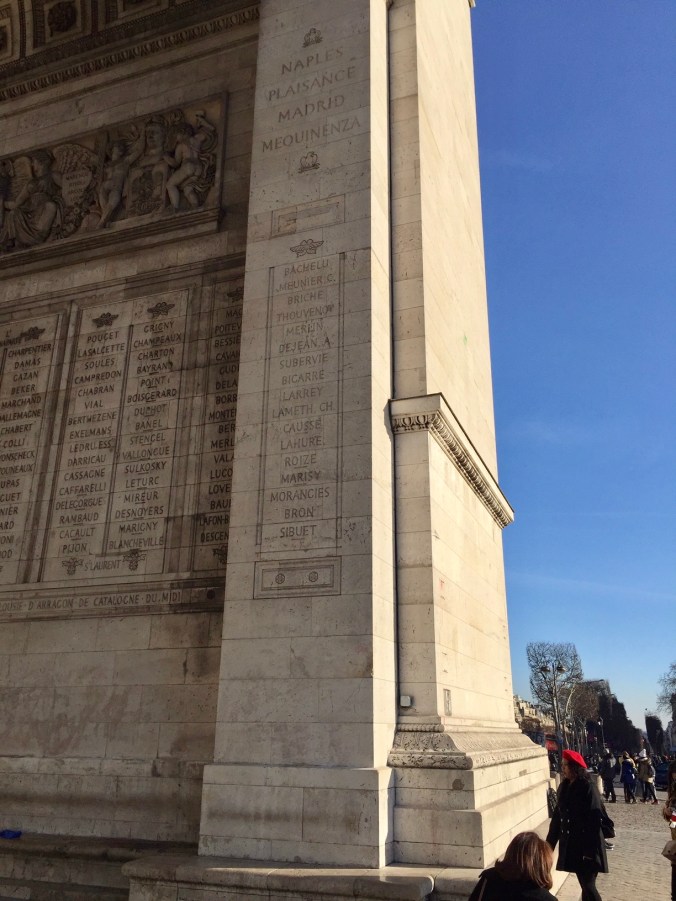
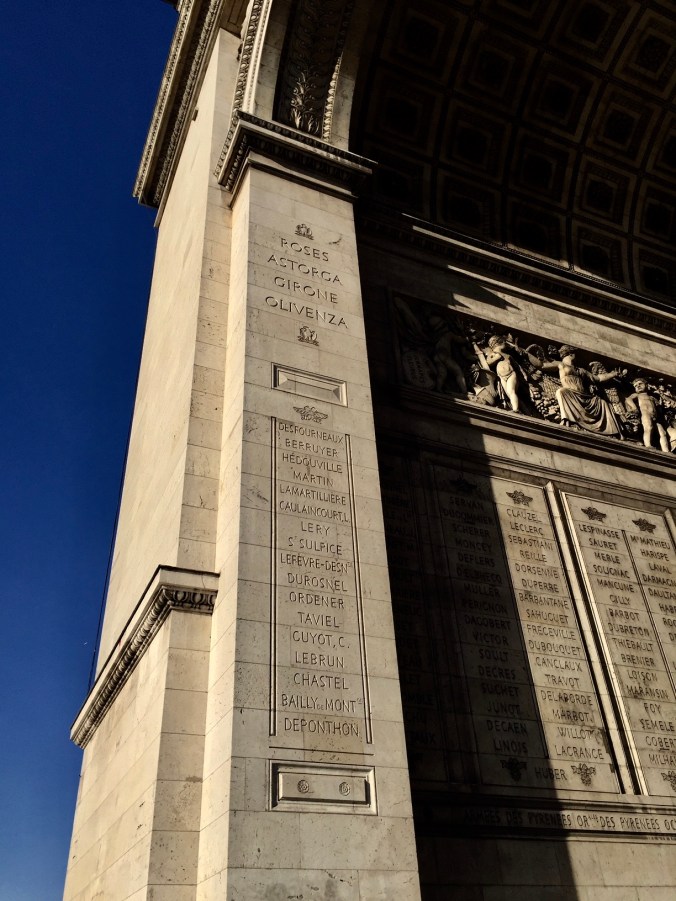
Arc de Triomphe
The apex of the gorgeous avenue of the Champs-Élysées in Paris is the Arc de Triomphe. I was there recently and here are my pictures. It was a gorgeous winter afternoon.






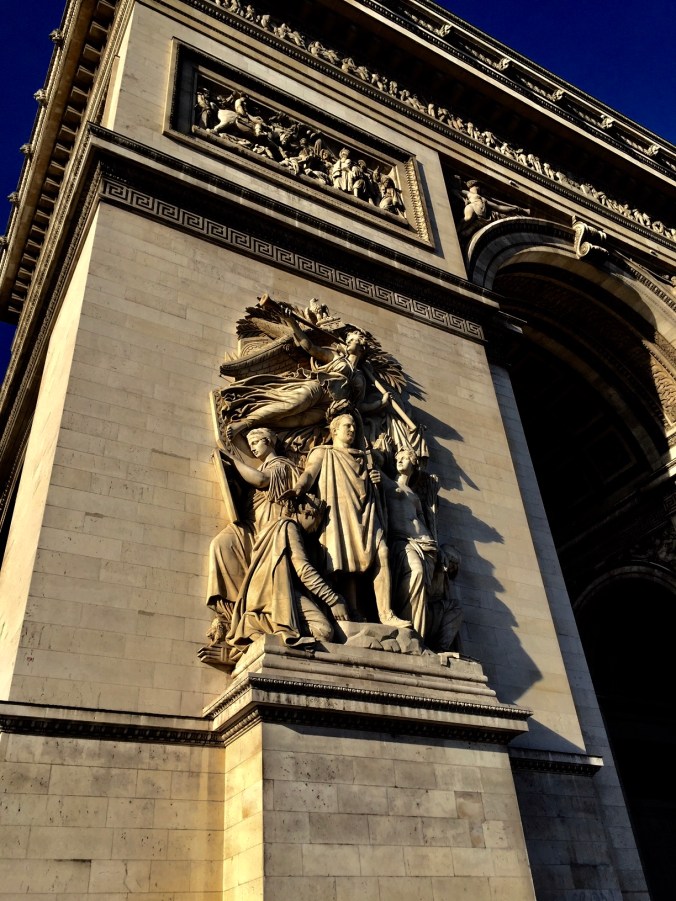
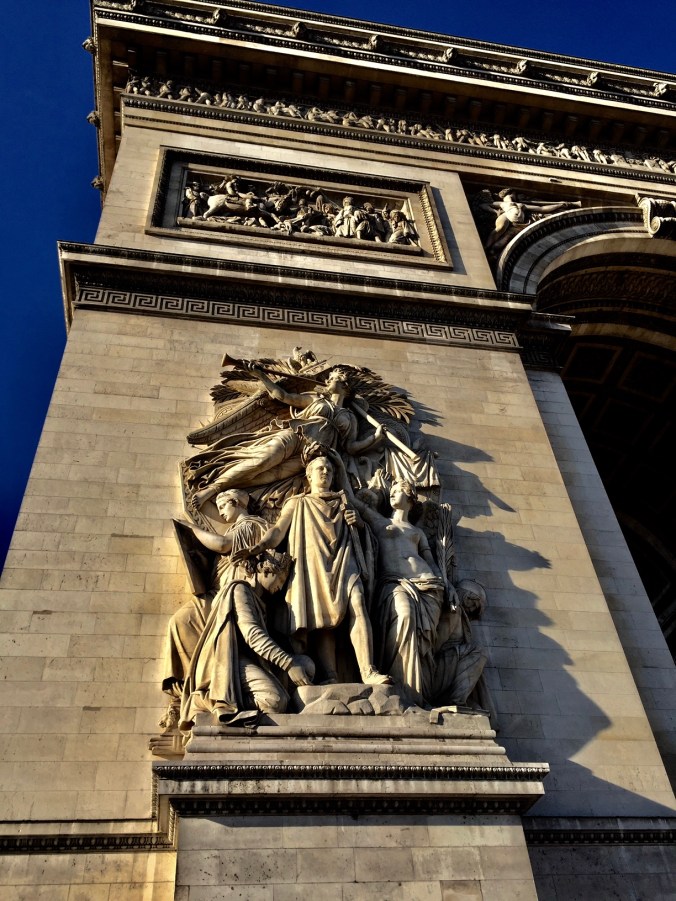


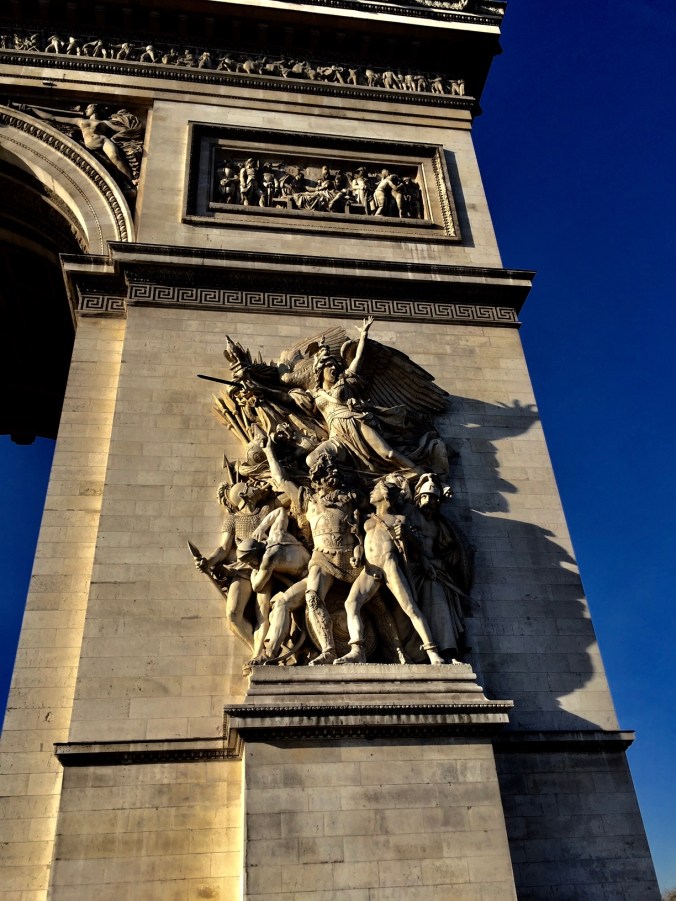
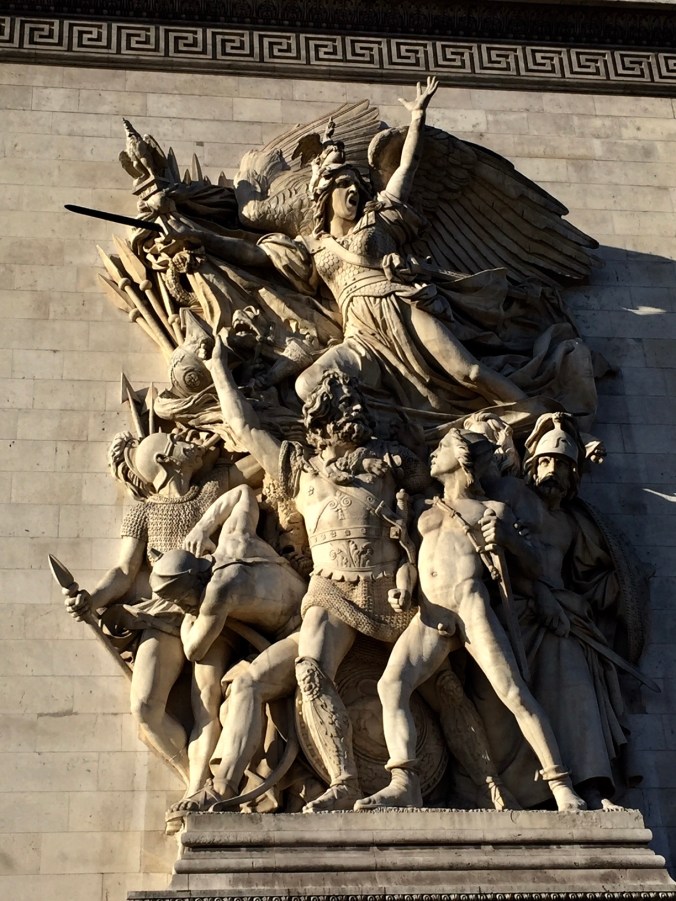
Paris sweets
Just your average, turn-of-the-century, pastry shop in Paris:
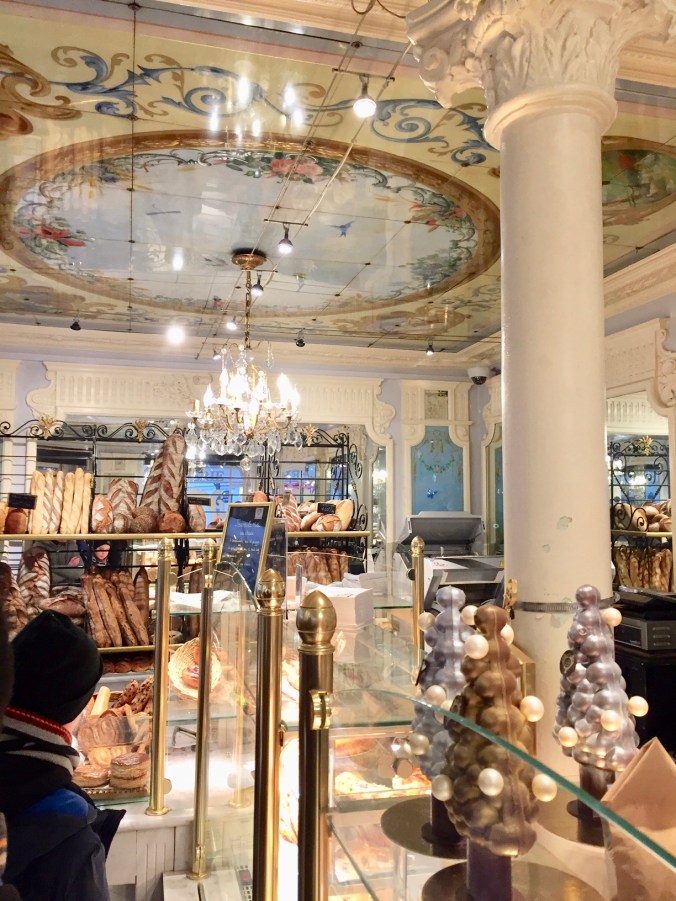
Where they sell devilishly delightful confections. I was waiting in line to buy their signature loaf of whole wheat bread, and wound up with a few of these temptations as well. Well, who can blame me?! I mean: look at them!!


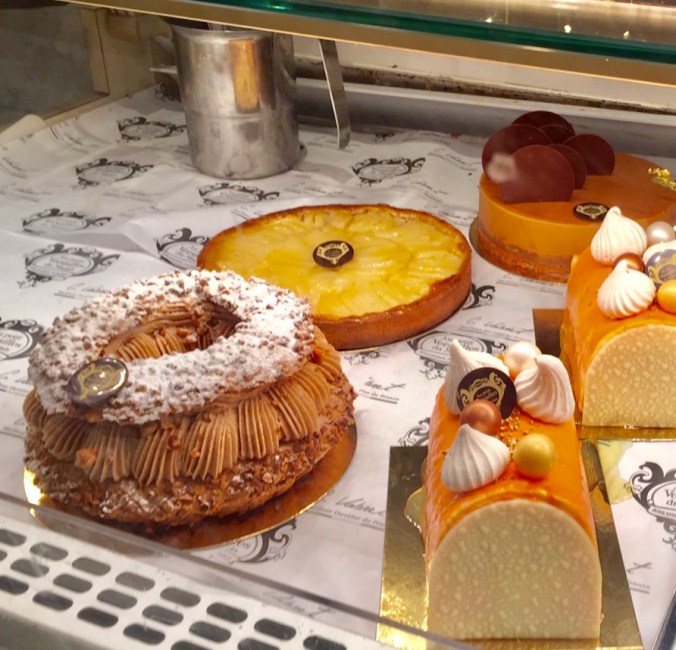
Actually, this is no average Parisian pâtisserie! It is the winner of one of the prestigious awards for an annual contest for who bakes the best traditional baguette (baguette de tradition) in all of Paris.

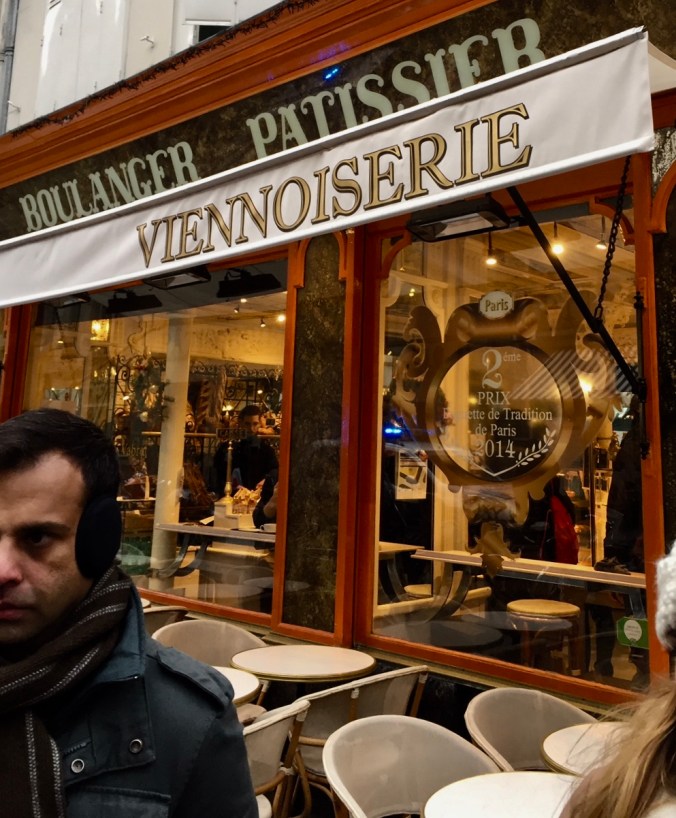
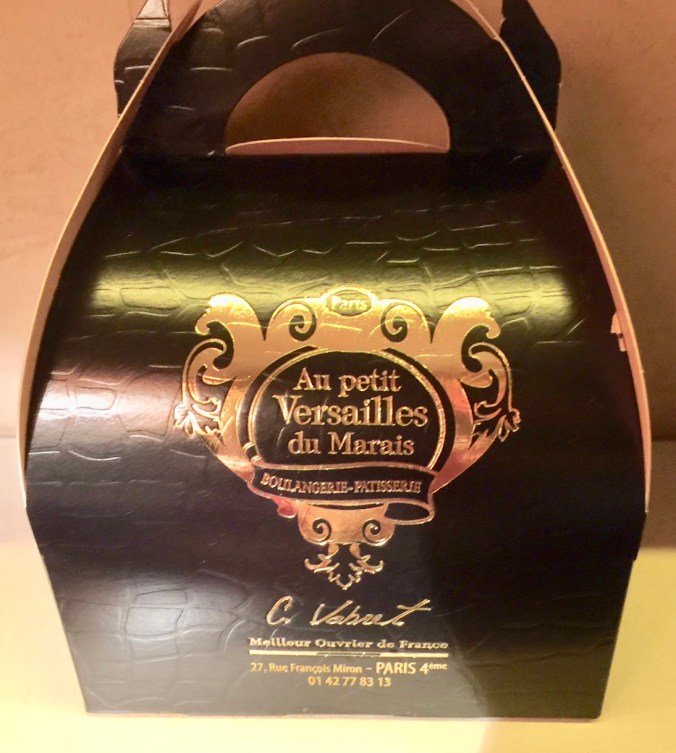
Here’s the name/address of the bakery:
Jardin des Tuileries
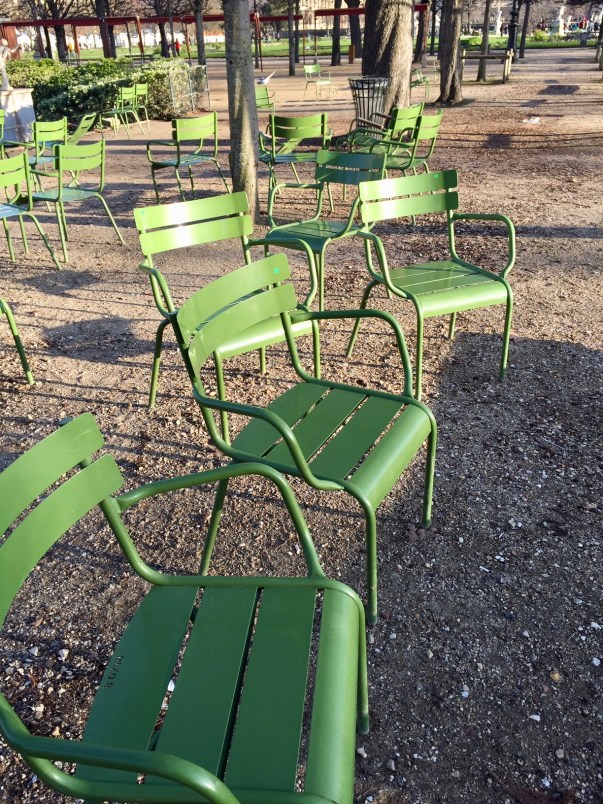
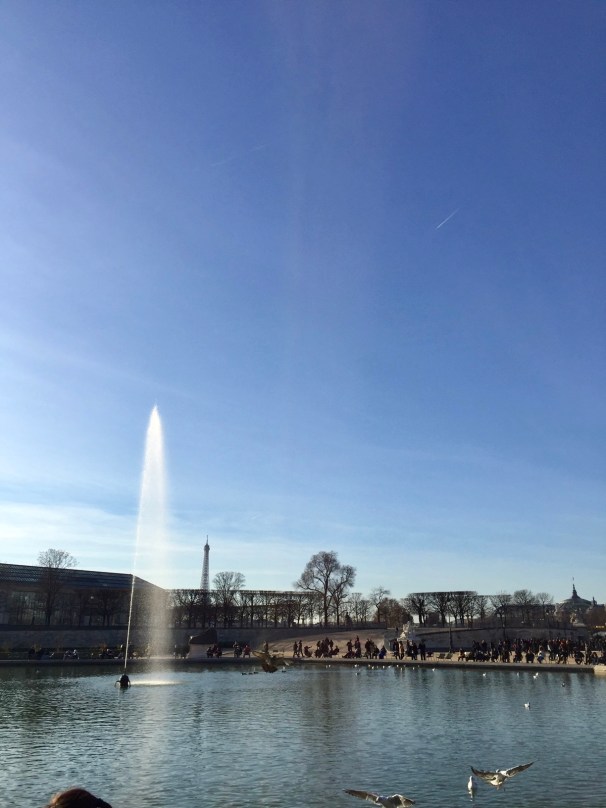
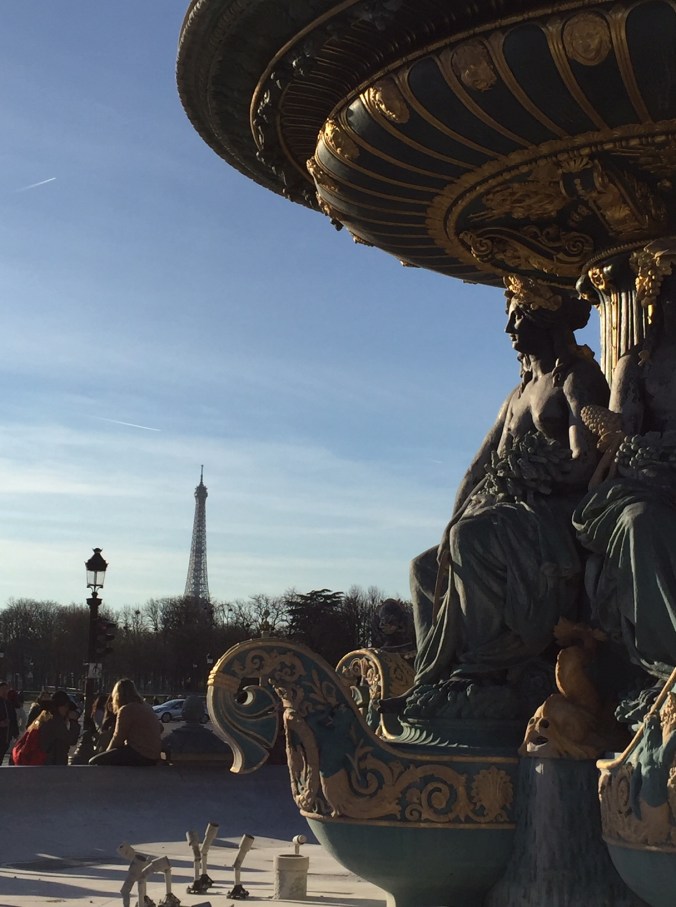
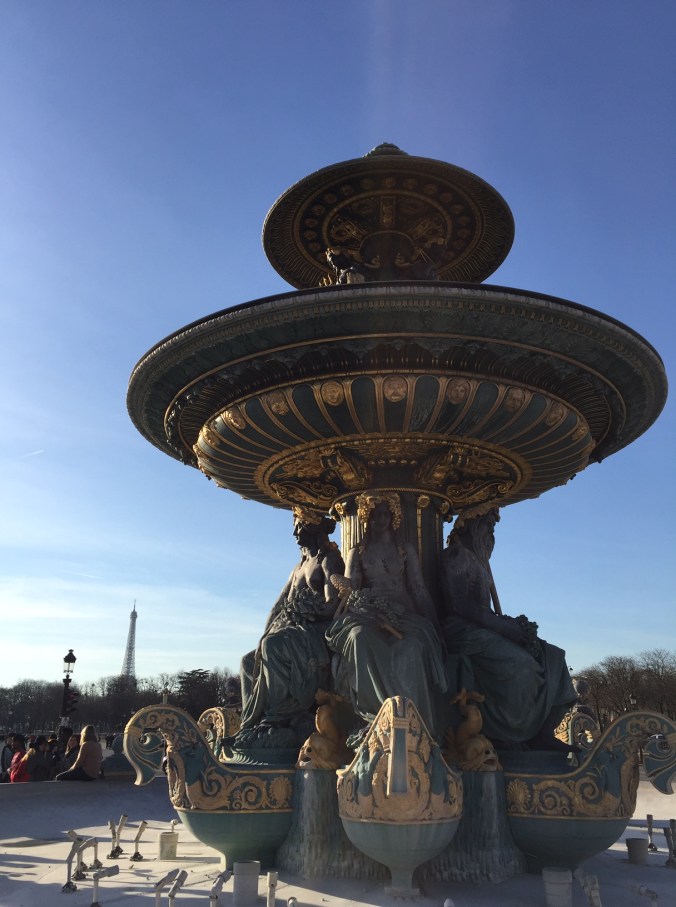
The Jardin des Tuileries, aka, the Tuileries Garden is a great civic garden located between the Louvre and the Place de la Concorde in the 1st arrondissement of Paris. Created by Catherine de’ Medici as the garden of the Tuileries Palace in 1564, it was eventually opened to the public in 1667 and became a public park after the French Revolution. From the 19th century moving forward, the Tuileries is a place where Parisians celebrate, meet, stroll and relax. I spent the afternoon there recently.
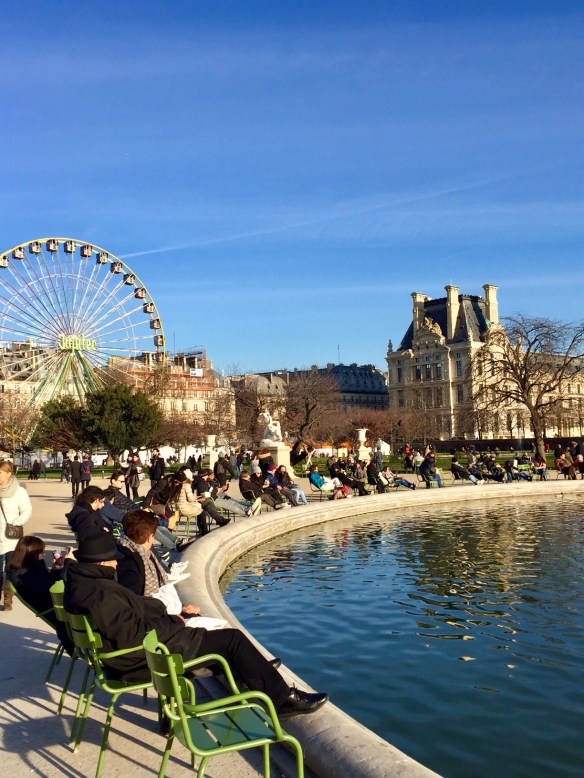
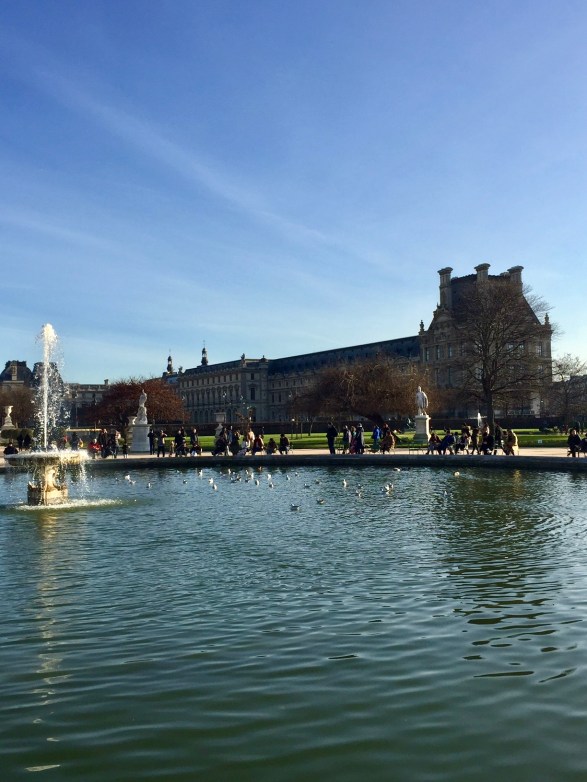
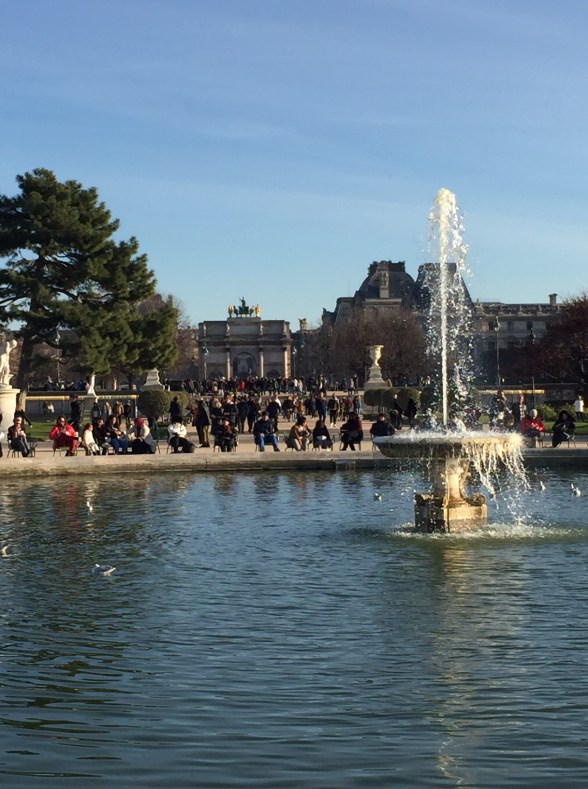
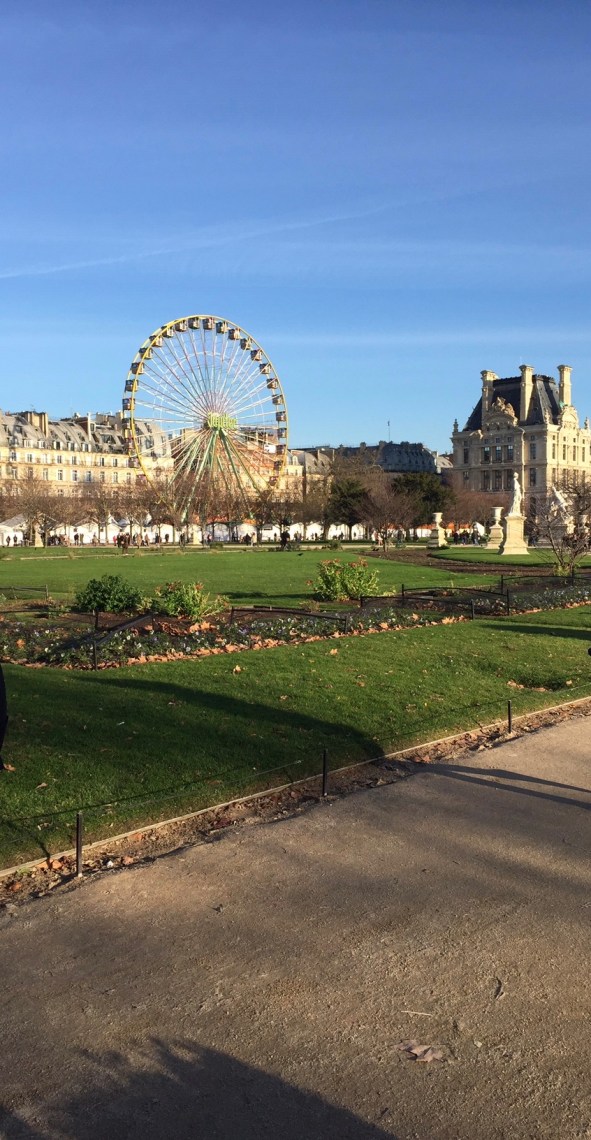
Feeling French huit (8)
Paradis, ‘La Ballade de Jim’
A great one to play when you’re winding things down, and yet another popular track by Paradis. This cover of the ’80s hit by Alain Souchon revisits the tender storytelling lyrics.
Fashion shoot in Paris
What a fun afternoon! I was enjoying a guided tour through a private garden in the center of old Paris and, all of a sudden, I noticed a fashion model and photographer. There were working hard and took lots of photos. The model was beautiful, as you would expect!
And oh, p.s., I saw the same model in the New York Times today, modeling for Valentino.


Oh, and I might add, it was cold today! About 20 degrees Fahrenheit. The model was not dressed in warm clothes, but rather a top and mini skirt, tights and boots and a pretty, but not warm, coat.
You can well imagine how beautiful the architecture of this small square is! Obviously its a perfect backdrop for selling fashion!
Gâteau Opéra = Opera cake. Surely the food of angels!

Oh la la! Do you like layers of a lighter-than-air sponge cake soaked in coffee syrup; chocolate mousse that tastes like what angels must eat in heaven; and a thin layer of chocolate ganache mirror glaze with just a touch of edible gold leaf?!
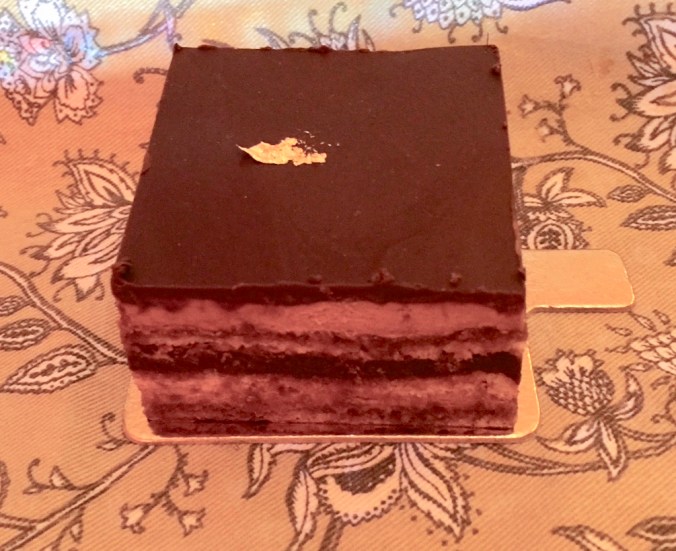
The you would love this Opera cake or Gâteau Opéra in French.
Nobody can say with certainty when or where (although it is well-known as a French invention) opera cake was first made, but it is composed of layers of sponge cake (known as joconde in French) soaked in coffee syrup, layered with mousse or buttercream and covered with ganache.
The cake was popularized by the French pâtisserie house Dalloyau, but its origin is unclear. One creator-claimant, at la maison Dalloyau in 1955, is Cyriaque Gavillon. He was grandfather to Christelle Bernardé, the current manager of the prestigious French company Dalloyau Bastille, and named by his wife Andrée Gavillon after the Parisian Opéra House Garnier.
Gaston Lenôtre (1920 – 2009) also claimed the honor of inventing the dessert in 1960. However, complicating the mystery is the fact that an advertisement in Le Gaulois in 1899 offered a “gâteau opéra.”
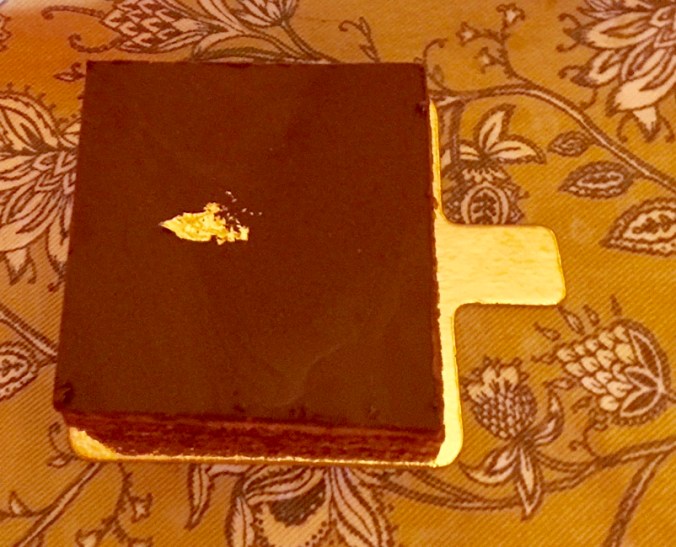
I can tell you this much: when you have tasted this confection, you won’t care who/what/when/where or why this cake was invented. You’ll just be glad you got to try it!
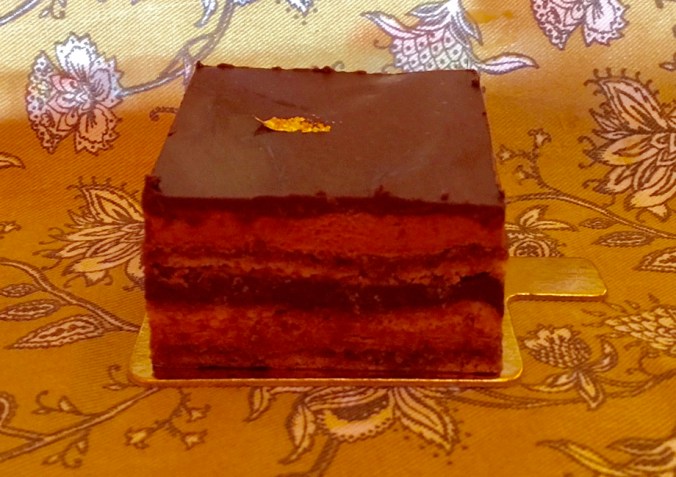
 get back, lauretta!
You must be logged in to post a comment.