You might know that almost the first place I would go once I got to London would be the “Italian Gardens!” Ma, certo! Like a bee to honey.
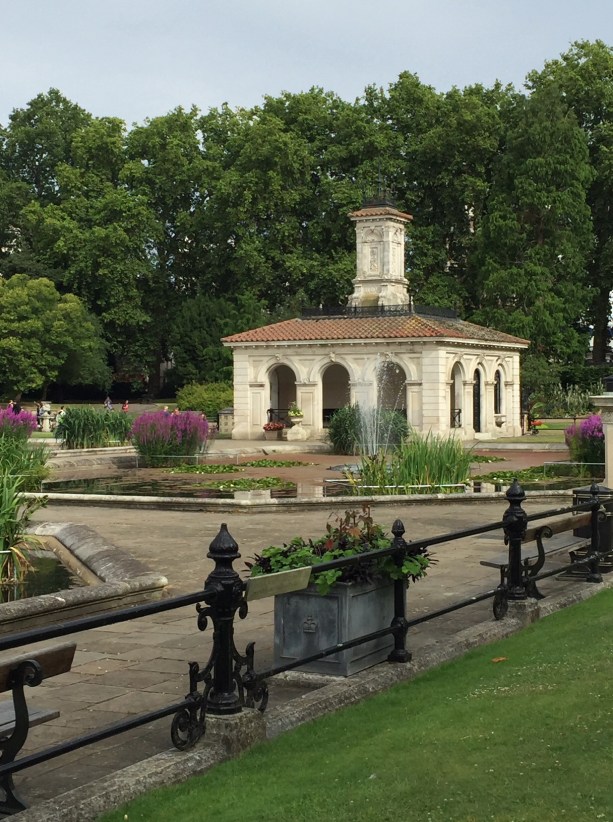
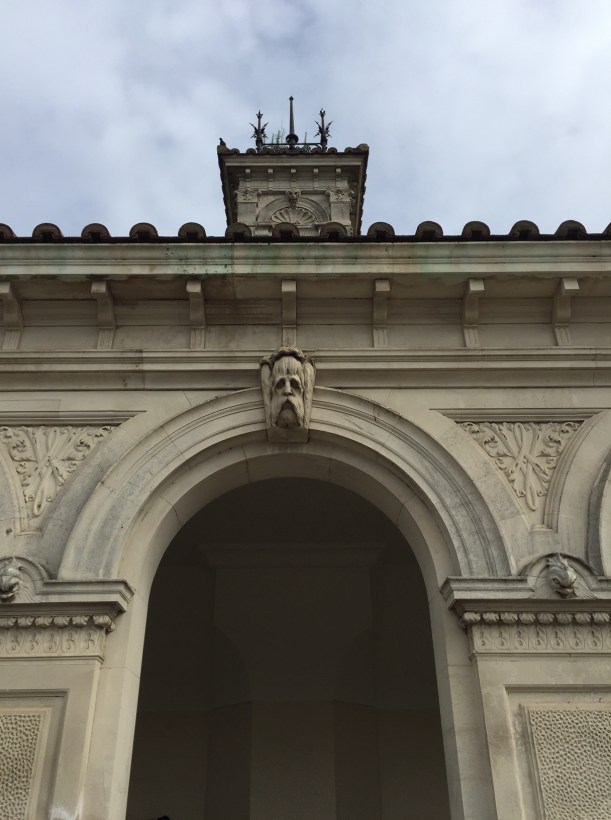
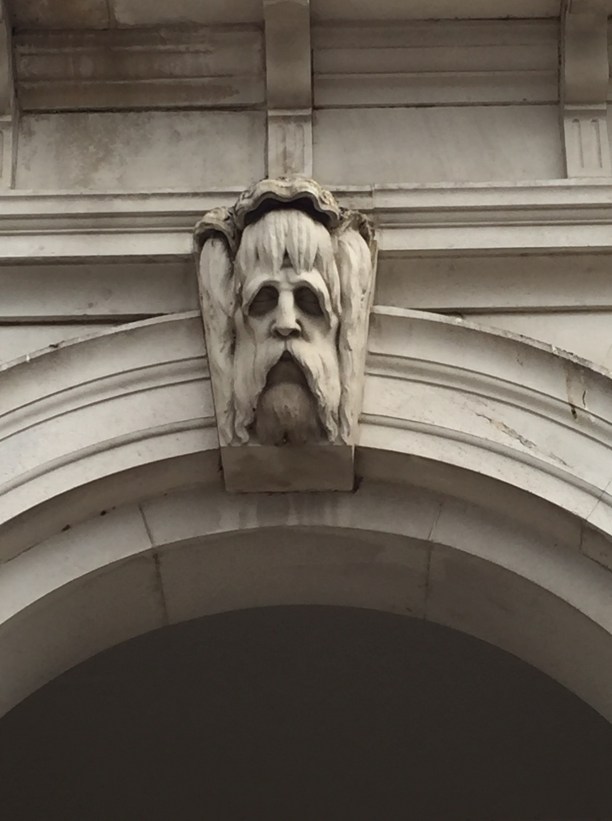
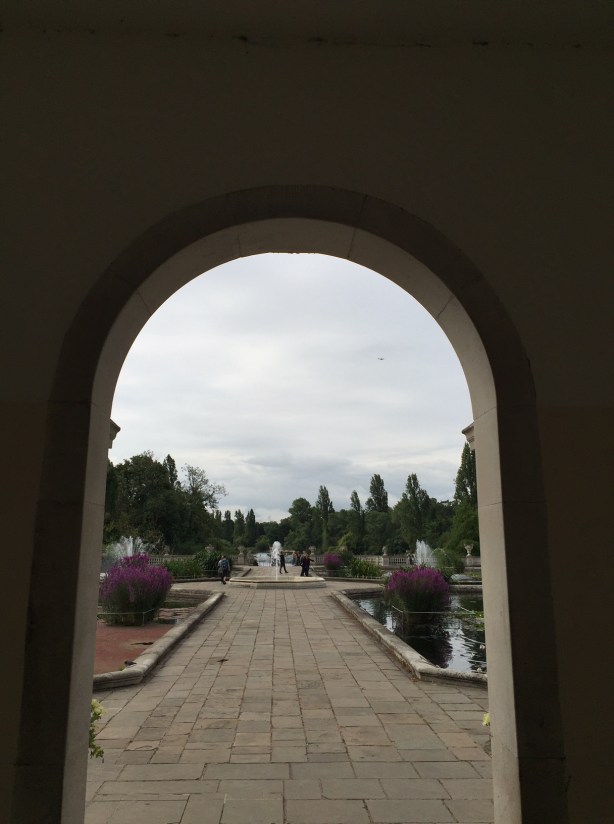

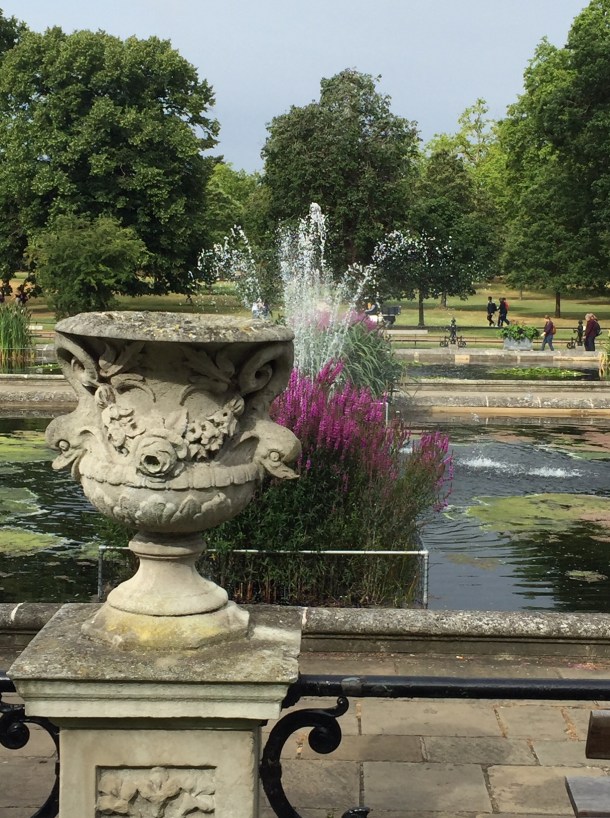
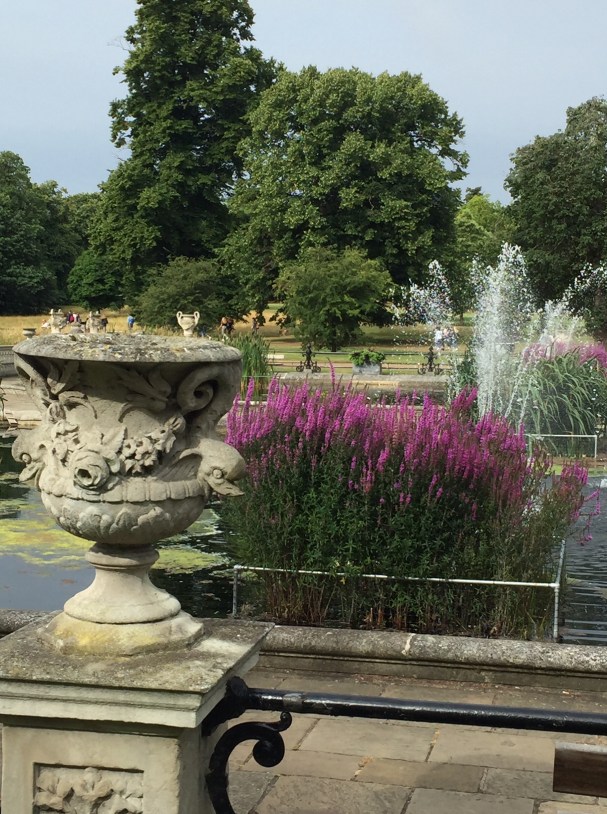
This lovely, smallish ornamental water garden was created in the 1860s and is to be found on the north side of park, near Lancaster Gate. It is believed the garden was a gift from Prince Albert (he died 1861) to his beloved wife, Queen Victoria. Regardless of the why, they are now recognized as a site of particular importance and are listed Grade II by Historic England.
Portraits of Victoria and Albert flank the 2 sides of the balustrades overlooking the lake.
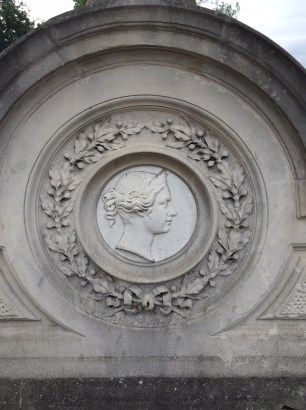
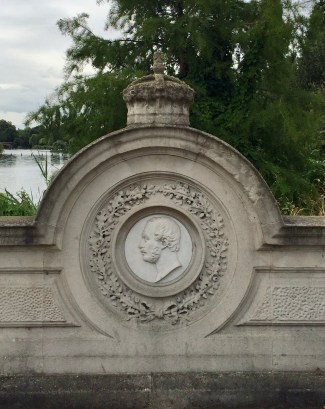
BTW, about once every six months while I am living in Italy I will see something in some work of art that causes me to say: “that’s a new one–I’ve never seen that before.” I love it when that happens.
But, today, at the Italian Gardens, I had one of those moments, caused by the bas-relief below:
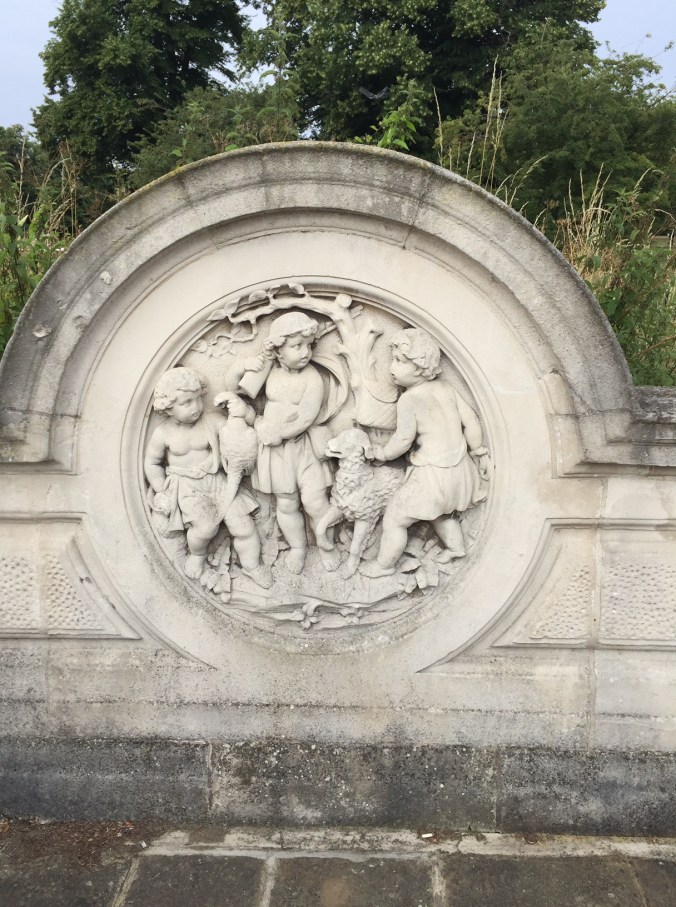
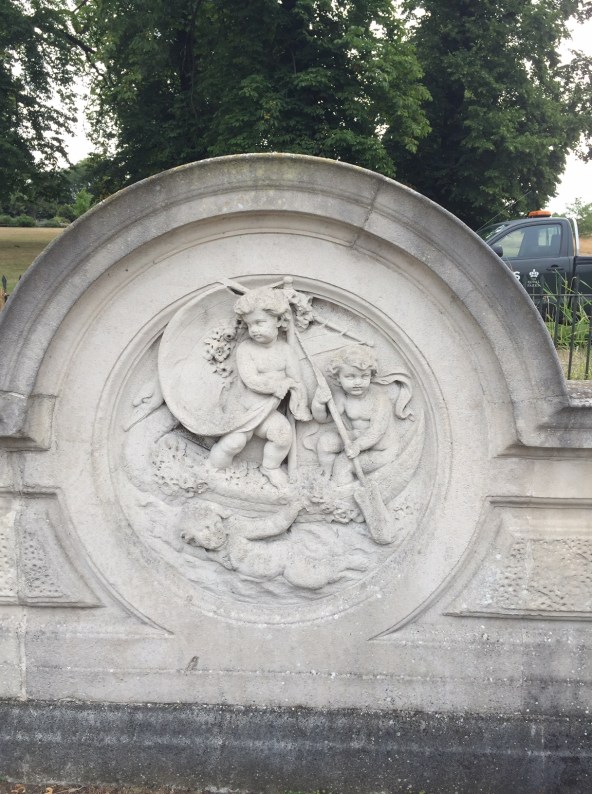
I’ve seen a lot of weird images captured in marble sculpture, especially in the form of putti of various stripes, but I have never seen a rifle in a Neo-classical sculpture before today! A detail of it is below:


The Italian Gardens are found within the grounds of Kensington Gardens; you can locate them at the top of the Serpentine River in the map below:

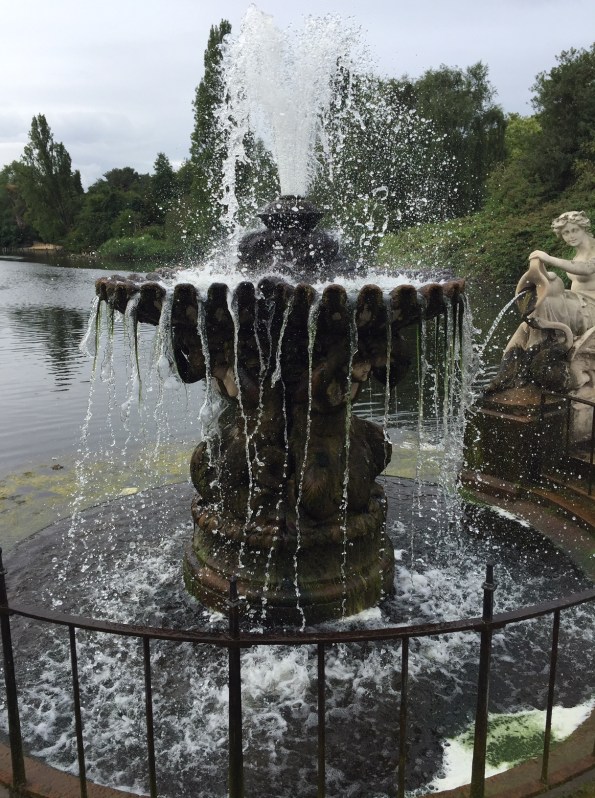
The Italian Gardens are an elaborate mix of four main basins. They feature central rosettes carved in Carrara marble, the Portland stone and white marble Tazza Fountain, and a collection of stone statues and urns. It’s fun to see if you can spot the five main urn designs – a swan’s breast, woman’s head, ram’s head, dolphin and oval.

Strengthening the supposition that this decorative complex was commissioned by Prince Albert is the fact that the layout of the Italian Gardens is very similar to that of Osborne House on The Isle of Wight, where the royal family spent holidays. Prince Albert was a keen gardener and took charge of the gardens at Osborne House, where he introduced an Italian garden with large raised terraces, fountains, urns and geometric flower beds.

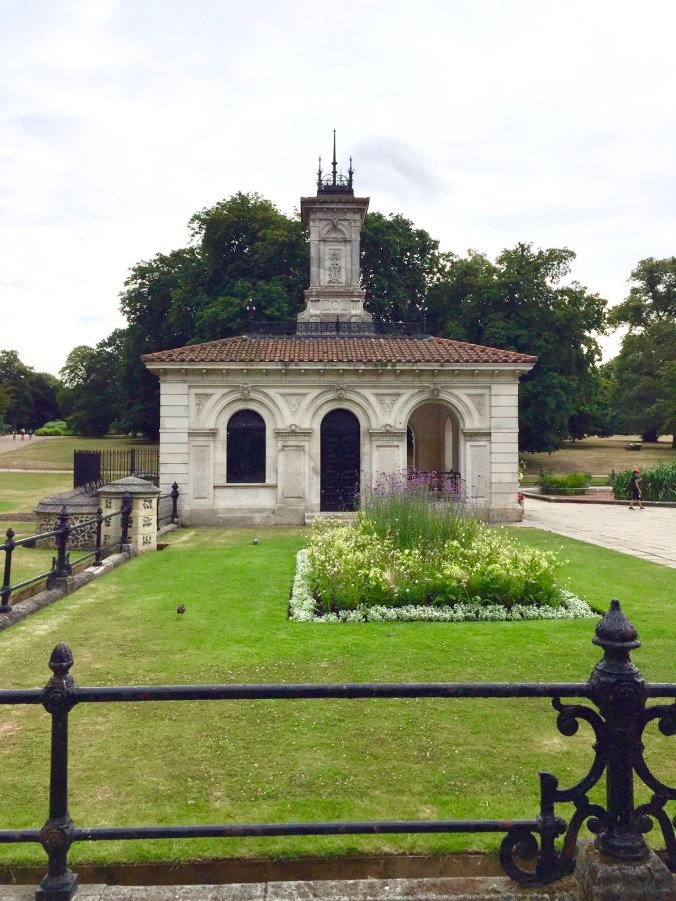
It’s thought that in 1860 he brought the idea to Kensington Gardens. The design by James Pennethorne includes many features of the Osborne garden.
The initials of Queen Victoria and Prince Albert can be found on one of the walls of the Pump House, at the north of the gardens.
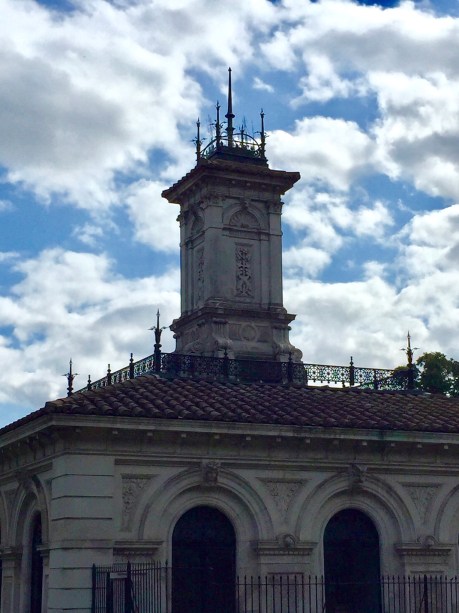
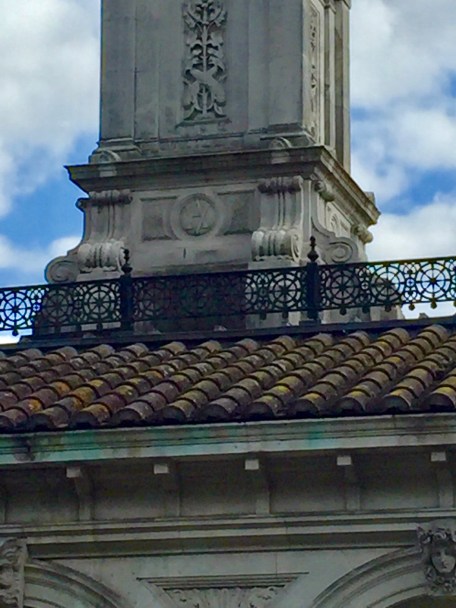 You can see the V & A monogram in this photo.
This building once contained a steam engine which operated the fountains – the pillar on the roof is a cleverly-disguised chimney. A stoker kept the engine running on Saturday nights to pump water into the Round Pond, so on Sundays there was enough water pressure to run the fountains.
In 2011, the gardens were restored to their original splendour. The project involved:
- Restoring the original stonework. This included carving eight life-sized swan heads and necks as replacement handles on some of the urns.
- Restoring the Tazza Fountain. Fine stone carving was carried out on-site. The central rosettes also needed careful cleaning and some sections were replaced with newly-carved marble.
- A new planting scheme to recapture the Victorian vision and help maintain water quality. Native water lilies, yellow flag iris, flowering rush and purple loosestrife are rooted in cages just below the water. New walkways help ducks get in and out of the water.
- A new cleaner water system and water quality improvements. 13 tons of silt were removed from the fountain basins during the restoration. The fountains are now fed with fresh water from a borehole. The water is aerated and its temperature raised as it leaps in the air, before flowing out into the Long Water. Happily, this improves the ecology of the lake.
The restoration was funded by The Tiffany and Co. Foundation as part of a project to restore ornamental and drinking fountains across the eight Royal Parks, and known as Tiffany – Across the Water.
Also, just for fun, the Italian Gardens have provided a star location in several films.
 get back, lauretta!