Have you seen this series of videos? I just discovered them through the one on Monet and I loved it!
Month: October 2019
La Società Canottieri, Firenze, Part 2
Recently I posted about my evening spent at La Società Canottieri, Firenze. It was a special evening and satisfied a long hoped for wish.
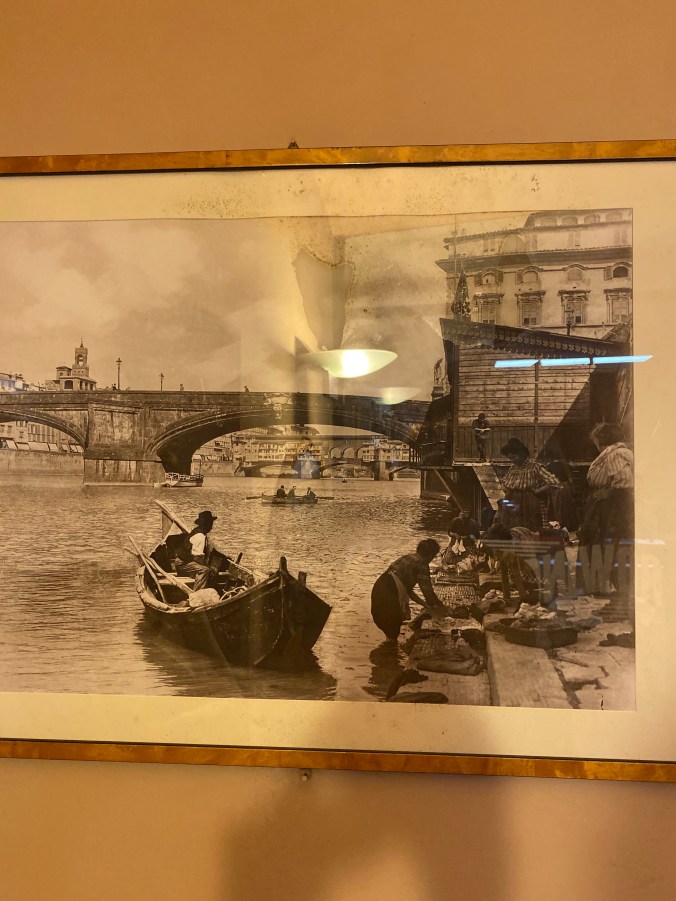
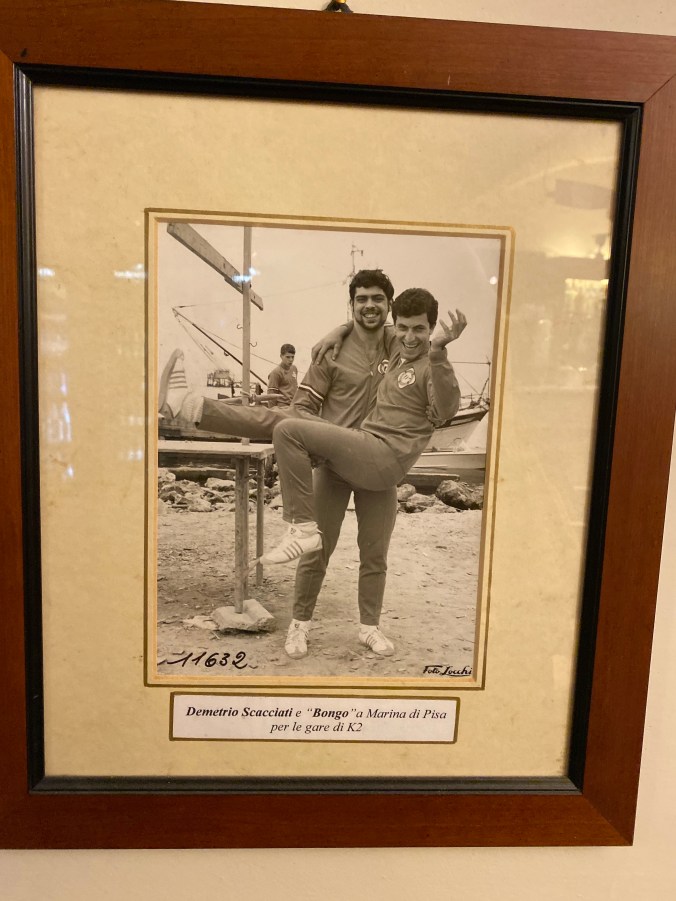
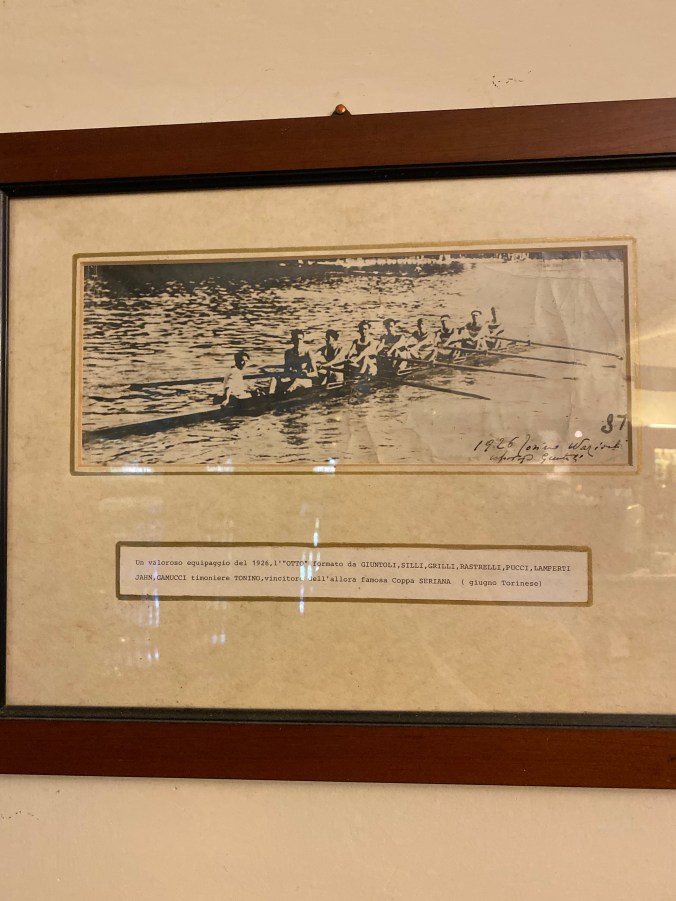
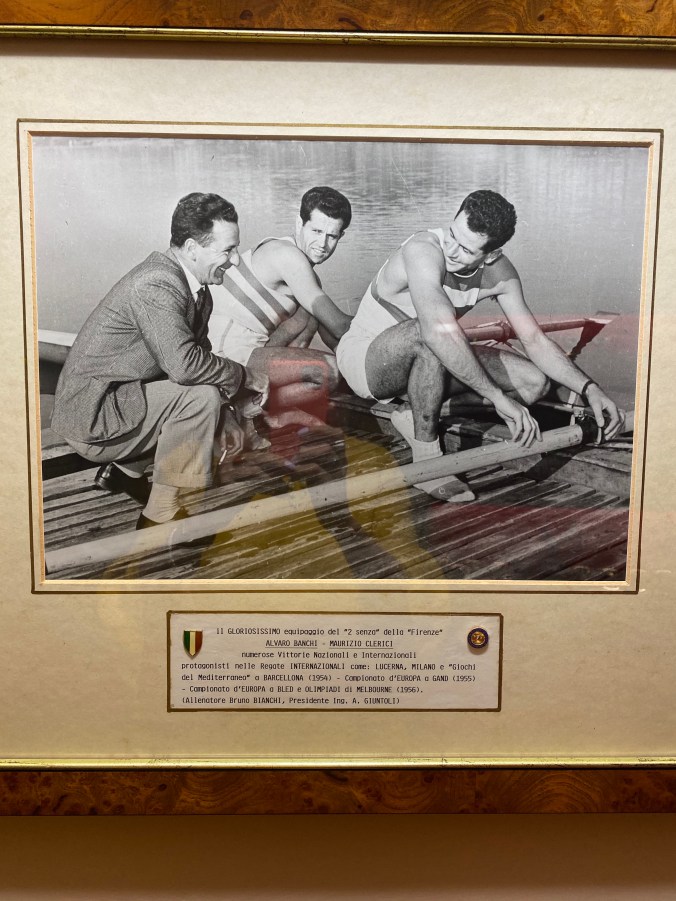
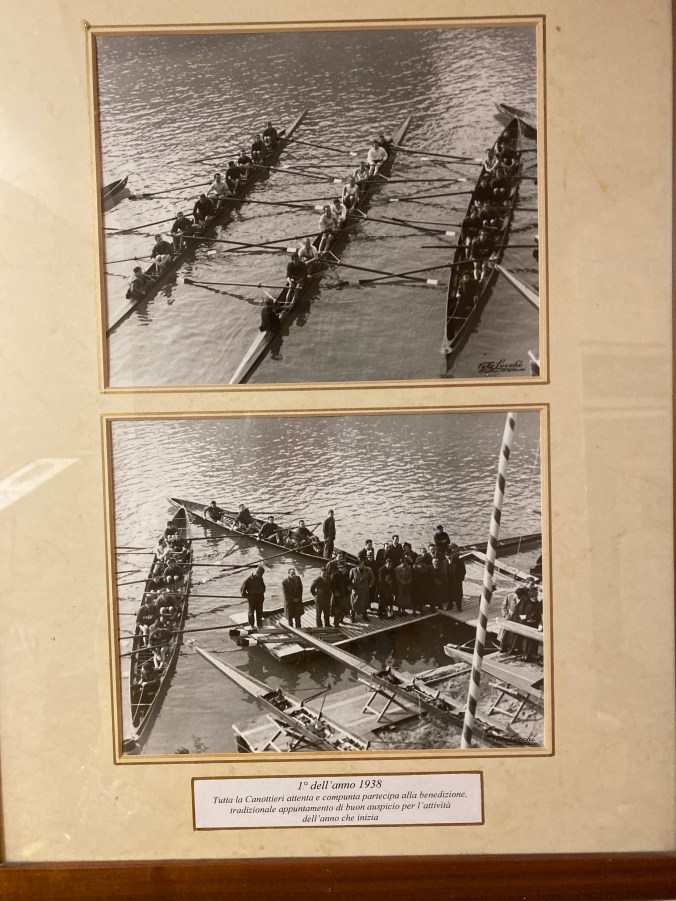
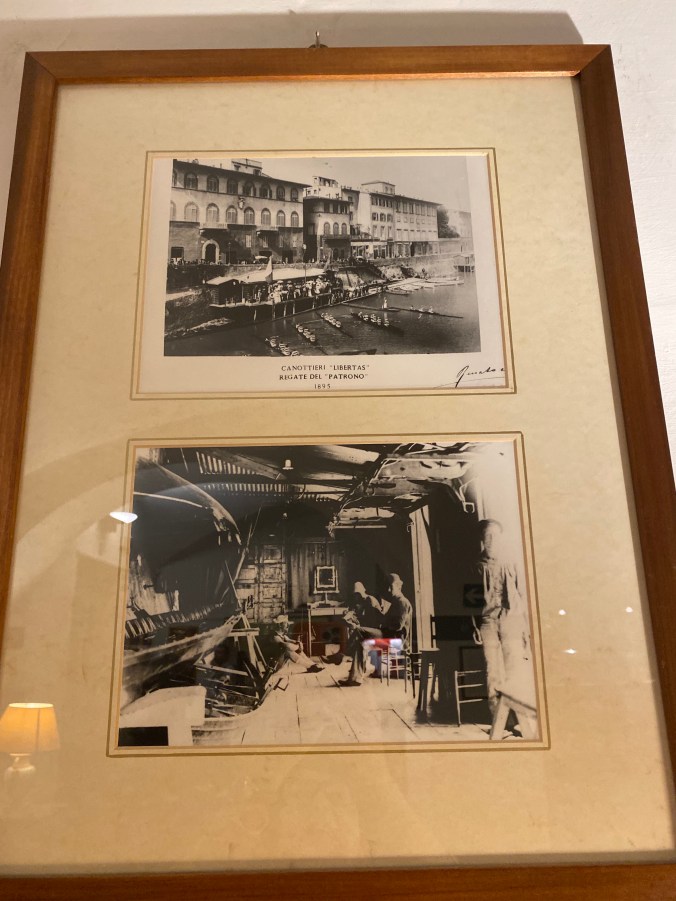
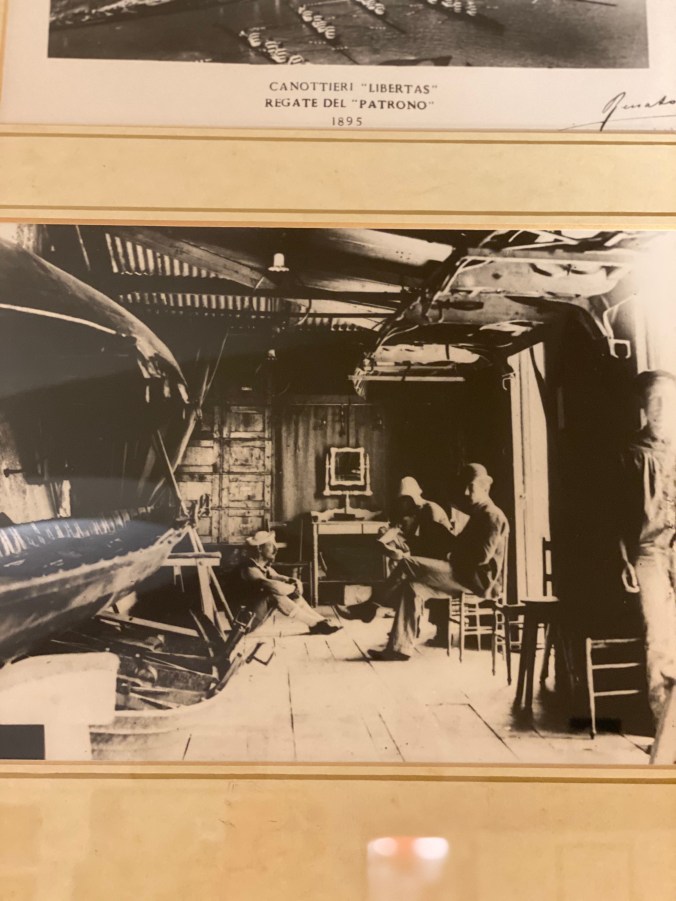
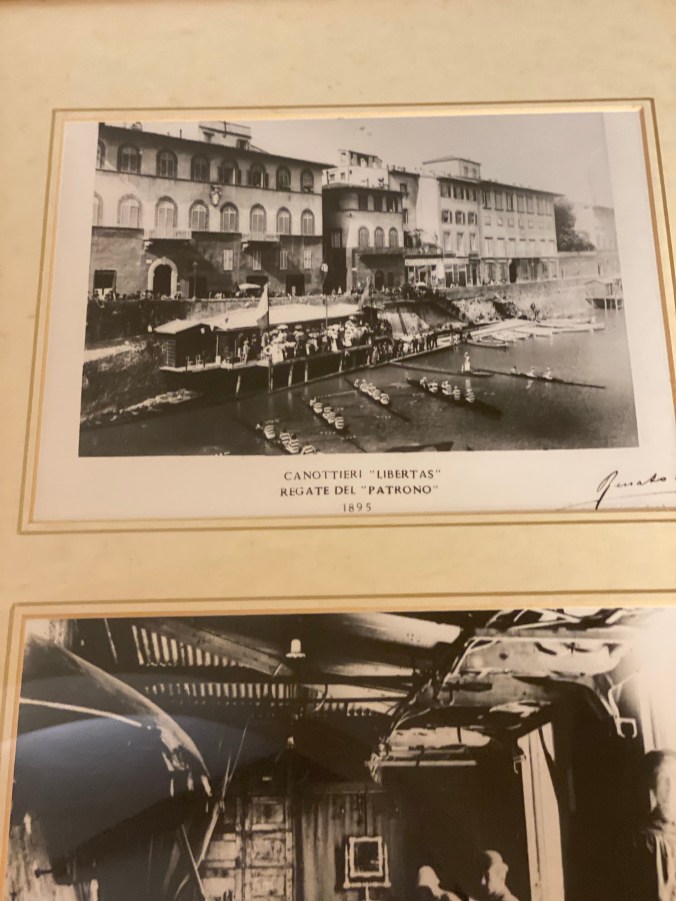
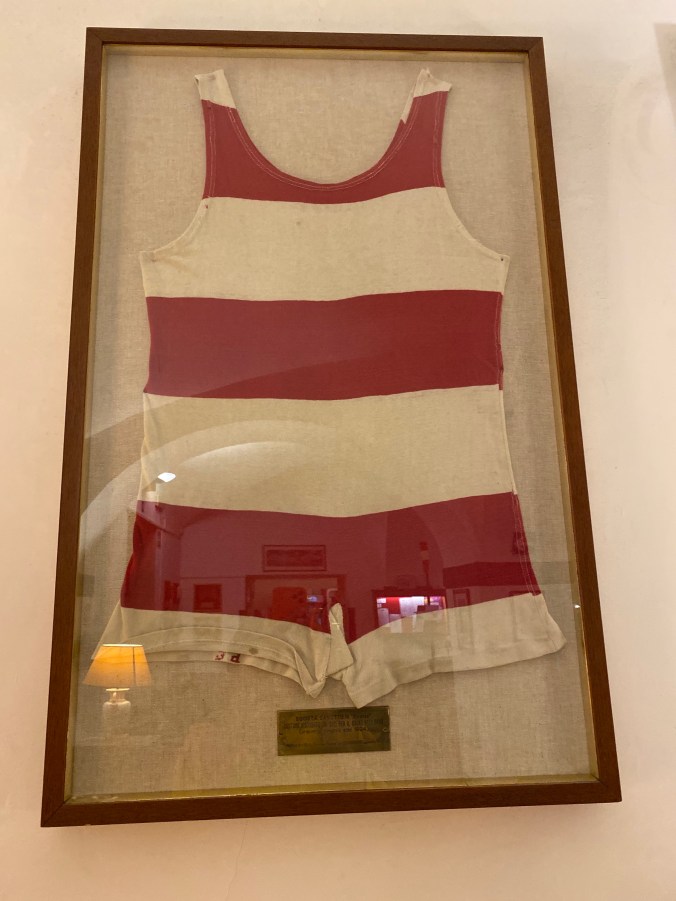
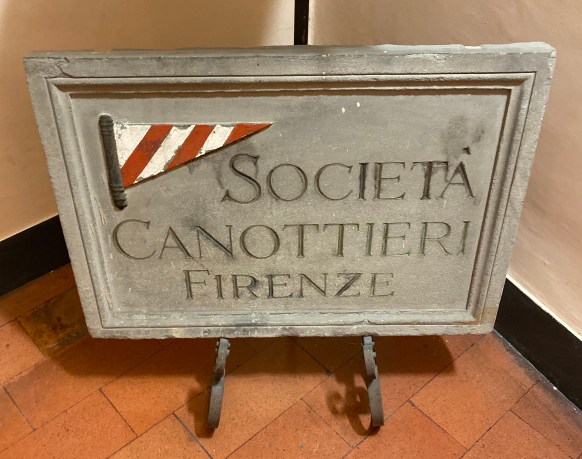
In this post I want to share some of the pictures I took that night, mostly of the club’s interior, with lots of fun memorabilia on display.
So, here we go with the memorabilia on display at the club:

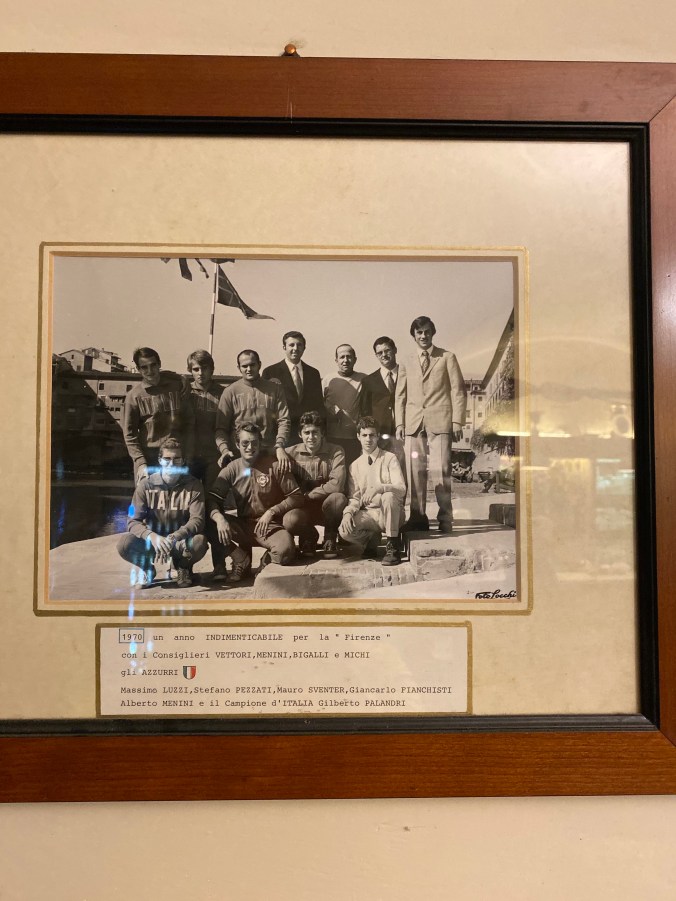

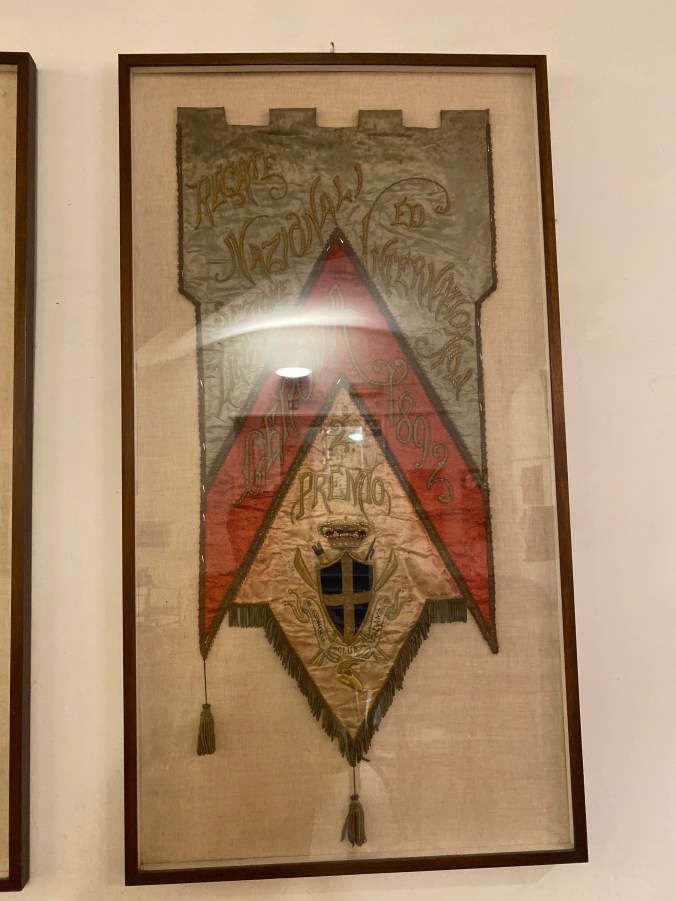
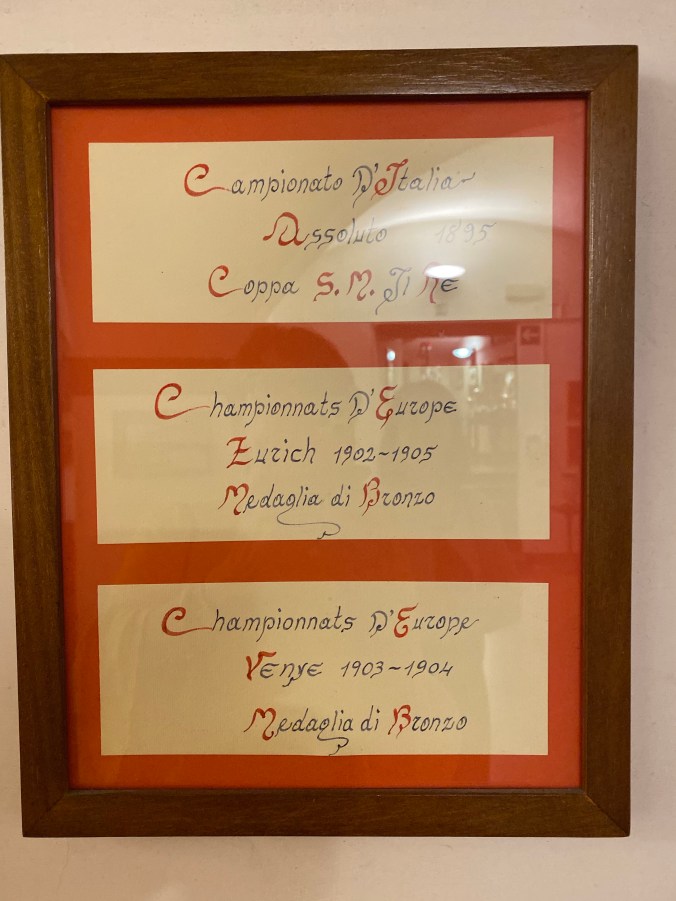

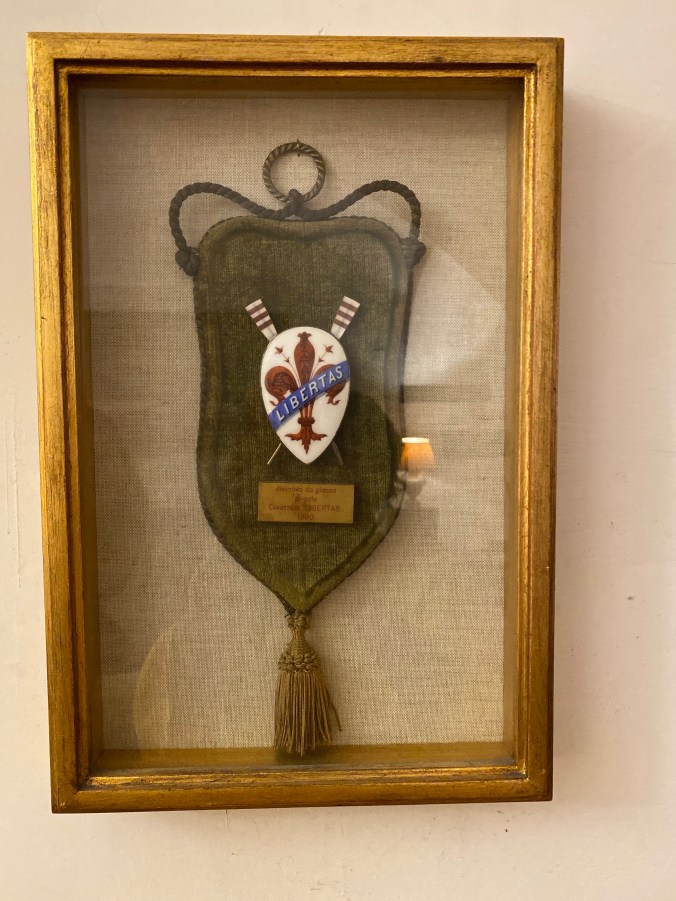

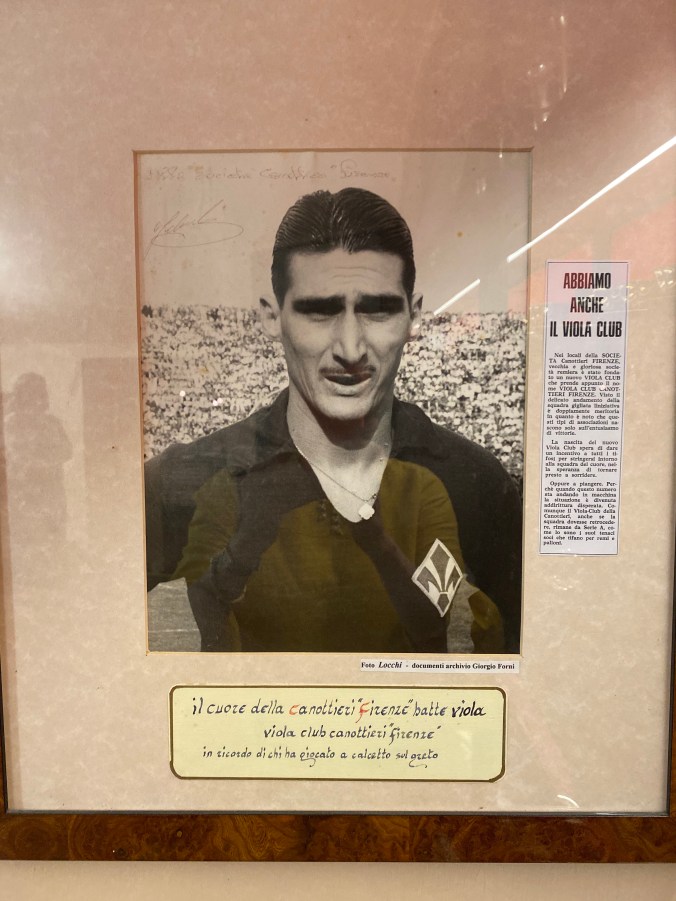
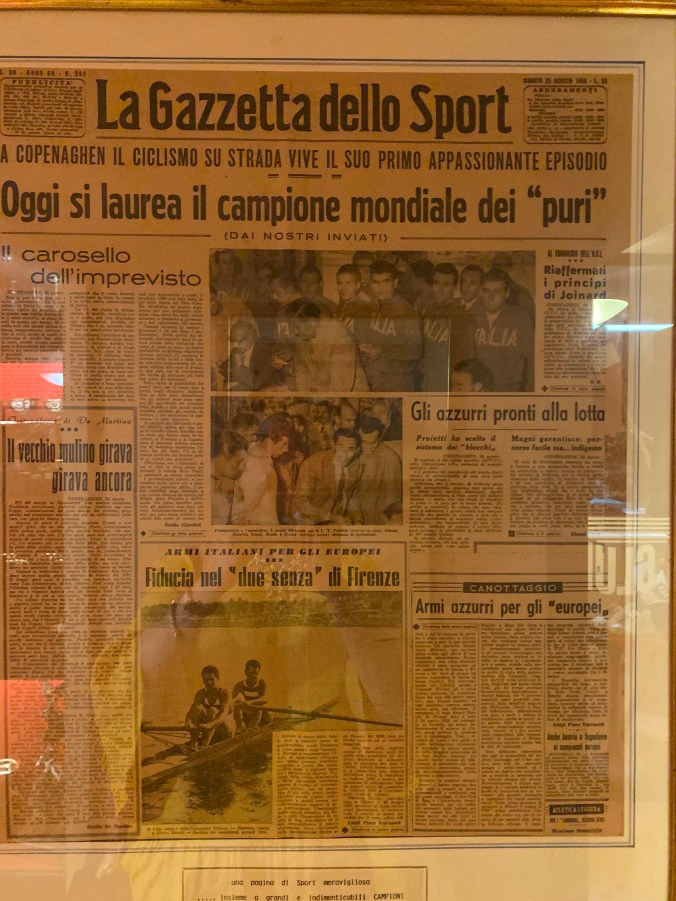
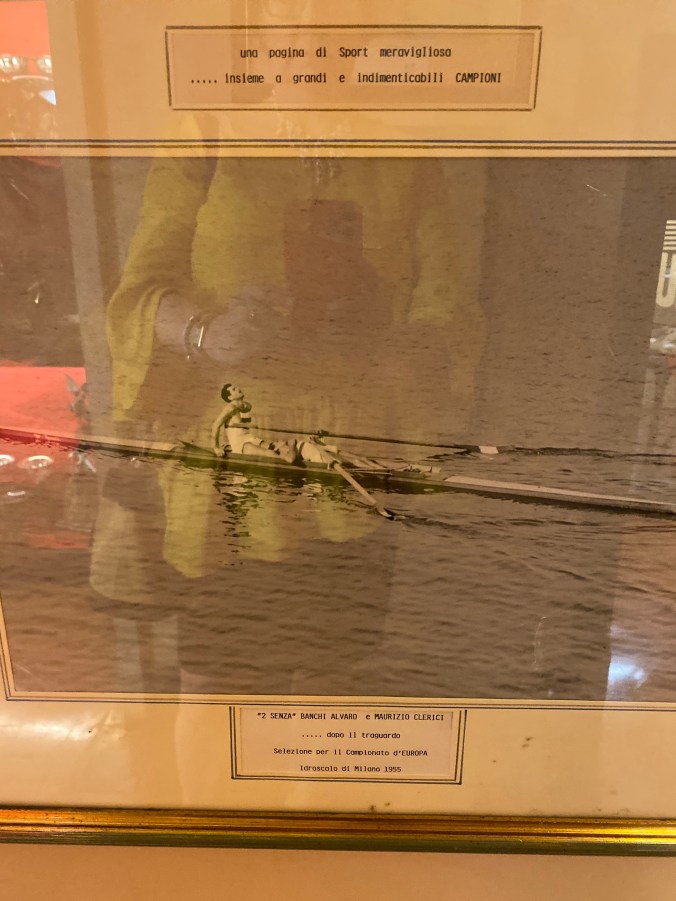
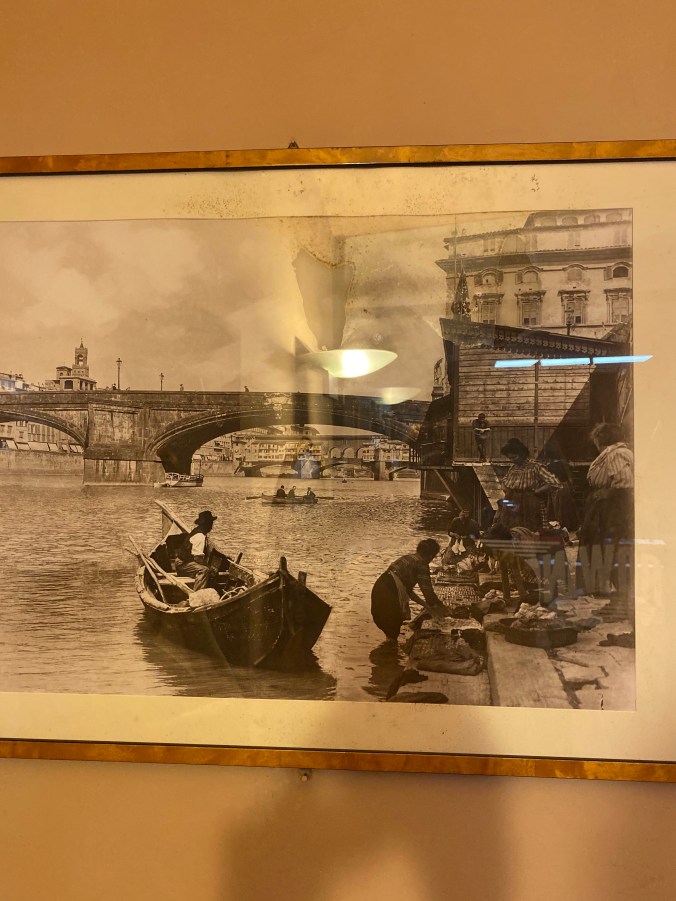


Piazza Sant’ Ambrogio, Florence and Pope Pius VII
I recently met a friend in front of the church in Piazza Sant’ Ambrogio, near Santa Croce, in a spot that is the terminus for 3 streets : via de’ Pilastri, via di Mezzo, and Borgo la Croce e via Carducci.
While waiting, I noticed for the first time, although I’ve been in this piazza a hundred times before, something new.
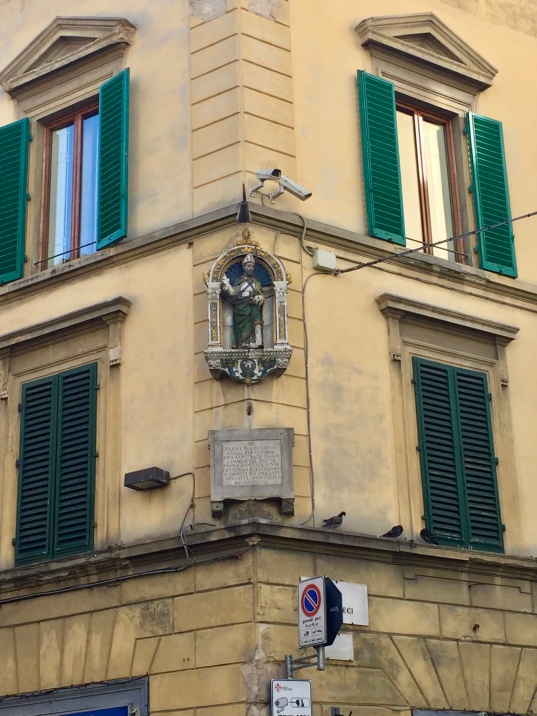
Looking a bit higher than I normally do, I saw a glazed terra-cotta tabernacle, in the style of the Della Robbia, of a figure that I assumed was a priest or even a pope, making a sign of blessing.
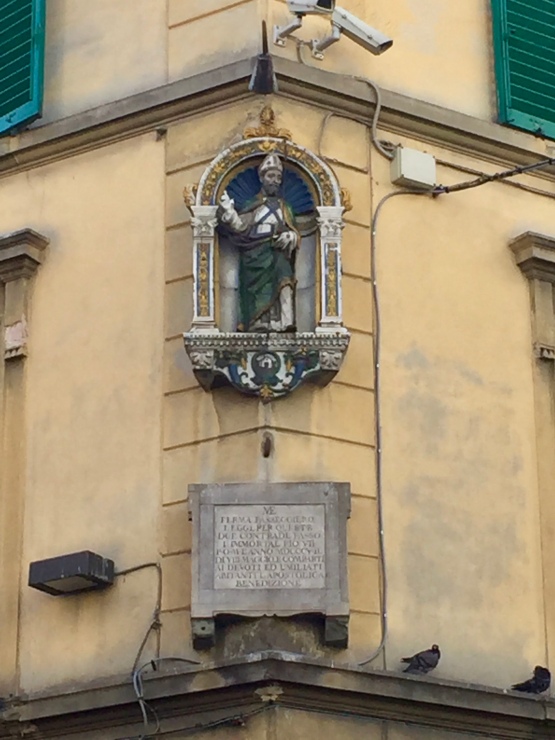
I ventured nearer to photograph the inscription below, and was rewarded with this information:
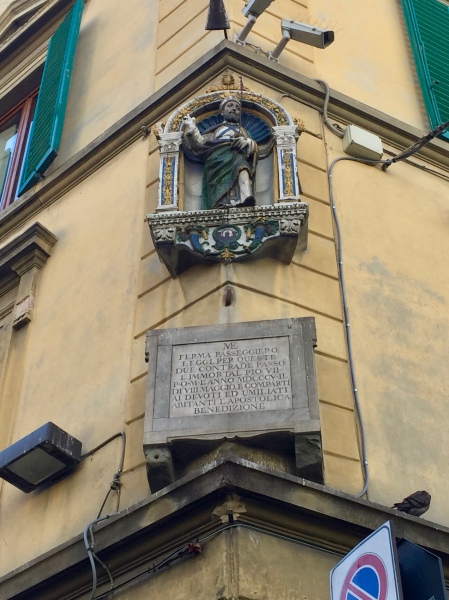
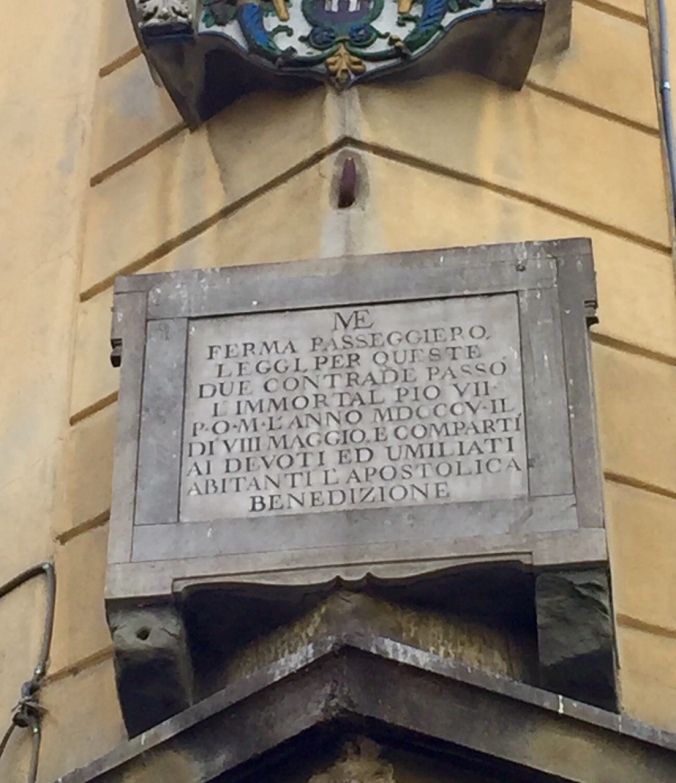
Loosely translated, the inscription reads: “Stop, you passers by, and read this. Know that 2 neighborhoods were passed by the immortal Pope Pius VII on 8 May, 1807, where he devotedly and humbly gave an apostolic blessing to the inhabitants.”
I seldom have occasion to discuss the Catholic Church, that foundational stone of Italian culture, in my blog, so let’s do a little something about that now.
Who was Pope Pius VII?
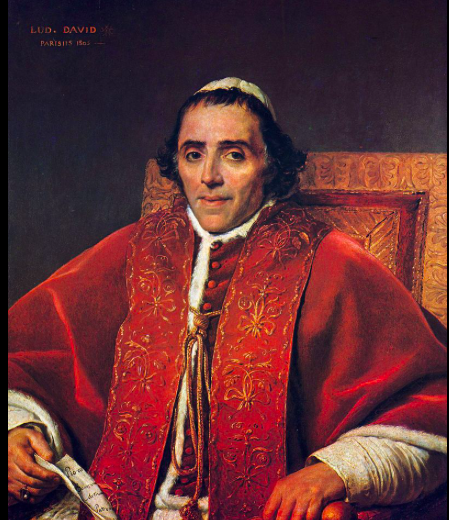
Portrait of Pius VII painted by Jacques-Louis David
He was born in 1742 as Barnaba Niccolò Maria Luigi Chiaramonti. He would rise all the way to head of the Catholic Church and ruler of the Papal States from 1800 until his death in 1823. Chiaramonti was also a monk of the Order of Saint Benedict in addition to being a well-known theologian and bishop throughout his life.
Chiaramonti was born in Cesena, about 30 miles south of Ravenna, in 1742, the youngest son of Count Scipione Chiaramonti (1698 – 1750) and Giovanna Coronata (d. 1777). His mother was the daughter of the Marquess Ghini; though his family was of noble status, they were not wealthy.
Like his brothers, he attended the Collegio dei Nobili in Ravenna but decided to join the Order of Saint Benedict at the age of 14 on 2 October 1756 as a novice at the Abbey of Santa Maria del Monte in Cesena. In 1758, he became a professed member and assumed the name of Gregorio. He taught at Benedictine colleges in Parma and Rome, and was ordained a priest on 21 September 1765.
In 1789, as the French Revolution took place, a series of anti-clerical governments came into power. During the French Revolutionary Wars, troops under Napoleon Bonaparte invaded Rome and took Pope Pius VI as a prisoner. He was taken as prisoner to France, where he died in 1799. The following year, after a sede vacante period lasting approximately six months, Chiaramonti was elected to the papacy, and took as his pontifical name Pius VII, in honor of his immediate predecessor.
He was crowned on 21 March 1800 in a rather unusual ceremony, wearing a papier-mâché papal tiara as the French had seized the tiaras held by the Holy See when occupying Rome and forcing Pius VI into exile. Pius VII then left for Rome, sailing on a barely seaworthy Austrian ship, the Bellona. The twelve-day voyage ended at Pesaro and he proceeded to Rome.
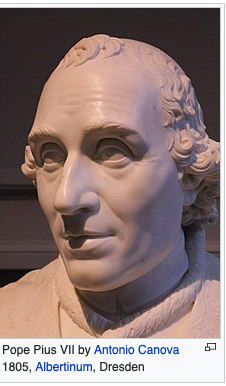
Pius at first attempted to take a cautious approach in dealing with Napoleon. He signed the Concordat of 1801, through which he succeeded in guaranteeing religious freedom for Catholics living in France, and presided over his coronation as Emperor of the French in 1804. Pius VII presided at the coronation of Napoleon I in 1804.
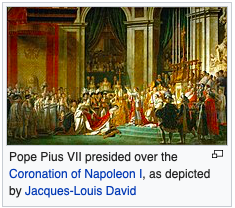
Once again, in 1809, Napoleon invaded the Papal States during the Napoleonic Wars; this earned him ex-communication. Pius VII was taken prisoner and transported to France. He remained there until Napoleon abdicated in 1813 and Pius VII returned to Rome. He was greeted warmly as a hero and defender of the faith and immediately revived the Inquisition and the Index of Condemned Books.
His works, some notable, some to be regretted:
Pius VII joined the declaration of the 1815 Congress of Vienna, represented by Cardinal Secretary of State Ercole Consalvi, and urged the suppression of the slave trade. This pertained particularly to places such as Spain and Portugal where slavery was economically important. The pope wrote a letter to King Louis XVIII of France dated 20 September 1814 and to the King John VI of Portugal in 1823 to urge the end of slavery. He condemned the slave trade and defined the sale of people as an injustice to the dignity of the human person. In his letter to the King of Portugal, he wrote: “the Pope regrets that this trade in blacks, that he believed having ceased, is still exercised in some regions and even more cruel way. He begs and begs the King of Portugal that it implement all its authority and wisdom to extirpate this unholy and abominable shame.”
Under Napoleonic rule, the Jewish Ghetto had been abolished and Jews were free to live and move where they would. Following the restoration of Papal rule, Pius VII re-instituted the confinement of Jews to the Ghetto, having the doors closed at nighttime.
Pius VII was a man of culture and attempted to reinvigorate Rome with archaeological excavations in Ostia which revealed ruins and icons from ancient times. He also had walls and other buildings rebuilt and restored the Arch of Constantine. He ordered the construction of fountains and piazzas and erected the obelisk at Monte Pincio.
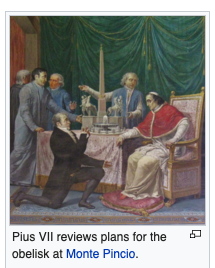
The pope also made sure Rome was a place for artists and the leading artists of the time like Antonio Canova and Peter von Cornelius. He also enriched the Vatican Library with numerous manuscripts and books.
The so-called “miracle” of Pius VII. On 15 August 1811 – the Feast of the Assumption – it is recorded that the pope celebrated Mass and was said to have entered a trance and began to levitate in a manner that drew him to the altar. This particular episode aroused great wonder and awe among attendants which included the French soldiers guarding him who were in disbelief of what had occurred.
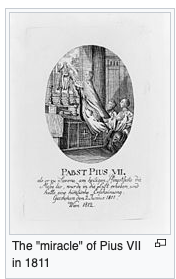
Relationship with the United States. On the United States’ undertaking of the First Barbary War to suppress the Muslim Barbary pirates along the southern Mediterranean coast, ending their kidnapping of Europeans for ransom and slavery, Pius VII declared that the United States “had done more for the cause of Christianity than the most powerful nations of Christendom have done for ages.”
For the United States, he established several new dioceses in 1808 for Boston, New York City, and Philadelphia. In 1821, he also established the dioceses of Charleston, Richmond and Cincinnati.
Pius VII died in 1823 at the age of 81. He was later buried in a monument in Saint Peter’s Basilica by the leading sculptor of the day, the Danish Bertel Thorvaldsen.
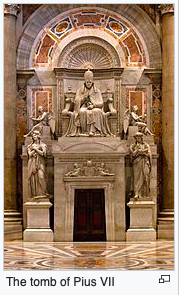
La Società Canottieri, Firenze
What lies beneath is always fascinating, be it in persons, places, or things. In Florence, one of the most interesting places lying underneath the city is La Società Canottieri, a rowing club with an august past.
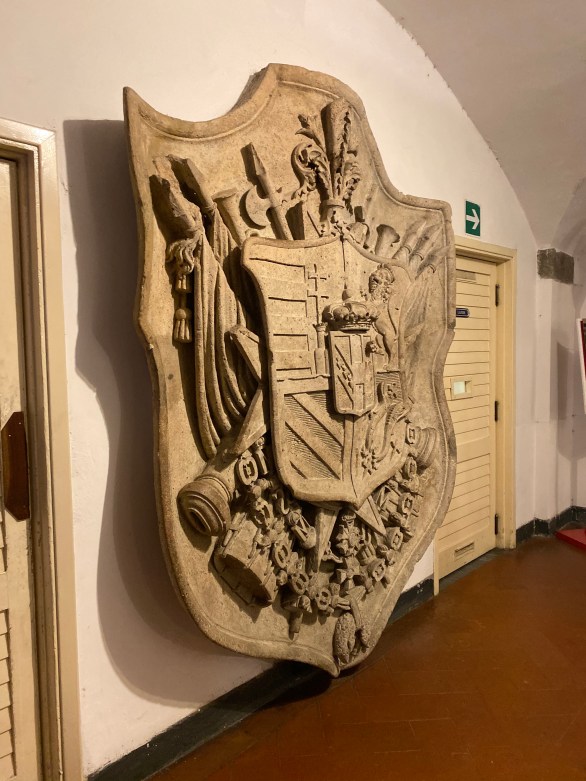
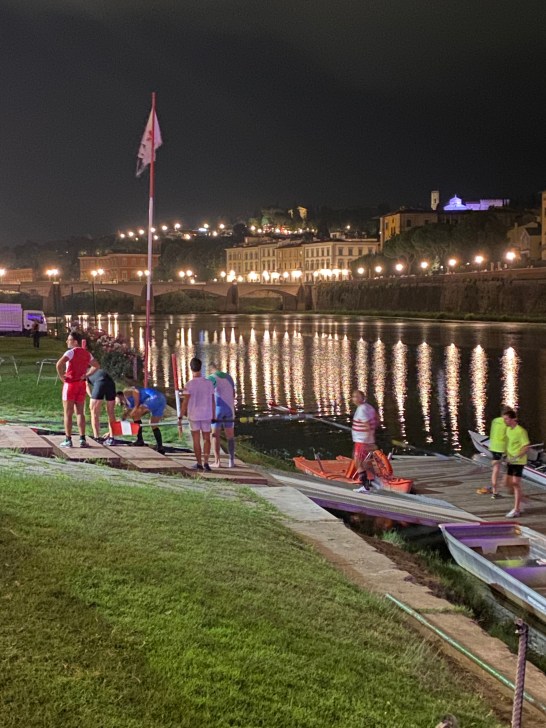
Upon entering the club, you know it’s something special, just based upon the size of the escutcheon. Check it out, it’s taller than the average doorway!
Looking upward from the banks of the club’s riverside location. That’s the Uffizi you see grandly sitting above.


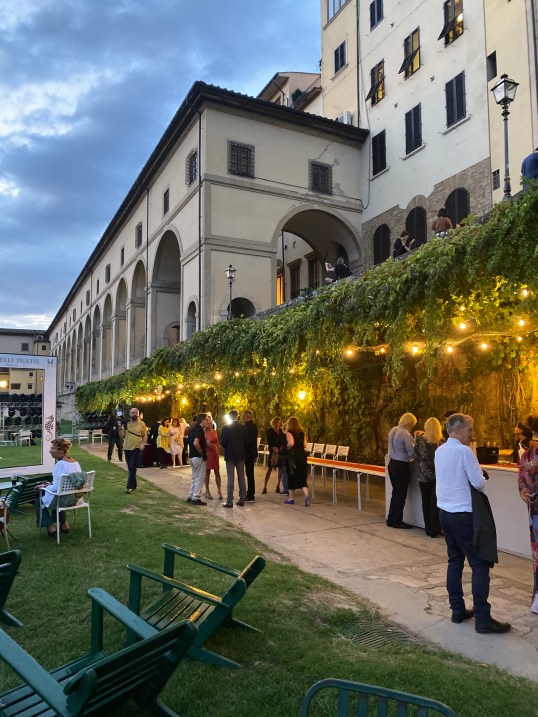
I’ve walked along this section of the Lungarno hundreds, if not thousands, of times, and always wished I could enter this subterranean location, to see what’s actually going on in the space. This week, I finally got my chance.
Spilling out onto the banks of the Arno River, the rowing club is situated beneath the courtyard and structure of the Uffizi.
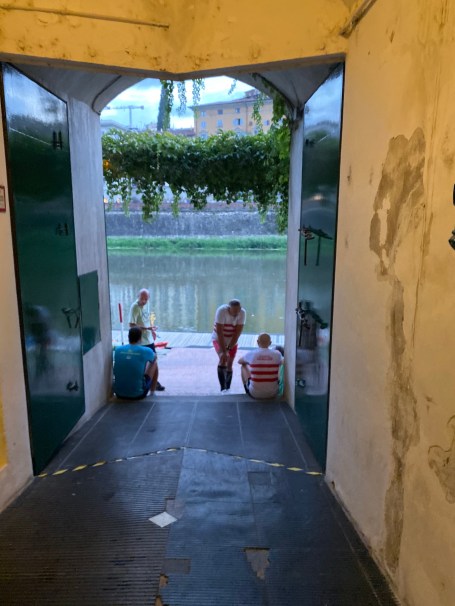
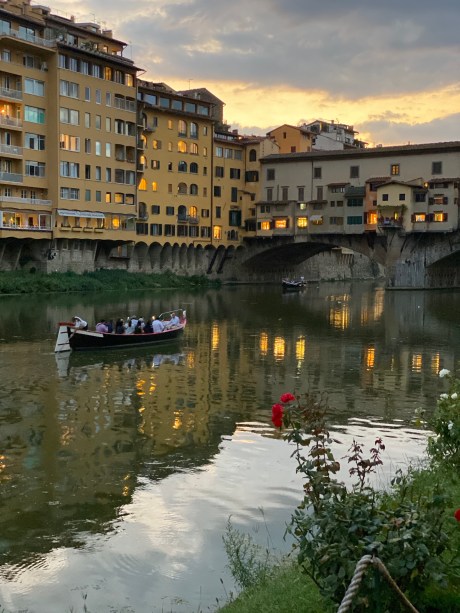
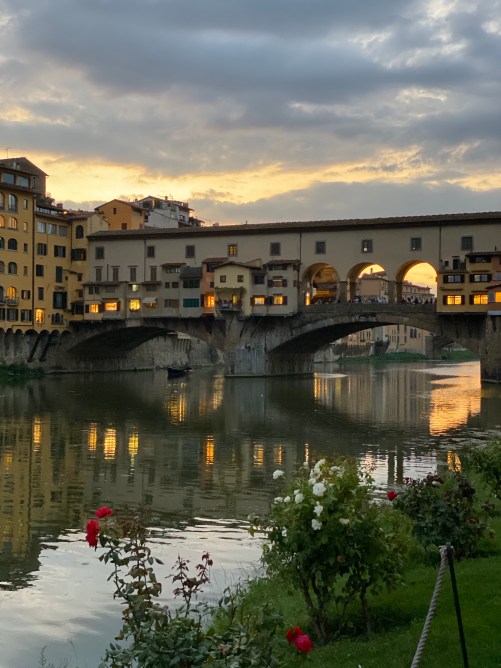
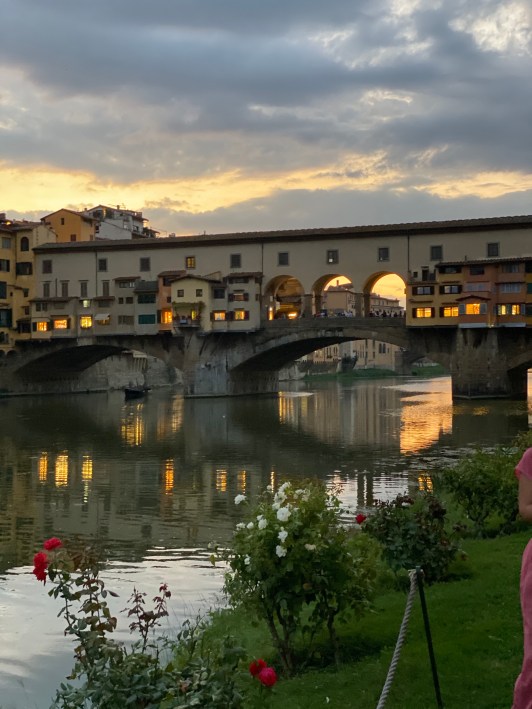
The view across the Arno from the club.
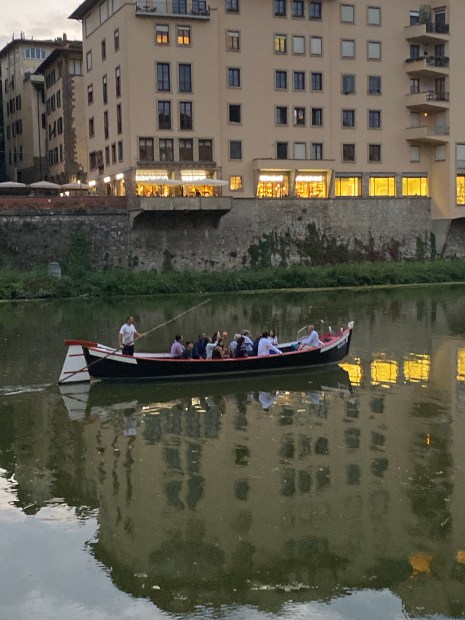
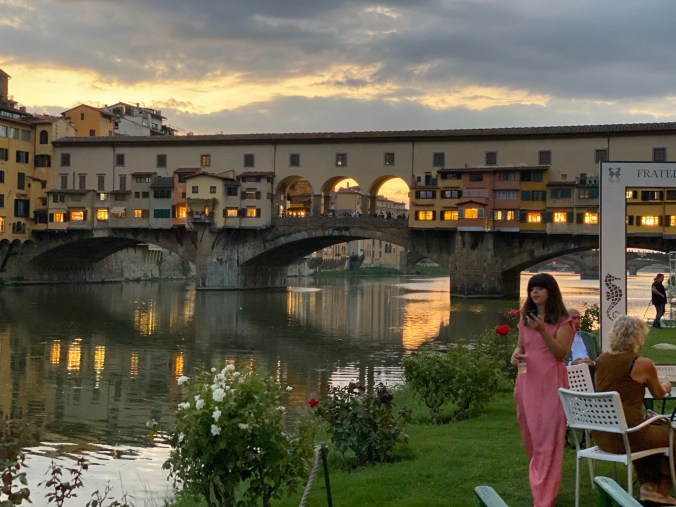
Up close and personal, the club’s view of the Ponte Vecchio. This view only becomes more spectacular as late afternoon shifts to twilight and evening.
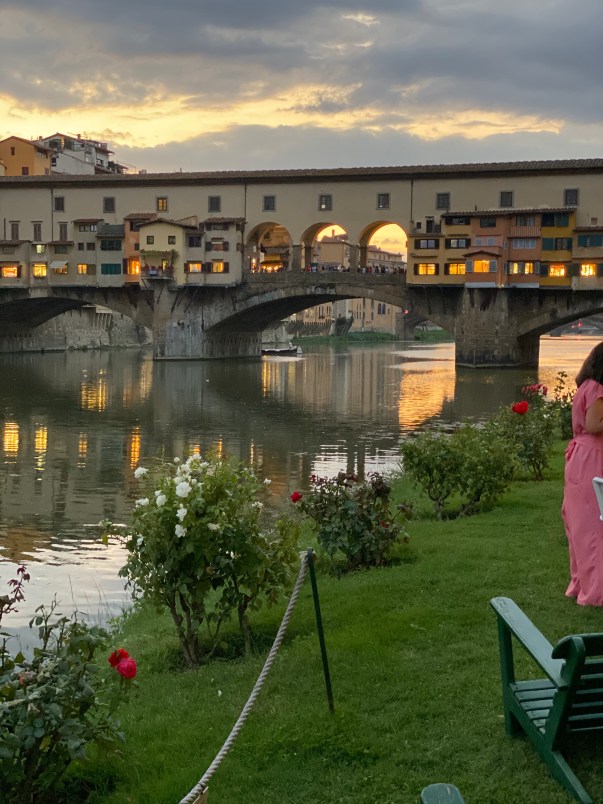
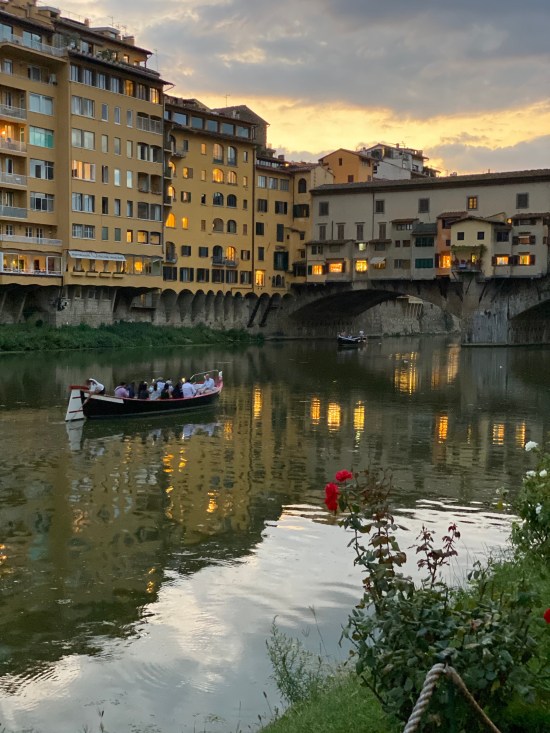
The interior of the club begins with a social space, with displays of hundreds of victory cups:
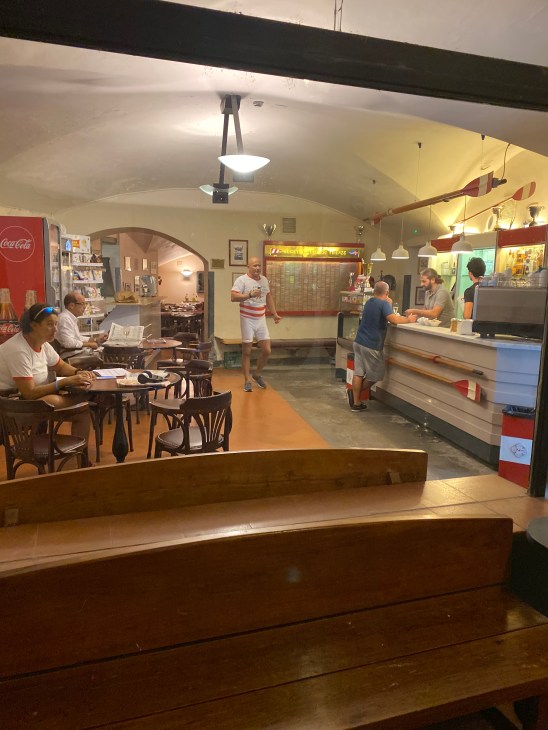
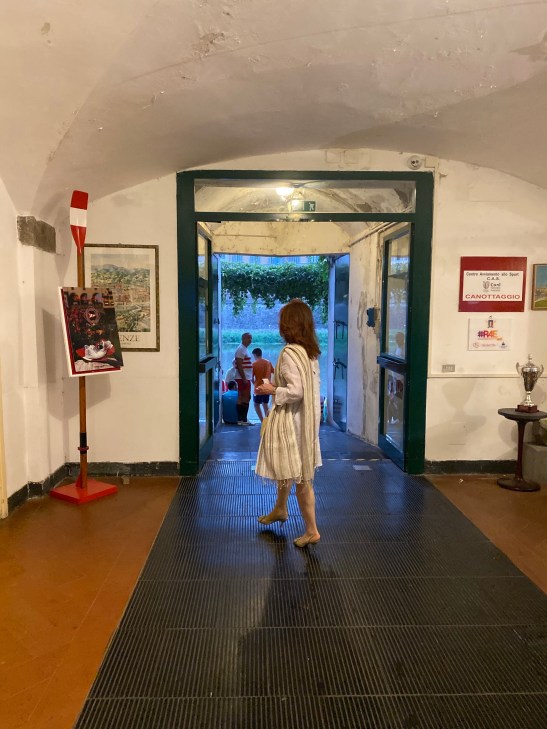

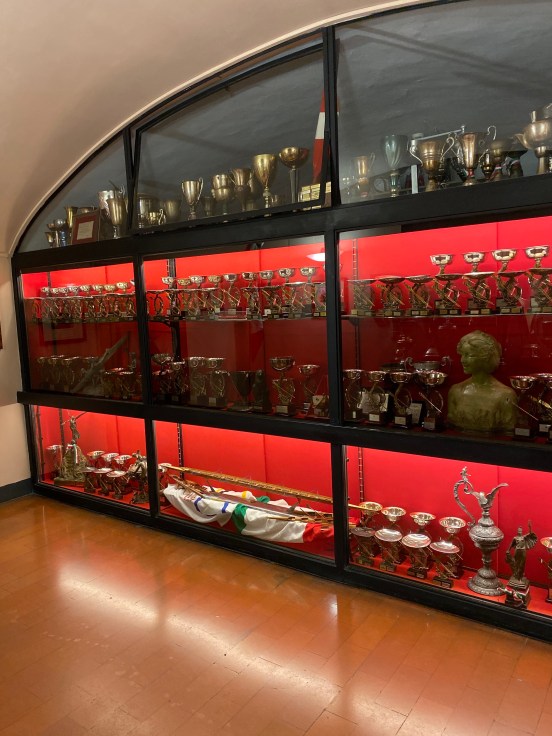
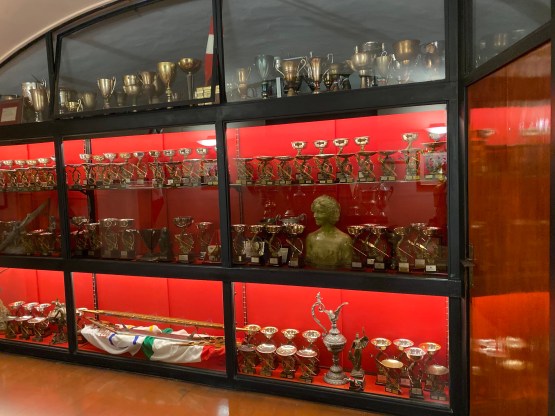

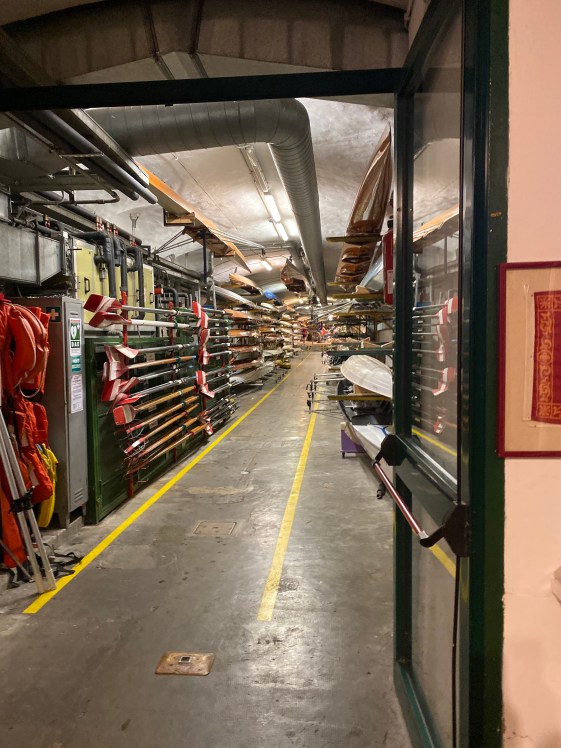
Most interesting of all is how the space stretches into a deep cavern under the city in a fairly shallow and narrow way. Hundreds of boats and accessories are housed here, and two gyms provide equipment for rowers to train and keep fit.

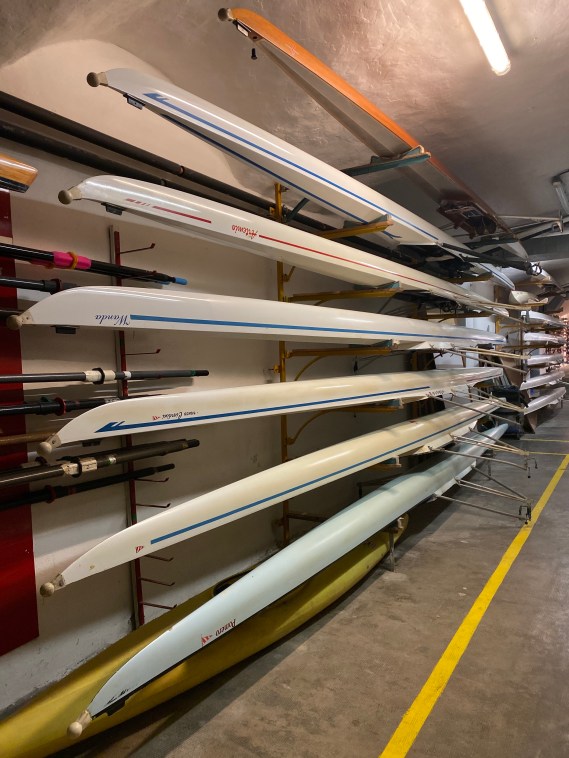
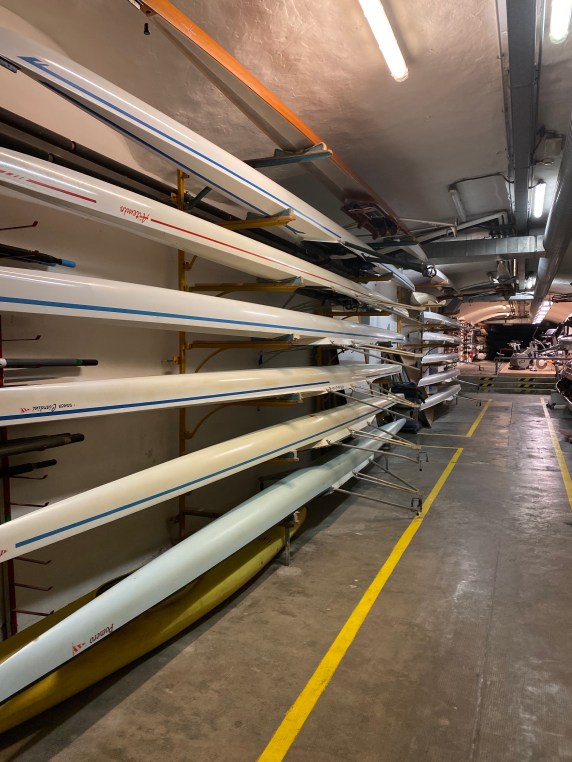
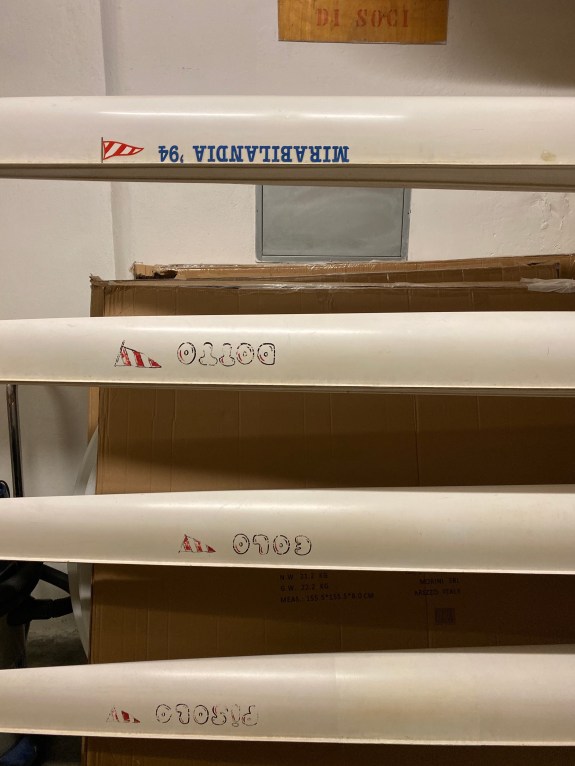

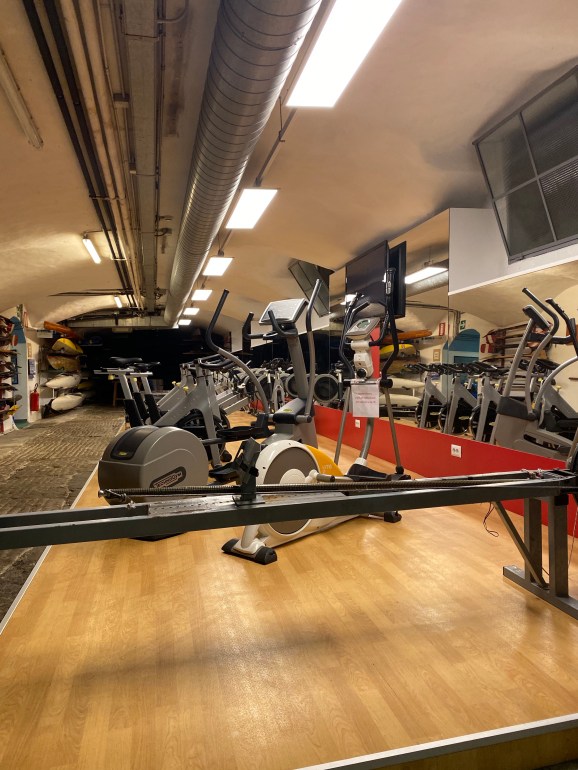
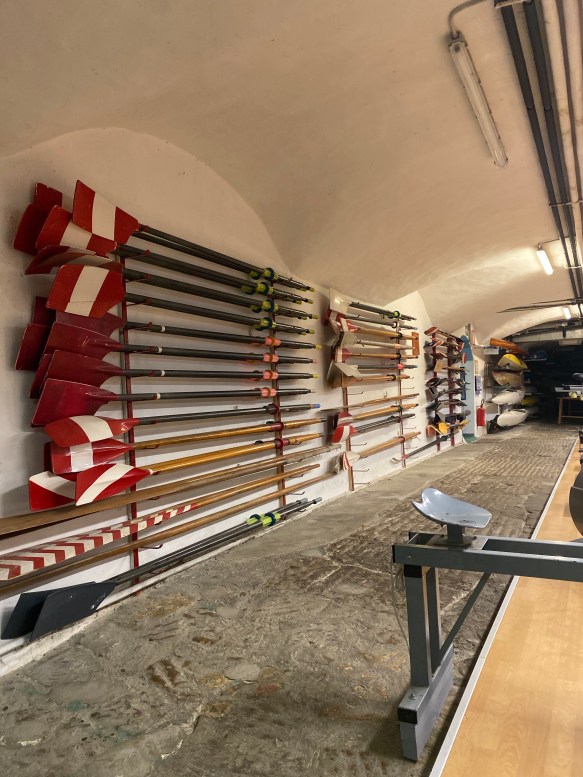
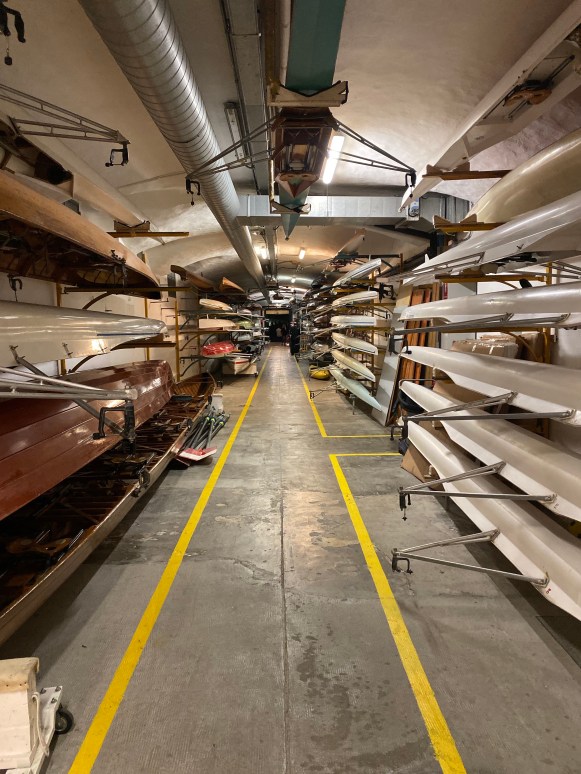

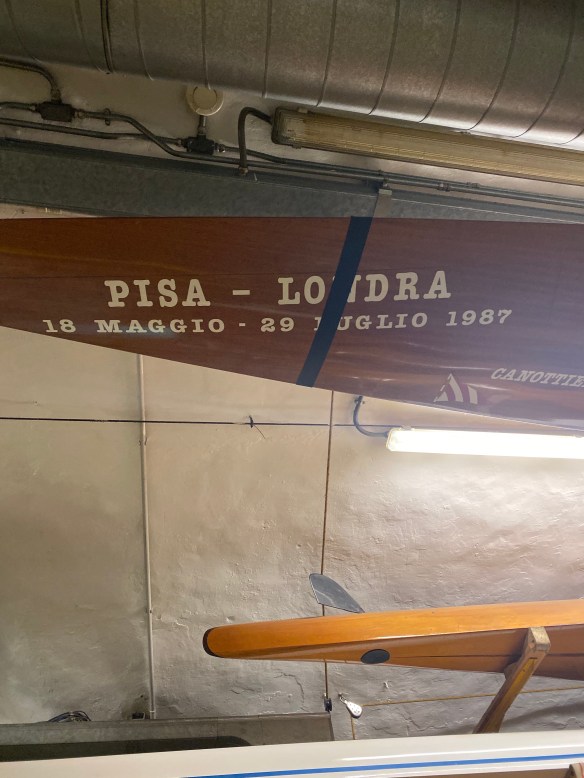
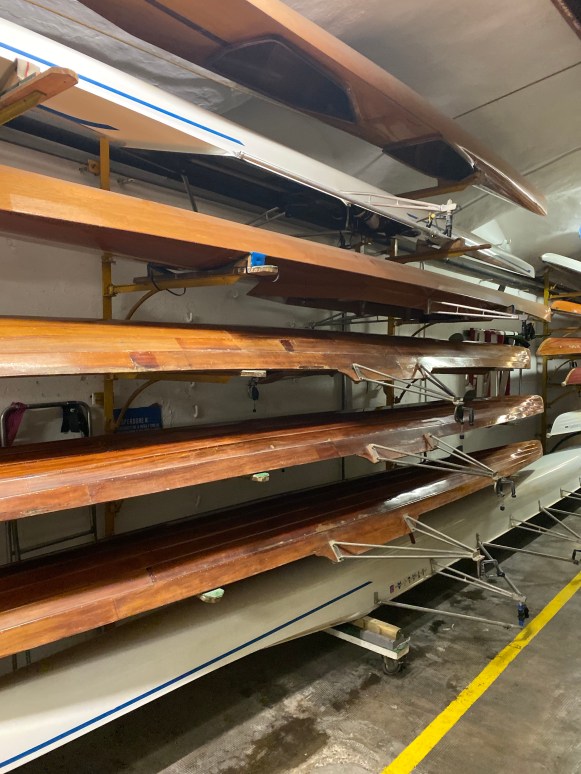
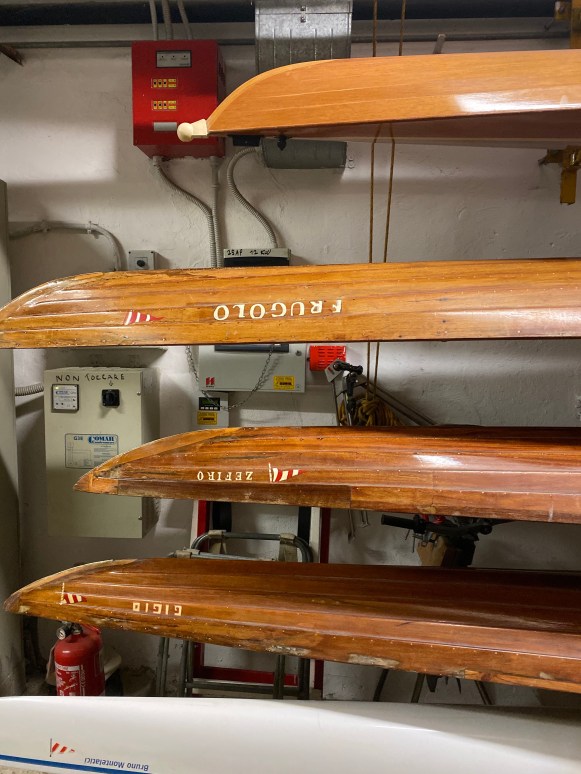

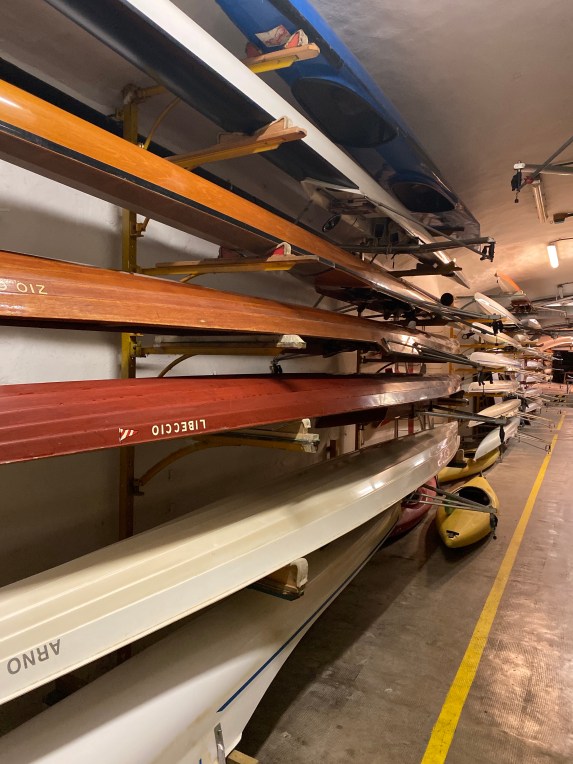
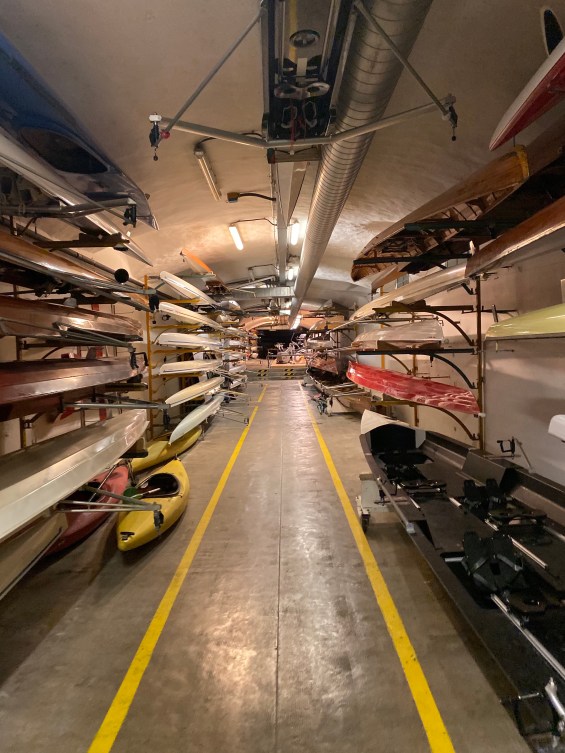
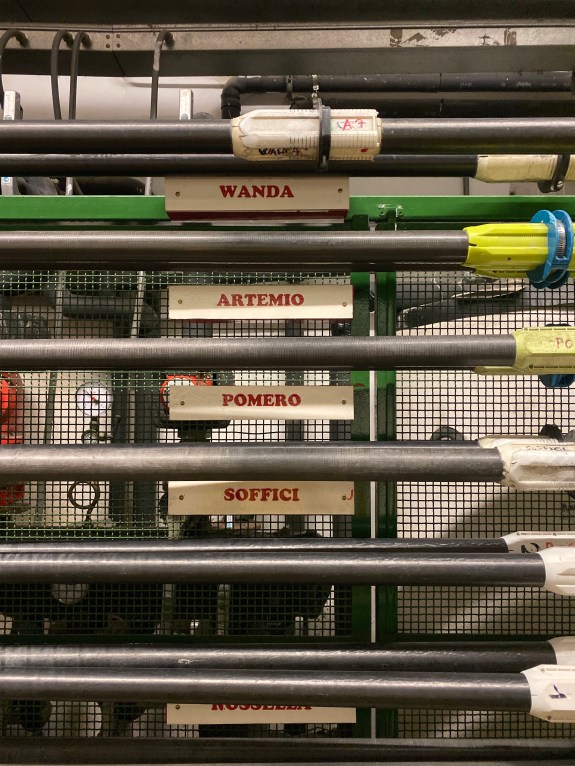
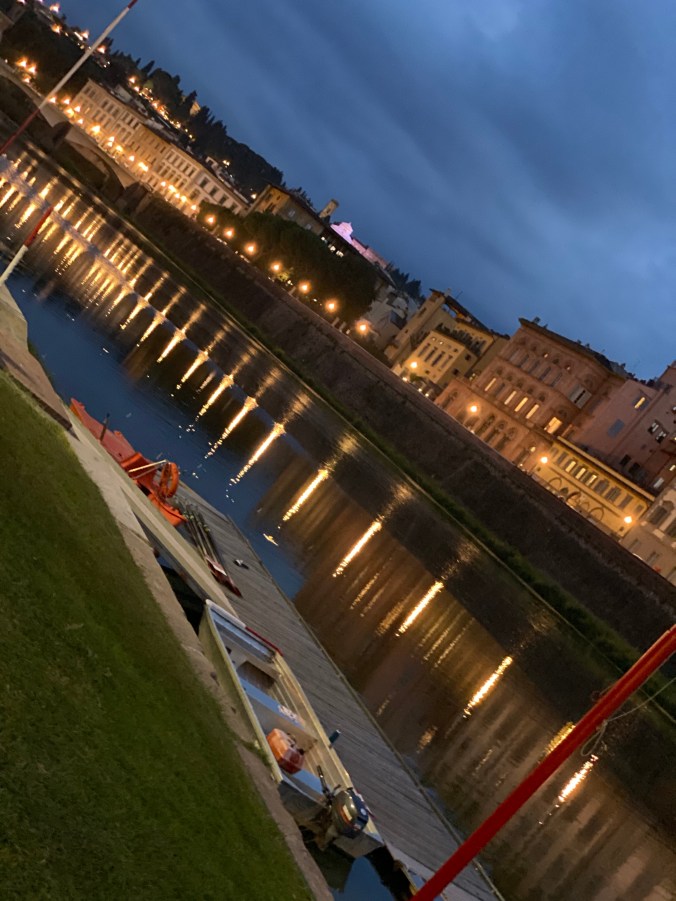
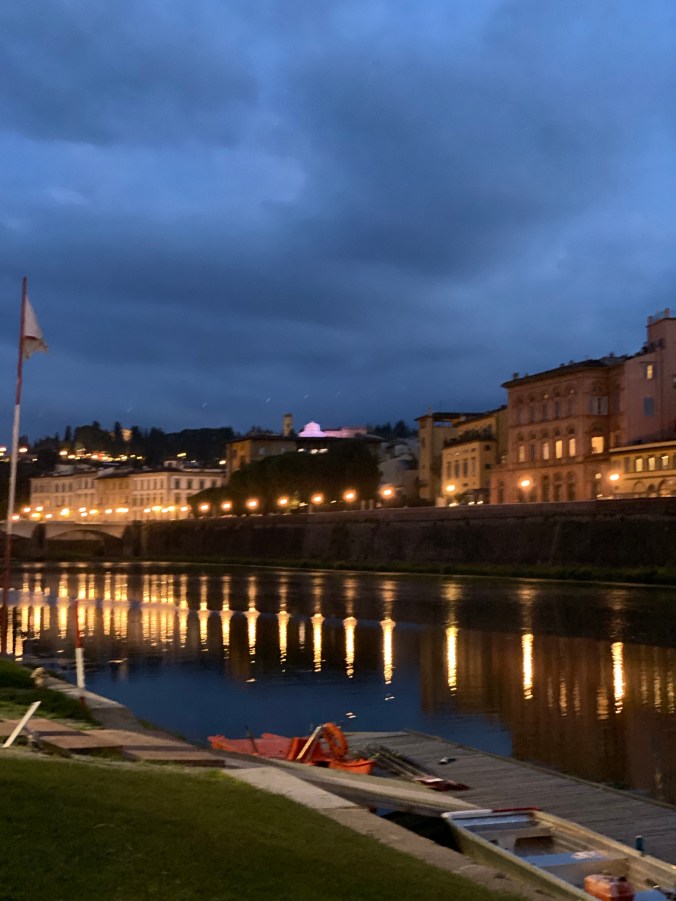
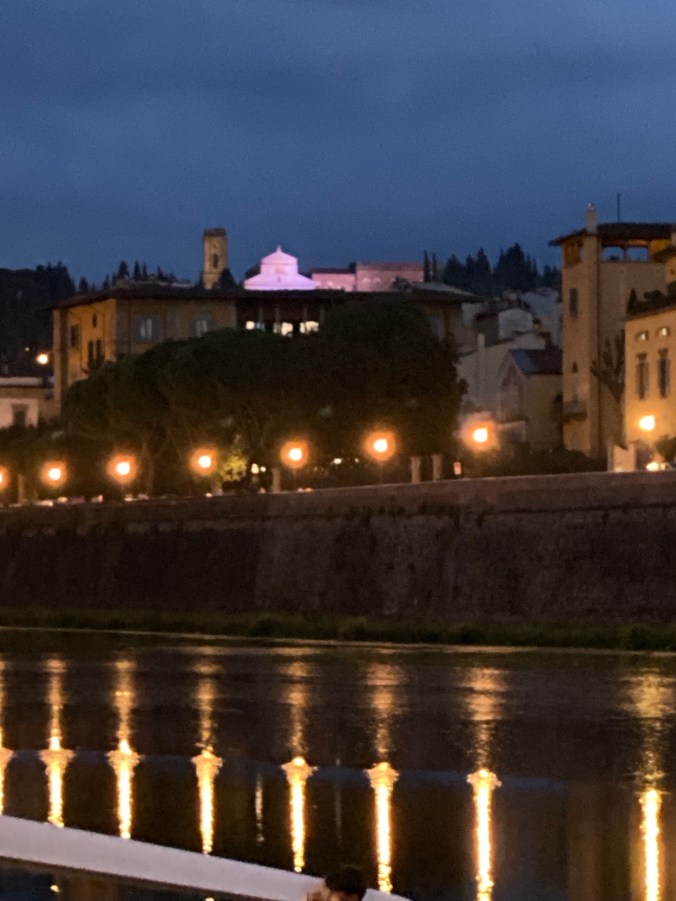
Just your average autumn evening in Florence
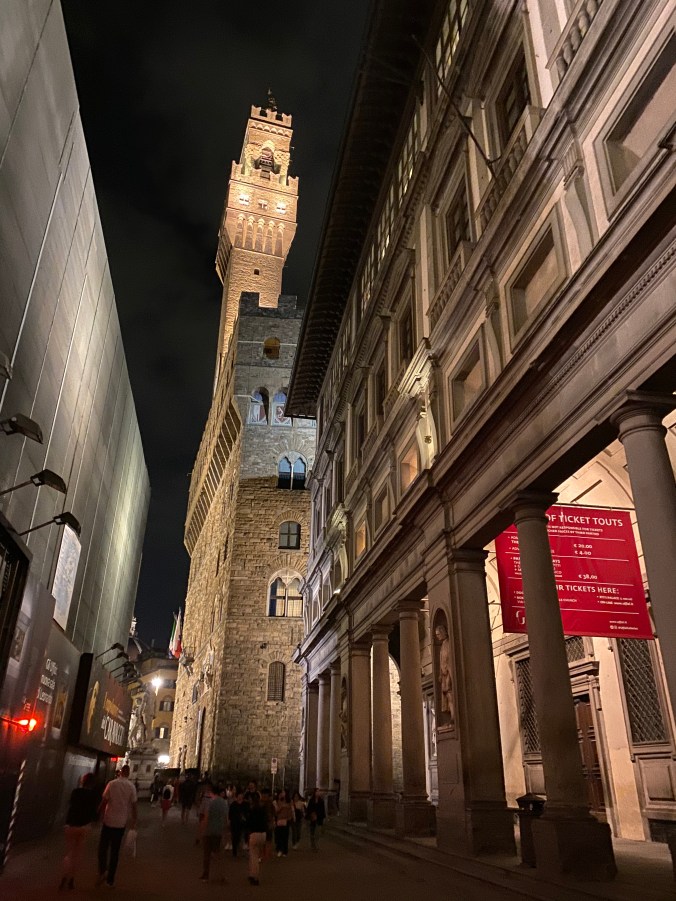
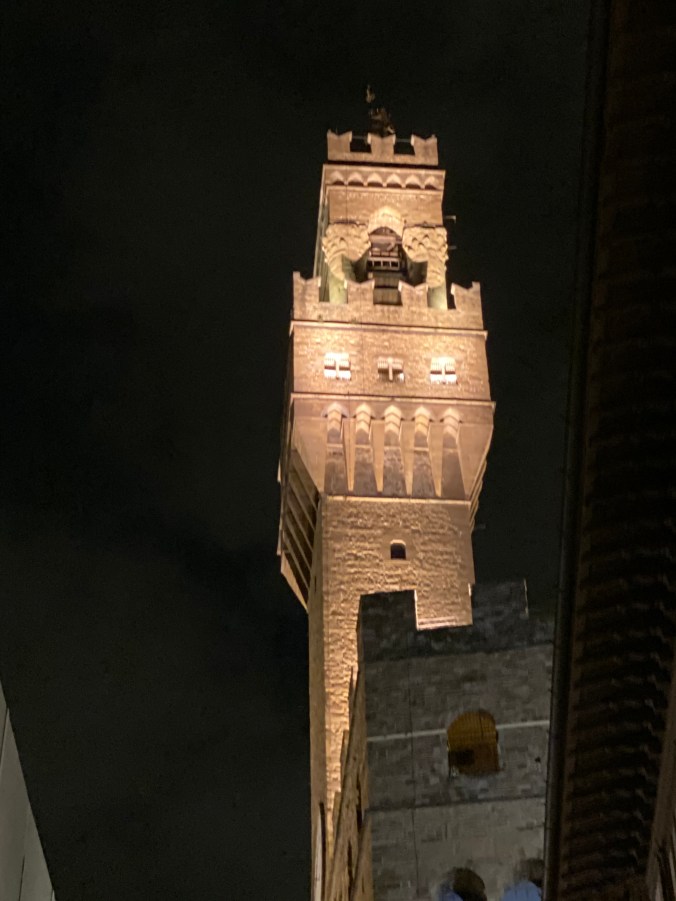
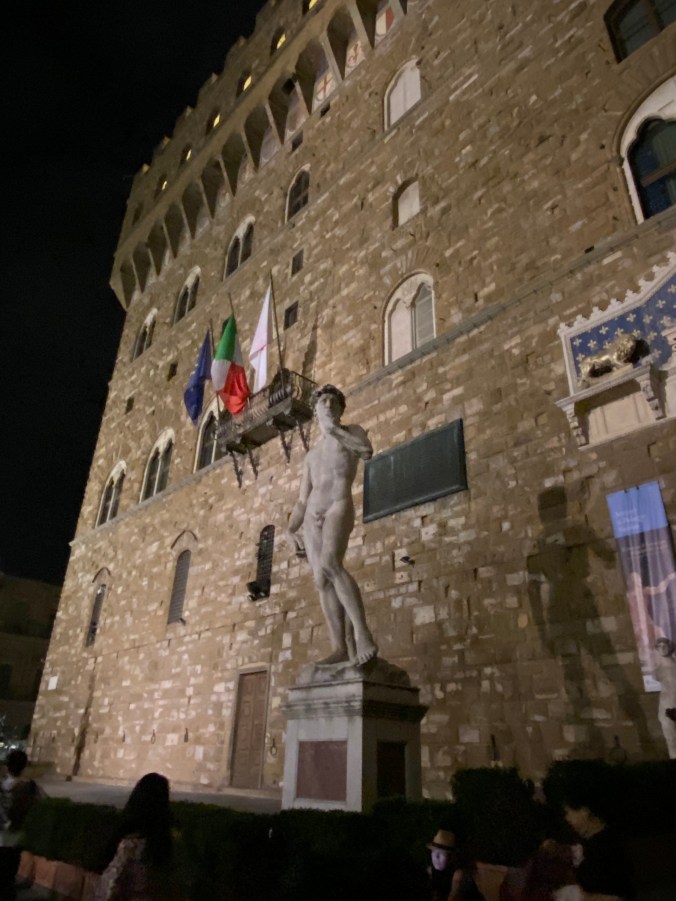
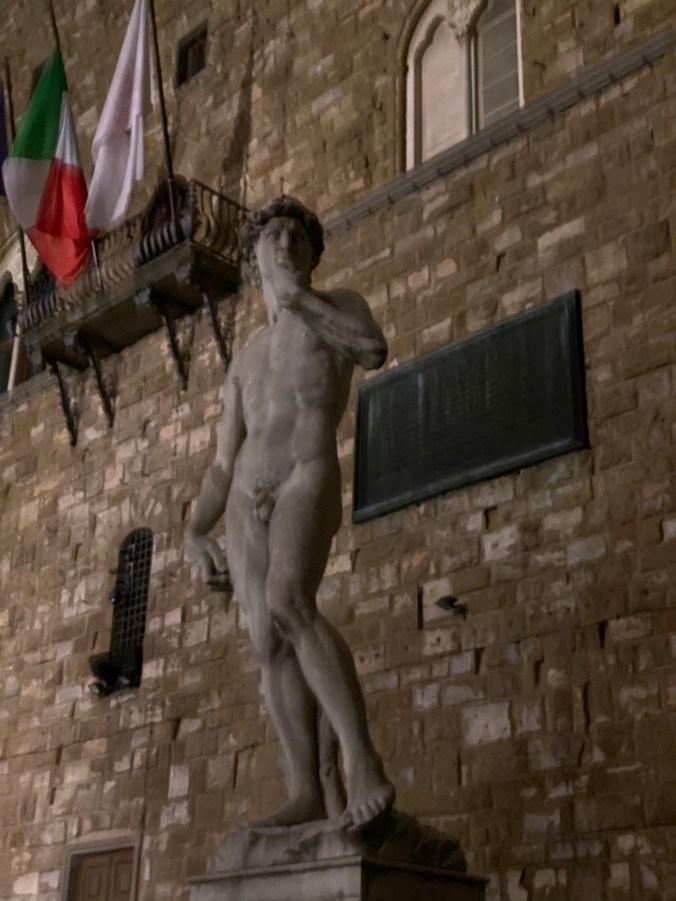
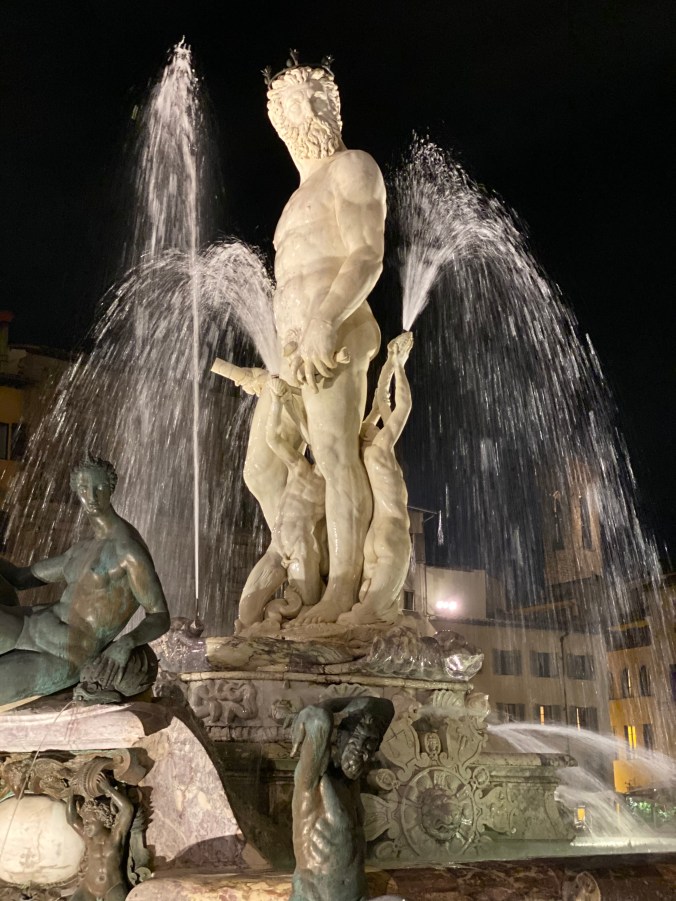
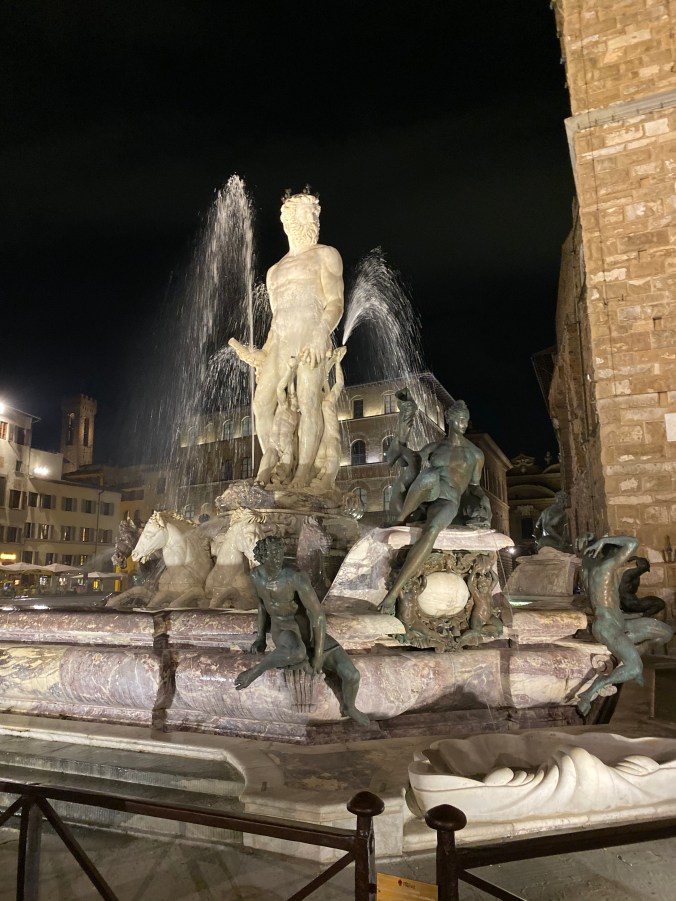
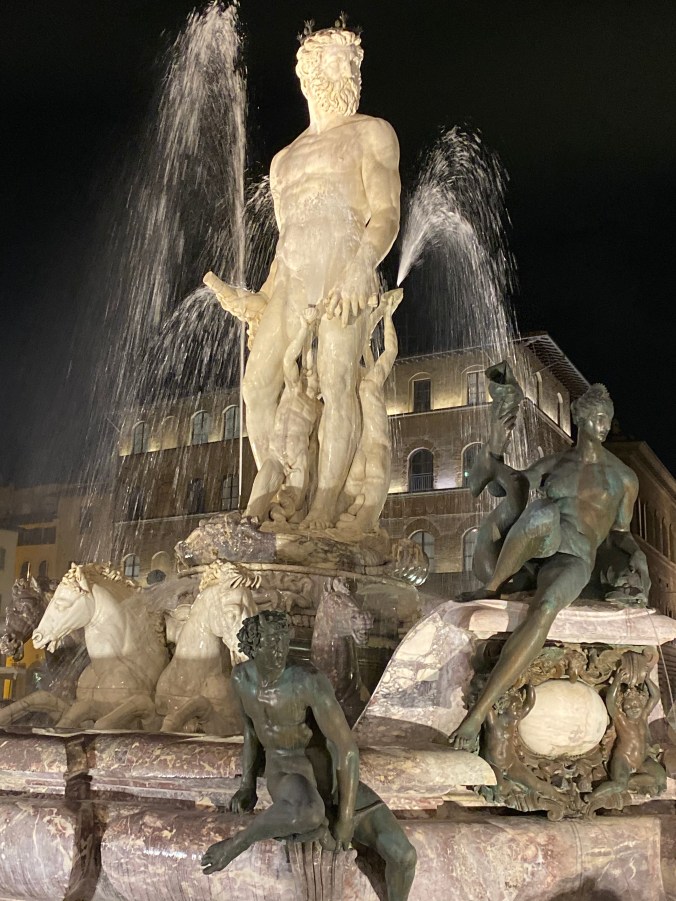
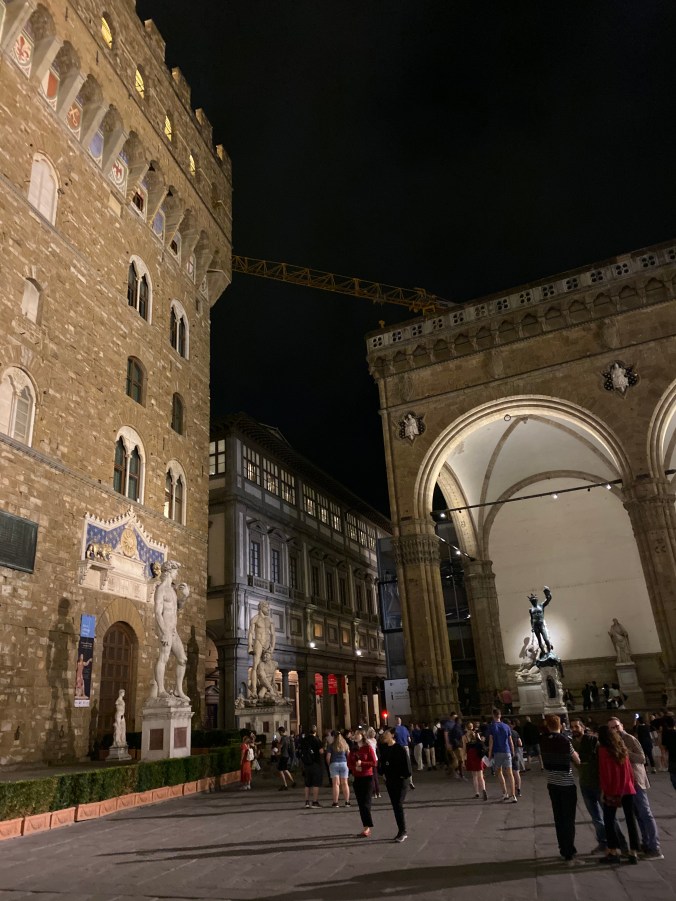
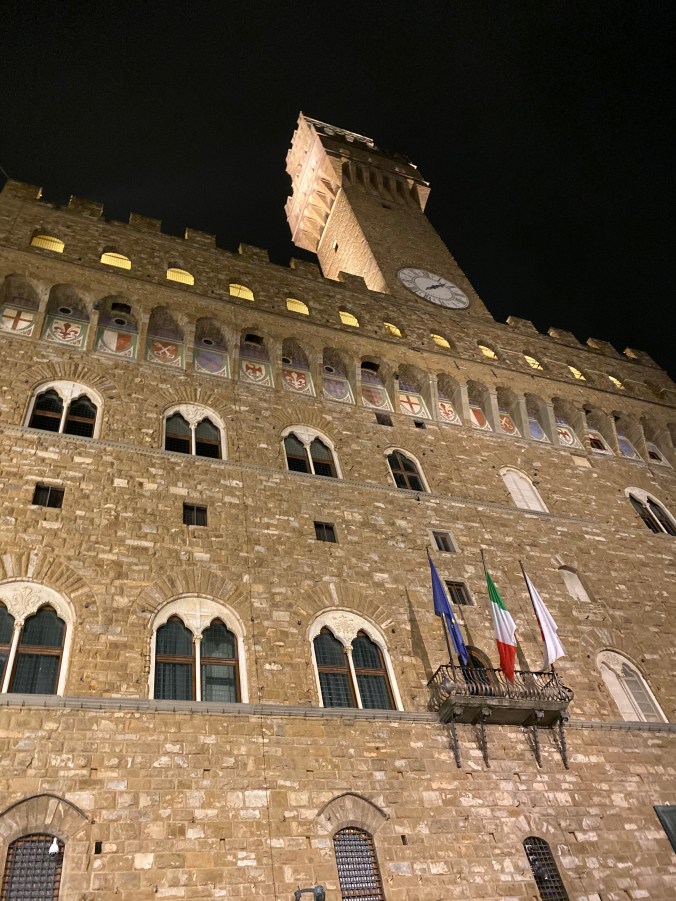
Walking through the courtyard of the Uffizi, on an average fall evening, after the hordes of international tourists have returned to their homes. I hear a collective sigh of relief and I feel bliss.

For absolutely no good reason: a movie clip and a music clip
Celebrating women art patrons: Tōfukumon’in, Empress Consort of Japan
Tōfukumon’in (1607–1678)
Empress Consort of Japan

Following more than a century of civil war in Japan, Empress Tōfukumon’in played a pivotal role in shaping culture and aesthetic tastes in the peaceful Edo period. Tōfukumon’in used her endowment from Tokugawa leadership to rebuild prominent Kyoto temples and collect art by her era’s leading artisans. She dabbled in creative endeavors herself, writing poetry and experimenting with calligraphy, and she was particularly interested in fashion and textiles.
Together with her husband, Gomizunoo, Tōfukumon’in fostered more direct relationships between the imperial family and artisans. The empress collected pottery by famed ceramicist Nonomura Ninsei, paintings by Tosa Mitsunobu, and works by other prominent artists and workshops of the day, like Tawaraya Sōtsatu and the Kano and Tosa schools. Her chambers featured artworks that mingled classical styles with contemporary scenes featuring warrior figures and commoners.

Among her most notable commissions are six painted screens by court painter Tosa Mitsuoki that together comprise Flowering Cherry and Autumn Maples with Poem Slips (1654–81). Against the golden silk backdrop, the artist rendered slips of medieval poetry dangling from finely wrought leaves. The work merges Tōfukumon’in’s interests in literature and painting, and also represents the royal couple’s quest for cultural influence in an era when the feudal shogunate increasingly wrestled control from the imperial family.
Prato, Florence’s industrial alter ego, and Albina Gori-Pacini, Prato’s poet
Here’s a reprint of a 1988 article in the New York Times about Prato:
By ANNE MARSHALL ZWACKFEB. 7, 1988
PRATO is Florence’s industrial alter ego, the milling ants to Florence’s blithe cricket, as in the fables of La Fontaine. But when it comes to play, it is Prato that does the chirping. Porsches from Prato are parked outside the expensive restaurants of Florence, and it is the matrons of Prato who patronize the fashionable boutiques and jewelers of Florence. Indeed, not without a pinch of envy, the more parsimonious Florentines consider the Pratesi ostentatious.
In the 13th century Prato – 12 miles northwest of Florence – was an important center for the spinning, weaving, carding and dyeing of wool. In the 19th century the cenciaioli (rag men) of Prato started recycling wool on a vast scale. Today the city is said to be the biggest wool-producing center in the world, with 2,000 firms and 60,000 people involved mostly in the recycling of wool, but in every other facet of the wool trade as well. (Recycled wool becomes the short-fiber, carded wool that, for instance, pea jackets are made of, as opposed to long-fiber or combed wool.)
The first merchant of Prato was Francesco di Marco Datini of Iris Origo’s biography, who waited for his ships to come in during the 14th century, and who at a time when accountancy was in its infancy invented the letter of credit. Today Pratese merchants sponsor the arts – a Henry Moore statue dominates one of the main squares and the Pecci Museum of Modern Art will soon be completed.
It is hardly surprising then that the narrow streets of old Prato are full of stores selling cloth and knitting wool. The city has always been known for its scampolai, stores that collect end pieces of material, the leftover stock or spoiled lengths from which they cut away flawed parts, and then sell as samples.
The scampolai are mostly in a network of streets to one side of the cathedral square, and they sell not only local wool but also silk, cotton and velvet. Fabric by the yard (in 36- and 60-inch widths) and sample pieces are available at excellent prices.
In Via Magnolfi every other store is selling samples and cloth by the yard. At No. 25, Bruno Franchi (telephone 38400) has been a scampolaio since 1958 and threatens to close his shop because of his age, but this evidently depends on his wife, Rita, whom he calls la padrona, the boss. The stock is a constantly changing spectrum of wools, silks, striped cotton for shirts, taffeta, toweling and so on, at prices that start at $2.50 a yard for cotton and anything from $4 to $40 for the silks, One item carried all the time is tartan blanketing, very soft and warm-looking wool that sells at $5 for a single-bed size and $11.50 a double.
CENTRO Scampoli (44-46 Via Magnolfi) is a large store selling every possible kind of material as a sample or by the yard. The real bargains are, of course, the samples (24 to 80 inches in length usually) but the material sold by the yard is also remarkably inexpensive. Cotton can be found for $7.75 a yard, linen mixed with rayon at around $14 in lilac, turquoise, lemon yellow and Nile green. There is quilted material for robes or bedspreads at $11.50 to $15, while the panno for which Prato is famous – the wool cloth in colors such as bright blue, geranium red, turtledove gray and muted emerald – retails at $12. If you dig around among the bolts of cloth, you can find silks by Valentino or Galitzine for $27 to $31 a yard, and pure silk Gucci unhemmed scarves – with a defect such as a smudge of color or a blurred outline – that cost less than $20.
At 83 Via Magnolfi there is a store (telephone 20667) that is worth a visit more for the owners than for the shelves of samples. Albina Gori-Pacini is a poet, and one wall is lined with cups and medals and literary awards, while her eight volumes of poetry are kept in an antique chest in an adjoining room. Albina Gori-Pacini and her husband, Dino, have been scampolai since 1933 in a period piece of a store that was once a hotel dining room with fat stone columns and a vaulted ceiling frescoed with vine leaves.
Around the corner to the right, in Via San Giorgio, Franco and Anna Polichetti have a rambling store (telephone 26311) redolent of mothballs with several rooms where you can browse undisturbed. Particularly attractive were the printed velvets retailing from $11.50 to $34.50 and the crushed velvets at $29.
Another street parallel to Via Magnolfi is Via del Serraglio, where, at No. 83, there is a tiny store – with materials spilling out onto the street – called Ditta Marmino. They have a good selection of furnishing materials such as 60-inch-wide Gobelin-style tapestry designs selling at $35 a yard in addition to rasatello, a cotton satin featuring large flowers, English country house-style, for $15 a yard; they also had the same kind of floral designs in cotton for $5 or in a linen mixture for $11.50 a yard. Bold deck-chair striped heavy cotton in blue and white or red and sand sells for $5 a yard.
The largest store with the biggest choice is Renzo Rosati at Nos. 56 and 60 in Via del Serraglio (telephone 24267). Six family members work in the street store and in the warehouse next door; the courtyard of the warehouse is dominated by a large olea fragrans tree that in autumn fills the drab little street with a haunting scent. Mr. Rosati has been in the fabric business since he was 15, and his daughter, Laura, who has been to the United States, speaks English. He sells any length of pure silk in plain colors, prints or Jacquards for $17 a yard. Soft wools in luminous white, deep purple and fuchsia cost $24. Men’s suiting materials signed Ermenegildo Zegna cost $50, while similar cloth in what Mr. Rosati calls ”super merino’‘ is $27. Harris tweed and Scottish-made kilt materials in clan tartans cost $18 a yard, while various shades of soft German-made velvet are priced at $19. This is the store where more enterprising members of the Florentine aristocracy might come to shop, whether to cover a sofa or to make party frocks for their junior jeunesse doree.
It should be stressed that in none of these stores are the materials inexpensive because they are shoddy; the choice and the quality are excellent.
In the Piazza San Antonio, at No. 12, tucked away behind the churches of San Francesco and Santa Maria delle Carceri is a store called L’Angolino del Tessuto di Sorello Scarlini (telephone 21149) owned by sisters named Scarlini. While I was there a group of Pratese ladies-who-lunch were buying materials for evening dresses: pure silks at $15 to $19 a yard, satin at $24 and Lurex at $28 while silk goffering started at $11, crepe de chine silk mixtures at $19; higher priced were chiffons covered in sequins at $43 a yard and silk velvet that looked like astrakhan fur at $32. PRATO: A TOWN FOR FABRICS The Scampolai
The stores mentioned (called scampolai) are open 9 A.M. to 1 P.M. and 3:30 to 7:30 P.M. (They are closed Monday morning and Saturday afternoon.) No credit cards are accepted. Lodgings
At the Villa Santa Cristina (Via Poggio Secco 58, 50047 Prato; telephone 595951) – which also has an excellent restaurant – a double room costs $73 and a single $49. The hotel is closed during August. In the dining room a meal for two with wine costs about $80; it is closed Sunday evening and all day Monday. Dining Out
One of Italy’s better fish restaurants is Il Pirana (Via Valentini 110; telephone 25746), in a less lovely part of the city a short taxi ride from the center. The spaghetti with lobster is a first and second course in one. The restaurant is closed Saturday, Sunday and during August. A meal for two with wine costs about $95. A. M. Z.
A note about Albina Gori Pacini, La Poetessa di Prato. Time marches on and Signora Pacini has died since the Times published the article above.

 get back, lauretta!
You must be logged in to post a comment.