Tools for any well-appointed Italian kitchen!
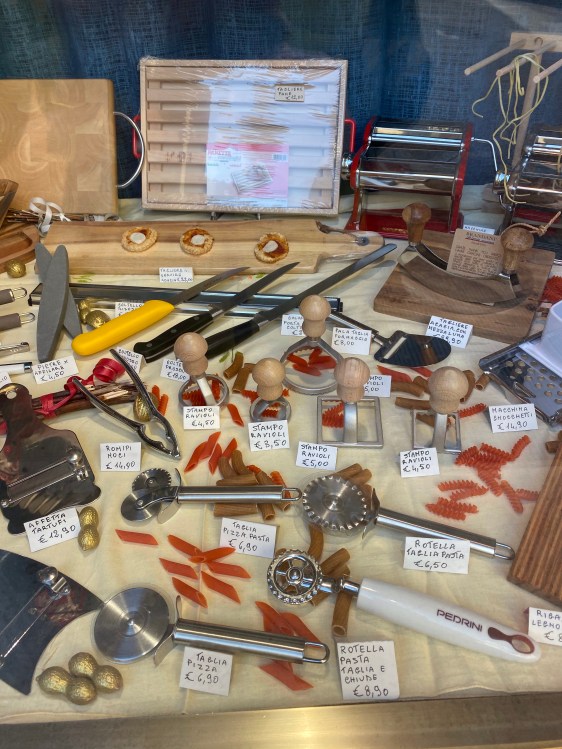
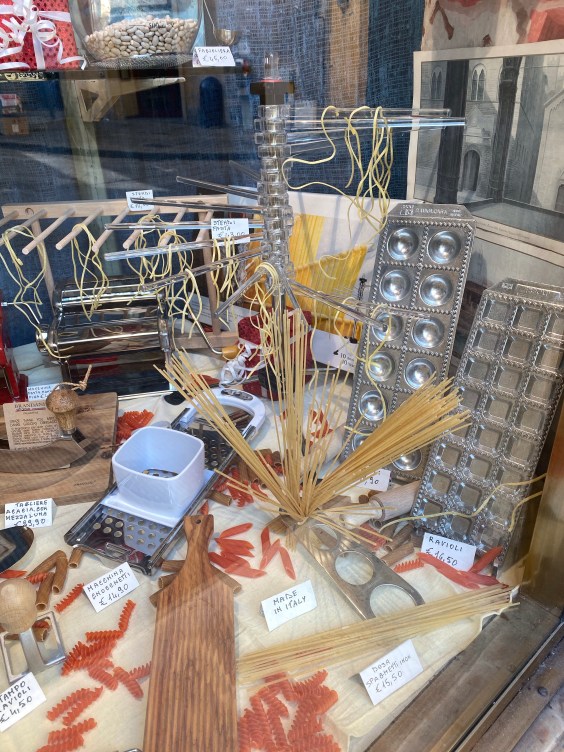
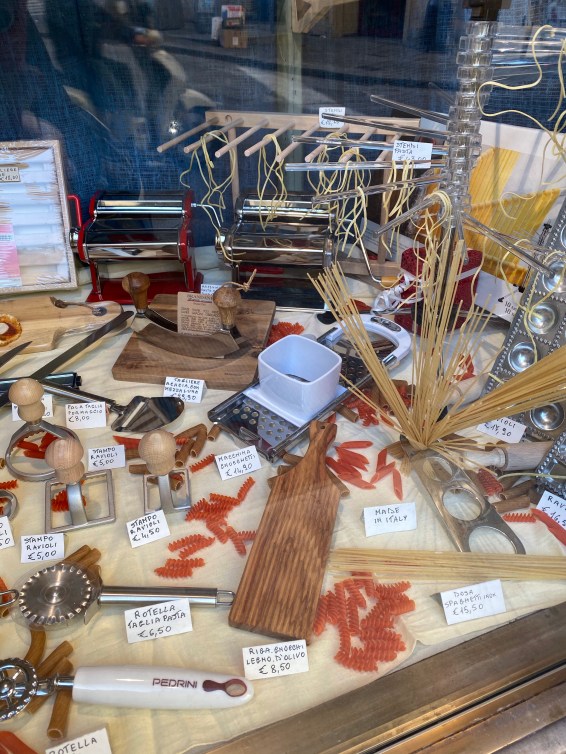
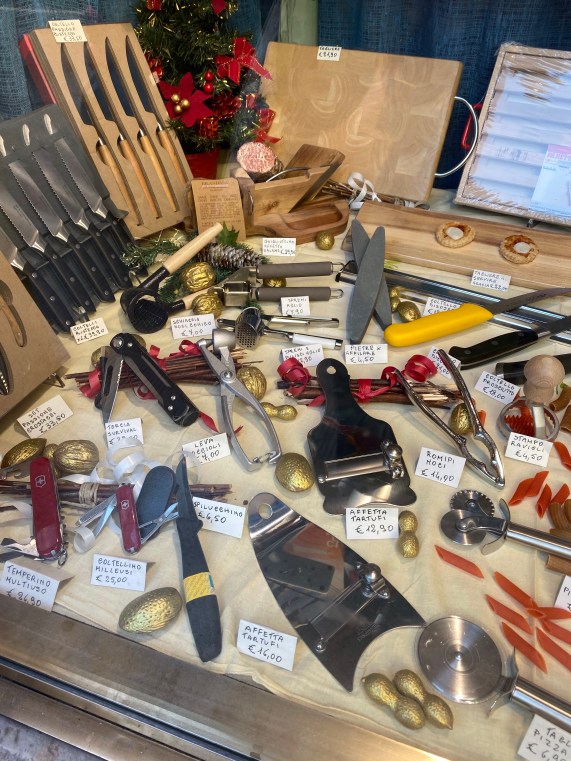
Tools for any well-appointed Italian kitchen!
It doesn’t take long in Italy to fall behind on posting! I’ve seen so many incredible things in the past couple of months and I am just beginning to catch up!
Museo del Bigallo: For years I have walked by this intriguing portico near the Duomo in Florence and thought to myself, “I’ve got to visit that place someday soon.” So, little did I know just how hard it would be to get inside it! More on that at the end of this post.
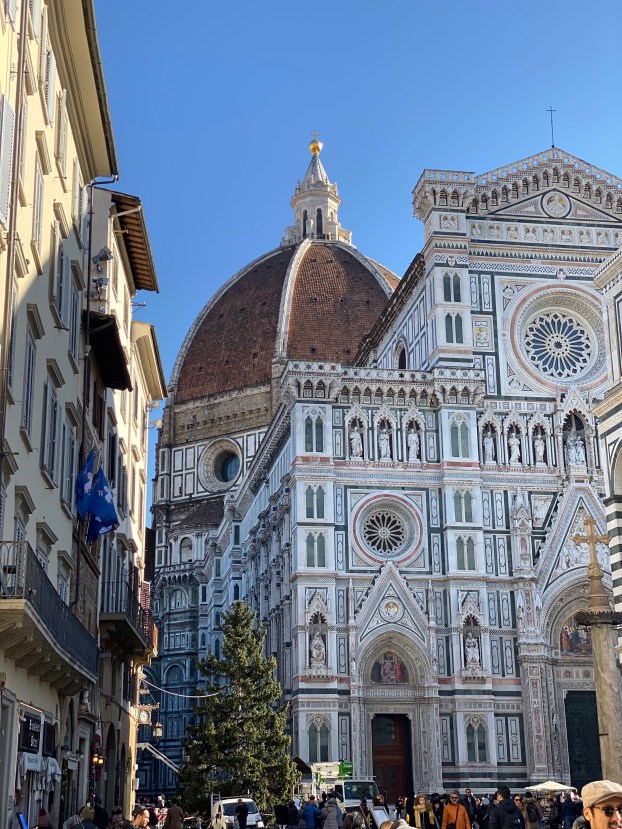
Do you see that lovely small loggia, on the left side of the picture below and facing the baptistry? That’s the Bigallo.
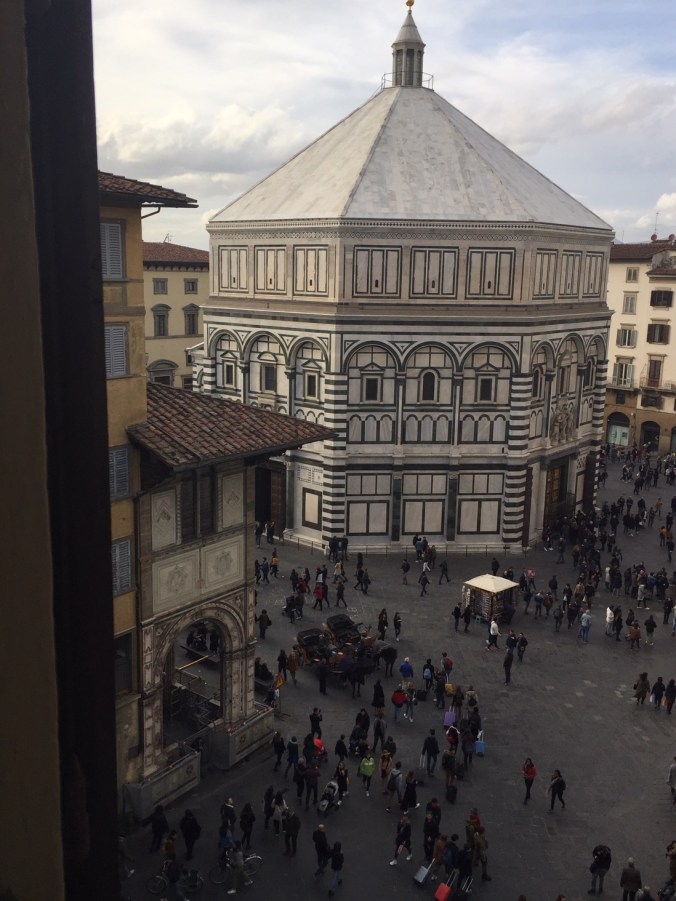
It is pretty much overlooked by the superstars of the piazza del Duomo: the Duomo itself with Giotto’s campanile and the dome of the Duomo. But you can see it here better, with its terra-cotta tile roof.
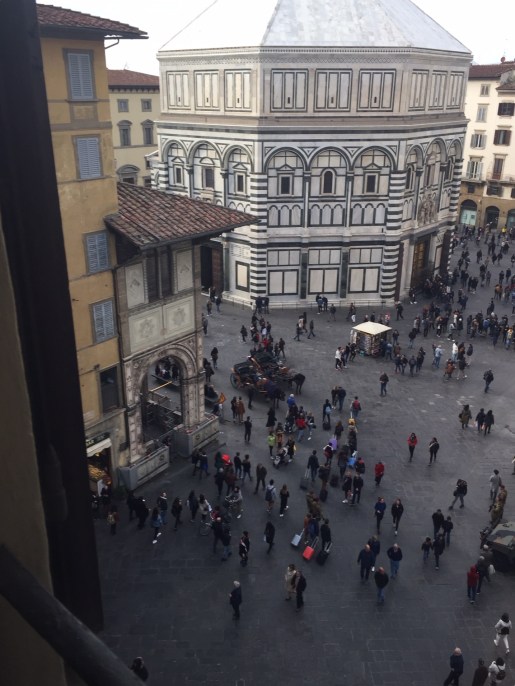
Here’s the best possible picture of the structure. Lovely, isn’t it?
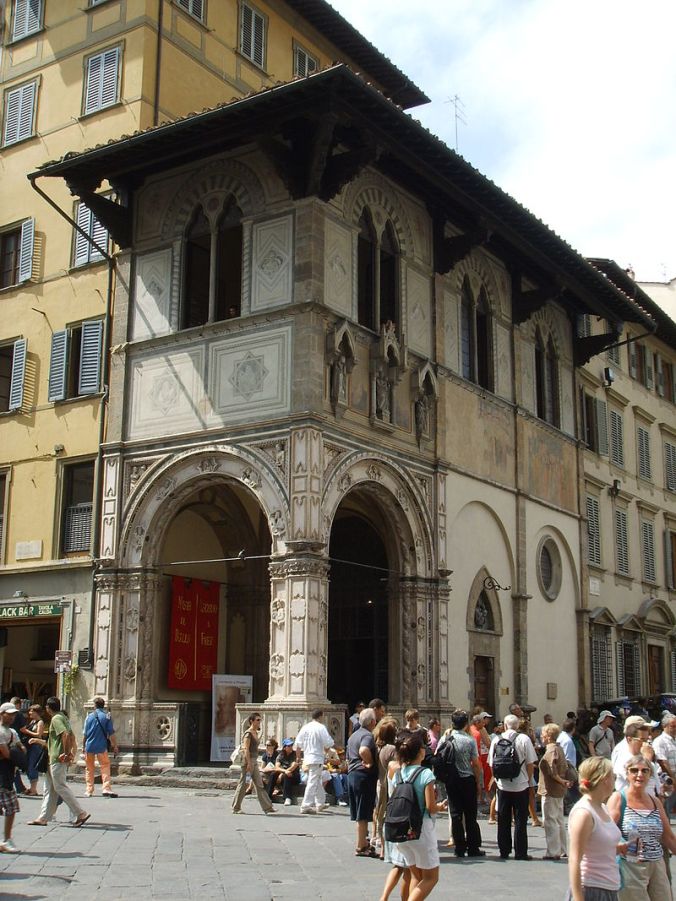
This building is one of a dozen public loggias in the city, and is linked with two fraternities or companies dealing with local charity.
This elegant loggia, or porch, was where abandoned or lost children were housed until they could be identified or adopted. It was designed by Alberto Arnoldi, a sculptor and architect who was involved in work on the new cathedral and bell tower nearby in the mid 1300s.
In Medieval Florence, the Compagnia della Misericordia, or “Company of Mercy,” was in charge of transporting sick people, the burial of the indigent dead, as well as the care of orphans. The open loggia was used to shelter lost children and unwanted infants who were abandoned to the care of this highly respected brotherhood.
The Compagnia di Santa Maria del Bigallo or simply del Bigallo, was founded in 1244 by Saint Peter of Verona, Saint Peter Martyr, and was formerly housed near the church of Orsanmichele. This association also focused on housing for the indigent, and cared as well for pilgrims and travelers at their Ospedale di Santa Maria alle Fonti, nicknamed del Bigallo, at Fonteviva.
Financial irregularities forced authorities to merge and reorganize the 2 groups in 1425, under Cosimo de’Medici, who was treasurer of the Bigallo. As time passed, the function of the Bigallo began to dominate that of the Misericordia.
However, it was the Compagnia della Misericordia which had commissioned the structure we see, probably from the architect-sculptor Alberto Arnoldi.
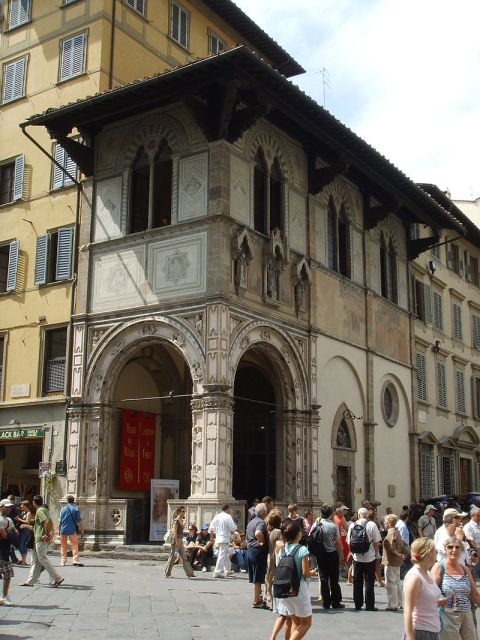
It was built in 1352–58. The second story was rebuilt after a fire in 1442. The two arched bays are richly decorated with bas-reliefs of prophets, angels, the Virtues, and Christ giving the benediction and an Ecce Homo.
In 1697, the arches were walled-up in order to provide more space for the oratory that is attached to the loggia; thankfully, the masonry was removed in 1889, revealing the long-hidden decoration.
Mullioned windows pierce the walls of the floor above, which was originally richly frescoed and has three tabernacles, the work of Filippo di Cristofano, 1412, frame the Madonna and Child, Saint Lucy and Saint Peter Martyr, patron of the brotherhood. The statues were installed here when the two confraternities joined in 1425.
The sculptures above the arch on the loggia’s facade (The Madonna and Child between St. Peter Martyr and St. Lucy) are 14th century works from the Bigallo’s previous headquarters. To the right of this sculpture group, a badly damaged 15th century fresco shows St. Peter Martyr preaching to the crowds and performing the “miracle of the enraged horse.”
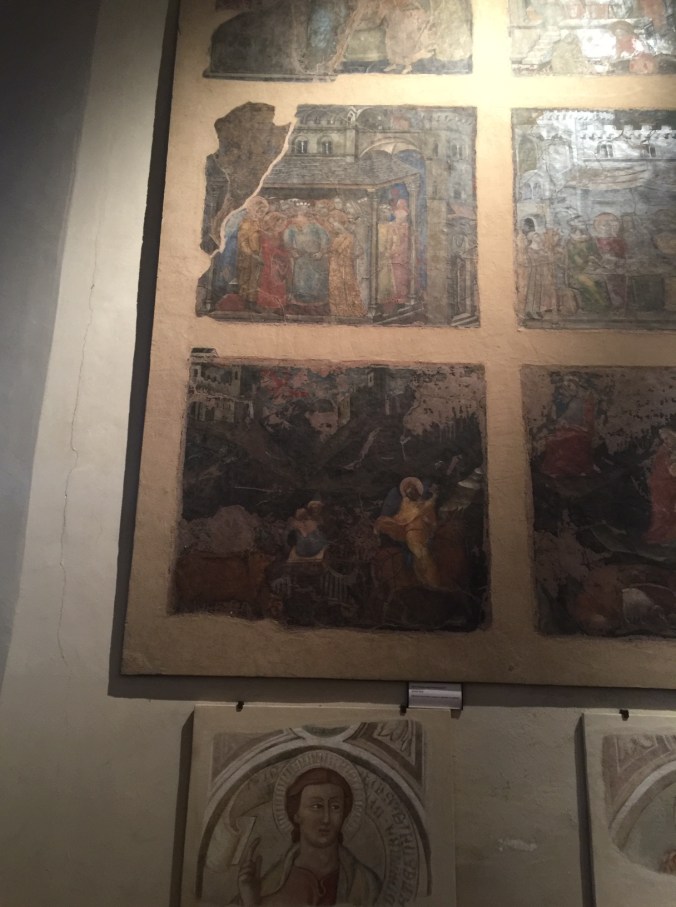
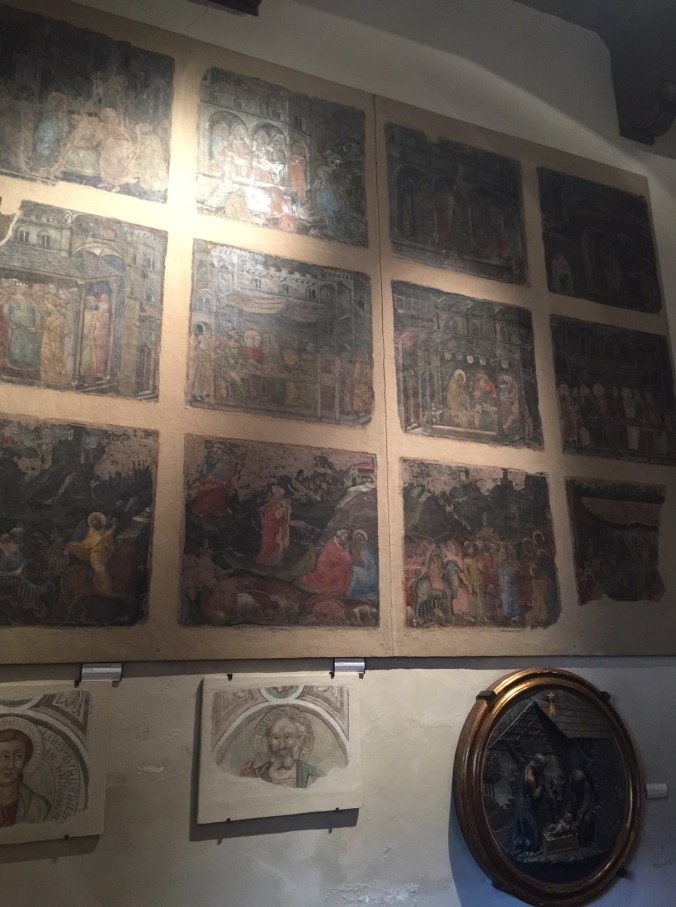
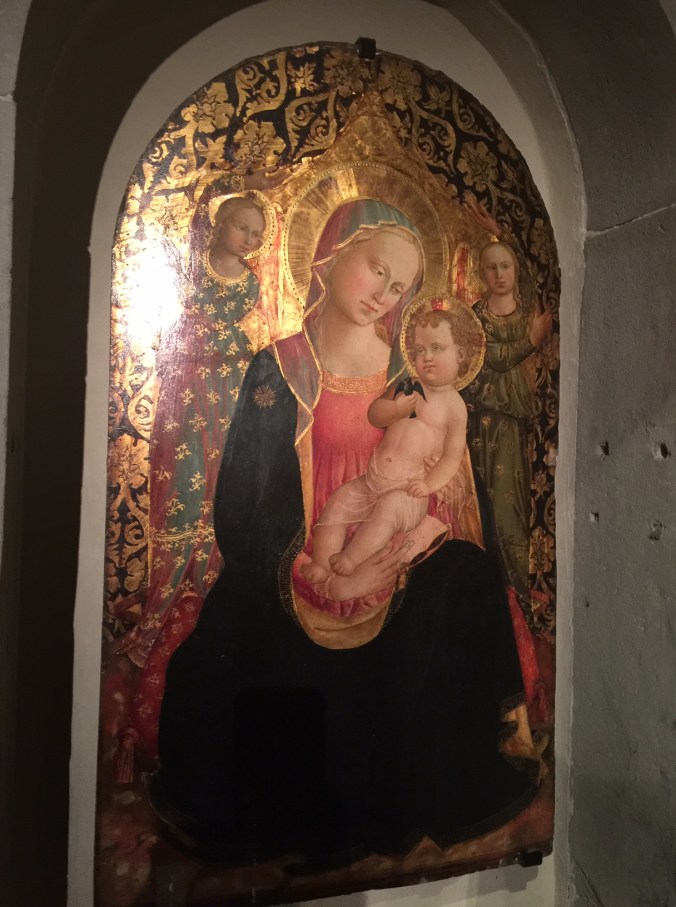
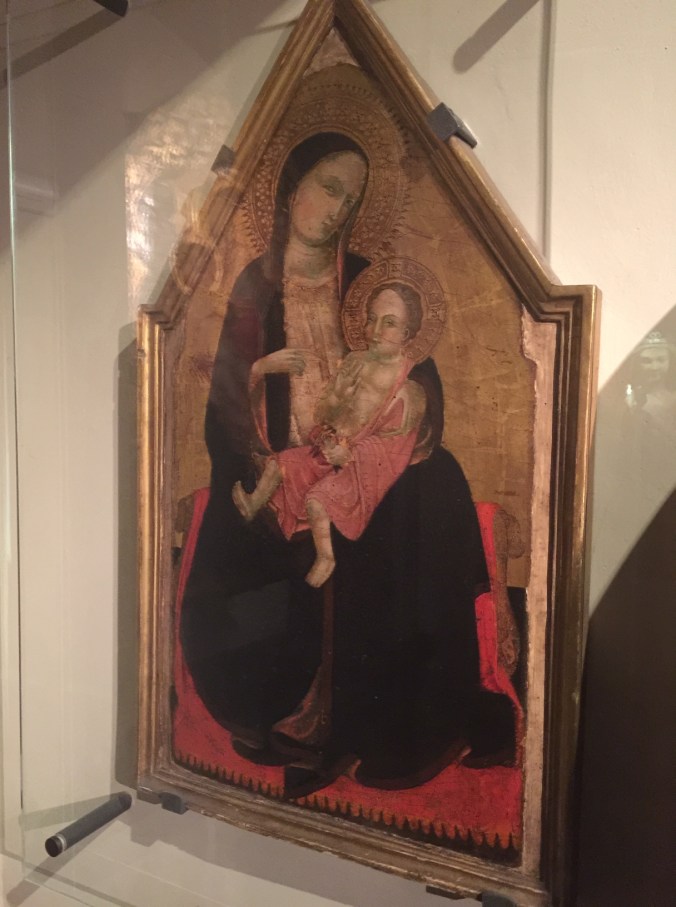
The ground floor of the interior now contains a museum in 3 rooms of objects related to the Compagnia del Bigallo. The upper floor had been used as a home for the foundlings. The works of art in the museum are chiefly connected with the tasks performed by the 2 confraternities and most of them were owned by them at one time. The most representative works in each room are described herein.
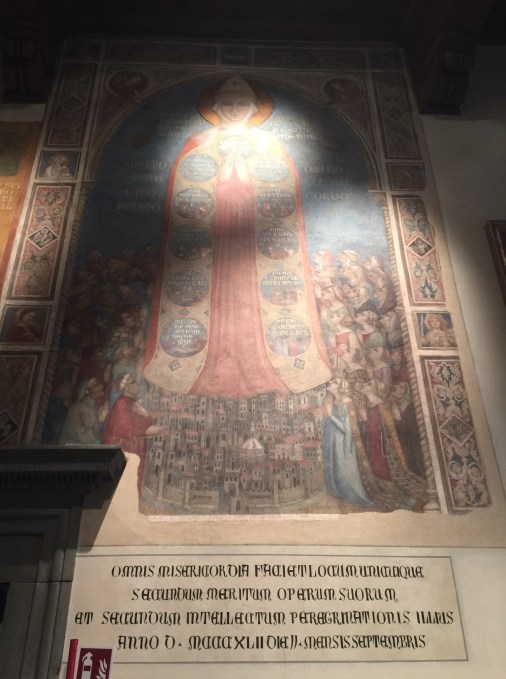
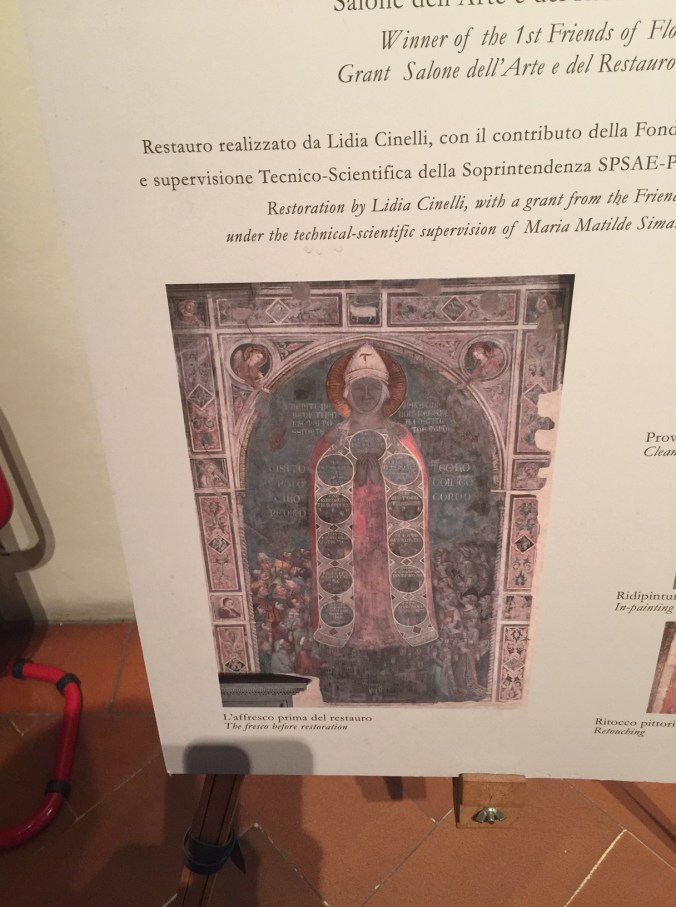
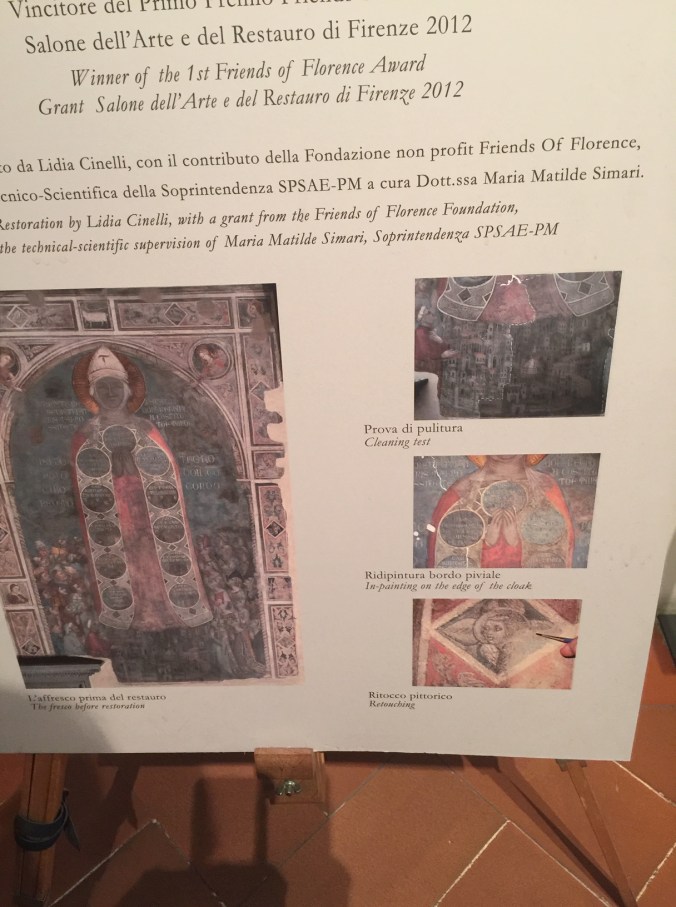
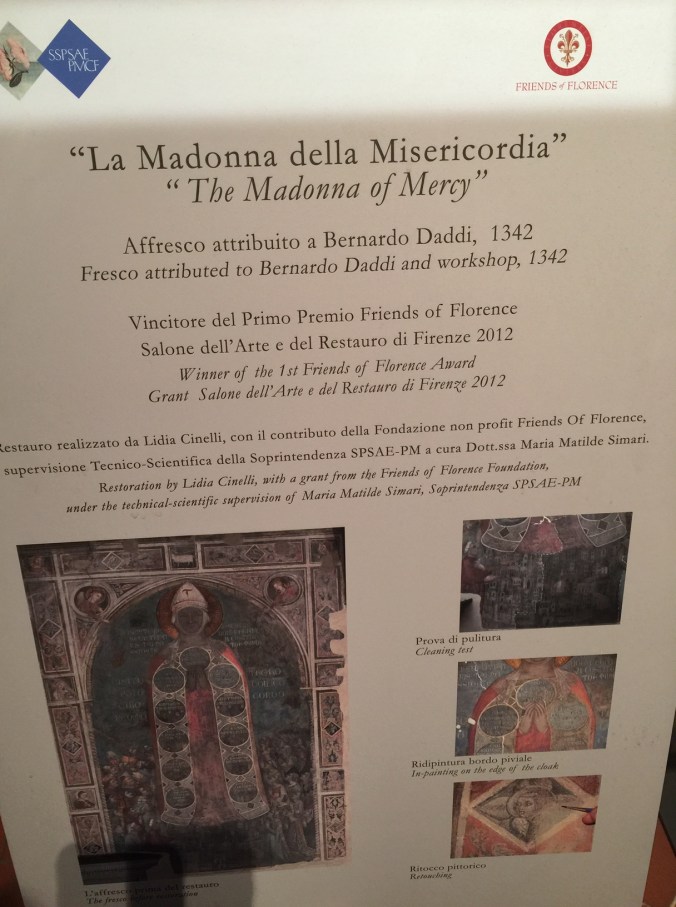
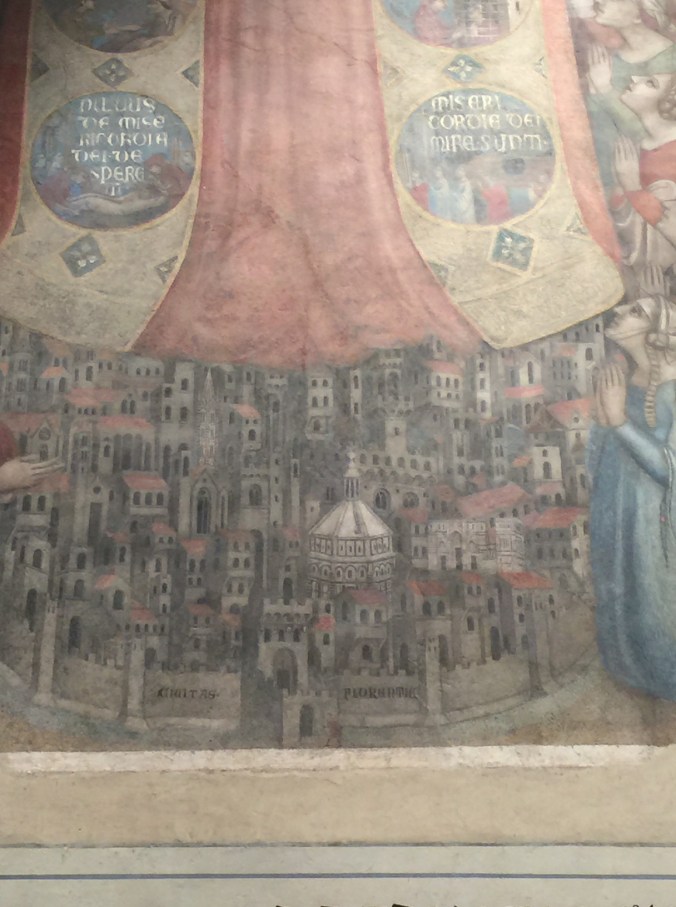
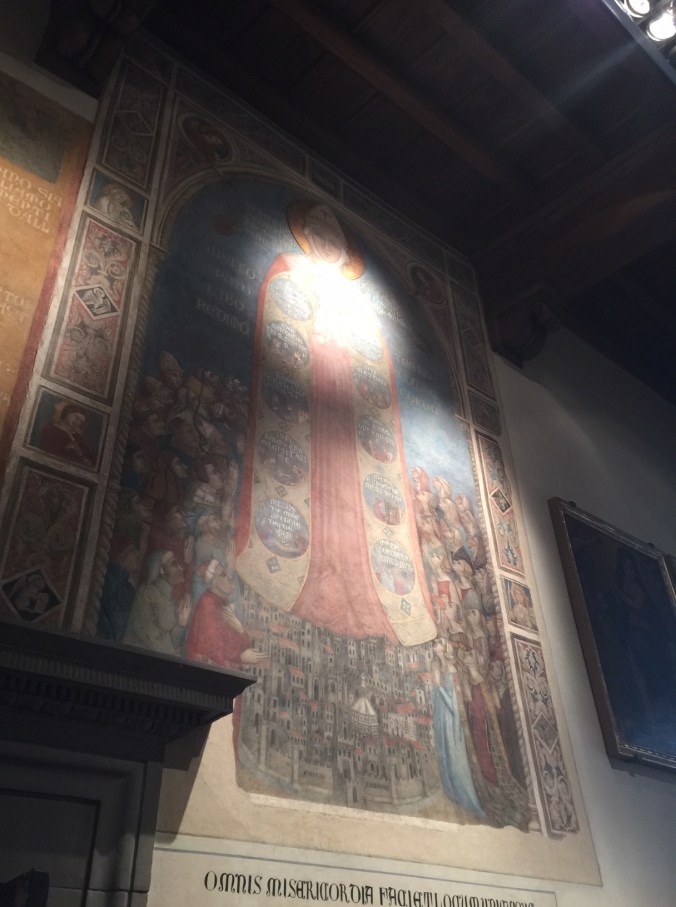
The most striking work, to me, is the Madonna of the Misericordia (Our Lady of Mercy), School of Bernanrdo Daddi (1342). This is the best-known work in the museum, famous primarily for its celebrated depiction of Florence in the 14th century. The fresco, which originally graced an open loggia on Piazza del Duomo, is dominated by a hieratic figure thought to be an allegorical figure of “Mercy.” The rich decoration of the orphrey is a manifesto of the works of mercy, both in the tondos and in free-standing words declined in the first person: visit, photo, ciao, redimo, tego, college, condo (I visit, I quench thirst, I feed, I redeem, I cover, I take in, I create), while 2 groups of faithful kneel on either side of the figure who looms over the city of Florence, protecting it.
There is a detail of outstanding documentary interest, as the oldest known view of Florence. Enclosed in Arnolfo di Cambio’s city walls, amid the tightly packed roofs, belfries and towers, we can pick out the baptistry, the (as yet incomplete) facade of the cathedral, the base of Giotto’s bell tower, the Palazzo dei Priori (now known as Palazzo Vecchio), the Palazzo del Capitano del Popolo (now called the Bargello) and the Badia Fiorentina. The long inscription on the left of the fresco is “a summary in the vulgar tongue [i.e. in Italian as opposed to Latin] of the main principles of life and doctrine to be honored.”
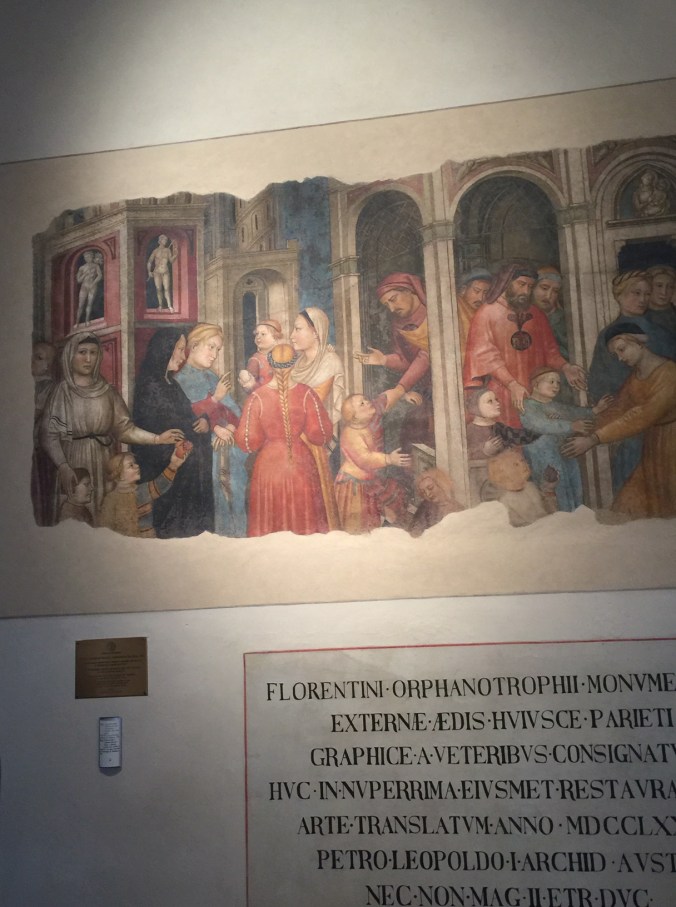
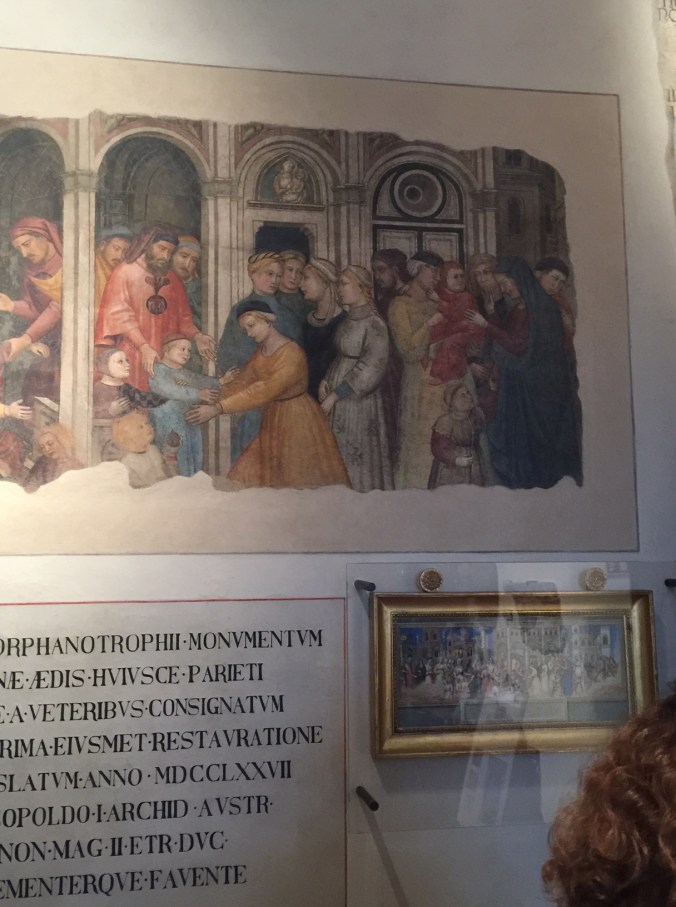
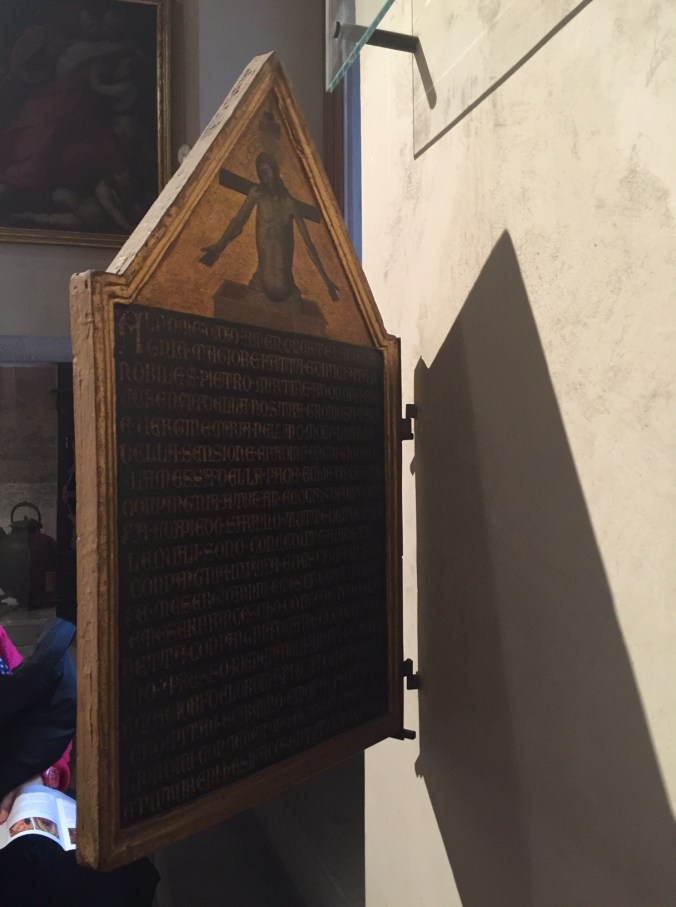
The next picture is the back of a panel painting:
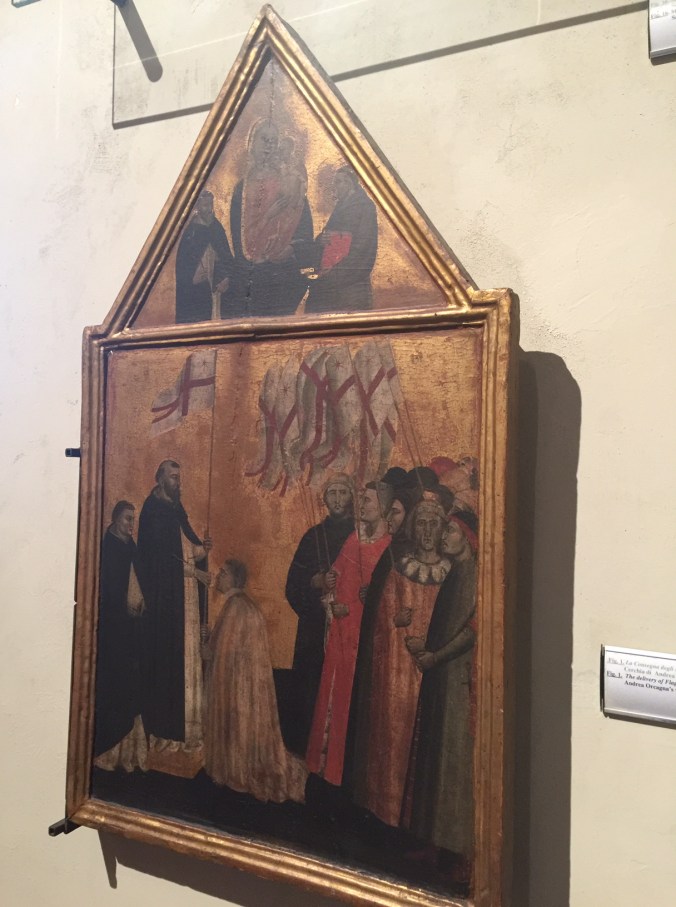
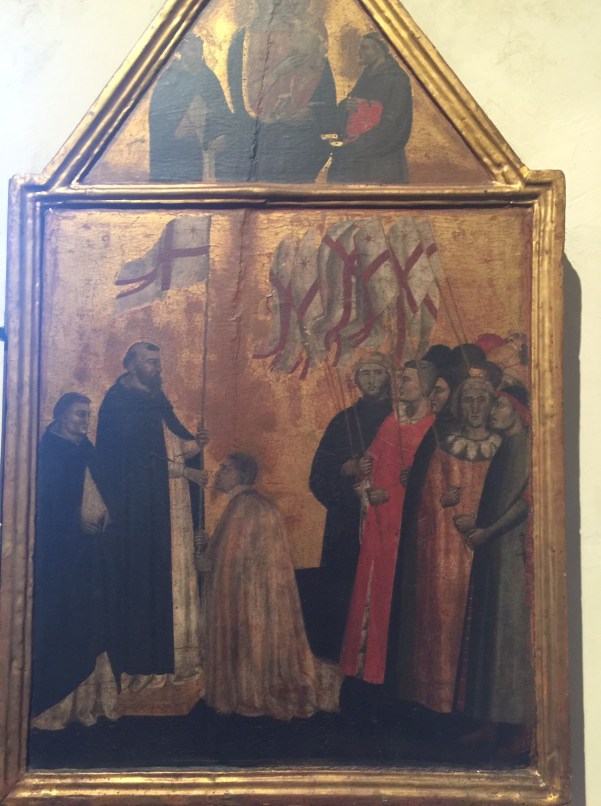
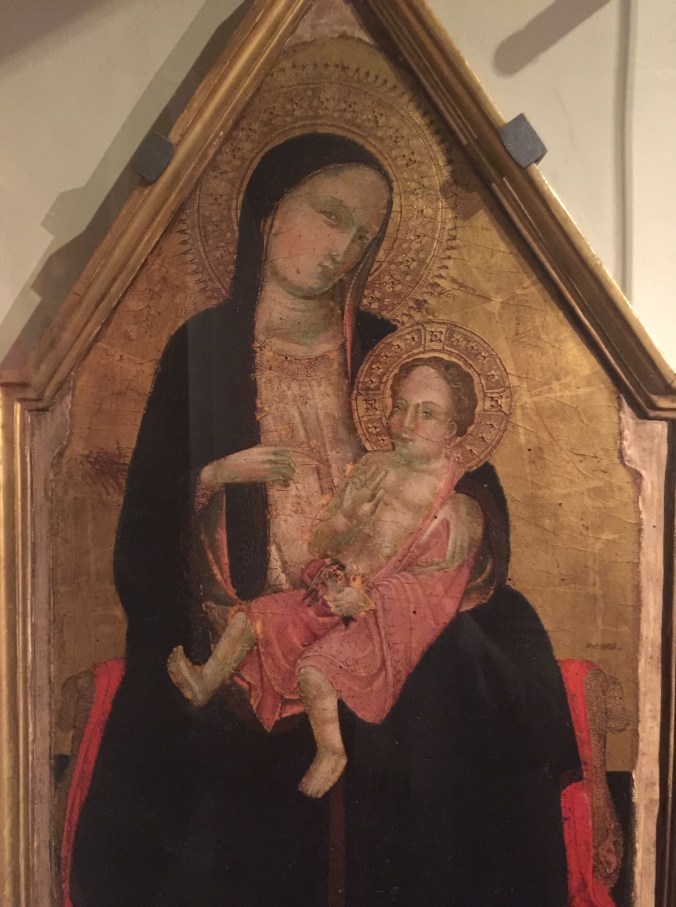
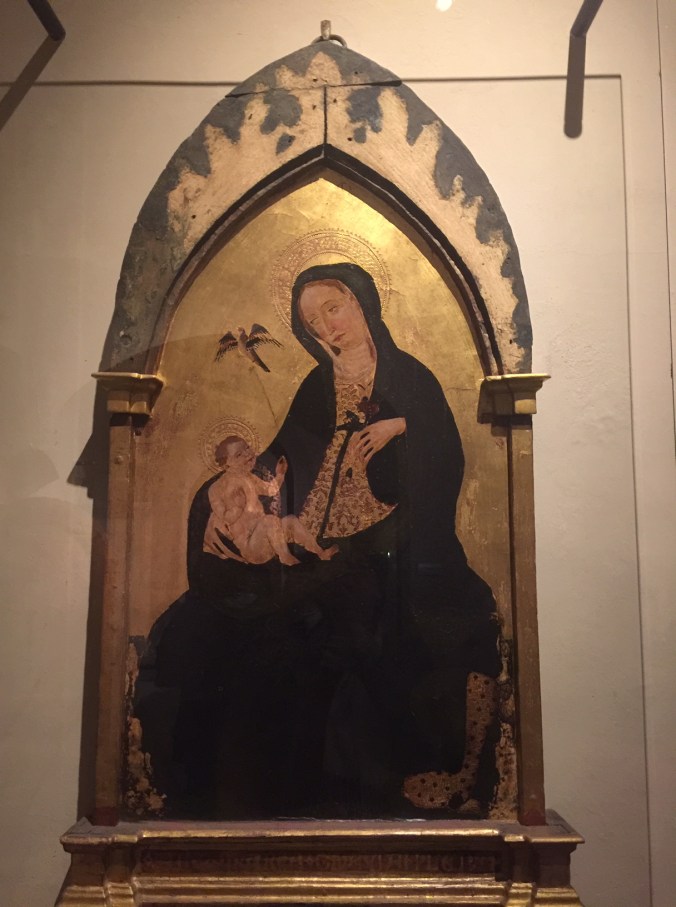
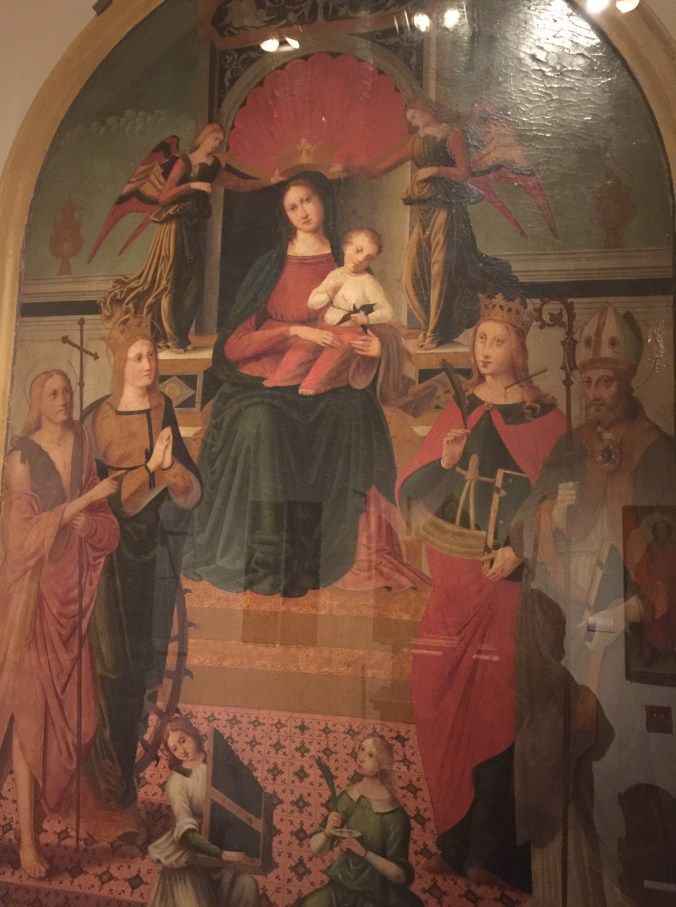
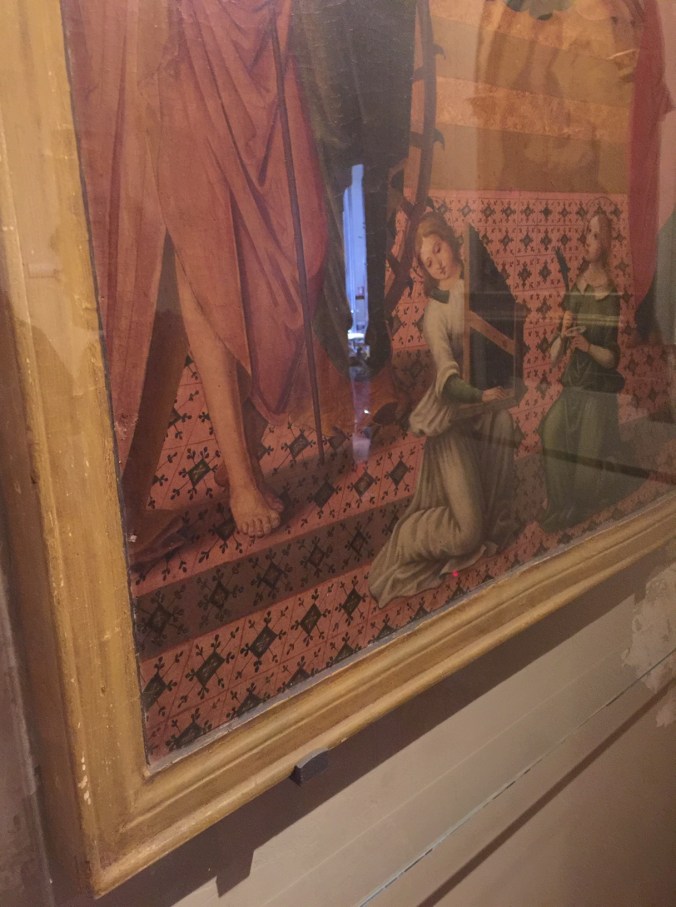
Below is the front of the same panel:
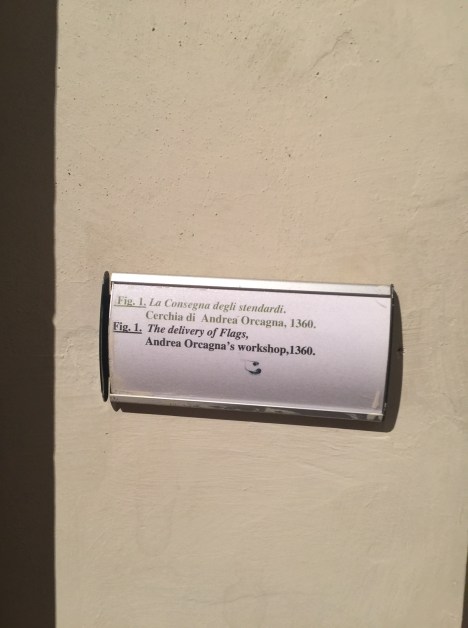
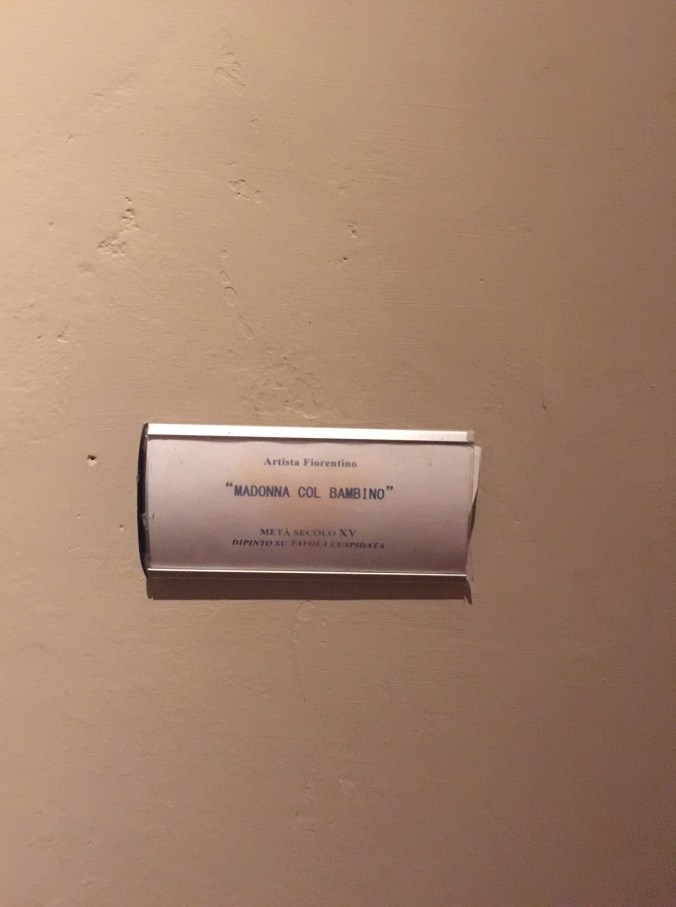
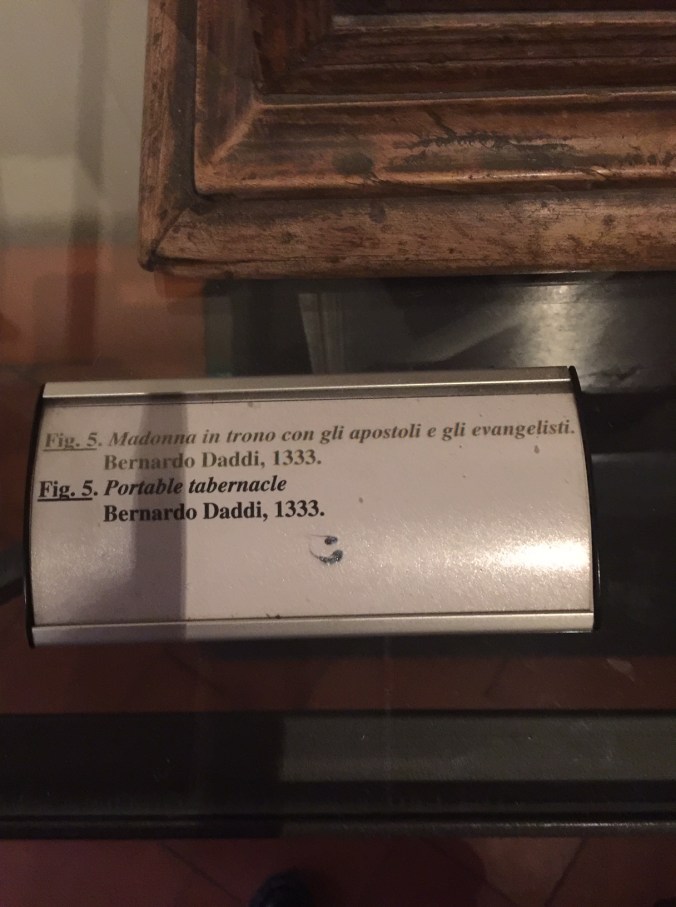
Below is the label for the panel painting above:

 ‘
‘
I took a quick trip to Milan this week to catch up on some museum-going that I have been meaning to do for quite a while. It was wonderful.
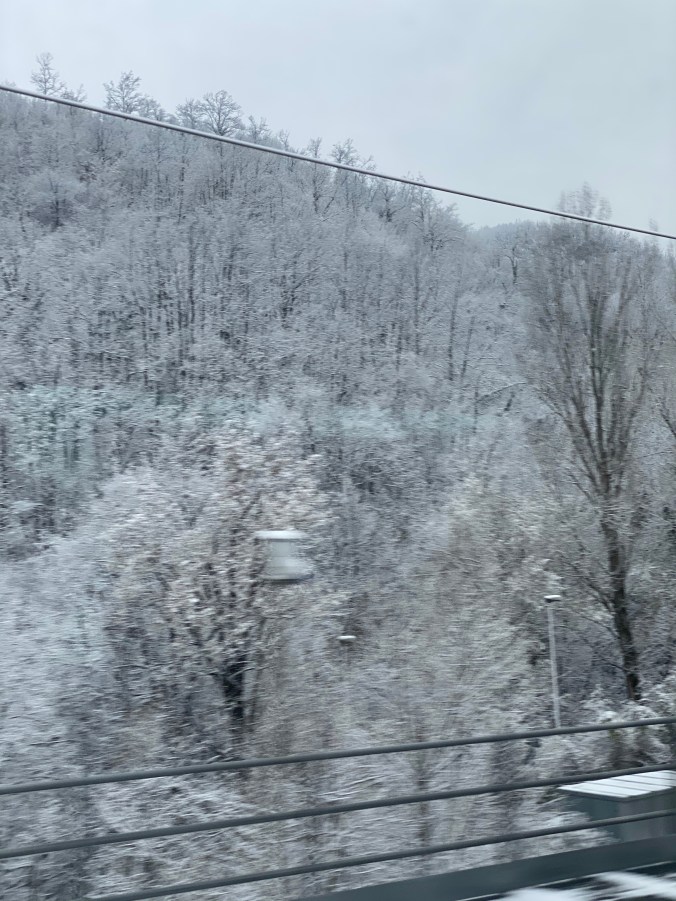
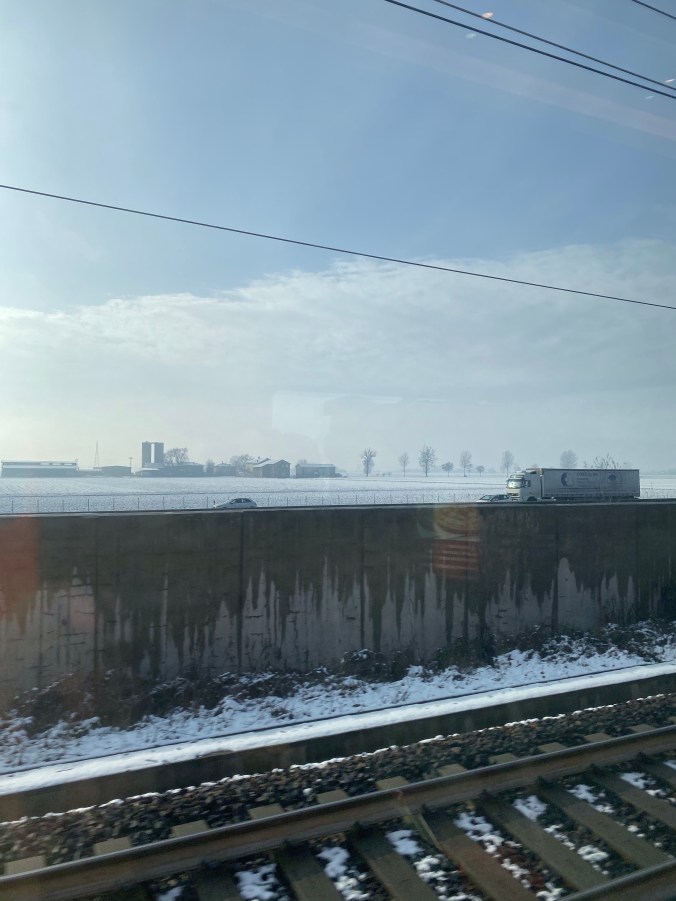
There was no snow in Florence or Milan when I left home, but on the train ride home today, I saw that winter has made its arrival felt somewhere south of Milan. It made me happy to see it.
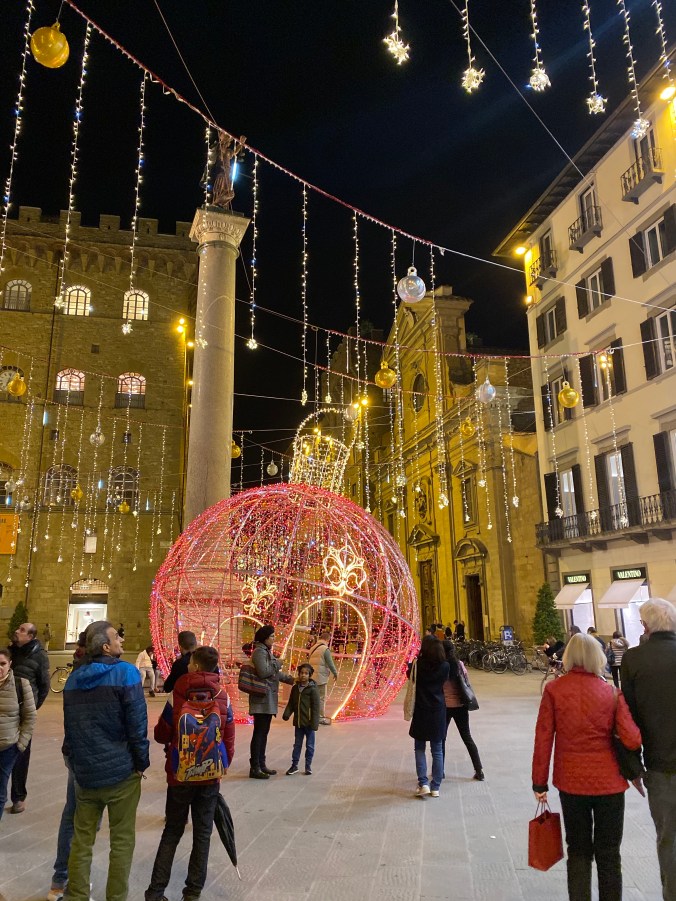
It’s here! The city is geared up for Christmas.
The tree was placed, awaiting the lights. It was lit up on the evening of 8 December.
And, later:
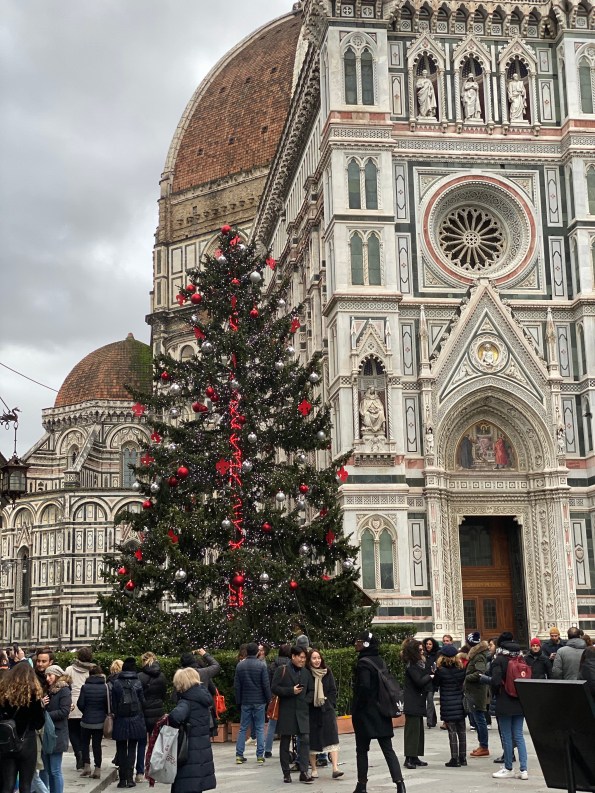
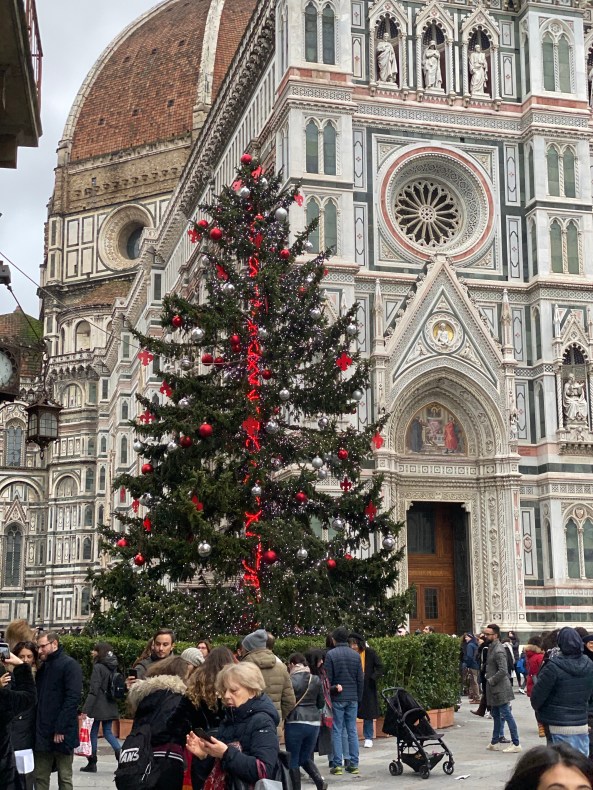
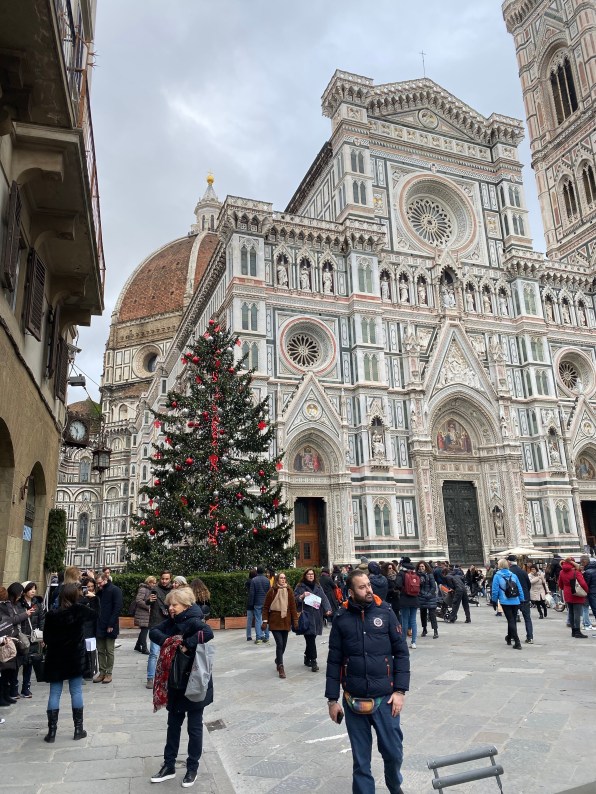
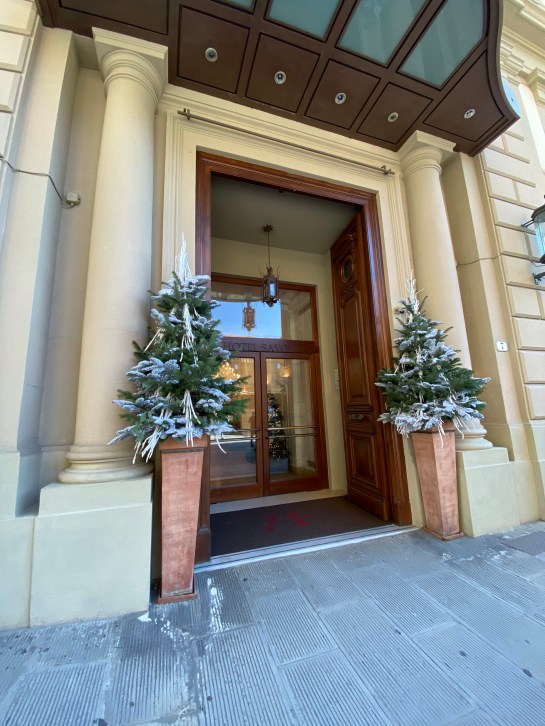
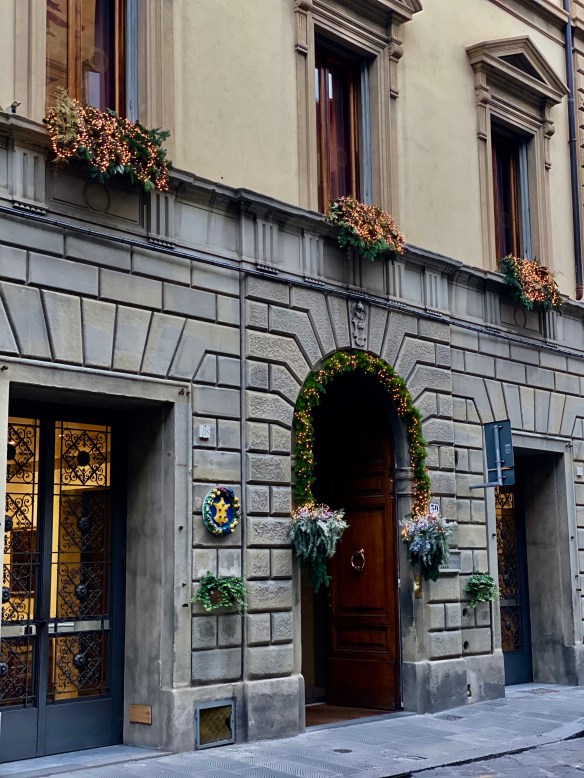
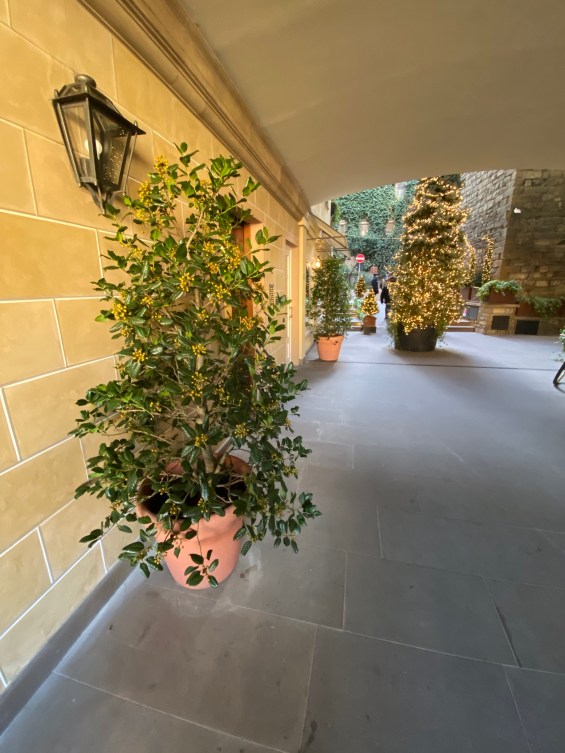
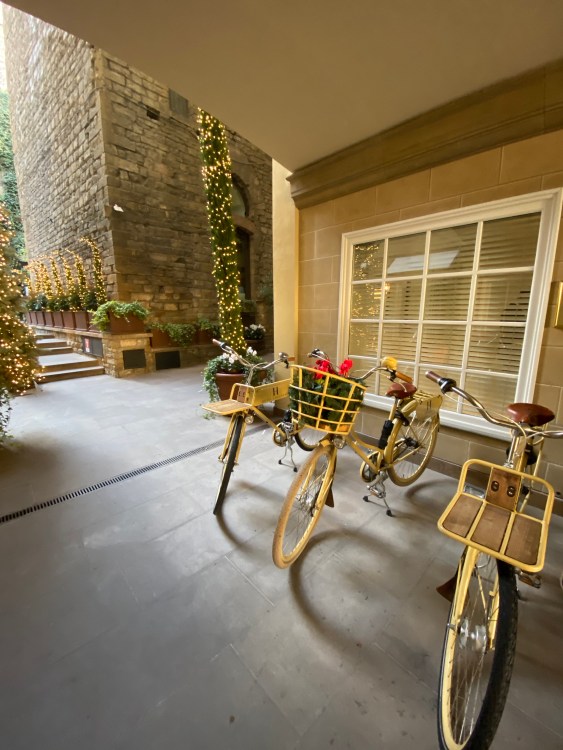
The fancy stores and hotels have lovely decorations:
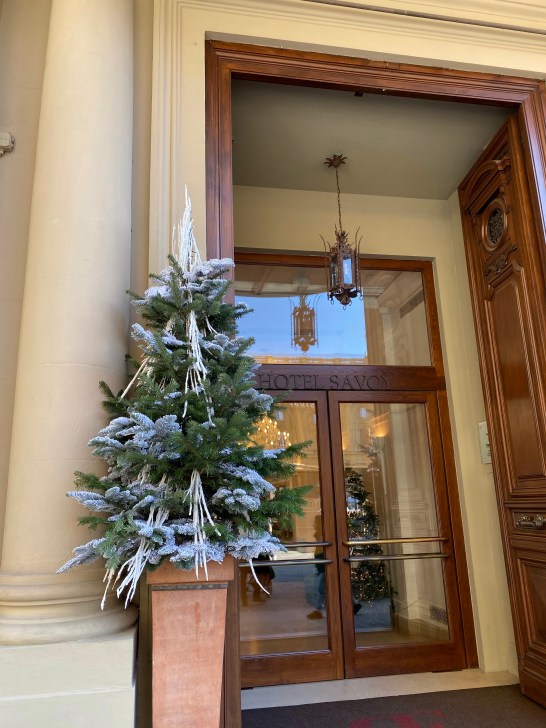

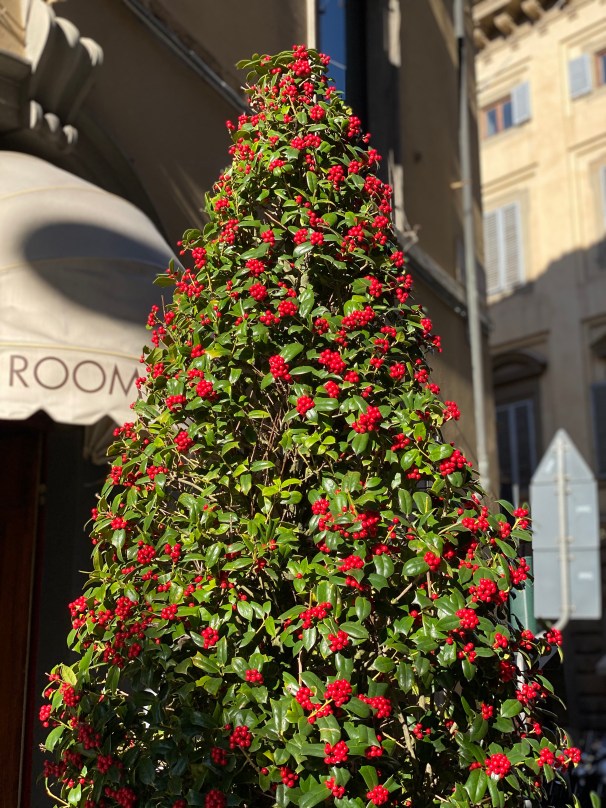
I feel like the creche scene at San Lorenzo is always a bit sad.
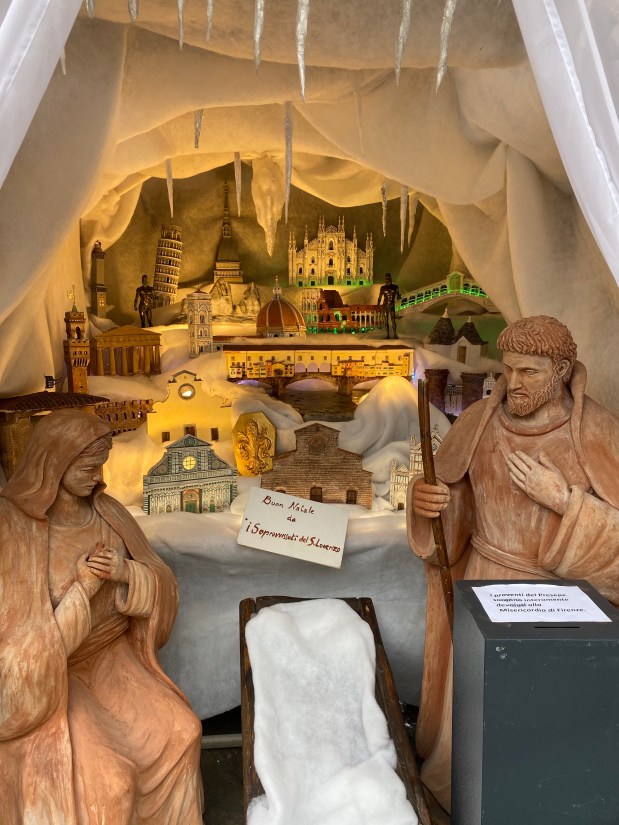
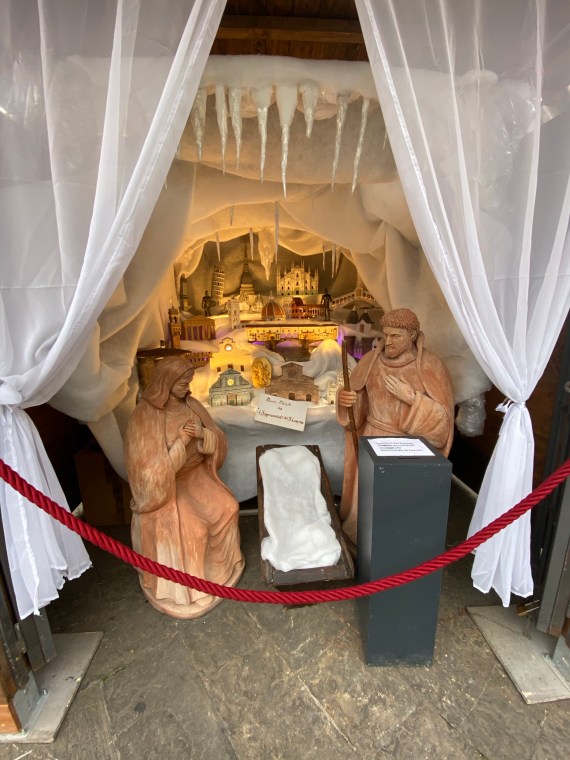
I love the way the statue of justice is reflected on the wall to the left:
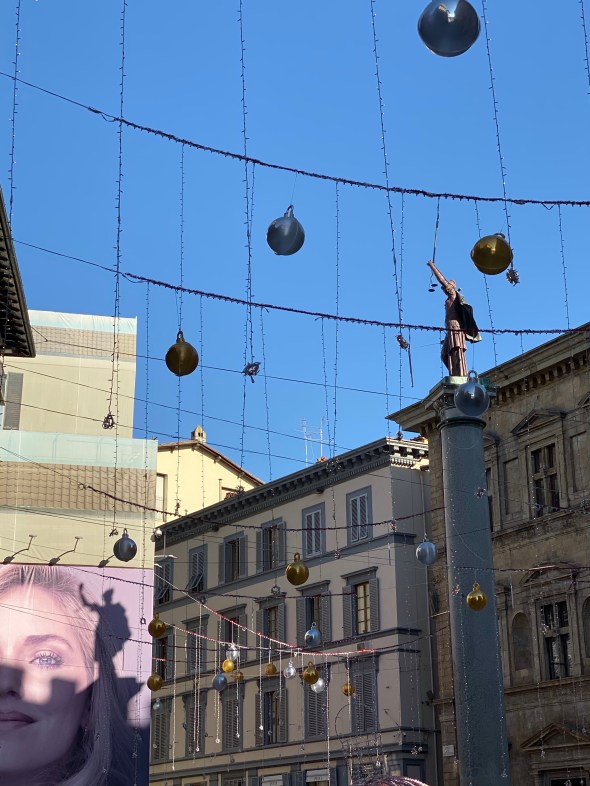
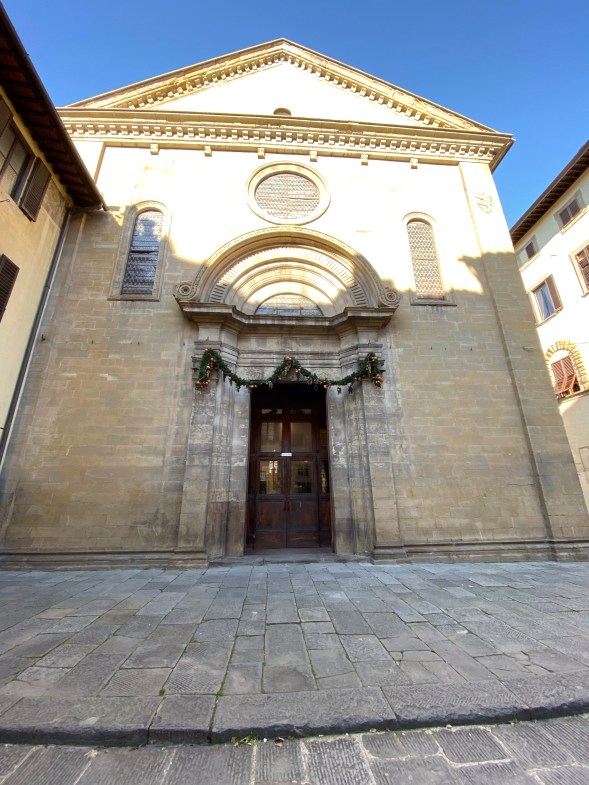
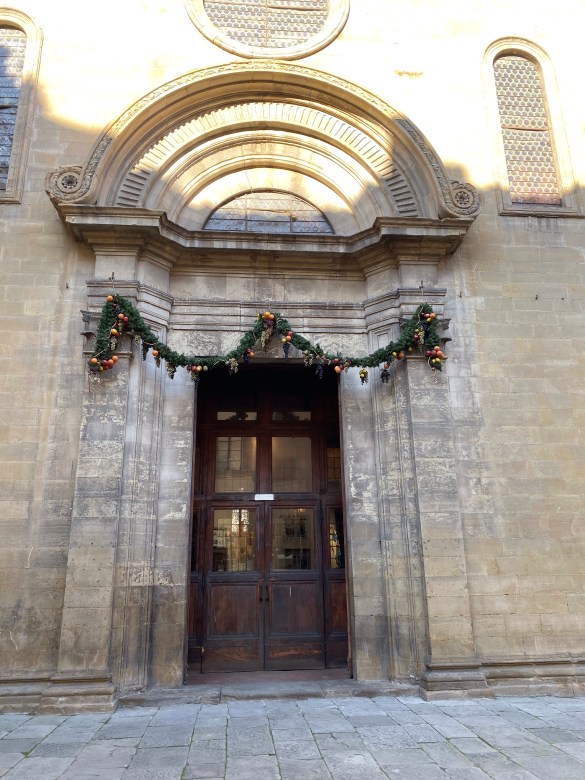
I like the simple, natural decorations the best. Below this church uses garlands of evergreens and citrus:
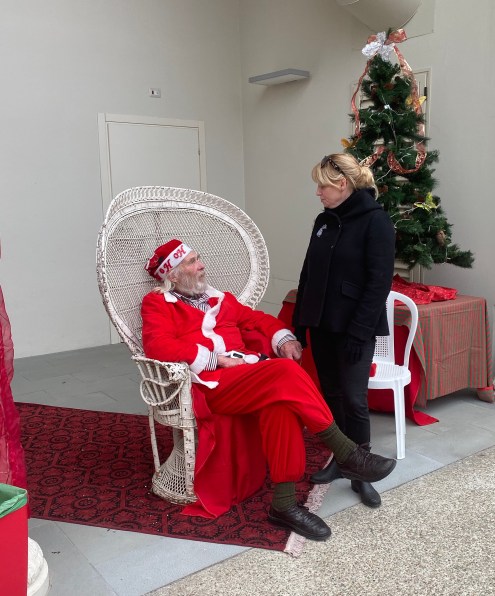
A local charity had a bazaar the other weekend and I spotted this Santa Claus there. Can you tell that Santa Claus is not a natural part of the Italian holiday of Natale? I think it is obvious. There were some kids around, but no one wanted to sit on his lap!
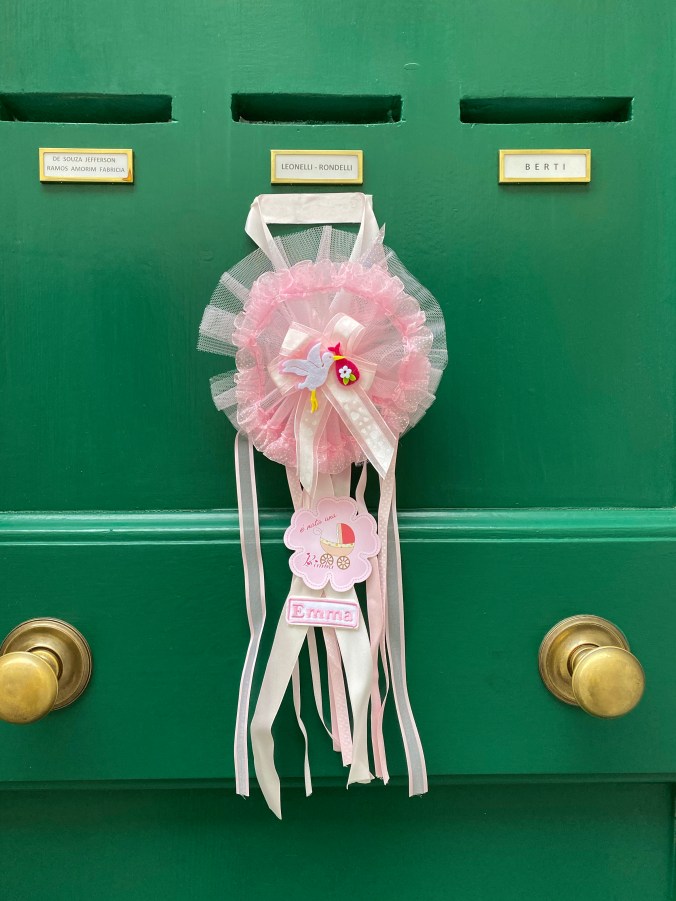
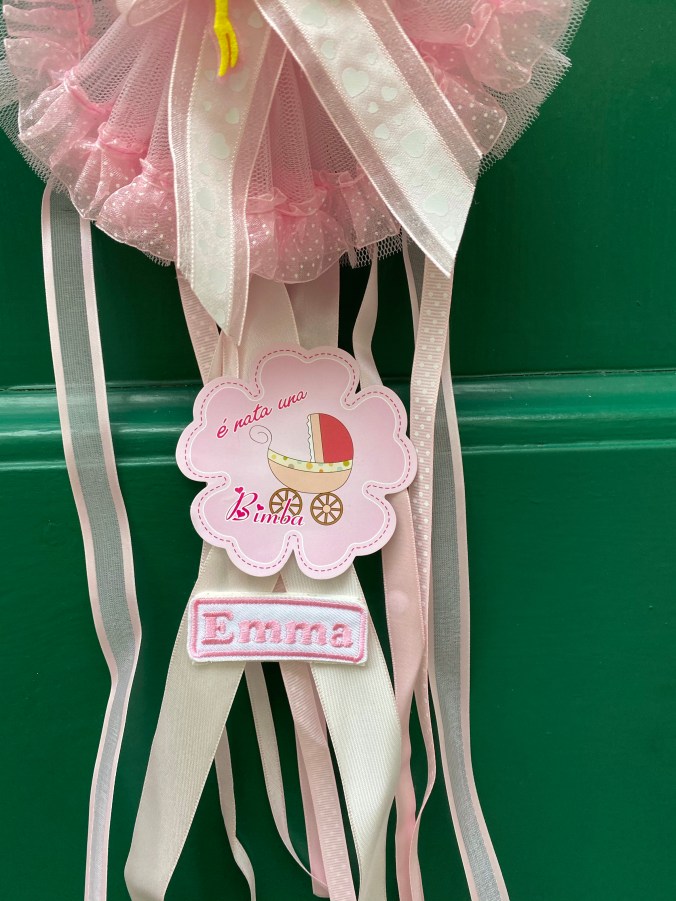
I love the Italian custom of announcing the birth of a baby on the front door. A pink or a blue ribbon tells the happy news!
Follow
Nel giubileo straordinario del 33, e dopo la fine della guerra…c’era bisogno di ridare luce e lustro alla Basilica di San Pietro…ed ai tempi non c’erano i Led o i Videomapping…ma i …Sampietrini, ovvero gli operai della Basilica che deposero 2000 moccoli e circa 5000 ceri tutto intorno la basilica…e Roma, rimase a Bocca aperta per lo spettacolo…
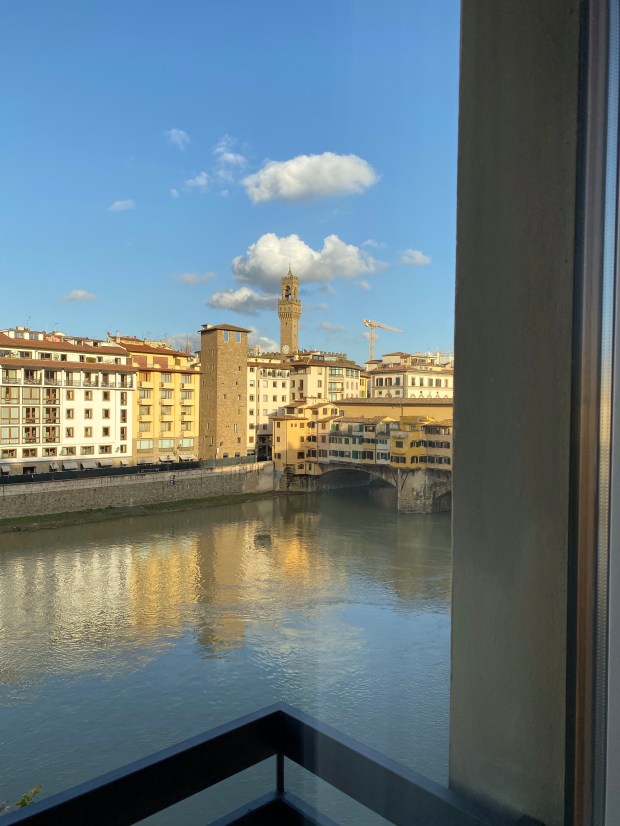
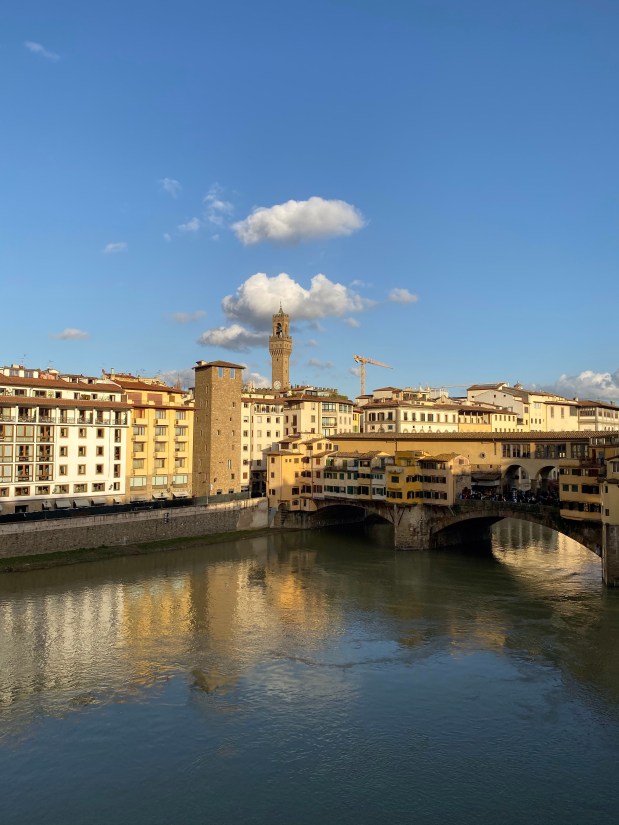
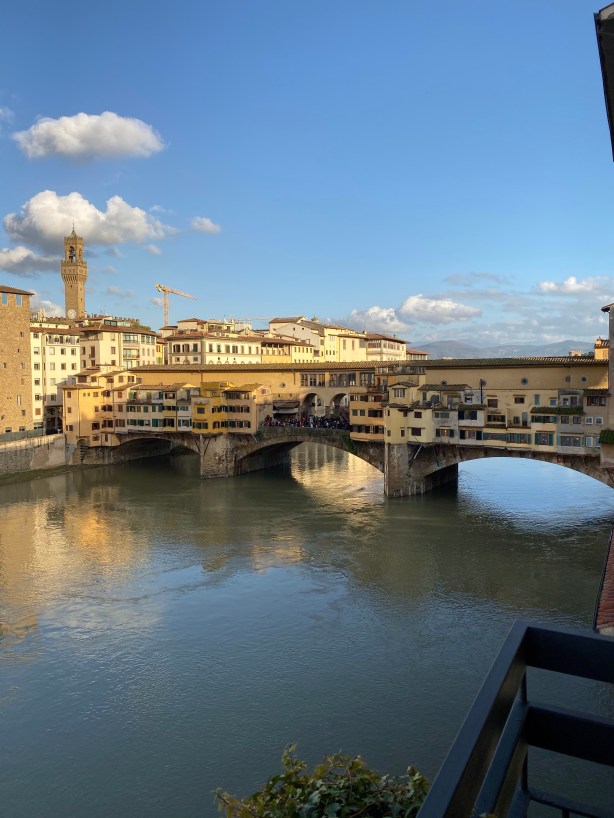
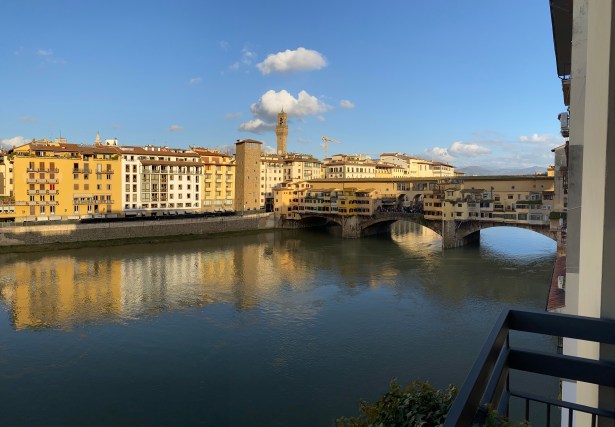
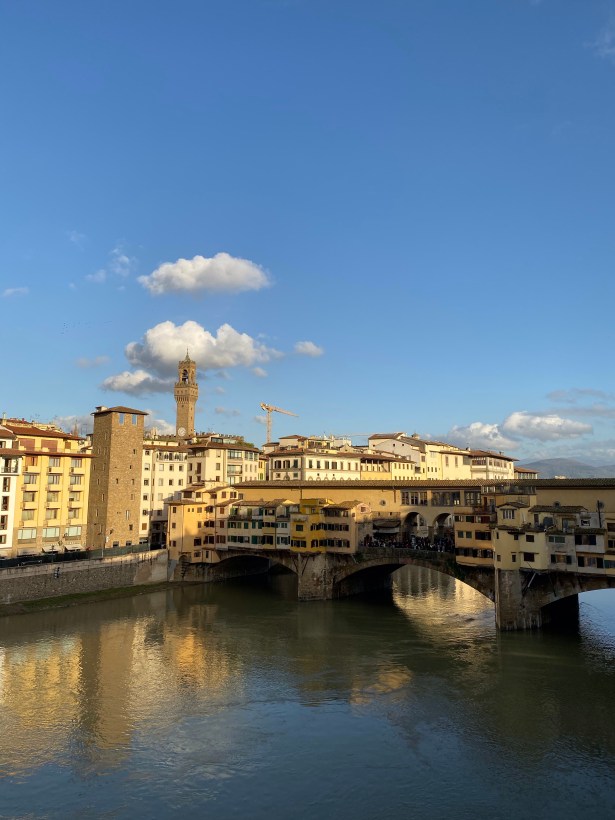
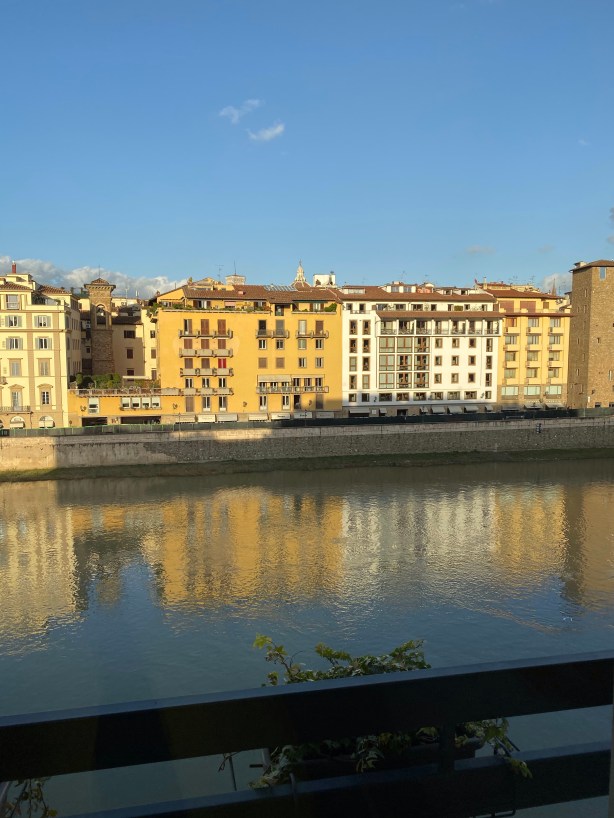
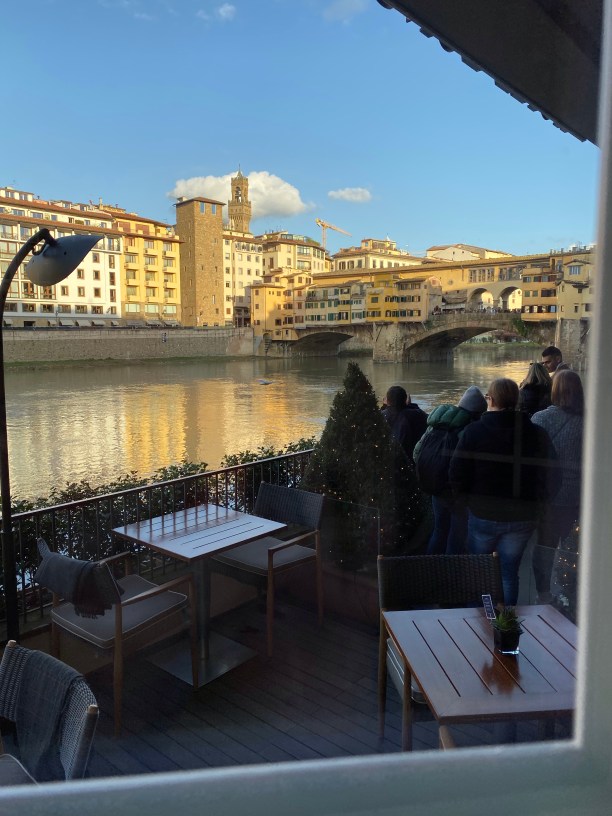
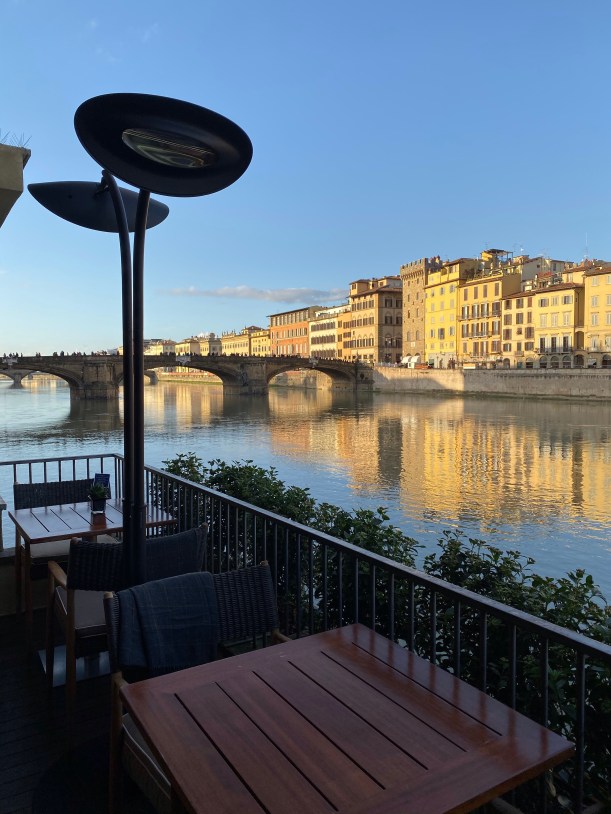
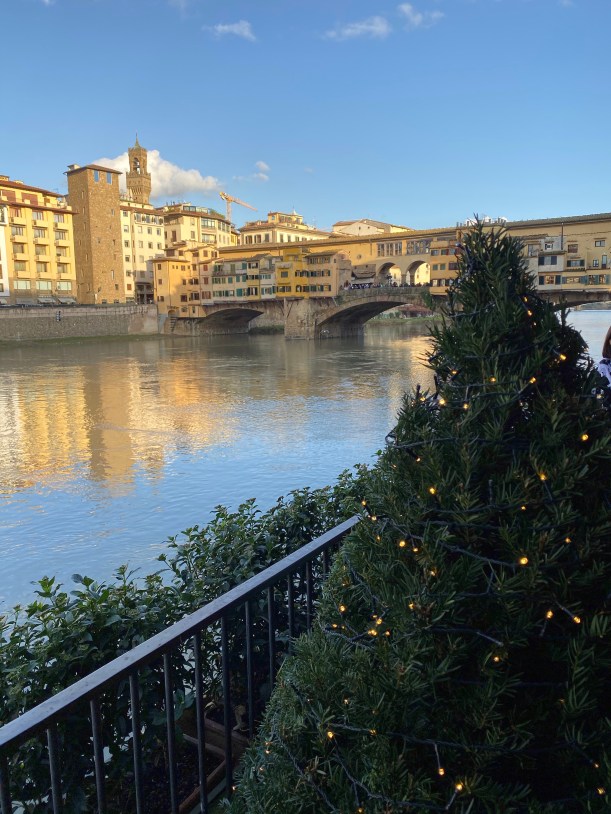
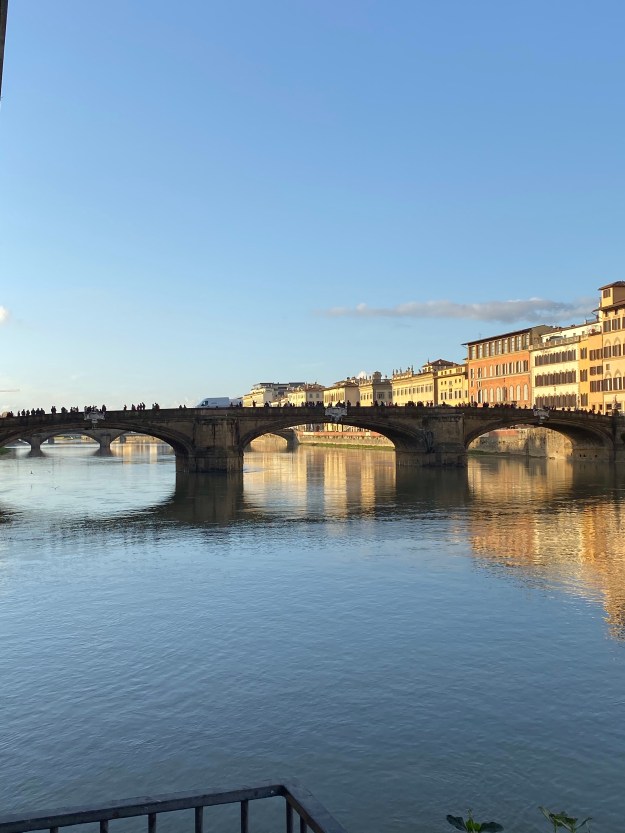
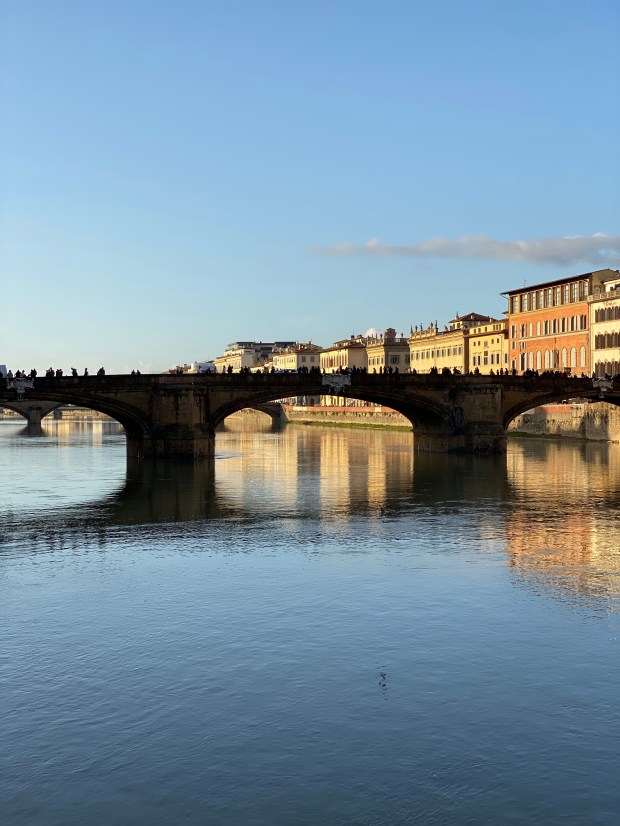
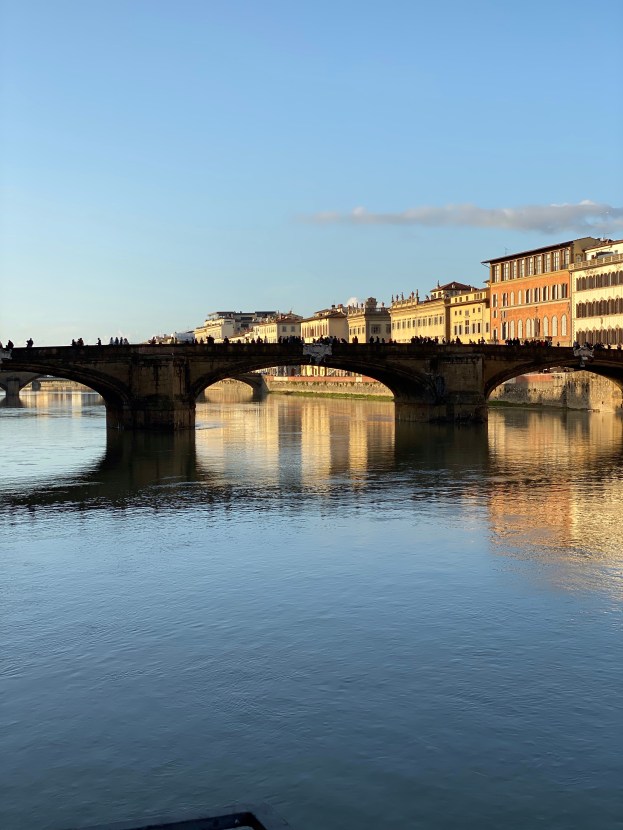
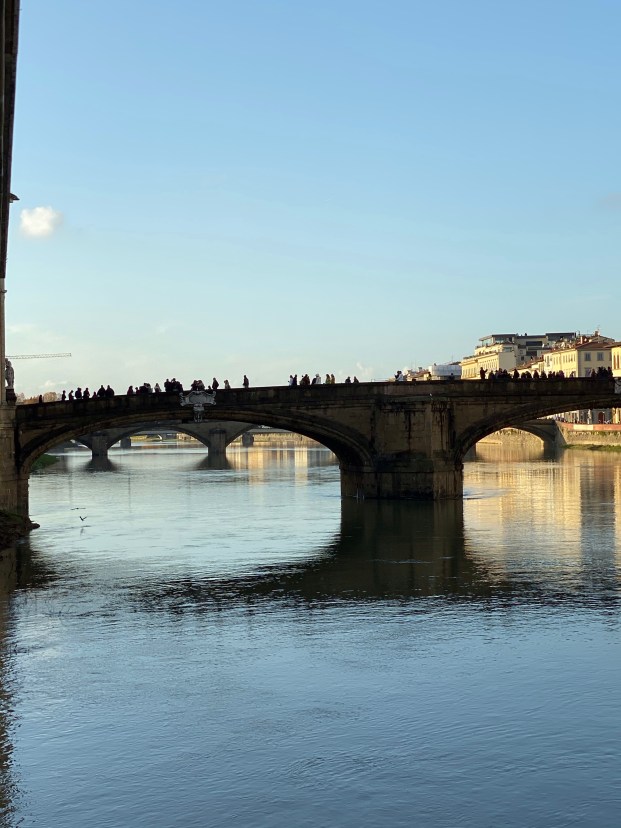
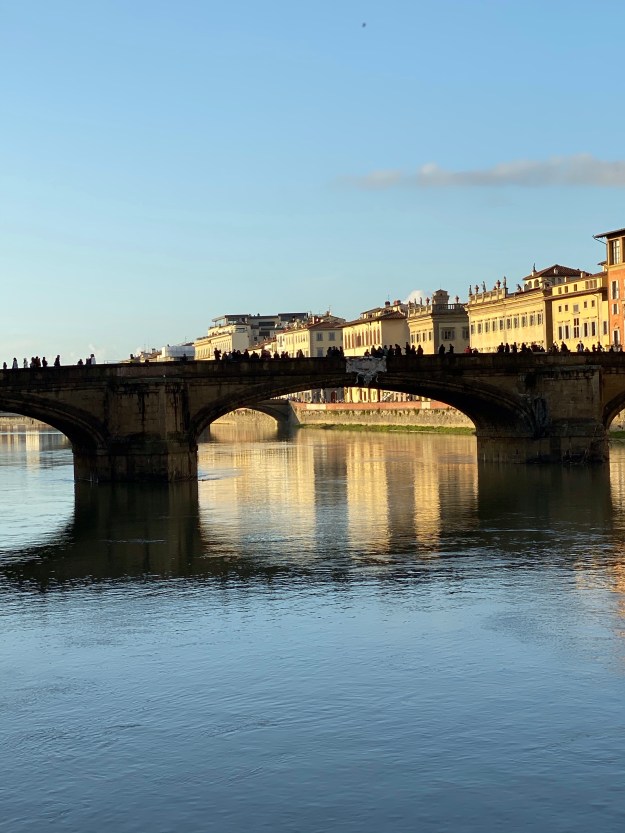
Shimmering Florence on a winter’s afternoon:
Just inside the ancient gate of Porta Romano, lies a simple church and attached convent (in Italy, convent can mean monastery or convent or both) dating to the 13th century. An almost unknown (relatively speaking, at least, to the hordes of tourists who descend on Florence every year) masterpiece of Renaissance paintings is housed here: a beautiful cenacolo, or a painting of The Last Supper. Florence is so fortunately rich in these frescoed depictions of that fateful dinner.


The church dedicated to San Giovanni Battista, in Piazza della Calza, was founded as a hospital in 1362. There were once many oratories, hospitals and shelters for pilgrims and travelers along the present via Senese and via Romana. These were major roads leading to Florence.
At the end of the 14th century, the convent was established by the Gerosolimitan nuns. They commissioned Franciabigio to paint The Last Supper in 1514 in their refectory. Unfortunately, the sisters soon had to leave the hospital, during the 1529 siege of Florence.
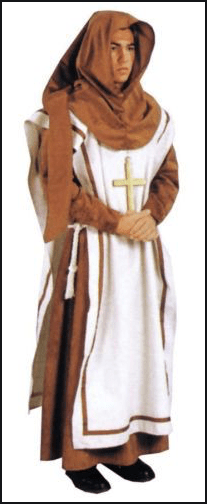
The nuns were replaced in 1531 by Jesuati friars (not Jesuits) who changed the dedication of the church from Hospital of Saint John the Baptist to San Giusto. They used the hospital as a charity for children, an ecclesiastic boarding-house, and eventually as a seminary. The church and the convent became known by the name “della calza” (sock) which was a name derived from the long white hoods that the monks wore over their left shoulders. The hood was shaped like a sock and the name stuck.
The picture below is not authentically one of the della calza habits, but it shows the shape of the hood and how it was worn.
From this nickname of “the sock” came the name of the church, the convent, and even the square.

The true hidden gem kept inside is the Cenacolo by Franciabigio, still preserved in the ancient refectory.

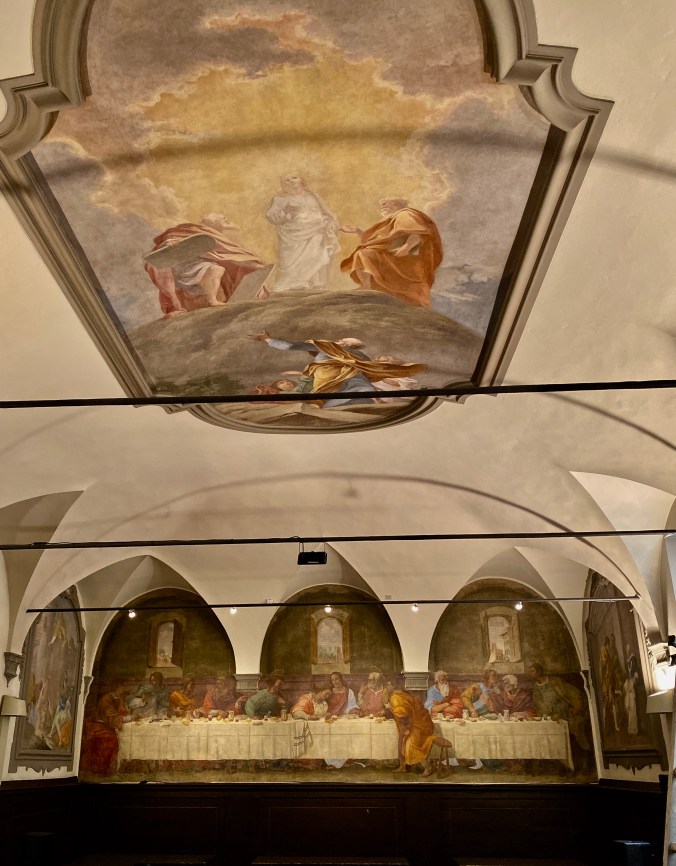

Mother Superior Antonia de’ Medici entrusted Francesco di Cristofano, called Franciabigio (1482-1525), to portray a specific scene, during the Last Supper, just after Christ says: “Truly, I tell you, one of you will betray me.”

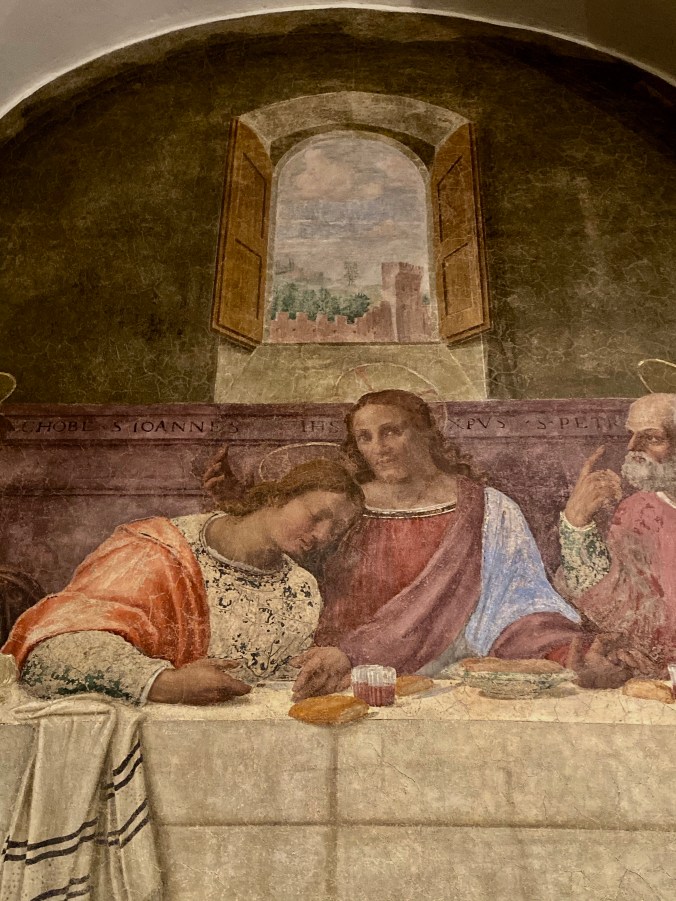

Franciabigio thus knowing, deep sadness in the countenance of Christ. Judas, the only figure on the outer side of the table, reacts strongly to the words of Jesus: his sudden movement causes his wooden stool to tip over. All around the table, the expressions of the Apostles register various states of confusion.


One can notice each reaction and recognize each Apostle because the artist added their names, painted along the strip which runs above their heads. The painter added here the date A(nno) S(alutis) MDXIIII (A.D. 1514) and his signature, through a twisted shortened monogram (FRAC).

On the painted floor, you can even distinguish the name of the Mother Superior Antonia (SVORA AN), marked on the lower left side, under the table, between the second and third Apostle.
Franciabigio carefully fashioned magnificient details; along the fine linen tablecloth you see ceramic jugs, breadrolls, glasses with red wine, and sliced watermelon. Some of the jugs feature the typical Medici coat-of-arms (the one with the red spheres) referring to Mother Superior Antonia and the Red Cross of the Order of Knights of Malta to whom the nuns originally belonged.
Giorgio Vasari describes (Lives of the Most Excellent Painters, Sculptors and Architects) how Franciabigio “was very keen on studies of perspective” and human anatomy. We see that throughout and especially in the accurate position of the wooden shutters painted along the wall.


A fascinating contrast is given by the dark green wall and the light of the crystal clear sky in the background, where the painter depicted the old Florentine town walls (the destroyed gate of San Pier Gattolino).
For the Jubilee in 2000, the fresco was restored.
Just a quick word about the Church of San Giovanni Battista della Calza:
My quick walk through the church introduced me to this arresting sculpture near the entrance to the small church.

I was alone in the church and had free rein to poke around. In a small room off the church itself I noticed an amazing della Robbia fountain. You never know what treasures you will happen upon in this fascinating city.


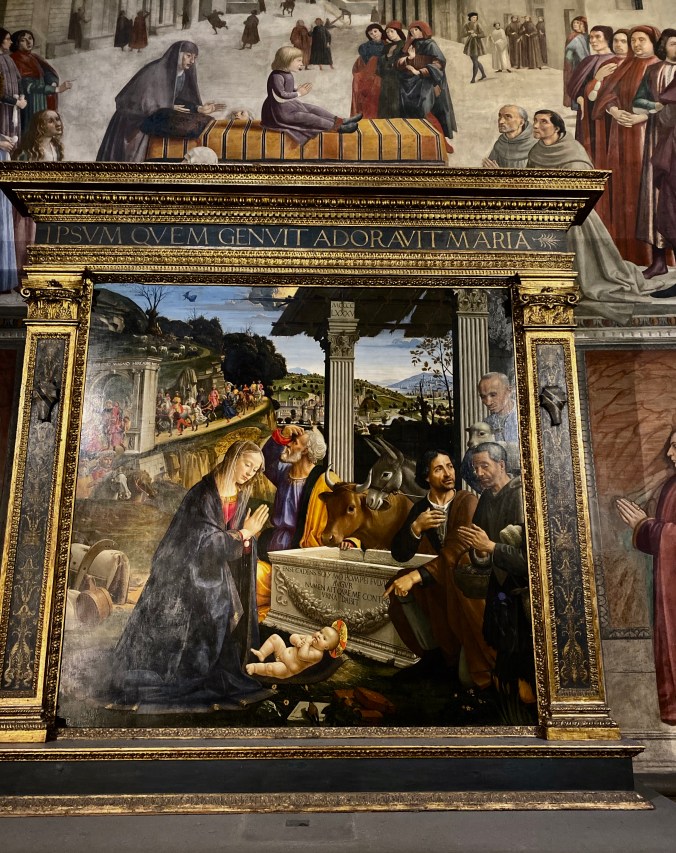
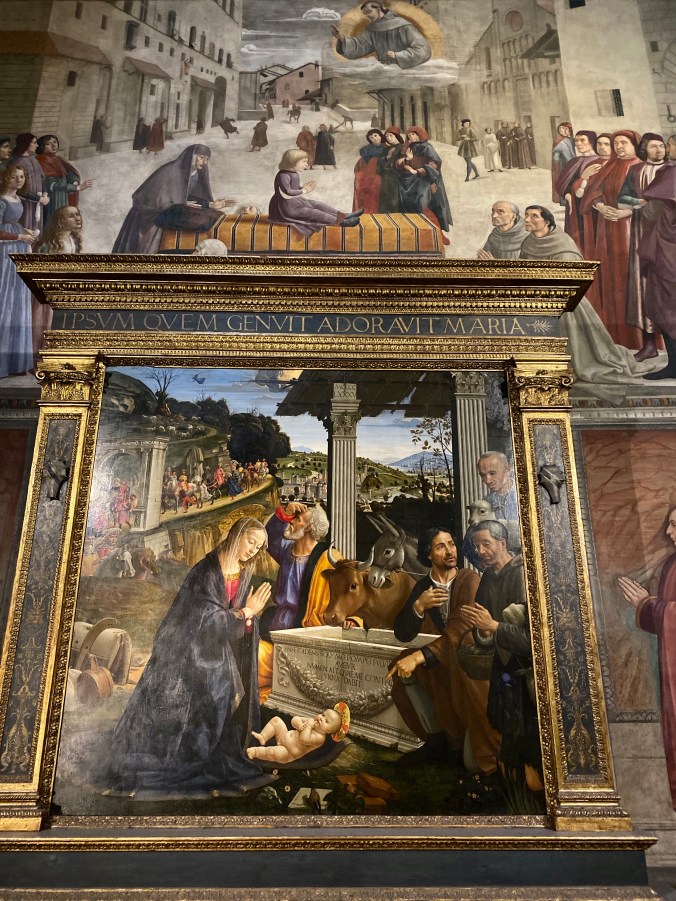
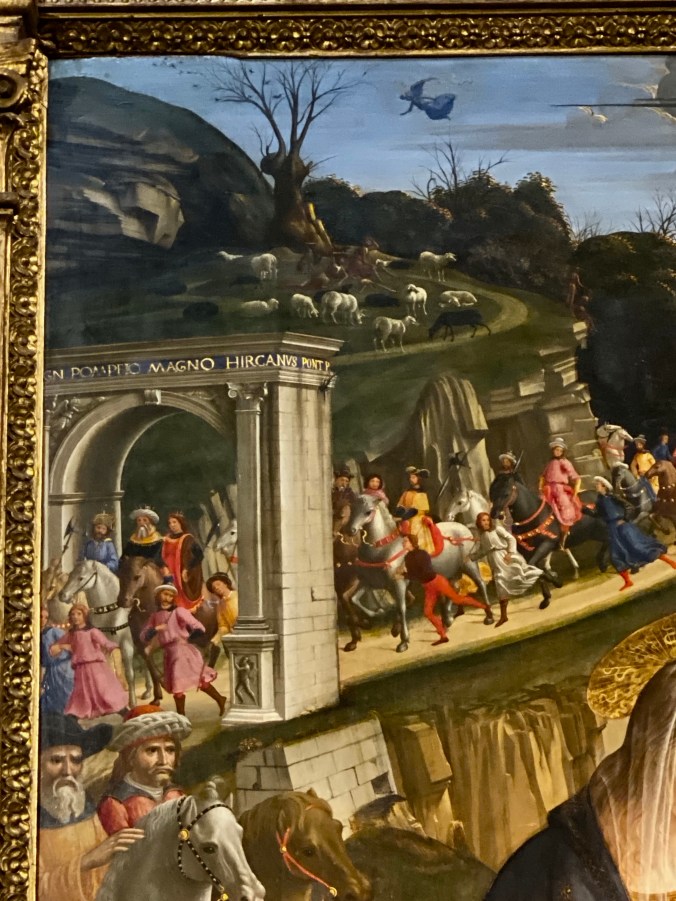
And, finally, I can’t leave this post without mentioning that, depict the austerity of this church, some major paintings were once a part of the church. They are now in the Uffizi:











 get back, lauretta!
You must be logged in to post a comment.