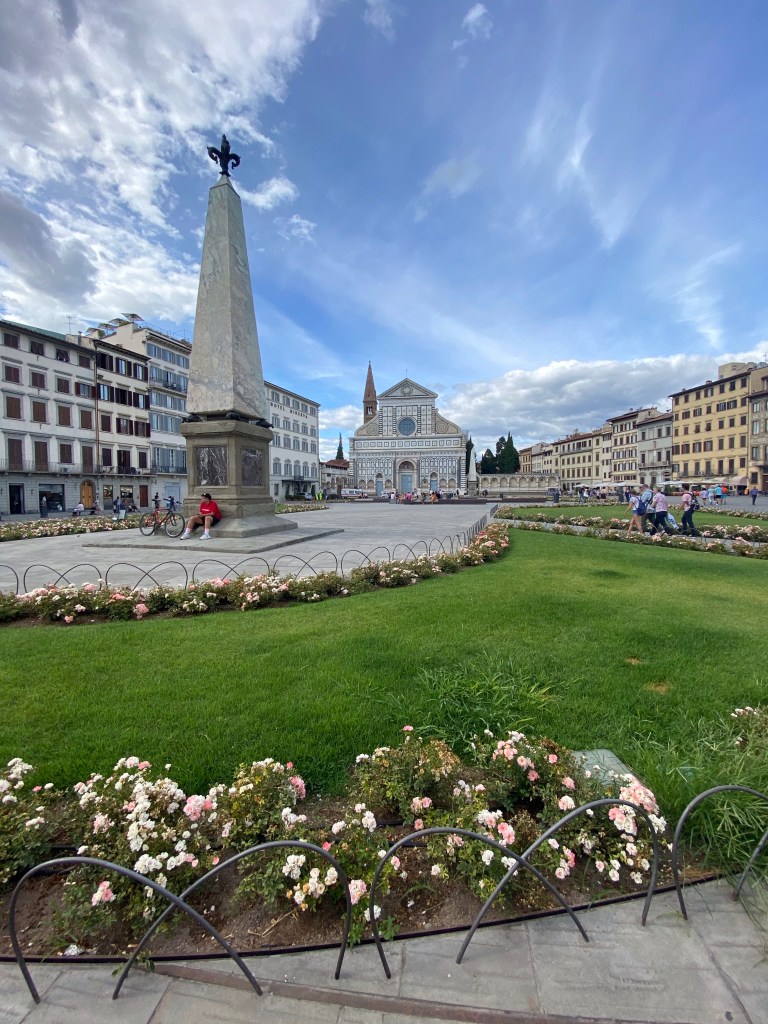
With the hope of a break in the hot weather, I bravely paid a visit to the lovely church of Santa Maria Novella today. It was a very nice visit, but the weather was suspiciously hot. Seems I had been misinformed.
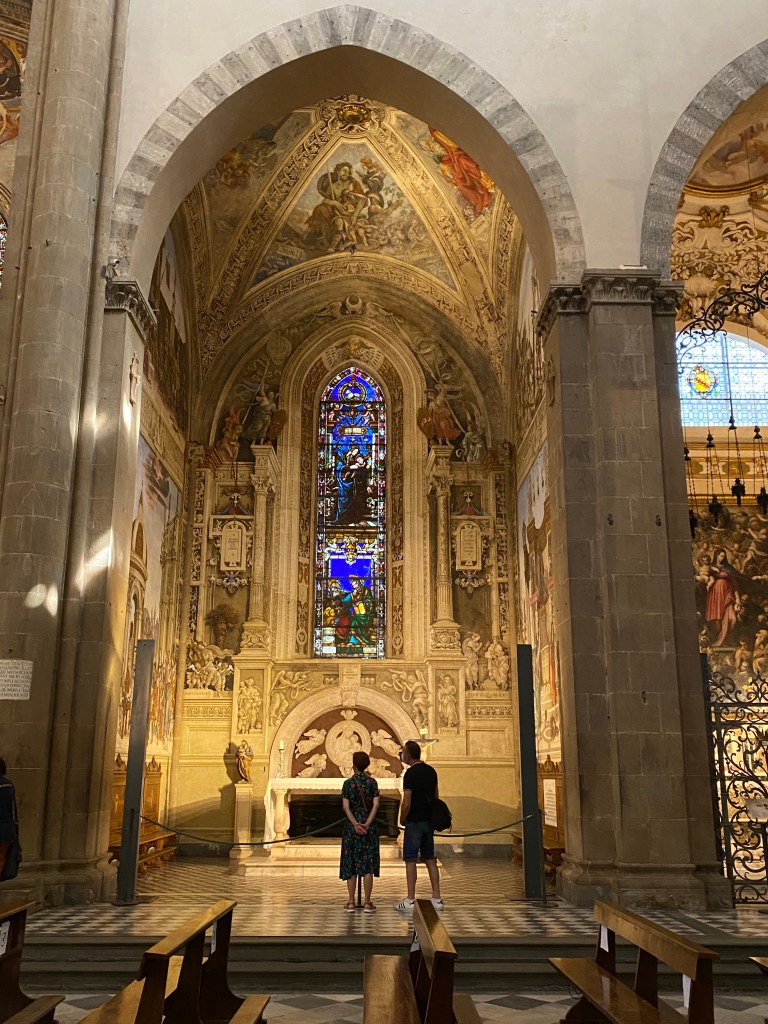
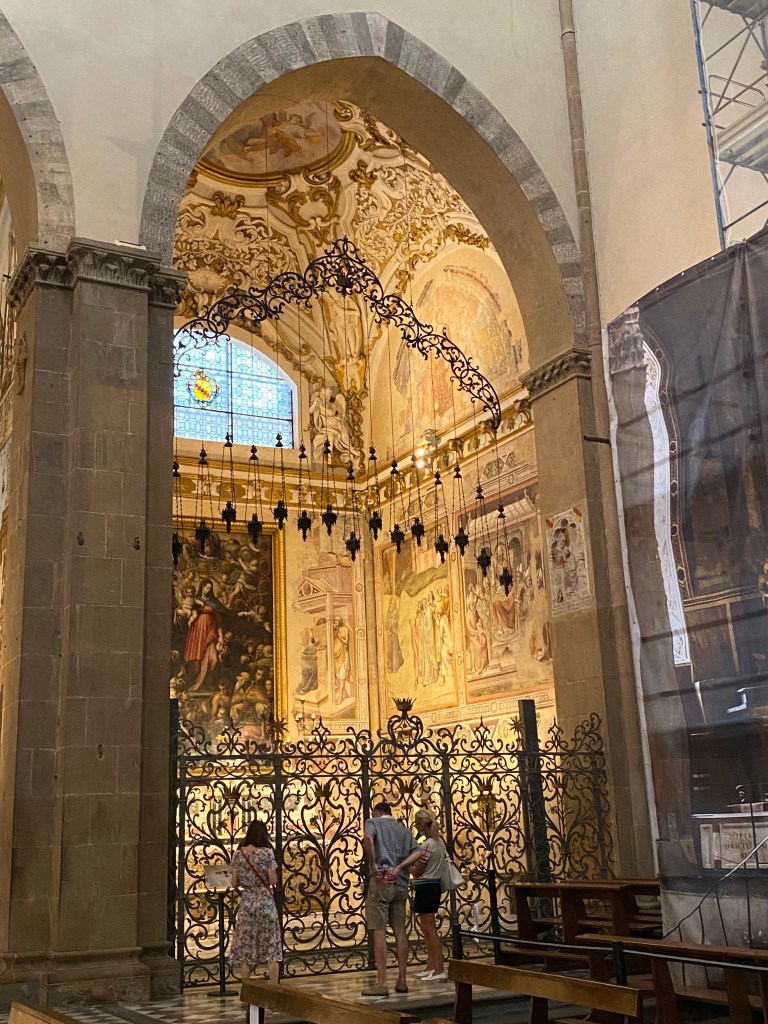
In the transept of this magnificent church, I always admire the 2 chapels on the proper right side of the center, main altar. The right side = the right side. What I mean is: if you were buying a spot for your family’s chapel in a church in the Renaissance, you’d want to buy this coveted space to the right side. It was the 2nd best space to own, after the main chapel in the dead center. Owning a chapel on the left hand side was good, but not great. The right side is good, the left side is a bit sinister.
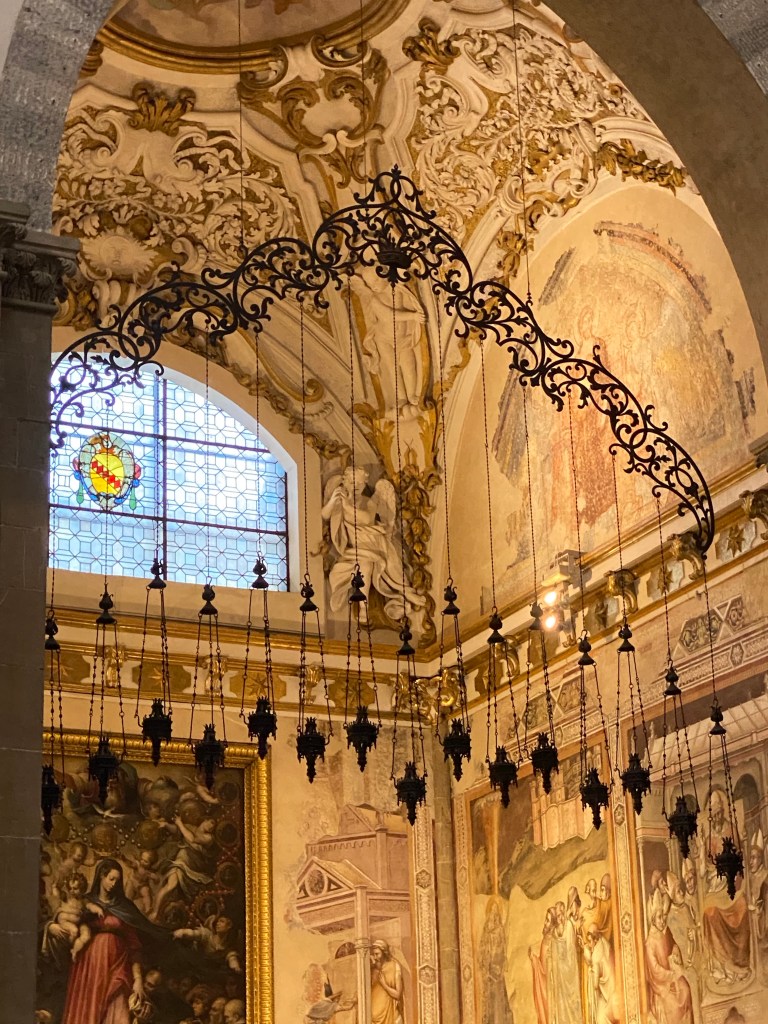
And then, ta da! We arrive at the main event:
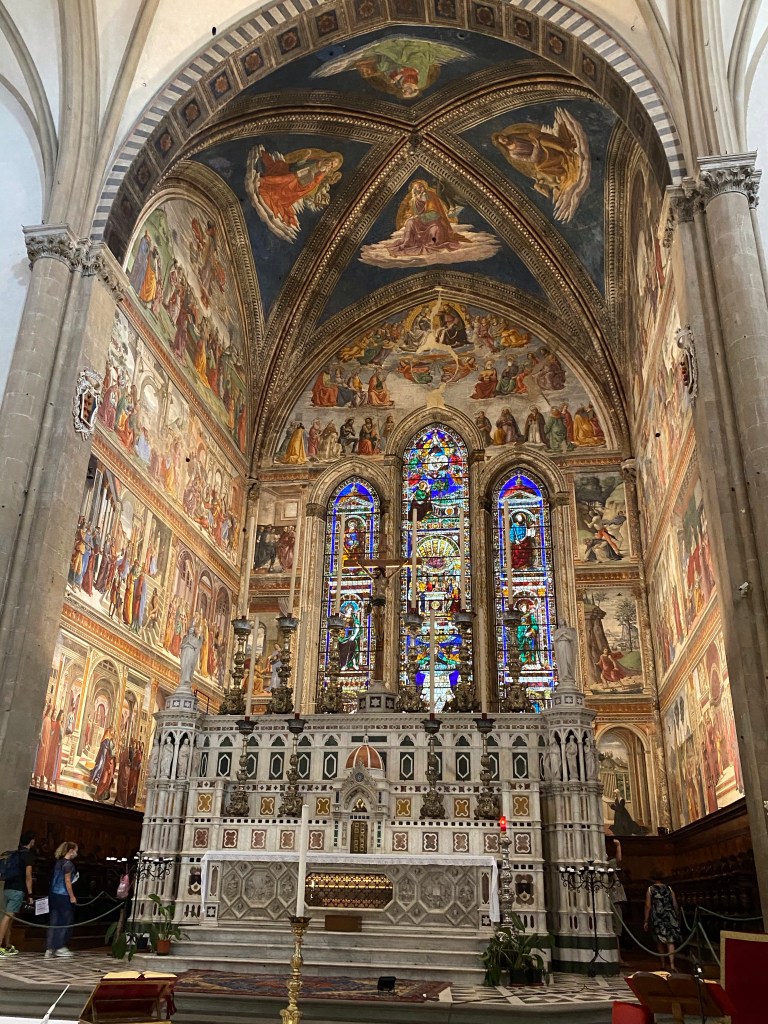
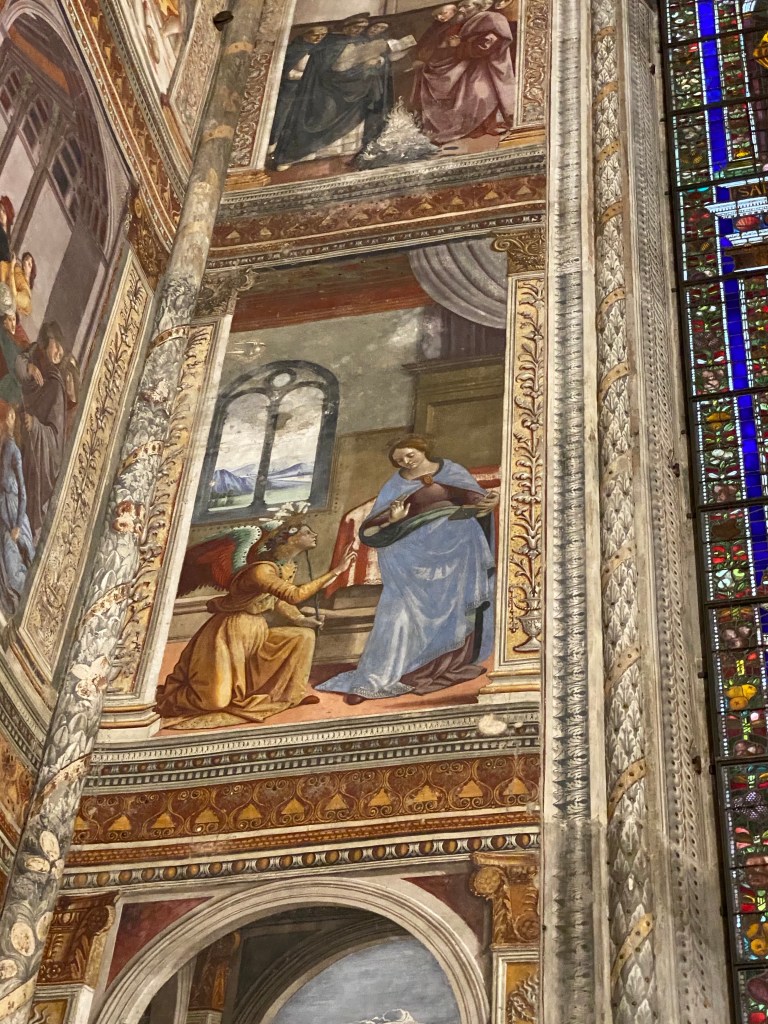
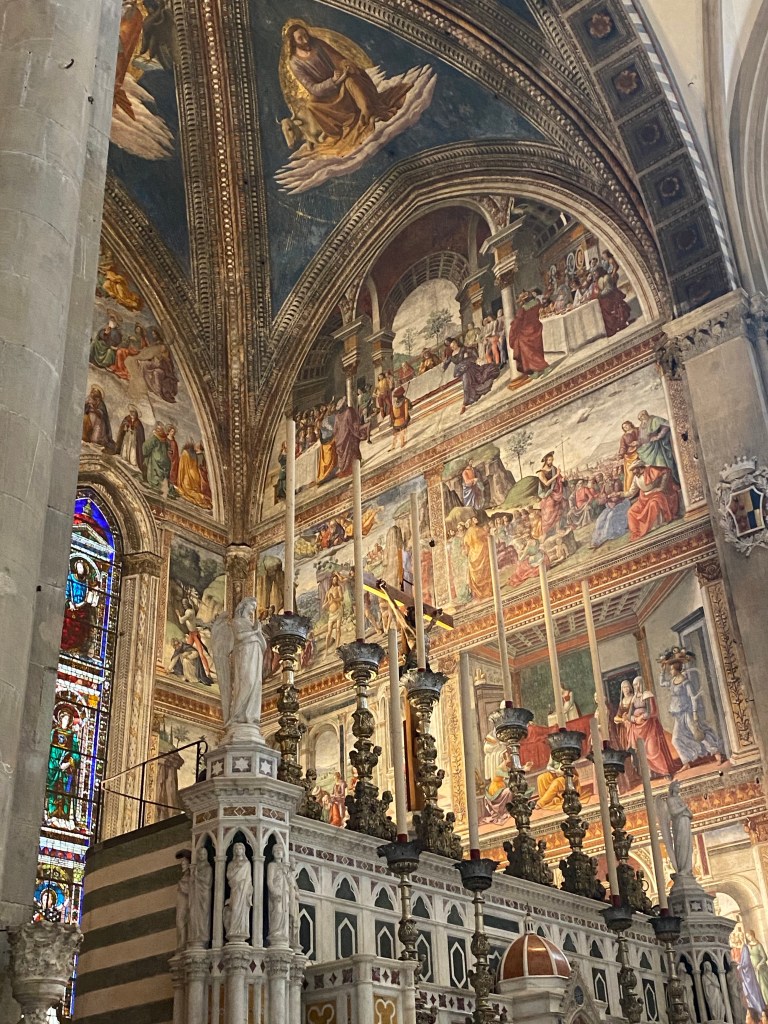
Here we are, at the gorgeous main chapel, the cappella maggiore aka the “Tornabuoni Chapel.” All of these names are correct. It was painted by Ghirlandaio and his workshop in the late quattrocento. It is magnificent.
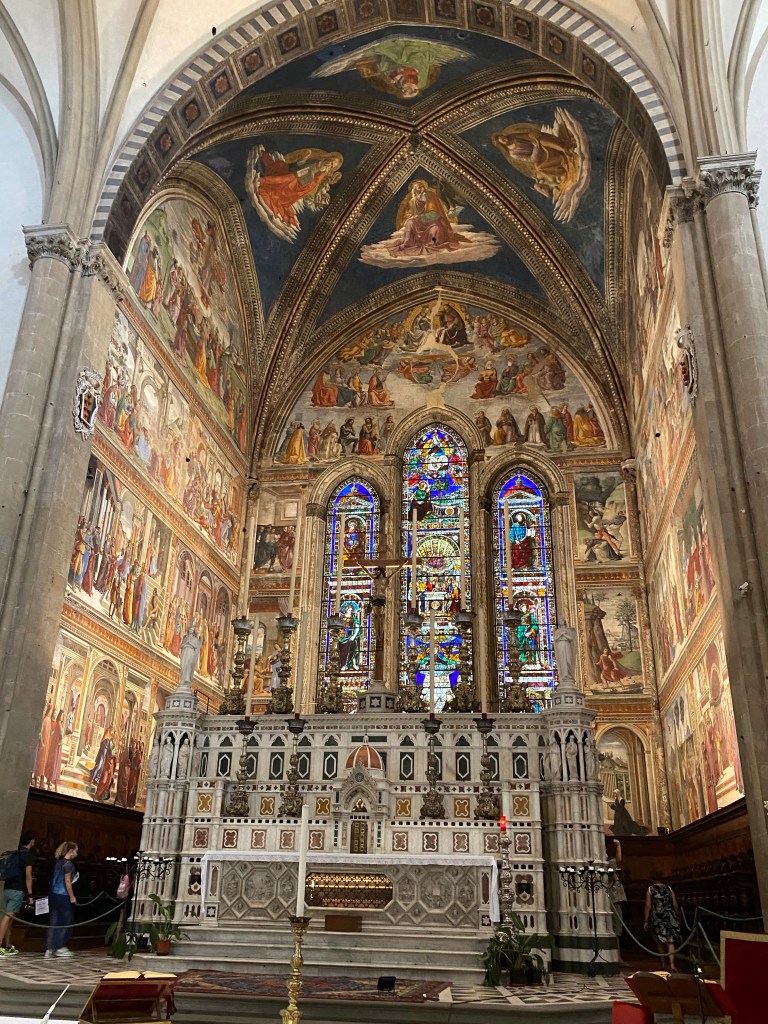

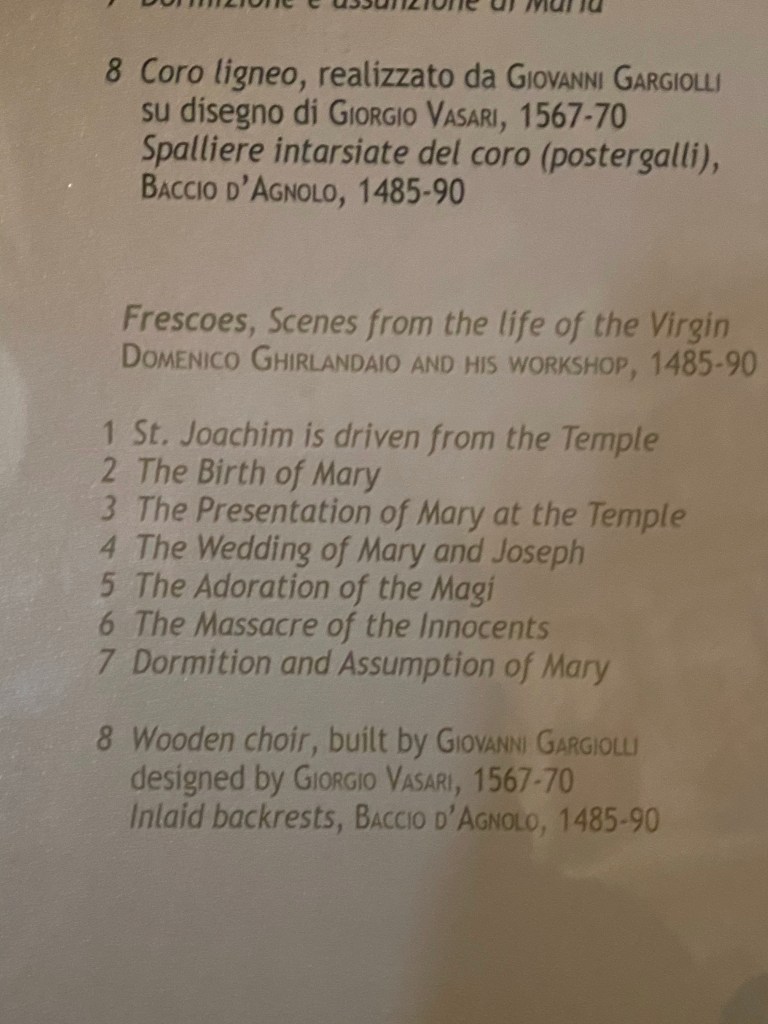
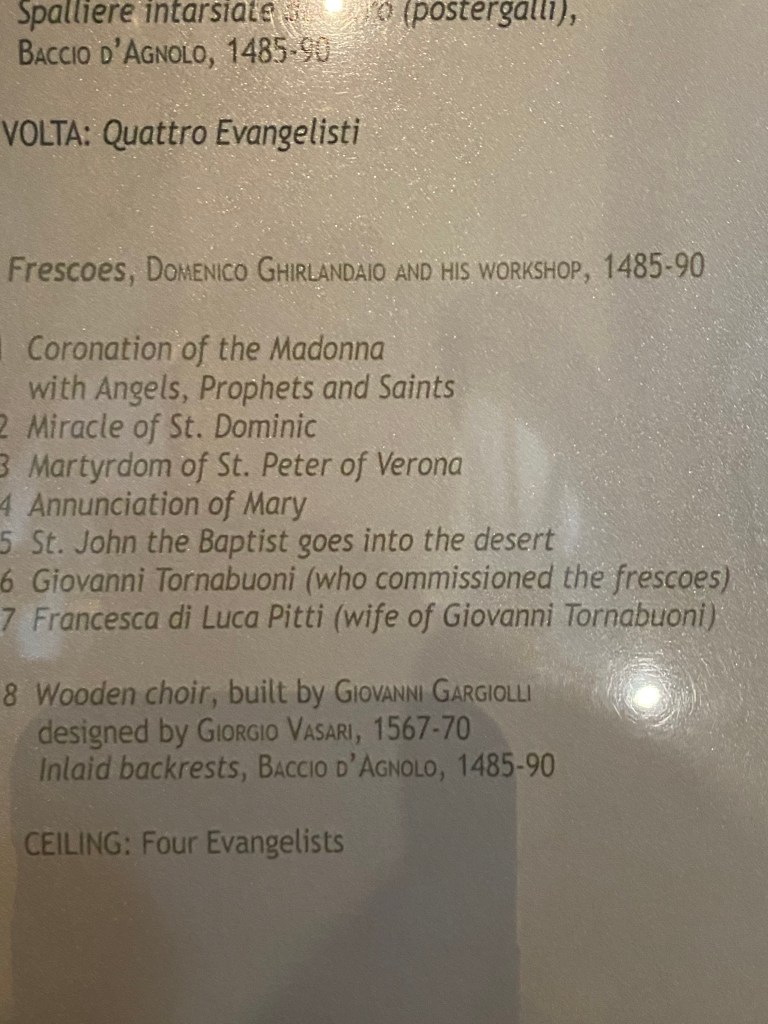
Ghirlandaio’s fresco cycles on the left and ride sides of the chapel depict the lives of the Virgin Mary and St. John the Baptist. In the diagram below, we are looking at the proper left hand wall, which treats the subject of Mary’s life.
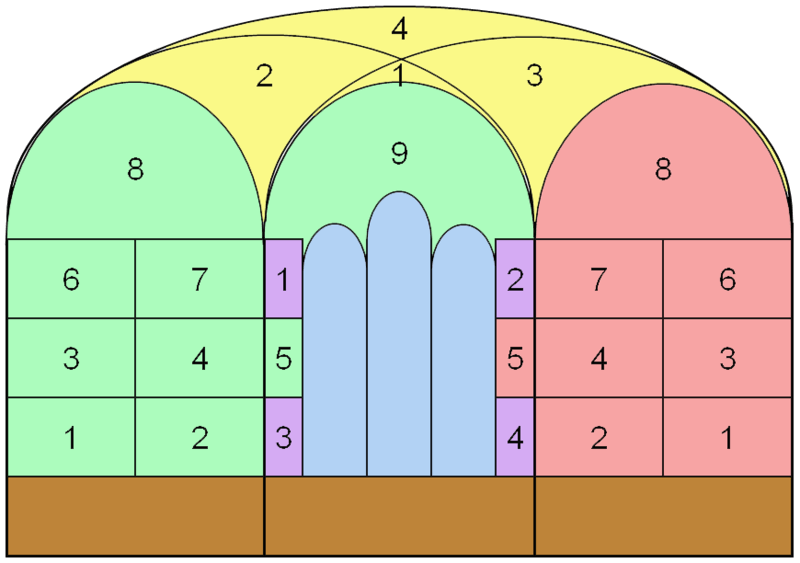
Evangelists.
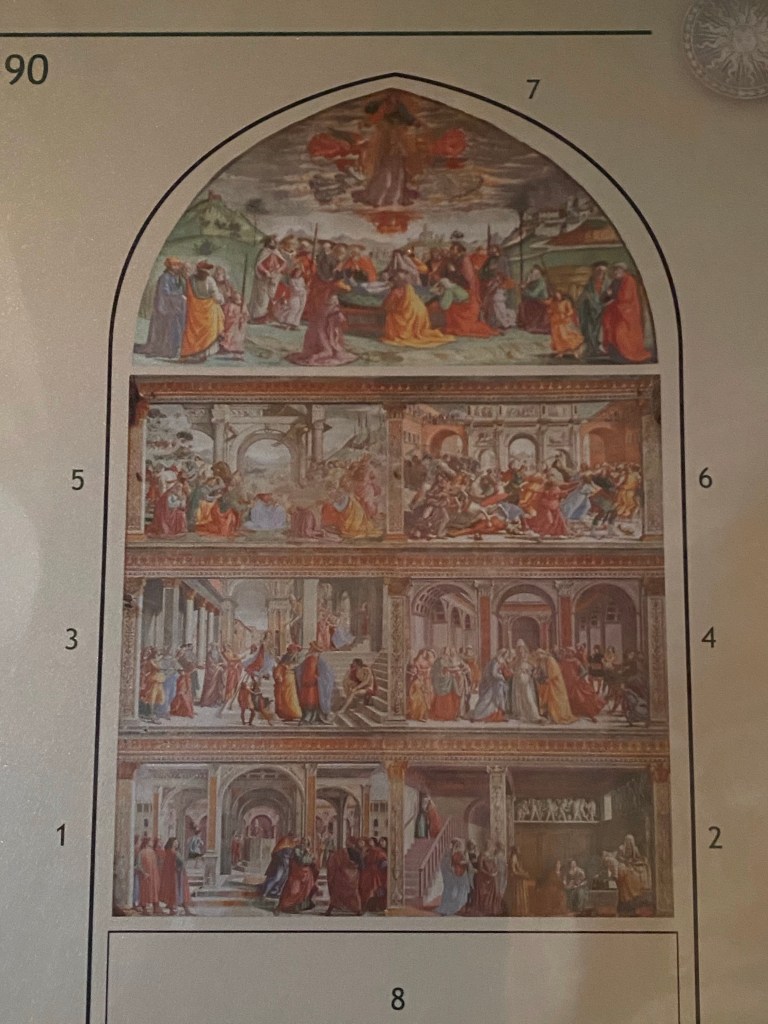
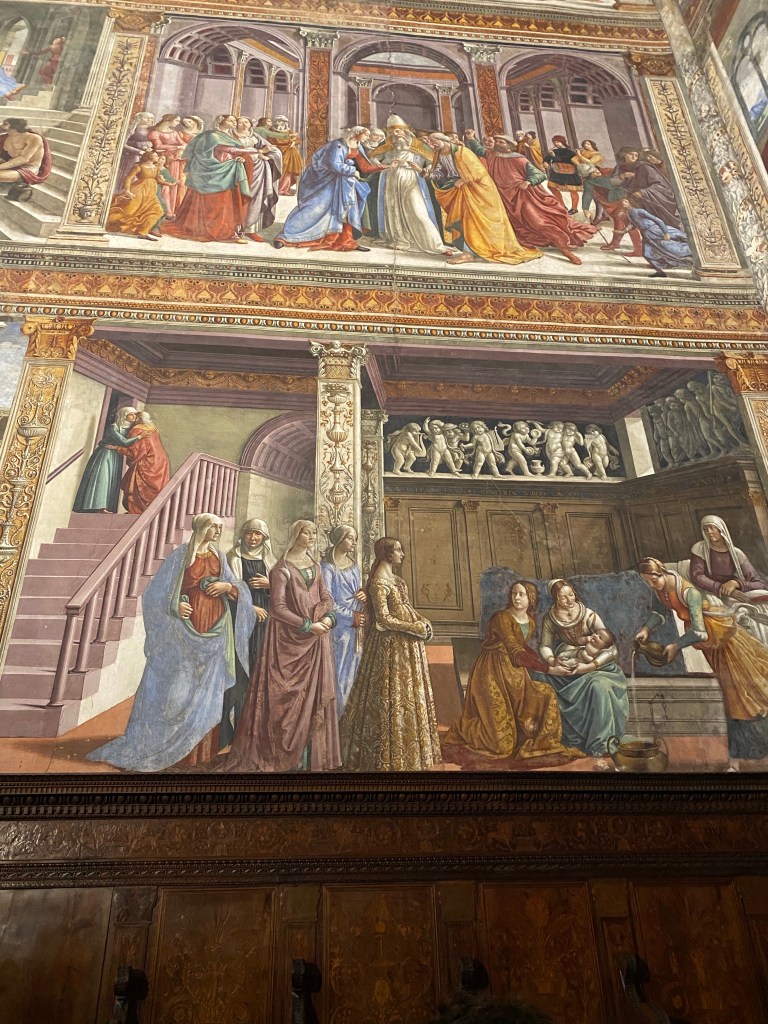
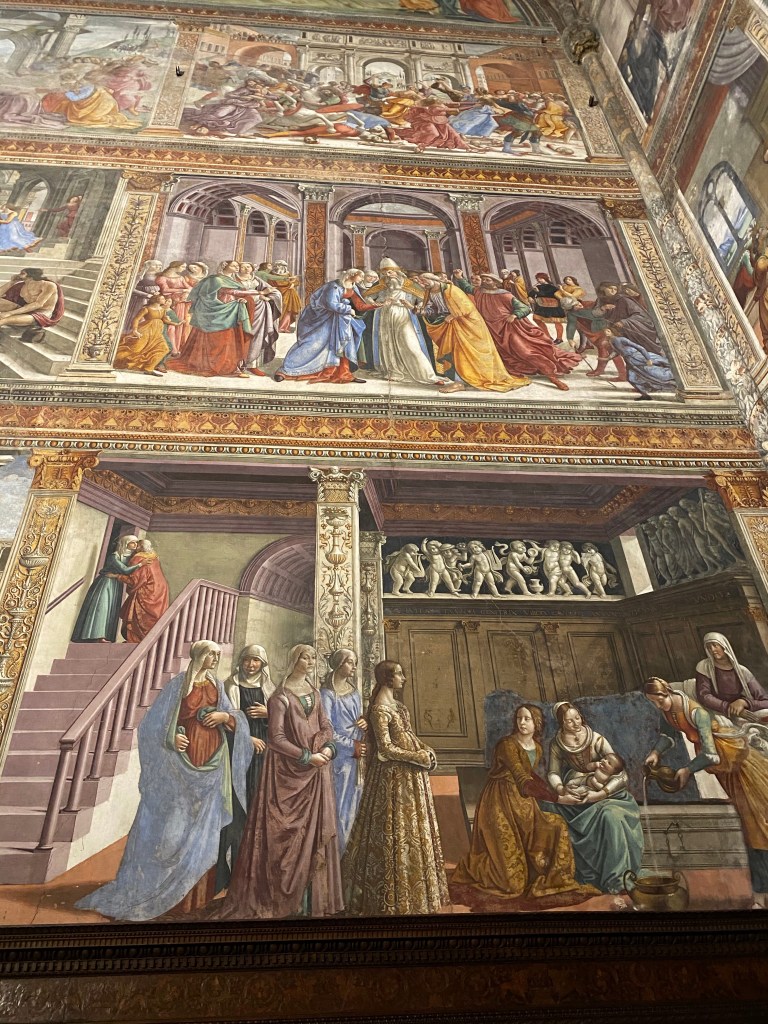
Below is the fresco panel depicting the birth of the Virgin Mary. The rectangular panel above it shows the marriage of the Virgin to Joseph.
WordPress, with whom I write my blog, has recently changed the formatting style of their website and I am still getting used to it. In the image block below you can have a look at Mr. and Mrs. Tornabuoni, the patrons of the Ghirlandaio painting cycle. In theory, you can move the line with the arrows to the left and right and see all of each picture. Good luck. Let me know if you have any problems.
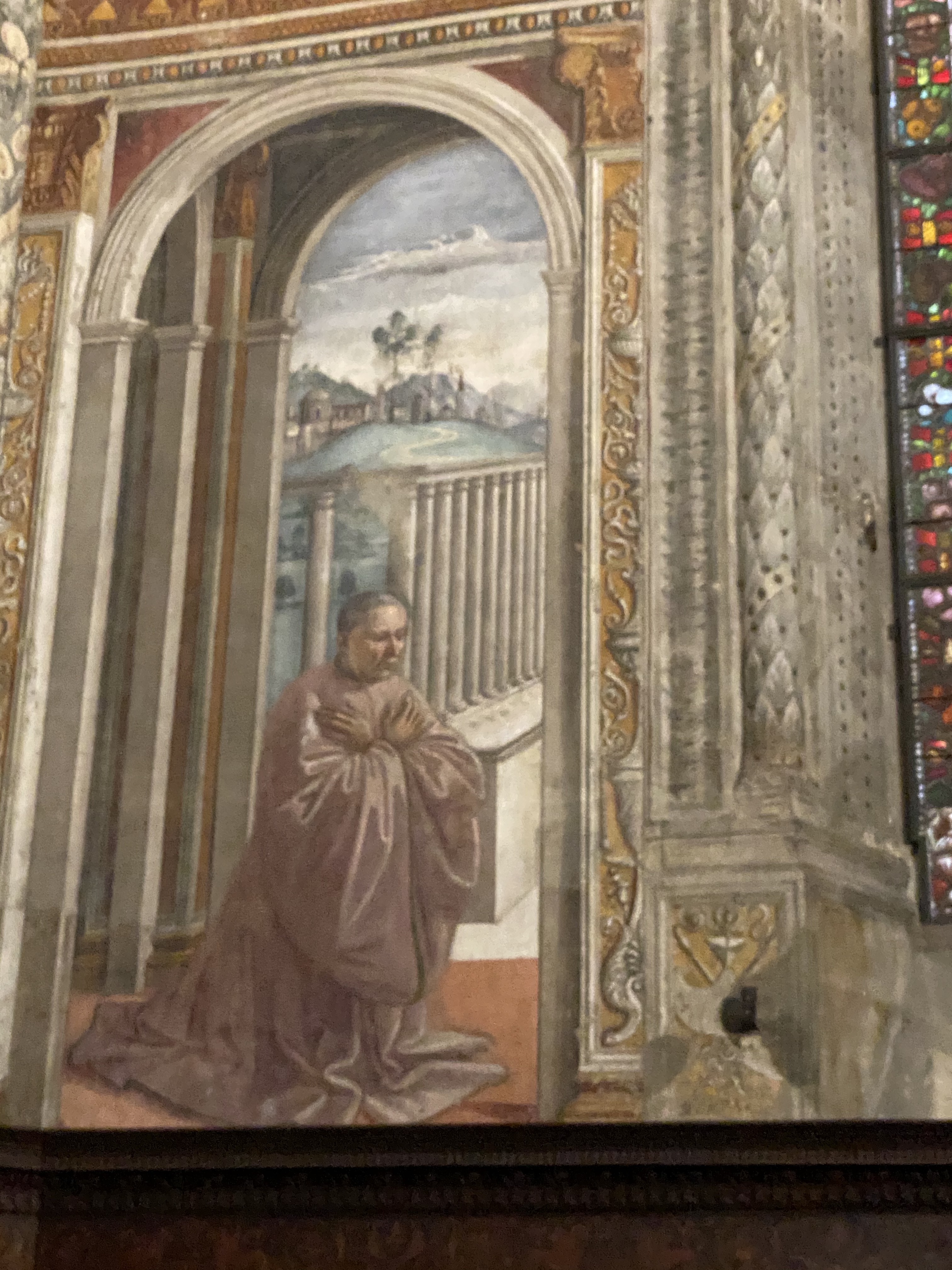
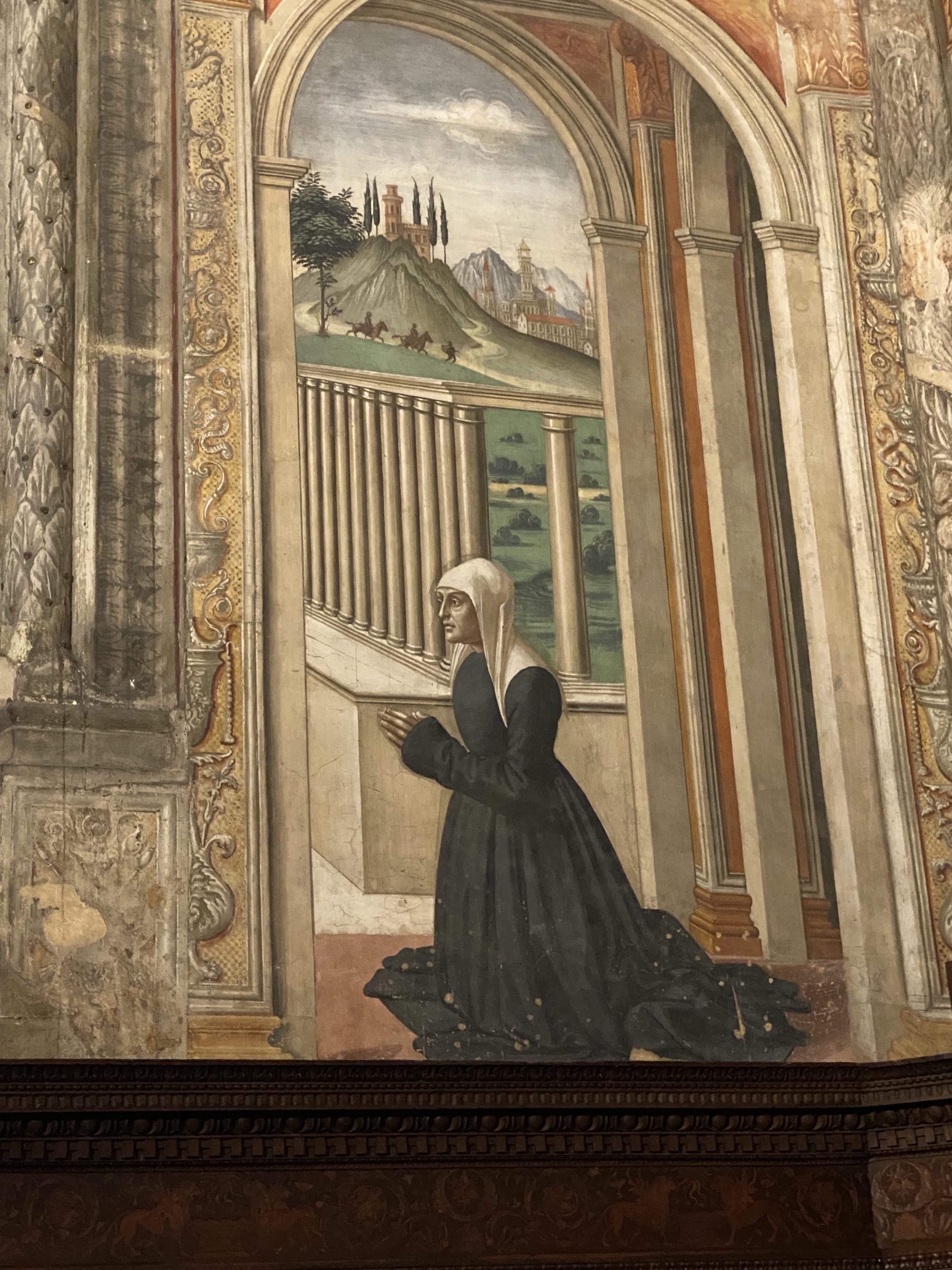
The donor portraits above show Giovanni Tornabuoni and his wife Francesca Pitti.
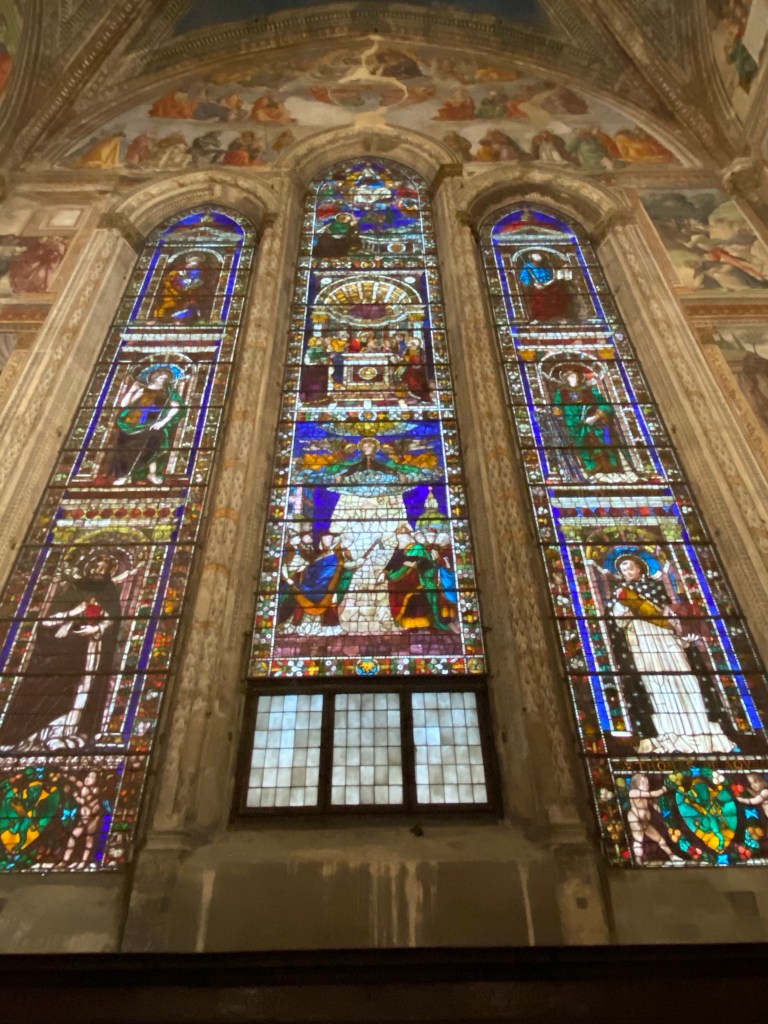
If you are familiar with Italian Renaissance art, you will know that stained glass didn’t place the role here that it had, for example, in France. You will rarely find a major stained glass series in Florence. One of the most elaborate examples is here at Santa Maria Novella in this chapel. It was designed in the quattrocento by Ghirlandaio, the same artist who painted the frescoes.
On the right hand wall, Ghirlandaio painted scenes from the life of St. John the Baptist. You see this 7 panel arrangement behind the main altar in the photo below:
For more information on this wonderful chapel, see
https://en.wikipedia.org/wiki/Tornabuoni_Chapel
I’ll be posting soon about another masterpiece within the walls of Santa Maria Novella. Stay tuned!


 get back, lauretta!
You must be logged in to post a comment.