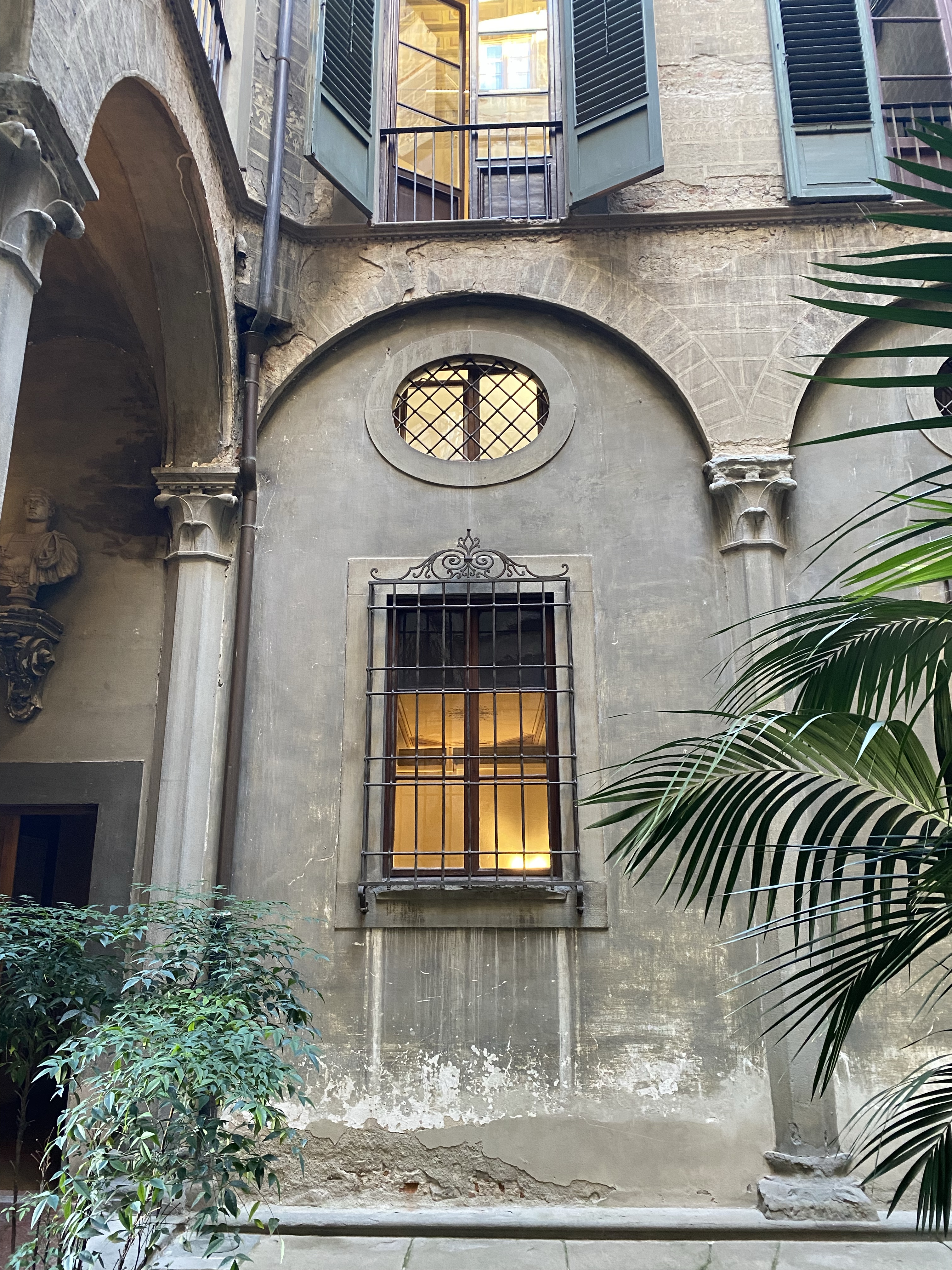
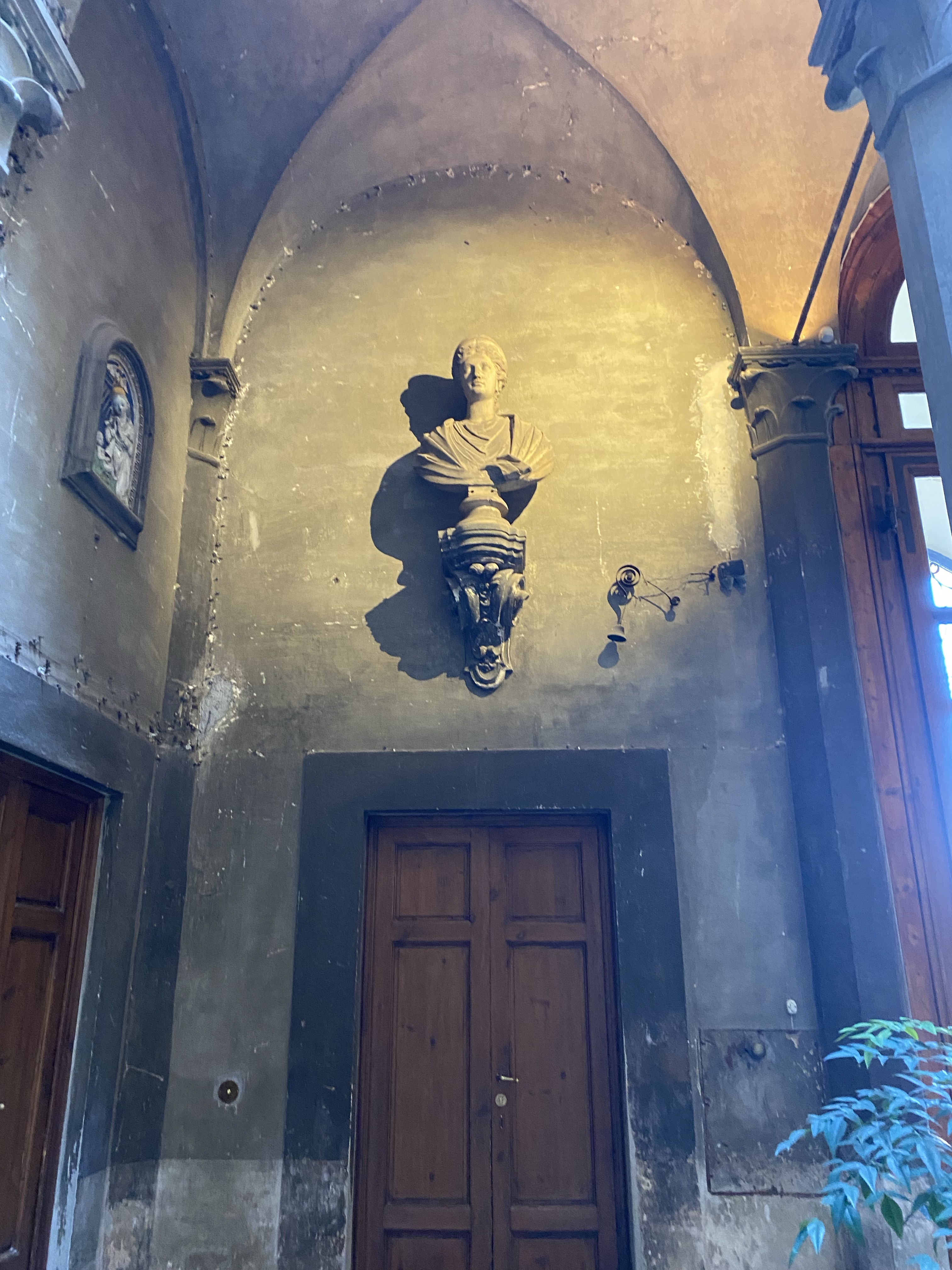
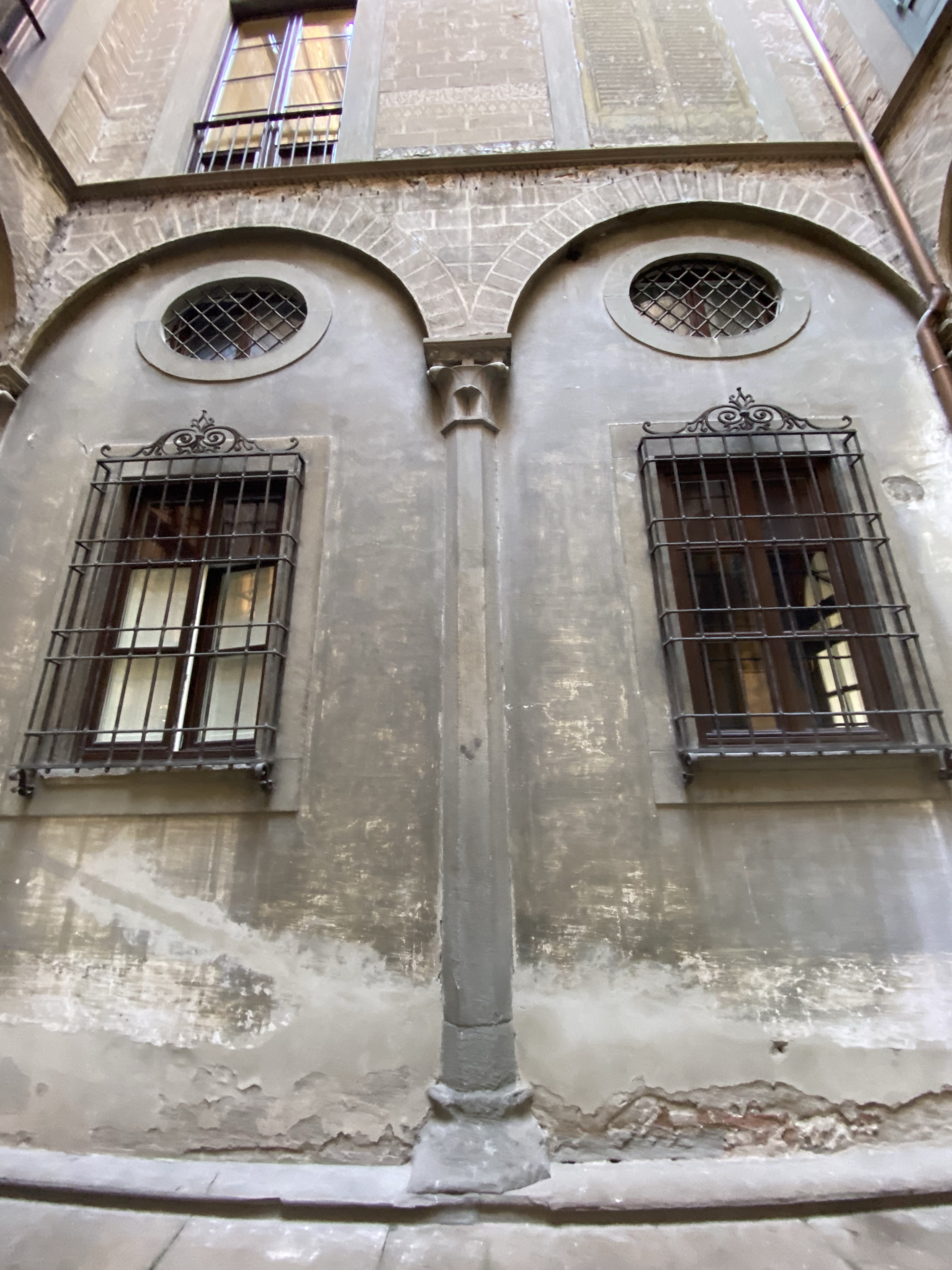
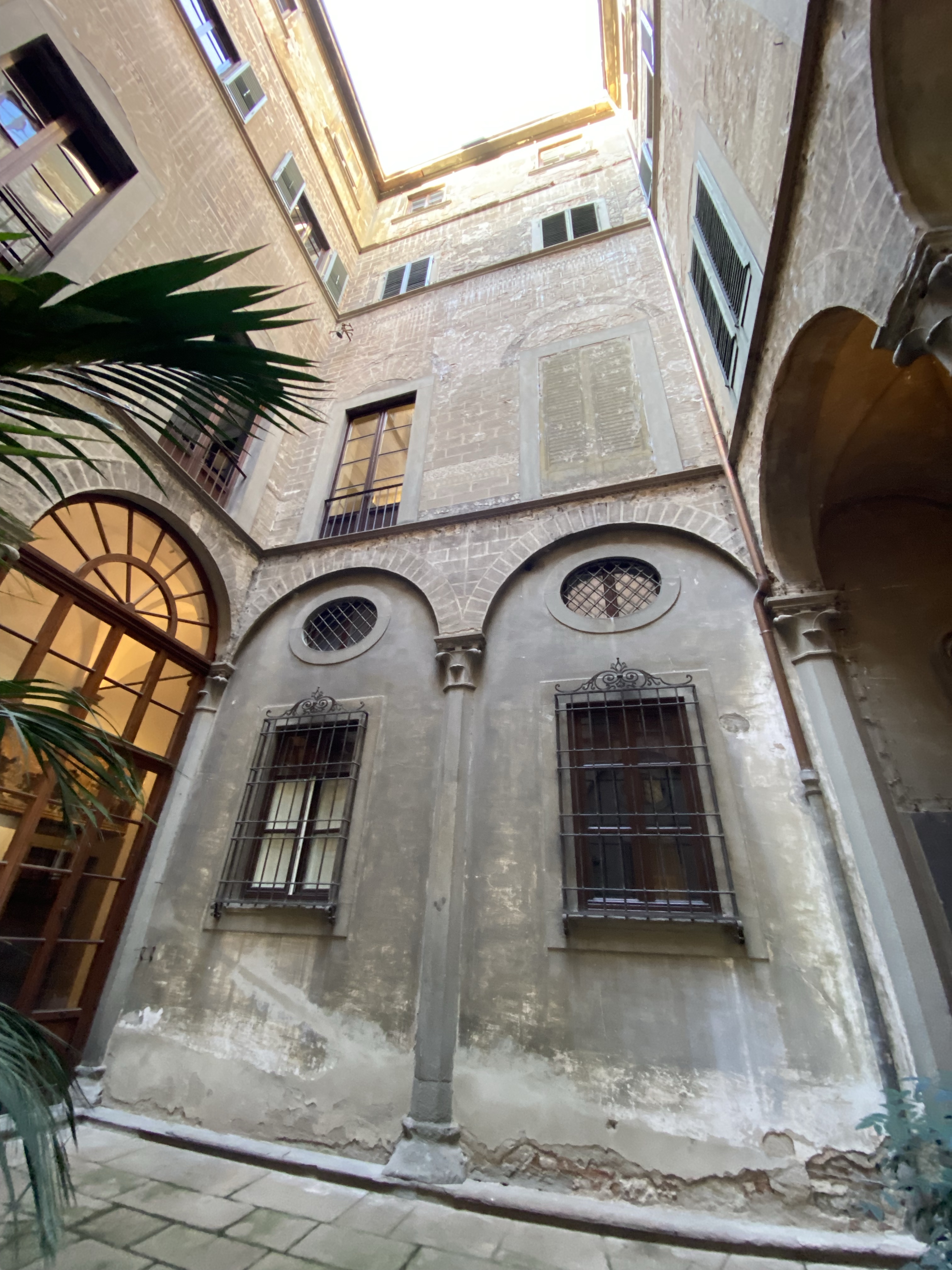
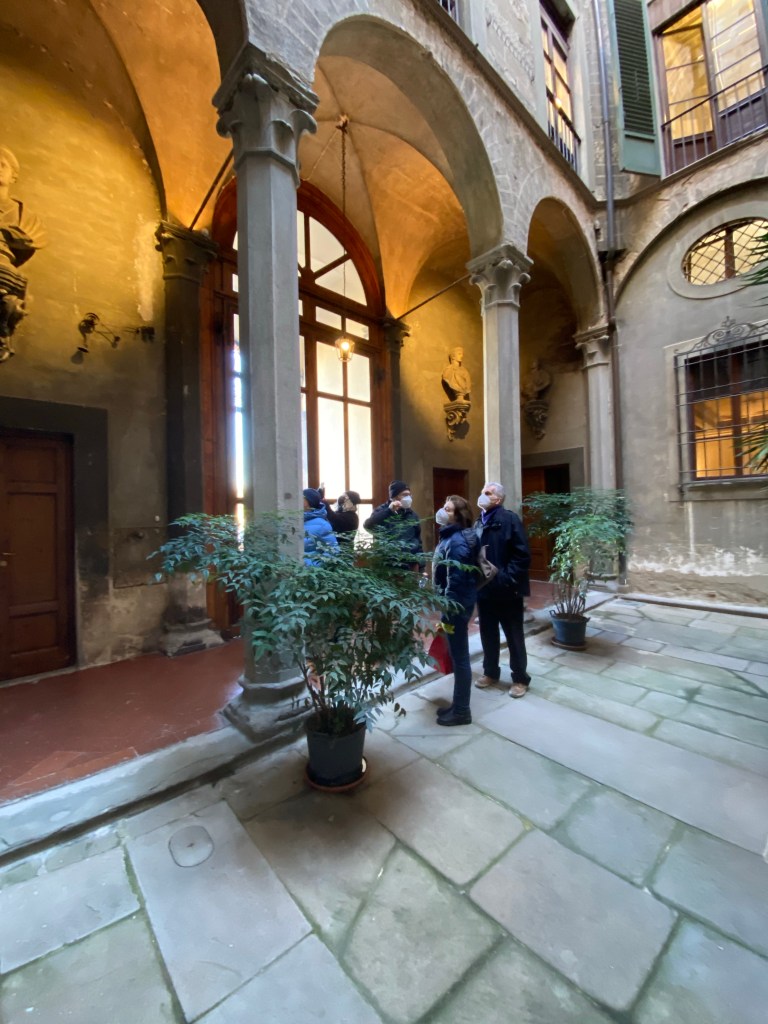
Last month I had the pleasure of visiting this private palace in Florence with a group of friends. It is still the hope of the Capponi family and so closed to the public. However, Stanford University is fortunate to call the palace home in Florence.
The curator of the palace showed us some holdings in the library, including an autographed copy of a book by Mark Twain. In the inscription, Twain recalled the character of Huck Finn. I wanted to take a picture, but this tour was very closed and it wasn’t allowed.
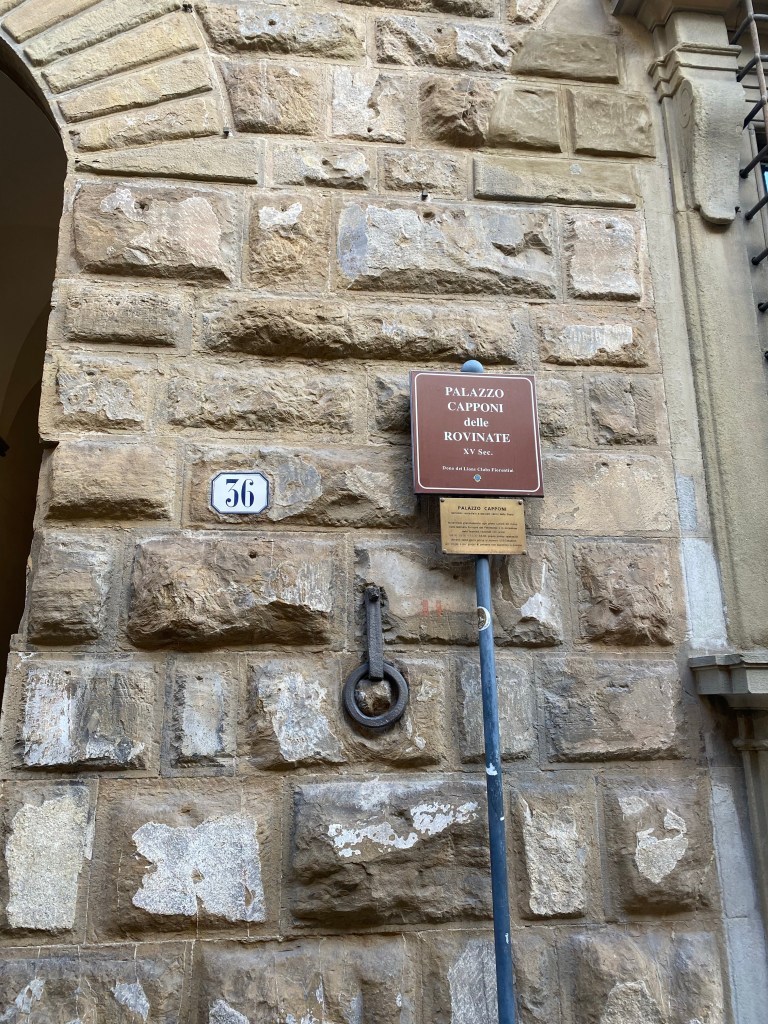
The 15th century façade of the palace on Via de’ Bardi.
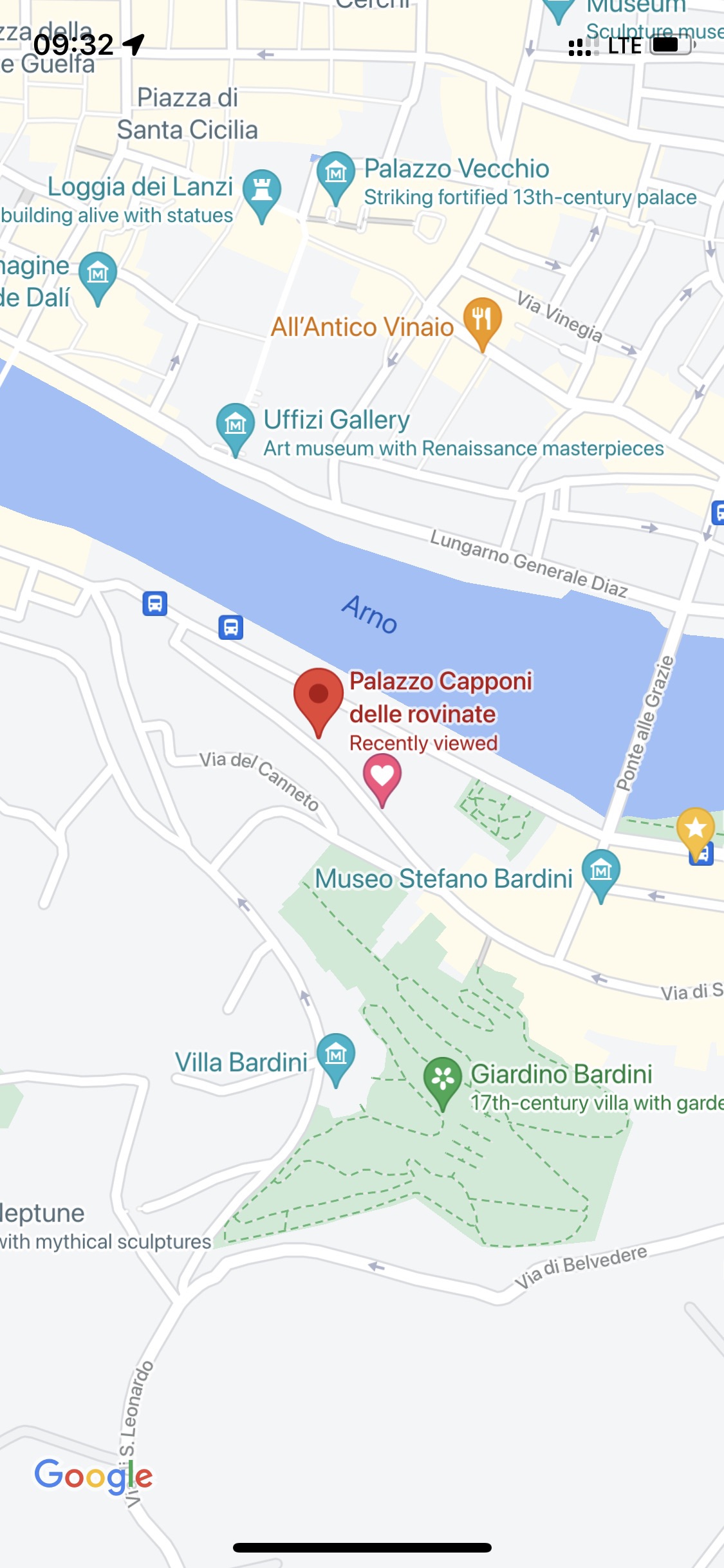
Palazzo Capponi alle Rovinate is a late-Gothic and early Renaissance-style residential palace located on Via de’ Bardi in Florence. There are apparently three other palaces once associated with the Capponi family: Palazzo Capponi, Palazzo Capponi-Vettori, and Palazzo Capponi-Covoni.
The palace was built, perhaps by Lorenzo di Bicci (although other scholars have attributed it to Filippo Brunelleschi) for Niccolò da Uzzano. It was finished around 1426. After his death a few years later, it was acquired by the Capponi family
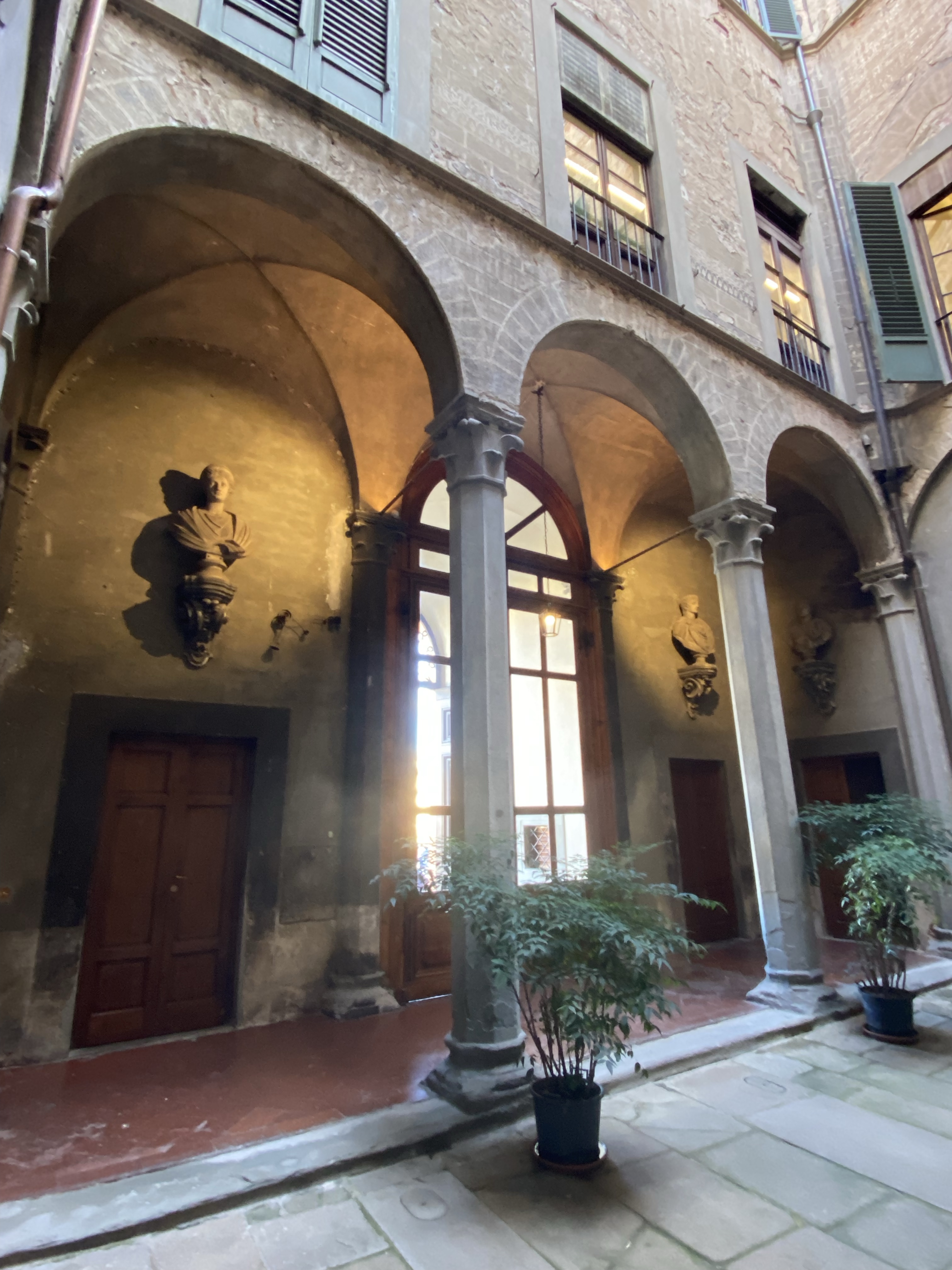
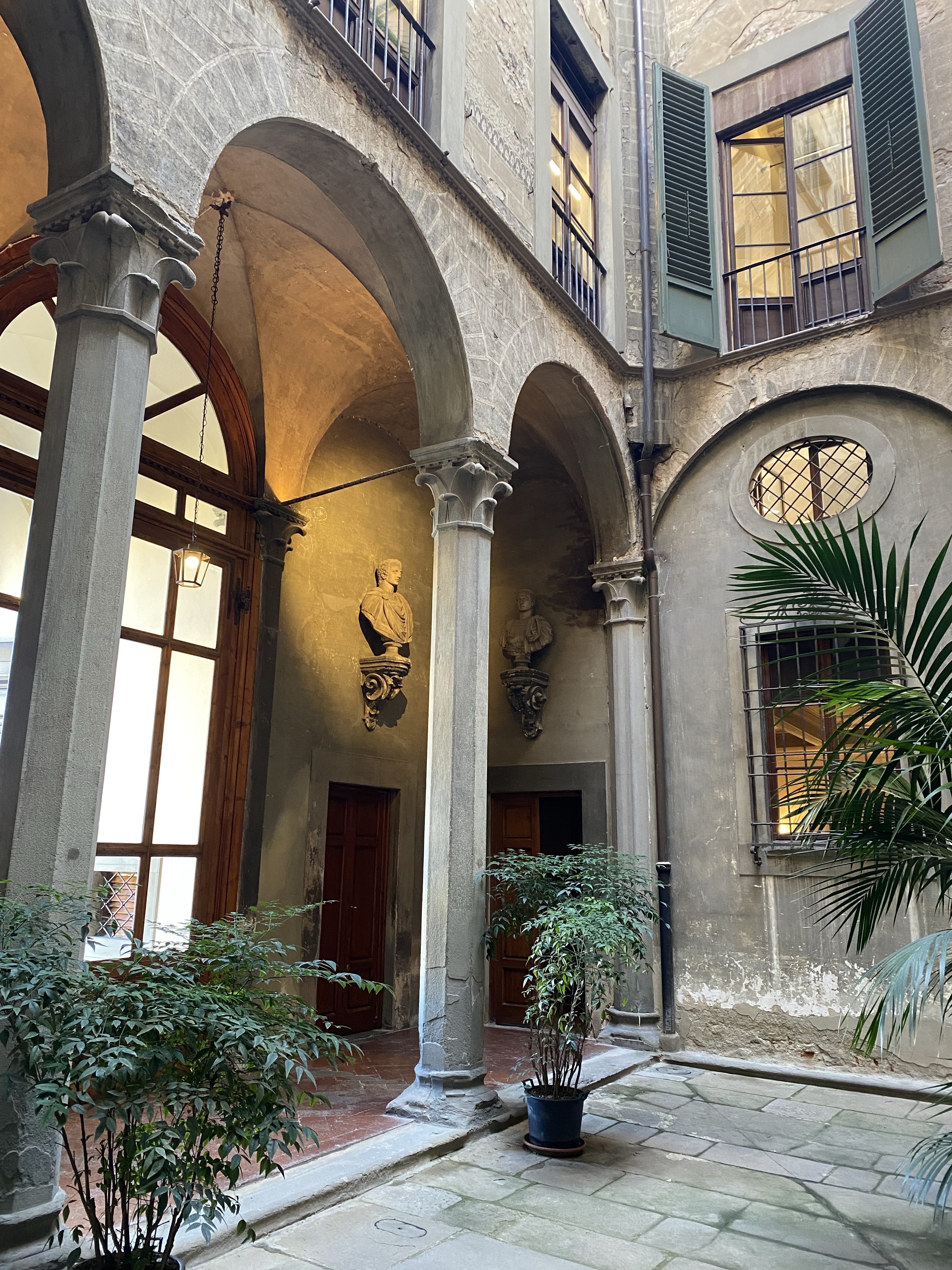
It has a 15th-century late-Gothic façade with a sober rustication at the lower floor, surmounted by irregular rows of mullioned windows (some closed and replaced by rectangular openings). The plan is nearly square, with a central courtyard in Renaissance style. This has porticoes on each side, with graffiti decorations dating to the 1450s and octagonal capitals in a still late medieval style. The porticoes are cross-vaulted.
The entrance on Via de’ Bardi has fresco, attributed to Lorenzo di Bicci himself, with two flying figures holding the Uzzano coat of arms. Internally, at the feet of the main staircase, is a porphyry lion, an ancient Roman sculpture from the 2nd century AD.
In the piano nobile is a small chapel with an altarpiece by Pontormo, perhaps taken from the Barbadori Chapel of the church of Santa Trinita. There is also a stained glass window, with the Deposition from the Cross, by Guillaume de Marcillat (1526).
The rear façade, added in the 19th century, overlooks the Arno River.
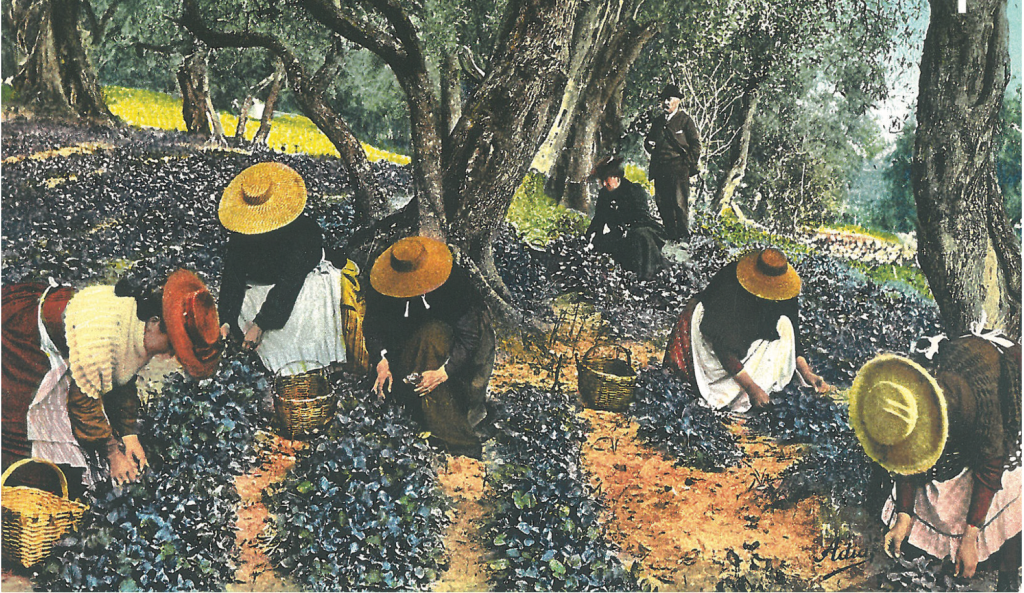
I was recently lucky to travel to Emilia Romagna for a few days and a highlight of that journey was time spent in Parma. I fell under the spell, while there, of the Parma violet and its association with the history of this town. You can nowadays find it in the soaps, the perfumes, the candies, and even the savory foods of Parma. Please enjoy!
Parma violets belong to the more exotic branch of the violet family. First appearing in Italy, in the 16th century, most types of parma violets have lavender flowers of varying sizes, which have an attractive fragrance.
The origins of the parma violet are unknown, though they have been shown to be derived from two different Viola alba strains, and more closely resemble, in flower colour and odour, Viola odorata. It was first imported into Naples in the latter part of the 19th century, when Filippo di Brazza took the plant to Udine. There are no records of his work, though it is widely believed that he deliberately crossbred to produce at least two varieties of parma. One of these is still available, whereas the other one is romantically believed to languish in some forgotten back garden somewhere, just waiting to be rediscovered.
Parma violets are widely believed to be sterile, and there is much store laid by their reproduction through cuttings. Armand Millet, a French violet grower, proved this belief to be a myth, however, and with the right conditions any sturdy violet could well produce a seed pod.
Parma violet is a deepish shade of violet descriptive of these flowers.
The delicate purple flowers of the parma violet plant also give their name to a delicate, violet-scented sweet Parma Violets, manufactured by Swizzels Matlow.
These are the words of Francesca Sandrini, Director of Glauco Lombardi Museum, where all of Maria Luigia’s relics are kept, a sentence that perfectly portrays the relationship between the Austrian Duchess and the violetta, which even adorned her wedding dress.
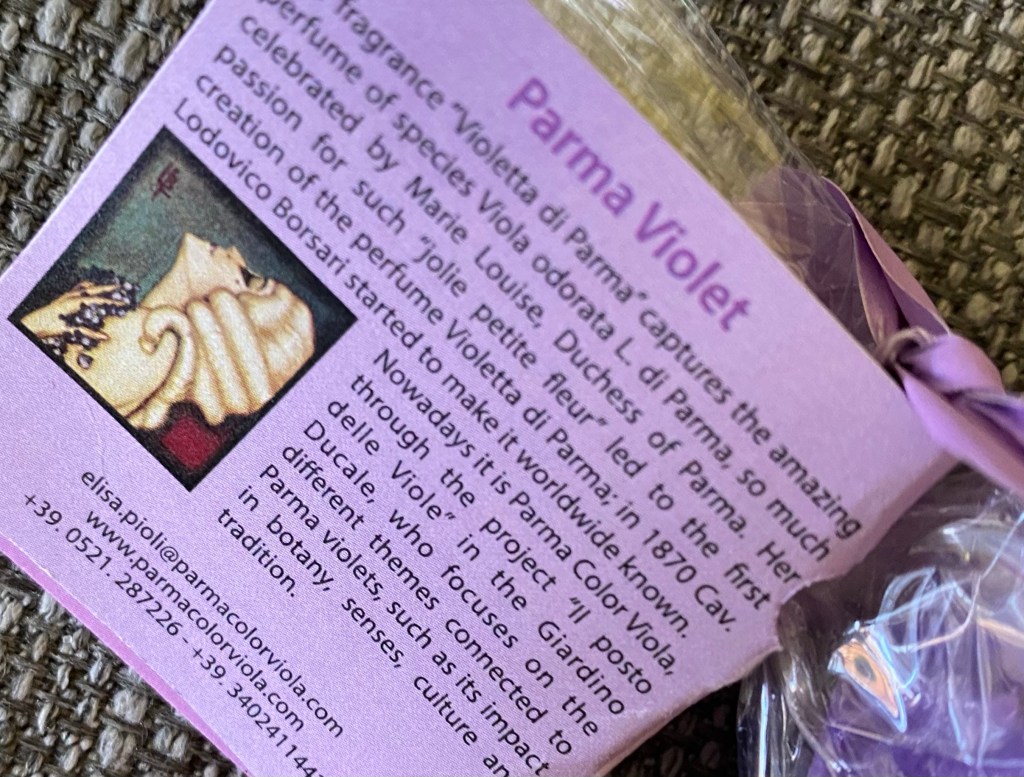
The sovereign, the second wife of Emperor Napoleon Bonaparte, became regent of the Duchy between 1816 and 1847, governing wisely and spreading her love for beauty.
She dedicated herself personally to the cultivation of this plant, as is demonstrated by the words that she wrote in Vienna in 1815, before settling in Italy: “Please let me keep some plants of Parma’s Violets with written instructions on how to plant them and make them flourish; I hope they will grow well, because I am becoming a botany scholar and I will be happy to grow this graceful little flower … “.
She showed unconditional love for this elegant flower that soon became her hallmark, to be found, engraved or painted, on plates, china, fans, thimbles, writing paper, even reaching the point of replacing her signature or monogram. Purple were also the garments and clothing of her servants and courtiers.
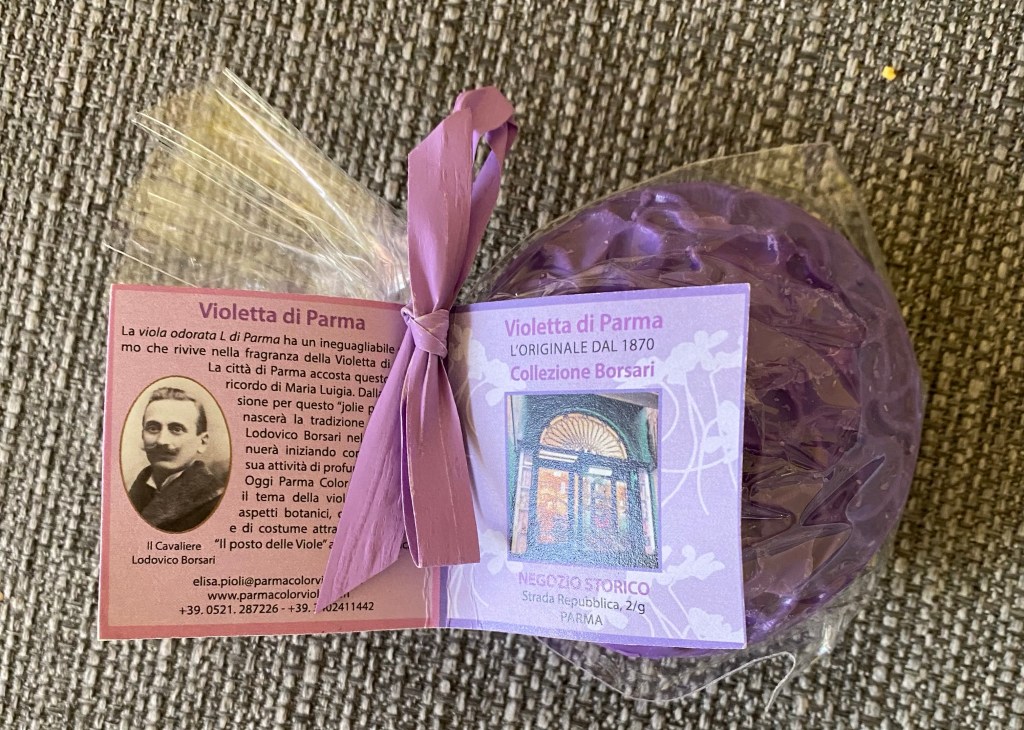
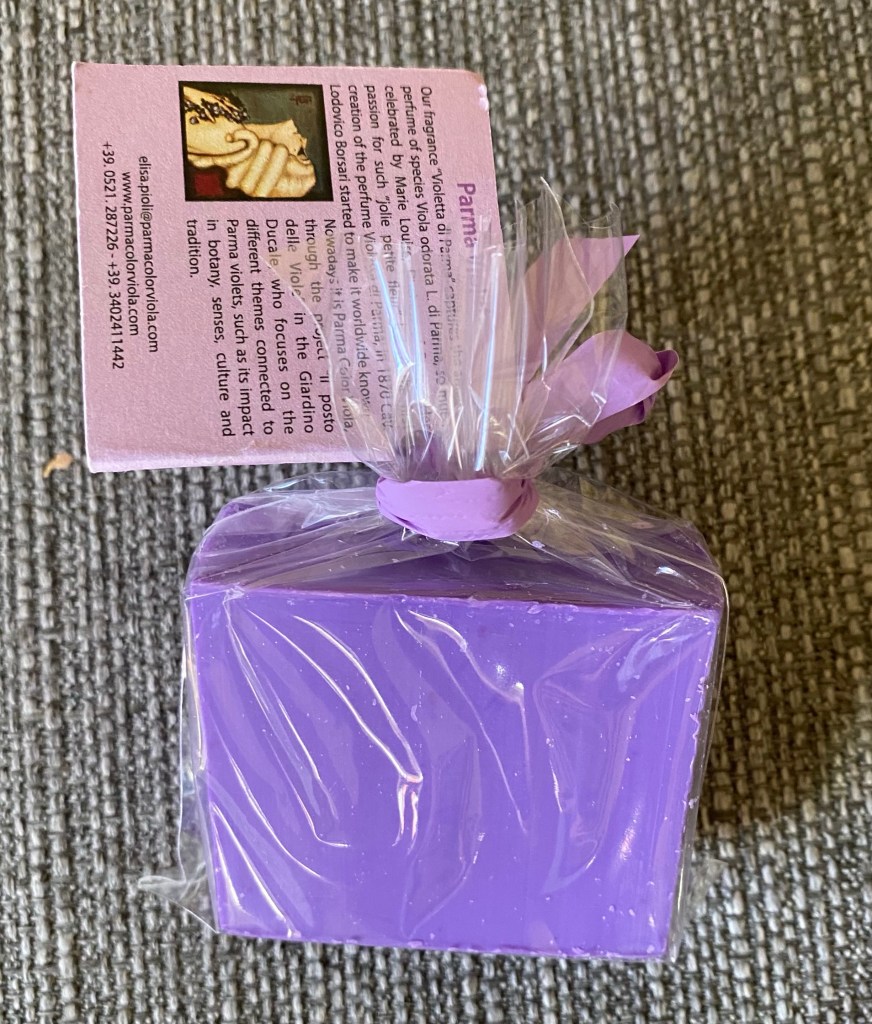
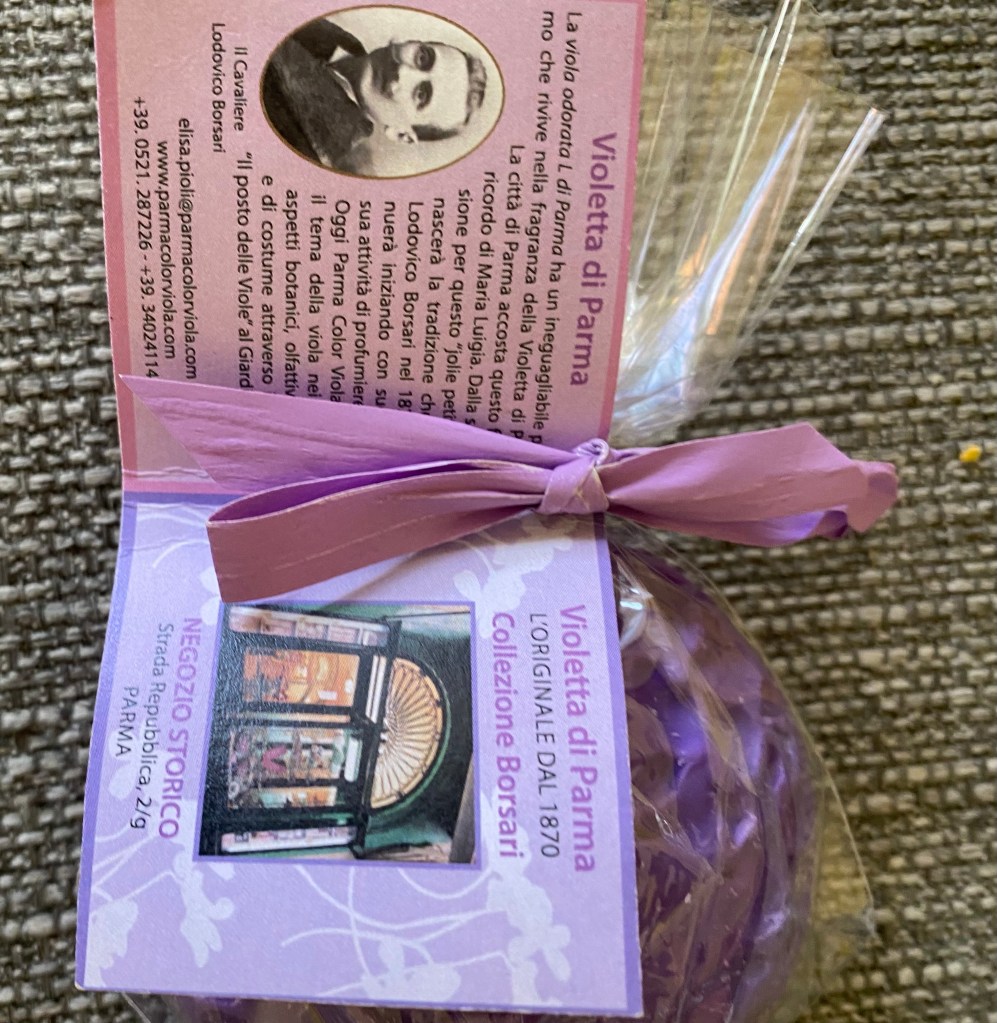
Not content with using violetta as a decorative pattern only, Maria Luigia even decided to make it her personal scent. Thanks to the patient work of the monks in the ancient convent of the Annunciation, the essence was extracted and the Duchess could bring her violetta everywhere, making of this scent the official perfume of the court. In 1870, after her death, the secret formula invented by the monks passed on to Lodovico Borsari, who produced and marketed the ducal essence transforming his company into the largest Italian nineteenth century perfume industry – and its success still continues today.
Besides being used for decoration and as a sedative and detoxicant in herbal preparations, the candied violetta is one of the ingredients used in confectionery to garnish desserts, ice-cream, cakes or simply to be enjoyed with coffee.
Recipe for Candied Violets
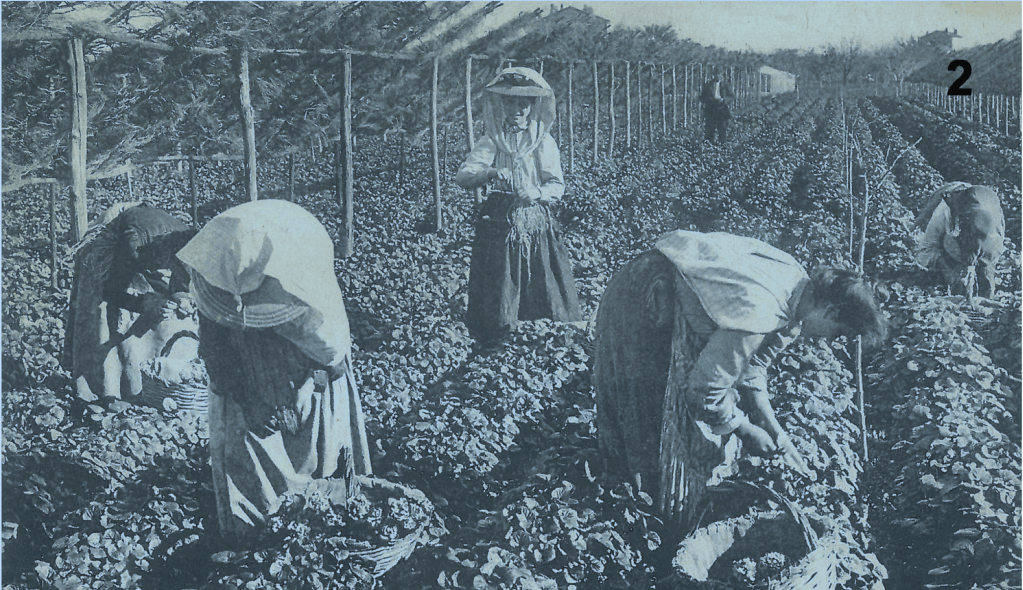
And now, the sweet conclusion of this story is the original recipe that women peasants used to prepare irresistible candied violets. After washing the flowers, they were made to dry in dark rooms and then treasured in glass jars away from light.
Ingredients:
1 cup of violets (50 Flowers)
a sufficient quantity of water
a sufficient quantity of sugar.
Wash violet flowers without removing the stem and put them down to dry on a cotton cloth.
Meanwhile, put a saucepan with sugar and a few tablespoons of water on a low fire until it gets brownish; don’t let it get caramelized.
Take violets from the stem, dip them into sugar and place them on a plane surface, covered with wax paper. Once cooled, they are ready to be used according to your fancy.
A simple recipe, whose sweet and romantic notes preserve and embody the essence of spring and of Parma!
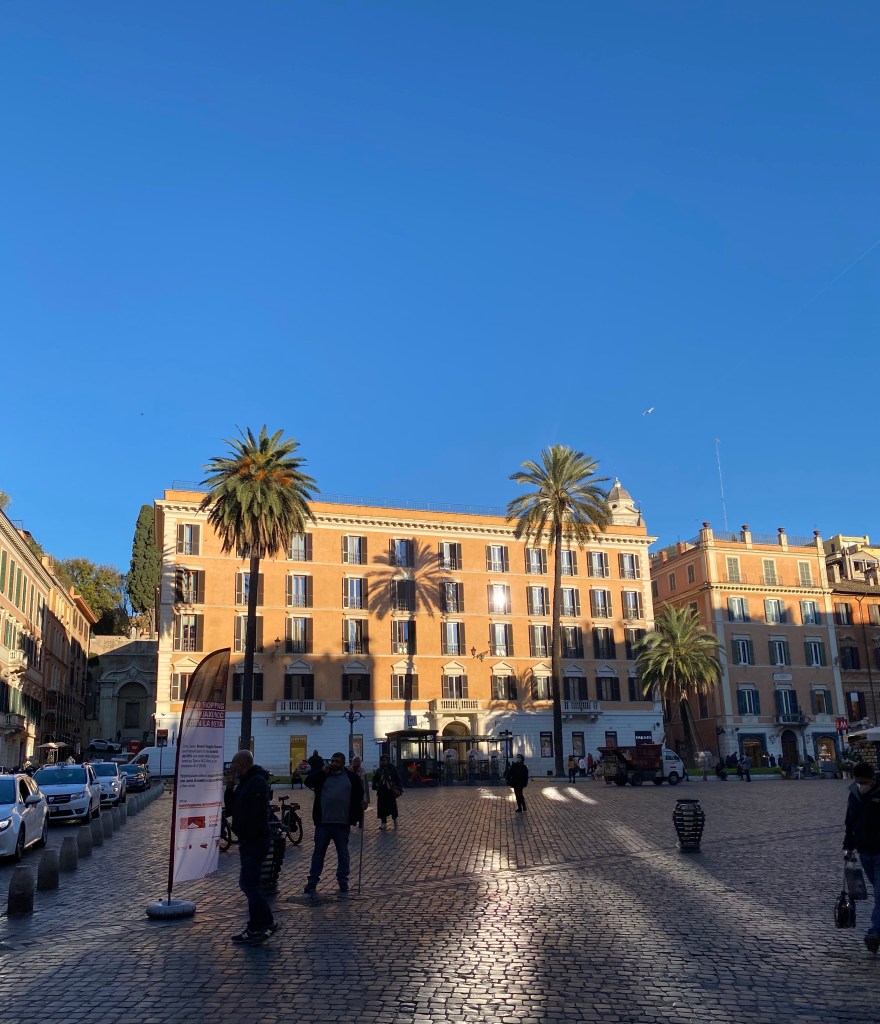
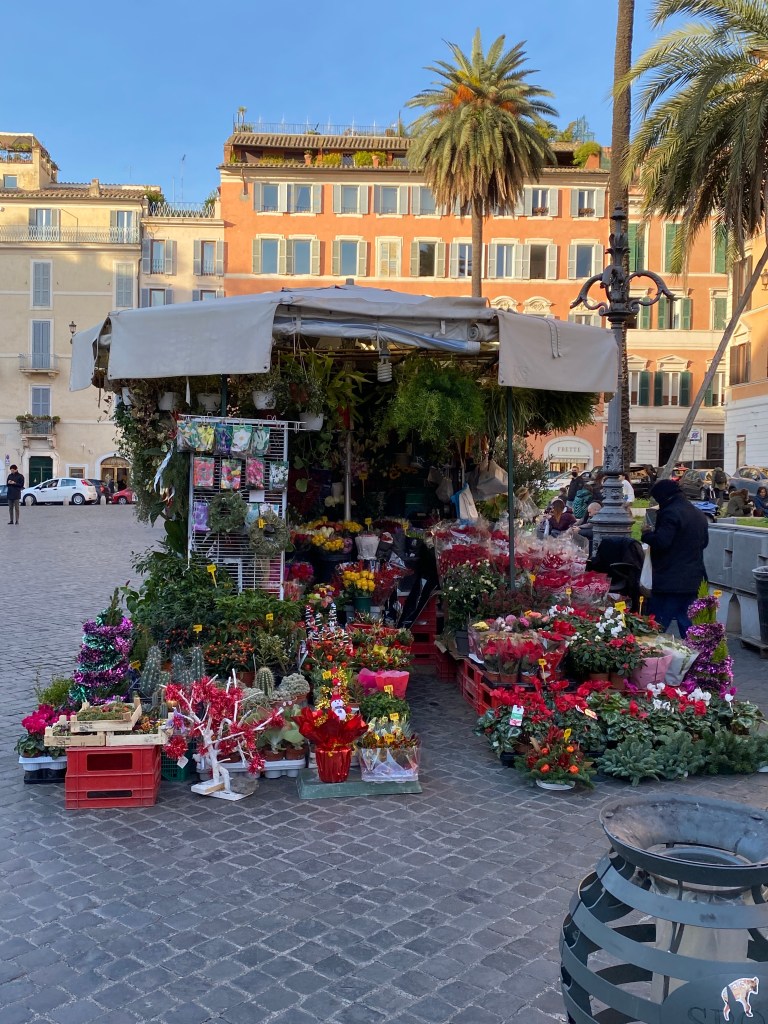
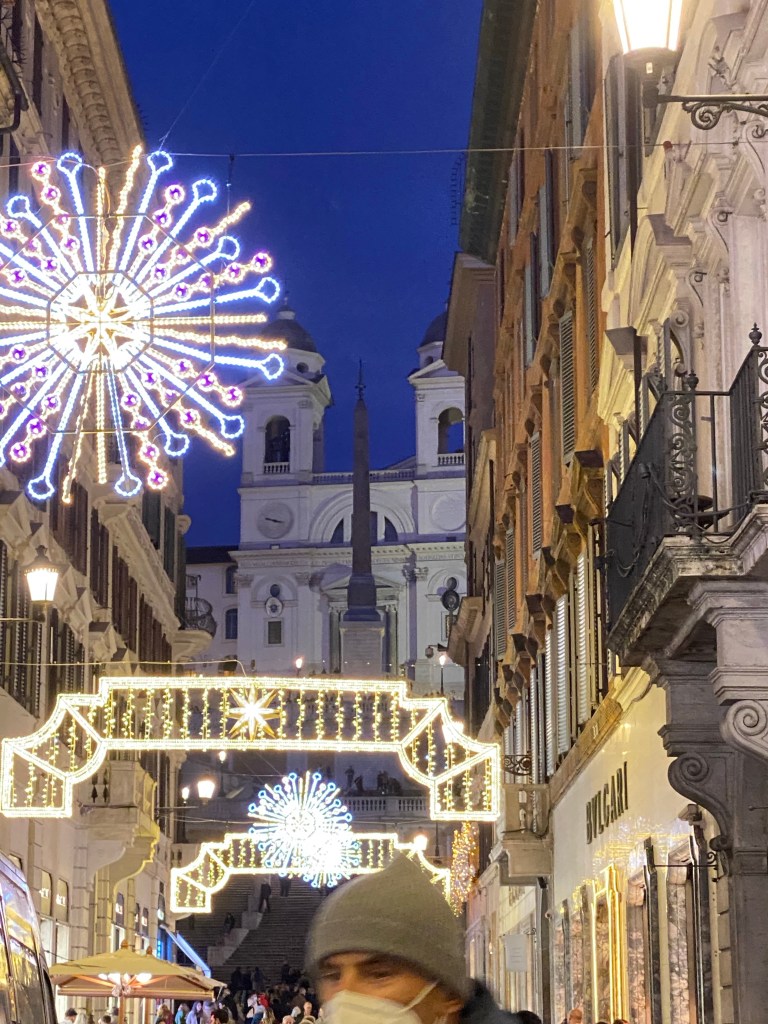
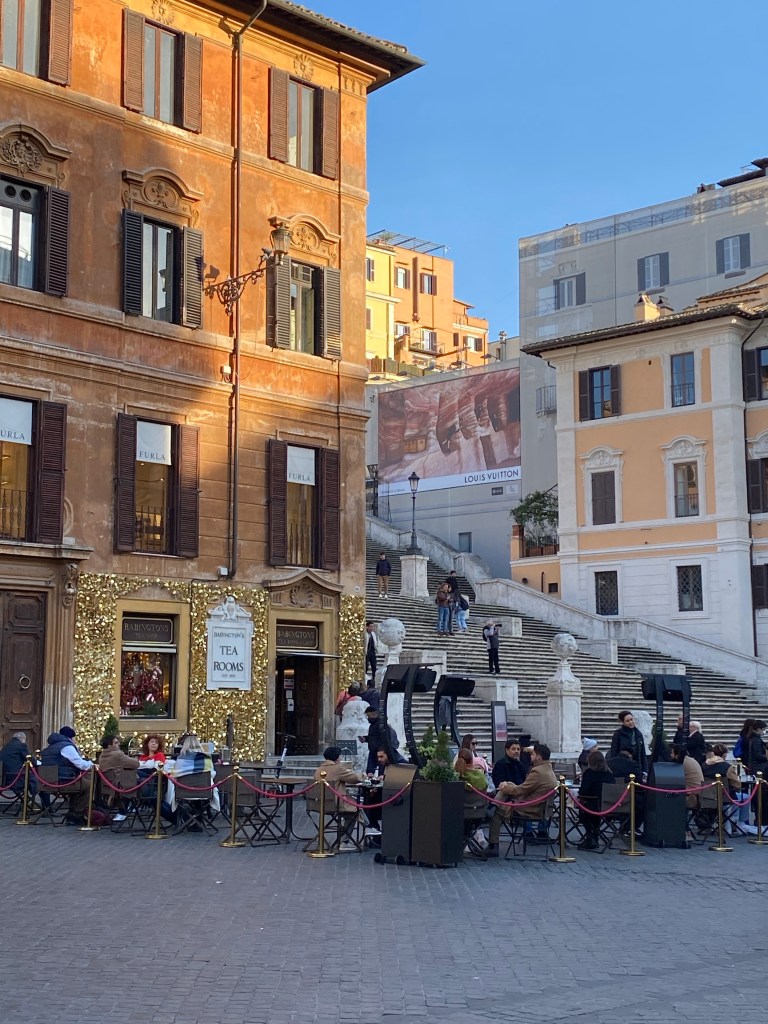
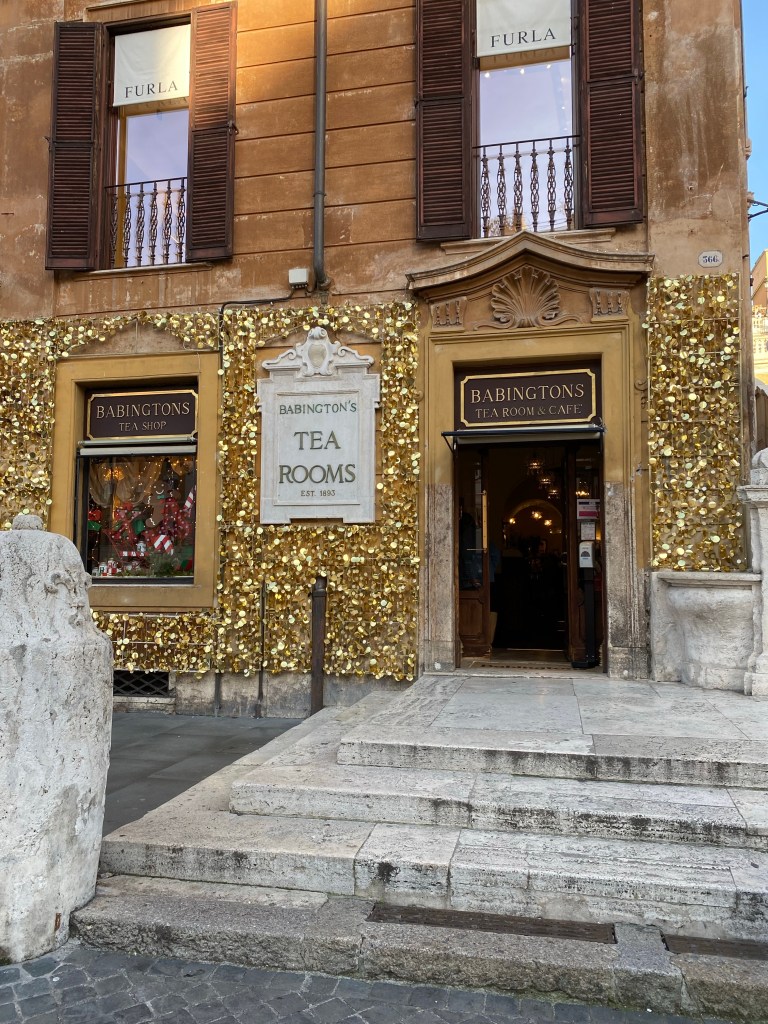
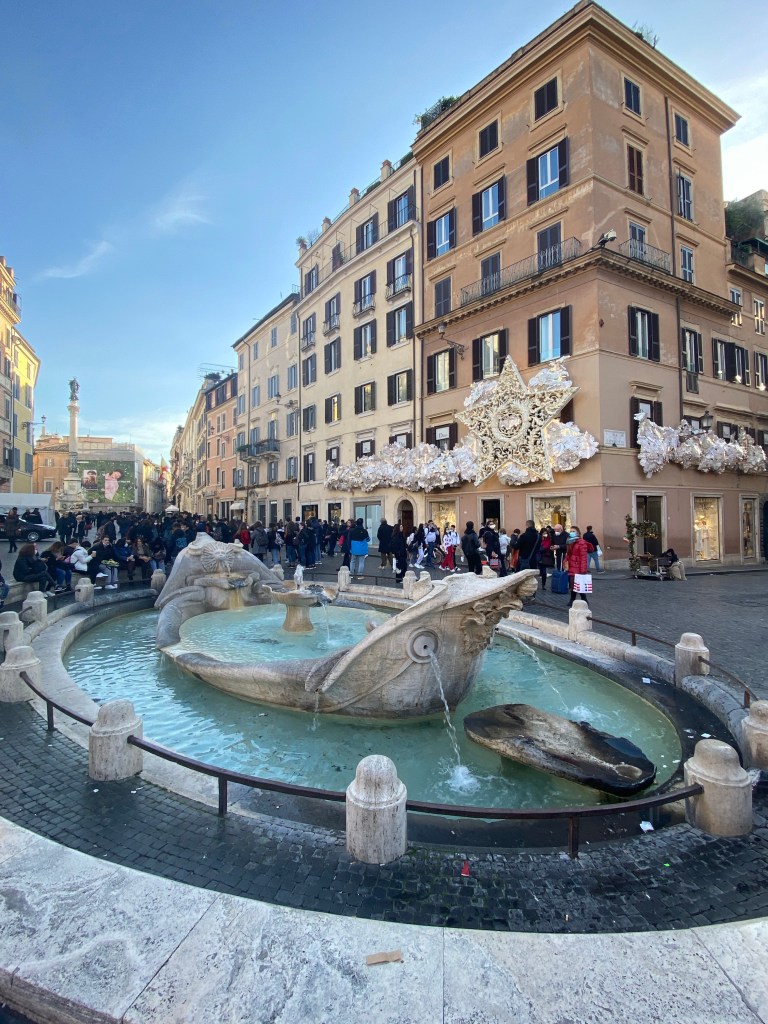
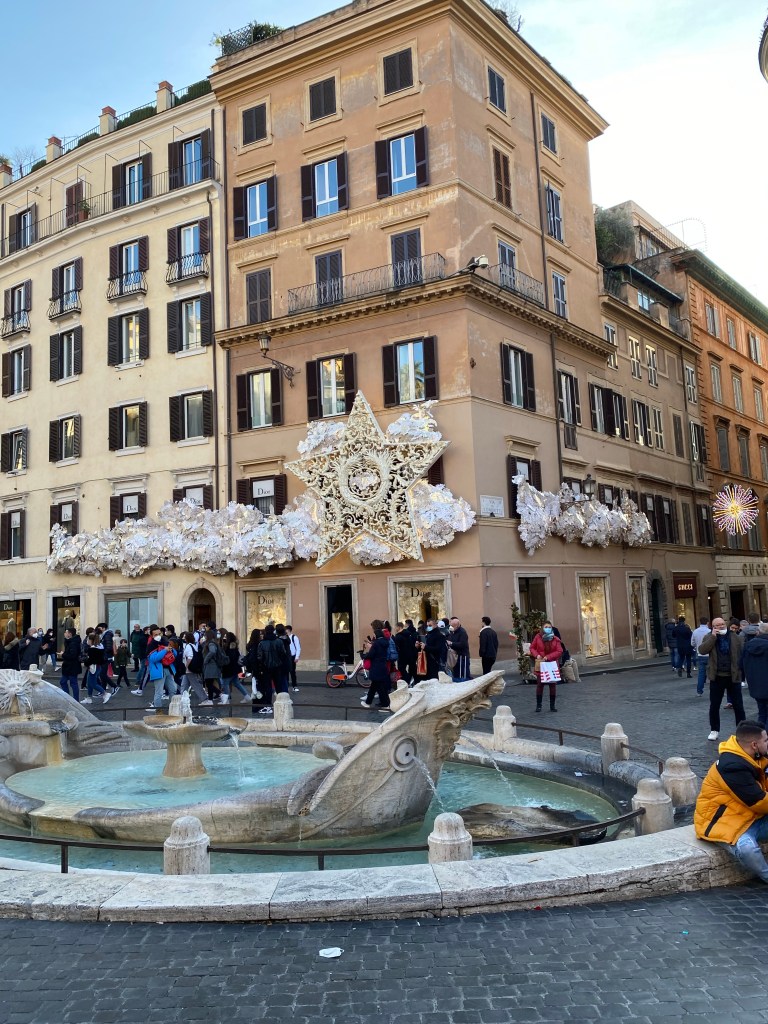
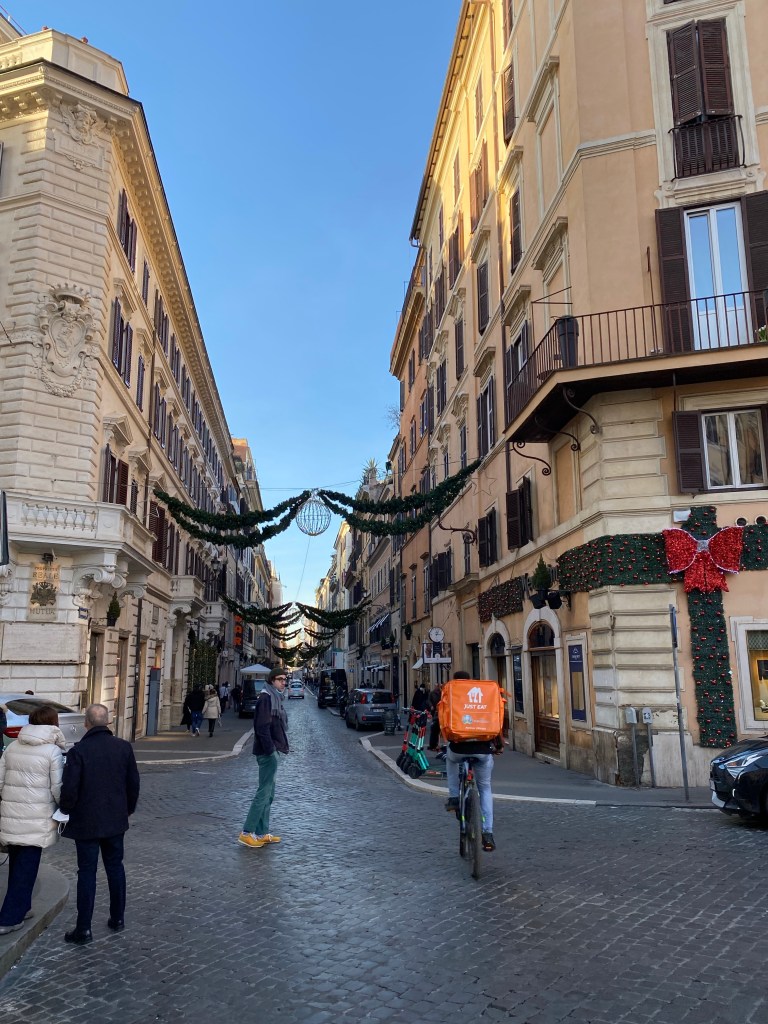
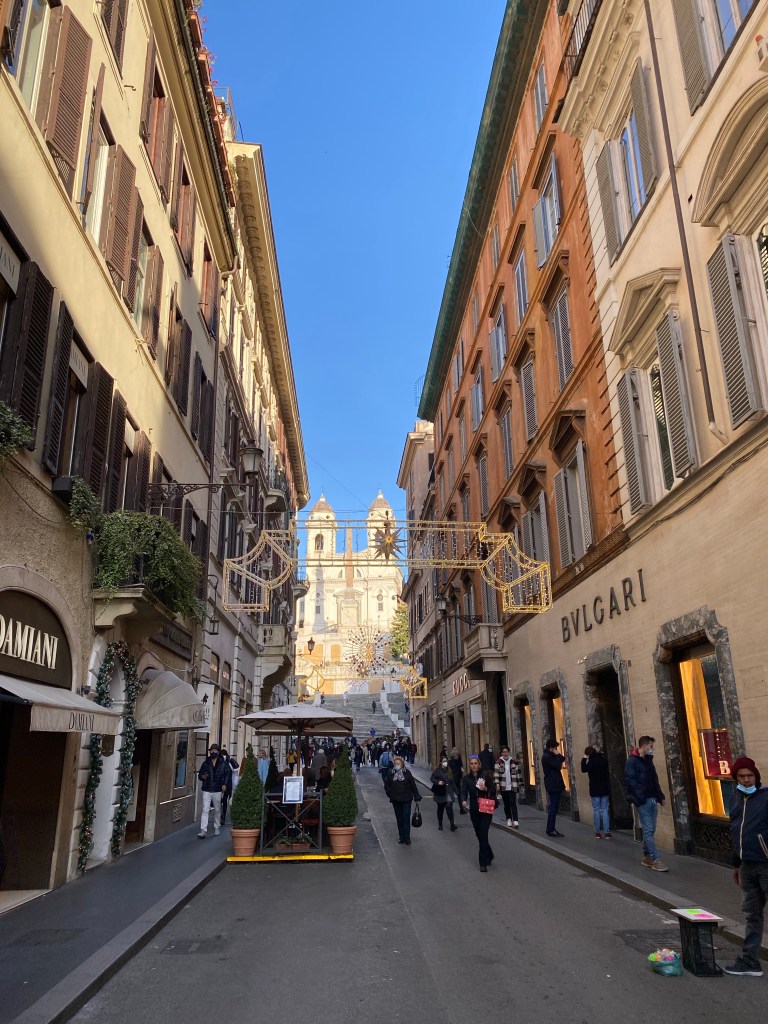
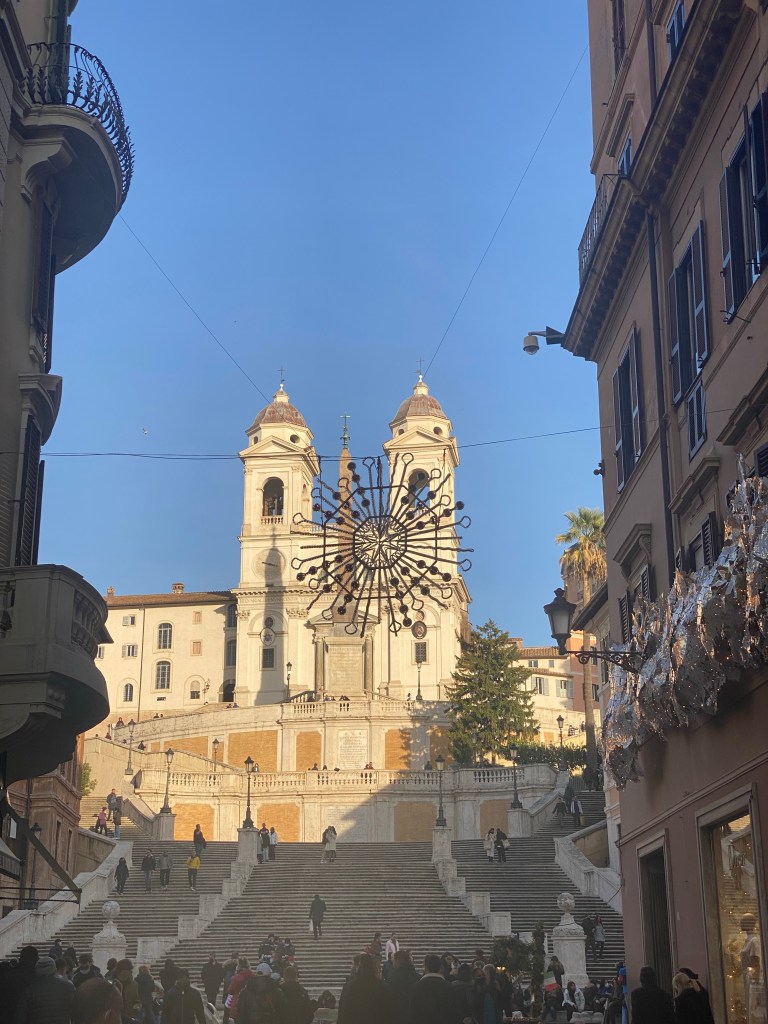
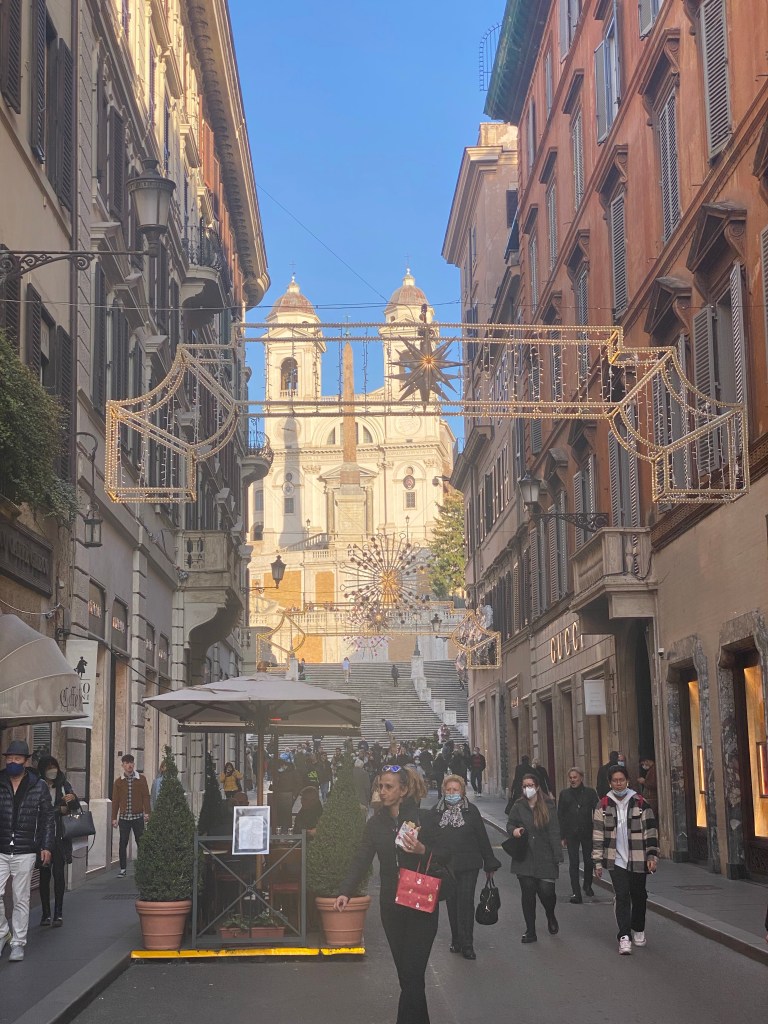
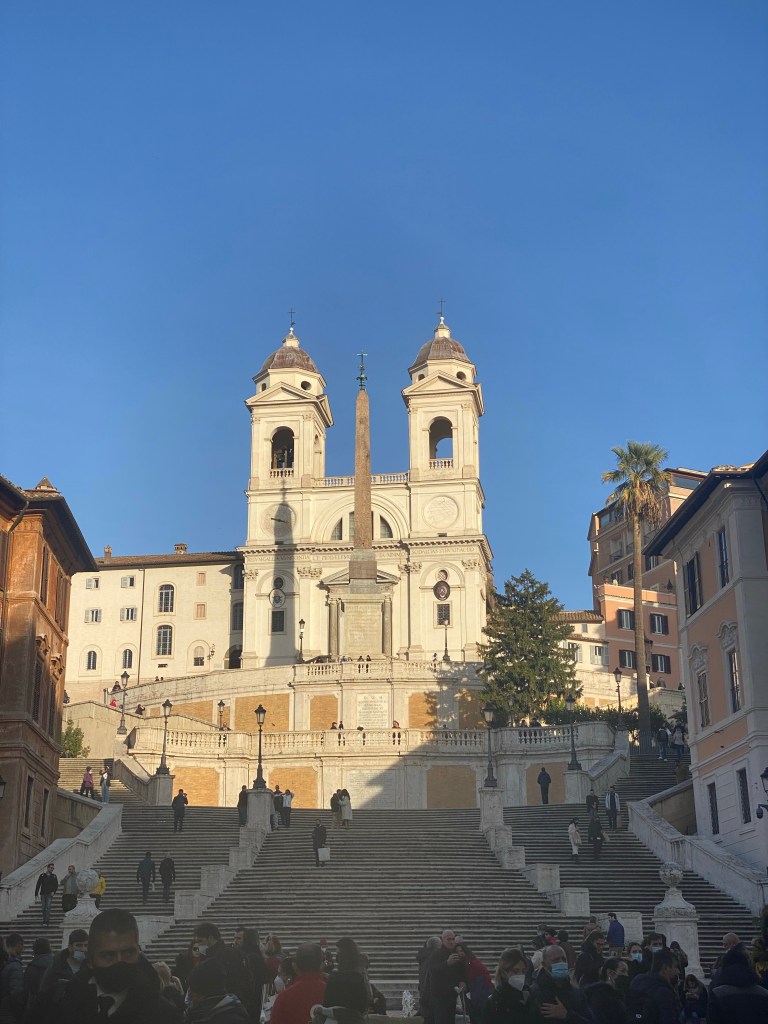
Last month I had the chance to made a quick survey of the favorite places in Rome, just to see how the Eternal City looked at Christmas (such a luxury to be able to quench that particular thirst).
High on that list is this incredible piazza, the Piazza di Spagna. Ah, Roma! You look good: winter, spring, summer, or fall. I’d happily take any season with you!
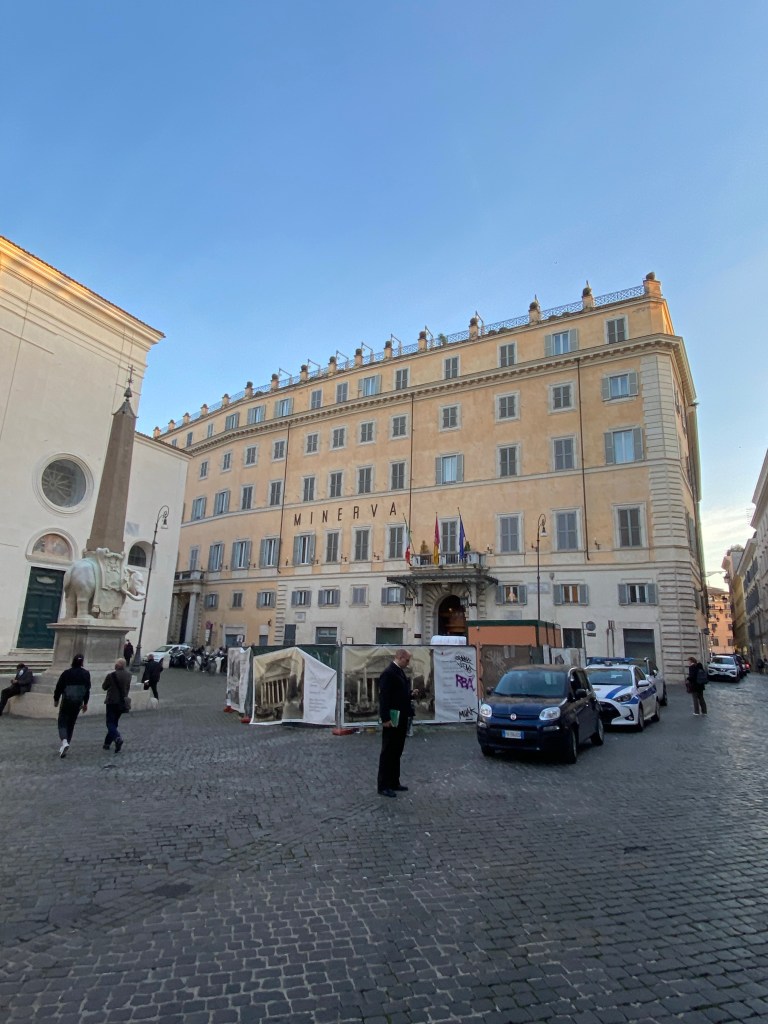
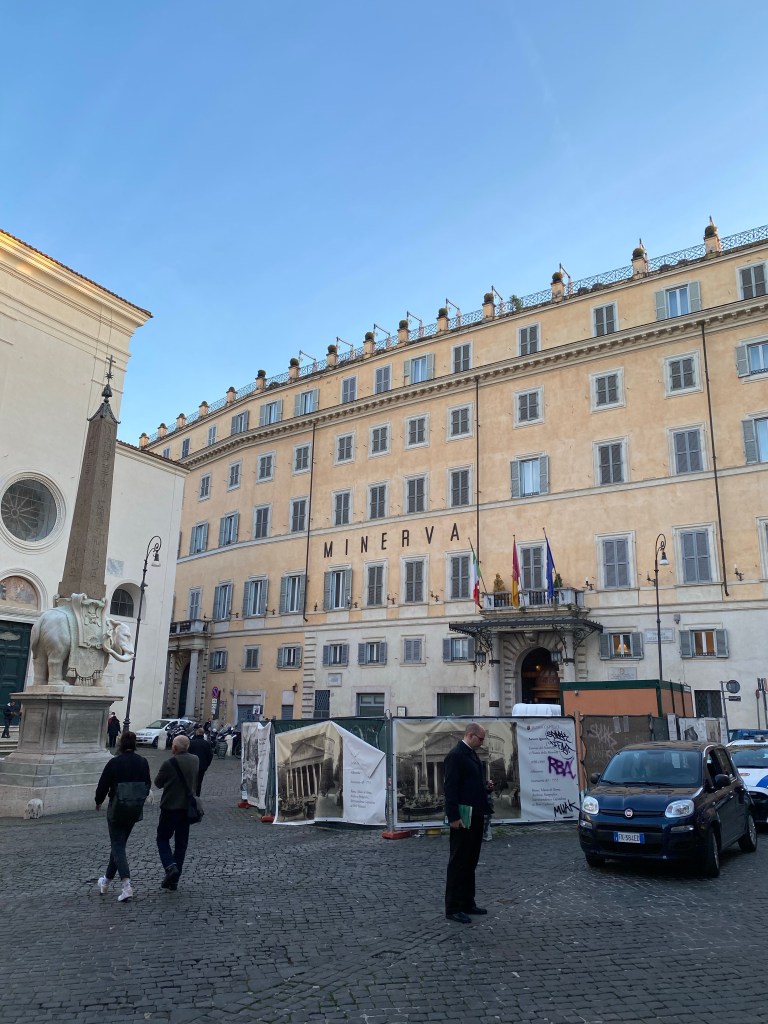
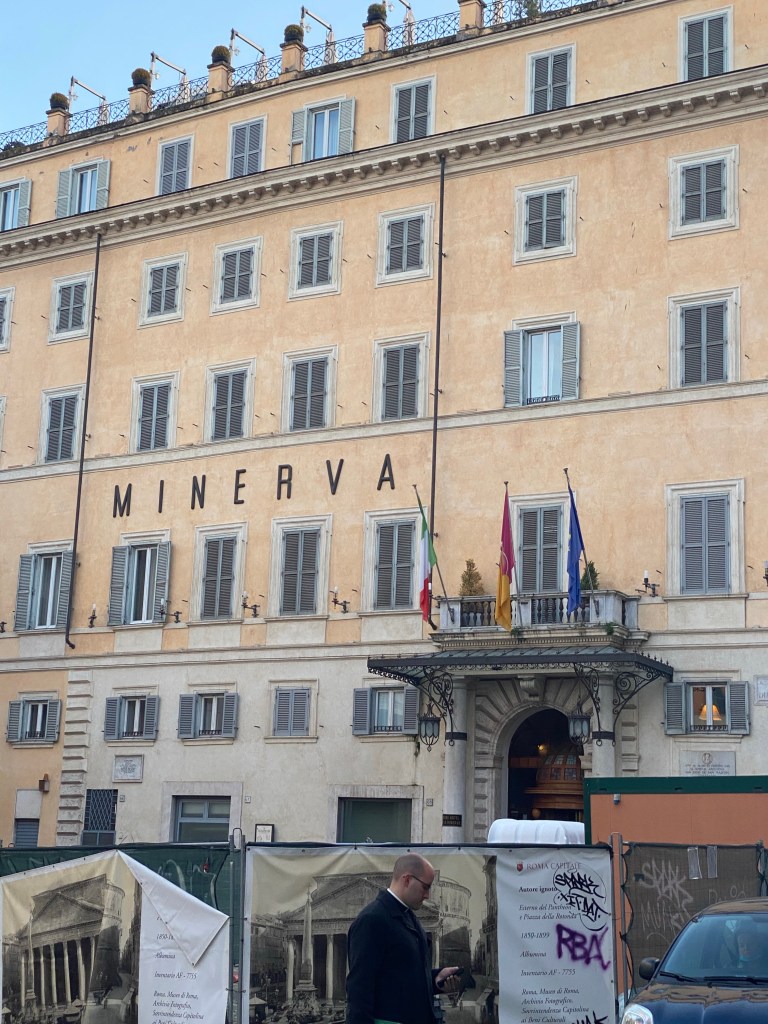
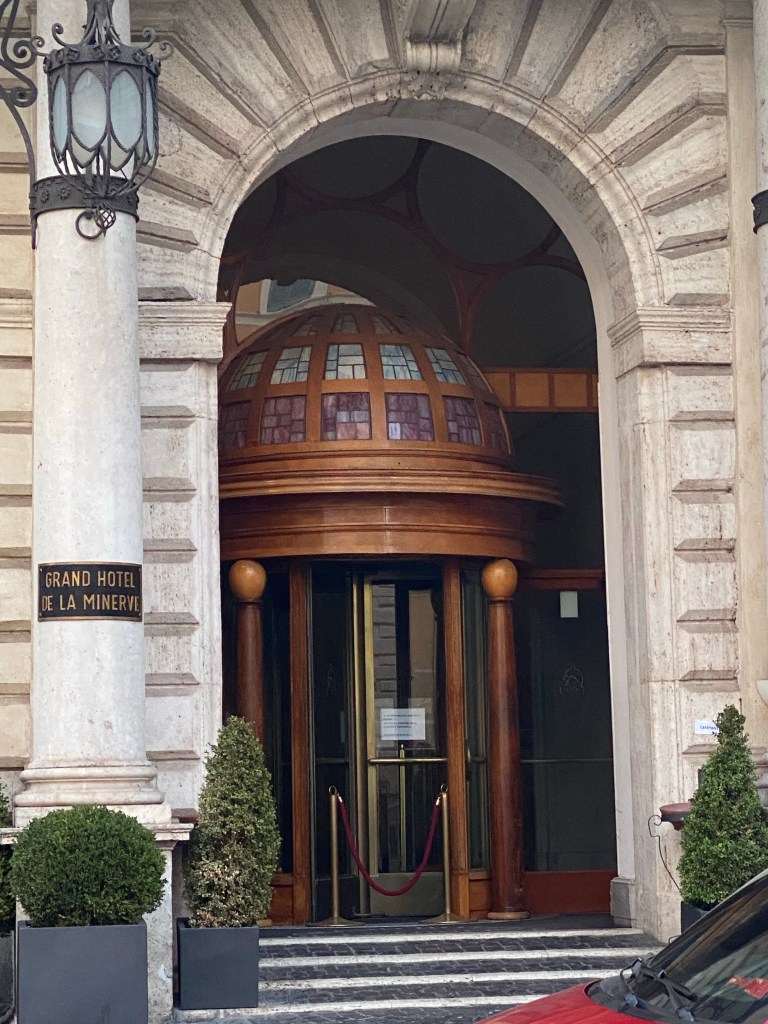
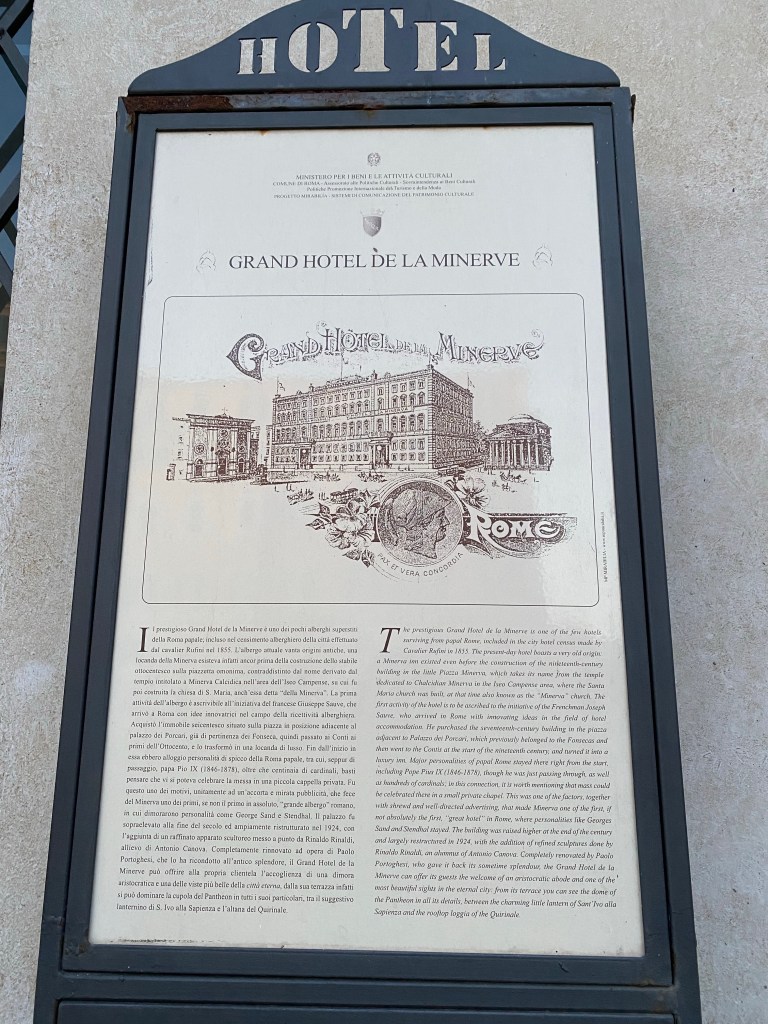
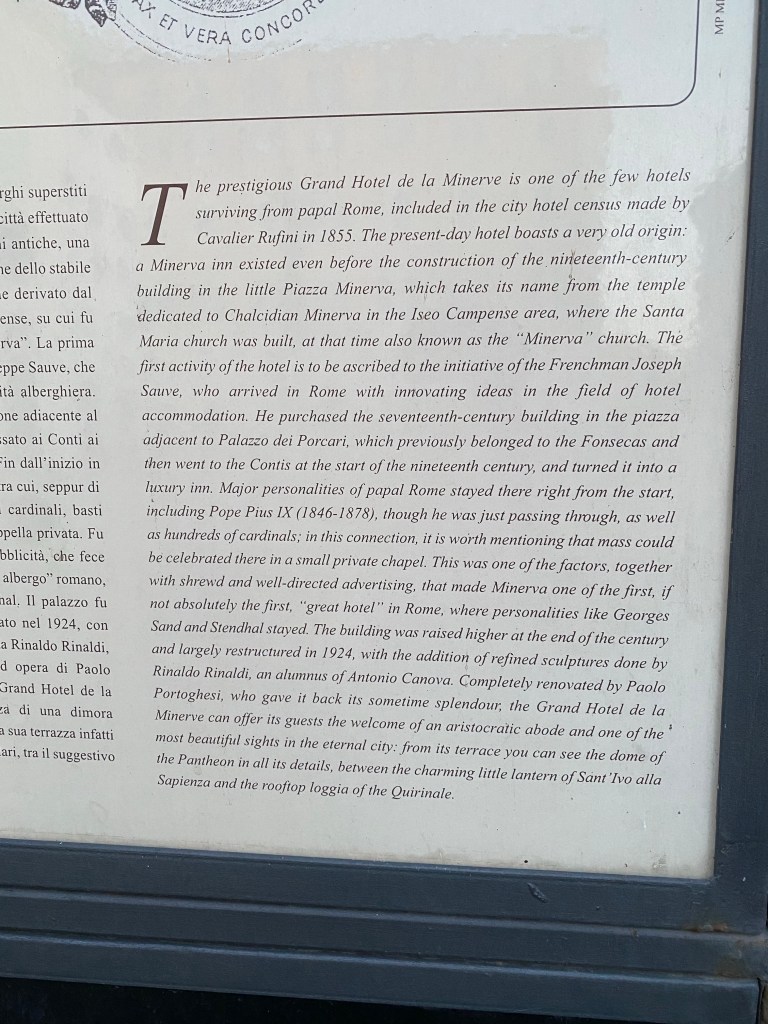
I took these pictures last month on my whirlwind trip to the Eternal City. This hotel occupies a sweet spot in my heart.
When my son was 10 years old, I took him on his first trip to Europe. Of course it was to Italy! Where else?! We stayed at this prestigious old hotel, so centrally located, and we have very fond memories.
It was funny because at the time of our visit, some bigwig from Korea was a guest in the hotel. His/her room was opposite ours. There were armed guards watching that room 24/7. When we checked in, the clerk told us that this would be going on. He told us we’d be safer than normal. It was kind of strange, because several men would be sitting in the room across from our door; they would have their door open all the time and were usually playing cards. It reminded me of the mafia.
When I was in Rome last month, the hotel was closed. Is it closed because of Covid, I wonder? I do hope it returns when the world returns more or less to normal!
My son and I also recall fondly that on our first morning on our trip, we woke up really early (jet lag) and left the hotel to go to the Rome zoo. It was the hottest June on record (at the time), and we were at the zoo when it opened. After the zoo, James spotted a stand selling enormous balloons. He really wanted a red one. This was my first trip to Italy after the Euro was introduced and, being bad at math and conversions, I wasn’t sure what the actual cost was. I later figured it out: I paid about $40 USD for that silly balloon!
But, it turned out to be a great investment and he kept that balloon with him on our trip and even took it on the train with him to Florence. When we were at the Minerva, he let go of it accidentally and it flew to the terribly high ceiling of the lobby. We assumed it was gone to us forever, but the hotel staff insisted on finding some long sticks and brought it down for him. I always knew Italian loved children, but this moment is especially sweet in my memory. My blue-eyed, red-haired, beautiful boy was immensely happy at that time.
When you walk out of the Minerva hotel, this is your incredible view! Not bad.
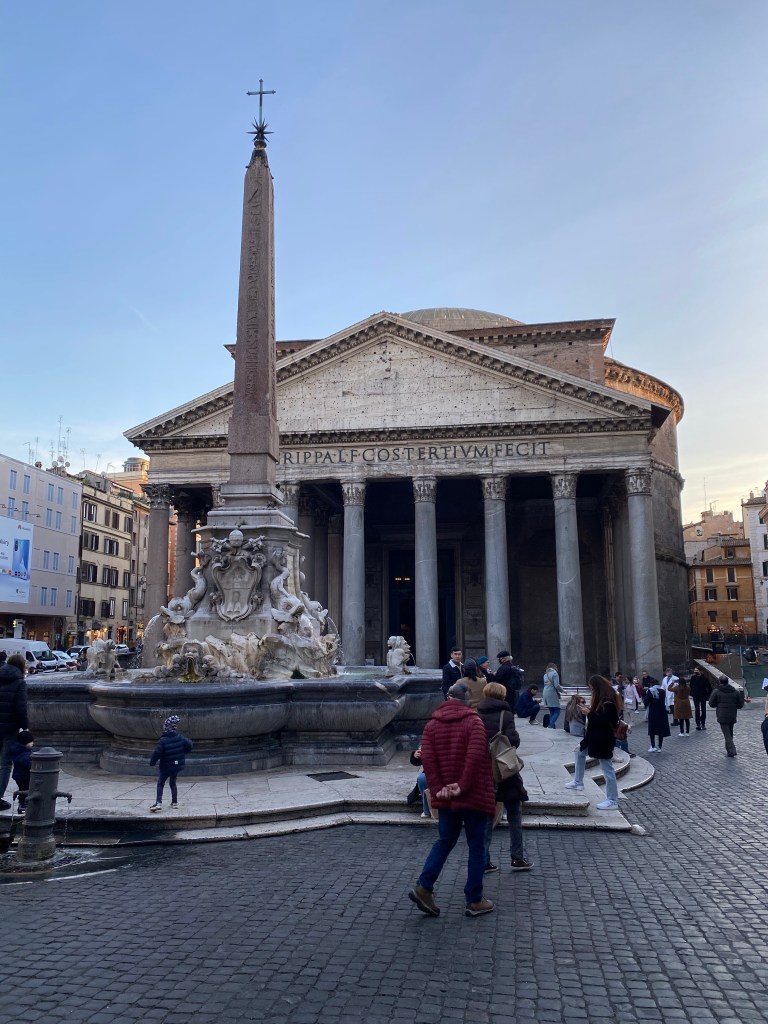
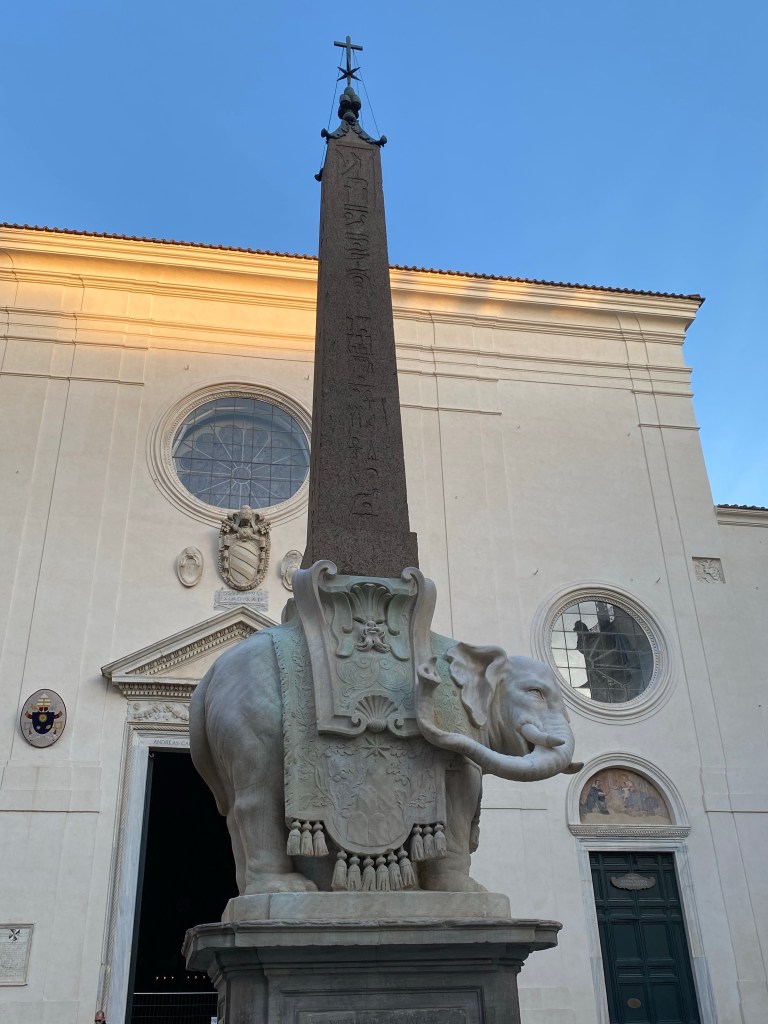
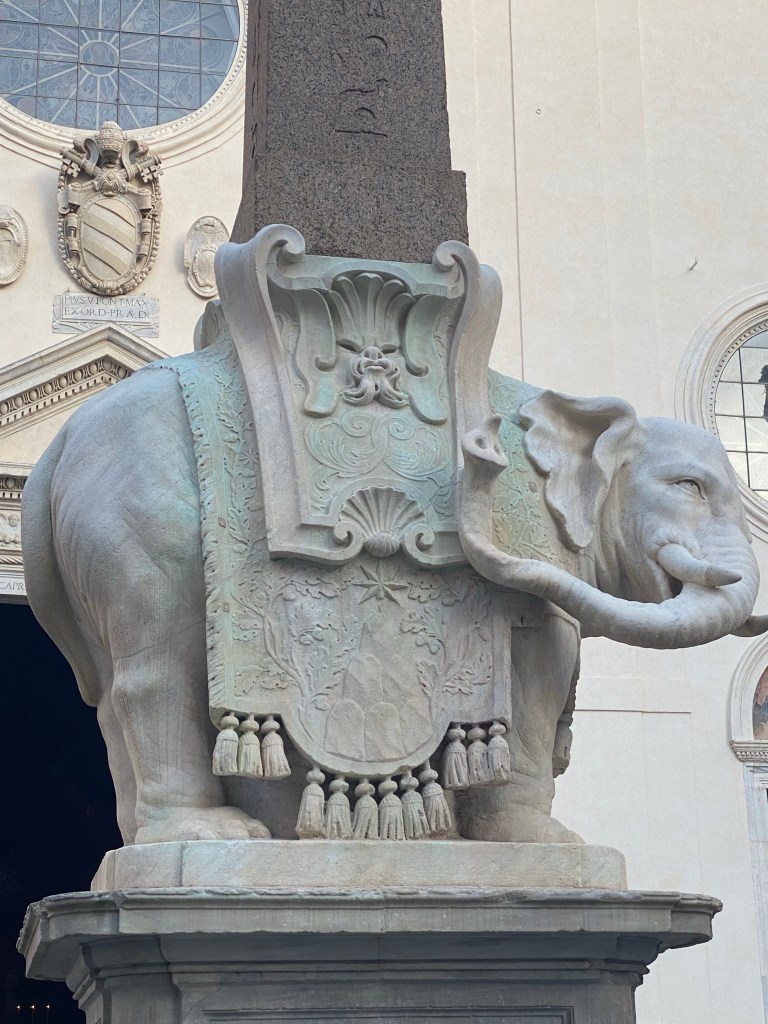
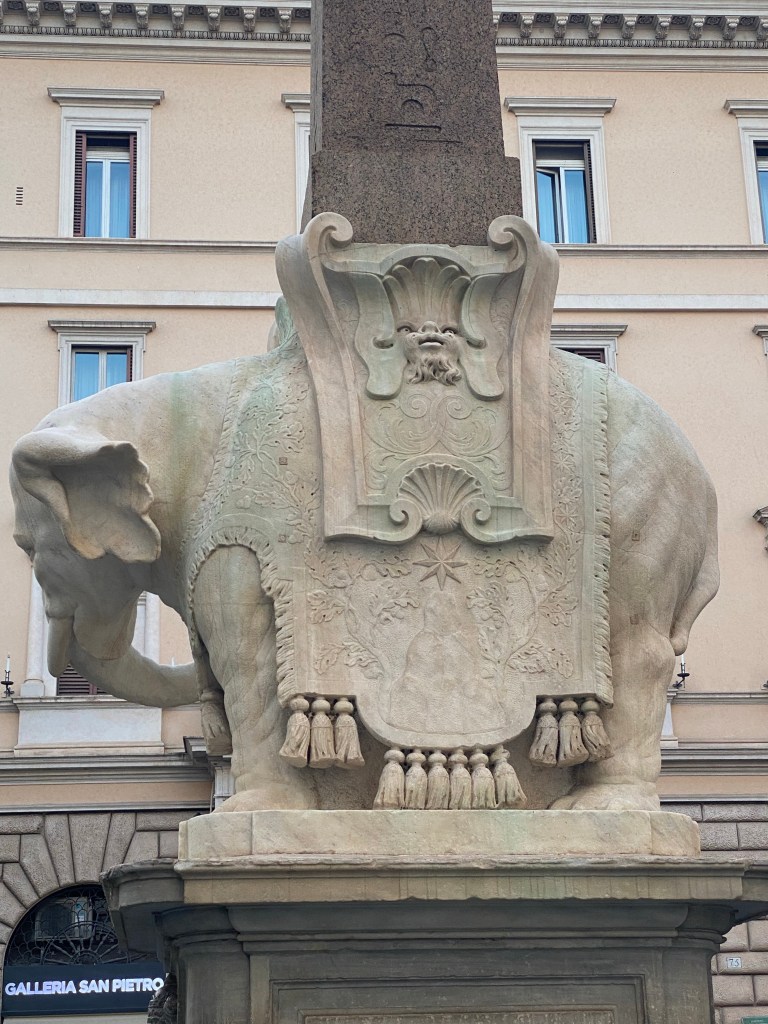
Last month I had the chance to made a quick survey of the favorite places in Rome, just to see how the Eternal City looked at Christmas (such a luxury to be able to quench that particular thirst).
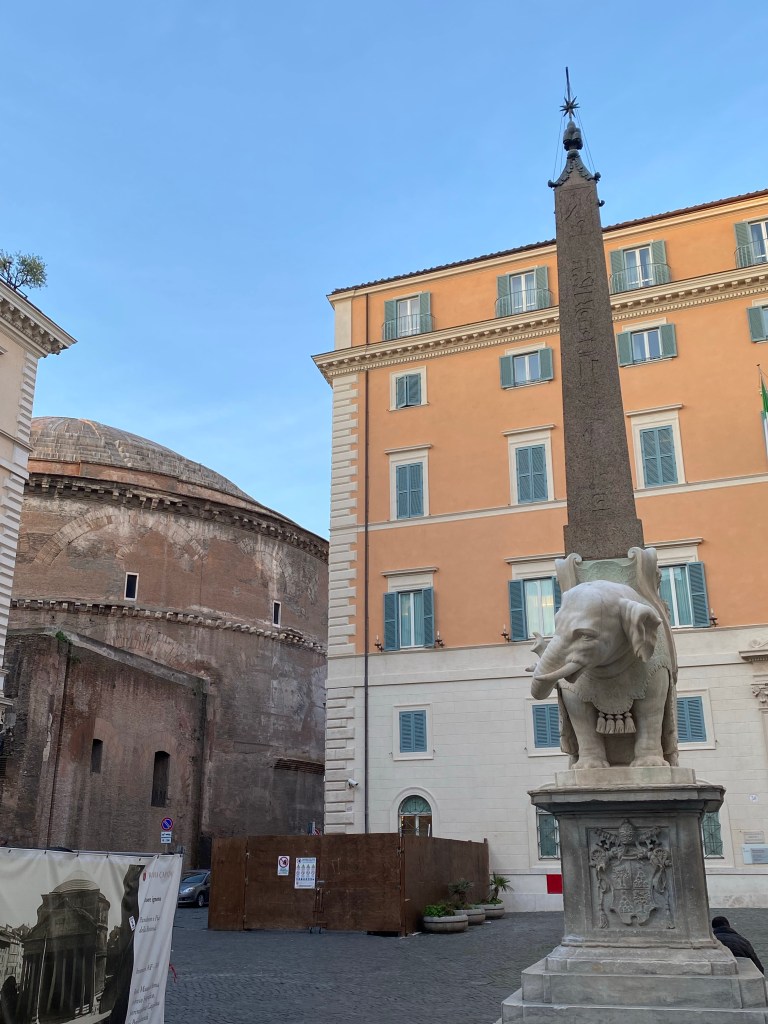
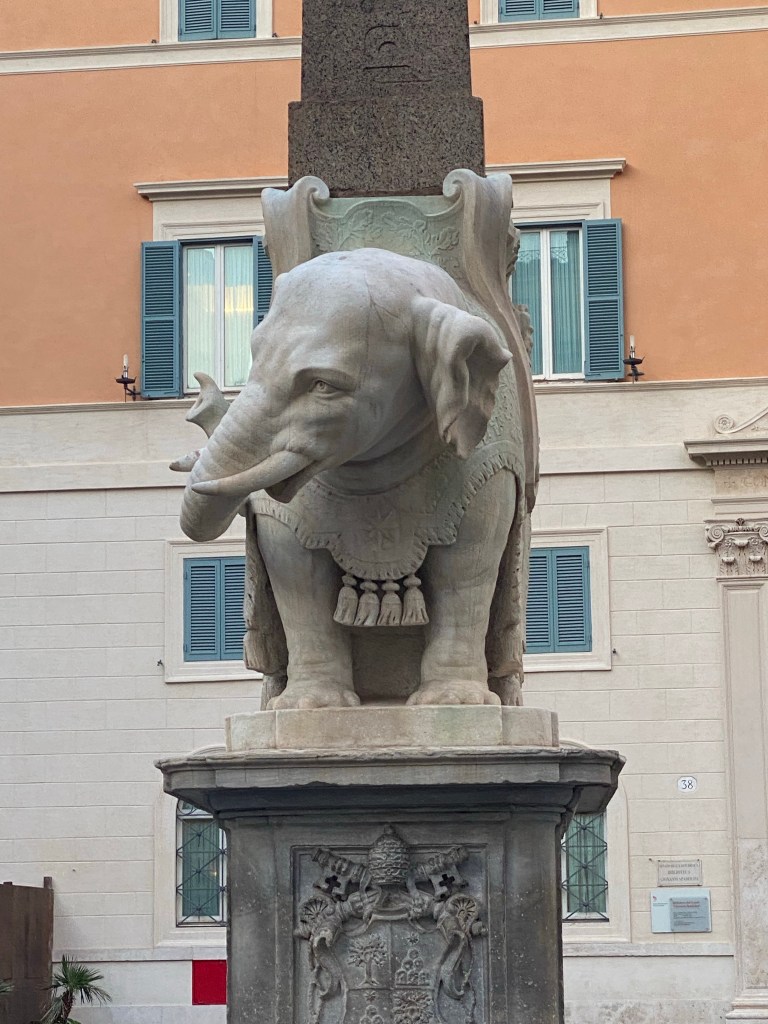
High on that list is this incredible piazza, set in front of the Pantheon and its adjoining piazza featuring Bernini’s wonderful elephant holding up an Eygptian obelisk on its back. Ah, Roma! What can I say?1 You look good: winter, spring, summer, or fall. I’d happily take any season with you!
Last month I had the chance to made a quick survey of the favorite places in Rome, just to see how the Eternal City looked at Christmas (such a luxury to be able to quench that particular thirst).
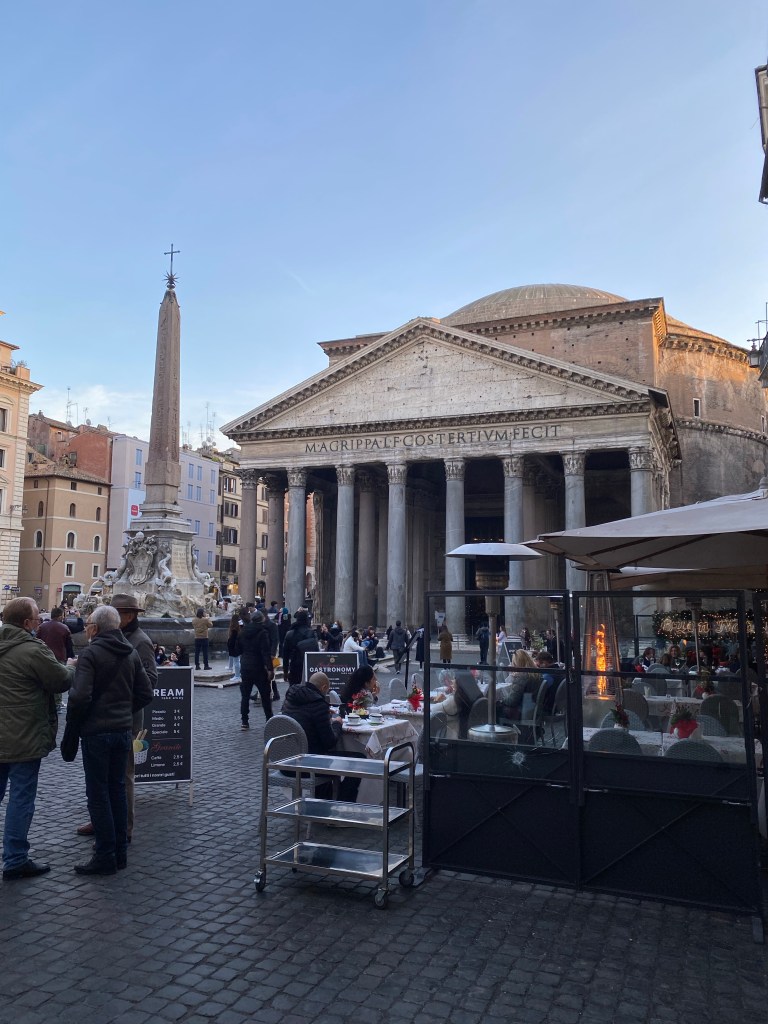
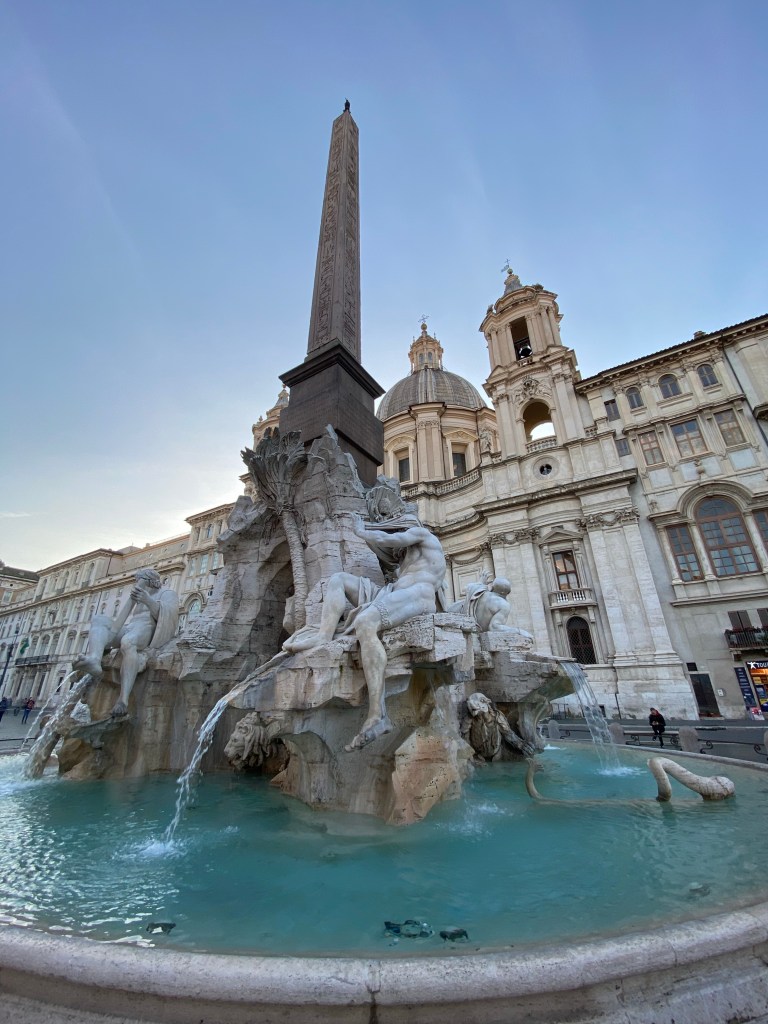
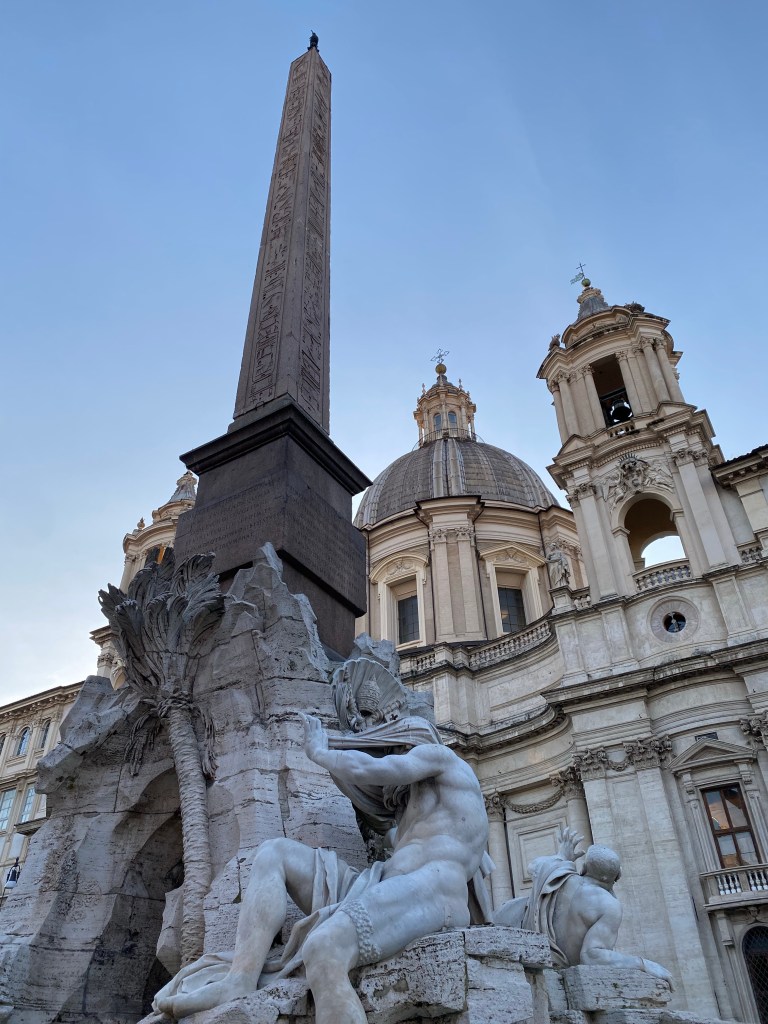
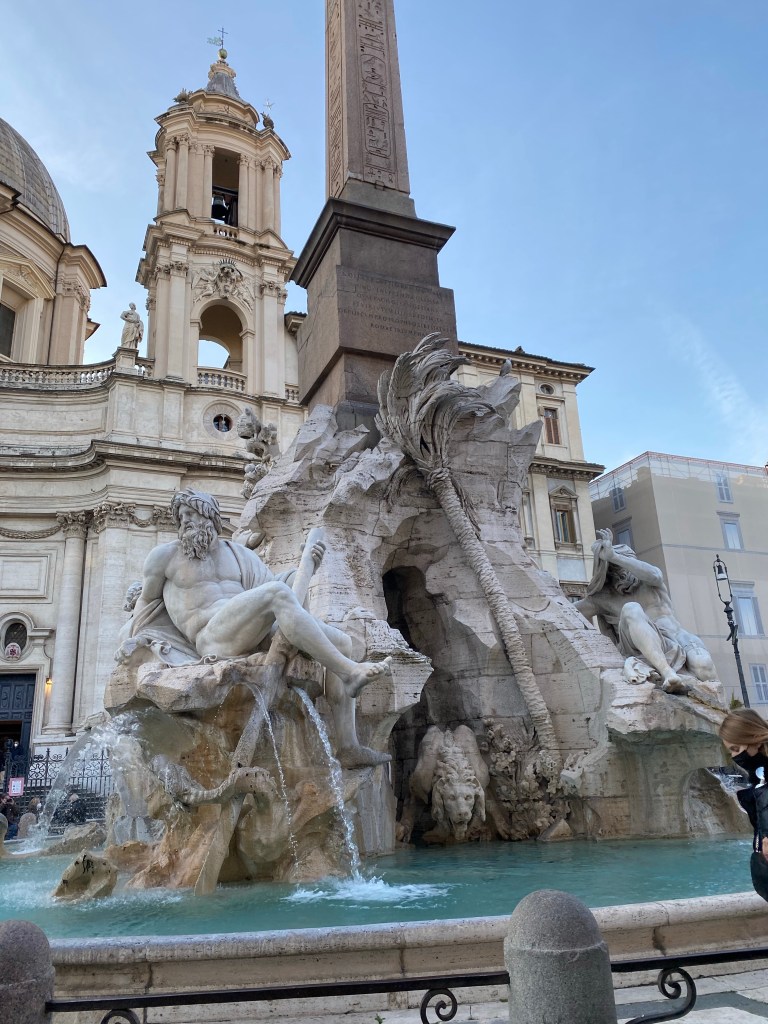
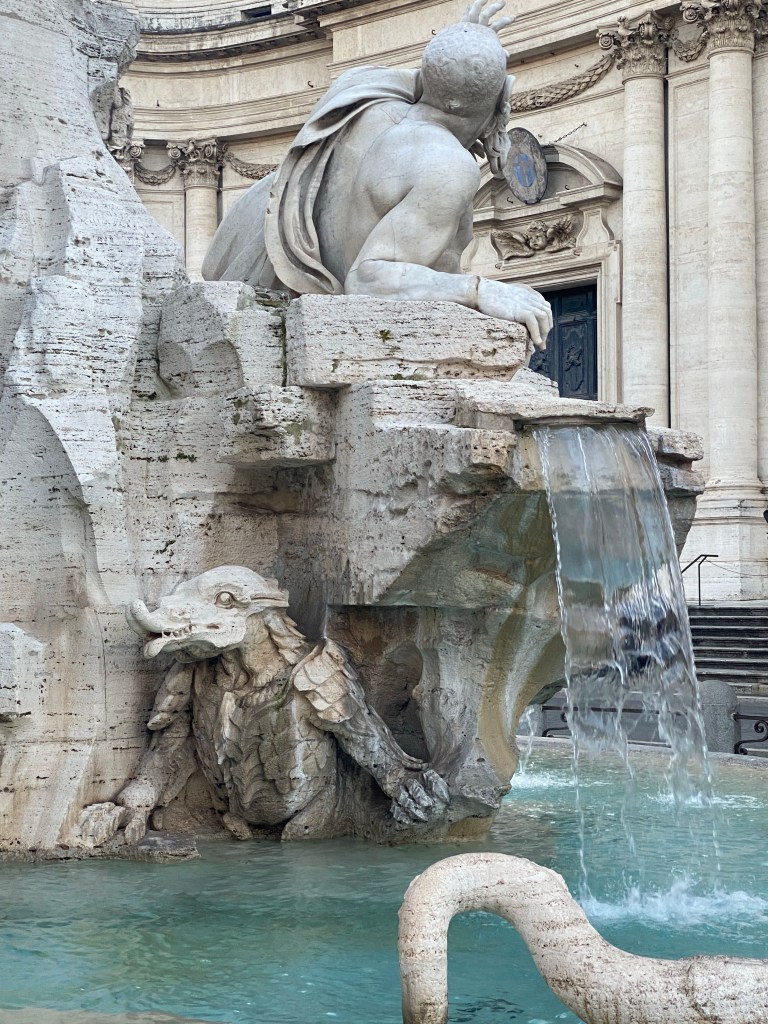
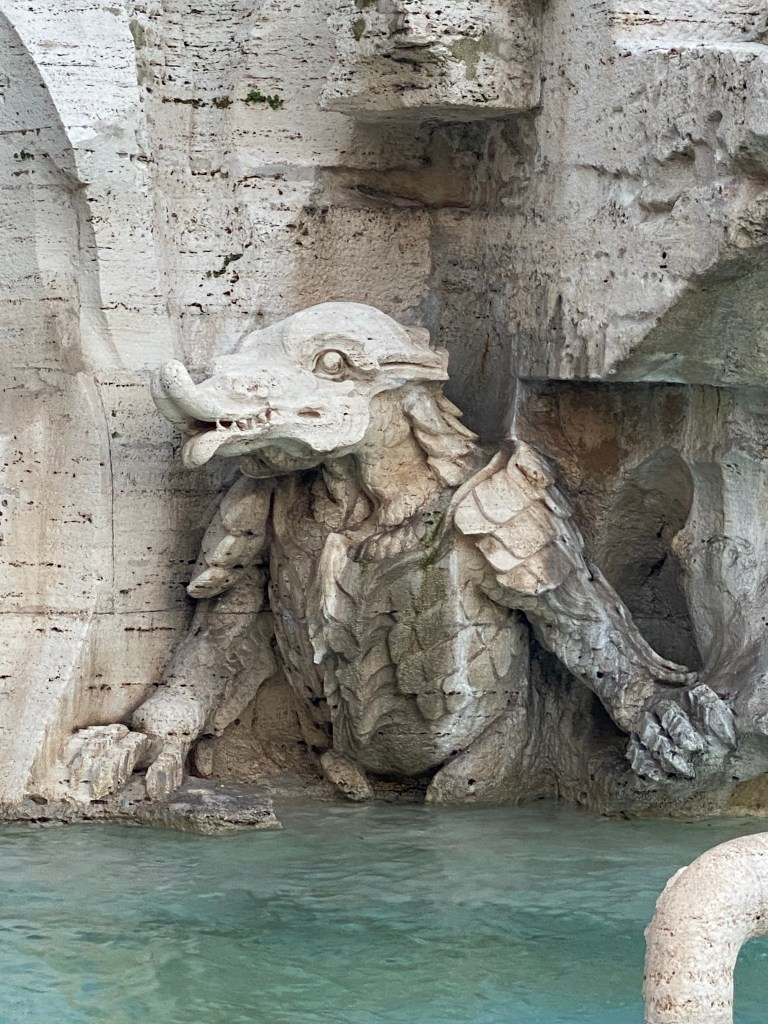
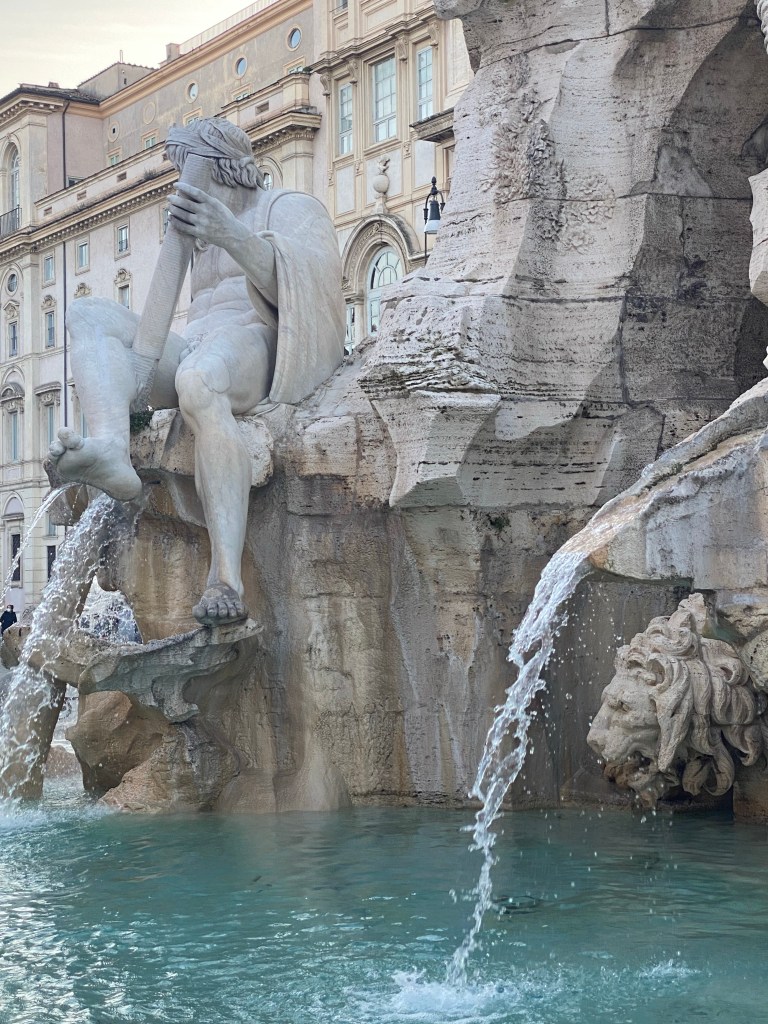
High on that list is this incredible piazza, with the Four Rivers Fountain by Bernini. Ah, Roma! You look good: winter, spring, summer, or fall. I’d happily take any season with you!



 get back, lauretta!
You must be logged in to post a comment.