Walking around Paris is one of the delightful experiences imaginable. Almost every street has something of interest to me.
And I love these neoclassical fountains that dot the city, providing fresh drinking water to one and all.
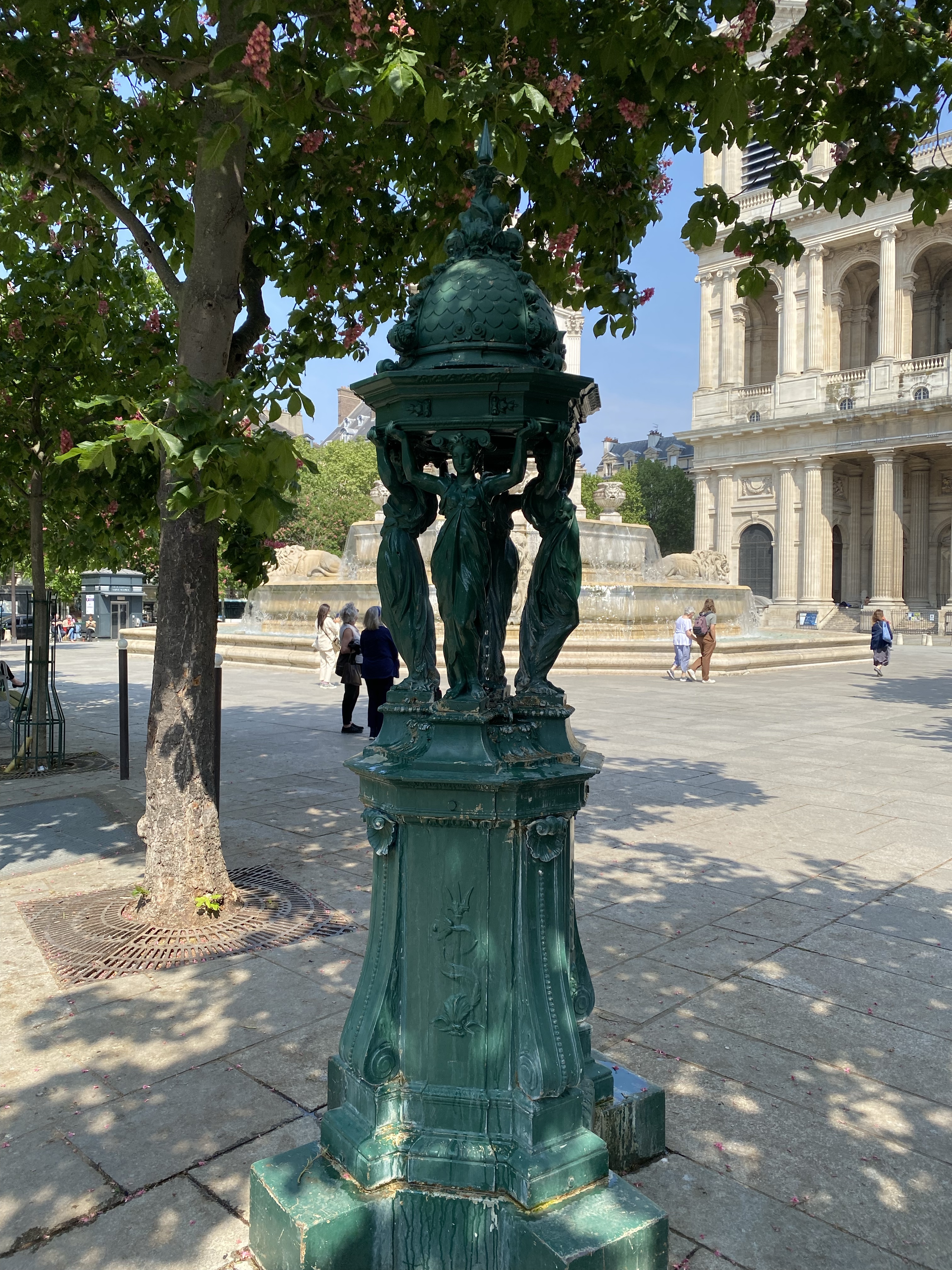
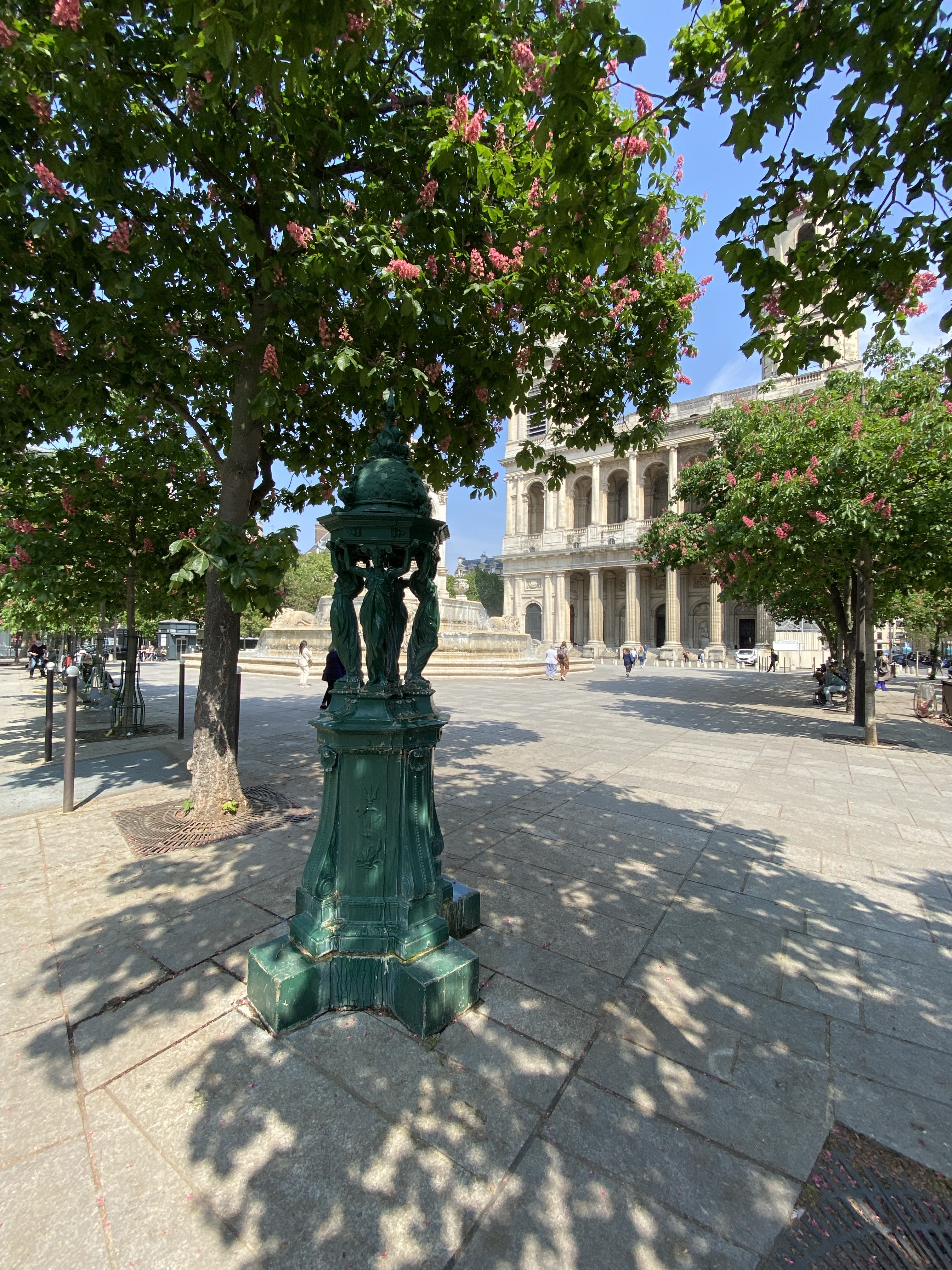
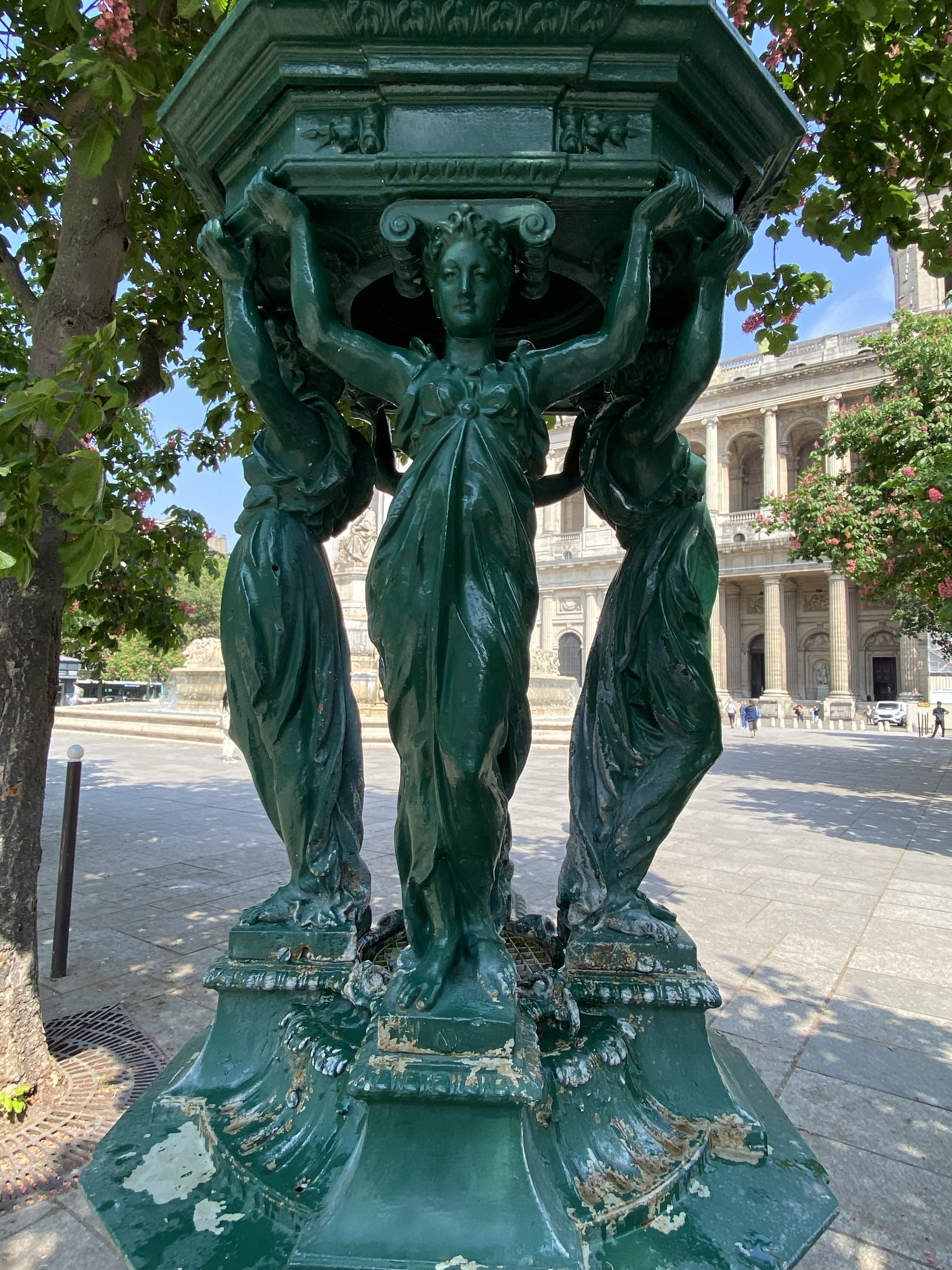

It surprised me to learn that they are known as the Wallace Fountains and were funded by an Englishman. A brief look at https://wallacefountains.org will provide you with all the information you need. The following excepts are taken from that website.
Richard Wallace, an Englishman who lived most of his life in Paris, donated funds in the second half of the nineteenth century to bring free, clean drinking water to Parisians. Perhaps his rationale was simply a strong desire to wipe out public and private drunkenness among the poor, something he witnessed too often during the Paris siege of the Franco-Prussian War from 1870-71 and the Commune era that immediately followed. Through his focused efforts to combine practical design with extraordinary beauty and allegorical meaning, he created works of art that continuously serve the public by delivering clean drinking water to the population. He also gave Paris one of its most lasting and beloved iconic symbols.
Wallace Fountains are public, drinking water sources primarily located throughout Paris. The first 50 were installed in Paris beginning in 1872. They appear in the form of cast-iron sculptures, most of which are painted a dark green to blend in with the Parisian streetscape.
Originally, Wallace funded 40 free-standing, grand model fountains and ten wall mounted fountains, all placed at strategic locations. More of the grand model fountains were added when they proved to be very popular and practical, and as the Paris population expanded. According to British newspaper accounts and French historical records, Wallace funded an additional ten fountains in 1876 and ten more in 1879.1
The grand model fountains were roughly designed by Richard Wallace himself. He drew sketches of the fountains he envisioned, incorporating in the drawings his desire for them to be useful, beautiful and symbolic. Then, Wallace hired his personal acquaintance, Charles-Auguste Lebourg, a highly regarded sculptor from Nantes. Lebourg was asked to improve the sketches and turn the practical drinking fountains into true works of art.
The fountains were welcomed by Parisians. The siege and artillery bombing of Paris during the Franco-Prussian War, as well as the destruction of the Commune episode that followed, devastated the city and destroyed many aqueducts and other sources of clean water. The price of potable water became very expensive. As a result, most poor people had difficulty obtaining and paying for water that was safe to consume. Moreover, most of the water sold by vendors and distributed on carts to the poor was drawn from the Seine River. That water was certainly contaminated, because at the time all the waste water from the streets and many of the sewers drained directly into the river. It seemed less risky to drink alcoholic beverages, which were often cheaper than the price of unsafe water. Given the choice, the lower classes were most apt to hydrate with beer or wine.
The fountains were roughly designed by Richard Wallace himself. He drew sketches of the fountains he envisioned, incorporating in the drawings his desire for them to be useful, beautiful and symbolic. Then, Wallace hired his personal acquaintance, Charles-Auguste Lebourg, a highly regarded sculptor from Nantes. Lebourg was asked to improve the sketches and turn the practical drinking fountains into true works of art.
 get back, lauretta!