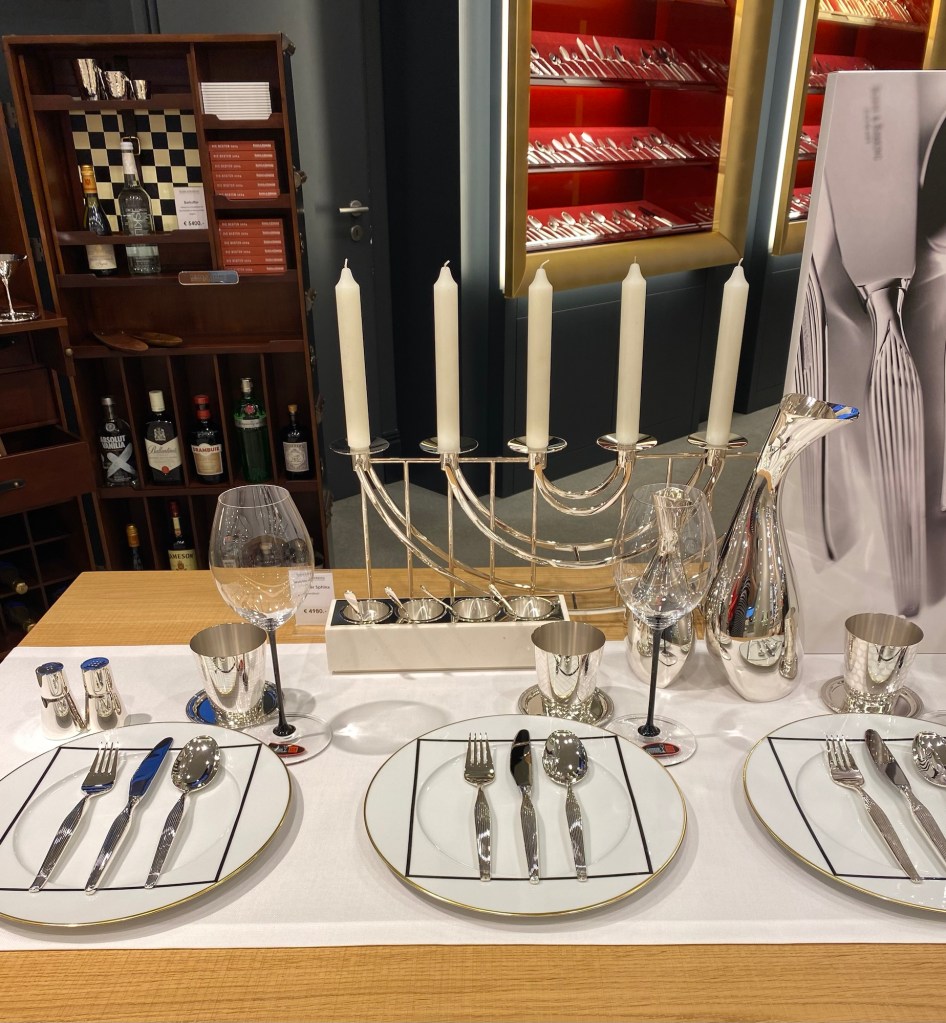
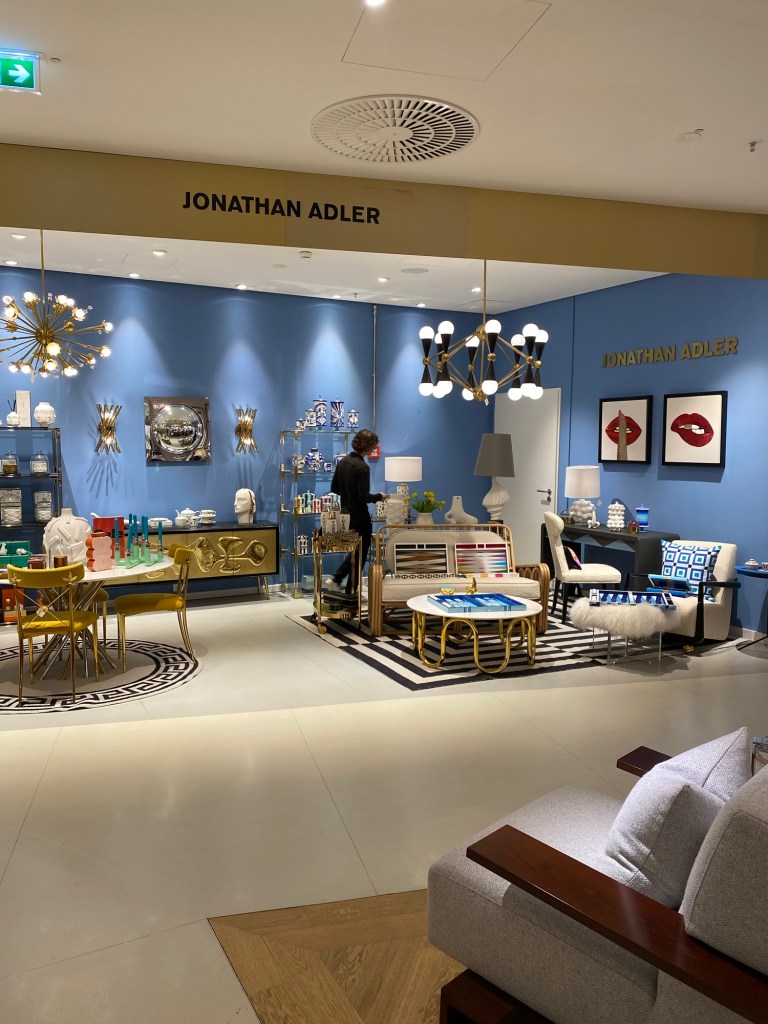
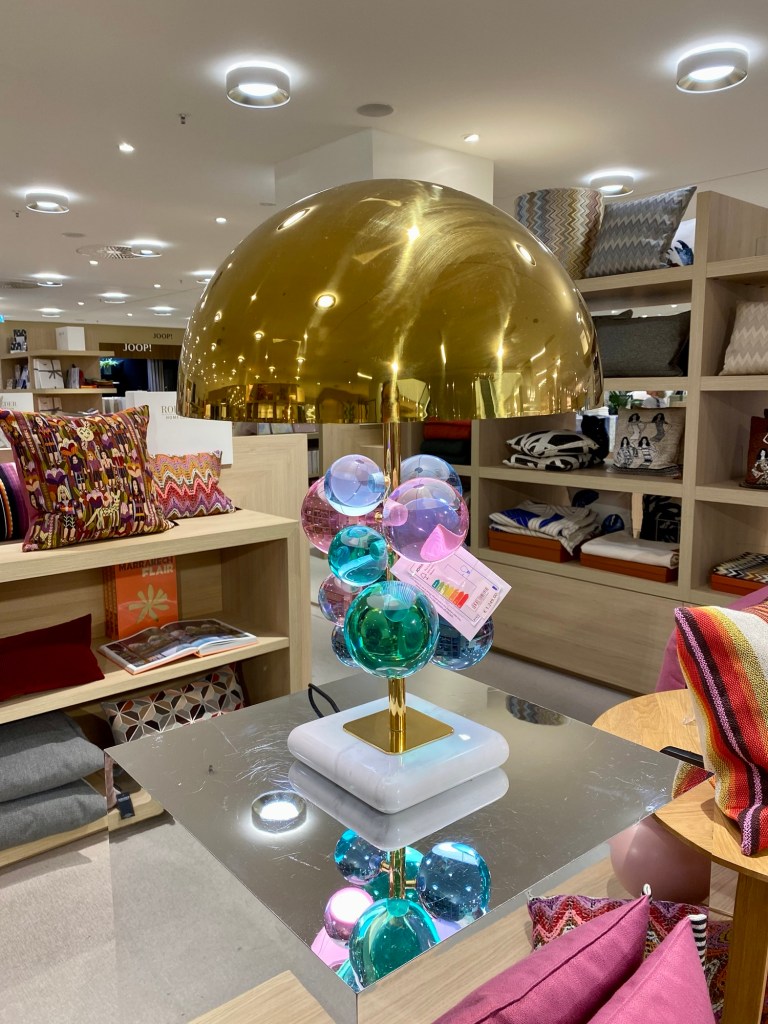
Today I had the opportunity to visit a department store in Berlin that is as storied as it is famous.

The Kaufhaus des Westens (German for ‘Department Store of the West’), abbreviated to KaDeWe, is a department store in Berlin, Germany. With over 60,000 square meters of retail space and more than 380,000 articles available, it is the second-largest department store in Europe after Harrods in London. It attracts 40,000 to 50,000 visitors every day.

The store is located on Tauentzienstraße, a major shopping street, between Wittenbergplatz and Breitscheidplatz, near the heart of former West Berlin. It is technically in the extreme northwest of the south Berlin neighborhood of Schöneberg.
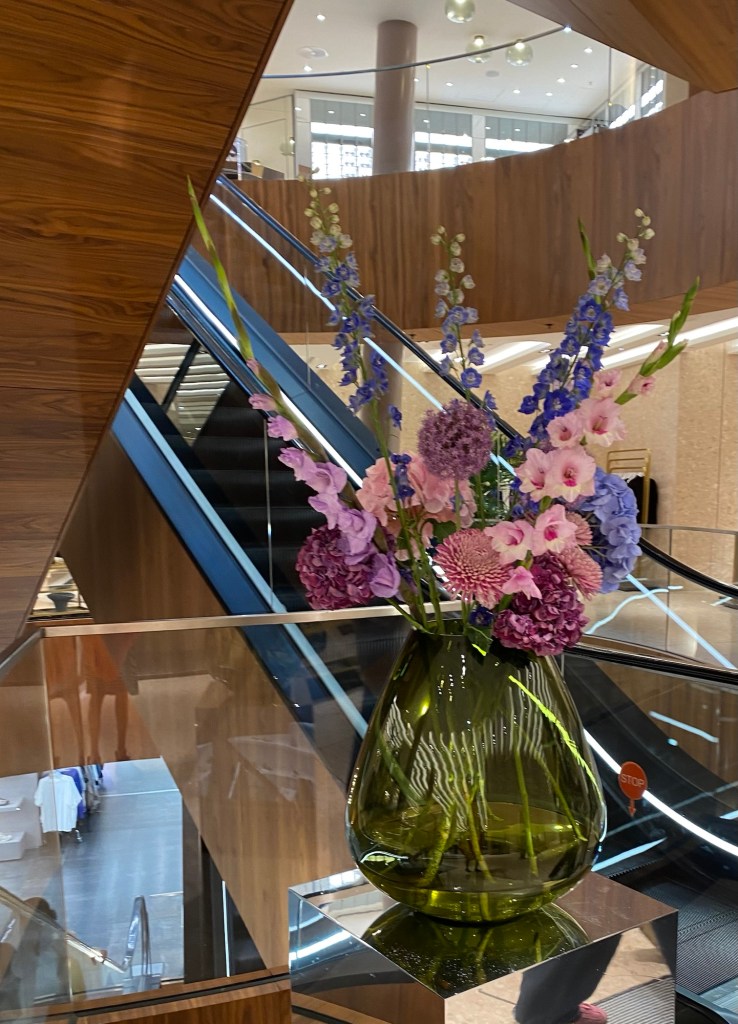
Empire and Weimar Republic: the Jandorf Era
The businessman Adolf Jandorf had opened six stores for basic needs with his company A. Jandorf & Co. in Berlin by 1905. Like the competitor stores Wertheim Leipziger Strasse (1894) and the Warenhaus Tietz (1900), also on Leipziger Strasse, Jandorf wanted to cater for the high consumer desires of the Wilhelminism elite. Jandorf’s seventh branch was supposed to “satisfy the spoiled demands of the top ten thousand, the top one thousand, the very top five hundred,” as the weekly cultural magazine Der Roland von Berlin (Zeitschrift) [de] wrote. Jandorf began planning the new store in 1905 under the name Kaufhaus des Westens (KaDeWe). It was planned that the term Kaufhaus (department store) should set itself apart from the usual store and wholesaling warehouse. The abbreviation KaDeWe was used from the start and, according to a commemorative publication from 1932, was based on the abbreviation of company names that had become common in the US at the time.


The department store was built to designs by the architect Emil Schaudt [de]. It opened on 27 March 1907. In June 1927, ownership changed to Hermann Tietz OHG, which was responsible for modernizing and expanding the store. The company wanted to add two new floors, but because of the Nazi rise to power in the 1930s these plans came to a sudden halt.
Nazi era
Hermann Tietz OHG was a Jewish-owned partnership and because of the Nazis’ anti-Jewish laws the company was aryanized—that is, transferred to non-Jewish owners—and its name changed to Hertie.
During World War II, Allied bombing ruined most of the store, with one shot-down American bomber actually crashing into it in 1943. Most of the store was gutted, which caused its closure.


Postwar
The reopening of the first two floors was celebrated in 1950. Full reconstruction of all seven floors was finished by 1956. “KaDeWe” soon became a symbol of the regained economic power of West Germany during the Wirtschaftswunder economic boom, as well as emblematic of the material prosperity of West Berlin versus that of the East.
Between 1976 and 1978, the store’s floor space was expanded from 24,000 sq m to 44,000 sq m. Just after the fall of the Berlin Wall in 1989, KaDeWe recorded a record-breaking number of people going through the store. By 1996, with a further floor and restaurant added, the sales area had expanded to 60,000 sq m.
In 1994, the KarstadtQuelle AG corporation acquired Hertie and with it, KaDeWe. Most of the floors were renovated between 2004 and 2007 in preparation for the store’s one hundredth anniversary.
In January 2014, a majority stake in Karstadt Premium GmbH was acquired by the Signa Holding GmbH. In 2015, it was acquired by the Bangkok-based Central Group.

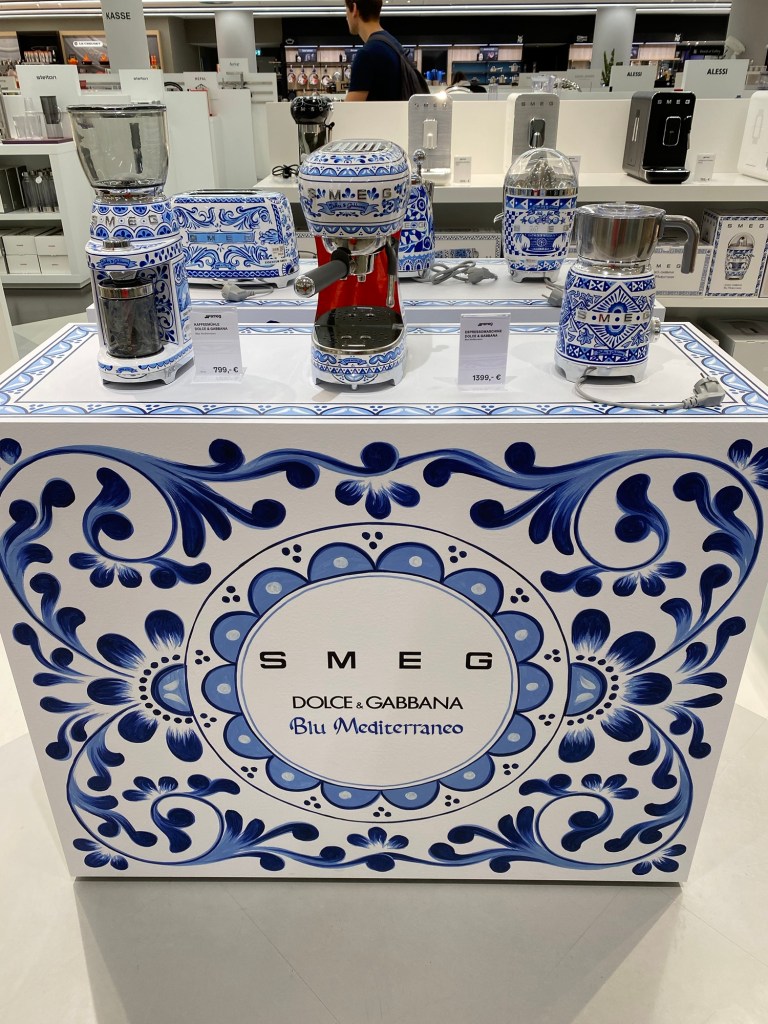


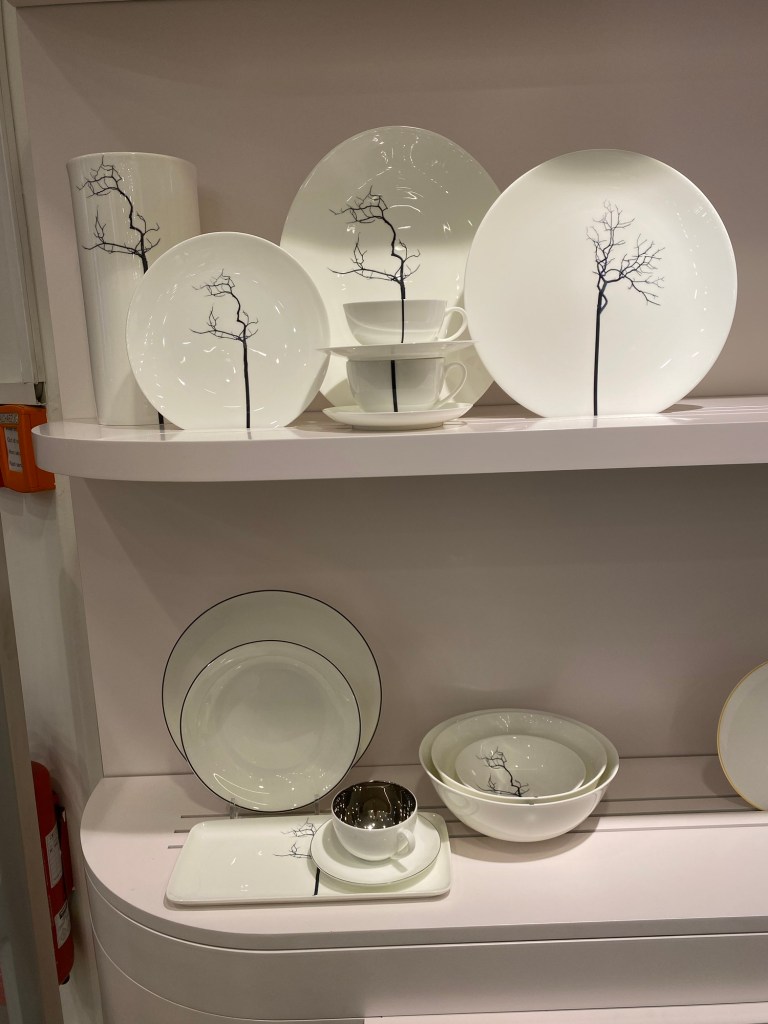


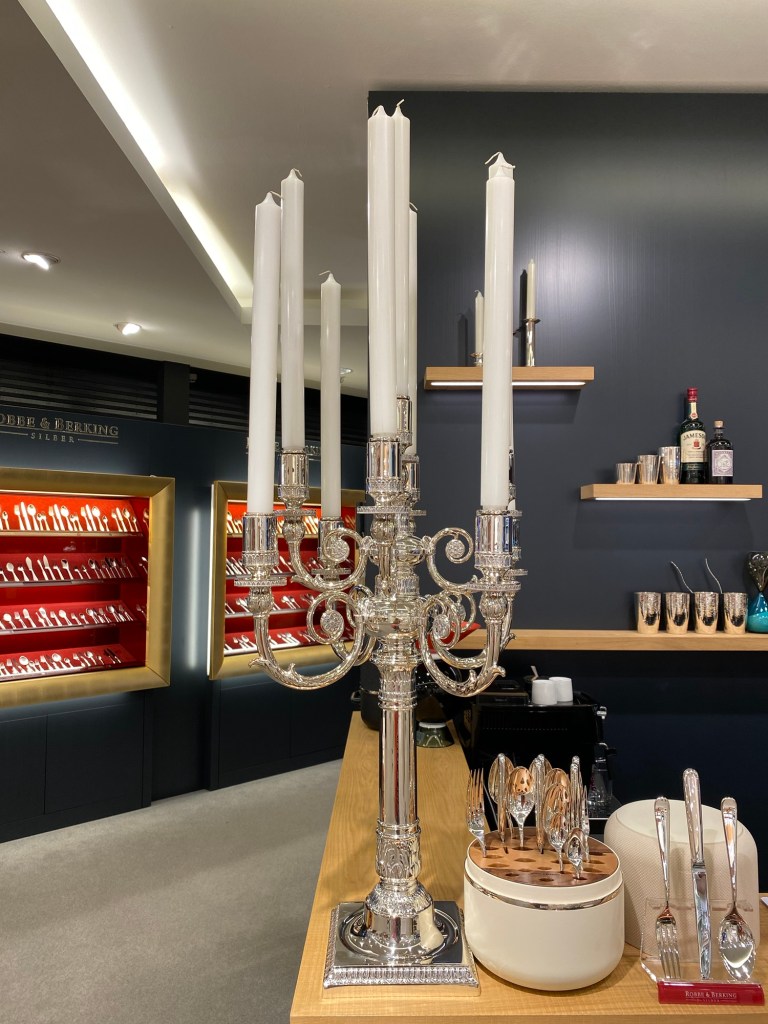




 get back, lauretta!
What a place ! You could spend months just exploring every day.
Yes, and I haven’t begun the WWII aspect. I’m not sure I want to. The art museums are absolutely unparalleled!