After visiting the Berlin Cathedral and the Altes Museum on Museum Island in Berlin, I was faced with a dilemma. There were still 3 other museums I wanted to visit. Which one should I go to next? Decisions, decisions!
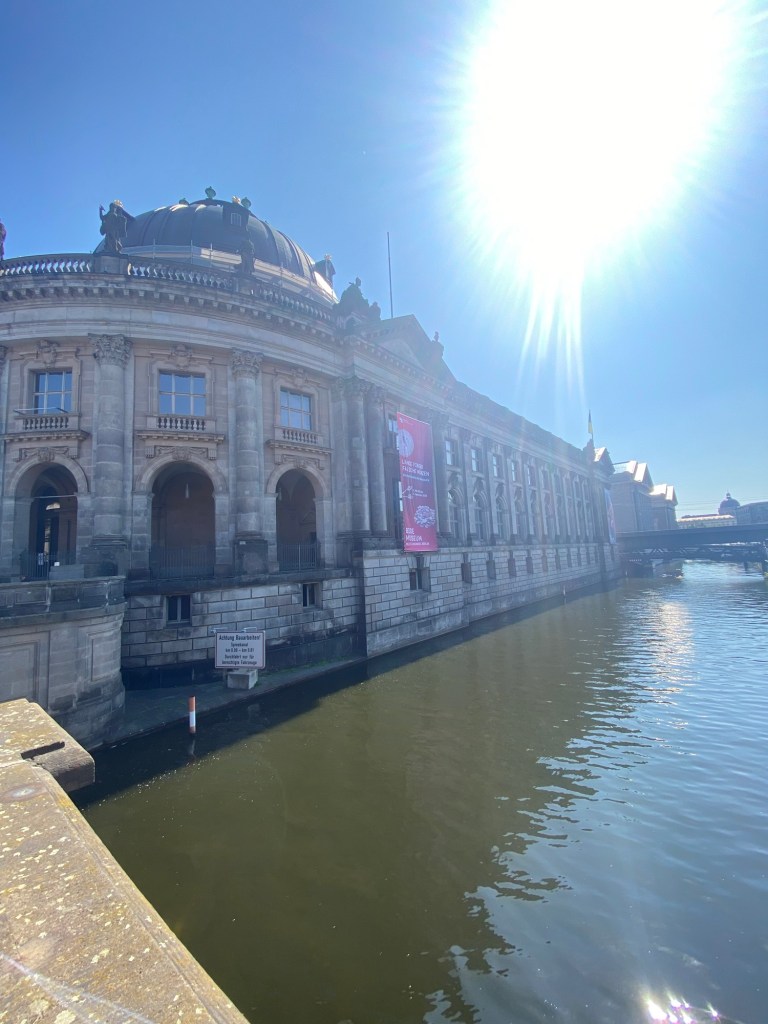
Ultimately, I decided to try the Bode Museum next. I knew nothing about it nor its collections and I typically don’t read up about these places until after I’ve visited them. Unless it’s the Louvre. There I need as much advance prep as possible not to be overwhelmed, and I’m still utterly overwhelmed.
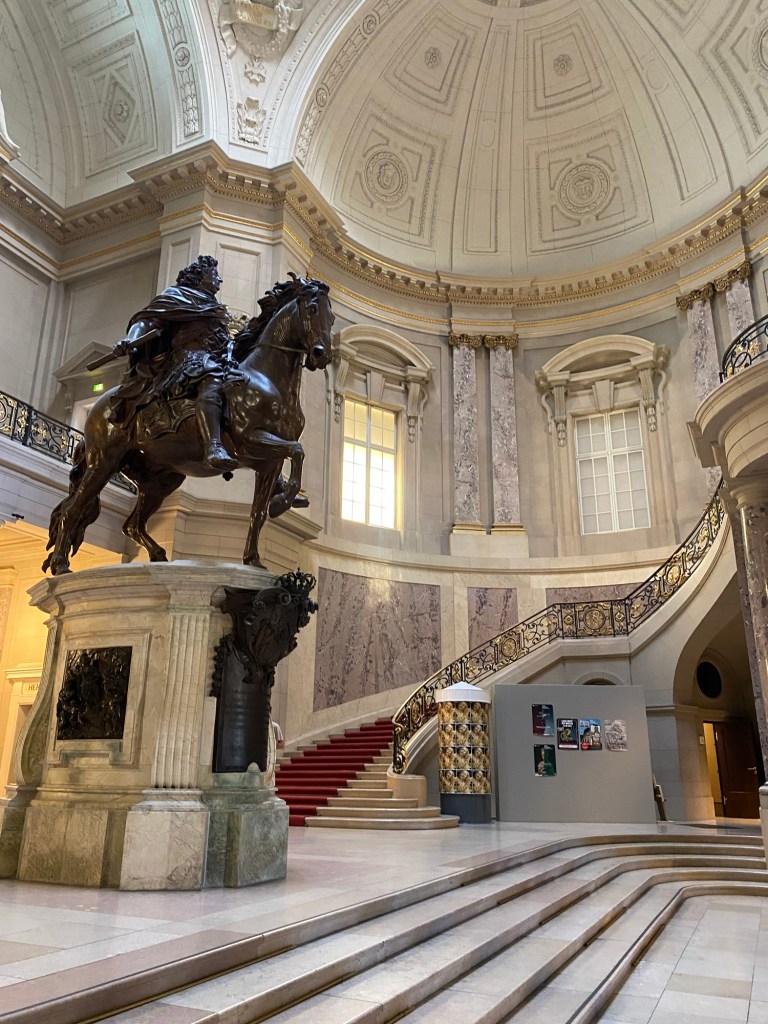
I essentially knew that the Bode was named after a former director/curator and I liked that idea, since I have been an art museum curator.

But I knew nothing of the wonders that awaited me.


After the Altes Museum with its collections of ancient art, I knew at first glance that I was encountering a whole different kettle of fish. We are in Europe! We are in the Middle Ages through the Renaissance and things are going to get multi-cultural!
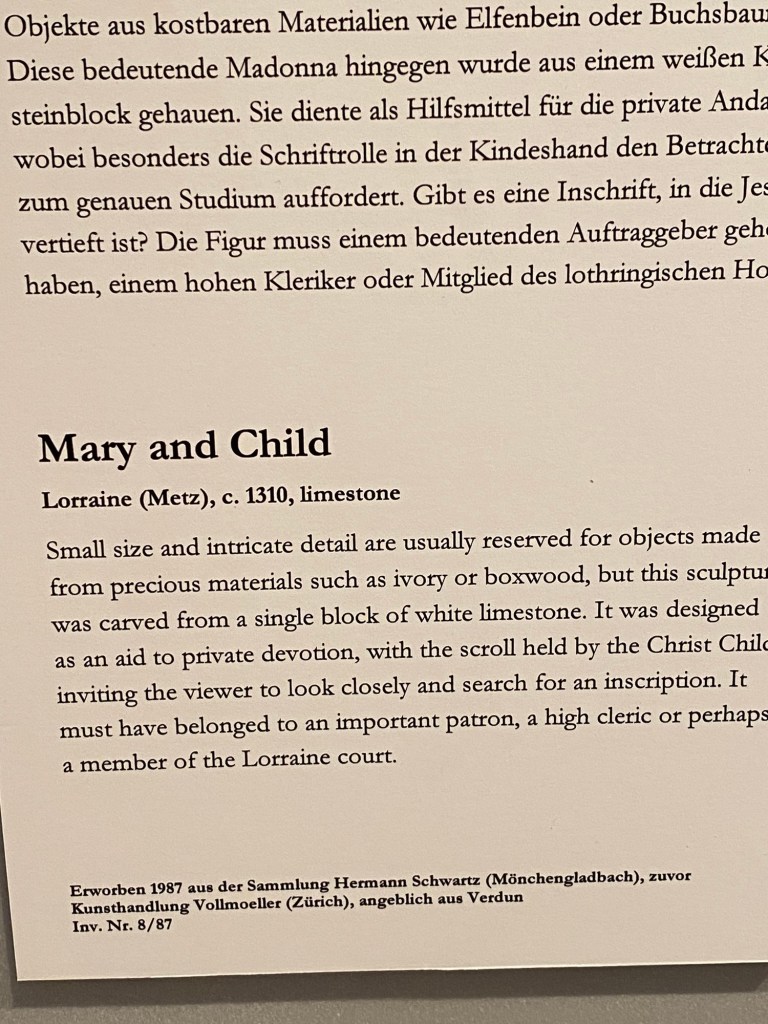
You probably can imagine with my background that I have looked at a lot of religious art. So what I took pictures of on this day were objects that were unusual to me, things I hadn’t seen a million times before.

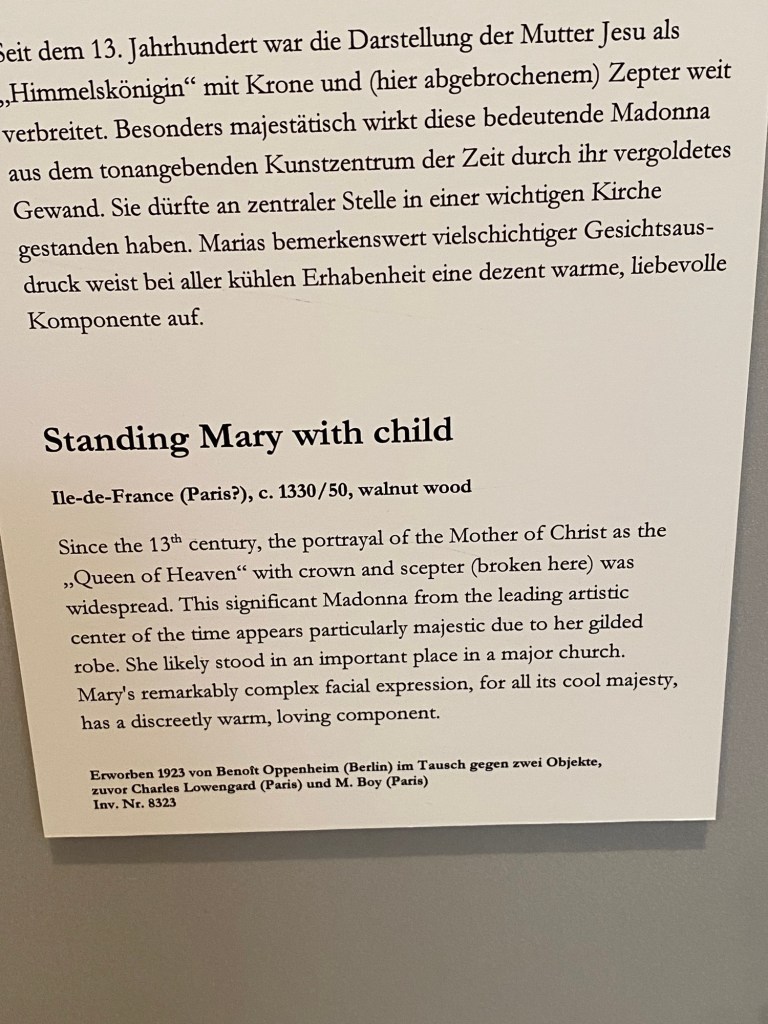
This polychromed and gilded statue was beautiful and I loved the addition of the shoes to tell us what the queen of heaven would wear in the minds of a 13th century French artisan.

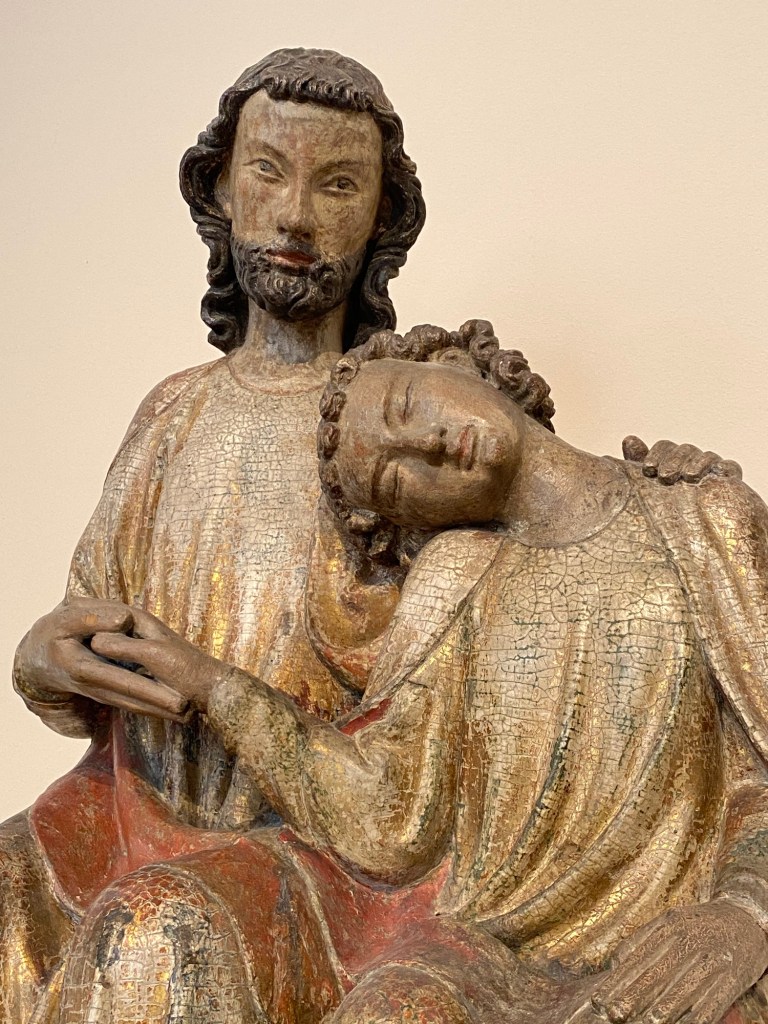
Never in my life have I seen a religious statue of Christ and St. John the Evangelist with John nearly breaking his neck to lean on Christ’s shoulder. I’ve never seen any medieval sculpture in this form. I found it weird and quite wonderful!
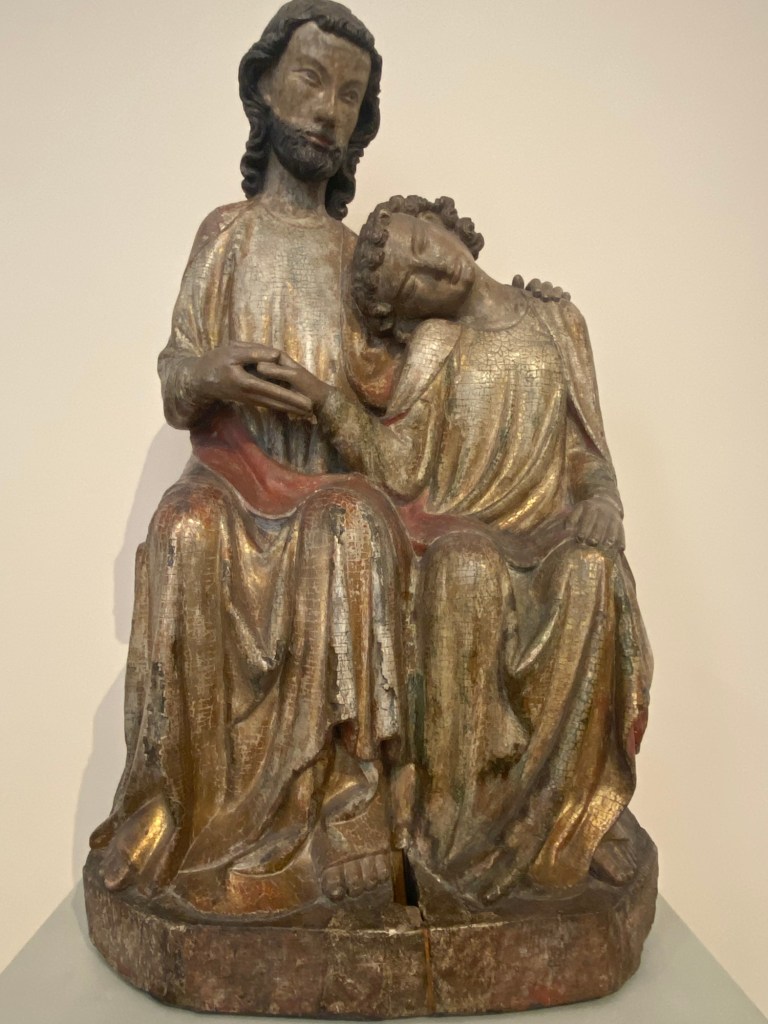
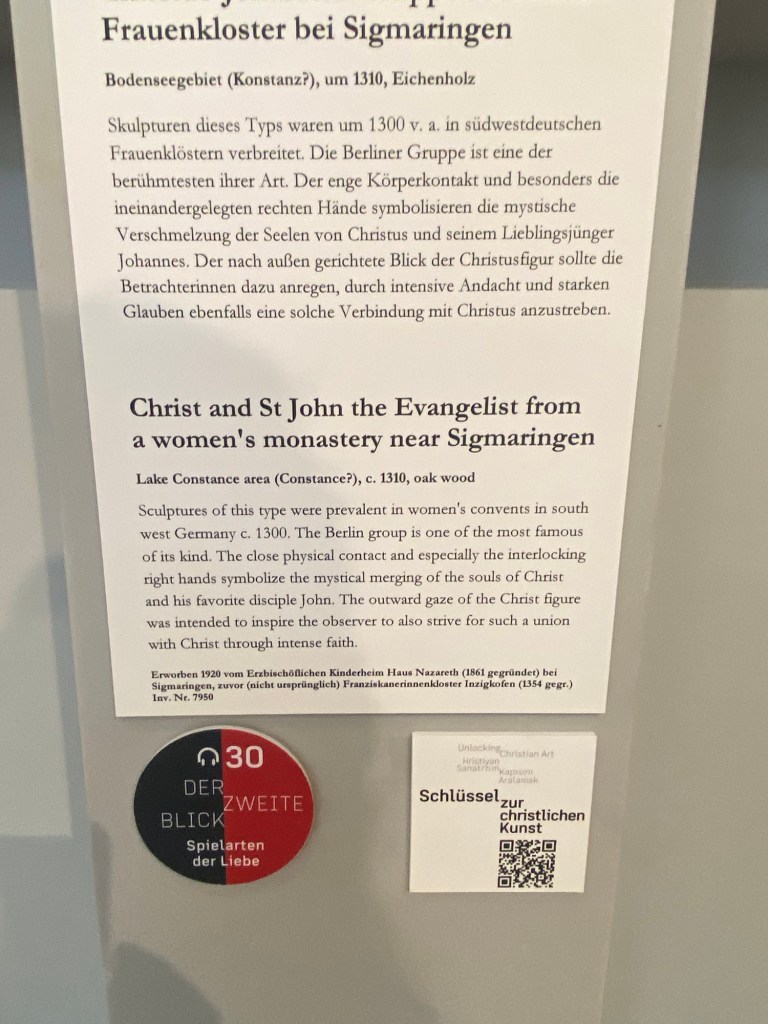
And I appreciated the label in English telling me that this kind of work was common in German convents around 1300. This is why I go to museums. To learn and be dazzled.

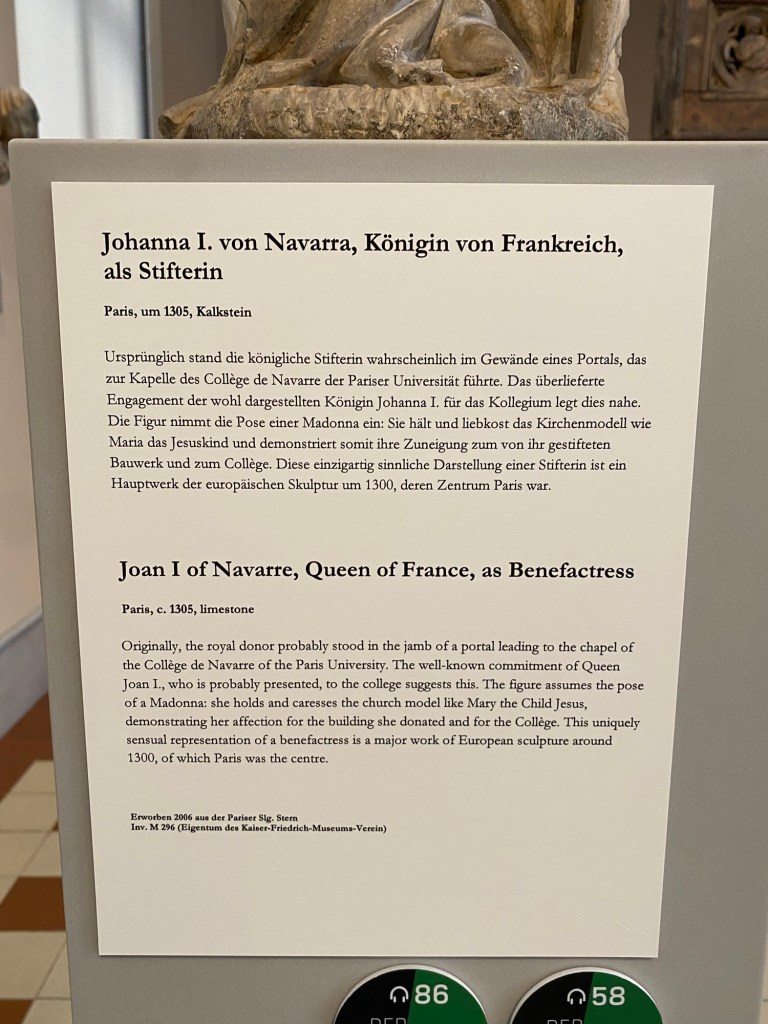
I’ve seen a thousand statues of Mary holding the Christ child. But, I’ve never seen a sculpture of a royal woman holding an architectural model before.
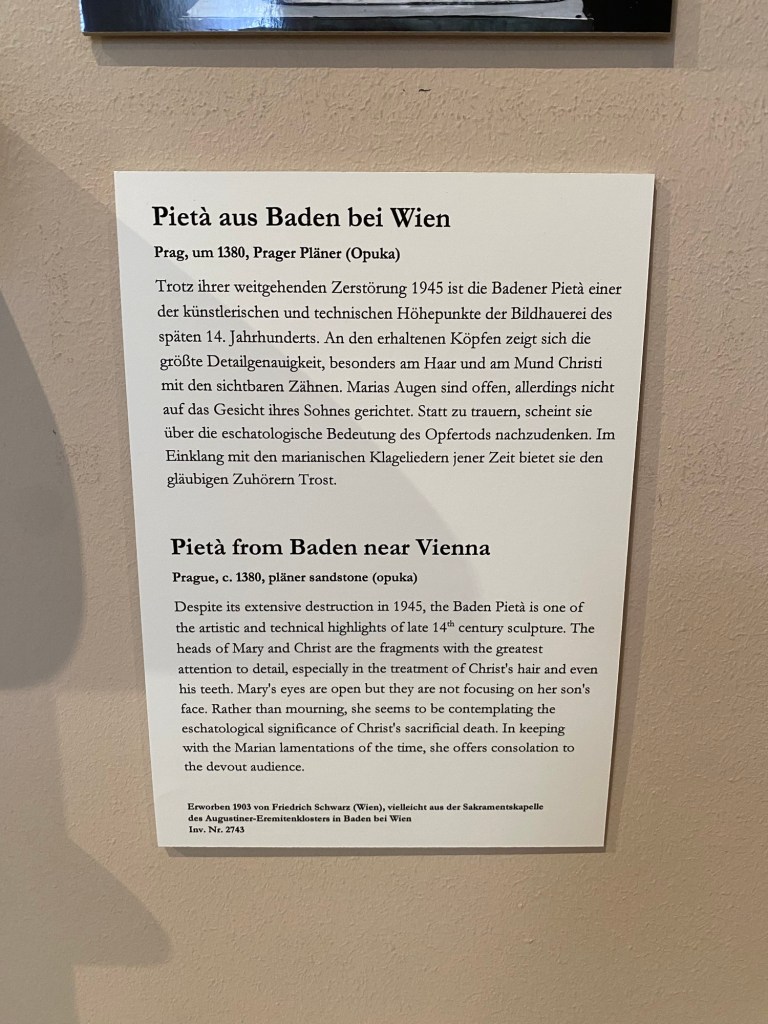
Now this next work is really interesting. In the black and white photo, we see a very awkward Pieta. You know I’ve seen a million of this subject. But never one like this with Christ with rigor mortis?!

Tragically, what survives from the sculptural group are only the 2 heads, of Mary and of Christ. And what happened to the rest of it? WWII. Destruction. It’s a reminder, like all of Berlin, that there’s a frightening history here. Sad, tragic, hideous. And that’s the human loss. The artistic loss is unfortunate. Wrought by meglomaniac Hitler and his band. The feeling is everywhere here, at least for me. I wonder if others feel it as much? Have you been to Germany? What are your feelings?



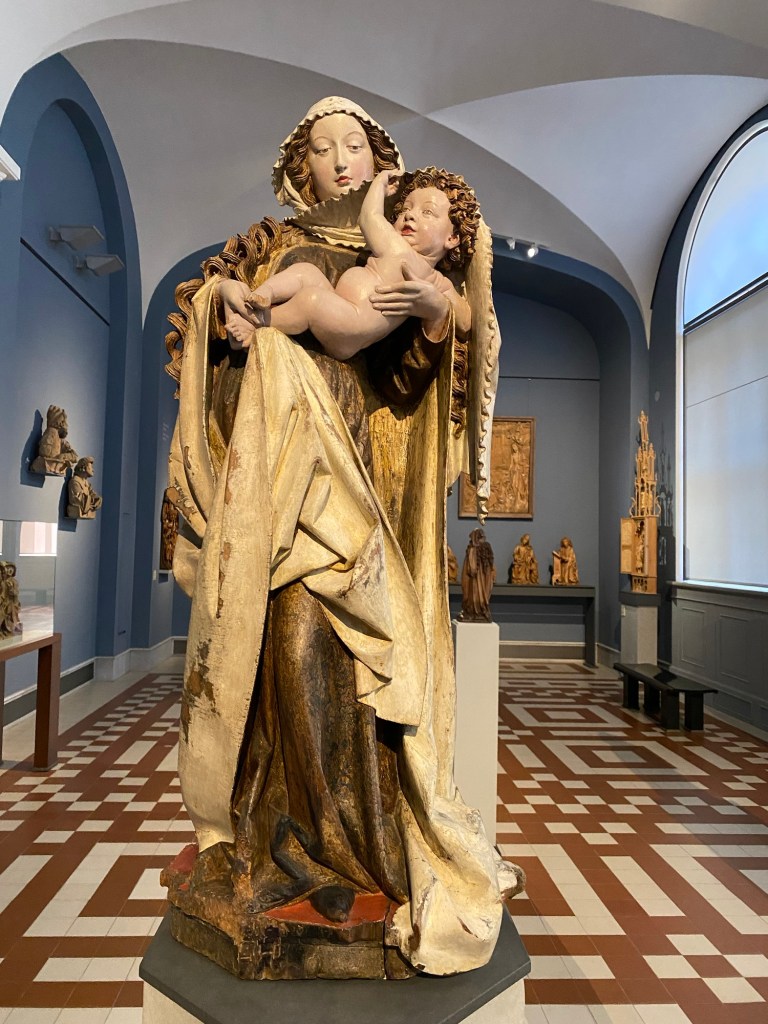

The sculpture below is of a type known in Italy as the Misericordia, where the Virgin Mary shelters the elect in her cloak. Often it is children represented in the folds of her garment. But, this one has a distinctly northern look to the faces. Unusual for my eyes.


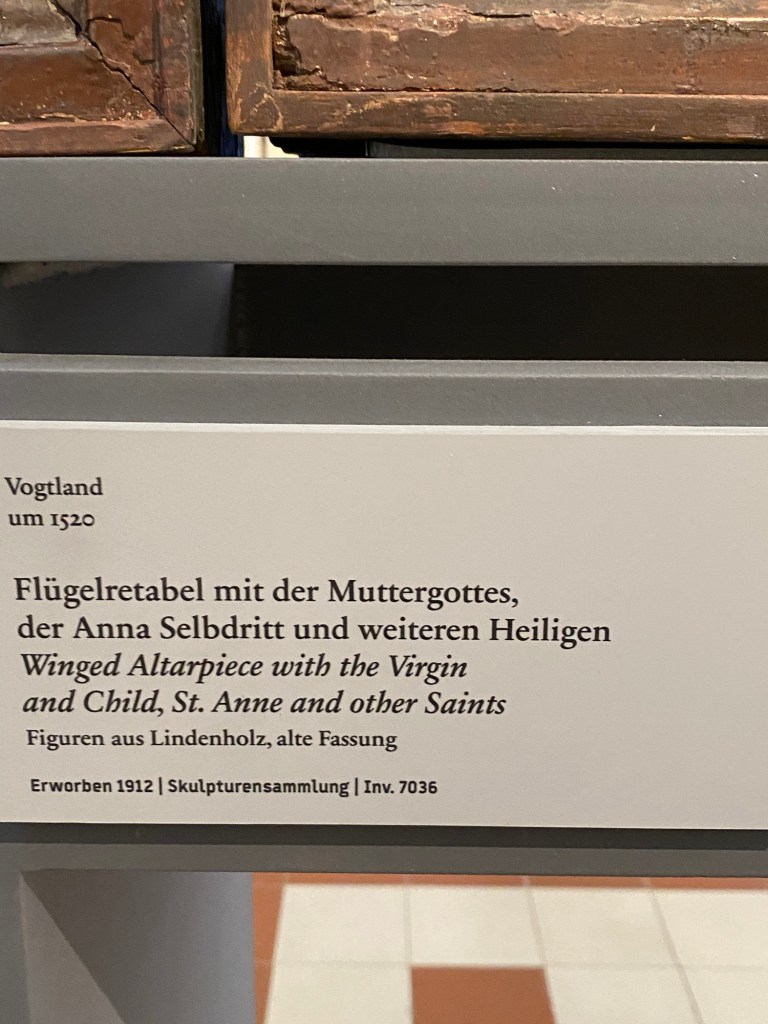
I was captivated by the altarpieces found at the Bode. Again the northern countenance make perfect sense but are unusual and delightful to my eyes trained in Italy.


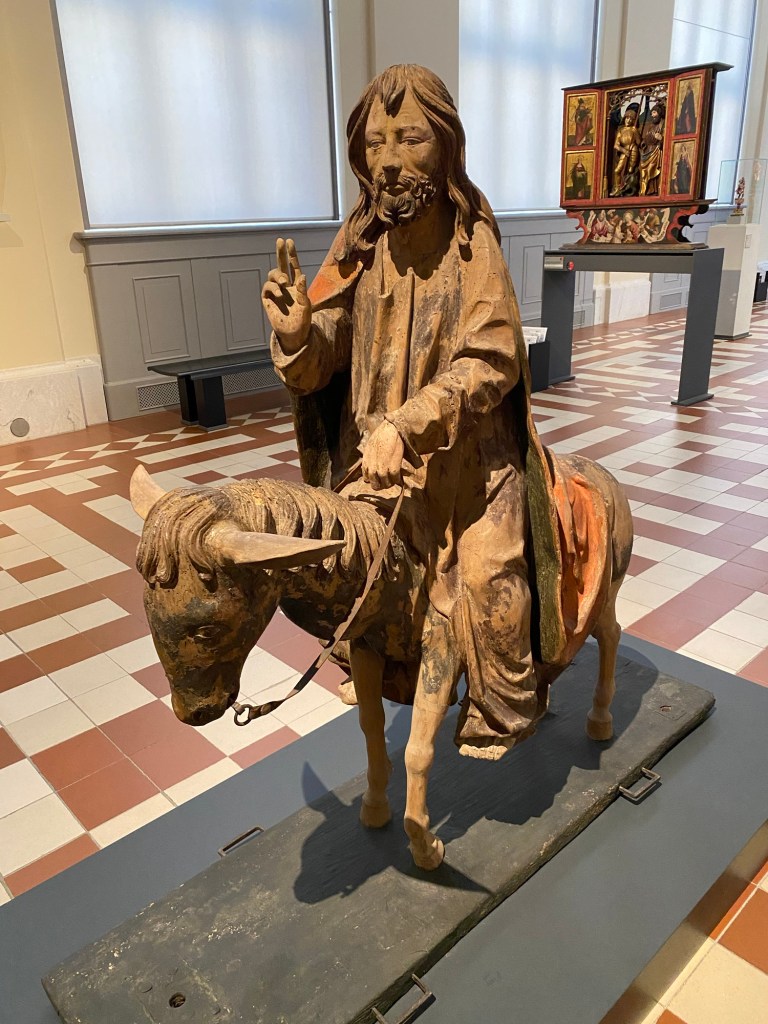
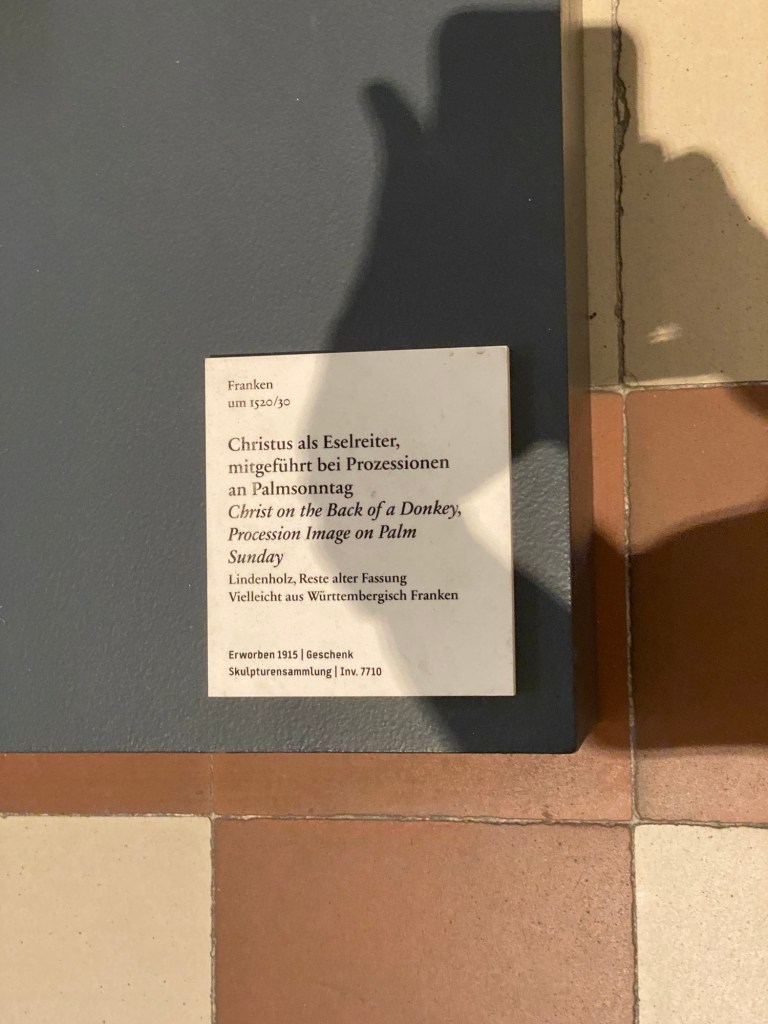
I’ve never, ever seen a statue of Christ riding a donkey. I’ve seen paintings of people riding donkeys, including the Virgin Mary and even Cosimo di Medici on a mule. But, again, this was different and fascinating to me! Arranged on it’s base, it seems obvious that the statue was meant to be carried at shoulder height in processions.


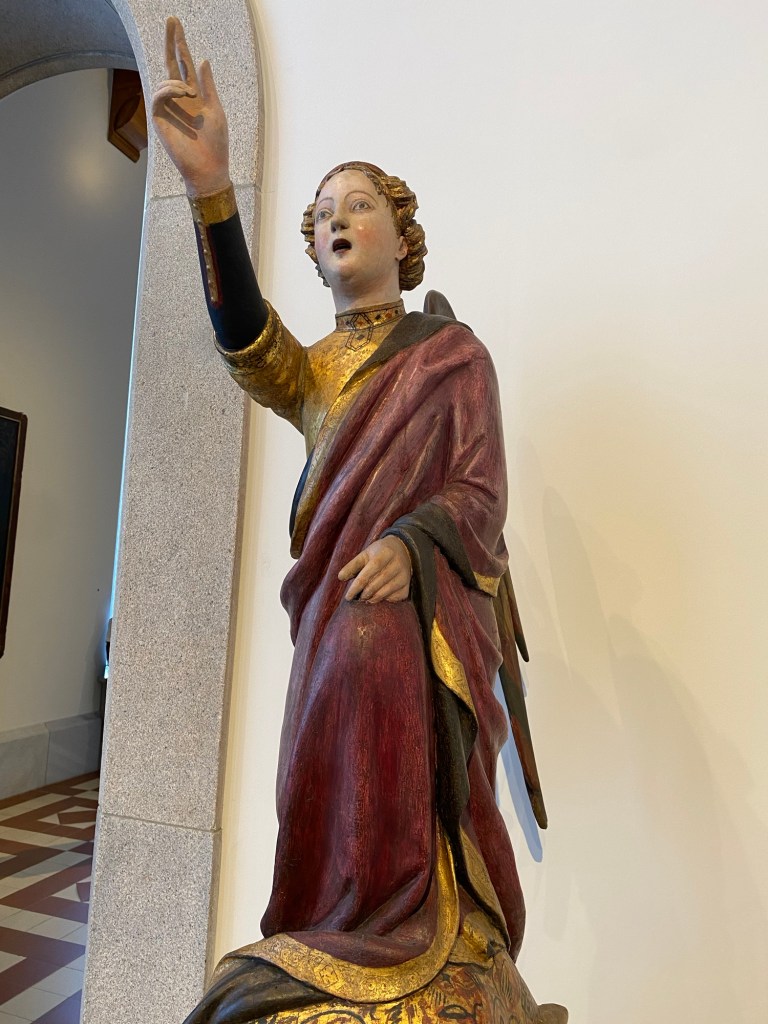
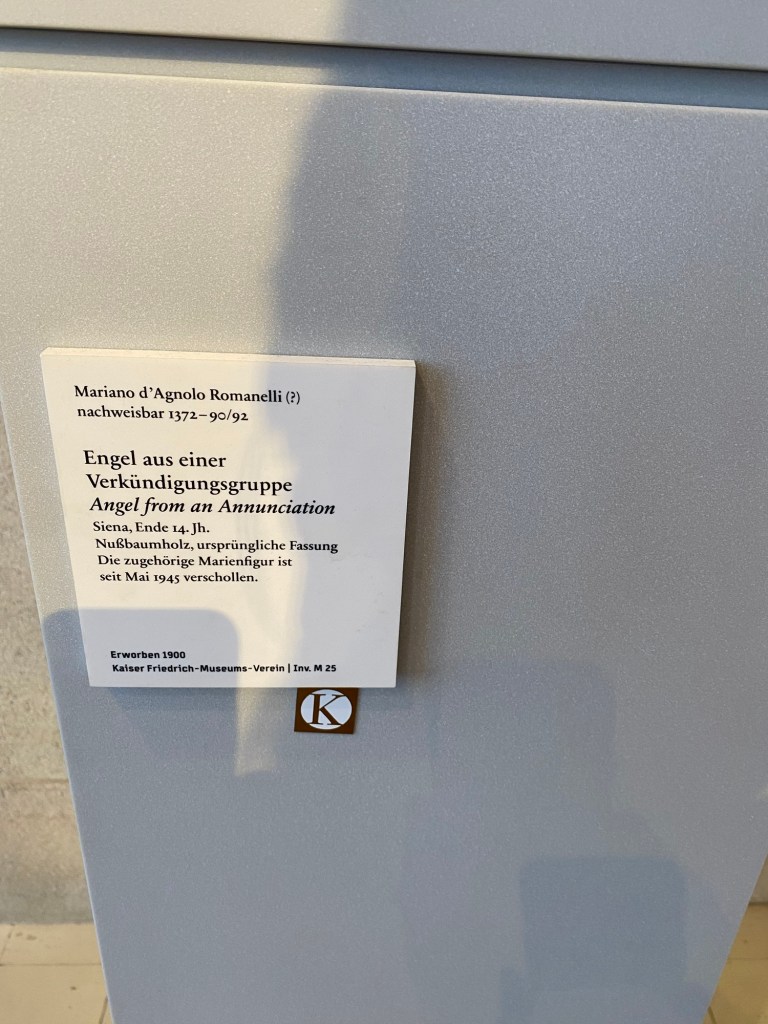
The scene of the Annunciation is my very favorite subject matter in religious art. Here is one part of such a sculptural group; the archangel Gabriel is announcing that Mary is to bear Christ. Sadly, the statue of Mary seems to be lost.
You can probably discern that I’m in love with the Bode and you can guess that I’ll be back with more posts soon!
 get back, lauretta!