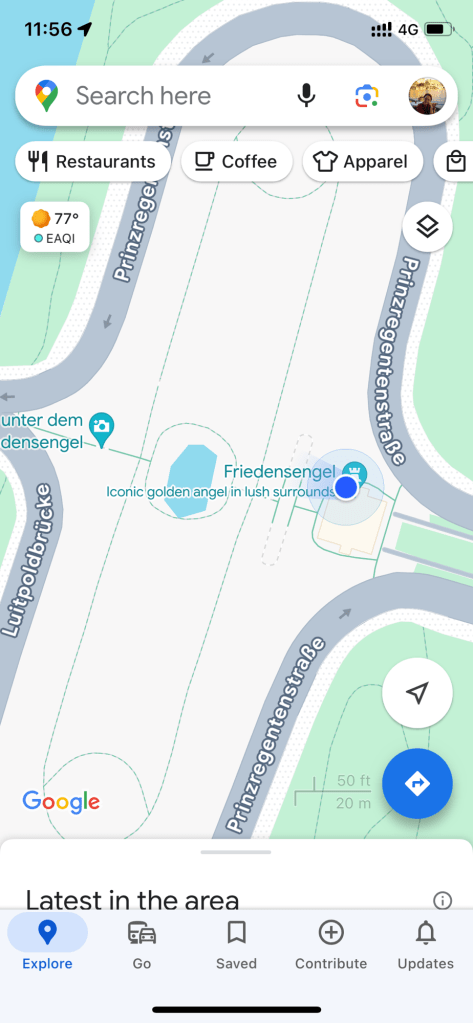
I couldn’t resist using the stilted English with which Google maps describes this neoclassical monument in Munich.
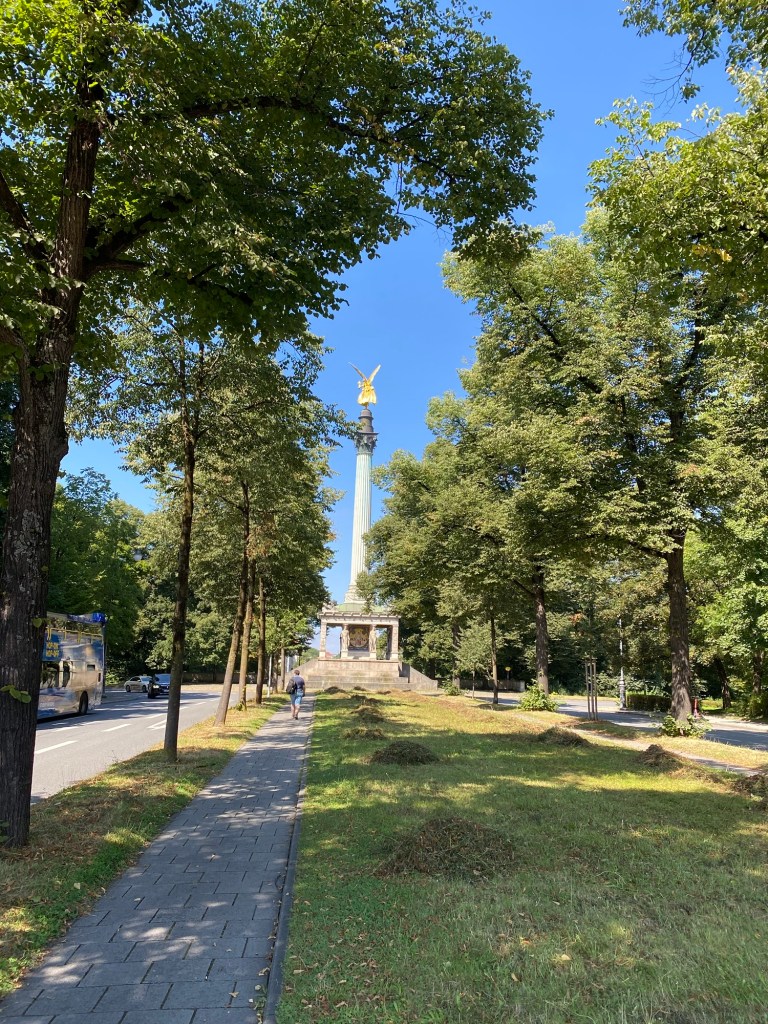
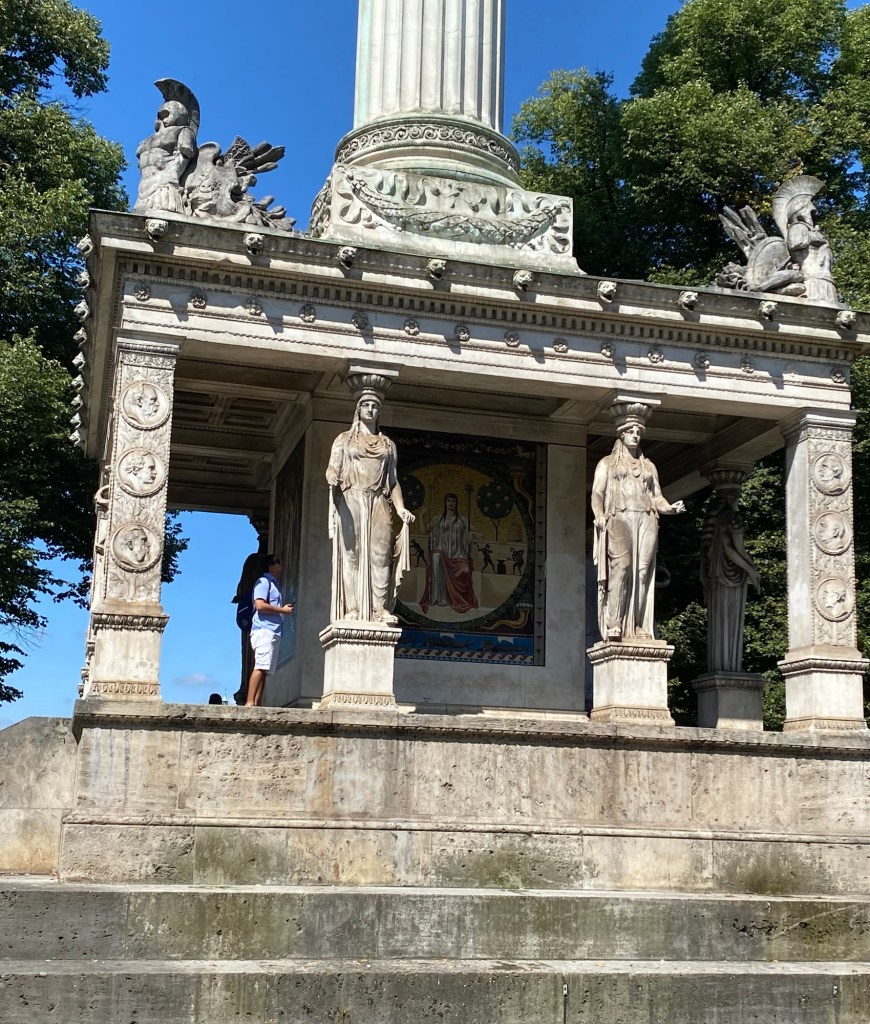
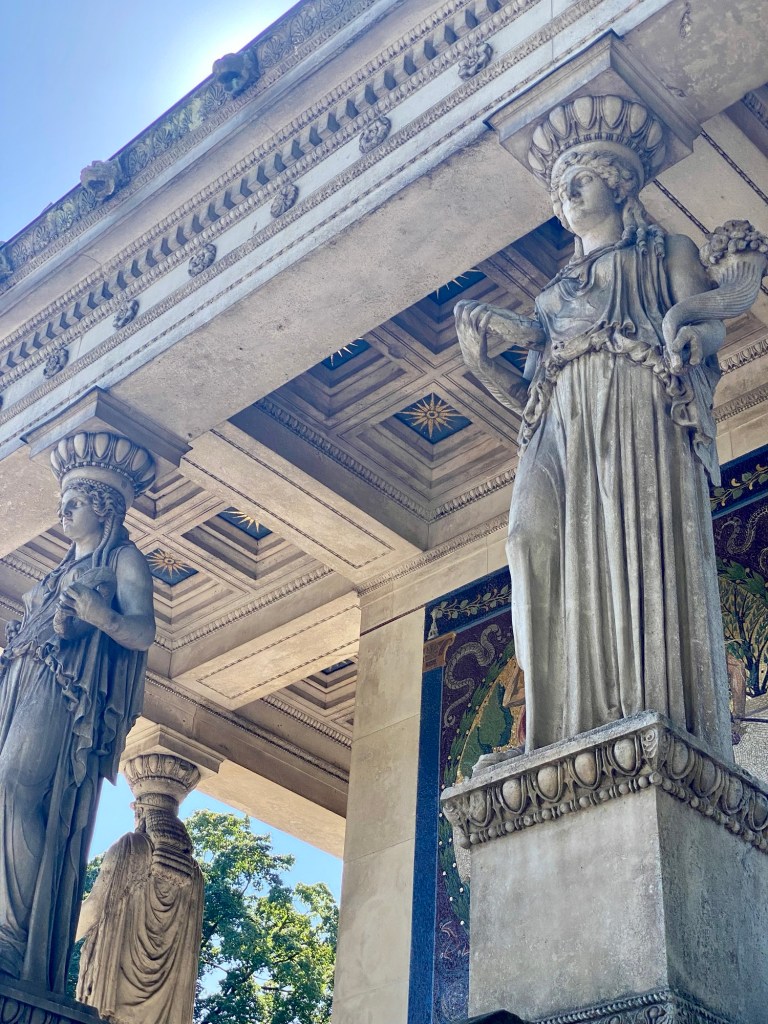
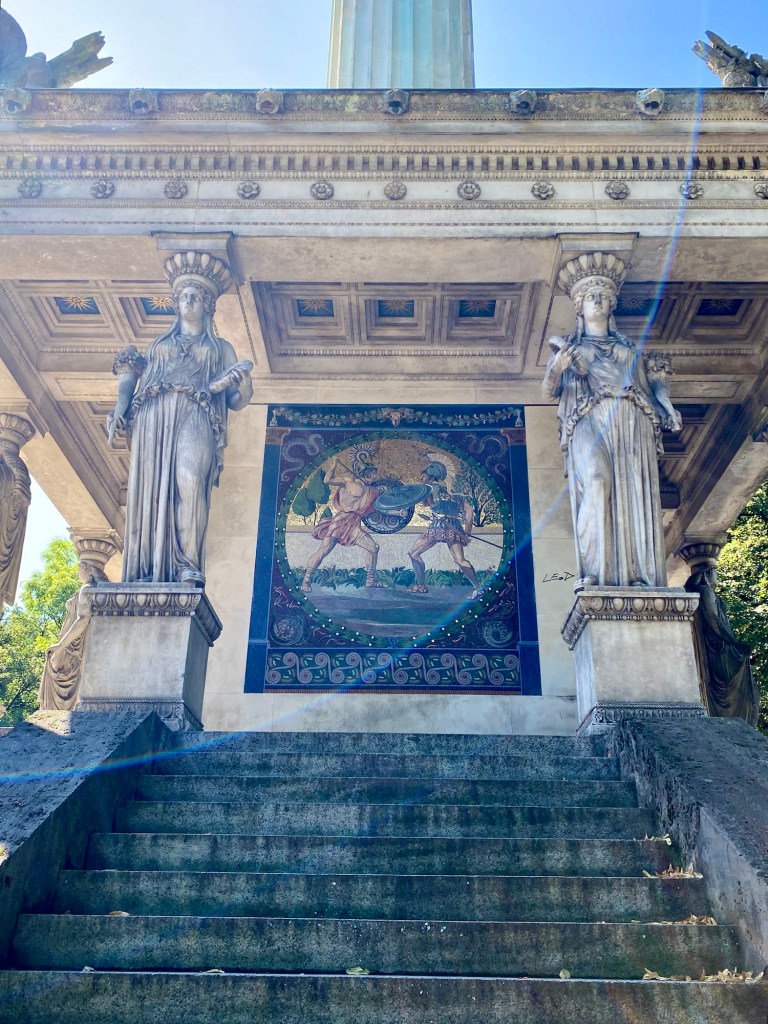
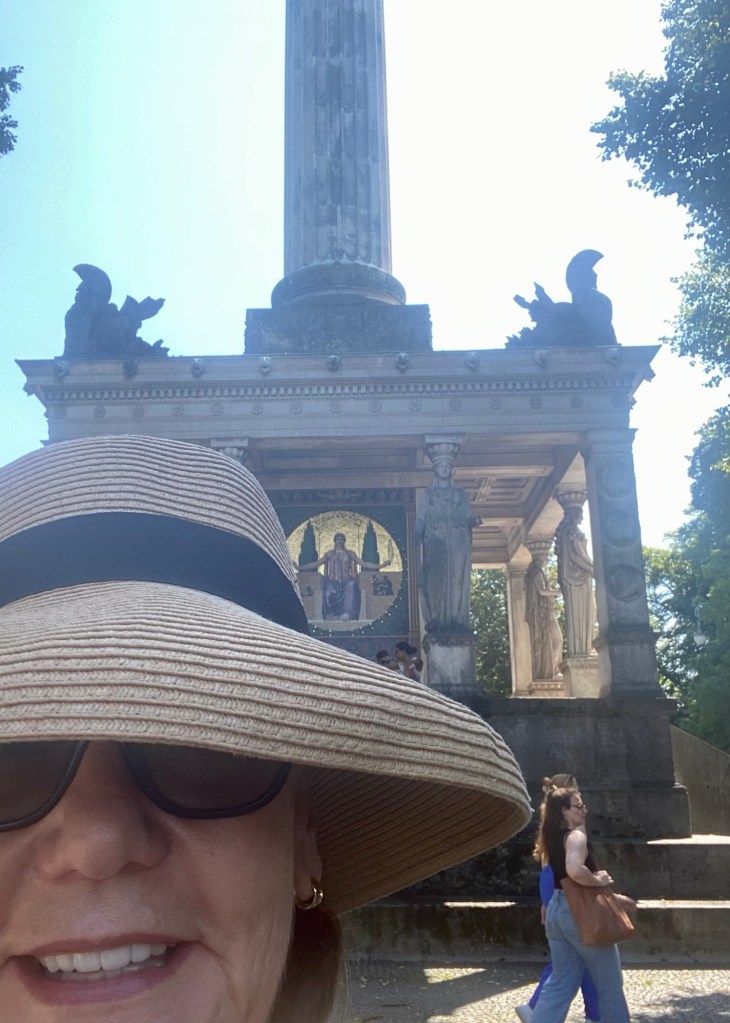
I was on my way to visit the Villa Stuck in the city when I was new to Munich, when I happened upon this striking monument. For a brief moment, I thought I was in Athens on the Acropolis! The caryatids! But no, I’m in Bavaria.
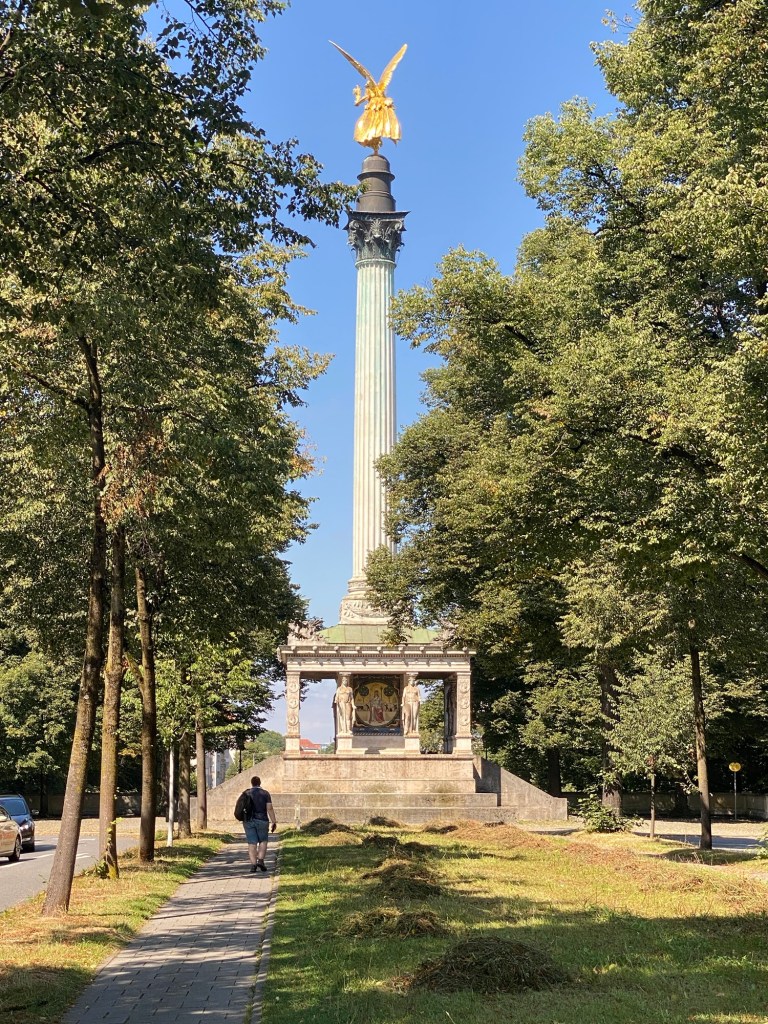
I approached the monument from the back, because Villa Stuck is closed for renovation despite the fact that the internet says it is open. For a second I felt like I was in Italy, where this kind of thing happens all of the time. And now I’m finding this in Germany as well.
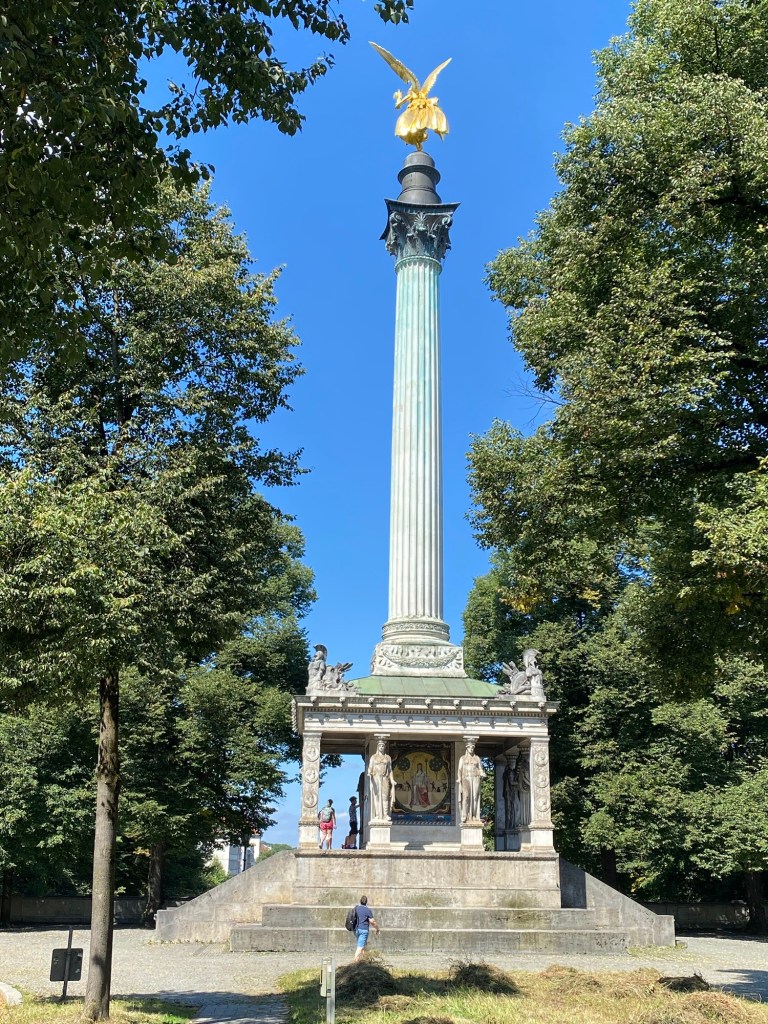
Let’s ask Wikipedia to tell us about this monument:
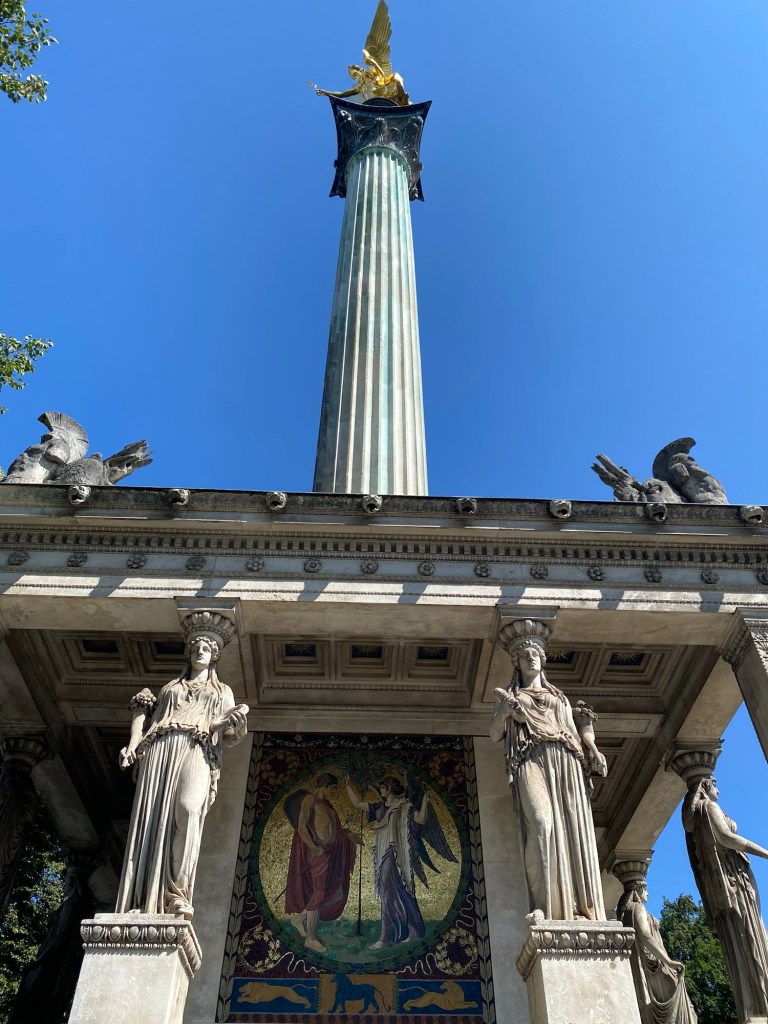
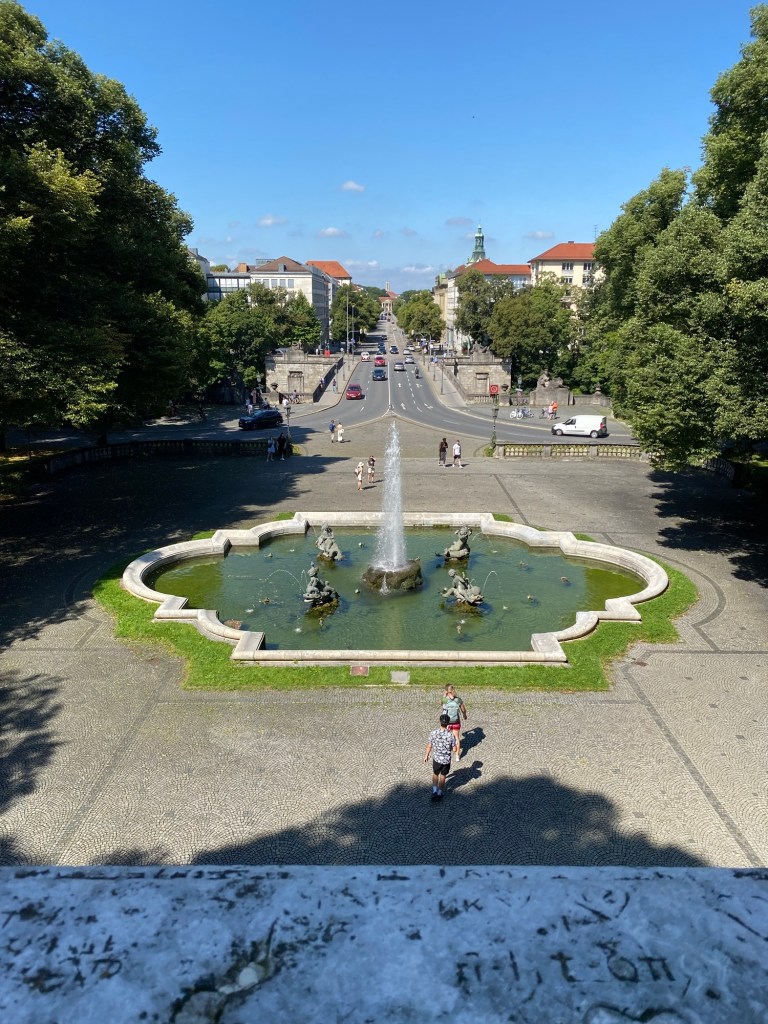
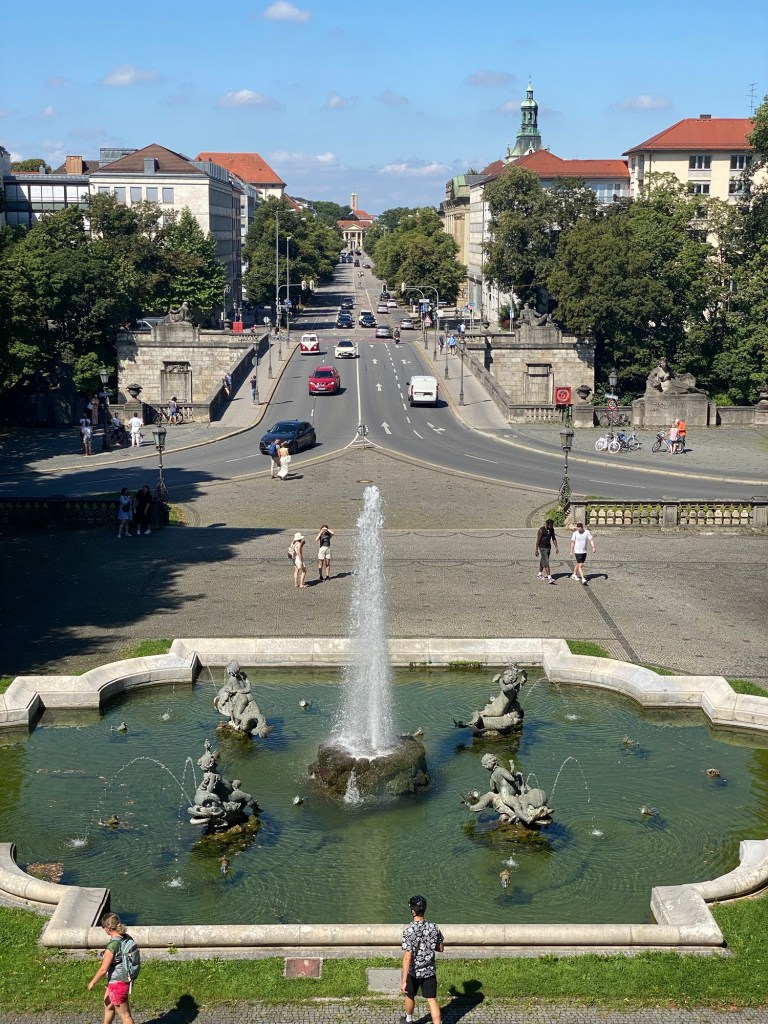
The Angel of Peace (Friedensengel) is a monument in the Bogenhausen district of Munich. The architects were Heinrich Düll, Georg Pezold and Max Heilmaier. It is part of Maximilian Park and a point at the eastern end of a line of sight forming Prinzregentenstrasse. Next to the Isar River, slightly elevated above street level, is an open space with a fountain; this has a dolphin waterspout surrounded by four smaller waterspouts. Two staircases lead to the observation deck . A column 38 metres high and in the Corinthian style is located here, on top of which is a six-metre statue of the Angel of Peace. It is a replica of the Nike of Paeonius.
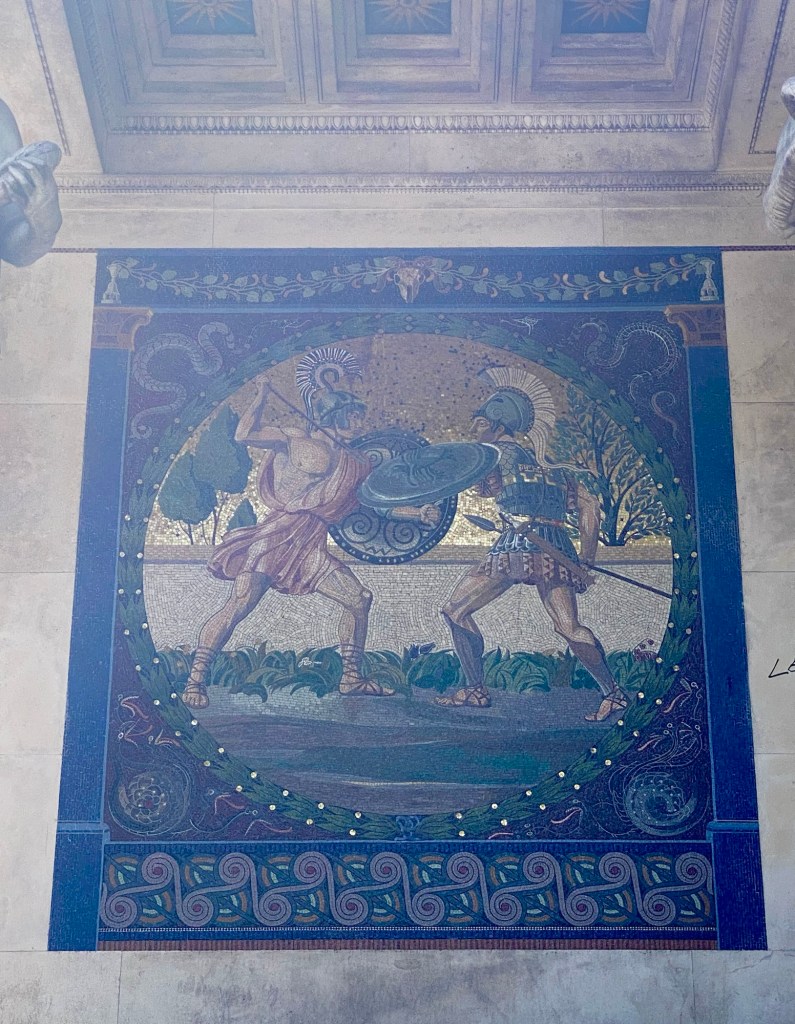
The Angel of Peace is a reminder of the 25 peaceful years after the Franco-German war of 1870/71.The monument with its small temple shows the portraits of the German Emperors William I, Frederick III, Wilhelm II, the Bavarian rulers Ludwig II, Otto and Luitpold, the Imperial Chancellor Otto von Bismarck and the generals Helmuth von Moltke, Albrecht von Roon, Ludwig von der Tann, Jakob von Hartmann and Siegmund von Pranckh. In the hall of the temple are gold mosaics which depict the allegories of war and peace, victory and blessing for the culture.
The foundation stone was laid on 10 May 1896; the unveiling was on 16 July 1899. The sculpture of gilded cast bronze was a collaborative work of the architects were Heinrich Düll, Georg Pezold and Max Heilmaier. The Putti Fountain is a work of Wilhelm von Rümann.
Below, I am looking from the monument towards the city. I never got a view of it in reverse, which is the way it is meant to be seen. Typical of that day.




 get back, lauretta!