Stop
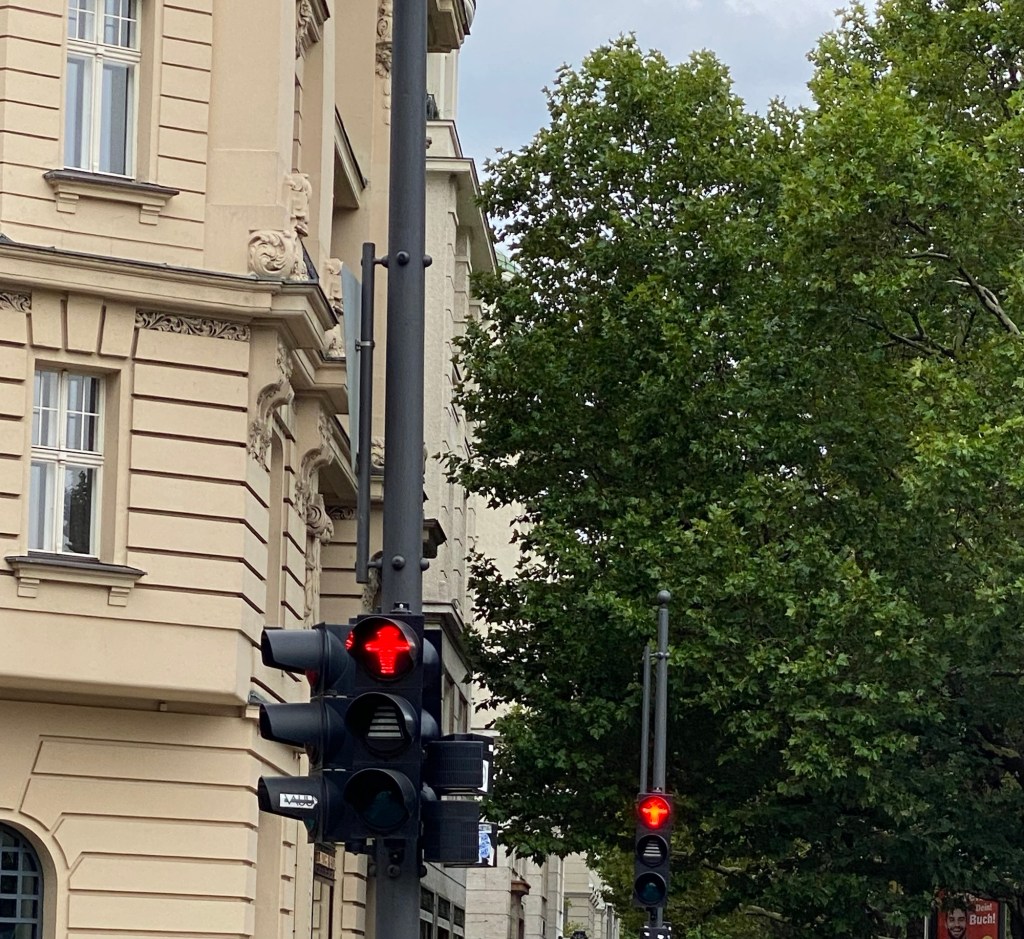
In the 1920s and 1930s, Berlin was a hub for technology enthusiasts. Simultaneously, traffic grew at a rapid pace. In fact, Potsdamer Platz was a crossroad with more traffic than any other in Europe. The traffic jams were just getting worse and there were lots of accidents, many involving pedestrians. Every day, for example, 83,000 passengers used the overground and underground station at Potsdamer Platz alone, not to mention more than 20,000 cars, 26 tram lines and 5 bus lines. The police, armed with trumpets!, could not keep this chaos under control. Consequently, in 1924, the first traffic lights in Berlin were ceremonially put into service on Potsdamer Platz.
Go
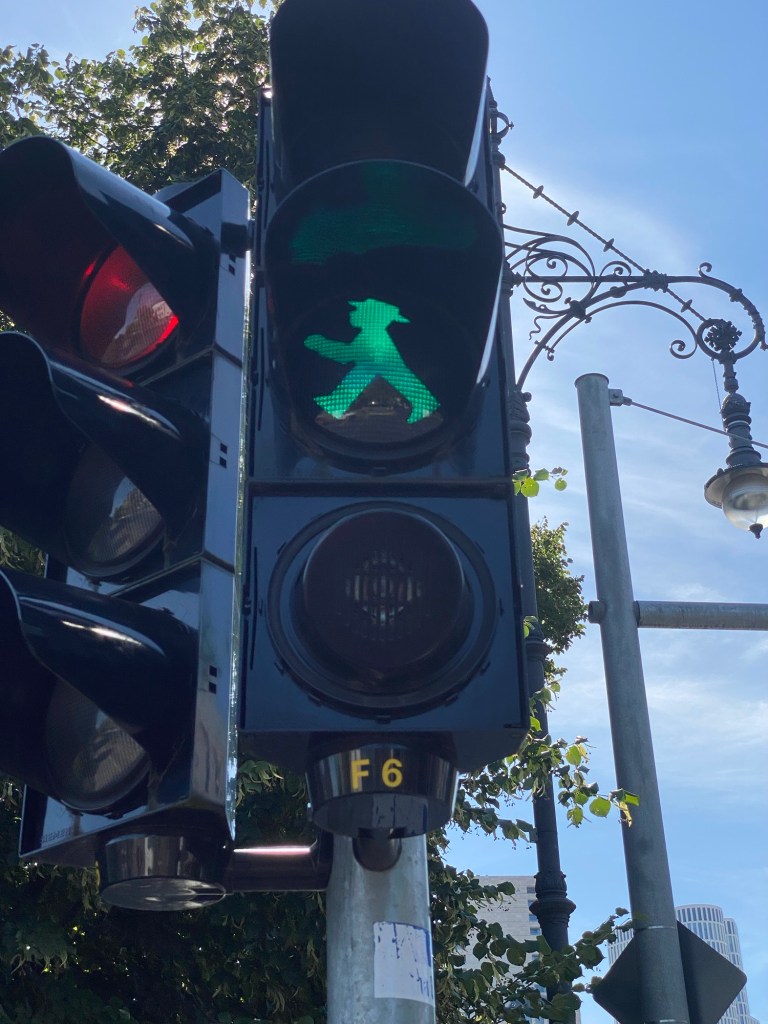
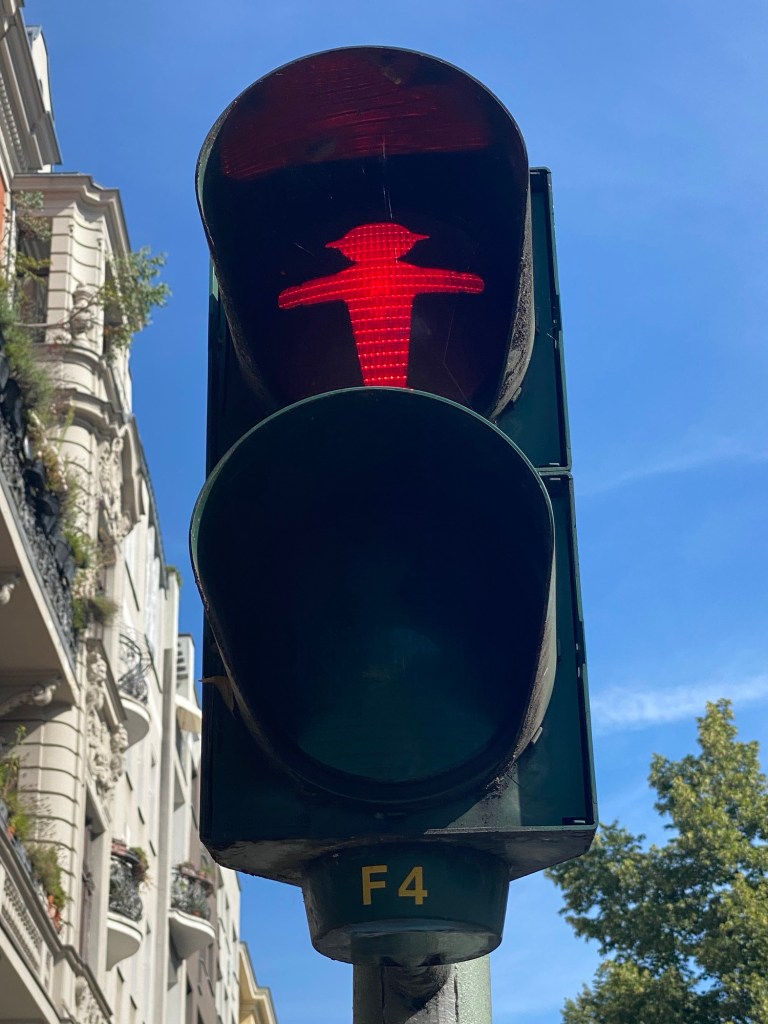
Across the world, pedestrian traffic lights were created in a variety of versions. But no other symbols were as well researched as the famous East German Ampelmännchen. Berlin’s symbols were preceded by extensive, well-founded development on the basis of traffic psychology.
The developer of the Ampelmännchen, Karl Peglau, was a traffic psychologist and technical draftsman. His wife Hildegard was frequently the first person to test his new developments. His secretary Anneliese Wegner had a gift for drawing; she added a few details at Peglau’s request, making her contribution to the personality of the Ampelmännchen. Peglau credited her with the shape of the hat in the symbols.
Stop
Go
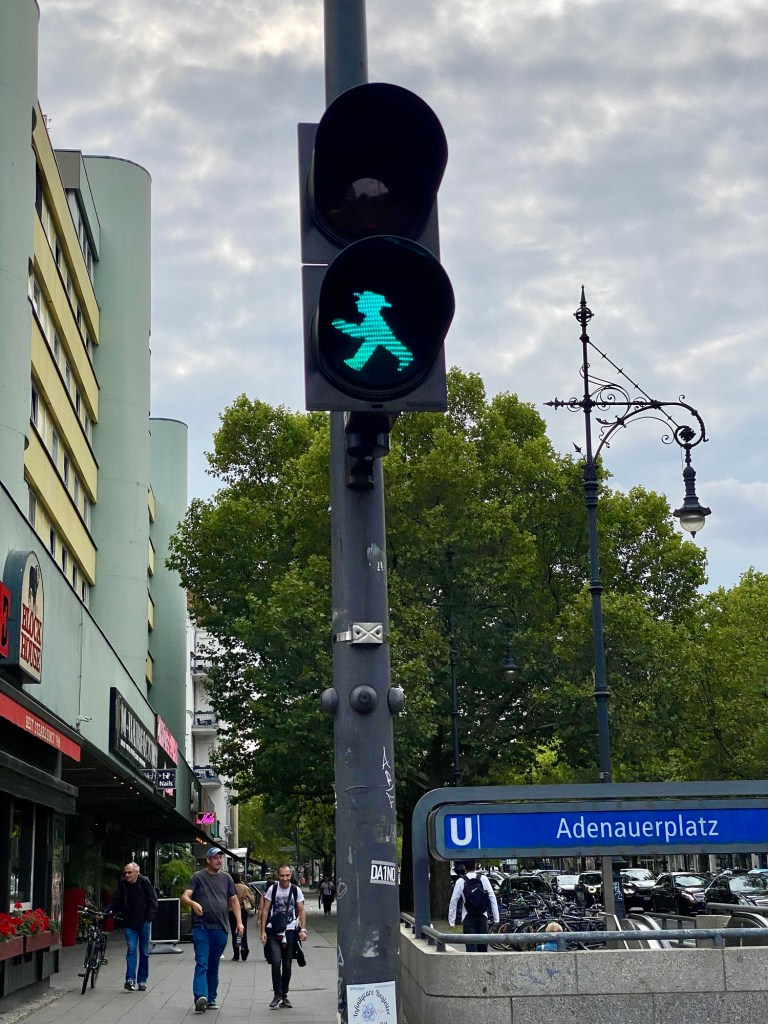
Peglau submitted his suggestions in Berlin for new traffic light symbols, including very specific ones for pedestrians; thus, the little East German traffic light men were born.
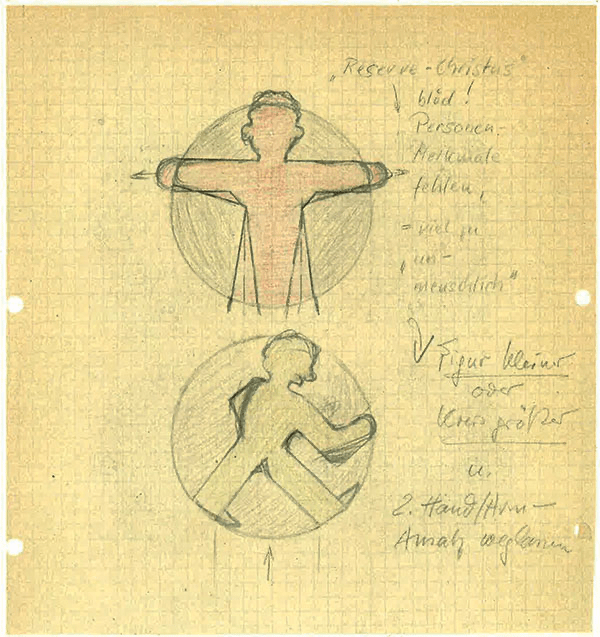
On the basis of these suggestions Peglau had submitted, he “was commissioned in 1962 by the Chairman of the Permanent Transport Committee of the City Council of Greater Berlin to develop a concept for control and safety in road traffic.”
They endure to this day, fortunately.
Dr. Claudia Peschke of Jacobs University in Bremen stated in her study of the visual effectiveness of the East and West German Ampelmännchen: “Our findings show that the East German Ampelmännchen are not just iconic of the East German nostalgia, but actually have an advantage over the West German Ampelmännchen in terms of the signal being perceived.”
In the years following the fall of the Berlin Wall, amongst the turmoil that accompanied the phasing out of many East German institutions, the Ampelmännchen became cult figures: “Symbols standing against the unreasonable post-fall mentality of getting rid of things,” Karl Peglau remembered. “They were originally – and will hopefully remain – figures of the street, psychologically thought out symbols of the rules of behaviour for pedestrians in street traffic.”
He saw no reason to drive the symbols out of their traditional places in the East – but “plenty of good reasons to introduce them in the West.”
And, Berliners preferred the 1960s pedestrian traffic signals! That they have been maintained throughout the city seems to me to be one of the most charming things about the contemporary city. I love them!
 get back, lauretta!