The Lenbachhaus is a building housing the Städtische Galerie (Municipal Gallery) art museum in Munich’s Kunstareal. The Lenbachhaus was built as a Florentine-style villa for the painter Franz von Lenbach between 1887 and 1891 by Gabriel von Seidl and was expanded 1927–1929 by Hans Grässel and again 1969–1972 by Heinrich Volbehr and Rudolf Thönnessen. Some of the rooms have kept their original design.
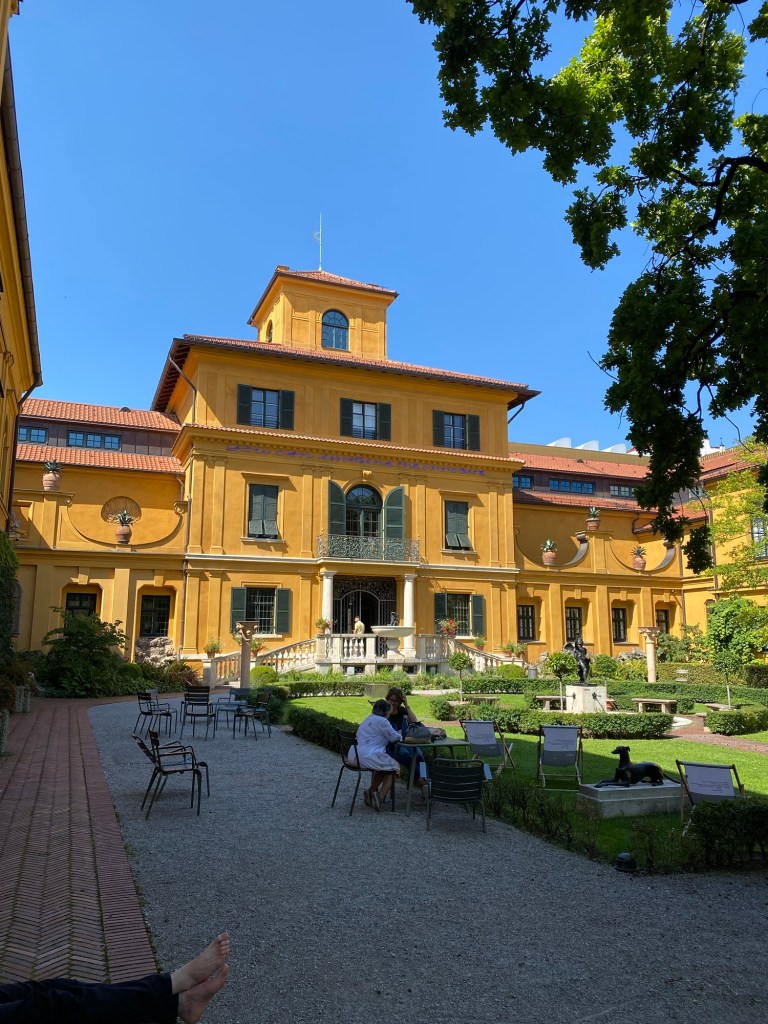

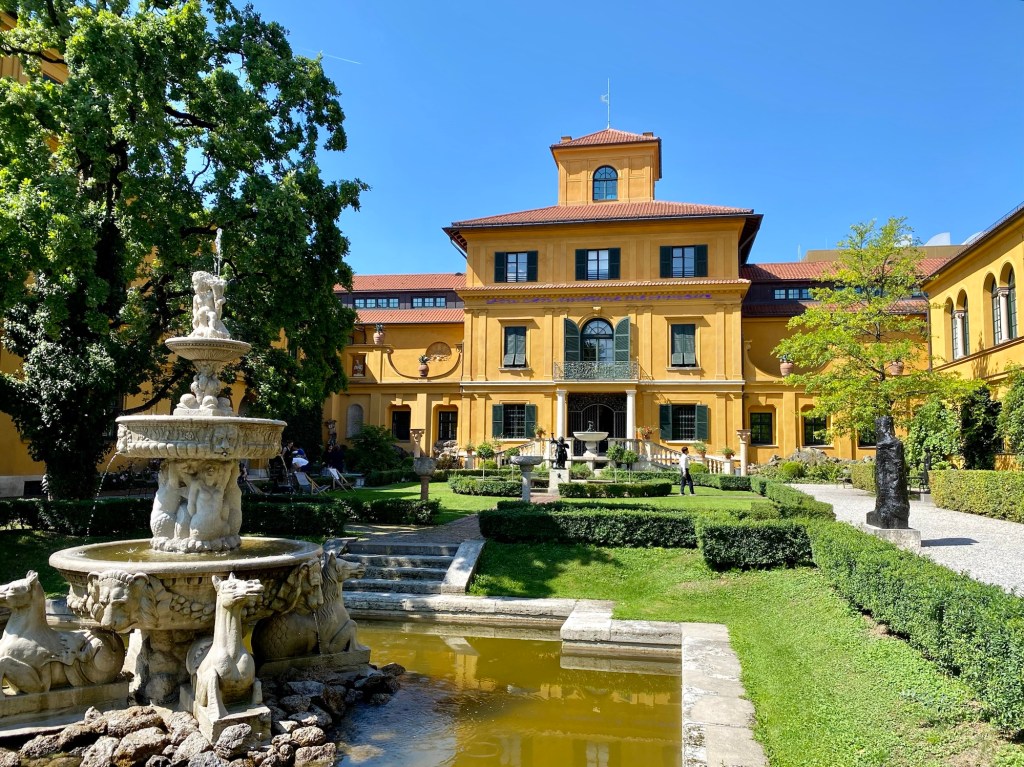


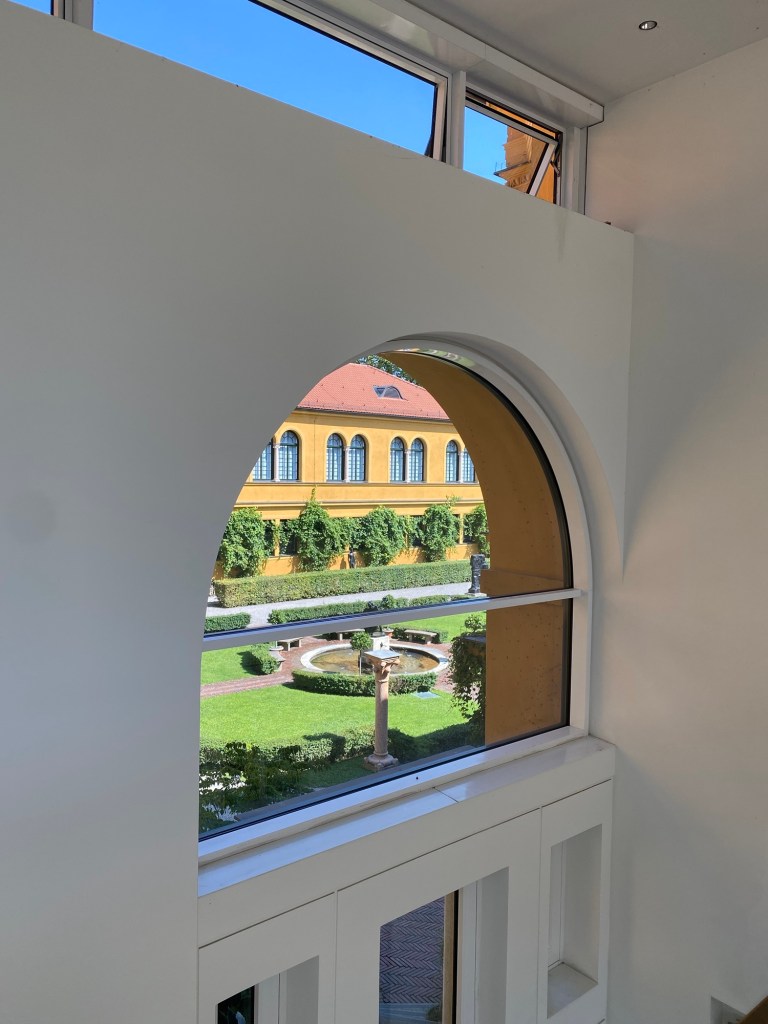
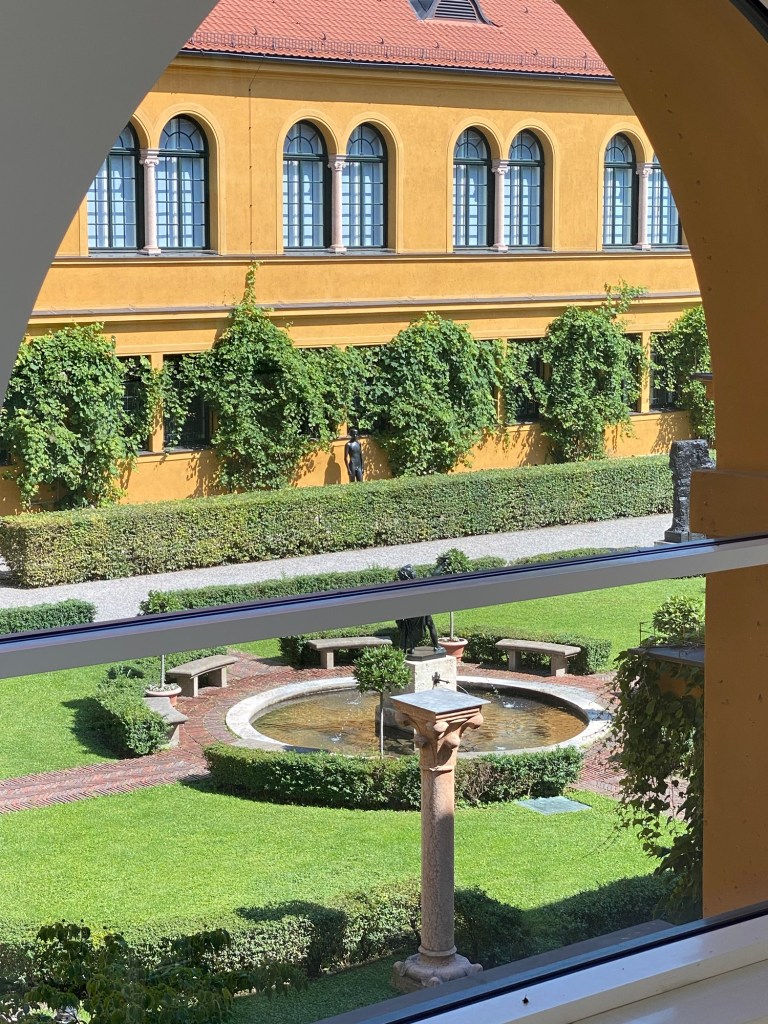
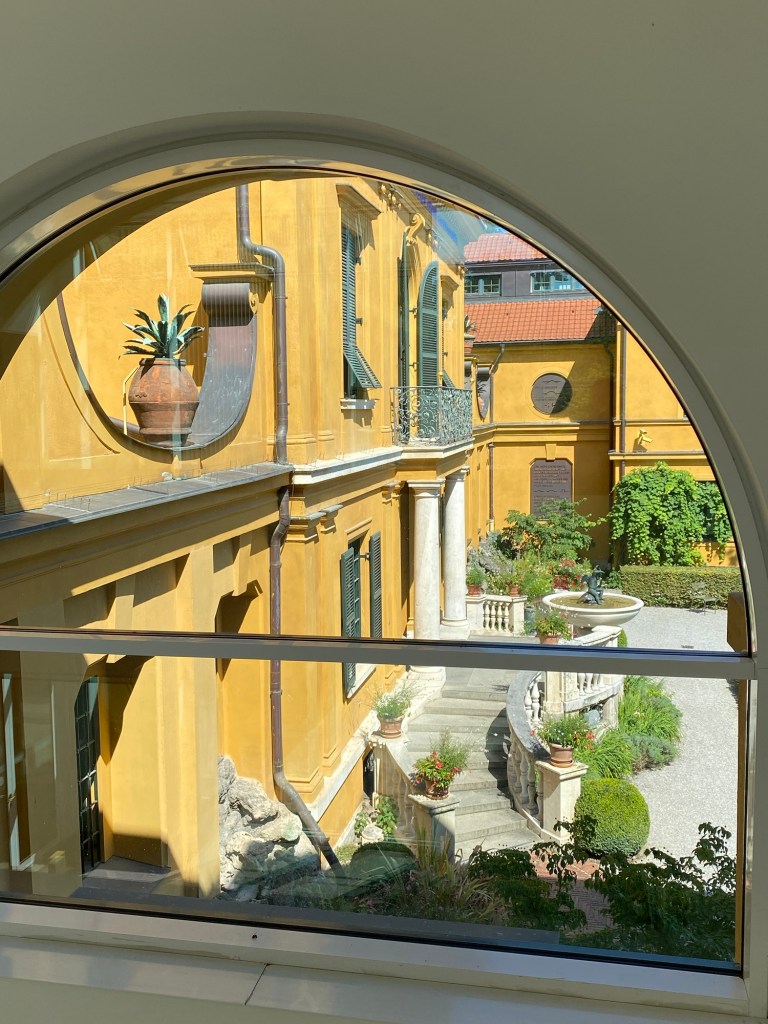
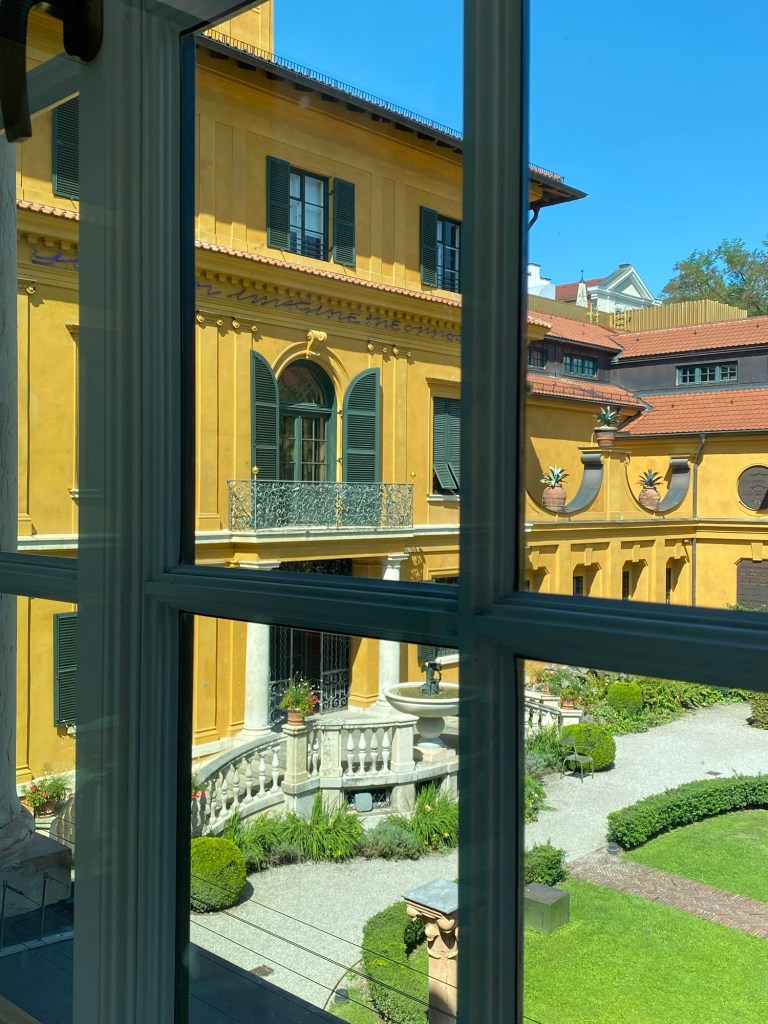
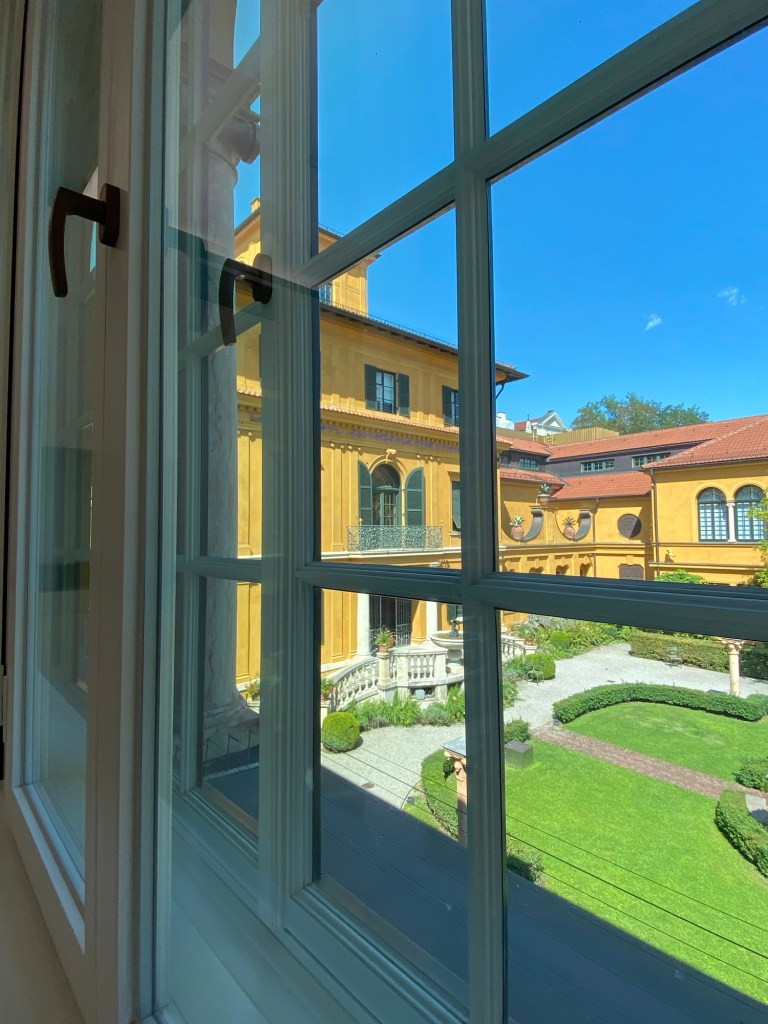
I have to share with you how I first discovered the Villa Lenbach. It was through windows in the new wing of the Lenbachhaus Museum. I’m a newbie to Germany; I think I’ve made that clear. I have never spent a moment previous to this summer thinking about visiting Germany, much less living here for a few months. Yet, here I am and I am enjoying it fully.
So that explains why I didn’t know one thing about the Lenbachhaus until I visited it. I was happily walking through what turns out to be the new wing, having no knowledge that the name of the museum or the location were based upon an Italian villa design! When I first spotted the formal garden out the window of the new wing, I almost fainted. I thought, wait, am I in Rome? It was a particularly hot sunny summer day and it felt like it could have been Italy!
The city of Munich acquired the building in 1924 and opened a museum there in 1929. The latest wing was closed to the public in 2009 to allow the expansion and restoration of the Lenbachhaus by Norman Foster; the 1972 extension was demolished to make way for the new building. The museum reopened in May 2013. The architect placed the new main entrance on Museumsplatz in front of the Propylaea. The new facade, clad in metal tubes made of an alloy of copper and aluminum, will weather with time.
 get back, lauretta!