I’ve been rhapsodizing about the incredible art museum holdings of world art in Germany for more than a month now and I stand by every statement. But, as you would hope and expect, the holdings of German art are no less impressive, as was brought home to me recently when I had the opportunity to pay a visit to the Lenbachhaus in Munich.
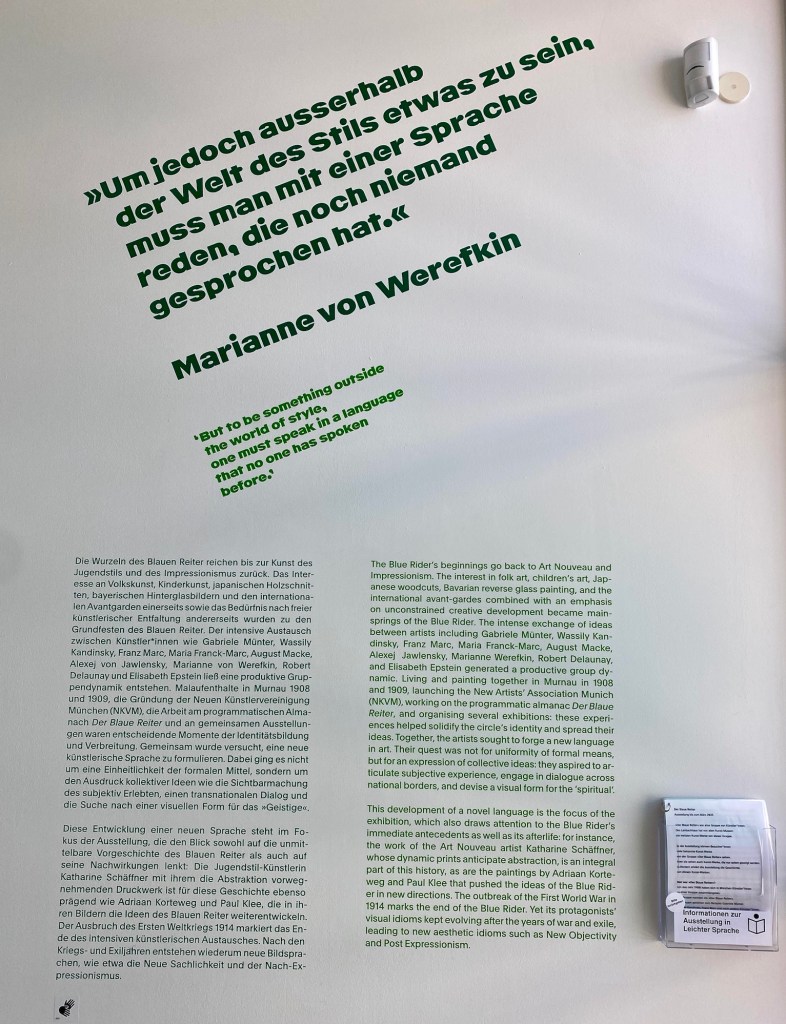
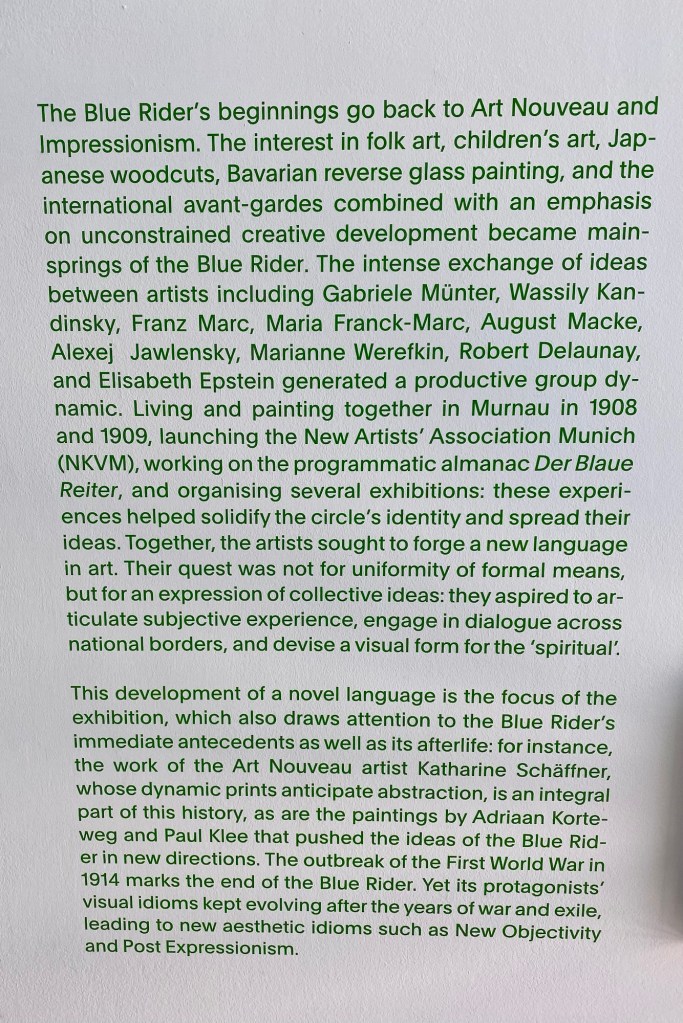
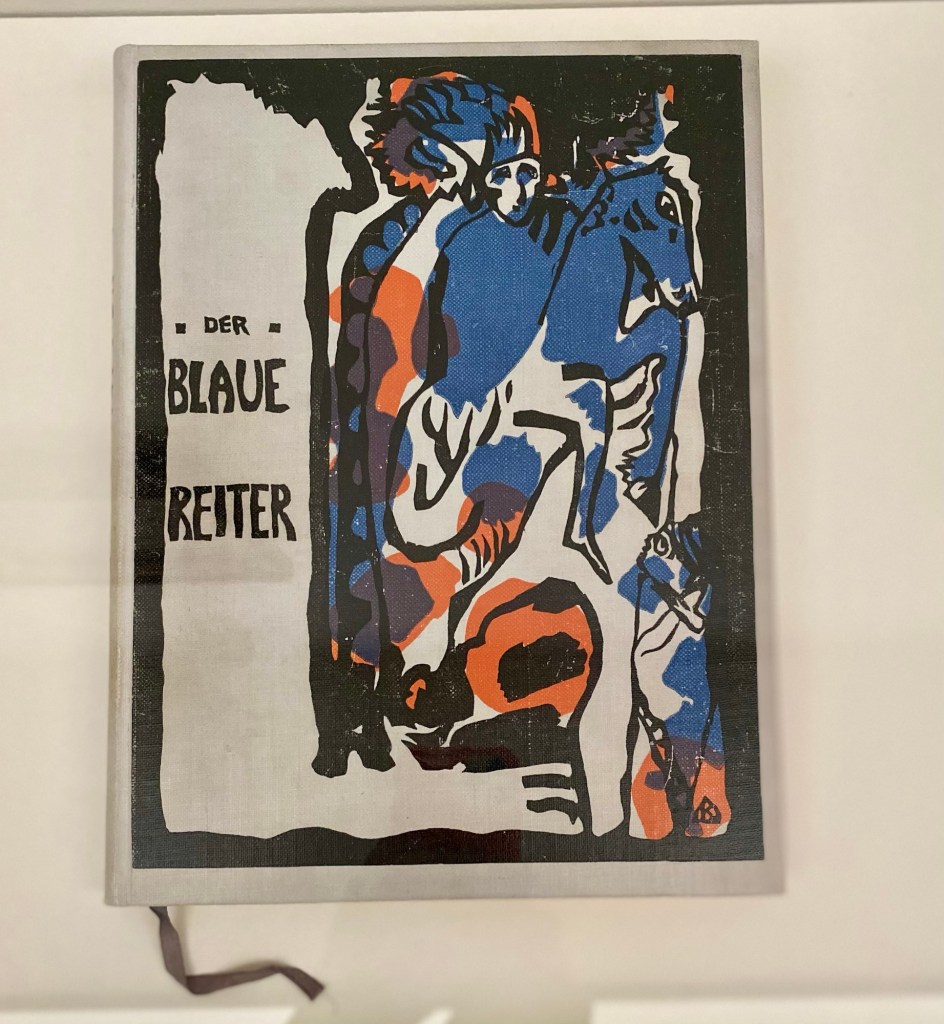
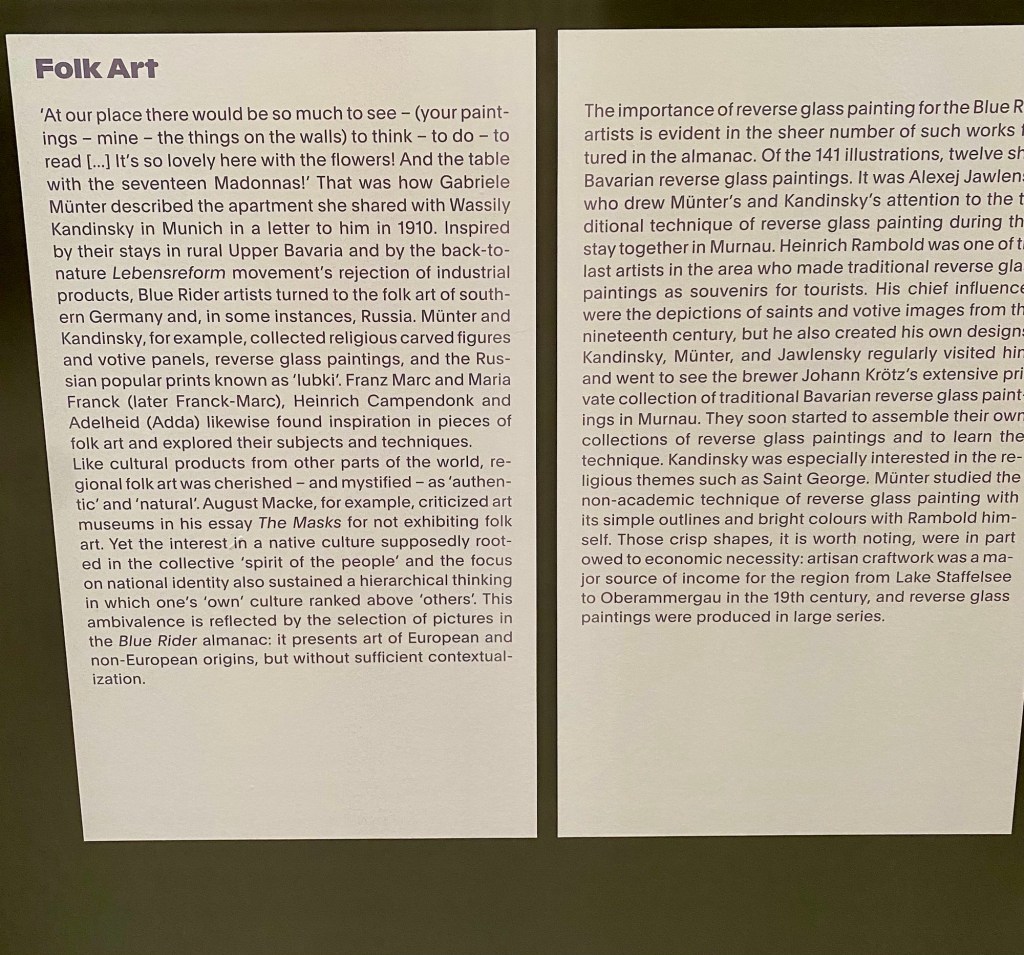
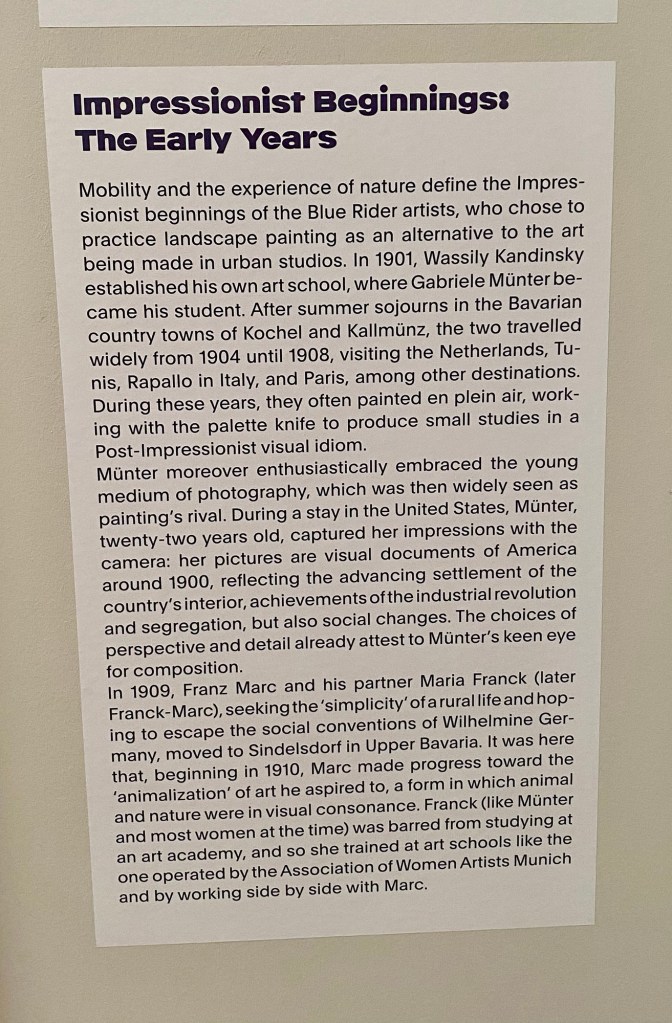
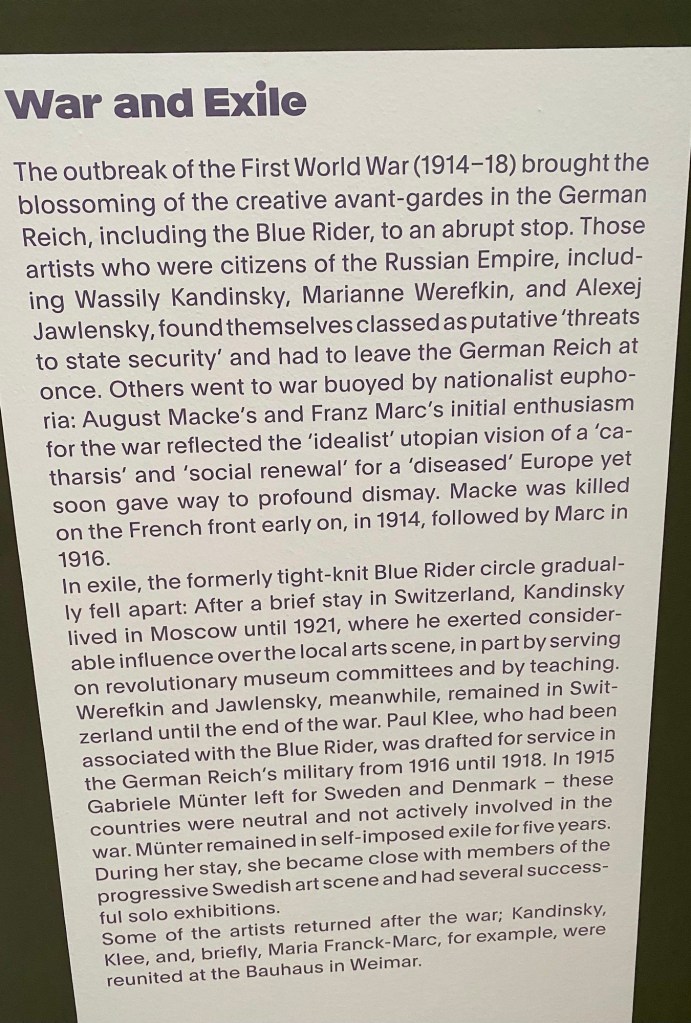
Der Blaue Reiter (The Blue Rider) was a group of artists and a designation by Wassily Kandinsky and Franz Marc for their exhibition and publication activities, in which both artists acted as sole editors in the “almanac” or book of the same name (first published in mid-May 1912). They organized two exhibitions in Munich in 1911 and 1912 to demonstrate their art-theoretical ideas based on the works of art exhibited. Traveling exhibitions in German and other European cities followed. The Blue Rider disbanded at the start of World War I in 1914.
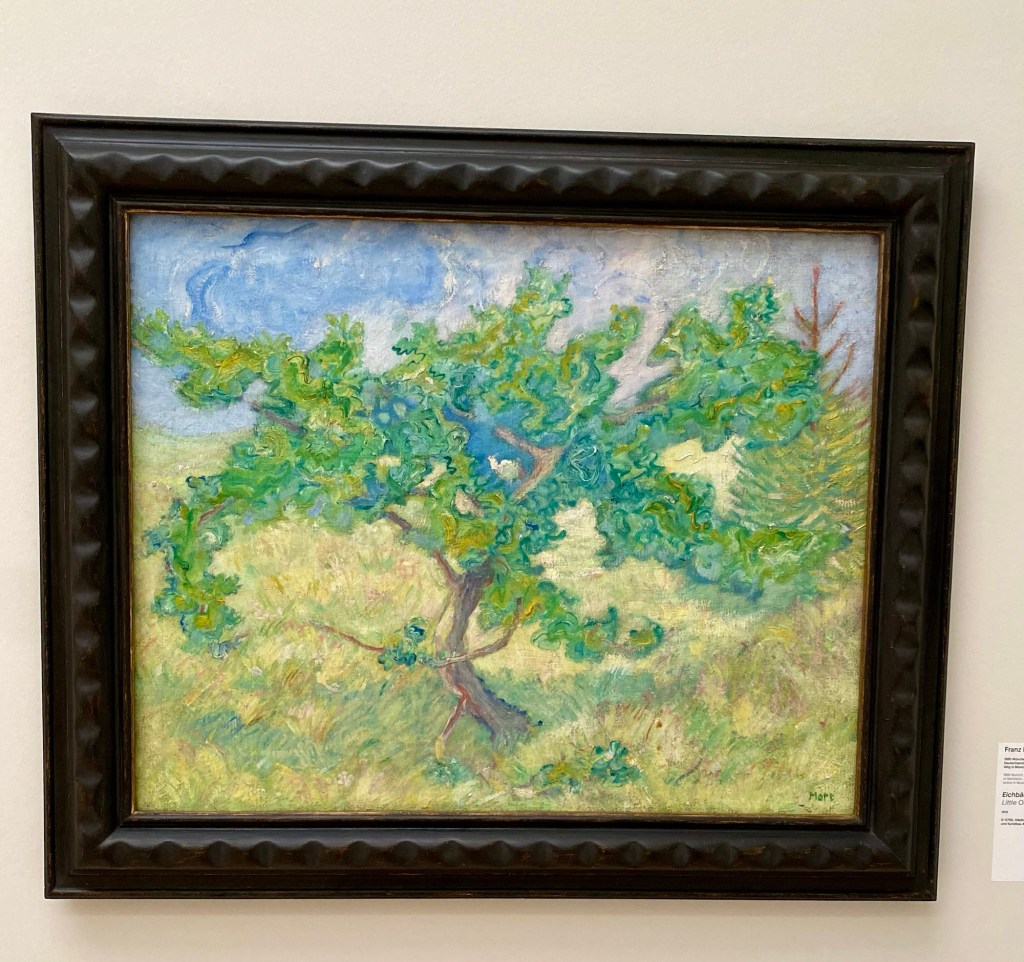
The artists associated with Der Blaue Reiter were important pioneers of modern art of the 20th century; they formed a loose network of relationships, but not an art group in the narrower sense like Die Brücke (The Bridge) in Dresden. We generally refer to the work of these affiliated artists as German Expressionism.
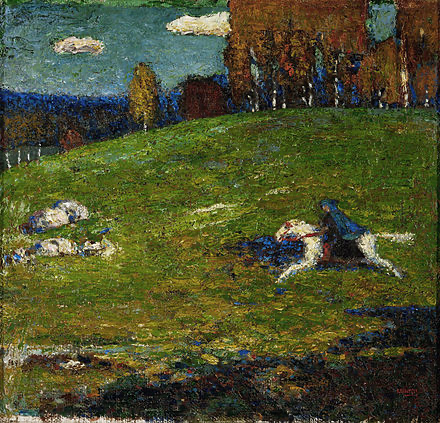
Wassily Kandinsky, The Blue Rider, 1903

Franz Marc, Blue Horse I, 1911, exhibited at the Lenbachhaus, Munich.
The name of the movement is the same as the title of a painting that Kandinsky created in 1903. Kandinsky wrote 20 years later that the name is derived from Marc’s enthusiasm for horses and Kandinsky’s love of riders, combined with a shared love of the color blue. For Kandinsky, blue was the color of spirituality; the darker the blue, the more it awakened human desire for the eternal (as he wrote in his 1911 book On the Spiritual in Art).

Let’s enter the galleries and see what we can find and learn.





I loved this painting below with the blue ceiling lights forming an abstract formation across the canvas.
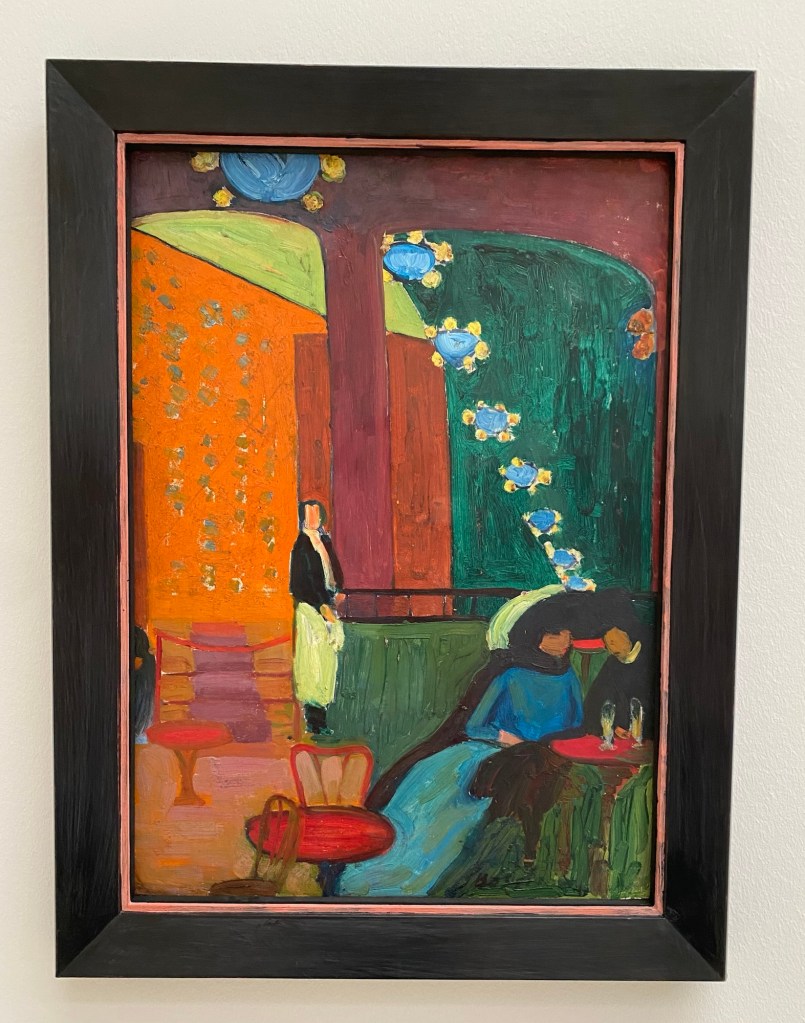
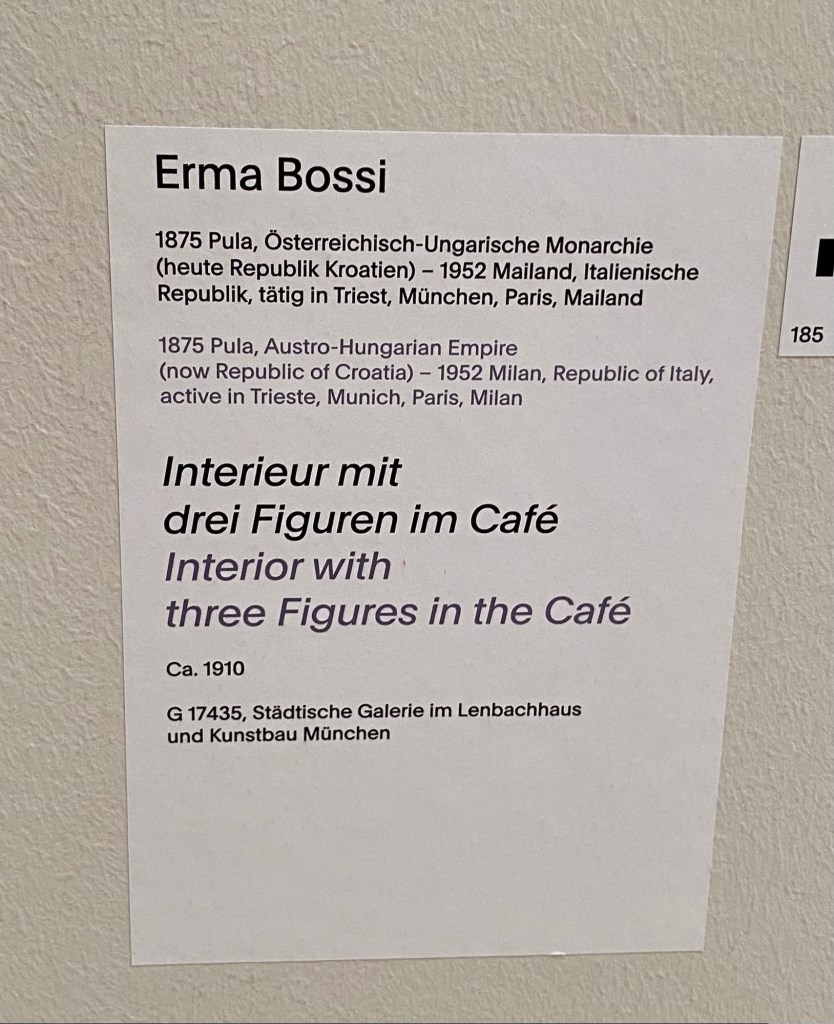

Sorry about the focus above!

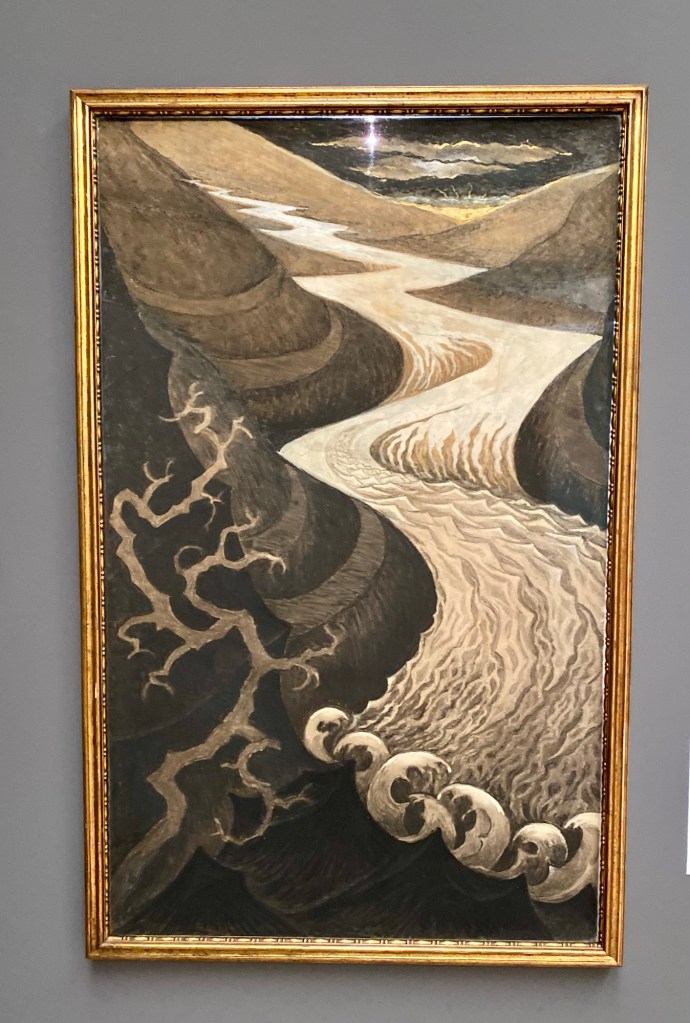
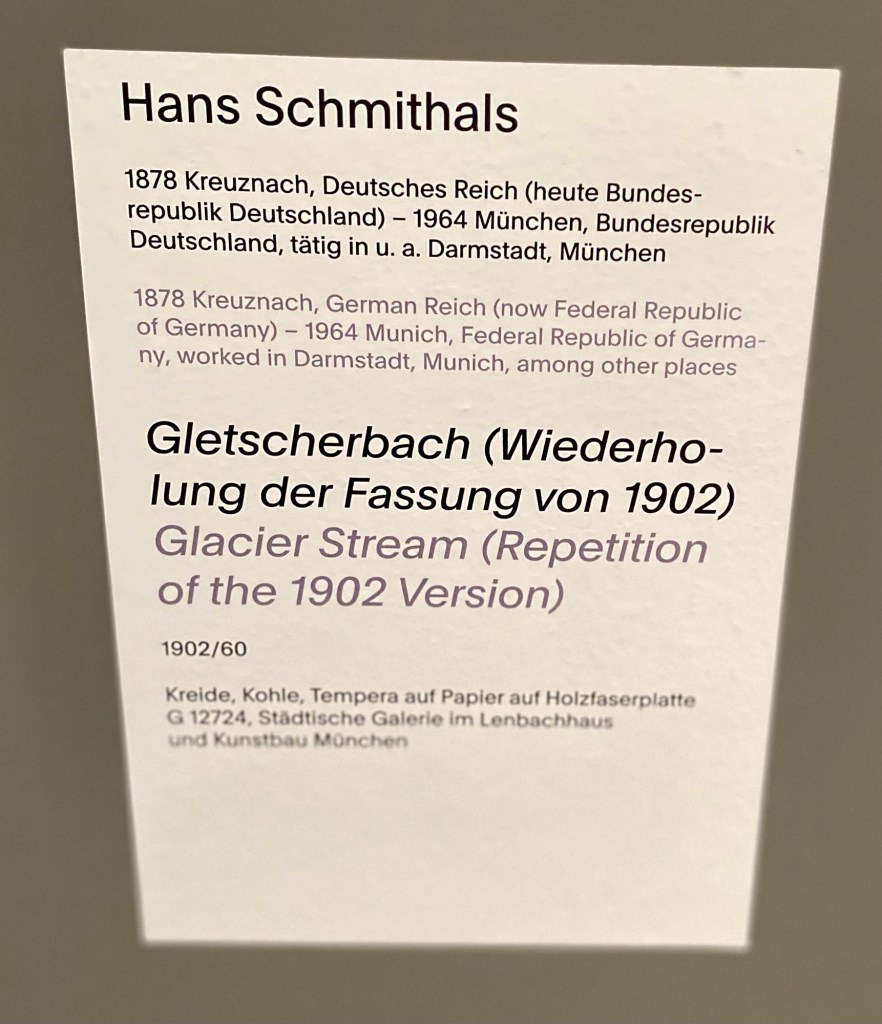
Nice galleries!
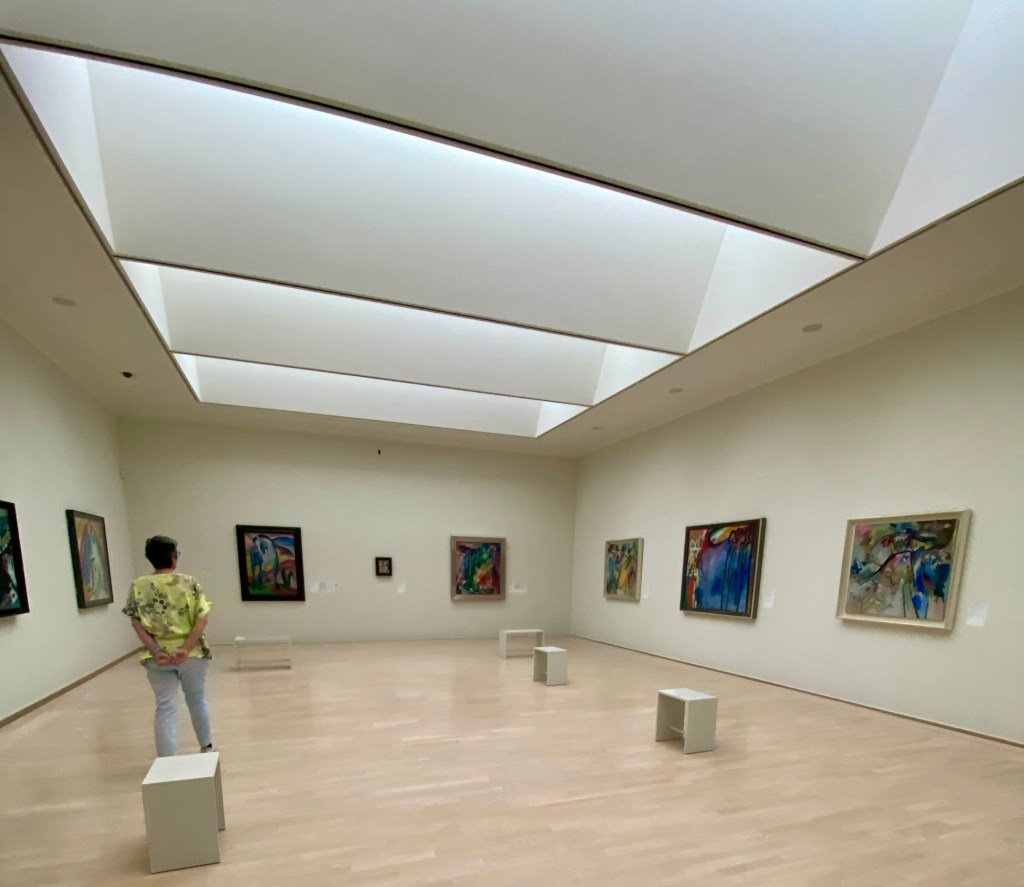
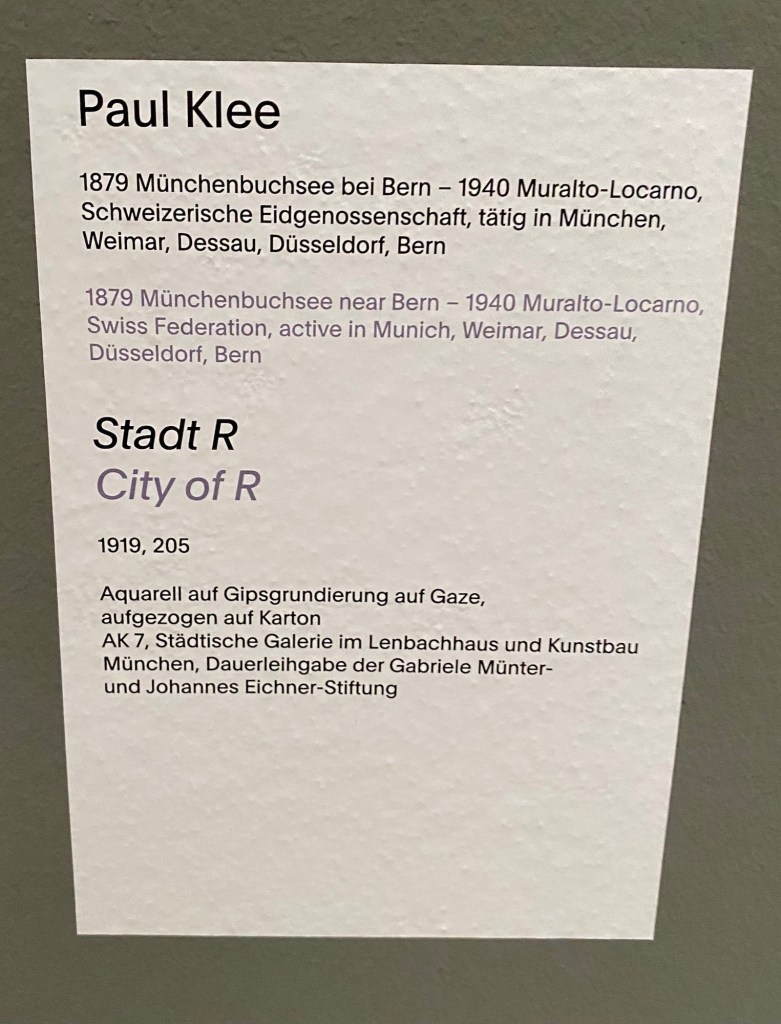
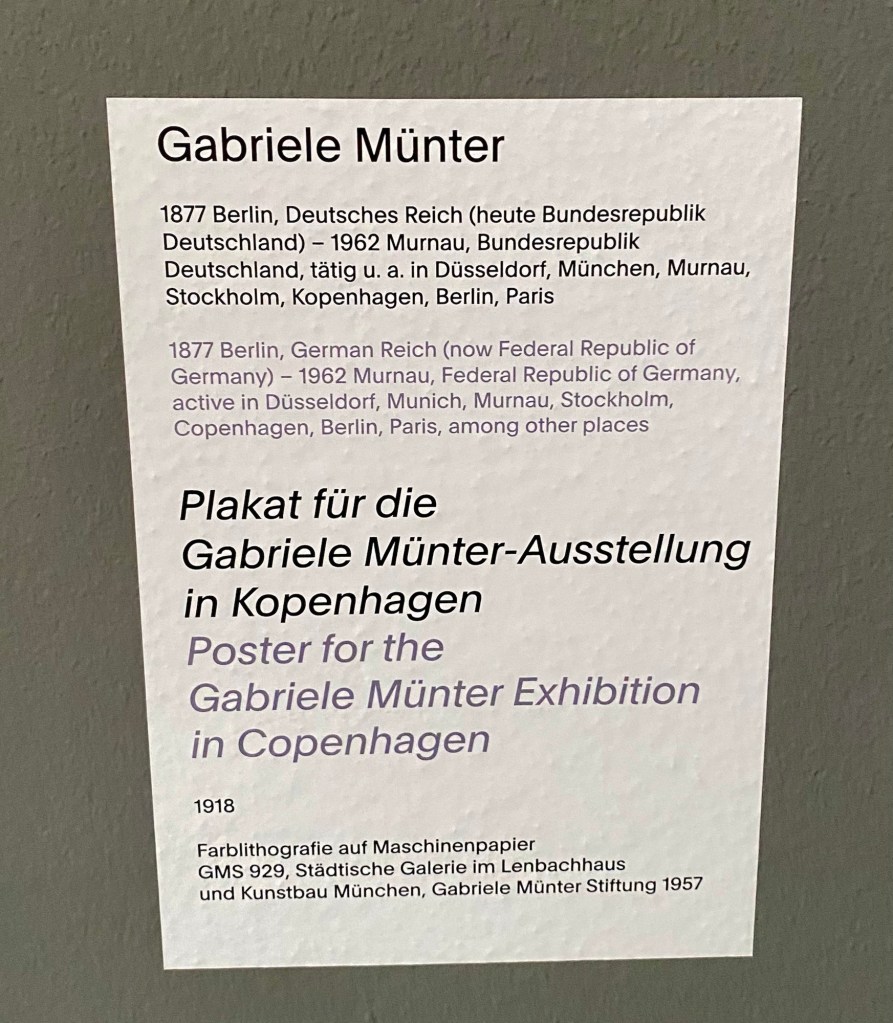
Once again I want to call out the quality and quantity of labeling in this fine museum in English. They understand they have a lot of international guests. Bravo!


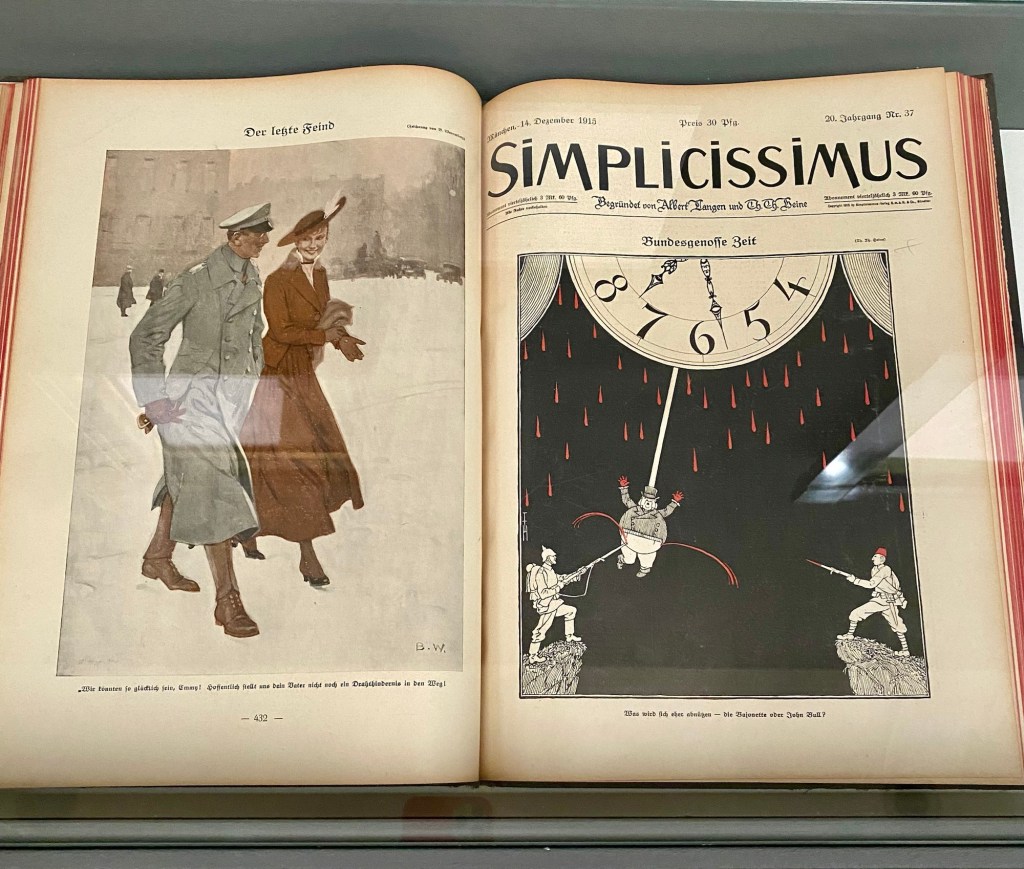
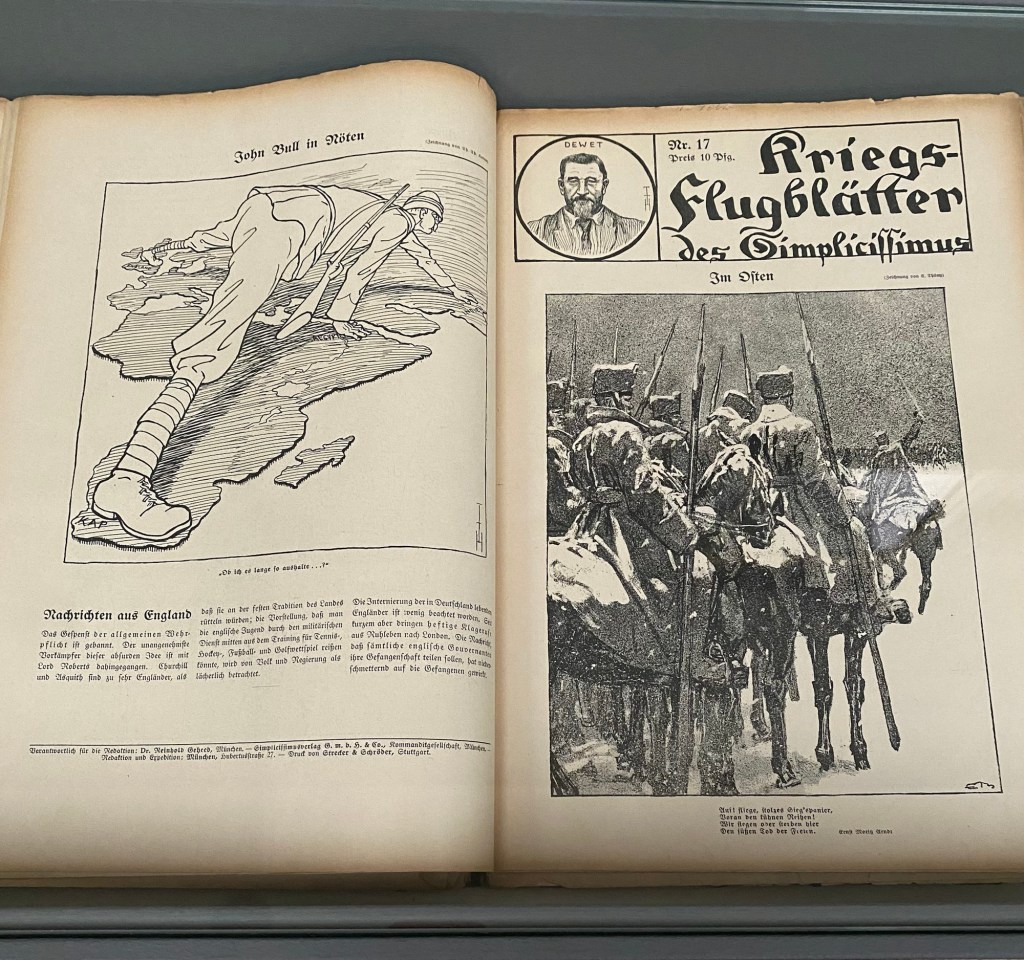


 get back, lauretta!