Near Marienplatz in the center of historic center Munich sits the important Jesuit church devoted to St. Michael. It has an august history and its striking architecture had an enormous influence on Southern German early Baroque architecture.

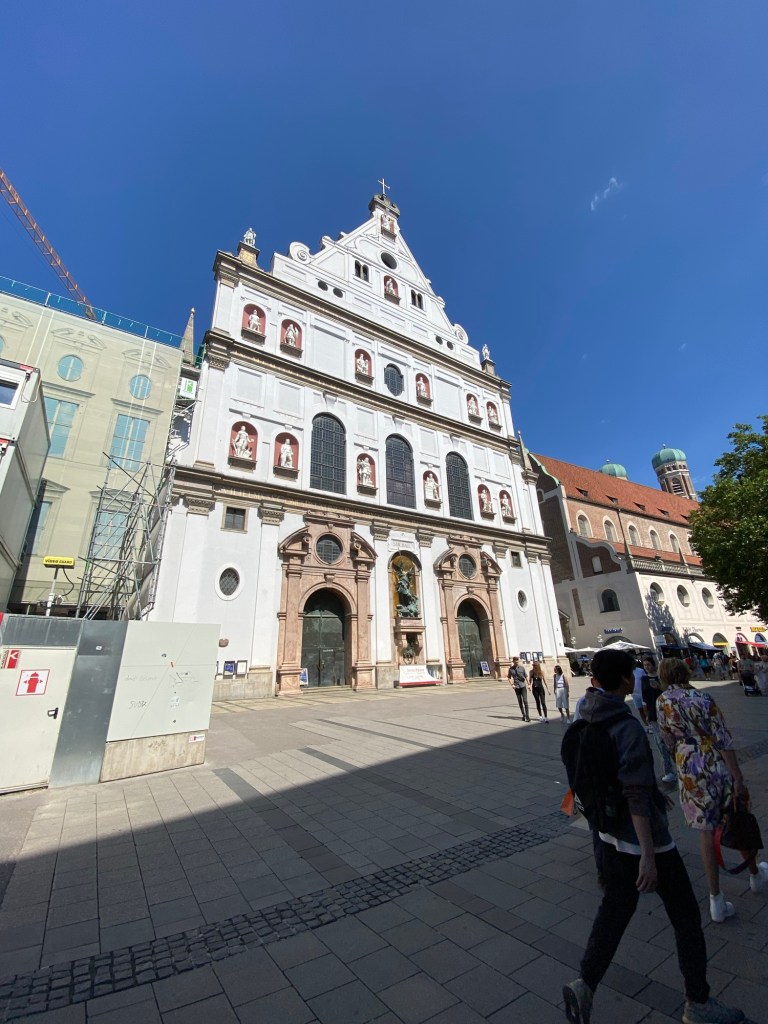

In 1556, Albert V, Duke of Bavaria granted the Society of Jesus permission to establish a presence in the city and this church was consecrated in 1597, after 14 years of construction. The church was built by William V, Duke of Bavaria between 1583–97 as a spiritual center for the Counter Reformation. The foundation stone was laid in 1585.
In order to realise his ambitious plans for the church and the adjoining college, Duke William had 87 houses in the best location razed, ignoring the protests of the citizens. The church was erected in two stages. In the first stage (1583–88), the church was built by the model of Il Gesù in Rome and given a barrel-vaulted roof by an unknown architect, the vault being the largest in the world apart from that of St Peter’s Basilica in Rome, spanning freely more than 20 meters.

The facade is impressive and contains standing statues of Duke Wilhelm and earlier rulers of the Bavarian Wittelsbach dynasty, cast in bronze, in the form of a family tree. Hubert Gerhard’s large bronze statue between the two entrances shows the Archangel Michael fighting for the Faith and killing the Evil in the shape of a humanoid demon.
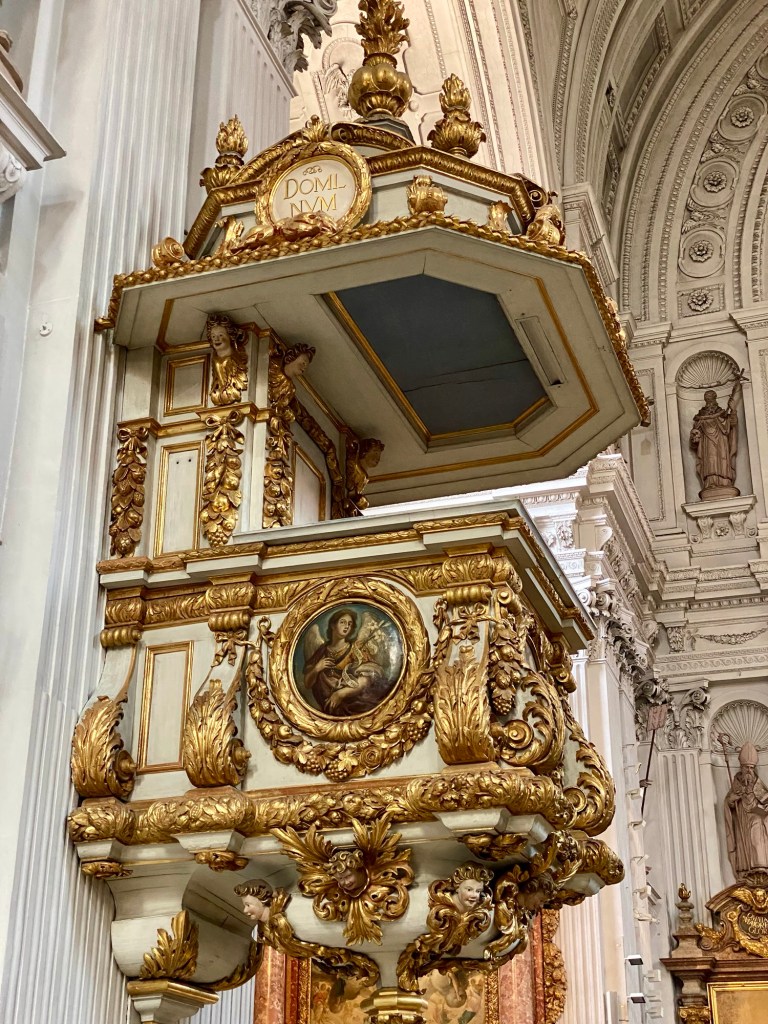
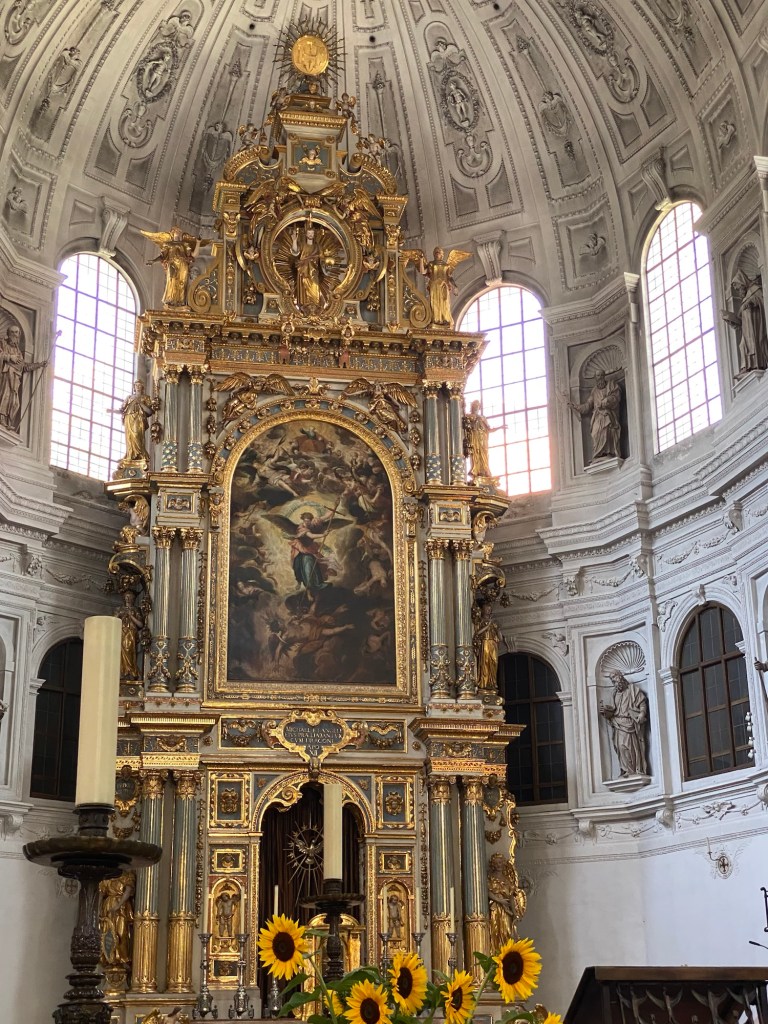

The interior is a representation of the triumph of Roman Catholicism in Bavaria during the Counter-Reformation. The heavily indented chancel arch as well as the short side aisles and even the side chapels are designed as triumphal arches in the ancient model. A very deep choir room adjoins the mighty nave. The stucco decoration of the nave represents the life of Jesus Christ. The altarpiece “Annunciation” was created by Peter Candid (1587). The sculpture of the holy angel in the nave by Hubert Gerhard (1595) was originally intended for the tomb of William V, which was not completed.
Having suffered severe damage during the Second World War, the church was restored in 1946–48. Between 1980 and 1983, the stucco-work was restored.
The church crypt contains the remains of Eugène de Beauharnais. Eugène was the son of Josephine de Beauharnais, Napoleon’s wife and her first husband, general Alexandre de Beauharnais. He married a daughter of King Maximilian I Joseph of Bavaria in 1806 and was created Duke of Leuchtenberg in 1817.
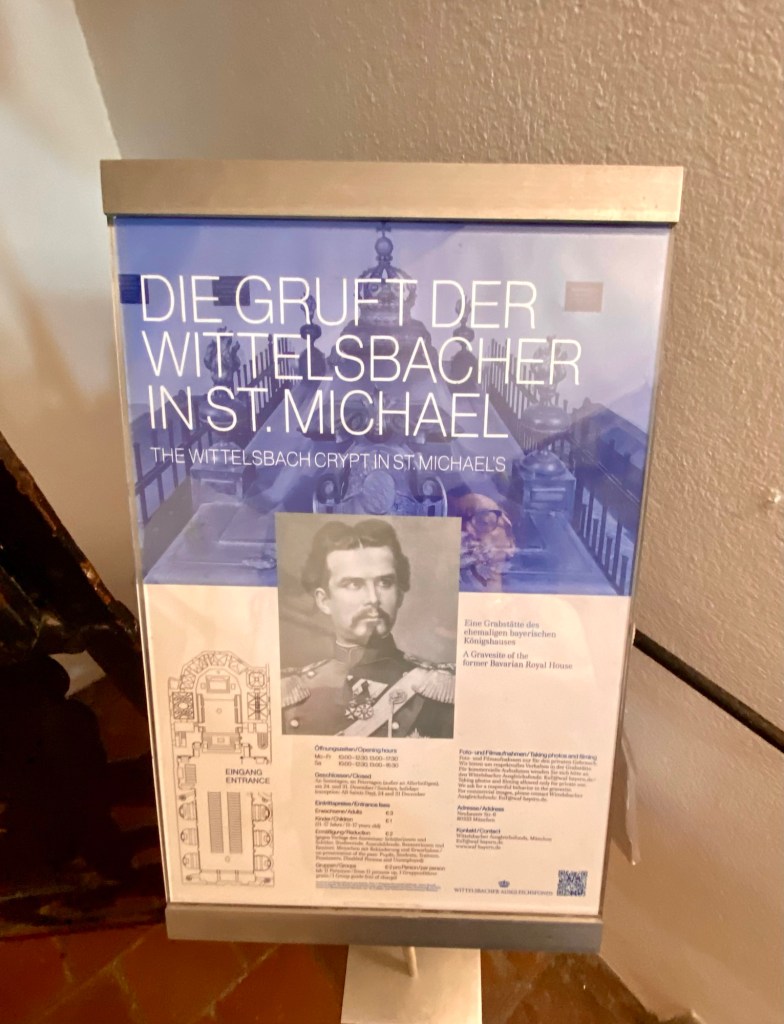
The crypt contains tombs of many members of the Wittelsbach dynasty:
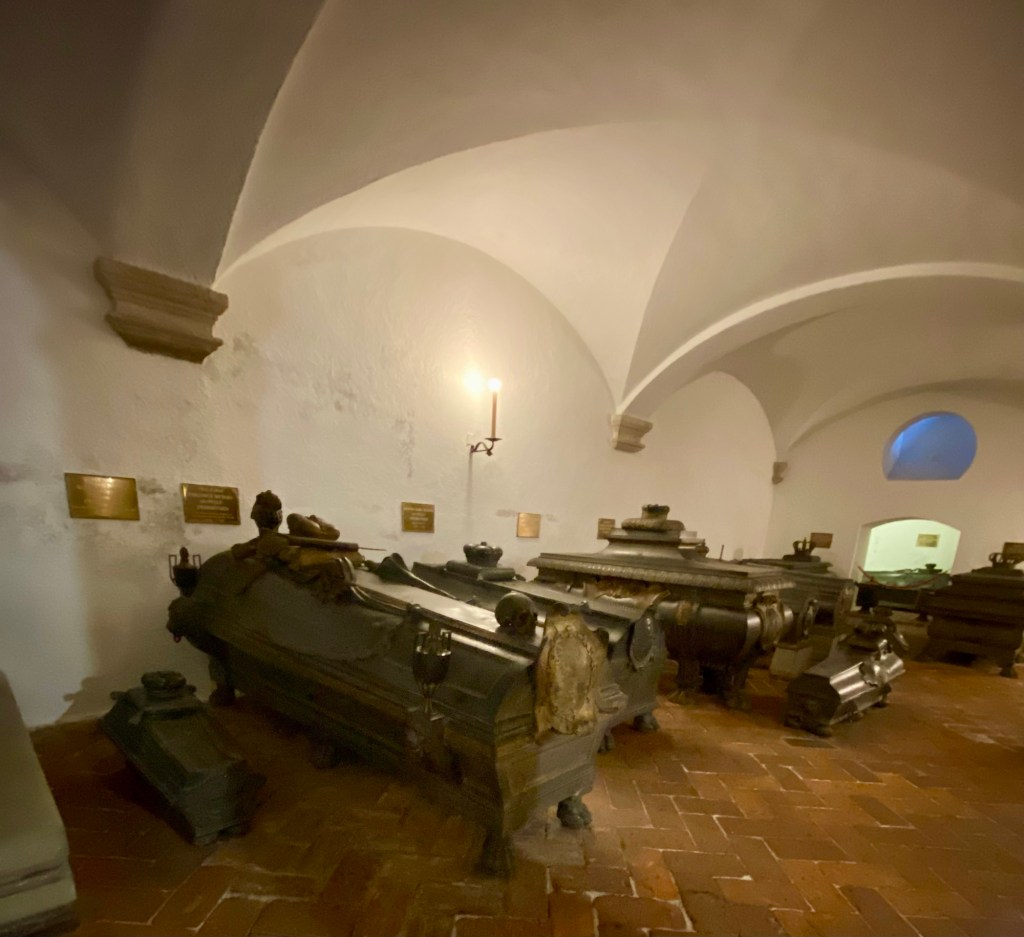
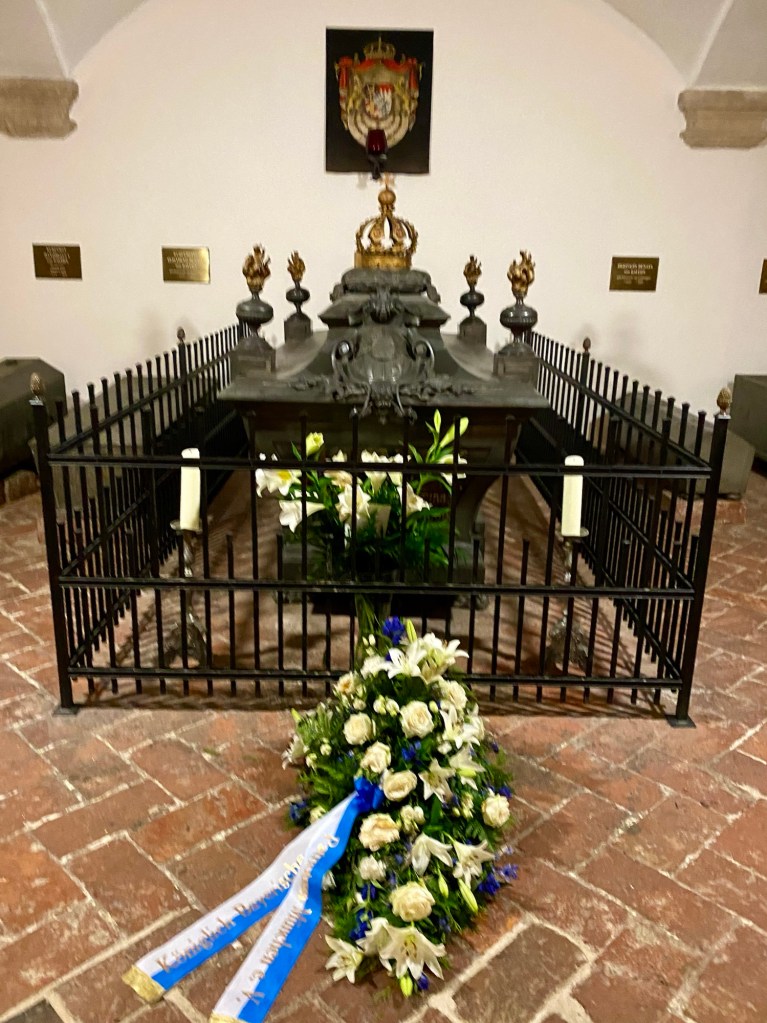
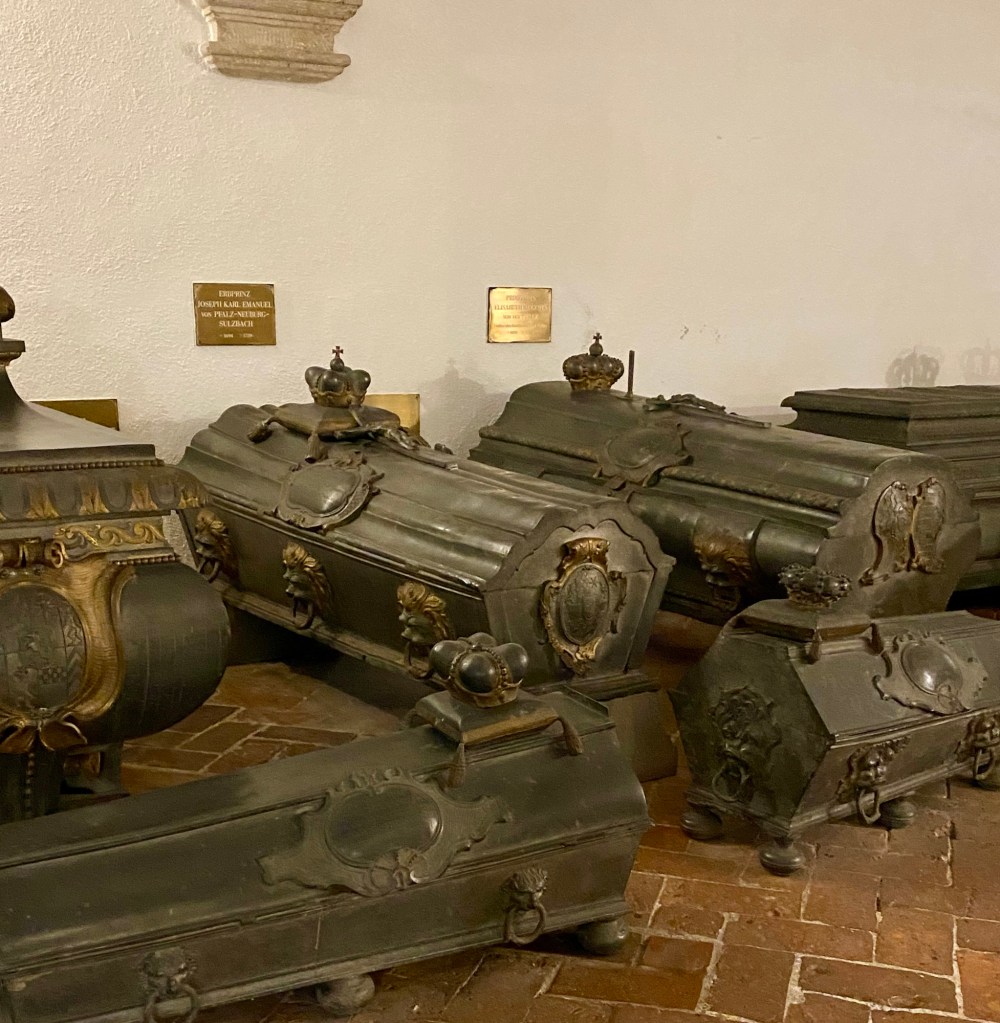

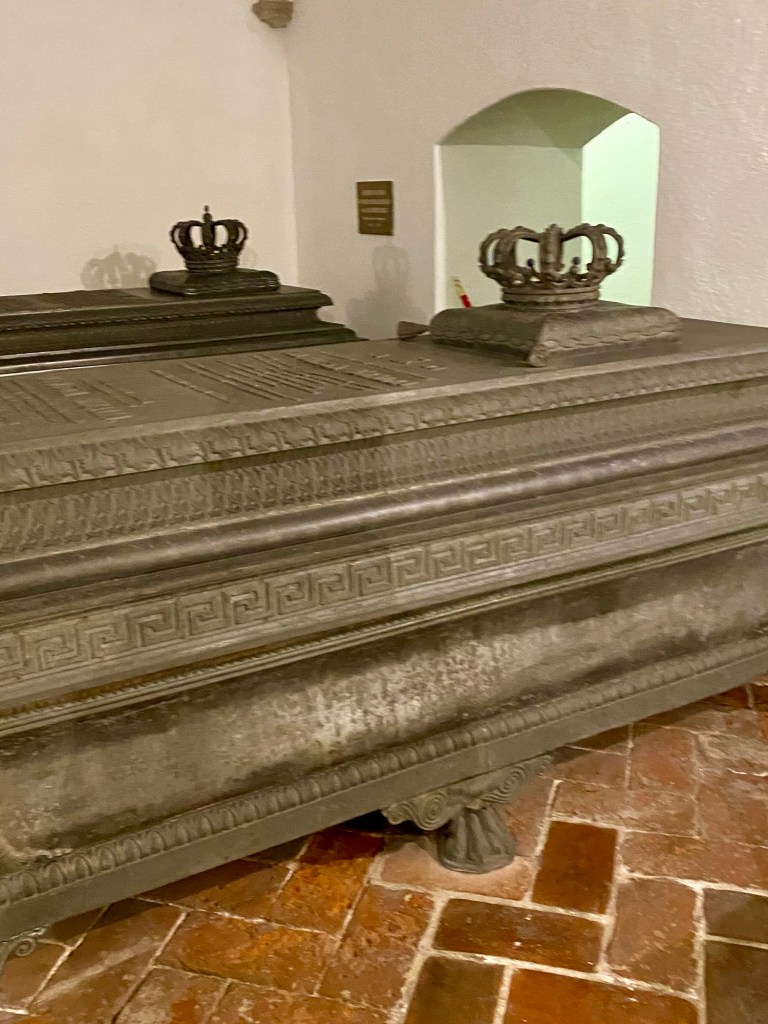

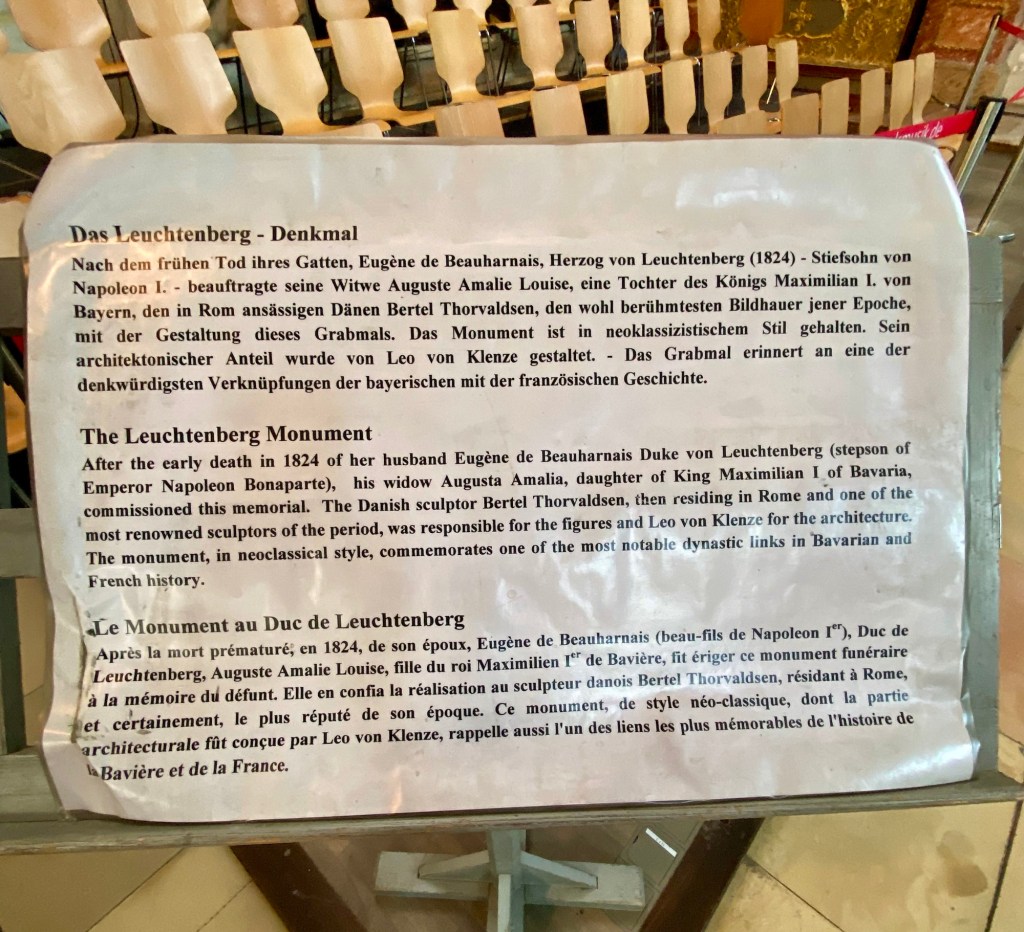
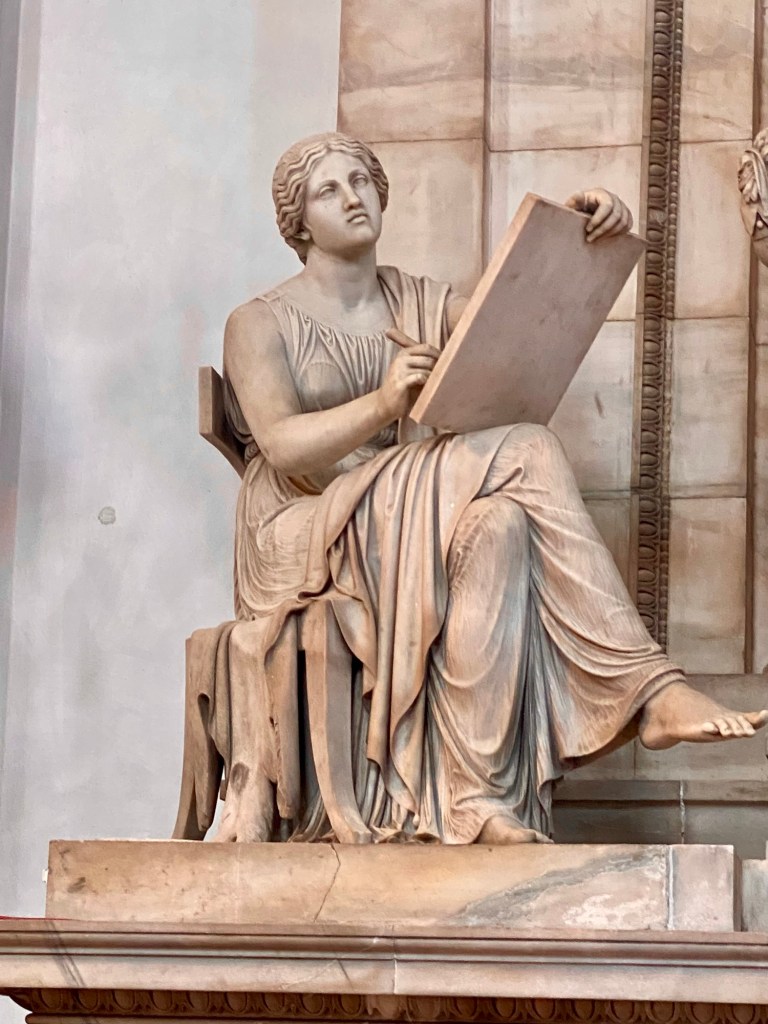
When I wandered into this impressive church one afternoon in Munich, I was surprised to find the Monument for Eugène de Beauharnais (step-son of Napoleon) by Bertel Thorvaldsen. Many moons ago, I was somewhat of an expert on 19th century sculpture and delivered a lecture in Rome on Thorvaldsen. I had forgotten (never planning to visit Germany) that this monument was in Munich. But here it was and here I was and it was a good moment.


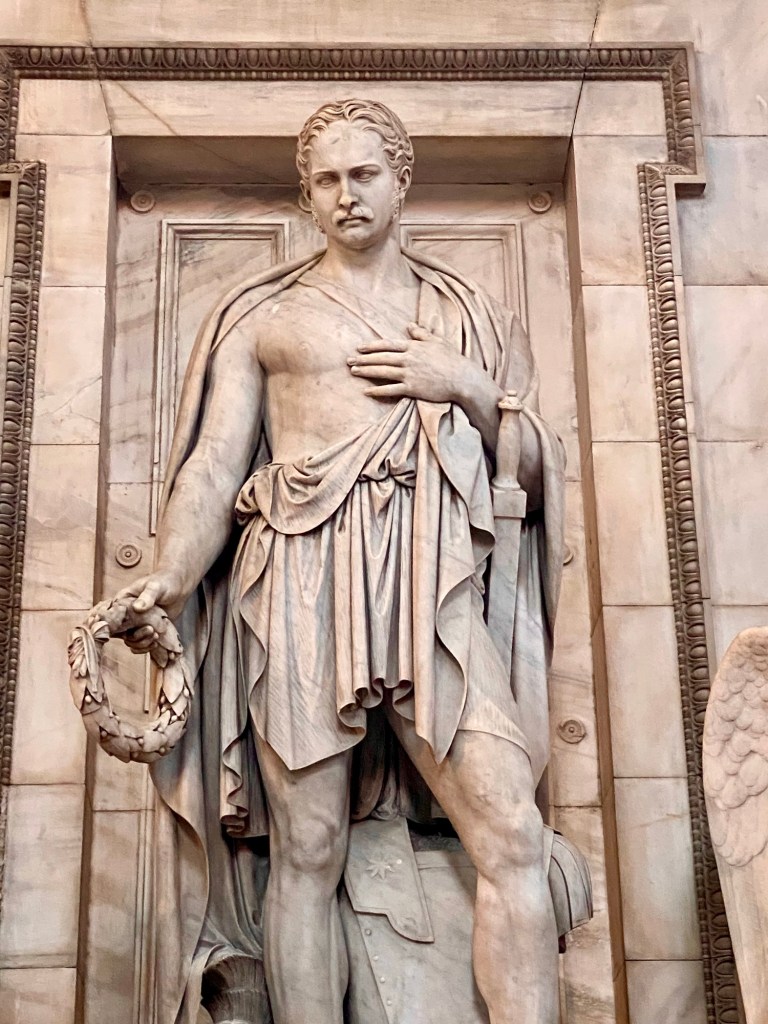

I knew it was a Thorvaldsen in my senses before my brain registered it. The winged angels gave Thorvaldsen away to my senses.
 get back, lauretta!
All those caskets…!
I know! It was not a happy space!