I promised myself, as I searched for the door to this museum, that today would be a holiday. I wouldn’t think too hard, but just allow myself to be swept along by the art works. I wouldn’t take a lot of pictures, which meant that it would also be a holiday for me in that I wouldn’t need to write a long post for this blog on this collection. It takes a lot of time to prepare these posts.
I found the entrance and thought, how clever they are. You descend below grade a long distance on wide granite steps to enter a building that evokes the feeling of entering an Egyptian royal tomb, a feeling I know from literature and movies. I’ve not been to Egypt, but I can imagine how it must feel to descend and then enter a world unlike any I’ve known on earth.

And, once you are in the museum and have your entry ticket, you must descend much further underground to some of the most lovely galleries ever. They are austere. They feel simple. The art works are arranged beautifully. You notice that there is an arrow on the wall, a brass arrow on a concrete wall, below eye level, that would be easy enough to miss if you aren’t paying attention. And that is a relief. You can know which way is the recommended path.
Have you been to the Louvre? Have you felt overwhelmed by the quantity of artworks in a museum and not had a clue which way was the best way to proceed so that your visit made some kind of sense and you weren’t just buffeted about on the vast sea of material culture? If you’ve experienced that, as I have multiple times, you’d be grateful for a simple arrow indicating the path to follow for optimal appreciation. Because, believe me, the curators have designed this for you. They want you to get the most out of your visit.

Immediately I am confronted by a masterpiece. It’s my favorite kind of confrontation.
I start to give myself over to the sculpture that is speaking already speaking volumes to me. I begin to relax. I lose myself in wonder.
I notice that the wife’s arm is behind her husband. I’ve seen this before but it never caught my attention like now. I am compelled to go to the side of the work to see if the sculptor finished this thought, or if that was too much to expect from someone sculpting in the 19th Dynasty? We are talking about an anonymous artist, who probably thought of himself as a trained craftsperson, working in the period between 1292-1189 B.C. Would that man (you know it was a man, women weren’t given this kind of opportunity in Egypt then) have thought to show up the rest of her arm and hand? You know the back of the block won’t be carved, so does her arm just disappear into an unfinished block of stone?
You must find out.
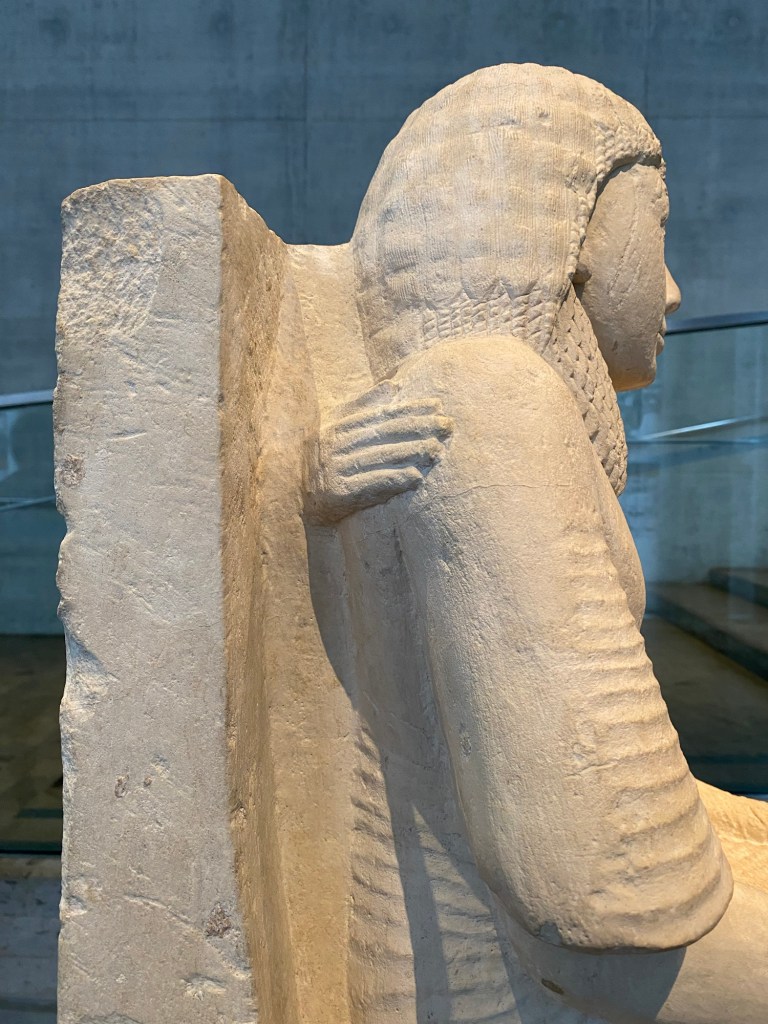
There is her hand, eternally resting on his shoulder. You are beguiled. You are captured. You will soon need more.

But you remember your promise. You are here to simply partake, not to document. But your phone is nearby and it has such an easy camera (of good quality) to use and you think, why not? Just a couple pictures of some fascinating heads in black stone. Such an interesting comparison, you think, to the gorgeous Greek and Roman busts you saw last week in Munich at the Glyptothek. Of course you don’t want to get drawn in to that kind of experience again, because you are on vacation today. So you take a few pictures of some beautiful sculptures, but you don’t photograph the labels, because you are resting, kind of.

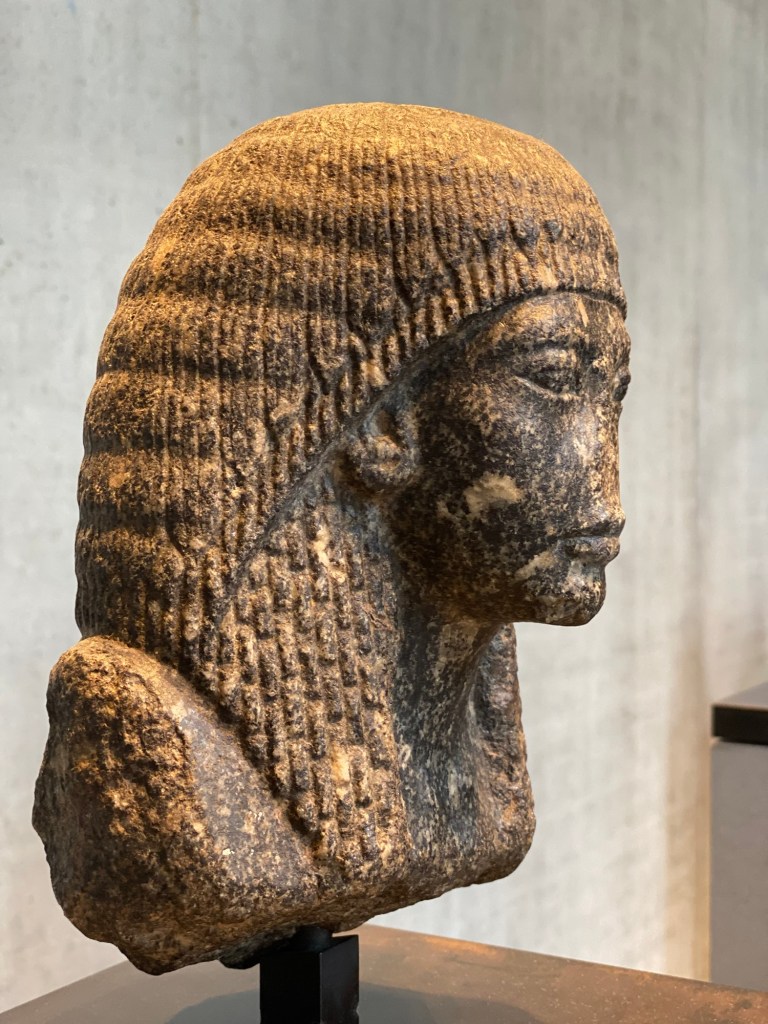


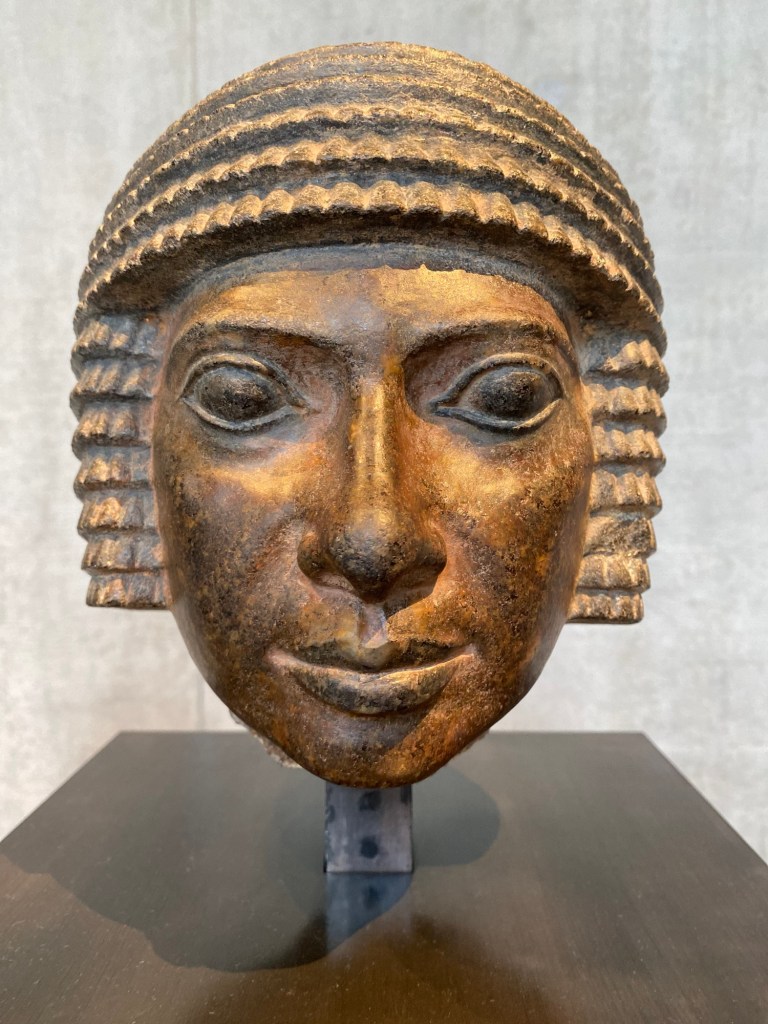
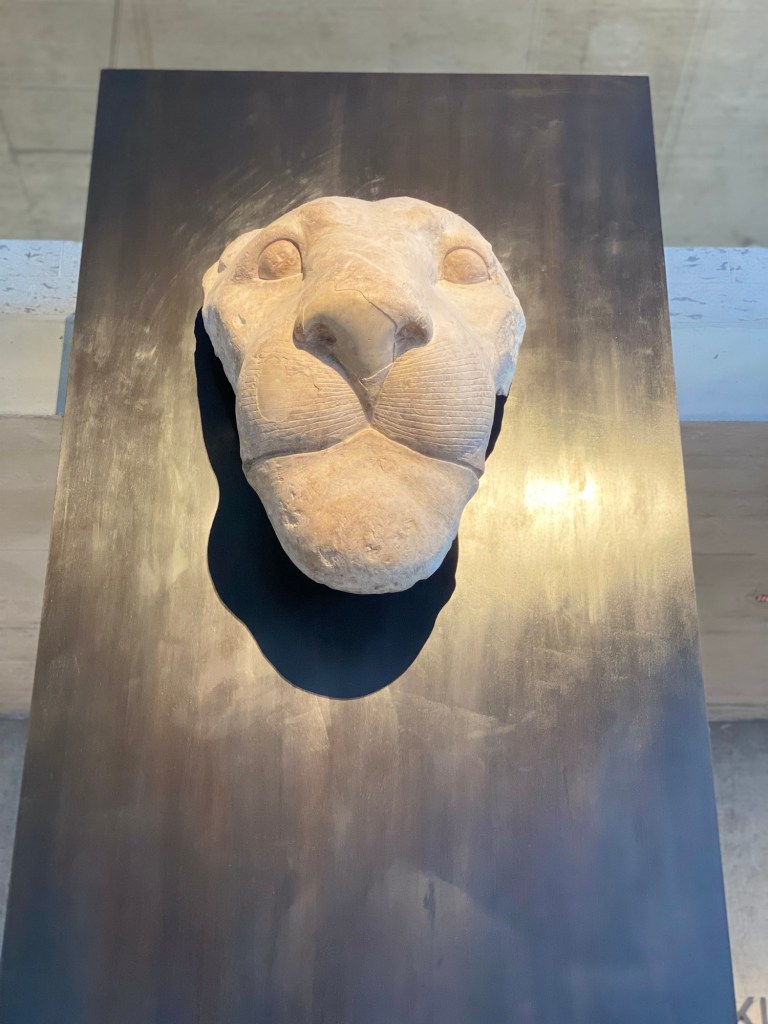
Once you have thoroughly enjoyed this gallery, you follow the subtle brass arrow (see it on the lower right in the photo below?) You are intrigued by this sign, which even though you only know maybe 30 words in German, it probably tells you that it discusses the idea of “art and continuity” and that’s an interesting concept in an Egyptian museum. It doesn’t hit you between the eyes with a Wikipedia type summary of information (and on a work day, you appreciate Wikipedia type summaries and consult them all of the time) such as “Egyptian art begins in the ___th century B.C. and is characterized by…”. That kind of information has its place and you’ve written it many times for museums and articles and books, but you are on vacation today and you don’t want that kind of information. You are grateful it’s in German, because that lets you off the hook

Oh wait, there is some text in English. Ok, I’ll check it out. It’s short and sweet and goddammit, it’s interesting.

You walk into gallery 2 and you are impressed again by the quality of the display, not to mention the fascinating artworks and you take a quick picture of the gallery because you are NOT going to be photopgraphing the various artworks because you are on vacation. Remember that.
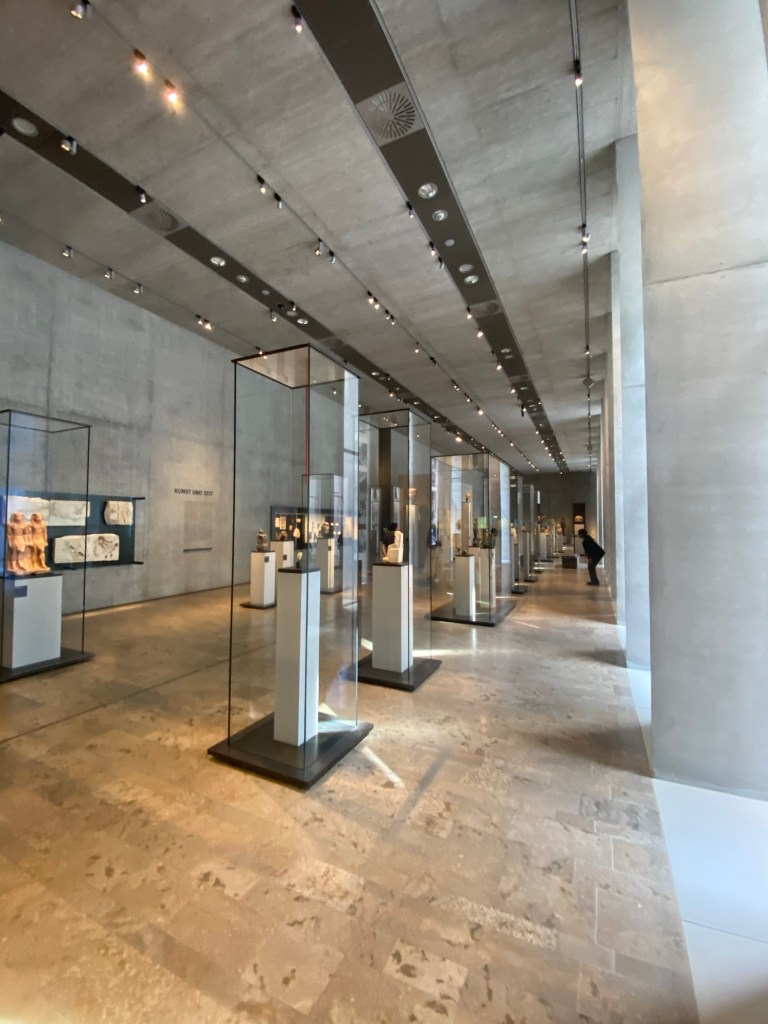
What do you think happens next?
 get back, lauretta!