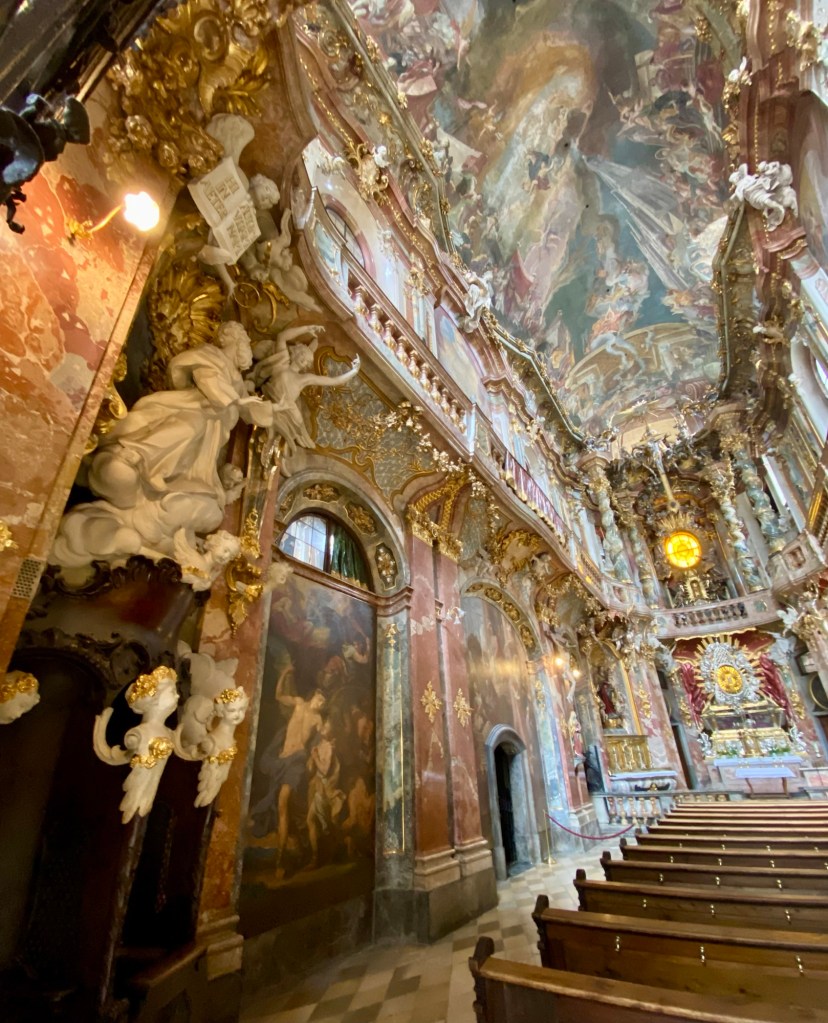
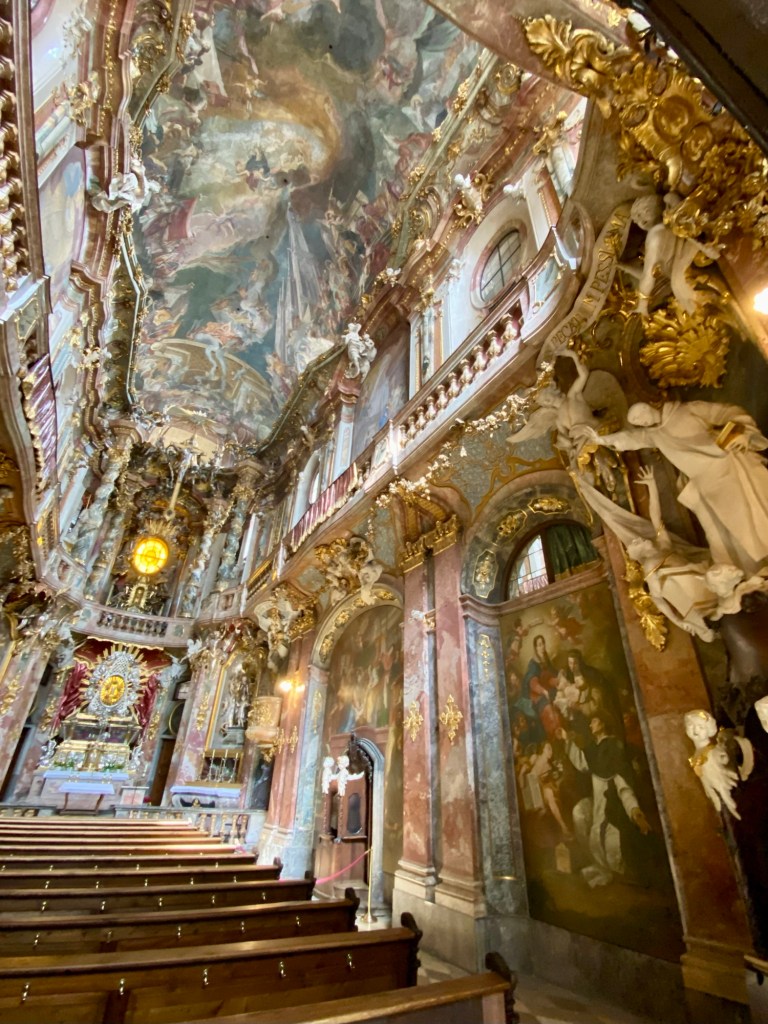
St. Johann Nepomuk, better known as the Asam Church (Asamkirche), is a Baroque church in Munich. It was built between 1733 to 1746 by a pair of brothers, sculptor Egid Quirin Asam and painter Cosmas Damian Asam, as their private church. It is considered to be one of the most important buildings of the southern German Late Baroque.
Nestled between townhouses on a lovely street in pedestrianized Munich, it would be hard to overlook.

The Baroque façade is integrated into the houses of the Sendlingerstraße and swings slightly convex outward.
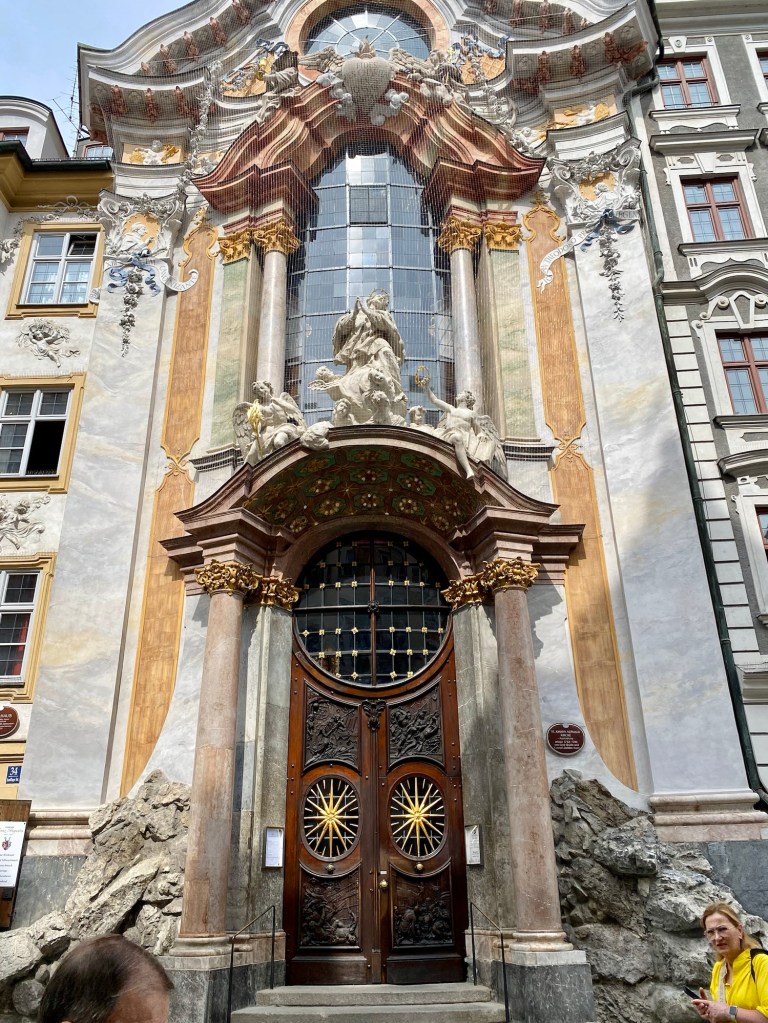

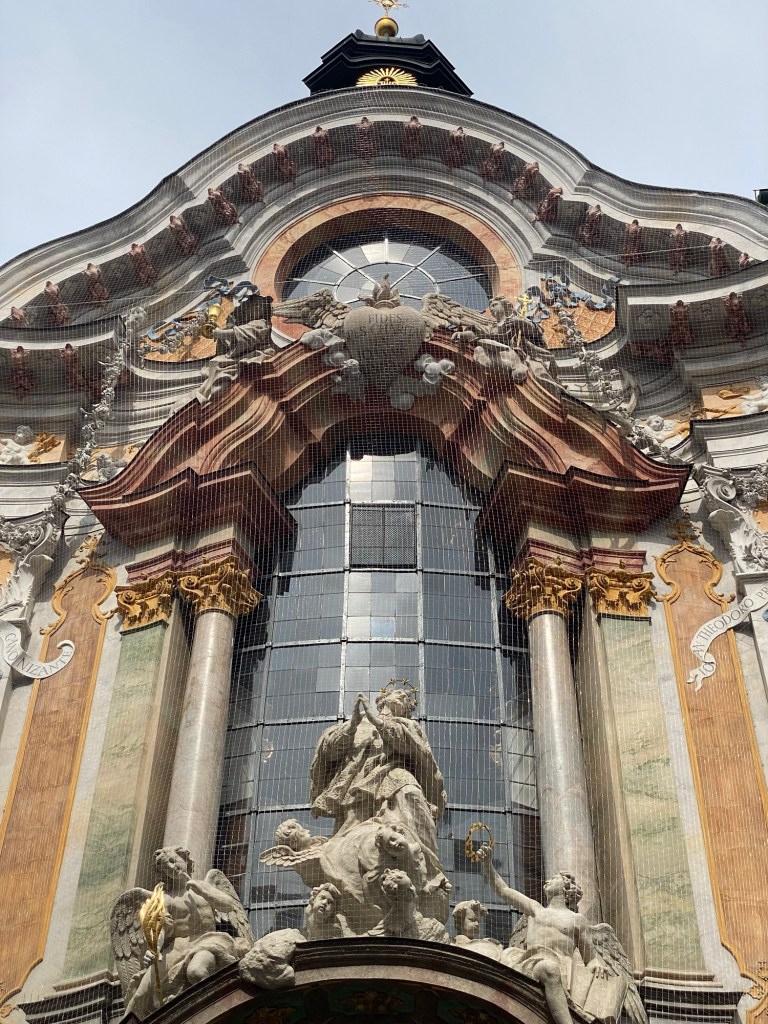
The church was not commissioned, but built as a private chapel for the greater glory of God and the salvation of the builders. This allowed the Asam brothers to create whatever they wanted. For example, Egid Quirin Asam could see the altar through a window of his private house next to the church (Asamhaus). He also designed the church as a Beichtkirche (confession church) for the local youth. The small church therefore has seven confessionals with allegorical scenes.
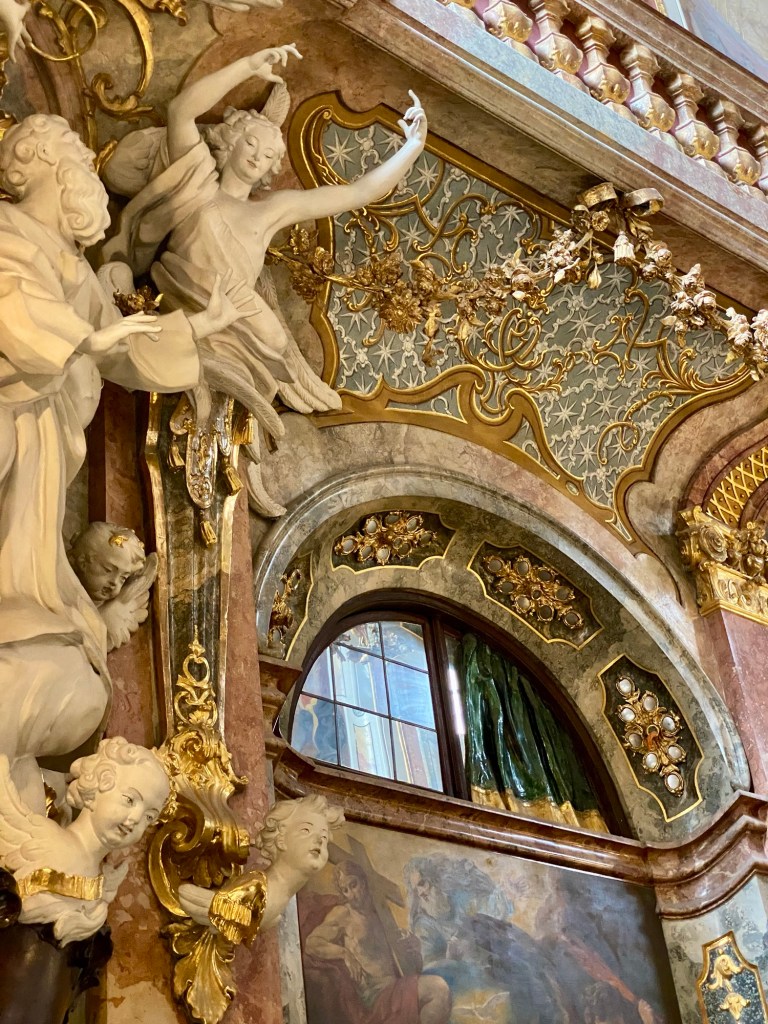
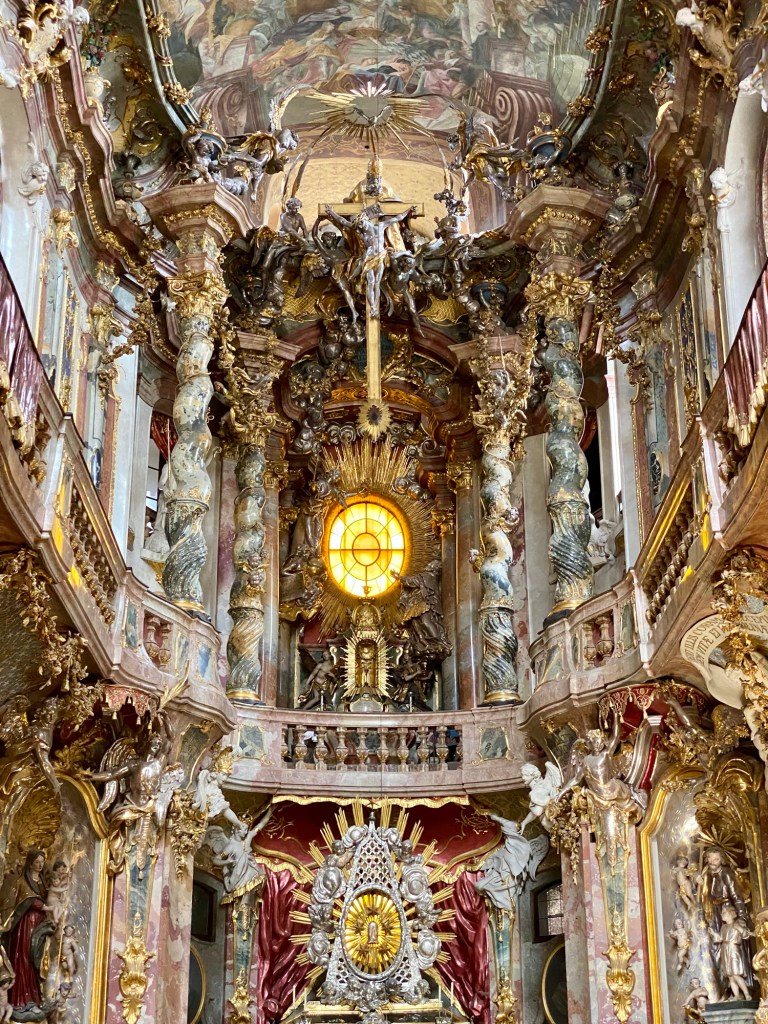
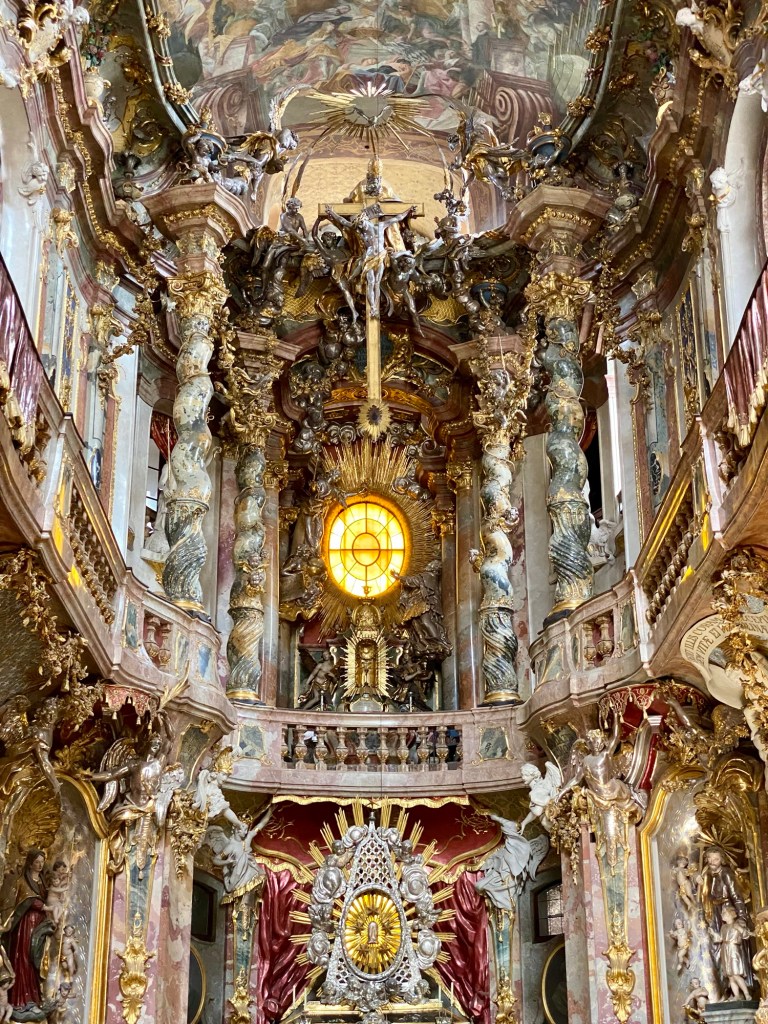
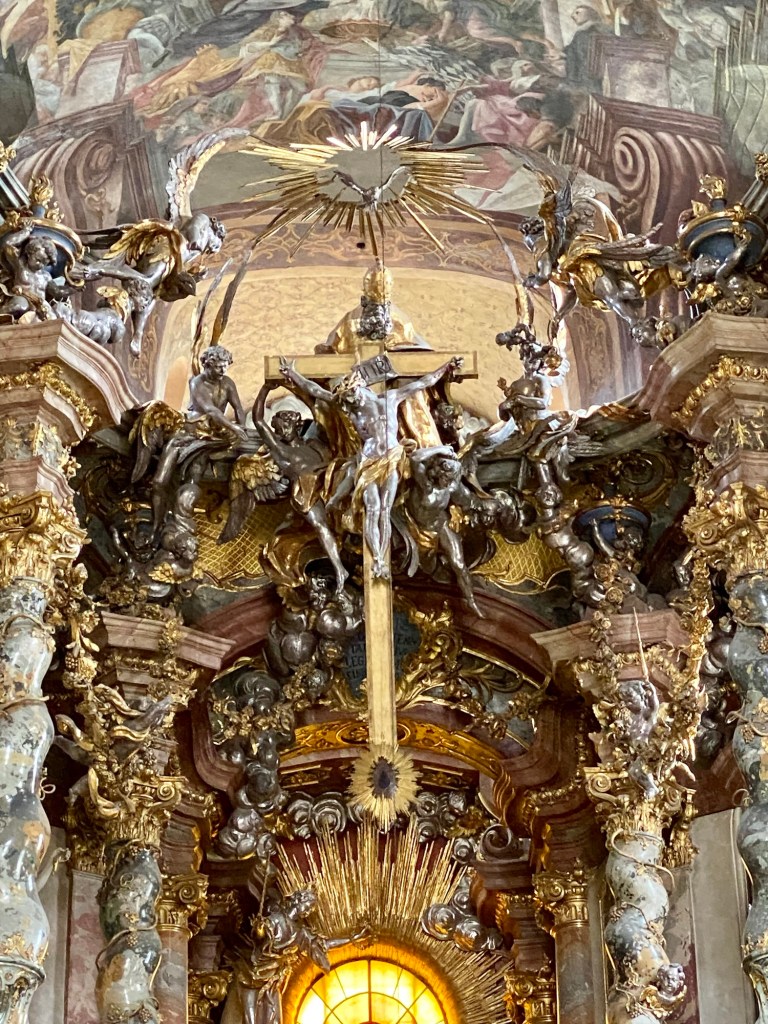
St. Johann Nepomuk was built in a confined space, its property just 22 by 8 m. Even more astonishing is the artistry of the two builders, who were able to harmoniously unite, in a very decorative manner, in the two-story space architecture, painting, and sculpture. The indirect lighting in the choir area is especially well done: hidden behind the cornice window, the Trinity figures are illuminated effectively from behind. The cornice itself seems to swing up and down on its curved construction.
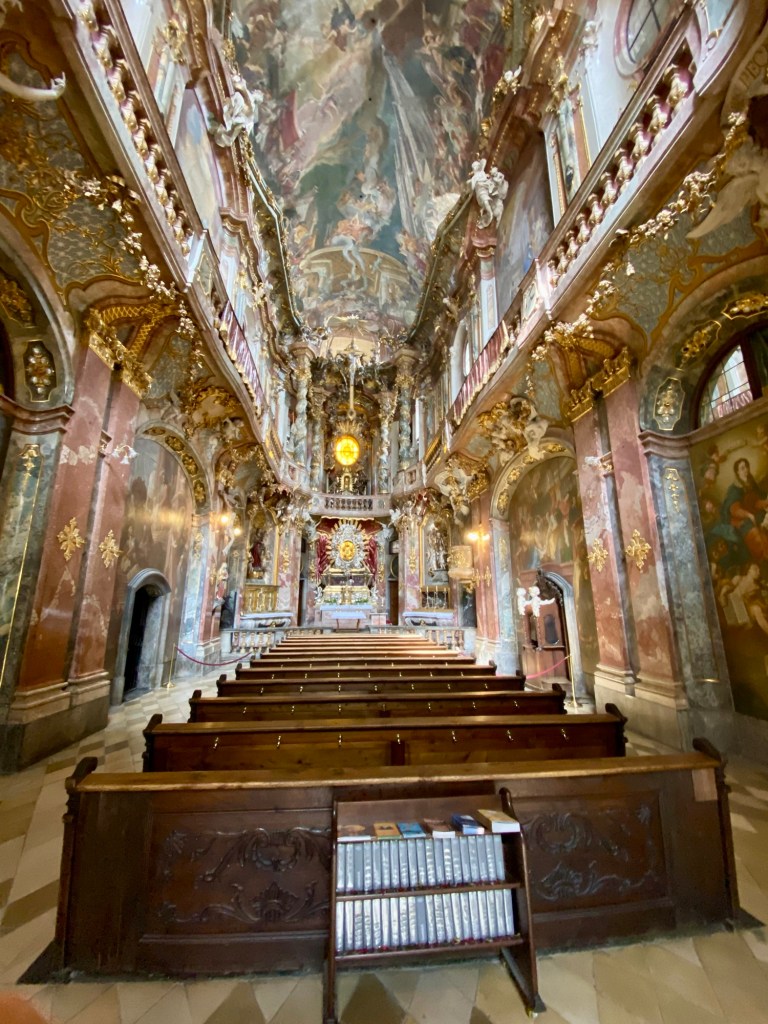
Unfortunately, visitors cannot enter the church. You can go into the vestibule, but there is a decorative wrought iron gate separating it from the nave and so my pictures were taken through the rungs of the gate.
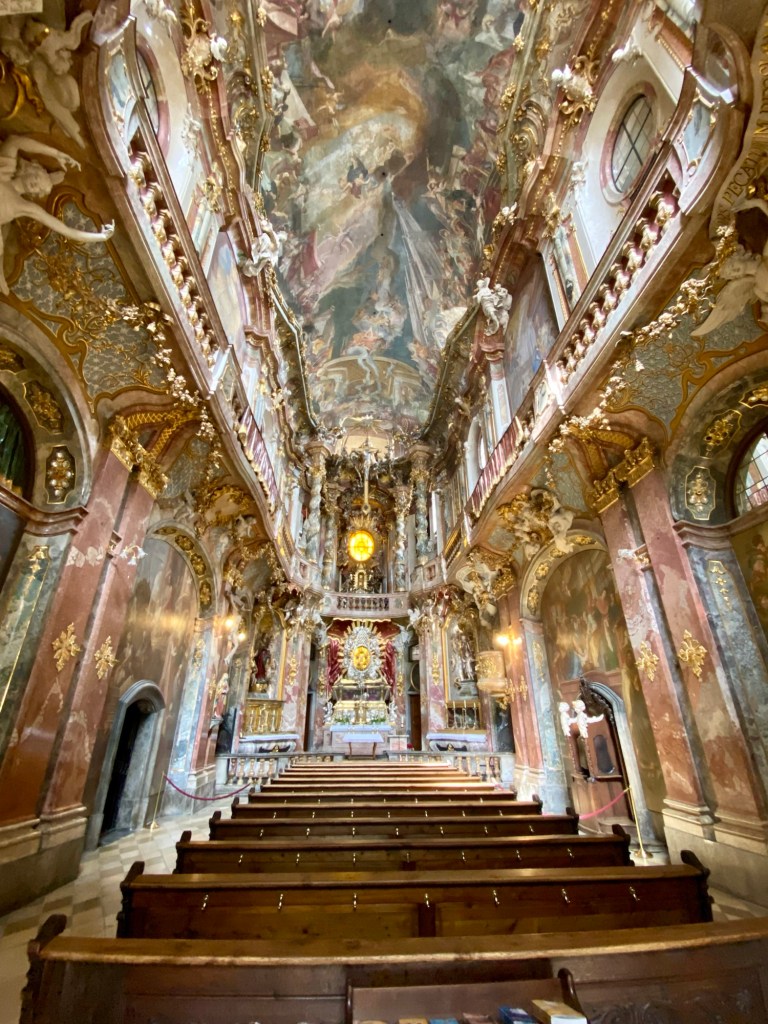


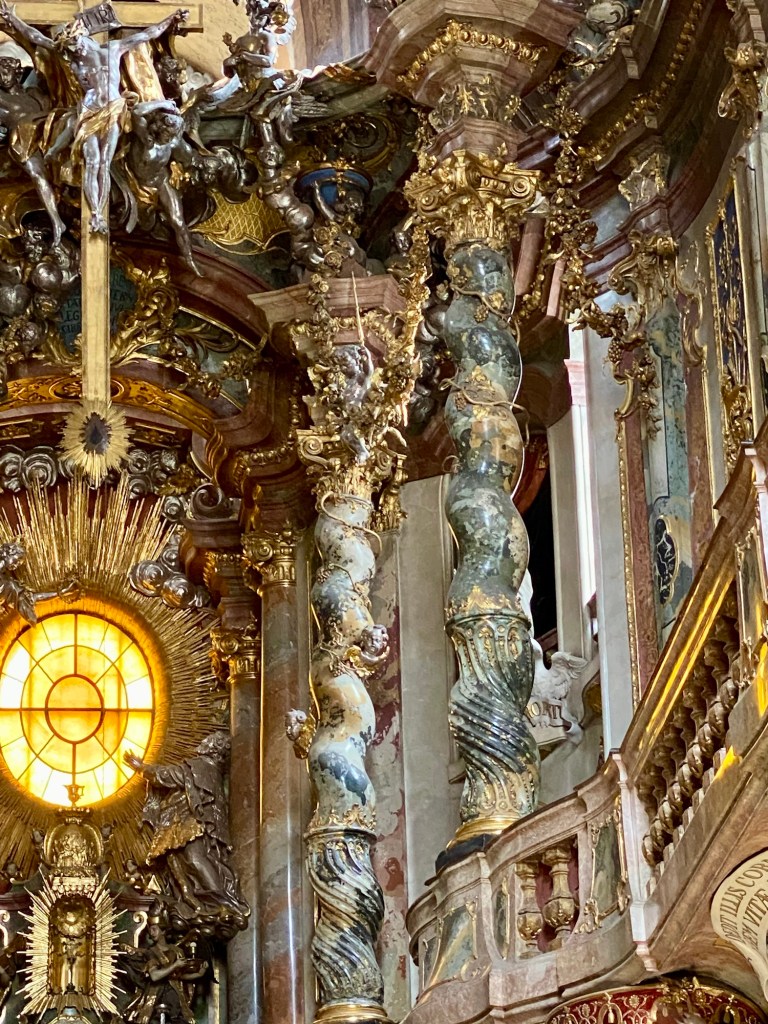
The ceiling fresco Life of Saint Nepomuk is considered a masterpiece of Cosmas Damian Asam. The high altar of the Asam Church is framed by four Solomonic columns. These four columns at the altar recall the four Bernini columns over the grave of St. Peter in St. Peter’s in Rome. Previously, the brothers Asam had studied in Italy at the Accademia di San Luca, under Lorenzo Bernini.
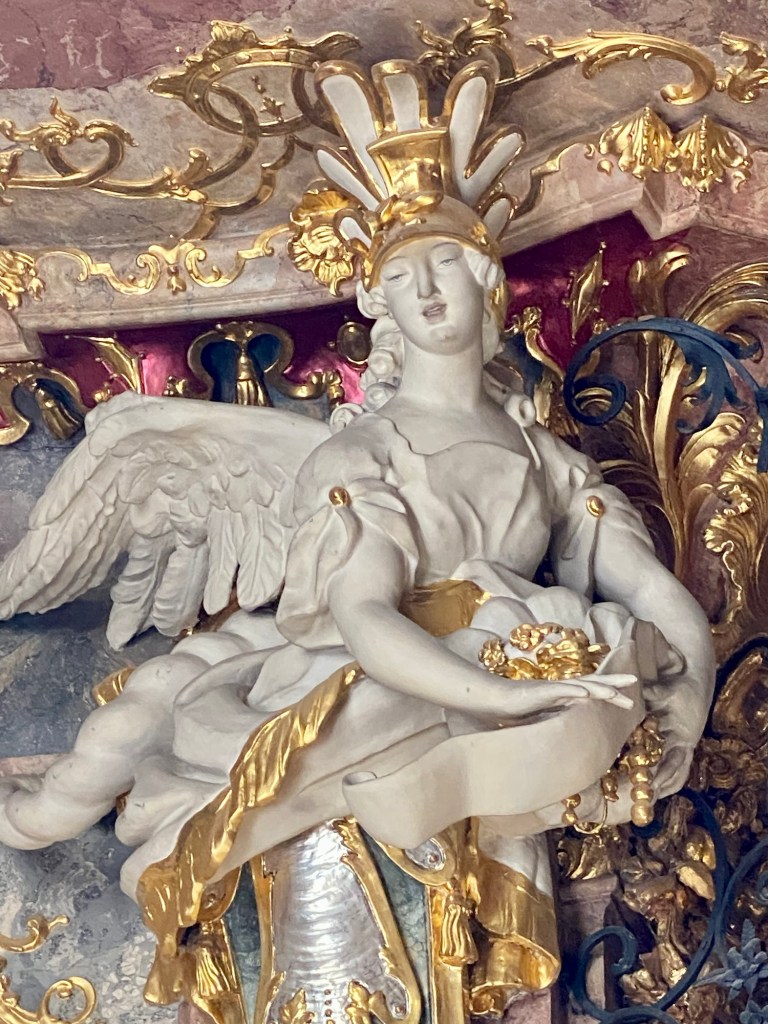
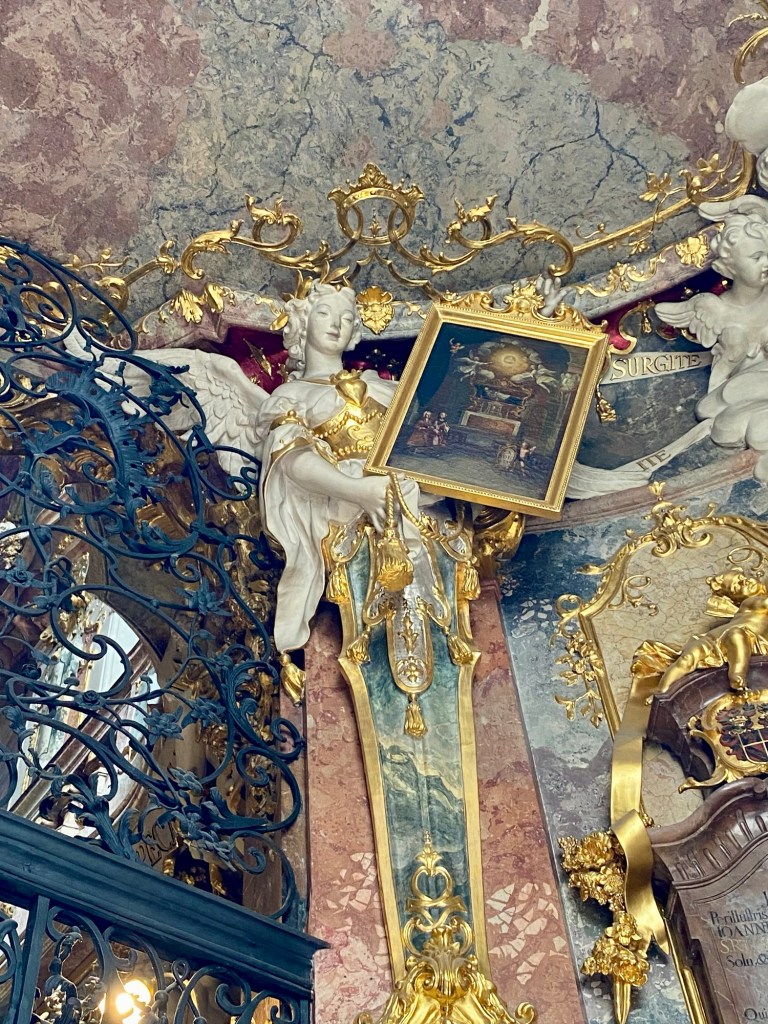
At the top is God, the Saviour. Below the tabernacle, a relic of John of Nepomuk is kept. Two angels, sculpted by Ignaz Günther, flank the gallery altar and were added at a later date.


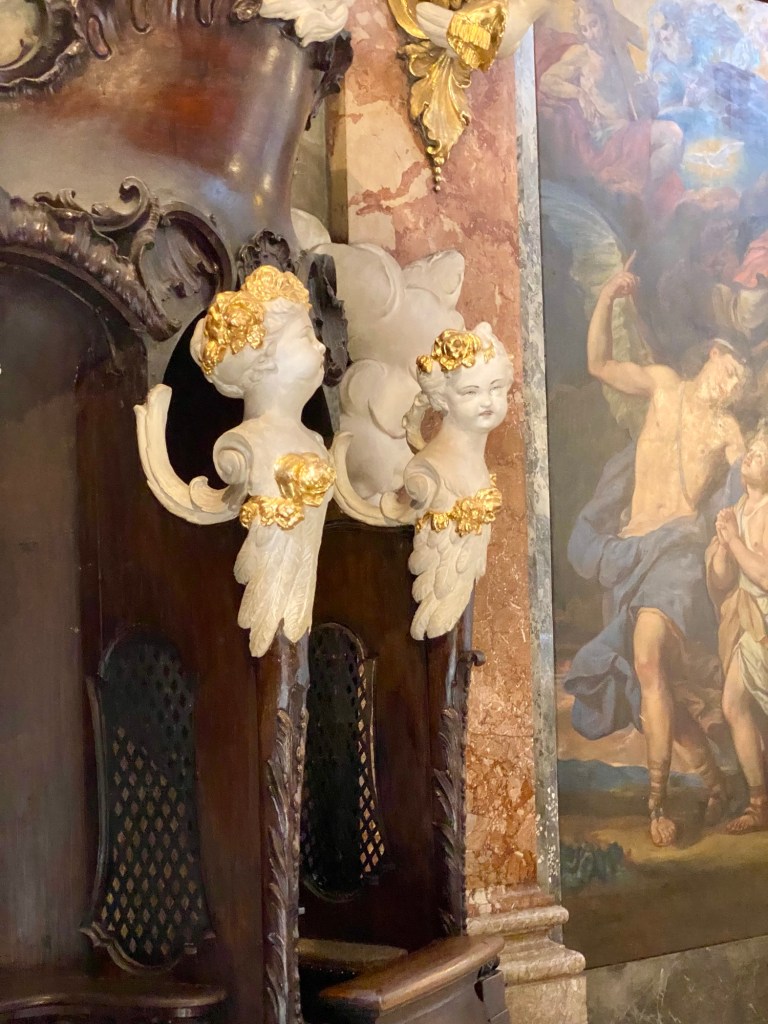


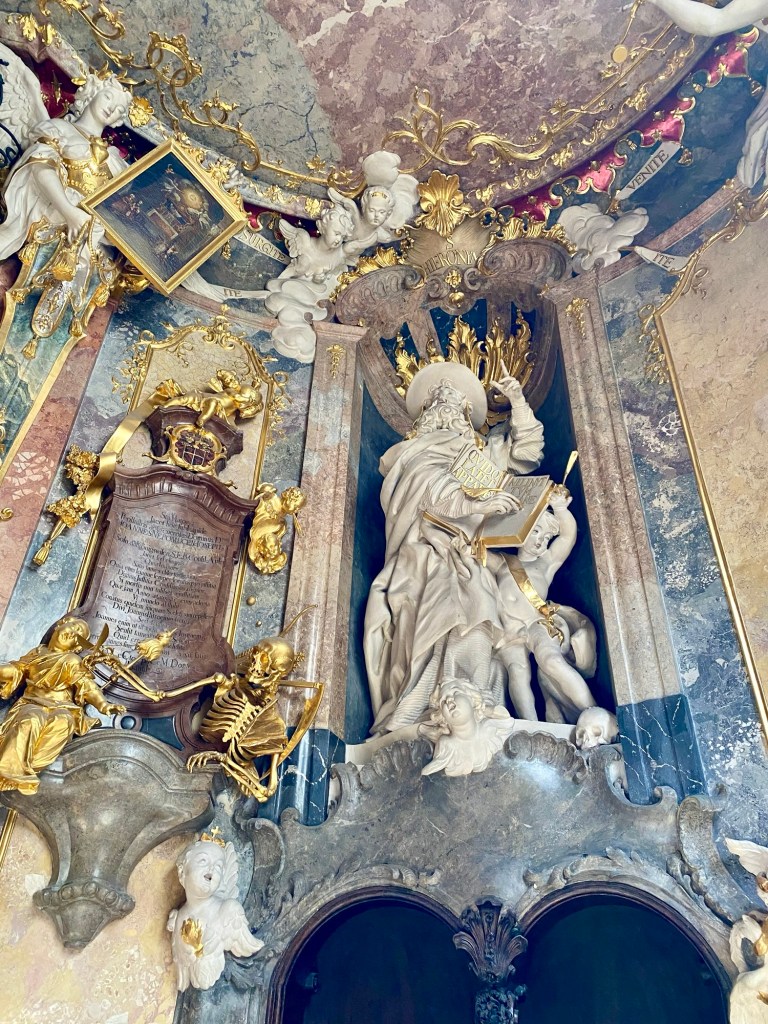
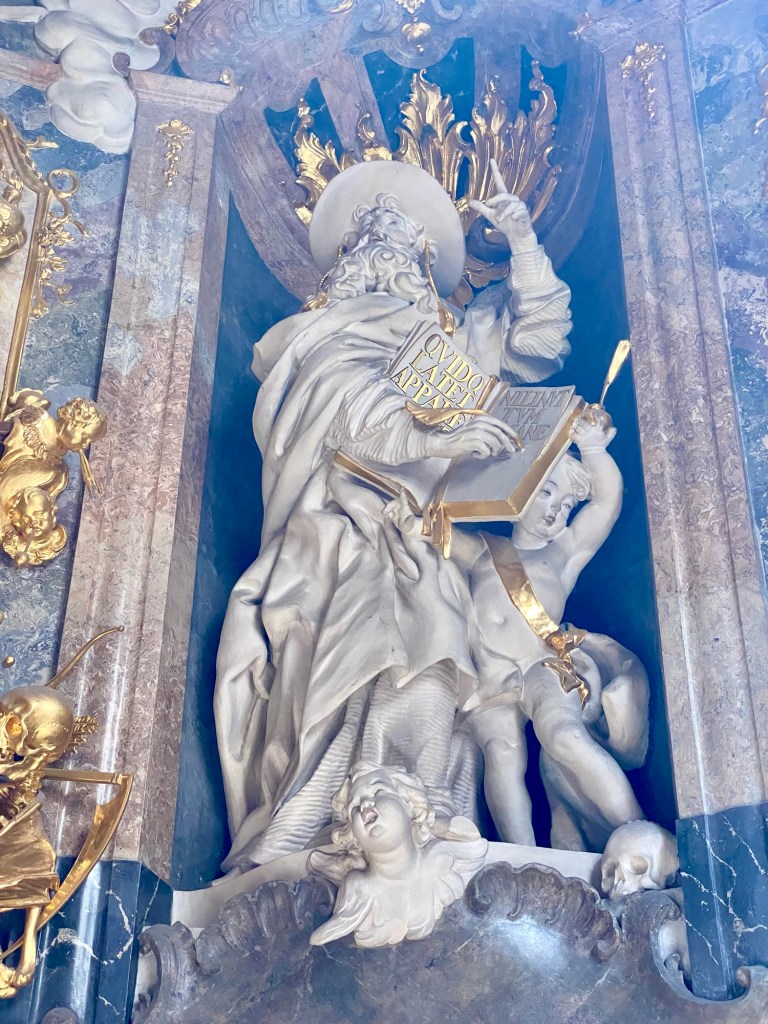
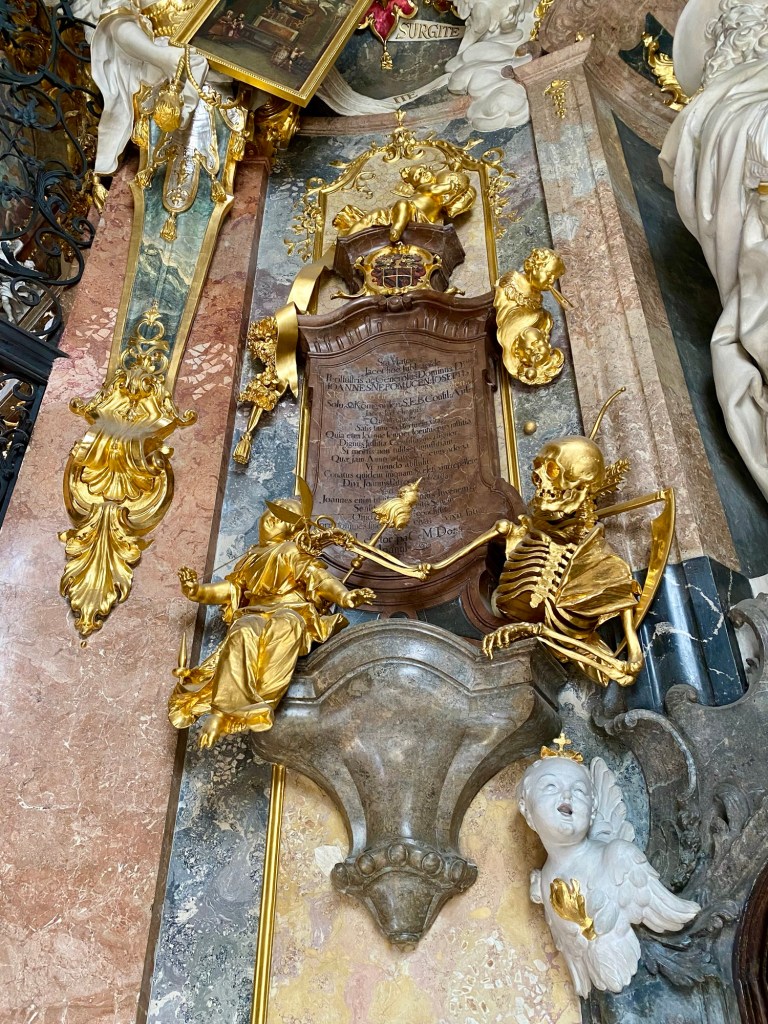
Below, a confessional: I found it to be the simplest design in the whole ensemble. It was a restful place to park your gaze for a moment.

Below, the ceiling design of the vestibule. No inch of space was left undecorated.

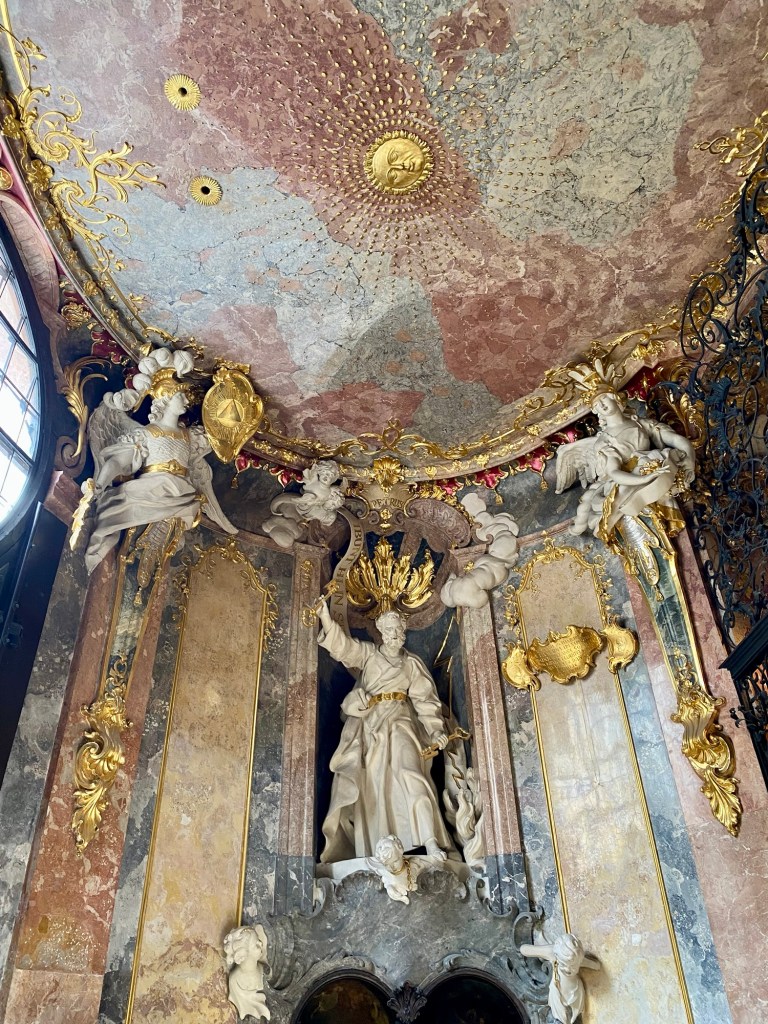
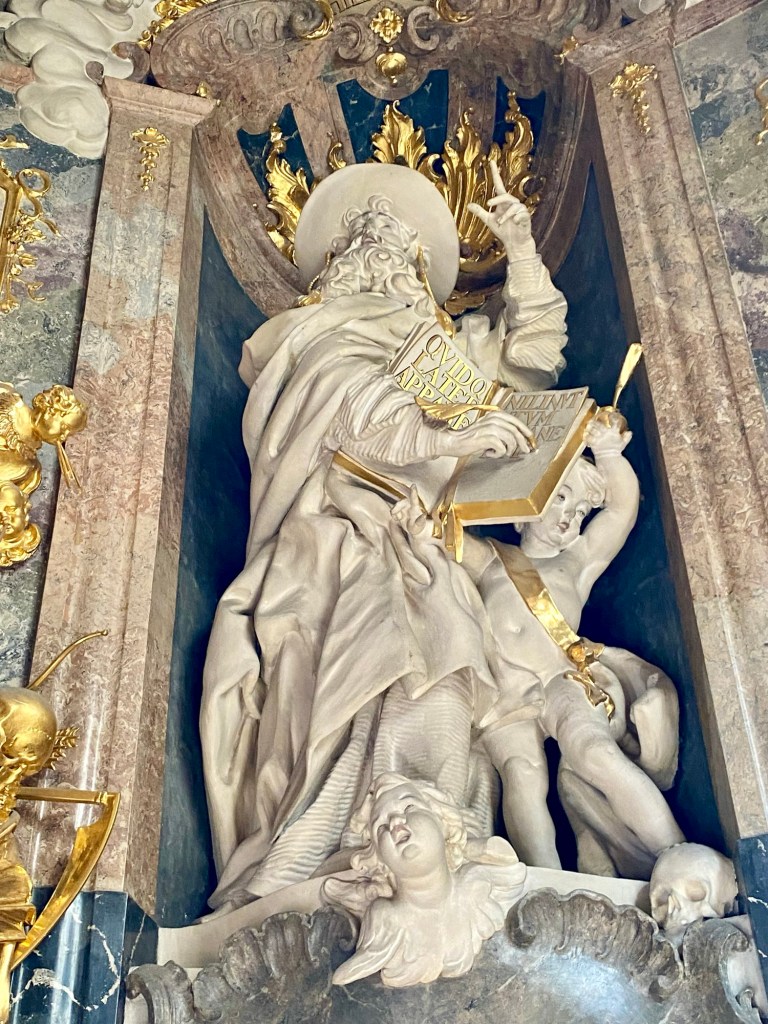
To me, the sculpture in the photo below seems to represent the Americas. It was a common decorative element in churches and other elaborate designs of this period to represent the 4 continents in allegorical figures. I haven’t yet taken the time to research whether I’m right.



If you visit, prepare to be overpowered!
 get back, lauretta!
The overall colour tone is quite pleasing. The altar has a touch of hysteria.
You nailed it! Hysteria is what it felt like!