Are you ready to get back into the heart of the cultural life of Munich? I have given you a respite from art, art, art for the past few posts. I’m hankering to get back into it. Andiamo! Let’s go!
Perhaps the first major impression I had of Munich was this monumental church. And for good reason: With its yellow facade and ornate interior, the Theatinerkirche (Theatine Church) at Odeonsplatz is one of the most beautiful churches in Munich. I emerged from the subway station at Odeonplatz and was blinded by the sunshine and this bright yellow building.

In the mid-17th century, to commemorate the birth of Max Emanuel, the long-awaited heir, Elector Ferdinand Maria and his wife Henriette Adelaide commissioned architects from Italy to build the “most beautiful and precious church.”
Taking their inspiration from the church of Sant’Andrea della Valle in Rome, Agostino Barelli, Antonio Spinelli built the Theatinerkirche, the first religious building north of the Alps to be designed in the Late Baroque style from Italy.
Enrico Zuccalli was subsequently employed to add two 66 meters high towers, and then finished the 71-metre-high (233 ft) dome in 1690. The church is 72 metres (236 ft) long and 15.5 metres (51 ft) wide. The facade in Rococo style was completed only in 1768 by François de Cuvilliés. Its Mediterranean appearance and yellow coloring became a well known symbol for the city and had much influence on Southern German Baroque architecture. The sculptors Roman Anton Boos and Ignaz Günther built the figures and decorative elements on the facade.
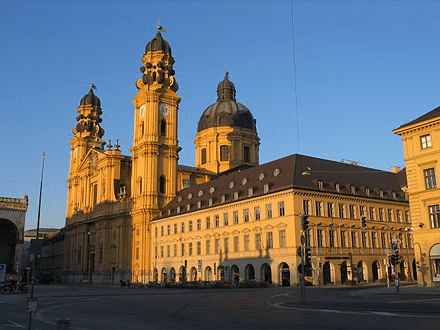
The white interior is as striking in its lightness as the facade is for its saturated color.
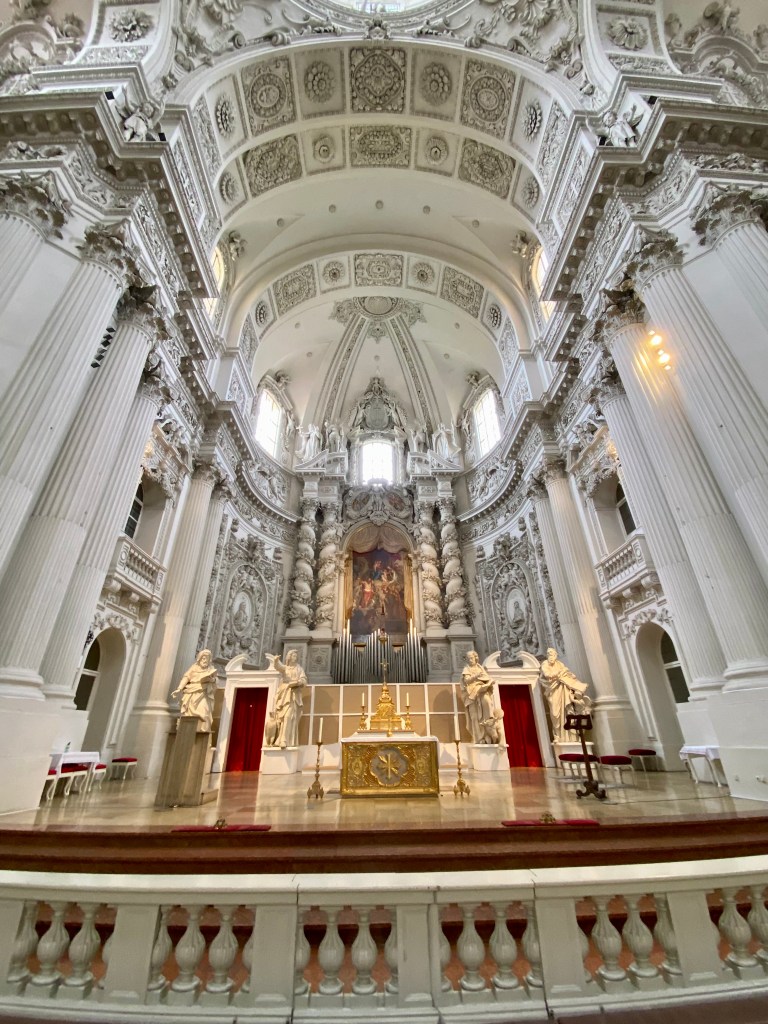
The bleached interior is wonderfully cool and forms a striking contrast to the brighter ochre yellow of the facade.
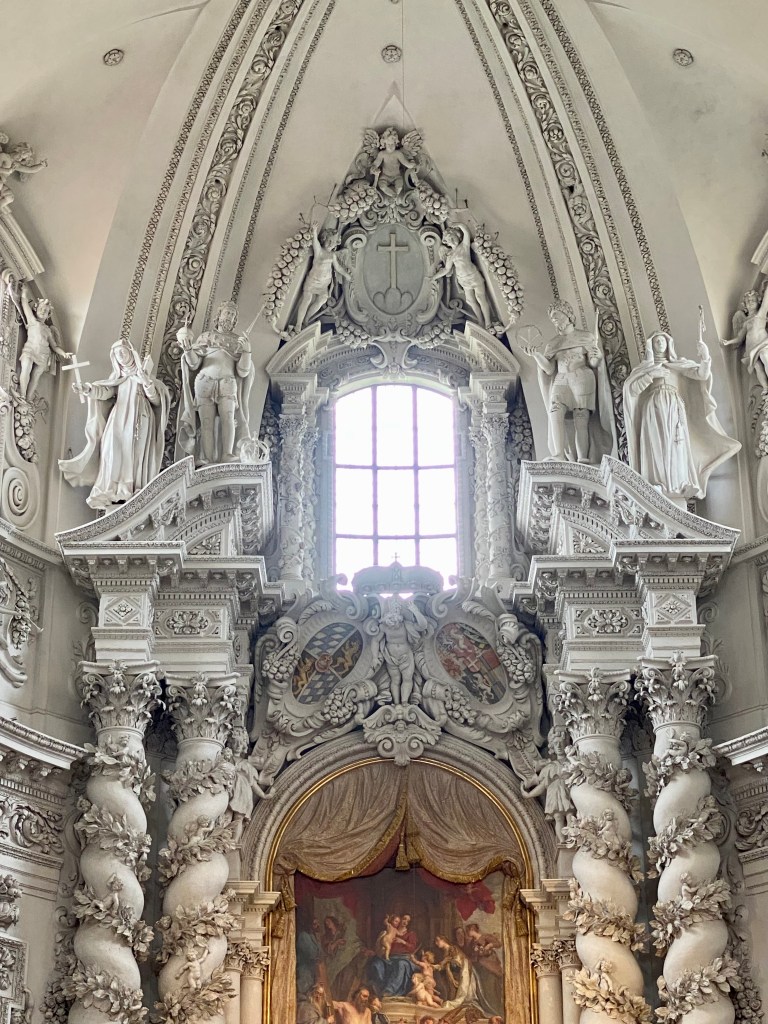
The official name of the church is St. Kajetan: in addition to its function as court church, the church also served as a religious church for the Theatine monks.
Like the Theatinerkiche, the neighbouring Feldherrnhalle was built in the Italian style (emulating the Loggia di Lanzi of Florence). The southern part of the famed Odeonplatz is therefore often referred to as a “piece of Italy in Munich”.
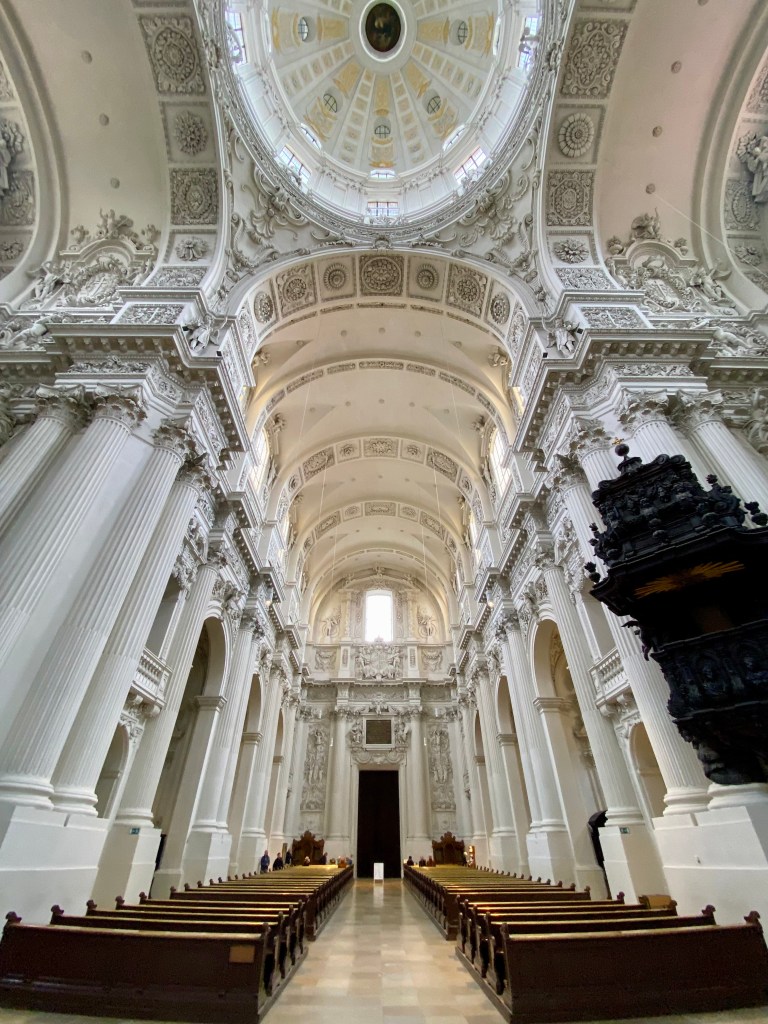
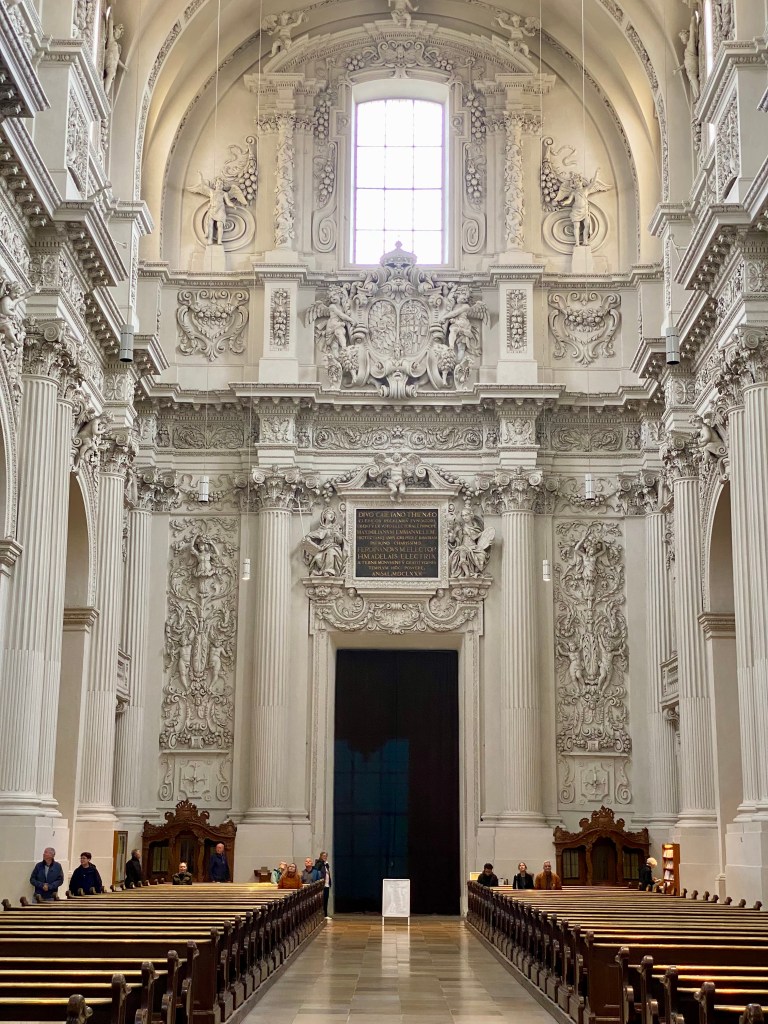
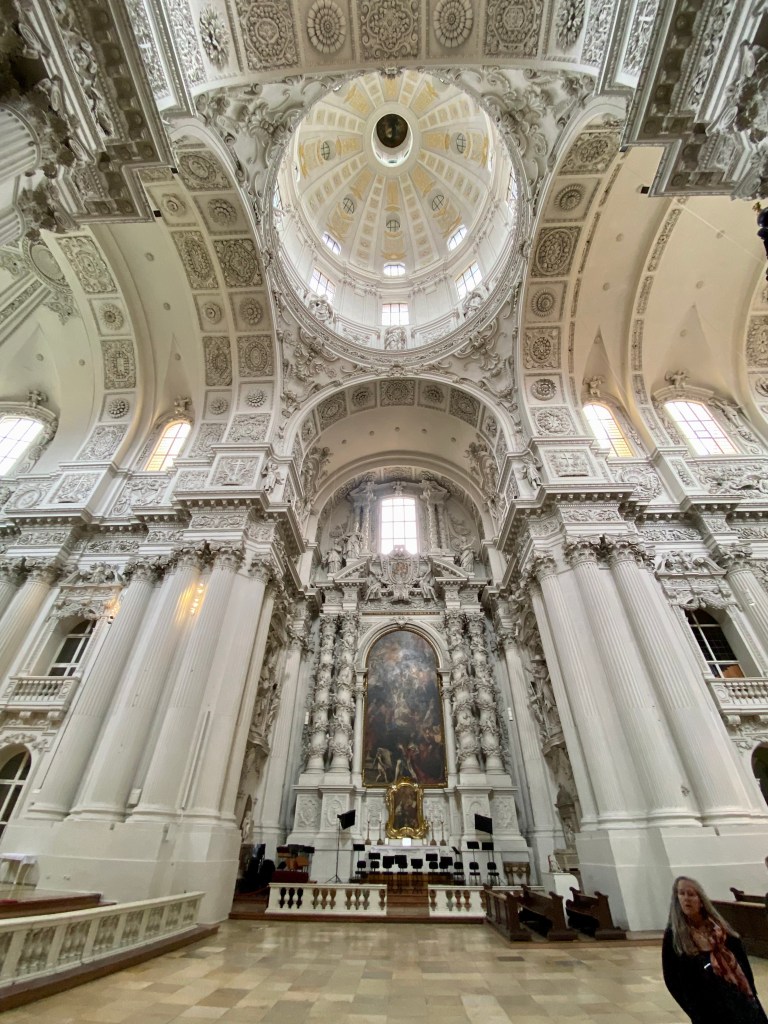

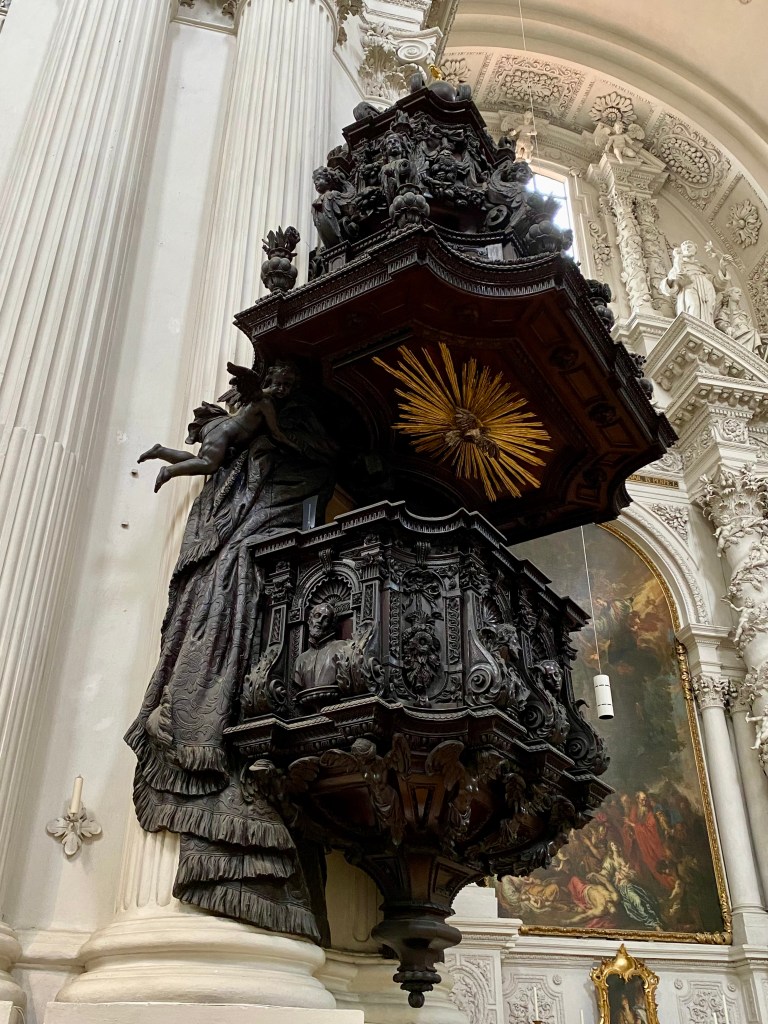
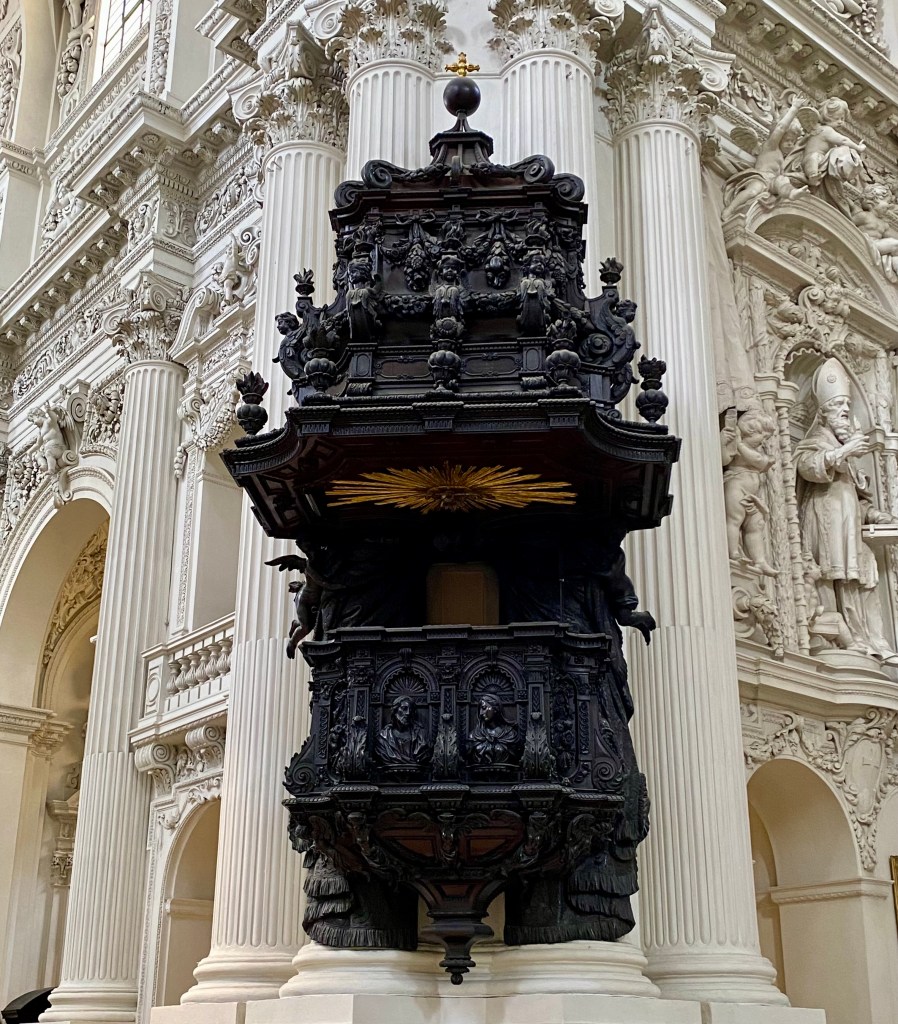
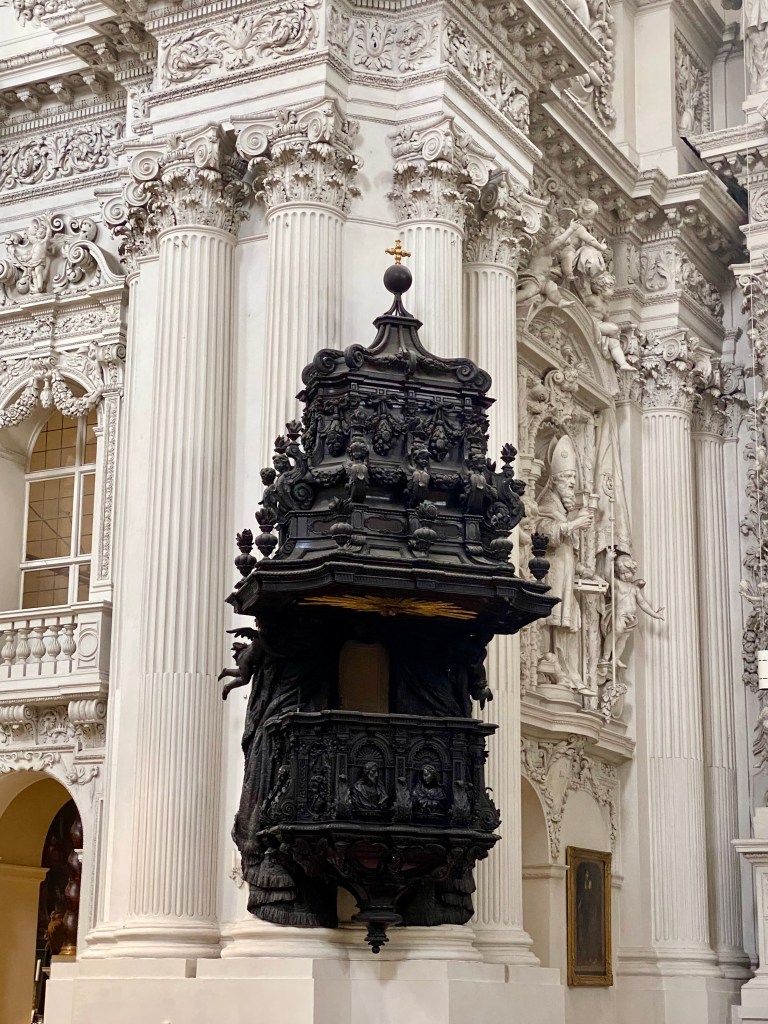


More is more during the Baroque and this church has a degree of decoration that proves the theory.


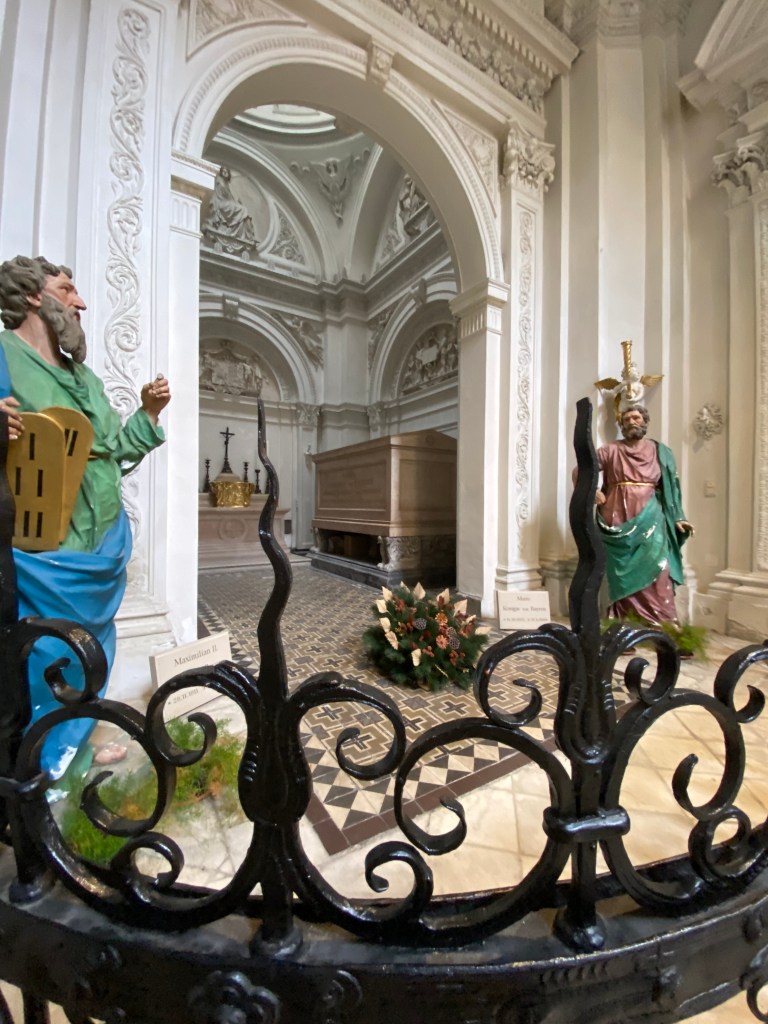
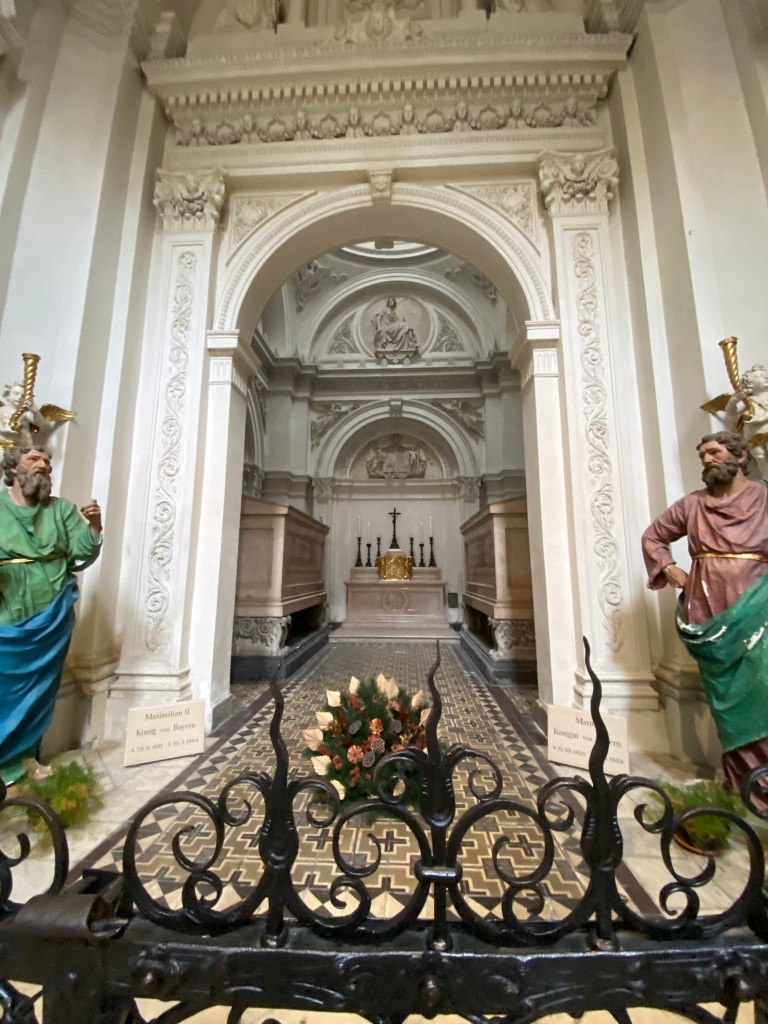
The Electors’ burial chamber is the resting place of members of the House of Wittelsbach, including the two founders Henriette Adelaide and Ferdinand Maria and their son Max Emanuel.

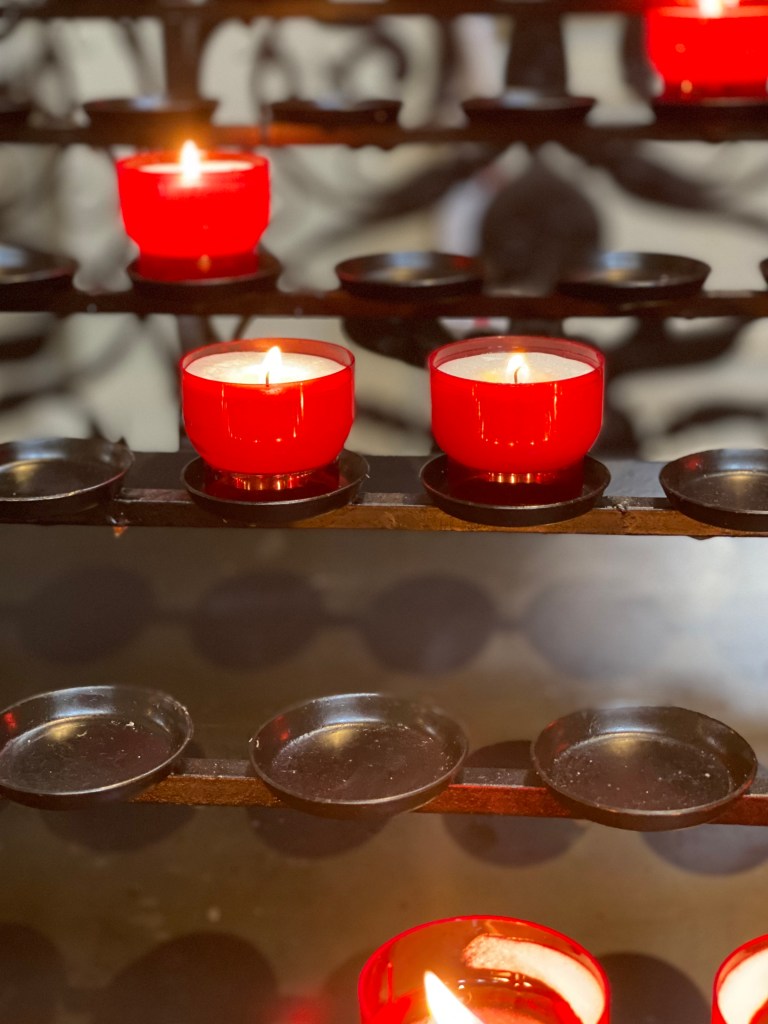
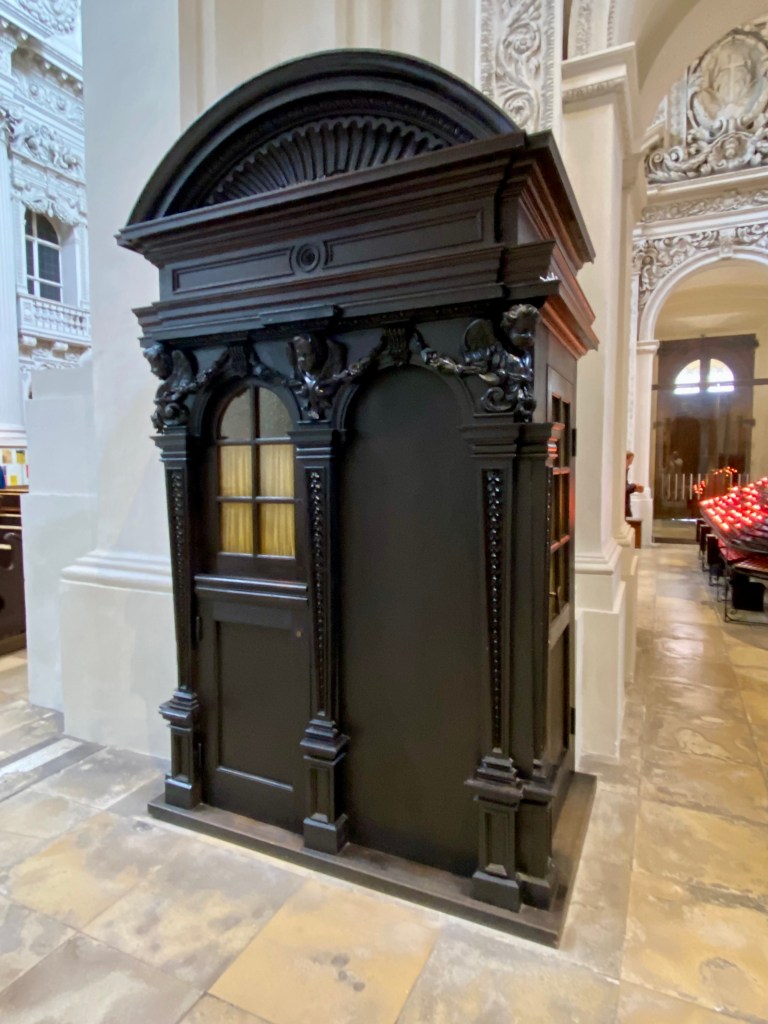
Of course I lit some candles for souls that are departed yet dear to me. This is yet another building that is not to be missed on a trip to Munich.
 get back, lauretta!