I visited this interesting art museum one day while I was living in Munich last summer. The city’s riches are almost impossible to comprehend. The Schack-galerie is one of the noted galleries in this city and is under supervision of the Bavarian State Picture Collection.
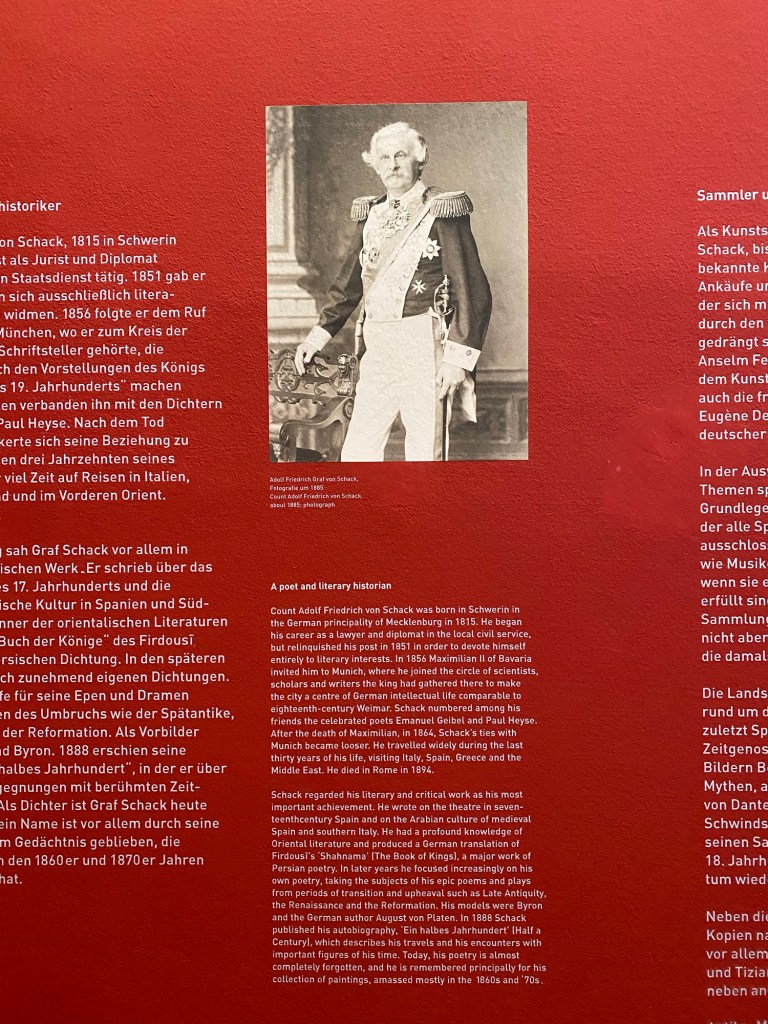
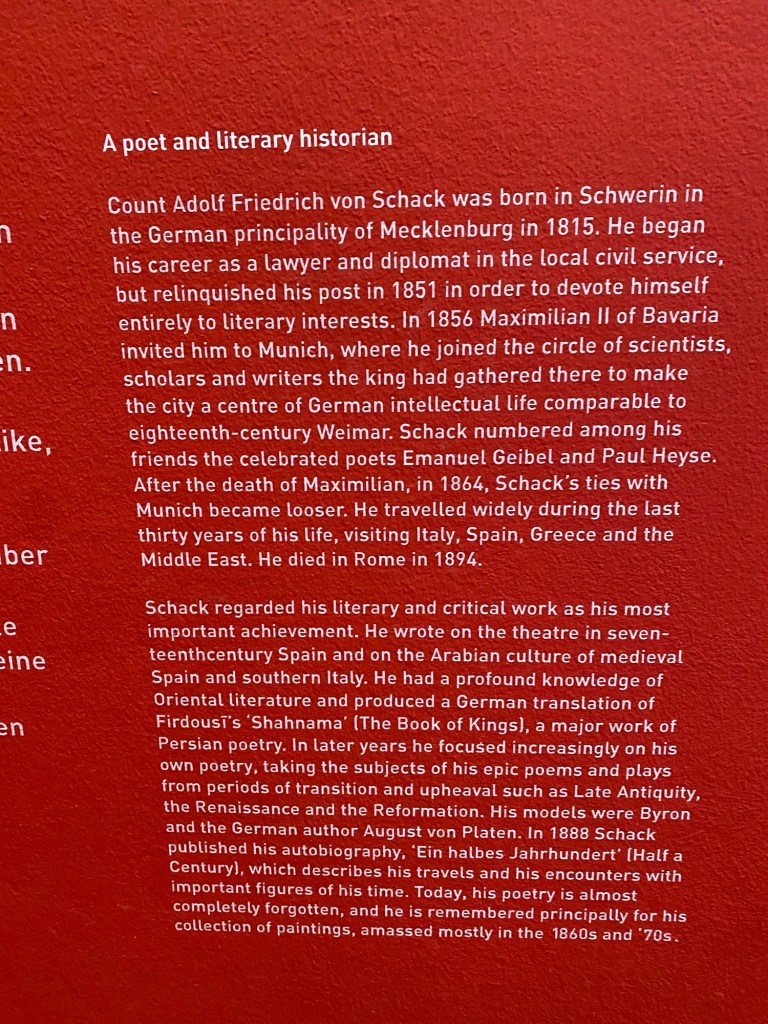
Here’s Schack himself. Adolf Friedrich, Graf von Schack (1815 – 1894) was a German poet, historian of literature, and art collector.

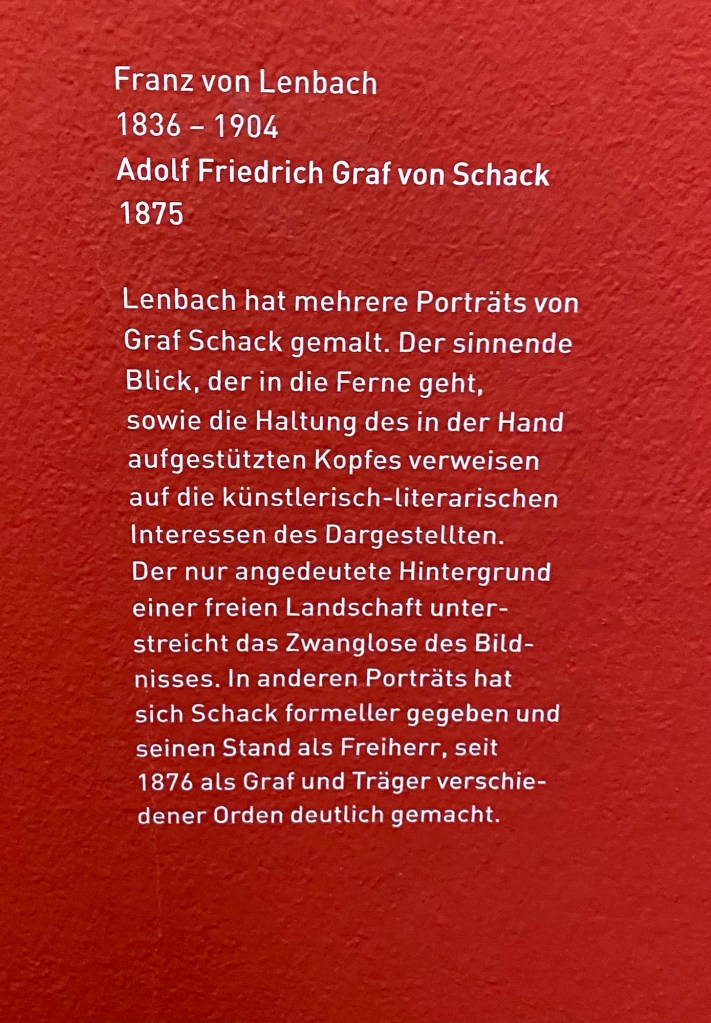
Schack was born at Brüsewitz near Schwerin. Having studied jurisprudence (1834–1838) at the universities of Bonn, Heidelberg and Berlin, he entered the Mecklenburg state service and was subsequently attached to the Kammergericht in Berlin. Tiring of official work, he resigned his appointment, and after travelling in Italy, Egypt, and Spain, was attached to the court of the grand duke of Oldenburg, whom he accompanied on a journey to the East. On his return, he entered the Oldenburg government service, and in 1849 was sent as envoy to Berlin. In 1852, he retired from his diplomatic post, resided for a while on his estates in Mecklenburg and then travelled in Spain, where he studied Moorish history.
In 1855, he settled at Munich, where he was made member of the academy of sciences, and here collected a splendid gallery of pictures, containing masterpieces of Bonaventura Genelli, Anselm Feuerbach, Moritz von Schwind, Arnold Böcklin, Franz von Lenbach, etc., and which, though bequeathed by him to the Emperor William II, still remains at Munich and is one of the noted galleries in that city. He died at Rome in April 1894, aged 78. Upon his death in 1894, he bequeathed the collection to the Emperor William II, however it remained in Munich.
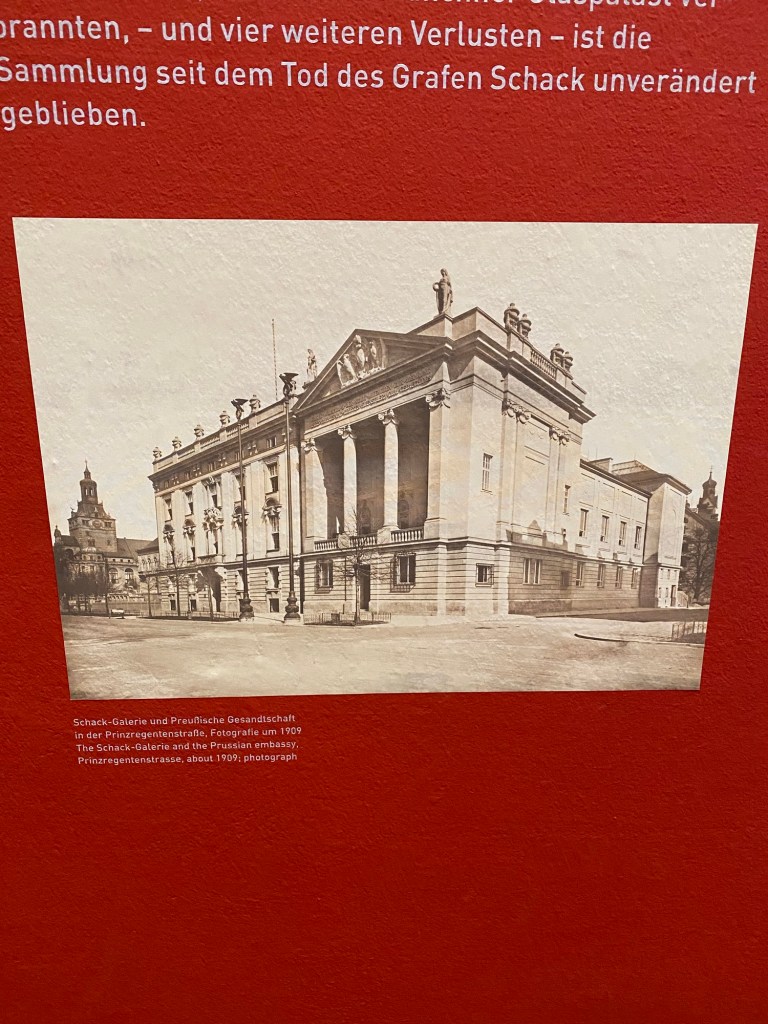
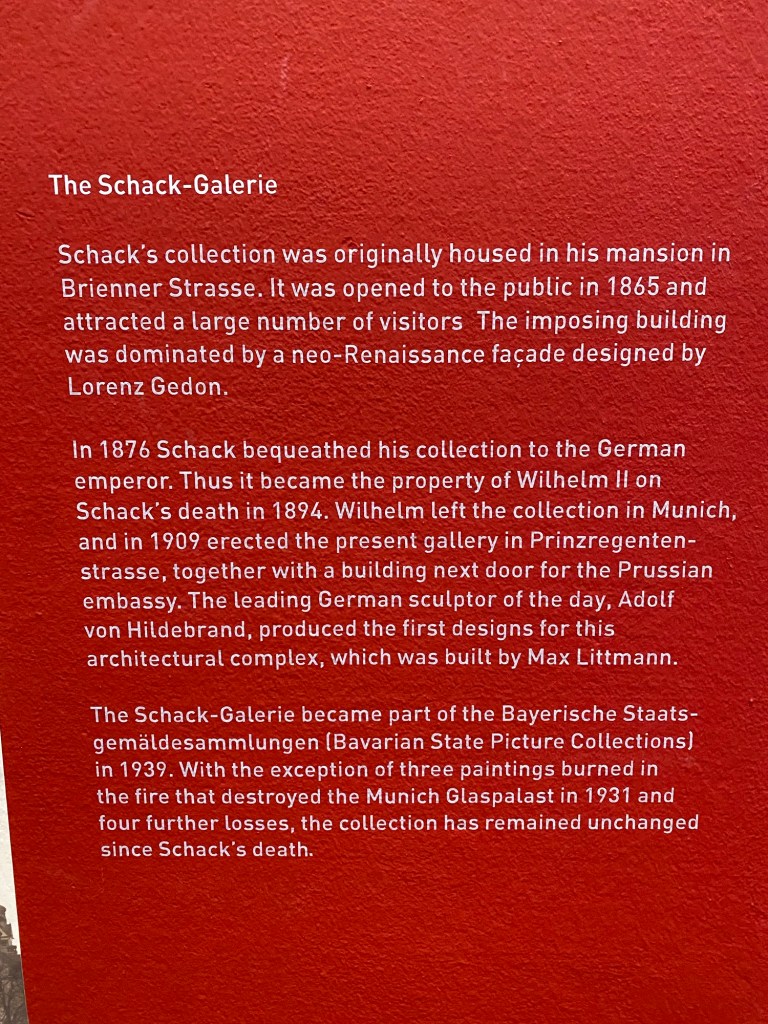
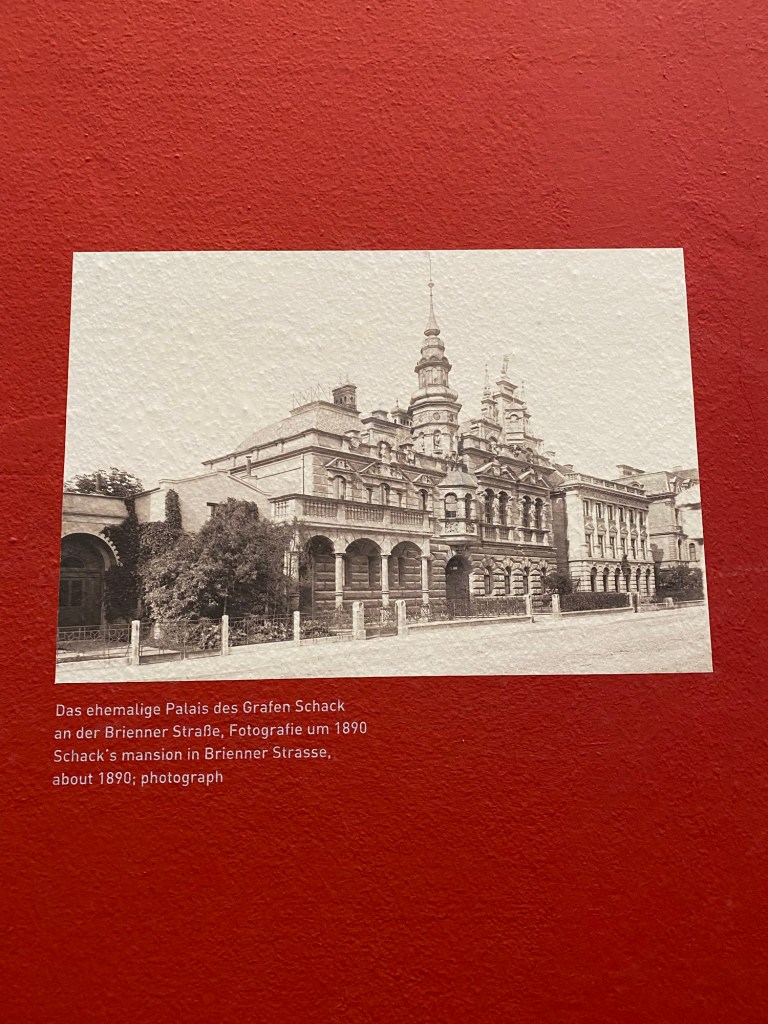
The collection is housed in a building designed by Max Littmann (1907) next to the former diplomatic mission of Prussia in the Prinzregentenstraße as the emperor decided to keep the collection in Munich. The gallery building with its upper-level portico and the adjacent tract of the former Prussian embassy, appear as two independent building complexes, but are unified by a common base and cornice. The façades of the buildings are built with bright sandstone. In the tympanium is an imperial coat of arms and a dedication by William II.

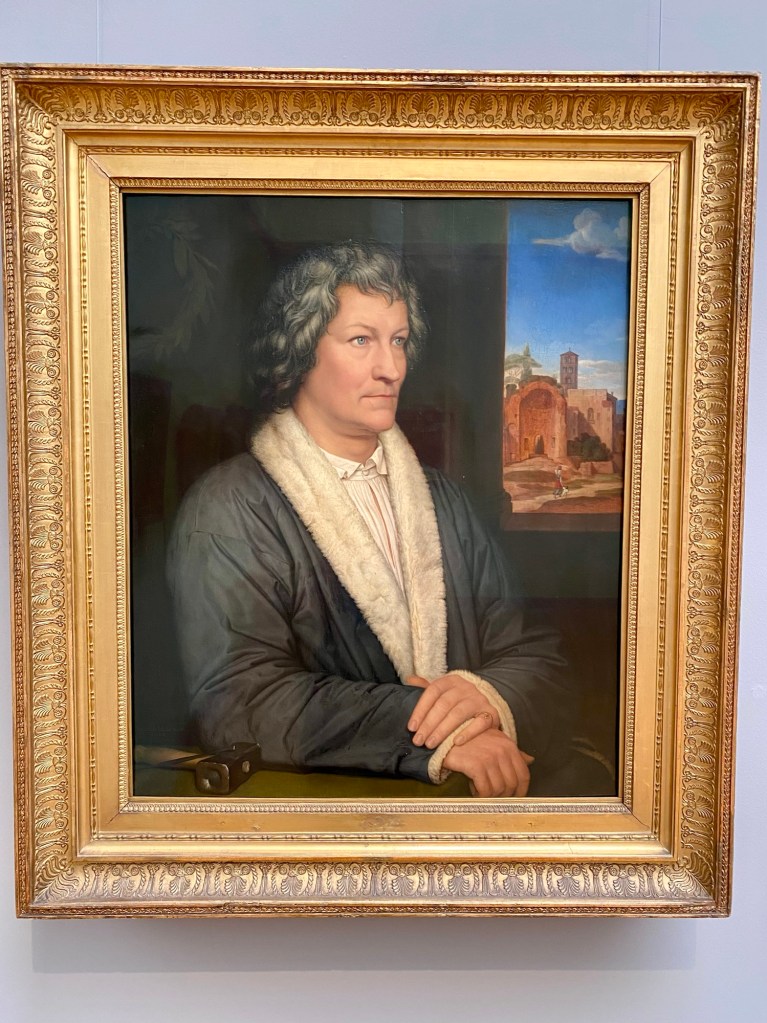
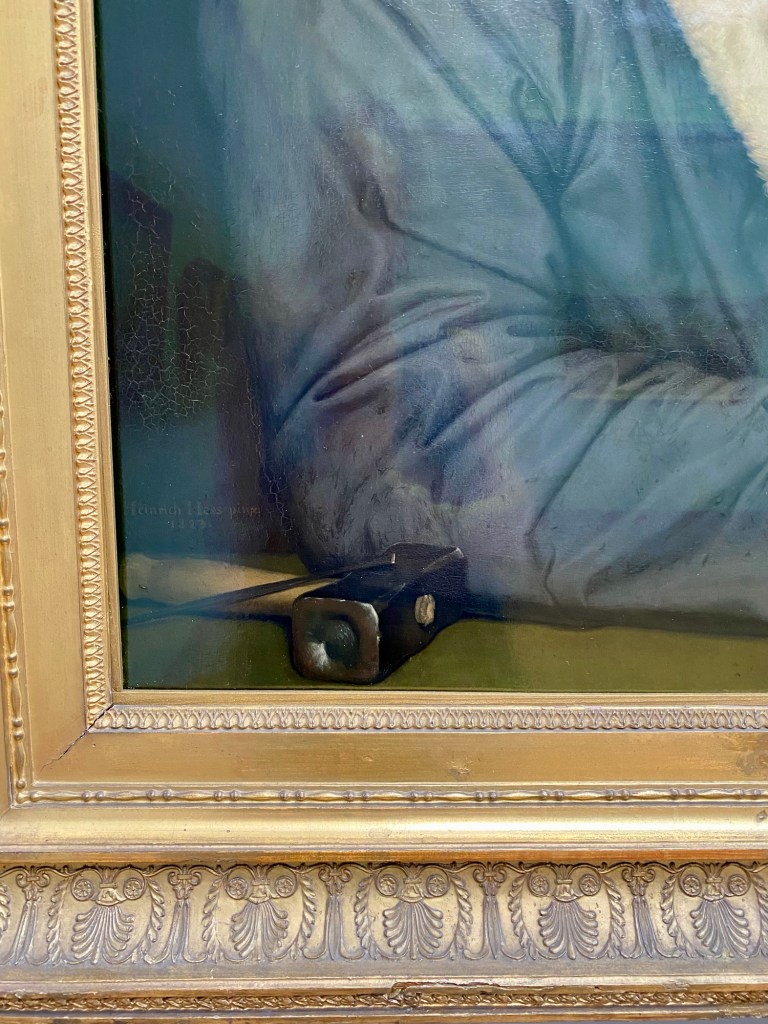
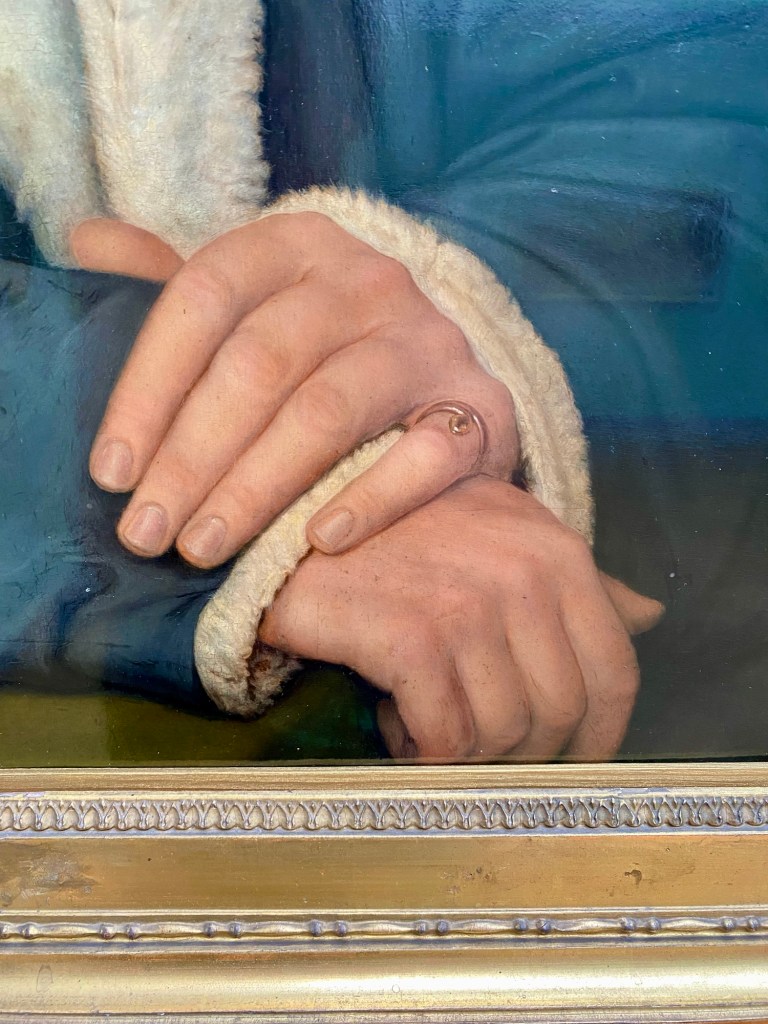
I found the museum interesting if not completely to my taste. But, the highlight of the experience for me was discovering this portrait of the Danish sculptor, Bertel Thorvaldsen. I once studied Thorvaldsen quite extensively and made a trip to Denmark to further those studies. I didn’t expect to see him in Munich!

 get back, lauretta!