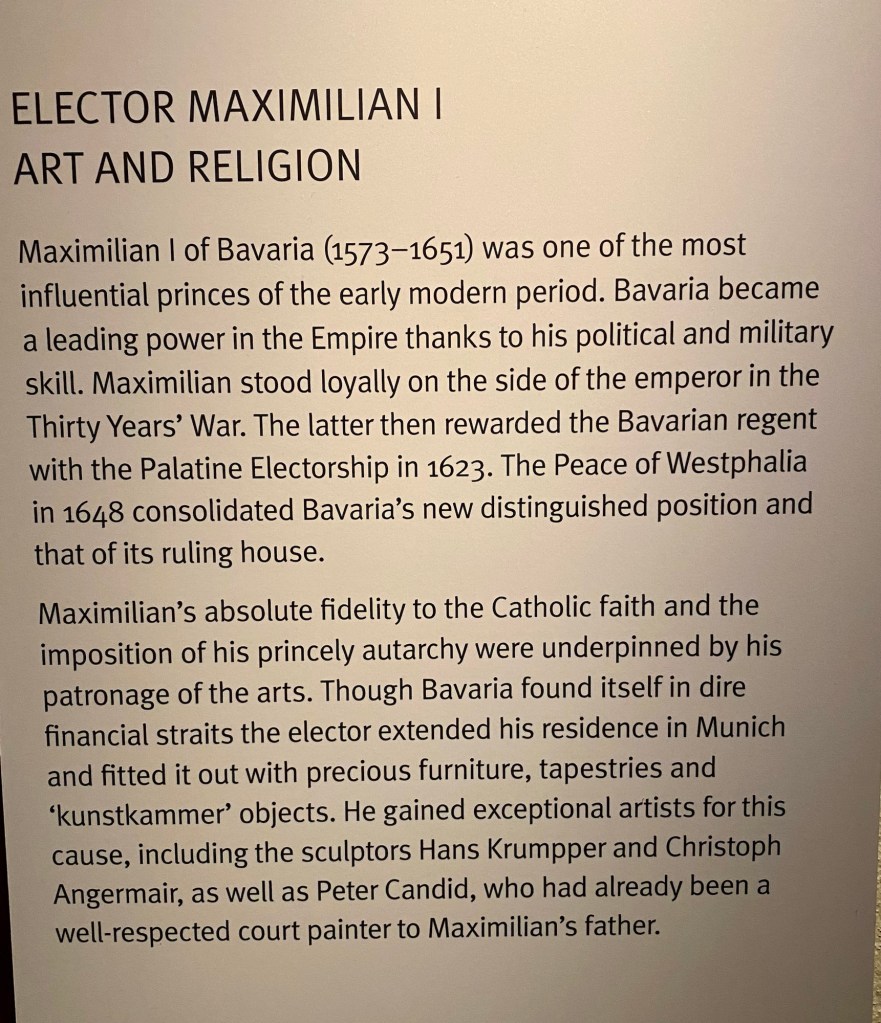
The collection of Neo-classical art of the 19th Century is strongly influenced by works that once belonged to the Wittelsbach family. Thus, from the estate of Maximilian’s father King Ludwig I are magnificent presents given to him by Napoleon Bonaparte! These works speak to the strong connection between France and Bavaria. Of special importance is for example a splendid table with precious wood with a rich porcelain decor, a gift Napoleon gave in 1806 to the Crown Prince Ludwig.
The Art Nouveau Department highlights the aspects first developed in France that then spread throughout Western Europe: the floral art direction inspired by the plants and animals. The collection of fine glass, porcelain and ceramics includes many objects of high artistic and technical quality of the most important centers of this epoch in Europe and the United States. The museum displays a major collection of Art Nouveau objects, including the work of Louis Comfort Tiffany, René Lalique, Émile Gallé and several Bavarian artists.
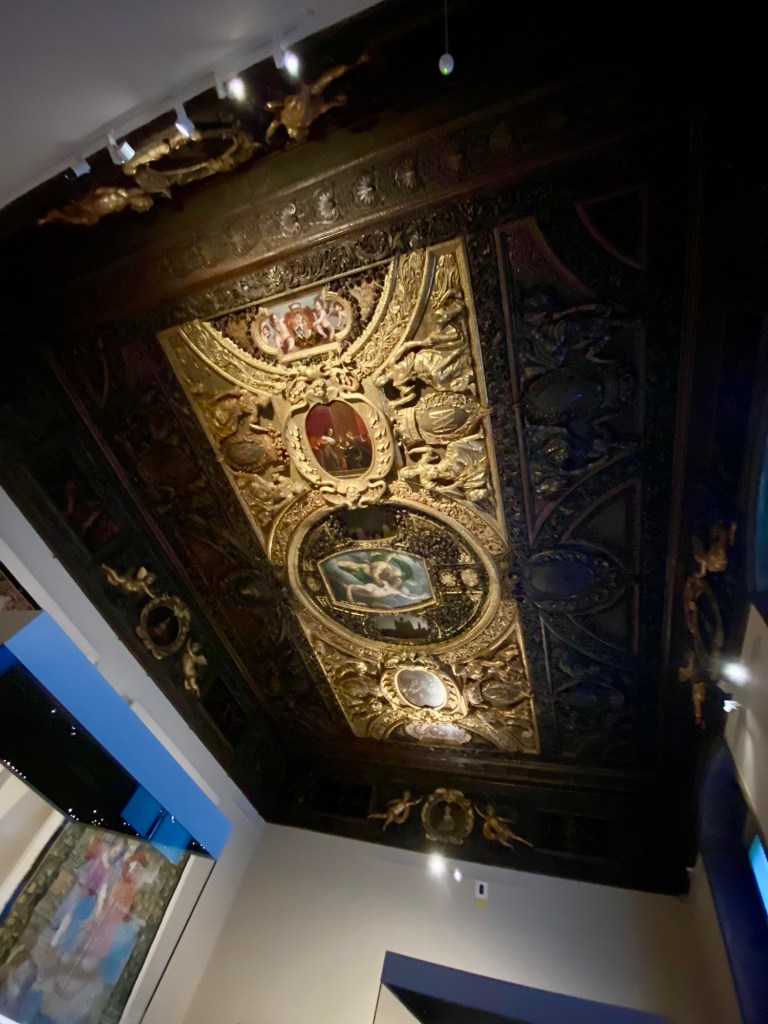
Many of the museum’s treasures are displayed in antique rooms moved to the museum. For example, the armor is in one of several rooms featuring Gothic ribbed vaulting form medieval buildings, magnificent Renaissance furnishings are displayed in rooms roofed with decorative wood-beamed and mullioned ceilings form the 14th and 15th centuries, and the Baroque objects in rooms with 16th century wood paneling and decorative ceilings.
The folklore collection houses for example traditional Bavarian furnitures, rural pottery, crockery and religious folklore including an outstanding collection of Neapolitan, Sicilian, Tyrolian and Bavarian wood carvings including street scenes and Nativity Scenes.
The museum holds an extensive collection of Nativity scene from the fifteenth through early nineteenth centuries, dramatically and imaginatively displayed. Many of the scenes display wonderful craftsmanship and detailed workmanship, some are worked in precious materials, others show exotic elements, like a Flight into Egypt intended to astonish 18th century viewers with the monkeys, crocodiles and hippopotamuses Mary and Joseph encounter on the Nile.
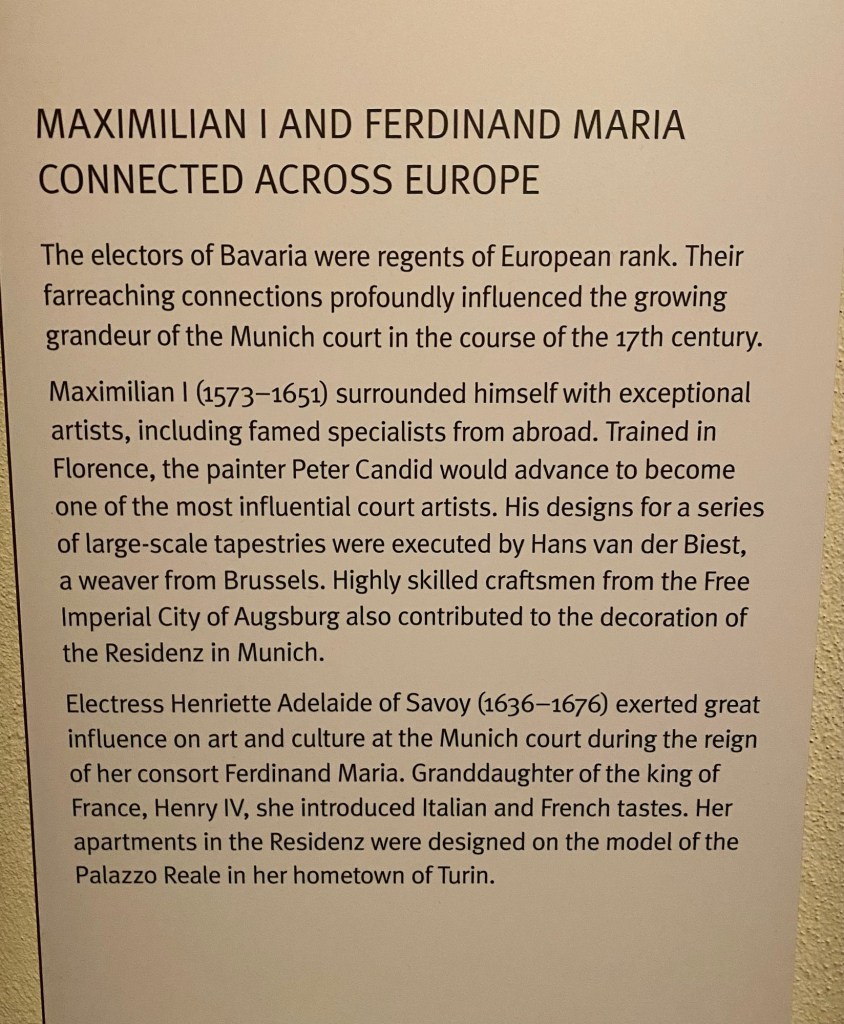
You’d need a week to throroughly see and study the vast holdings of this magnificent museum. Below are some things I thought deserved to be added to my post.
Below: an amazing inlaid ceiling, fit for Electors, Kings or Queens!

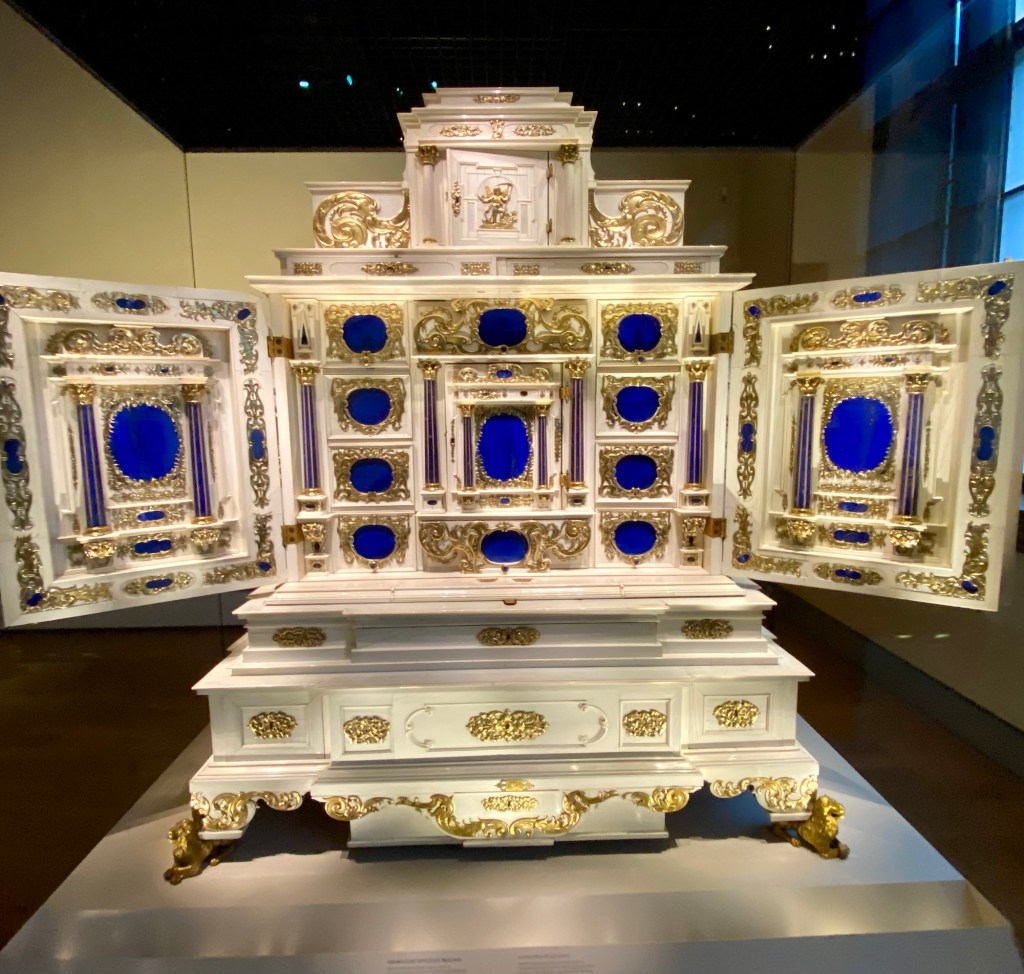
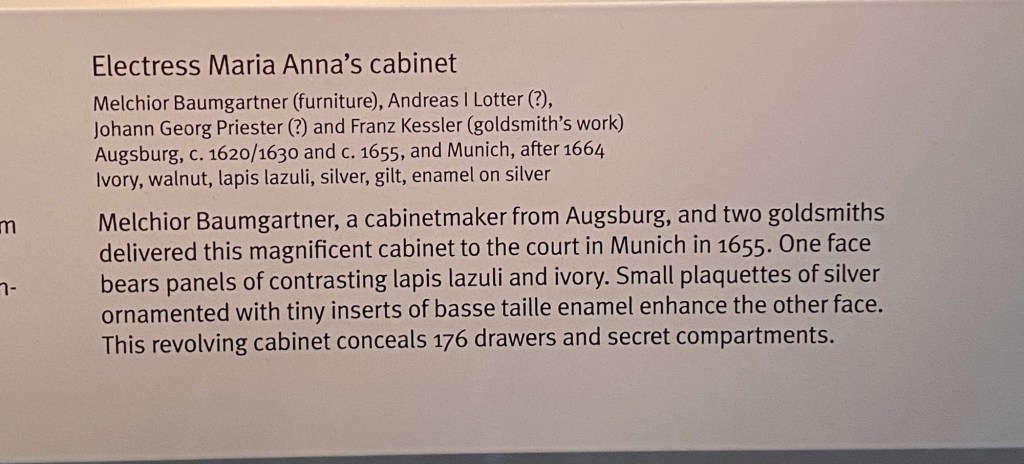
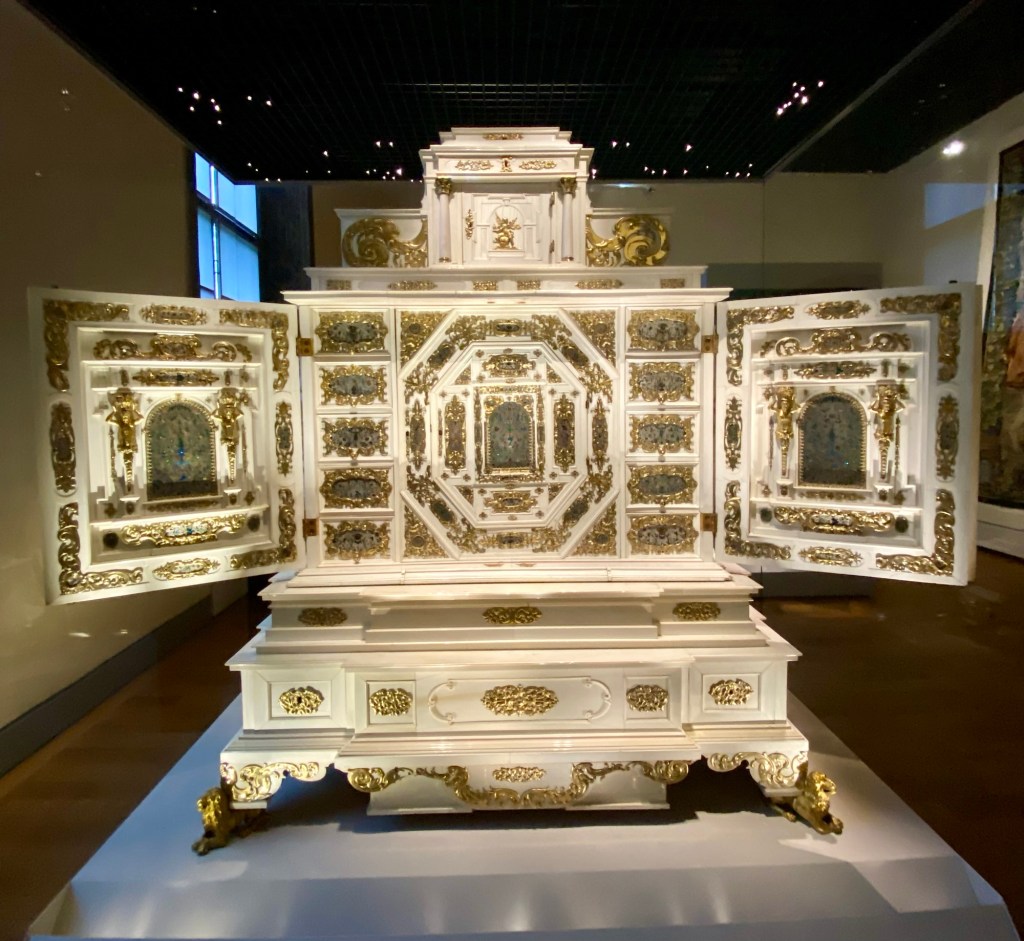
Below, a portable (if you have servants) altar. It stands about 5 feet tall and 4 feet wide, unopened. Large panels of lapis lazuli are juxtaposed against the white ivory. Talk about objects created for royalty!


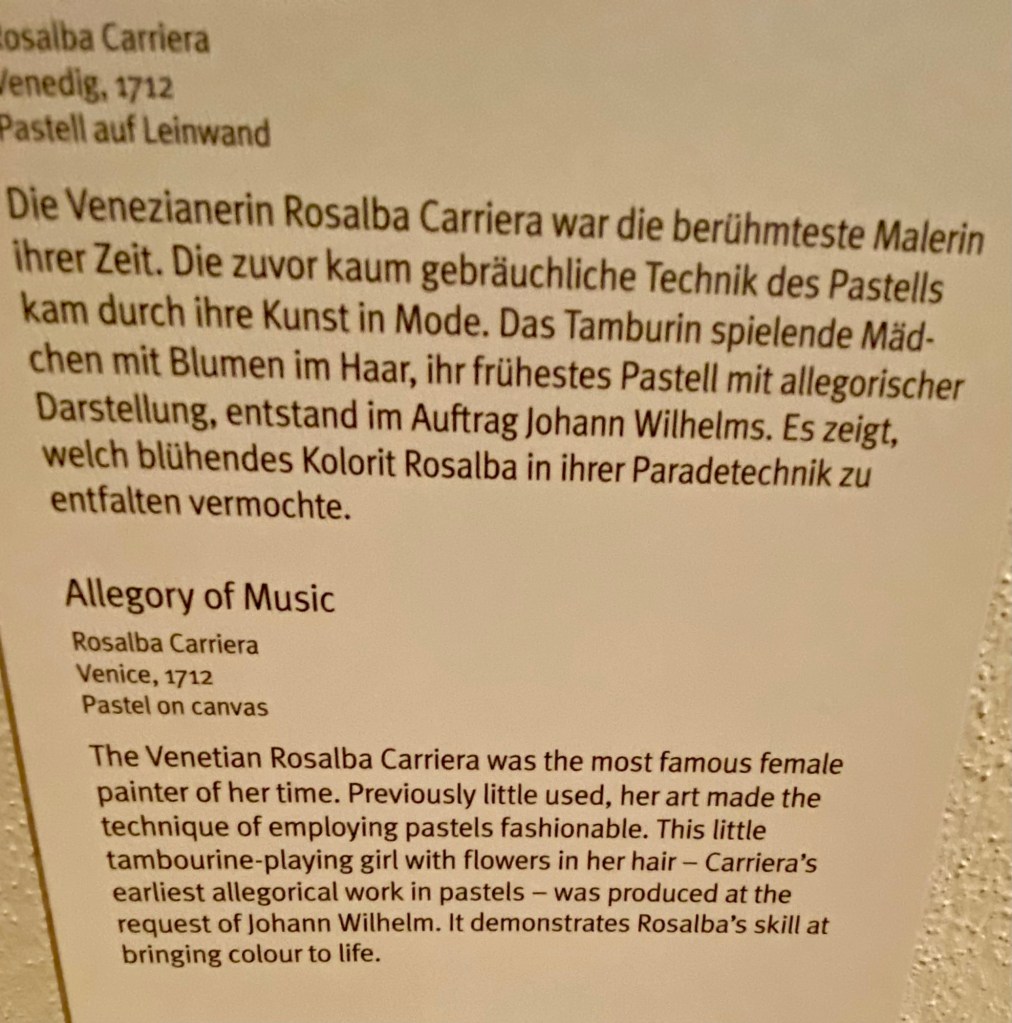
You know I love an Italian connection and so of course I loved seeing this portrait of princess Violante Beatrix at age 1, who would go on to marry Duke Ferdinando de’ Medici.



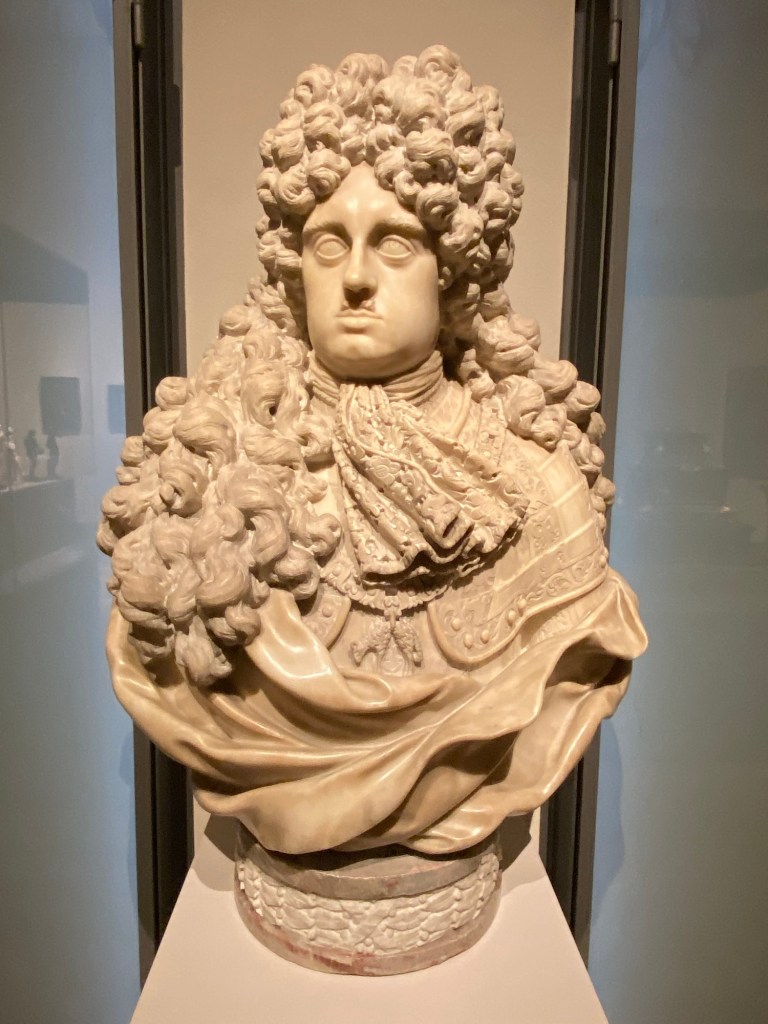

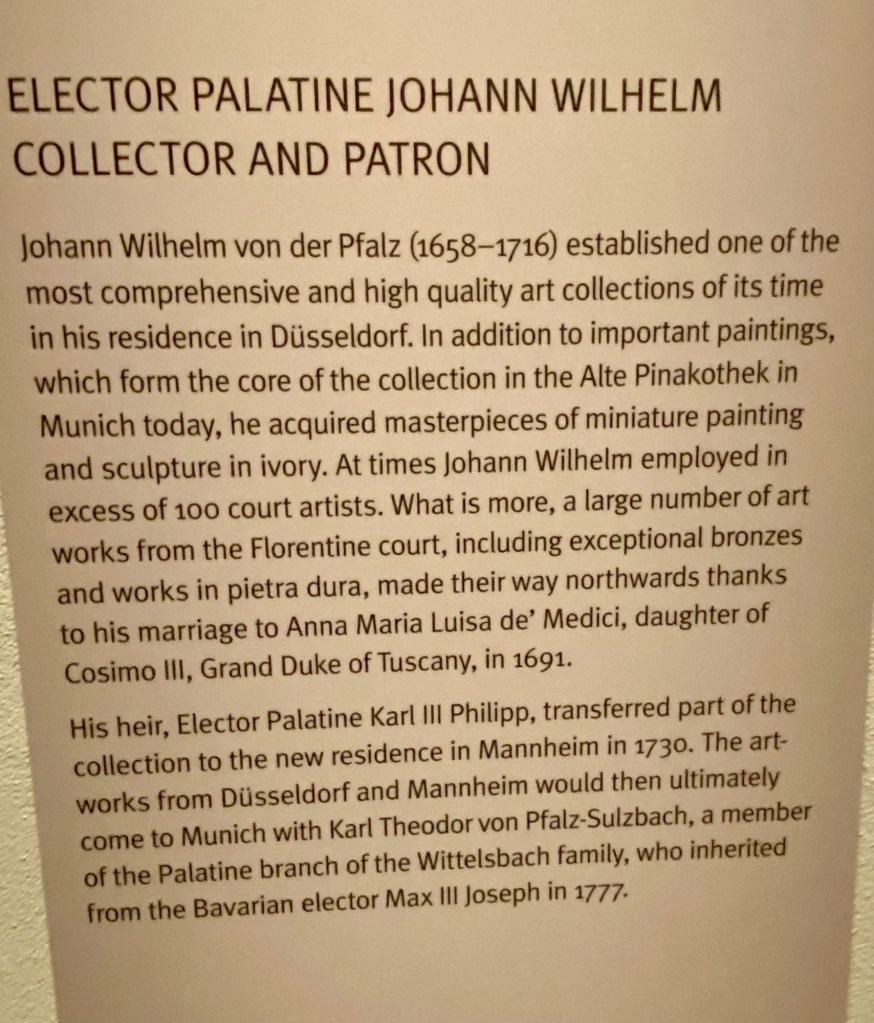
 get back, lauretta!