I recently attended an art history conference held in a fascinating building in the heart of Florence, the Palazzo dell’Arte dei Beccai. It is a 14th century building that once was the guild hall for the association of butchers. That seems humble to us today, perhaps, but this was a major guild during the medieval period. People have always needed to eat.
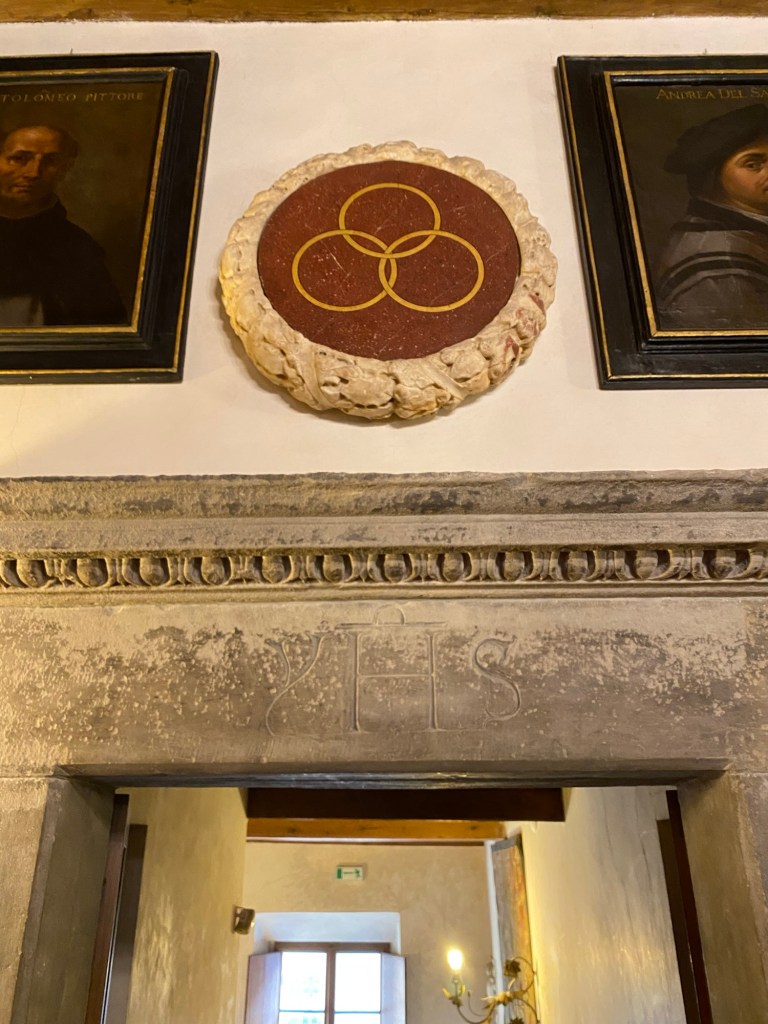
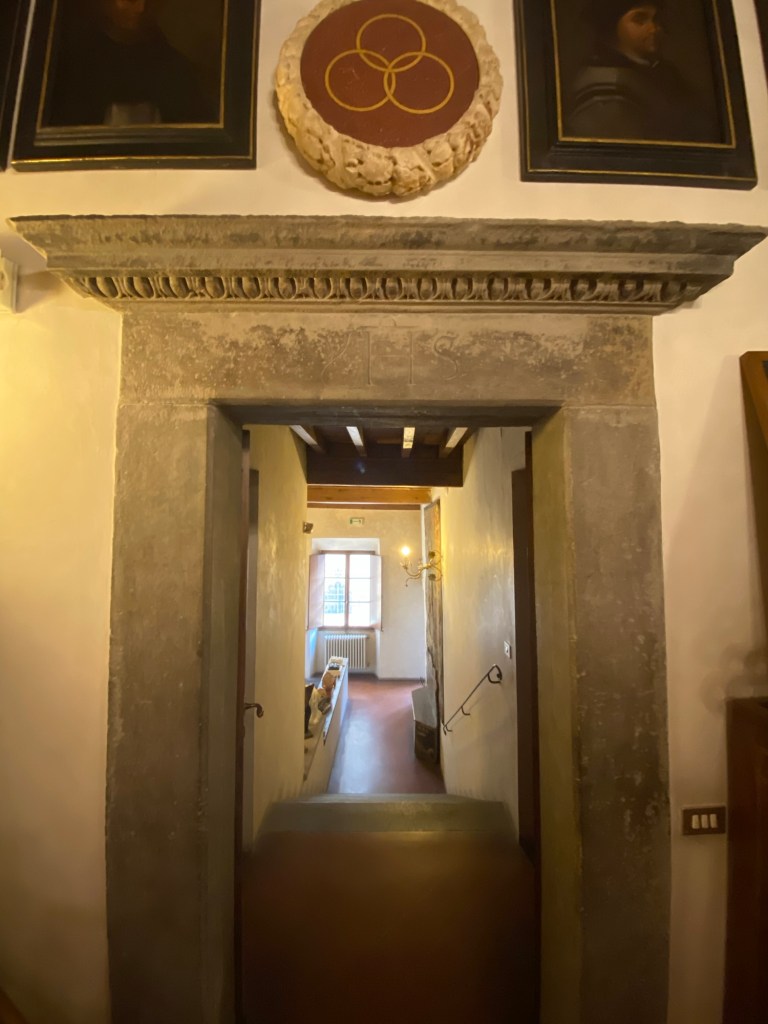
The façade is largely unchanged from its 14th-century appearance, although some windows have undergone later modification. The piano nobile is marked by four large arched windows. Above them are the arms of the Arte dei Beccai, a long-horned billy-goat, the Italian: becco from which the name of the guild derives; this work has been attributed to Donatello. Lower on the façade are other crests, the giglio or lily/iris of Florence and the three interlocking wreaths of the Accademia Fiorentina delle Arti del Disegno. In 1901 the building was included in a listing of buildings to be considered part of the national heritage, compiled by the Direzione Generale delle Antichità e Belle Arti, or “general directorate of antiquities and fine arts”.

Today the building houses the Accademia delle Arti del Disegno which has a storied history but today its declared purposes are the promotion and diffusion of the arts, and the protection and conservation of cultural heritage worldwide. It organises conferences, concerts, book presentations and exhibitions, and elects noted artists from all over the world to honorary membership.

I walked through those enormous wooden doors (I’ve actually been in the building before for another event, but had not known its significance then) and felt a certain something, a feeling of gravitas, and sat listening to speakers in both Italian and English discussing new findings on an 18th century woman artist. She would never have been allowed to be a member of the academy during her lifetime, but she is finally having a moment of recognition thanks to the hard work of some people today.
My photos and videos taken on that day are at the end of this post, but I want to take the time to discuss the art association housed within these hallowed halls first. You can skip all this and go directly to my images if you like. I wouldn’t blame you. Not everyone loves these details as much as I do!
In the late 15th century, a few art institutions that emphasized learning and knowledge over technical skill began to appear. Francesco Squarcione established a “studio” in Padua around 1440, perhaps the first to operate outside the guild and workshop system. The guilds of various professions flourished in Florence and other Italian cities and were essential to any professional person (read “man” of course) in any field from butcher to silk manufacturer.

Some 40 years later the so-called Medici Academy was created in Florence, under the sponsorship of Lorenzo de’ Medici, a great lover of the arts. It was administered by sculptor Bertoldo di Giovanni, a Medici favorite. Artists and young patricians met at a property the Medici owned around the Piazza San Marco, a pleasant retreat with rooms, loggias, and a garden where works from Lorenzo’s collection of ancient sculpture were displayed (although the finest were probably kept in the Medici palace). The sculpture garden was of sufficient interest to be highlighted on some early topographical views of Florence. The truly original “Academy,” the one created by Plato in the fourth century BCE, had met in a sacred grove outside Athens, a connection that Lorenzo and his humanist circle would not have overlooked as they sought to style their city a new Athens.
Information about Lorenzo’s sculpture garden is sparse, but it figures in two stories circulated about the young Michelangelo. One had the youth so impressed by the works of ancient sculptors he saw there that he abandoned his training as a painter on the spot, never returning to the shop of Ghirlandaio, where he had been apprenticed. The Michelangelo biographer Ascanio Condivi also recounts how the youth had taken up an unworked block and perfectly copied an antique head of a faun, amazing Lorenzo. Here, in one stroke, Michelangelo began his career as a sculptor and his long association with the Medici. Such accounts must be viewed with some skepticism, however, since Condivi, who took his cues and much of his actual text from the artist himself, continually underplayed Michelangelo’s artistic training to increase the sense of the master’s unique genius. Nor did either the artist or his biographer overlook any opportunity to underscore a Medici connection.

Vasari provided the most extensive description of the garden and named its pupils—but he had motives of his own. As the major force behind the Accademia del Disegno, Vasari was interested in giving that later organization a pedigree, especially one that could link it both to Michelangelo, in whom Vasari saw the perfection of art in his time, and to the illustrious ancestor of his own patron, Cosimo I de’ Medici. Lorenzo’s sculpture garden can probably be viewed as a proto-academy at best. Nevertheless, Lorenzo was certainly active in promoting the arts, visual and literary, in his city. Vasari said that Lorenzo had opened the garden to remedy a shortage of sculptors in Florence. It is also clear that he pushed sculpture in the direction of classical art. It has been suggested that some work carried out in the garden involved restoration of antique statues. By encouraging students to draw after antique models, Lorenzo provided a sort of training not always available in the city’s traditional workshops and enhanced Medici prestige through progressive patronage of the arts.
While Leonardo da Vinci was in Milan in the 1490s, he was part of something called the Academia Leonardi Vinci, about which little is known. Its members included literary men, other artists, and musicians. Rather than a forum for instruction, however, it seems to have been an informal association of people with shared enthusiasms.
The sculptor Baccio Bandinelli also assigned the label “academy” to his studios, initially in Rome in the 1530s and later in Florence. But the first true academy, an institution with official status organized to provide art students with a formal educational program, seems to have been the Accademia del Disegno in Florence.
The first true academy for instruction, the Accademia e Compagnia delle Arti del Disegno, was established in 1563 in Florence by the grand duke Cosimo I de’ Medici at the instigation of his court painter, advisor, and art historian Giorgio Vasari. The two nominal heads of the institution were Cosimo himself and Florence’s favorite son, Michelangelo. Membership in the Accademia del Disegno was an honor conferred only on already-recognized independent artists; you could not simply choose to join.
Duke Cosimo granted a constitution to the Accademia on January 31, 1563. Its origin lay a few years before, when the monk and sculptor Fra Giovanni Angelo Montorsoli (one of Michelangelo’s pupils) dedicated the crypt he was building for himself in the convent of the church of Santissima Annunziata for the common use of all practitioners of the arts of disegno—painters, sculptors, and architects—who died without a burial place; he also provided for masses to be said for their souls. Vasari saw Montorsoli’s endeavor as an opportunity to retool the old, now moribund, Company of Saint Luke (a Guild) into a new organization that, beyond its religious function, could promote the intellectual and theoretical education of young artists while further distancing them from traditional trades and the guilds. The group first convened in the cloisters of Santissima Annunziata in 1562 to rebury the remains of Pontormo, who had died in 1557. The new sepulchre was sealed by a stone with reliefs depicting the tools used by artists and architects.
Duke Cosimo called a competition for the design of a new impresa (emblem) for the Accademia. This design is one of several that Cellini made (though not the one he finally submitted). The long inscription helps explain the image. The figure is the famous ancient statue of Diana from Ephesus, with wings of inspiration added. She is flanked by a snake, a symbol used by Cosimo, and a lion, a symbol of Florence. From the arms of the goddess extend flaring trumpets—to herald the fame of art and artists. An “alphabet” of artists’ and architects’ tools parallels the letters used by poets and philosophers just above. In fact, the Accademia continued for many years to use the winged bull, symbol of Saint Luke, which had been the emblem of the old Company of Saint Luke. The new design eventually adopted consisted of three interconnected wreaths for the three arts of painting, sculpture, and architecture.
When the new Accademia (officially the Compagnia e Accademia del Disegno, a name reflecting its origin and continued role as a lay confraternity) was formally constituted the following year, Cosimo was made capo (head), forestalling any possible objection from the guilds. For the duke, this was an opportunity to bring the visual arts closer into the fold of the state, just as he had done with the humanities. With a small territory, a small army, and a short aristocratic history, Cosimo, like Lorenzo before him, used culture to enhance his prestige. (It worked: when the French royal academy of the arts was formed under Louis XIV in 1648, the first paragraph of its charter referred specifically to the patronage of the dukes of Tuscany.) Cosimo shared the title of capo with Michelangelo, who was then quite old and had not been in Florence for thirty years. But he was still revered: no one had more perfectly applied the ideals of disegno or done more to elevate the image of the artist. The standing of the Accademia was greatly enhanced by one of its earliest and most public projects—the staging of Michelangelo’s elaborate funeral in 1564, which celebrated the genius of one artist and all art. The Accademia was administered by Vincenzo Borghini, humanist and historian—and not coincidentally a friend of Vasari’s. Borghini did as much (or more, some argue) as the artist to shape the new organization, and he was close to the duke.
The statutes of 1563 laid the groundwork for the Accademia’s educational program, which offered regular lectures on geometry and other subjects and periodic demonstrations of anatomy. Academy members visited young artists in the workshops where they apprenticed to offer encouragement and suggest improvements to their work. Students without money were given financial support.
Vasari painted a fresco in the Accademia’s chapter room (which came to be called the Cappella di San Luca, partly on account of this work) in Santissima Annunziata. We see Luke, in the person of Vasari himself, painting the Virgin and Child. Looking on are Montosorli and the prior of the church. The chapel was actually dedicated to the Trinity—appropriate for the three arts of disegno but also a common focus in contemporary Counter-Reformation theology.
The Accademia became the most important art institution in Florence in the late 16th century. Records show that its membership included almost every artist working in the city; among the officers were Vasari, Benvenuto Cellini, Giambologna, and other leading practitioners. Members did not have to be Florentine—Giambologna, for example, was born and trained in the Low Countries. A plan to admit amateurs as well as practicing artists was discussed but abandoned. In the 17th century, however, “gentlemen and noble persons [who] are knowledgeable with respect to the sciences of architecture and the art of disegno” did participate.
In 1571 the Accademia petitioned Cosimo to formally release painters from the guild of the Arte dei Medici e Speziali, and sculptors from the Fabricanti (which had superseded the Arte dei Maestri di Pietra e Legname). Thereafter the Accademia assumed various guild functions and was finally incorporated as a guild itself in 1584. The institution endured until the late 18th century, and the most important years of its history lie beyond the period under consideration here. For us, it marks an important transition in the perception of the artist and the growing acceptance of his work as being on a par with philosophy, literature, rhetoric, and the other liberal arts.
When Vasari’s academy fell into disorganization rather early on, his ideas were taken up in Rome by the Accademia di San Luca, re-established as an educational program in 1593 by the painter Federico Zuccari and Cardinal Federico Borromeo. With its emphasis on instruction and exhibition, the Accademia di San Luca was the prototype for the modern academy.
Among its functions, and much imitated in later academies, was the sponsorship of lectures given by members of the academy and later published and made available to the general public. Such discourses became the means by which academies fostered and gained public acceptance for particular aesthetic theories. The Accademia di San Luca was firmly established by 1635, having received support from the powerful Pope Urban VIII. All the leading Italian artists and many foreigners were members; the secondary aims of the institution—to obtain important commissions, to enhance the prestige of the members, and to practice exclusionary policies against those who were not members—were avidly pursued.
The 1531 print depicts Bandinelli and students in Rome, with an inscription referring to the assembly as an “academy”; the second print, from the 1550s, shows the later establishment in Florence, where various parts of human skeletons are available for study. Anatomy was considered a particular skill of Bandinelli’s. In the Rome image, candlelight throws dramatic shadows on the walls, as students draw from ancient statuettes or casts. The pairing of silhouettes with their three-dimensional sources offers a concrete illustration of how drawing or painting and sculpture are related to each other through disegno.
For the following two centuries, academicism dominated Italian artistic life. The decline of the church and then of aristocrats as patrons—those groups had formerly commissioned the painting of whole rooms at a time—resulted in the abandonment of the artist to an anonymous market of buyers who might commission one portrait or some other single easel painting at a time. This made exhibition essential to the artist’s success. The state-supported academy, being the only institution financially able to provide this service on a large scale, came to control public taste, the economic fortunes of the artist, and ultimately the quality of his art by its determination of standards in the work it chose to show.
In France the Académie Royale de Peinture et de Sculpture was founded in 1648 as a free society of members all entitled to the same rights and granted admission in unlimited numbers. Under the sponsorship of the powerful minister Jean Baptiste Colbert and the direction of the painter Charles Le Brun, however, the Académie Royale began to function as an authoritarian arm of the state. As such, it assumed almost total control of French art and began to exercise considerable influence on the art of Europe. For the first time, the concept of aesthetic orthodoxy obtained official endorsement. The Académie achieved a virtual monopoly of teaching and exhibition in France, beginning in 1667 the long-lived series of periodic official art exhibitions called Salons. Thus, the idea, born of the Enlightenment, that aesthetic matters could be universally subjected to reason led to a rigid imposition of a narrow set of aesthetic rules on all art that came within the Académie’s jurisdiction. This approach found especially fertile ground in the Neoclassical style, which arose in the second half of the 18th century and which the Académie espoused with enthusiasm.
Meanwhile, numerous academies, usually state-supported and similar in structure and approach to the French Académie, were established throughout Europe and in America. By 1790 there were more than 80 such institutions. One of the most important to be founded was the Royal Academy of Arts in London, established in 1768 by George III with Sir Joshua Reynolds as its first president. Although Reynolds gave the obligatory discourses on the importance of harmony and uplifting conceptions in painting, the Royal Academy never dominated art as completely as academies on the European continent.
The first important challenge to the power of the academies came with the rise of Romanticism, which saw the artist as an individual genius whose creative powers could not be taught or externally controlled. Although most notable Romantic artists were absorbed into the academic system in the first half of the 19th century, eventually almost all artists of significance found themselves excluded from official patronage, largely because of the widening gap between their achievements and the taste of the bourgeois public to which the academies catered.
The blow that finally broke the power of the academy was struck in France. After a series of unsuccessful compromises (e.g., the Salon des Refusés, established in 1863 by Napoleon III for painters excluded from the Académie), the Impressionists, who exhibited independently between 1874 and 1886, succeeded in winning the complete acceptance of the critics. In the 20th century the art academy became an important source of instructi
Now, with no further ado, here are the pictures/videos I happily took on my lucky day.

Above and below, 3 frescoes by Pontormo that were detached from their original locations and moved to this building for safe keeping. We sat in front of these fine paintings for the presentations.


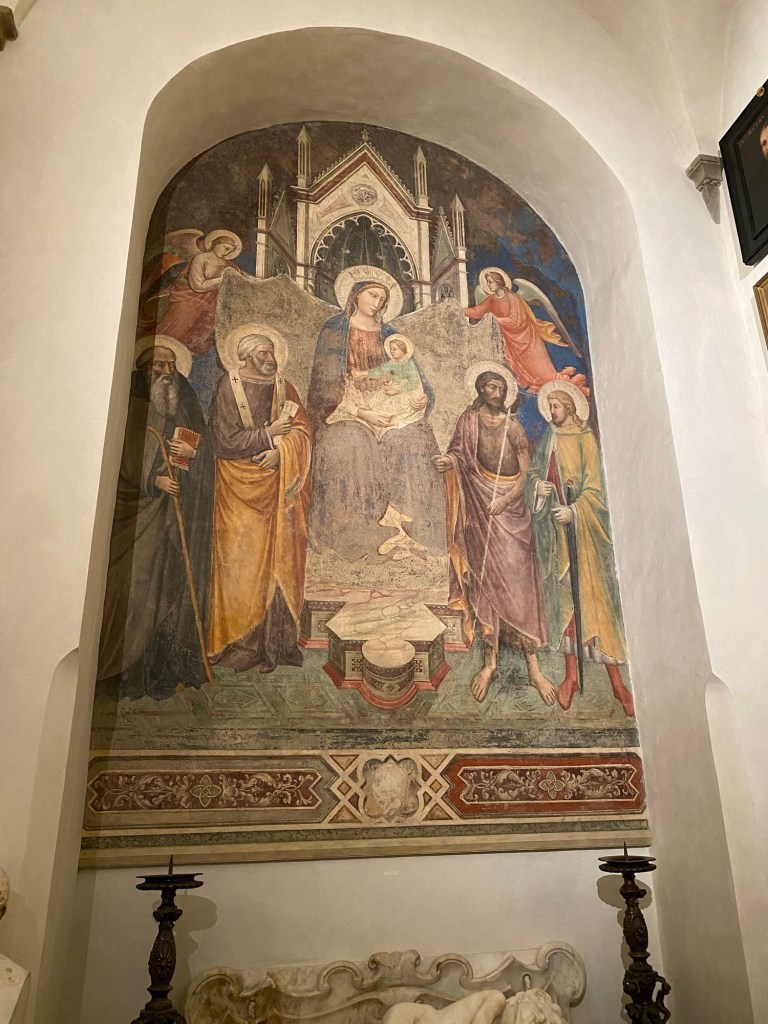
Above and below, this 15th century fresco is the only original art work that survives in this building.

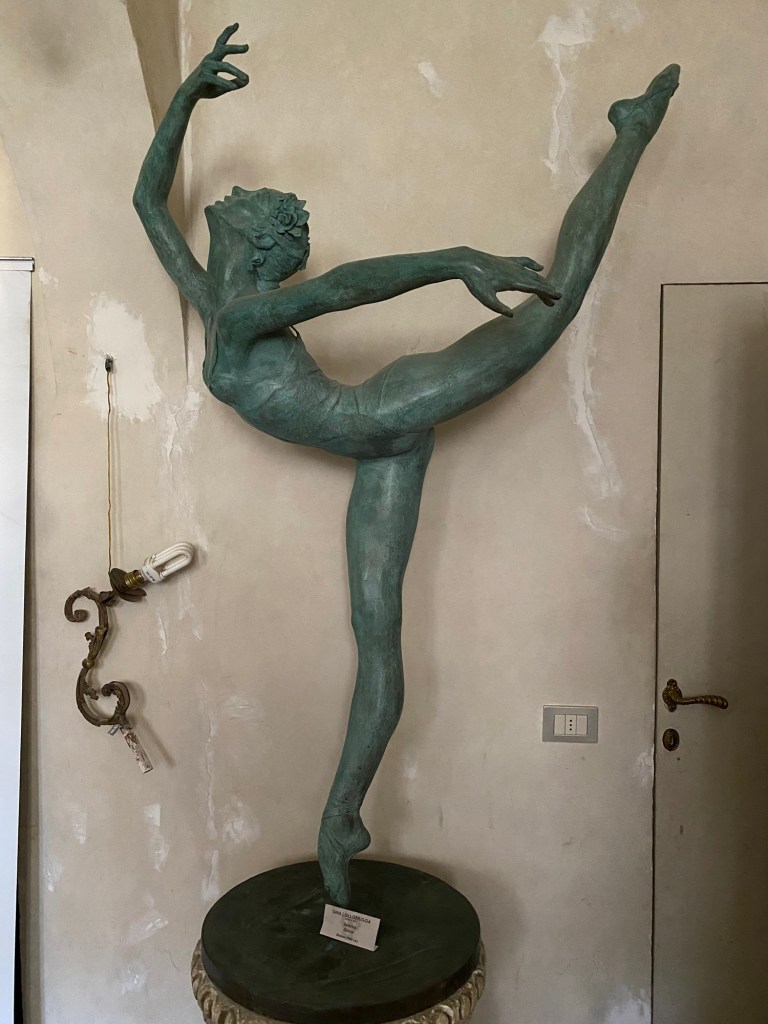

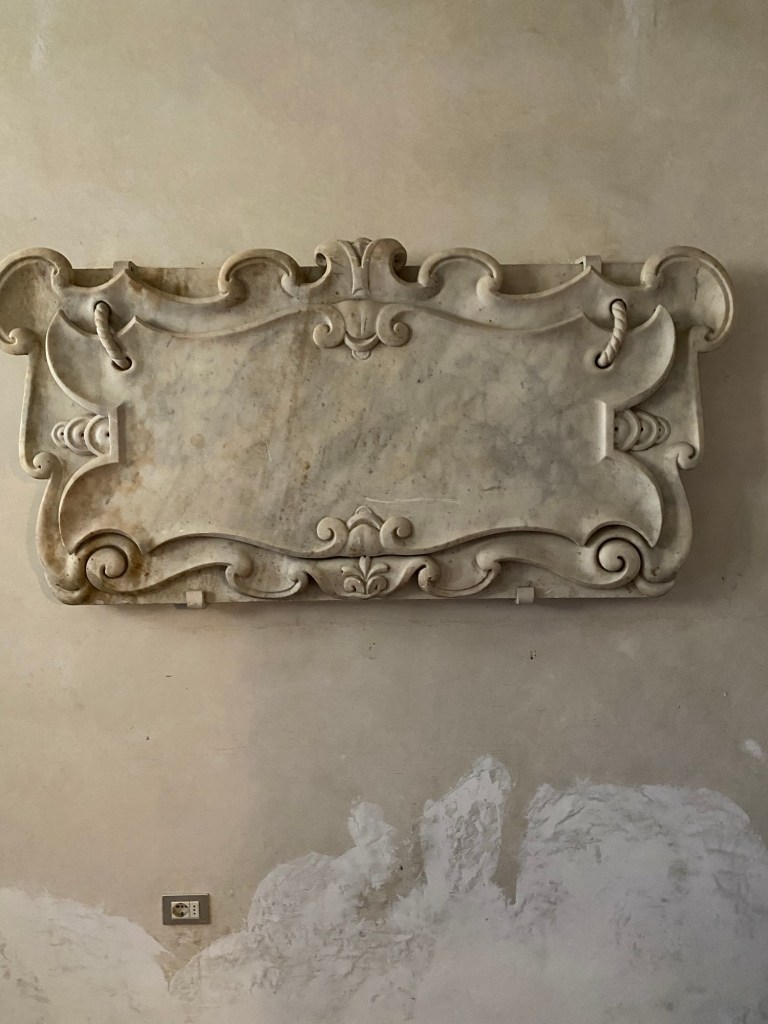

It was a fine day and I was delighted to be a part of it.
 get back, lauretta!