There’s a small, historic charity in the heart of Florence that has been in operation since 1441. Where else, I ask you, can you enter such a place pretty much any day you like? It is mind blowing, actually! It is the oratory of the good men of St. Martin, a charity organized to help the needy.

It doesn’t look like much from the outside, right? Especially with the refuse piled high in front of the entry, while the city does street work outside. All over Florence this year (including in front of my home), the streets are torn up for plumbing works.

Above, you can just barely make out the painted scene of St. Martin ministering to the poor in the in situ tabernacle on the exterior of this oratory.
Let’s go inside:

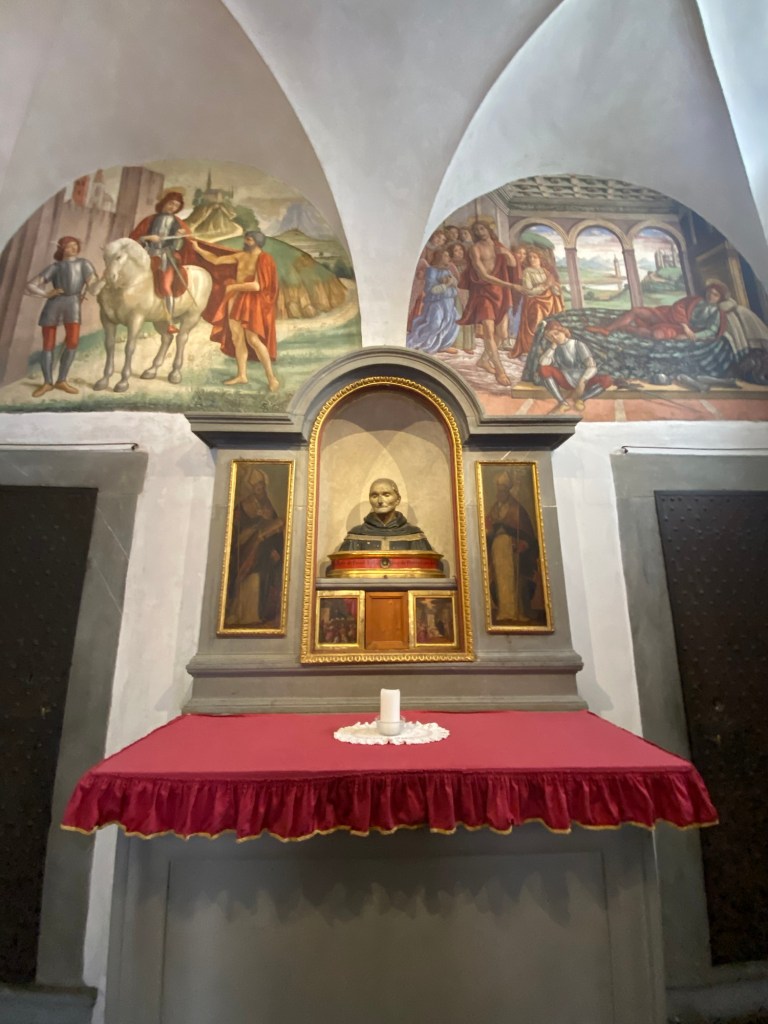
Below, a picture of the altar wall, with the bust of St. Martin, said to be by Andrea del Verrochio, and two of the 10 frescoes seen on the wall above. The frescoes in this room date to the late Quattrocento, or the late 1400s and they were mostly painted by the artists in the workshop of Domenico Ghirlandaio. It is no wonder I admire them so! He’s one of my favorite painters. The paintings were created in this space between 1478 and 1481.
In the videos below, I show you the entire space. It isn’t large. And, in a city swimming in tourists, I had the place to myself. Knowledge is power!
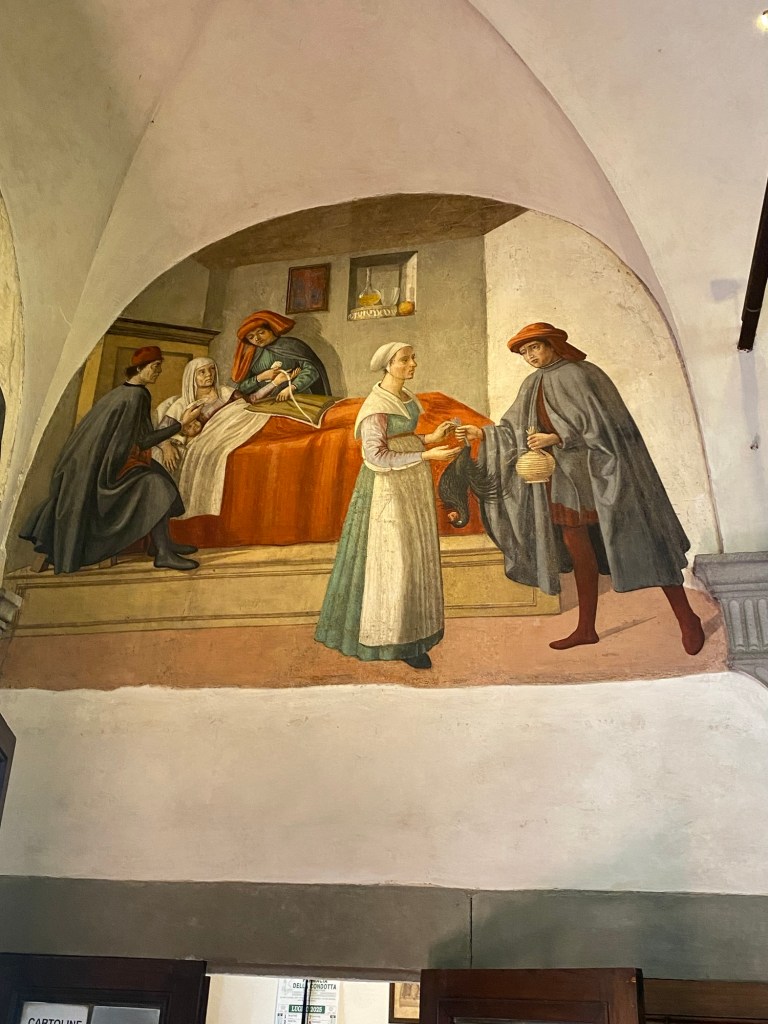
The 10 frescoes lunettes in this room illustrate the good works of St. Martin of Tours, who is the patron saint of beggars, soldiers, tailors, wool-weavers as well as of geese and vintners and grape growers. Scenes from the life of Saint Martin and the seven works of Mercy are rare 15th-century frescoes still in situ, and they offer a vivid glimpse into 15th century Florentine life. That, in a nutshell, is why I love art. It is a window to the lost past.
The scene depicted in the lunette above and below is the famous episode from Martin’s life in which he cut his cloak in half to give part to a beggar. It is known as the Dream of St. Martin and recent research attributes this paining to Lorenzo di Credi.

Seven of the other lunettes illustrate the charitable activities carried out by the Buonomini confraternity, such as giving food and drink to the hungry and thirsty, clothing the naked, visiting the sick and prisoners, welcoming pilgrims, burying the dead, and assisting families in need.
The founding organization and its 15th century oratory are still operating today and we, the visiting, are asked to kindly make a donation which will go to the poor. I was happy to make a donation in the wooden box marked “alms.”
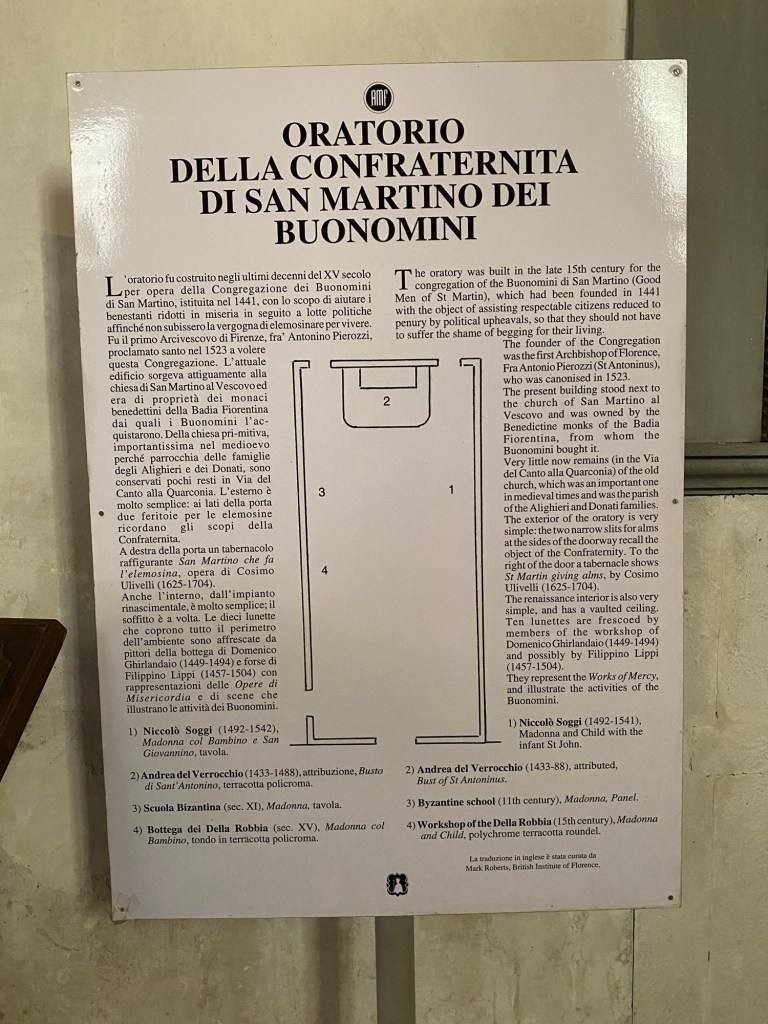
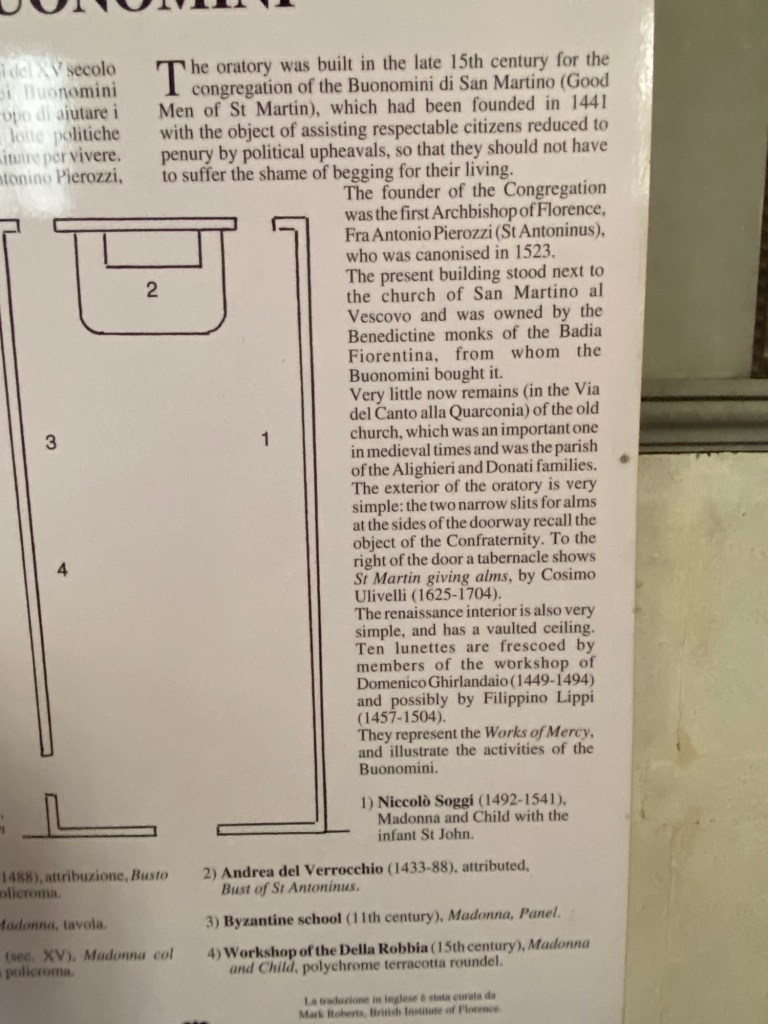
Here’s the label in the room: please read the English part if you’d like to know more about the oratory.

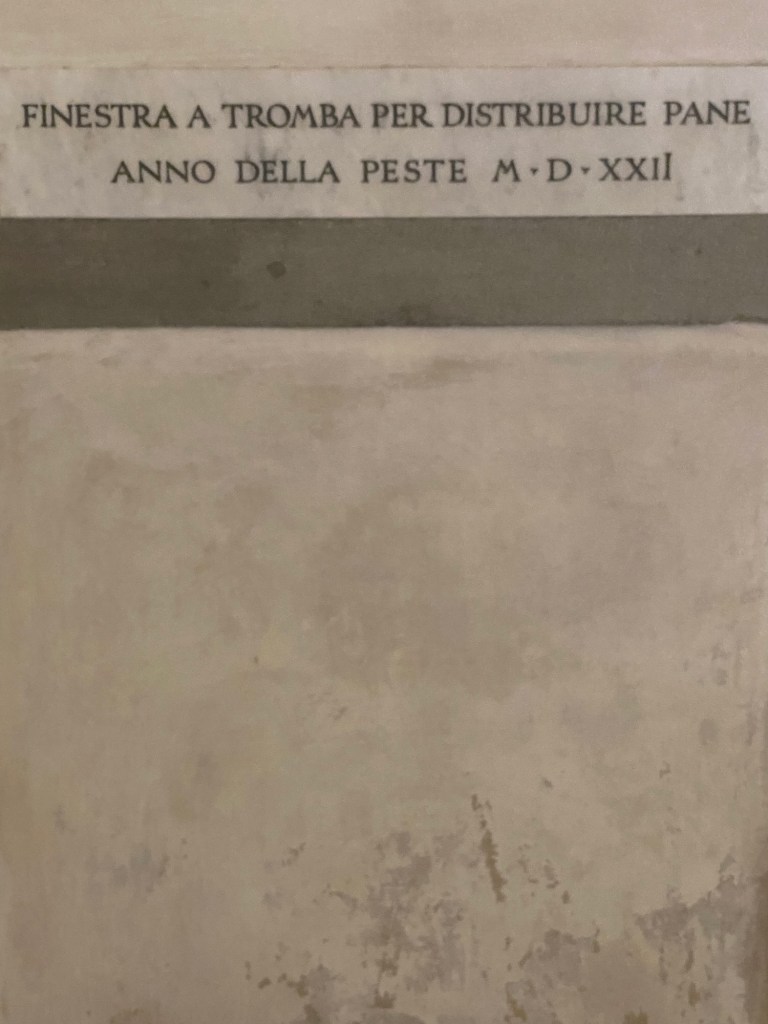
There was once an open window, seen below, from which bread was distributed to the needy during the pestilence of 1522, as the inscription says.

Below is a painting of the the madonna and child by Niccolo Soggi. In one of the videos above you will see the painting of the Madonna from the Byzantine school.



I highly recommend a visit to this small, serene and intimate space which was historically used to collect alms for the poor. The story goes that if someone needed to request funds, they could light a candle at the door to request help.
Tradition also holds that Dante Alighieri was married in this space, which may hold up if it is true that the house of his family was nearby as many scholars believe.
In any case, the oratory is a hidden gem, in plain sight, offering a unique combination of art, history and social charity in the heart of Renaissance Florence. You can visit it and soak up the charm without vying with tourists.
 get back, lauretta!