My recent visit to Ferrara was full of interesting sights to behold. The historic center of this venerable city, which was a leading cultural center during the Italian Renaissance, has many important buildings, thank goodness. I say that because there was heavy bombing during WWII, but fortunately the center was pretty well preserved.
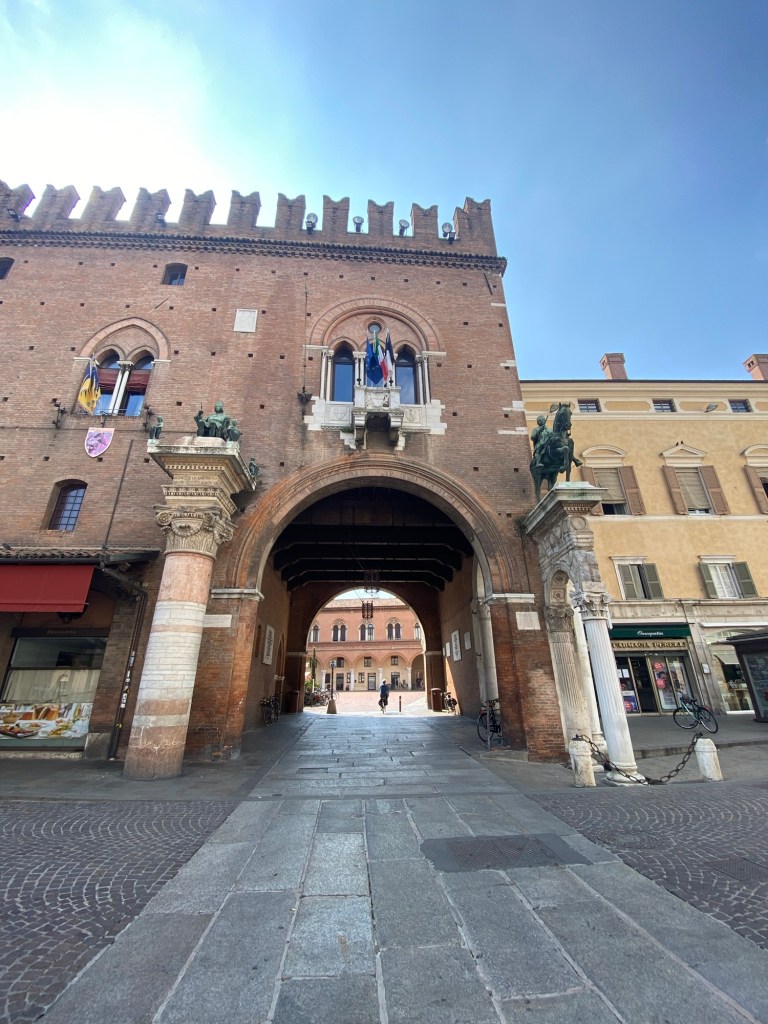
First up, let’s look at the Palazzo Municipale. It was begun in the 13th century, and, as it’s name suggests, it serves as the seat of the commune of Ferrara. It was the ducal residence of the Este dynasty until the 2nd half of the 15th century, when the family built the building I’ll be discussing next in this post. It is situated directly across from the cathedral of St. George, about which I’ll be posting soon.

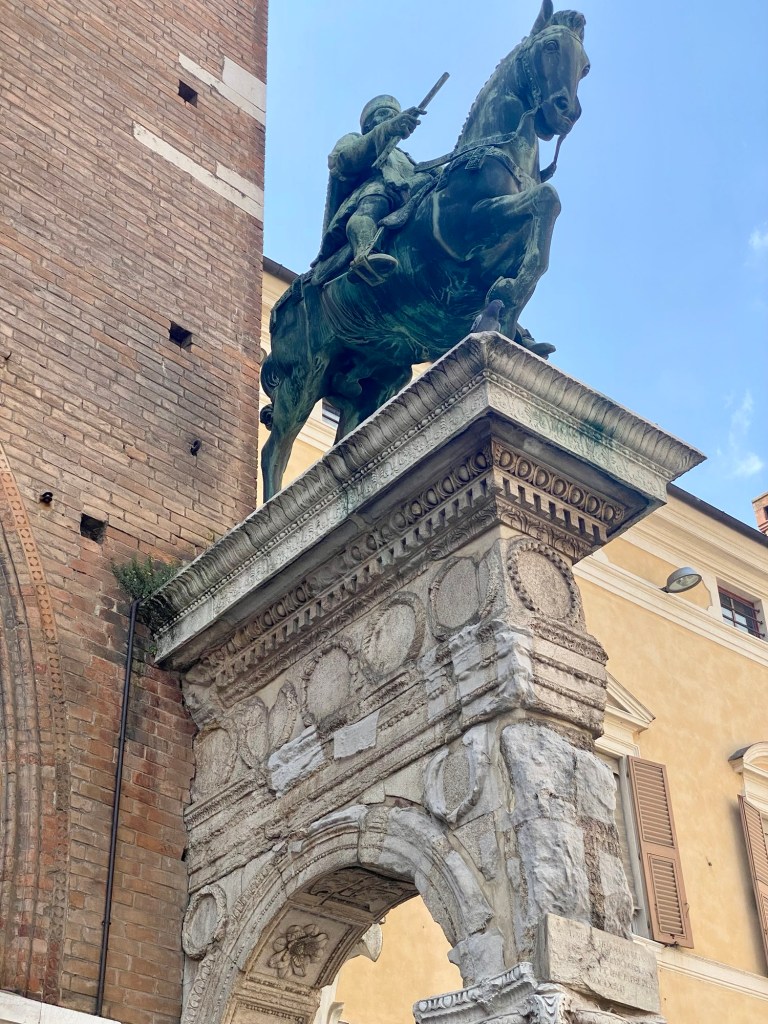
Flanking the grand arched entrance of the building are two statues: on the left is a seated figures of Duke Borso d’Este and on the right is the equestrian statue of Marchese Niccolo III d’Este. The Duke holds a scepter and is depicted as if administering justice.

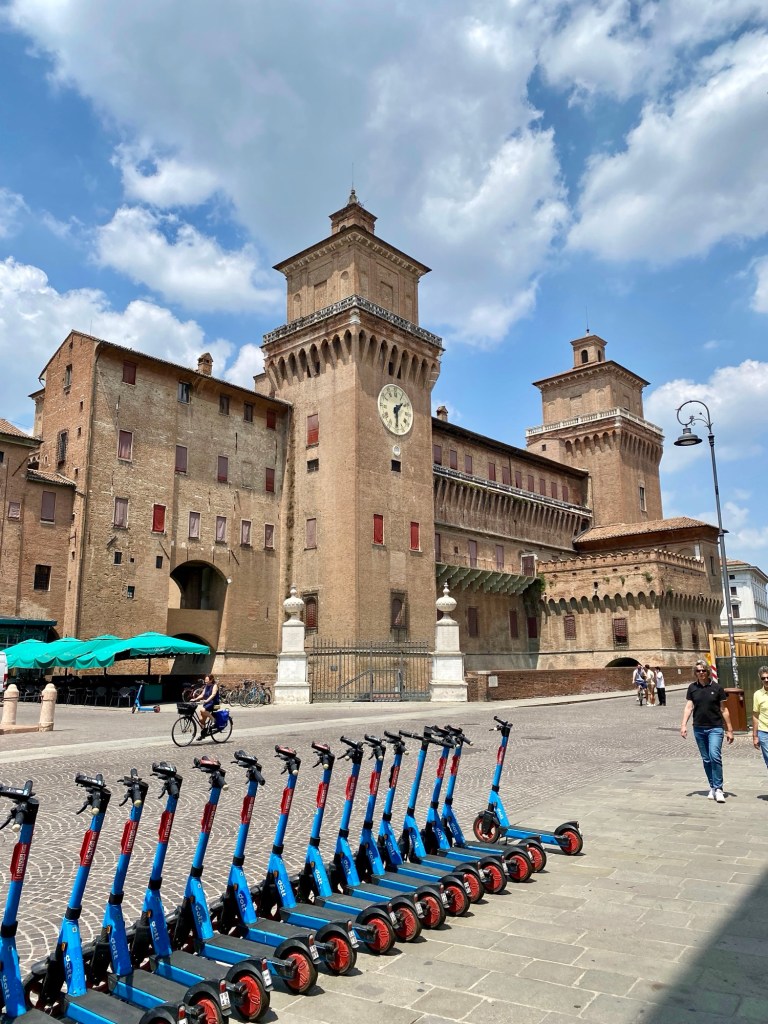
You can’t visit Ferrara and miss the palazzo that was home to the Este dynasty, at least from the outside. It is huge and takes up a lot of space in the historic center. It’s make of red brick, for the area was lacking in stone that could be used for building. And, unlike most Italian former palaces, it is surrounded by its moat.
This castle was originally built as a fortress after 1385 when the local populations revolted against the Este family. Once dynastic power was established, the building then transformed into a Renaissance palazzo. It features 4 corner towers, the moat, drawbridges and elegant white stone balconies added in the 16th century.


 get back, lauretta!
Grandiose. A political folly, perhaps?
Did you scoot? Were you tempted?
No temptation. I like being whole. :-)