Boldini is one of the 19th century Italian painters par excellence, secondo me. I happen to like his style very much, but you might judge me when I tell you why. In his work, I see the precursor to John Singer Sargent’s work and HE is one of my favorite painters of ALL time.
But more on that later. First let’s admire the paintings by Boldini from the exhibition recently held in his hometown of Ferrara. You might recall that I made the trip there from Florence recently just to see this show. In 35 degree Celsius heat. Against my better judgment (because of the extreme heat).
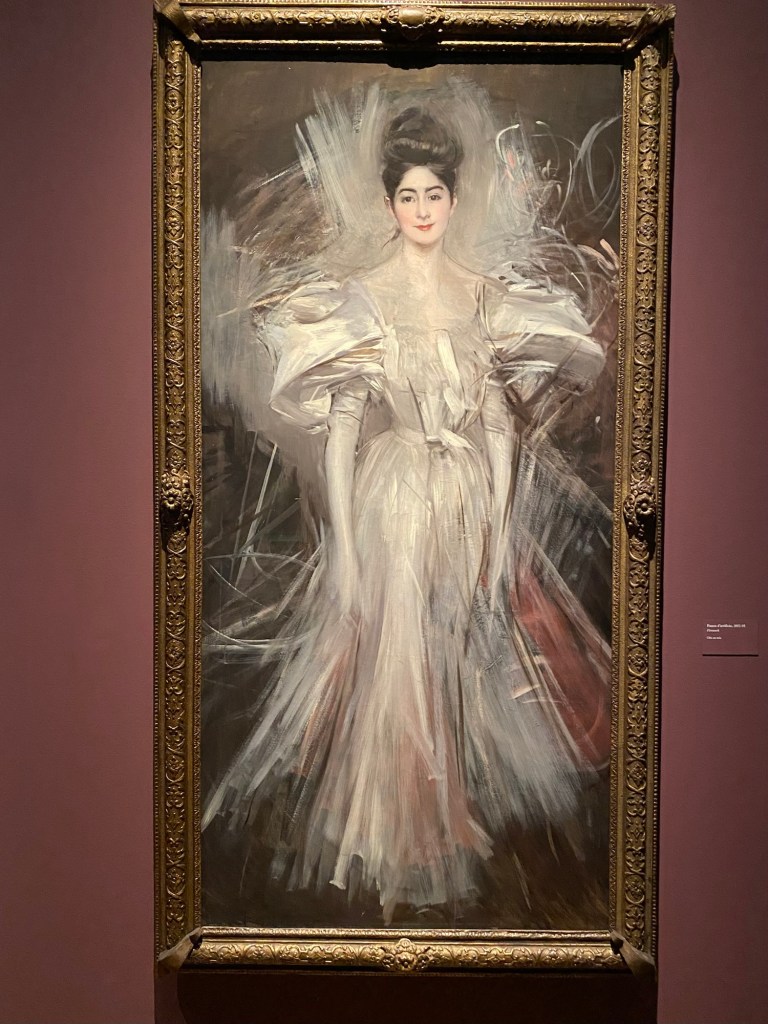
Boldini was born in Ferrara in 1842 and studied art in Florence where he was influenced by the Macchiaioli, a group of Italian painters who were precursors to Impressionism. Boldini is best known for his elegant and dynamic portraits, especially of high society figures, mostly women, which earned his great fame during the Belle Epoque period in Paris where he spent most of his career.


Boldini was nicknamed the “master of the swish” due to his distinctive flowing and energetic brushwork, which brought a sense of movement and vitality to his portraits. His style combined naturalism and impressionist influences with a modern, theatrical flair, making him one of the most fashionable portrait painters of his time.


Boldini lived in London for a while, gaining success with portraits of English aristocracy, before settling permanently in Paris in 1872. There he became a central figure in the artistic and social circles, painting portraits of many prominent cultural and social personalities. His work captures the elegance and dynamism of the late 19th and early 20th century society.
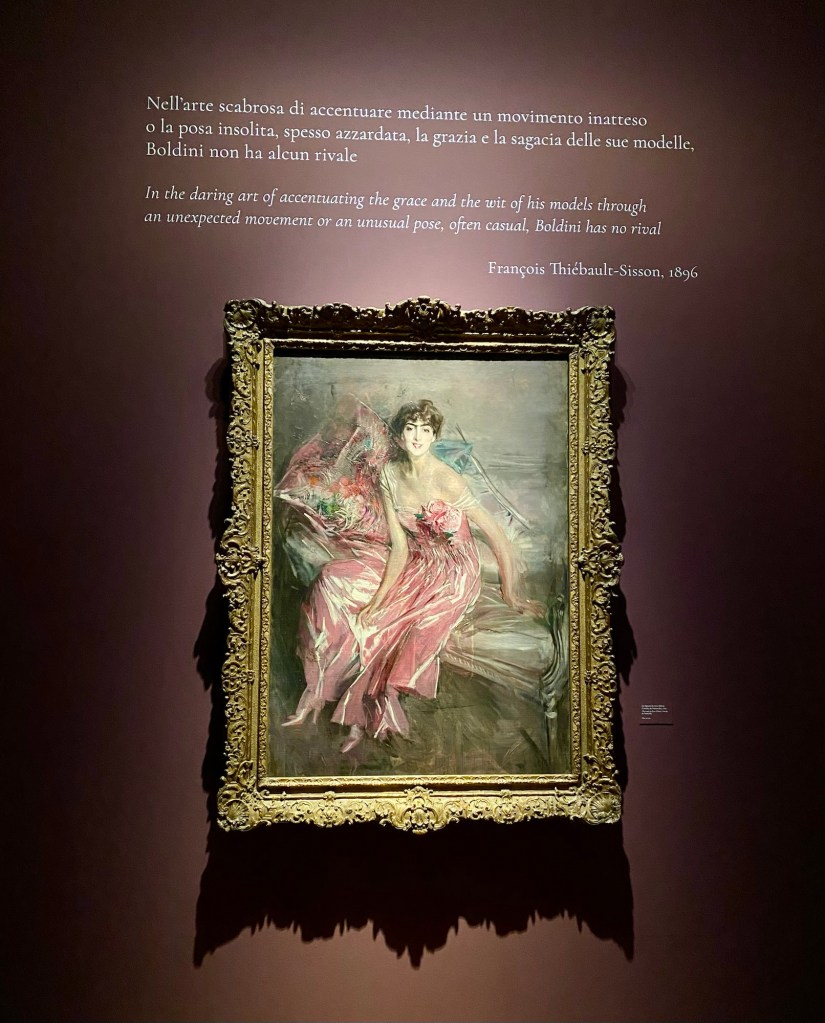
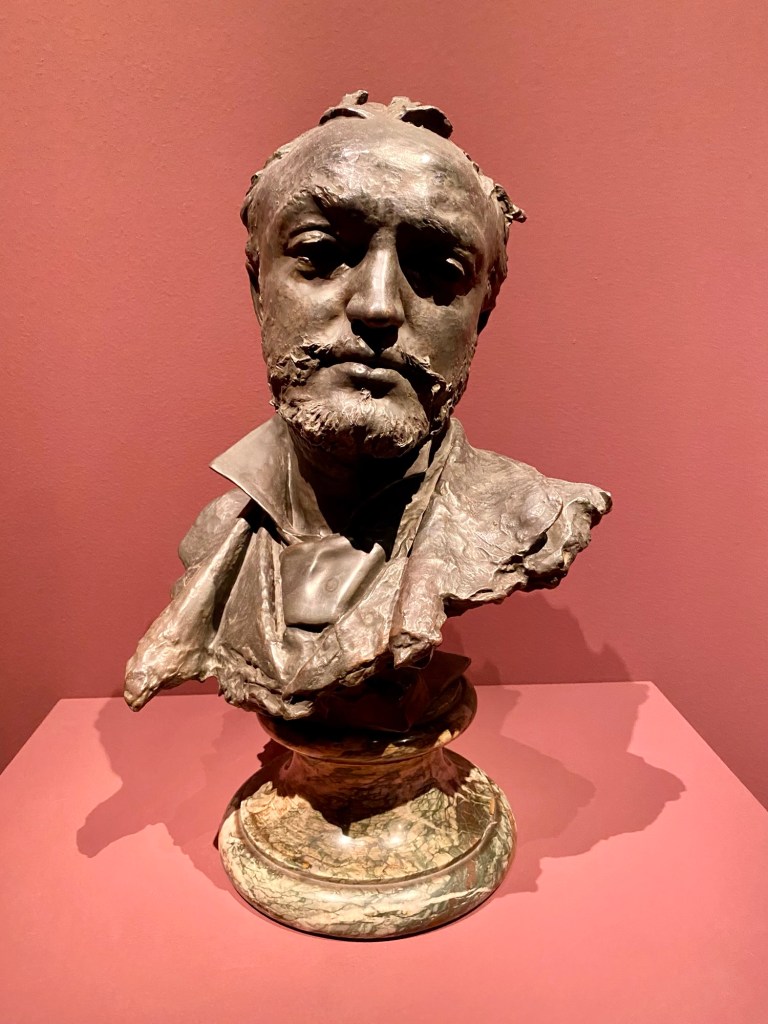

In addition to portraits, Boldini also painted landscapes, still life, and genre scenes. His legacy is preserved in major museums and collections, including a dedicated museum in Ferrara. He died in Paris in 1931.
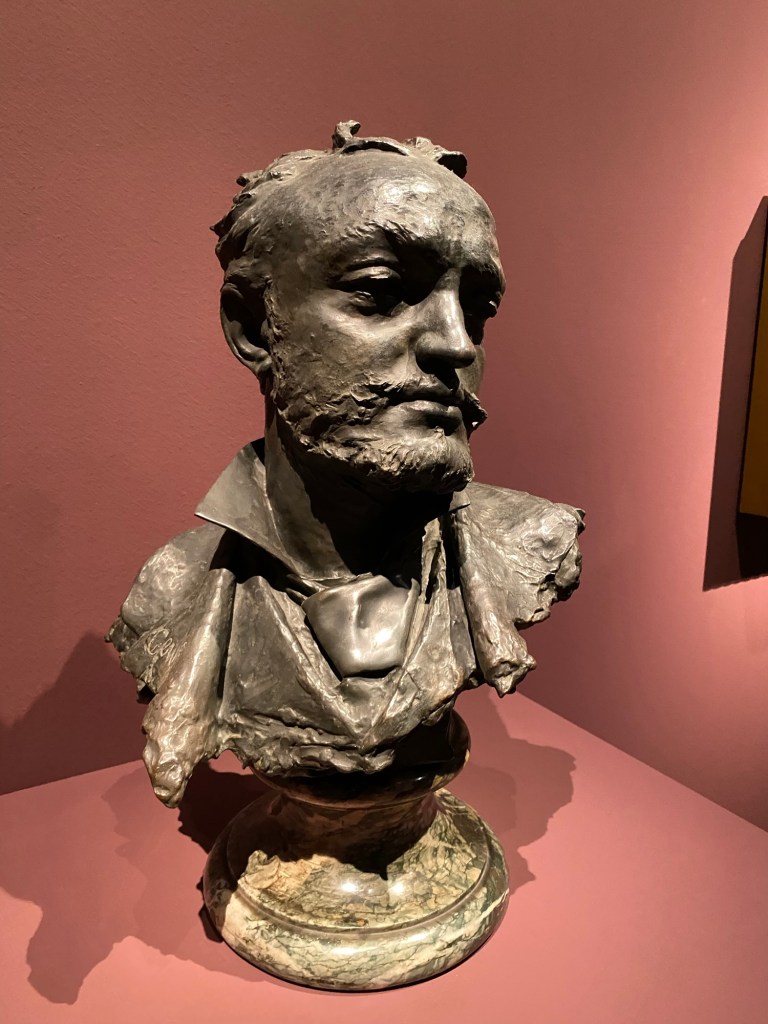
The relationship between Boldini and Sargent was one of close friendship and artistic exchange, especially from the late 19th century into the early 20th. They likely met in Paris in the late 1870s or early 1880s, possibly introduced by their mutual friend Paul Helleu. Both painters moved in the same elite social circles and often painted the same high-society clients, such as Consuelo Vanderbilt.
Boldini was about 14 years older than Sargent and obviously influenced his style. You can tell by studying Sargent’s works that he picked up some stylistic techniques from Boldini. Their friendship was marked by mutual respect and admiration, with Boldini painting at least 3 portraits of his younger friend, including a famous one from 1890 that highlights Sargent’s commanding presence and filled with Boldini’s dynamic brushwork.
Below is one of Boldini’s portraits of Sargent. Could you not see this gentleman appearing in the homes of the current HBO series, The Gilded Age?

This small painting from c. 1890 is a vivid testament to the friendship and mutual admiration between these two leading portraitists of fin-de-siecle Paris. It captures Sargent, standing tall with a commanding presence. Boldini’s characteristic frenetic brushstrokes are featured in the background and his strong, linear composition forms Sargent’s posture, which great detail on his very artistic hands. Sargent’s vividly red cravat draws the eye to the painter’s face.

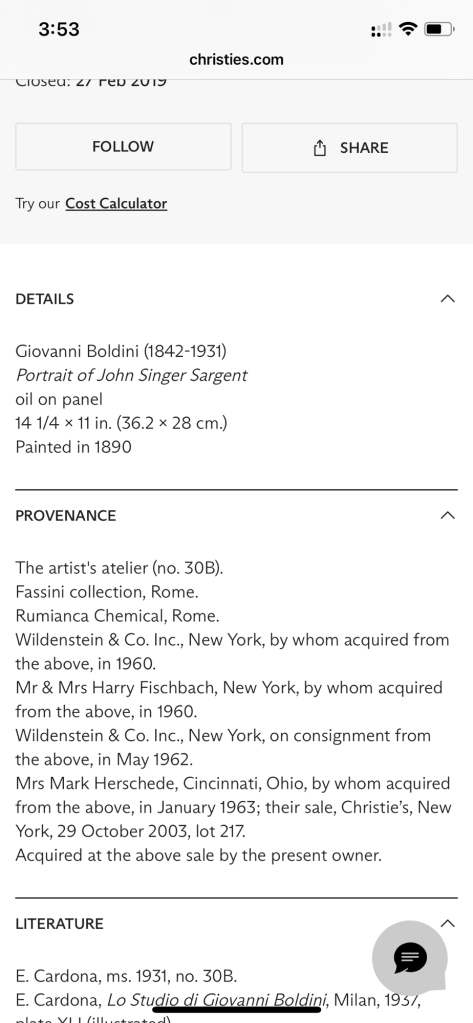

Yale University owns a small study of Sargent by Boldini, which I reproduce from a screenshot here.
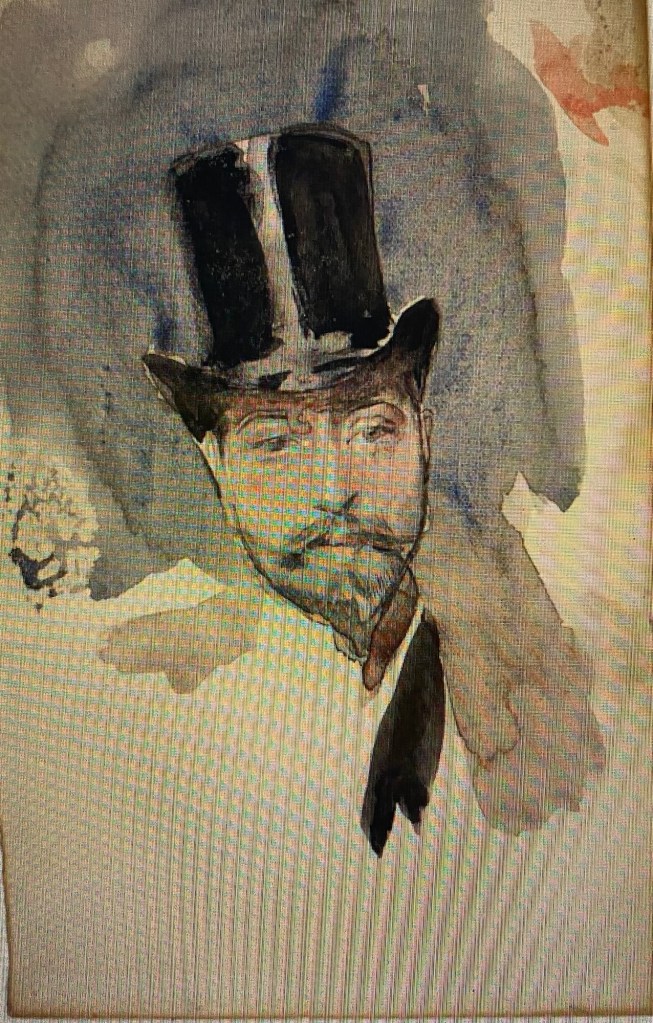
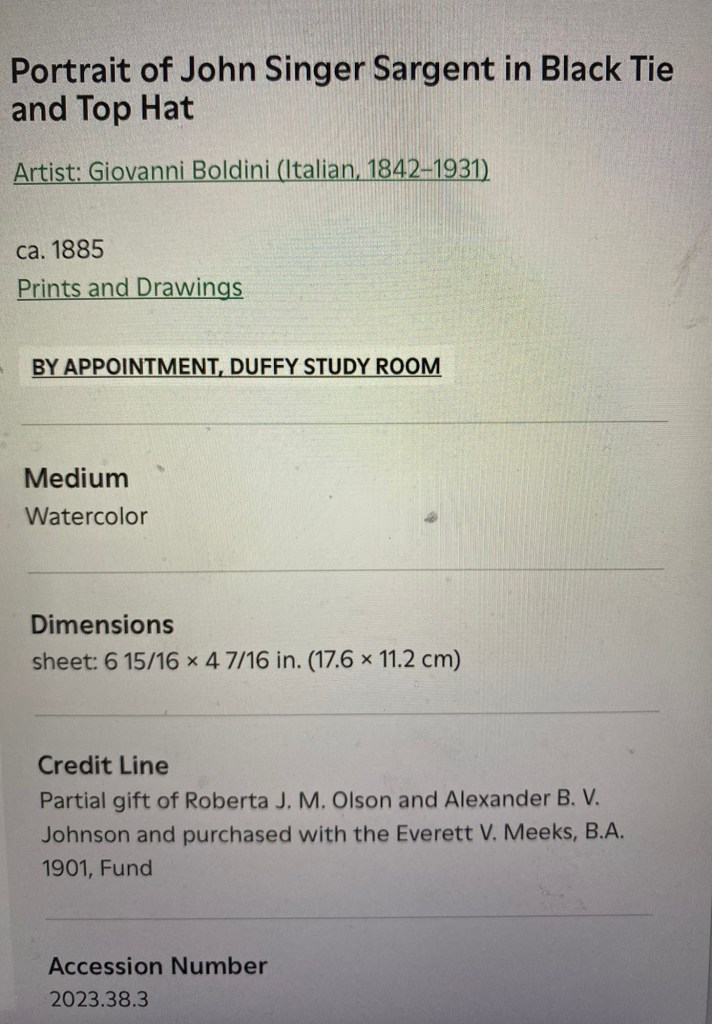
Here’s another work attributed by Boldini and said to represent Sargent.
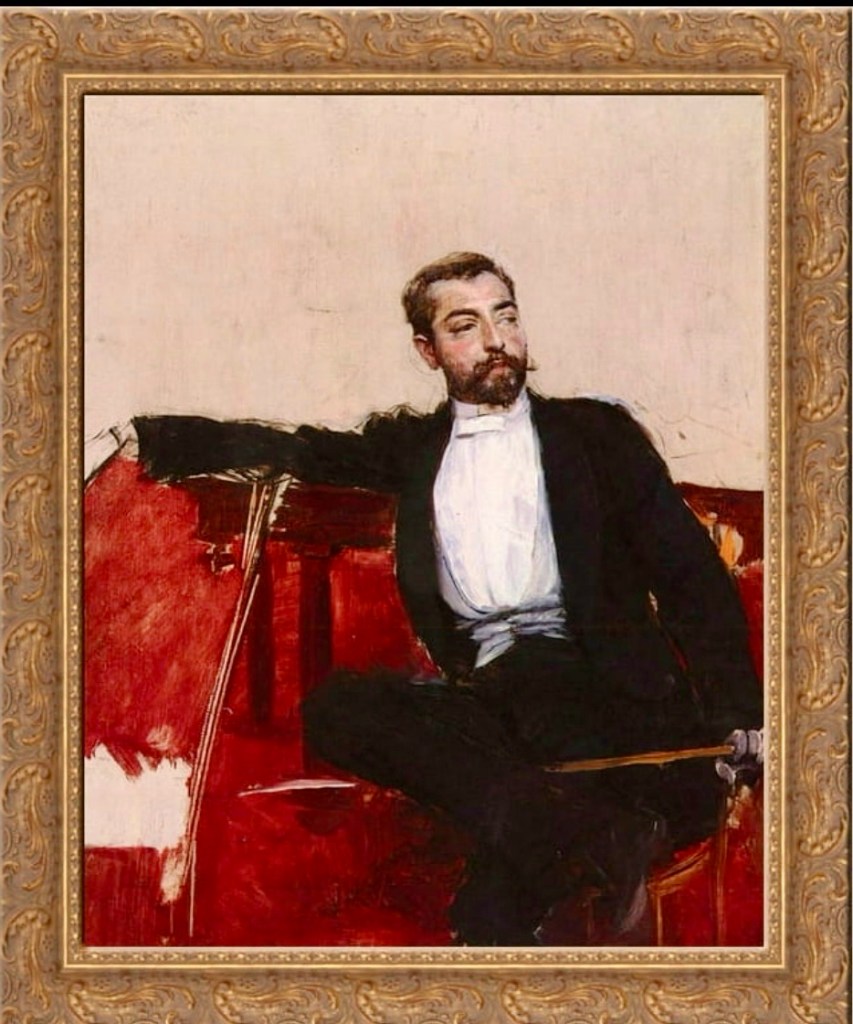
In 1886, Boldini took over Sargent’s Paris studio when Sargent moved to London, further cementing their professional and personal connection. They maintained contact over the years, sharing artistic ideas and social networks in Paris and London and both were leading portraitists of their era. They shared a prominent standing in producing the most famous portraits of the European world of the Belle Epoche.
 get back, lauretta!