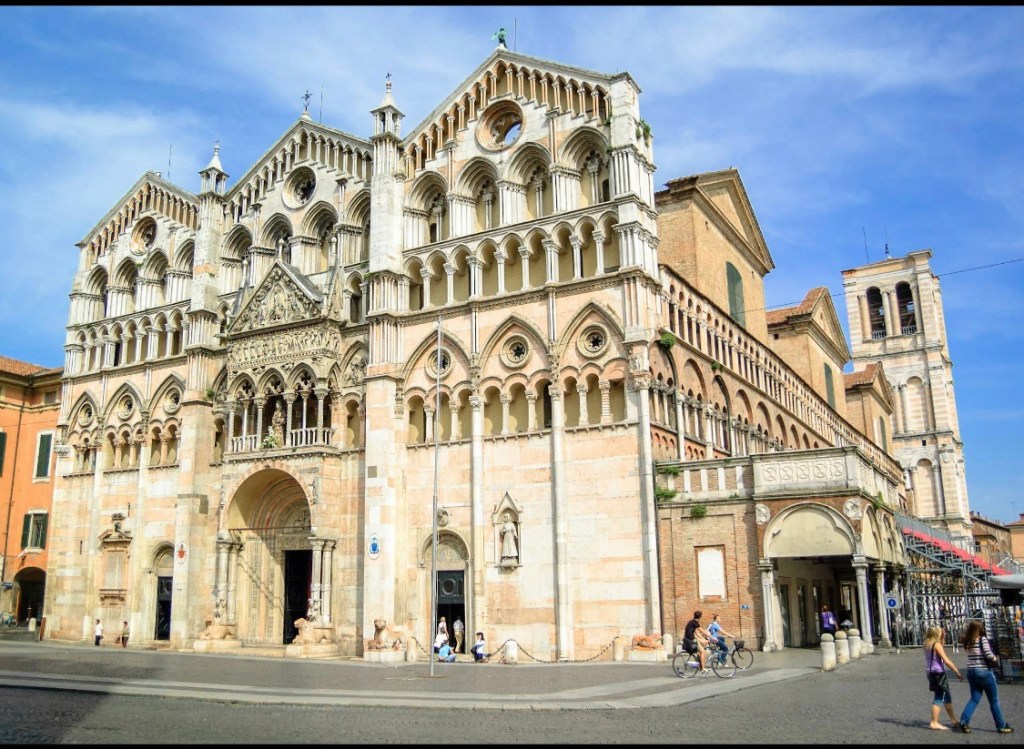
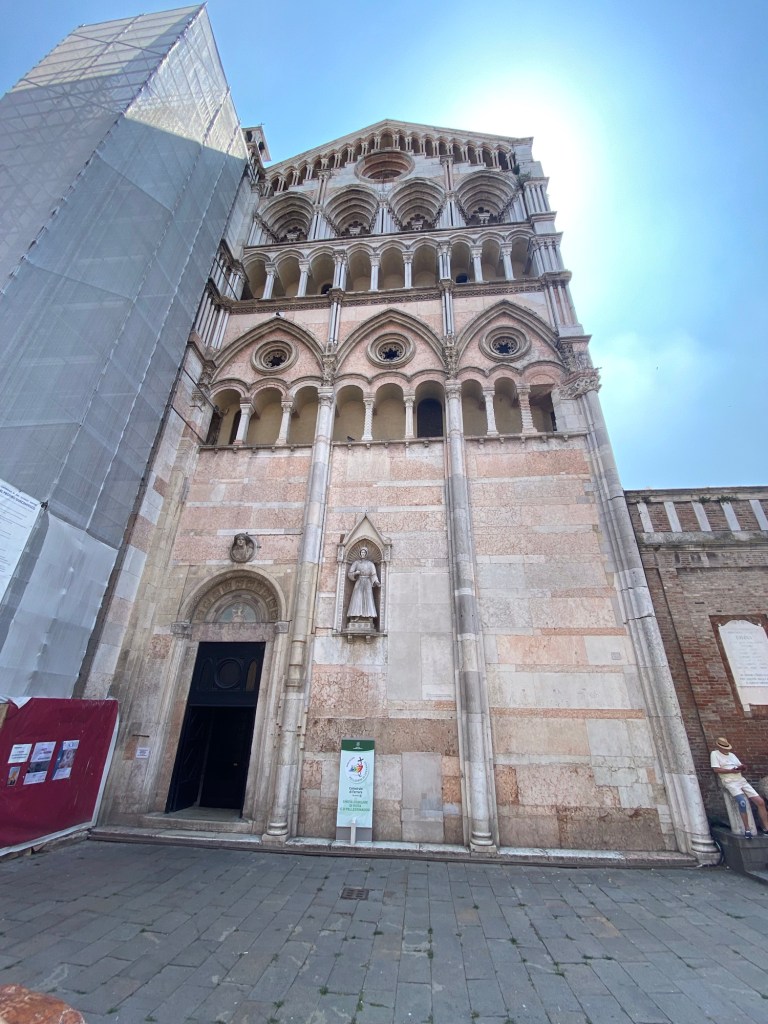
The Medieval cathedral of Ferrara, whose style blends Romanesque and Gothic, typically looks like this photo below. You can see its distinctive pink and white marble clad bell tower, or campanile, which is the tallest part of the back in this shot, on the right side.
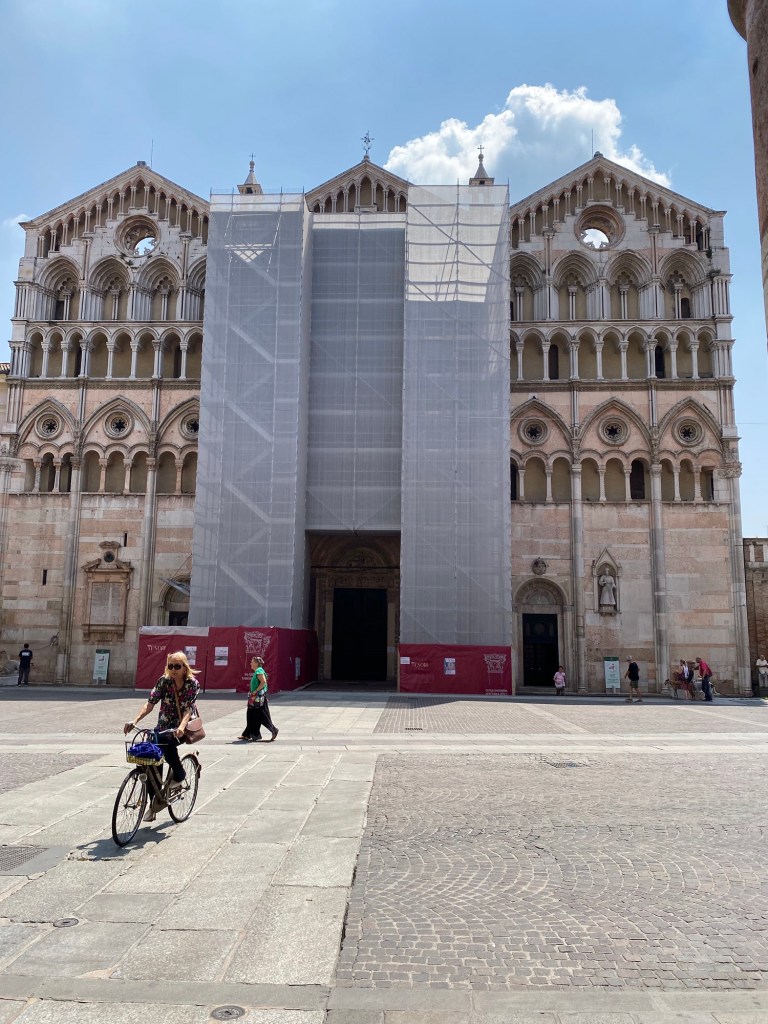
Typically, when I visited Ferrara recently, I found parts of the exterior of this august building under scaffolding. If you’ve spent any time at all in Italy, trying to see specific sights and not just what your tour guide shows you, you will know that scaffolding appears when you least expect or want it. It’s the story of research in Italy. I am often disappointed in this way, but at least I can console myself with the realization that I can return and try again. As indeed I will be doing with Ferrara. I am so grateful for that luxury.
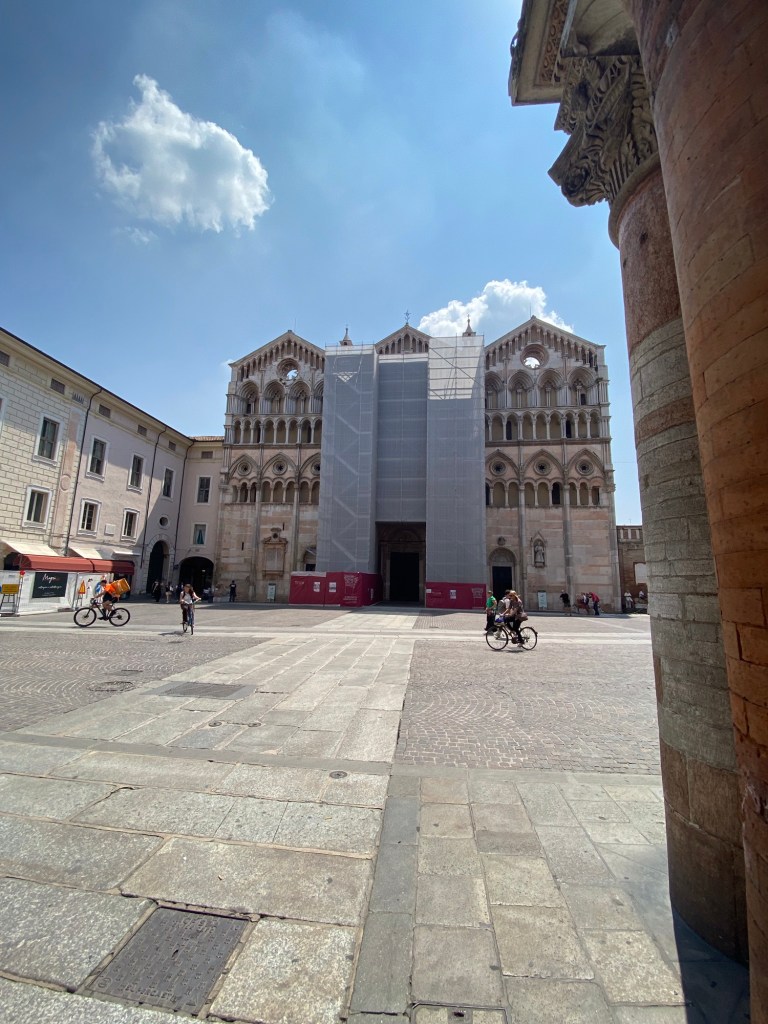
So, above and below are pix of how the cathedral appeared to me on my recent trip.
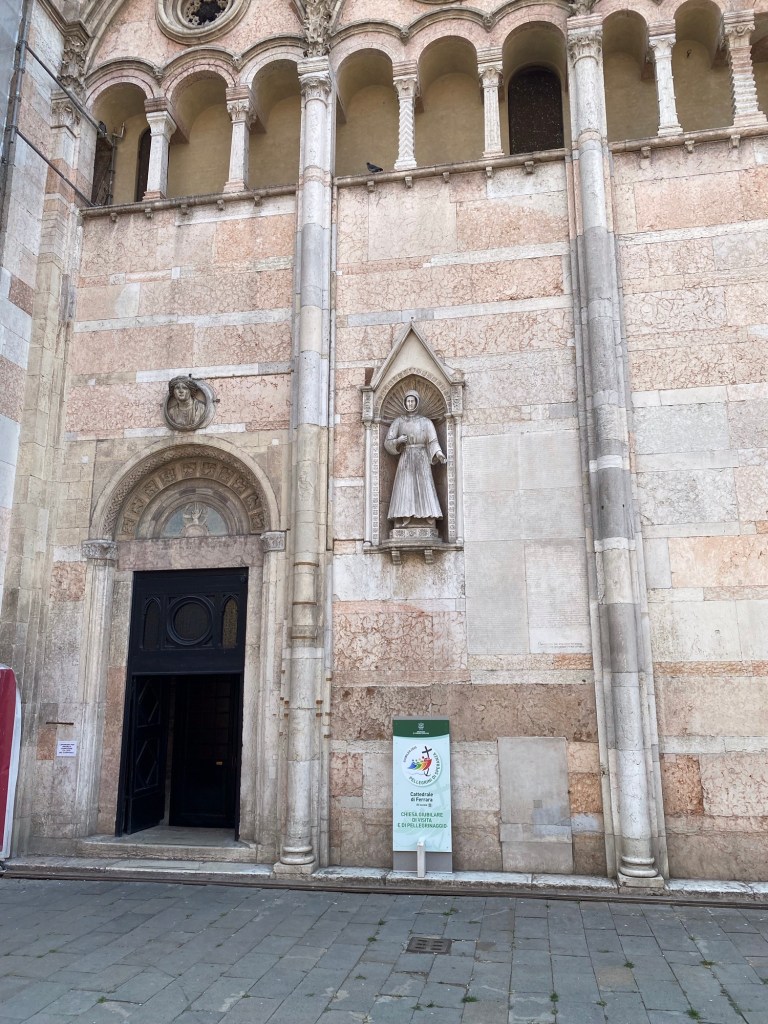
Below, I am zeroing in on the right of the front of the church.
The Cattedrale di San Giorgio Martire, which is the proper name for this most important church in Ferrara, stands as a remarkable testament to the city’s layered history and architectural evolution, offering a blend of of Romanesque, Gothic, Renaissance and Baroque artistry.
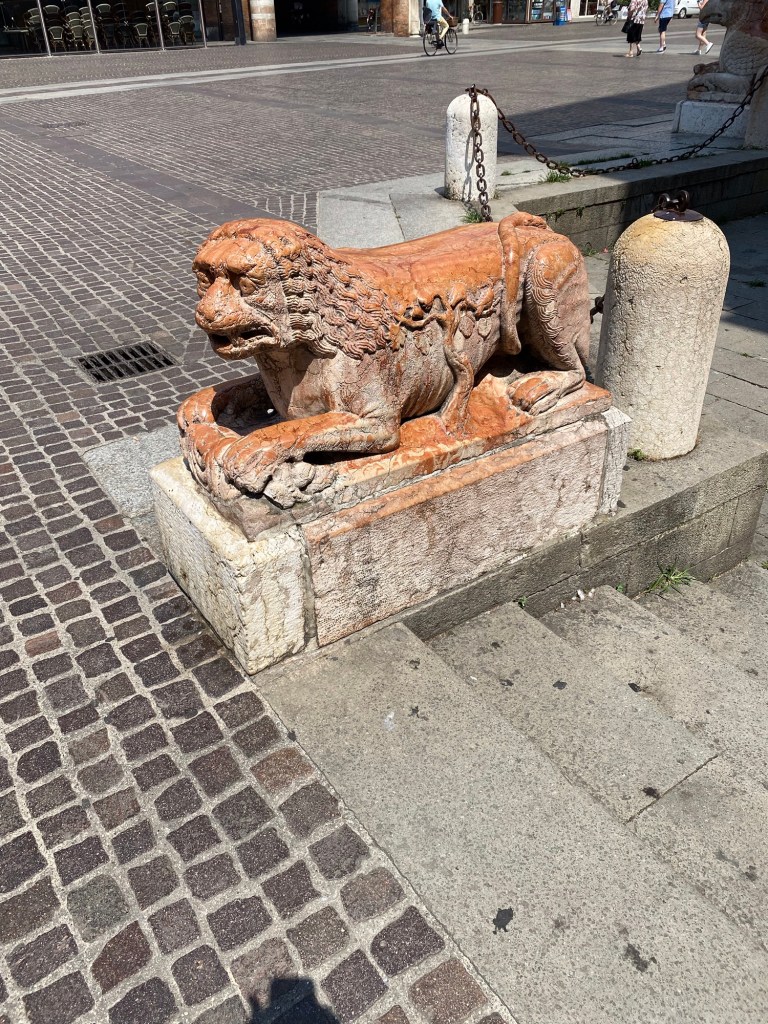
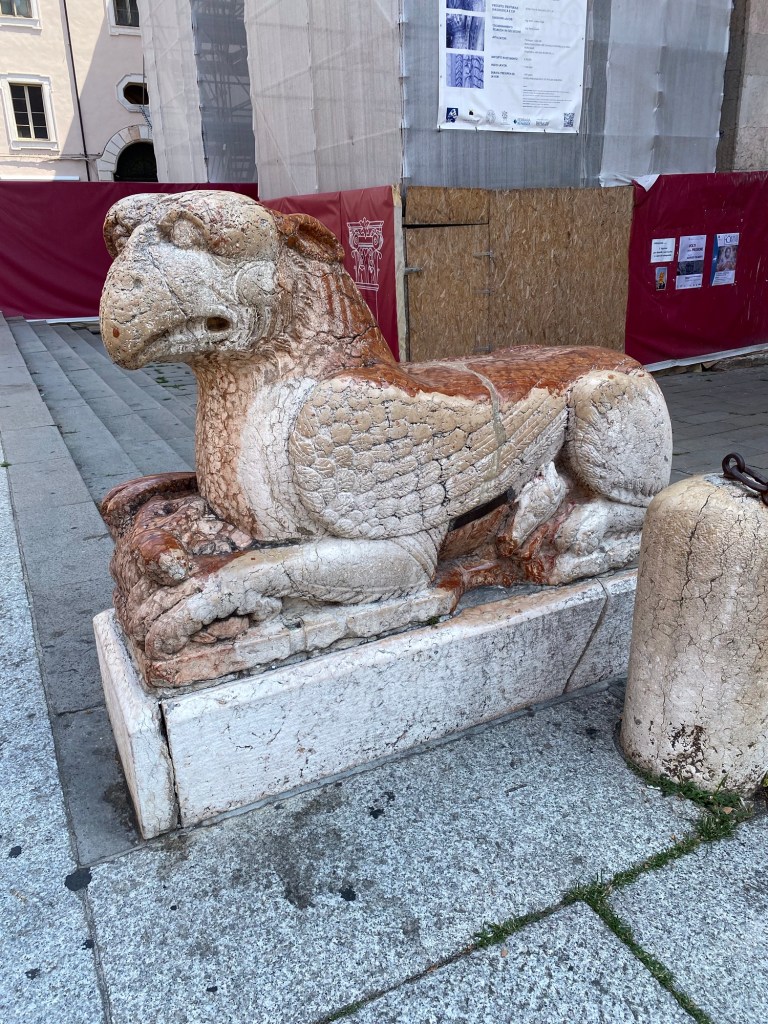
The following elaborately carved bas relief, depicting the saint to whom the church is dedicated, is over the far left entry to the church.

Below is a close-up of the distinctive pink and white marble clad bell tower as it normally appears.

The following are shots of how the bell tower appeared when I was last in Ferrara.


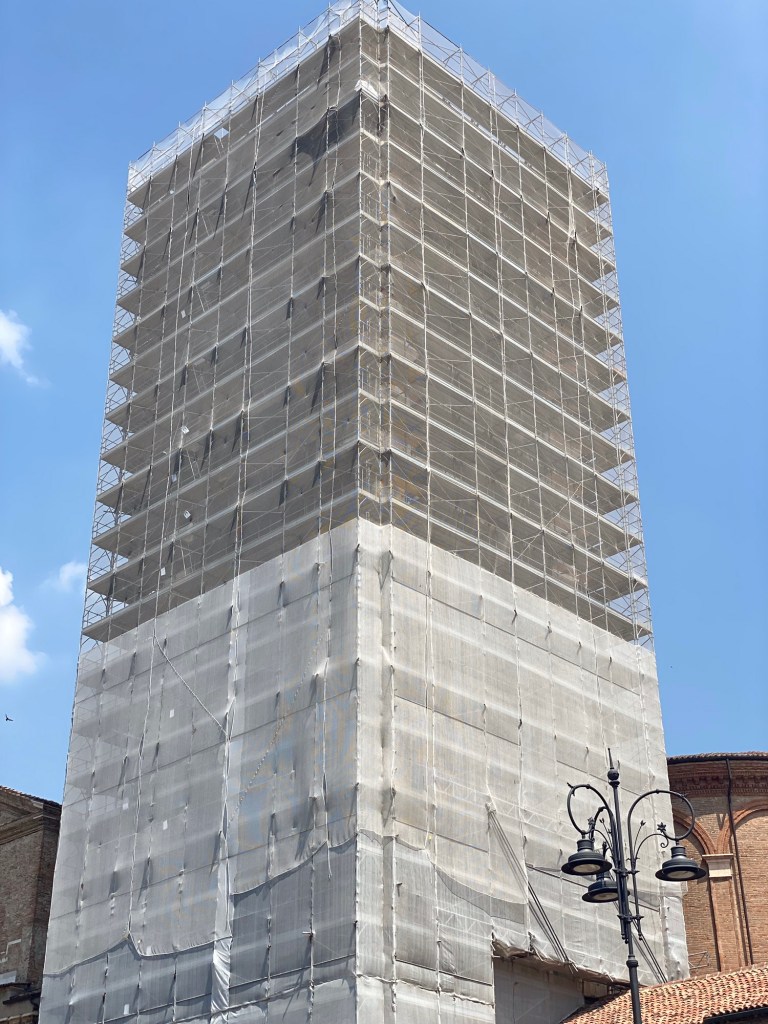
The campanile is said to have been designed by Leon Battista Alberti and was left unfinished for reasons not fully understood. It was not uncommon for architectural projects to be left unfinished in Italy, however, and happened due to political or financial difficulties, including the death of the patrons or conflicts. Alberti’s design was innovative and inspired by Roman triumphal arches and classical proportions, including the golden ratio.
I will have to wait until my next trip to Ferrara to have a good look at this campanile.
Let’s take another look at the full shot of the cathedral. In particular, I want you to notice the arcaded loggia that appears in the exposed side of the church, running along the same side as the bell tower.

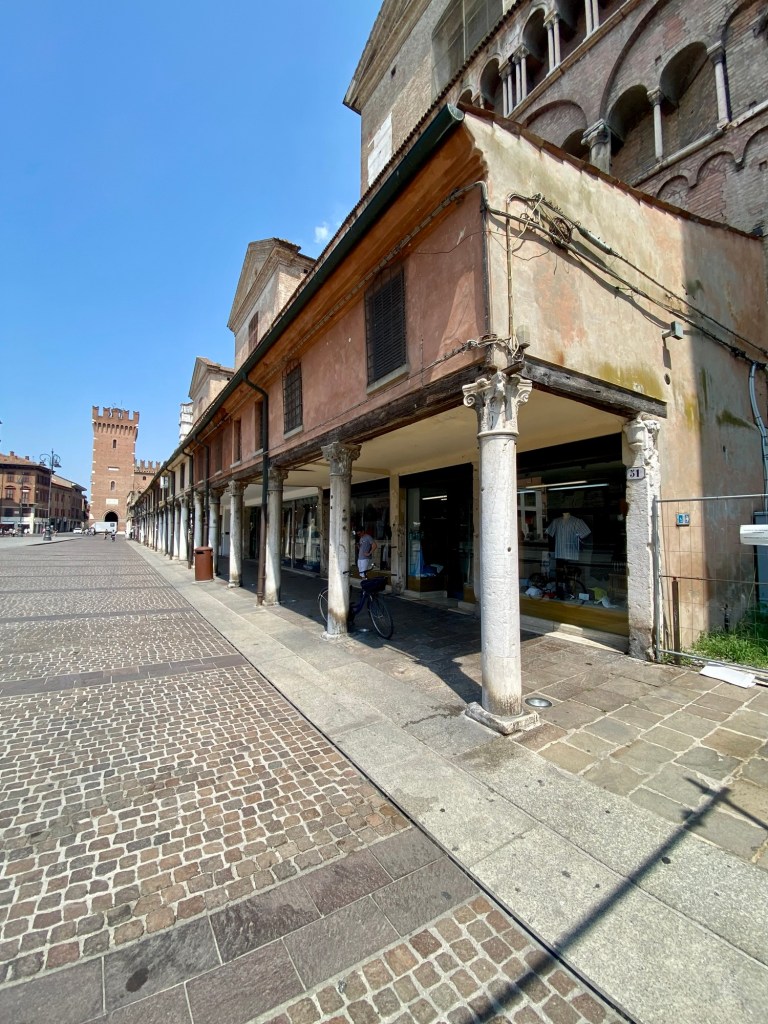
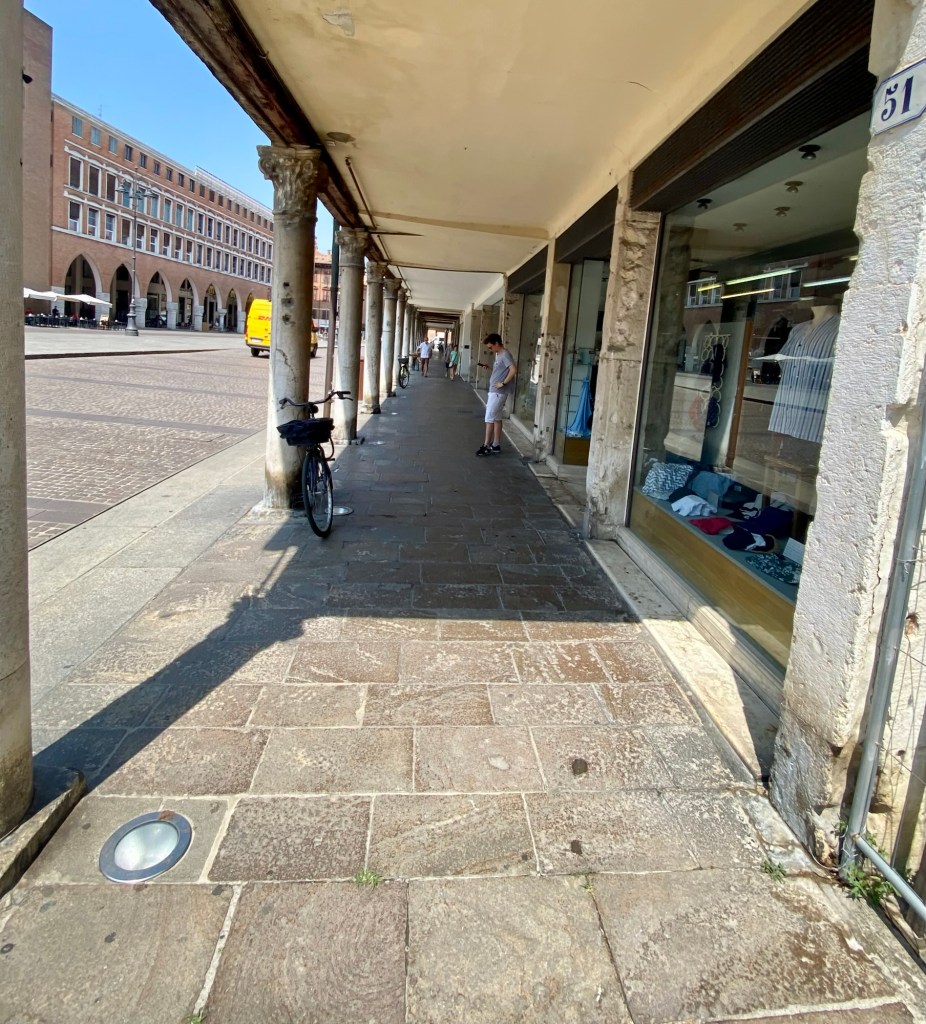
This entire side of the church was and is dedicated to commercial activities; it is lined with shops, some very au Courant in 2025 and snazzy, and you can tell by the architecture of the shops themselves as well as the blind loggia that runs above that this aspect of the building is as old as the church itself.
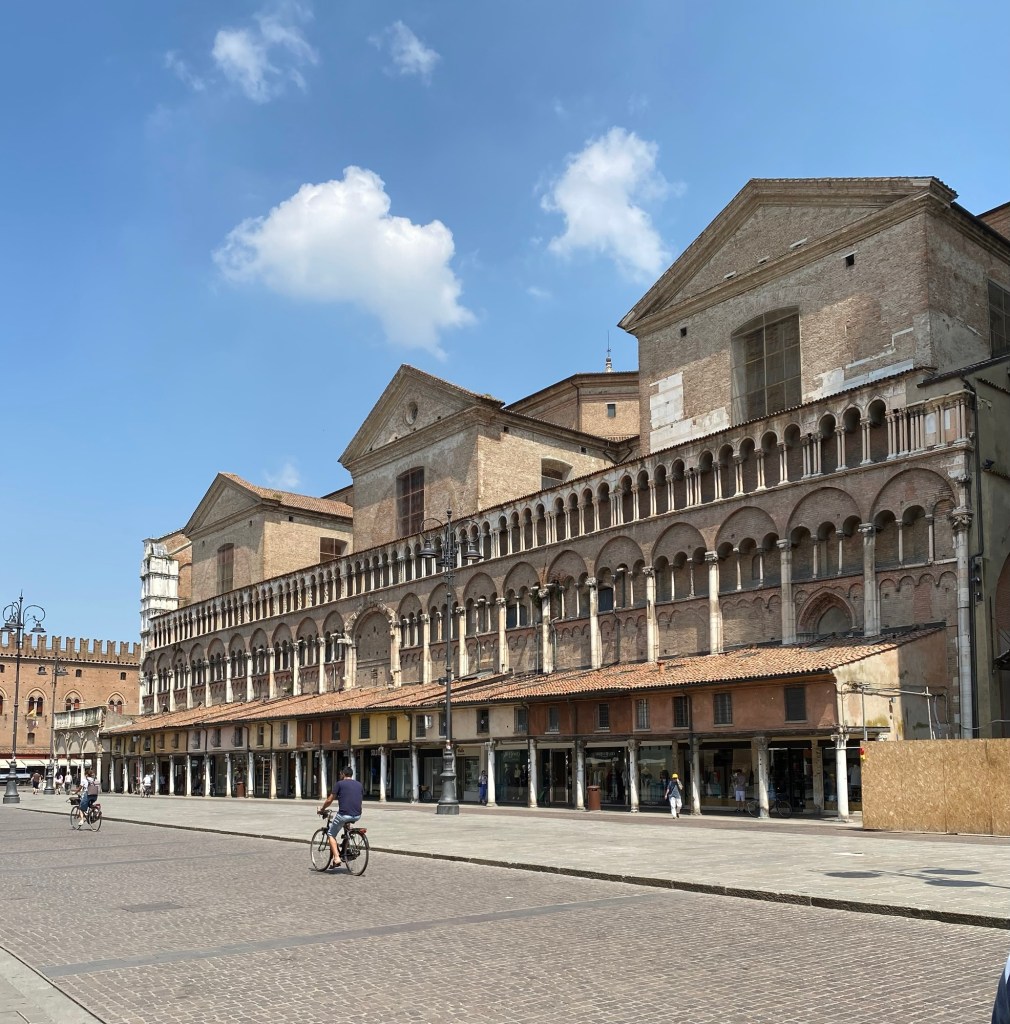
I’ve only seen this use of church walls for commercial space in one other place: in Mantova (Mantua) the same thing occurs on the side of the Basilica di Sant’Andrea. If you look at a map, Ferrara and Mantua are only 56 miles distant. Stylistic similarities are not that surprising, given this closeness. And Alberti was active in Mantua as well, so the possibility of his working in Ferrara is also not surprising.

Below are the shots I took of the shopping arcade attached to the cathedral in Ferrara.

Now, back to the cathedral itself. I didn’t take any shots or videos of the interior of the church because it has been completely redone in a pastiche of the Baroque style, and that is not of interest to me. Pure Baroque, yes. Pastiche Baroque, ho hum.
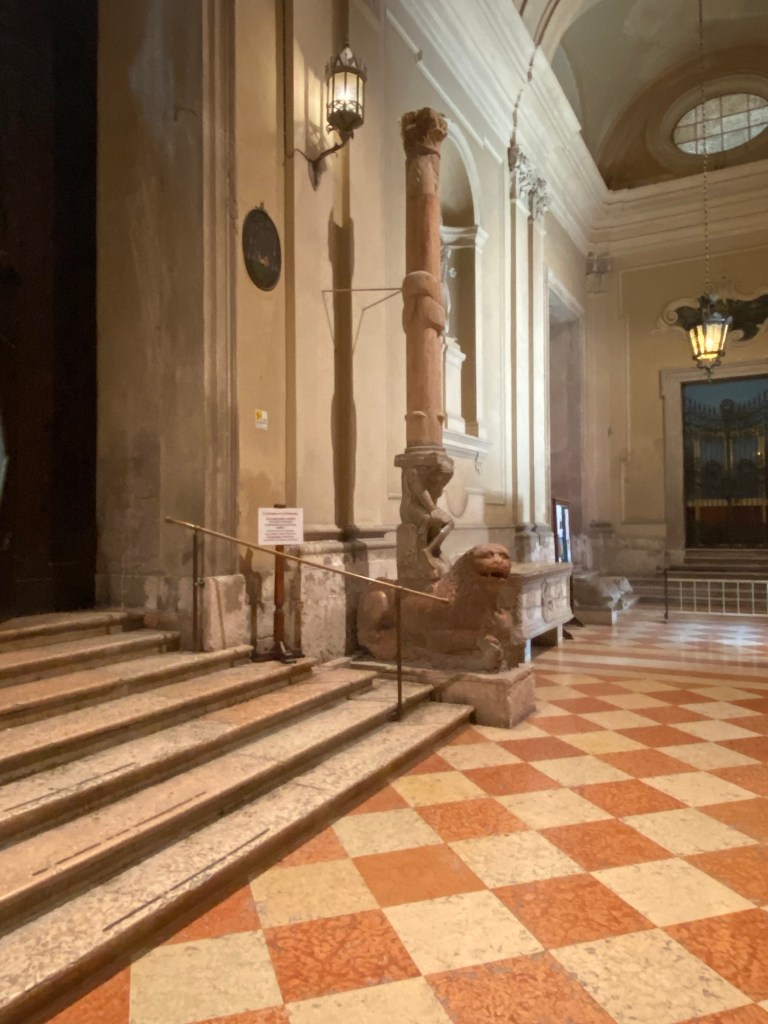
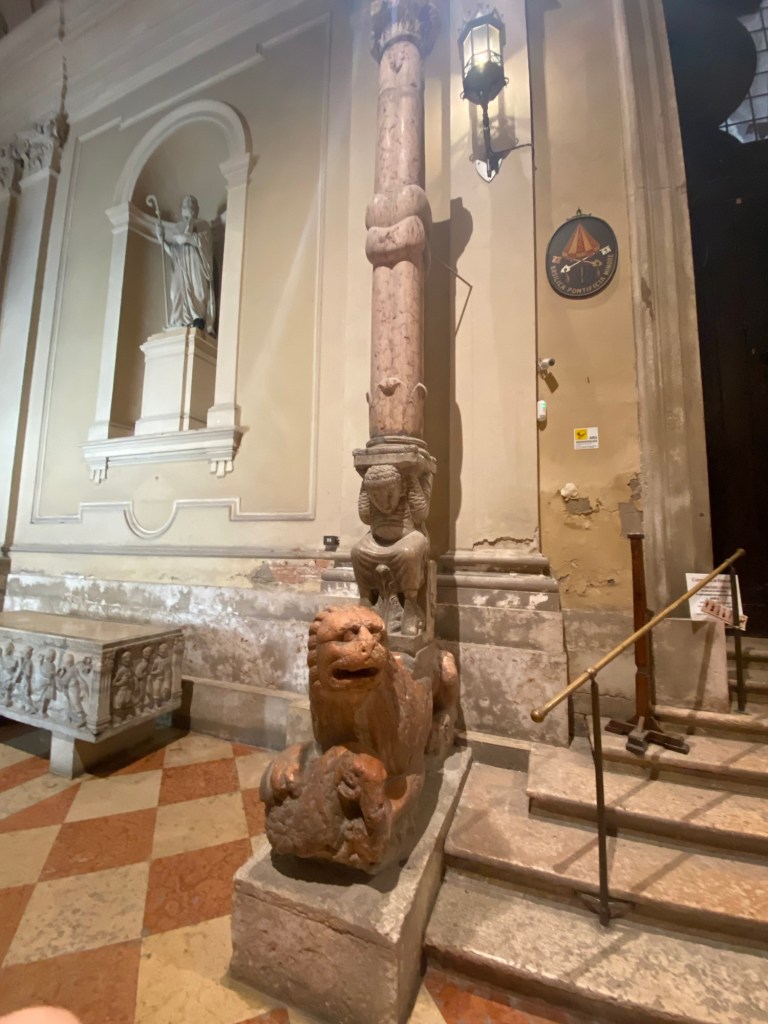
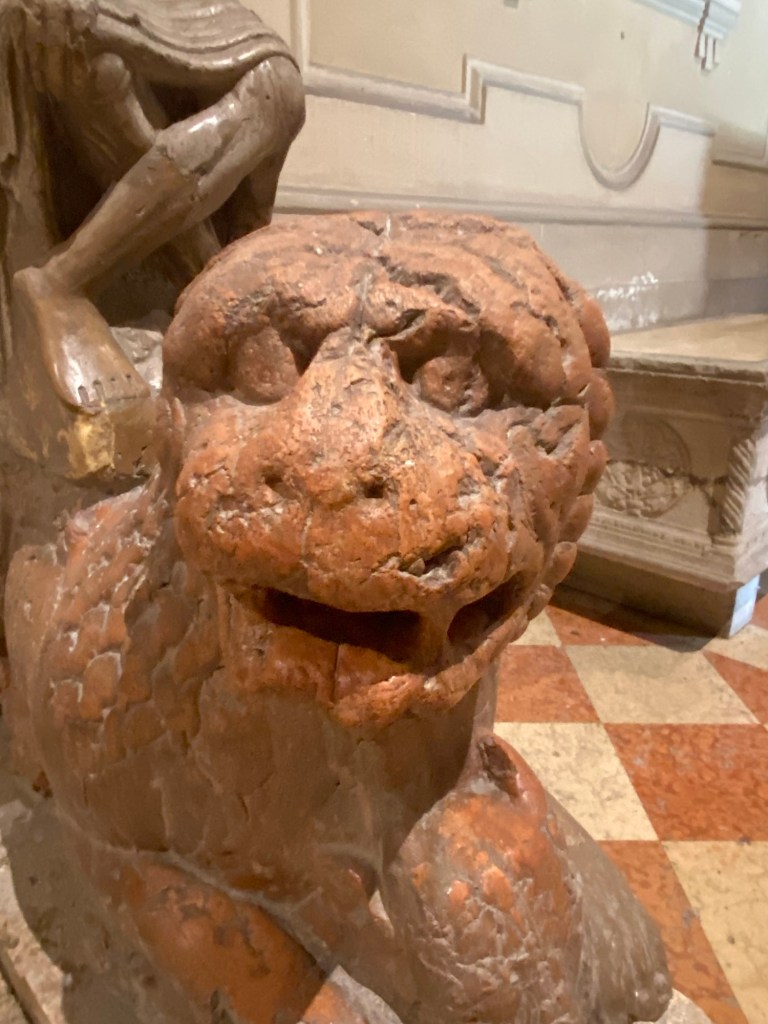
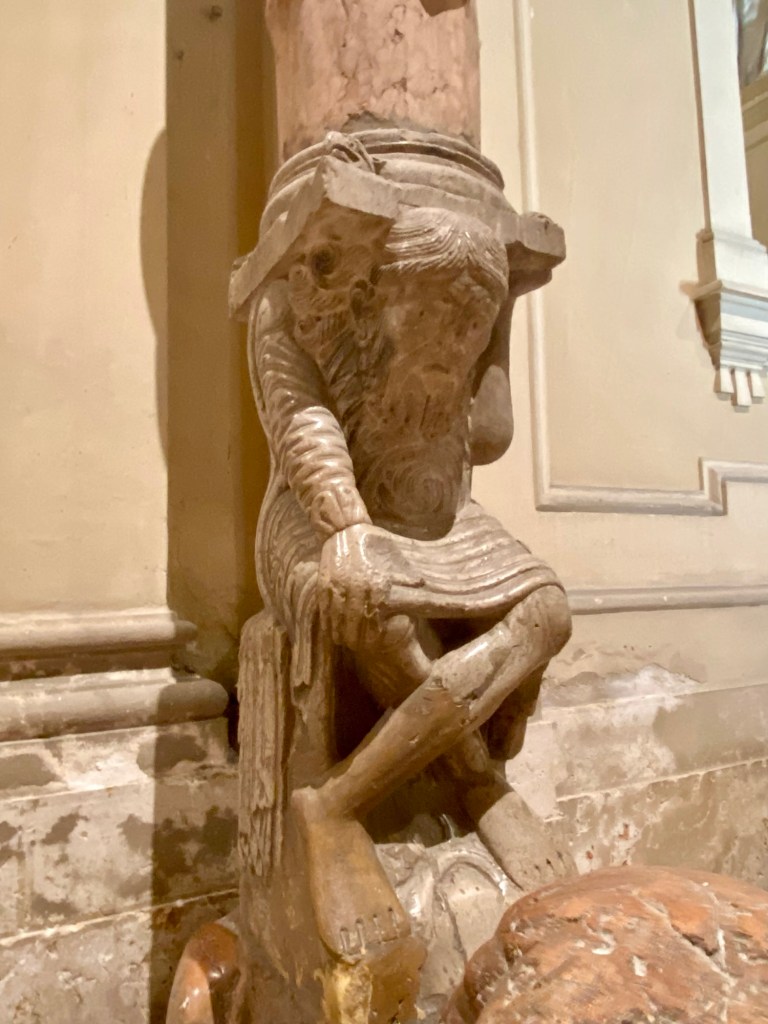
But, what is interesting is that Ferrara has kept aspects of the Medieval entrance to the church and housed it in a covered vestibule attached to the front of the church. The next few shots show this entryway and its sculptural adornment as currently arranged. It is badly aged, but the “bones” are still there.


So, there you have my experience. I’ll be going back to Ferrara and hope to see the campanile and facade revealed again! Buona giornata.
 get back, lauretta!
Even the scaffolding is done tastefully.
One lone pigeon.
Yes! Happy summer Michael! I hope you are enjoying the season.