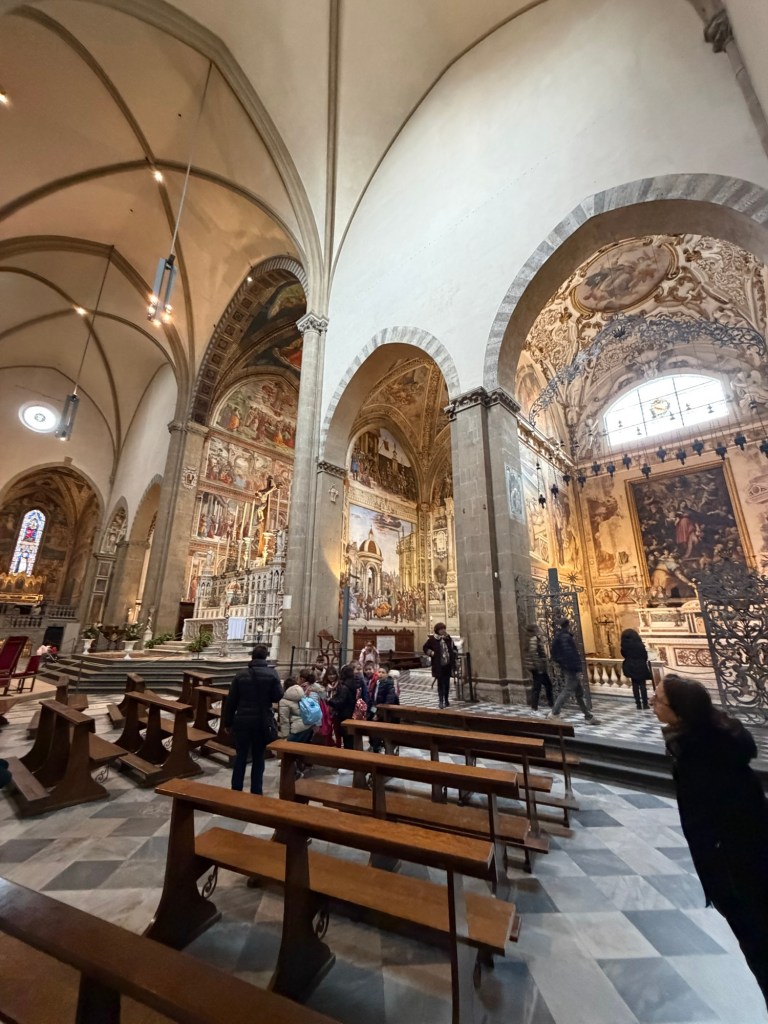
On my recent visit to the basilica, I took a long look and some photos in particular of The Bardi Chapel (also known as the Chapel of San Gregorio, the Chapel of the Sacrament, or, since 1715, the Chapel of San Domenico) is the first chapel on the right when entering the transept, situated between the Tornabuoni Chapel and the Filippo Strozzi Chapel.
Nothing about Italian art history is easy, because it is so old and there have been so many changes, as you can see just in the naming of this chapel. If you can read this post and not become confused, I congratulate you. I was often confused when writing it!
There is another, more famous Bardi Chapel in Florence at the basilica of Santa Croce, but this post is about the newer (relatively speaking) chapel at SMN. The Bardi was an important Florentine family.
The 13th Century and Duccio
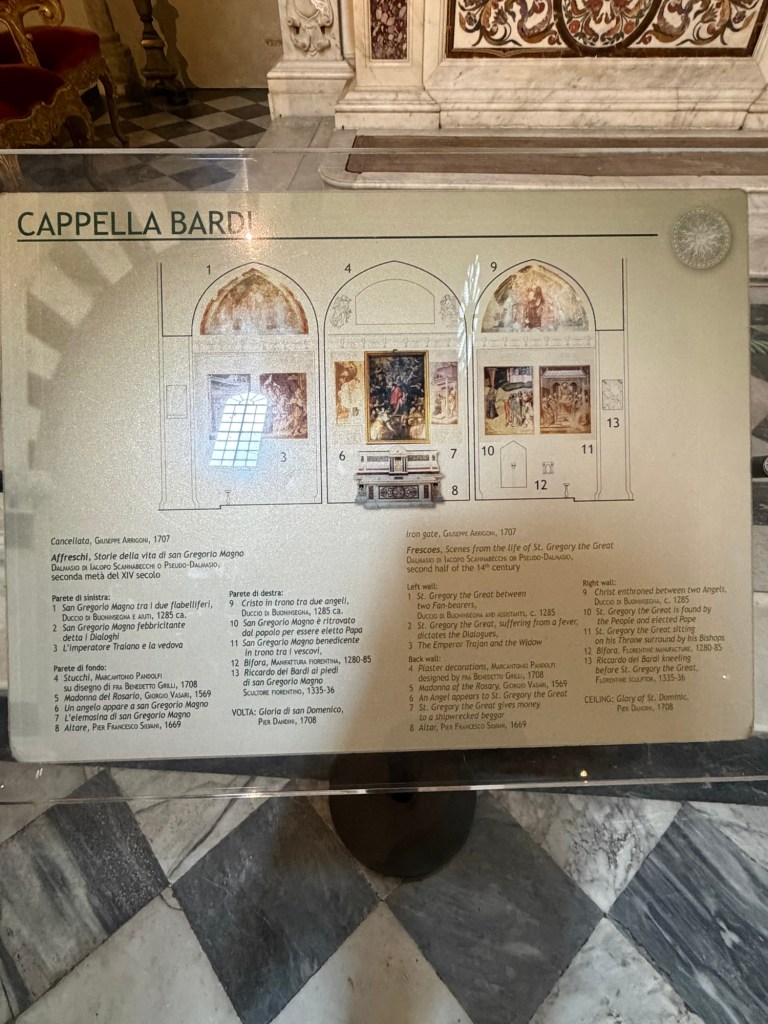
This sacred space, so important because of its placement near the altar, was originally the chapel of the Compagnia dei Laudesi (Laudesi Company) in the 13th century and was dedicated to Saint Gregory the Great. It was that company which commissioned Duccio di Buoninsegna to decorate the chapel with frescoes. The most visible remains of these frescoes, dating to around 1285, are present in the lunettes at the top of the two side walls and depict Christ among angels (right) and Saint Gregory the Great enthroned between two palms (left).
Incidentally, it was also The Compagnia dei Laudesi that commissioned Duccio di Buoninsegna to create the famous Rucellai Madonna, an altarpiece so called because it spent a long time in the nearby Rucellai Chapel before arriving in the Uffizi Gallery, where it remains today.
The mullioned window in the masonry on the right wall dates to around 1280-1285 and predates the current church itself (it is perhaps part of the ancient church of Santa Maria delle Vigne).
The Patronage of the Bardi Family and the Fresco Cycle
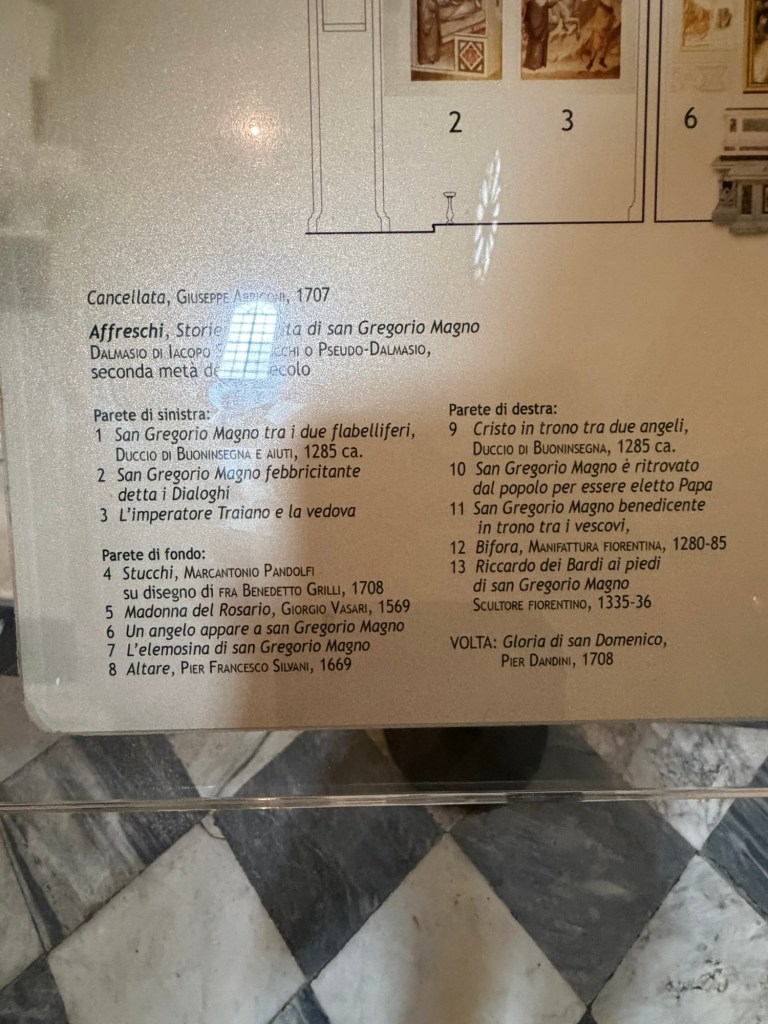
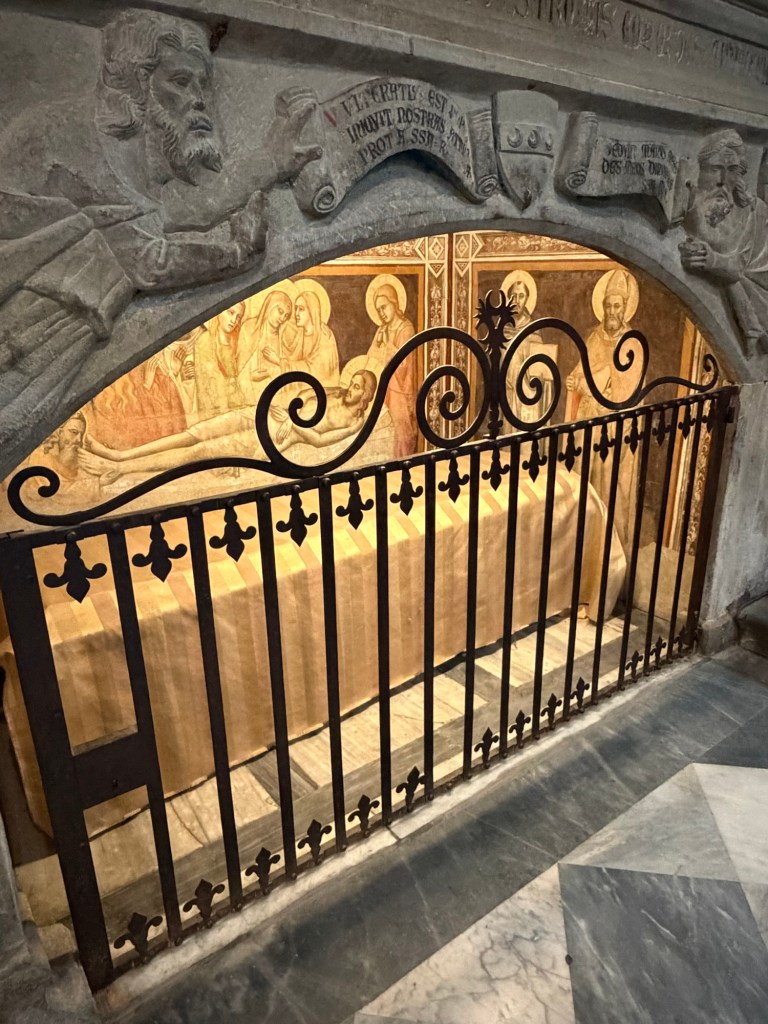
Patronage of the chapel passed to the Bardi family around 1335, as evidenced by a bas-relief by an anonymous Florentine sculptor on the right pillar, depicting Riccardo de’ Bardi kneeling before Saint Gregory the Great. Under the family’s patronage, the fresco cycle still visible today, featuring scenes from the Life of Saint Gregory the Great, was created. The cycle, dating to the second half of the 14th century, is attributed to a painter in the style of Dalmasio and generally referred to as Pseudo-Dalmasio.
The frescoes, from left to right wall, depict the following scenes:
Gregory dictating the dialogues while feverish,
Emperor Trajan and his widow,
Gregory’s meeting with the angel,
Gregory’s almsgiving to the shipwrecked man,
Gregory’s discovery by the people for his election as pontiff,
Gregory blessing enthroned among the bishops.
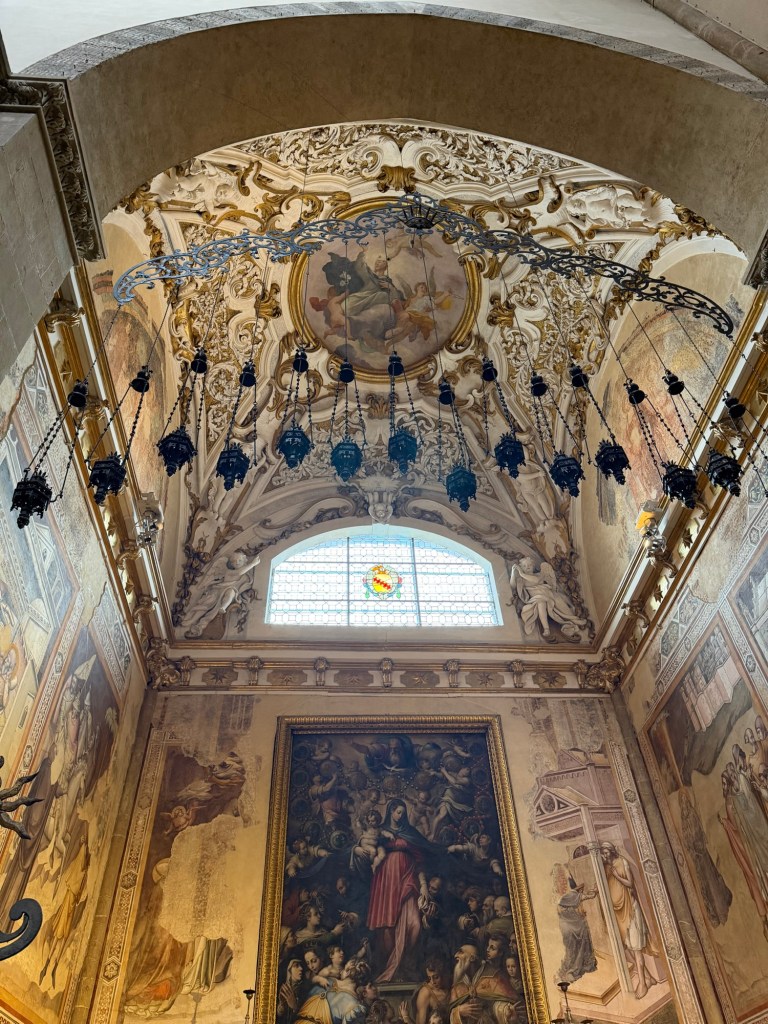
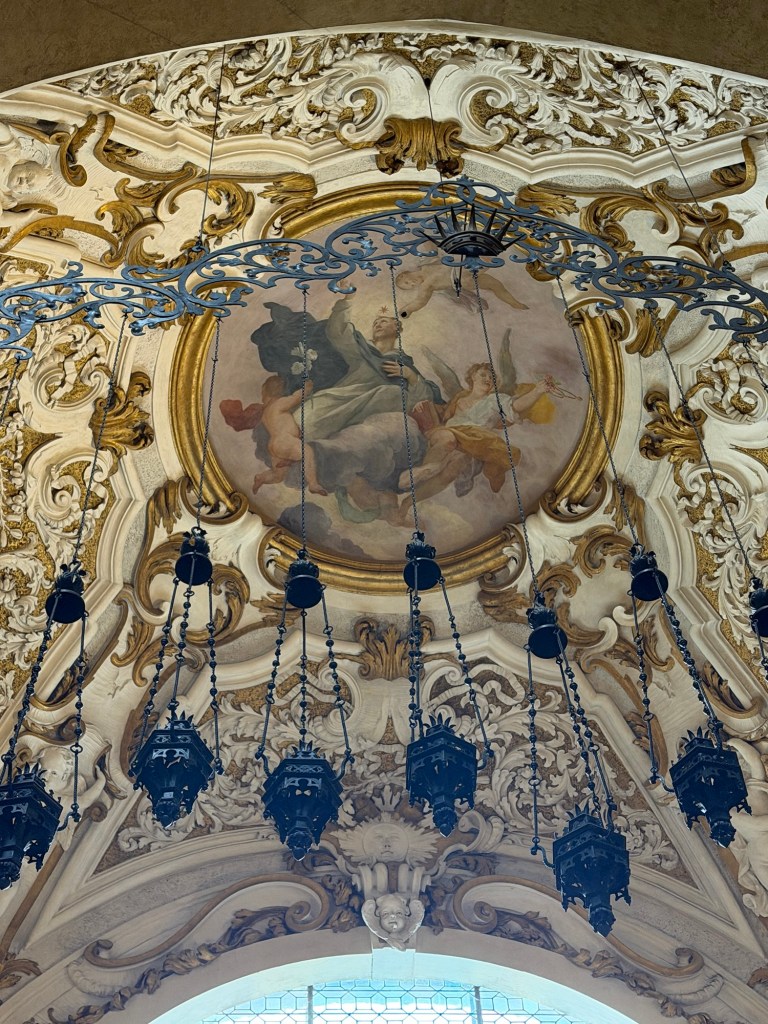
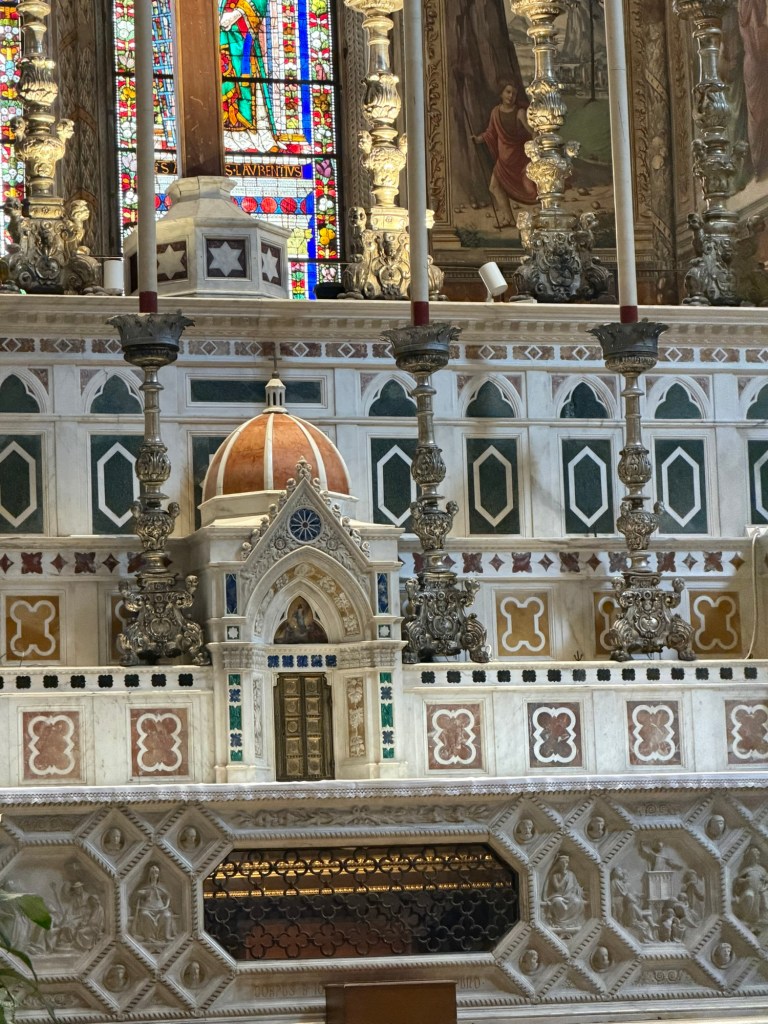
This chapel in particular has always attracted my attention because of the large number of grand sensors that hand along the front of it.
Since the 18th Century
At the beginning of the 18th century, the chapel was newly dedicated to Saint Dominic and a complete modernization program was implemented. This led to the creation of many canvases which hung on the back and side walls, although these have since been removed from their original locations. From this 18th-century redesign, however, the stucco decoration of the vault (by Marcantonio Pandolfi based on a design by Benedetto Grilli, 1708) remains, along with the fresco of Saint Dominic in Glory by Pier Dandini (1708).
Another testimony to this renovation program is the altar with its inlaid marble frontal, a 1669 work by Pier Francesco Silvani. However, it was only moved to this chapel in the 18th century, following the suppression of the Congregation of the Priests of the Most Holy Conception of Mary, which was located on Via de’ Servi. The altar contains the Blessed Sacrament. The gate is also from this period, to be precise, 1707, the work of Giuseppe Arrigoni.
A recent addition to the chapel is the canvas of Giorgio Vasari’s Madonna of the Rosary, painted in 1569. It originally came from the third altar in the left aisle of the church, where it covered Masaccio’s Trinity.
After exiting the area near the Bardi Chapel, one encounters this permanent creche scene in the basilica.
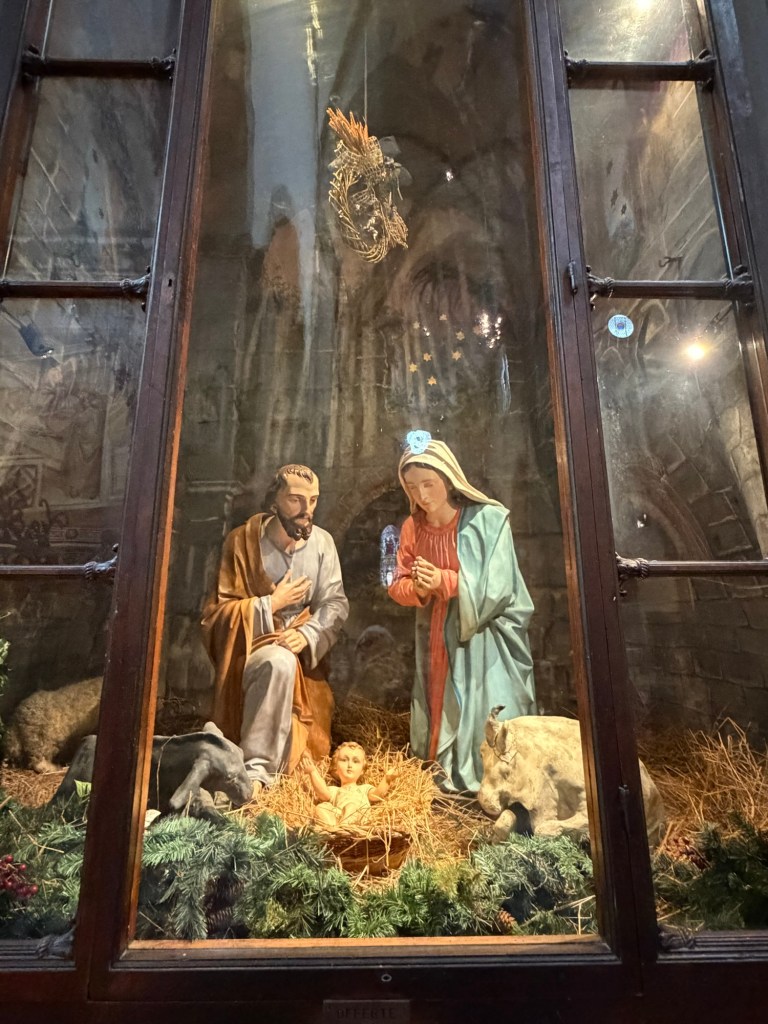
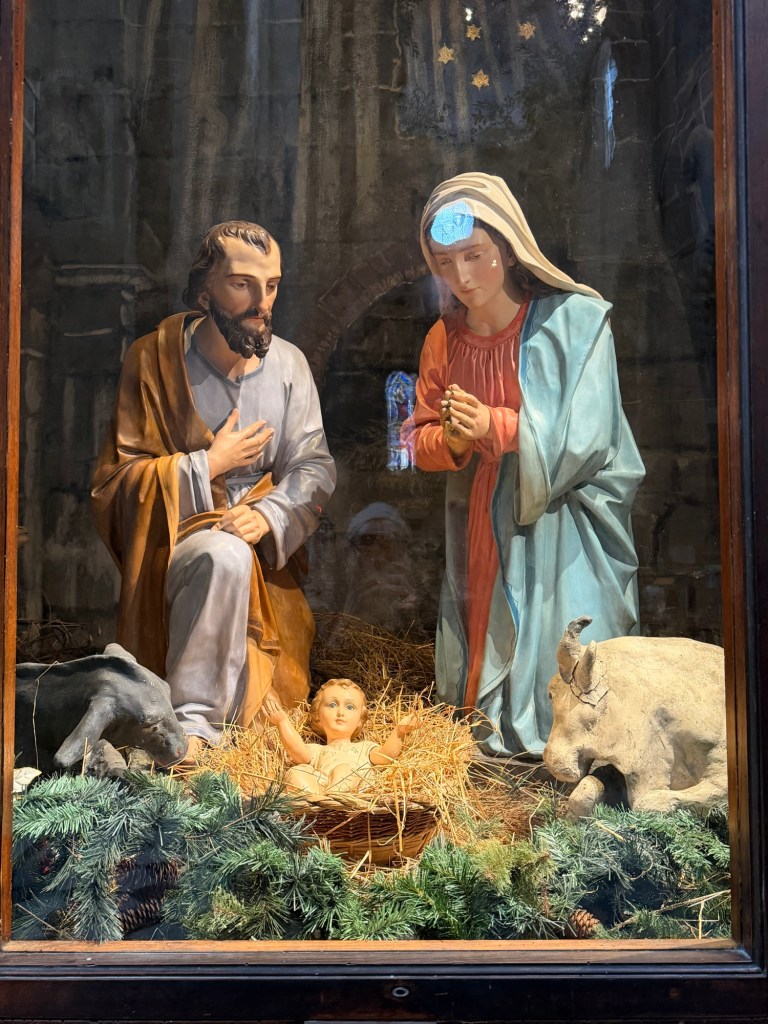
The following photos are more details from the basilica. There are endless things to admire and enjoy in this important Dominican church.
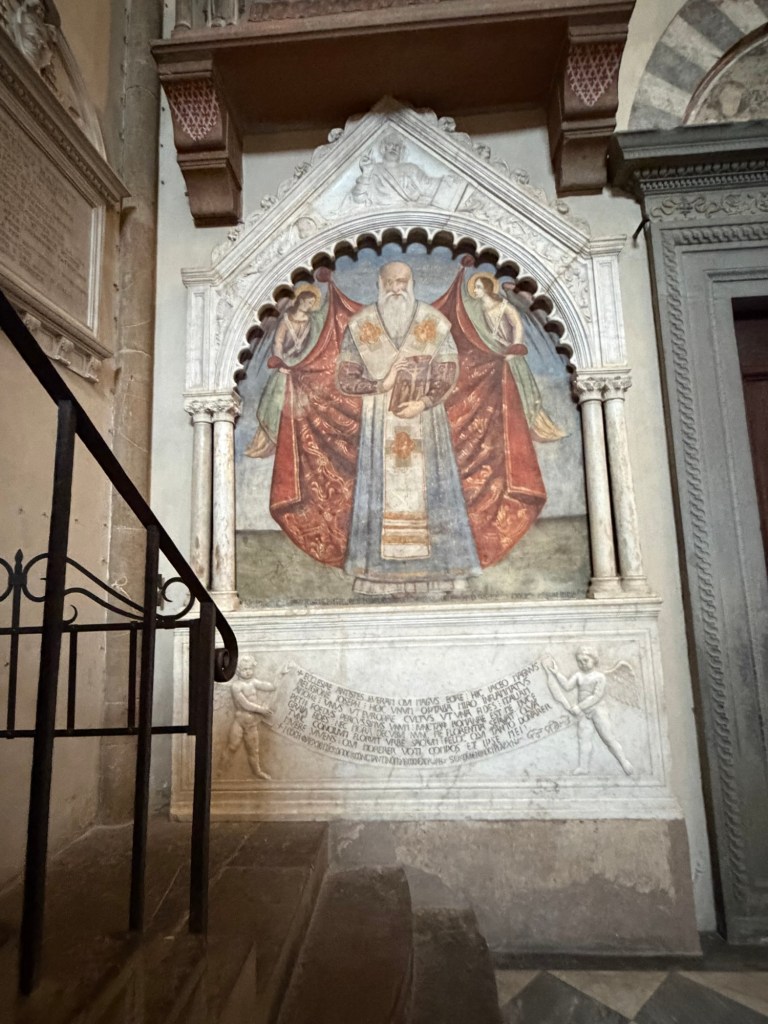
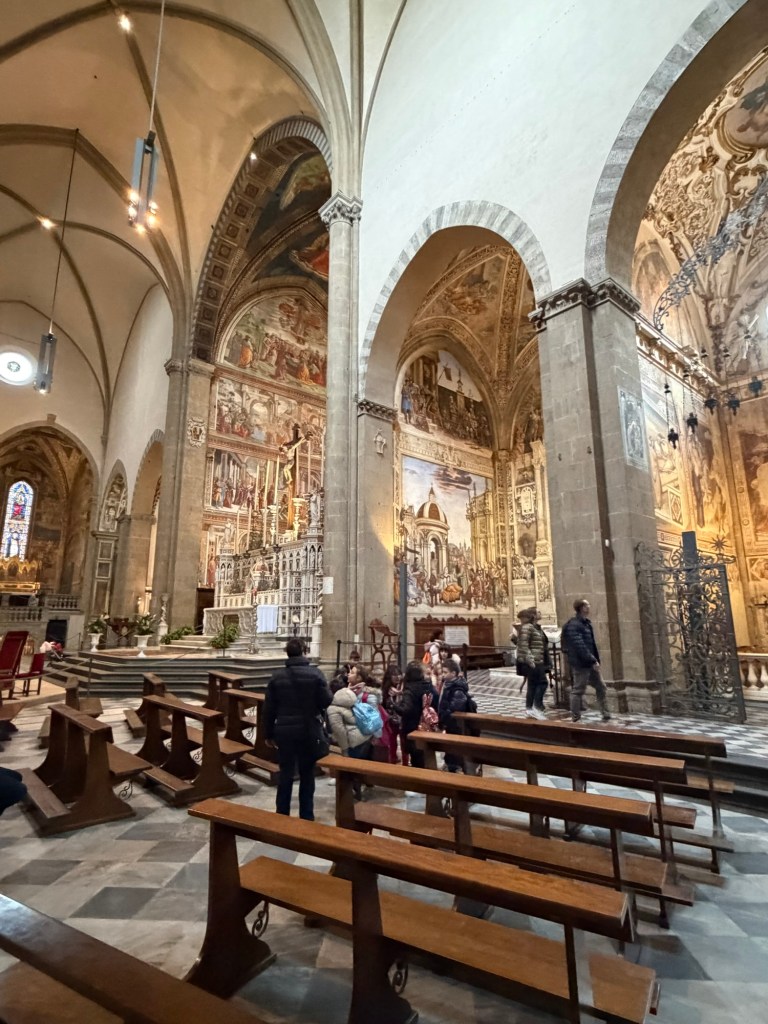
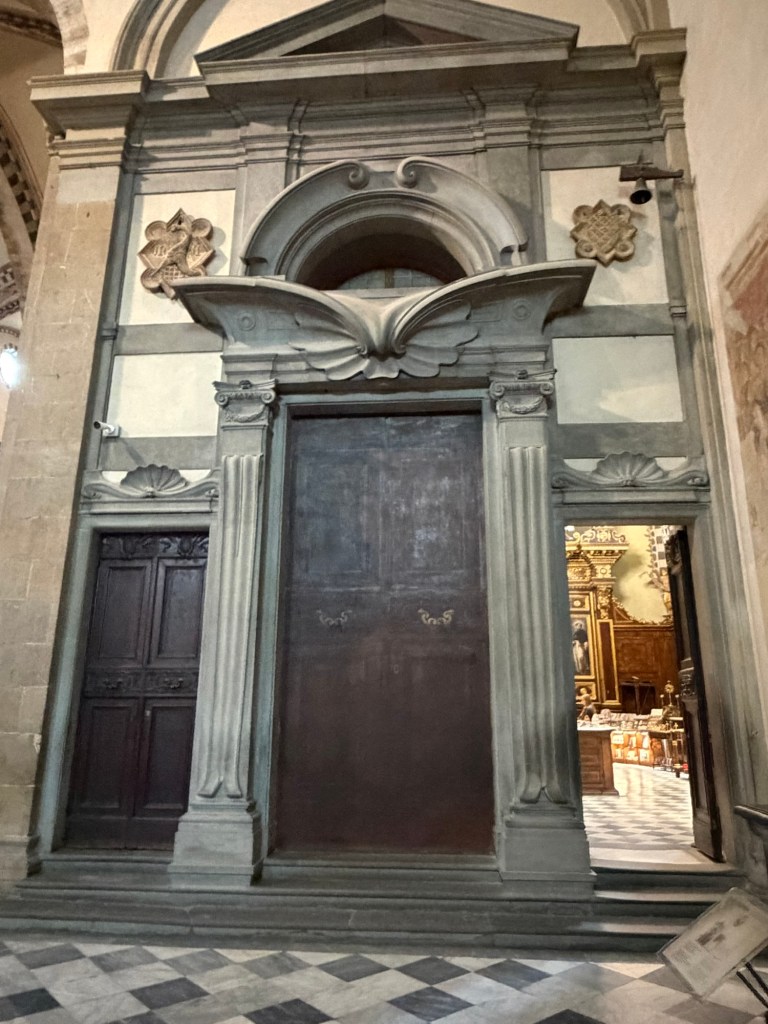
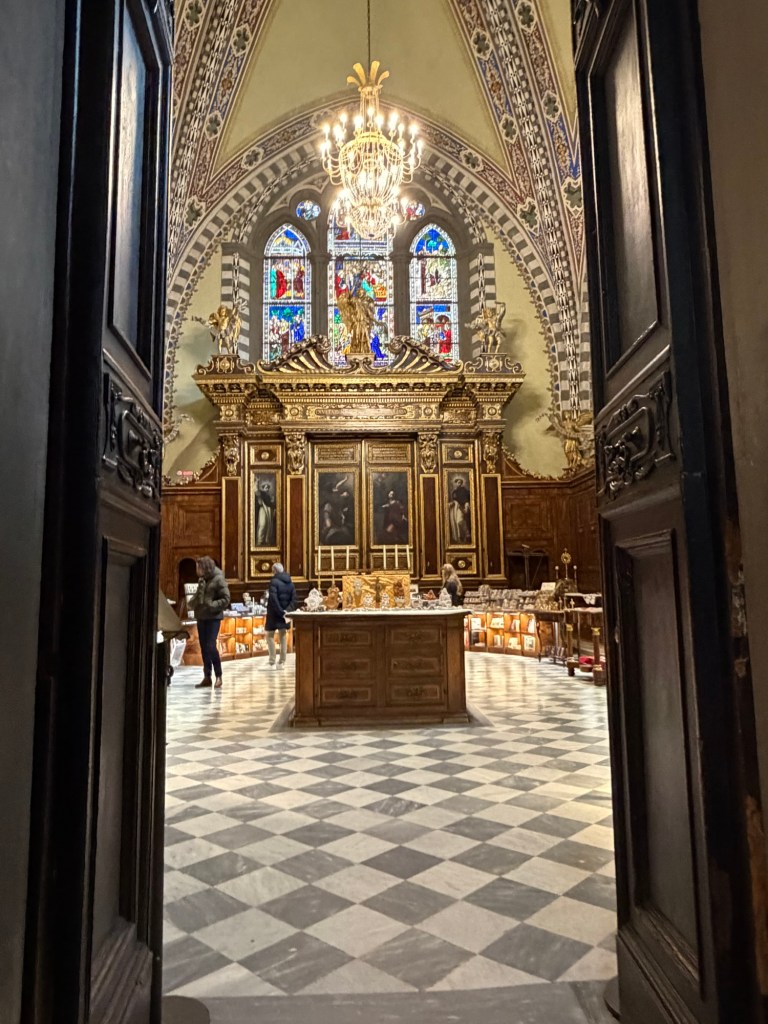
Above is the bookstore. I mean, come on, the book store??
One of the courtyards integrated into the church complex. I was struck by the warm day in late February with the flowers in the grass and birdsong.
 get back, lauretta!