And now I don’t feel so bad…
Author: get back, laurettadimmick
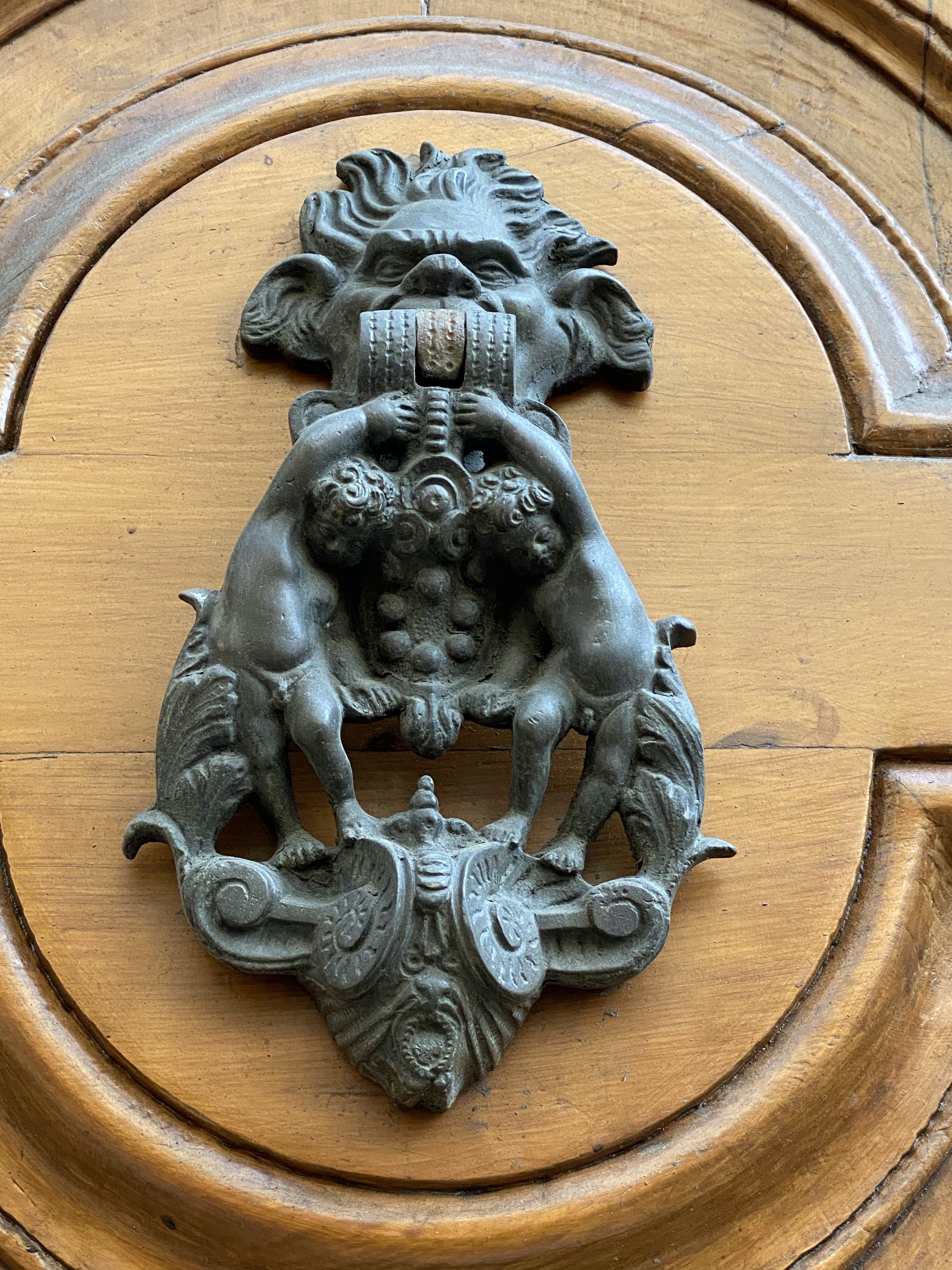
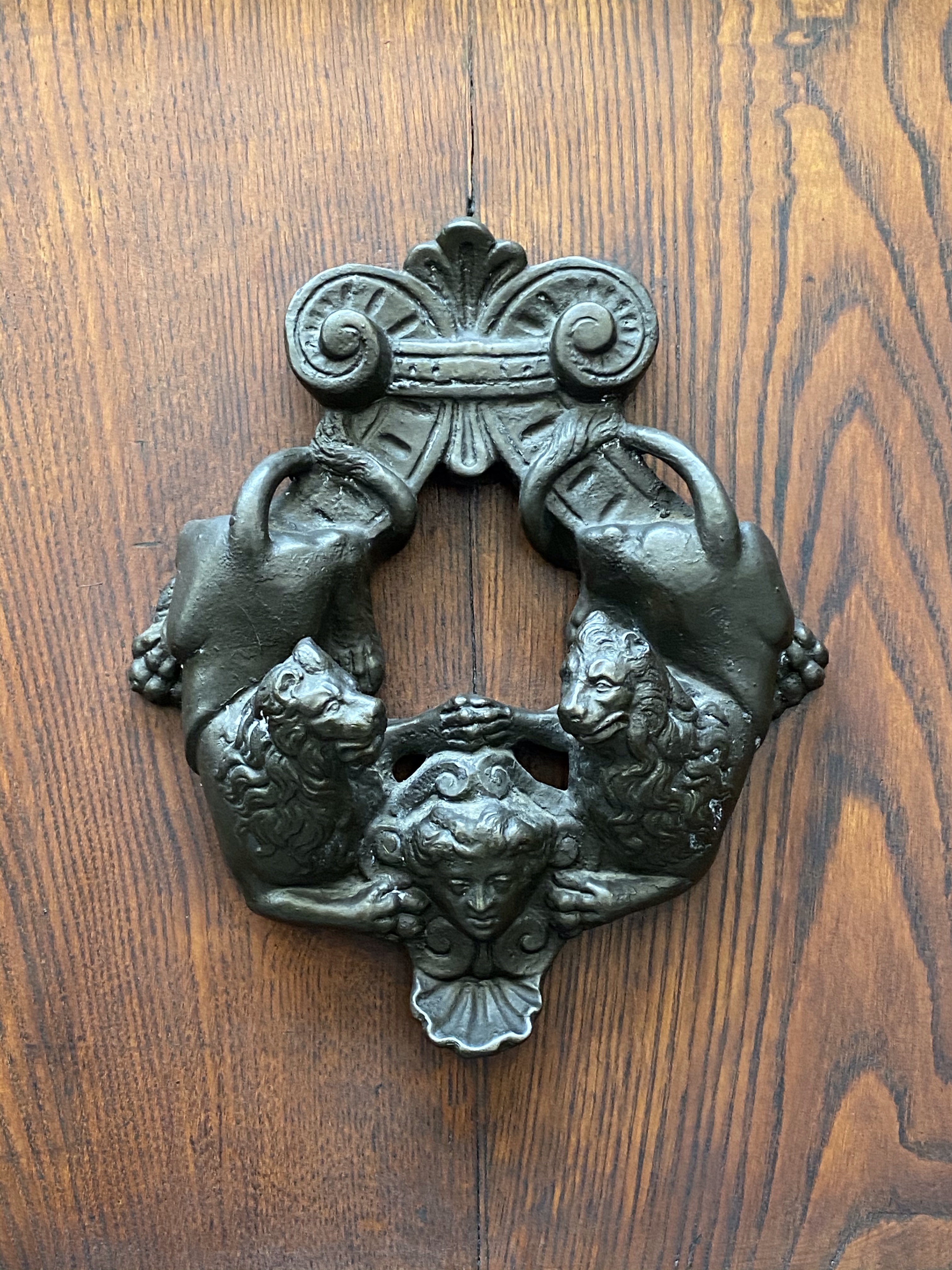
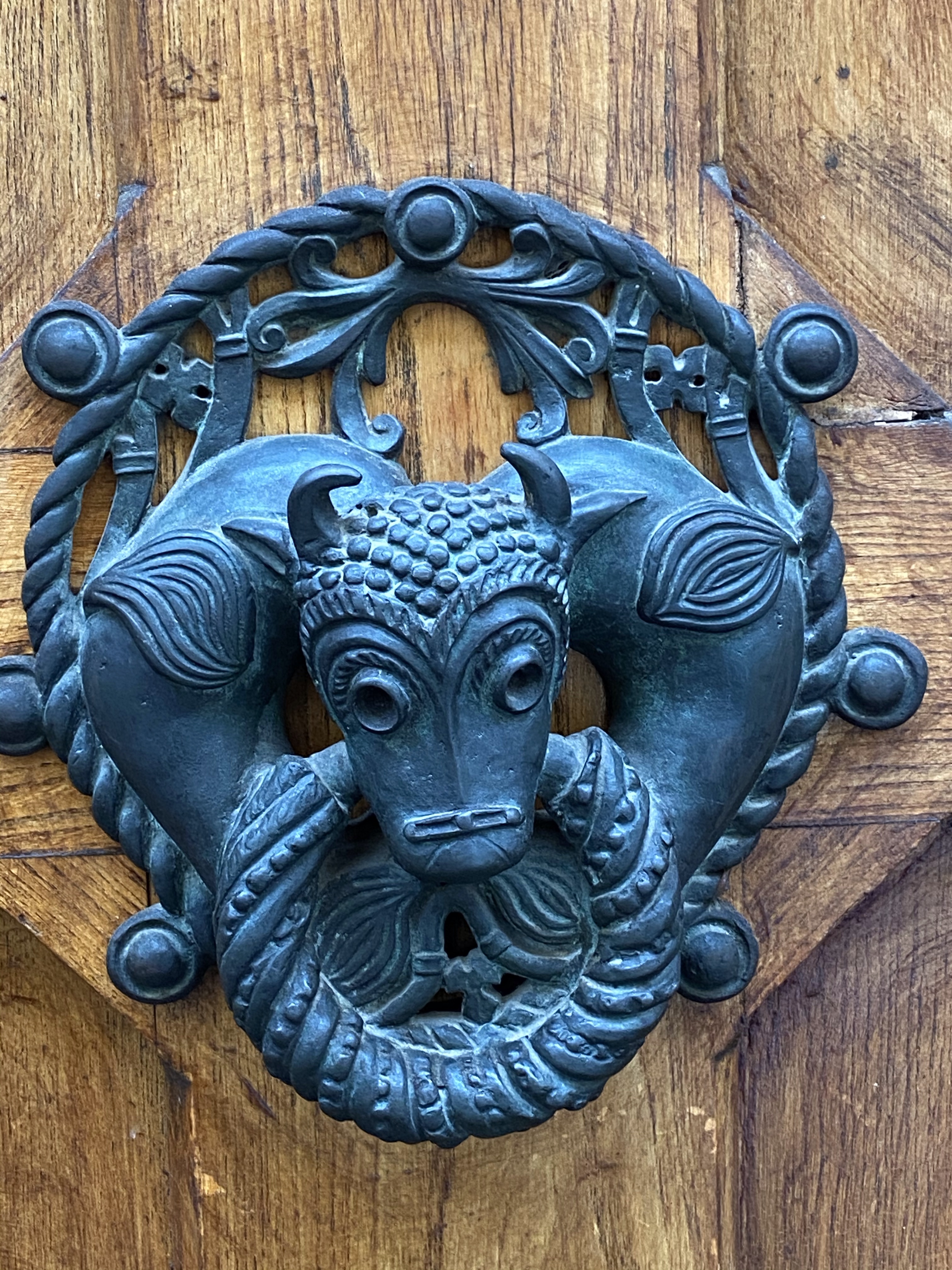
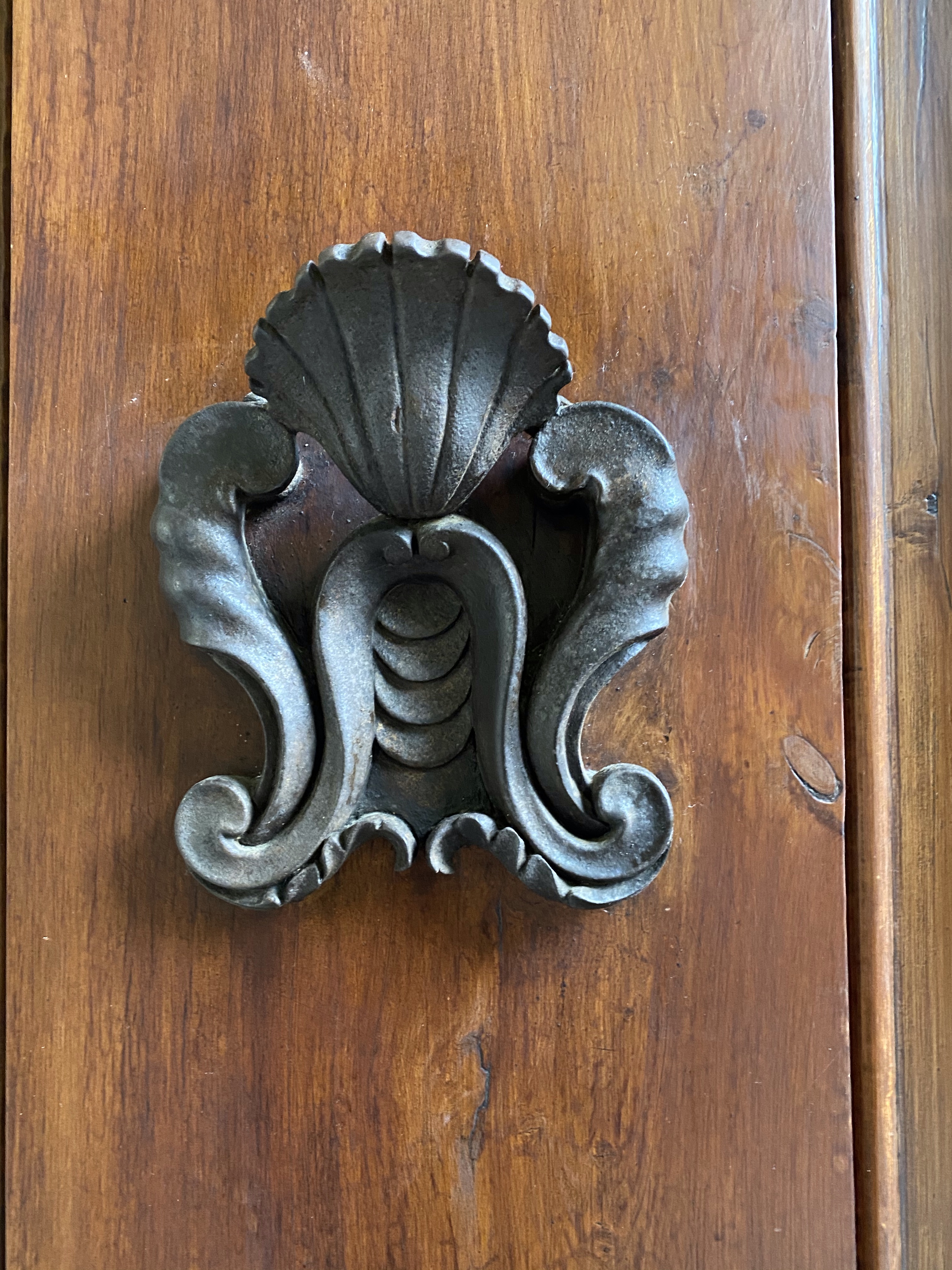
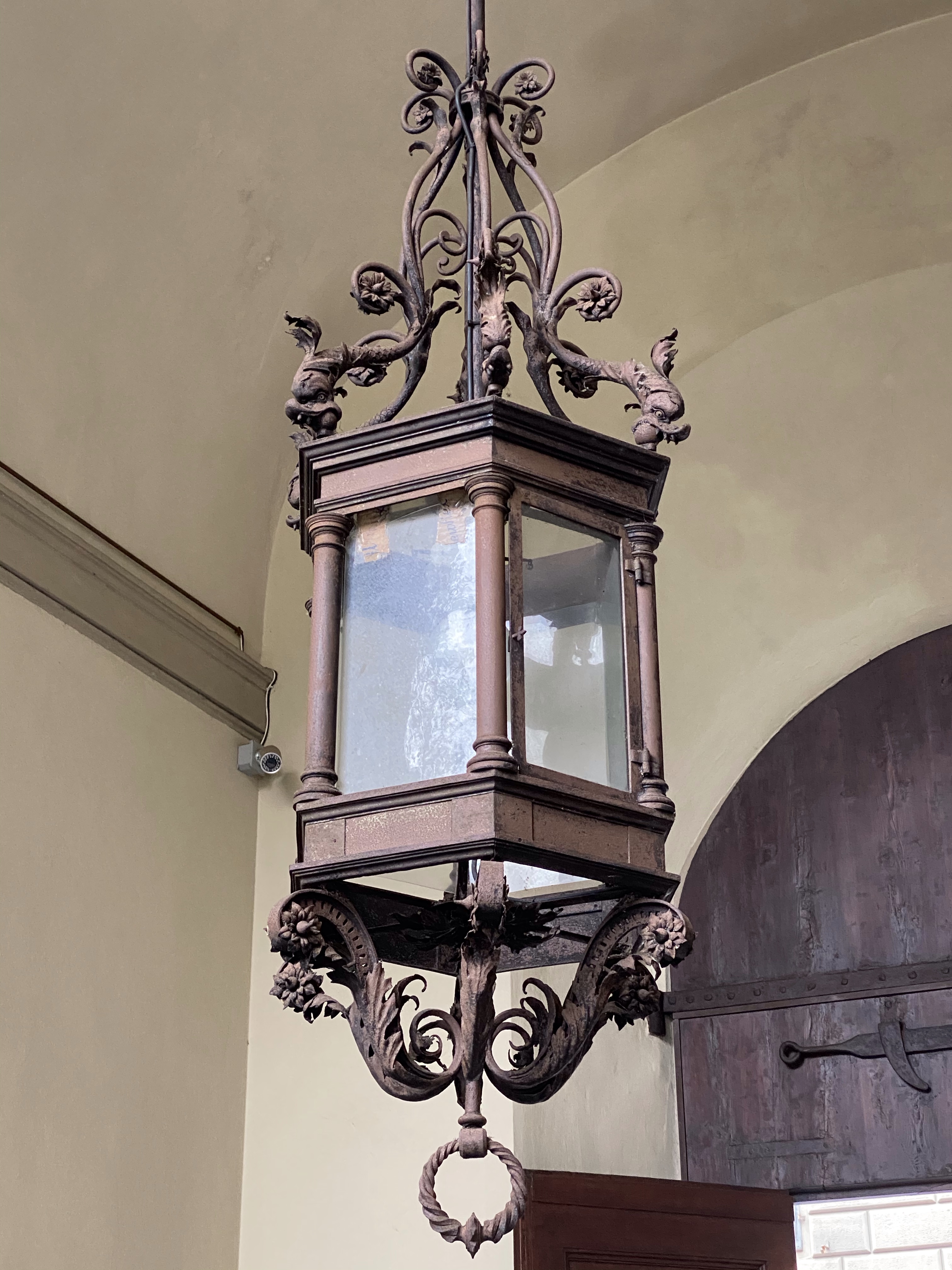
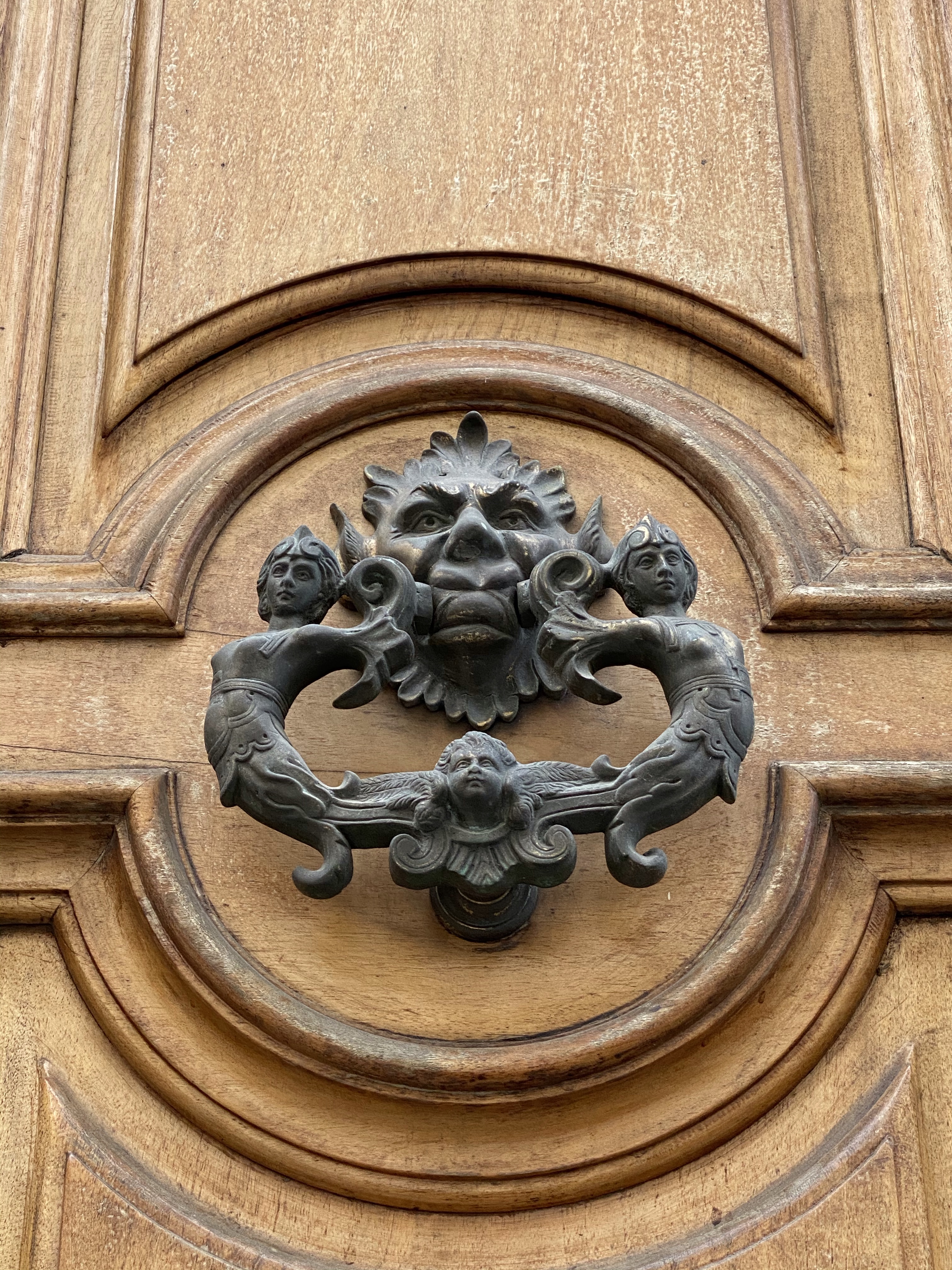
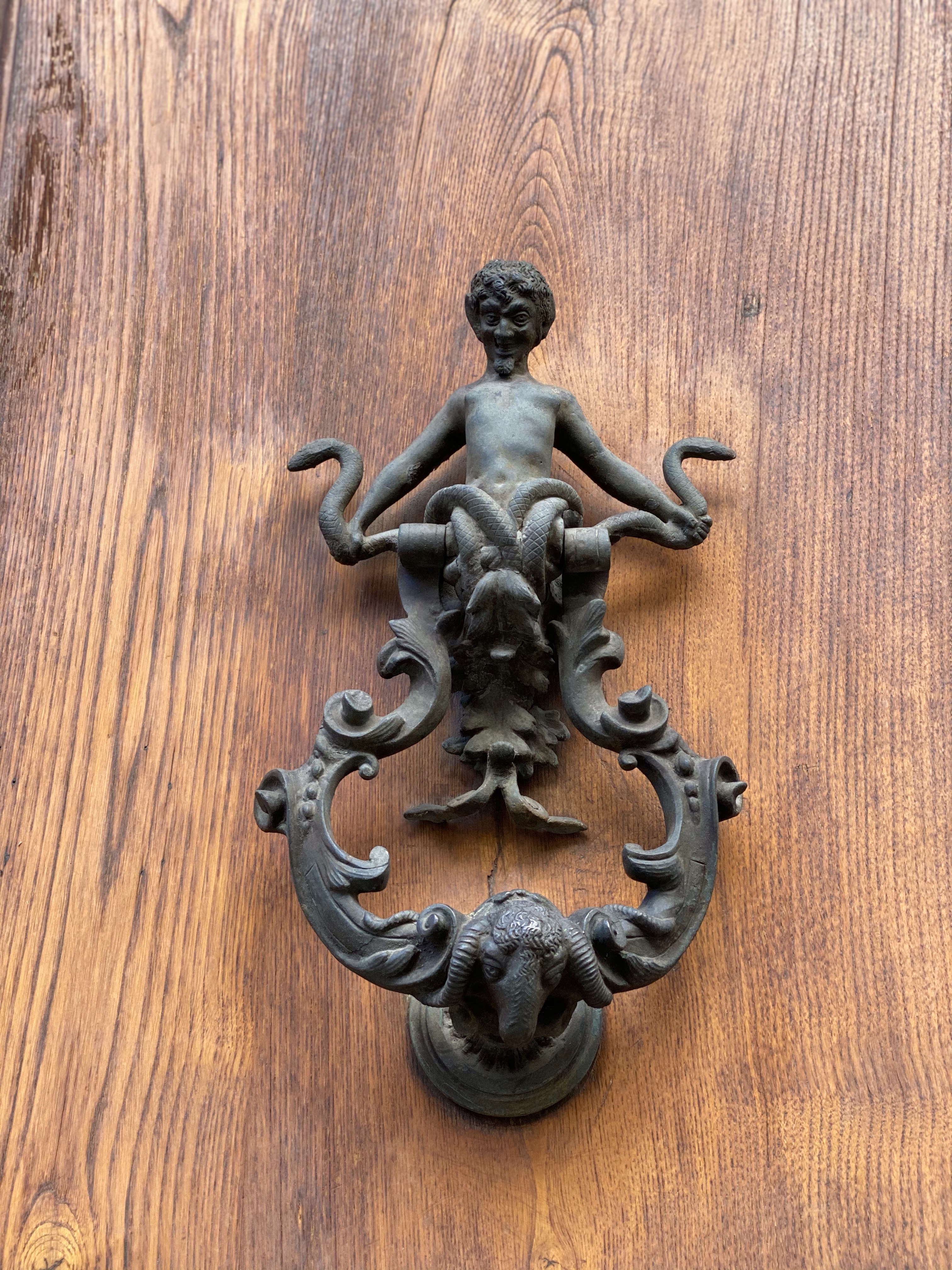
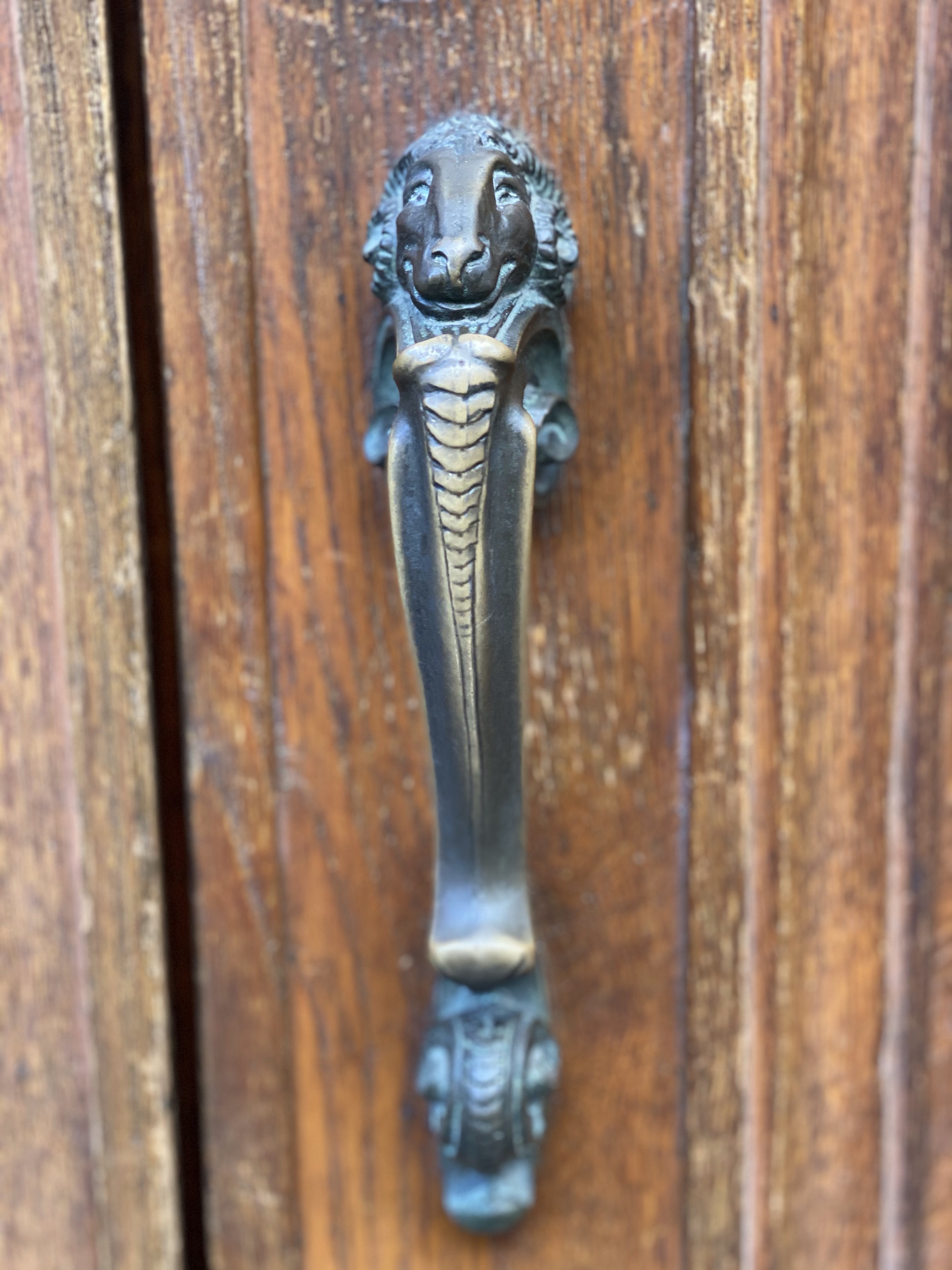
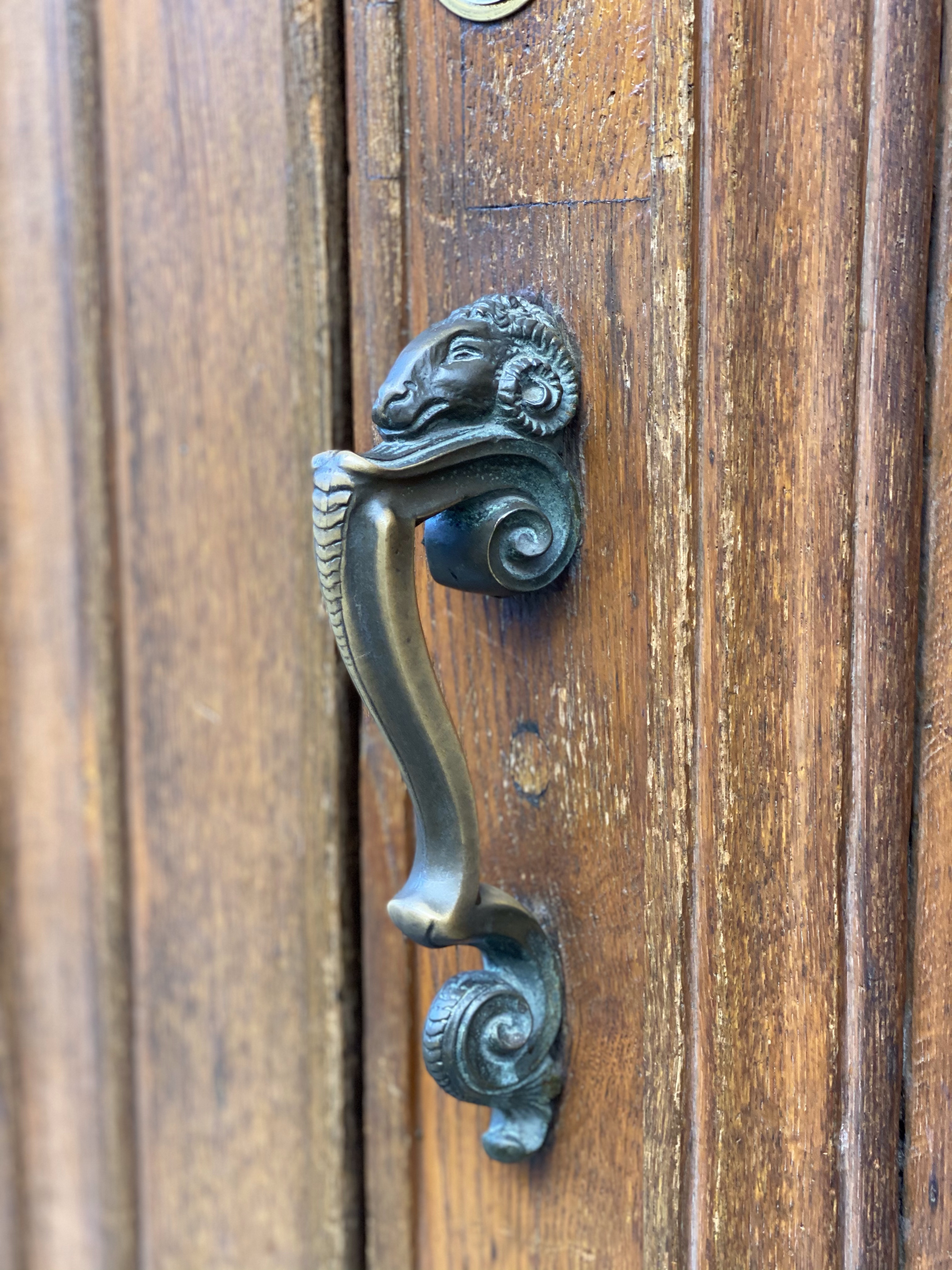
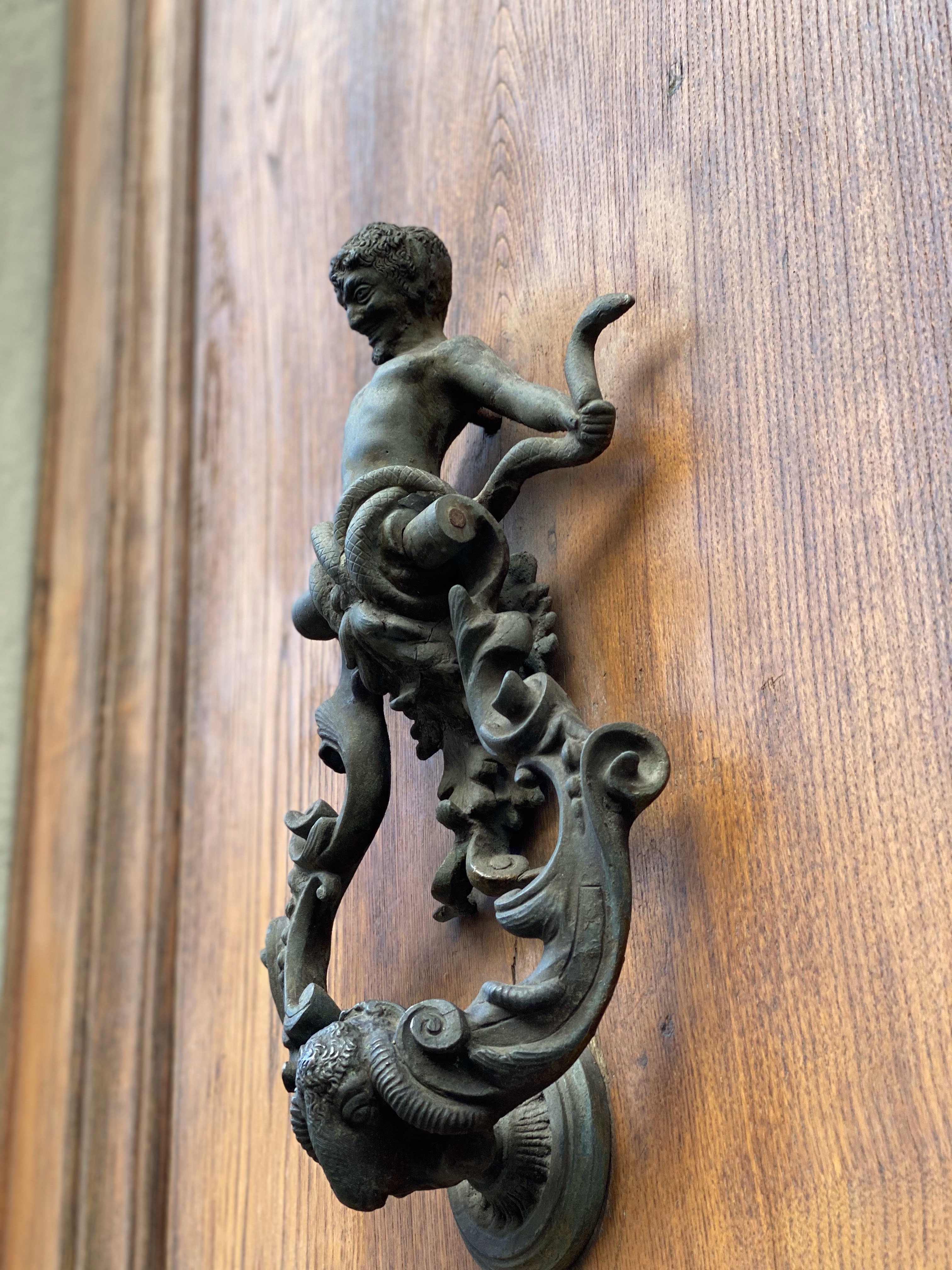
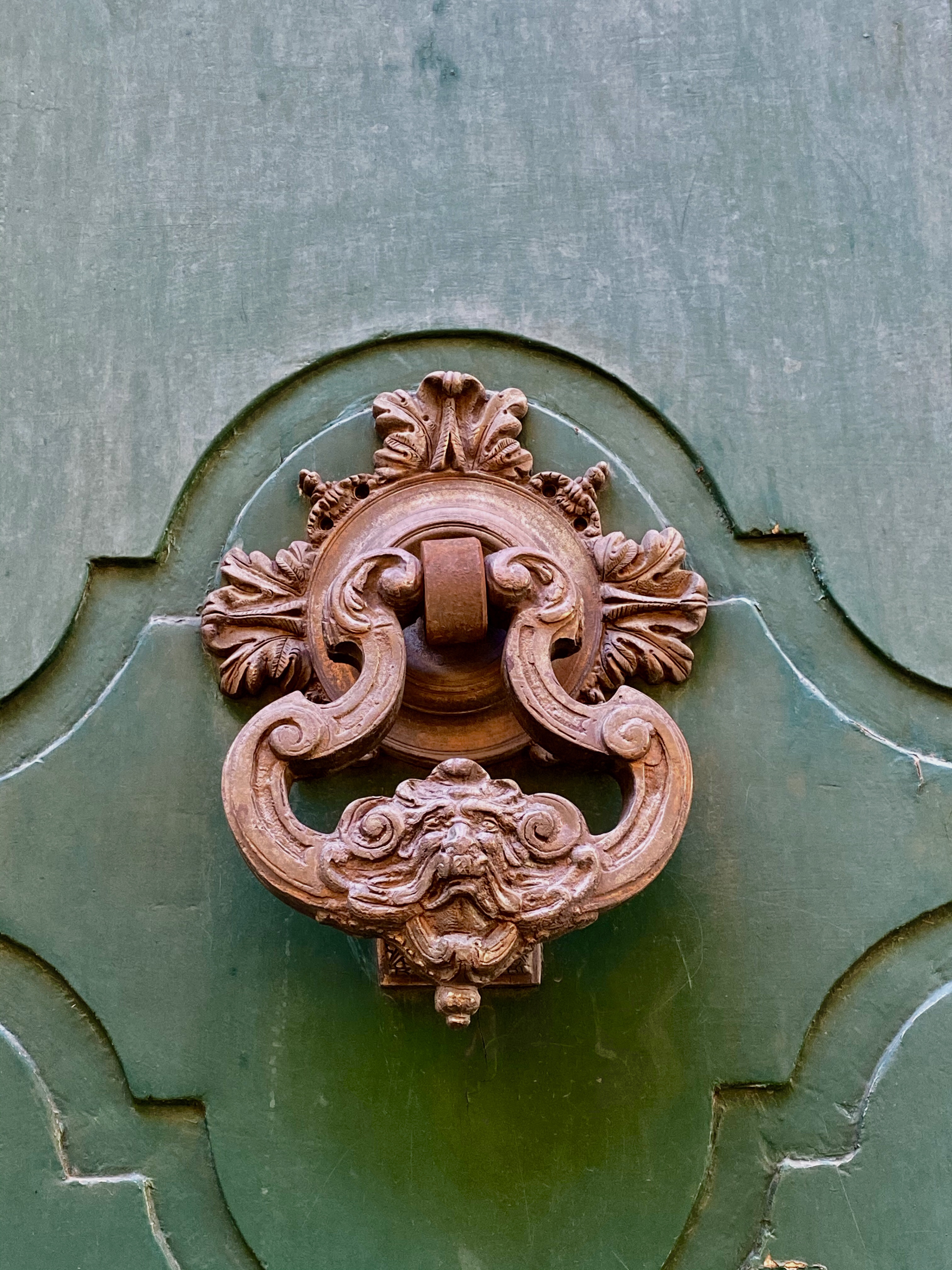
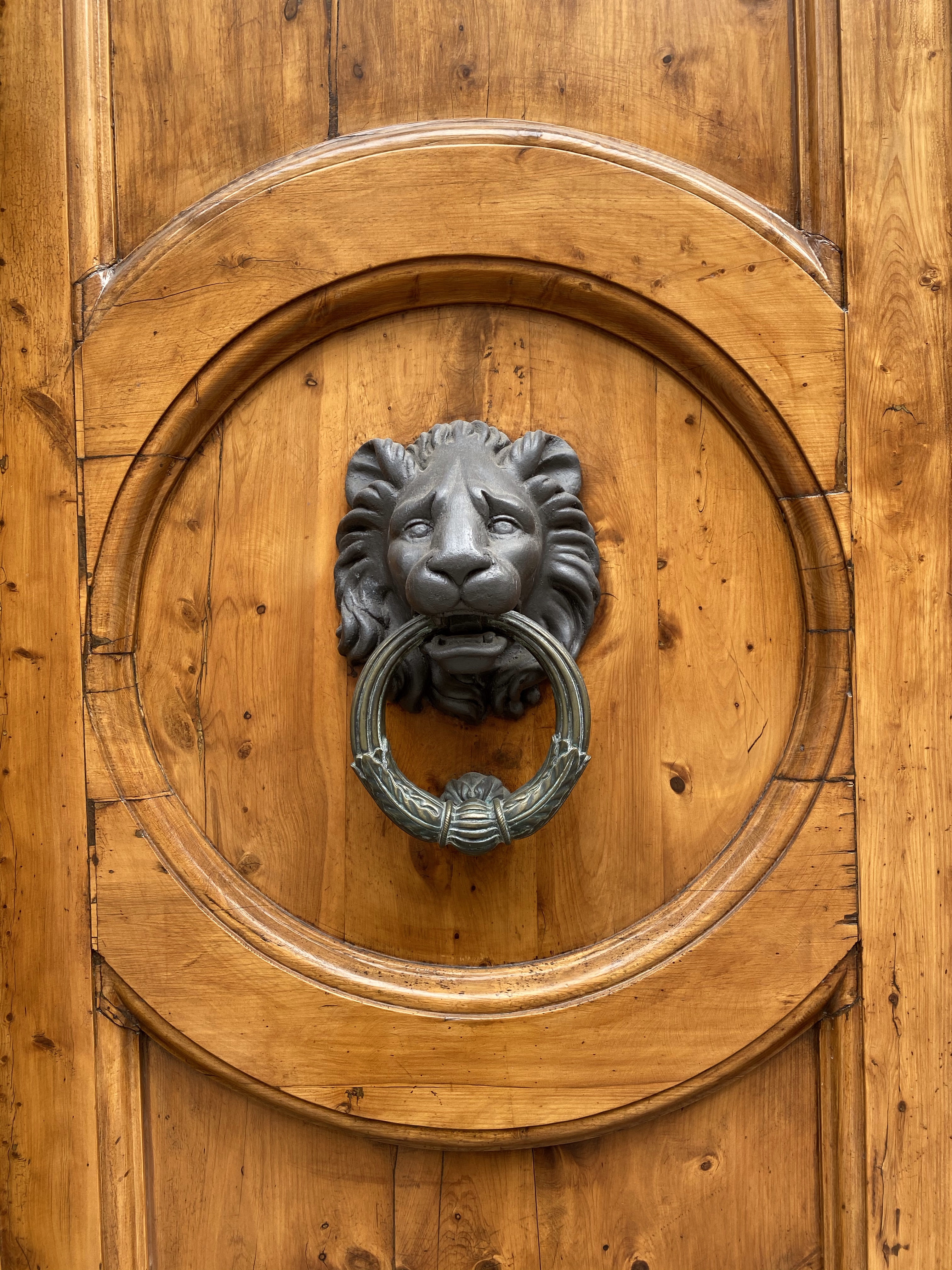
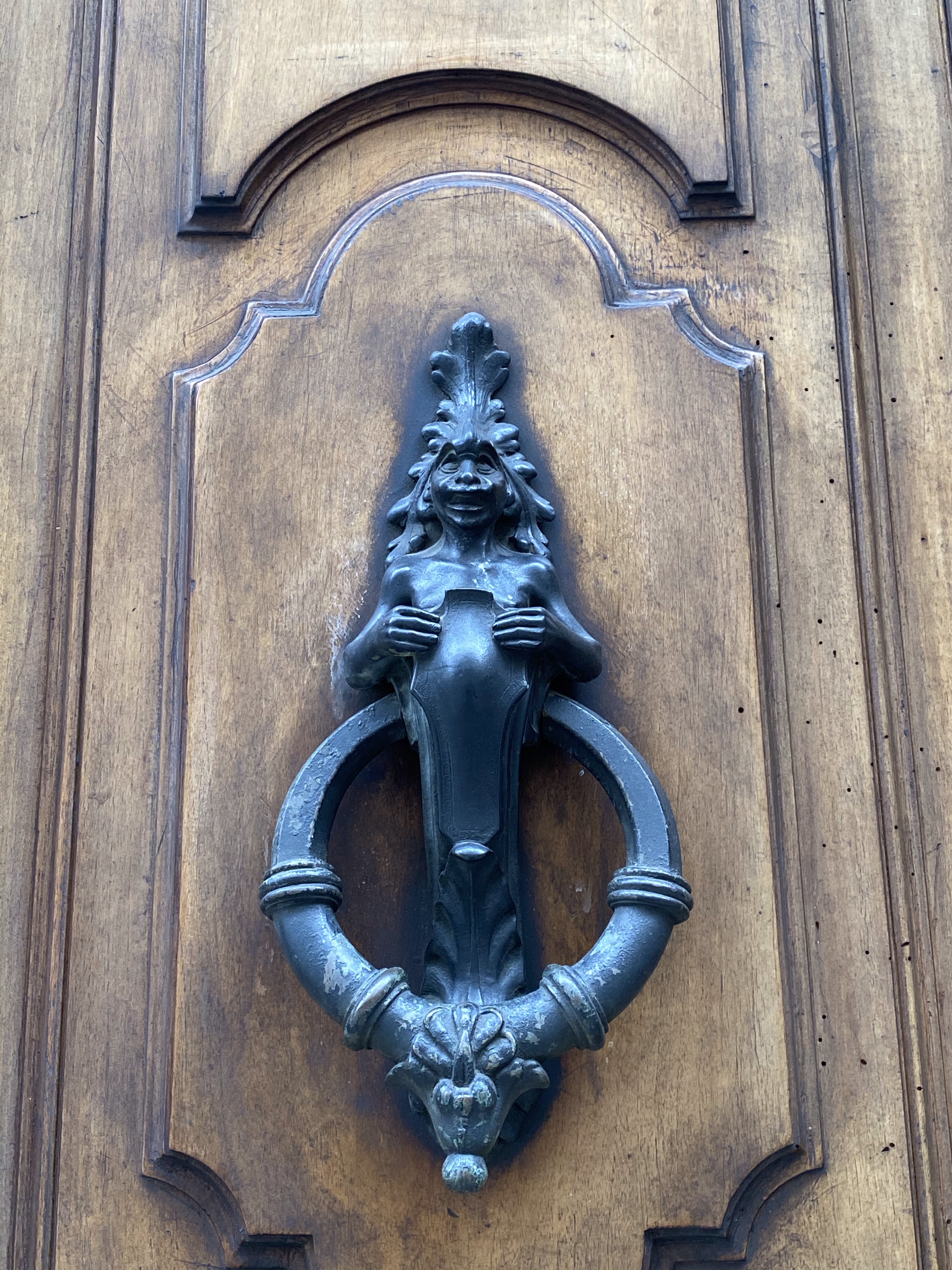
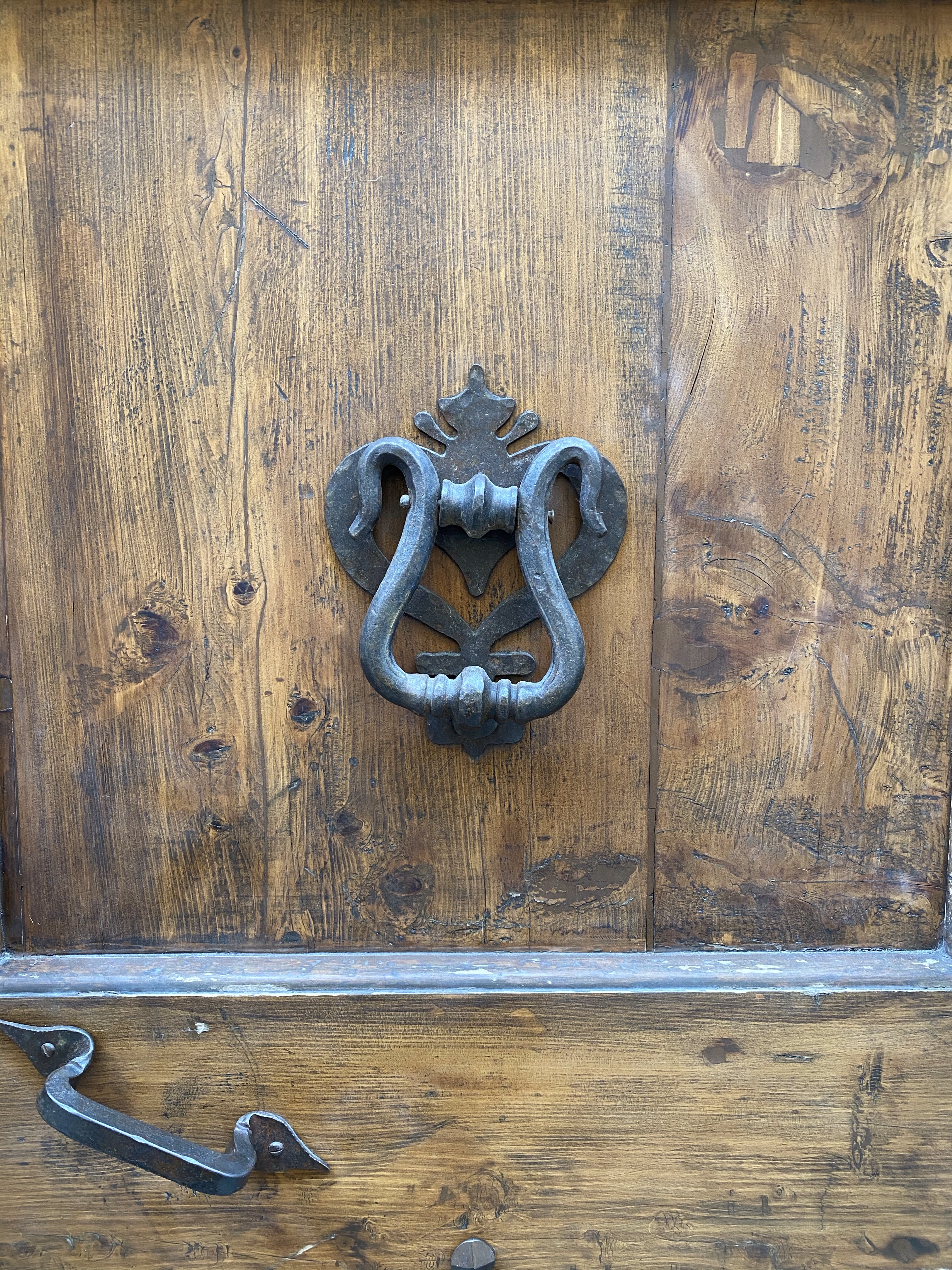
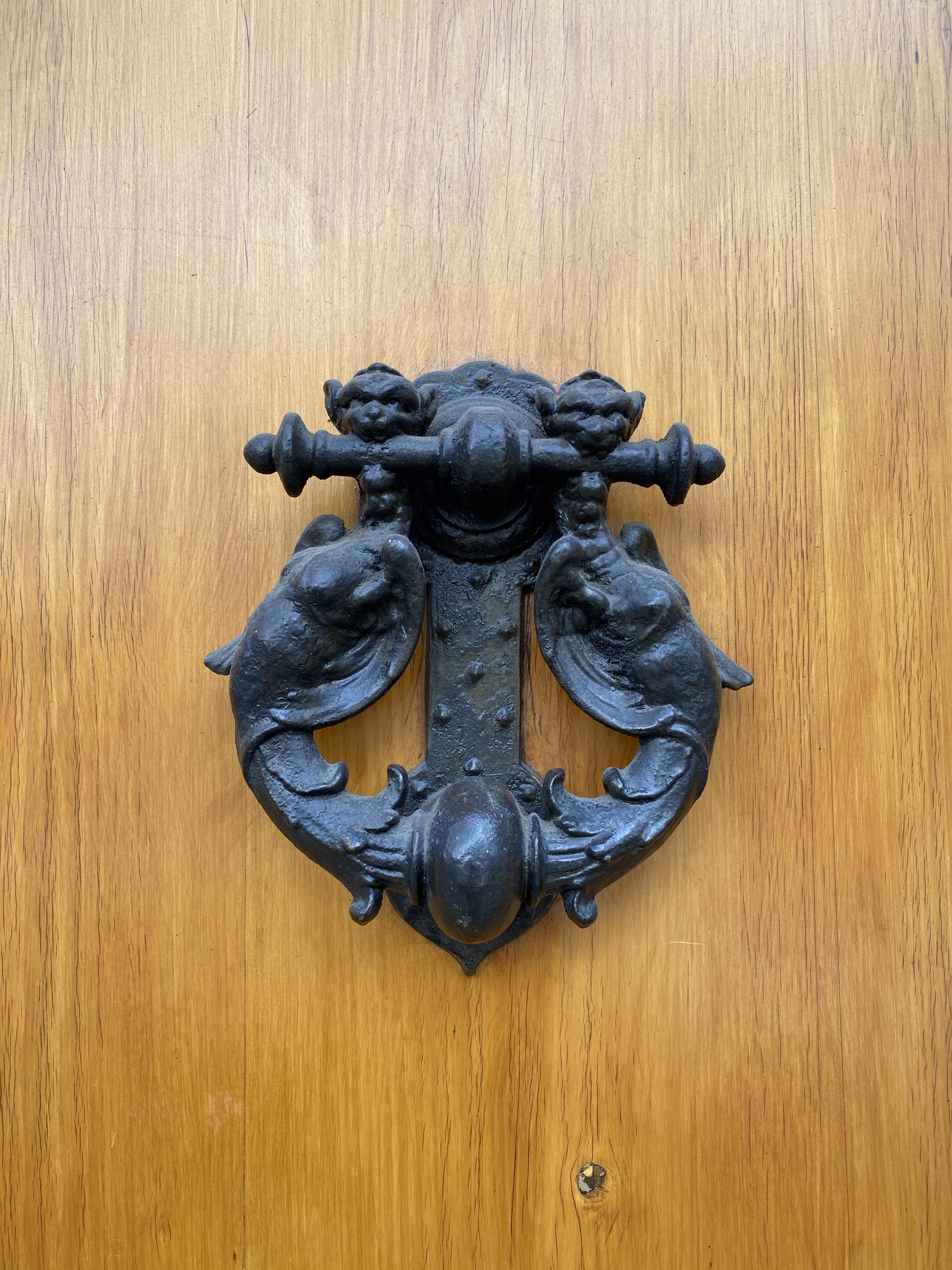
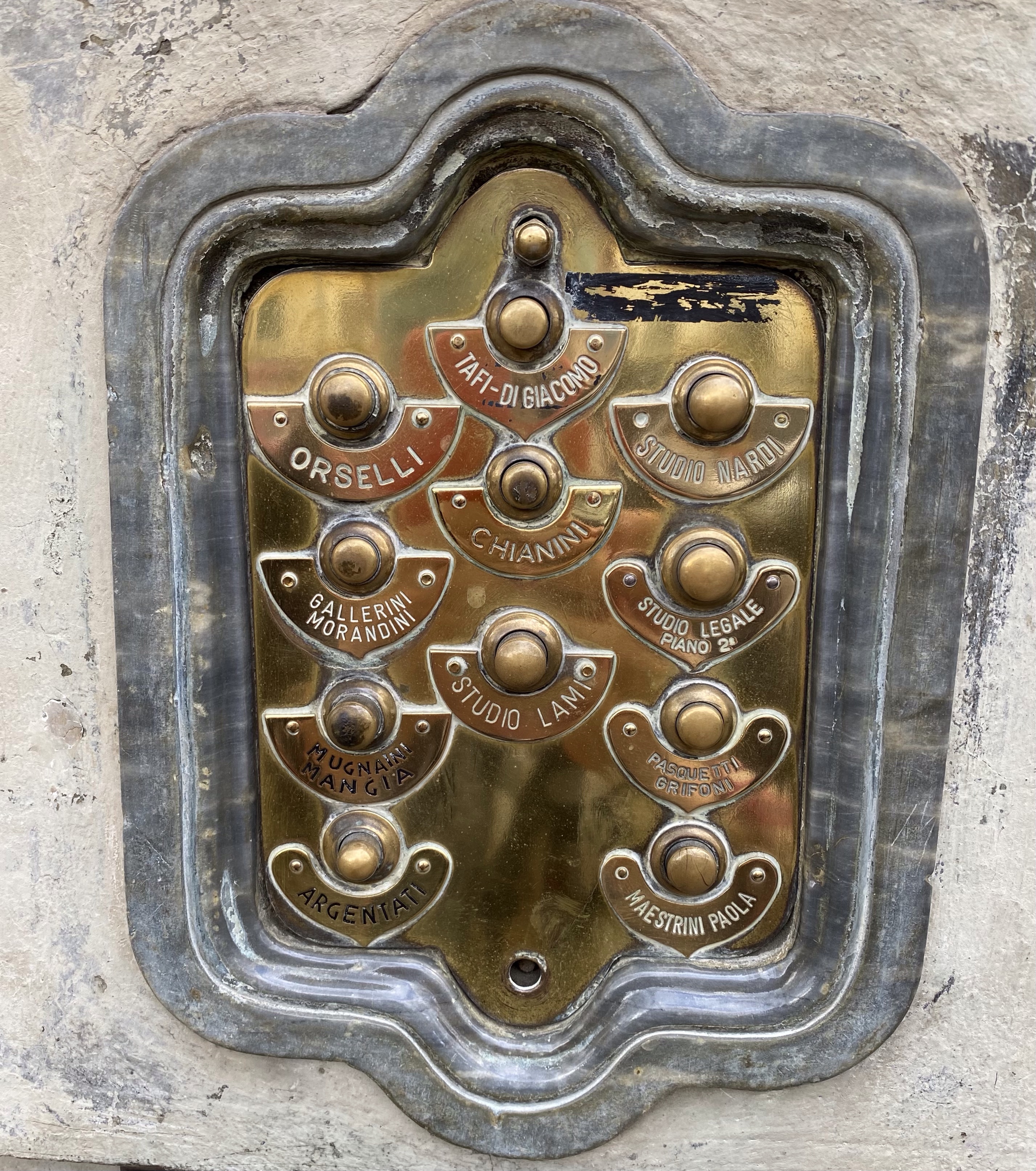
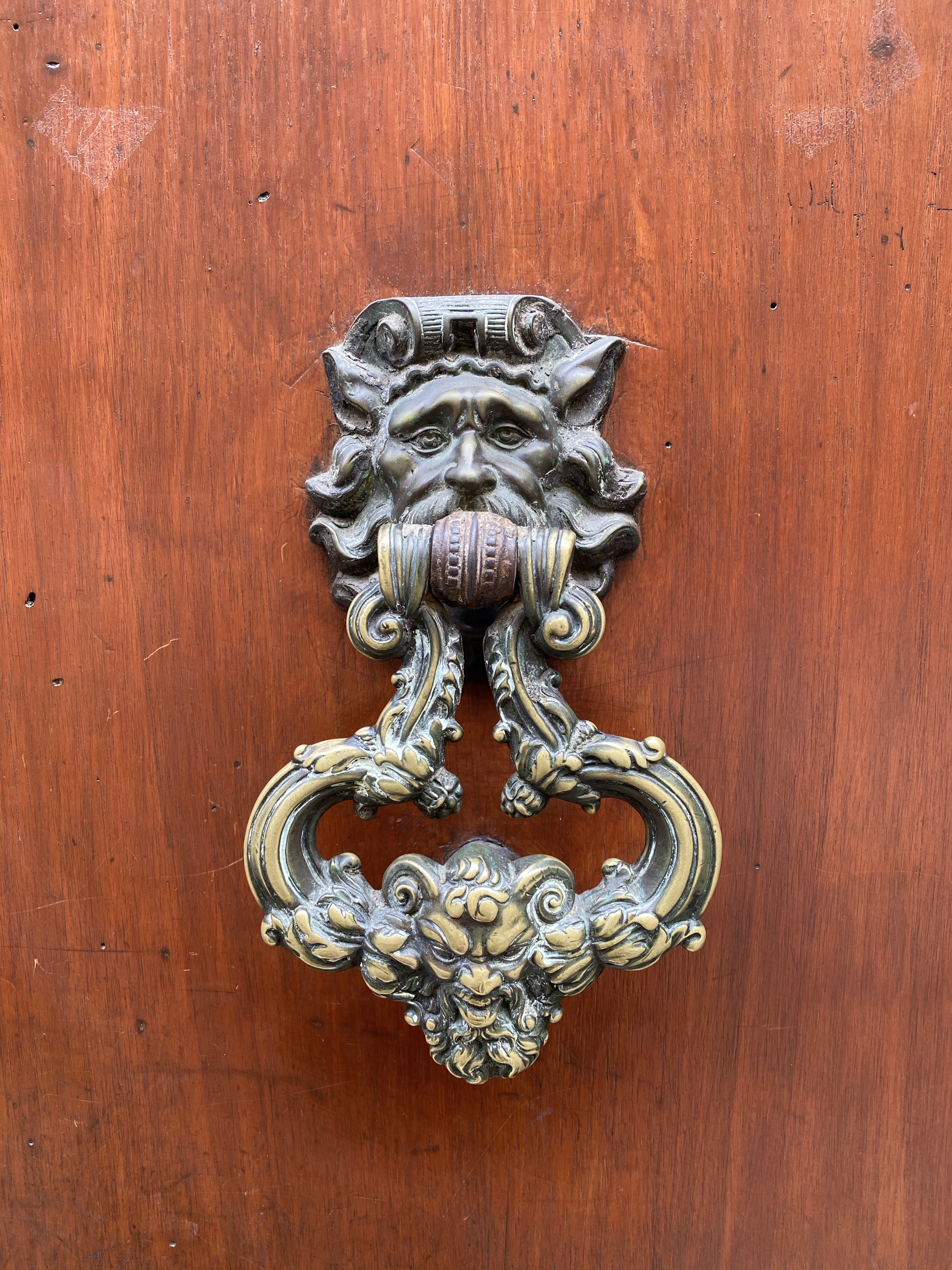
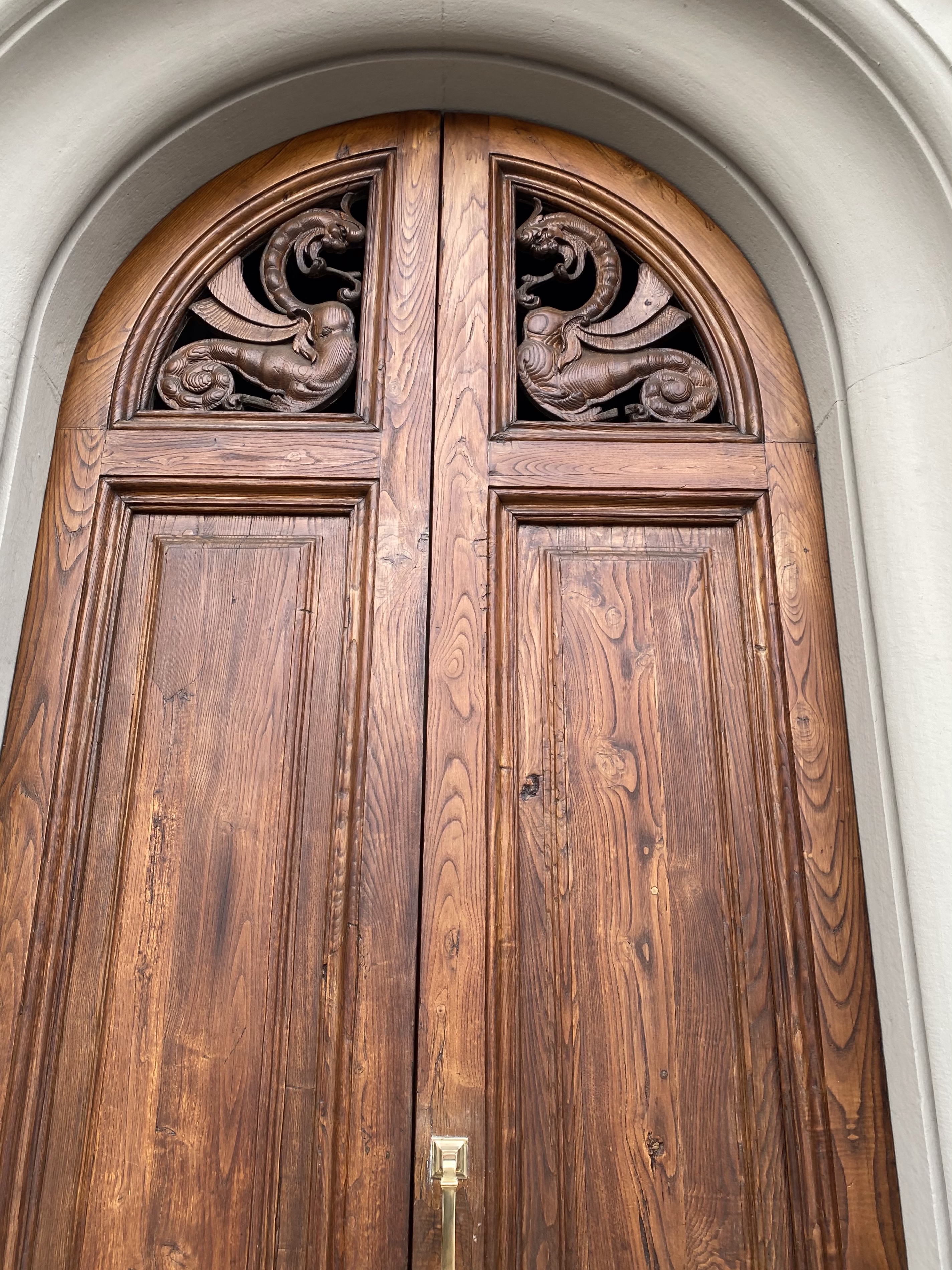
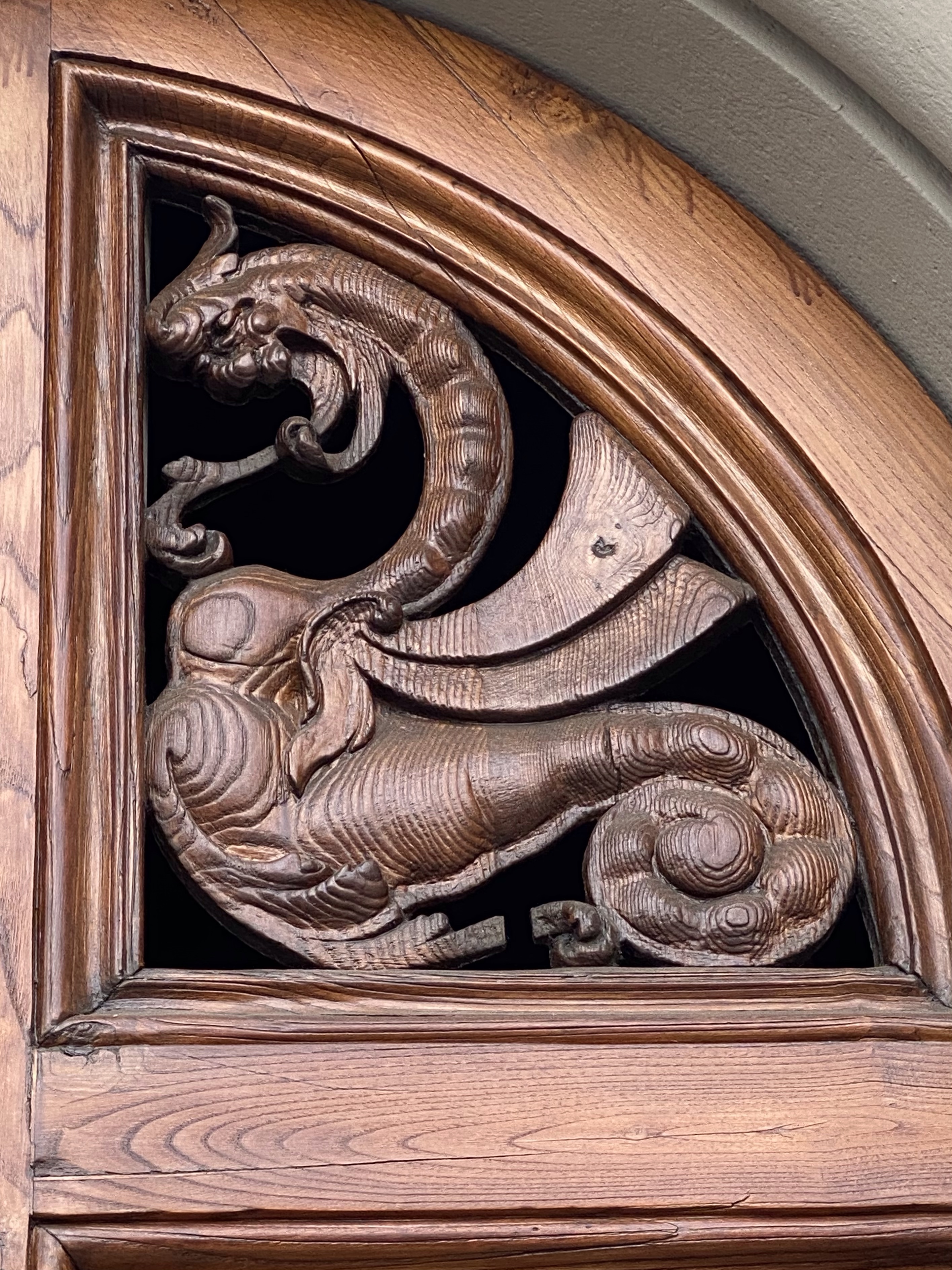
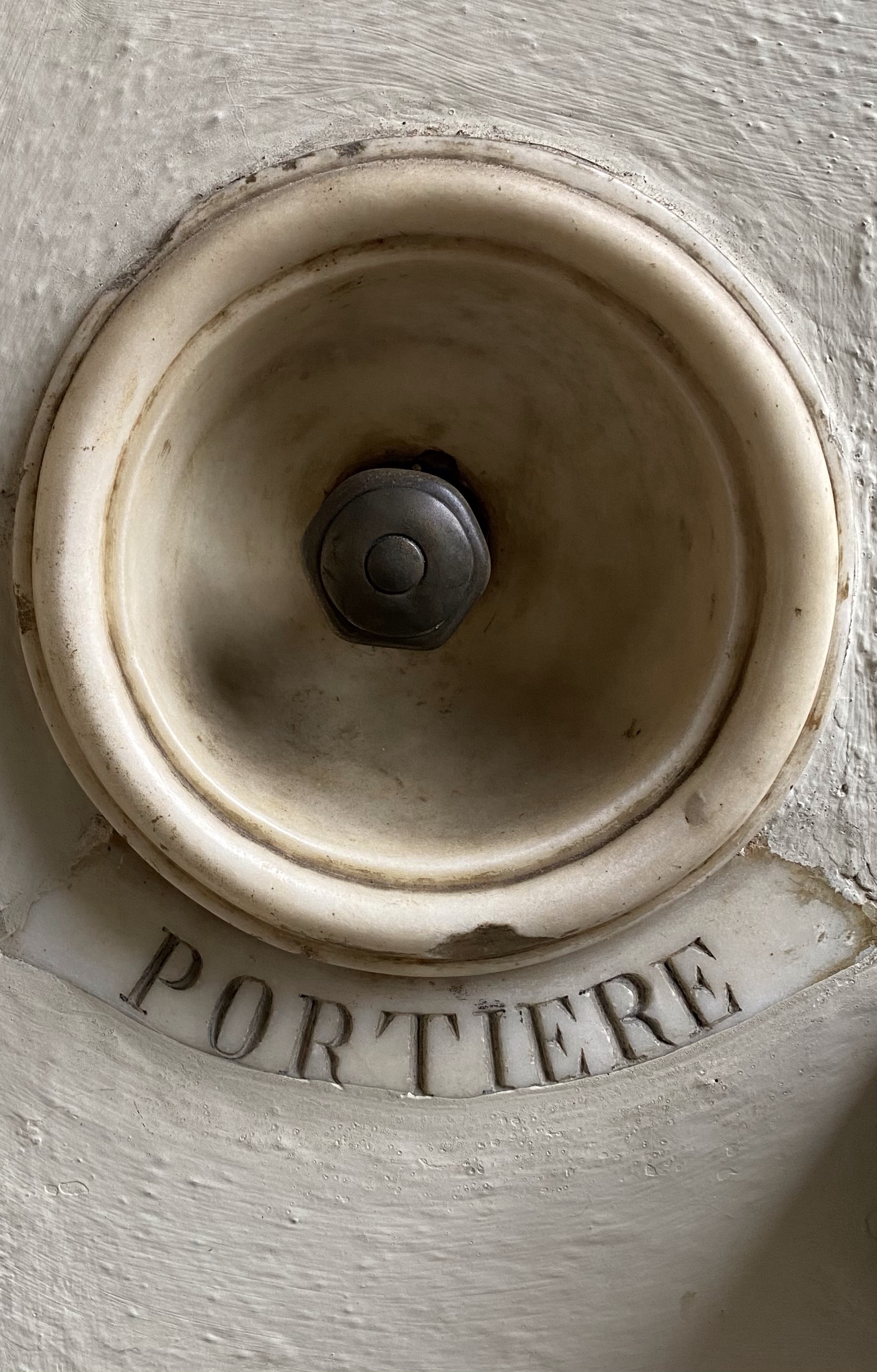
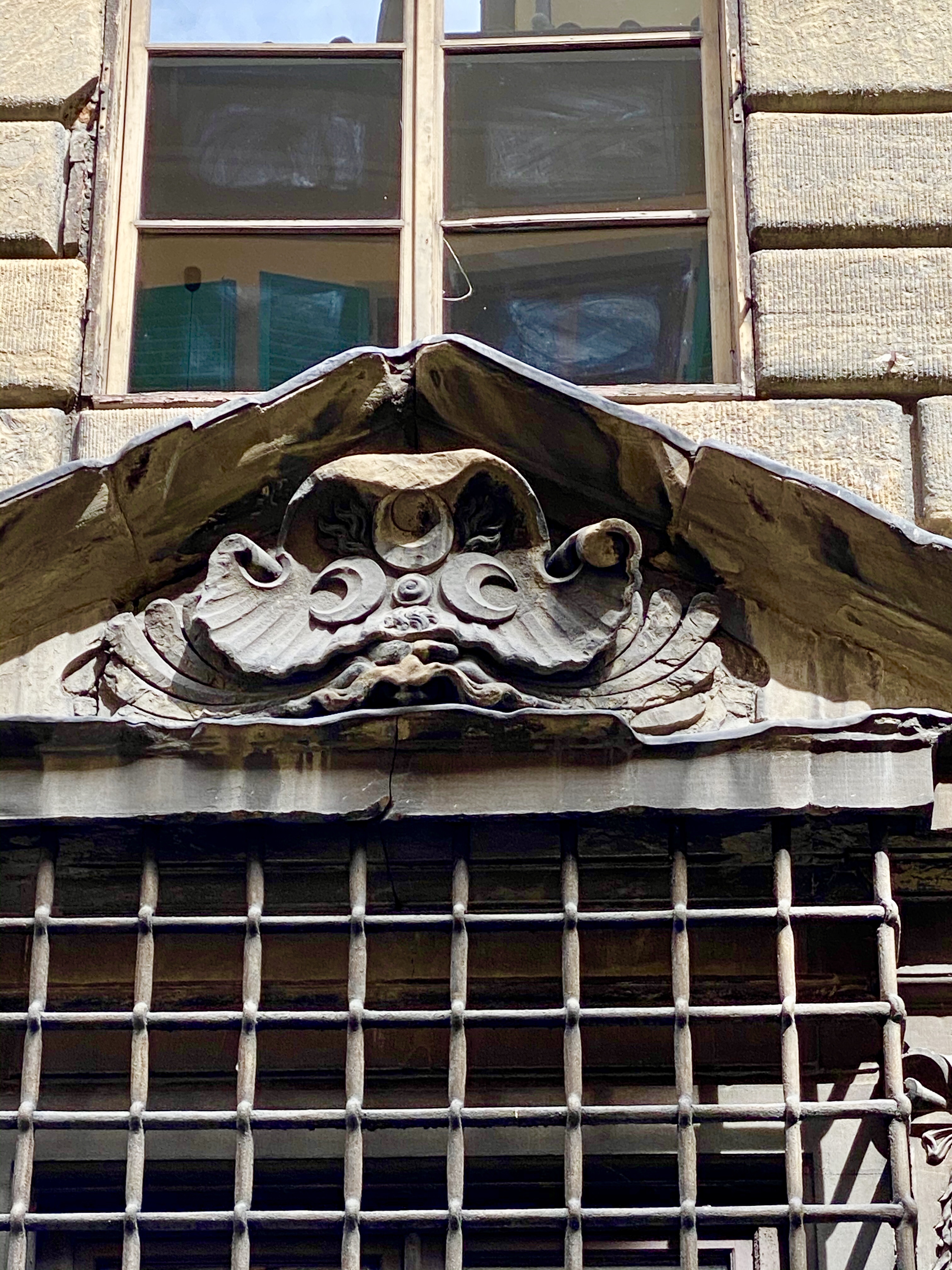
I found the answer!
I need one of these, adult sized please!
Borgo San Lorenzo, near Florence, part 2
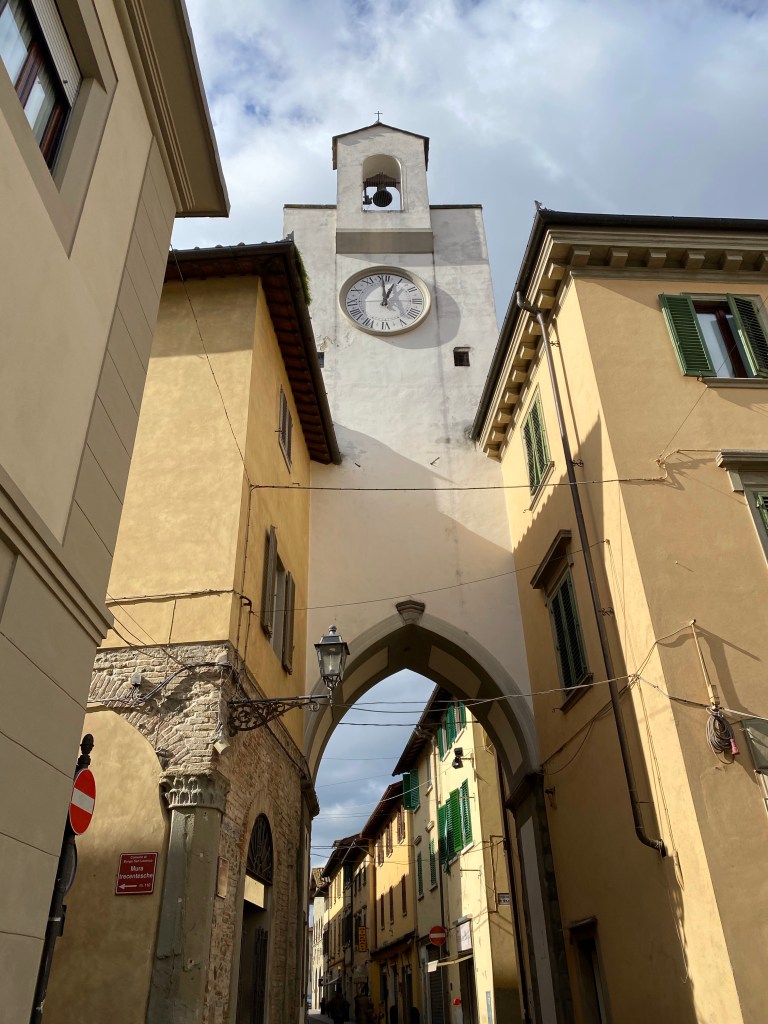
A couple days ago I posted part 1 on the lovely little village of Borgo San Lorenzo, not far from Florence. I still have a lot to share!
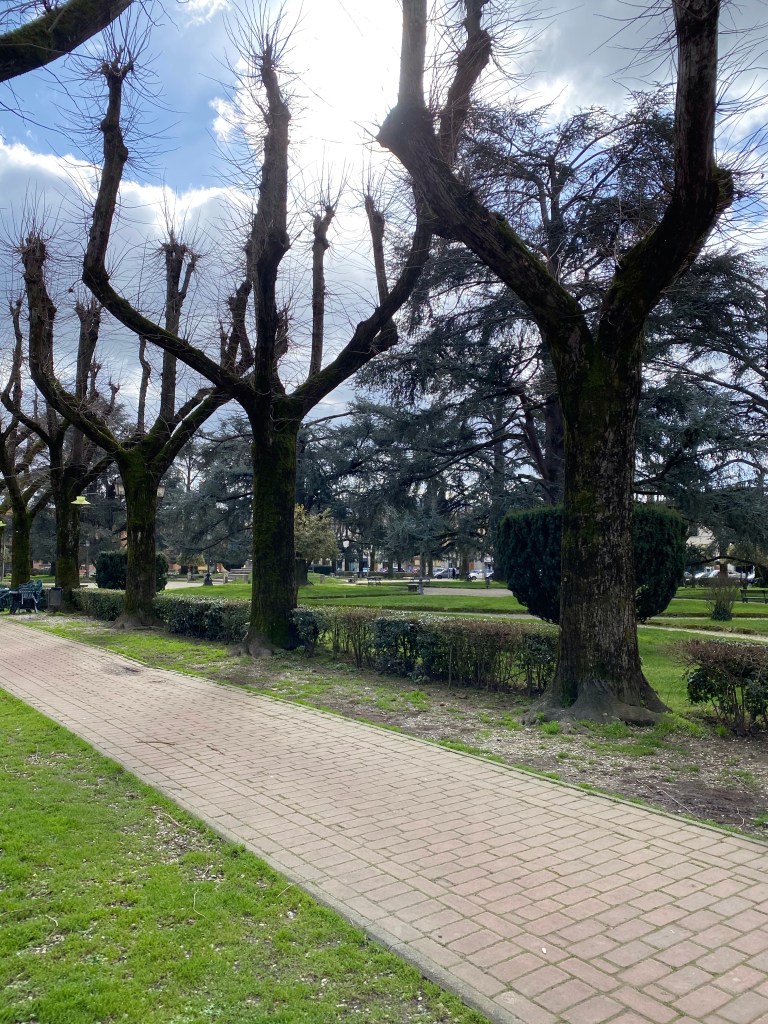
Below, the pretty town park, with its monument to the fallen dead of WWI.
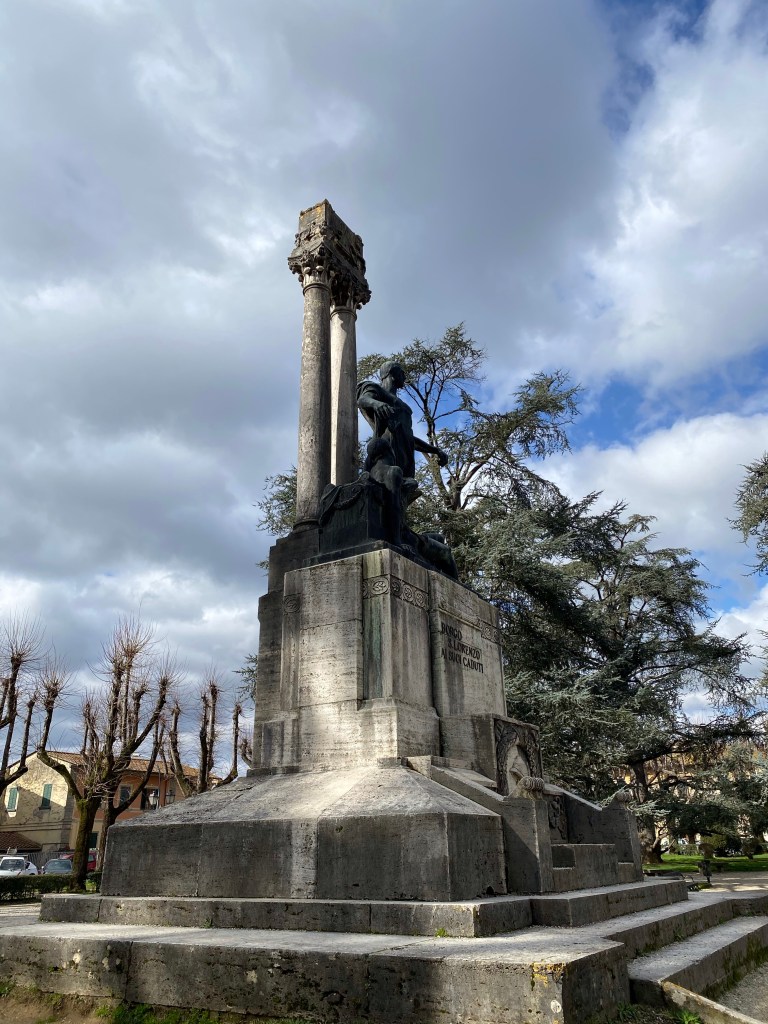
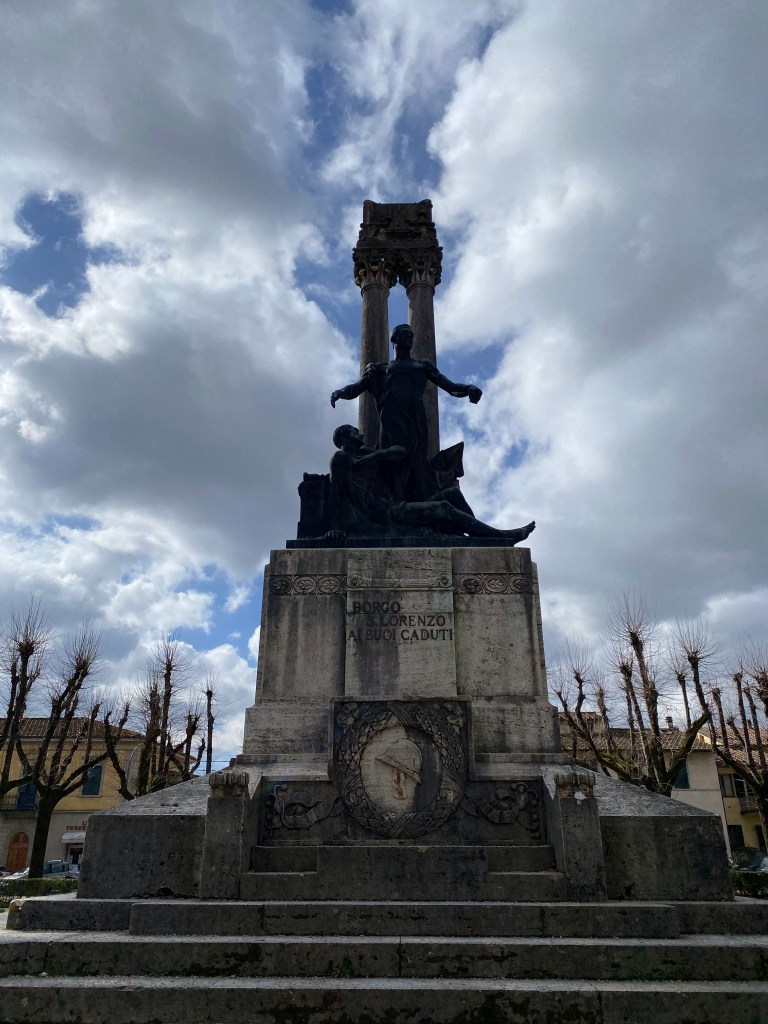
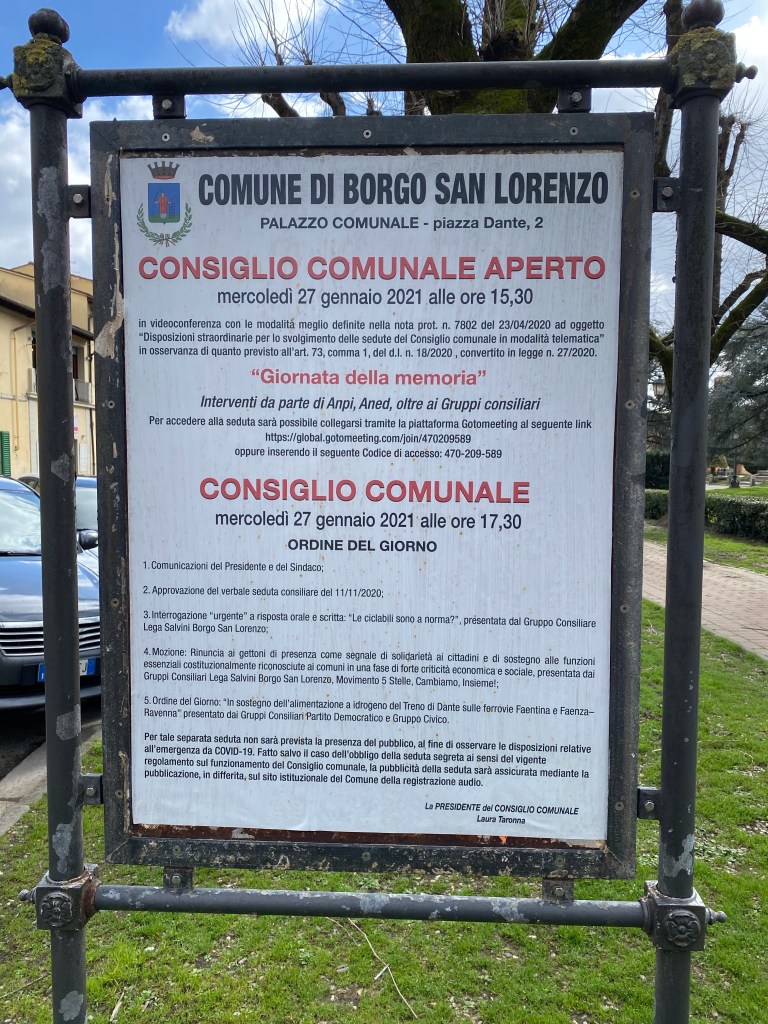
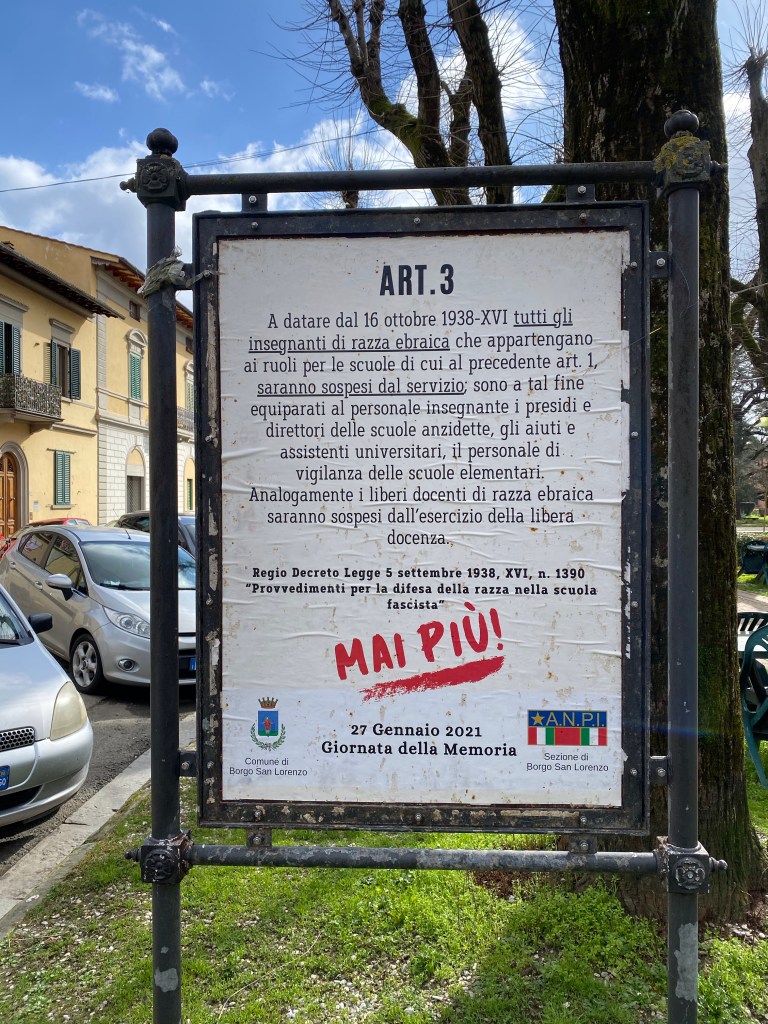
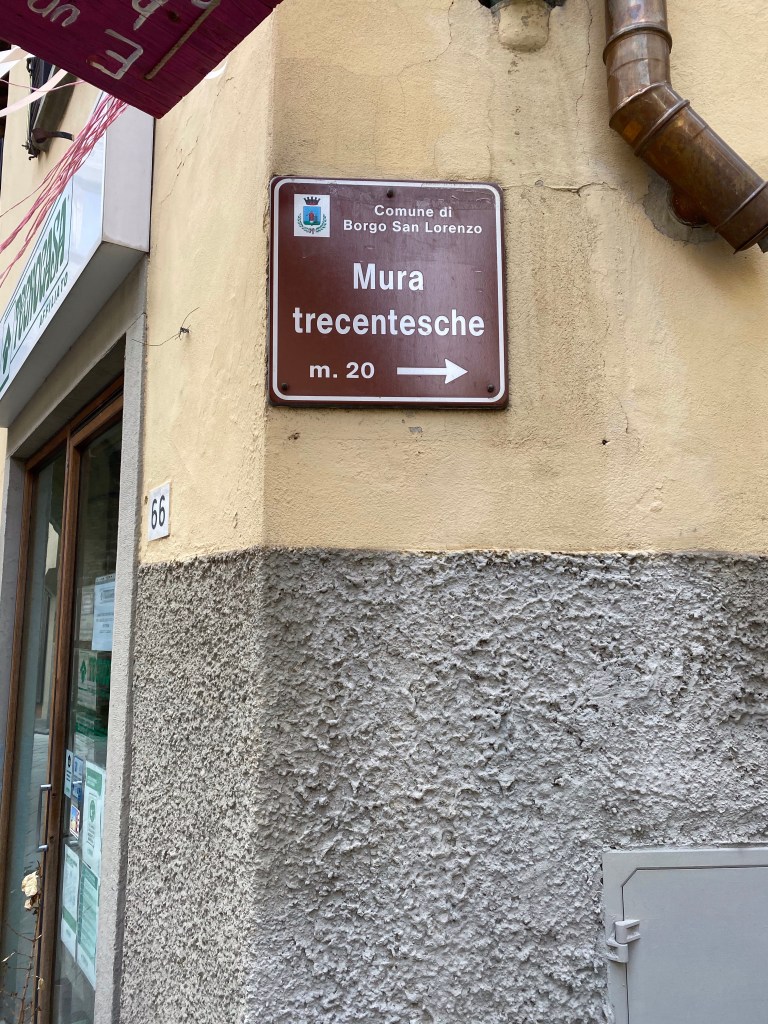
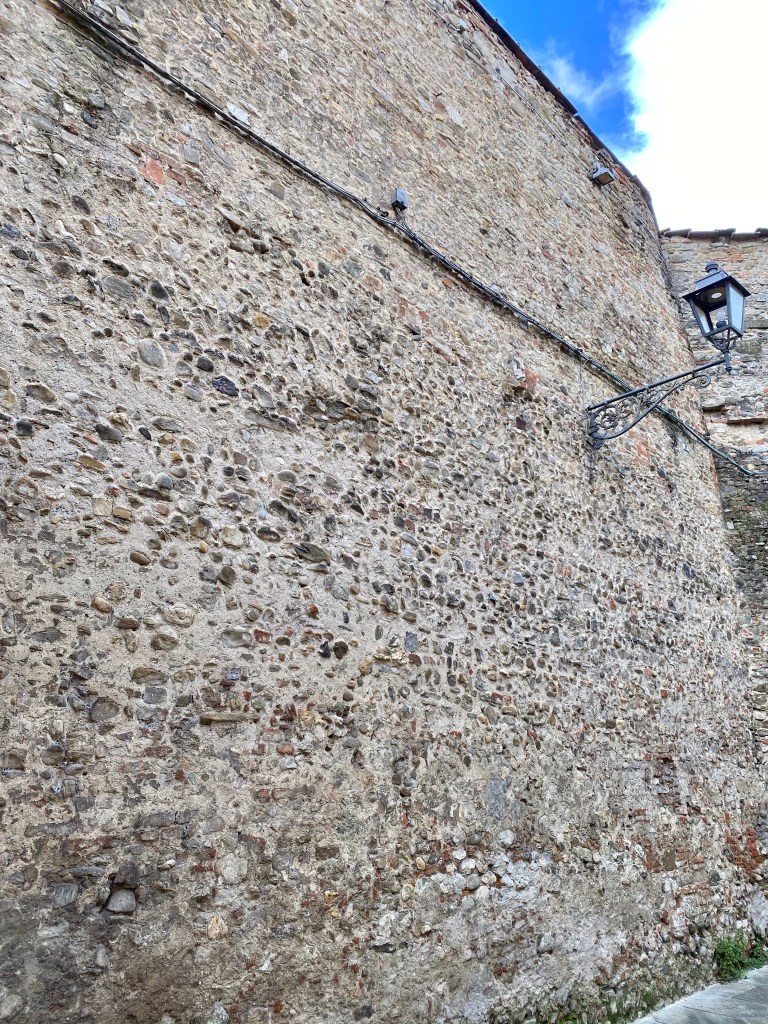
The Borgo still has parts of its 13th century city walls:
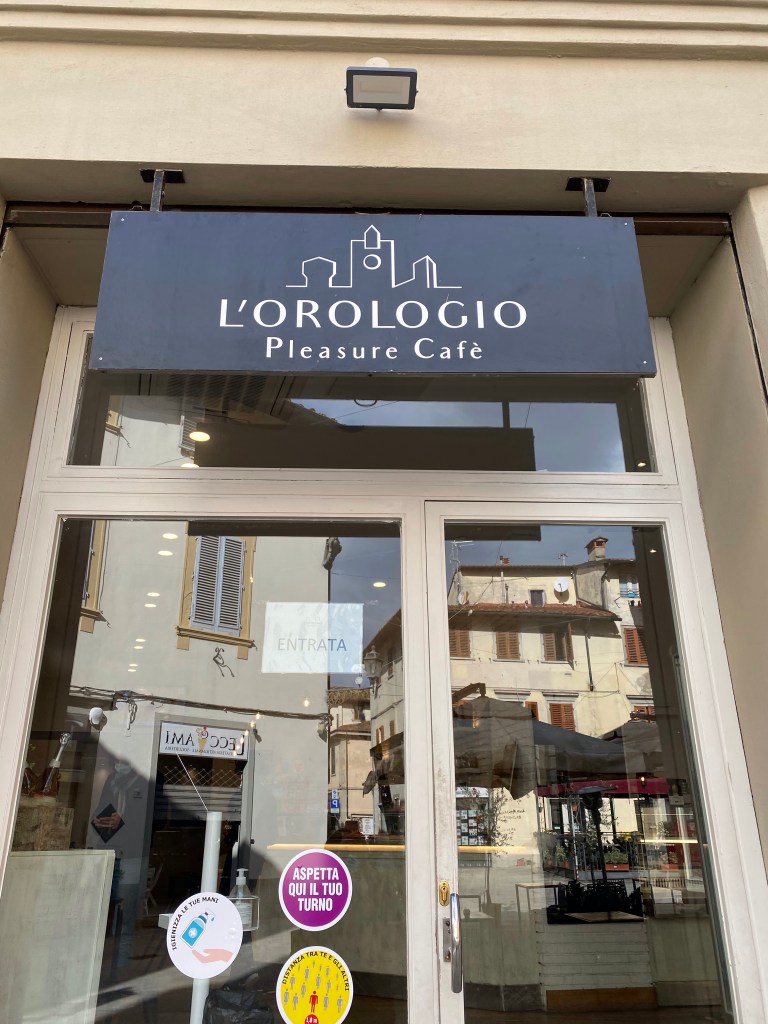
Every town needs a pleasure cafe, doesn’t it?
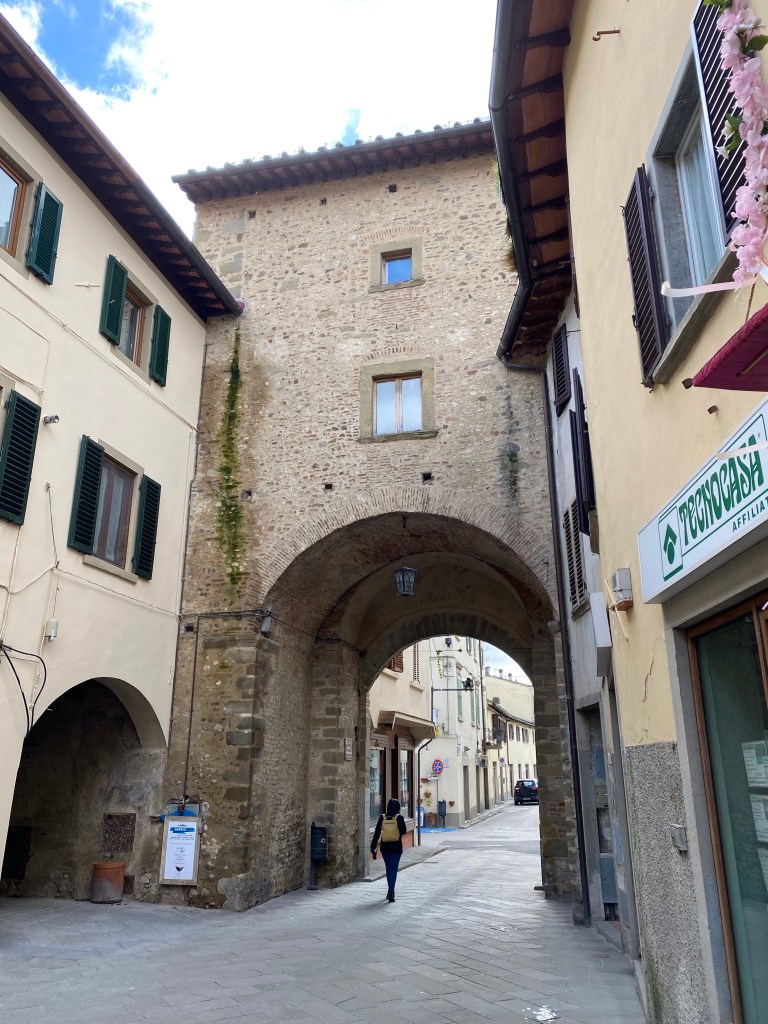
Miscellaneous sights:
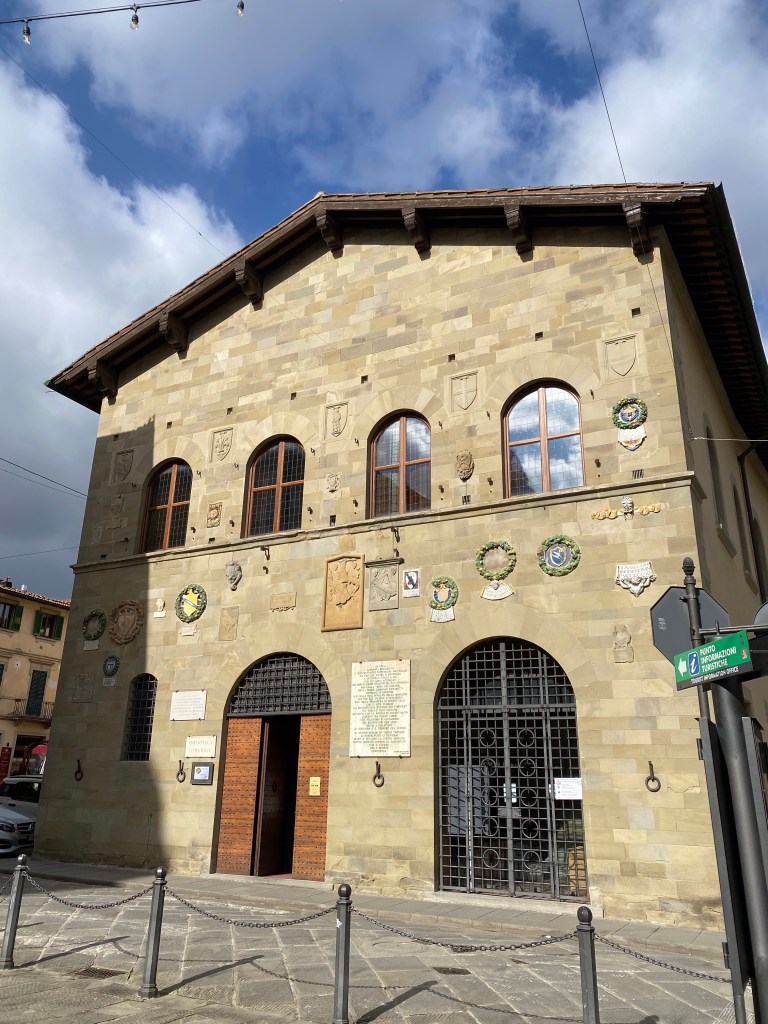
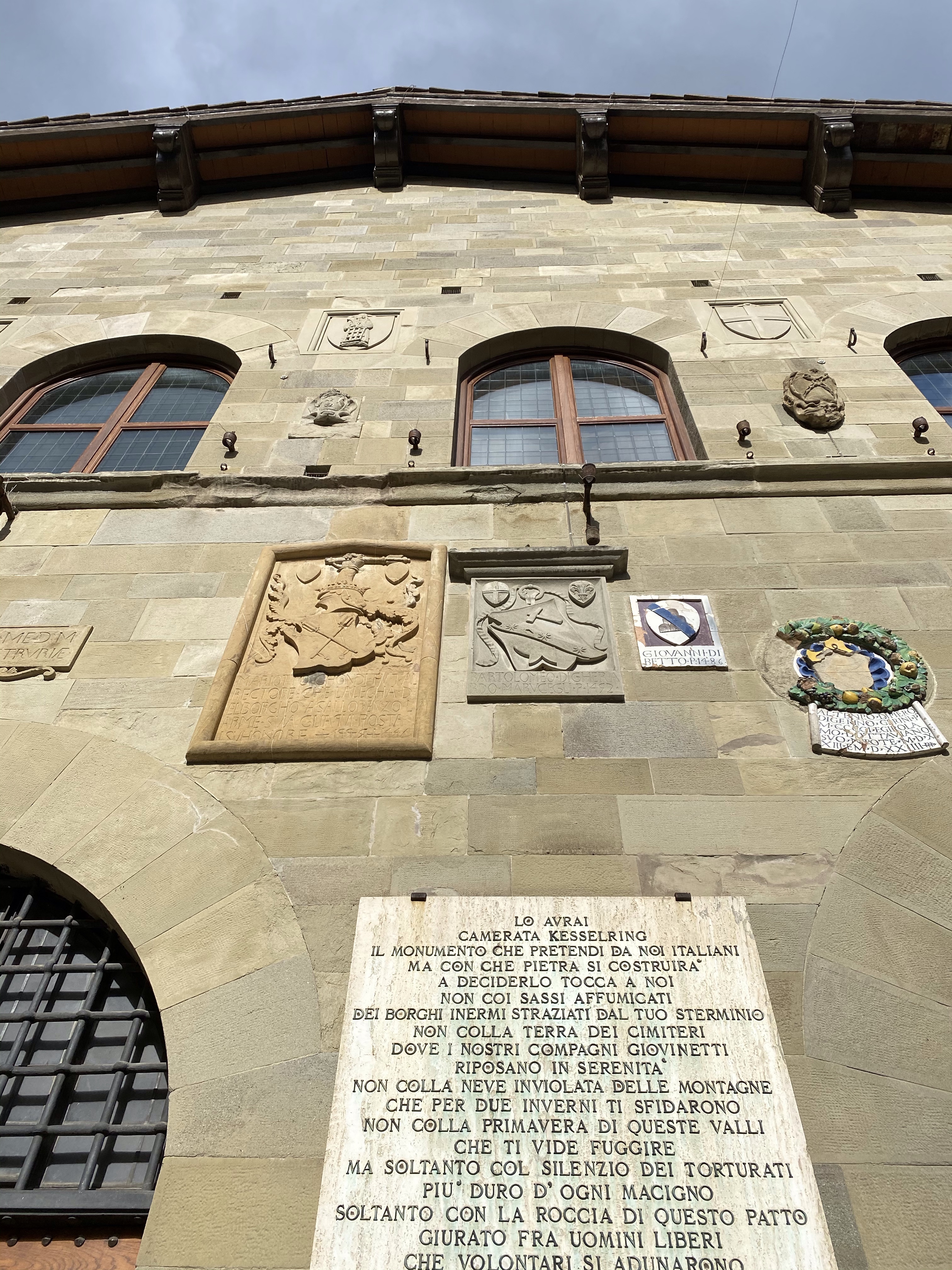
The building below is the commune’s library. I wonder if it also serves as a town hall, based upon all the commemorative plaques:
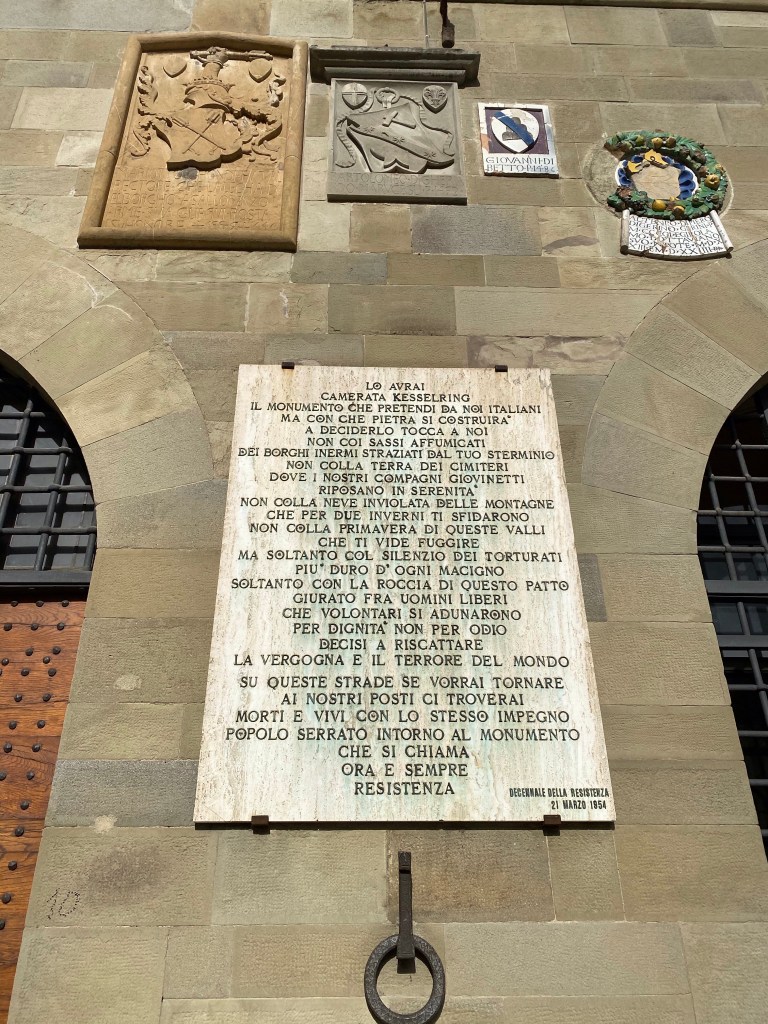
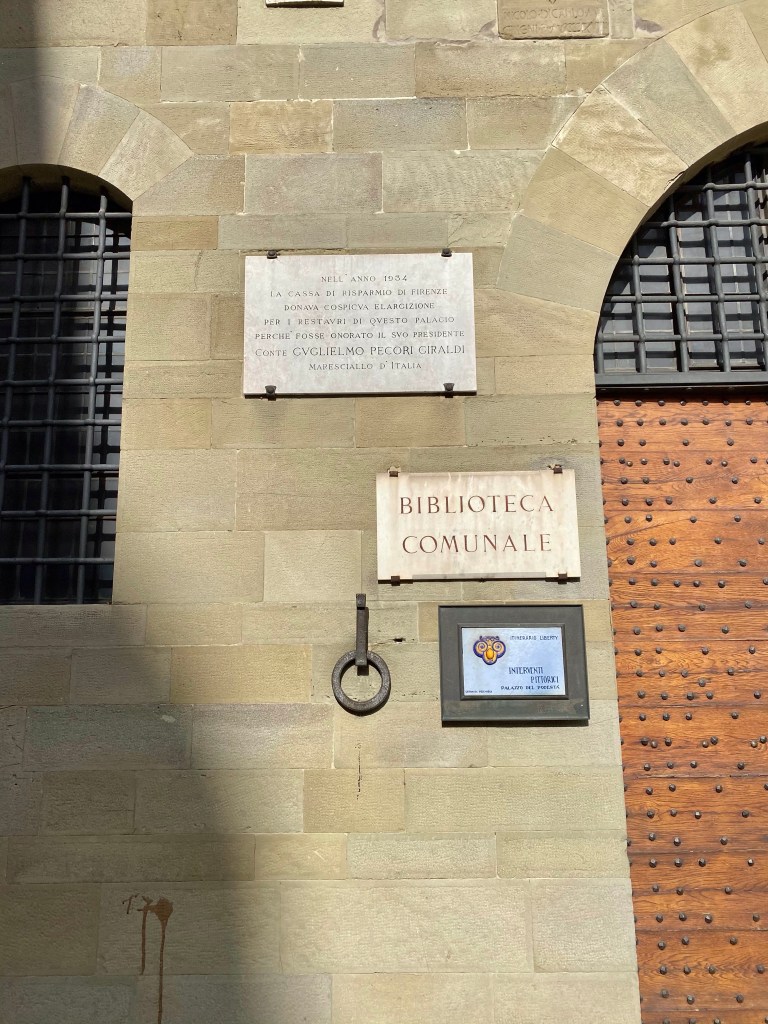
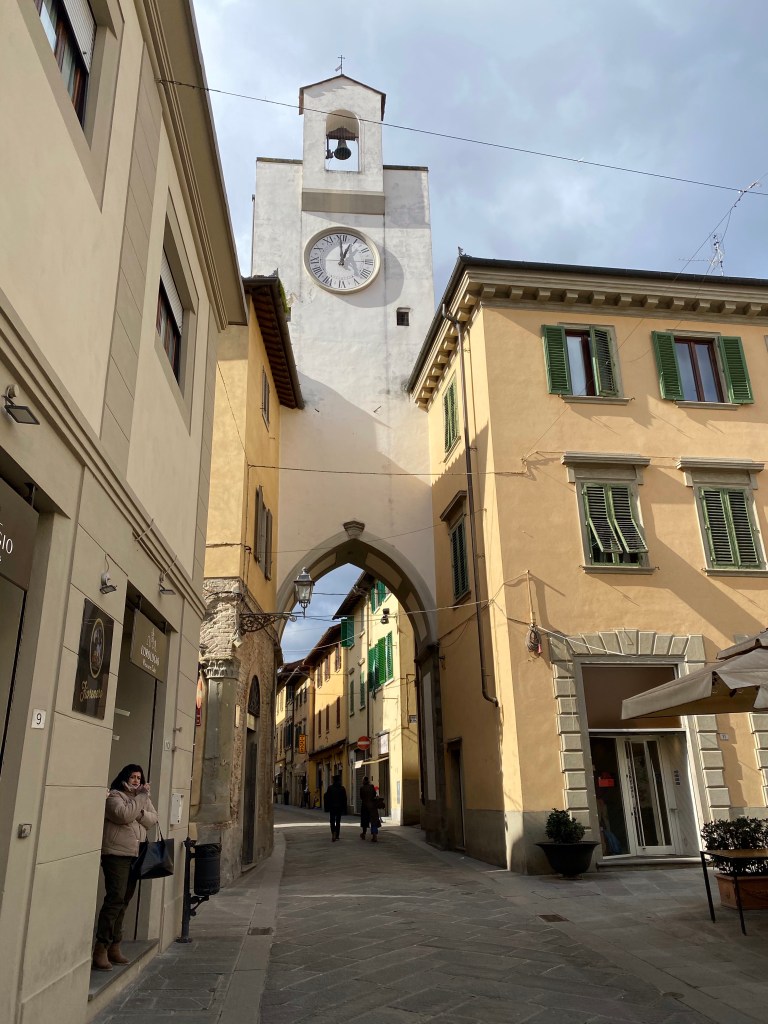
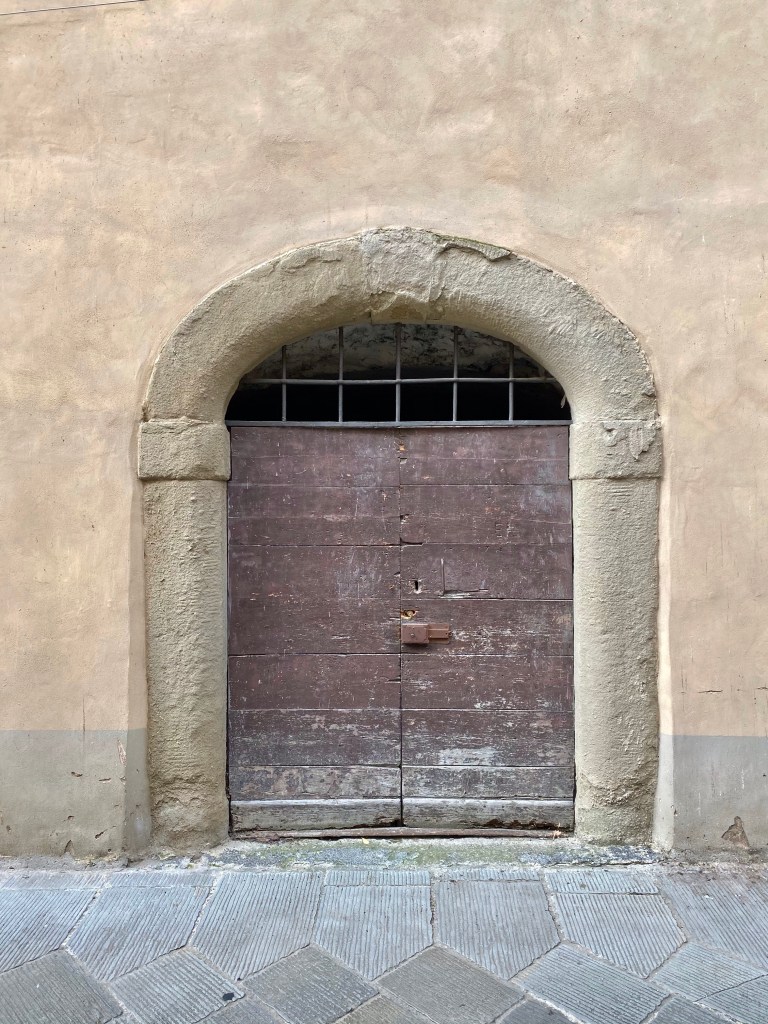
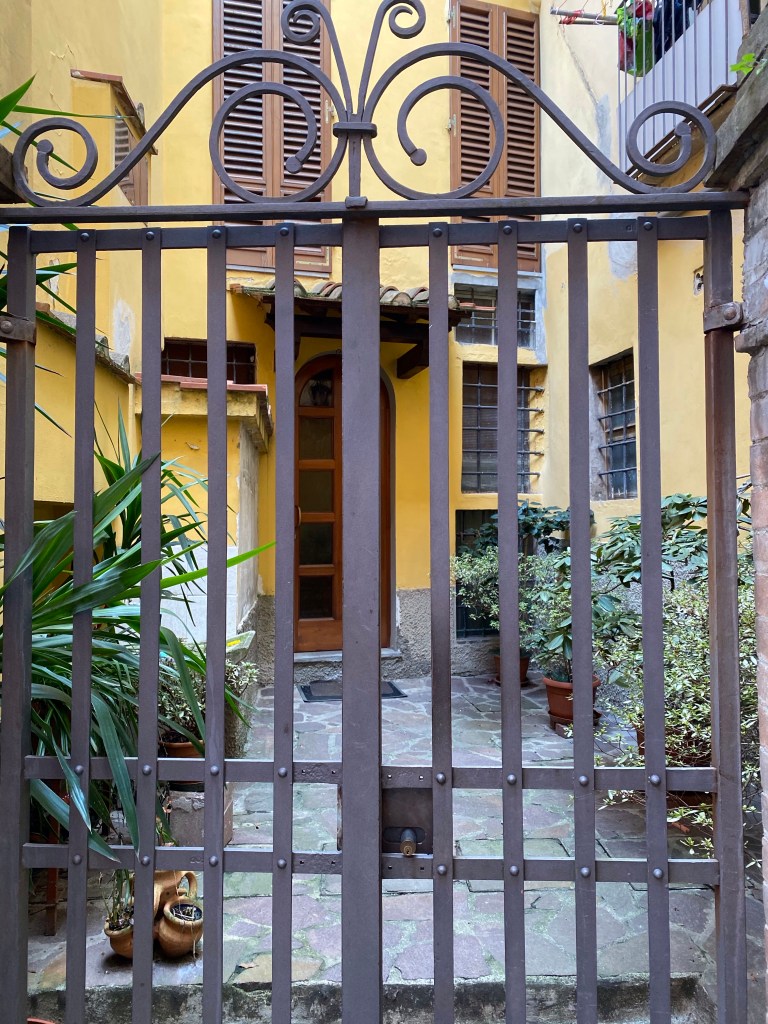
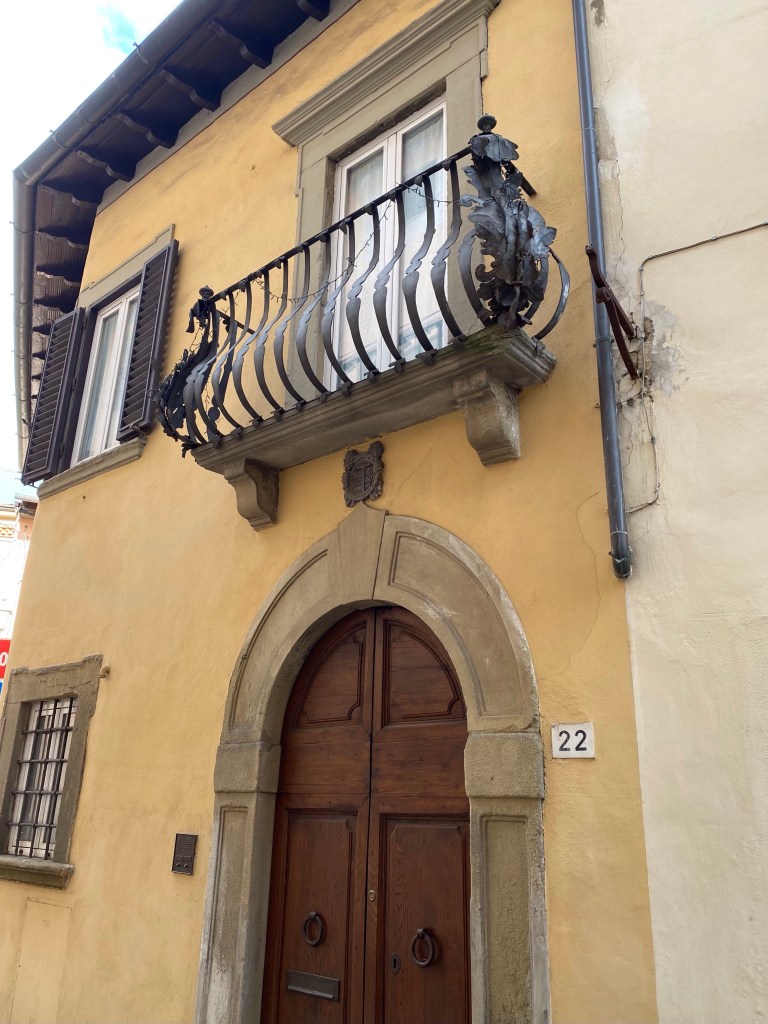
Below, a few shots of some interesting architecture and details:
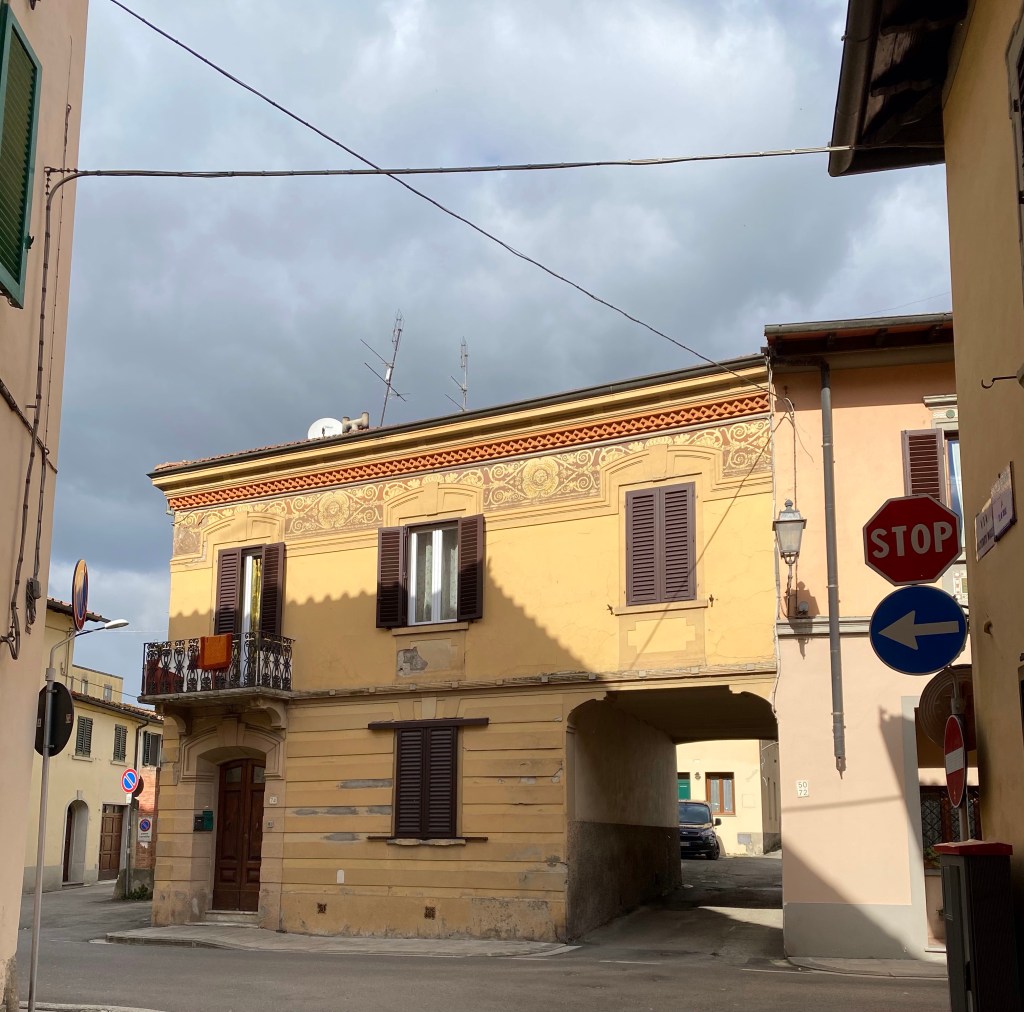
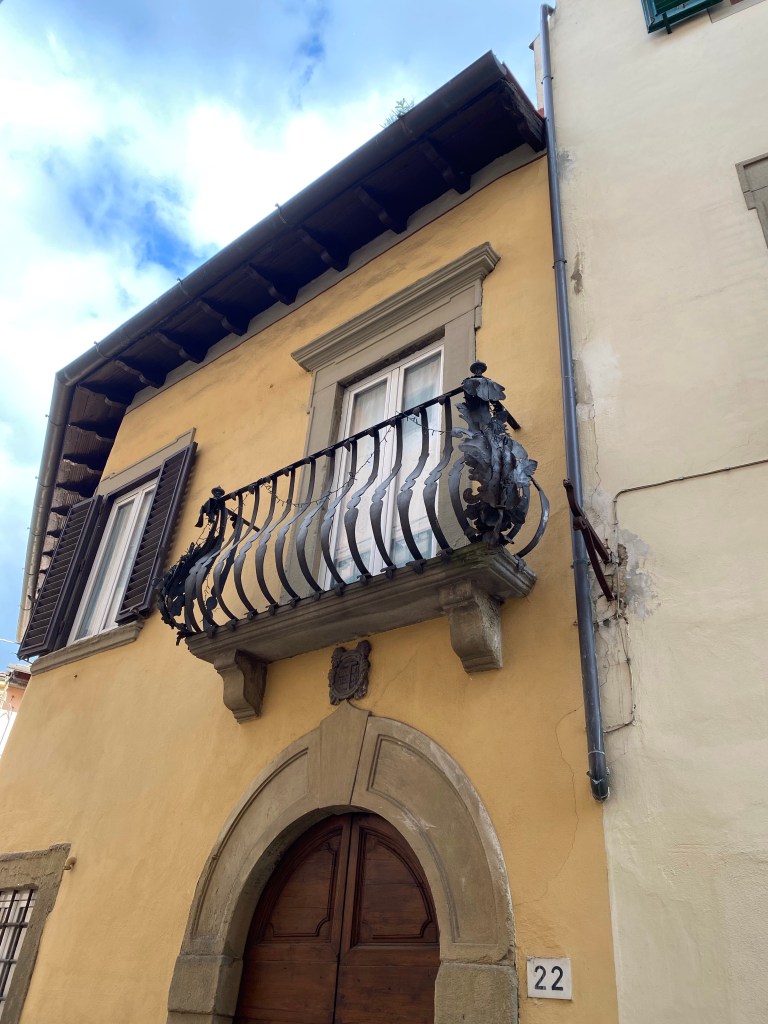
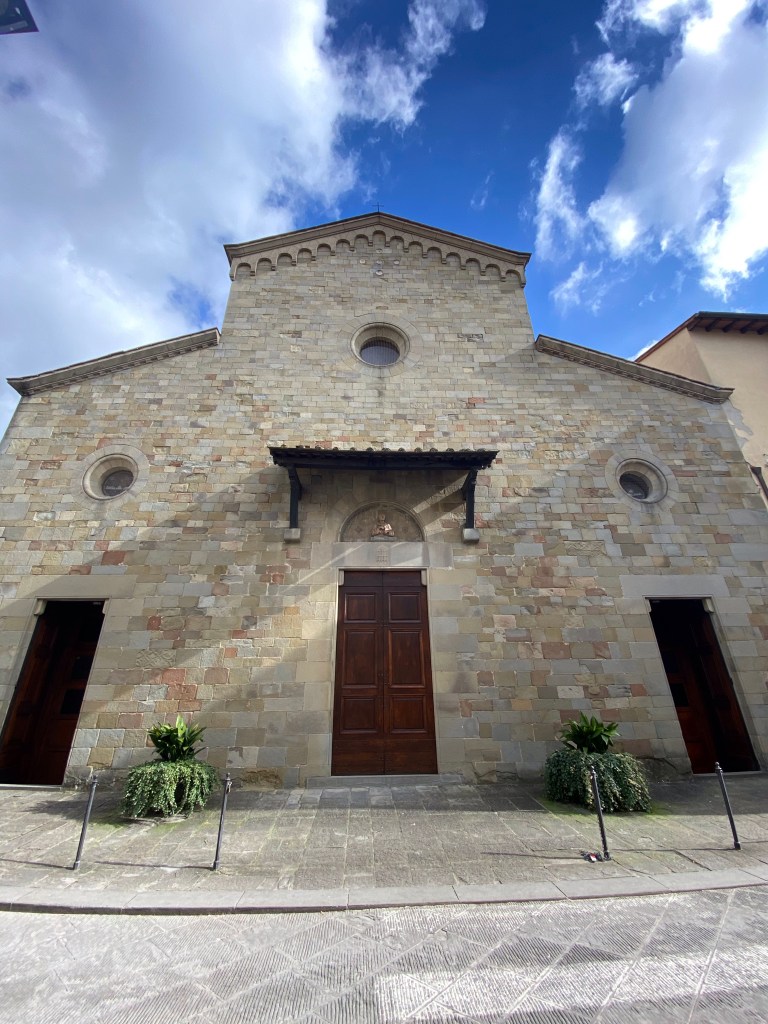
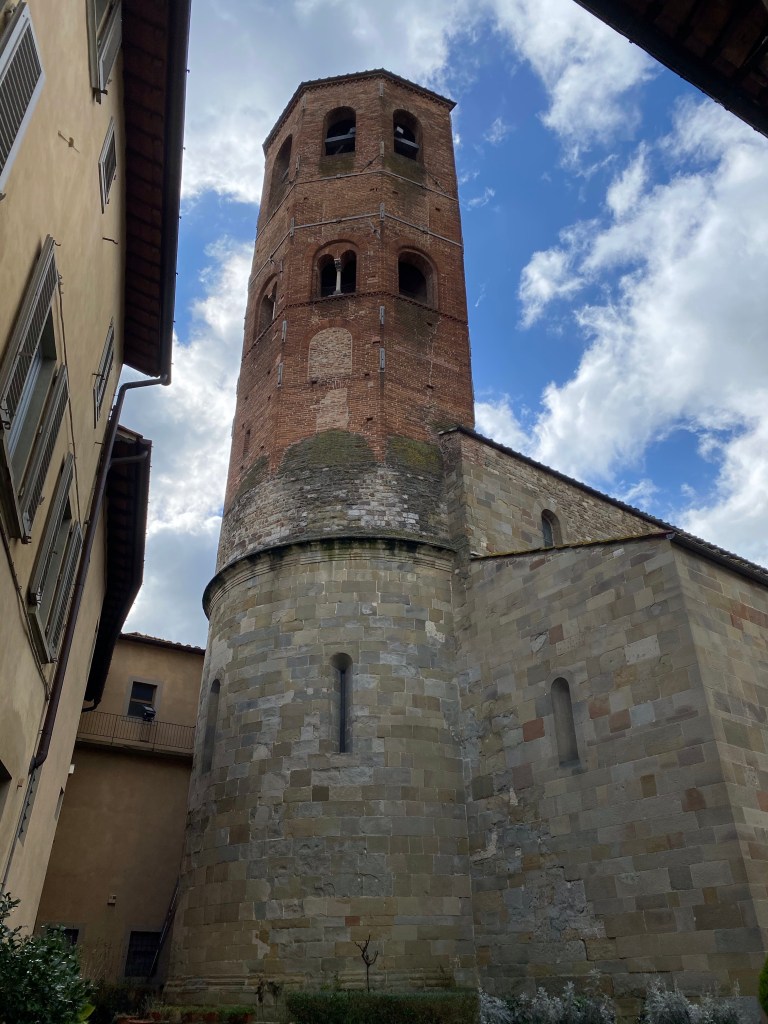
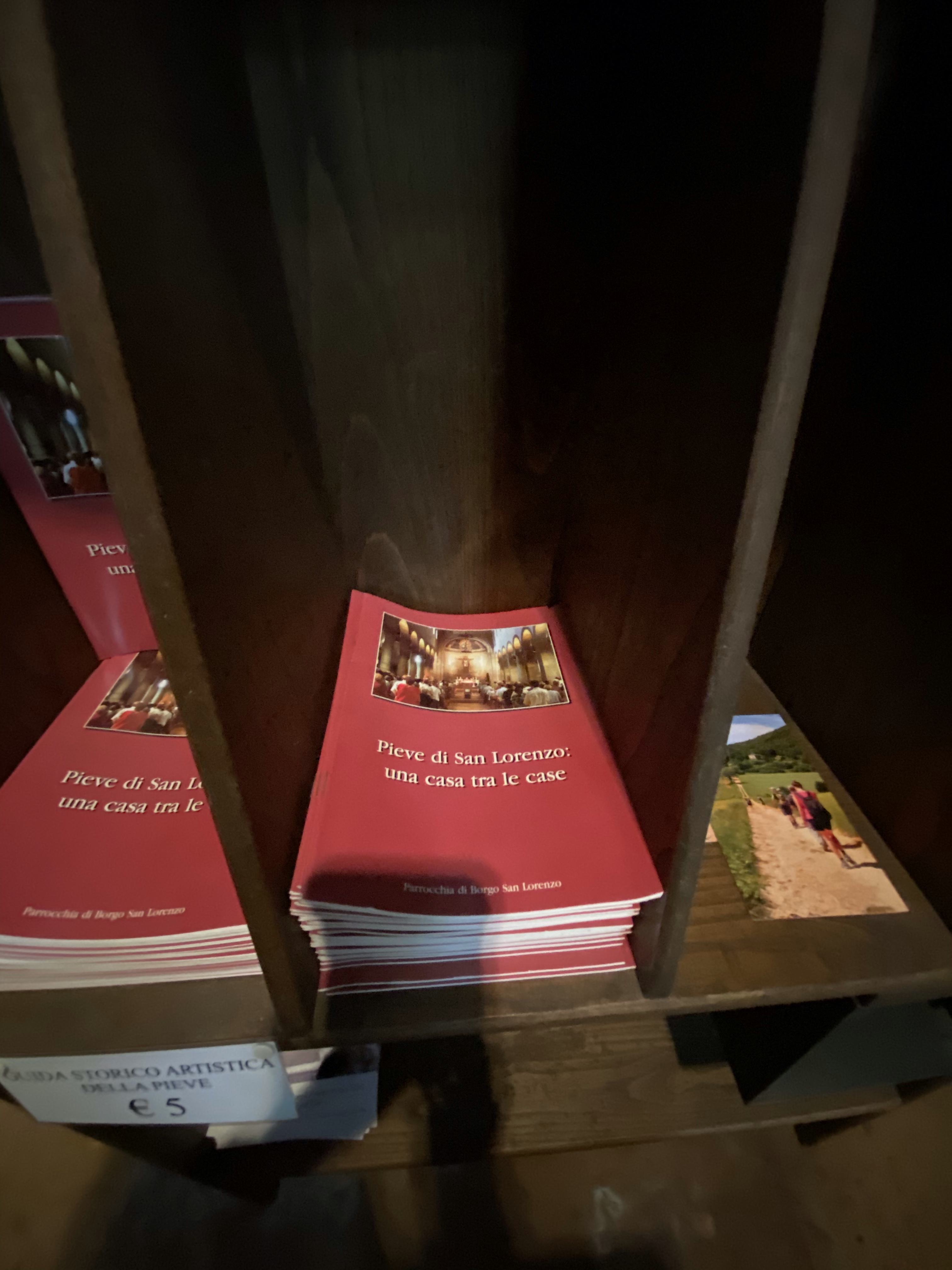
Next I arrived at the Pieve di San Lorenzo, the parish church.
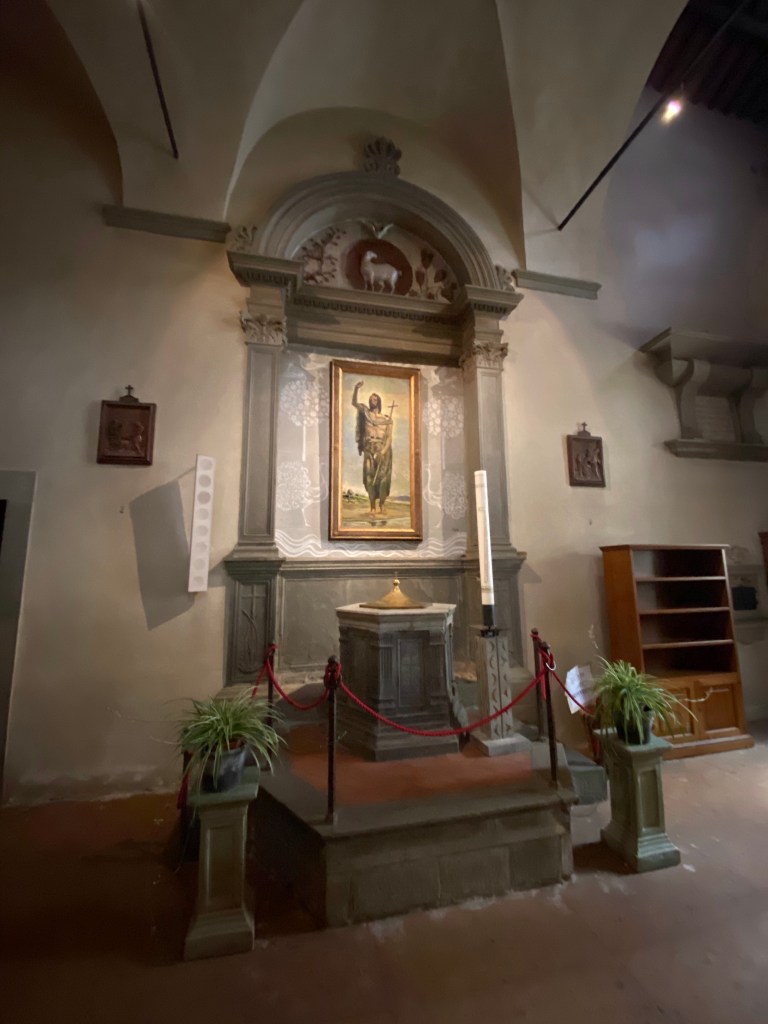
Above is the church’s baptismal font:
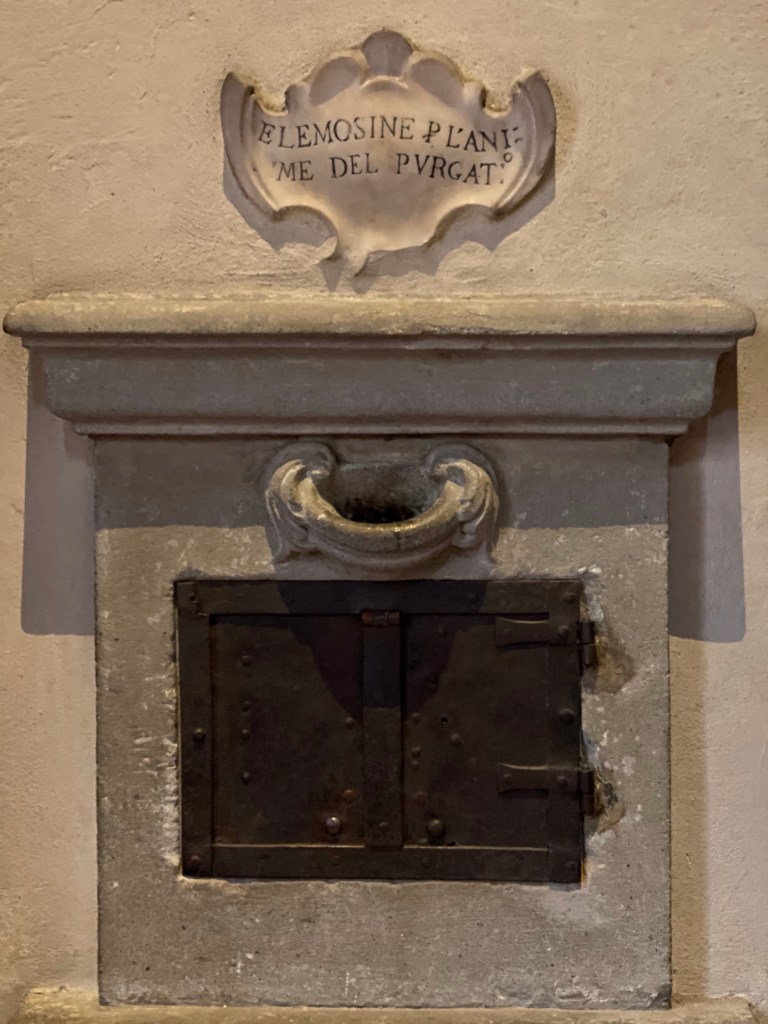
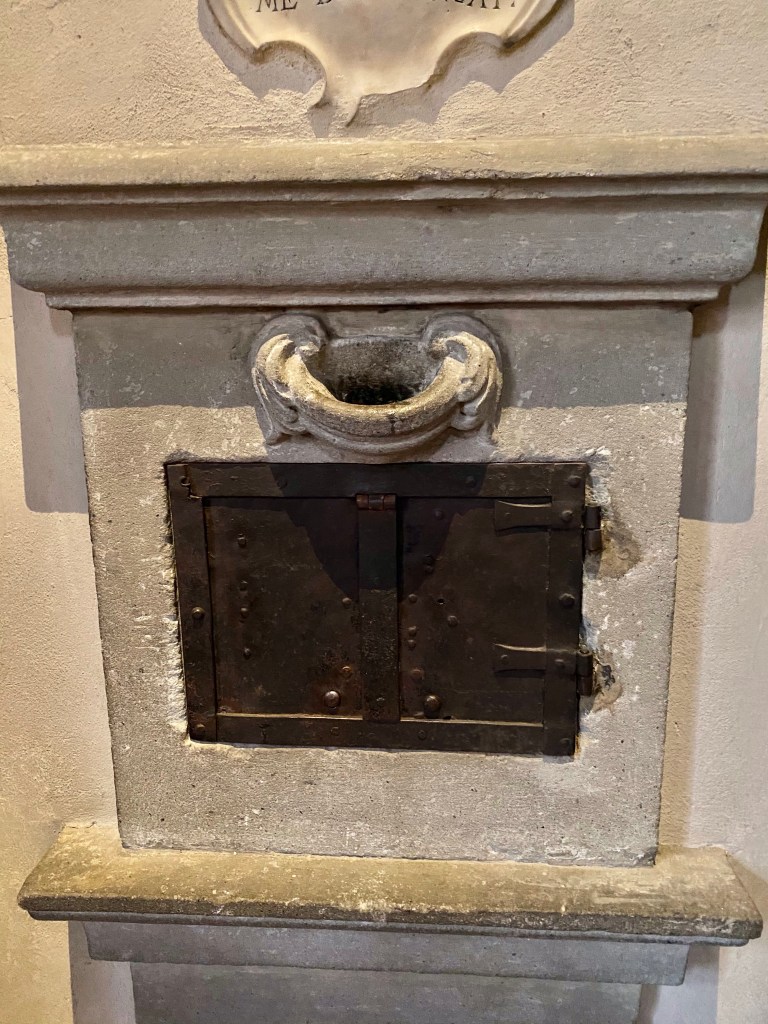
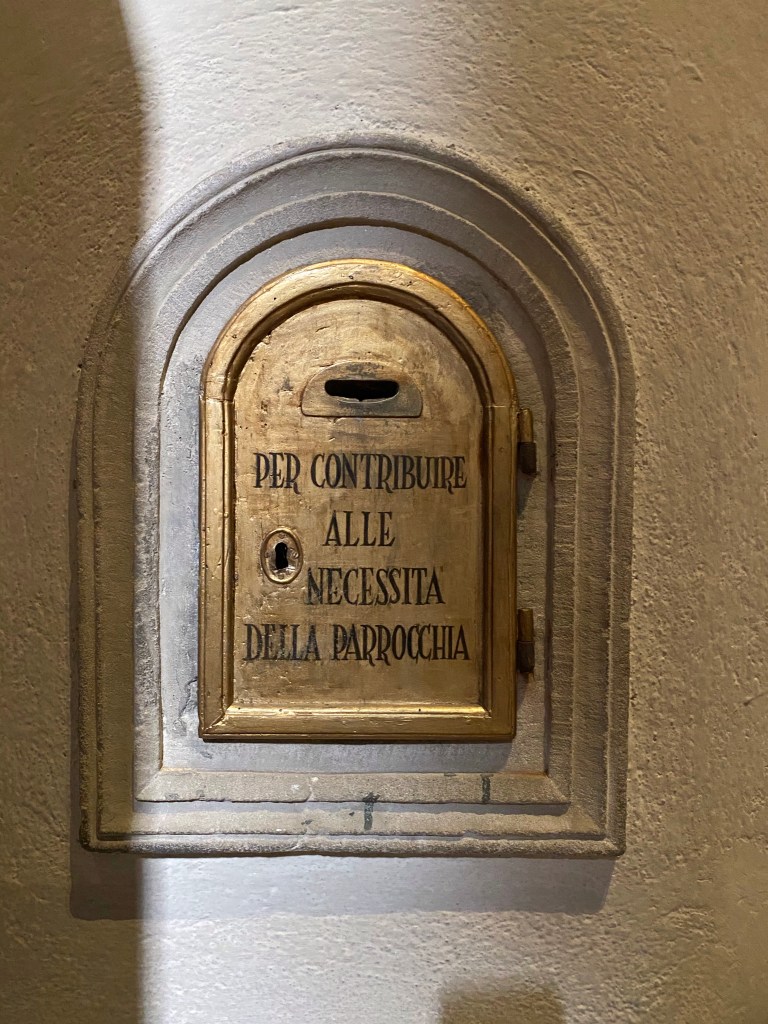
When I am in these old churches, I almost always spot something unique about them, or at least something I’ve not encountered anywhere previously. The next few pictures above and below show little boxes set in the wall in which a parishioner could insert money for a specific cause: one seems to be having to do with purgatory and the other is dedicated to necessities that the parish church needed.
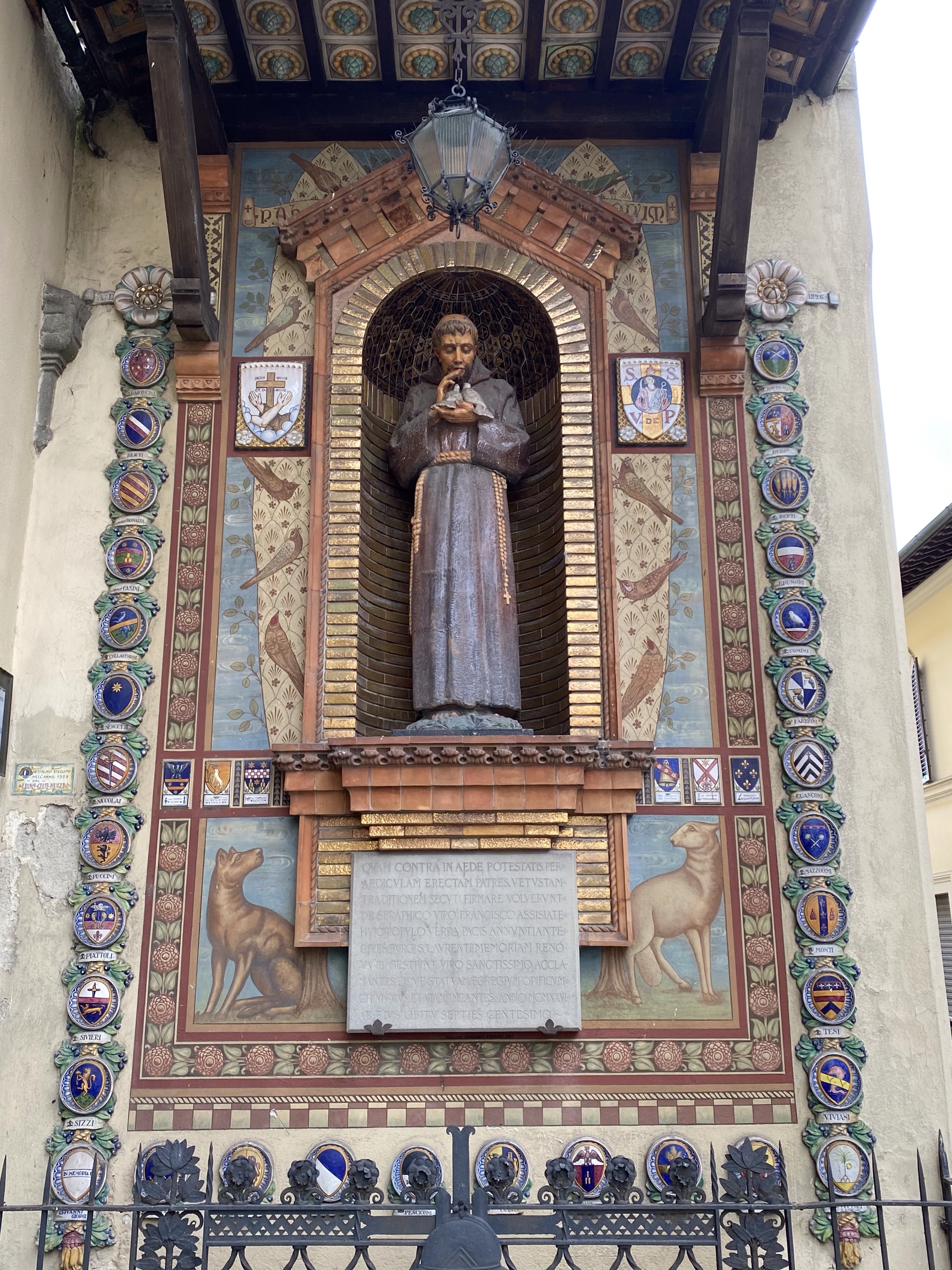
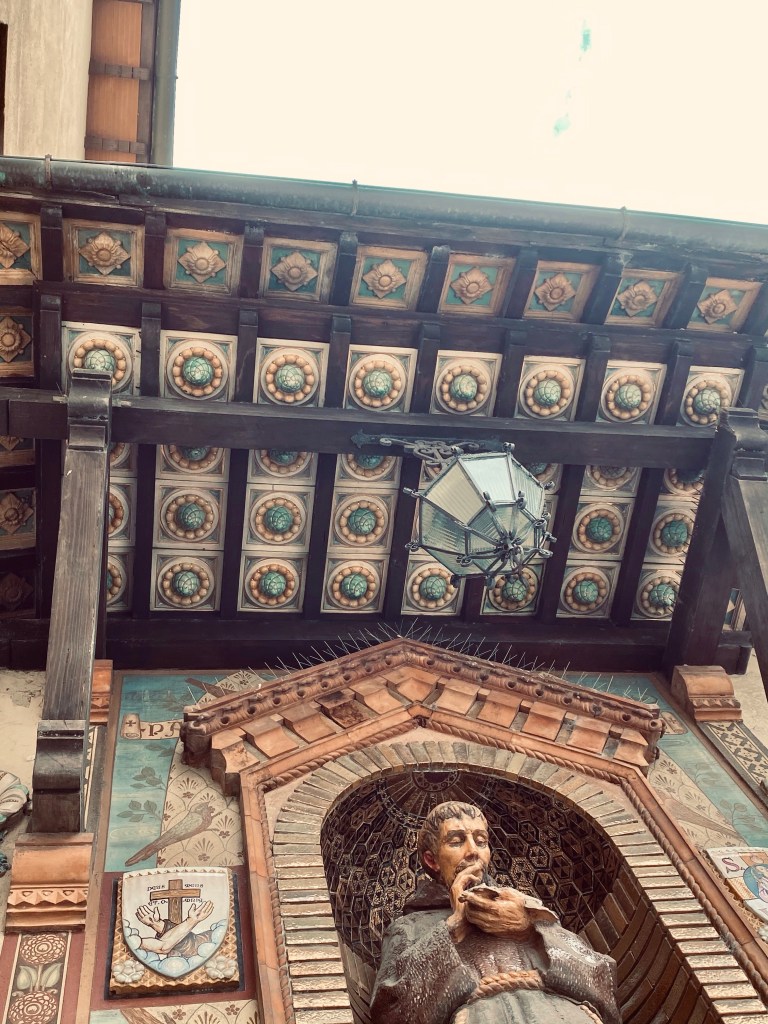
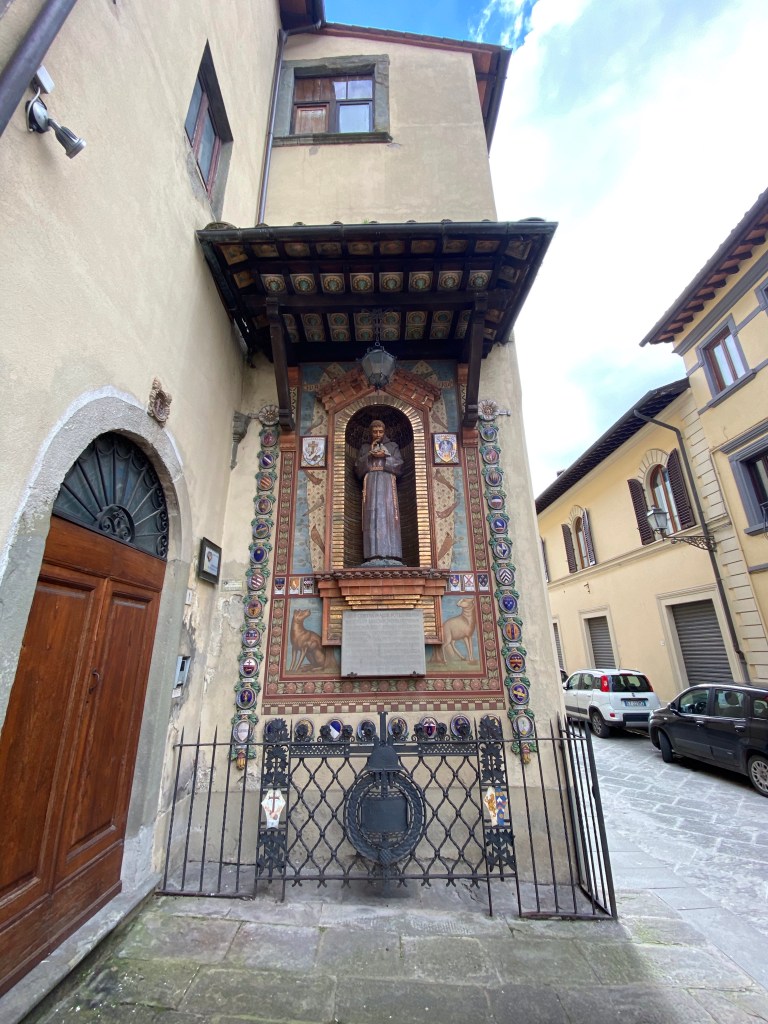
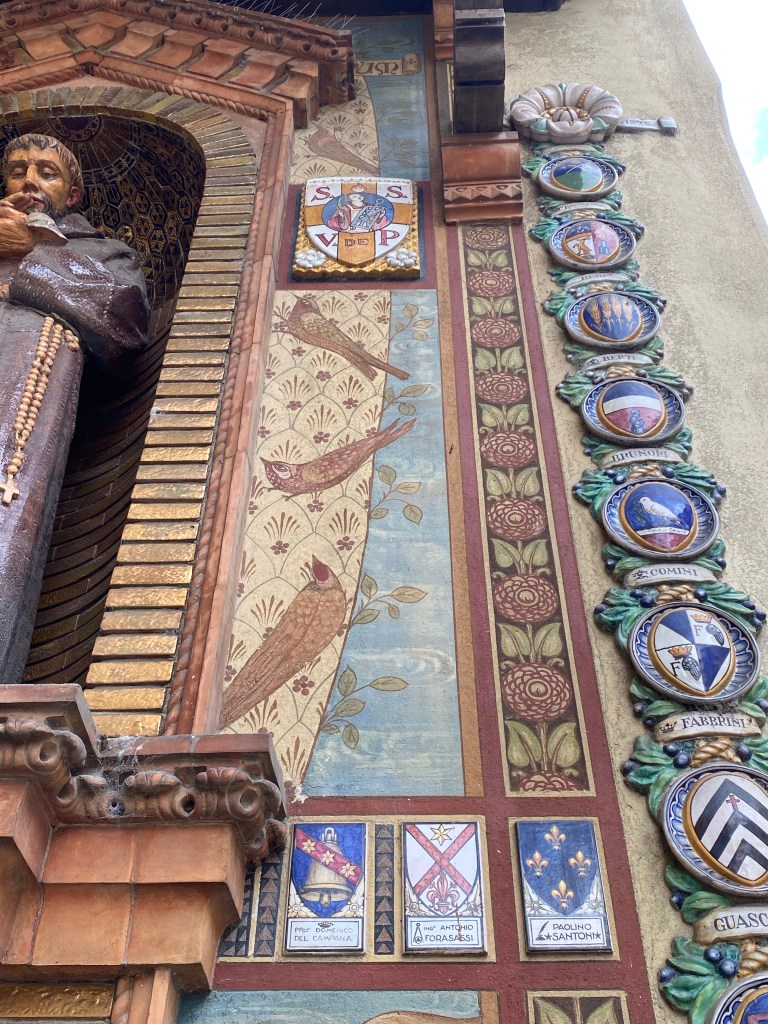
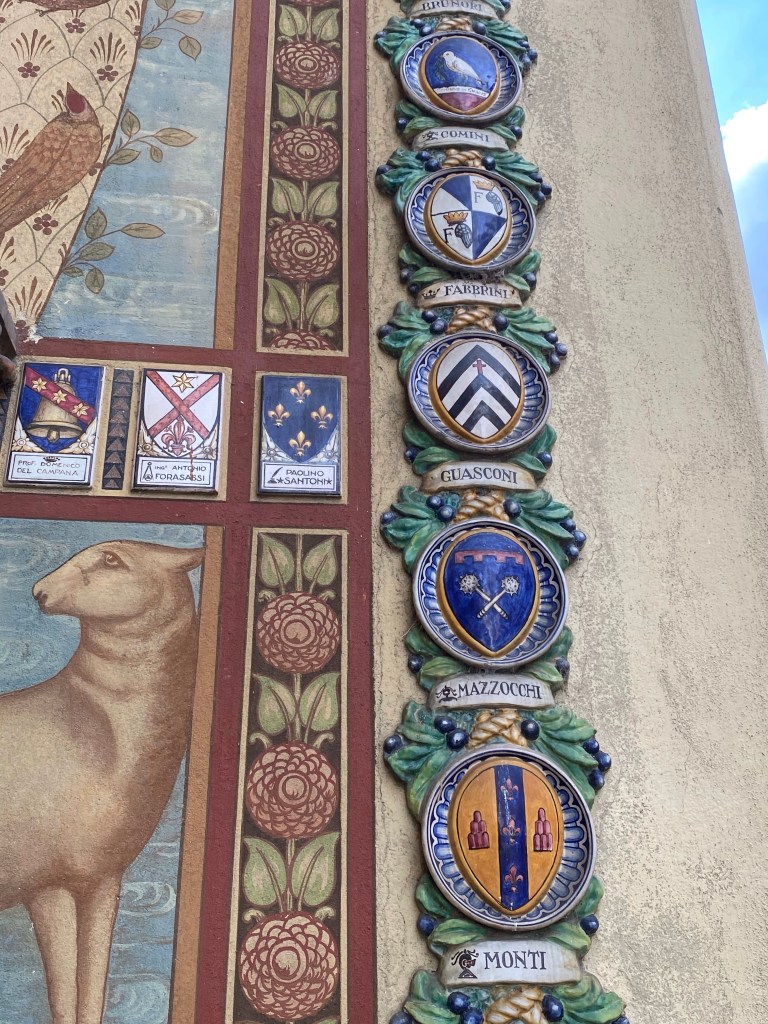
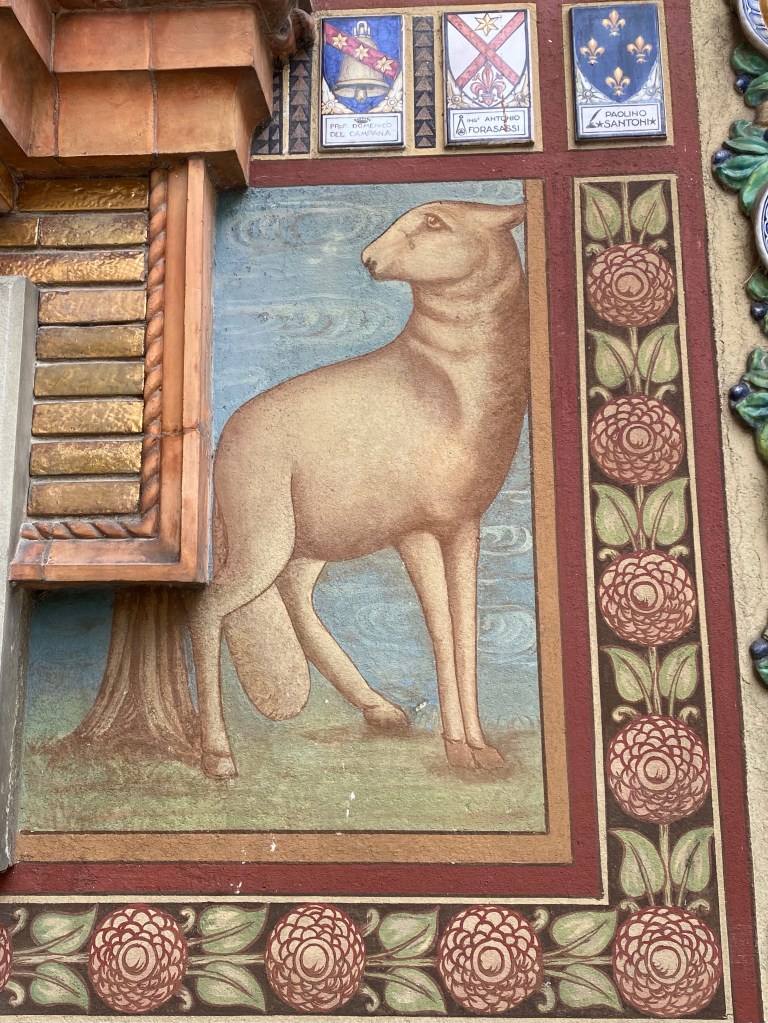
Outside the church, on the right side of the facade, sits this incredible tabernacle dedicated to St. Francis. It has coats of arms of a lot of famous Tuscan families all around it, as well as images of more faithful dogs and primitive but delightful birds listening to St. Francis preach. The ceramics in this gorgeous work of art speak to the sign I saw near the Borgo’s train station, saying that this town is the town of ceramics.
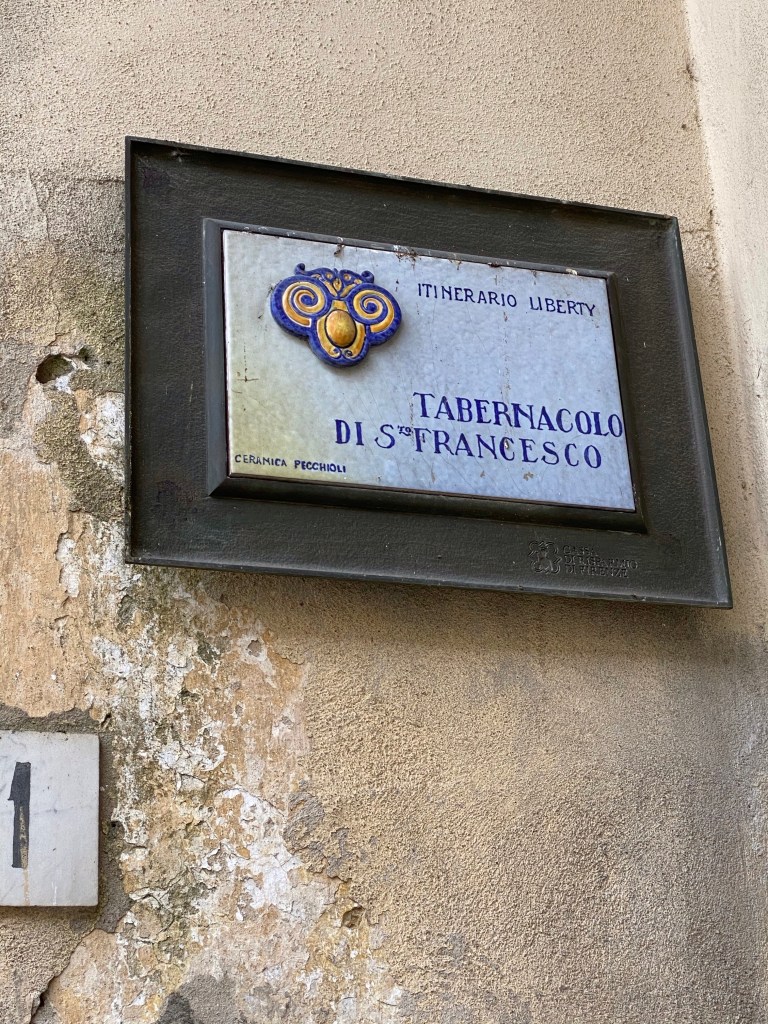
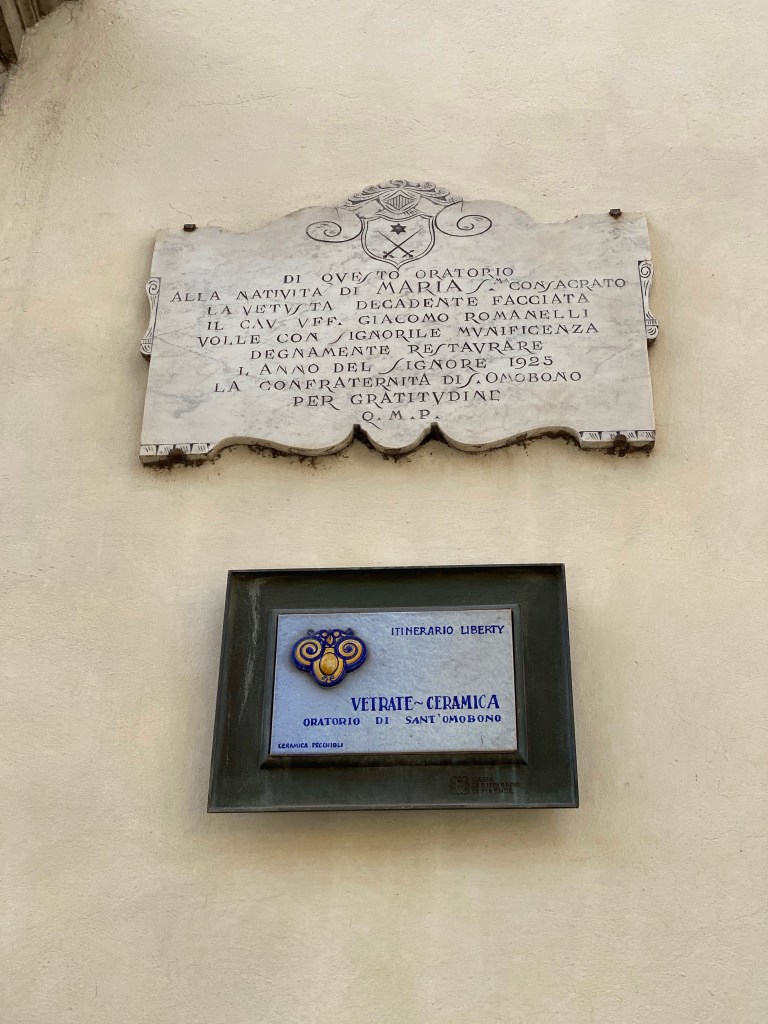
The picture above shows a ceramic plaque that speaks to a “Liberty Itinerary” which is tied up with the town’s history with ceramic art. As I mentioned above, I’ll discuss this in a future post.
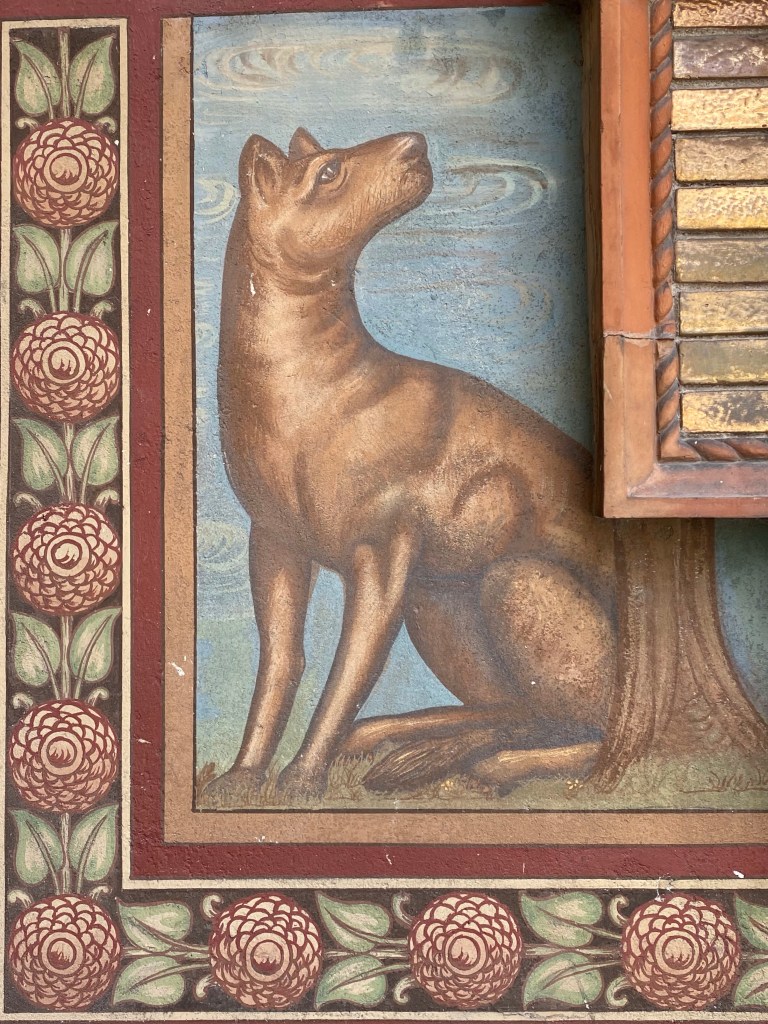
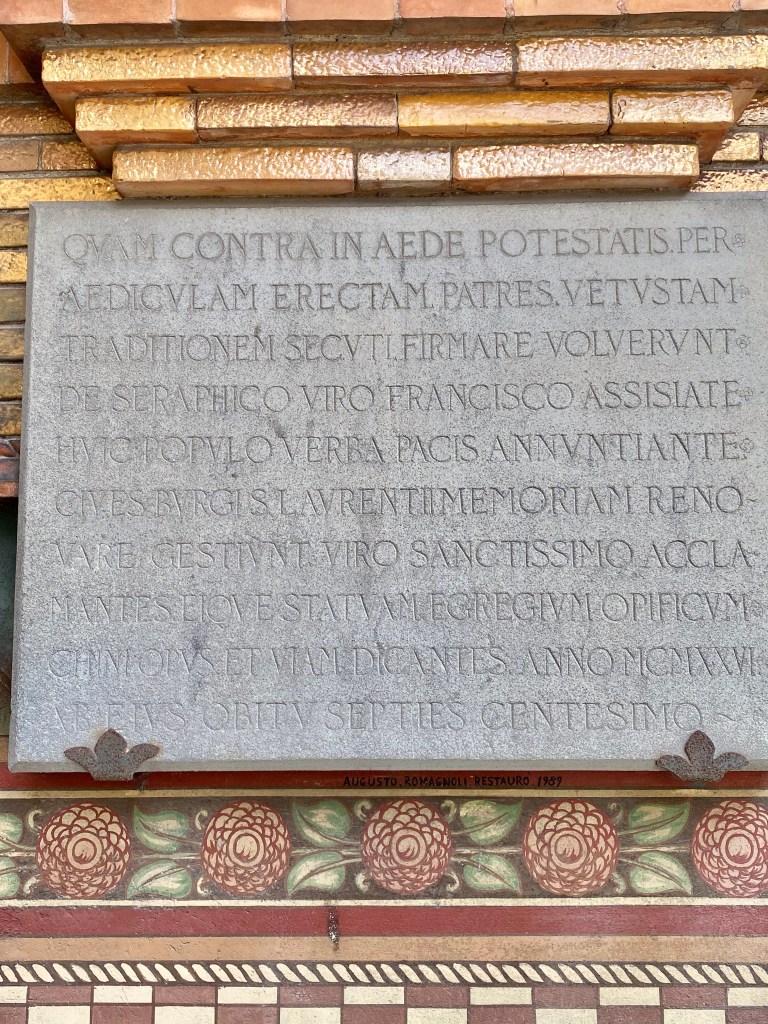
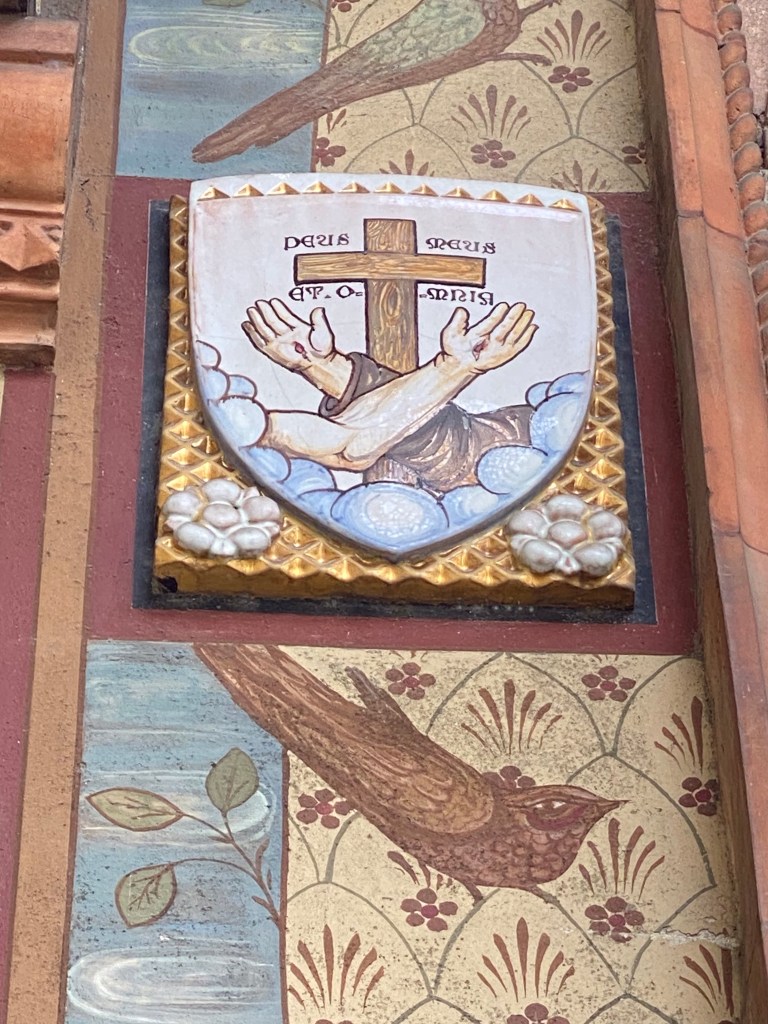
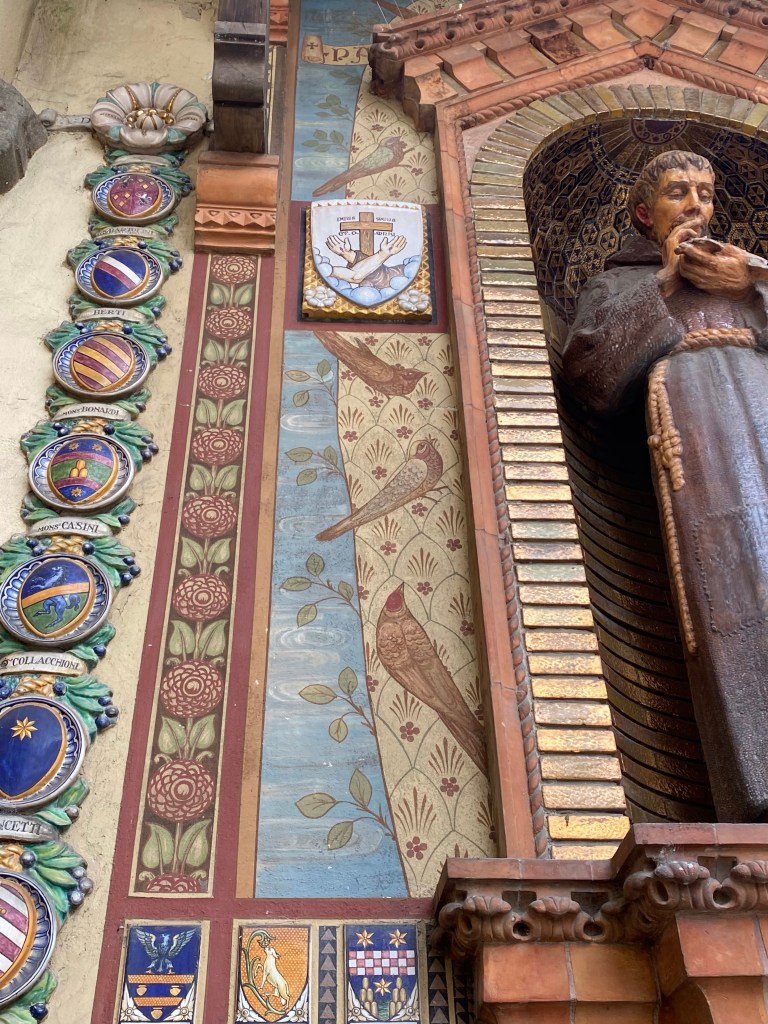
And, finally, some shots to close out this post. I am always interested to see how the fabric of the walls of buildings are formed. So often there are traces of prior buildings, which the Italians, ever aware of their incredible history, are wont to save. The next photos tells this story in the Borgo.
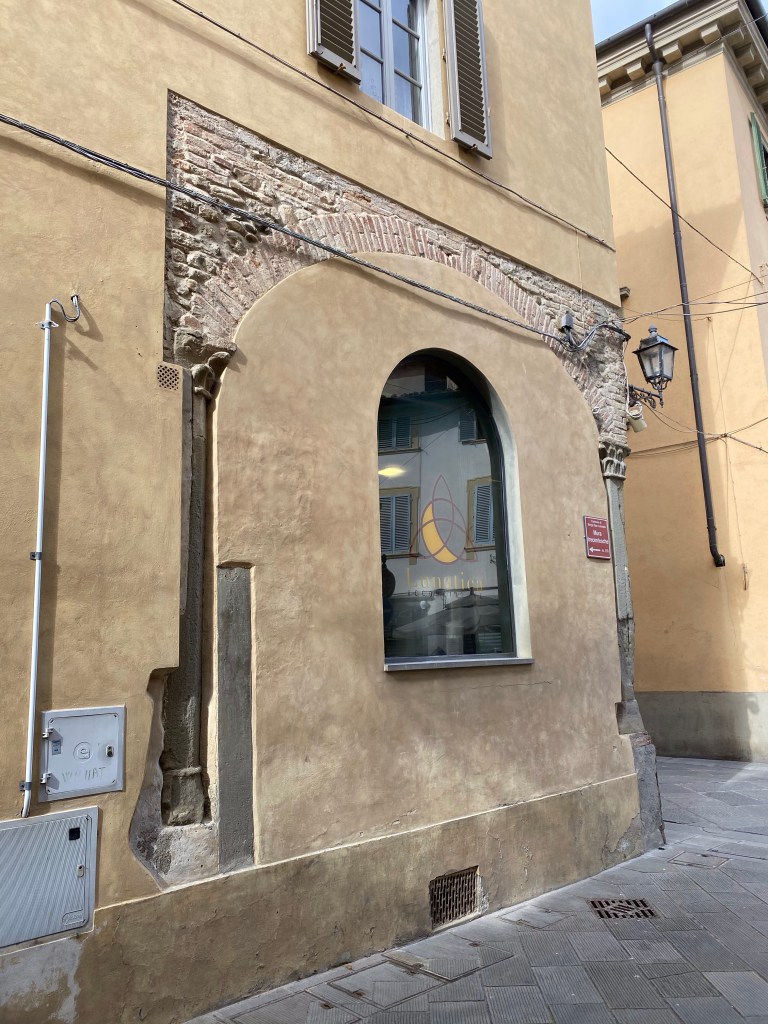
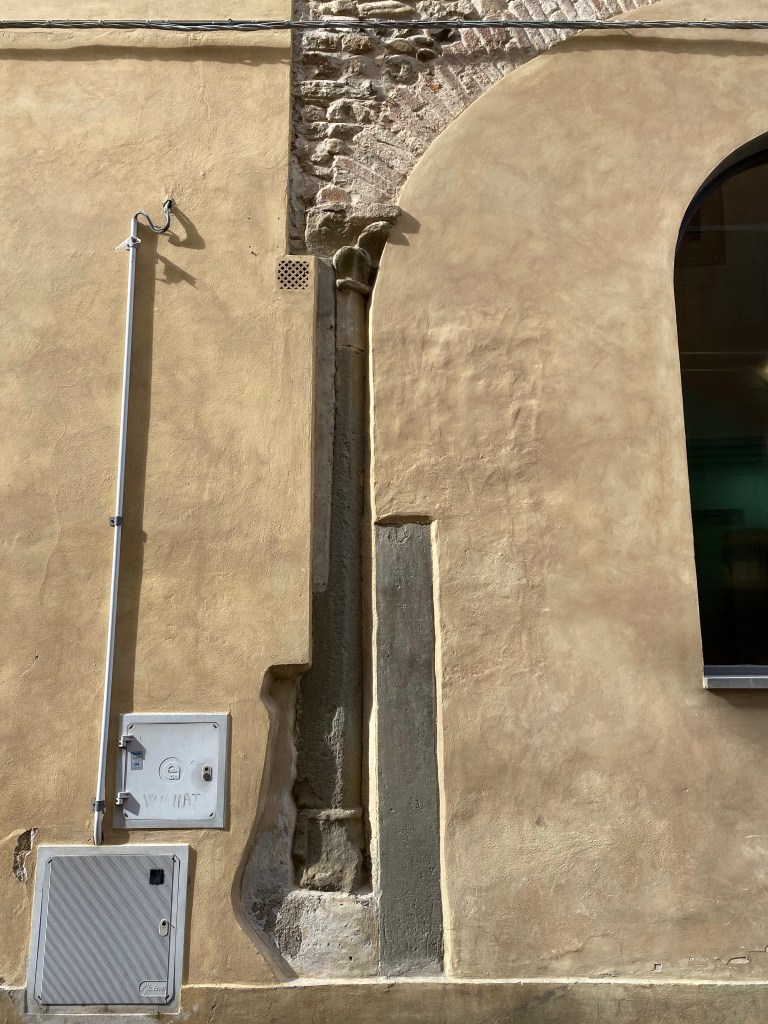
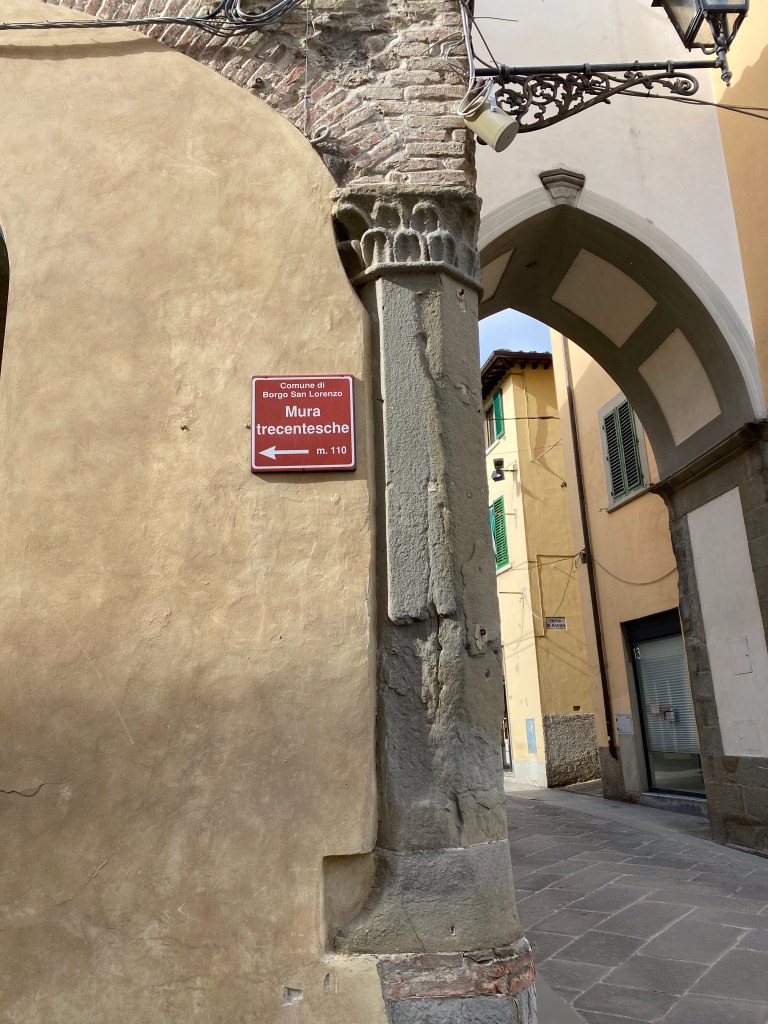
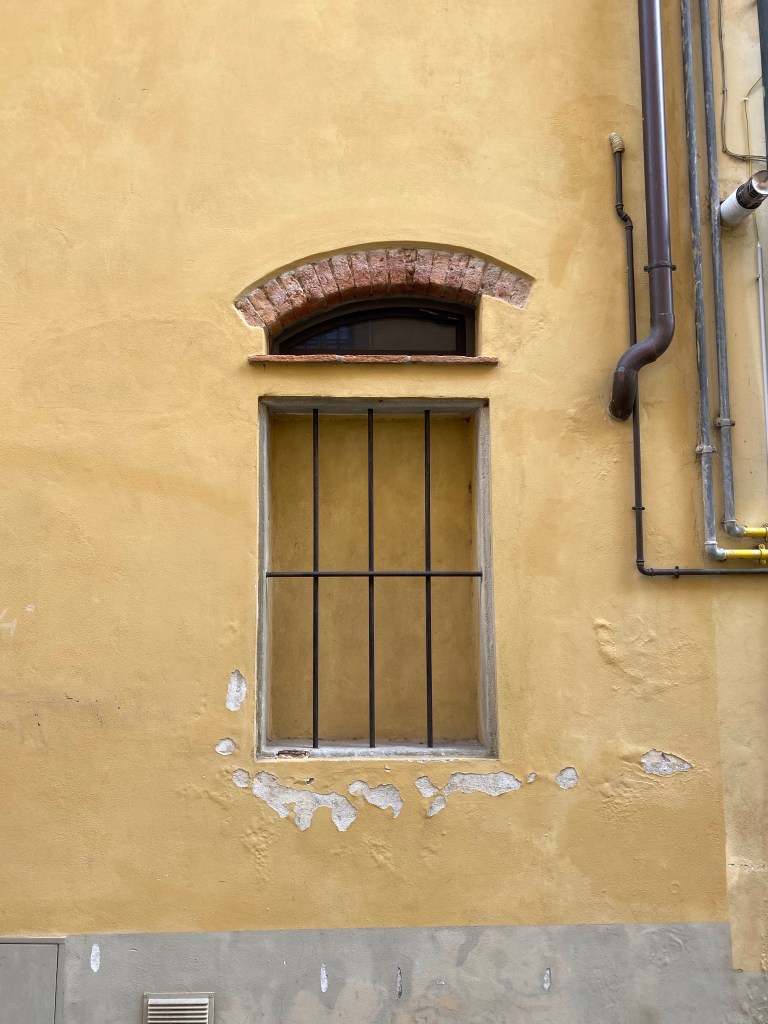
I loved my brief visit to the Mugello and will go again soon! Hopefully this Covid scourge will be under control within the next few months, with the vaccine becoming more widely used. Speriamo! There is so much to see and do in Italia!
Travel and anticipation. Anticipation is half the fun.
Borgo San Lorenzo, near Florence, part 1
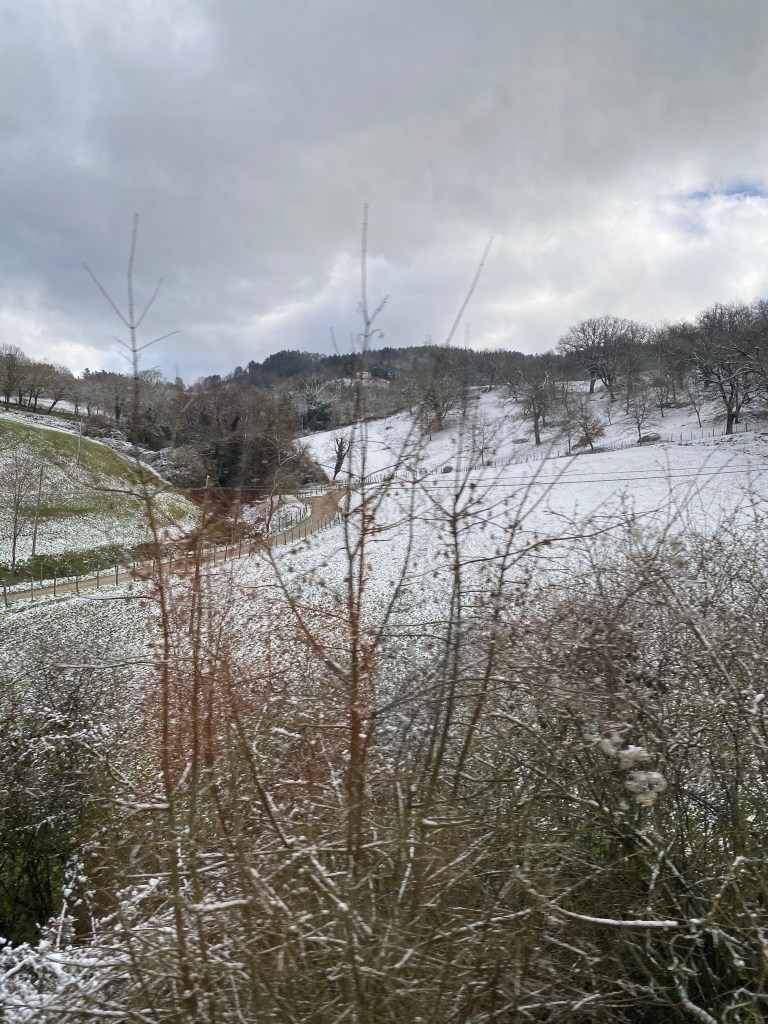
Last Saturday, when Tuscany was still in the yellow zone and such travel was permitted, I jumped on a train at Stazione Santa Maria Novella in Florence and took a ride up into the Mugello. My destination was the small town of Borgo San Lorenzo. It was a sunny but frigid morning in Florence when I departed, and I saw my first (and probably last) snow of the season on the way.
Once in the small town, I knew I had reached someplace different than the usual Tuscan villages found in Chianti etc. Each of these places is special, but this felt different.
I gazed around and saw the Appenine mountains surrounding this bowl of the the Mugello.
This map of the town greets you at the train station:
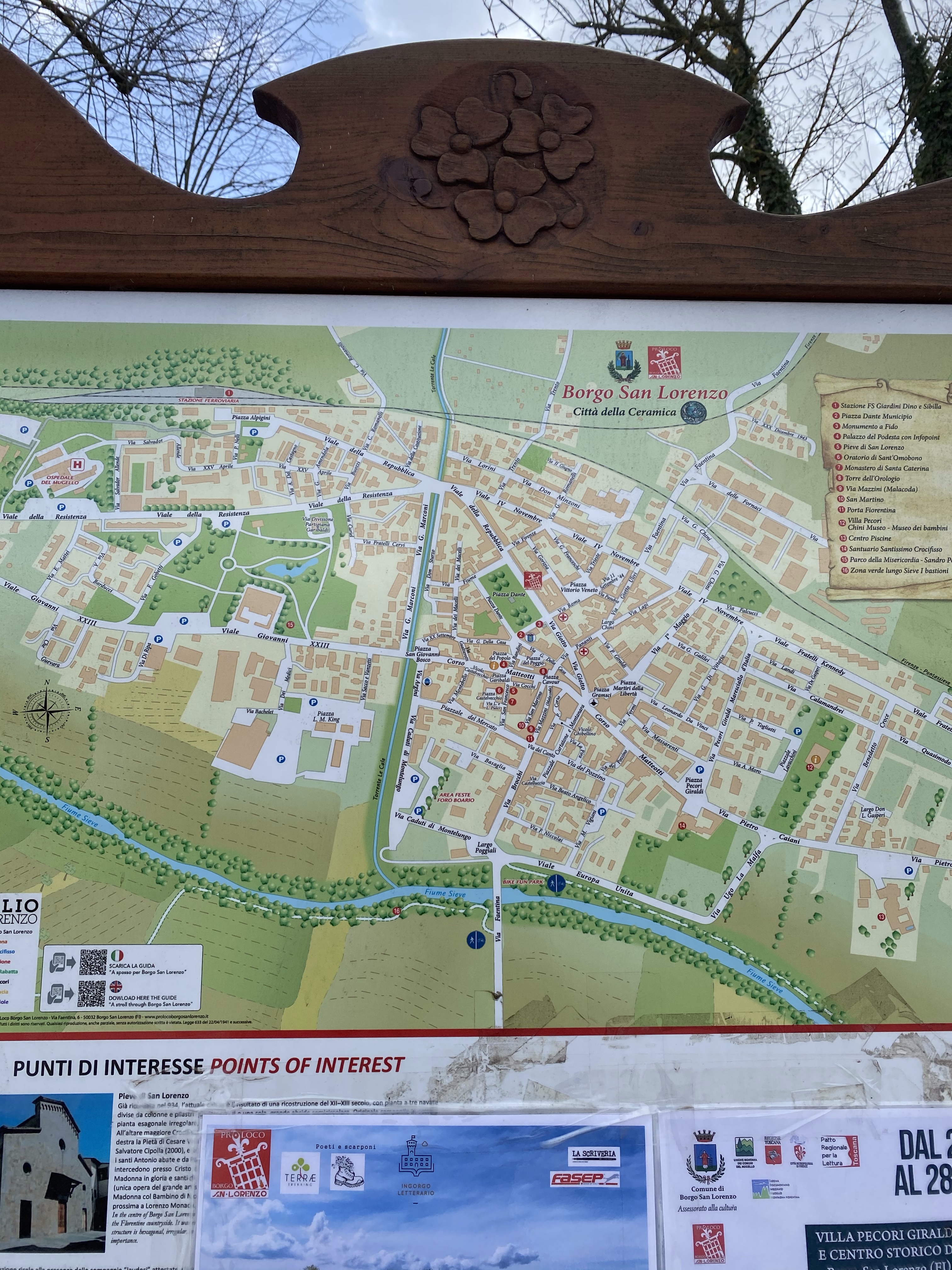
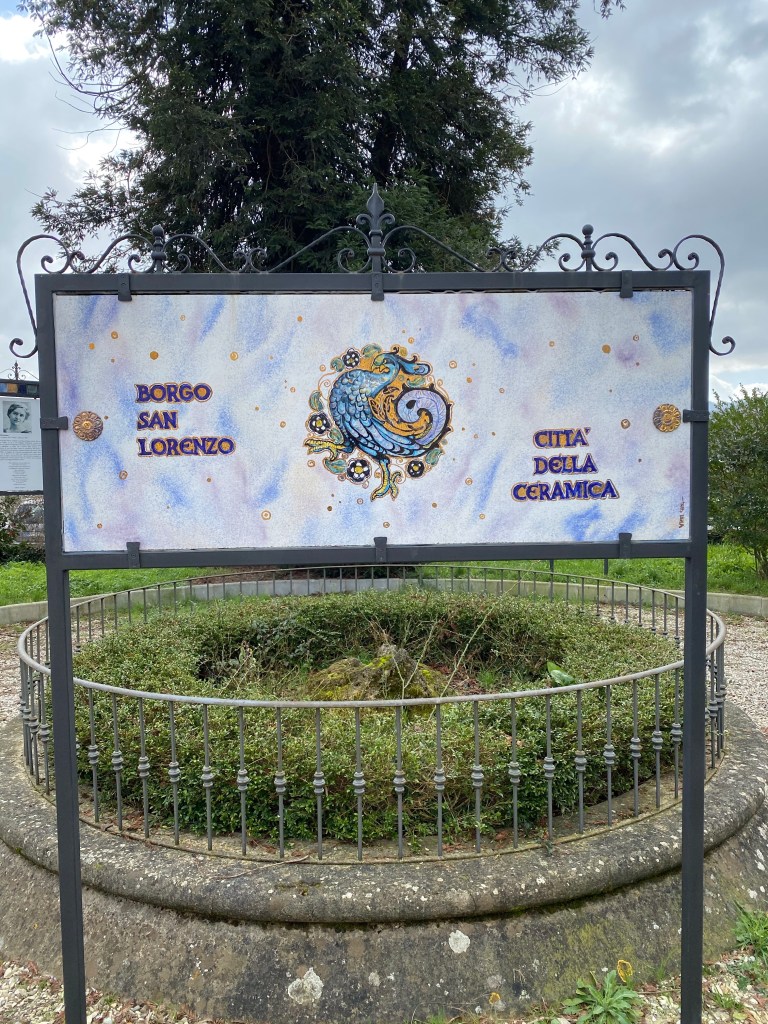
The sign tells me that Borgo San Lorenzo is the “city of ceramics.” That may be true, but I saw no shops or workshops or ceramics as I wandered around the town, much to my disappointment! Postscript: I’ve since looked it up and the Borgo has a rich ceramic history, which I’ll discuss in a future post.
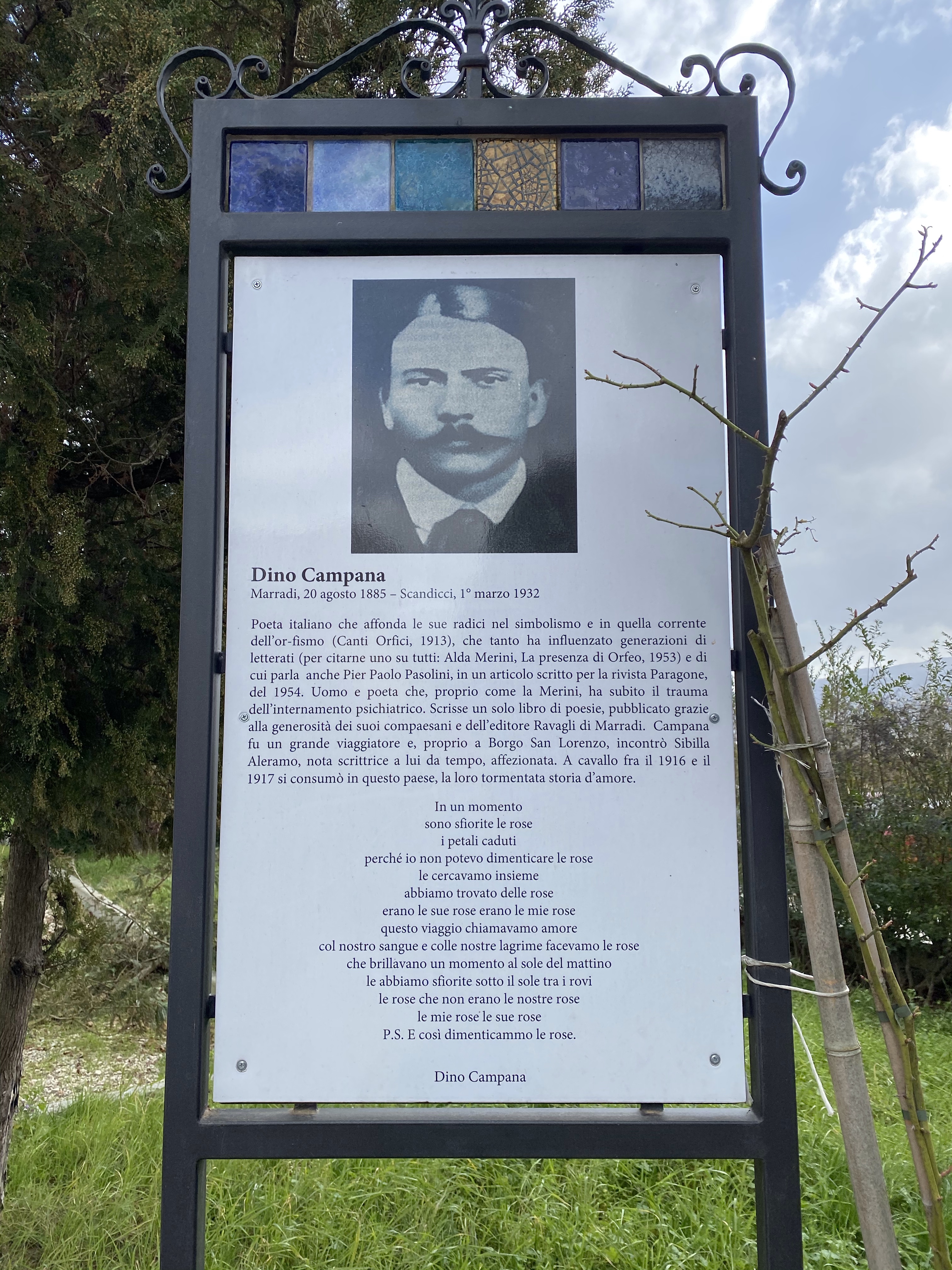
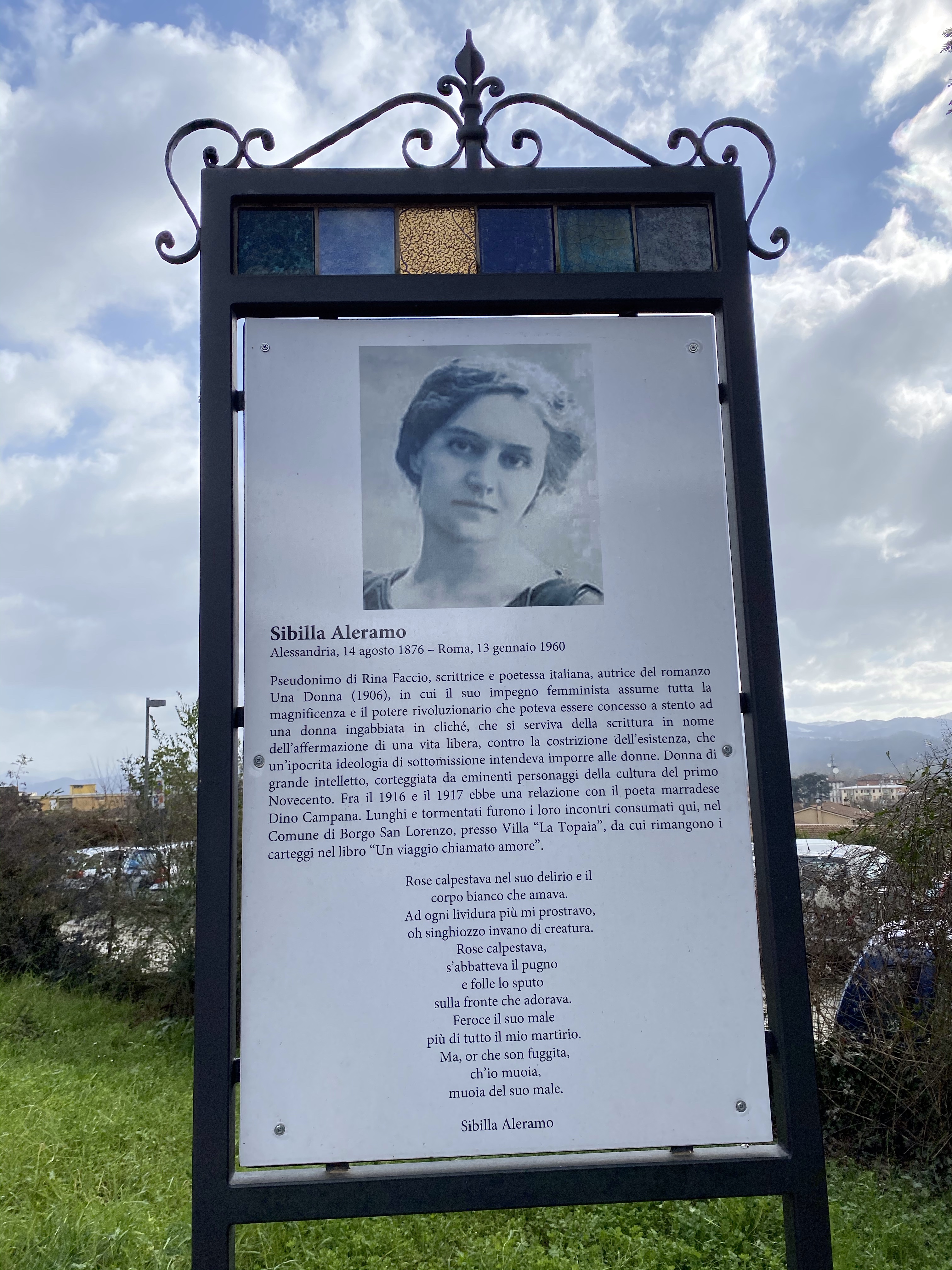
There’s a small park near the train station, commemorating this local couple, shown above.
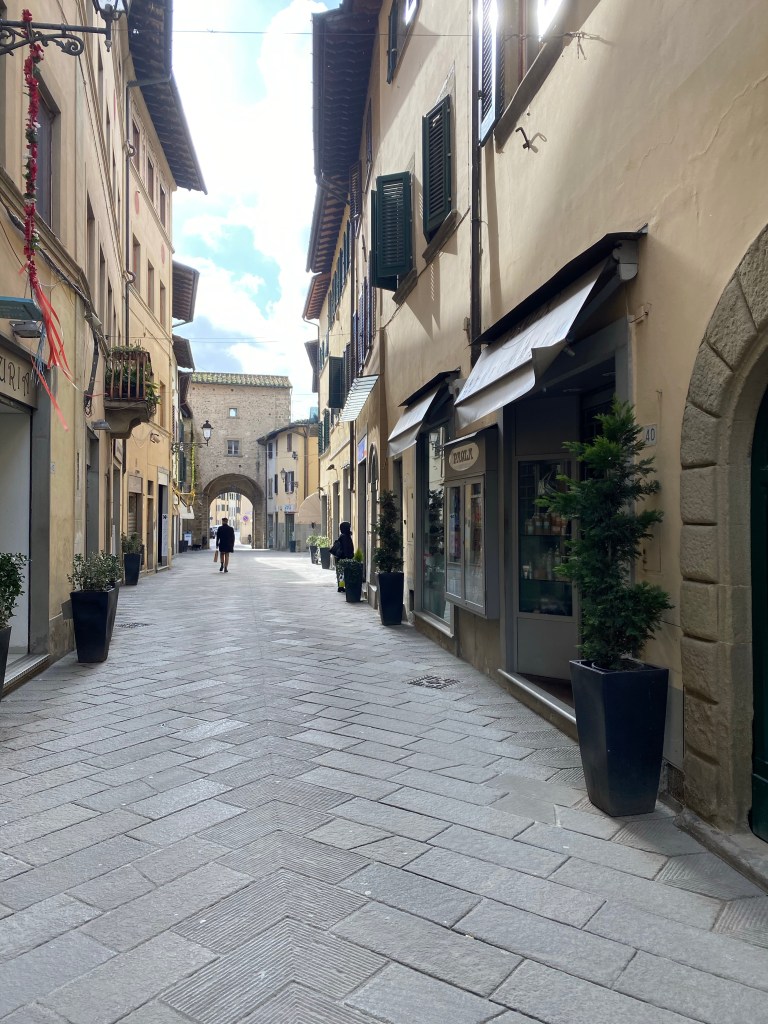
I found my way into the historic center of the little borgo and was richly rewarded with sights and sounds of a small but lively Tuscan town on a Saturday afternoon.
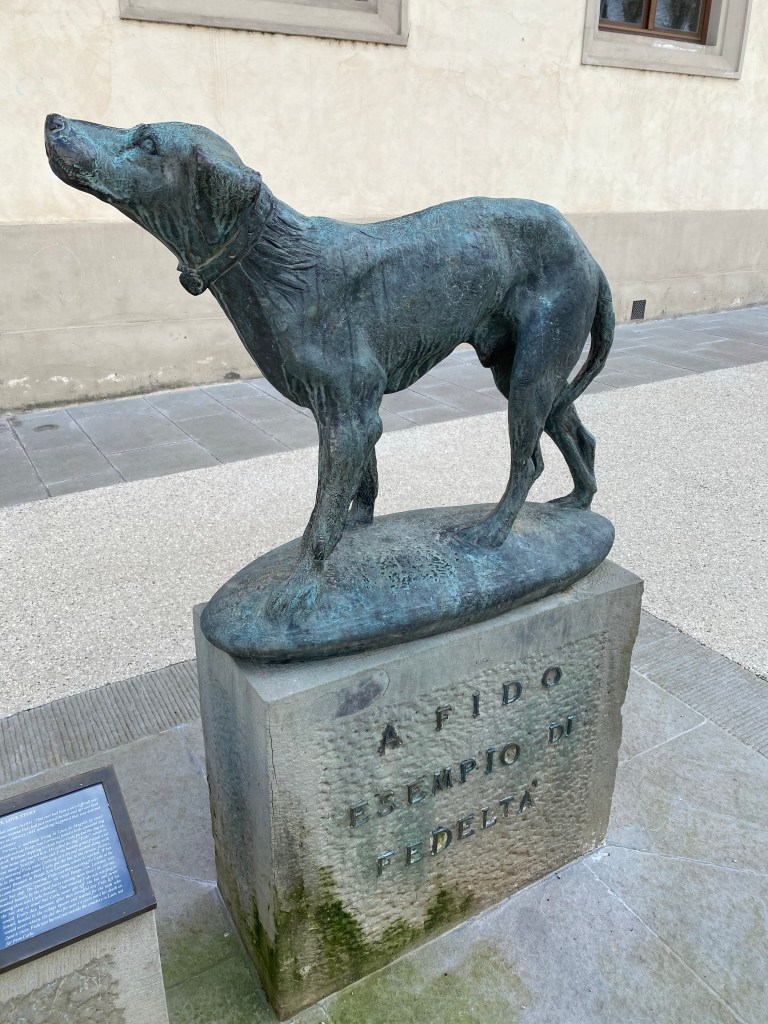
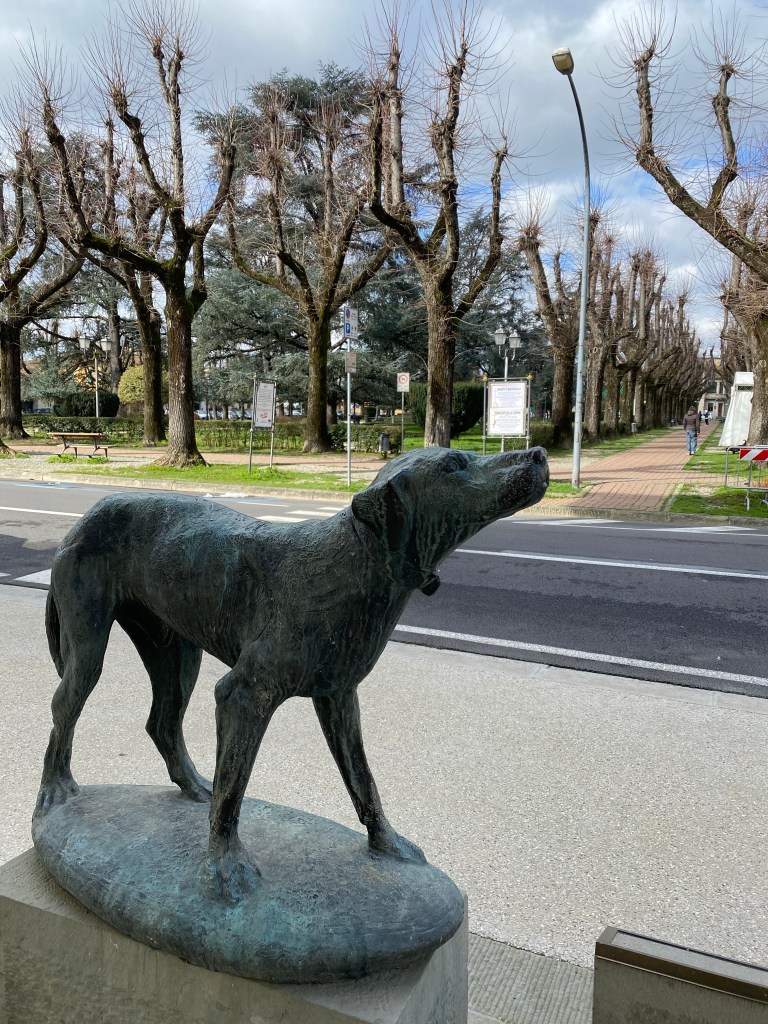
Fido (1941 – June 9, 1958) was an Italian dog that came to public attention in 1943 because of his demonstration of unwavering loyalty to his dead master. Fido was written about in many Italian and international magazines and newspapers, appeared in newsreels throughout Italy, and was bestowed several honors, and this public statue was erected in his honor in Borgo San Lorenzo.
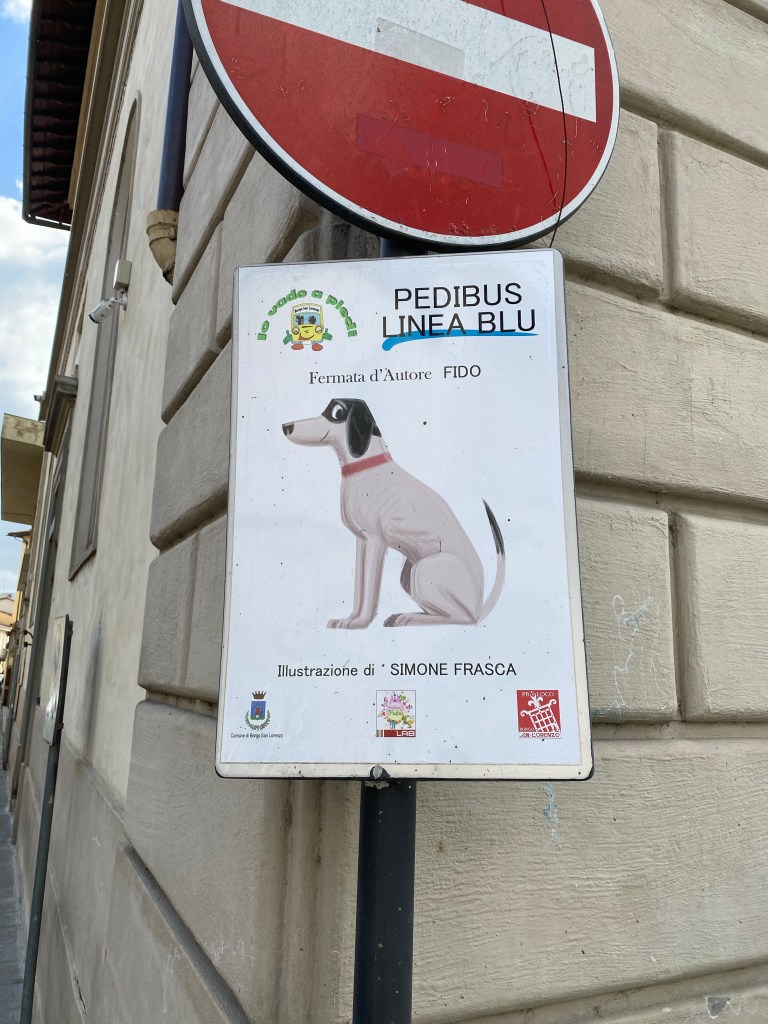
Above, the bus stop near the Fido statue pays contemporary homage to the fine and famous local dog.
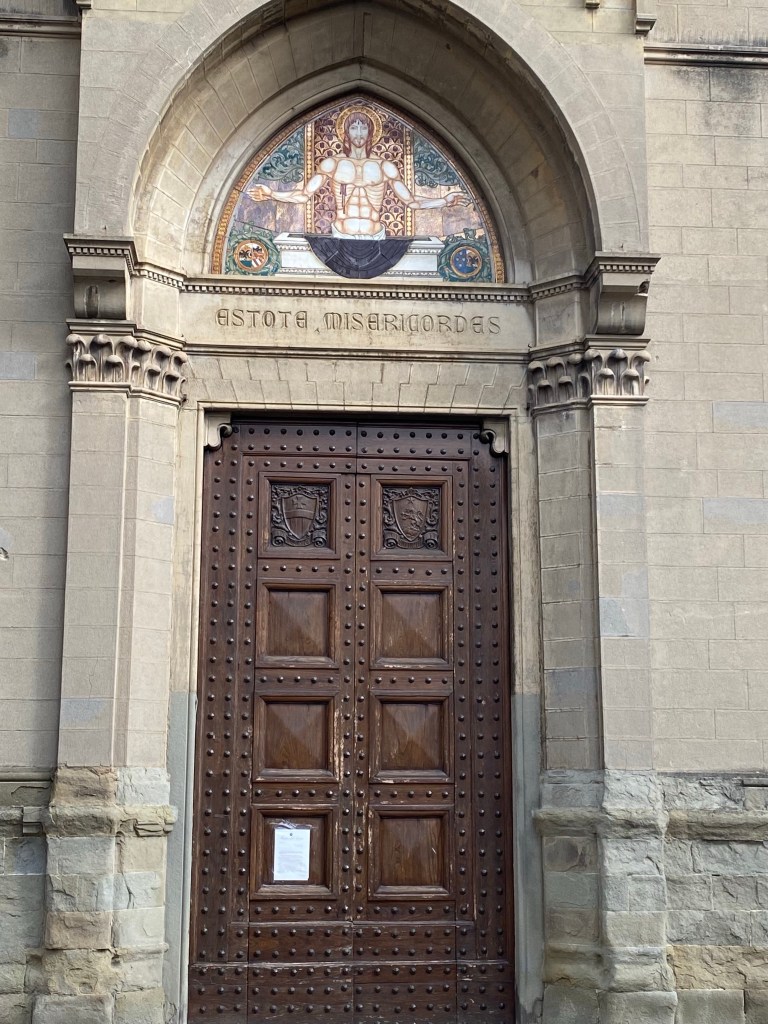
Moving across the street, I happened upon this handsome structure, the Misericordia of the town. “Misericordia” is the name given to pious, voluntary institutions, founded throughout Italy by as early as the middle of the 13th century. They were dedicated to providing free assistance to the sick and wounded, including their transport to hospitals, and the burial of the abandoned dead.
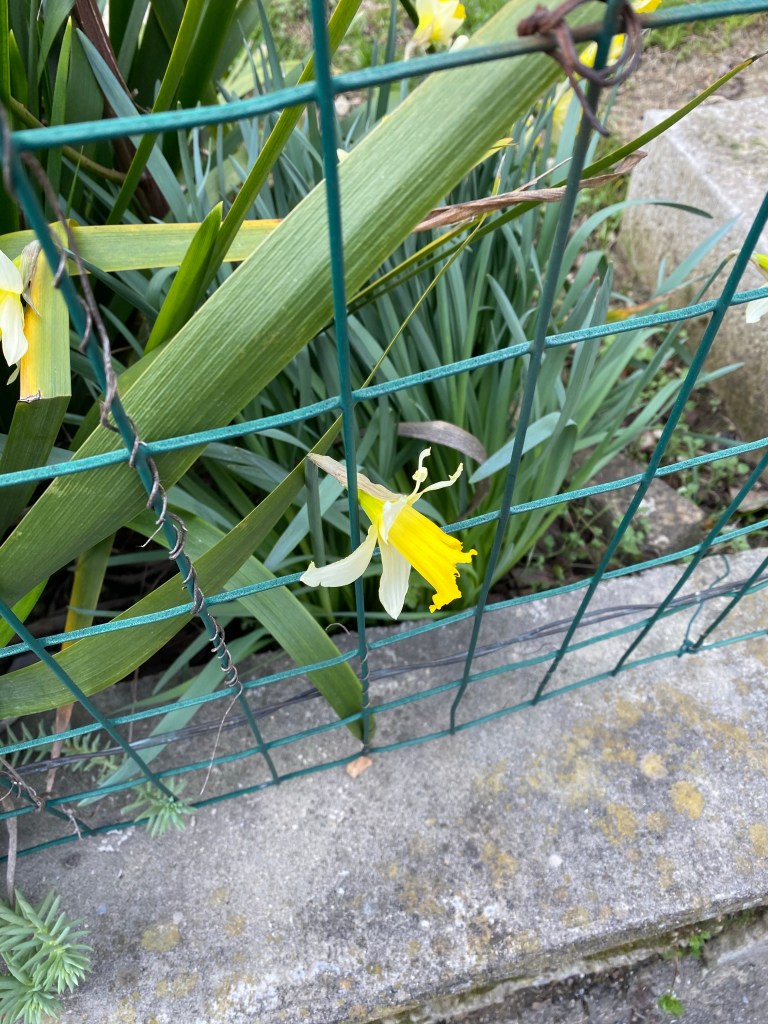
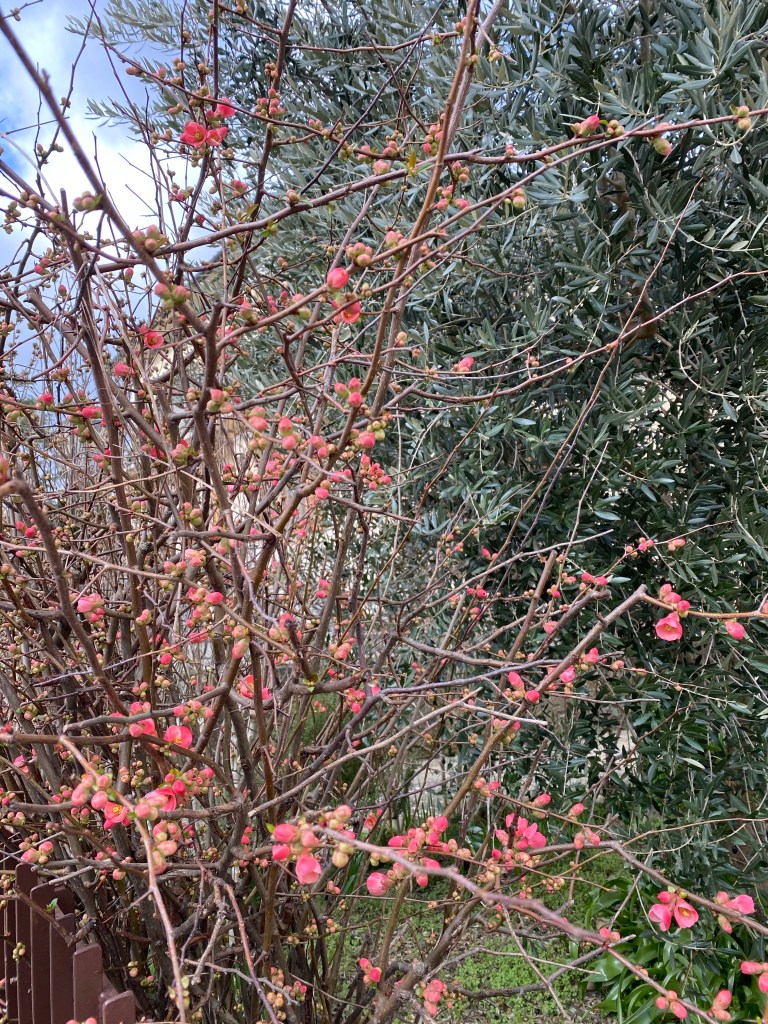
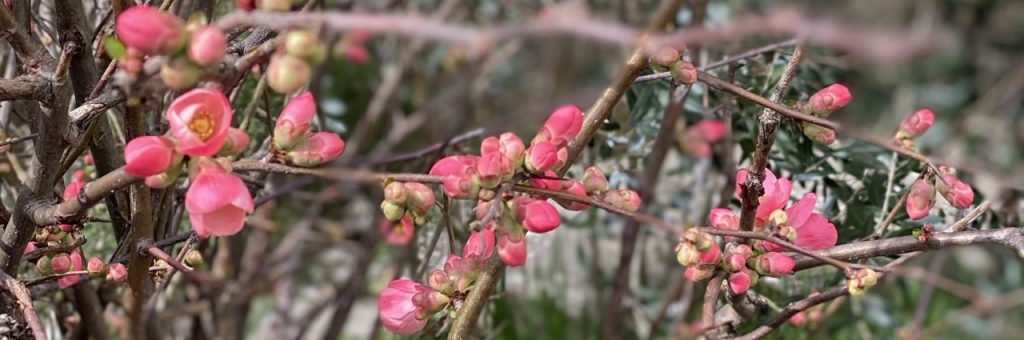
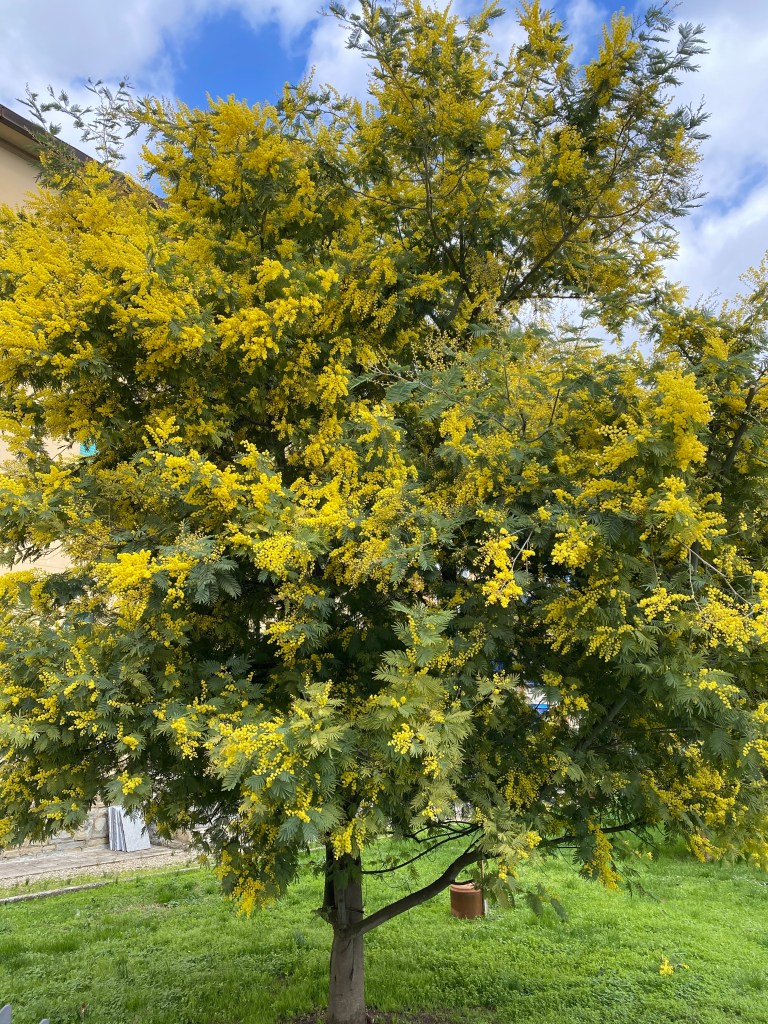
Despite the fact that I had just seen snow on my train ride to the town, I saw more signs of spring in Borgo San Lorenzo than I have seen on my recent visits to Pisa, Lucca or Livorno. Maybe because it was a week or two later? Who knows, but it surprised me to see flowers breaking into bloom at this altitude. But, I’ll take signs of spring, wherever and whenever I can find them!
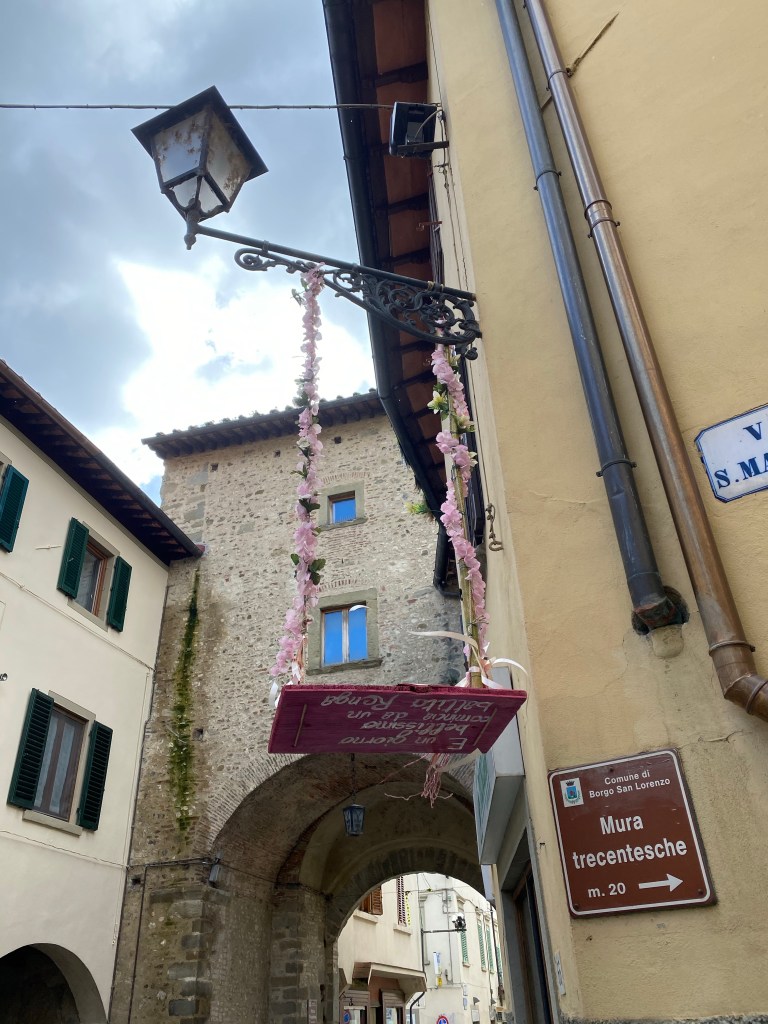
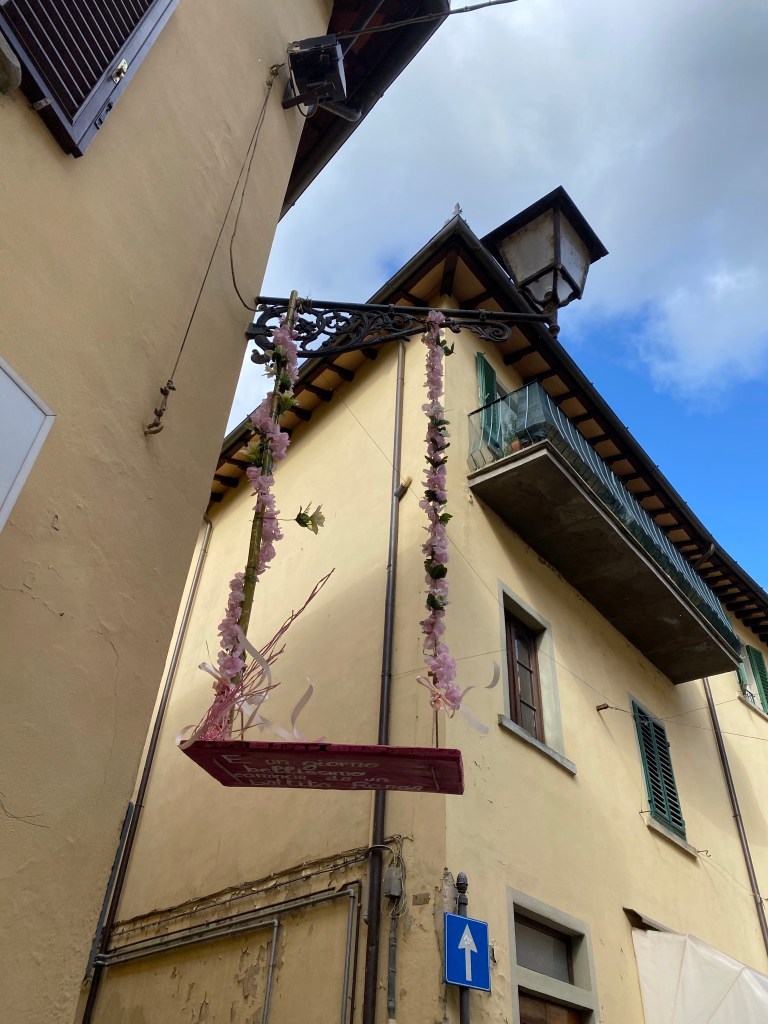
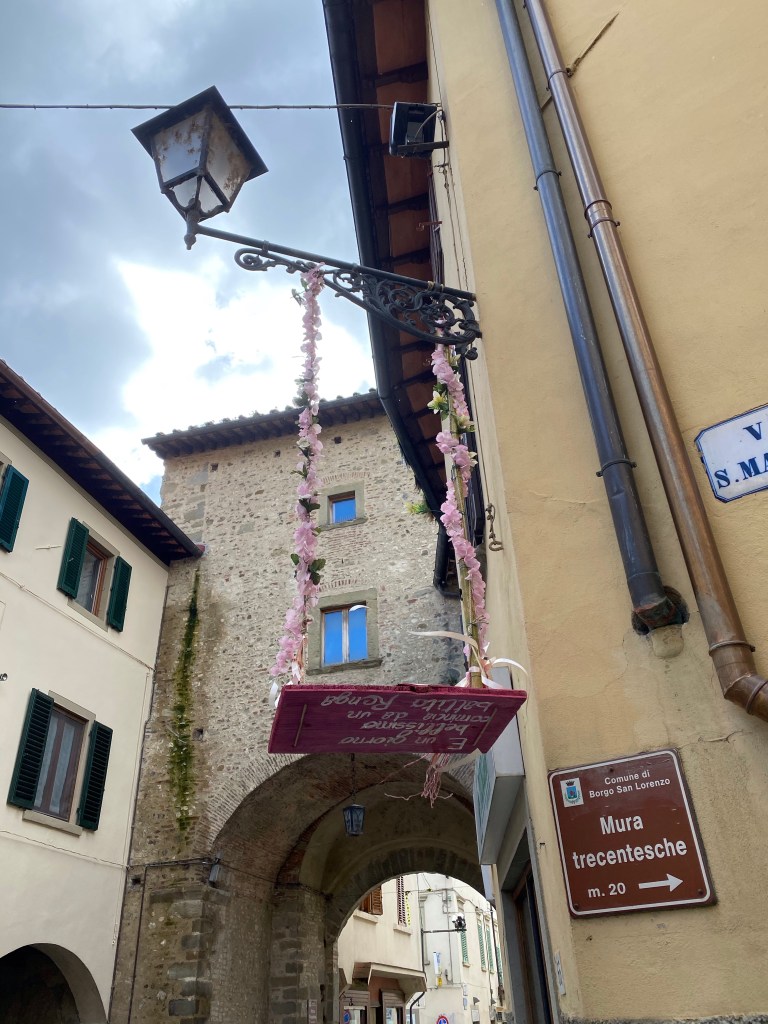
As I began to wander through the winding streets of the historic section of town, I started noticing these decorative swings placed above the commercial streets. I suppose they were in honor of St. Valentine’s Day, which was the next day. They are very sweet and some people went to a lot of trouble to decorate their village.
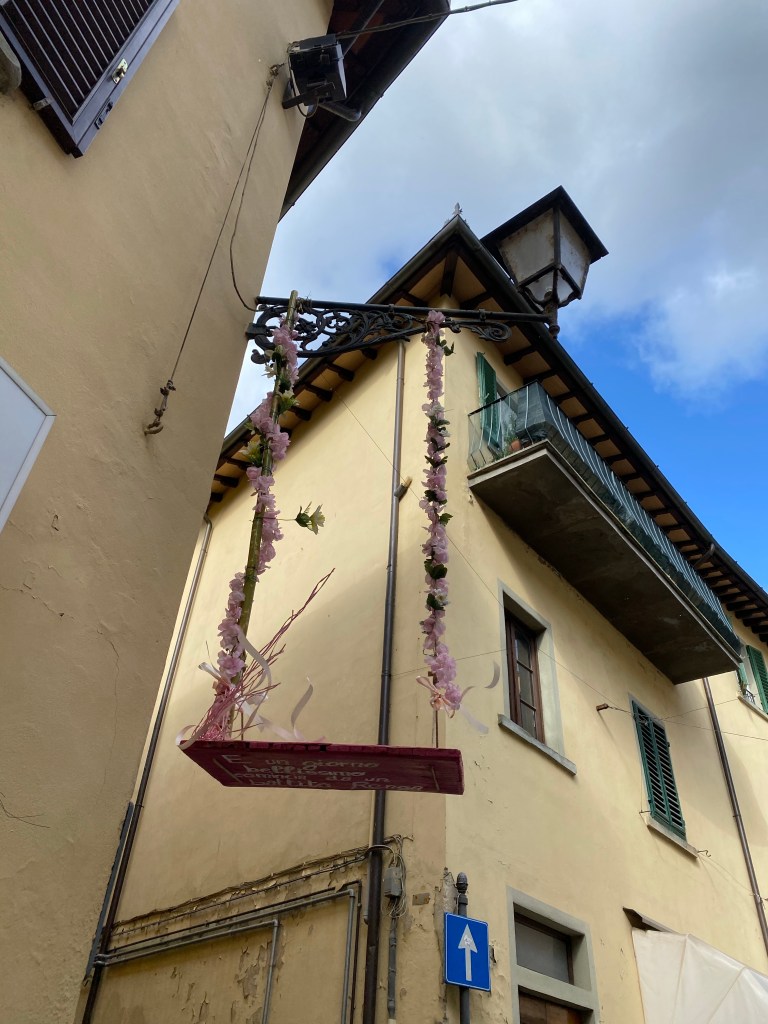
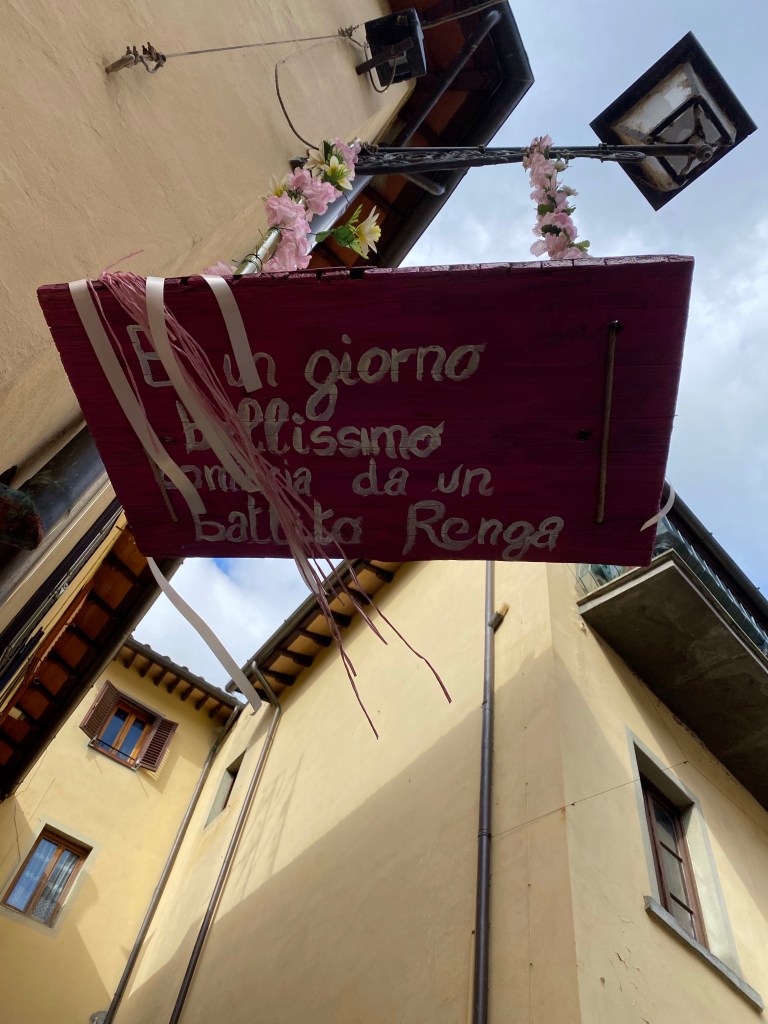
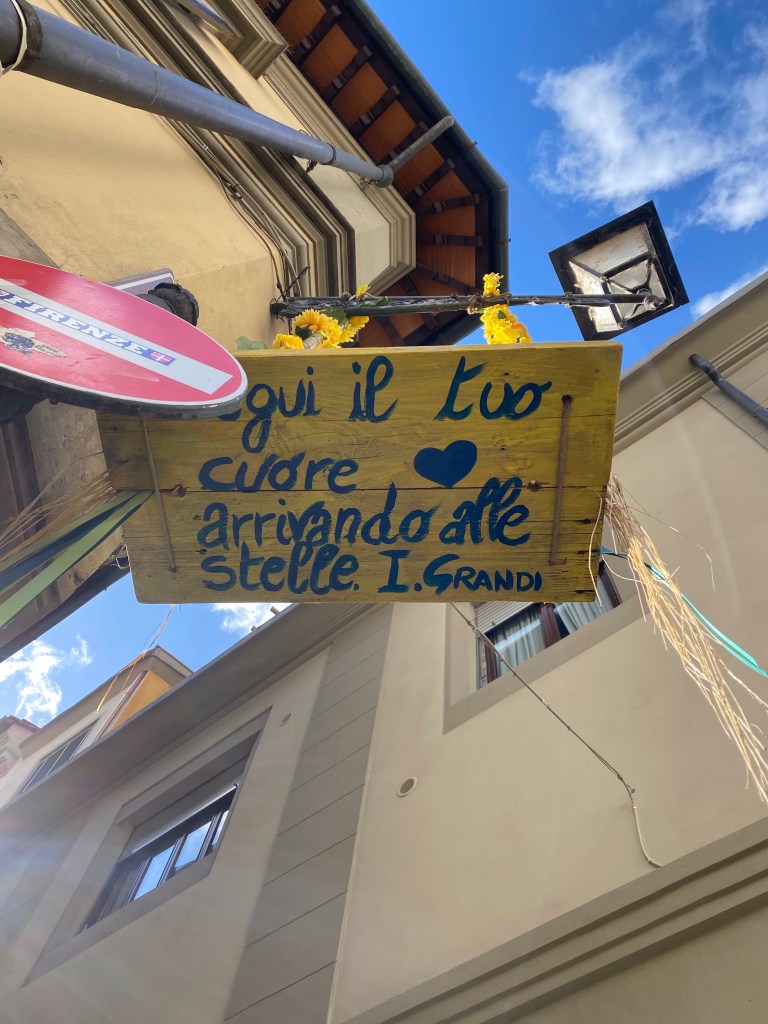
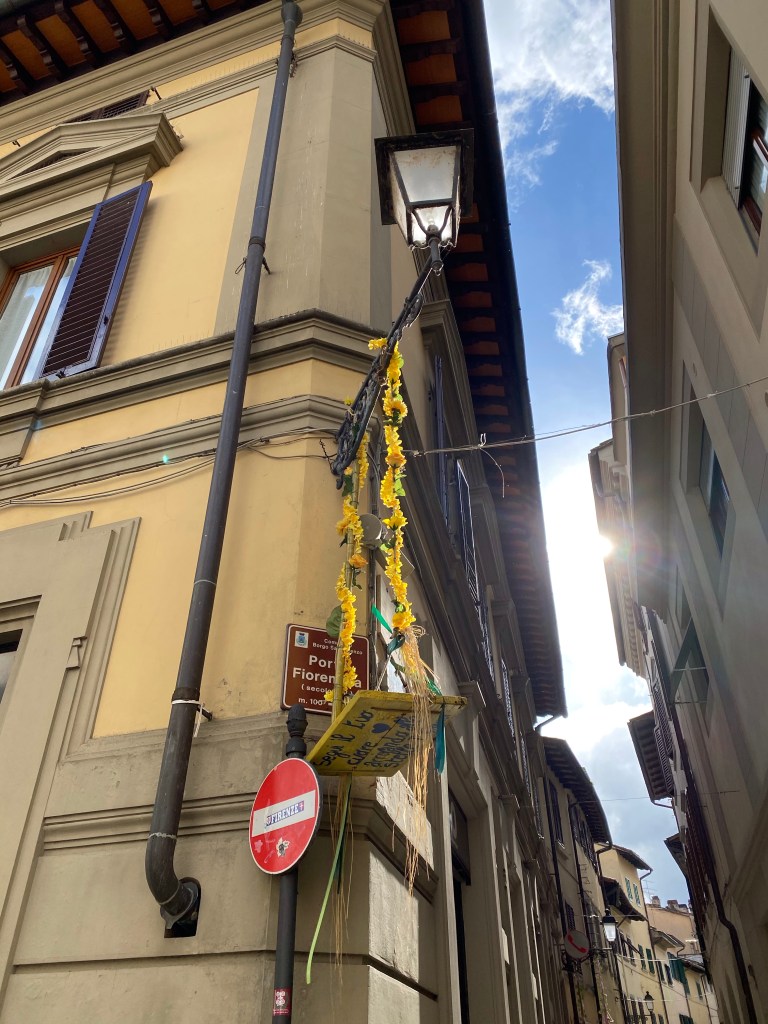
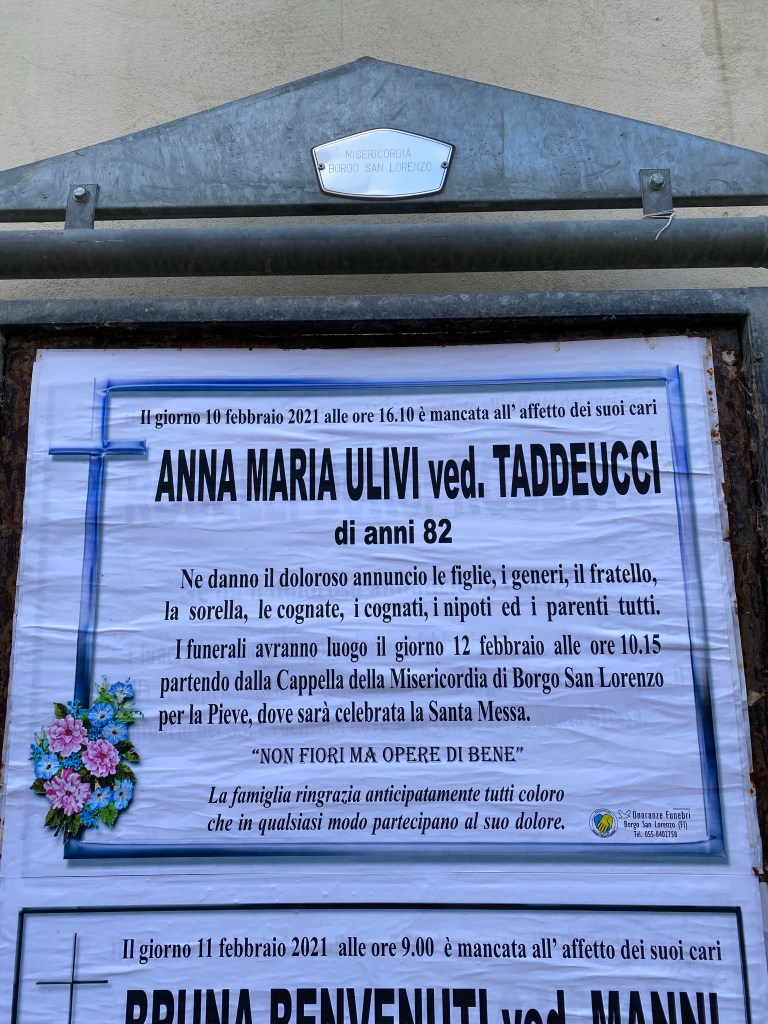
As in Pisa, Lucca, and Livorno, I saw the boards with death notices in the Borgo. The one below was near the Misericordia, as you might expect.
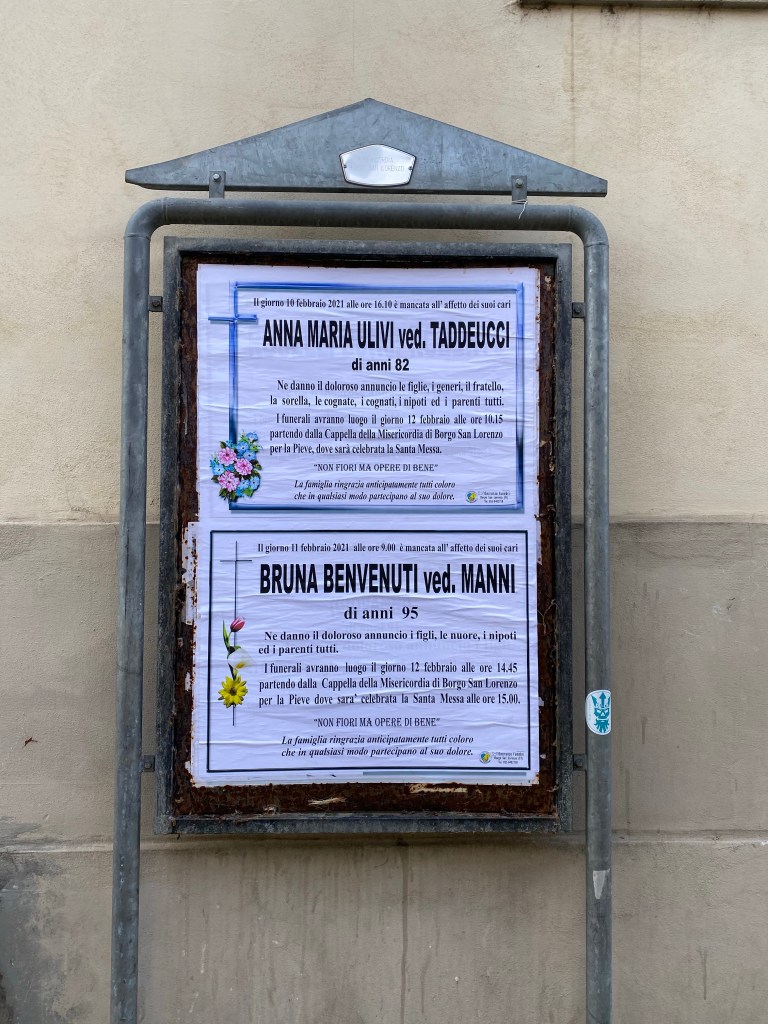
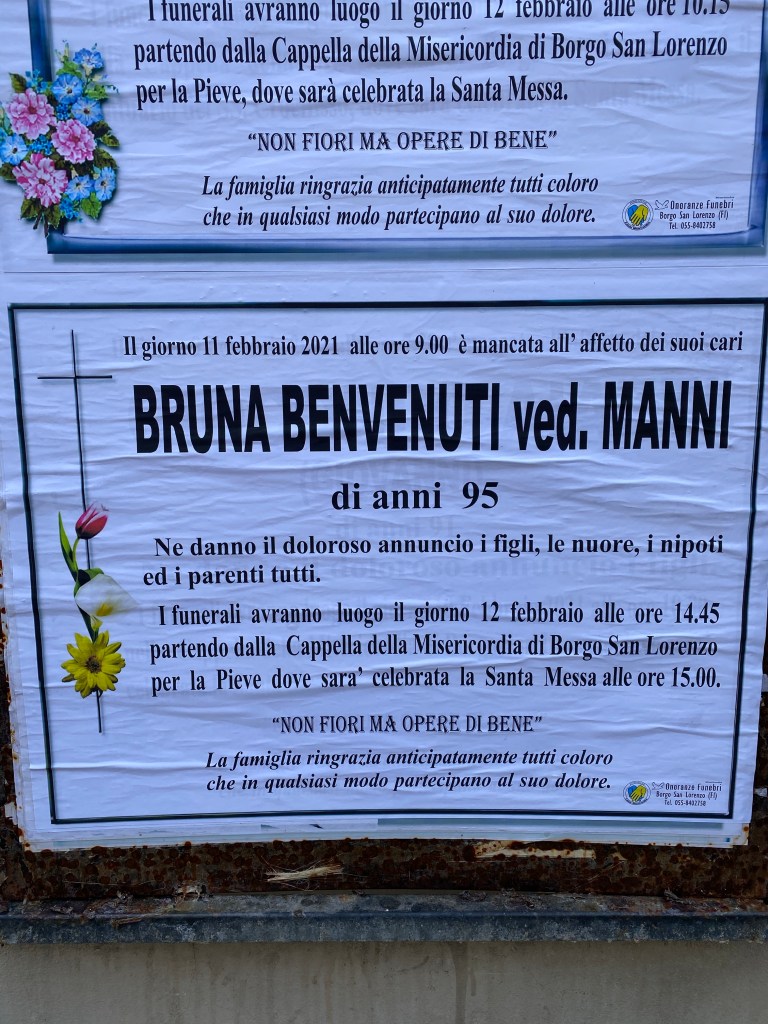
I believe these notices were more elaborate than the others I’ve seen. Both of these signs had flowers printed on them, which I’ve not seen elsewhere. Arrividerci Bruna, age 95 and Anna Maria, age 82. RIP.
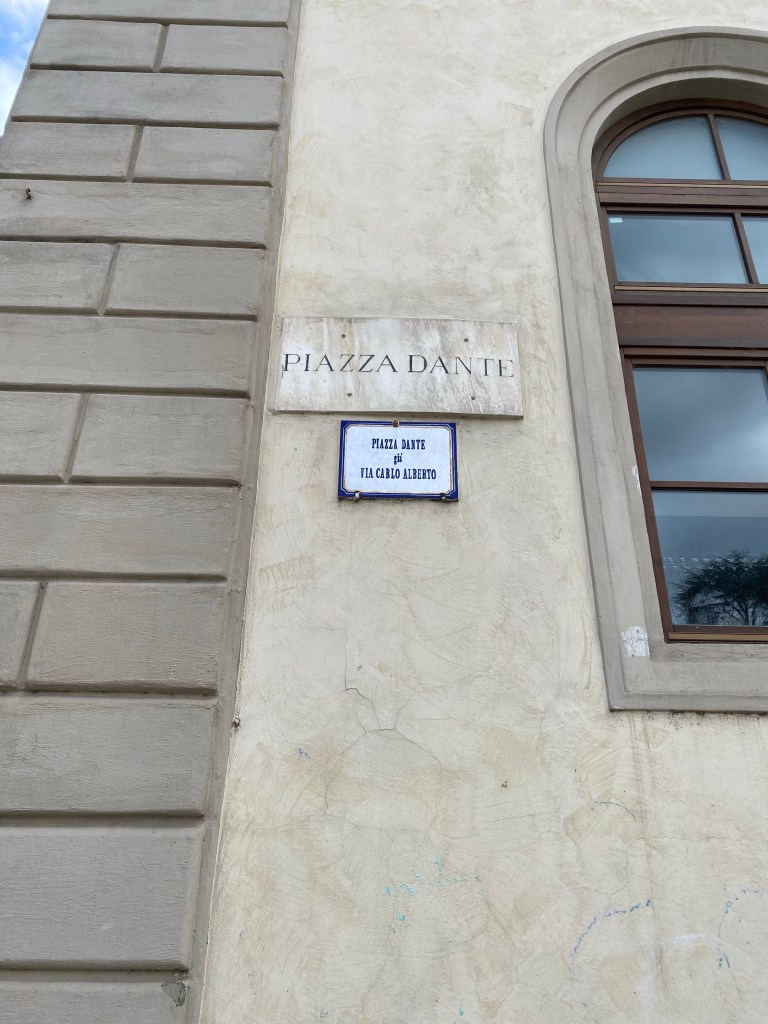
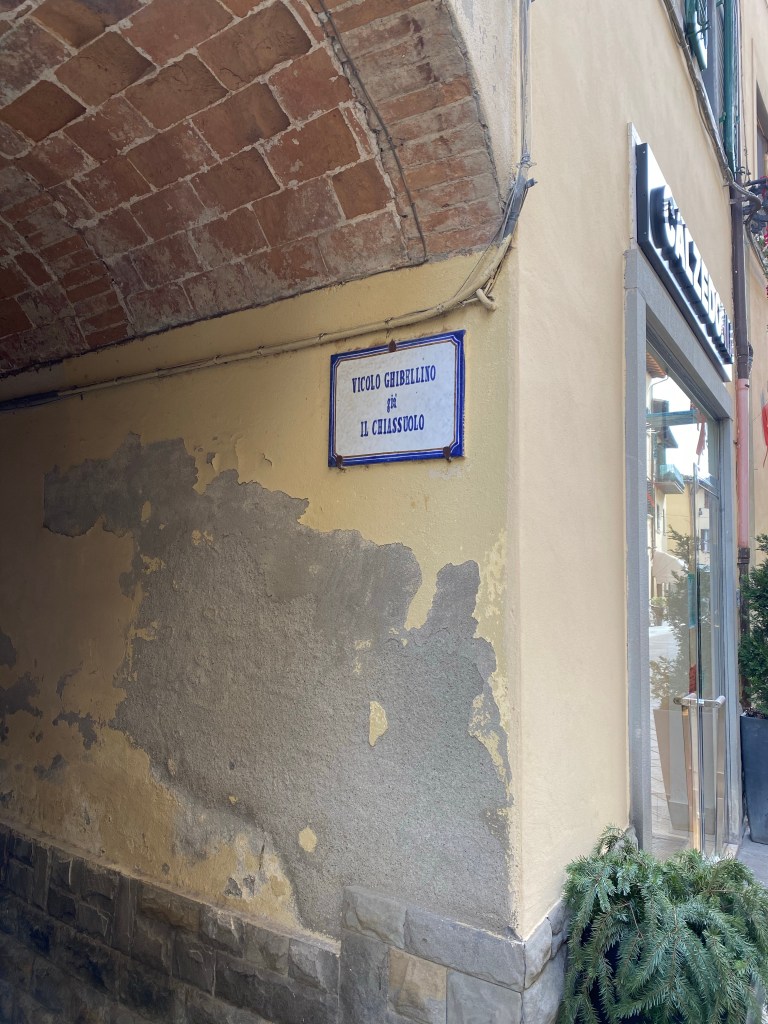
Below, the street sign which tells us that this little arched alleyway is called Vicolo Ghibellino, reminds me that this Borgo was a key player in the battle between the Guelphs and Ghibillines in Tuscany’s medieval past. The sign also says “gia Il Chiassuolo,” which simply means this was its former name. I wonder when the names changed and why. You see these kinds of signs all over Tuscany, with the former name written under the current one, and I always wonder when and why the names were changed.
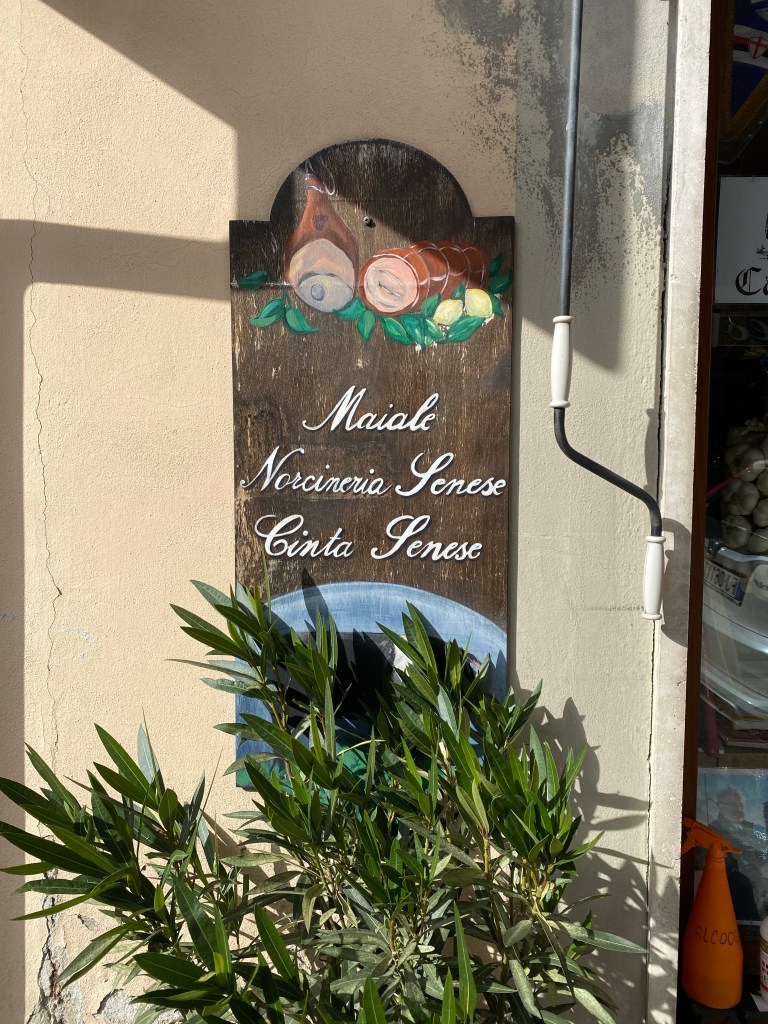
I noticed these next interesting signs in a butcher shop. “Maile, Norcineria Senese” which means, I think that they do Sienese style butchery on pork. “Cinta Senese” is a specific breed of domestically raised pigs. How many Americans choose their butcher because of the type of pork they sell? A pig is a pig is a pig to Americans. This specialization, of everything having to do with food, is one of the most fascinating aspects of Italian culture.
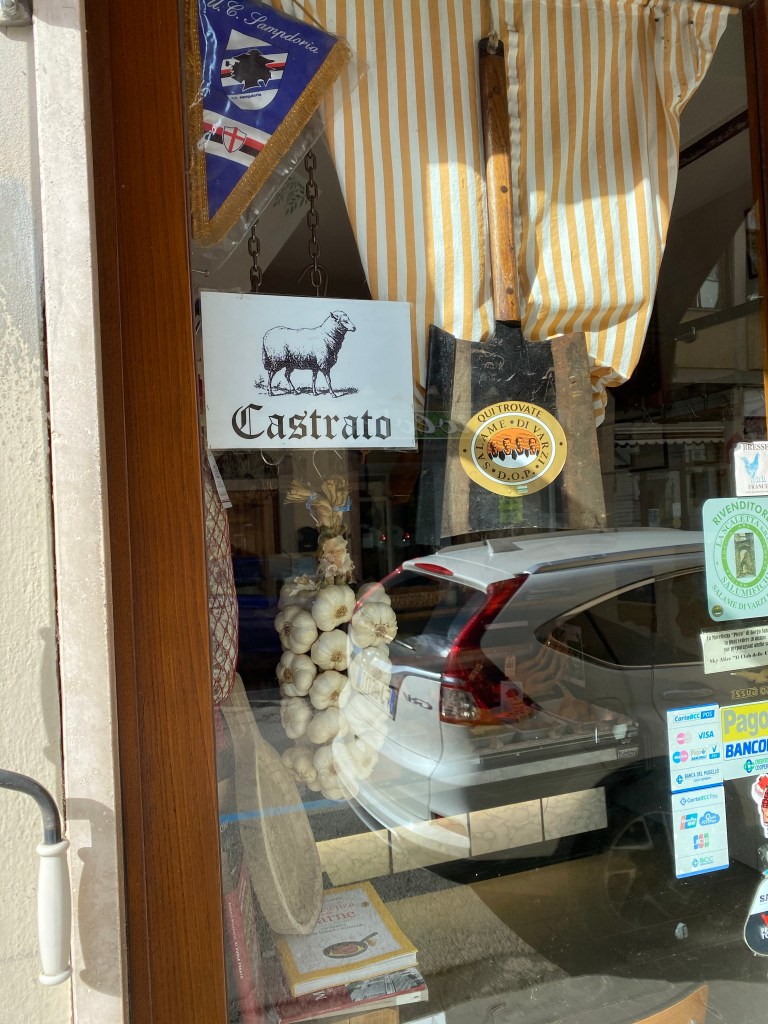
The other sign, “Castrato,” along with a picture of a sheep, tells us, I believe (? not sure), that they sell sheep meat butchered from castrated males. What detail!
It’s surprising even to me that I can find so many things to photograph in a small bourg like this one. But, I need a second post to show you all I noticed and so, in the next few days, I’ll do a second post. Until then, arrividerci!
One gesture at a time

A lucky day in Lucca, Part 1
Oh, how I love the sweet city of Lucca! I was lucky to go there during our recent 2 week yellow zone period and here are some of my pictures and videos. I was lucky that we in Tuscany had a 2 week yellow break from the orange zone, which we are in again now. Ugh. I hate being cooped up!
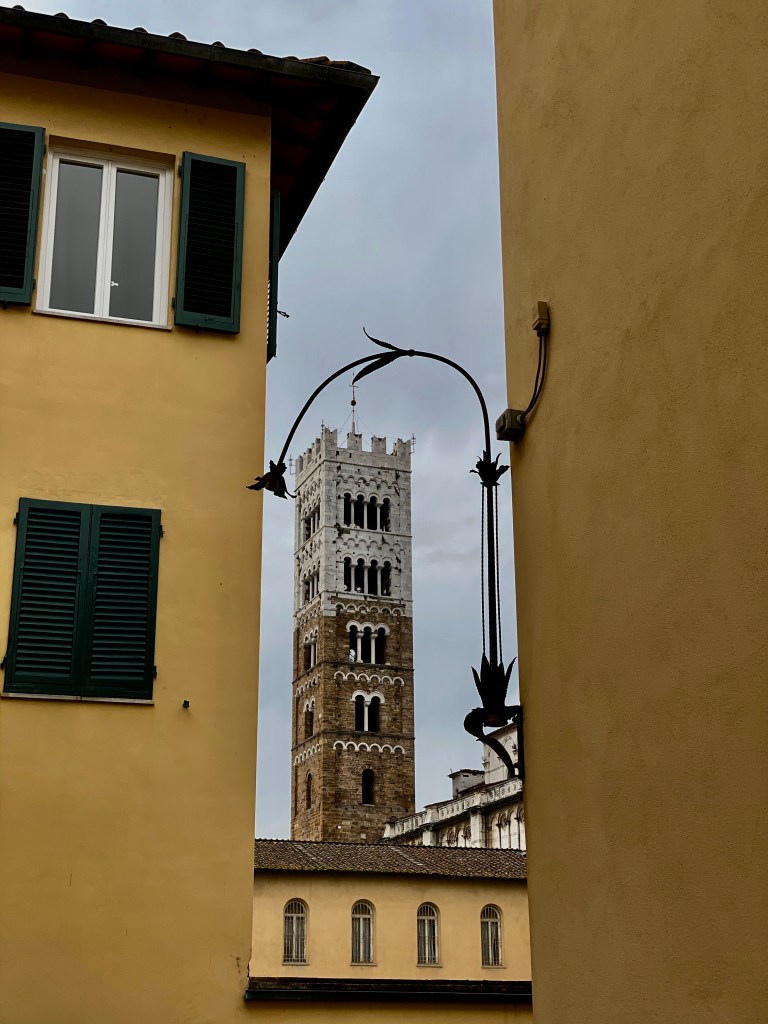
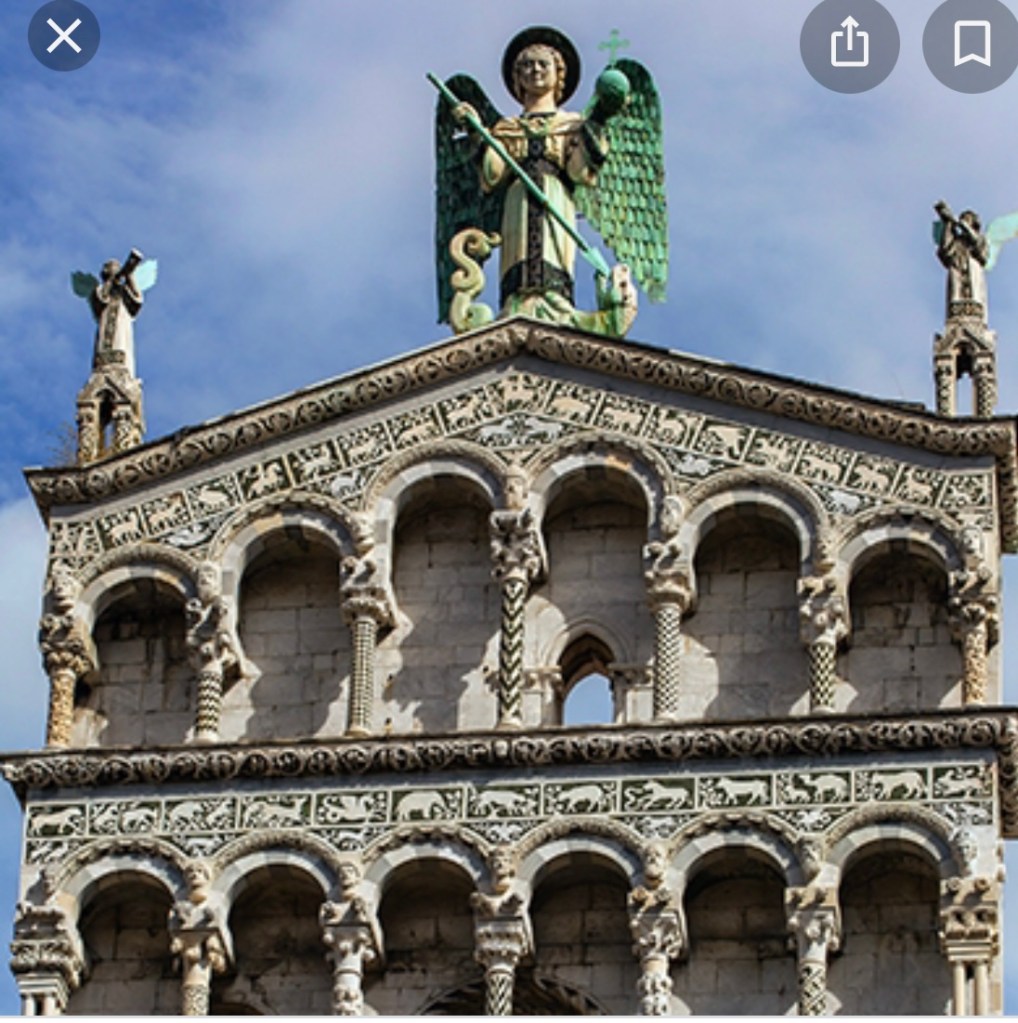
One of my first stops in the city was the church of San Michele in Foro. As the name of the church tells us, it was built over what was once the Roman era forum. Think about that for a minute.
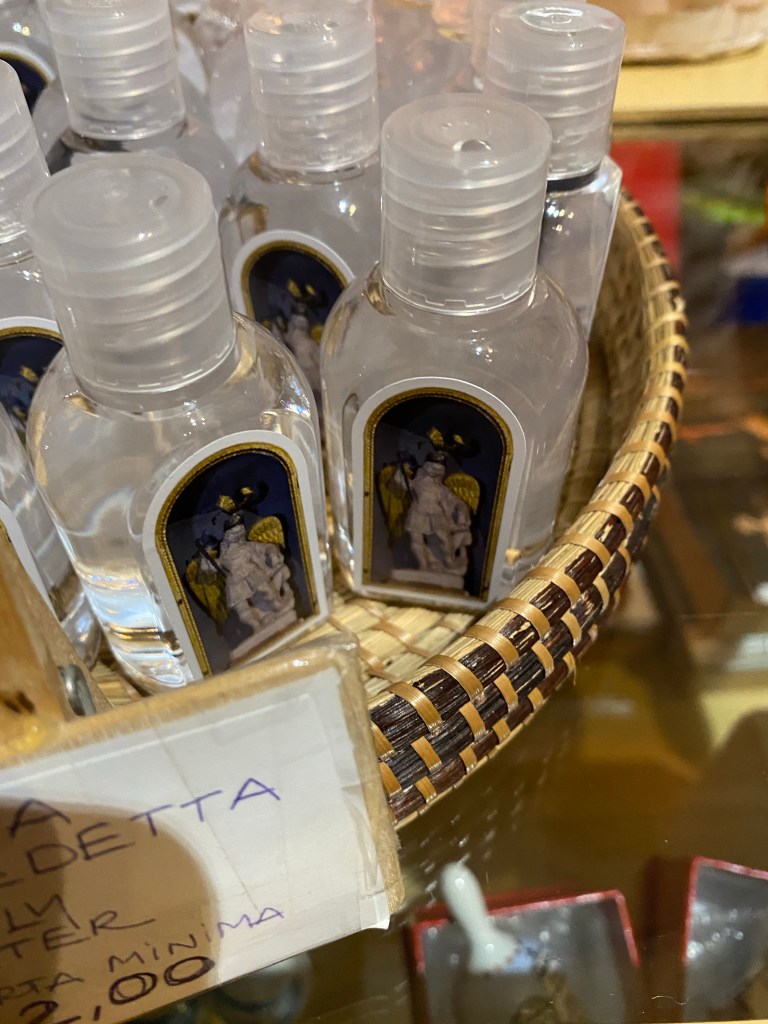
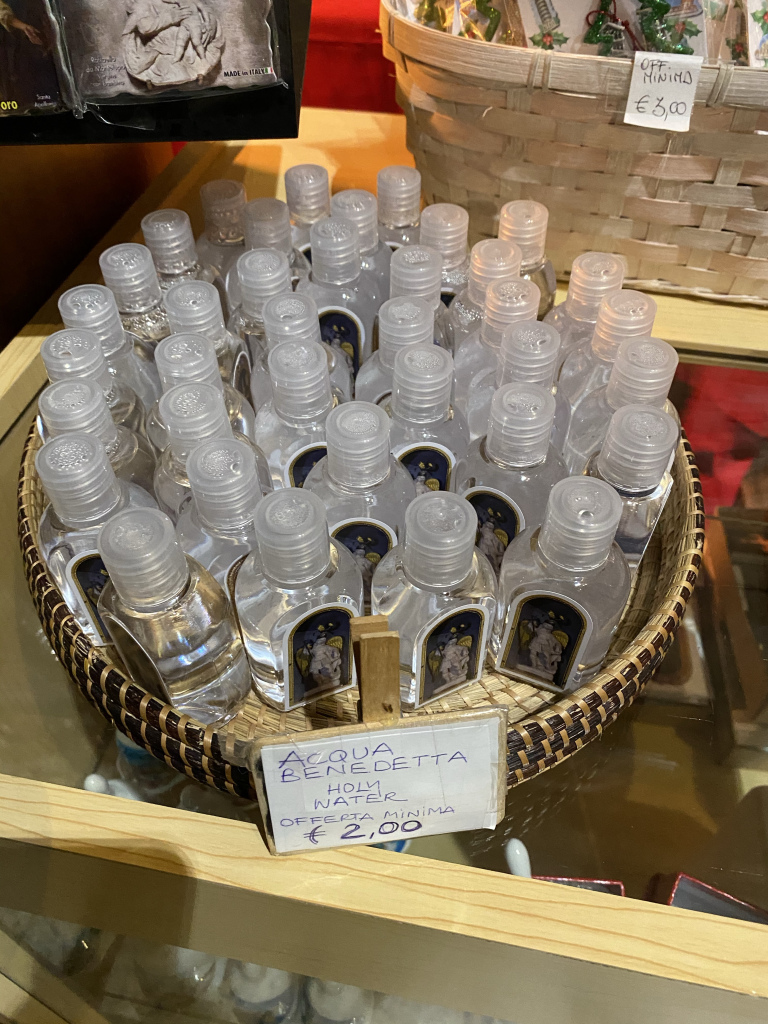
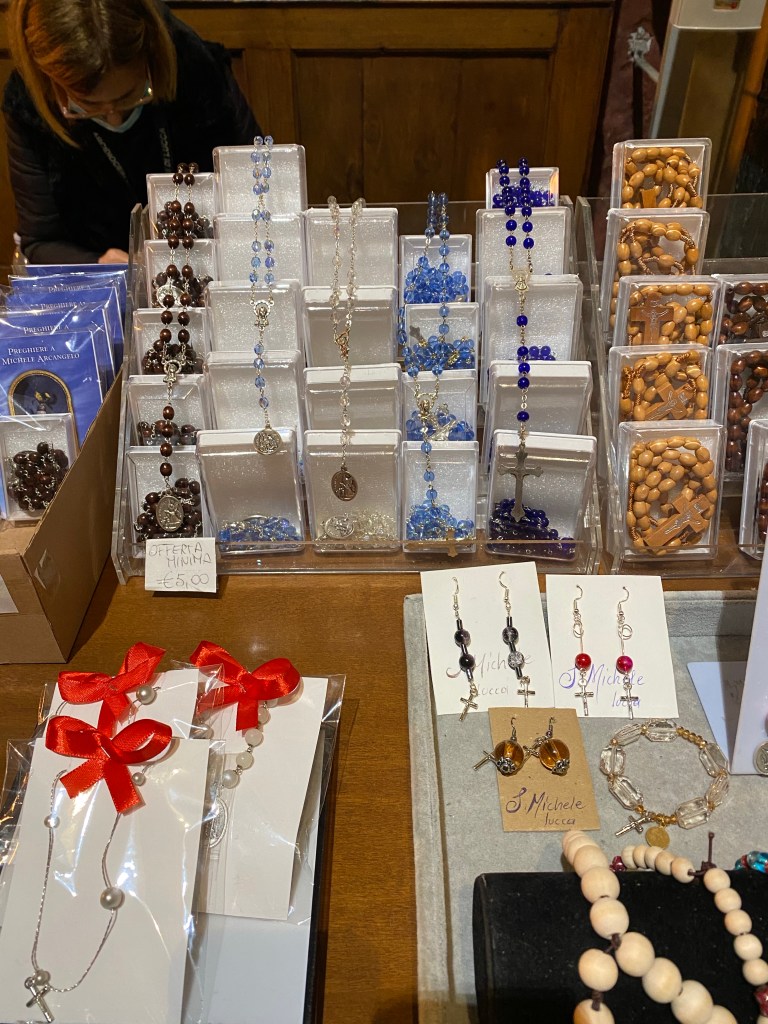
Luckily and surprisingly, for you never can tell anymore what will be open when (thanks for nothing Covid), the church was open and I had a lovely tour around the interior. Many things caught my eye, including these bottles of holy water, for 2 Euro per bottle, just right for taking on an airplane. Ha ha.
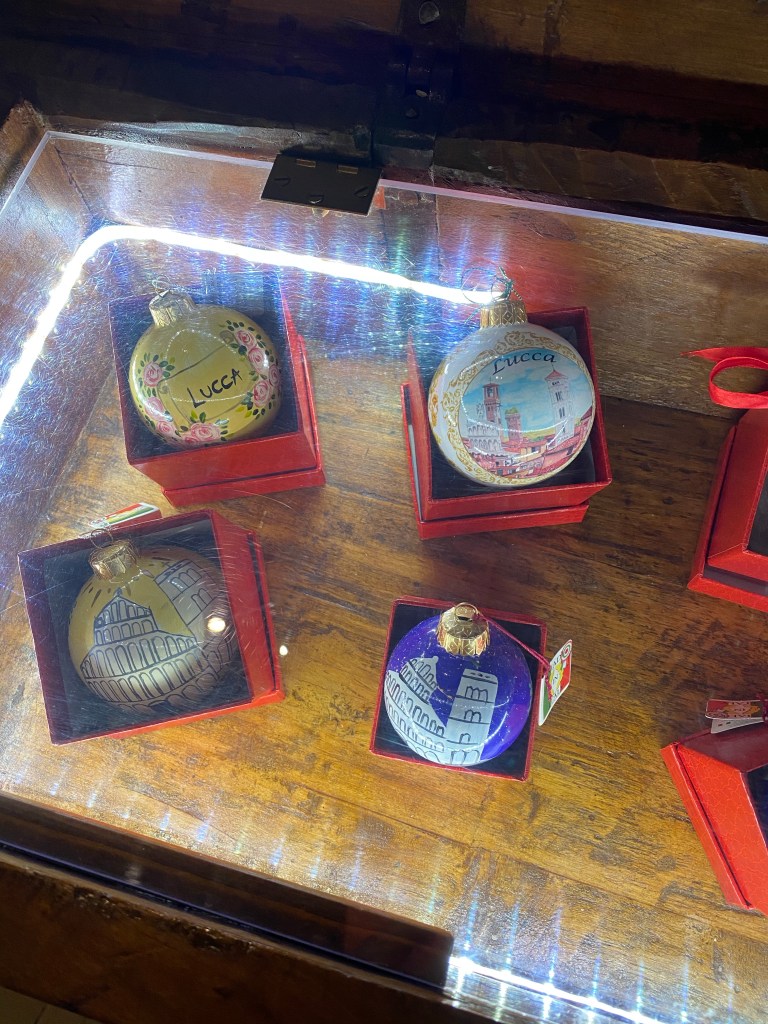
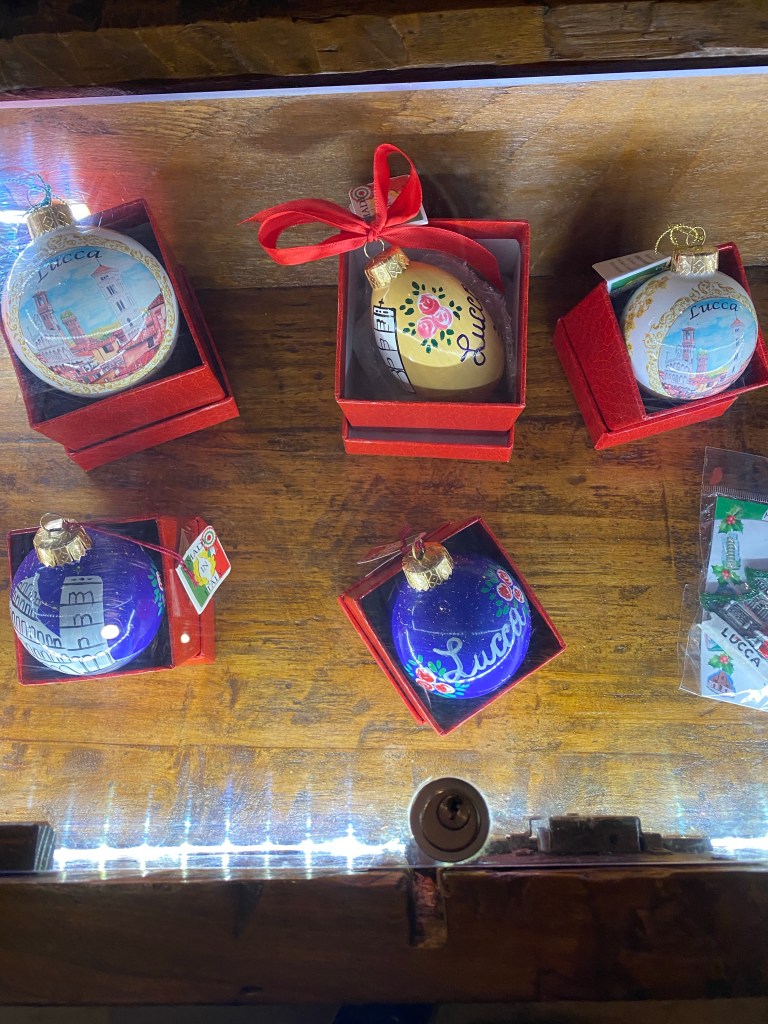
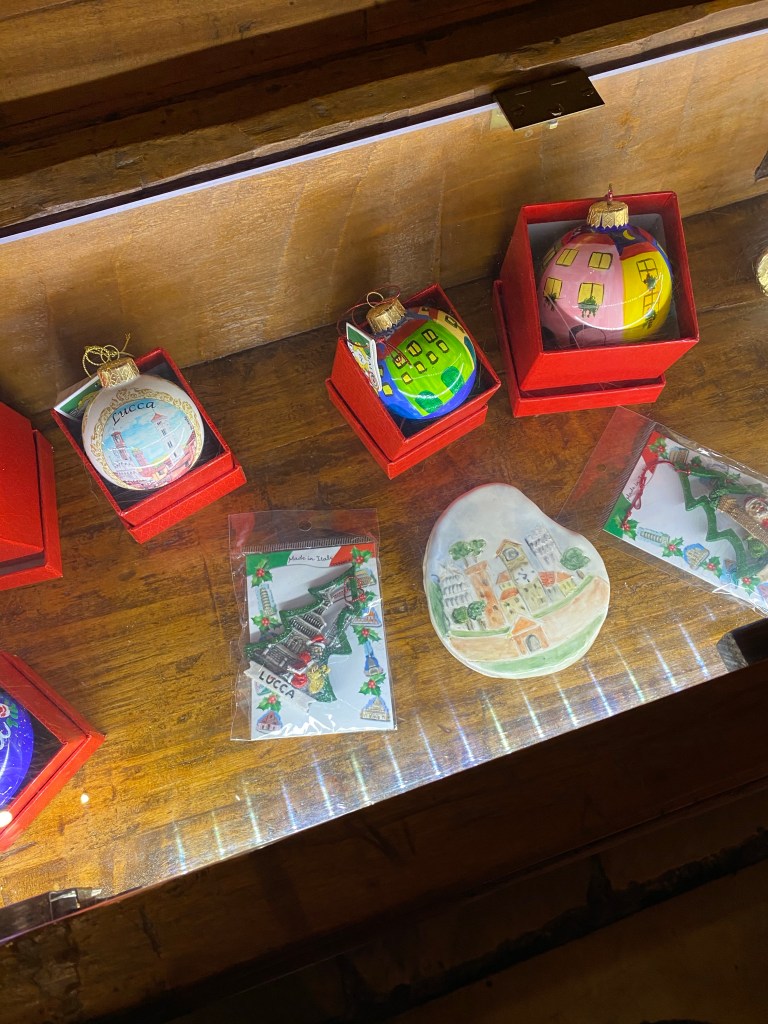
Also, the Christmas ornaments available for sale were pretty and striking.
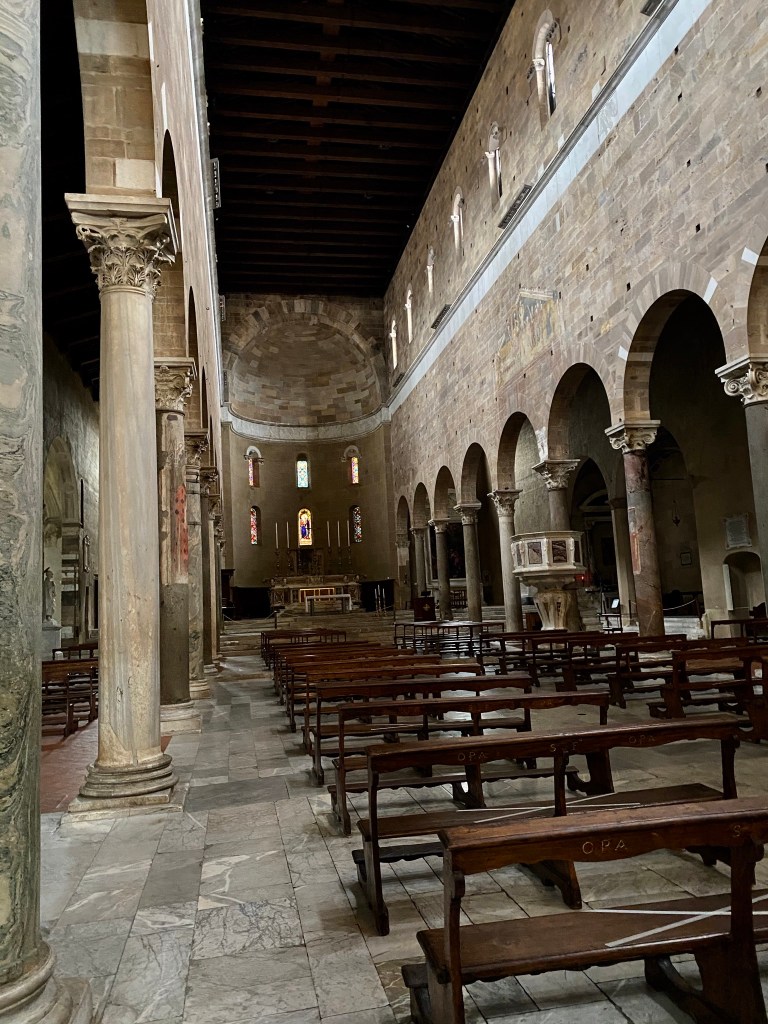
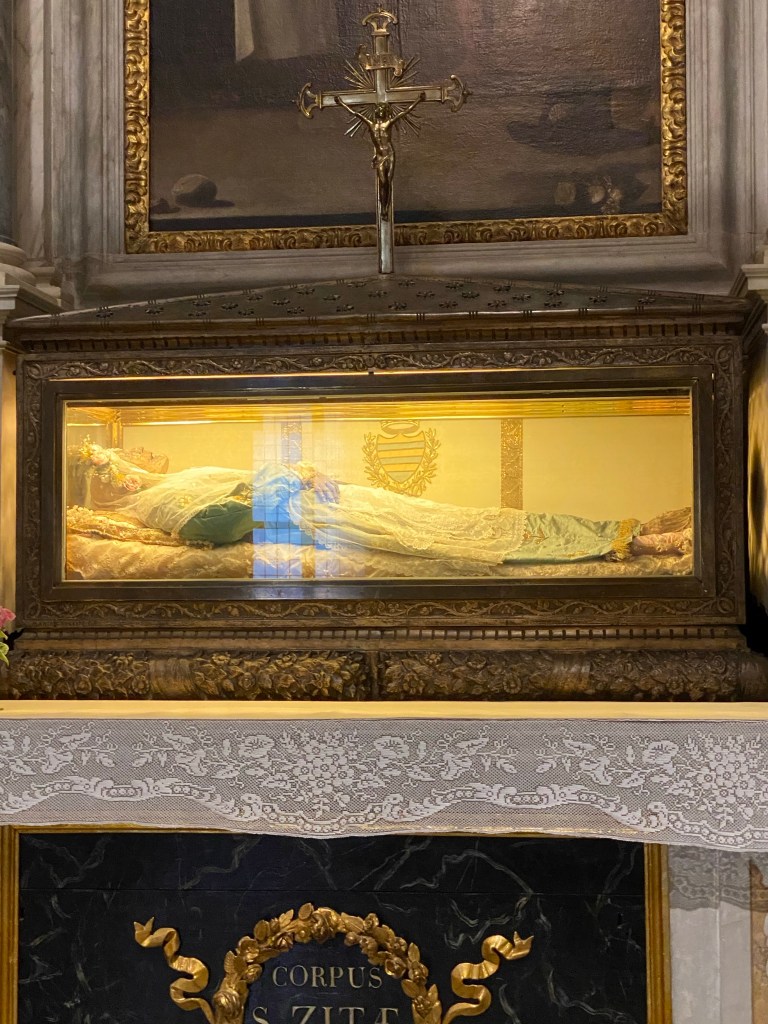
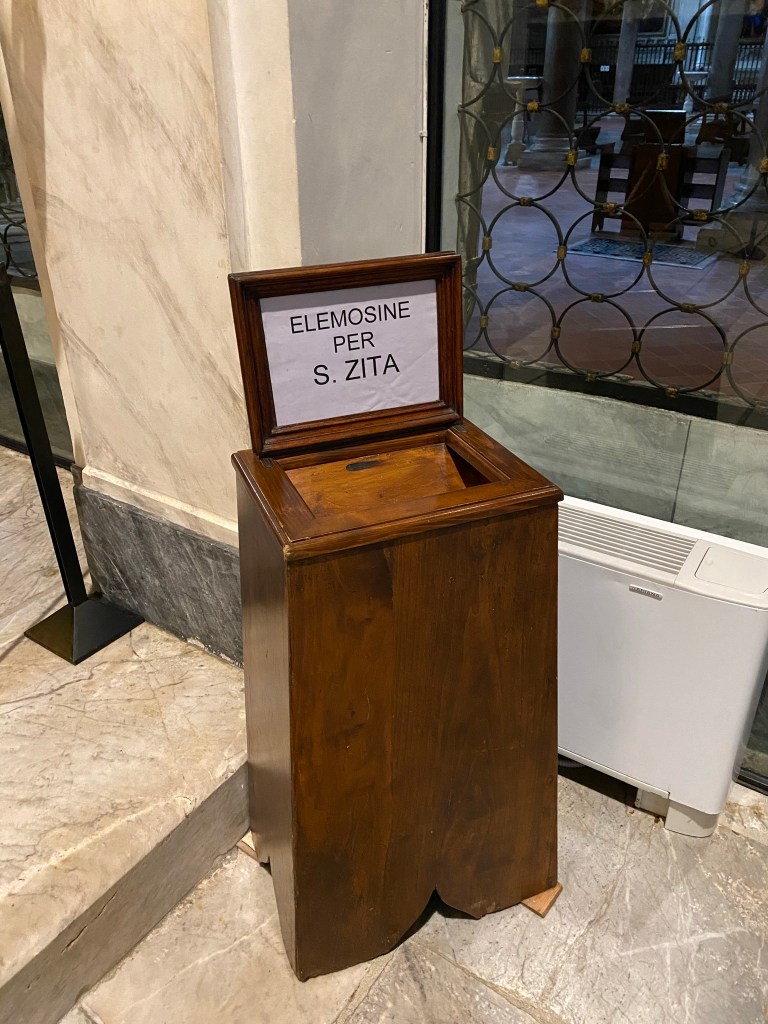
Next up, the church of San Frediano, which is very striking with its monumental 13th century mosaic of Christ in Ascension. This basilica has a special chapel devoted to the memory of Santa Zita, who was born in Lucca. A friend in the USA wanted pictures of this chapel and I was happy to find the basilica being opened just as I arrived. I got the pictures for my friend and thoroughly enjoyed the interior of the church. I was, as always in these days of early 2021, either alone in the building, or one of a handful. I am getting used to this and will probably be spoiled for the rest of my life, expecting to always have culture to myself.
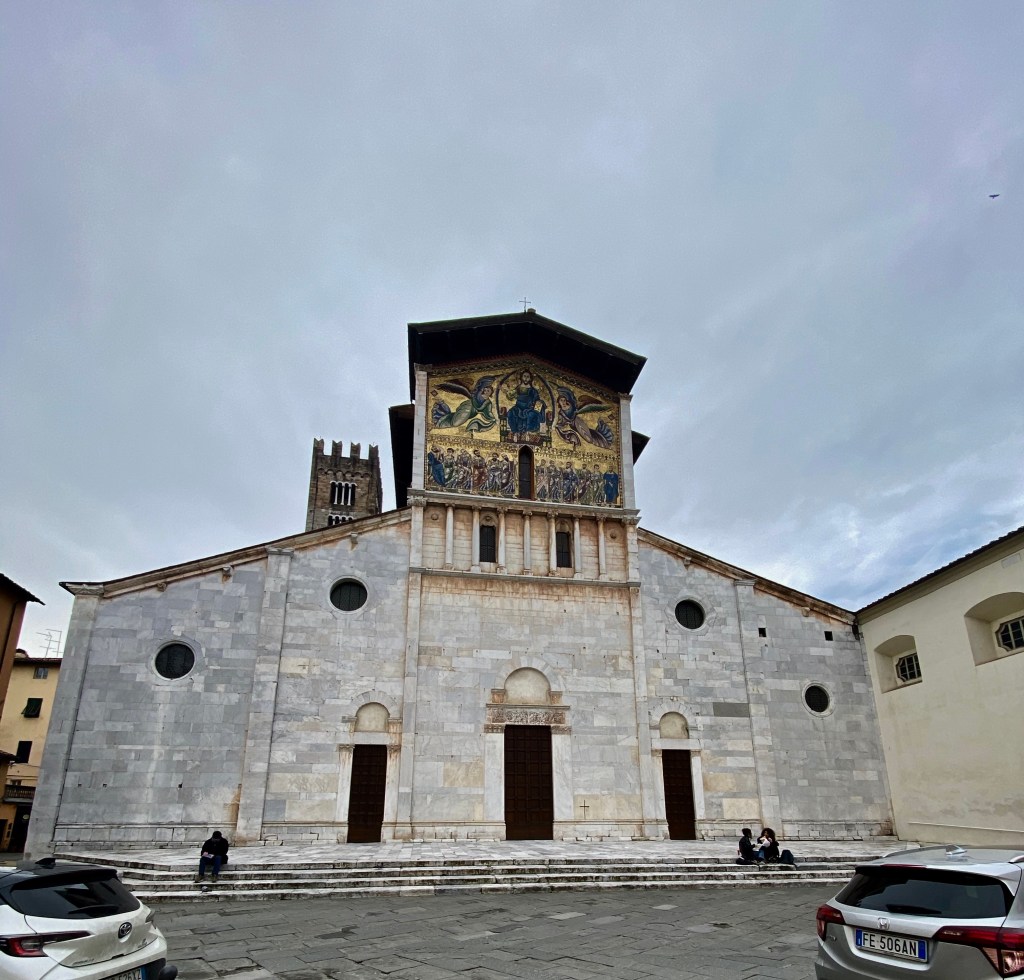
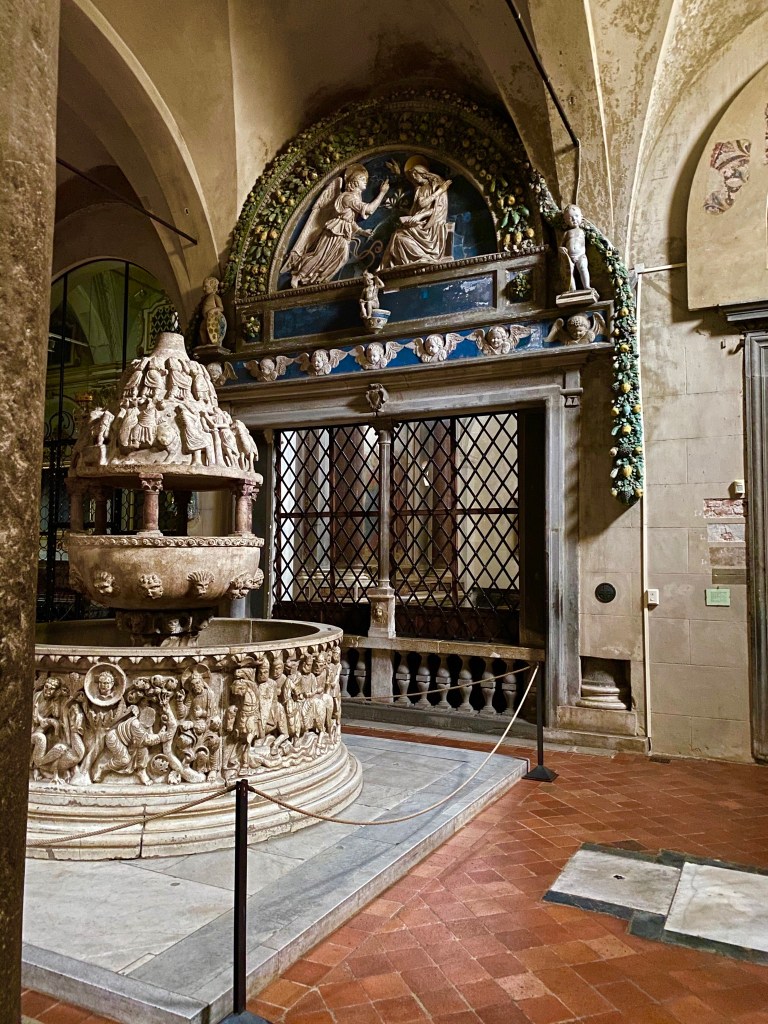
The pictures below show the elaborate baptismal font inside San Frediano.
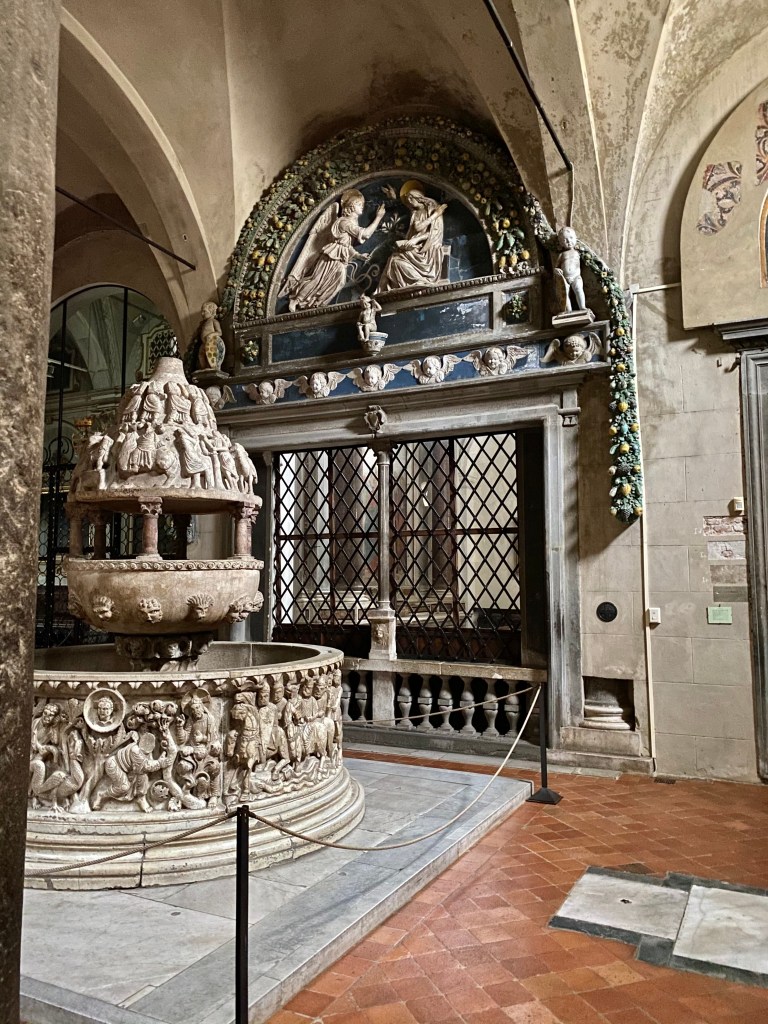
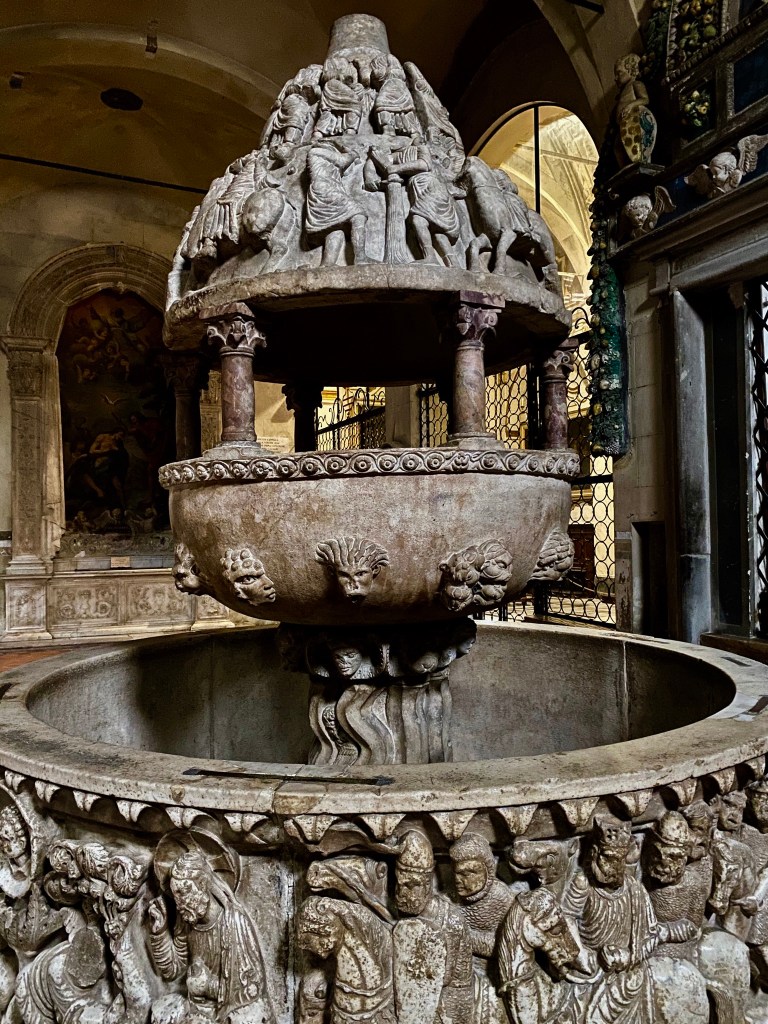
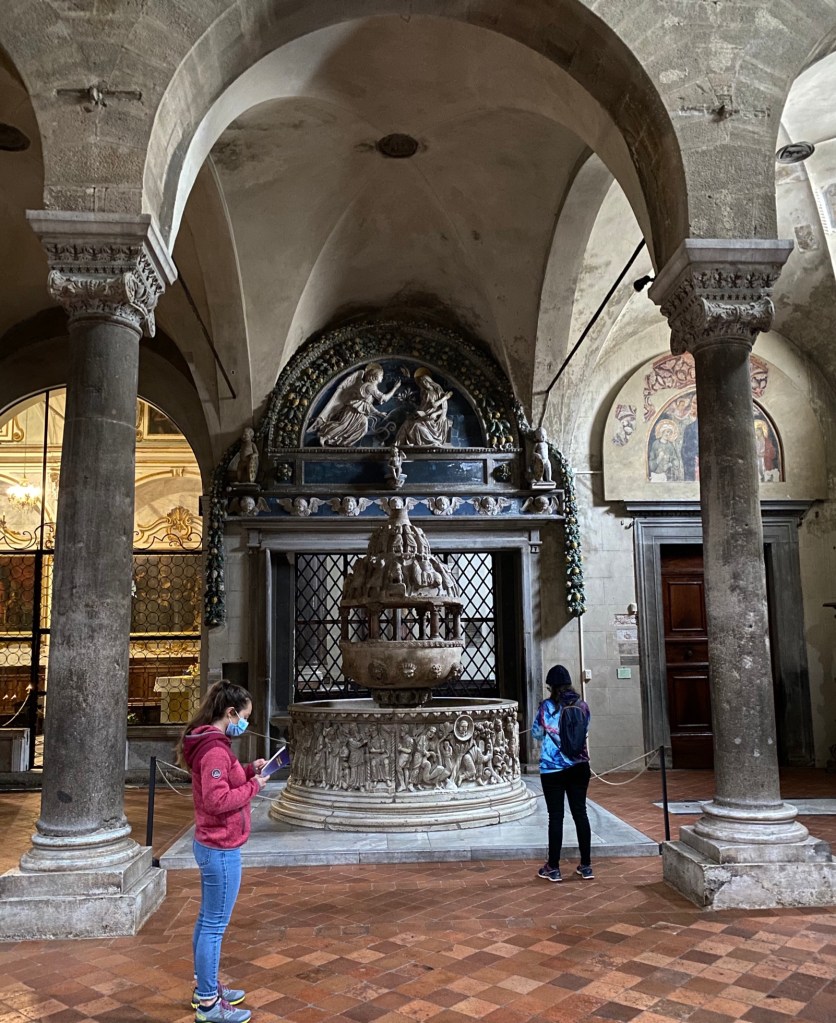
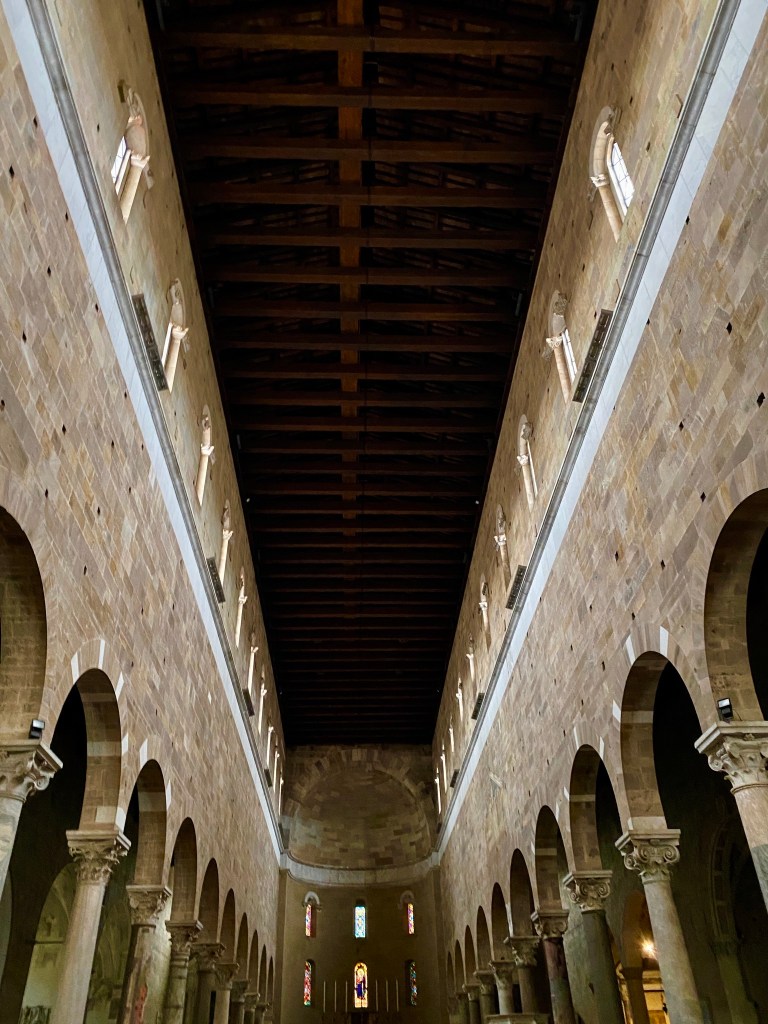
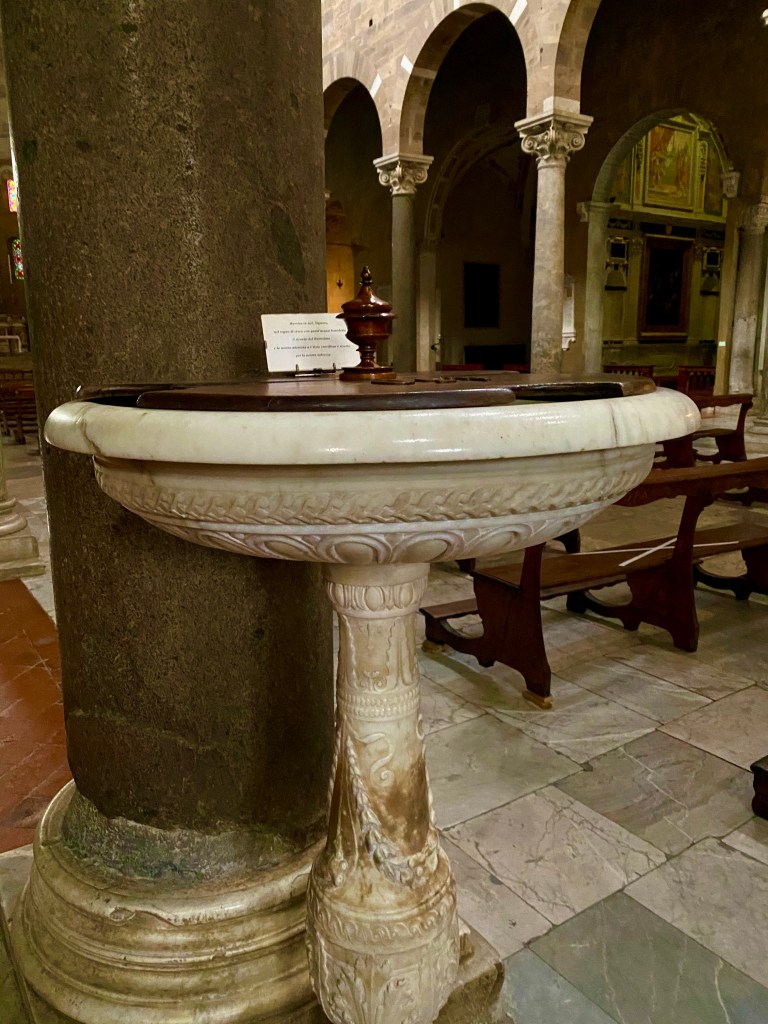
Here are some pictures of the overall interior and details:
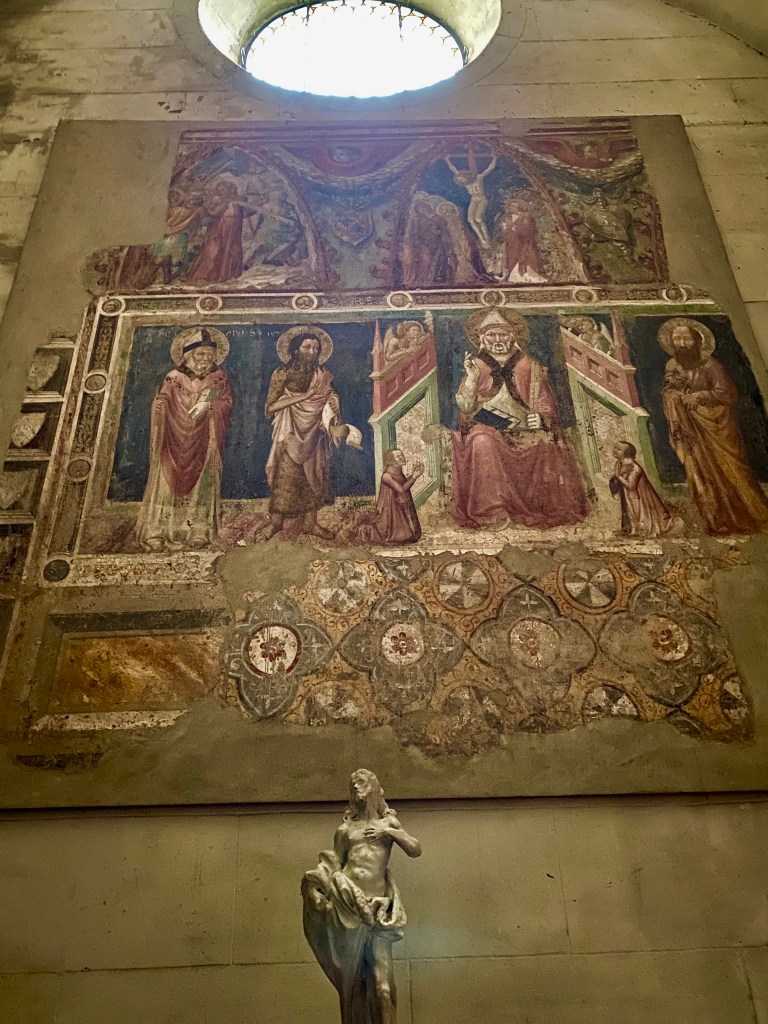
The entrance wall of the church has some important frescoes:
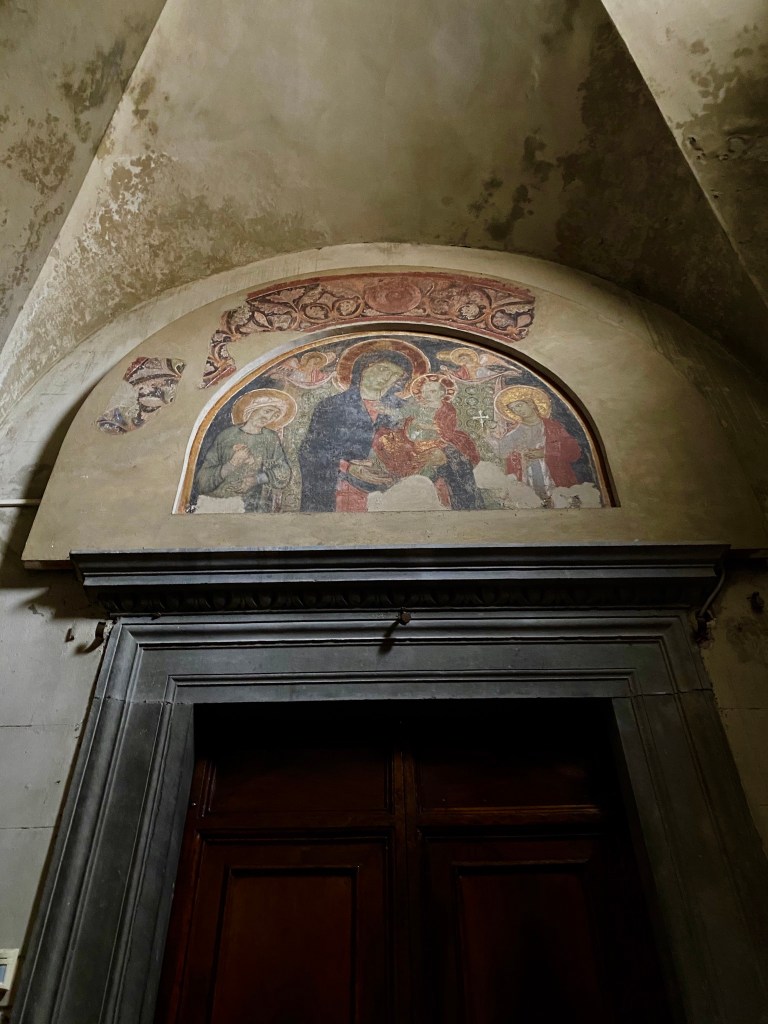
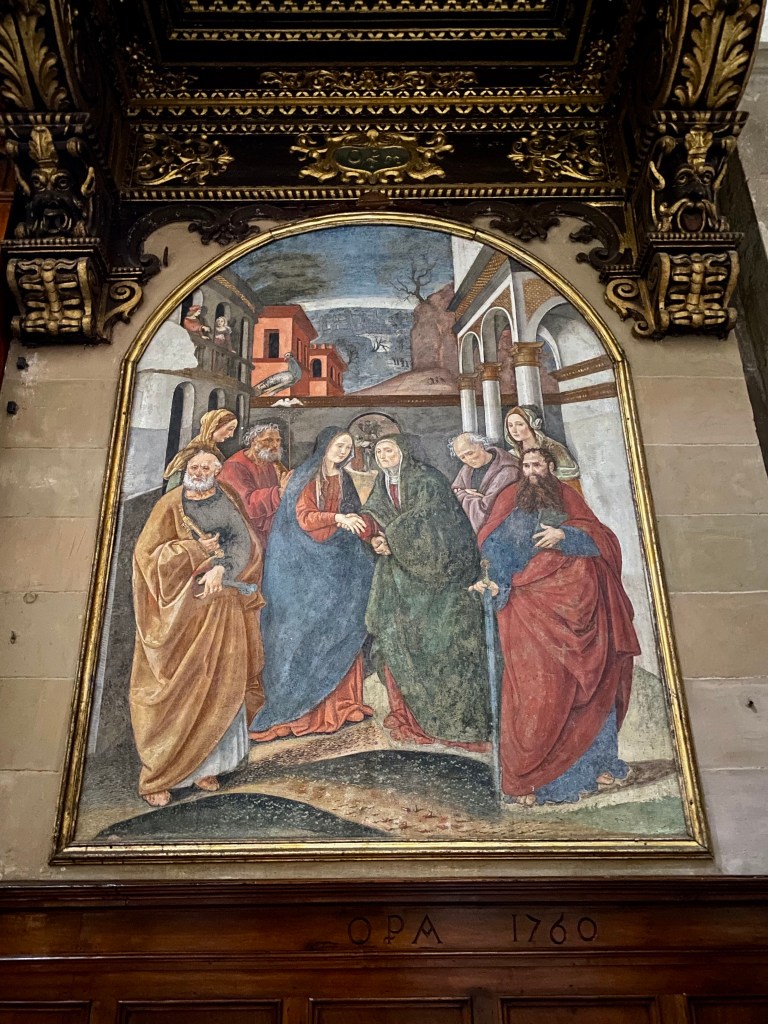
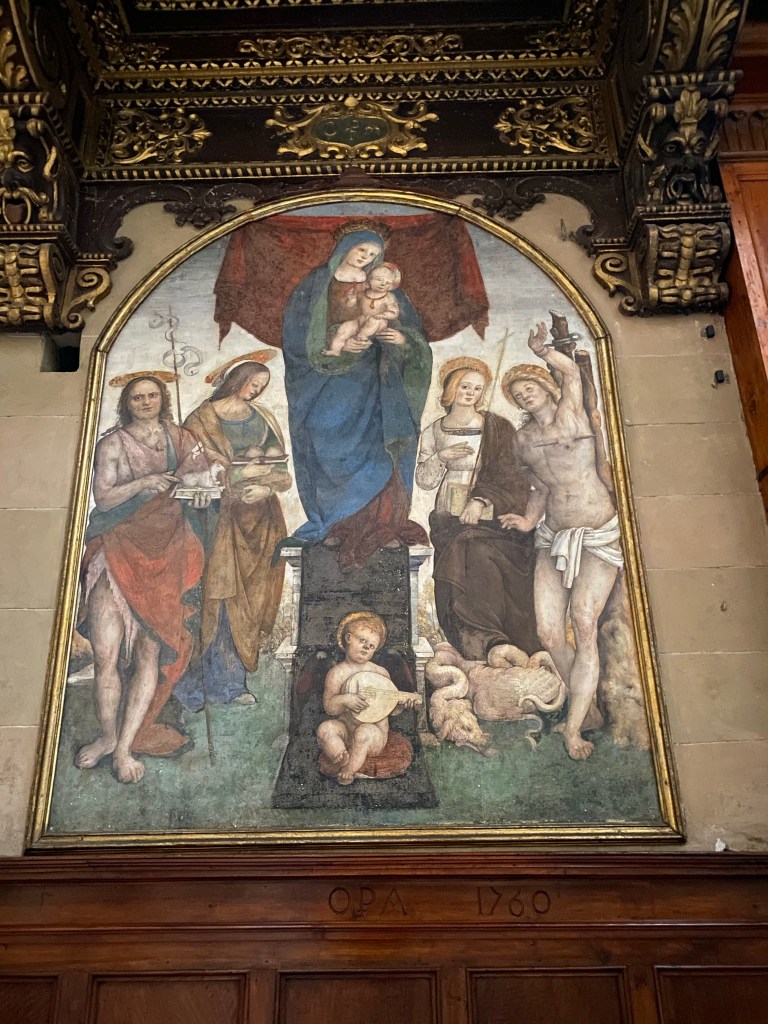
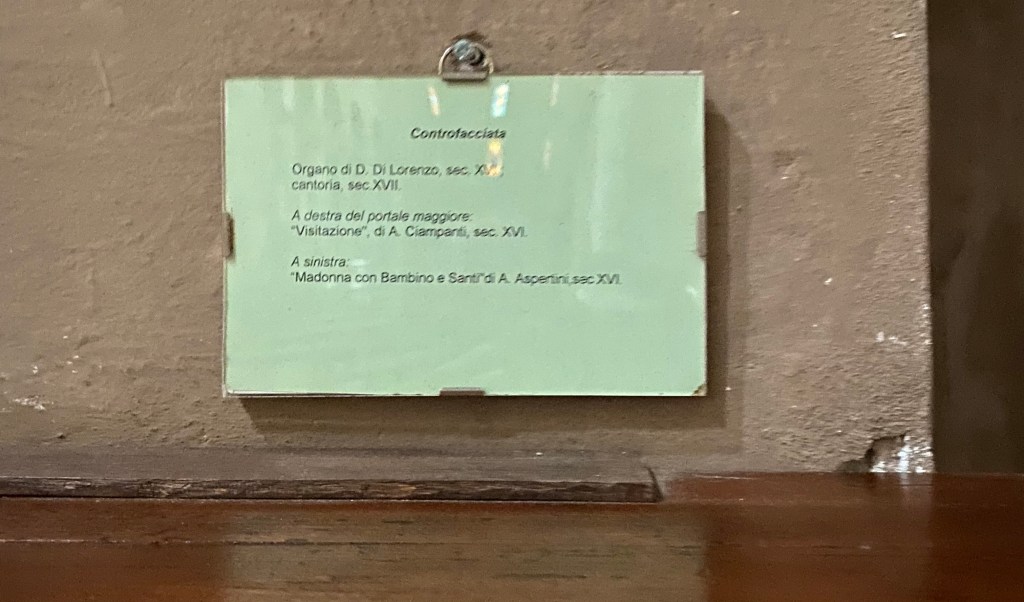
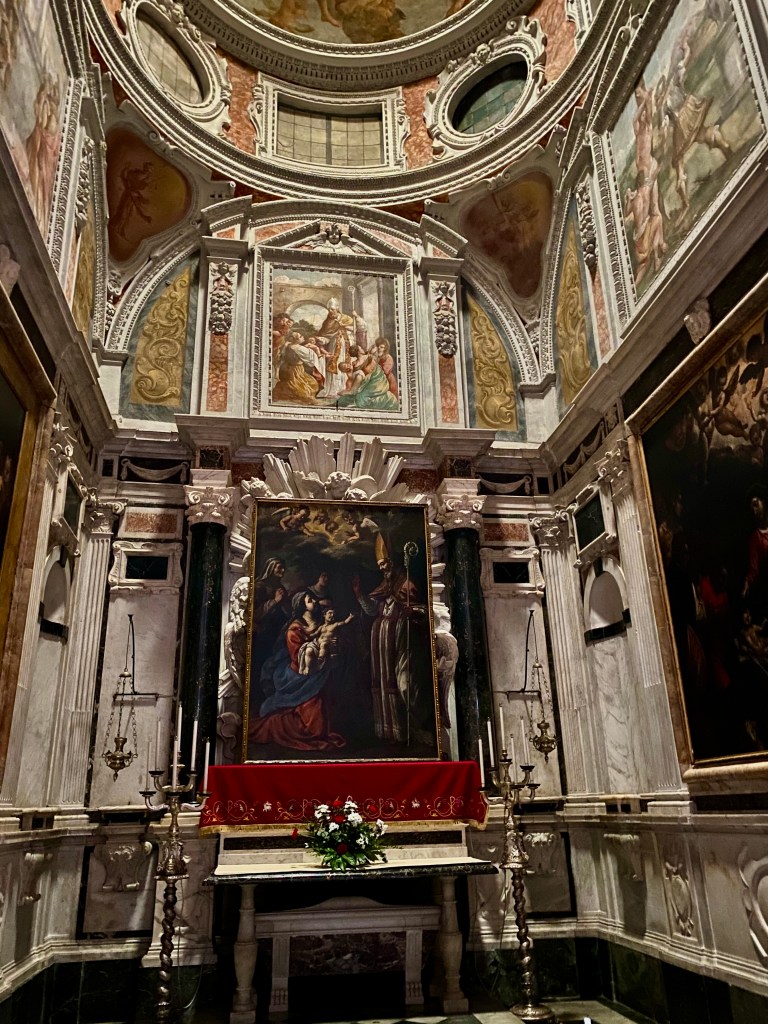
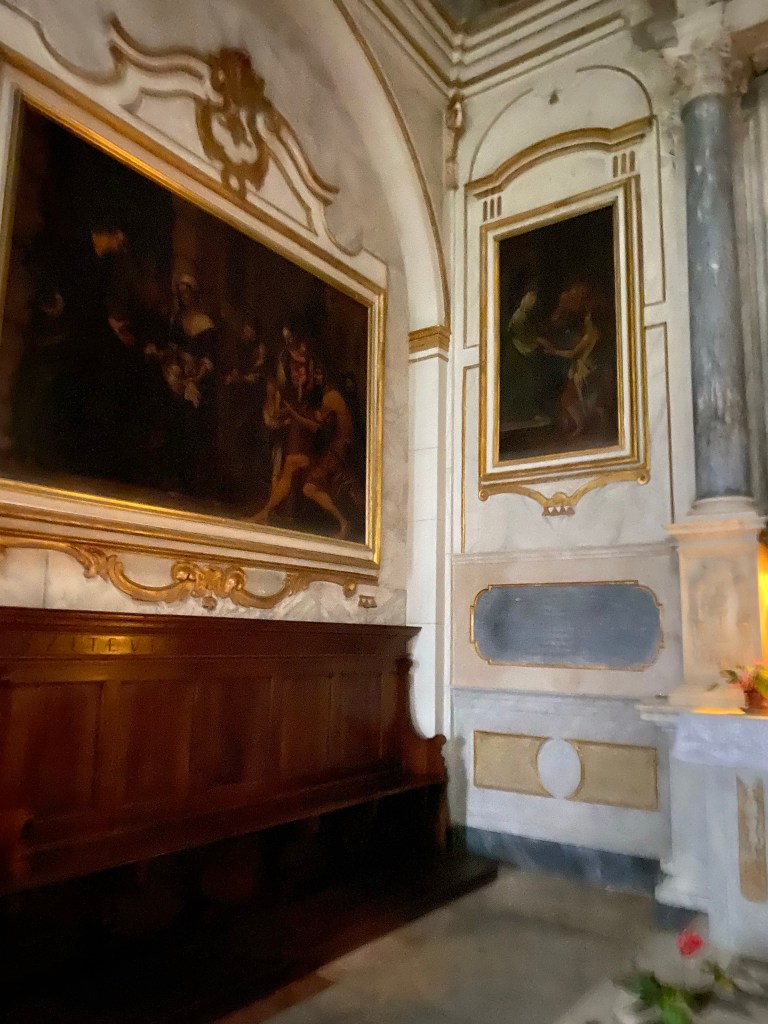
And now we shall enter the chapel devoted to Saint Zita. The stories of her miracles are depicted in the very dark oil paintings around the chapel.
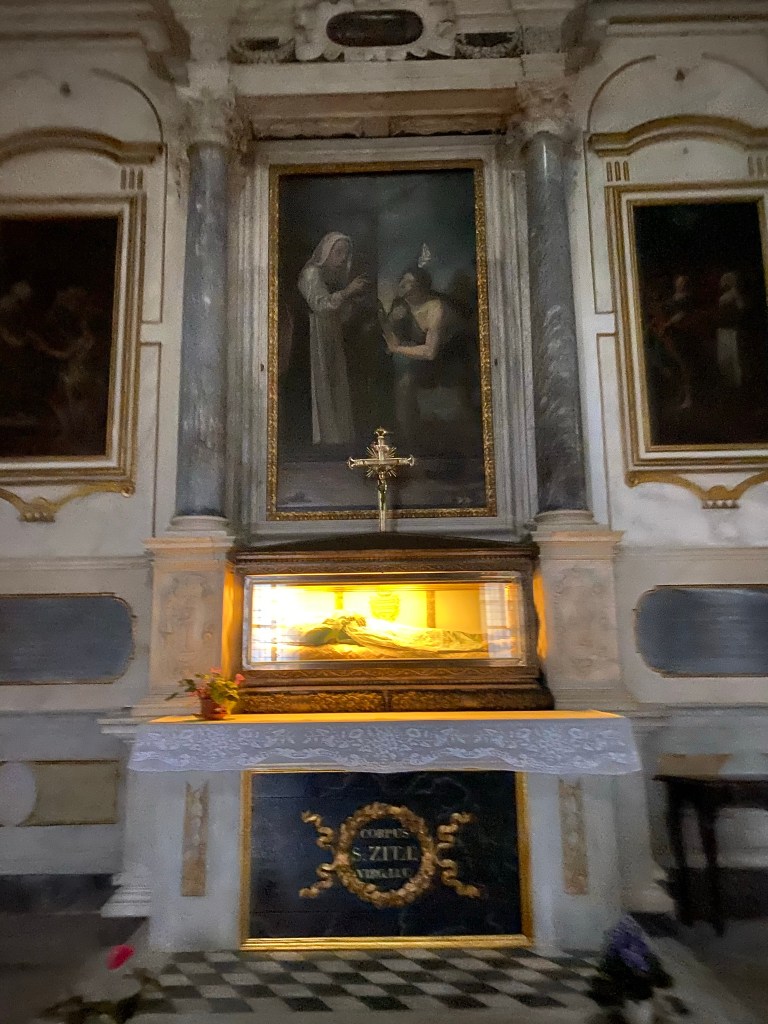
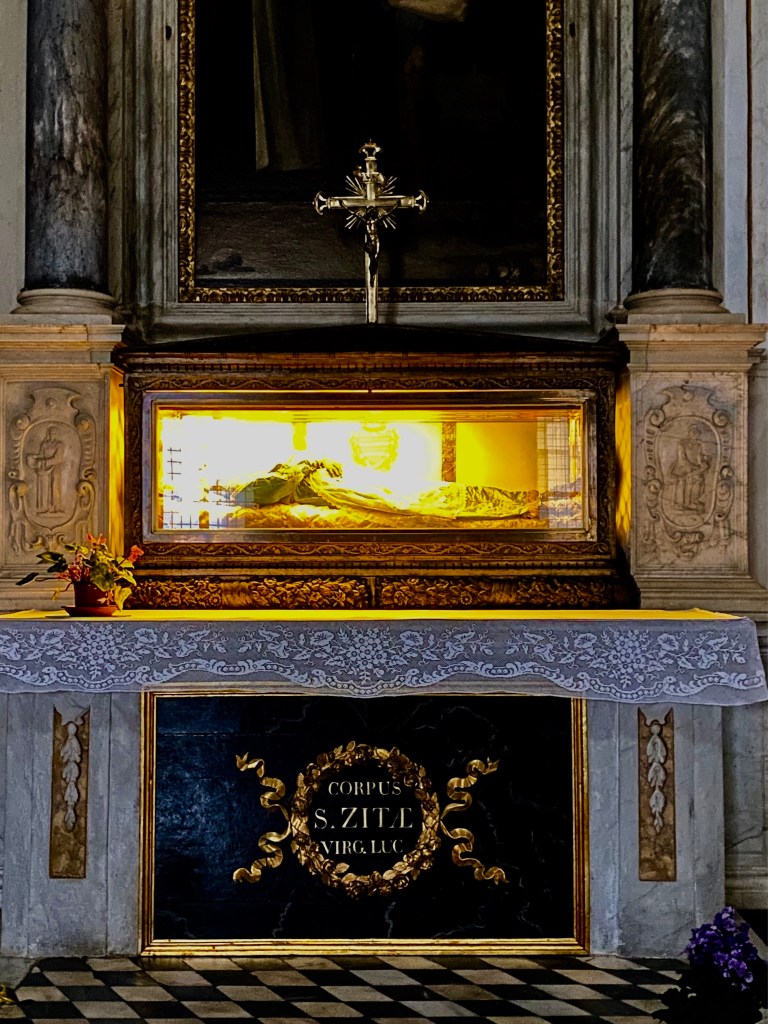
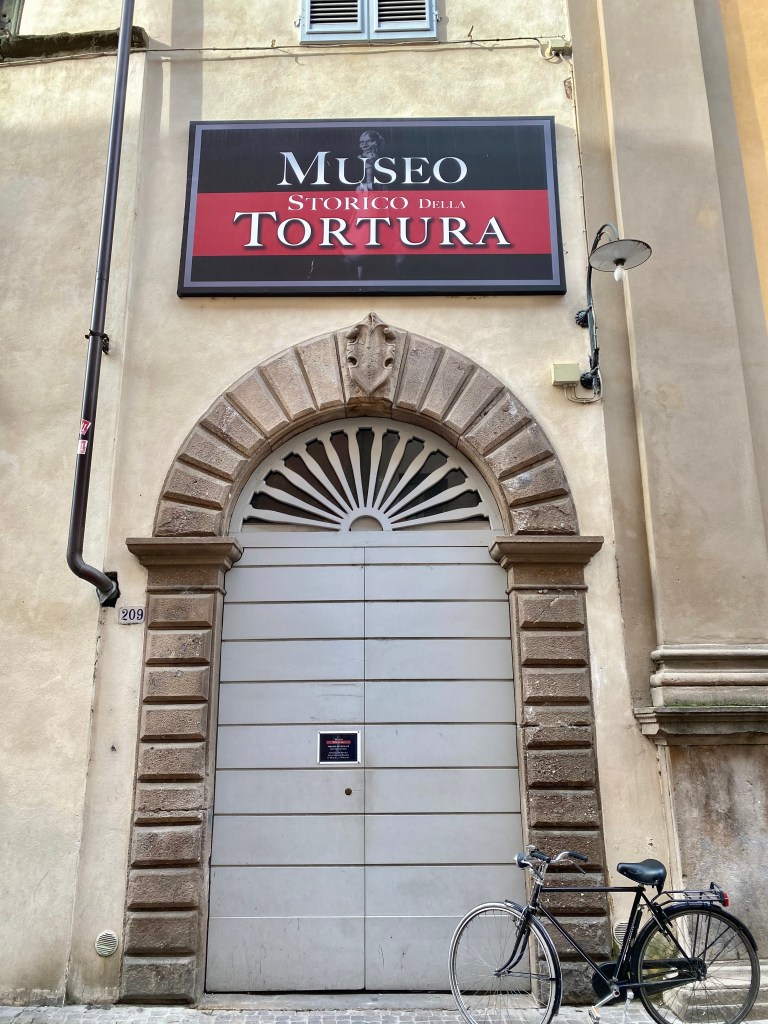
Moving in space from the sacred to the profane, did you know that Lucca has a museum devoted to the history of torture?
As I walked back to the train station to go home to Florence, I saw these signs devoted to the Via Francigena, the famed pilgrimage route that funneled travelers from all over Europe towards Rome. It passed through Lucca.
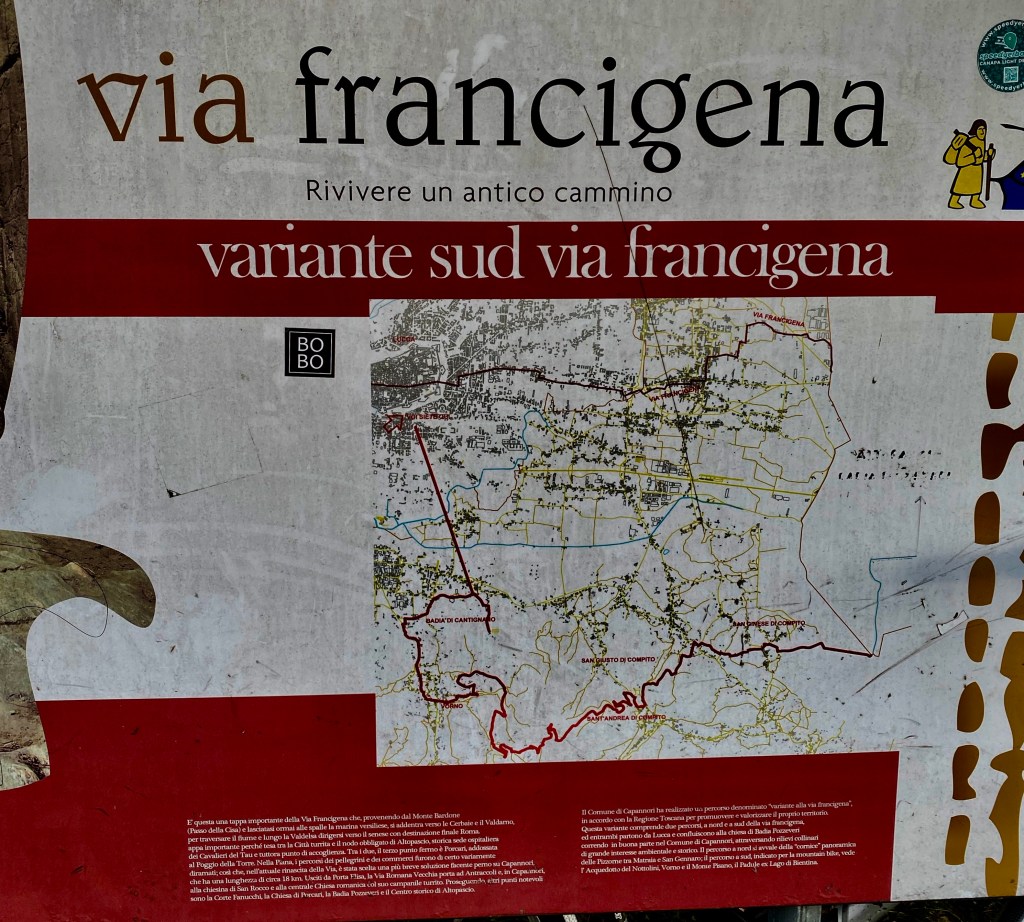
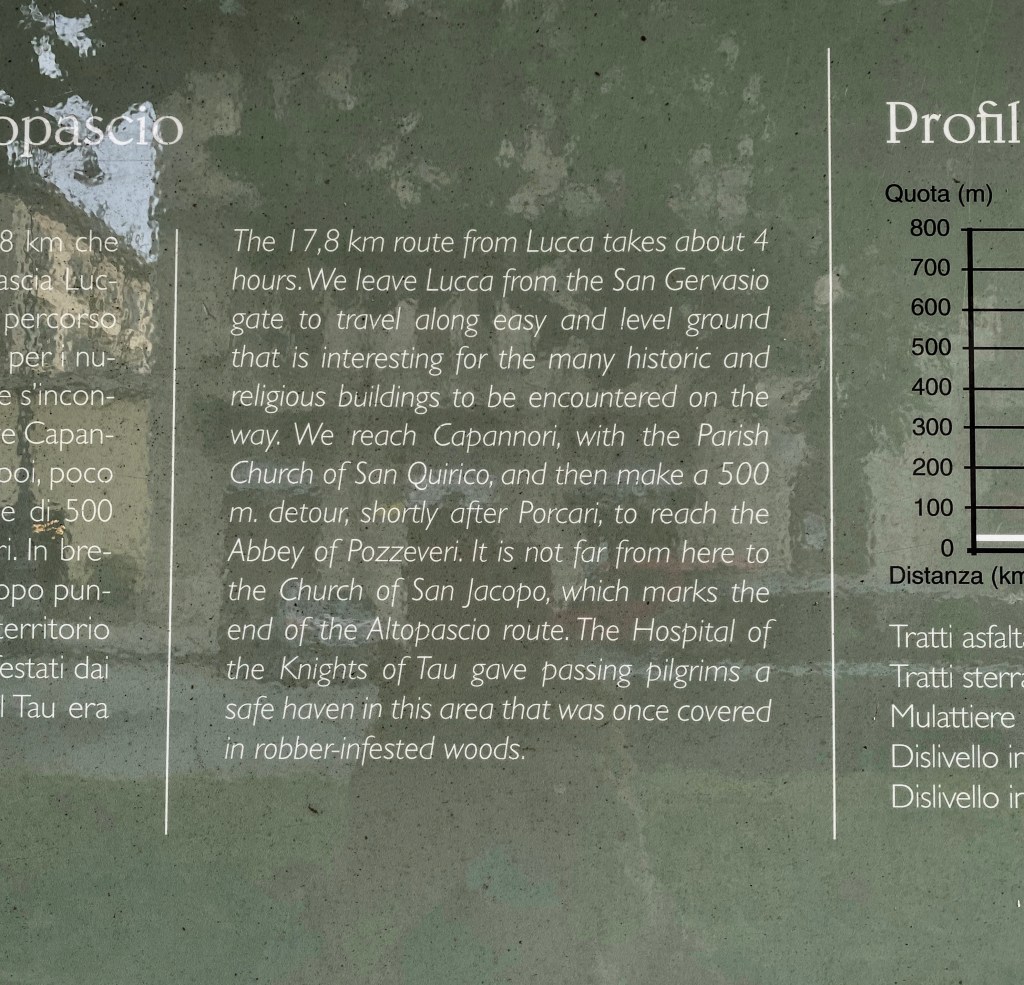
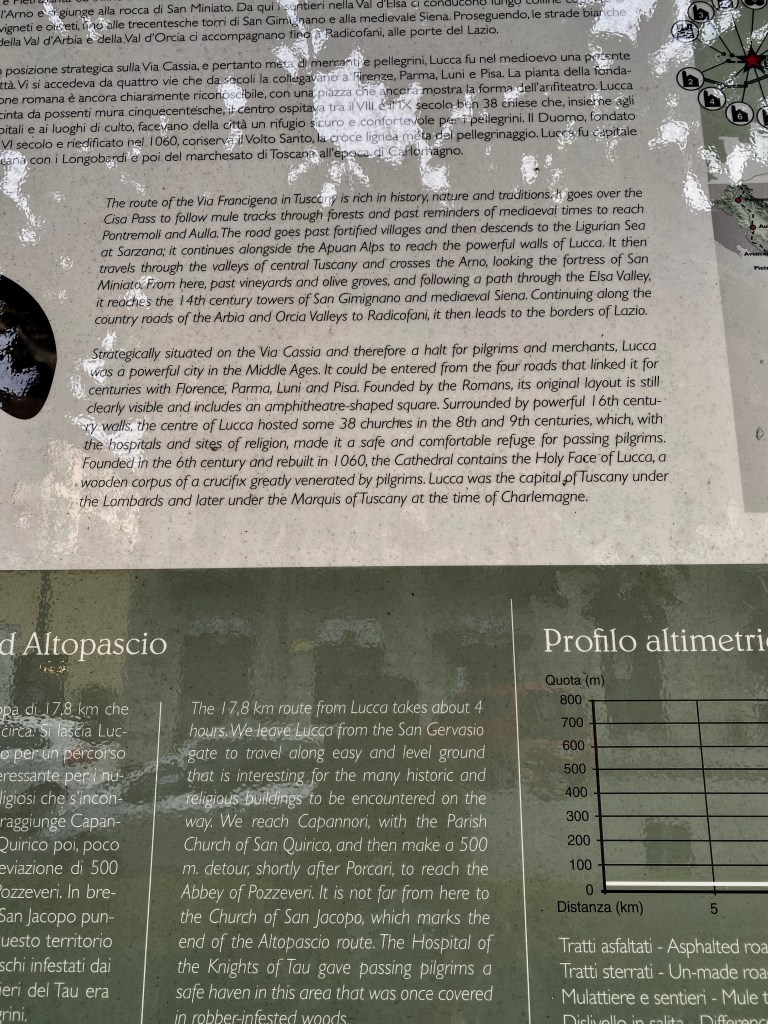
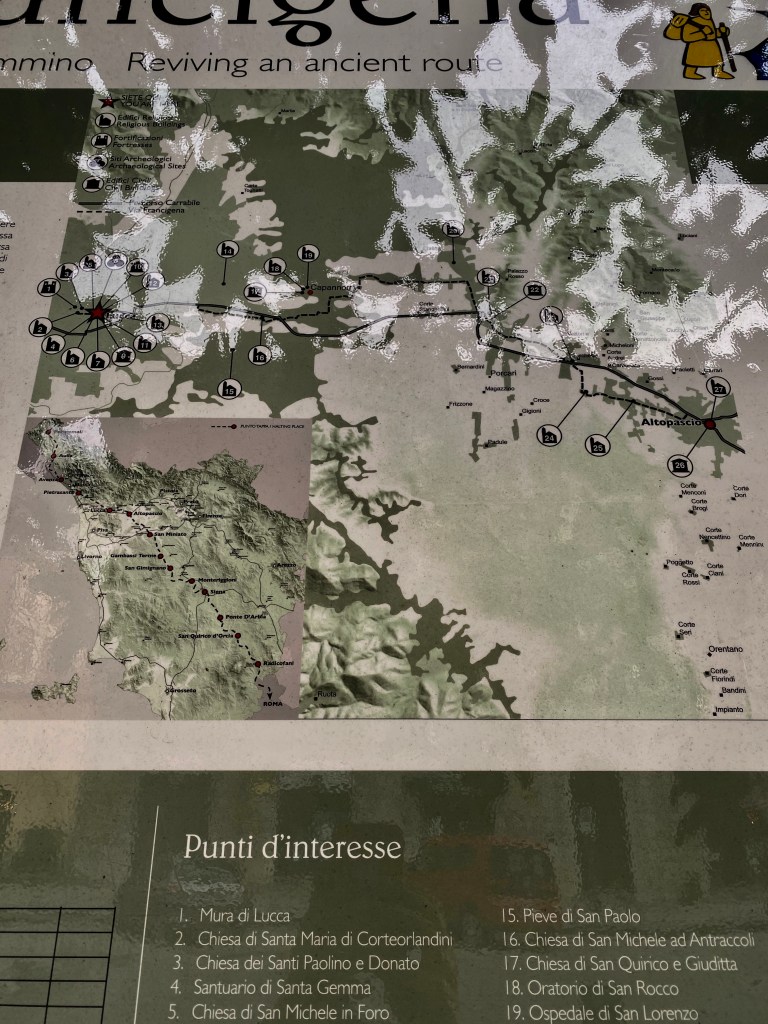
Some general shots of this lovely little city:
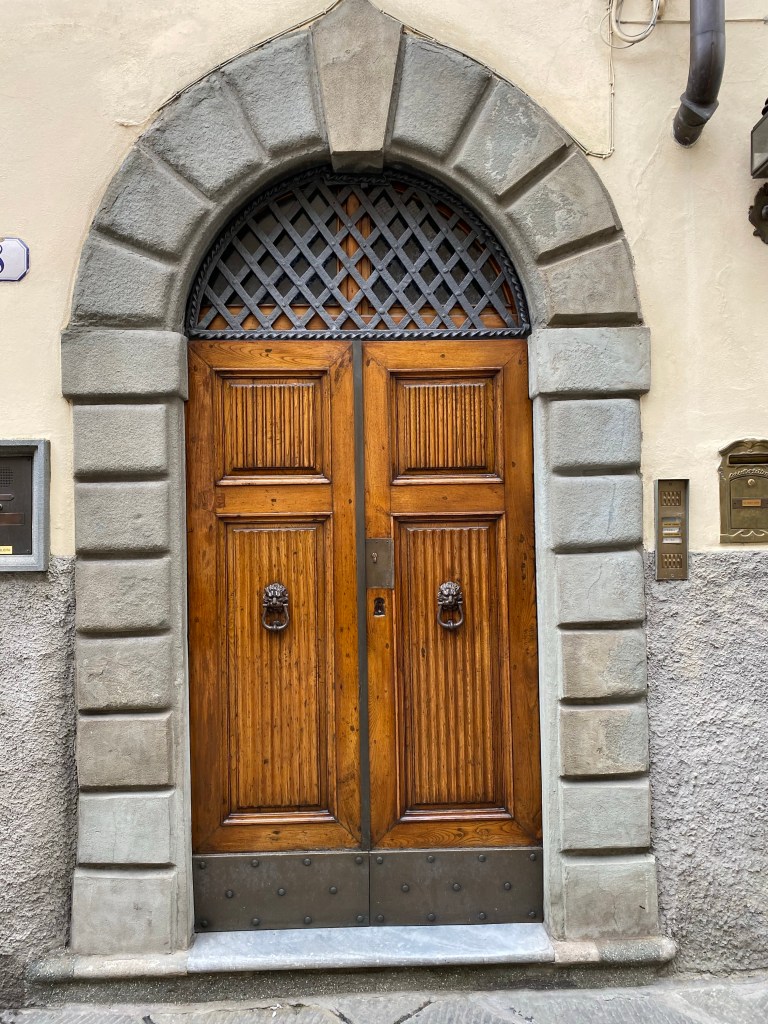
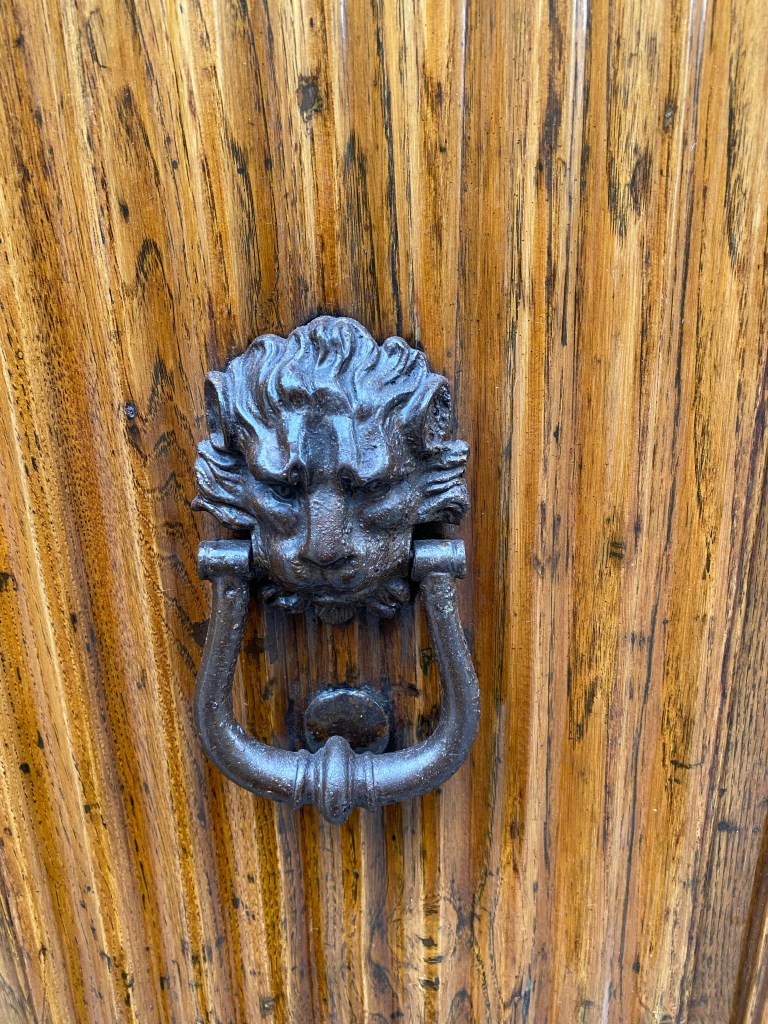
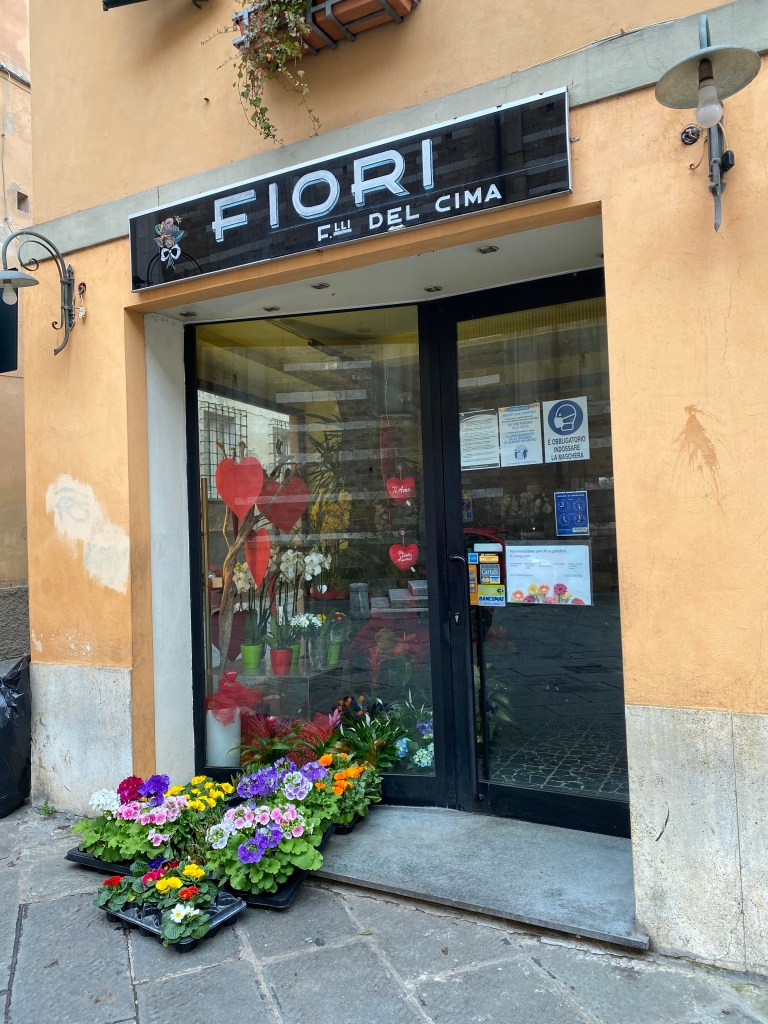
I’ll be back with part 2 soon! Arrividerci!
Livorno, Livorno and more Livorno, Part 2
This is the 2nd half of my post of picturesque Livorno, started yesterday.
Oh, how I wish I were able to be upon that boat in the video above, making its way through the canal!
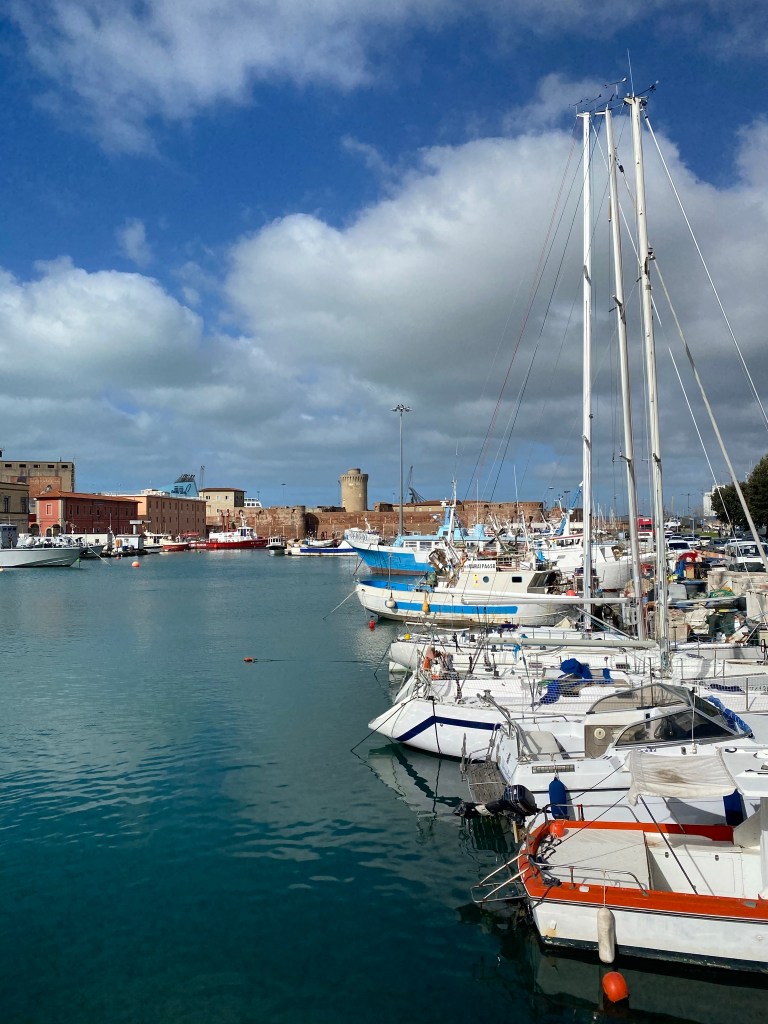
Below, I am leaving the Venice section of the city and headed to the place where the town meets the sea.
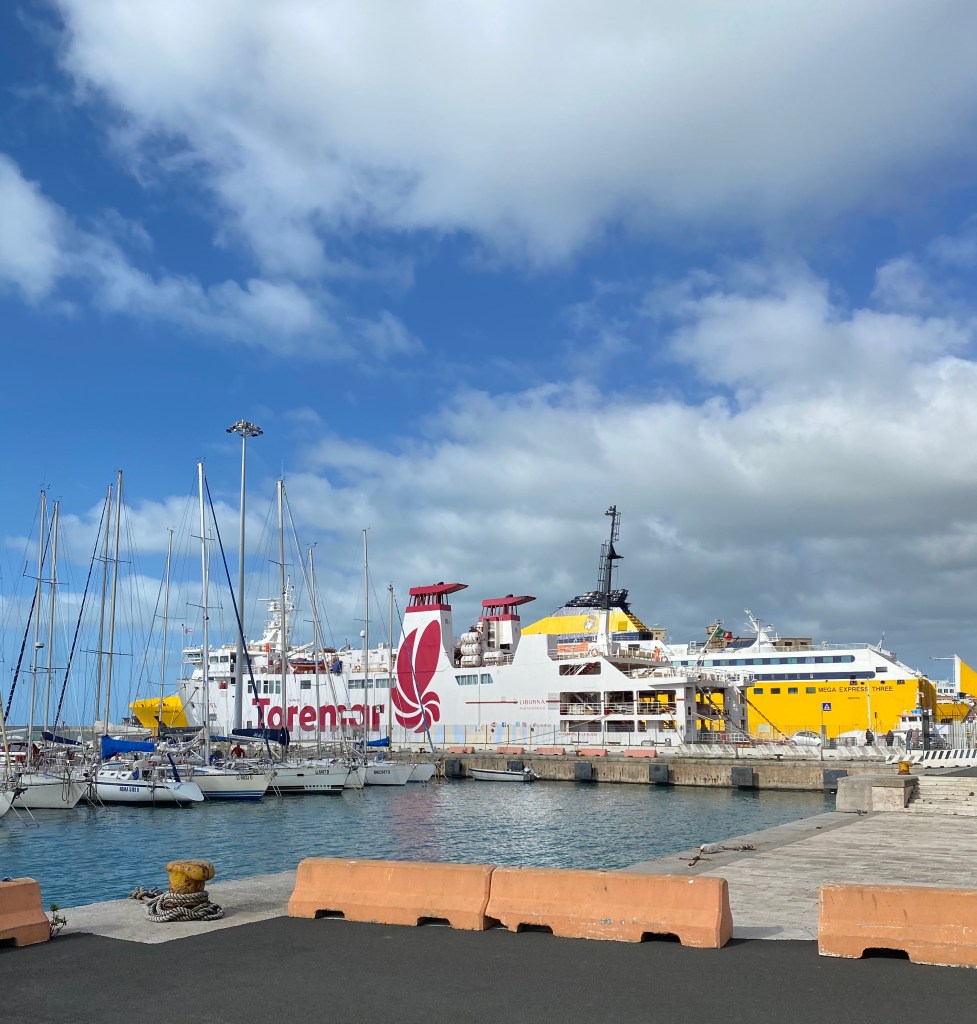
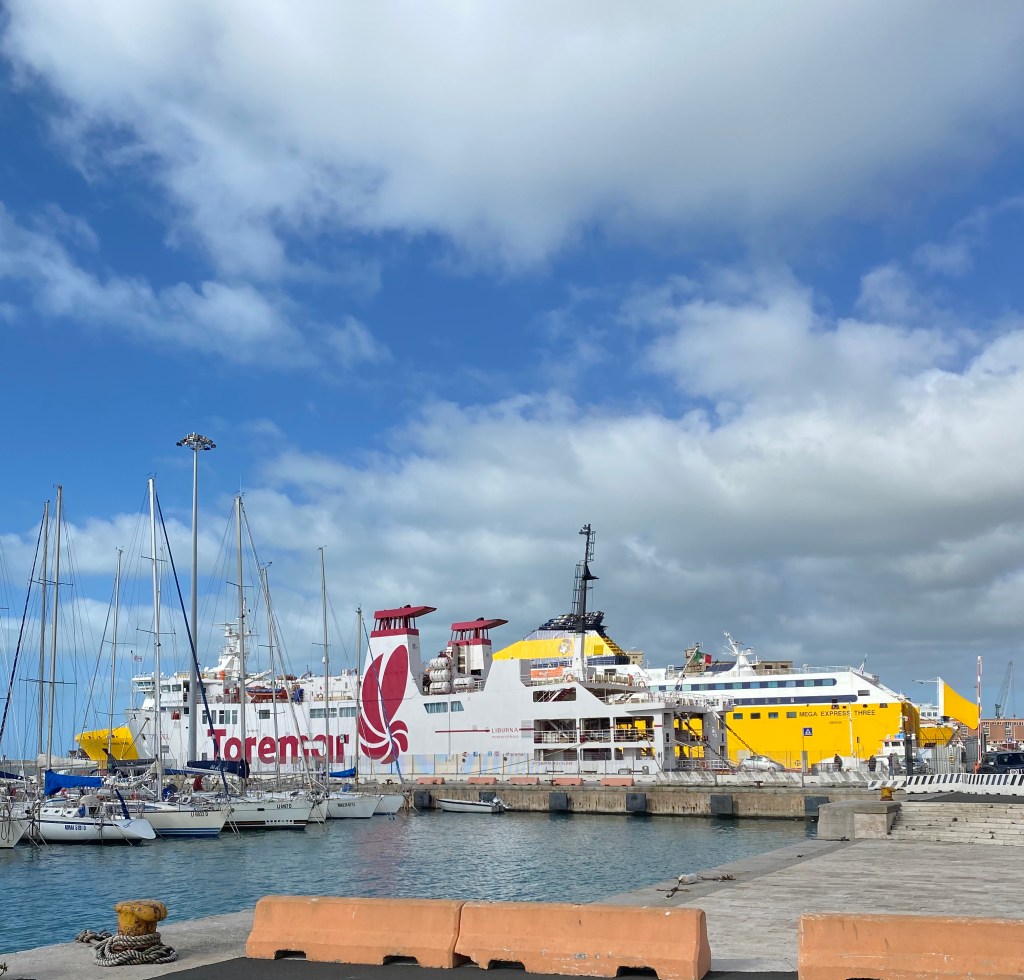
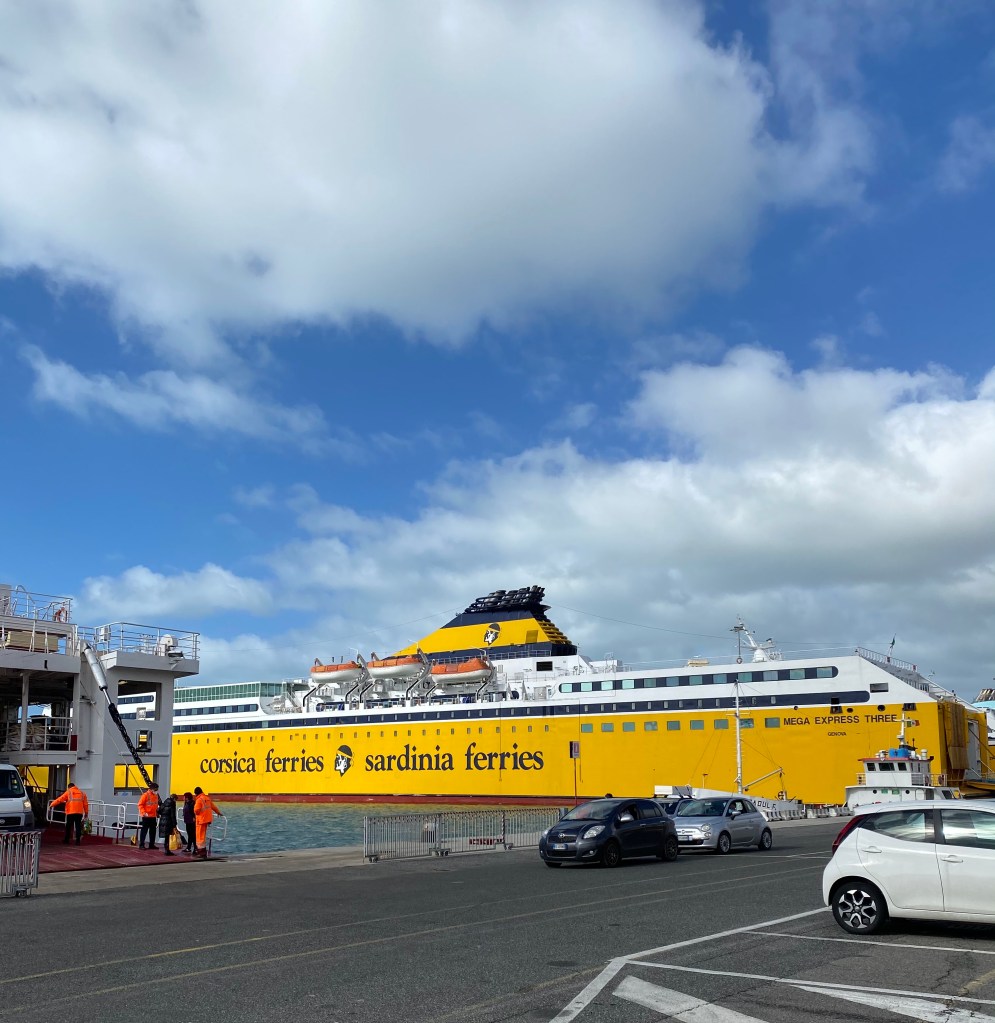
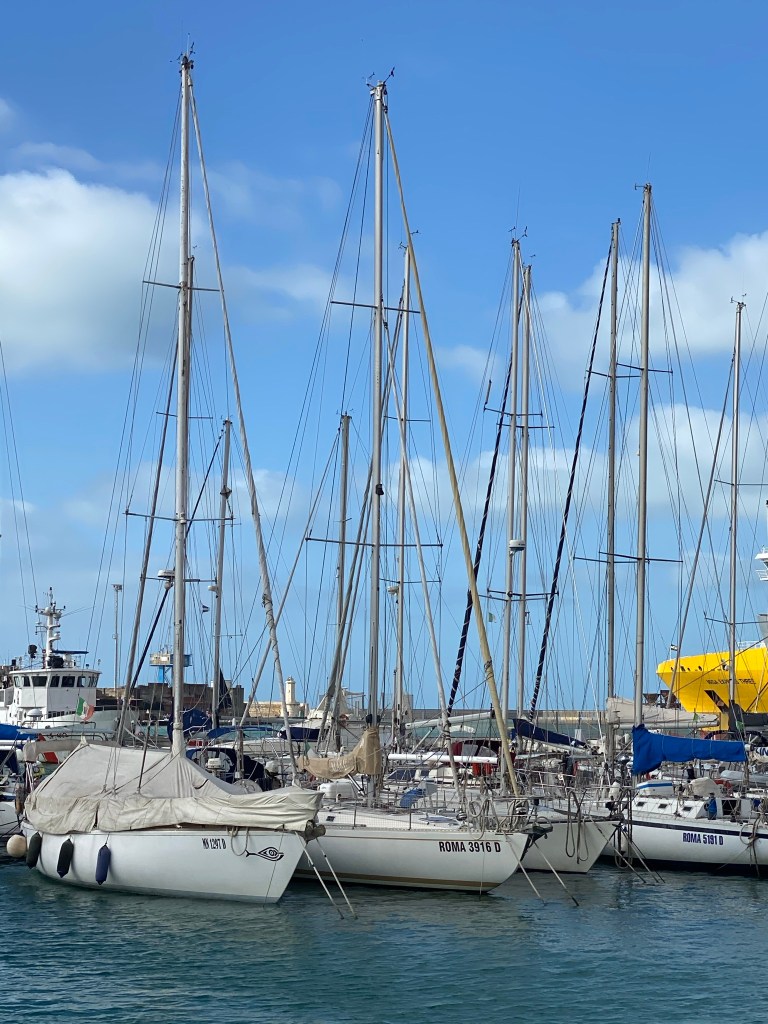
Livorno is a huge and thriving port. There aren’t many cruise ships now, thanks to Covid, but I have no doubt they will be back. In the meantime, I really wanted to get on the yellow ship, bound for Sardegna. Maybe next summer, I hope.
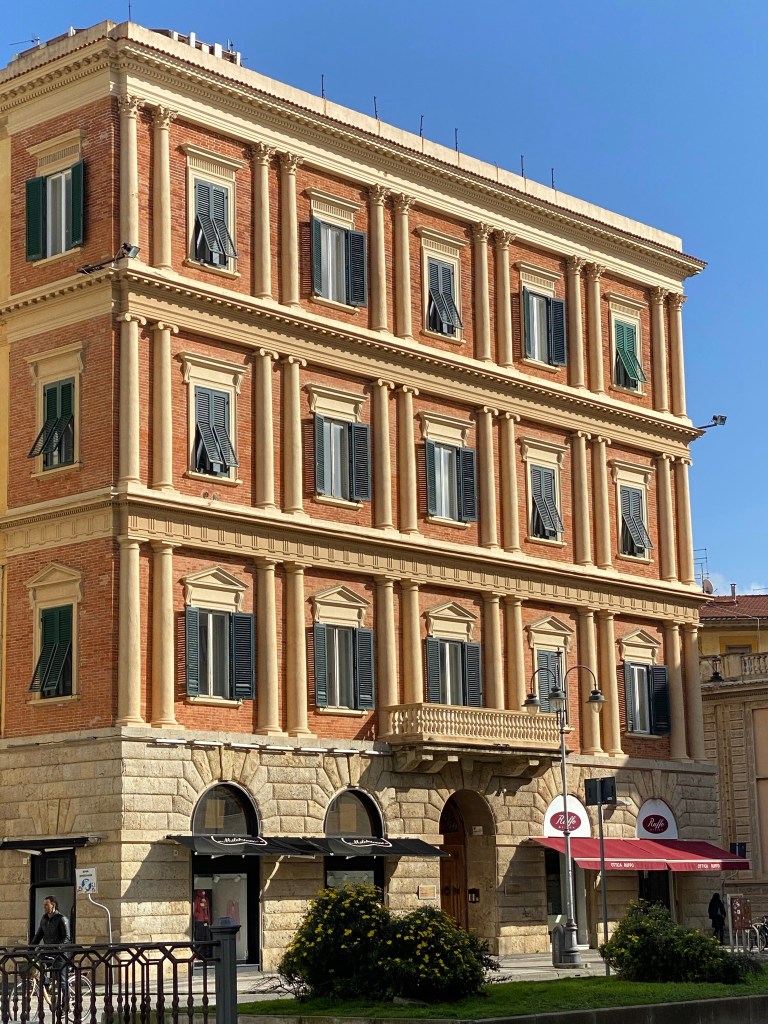
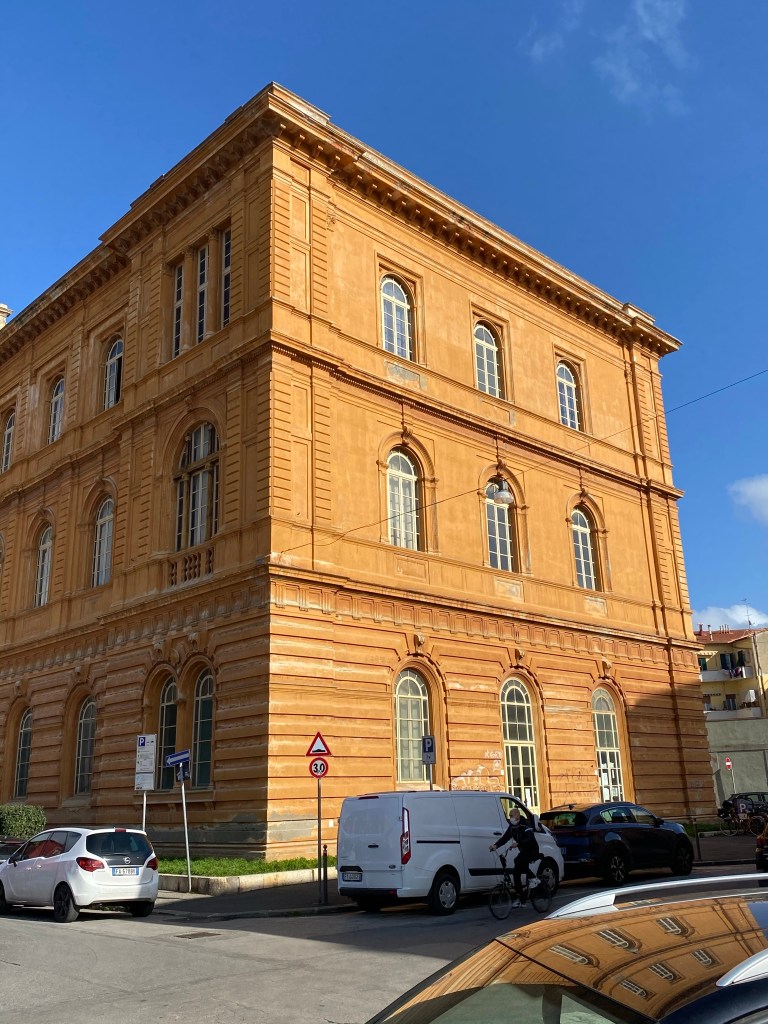
Check out these bright orange and yellow buildings! The colors stuccoed onto buildings in Livorno are much stronger than the golds and ochres I am accustomed to in Florence. I like it!
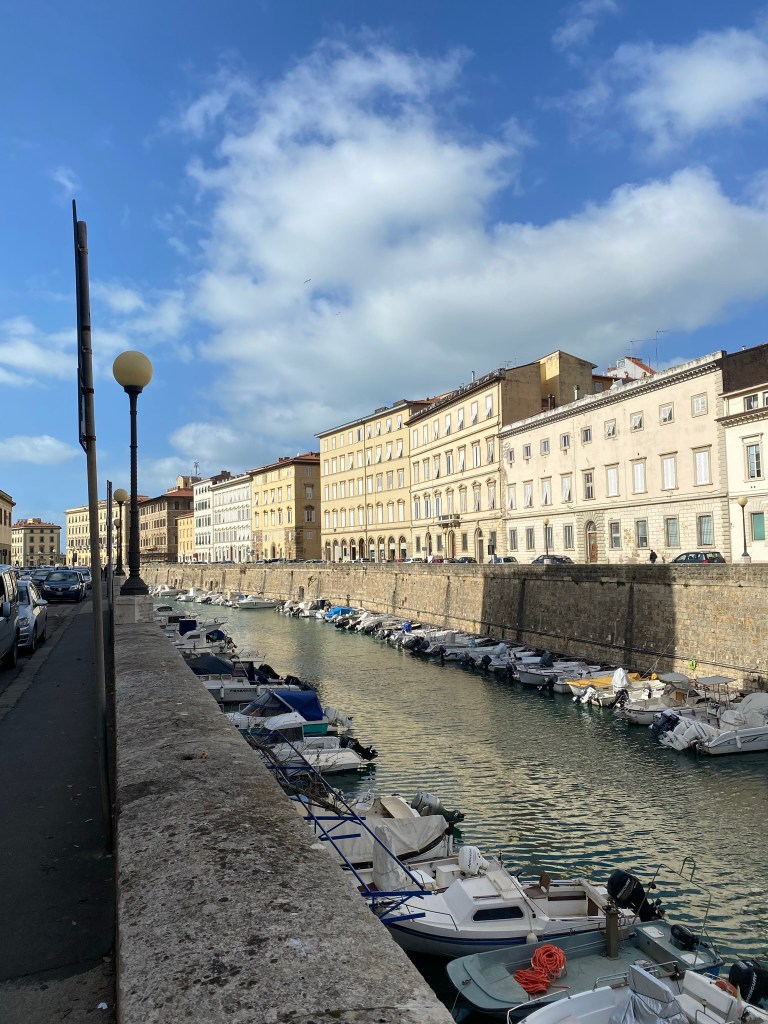
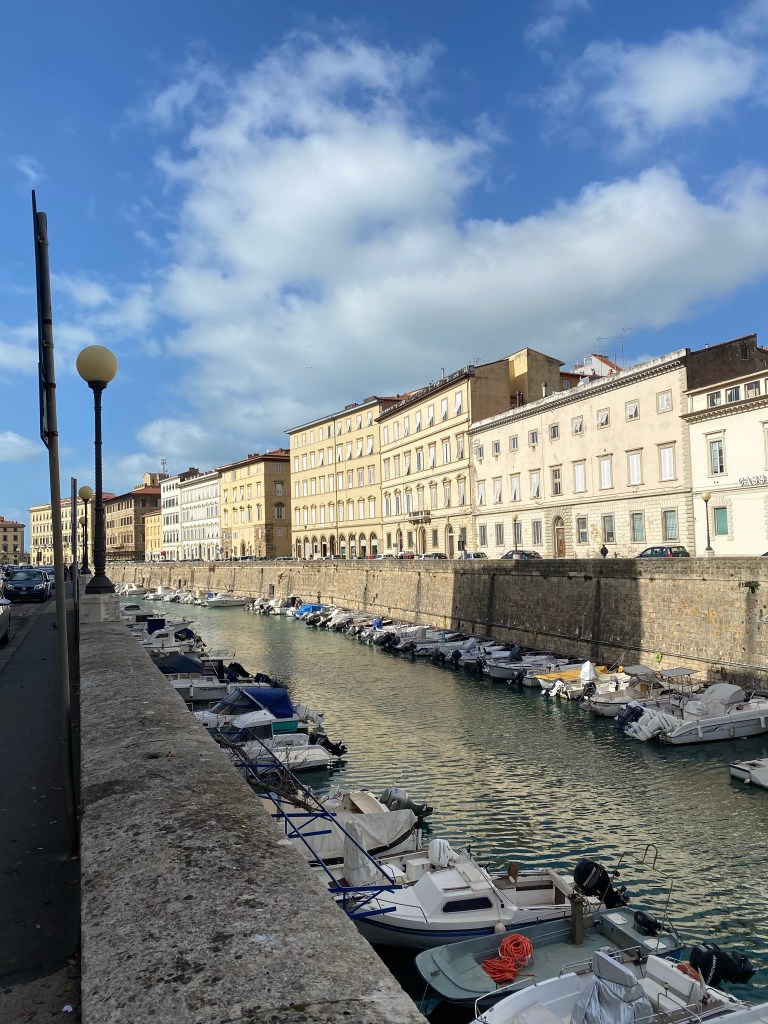
Another look back at the canals in the city:
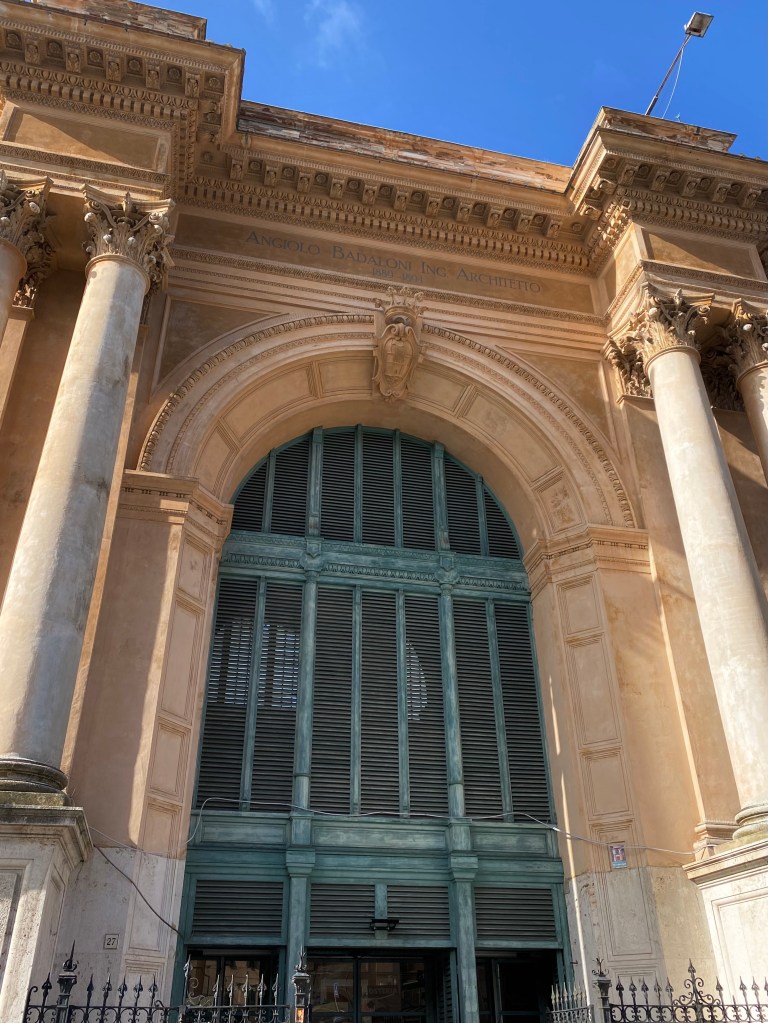
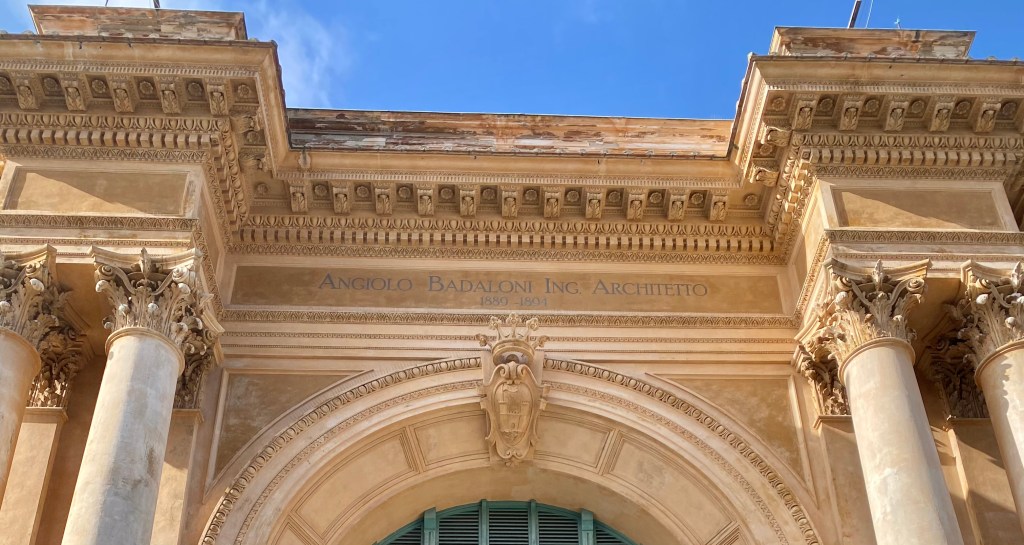
So, then there is the historic “mercato centrale.” Wikipedia and I agree that this is one of the most interesting buildings in Livorno.
“It is one of the most interesting buildings in Livorno from the second half of the nineteenth century, greatly influenced by the great developments in iron and glass architecture.
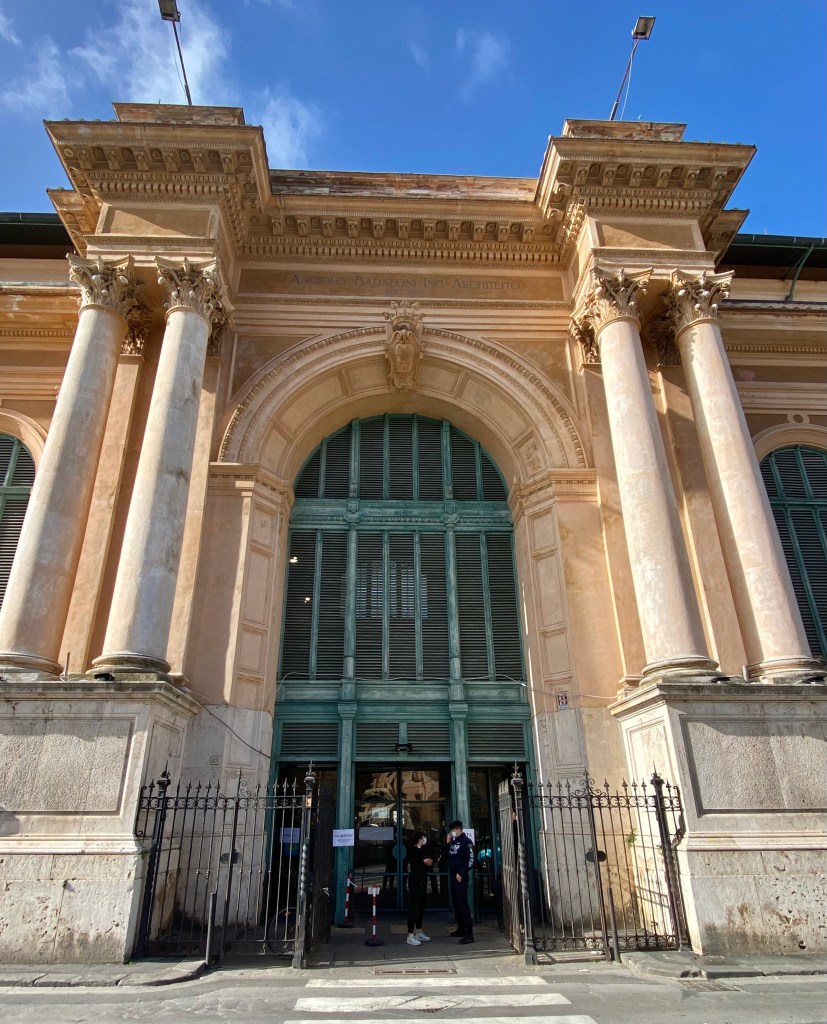
“In Italy, the post-unification years were characterized by a campaign for the reorganization of services which also affected Livorno. Here, after a first conversion of buildings acquired in the state property, a more consistent commitment was made thanks to the push of the mayor Nicola Costella, and important public works were built: among these, the most impressive was the Food Market, designed by Angiolo Badaloni.
“The area chosen for the construction was inserted in the city center, along the Fosso Reale, in the area once occupied by the complex Medici fortified system and subsequently by an arena for daytime shows. The works began in 1889 – 1890 and quickly ended in 1894; at the time, however, there was no lack of criticisms related to the size and cost (about 4 million Lire ) of the work.
“It should be remembered that, according to the stories of the Livorno painter Filippelli, around 1909 the famous Amedeo Modigliani, returning from Paris, rented a large room in the upper floors of the building of the Market, at the corner of Via Gherardo del Testa, and carved some stone sculptures of heads. On his return to France, it is said that these works were thrown into the Fosso Reale ditch which, in 1984, was the scene of the famous discovery of some fake heads, made by some young people from Livorno.”
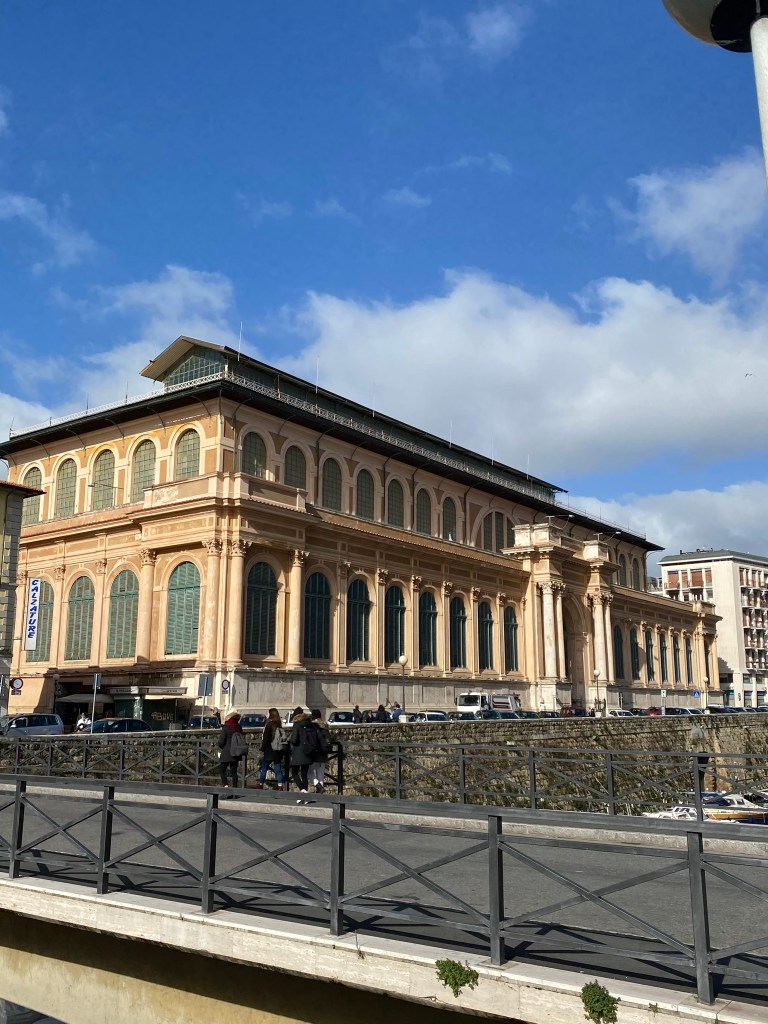
The Mercato Centrale from a distance. 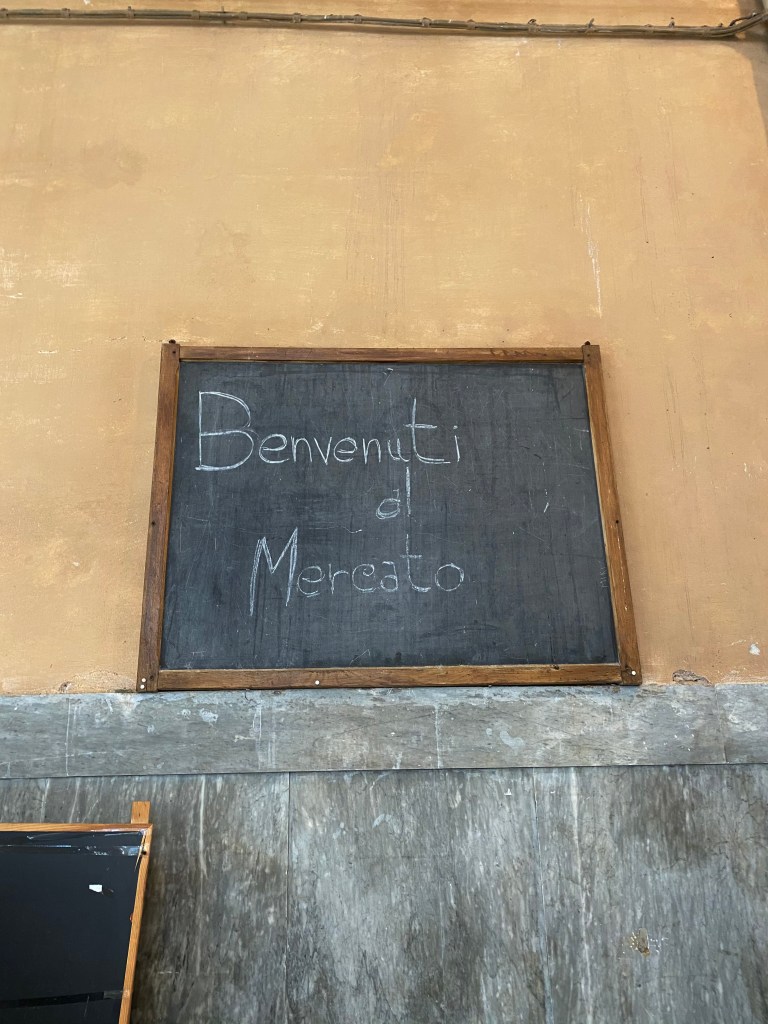
This humble, hand-written sign speaks volumes.
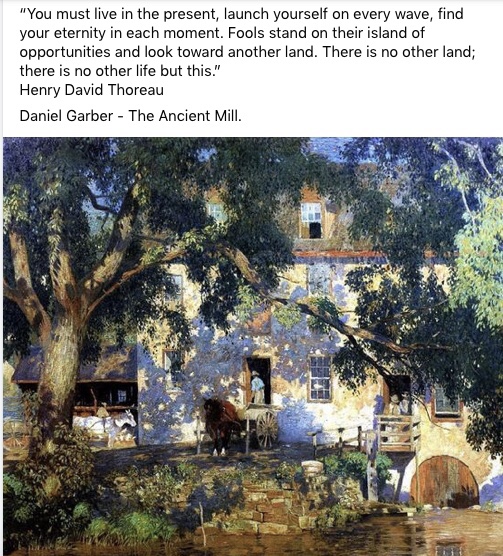
Find eternity in each moment
Livorno, Livorno and more Livorno, Part 1
Taking full advantage of the two week long period yellow zone in Tuscany, during which we could travel outside our commune but while remaining within our region (thanks for nothing Covid), I hopped on a train in Florence on a recent sunny February morning and away I went to Livorno. Alas, we are in orange zone again, so I can only look back fondly at such glorious regional travel.
I’ve been to Livorno once before, in the height of an Italian summer, and I almost fainted from the heat. I loved my visit anyway and knew I had to return to visit the city in more leisure. That opportunity happened last week.
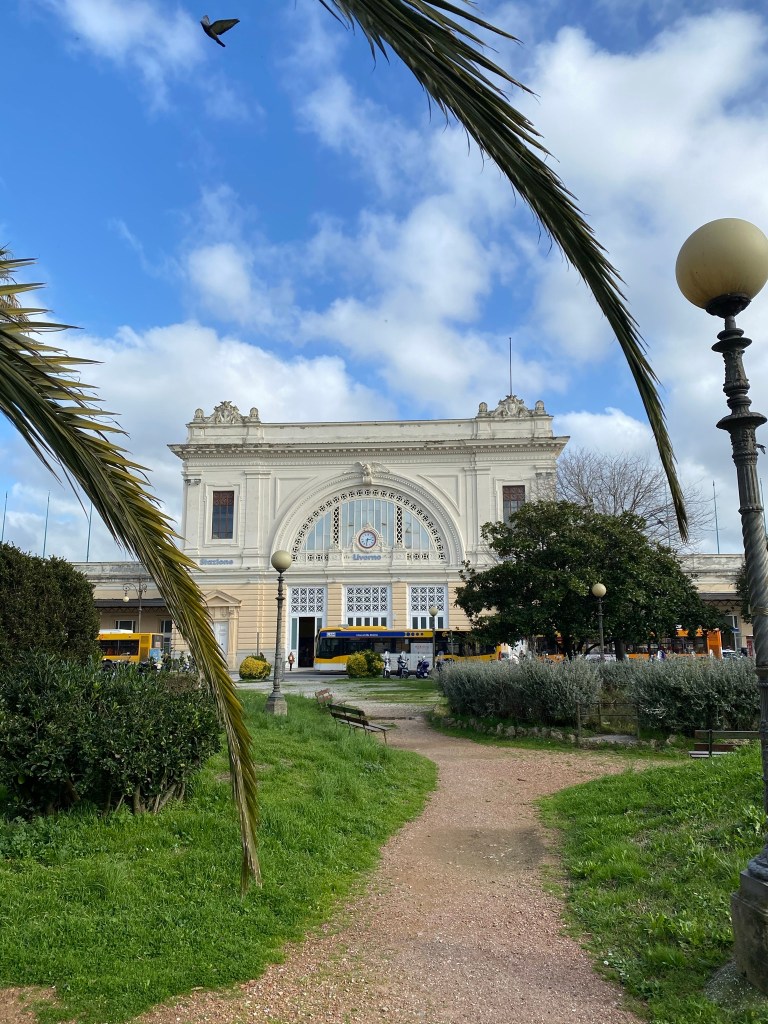
I arrived at the pretty grand Livorno railway station and walked to the center of the old city. Livorno doesn’t get a lot of love from tourists or natives, and I understand why. It’s crusty. You can tell it was once a fine old port, expanded by the Medici dukes, but WWII was brutal to the strategic town. It’s a pity.
In my life as an art historian, I researched and wrote a lot about 19th century Italy and the American artists who came here. Livorno, called Leghorn in English, was the place where so many Anglo-American travelers first made contact with Italy. There is an old English cemetery in Livorno that I haven’t yet had the chance to visit. I will wait until Covid is a thing of the past and visit Livorno with a guide, so that I can truly understand the historic significance of this once proud city.
Come along with me and enjoy my February 2021 pictures of Livorno:
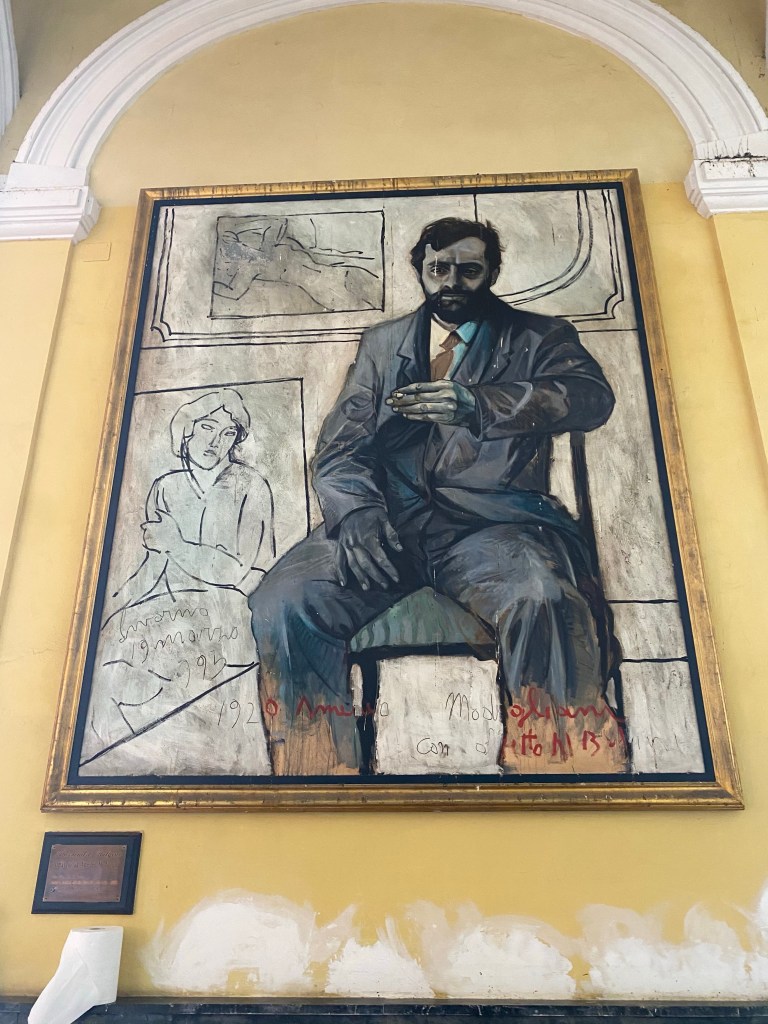
One is greeted at the train station with a large portrait of Modigliani, one of my favorite Italian artists who. He was born in Livorno.
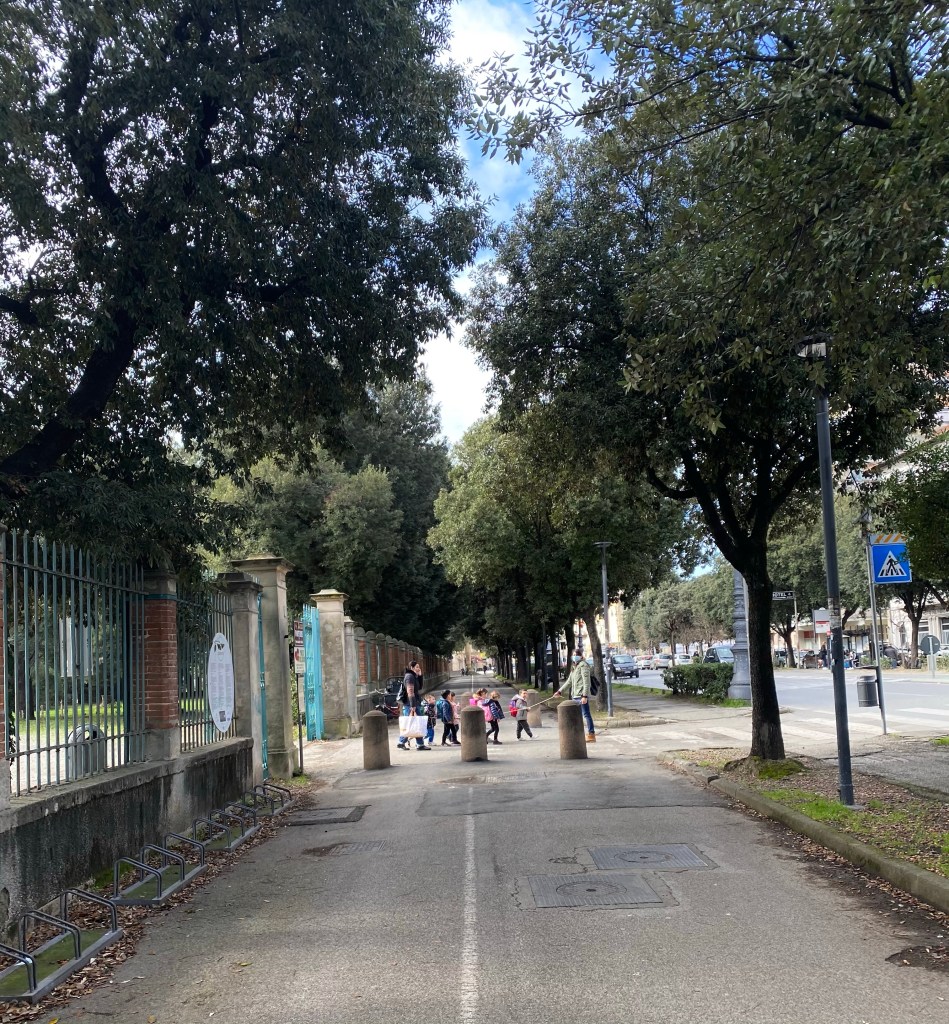
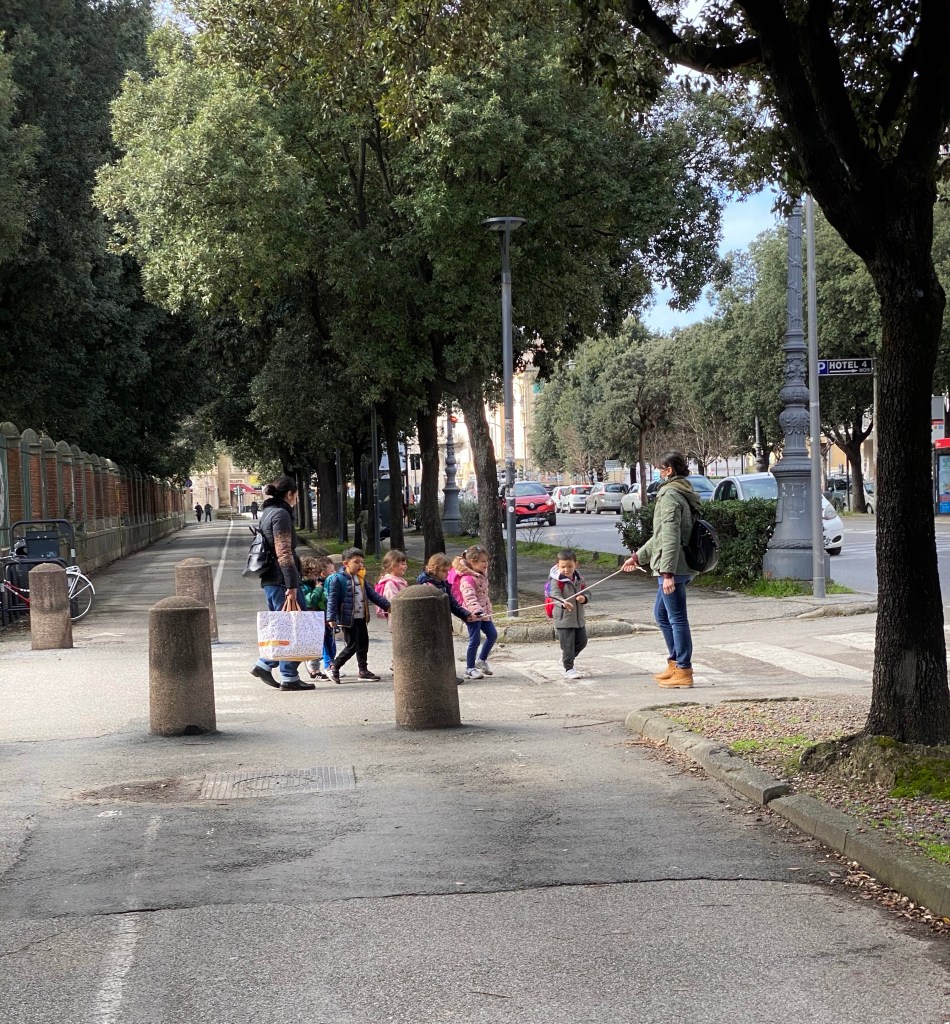
As I was walking to the city center from the train station, I happened upon this little class of kindergarteners, just leaving the pretty city park. I love moments like this.
I headed first to Piazza della Repubblica:
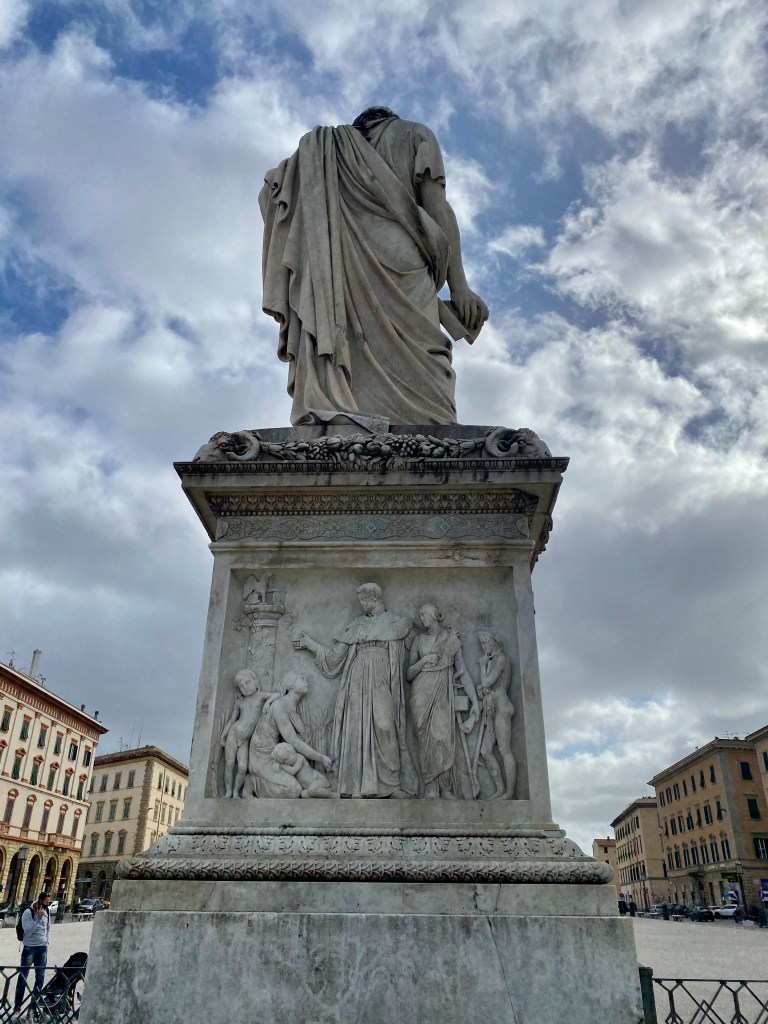
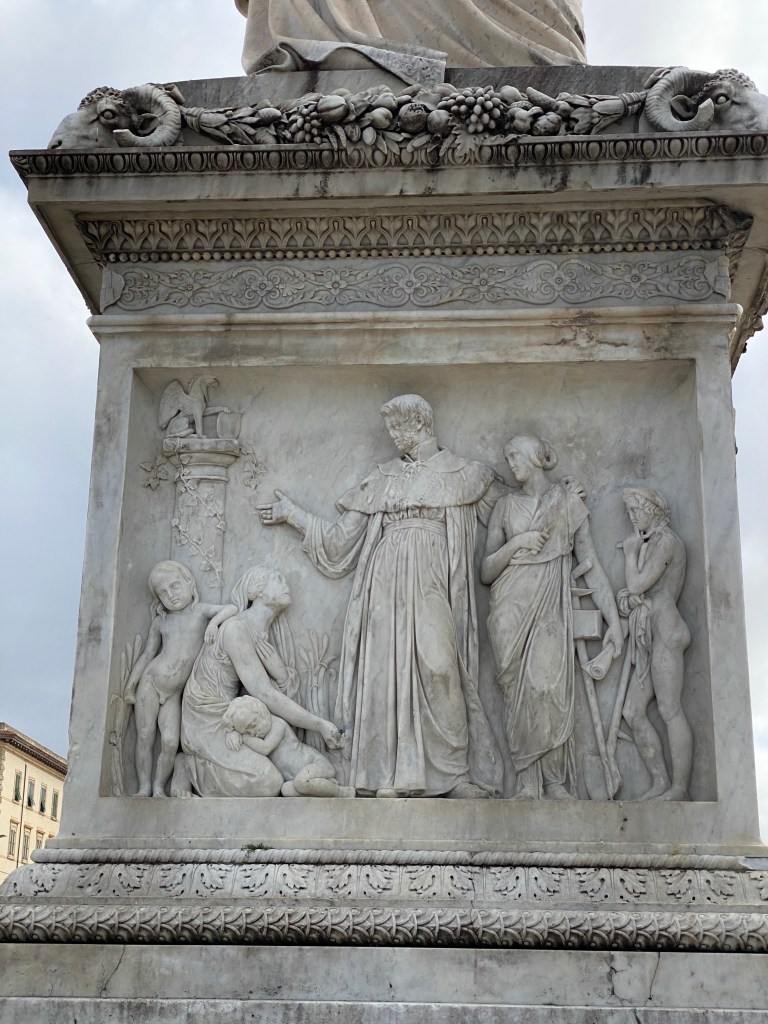
From the piazza, I headed for the Quartiere Venezia, a map of which is here:
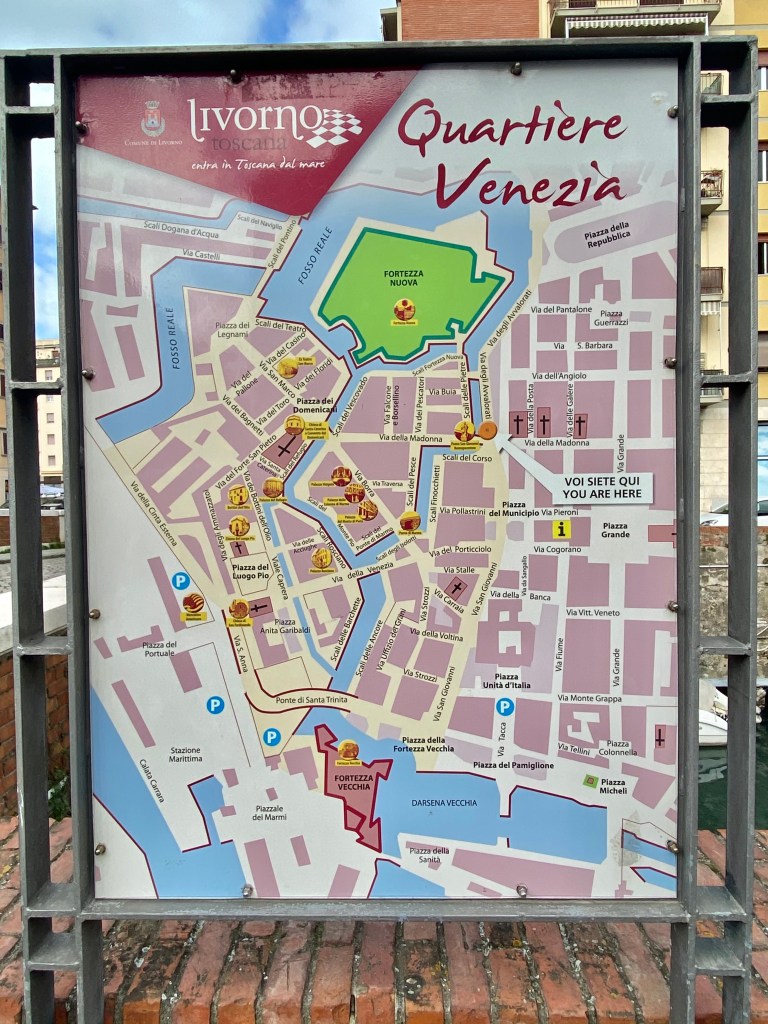
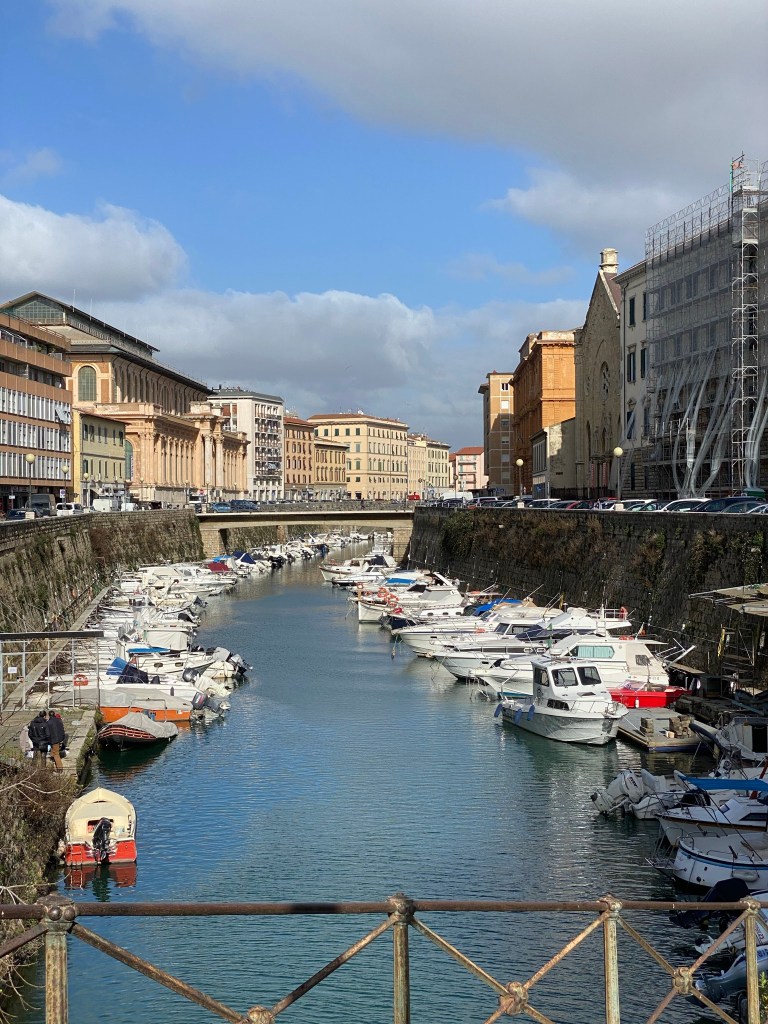
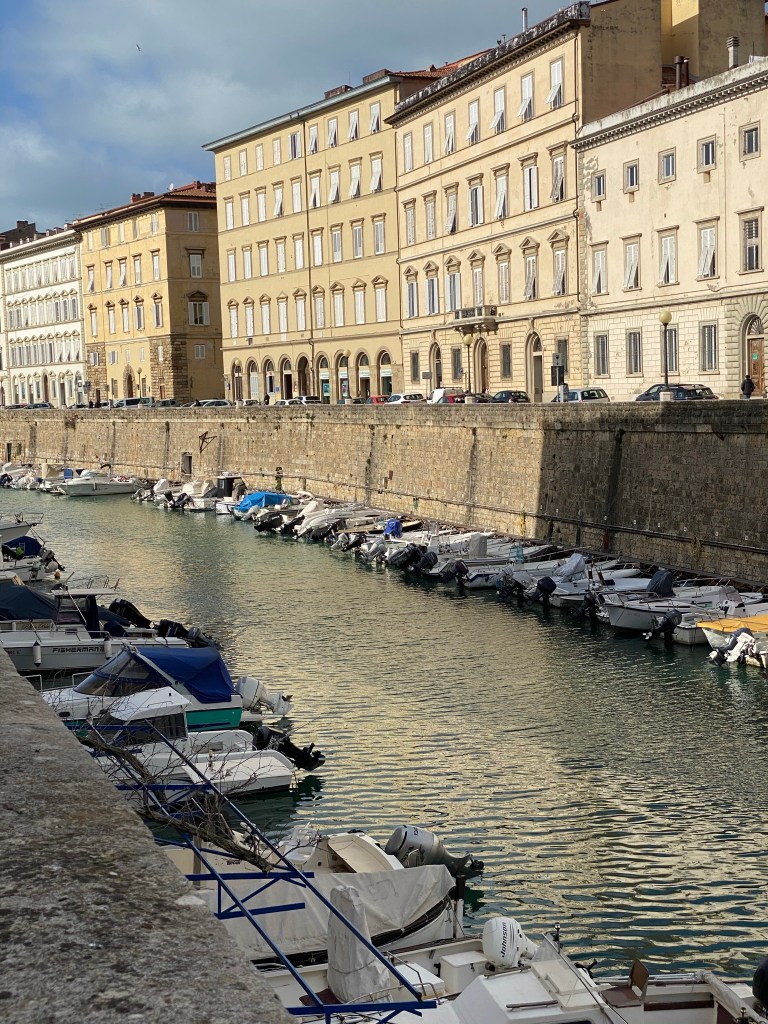
When I was in Livorno the last time, I had the great pleasure of touring the Venetian quarter of Livorno by boat with my friends. This time, I simply followed the canals on the neighboring sidewalks, enjoying the sunshine, the water views, and the sounds of Livorno and its seagulls.
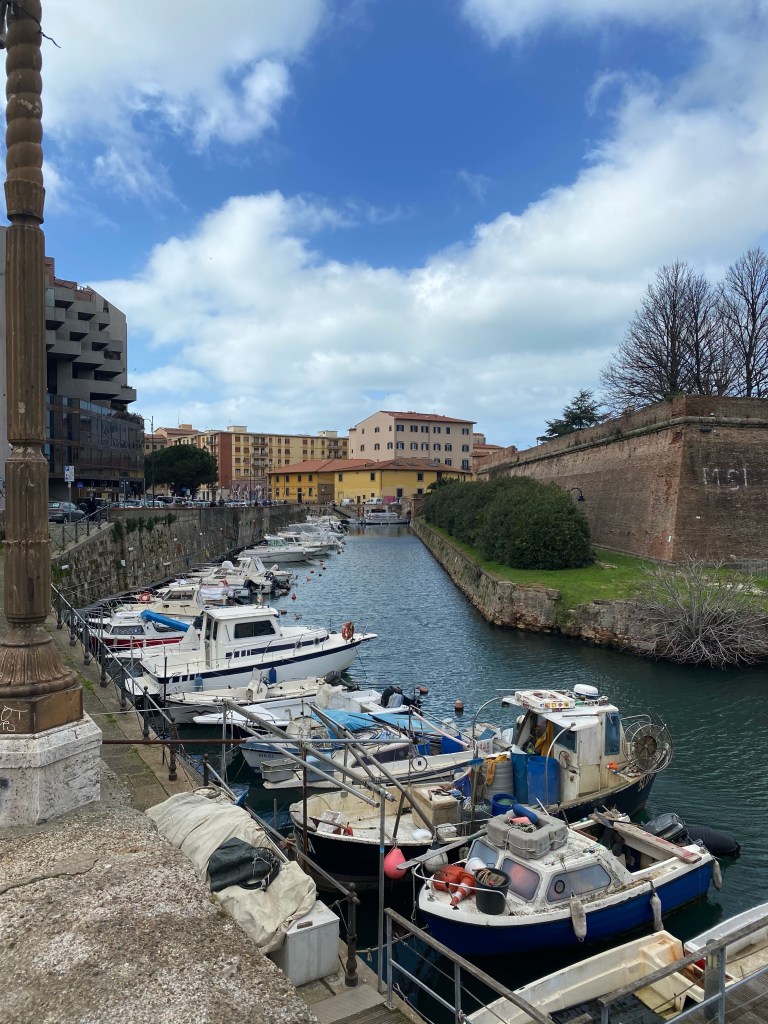
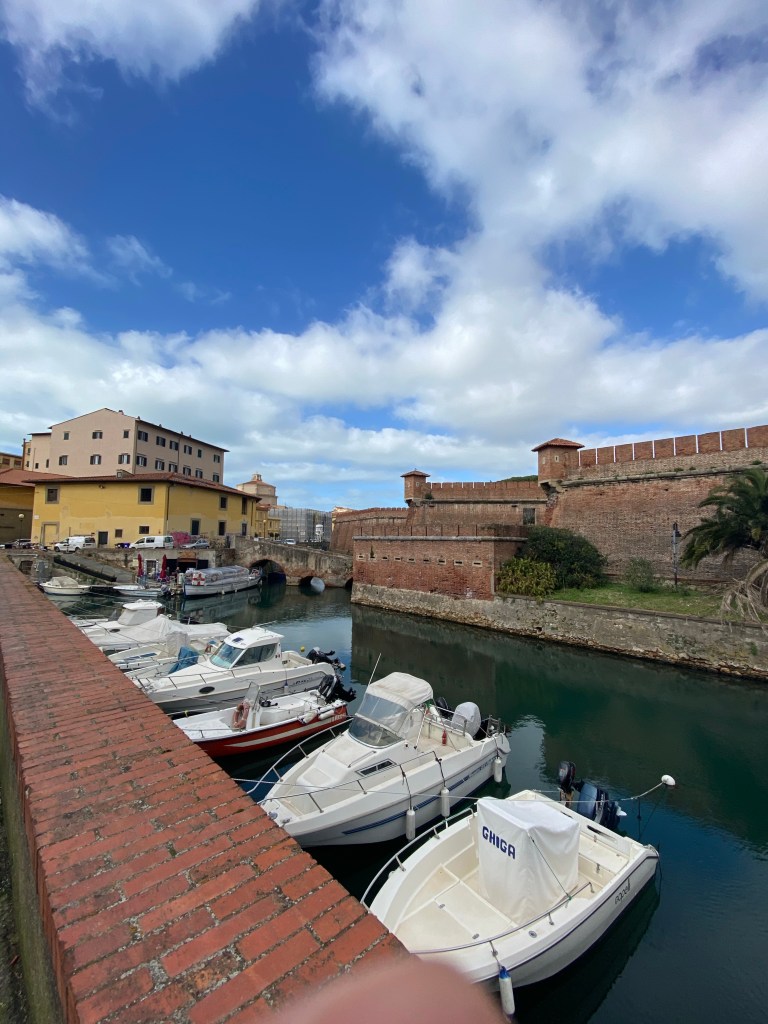
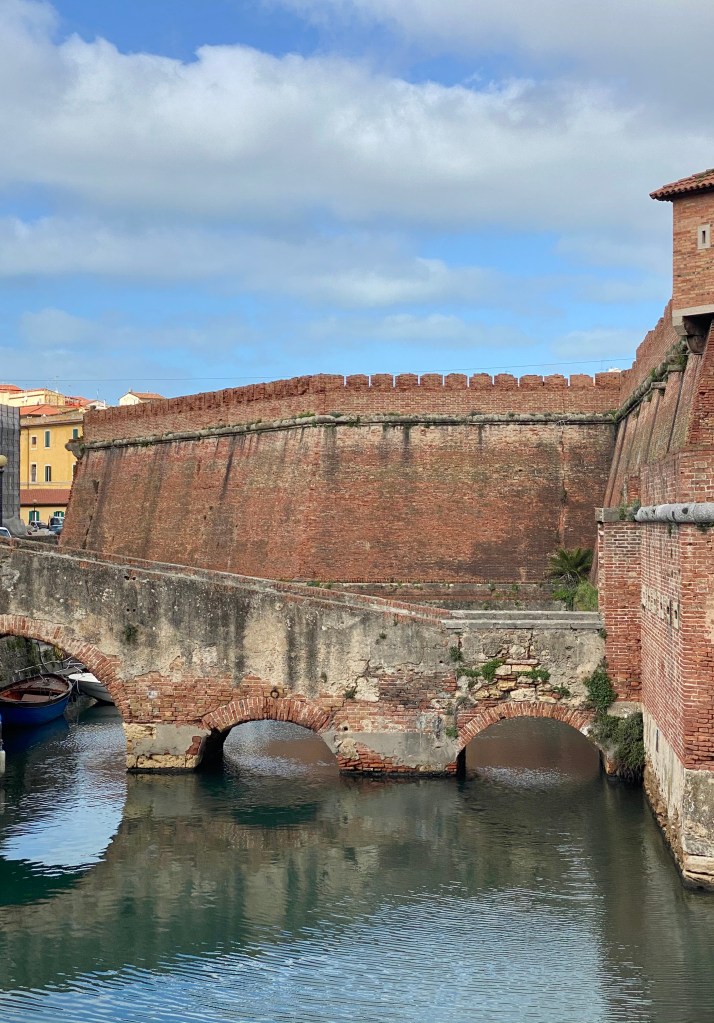
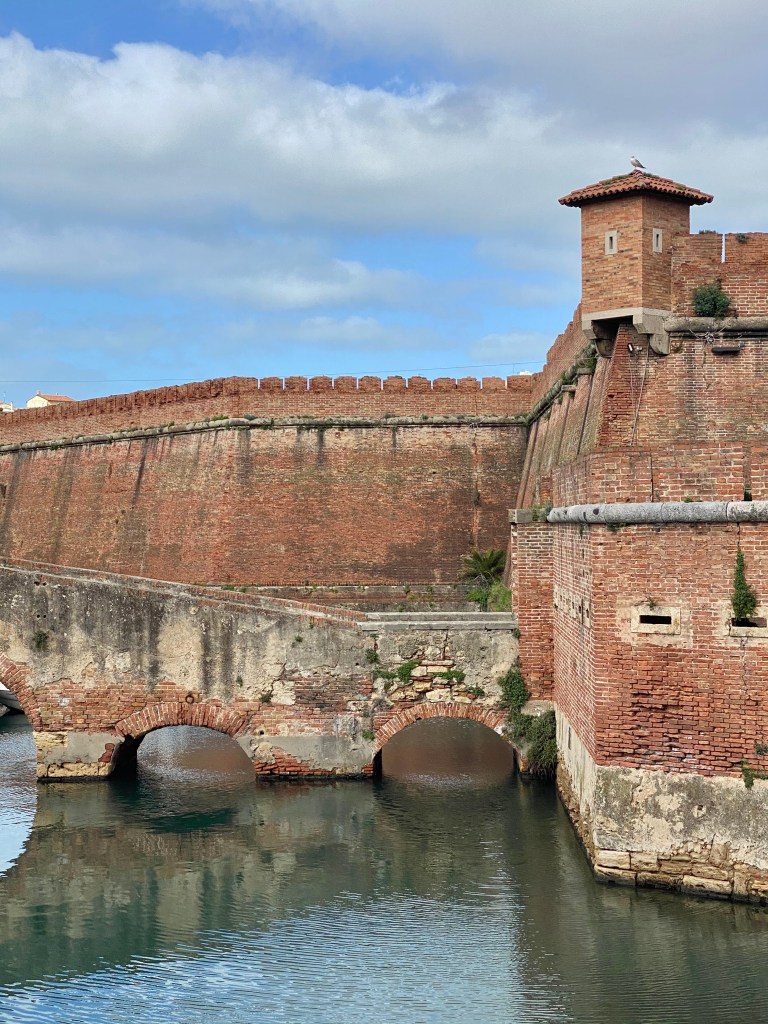
The Medici duke’s era is plainly written on the architecture of Livorno; these fortifications look like the brother of the Fortezza da Basso in Florence. Same era, same materials, same architect.
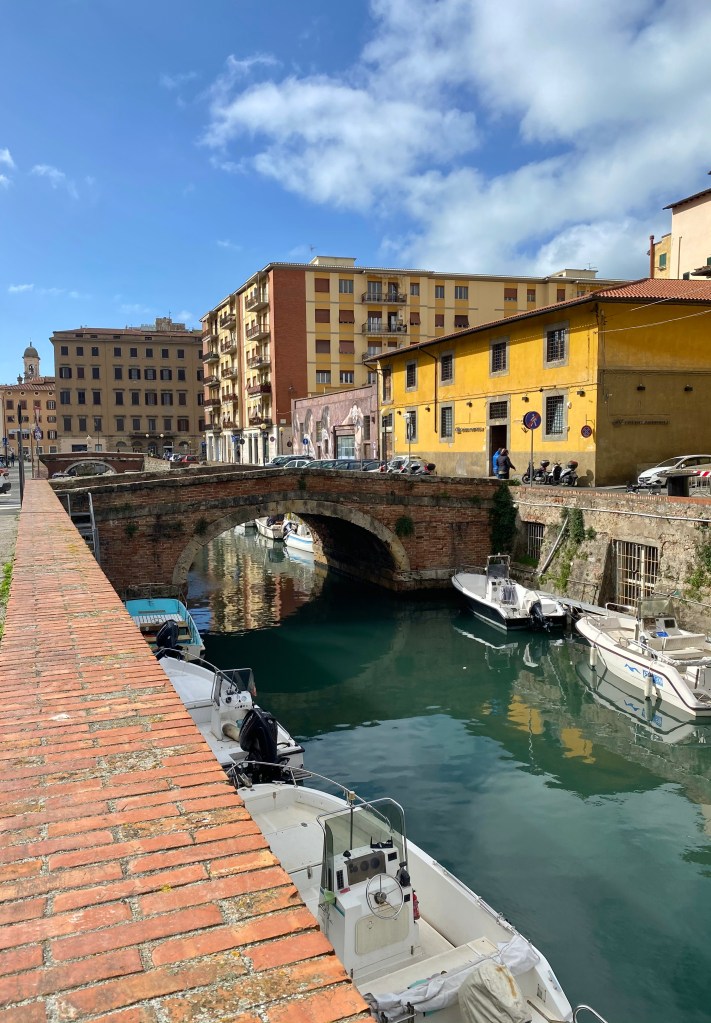
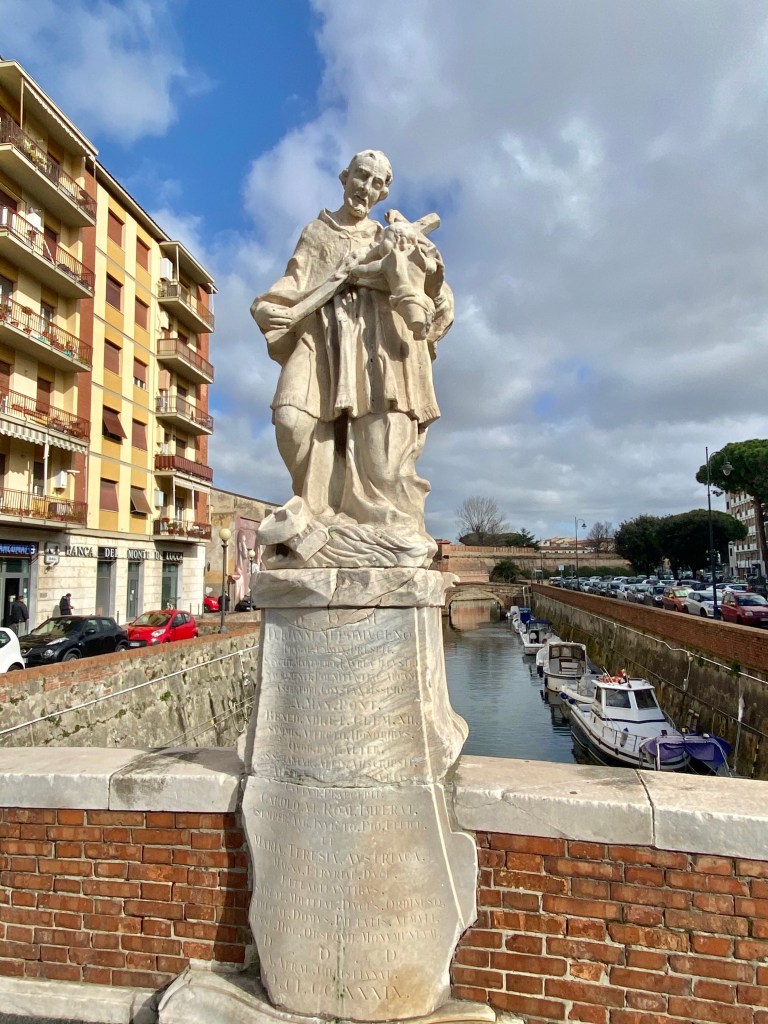
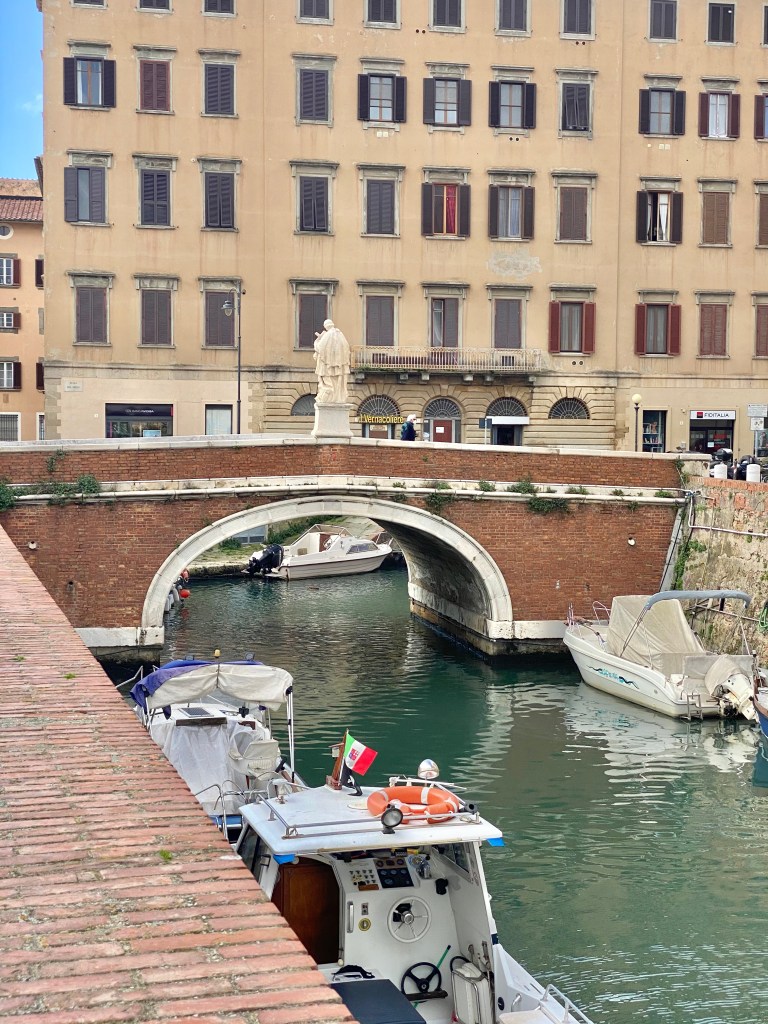
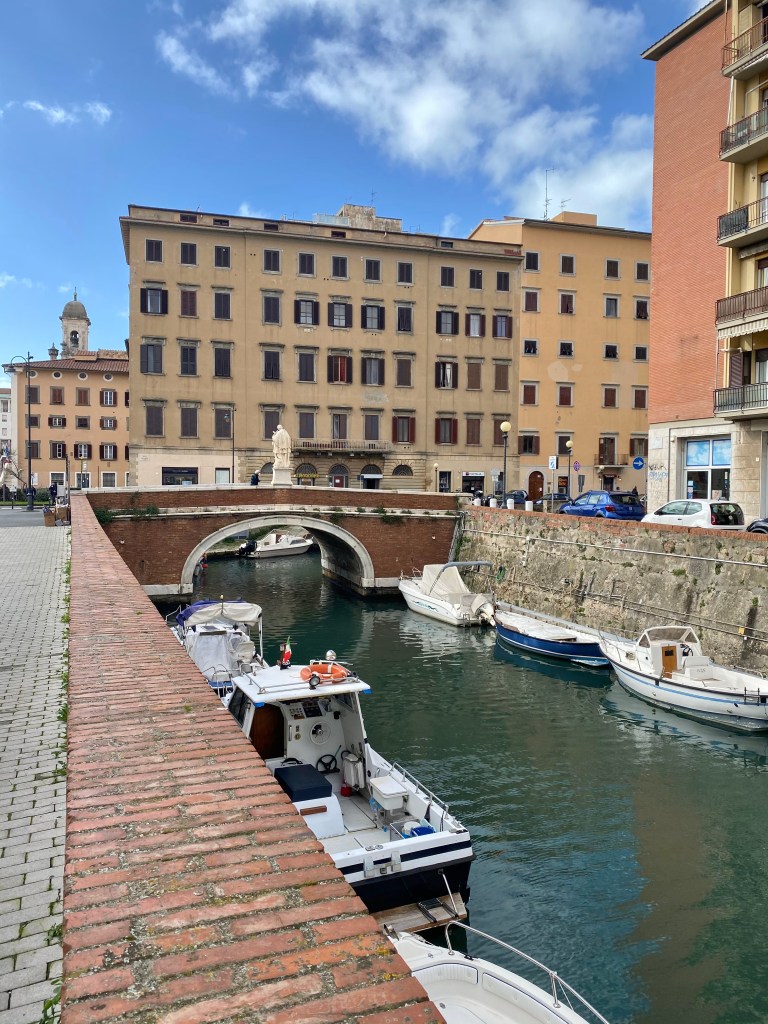
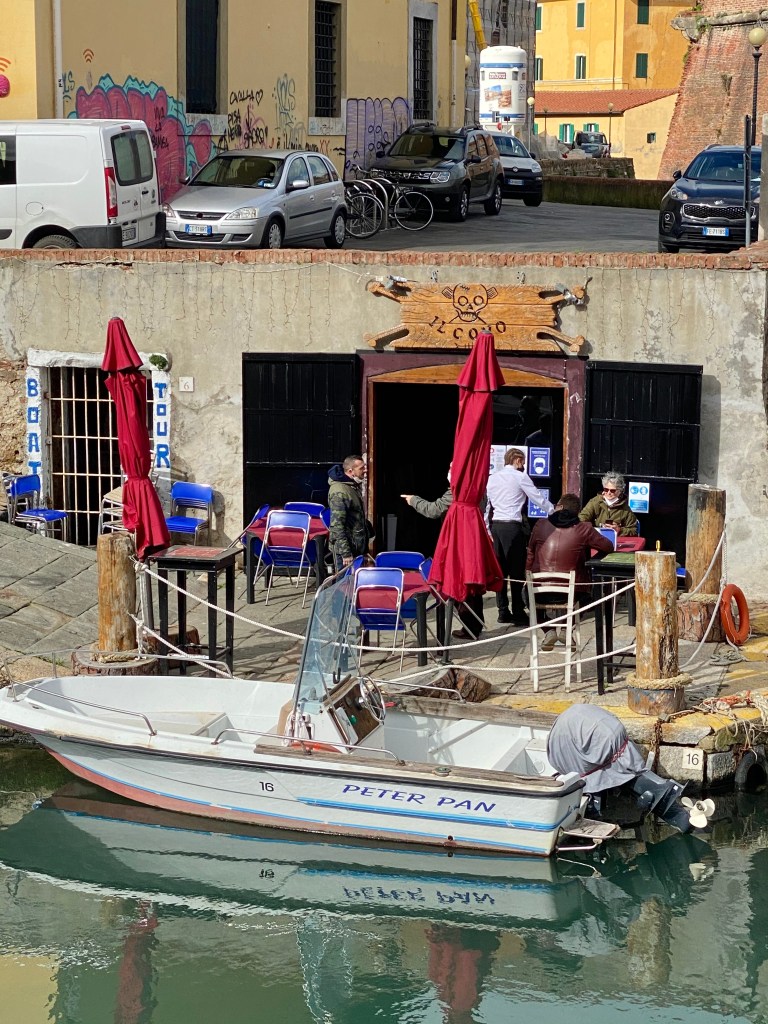
As I began to wander away from the fortifications and towards the Ligurian sea, but still well within the city, I spotted delightful scenes of daily life in Livorno. A lot of it takes place along the canal. I even spotted Peter Pan’s boat!
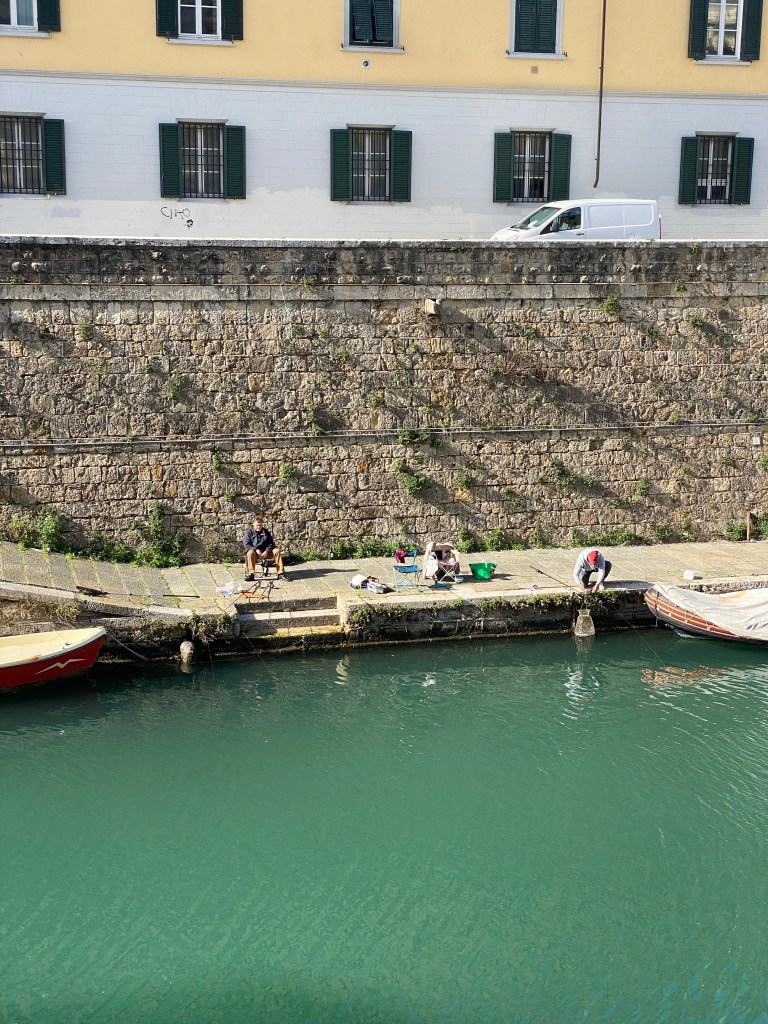
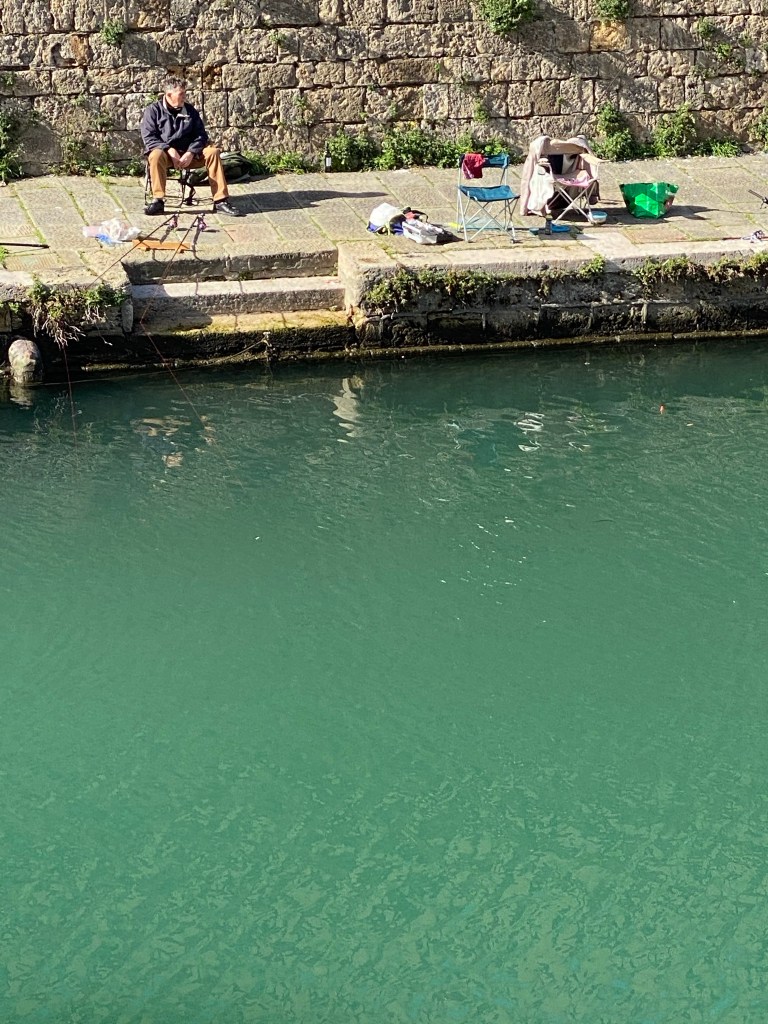
Below: some fishermen try their luck in a canal on a sunny afternoon in Livorno. The water is very clean and bright.
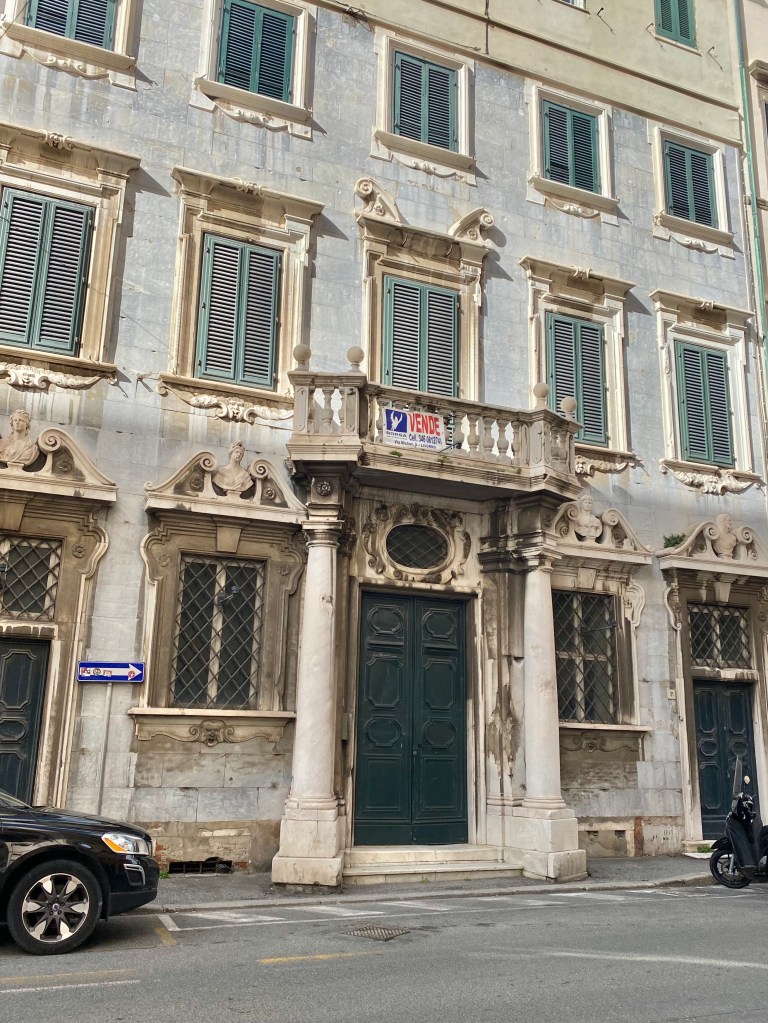
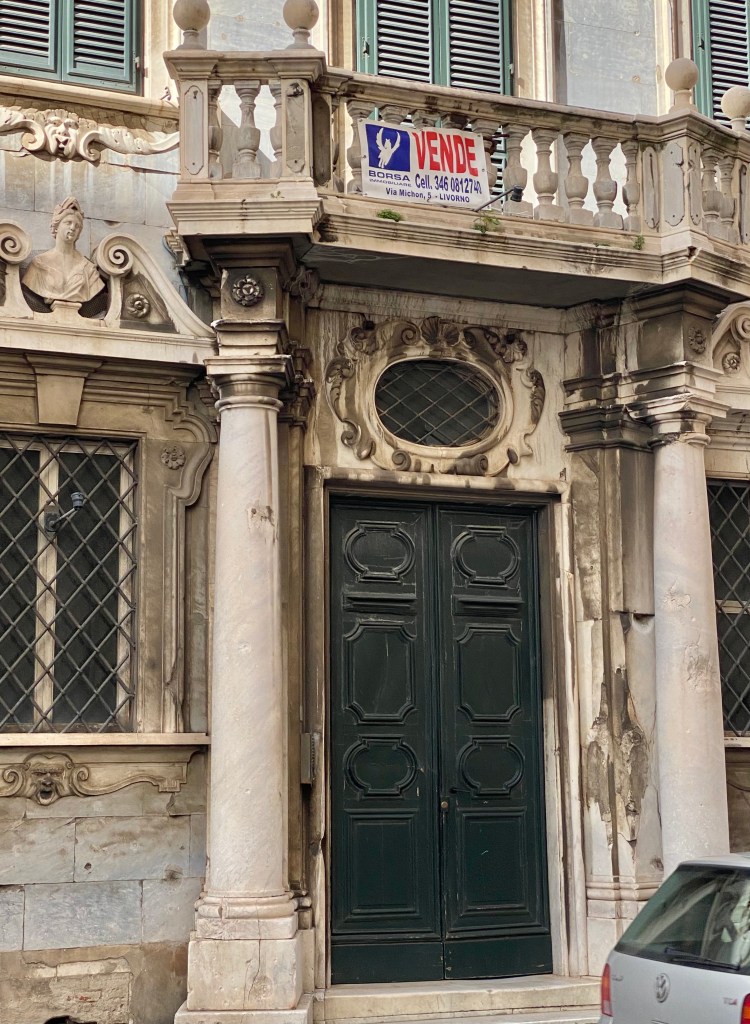
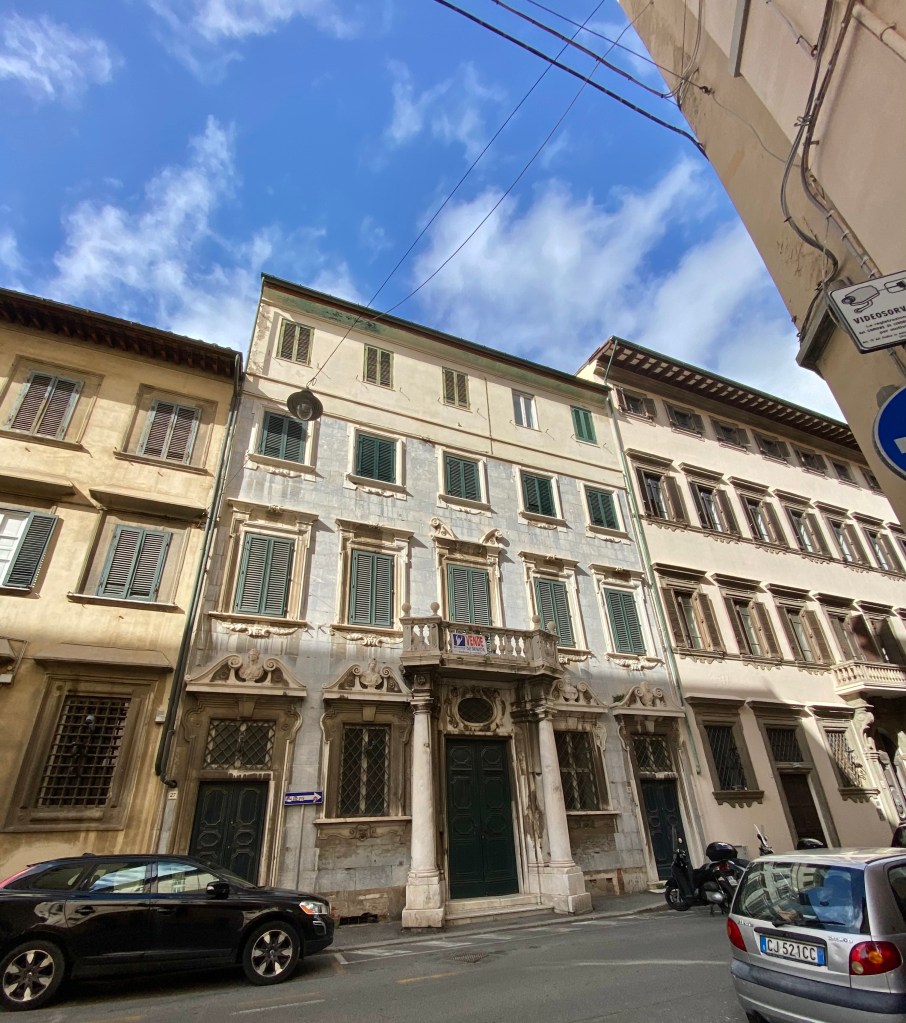
This sad but beautiful pale blue palazzo with the green shutters below tells a story, if you listen. How grand it once was. I wish I could buy it and take that “for sale” sign off its facade.
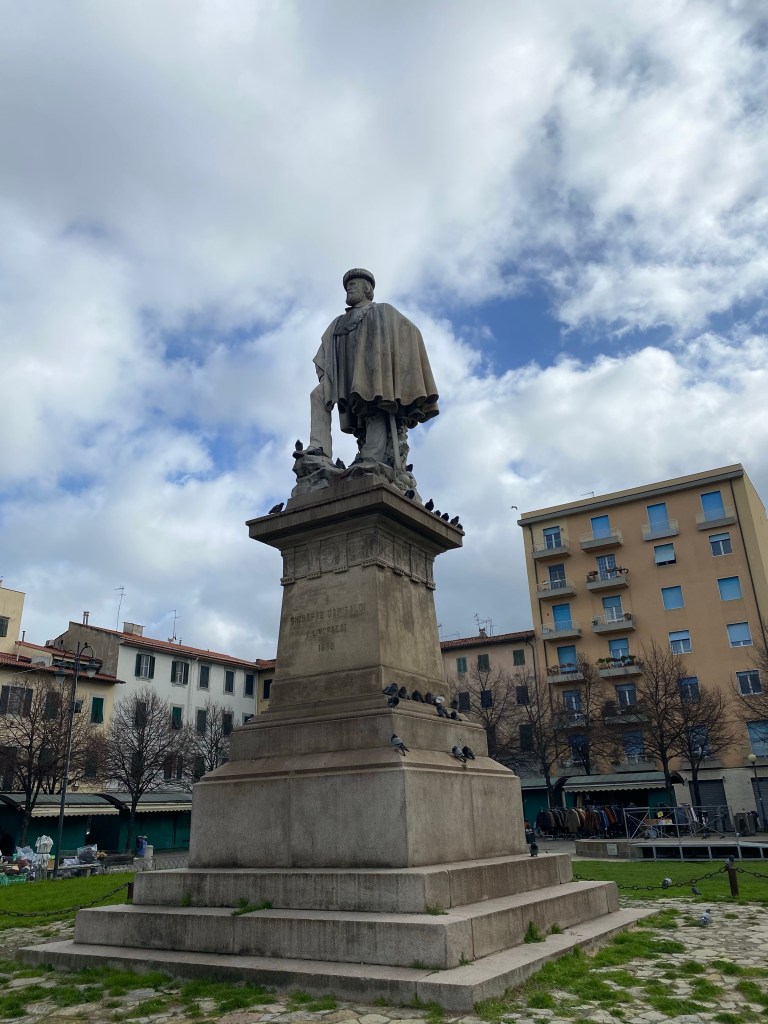
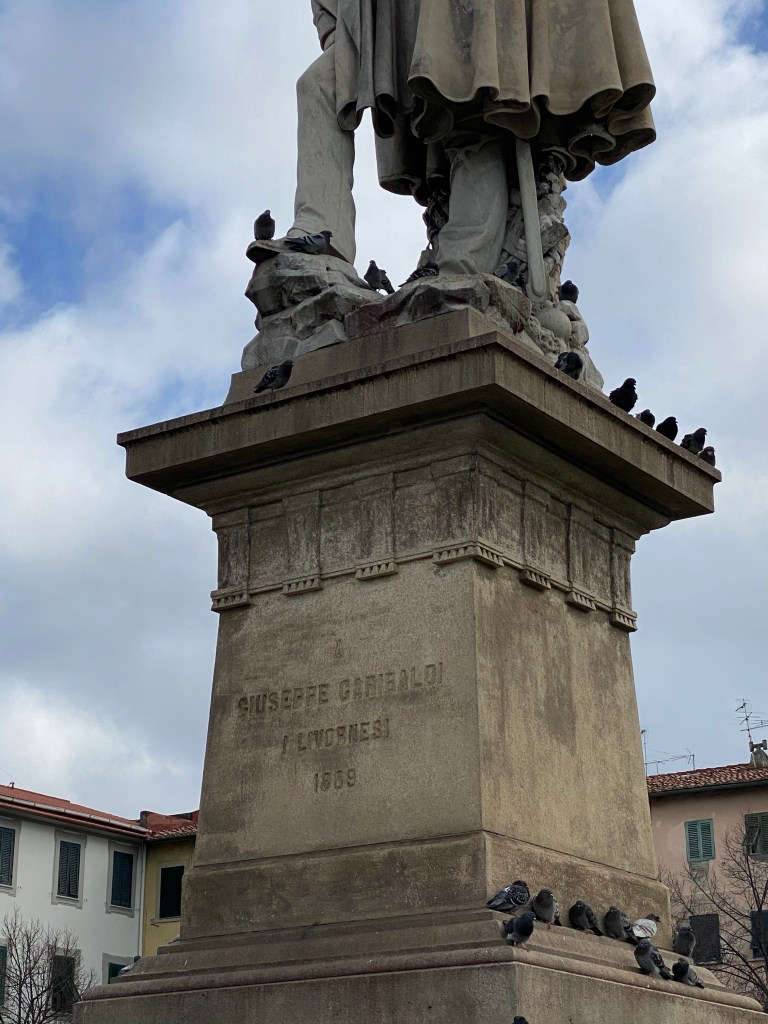
Below, another square has another memorial, this one to Giuseppe Garibaldi
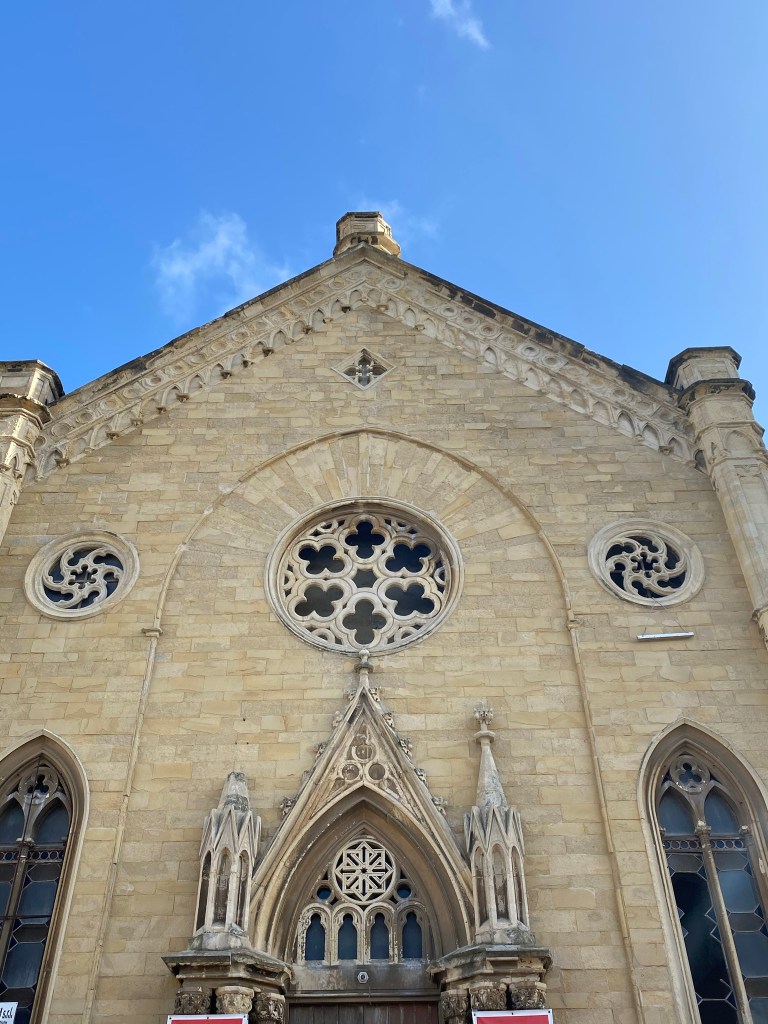
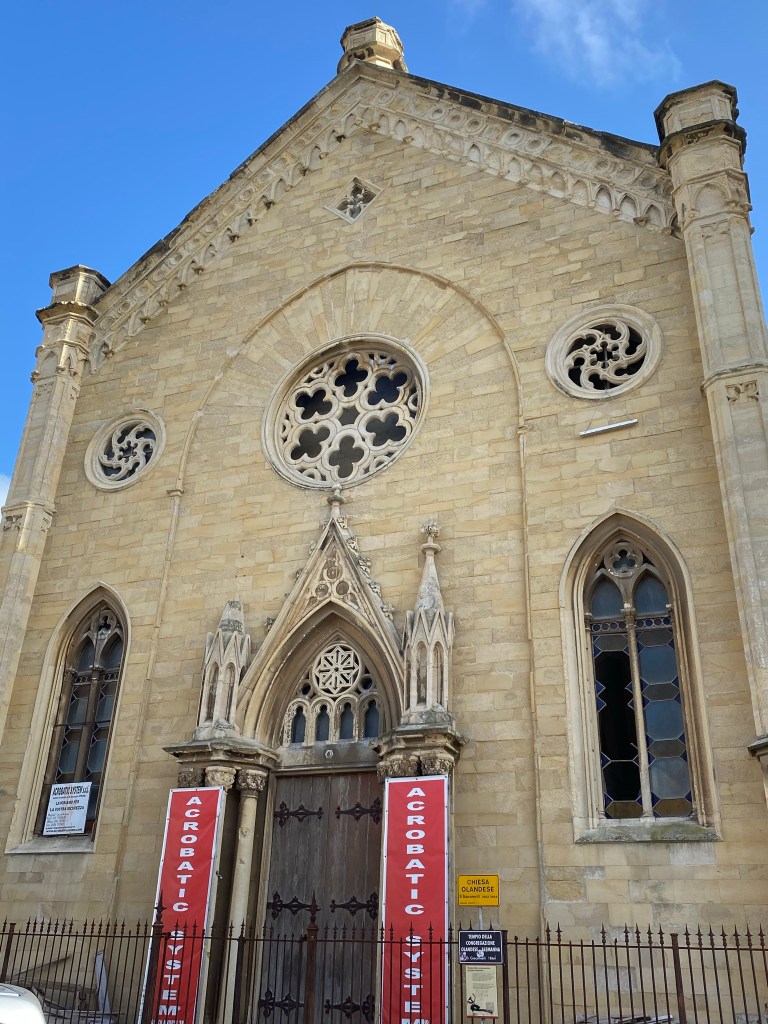
Below: a lovely old church along a canal, now used for acrobatics?!
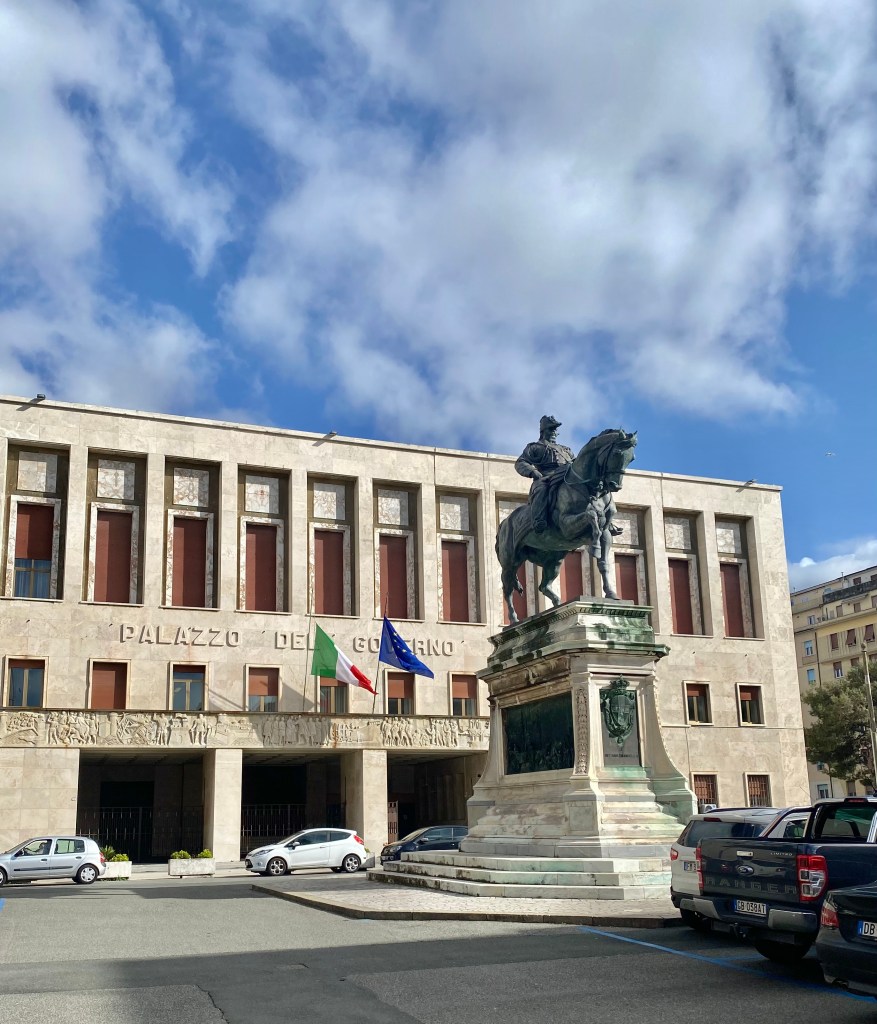
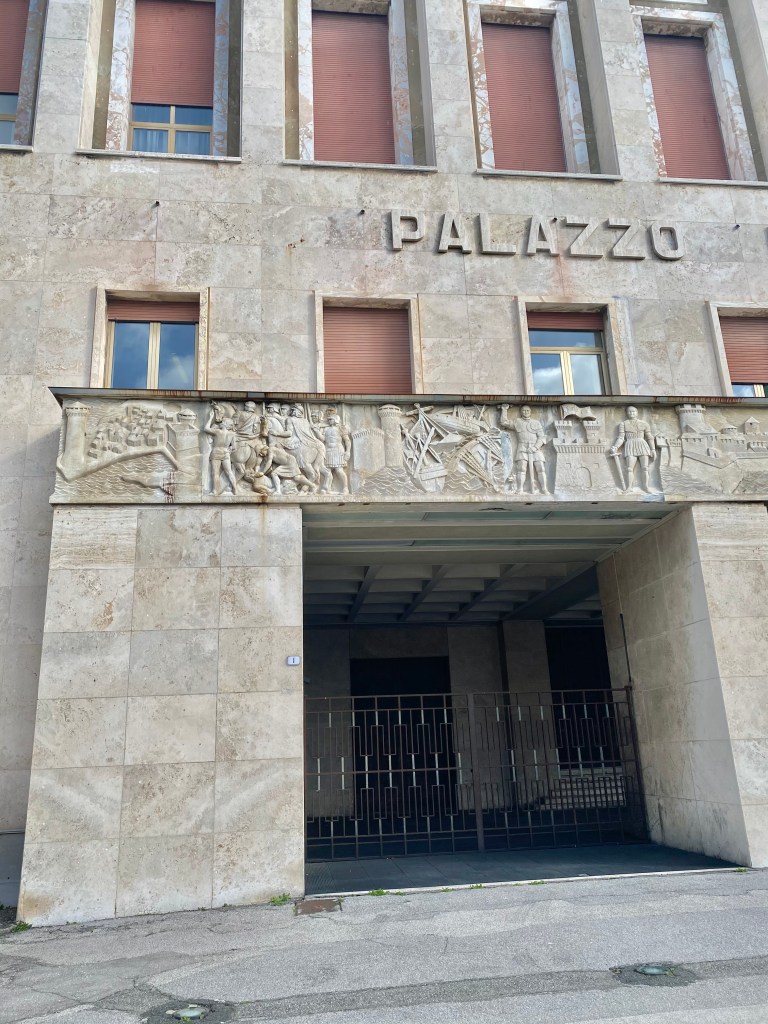
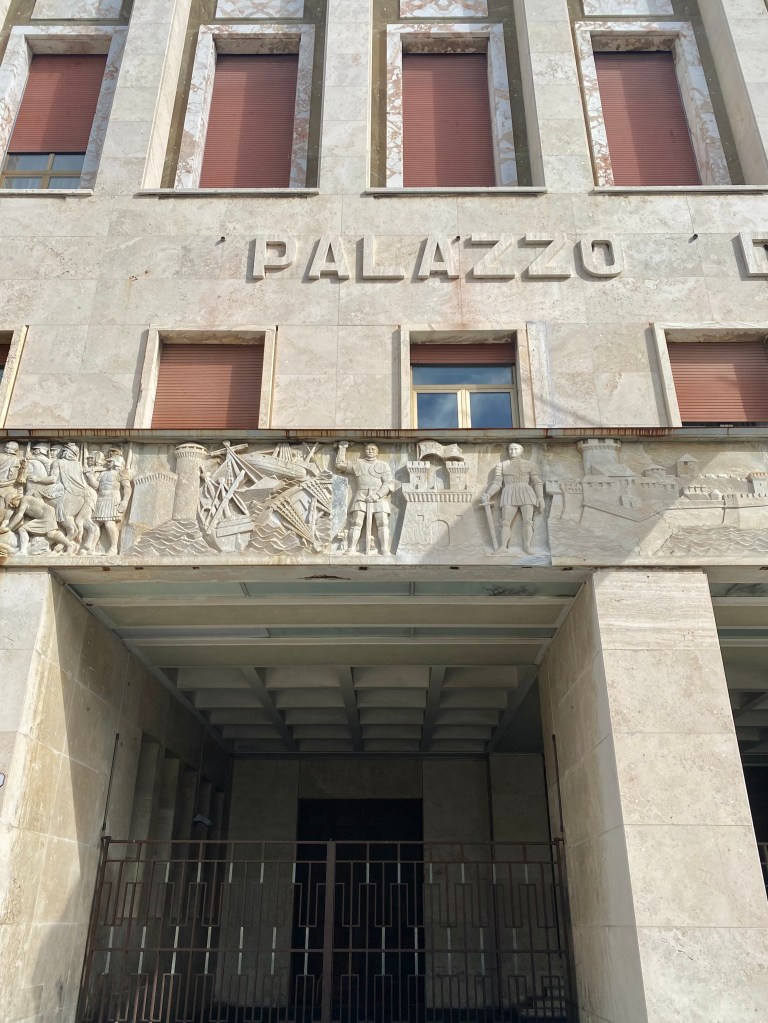
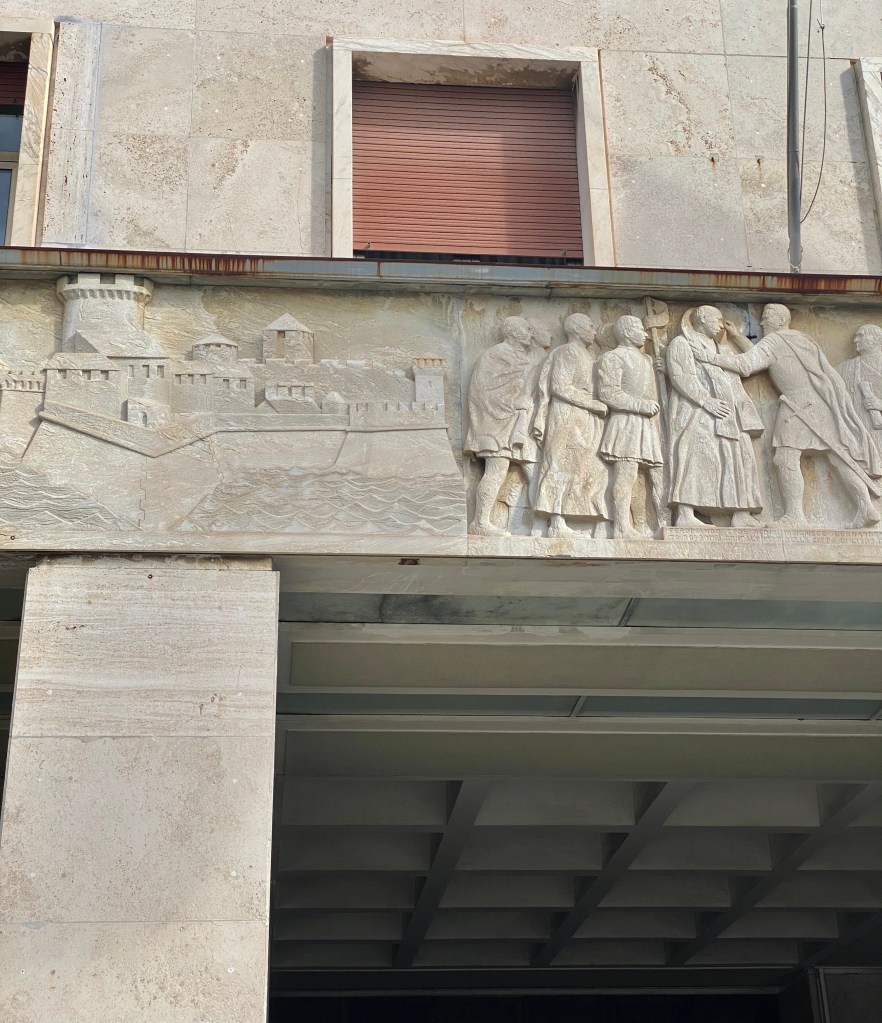
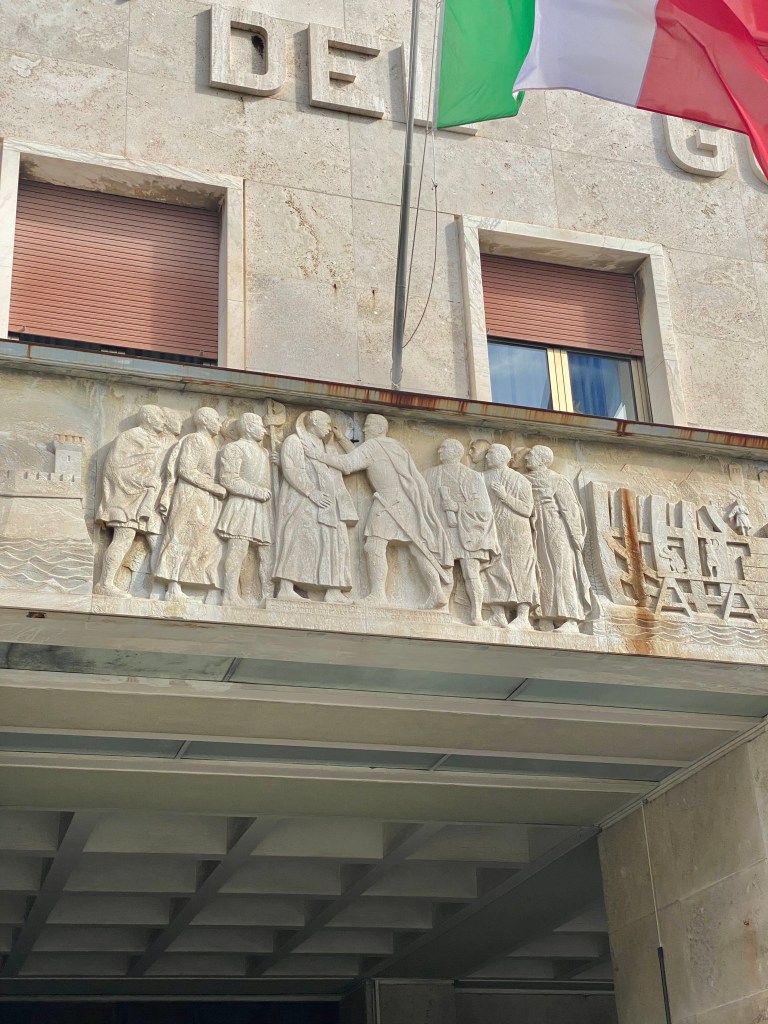
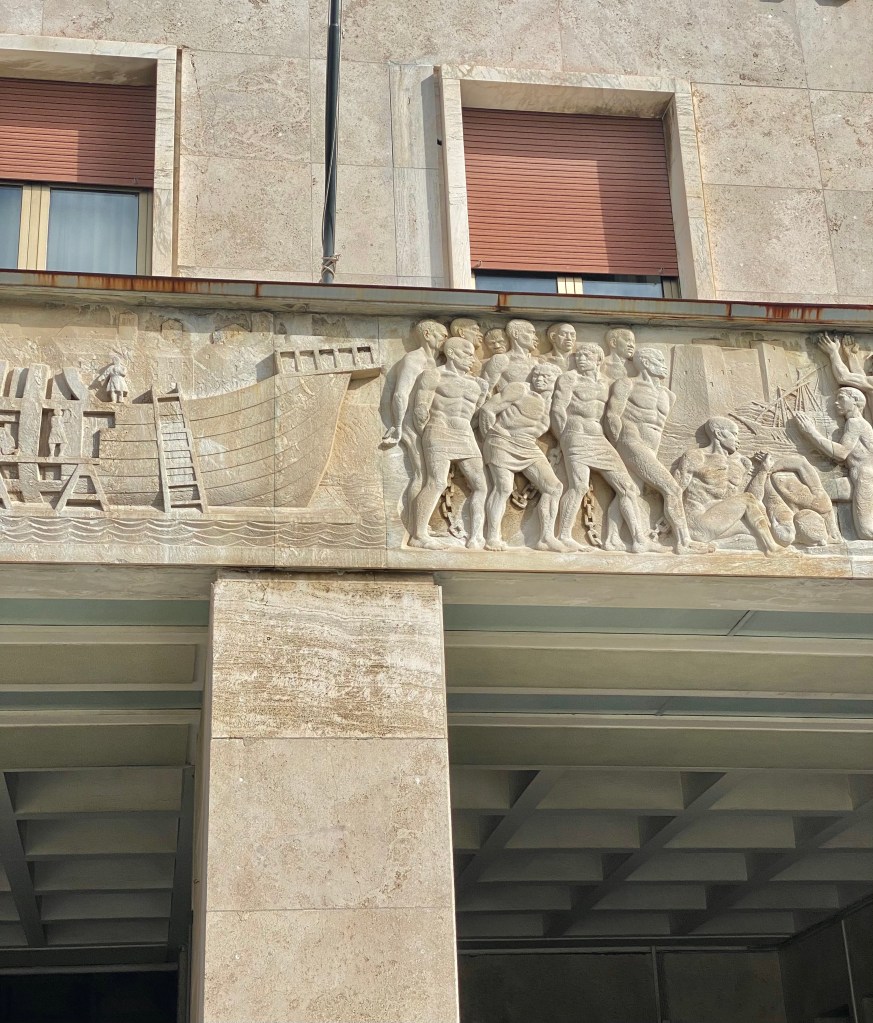
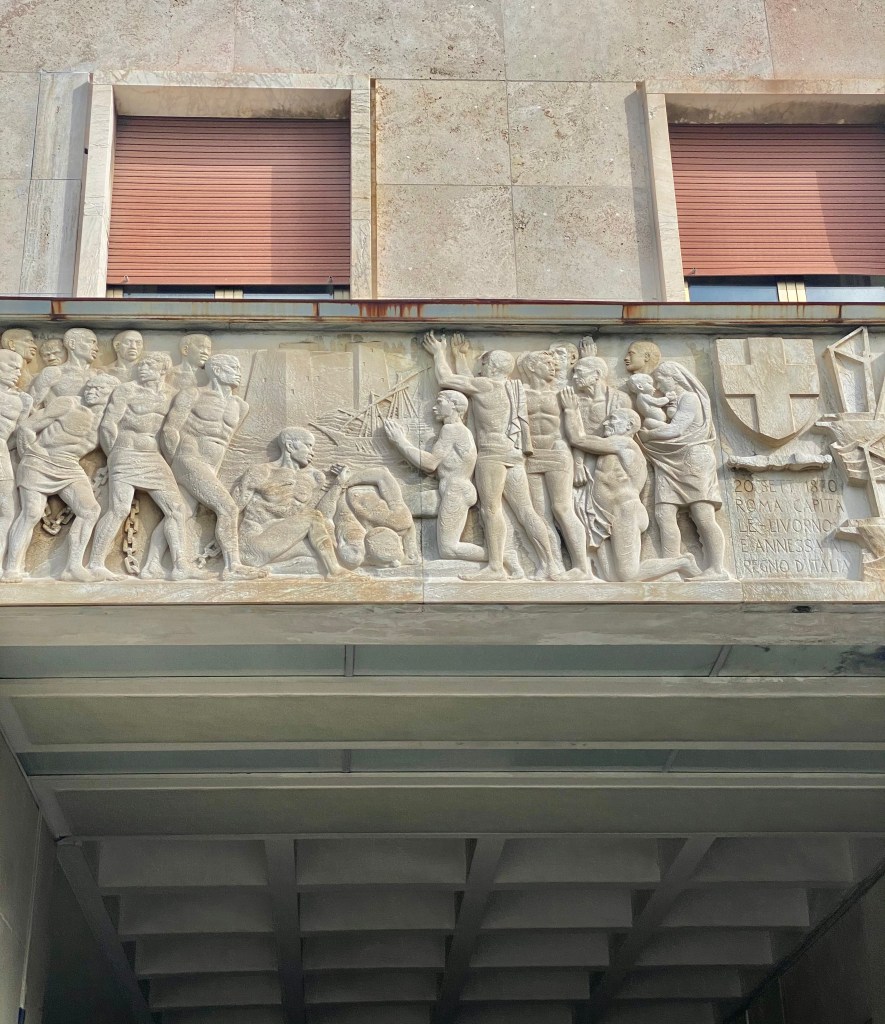
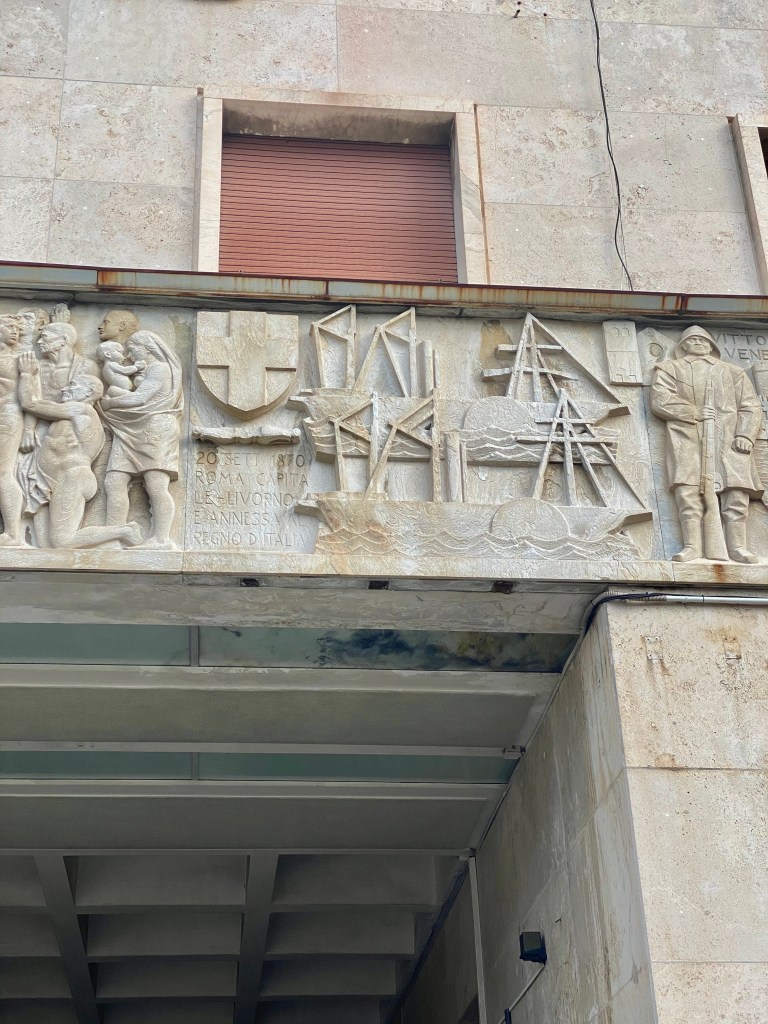
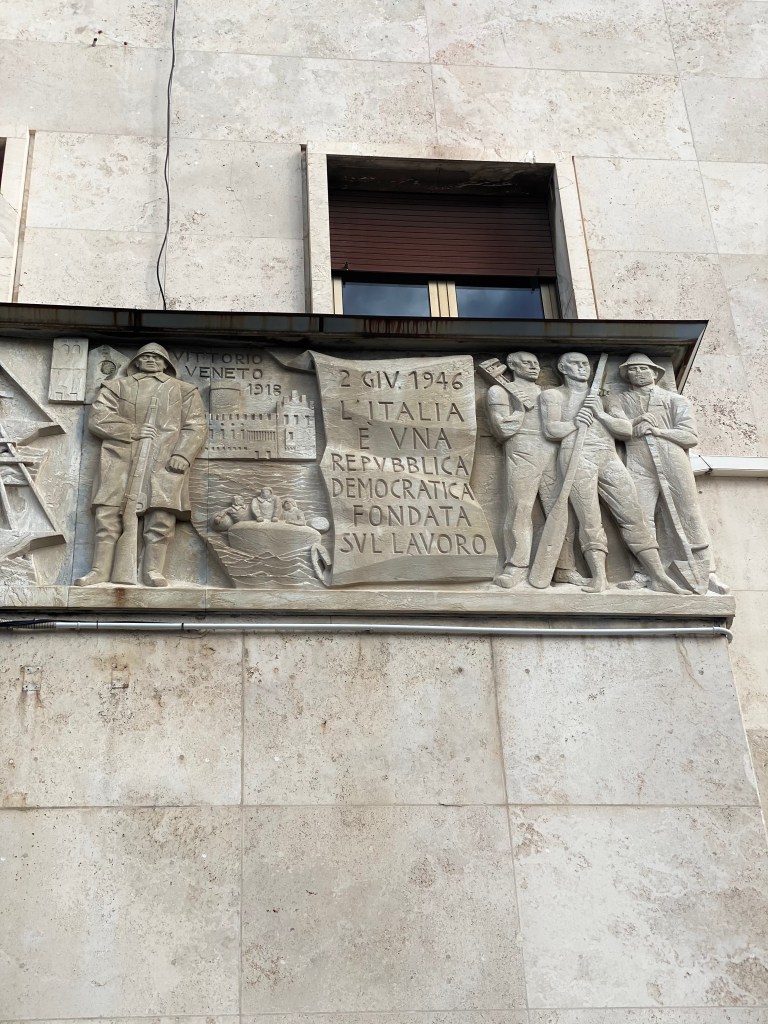
There is a mighty equestrian sculpture in front of the Art Deco Palazzo del Livorno:
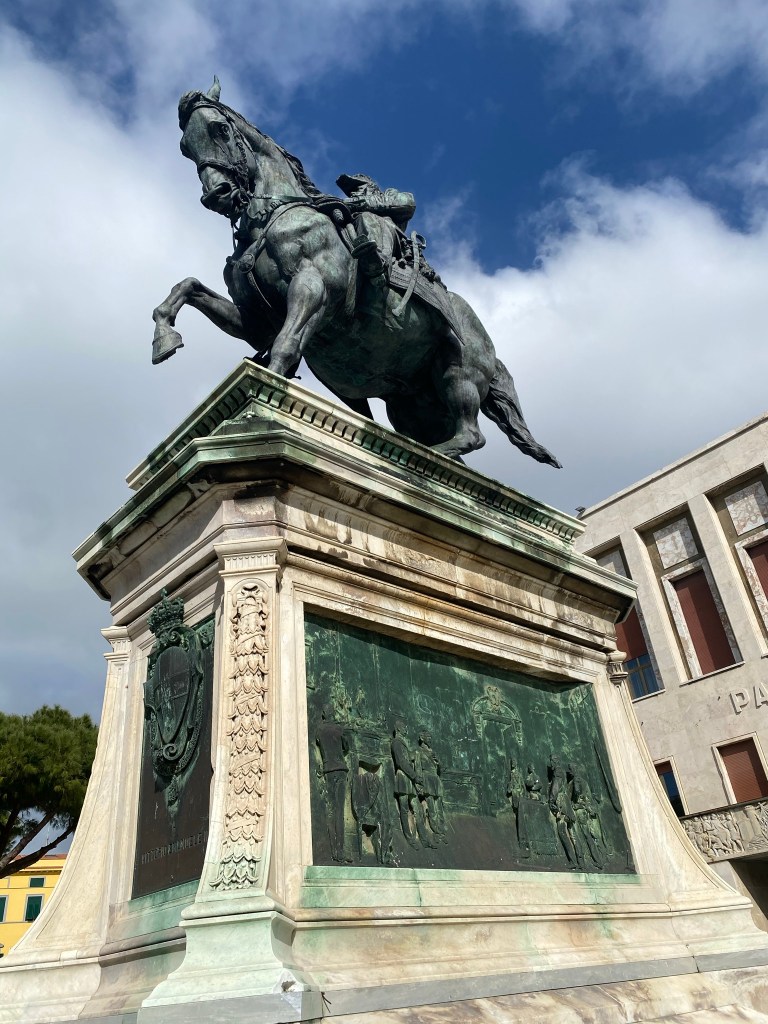
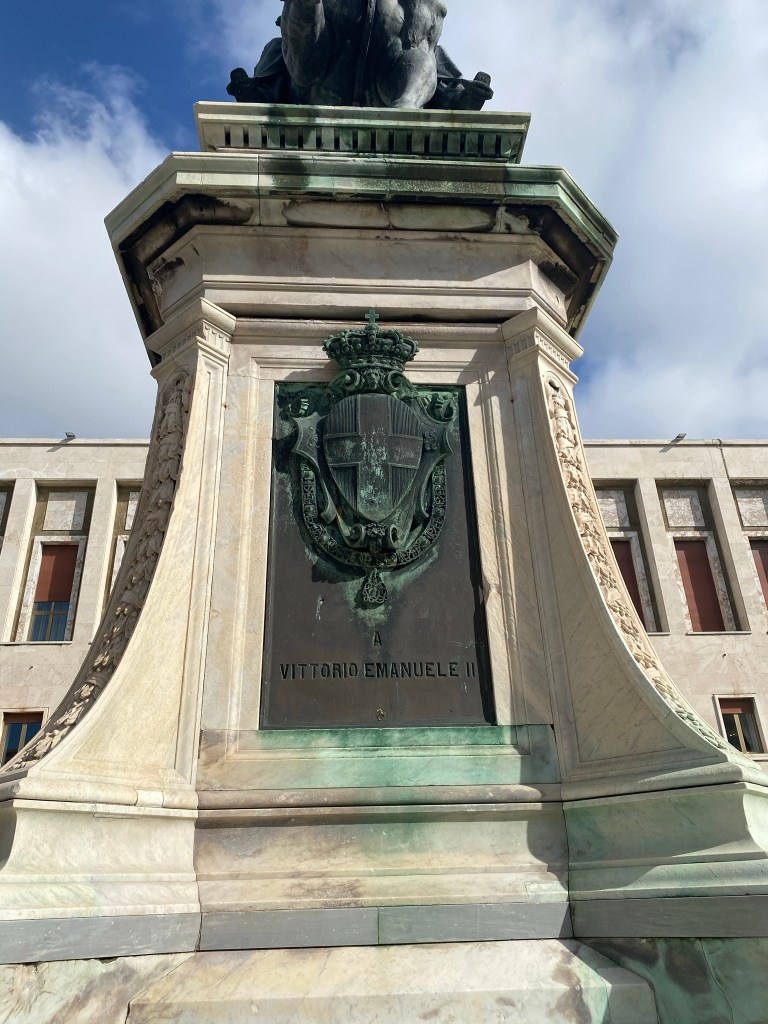
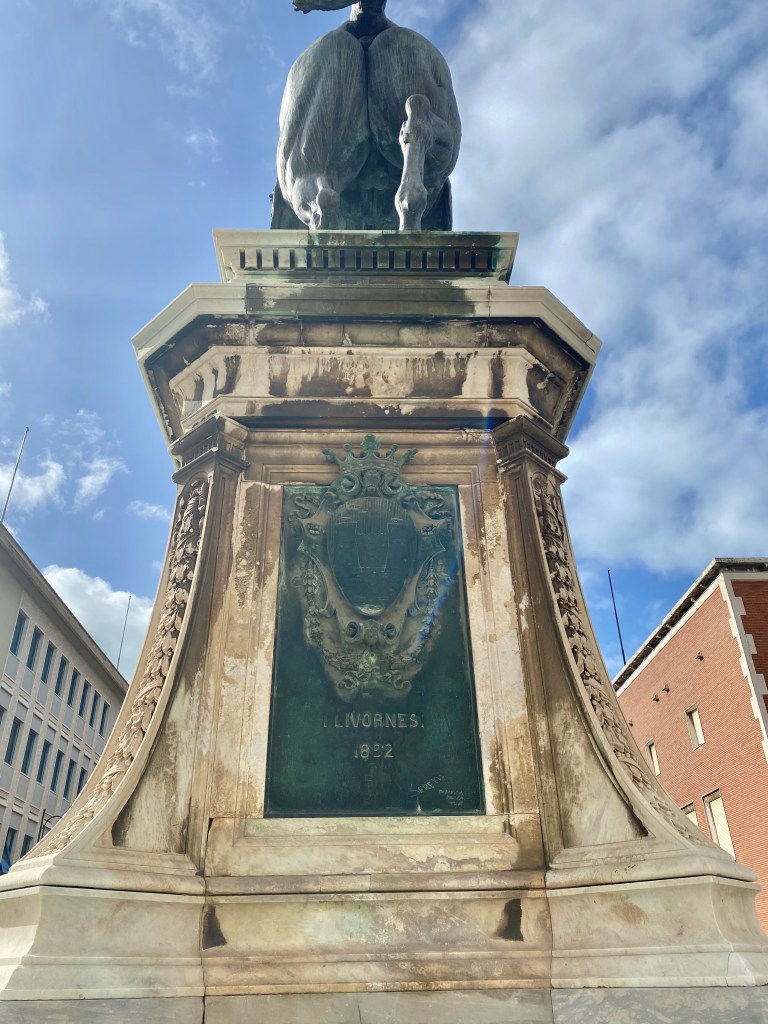
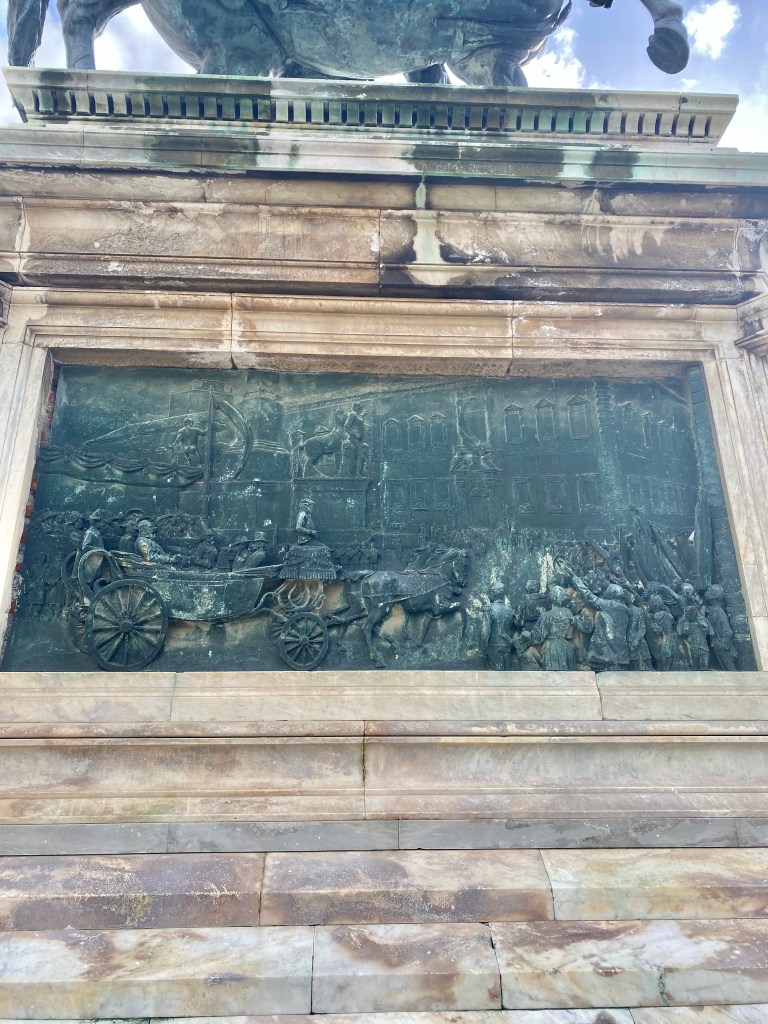
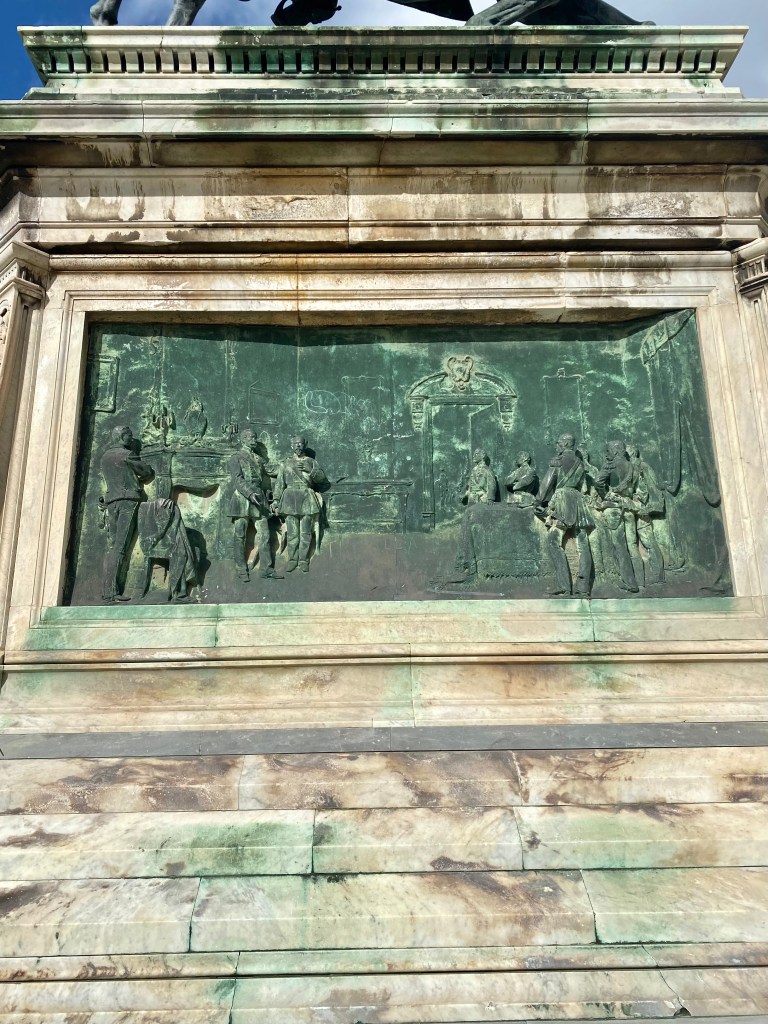
The Palazzo itself has an interesting sculptural relief, telling, I think, the story of Livorno:
I’ll be back tomorrow with the rest of the post on Livorno. There is a lot to see in this old port town!
 get back, lauretta!
You must be logged in to post a comment.