Livorno, Livorno and more Livorno, Part 2

This is the 2nd half of my post of picturesque Livorno, started yesterday.

Oh, how I wish I were able to be upon that boat in the video above, making its way through the canal!

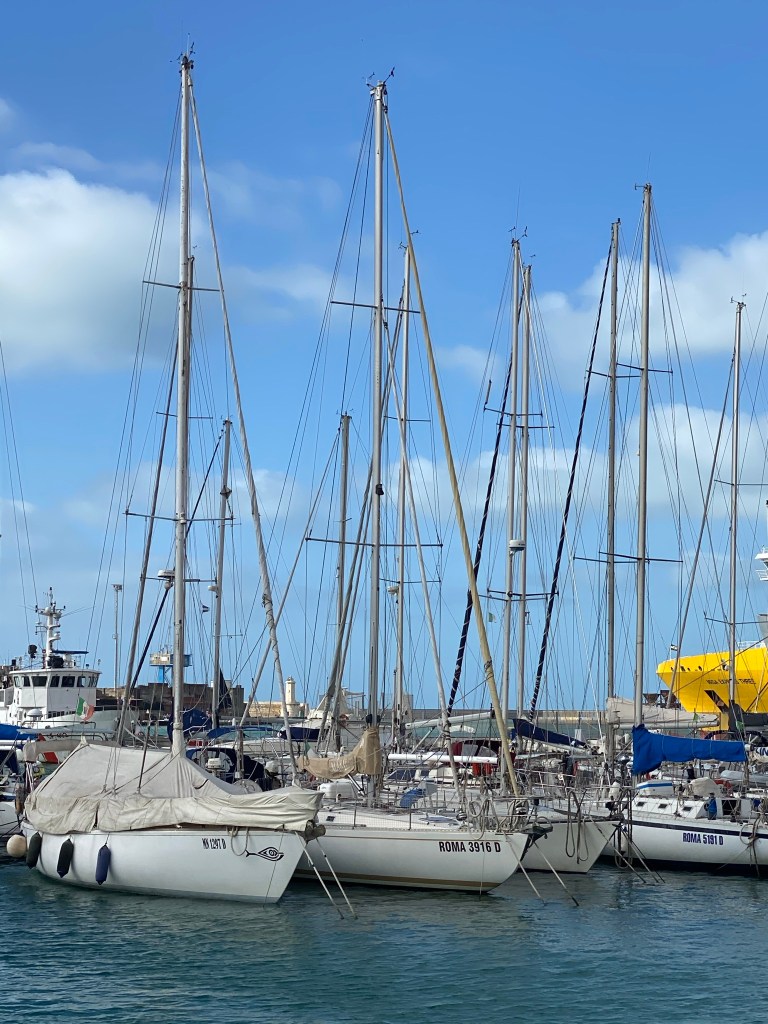
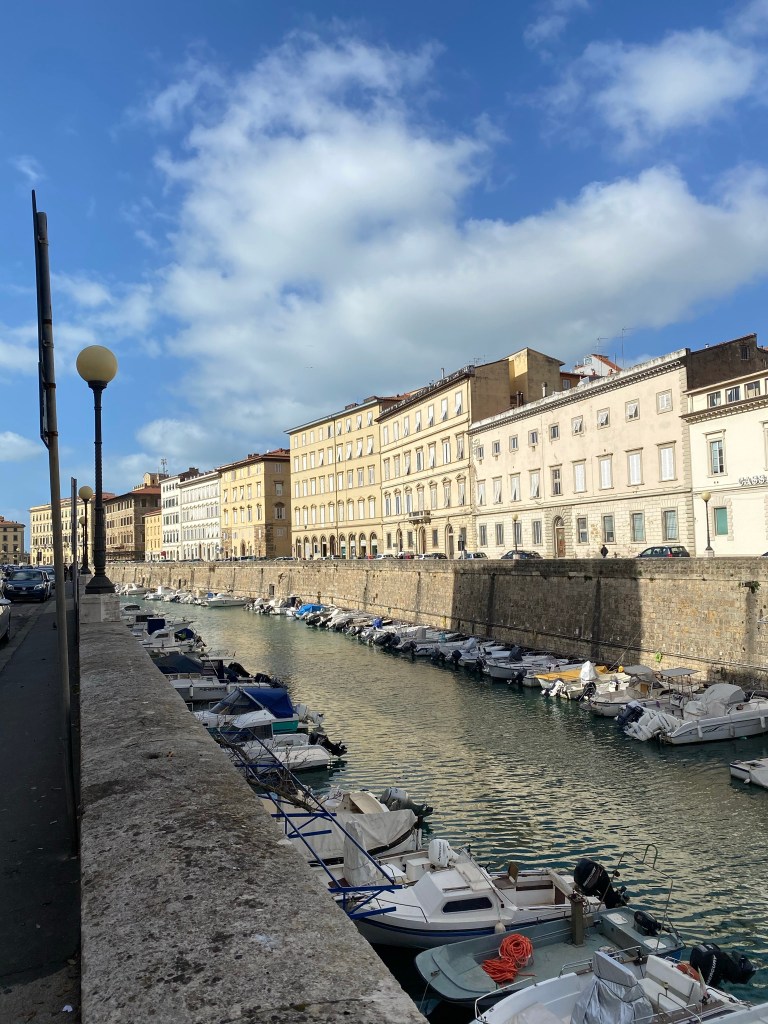
Below, I am leaving the Venice section of the city and headed to the place where the town meets the sea.
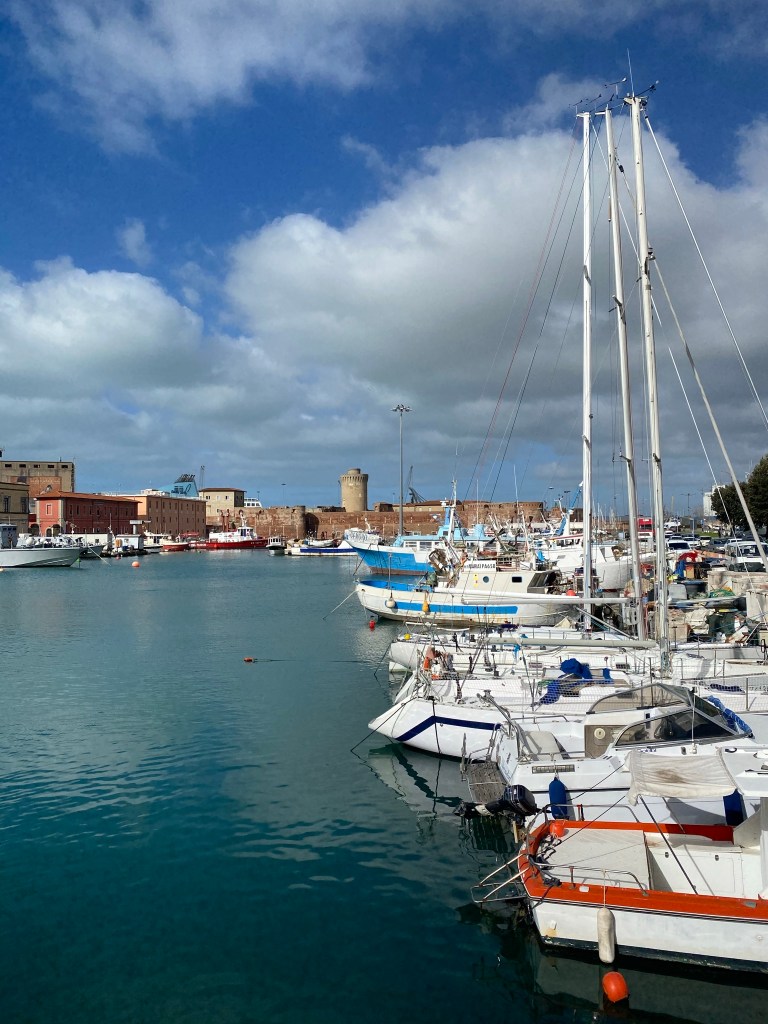
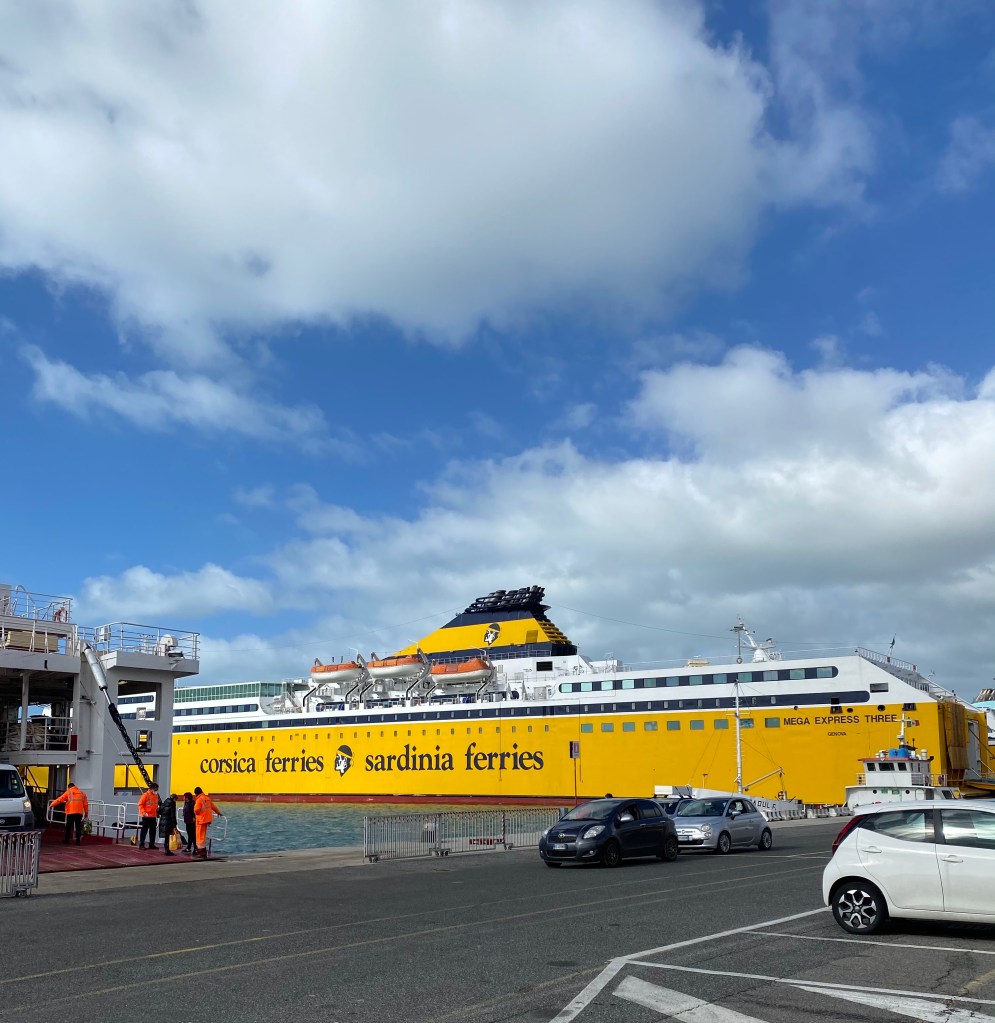
Livorno is a huge and thriving port. There aren’t many cruise ships now, thanks to Covid, but I have no doubt they will be back. In the meantime, I really wanted to get on the yellow ship, bound for Sardegna. Maybe next summer, I hope.
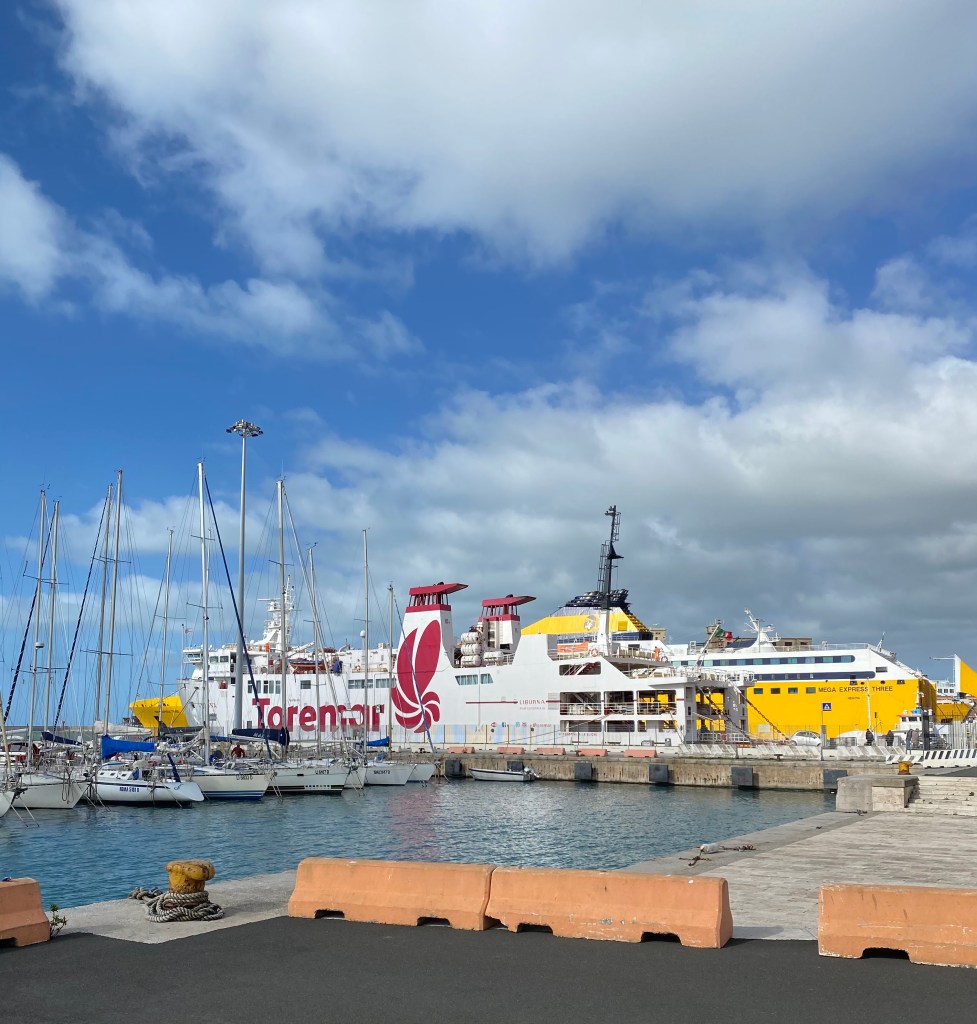
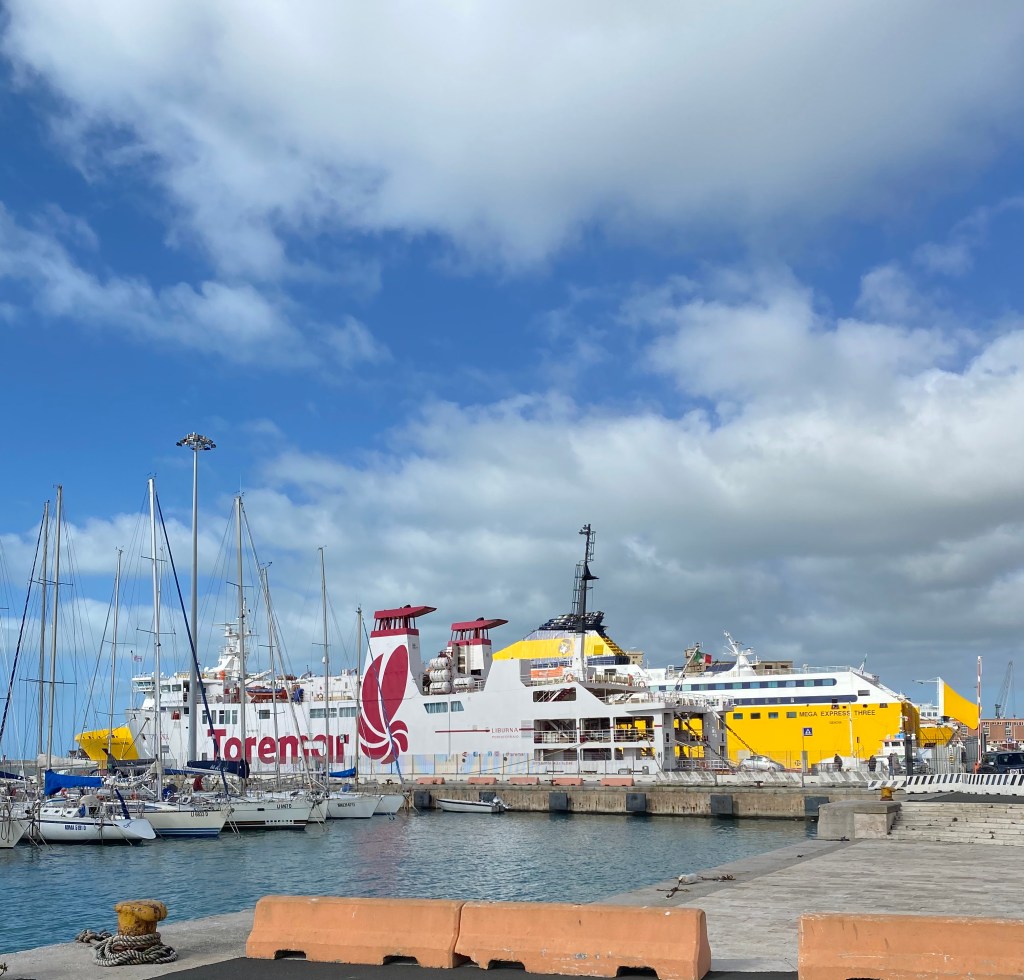
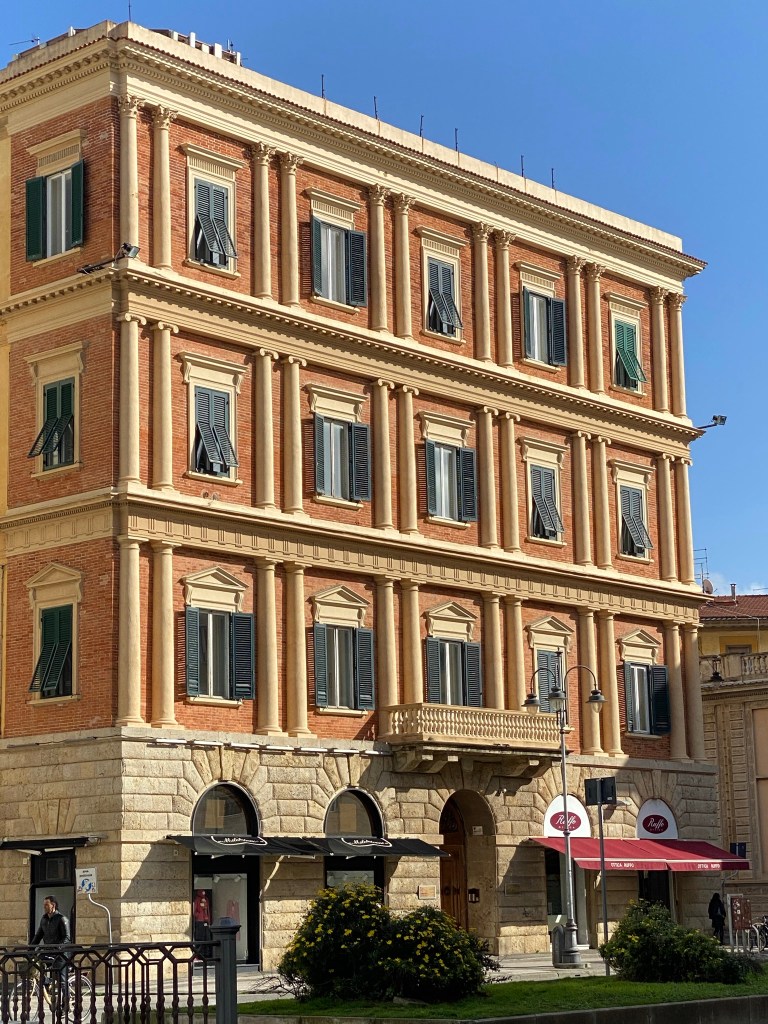
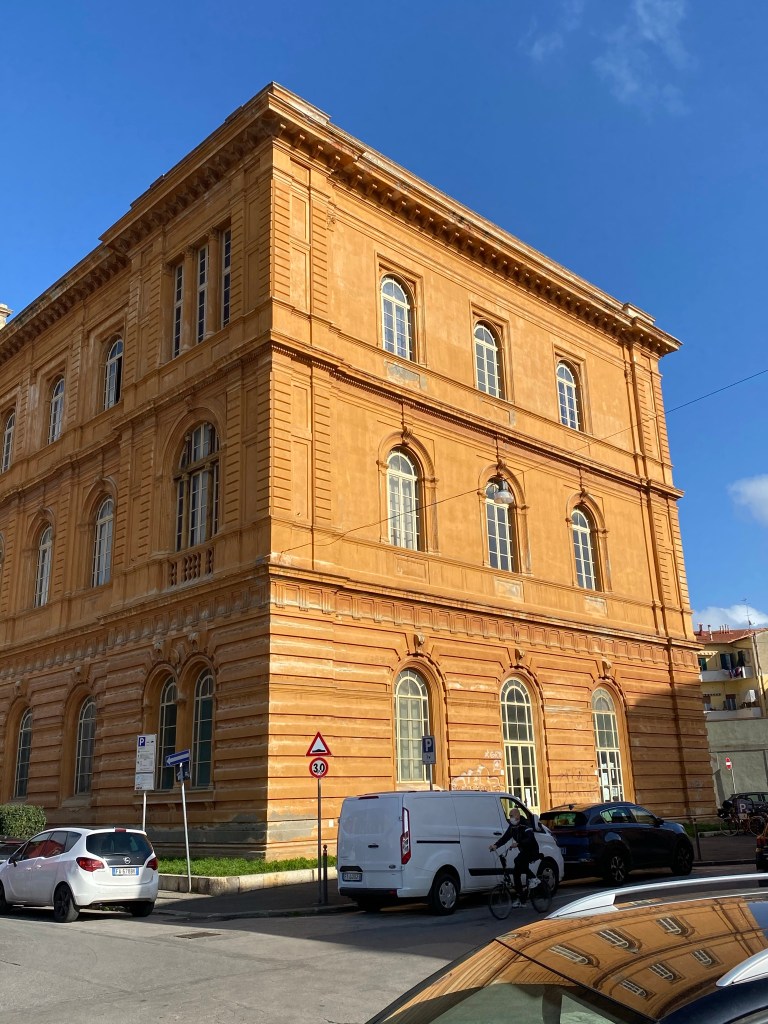
Check out these bright orange and yellow buildings! The colors stuccoed onto buildings in Livorno are much stronger than the golds and ochres I am accustomed to in Florence. I like it!
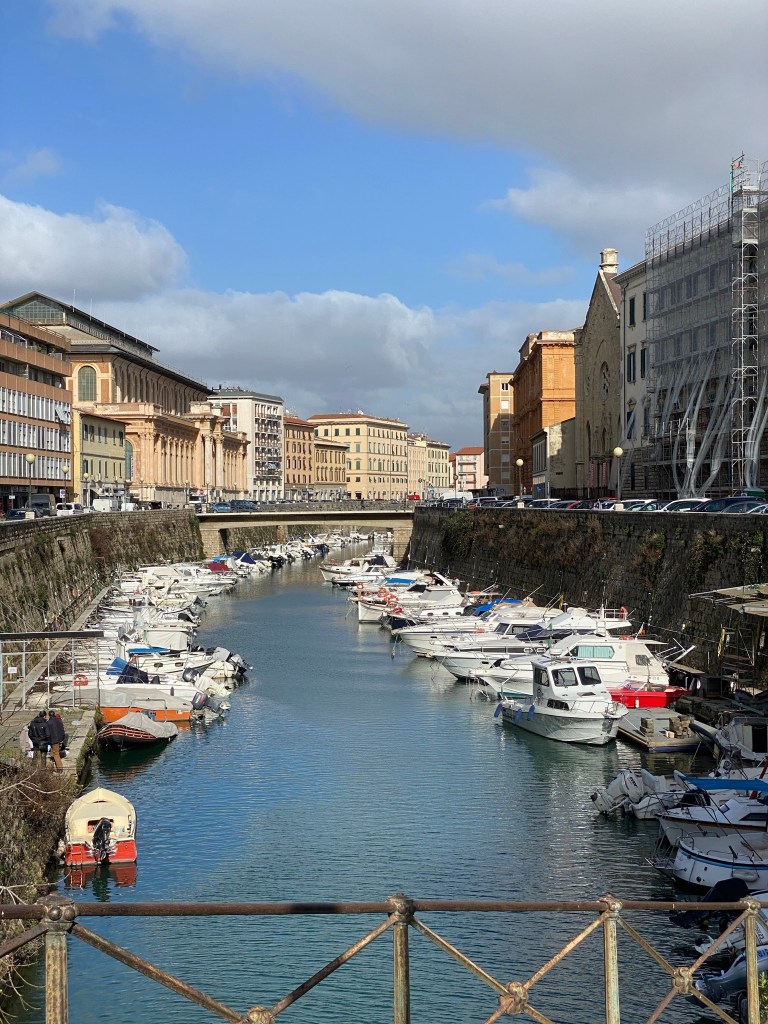
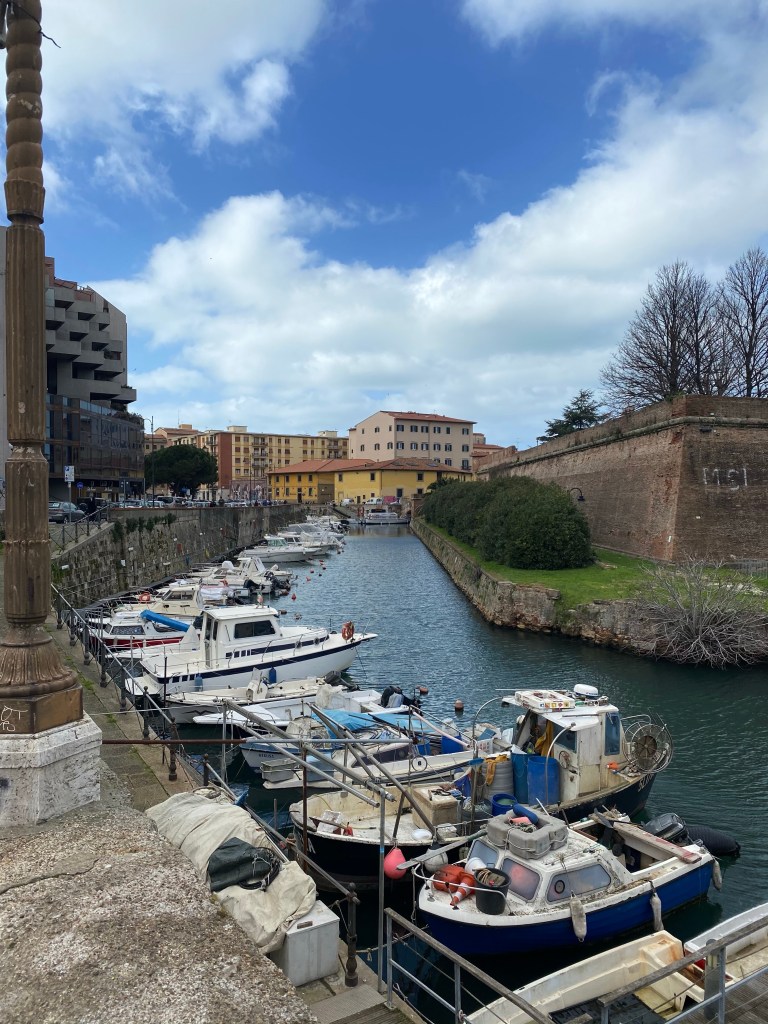
Another look back at the canals in the city:
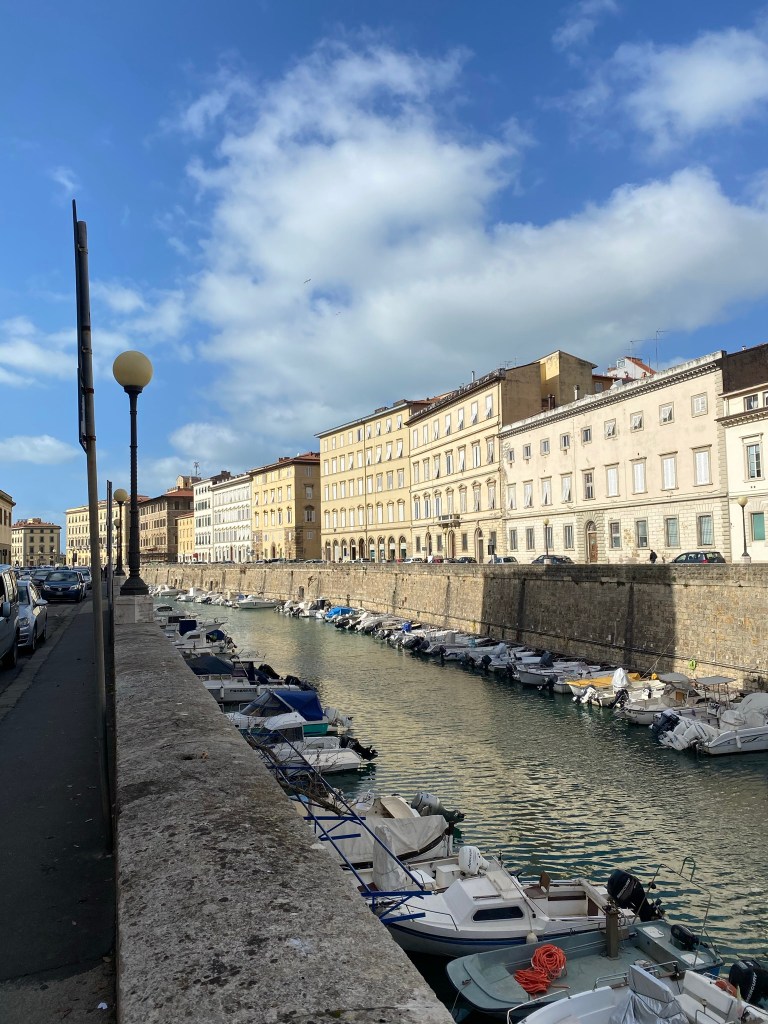
Oh how I wish I were on this boat!

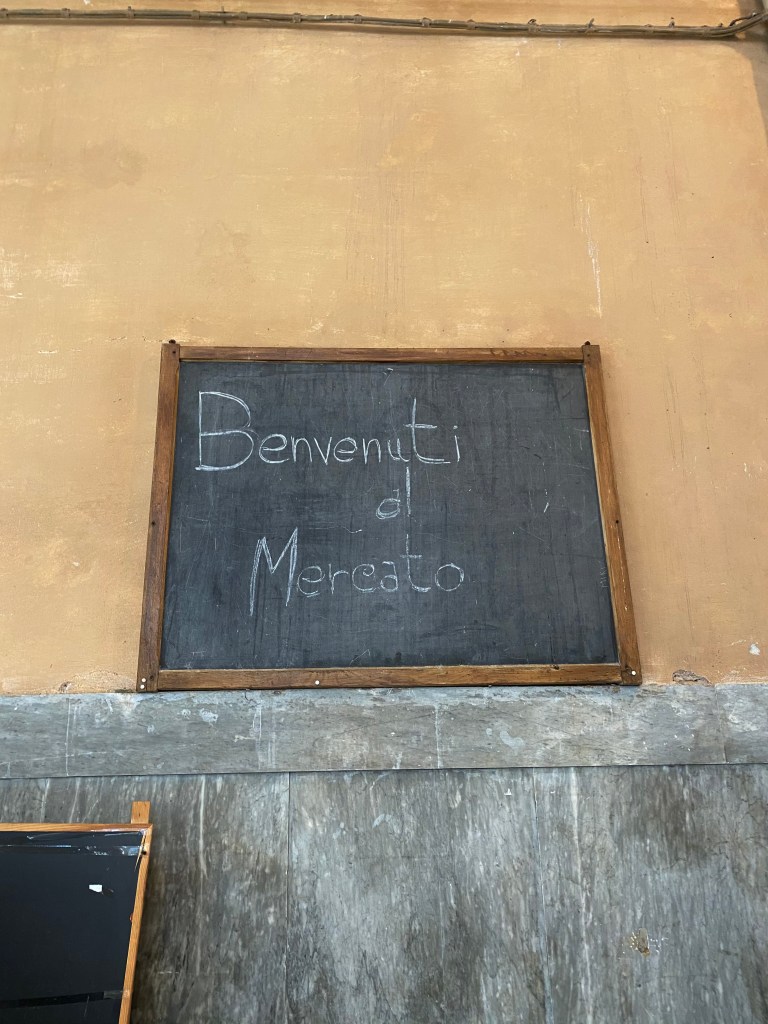
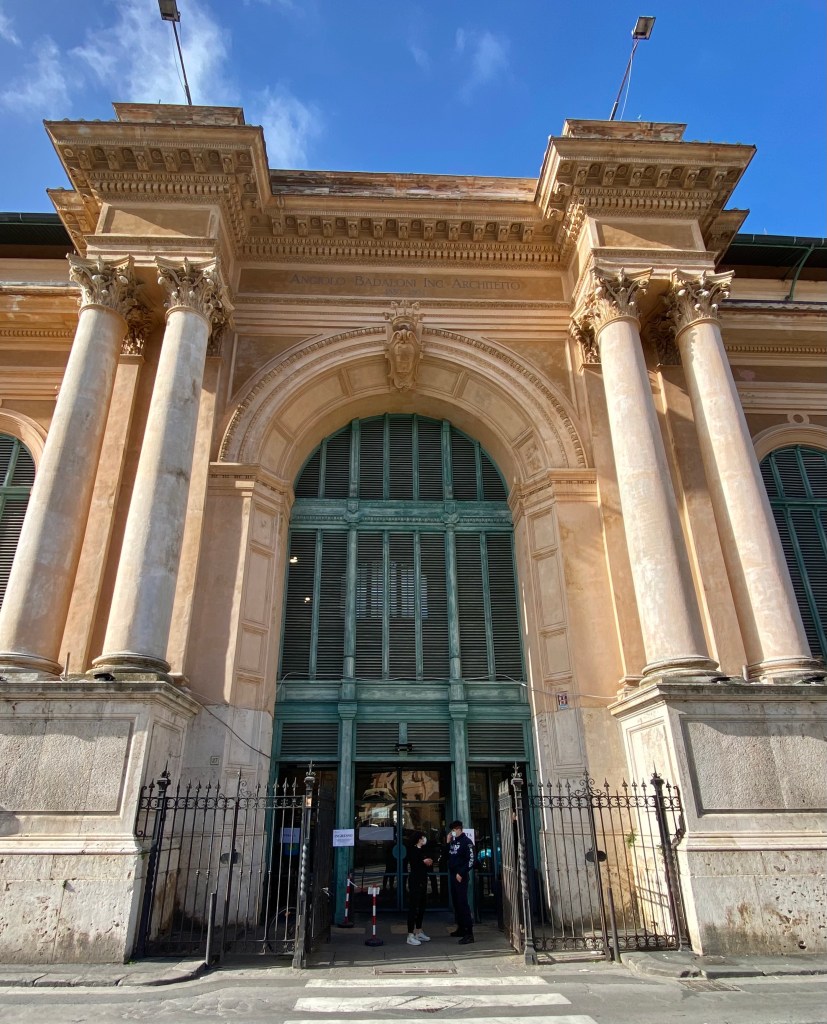
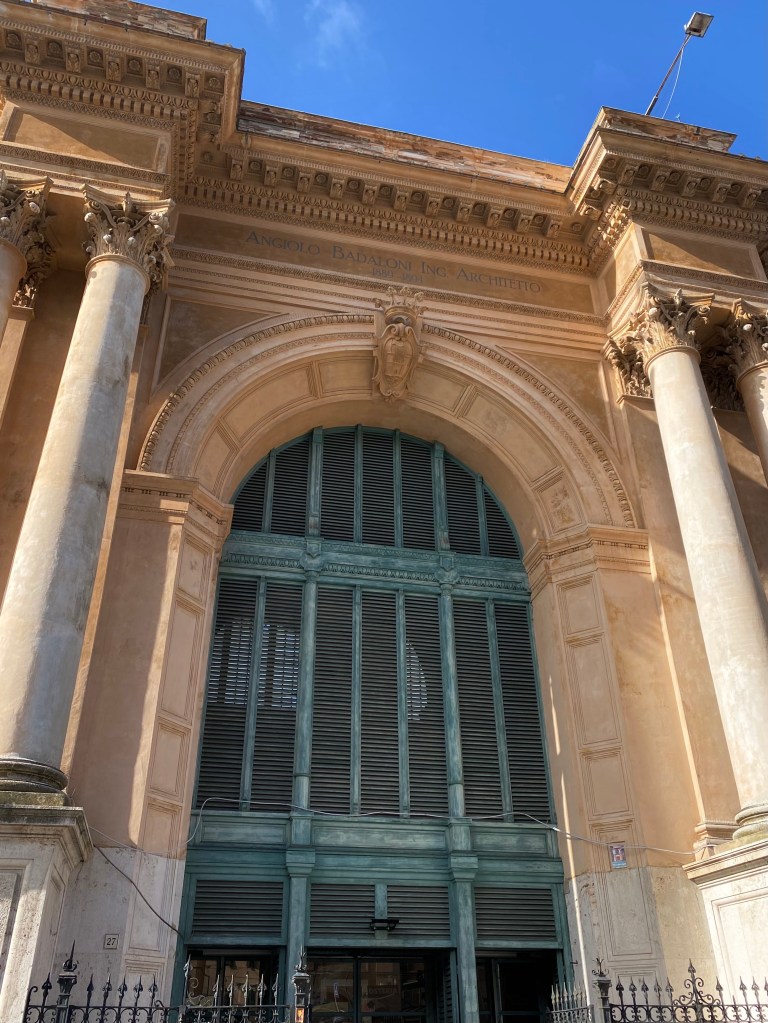
So, then there is the historic “mercato centrale.” Wikipedia and I agree that this is one of the most interesting buildings in Livorno.

“It is one of the most interesting buildings in Livorno from the second half of the nineteenth century, greatly influenced by the great developments in iron and glass architecture.

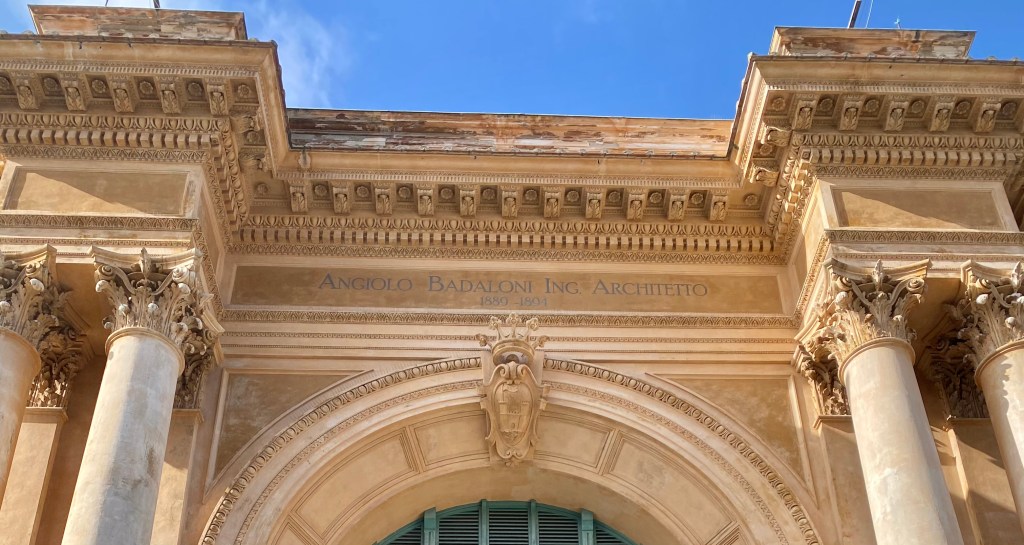
“In Italy, the post-unification years were characterized by a campaign for the reorganization of services which also affected Livorno. Here, after a first conversion of buildings acquired in the state property, a more consistent commitment was made thanks to the push of the mayor Nicola Costella, and important public works were built: among these, the most impressive was the Food Market, designed by Angiolo Badaloni.

“The area chosen for the construction was inserted in the city center, along the Fosso Reale, in the area once occupied by the complex Medici fortified system and subsequently by an arena for daytime shows. The works began in 1889 – 1890 and quickly ended in 1894; at the time, however, there was no lack of criticisms related to the size and cost (about 4 million Lire ) of the work.


“It should be remembered that, according to the stories of the Livorno painter Filippelli, around 1909 the famous Amedeo Modigliani, returning from Paris, rented a large room in the upper floors of the building of the Market, at the corner of Via Gherardo del Testa, and carved some stone sculptures of heads. On his return to France, it is said that these works were thrown into the Fosso Reale ditch which, in 1984, was the scene of the famous discovery of some fake heads, made by some young people from Livorno.”
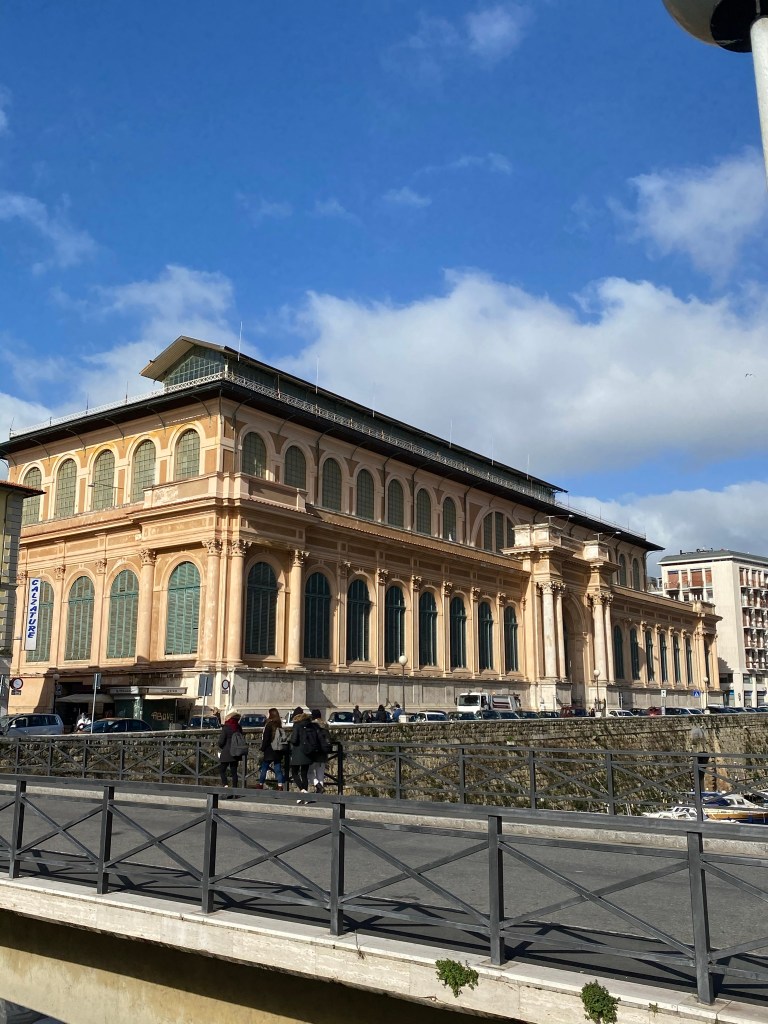
Angiolo Badaloni, Architect, completed in 1889-1894
Continue reading →

Livorno, Livorno and more Livorno, Part 1

Taking full advantage of the two week long period yellow zone in Tuscany, during which we could travel outside our commune but while remaining within our region (thanks for nothing Covid), I hopped on a train in Florence on a recent sunny February morning and away I went to Livorno. Alas, we are in orange zone again, so I can only look back fondly at such glorious regional travel.

I’ve been to Livorno once before, in the height of an Italian summer, and I almost fainted from the heat. I loved my visit anyway and knew I had to return to visit the city in more leisure. That opportunity happened last week.

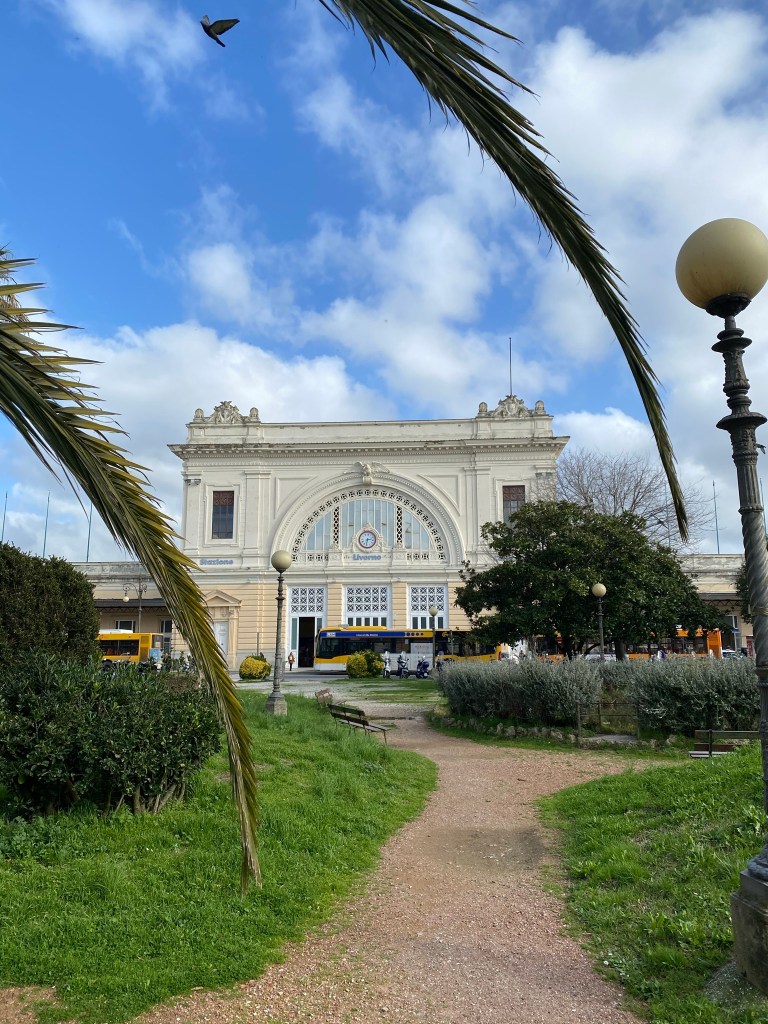
I arrived at the pretty grand Livorno railway station and walked to the center of the old city. Livorno doesn’t get a lot of love from tourists or natives, and I understand why. It’s crusty. You can tell it was once a fine old port, expanded by the Medici dukes, but WWII was brutal to the strategic town. It’s a pity.

In my life as an art historian, I researched and wrote a lot about 19th century Italy and the American artists who came here. Livorno, called Leghorn in English, was the place where so many Anglo-American travelers first made contact with Italy. There is an old English cemetery in Livorno that I haven’t yet had the chance to visit. I will wait until Covid is a thing of the past and visit Livorno with a guide, so that I can truly understand the historic significance of this once proud city.

Come along with me and enjoy my February 2021 pictures of Livorno:

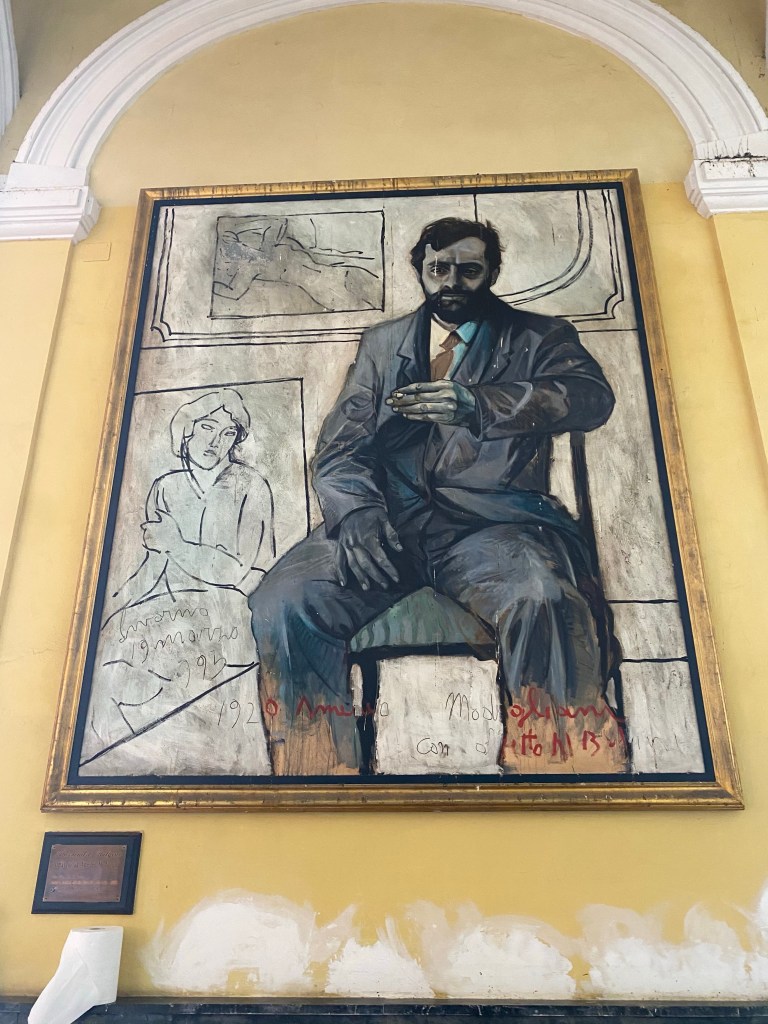
One is greeted at the train station with a large portrait of Modigliani, one of my favorite Italian artists who. He was born in Livorno.

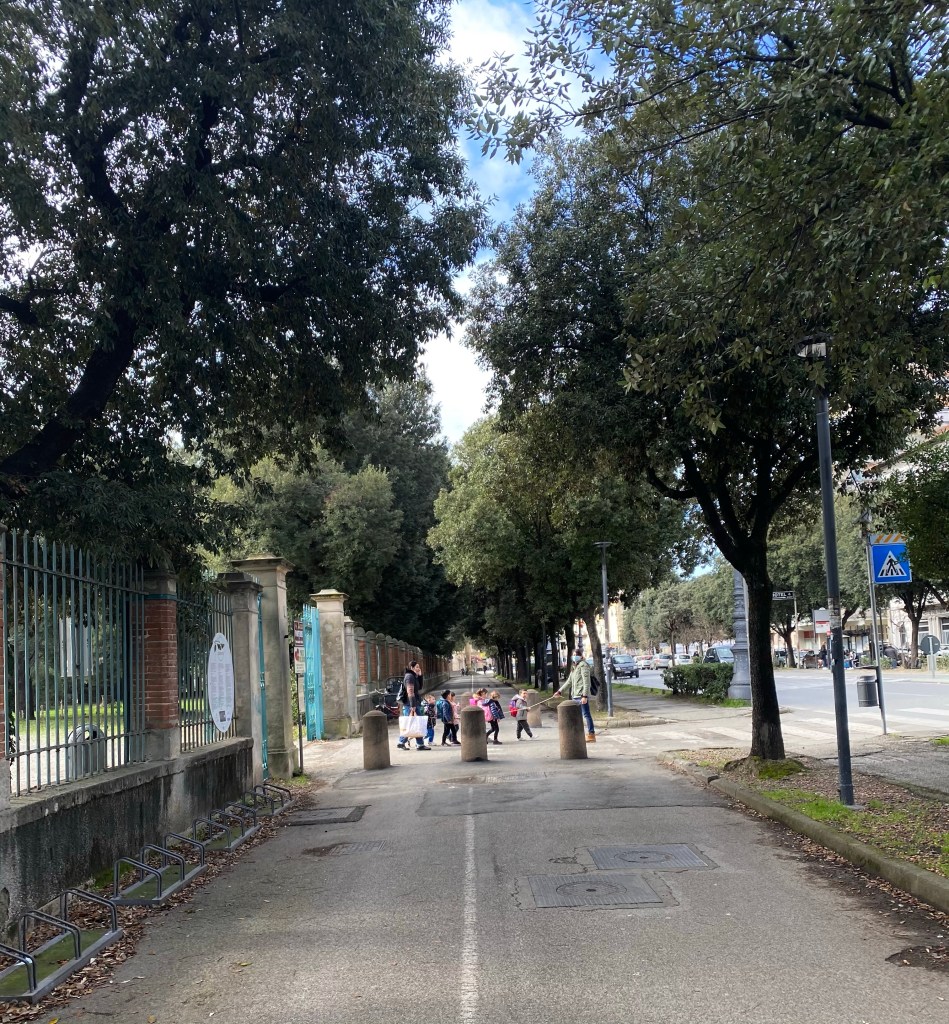
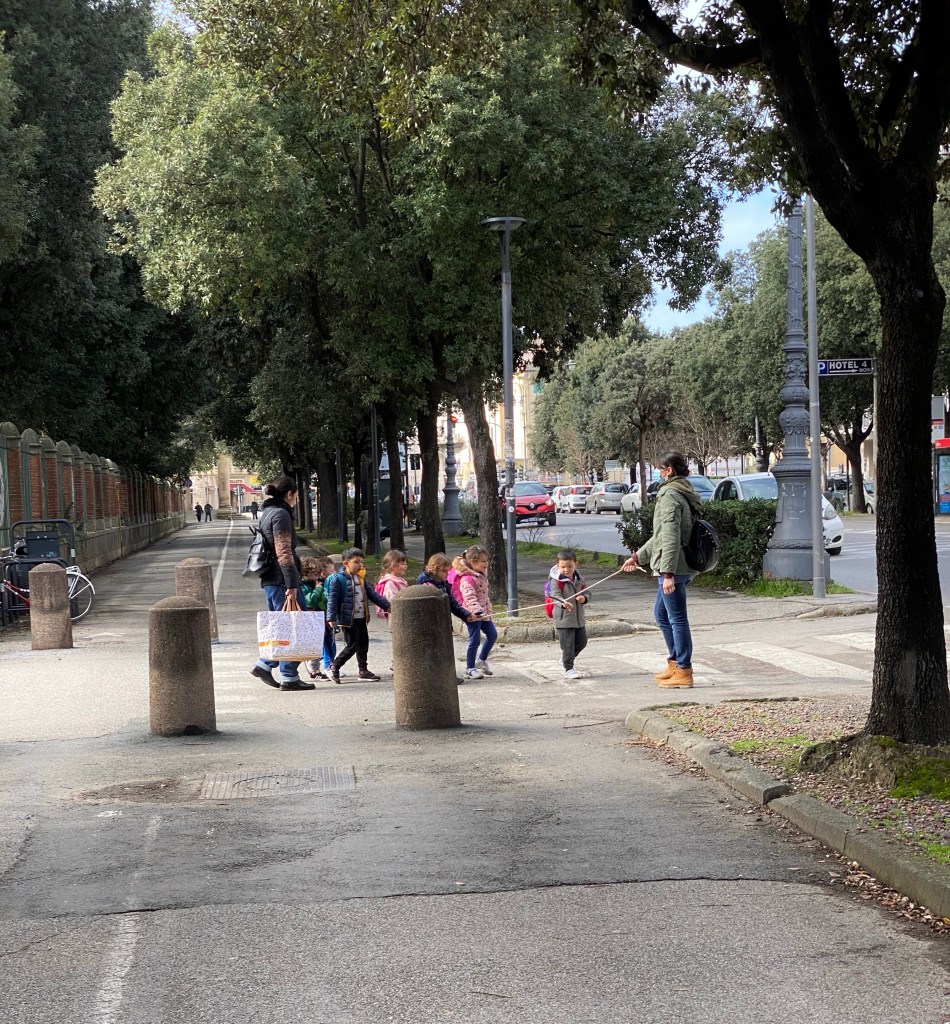
As I was walking to the city center from the train station, I happened upon this little class of kindergarteners, just leaving the pretty city park. I love moments like this.
I headed first to Piazza della Repubblica:

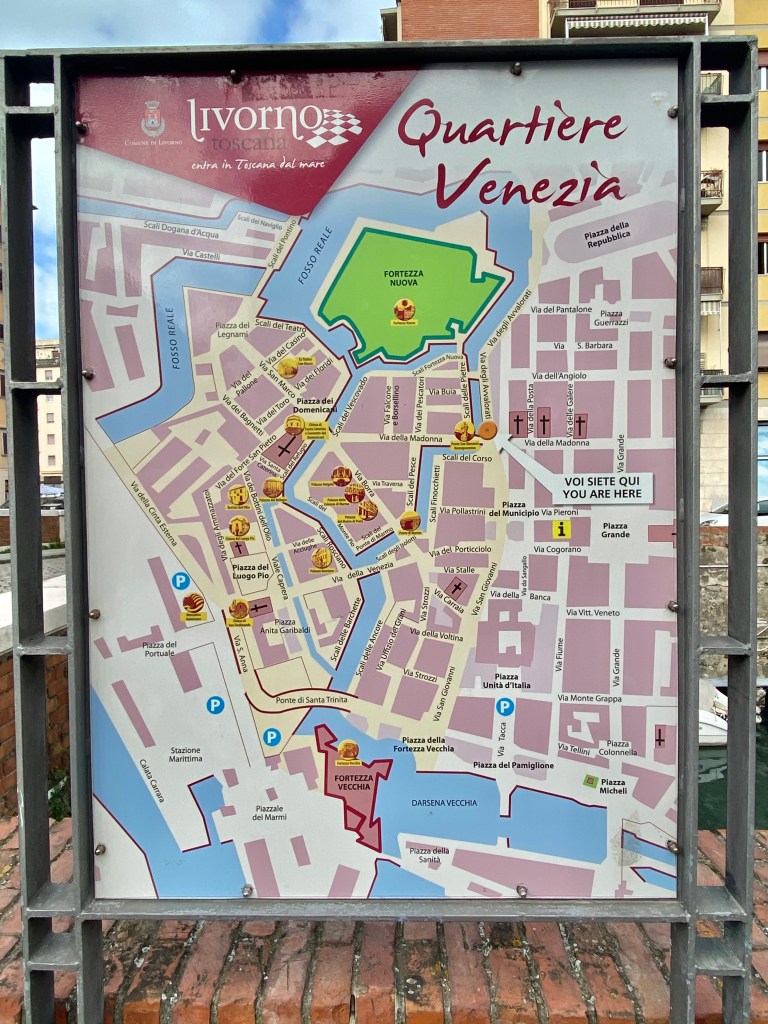
From the piazza, I headed for the Quartiere Venezia, a map of which is here:

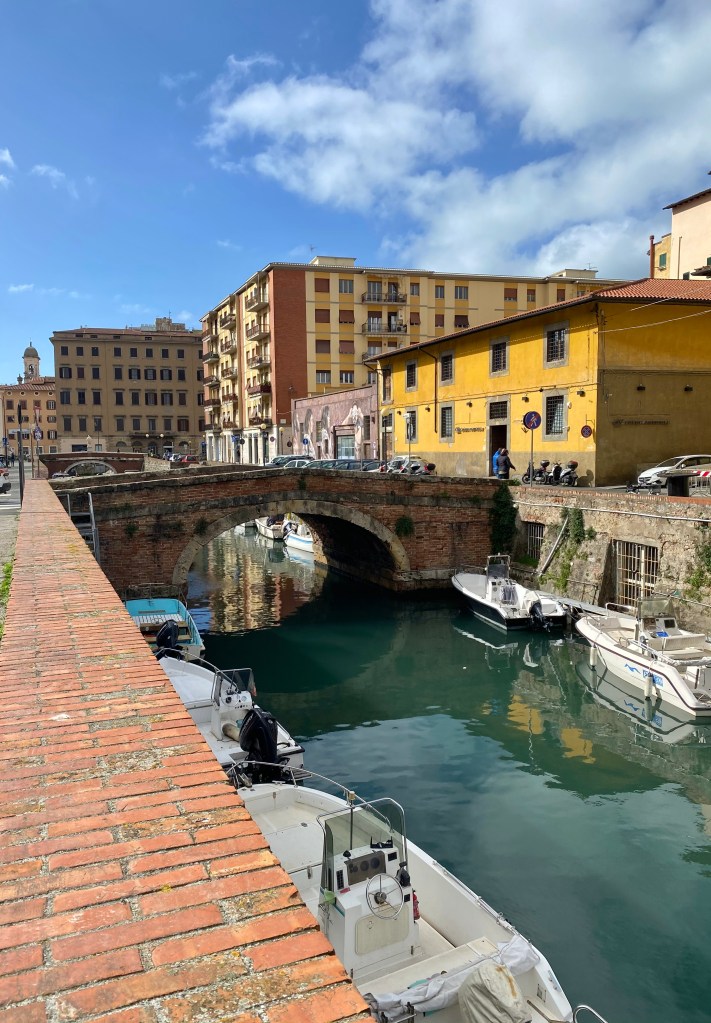
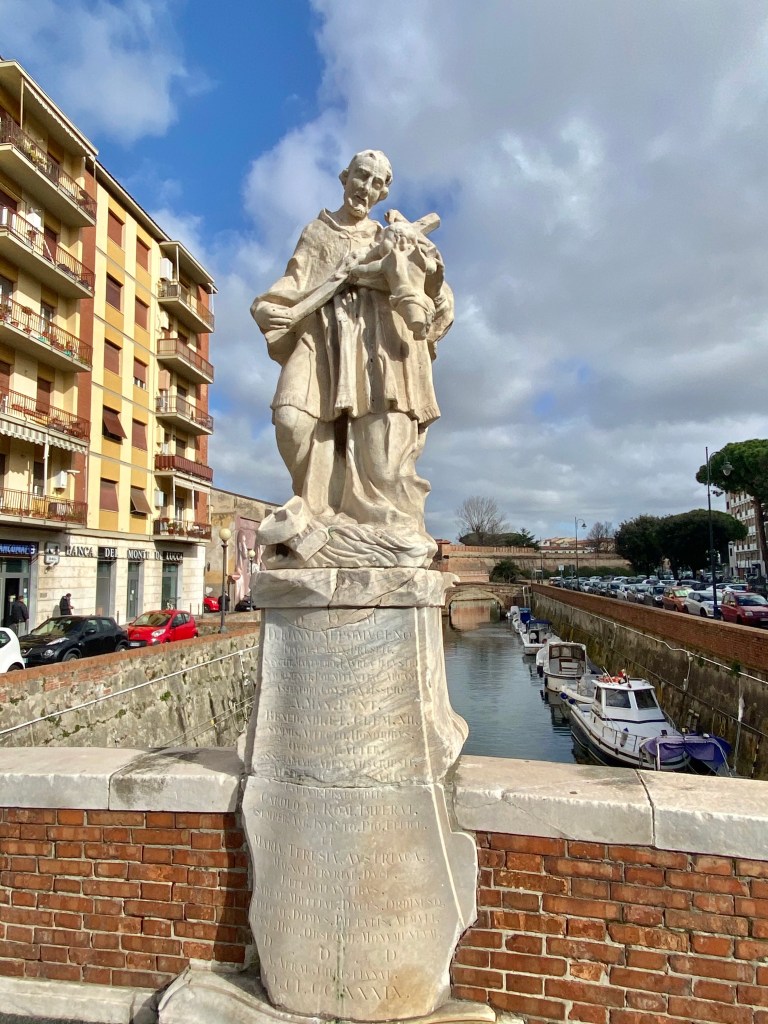
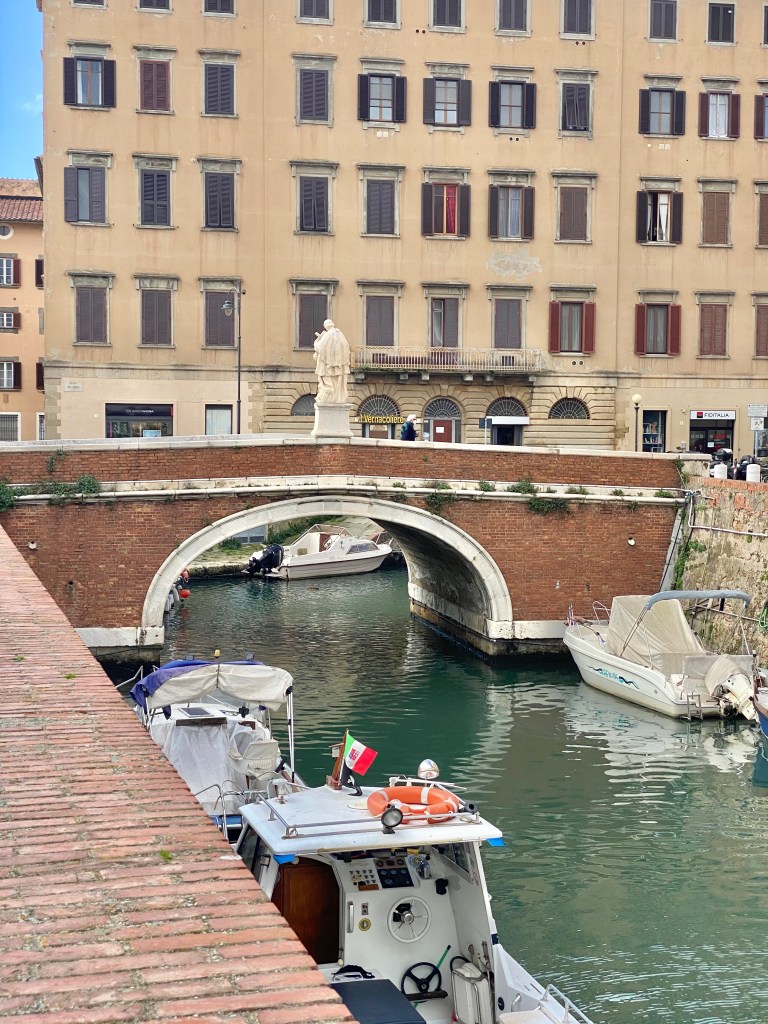
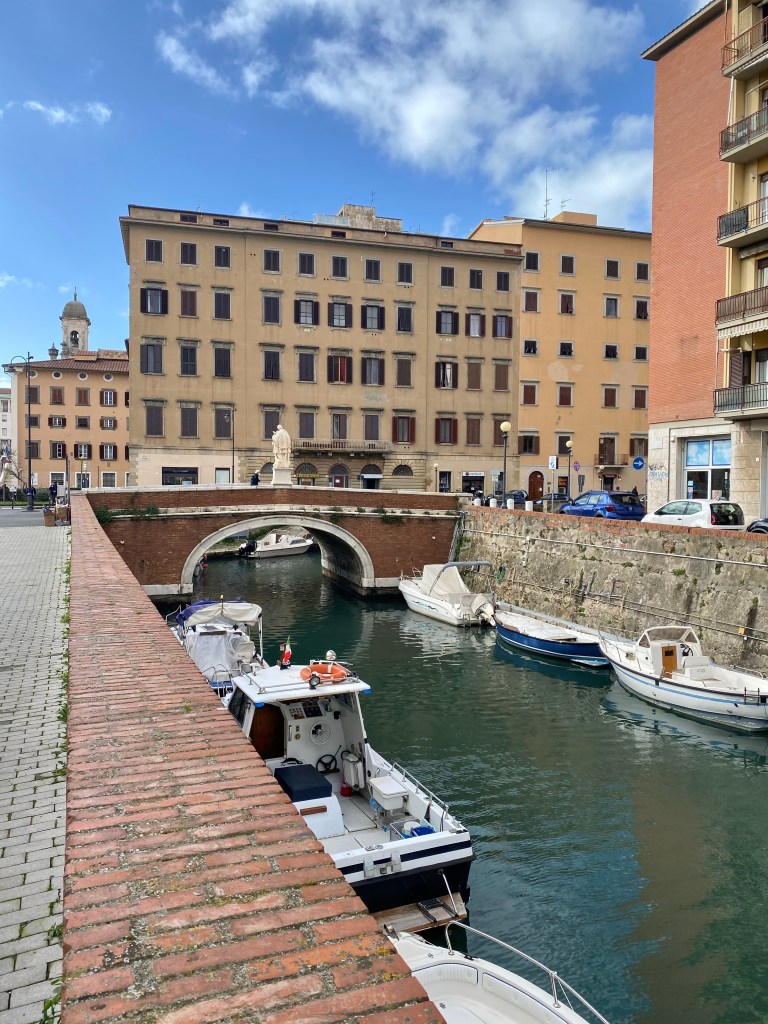
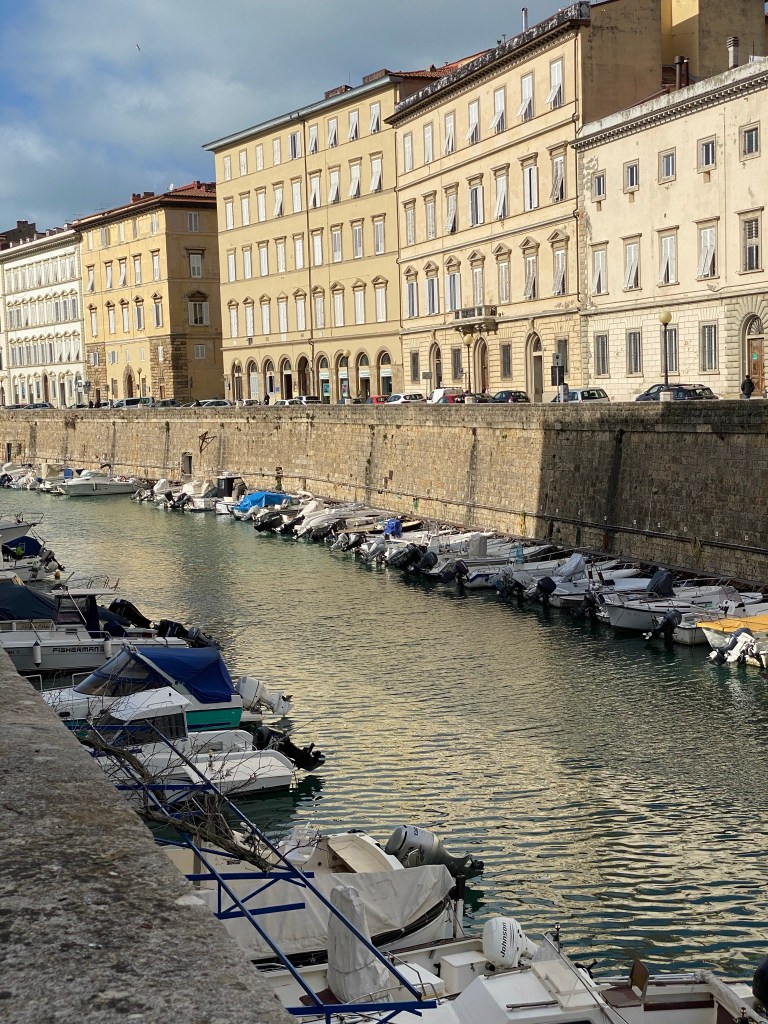
When I was in Livorno the last time, I had the great pleasure of touring the Venetian quarter of Livorno by boat with my friends. This time, I simply followed the canals on the neighboring sidewalks, enjoying the sunshine, the water views, and the sounds of Livorno and its seagulls.
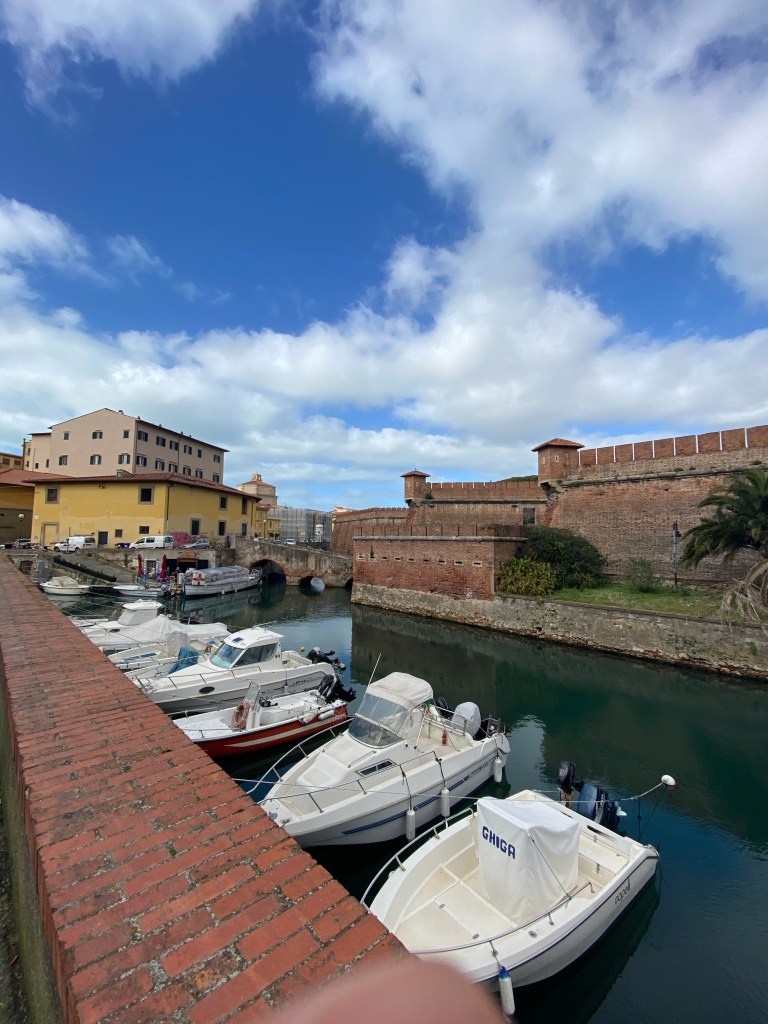
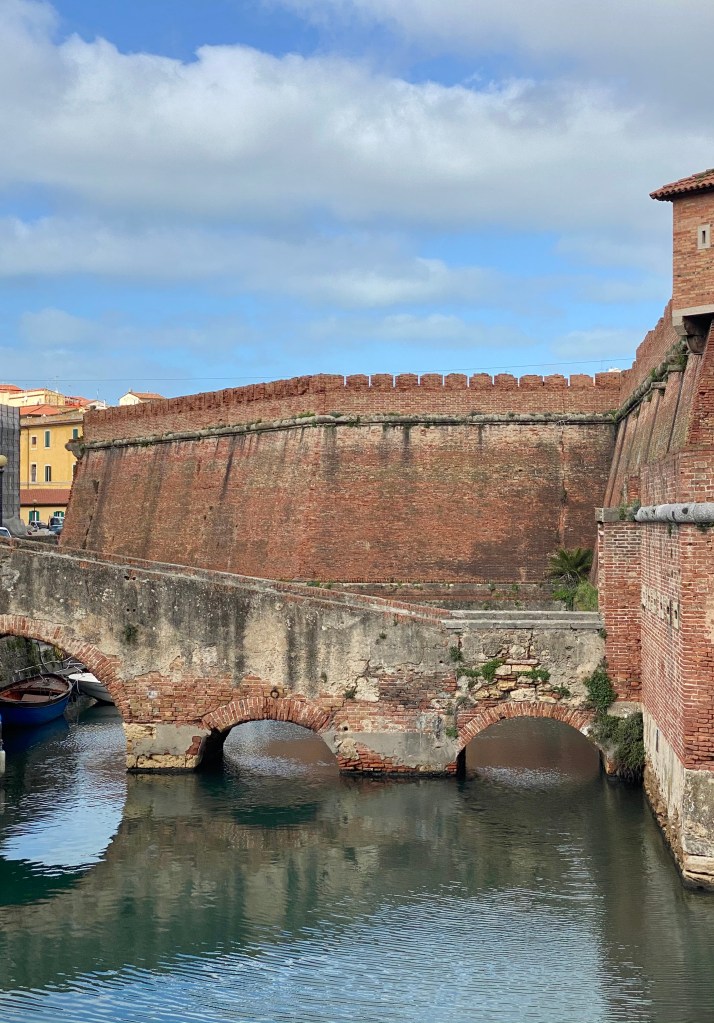
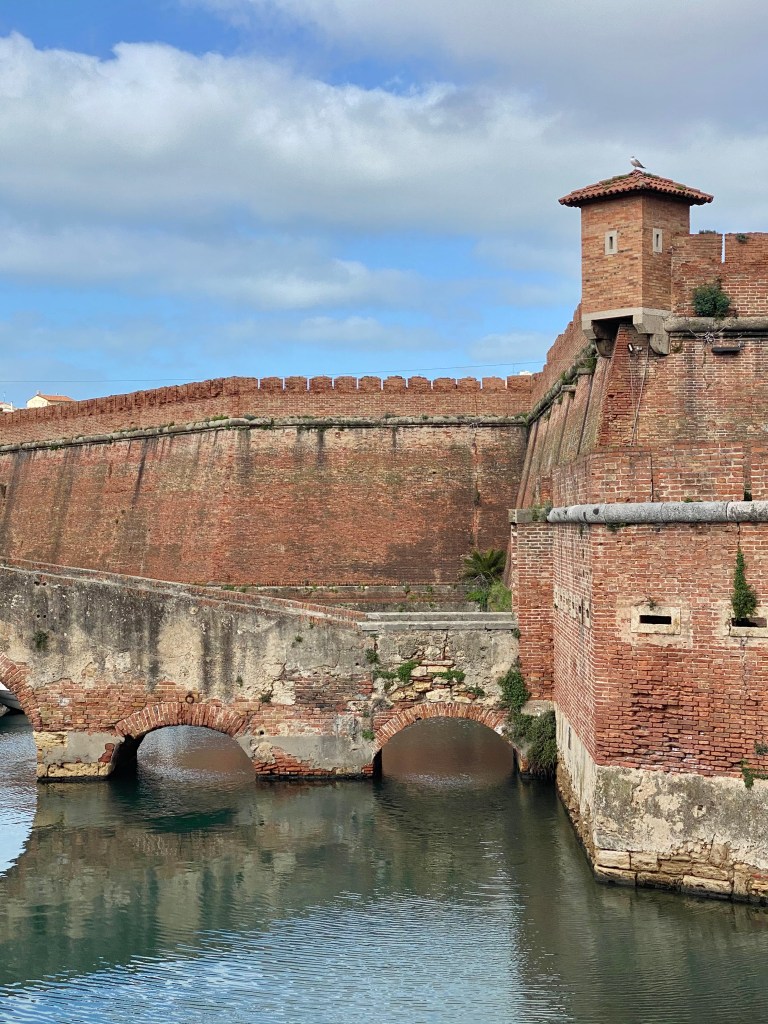
The Medici duke’s era is plainly written on the architecture of Livorno; these fortifications look like the brother of the Fortezza da Basso in Florence. Same era, same materials, same architect.

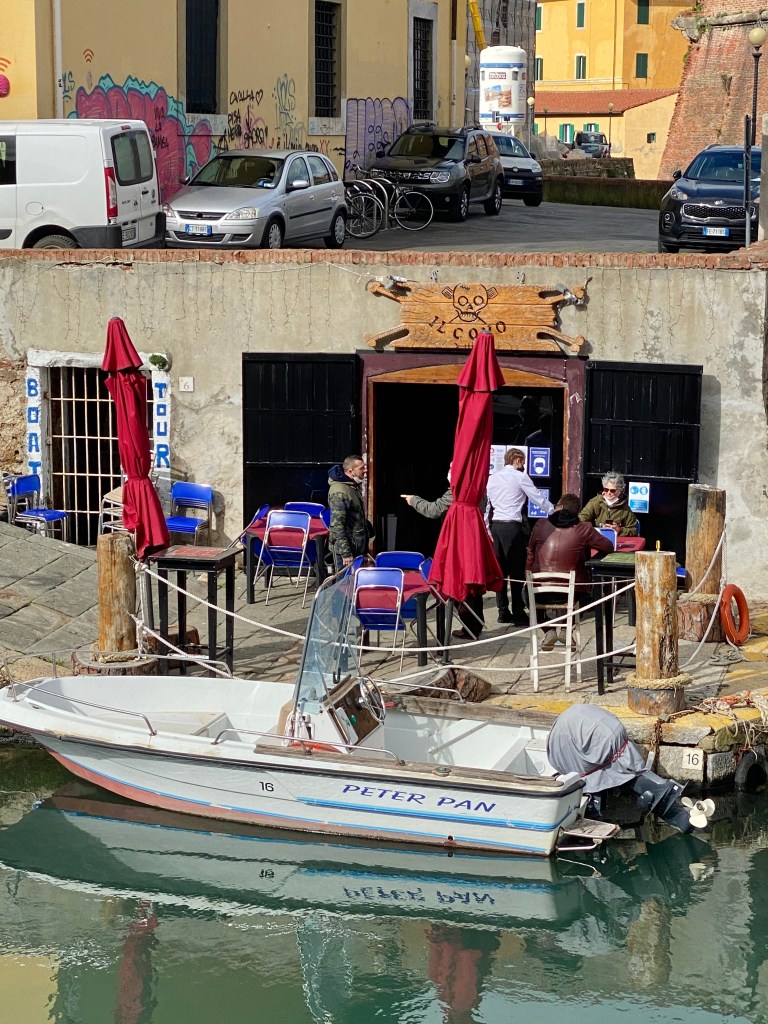
As I began to wander away from the fortifications and towards the Ligurian sea, but still well within the city, I spotted delightful scenes of daily life in Livorno. A lot of it takes place along the canal. I even spotted Peter Pan’s boat!

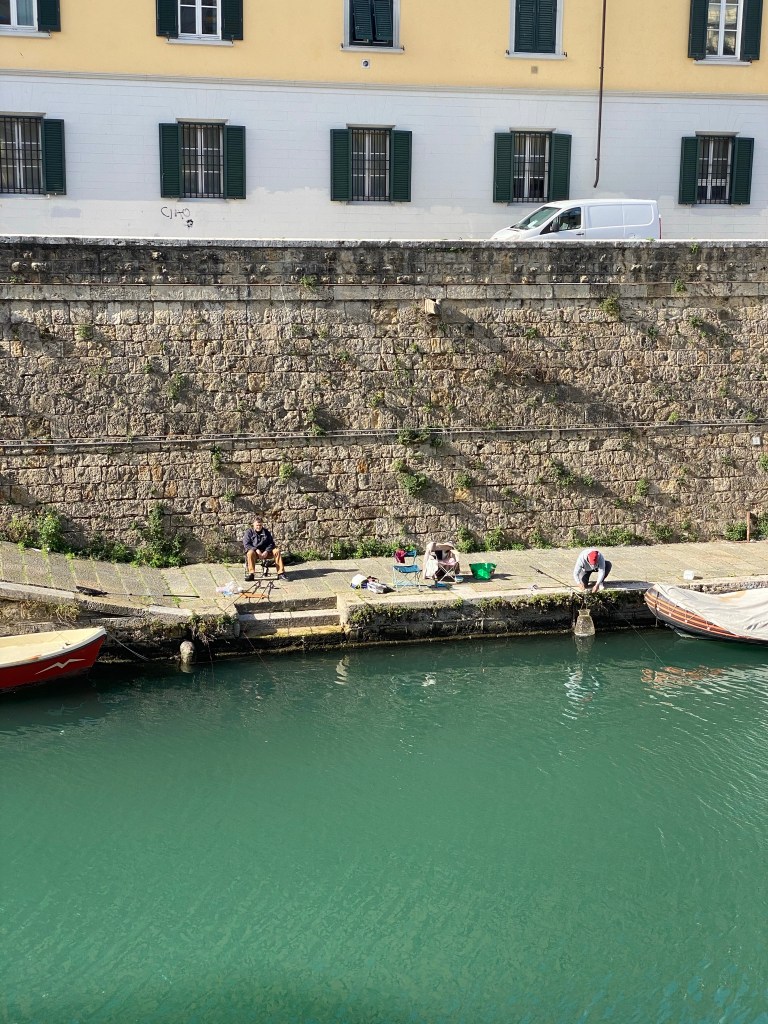
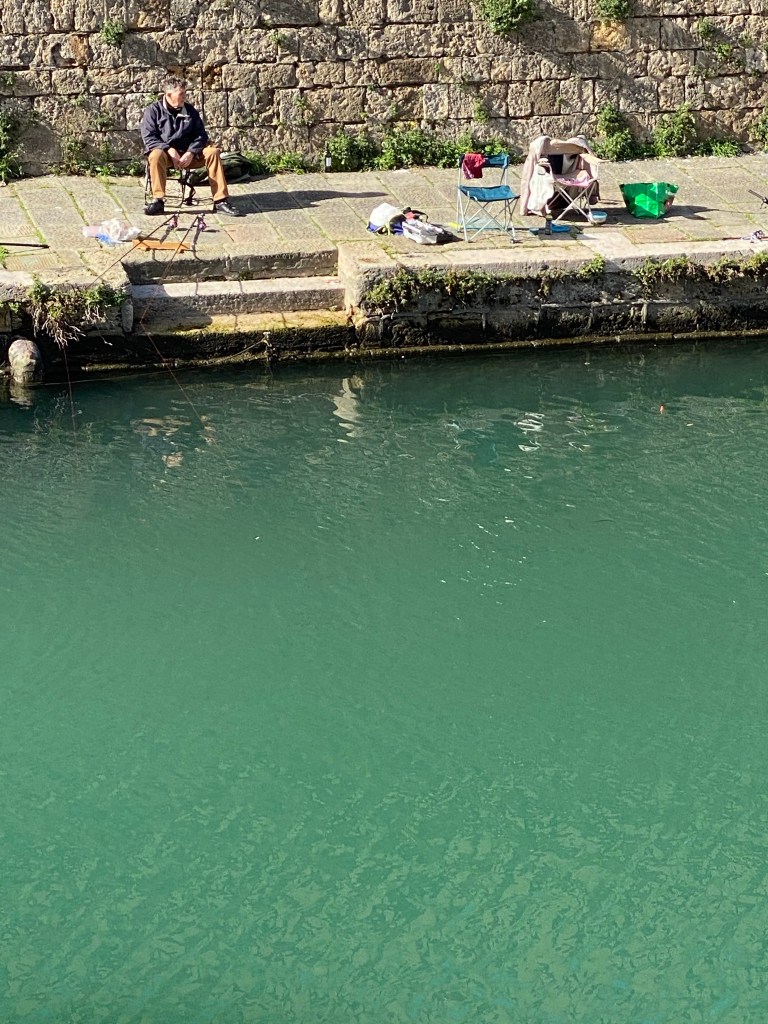
Below: some fishermen try their luck in a canal on a sunny afternoon in Livorno. The water is very clean and bright.

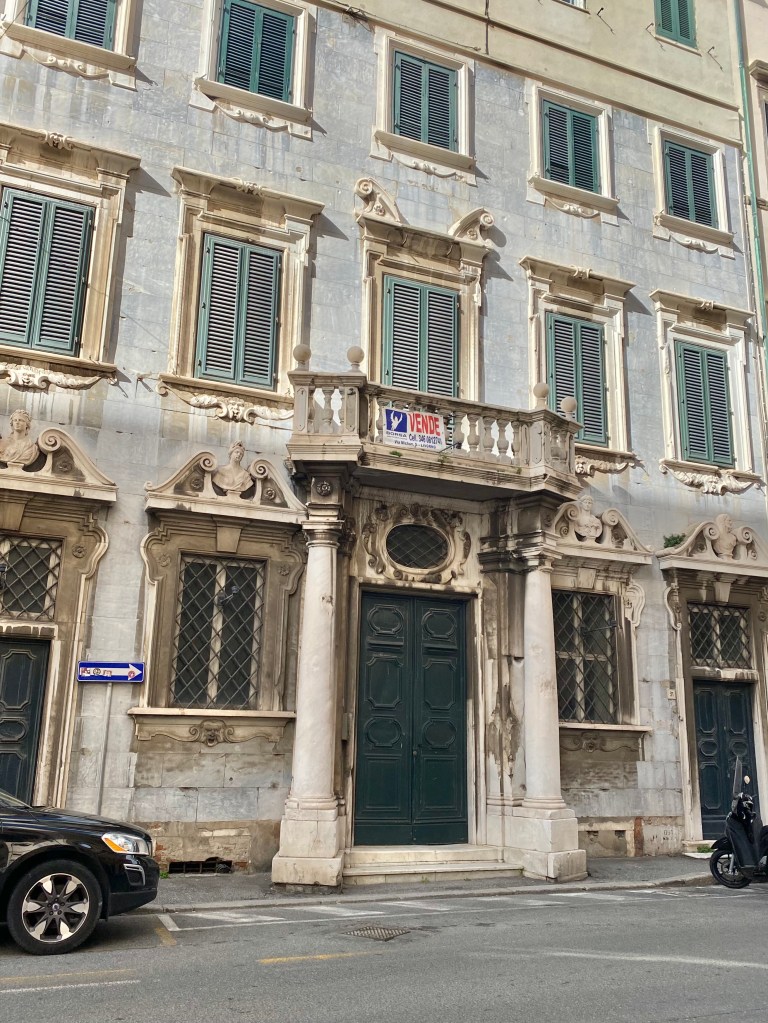
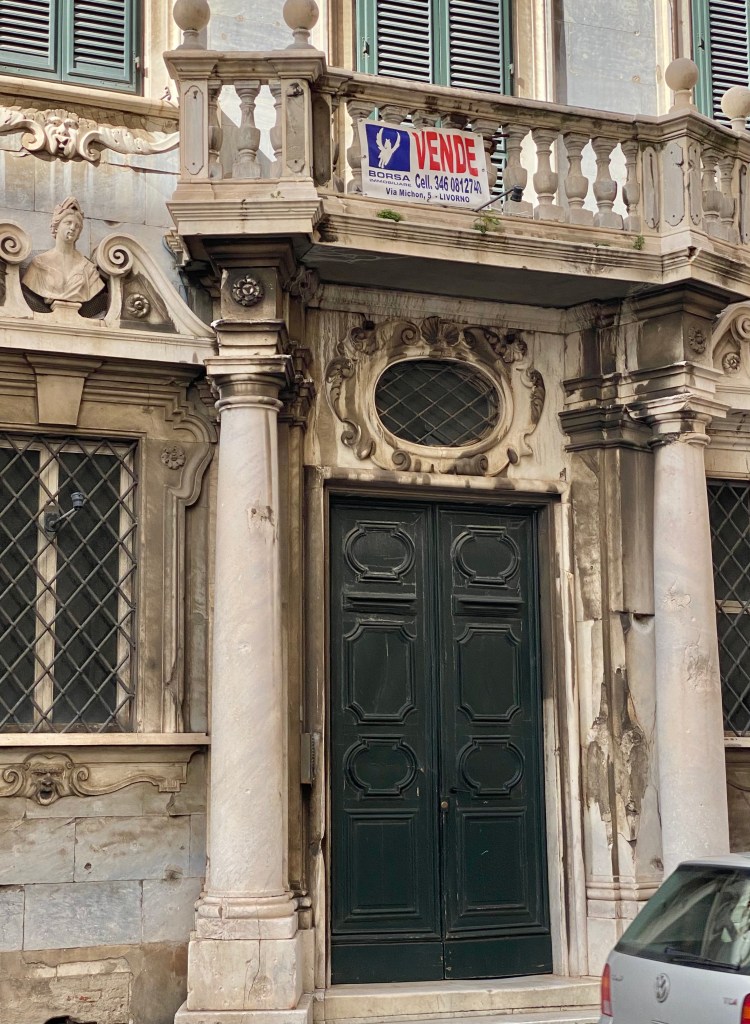
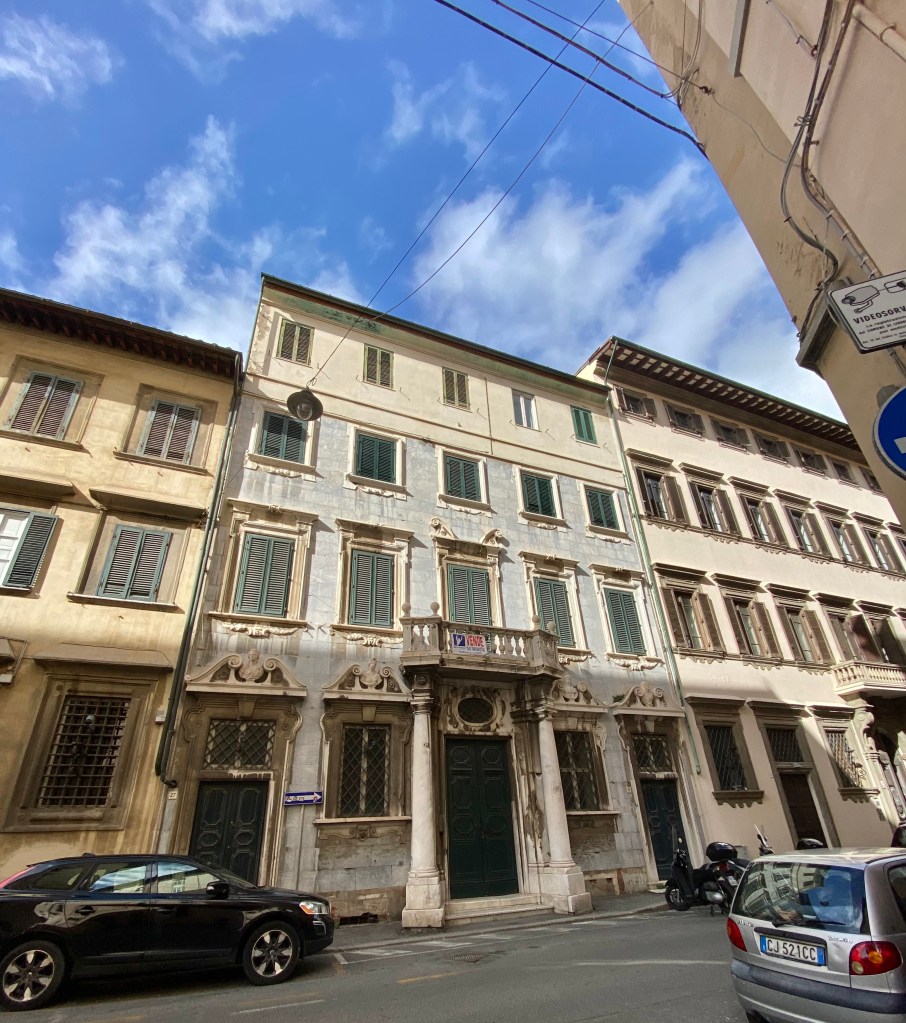
This sad but beautiful pale blue palazzo with the green shutters below tells a story, if you listen. How grand it once was. I wish I could buy it and take that “for sale” sign off its facade.

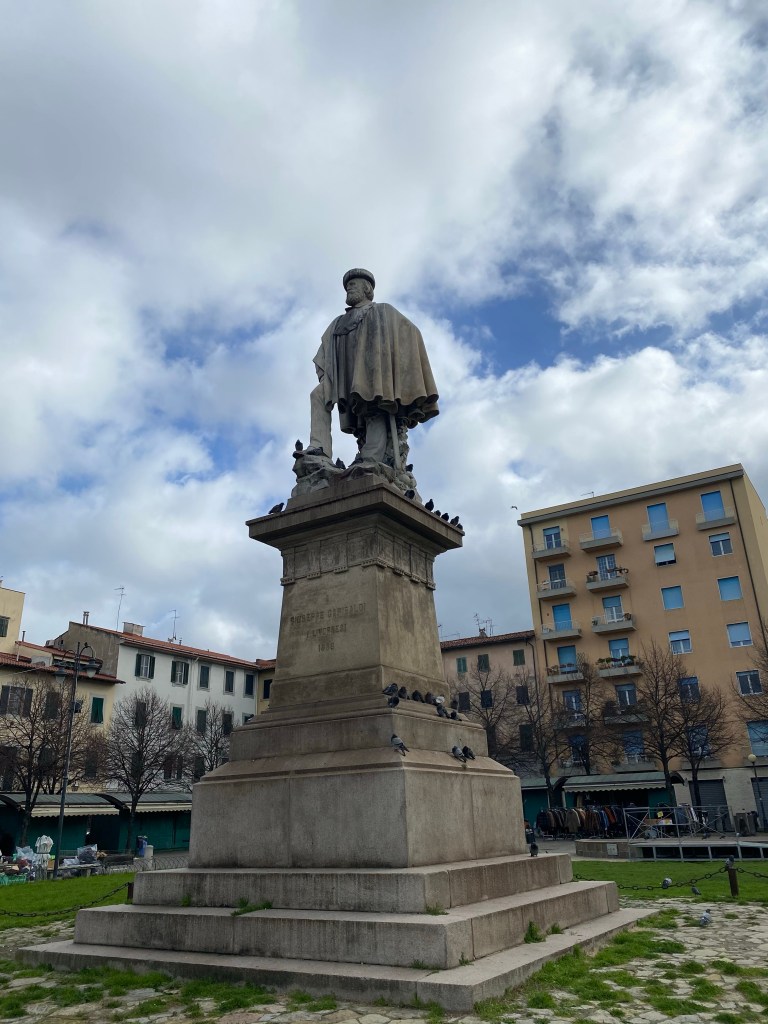
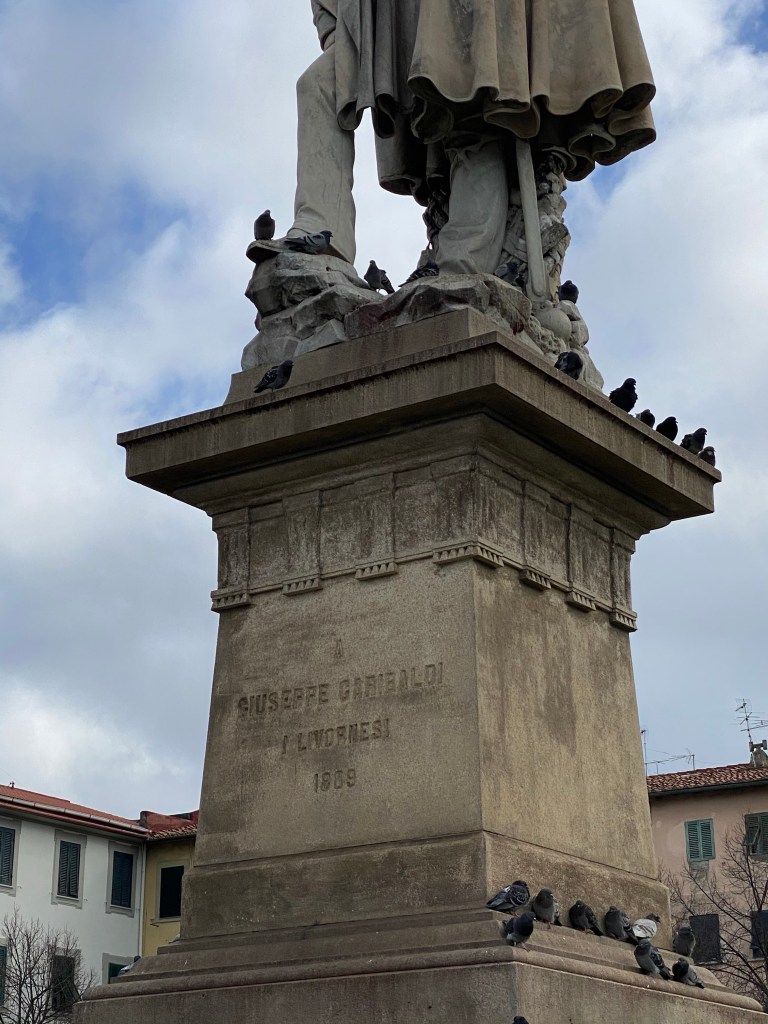
Below, another square has another memorial, this one to Giuseppe Garibaldi

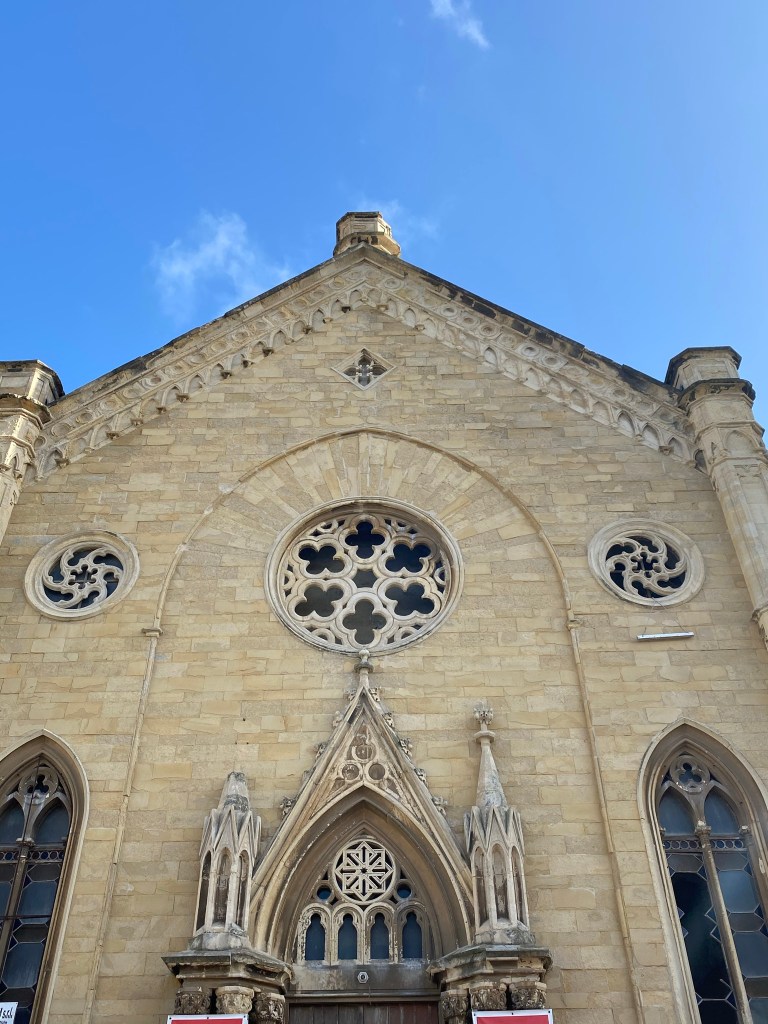
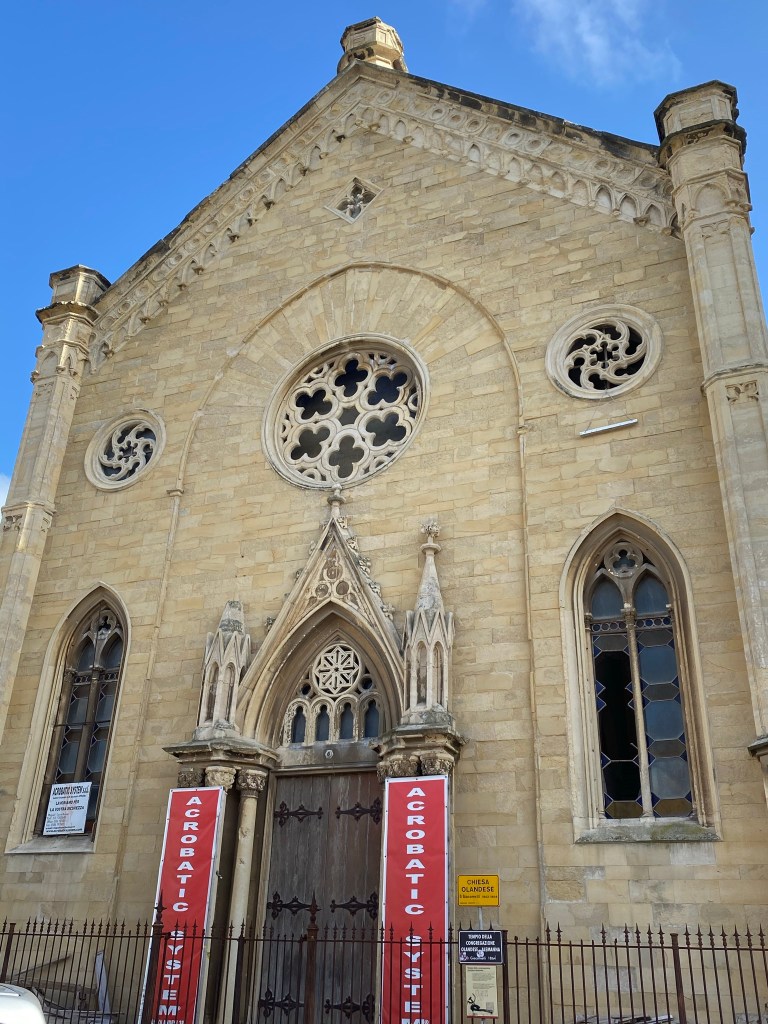
Below: a lovely old church along a canal, now used for acrobatics?!

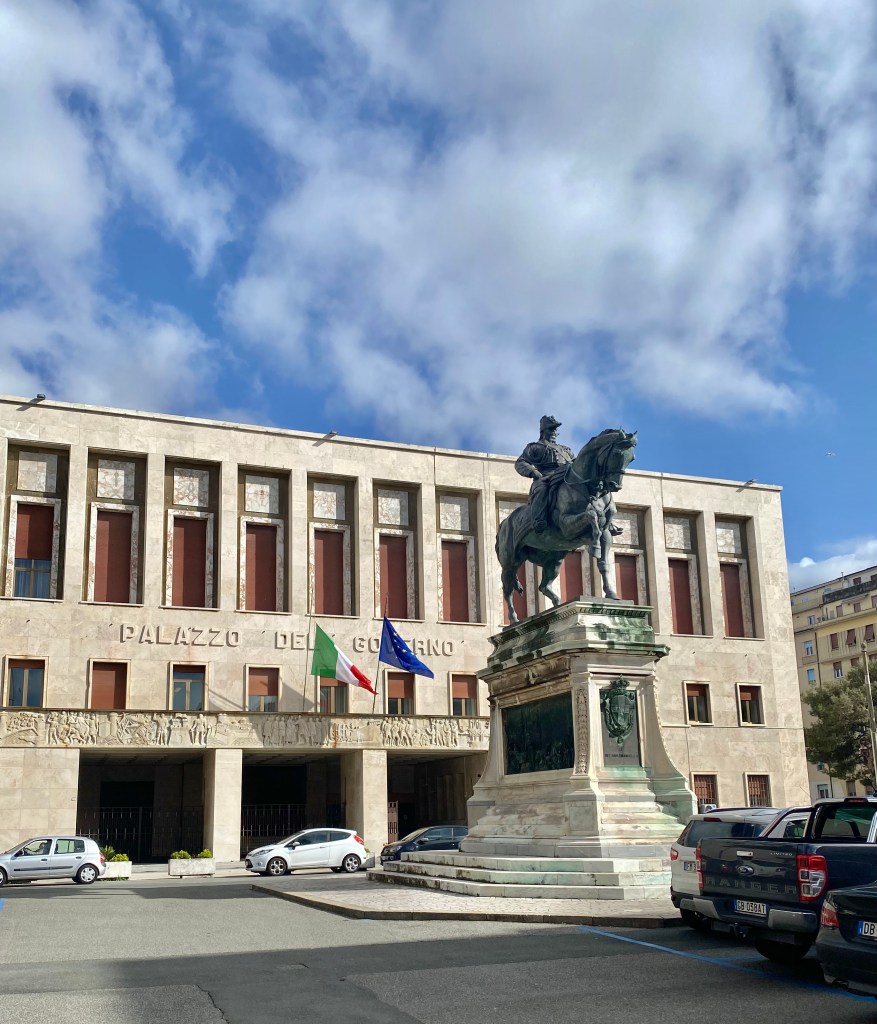
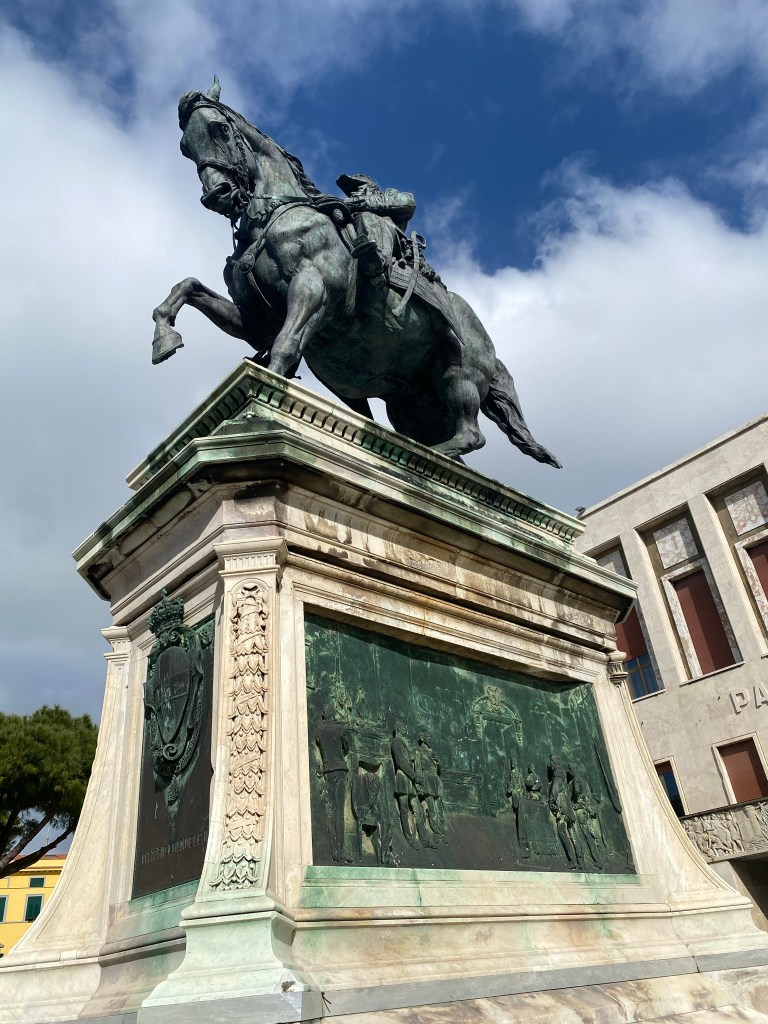
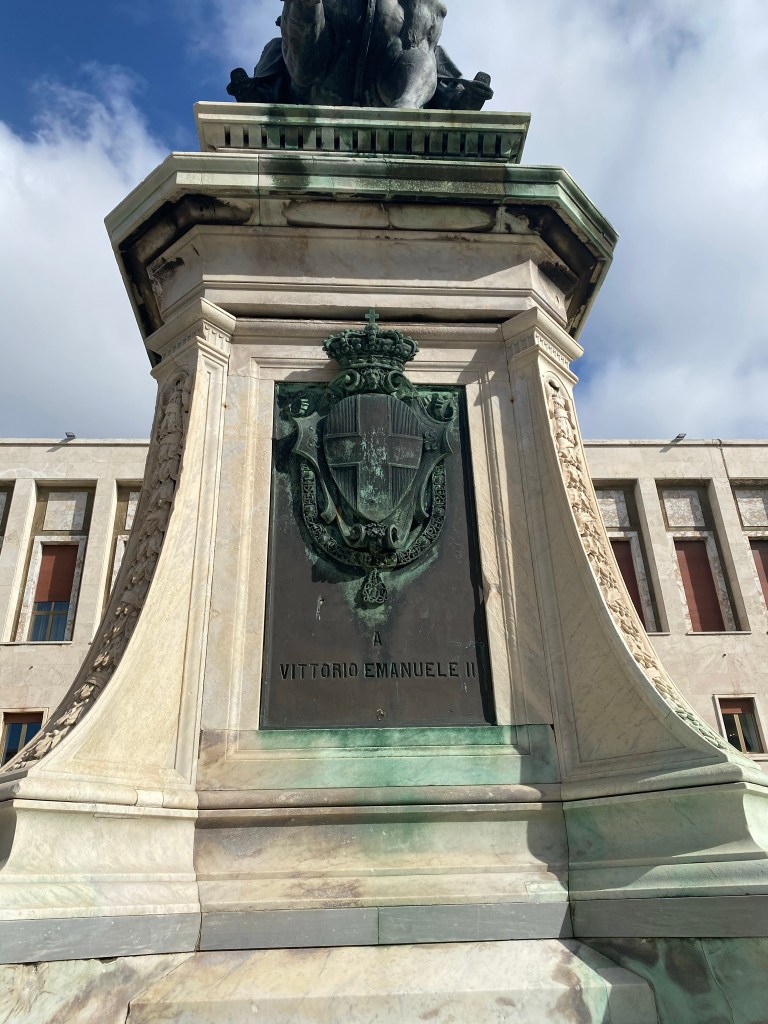
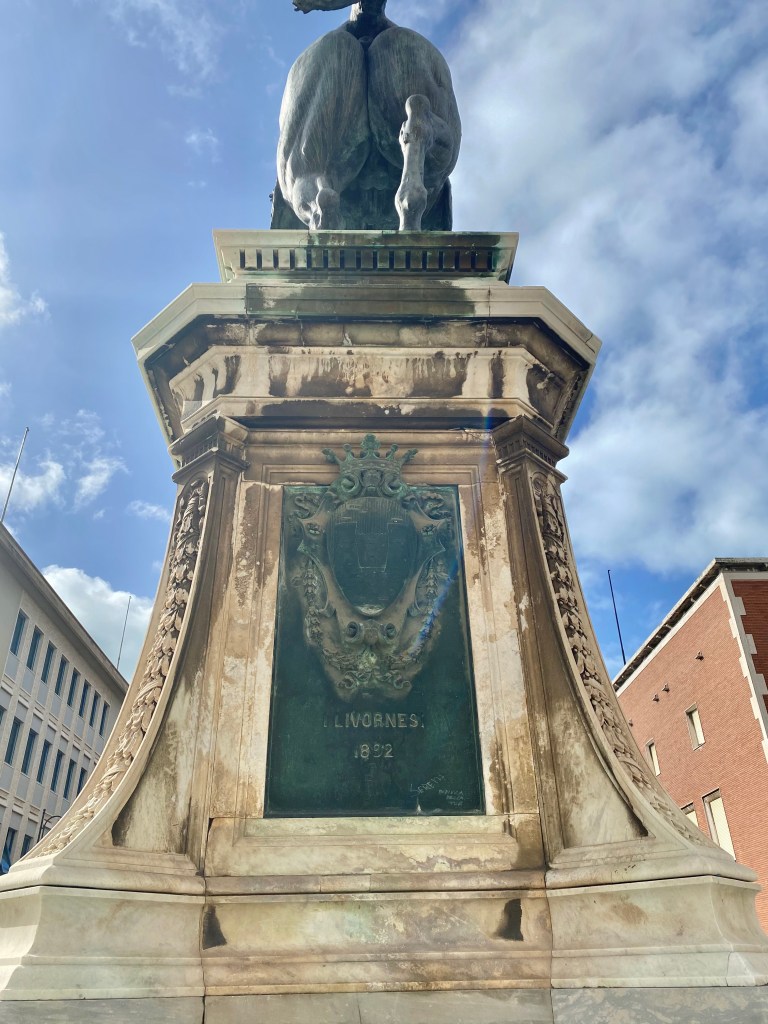
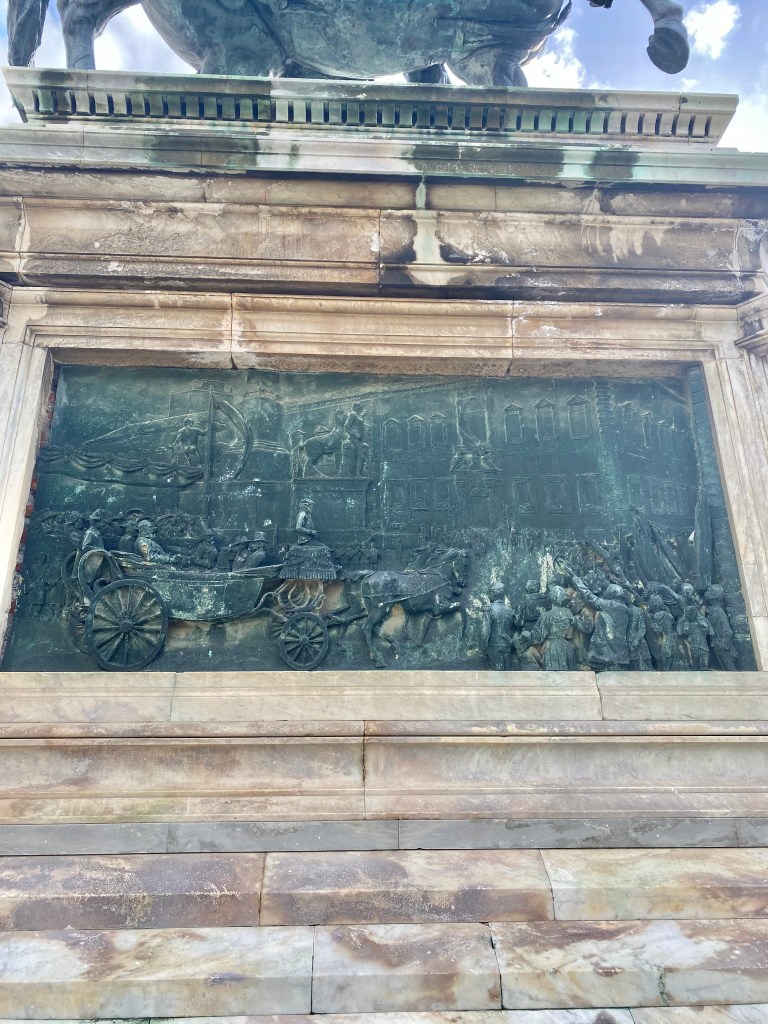
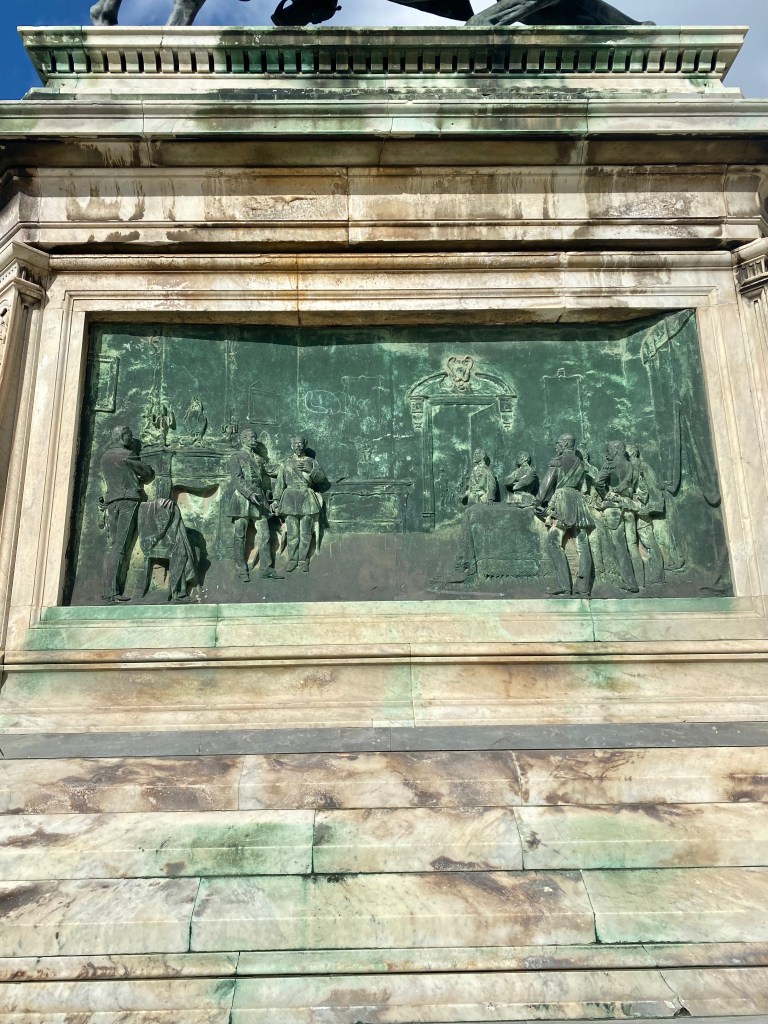
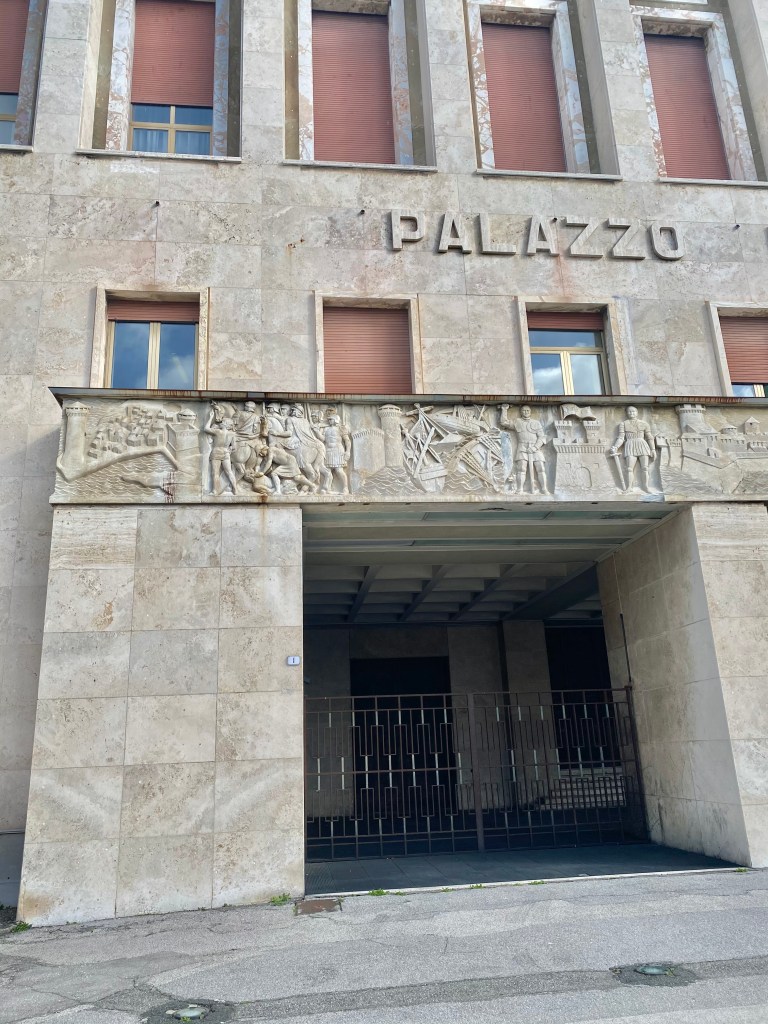
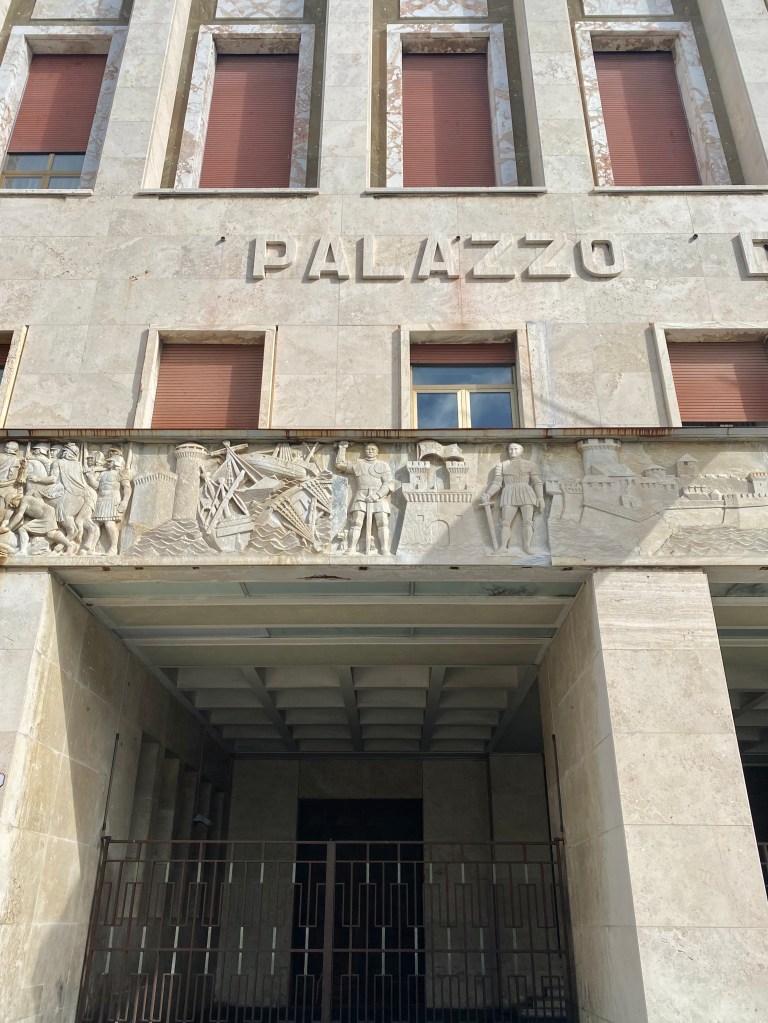
There is a mighty equestrian sculpture in front of the Art Deco Palazzo del Livorno:

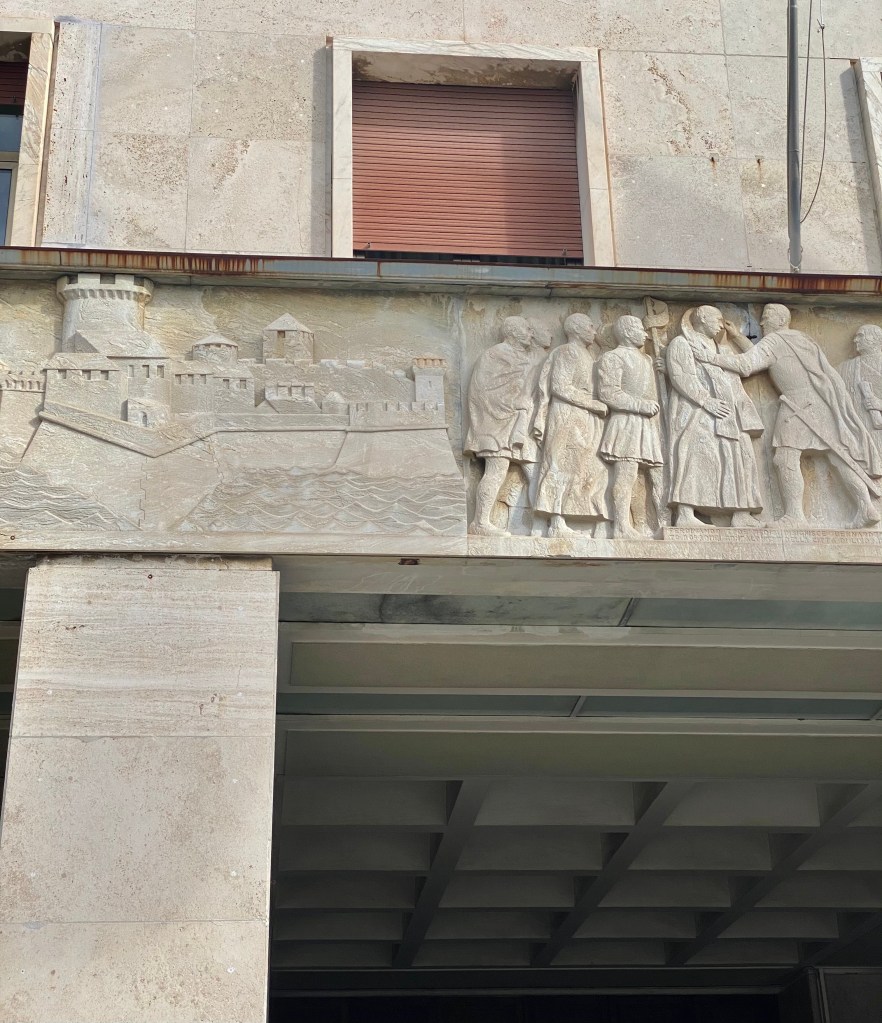
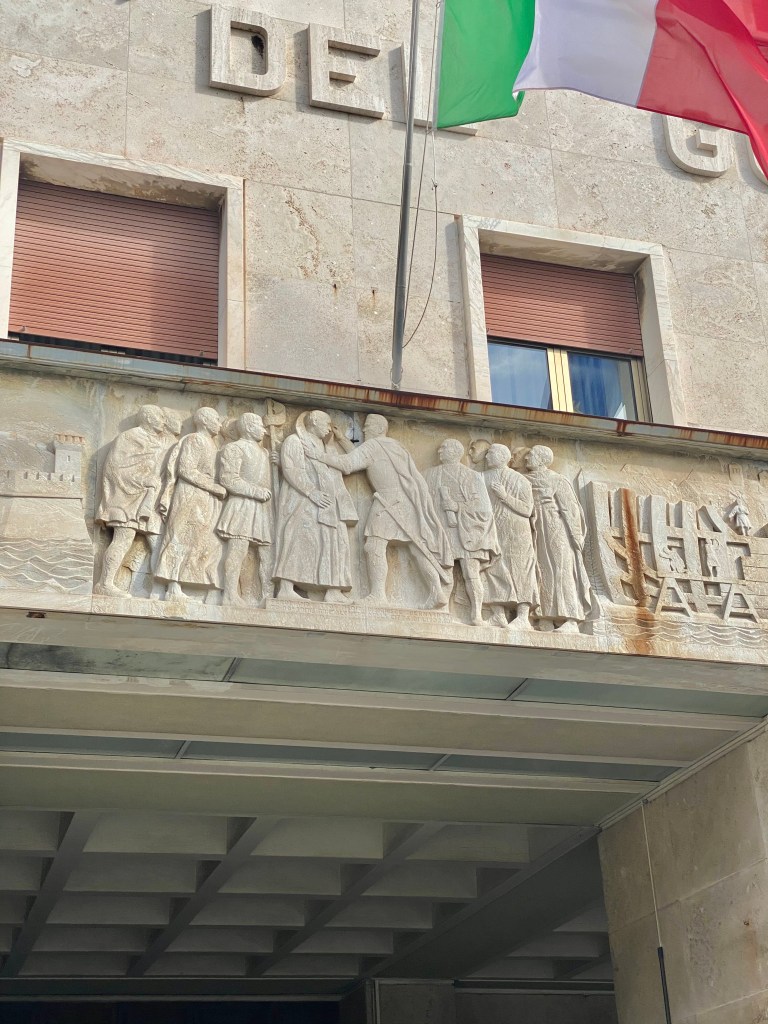
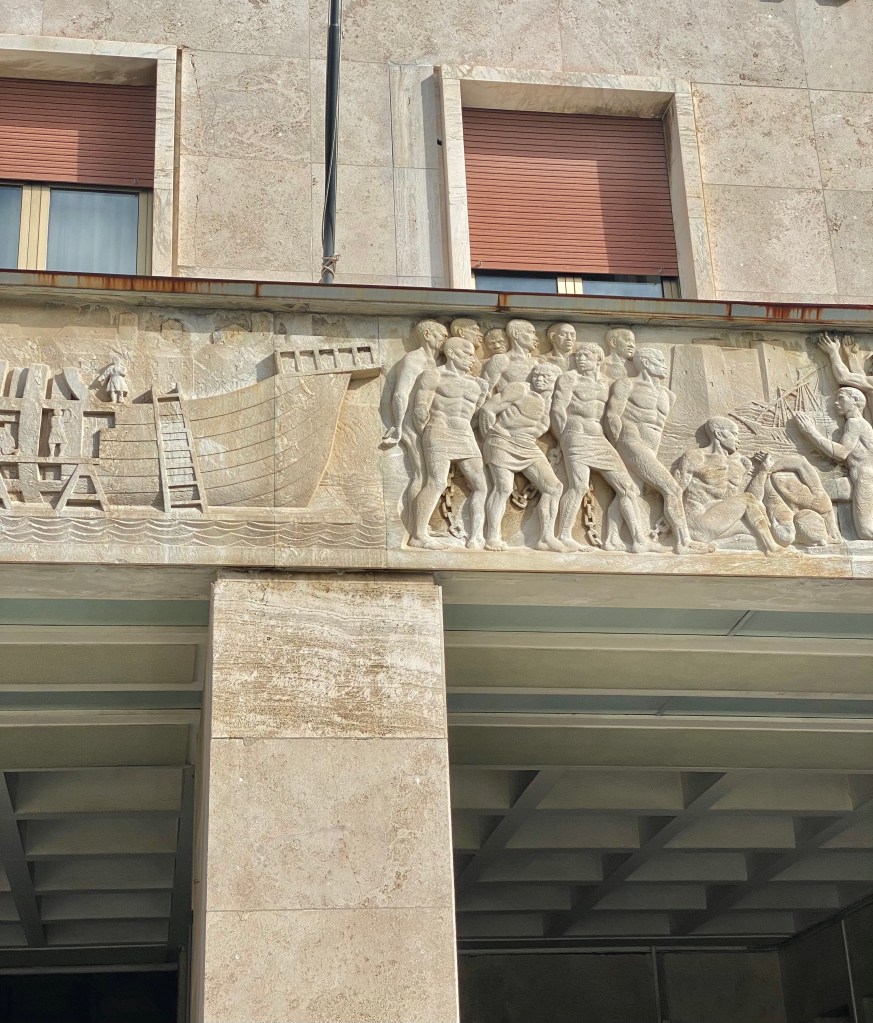
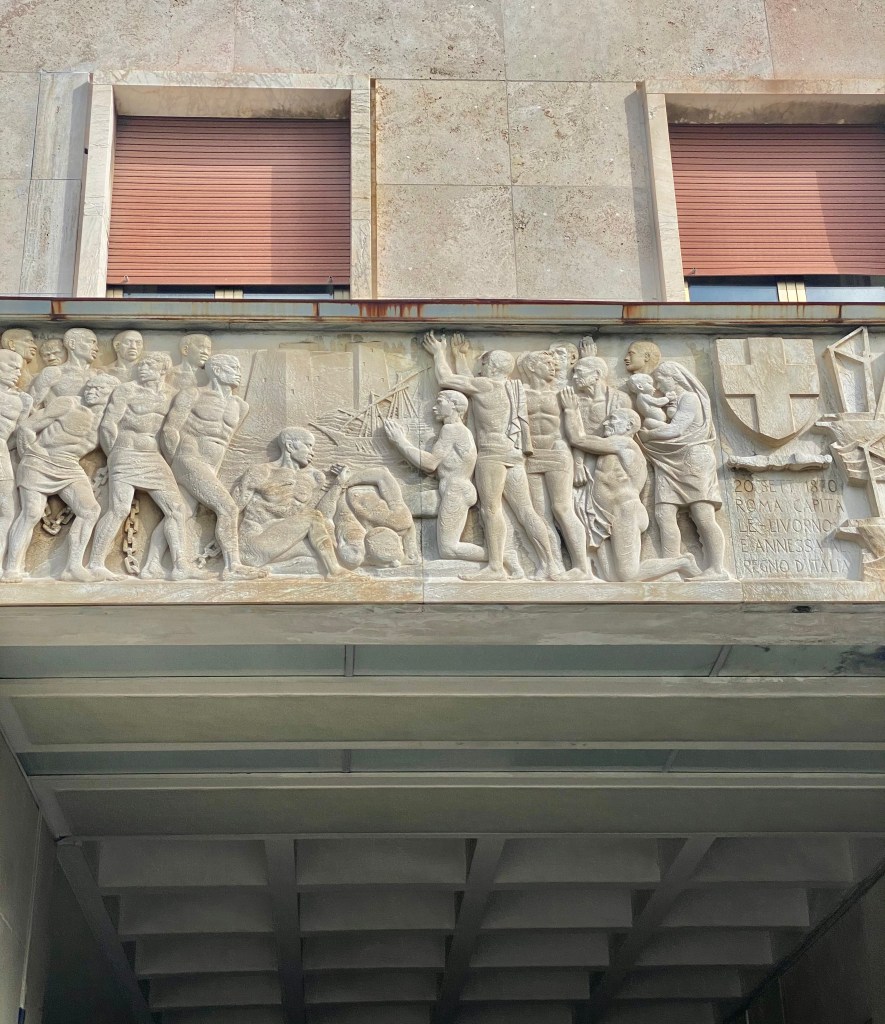
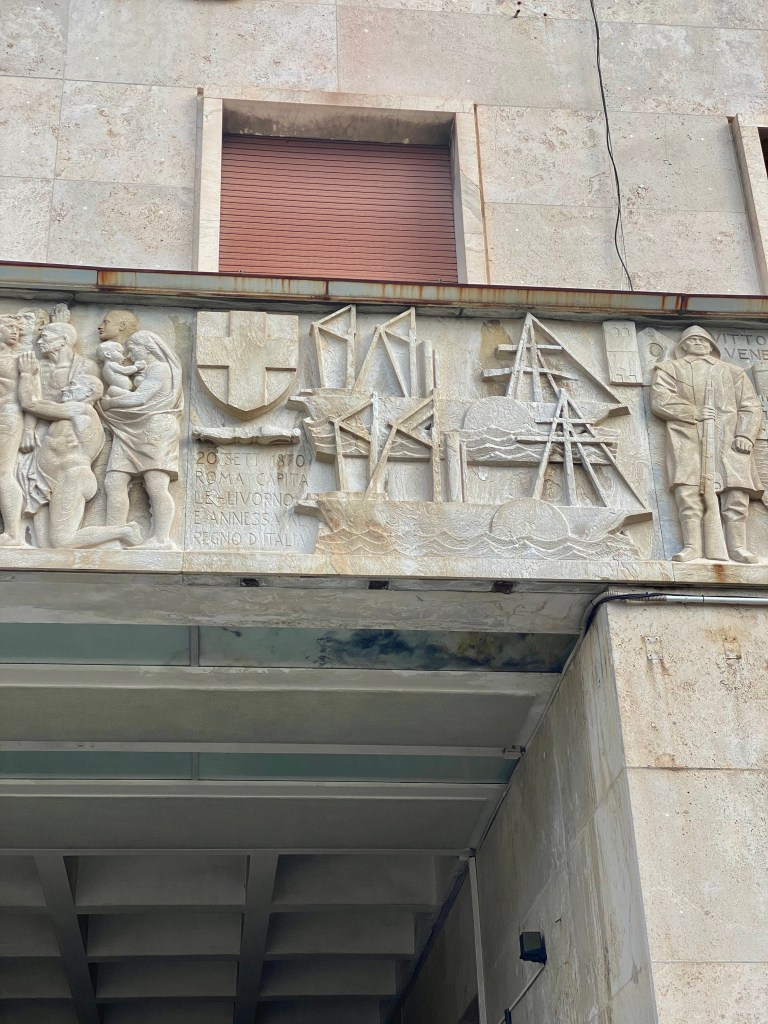
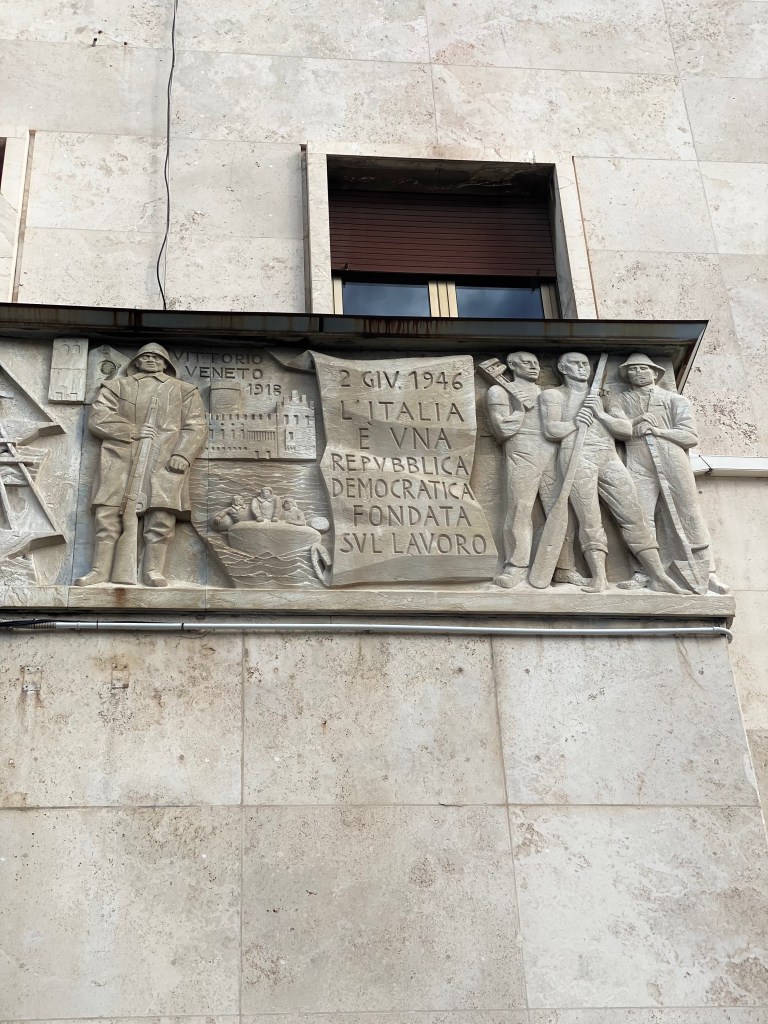
The Palazzo itself has an interesting sculptural relief, telling, I think, the story of Livorno:

I’ll be back tomorrow with the rest of the post on Livorno. There is a lot to see in this old port town!