My favorite studio closed after Covid. It forced me to start looking for another place to practice and, low and behold, I found heaven!
Author: get back, laurettadimmick

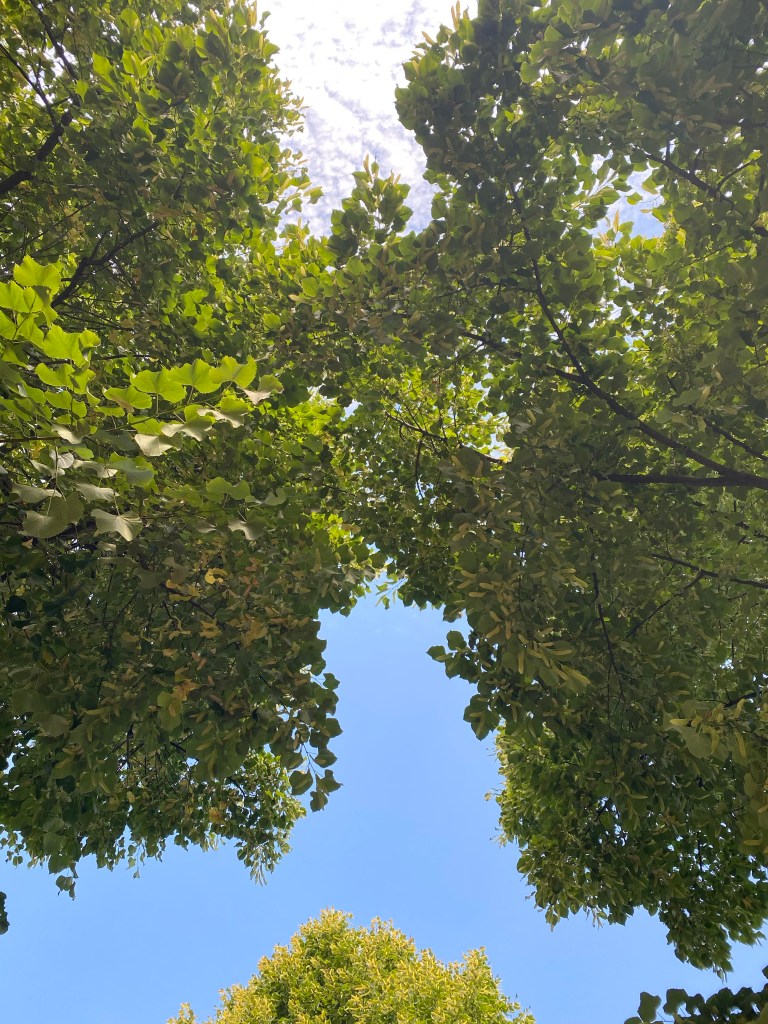
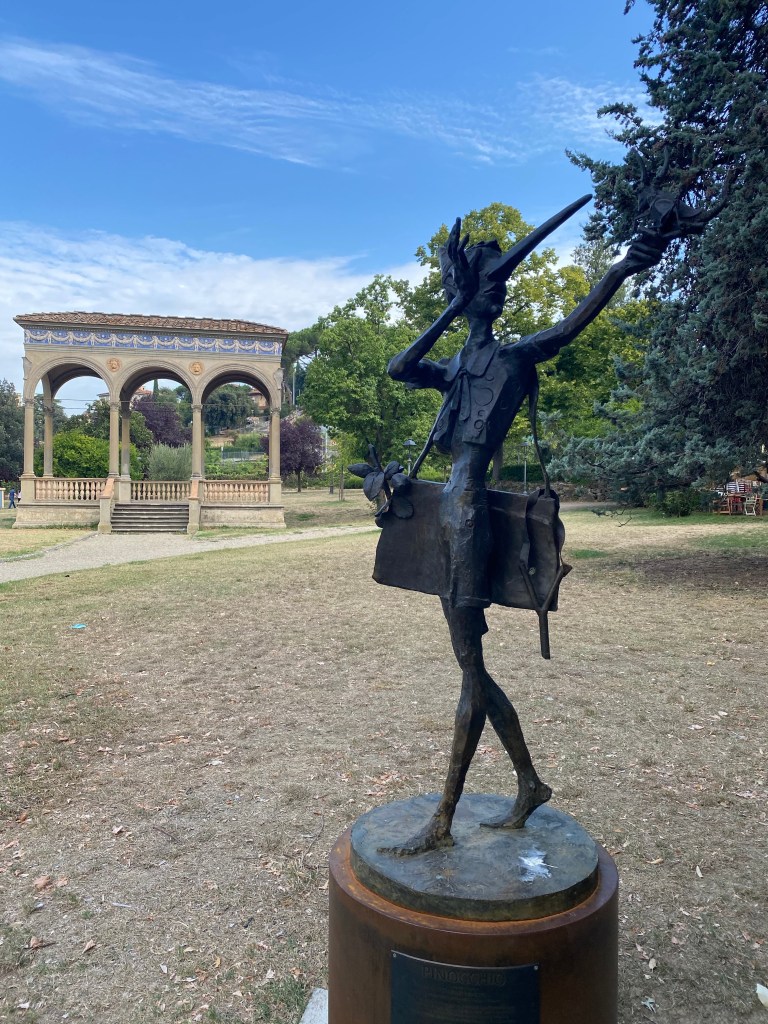
Sky gazing and a statue of Pinnochio at the Giardino Orticultura, Florence


Seasonal treats: schiaciatta uva sfiziosa
Every August, these delicacies start showing up in bakeries around town. Flatbread topped with a grape that is only available now. Yum!


Mozart slept here
You never know who you are going to run into in Florence. I ran into Mozart recently.
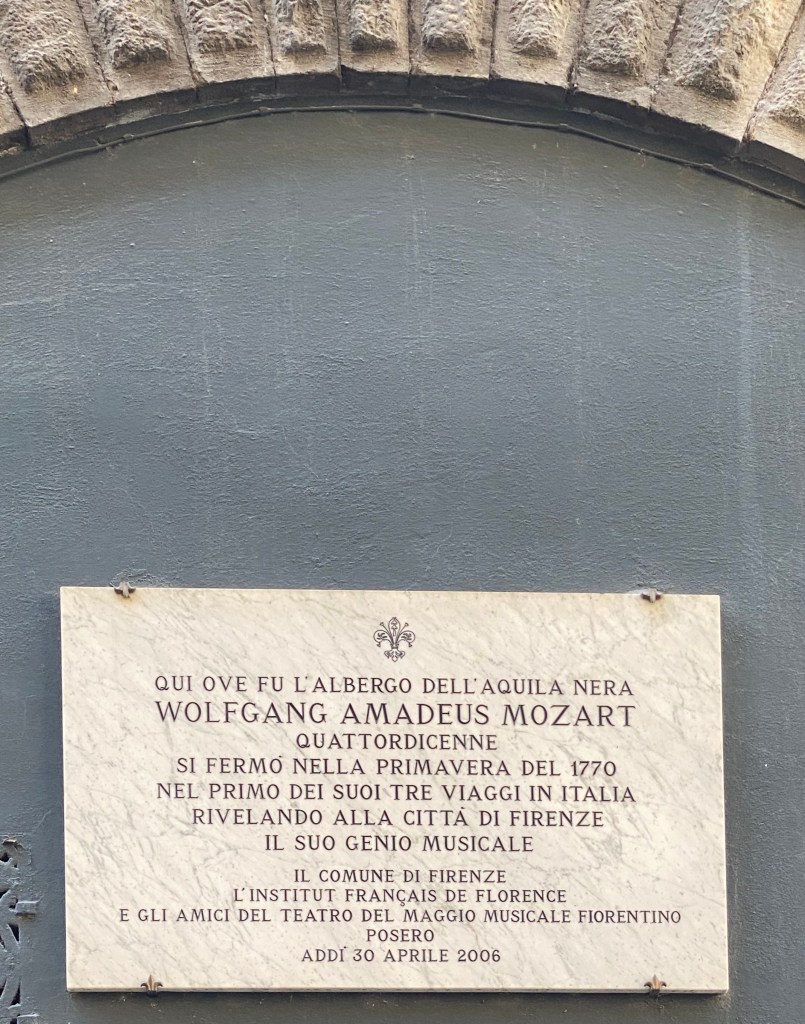
The sign says “Mozart stayed in this hotel when he was 40. He stopped in Florence in the spring of 1770, on the first of his 3 trips to Italy. He revealed his musical genius in the city.” The sign was hung in 2006.
Some pretty horticultural things seen today
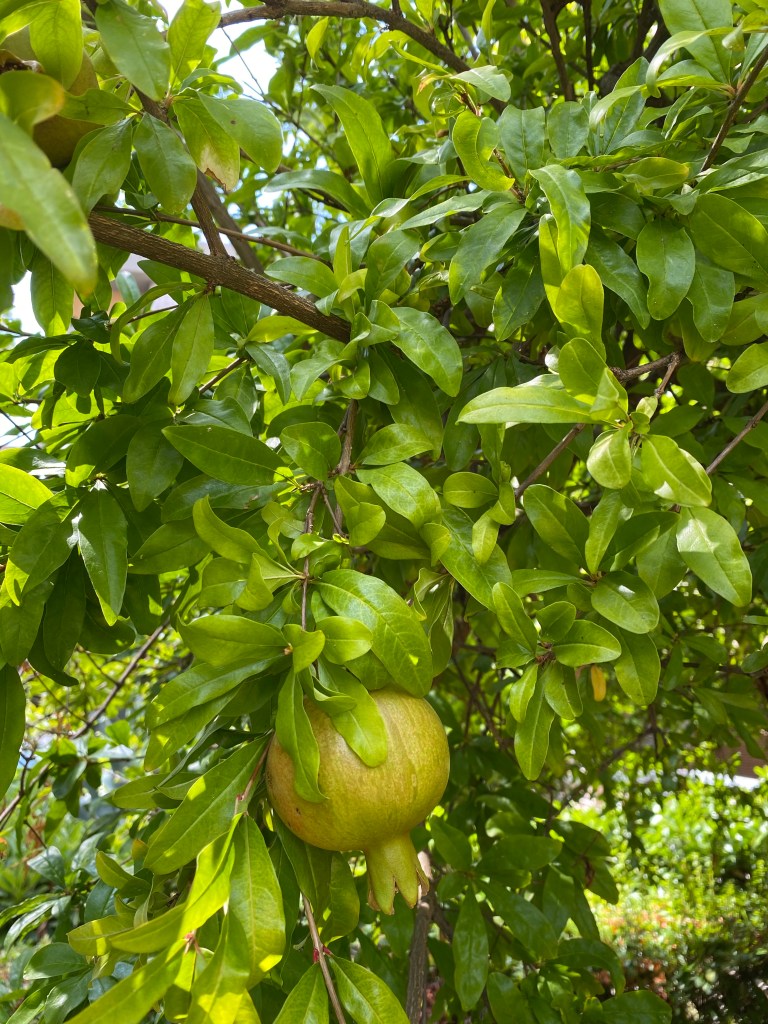
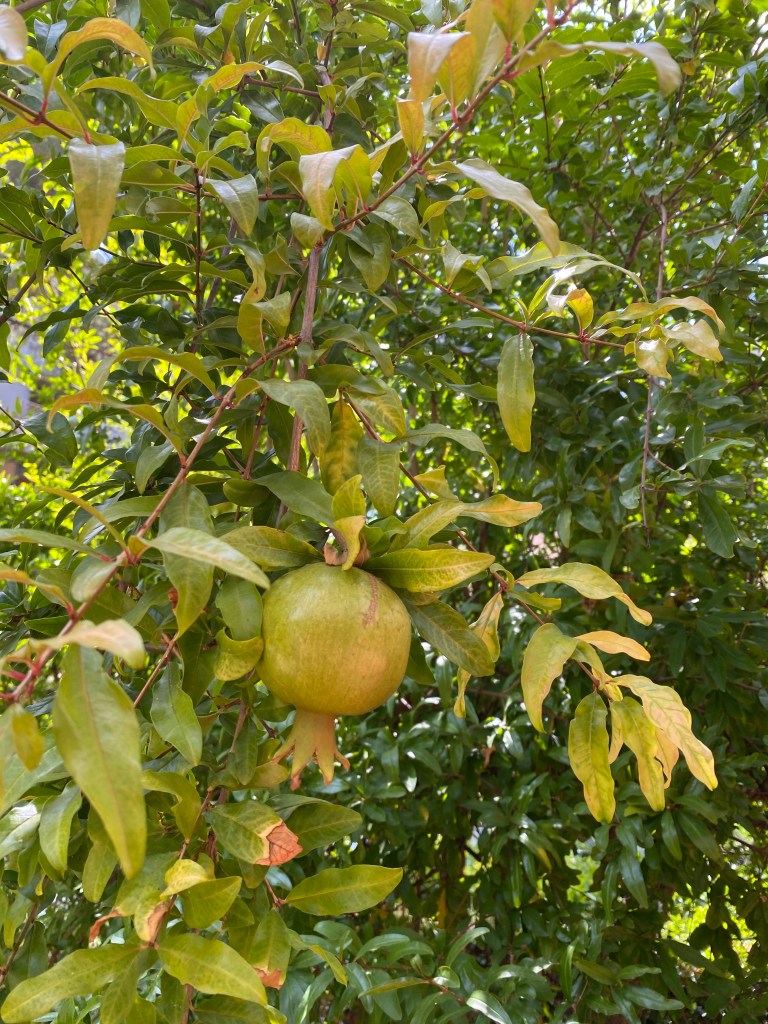
I love watching pomegranate trees throughout the seasons. Late summer is “molto suggestivo.” I can almost taste the fresh pomegranate juice I will enjoy this autumn.
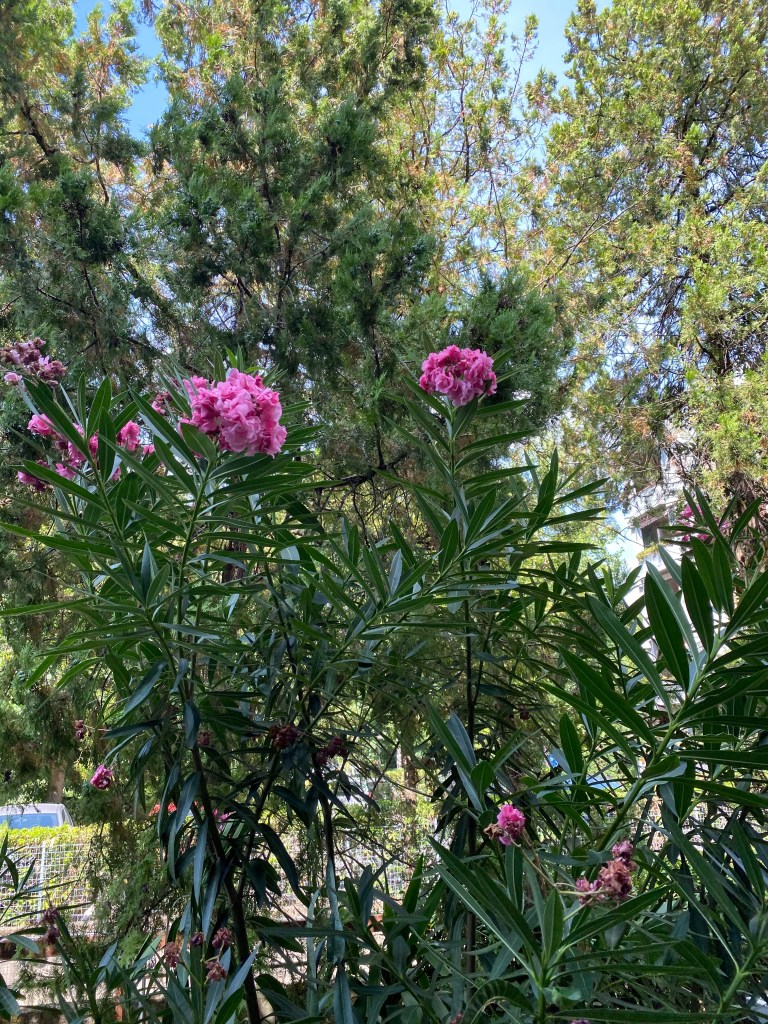
Pretty oleanders swaying in the breeze:
I don’t know what this berry thing below is, but it is beautiful!
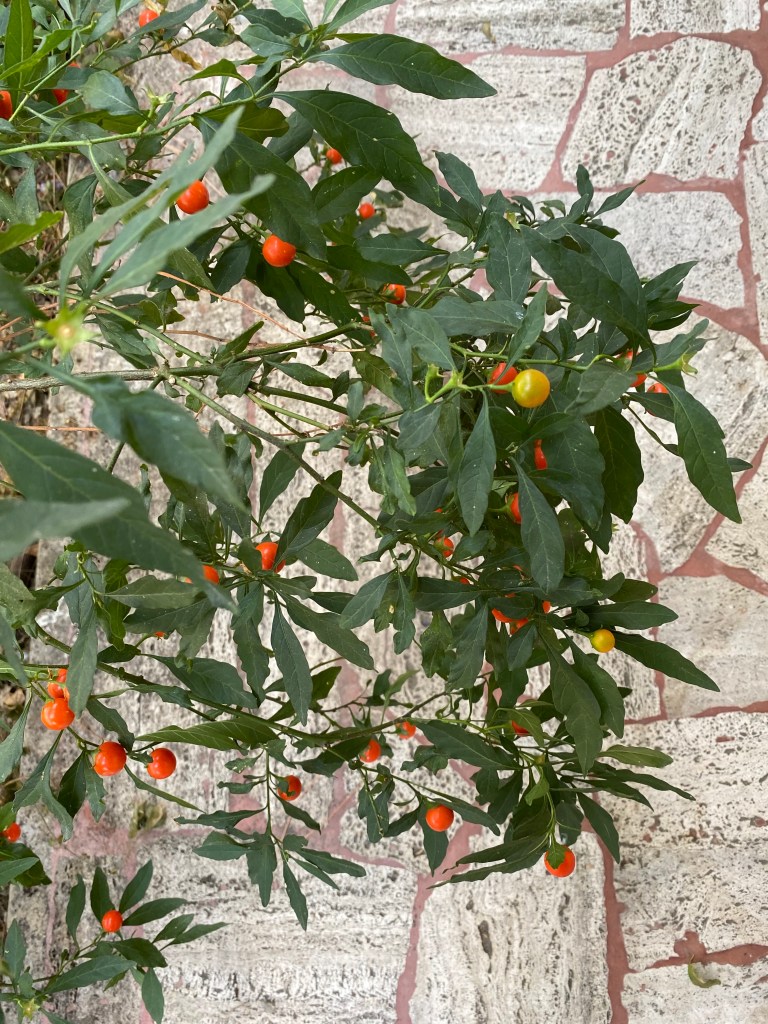
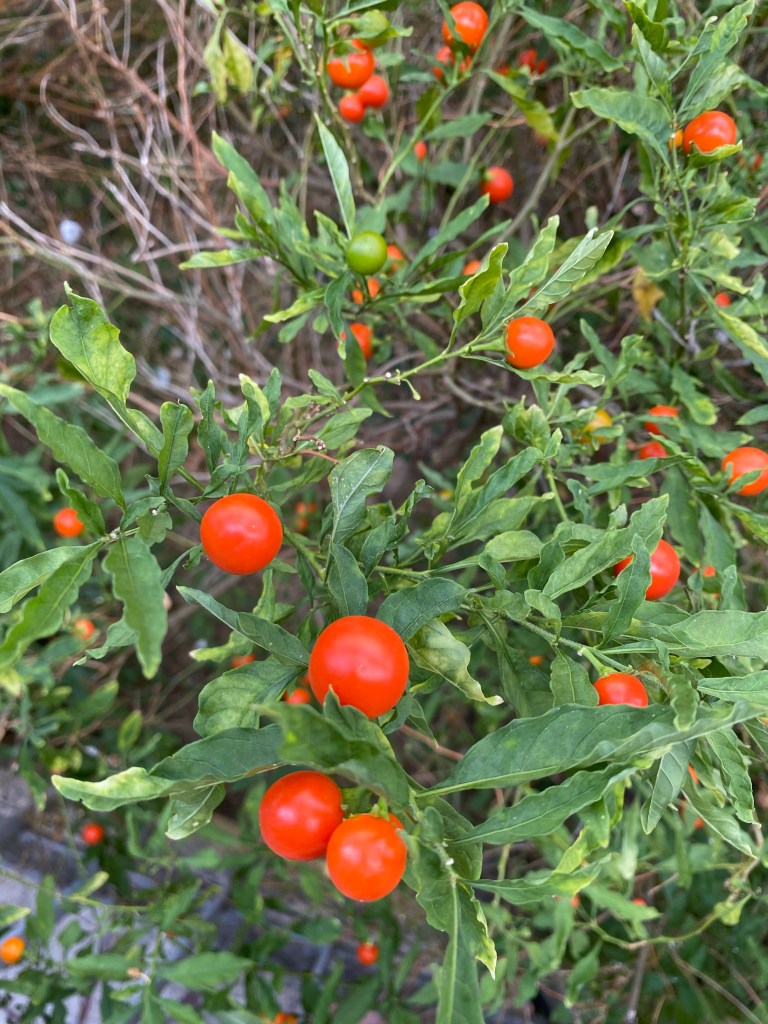
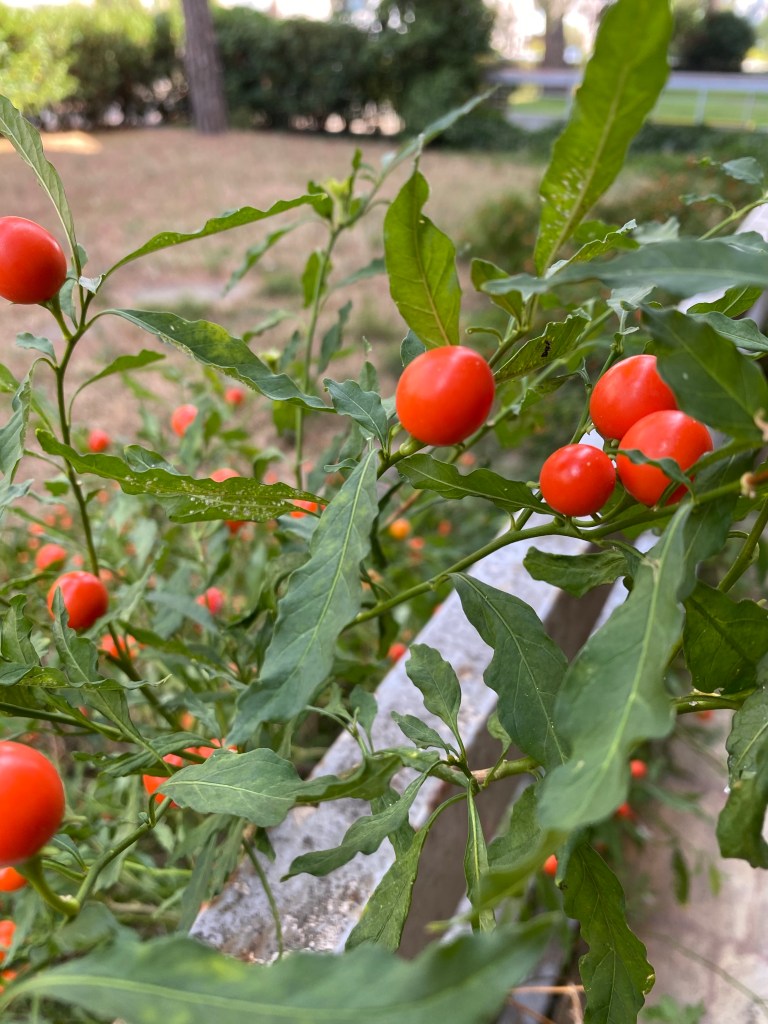
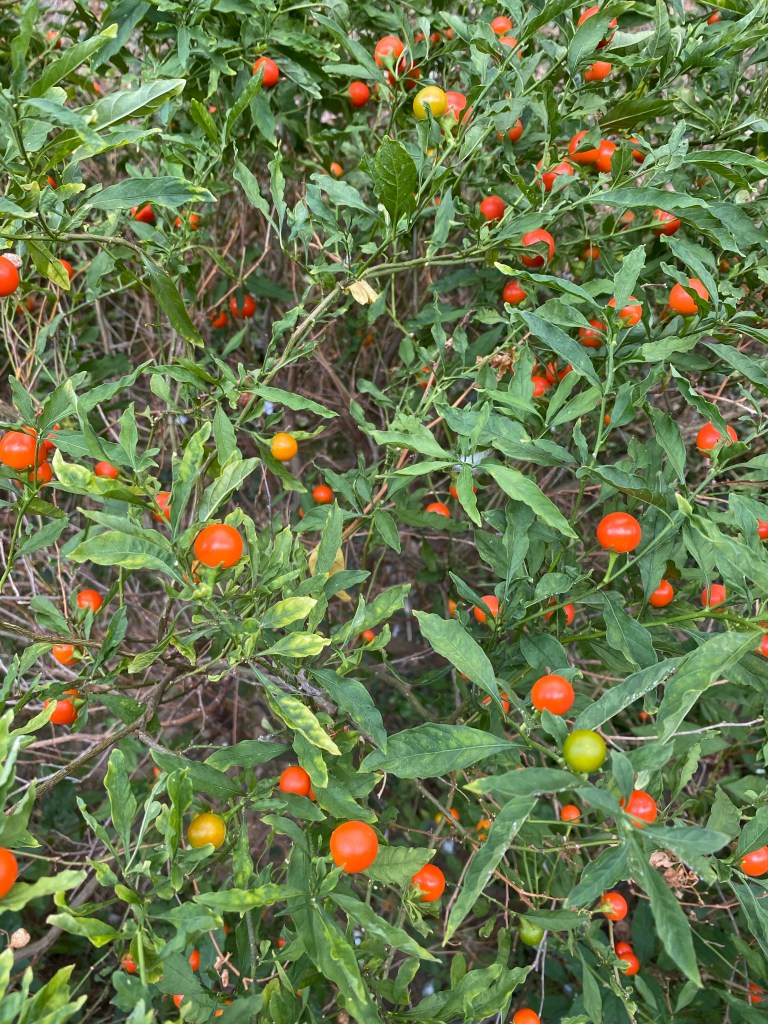
I love that color!
The Spanish Chapel at Santa Maria Novella
Yesterday I posted about the Ghirlandaio fresco cycle at Santa Maria Novella.
https://laurettadimmick.com/2020/08/24/santa-maria-novella-and-the-ghirlandaio-fresco-cycle/
Today I want to show my photos from the Spanish Chapel, which is the former chapter house of this convent.
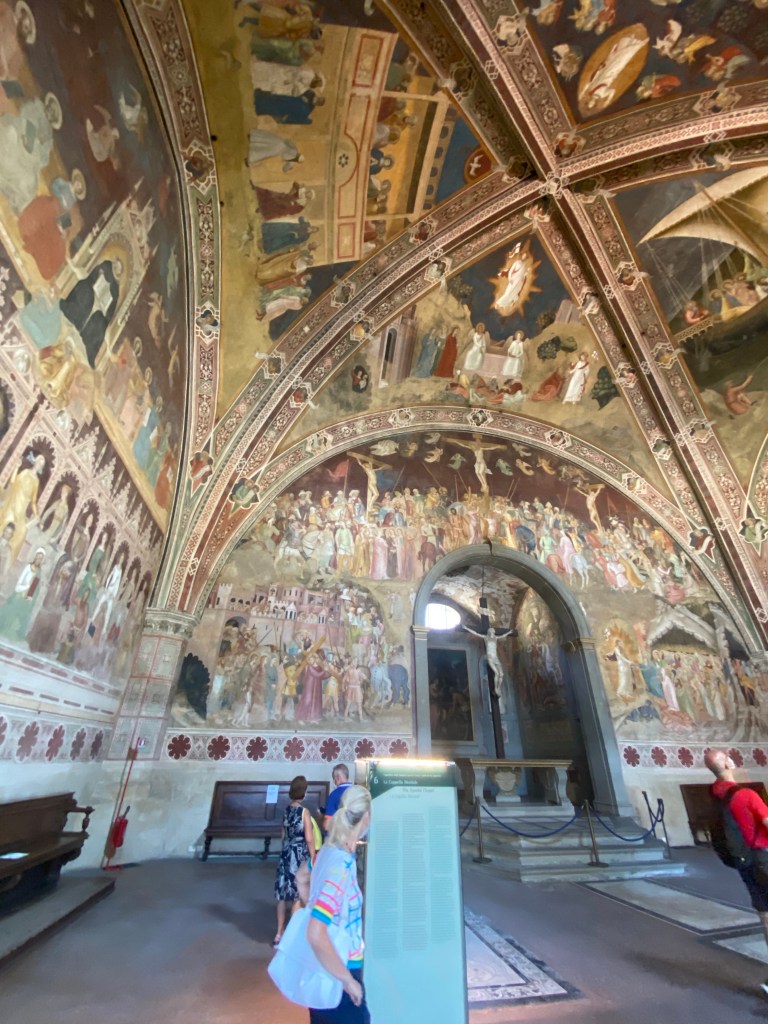
The Spanish Chapel is situated at the north side of the green Cloister (Chiostro Verde). It was commissioned by Buonamico (Mico) Guidalotti as his funerary chapel. Construction started c. 1343 and was finished in 1355. The Guidalotti chapel was later called “Spanish Chapel,” because Cosimo I assigned it to Eleonora of Toledo and her Spanish retinue.
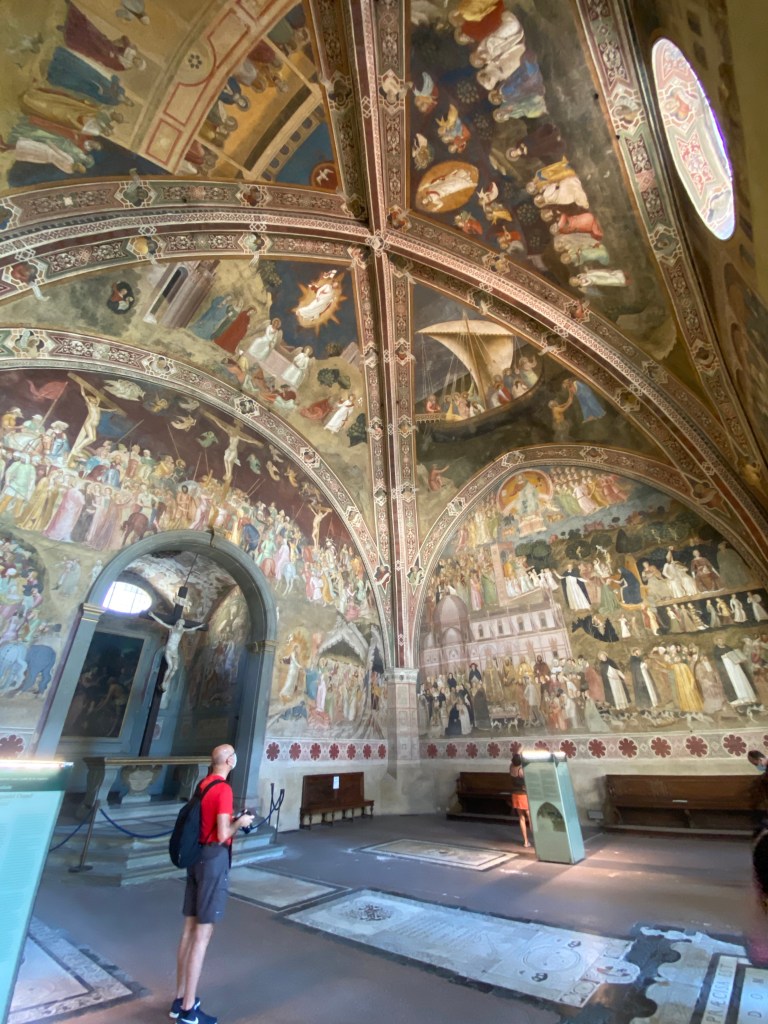
The Spanish Chapel was decorated from 1365 to 1367 by Andrea di Bonaiuto, also known as Andrea da Firenze. I love these paintings.
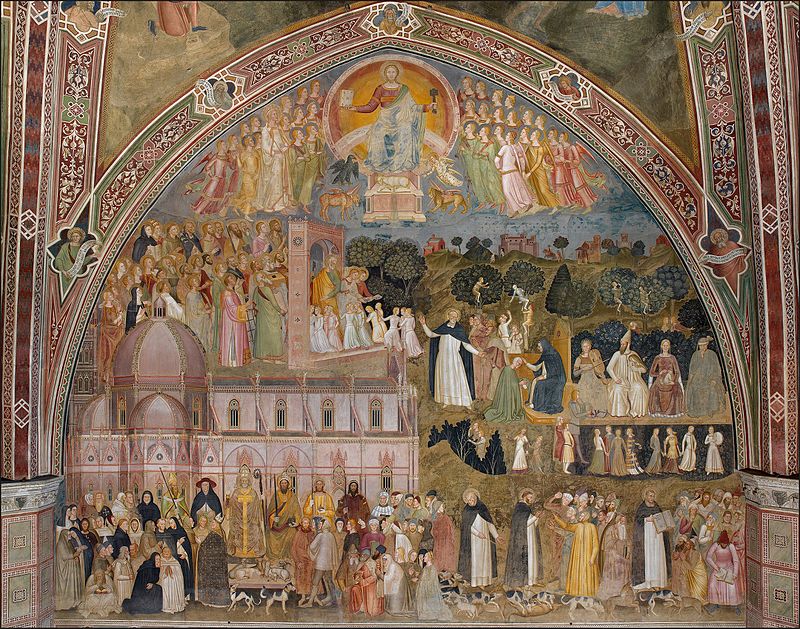
The large fresco on the right wall, shown above and below, depicts an Allegory of the Active and Triumphant Church and of the Dominican order.
It is especially interesting because in the background it shows a large pink building that some think may provide some insight into the original designs for Florence Cathedral by Arnolfo di Cambio (before Brunelleschi’s dome was built). However, such an interpretation is fantasy since the Duomo was never intended to be pink, nor to have the bell tower at the rear.

This fresco also contains portraits of pope Benedict IX, cardinal Friar Niccolò Albertini, count Guido di Poppi, Arnolfo di Cambio and the poet Petrarch.
The frescoes on the entry wall represent scenes from the lives of Christ and St Peter (unfortunately, these were mostly ruined due to the later installation of a choir):
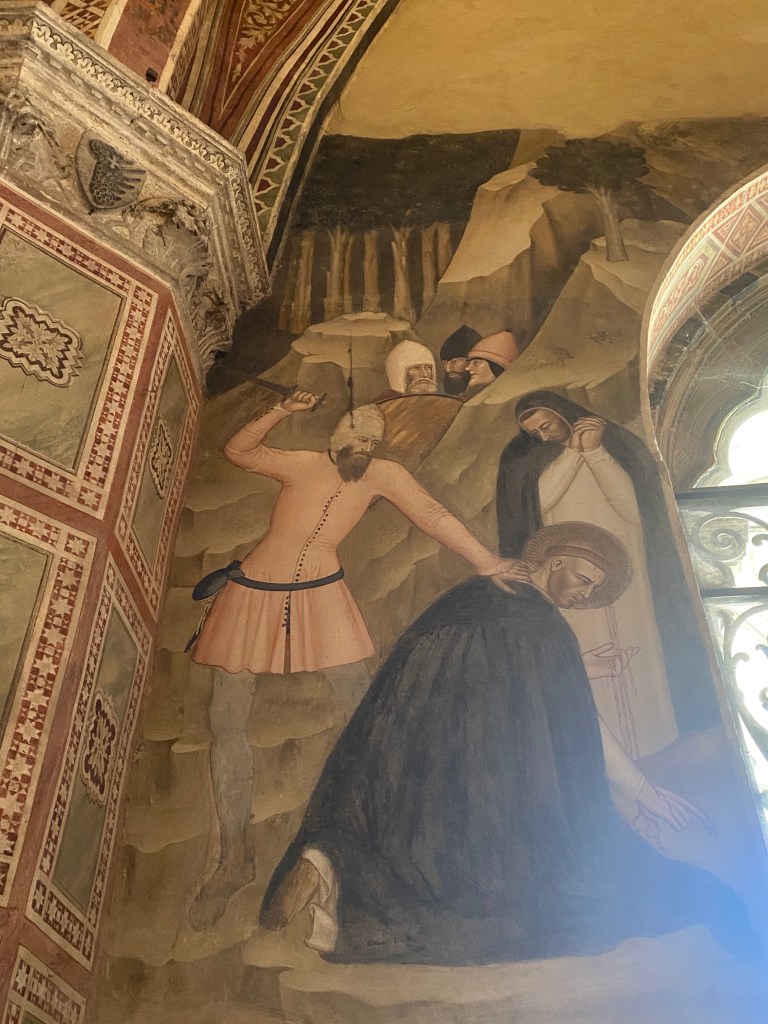
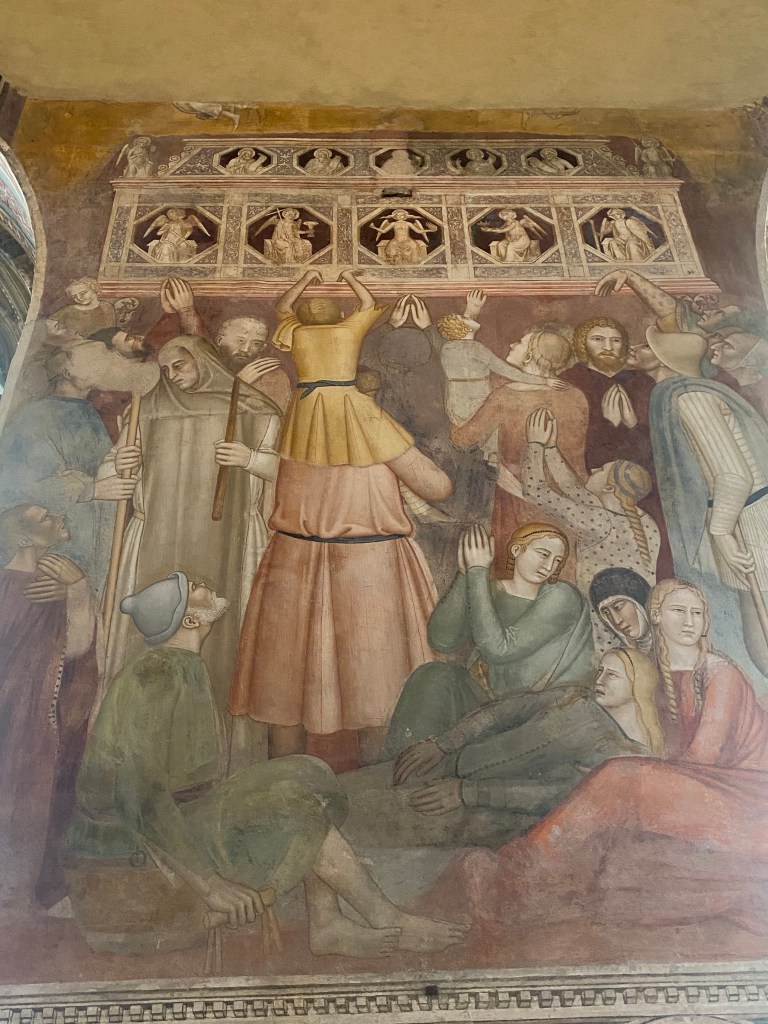
The chapel’s left wall shows “The Triumph of St Thomas Aquinas and the Allegory of Christian Learning.”


The chapel’s altar wall features images of the large “Crucifixion with the Way to Calvalry and the Descent into Limbo.”
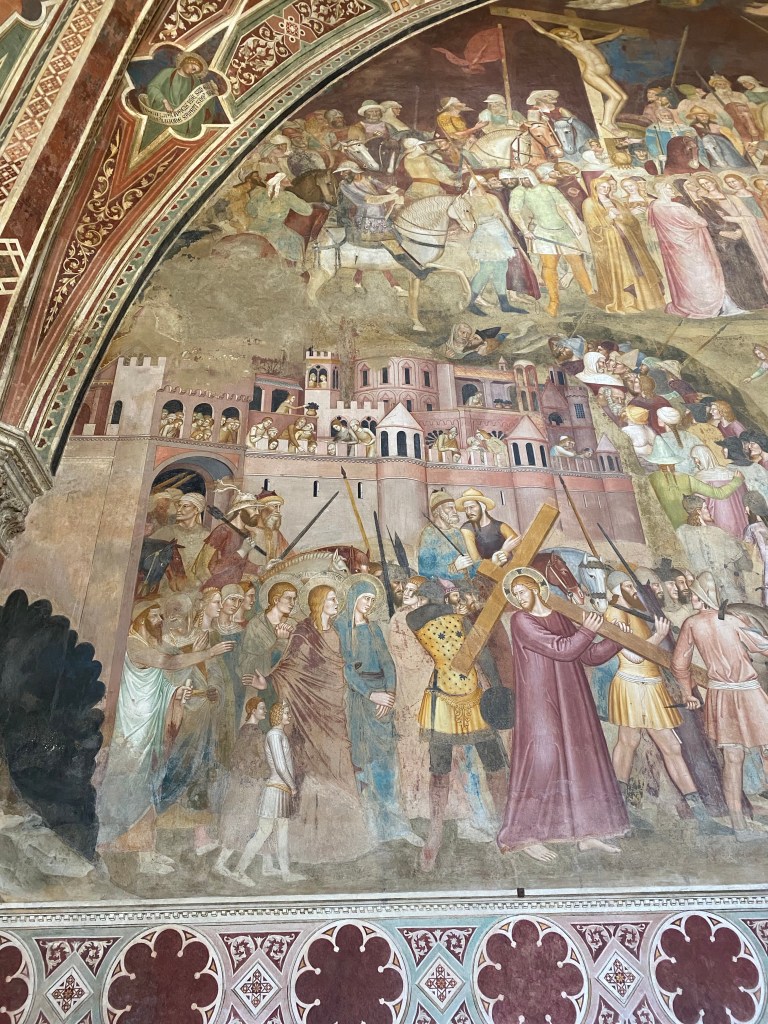

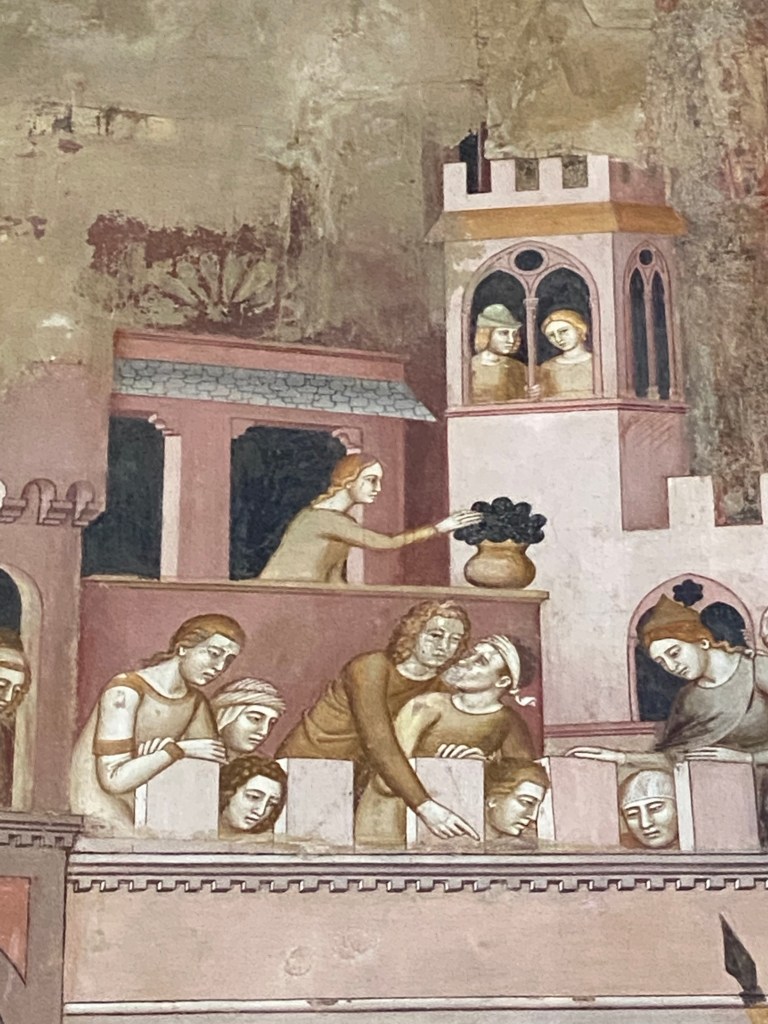
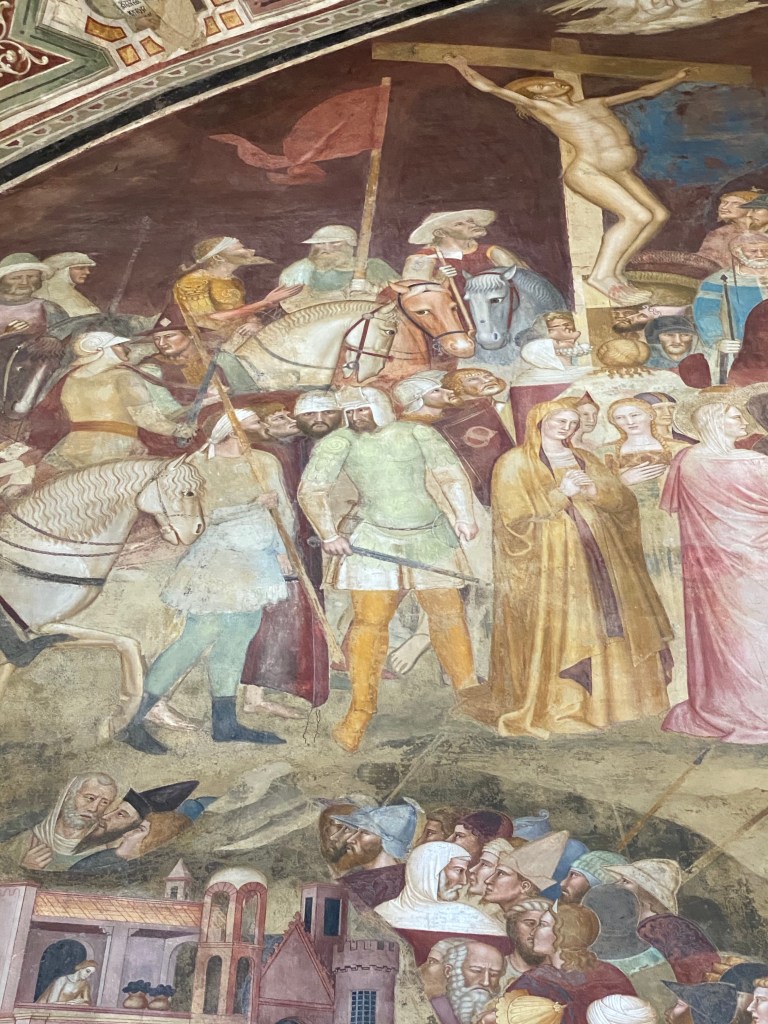

The four-part vault contains scenes of Christ’s resurrection, the navicella, the Ascension, and Pentecost. The “Navicella,” seen below, is my favorite.

The five-panelled Gothic polyptych altarpiece is not shown here. It is on view in an adjacent area. It was probably originally made for the chapel’s altar and depicts the Madonna Enthroned with Child and Four Saints by Bernardo Daddi, c. 1344.
Together, the complex iconography of the ceiling vault, walls, and altar combine to communicate the message of Dominicans as guides to salvation.
I am still not a happy camper with the new formatting I have to use, recently introduced by WordPress.com. Bear with me while I learn to use it. :-(
Santa Maria Novella and the Ghirlandaio fresco cycle
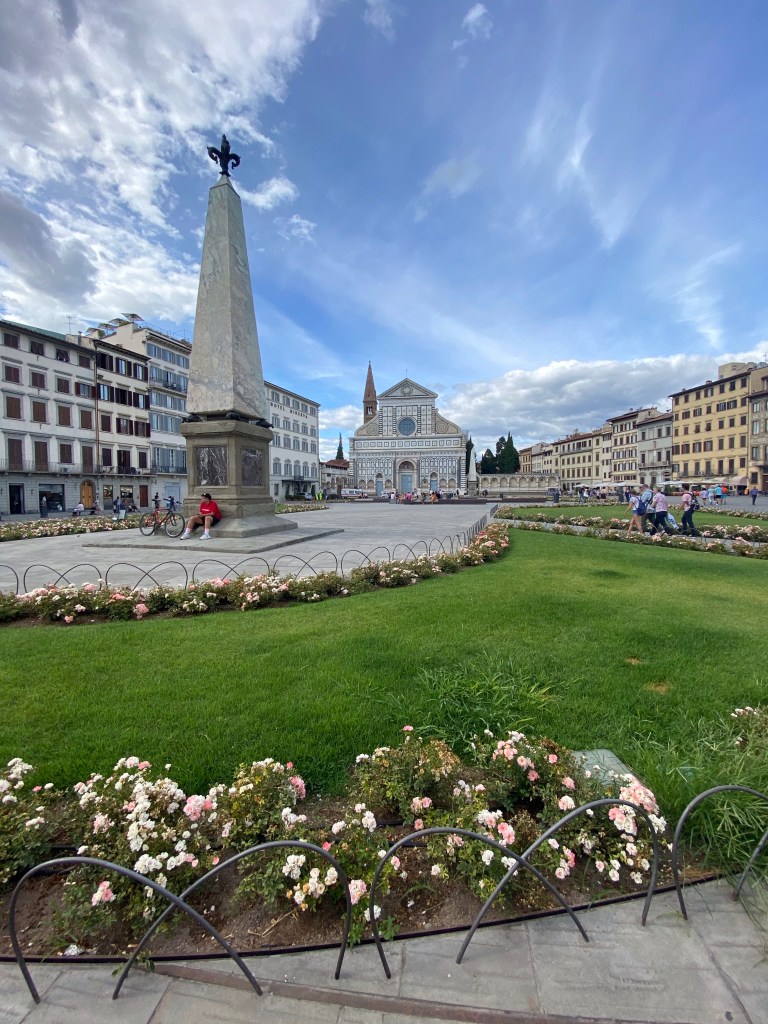
With the hope of a break in the hot weather, I bravely paid a visit to the lovely church of Santa Maria Novella today. It was a very nice visit, but the weather was suspiciously hot. Seems I had been misinformed.
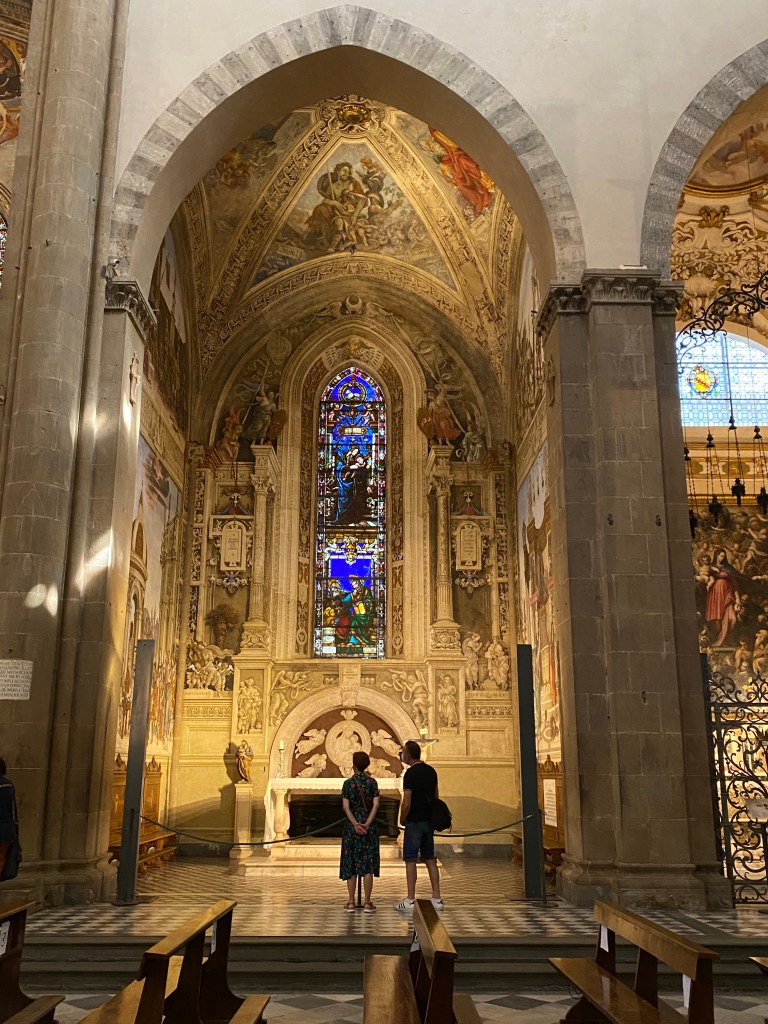
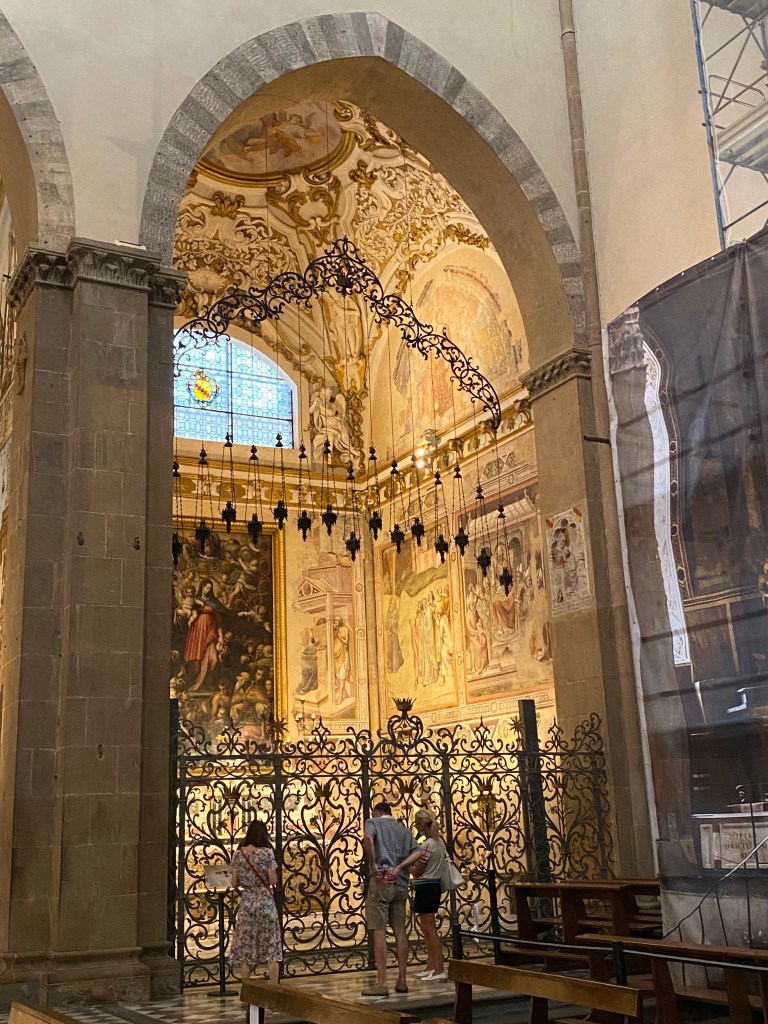
In the transept of this magnificent church, I always admire the 2 chapels on the proper right side of the center, main altar. The right side = the right side. What I mean is: if you were buying a spot for your family’s chapel in a church in the Renaissance, you’d want to buy this coveted space to the right side. It was the 2nd best space to own, after the main chapel in the dead center. Owning a chapel on the left hand side was good, but not great. The right side is good, the left side is a bit sinister.
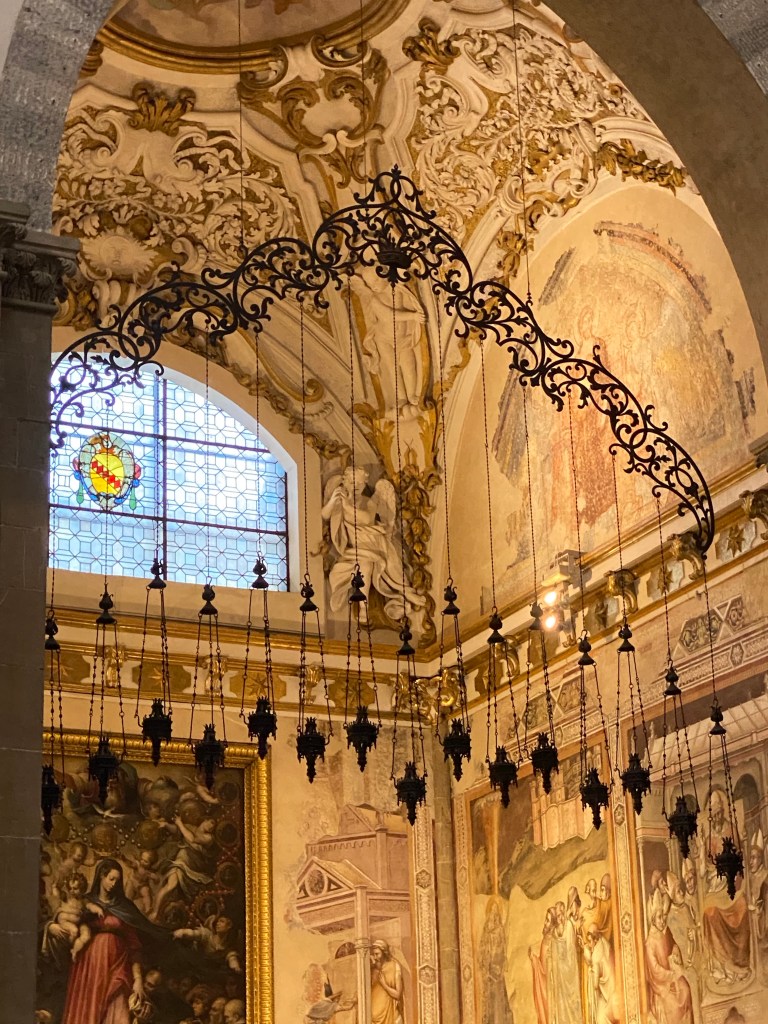
And then, ta da! We arrive at the main event:
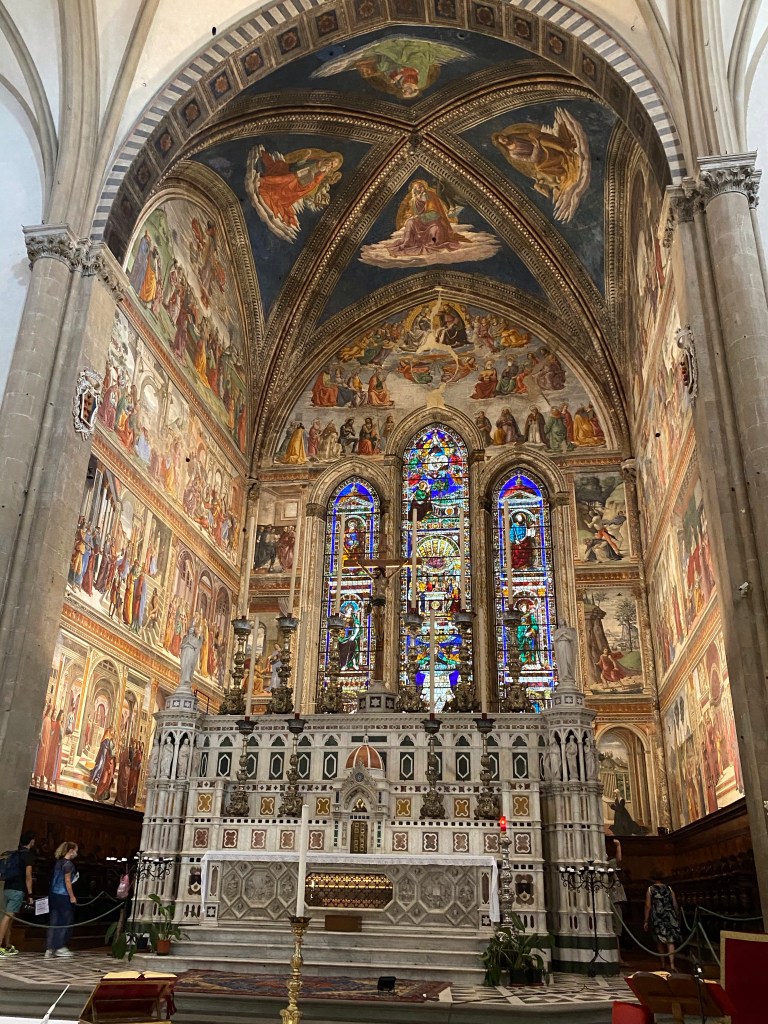
Here we are, at the gorgeous main chapel, the cappella maggiore aka the “Tornabuoni Chapel.” All of these names are correct. It was painted by Ghirlandaio and his workshop in the late quattrocento. It is magnificent.
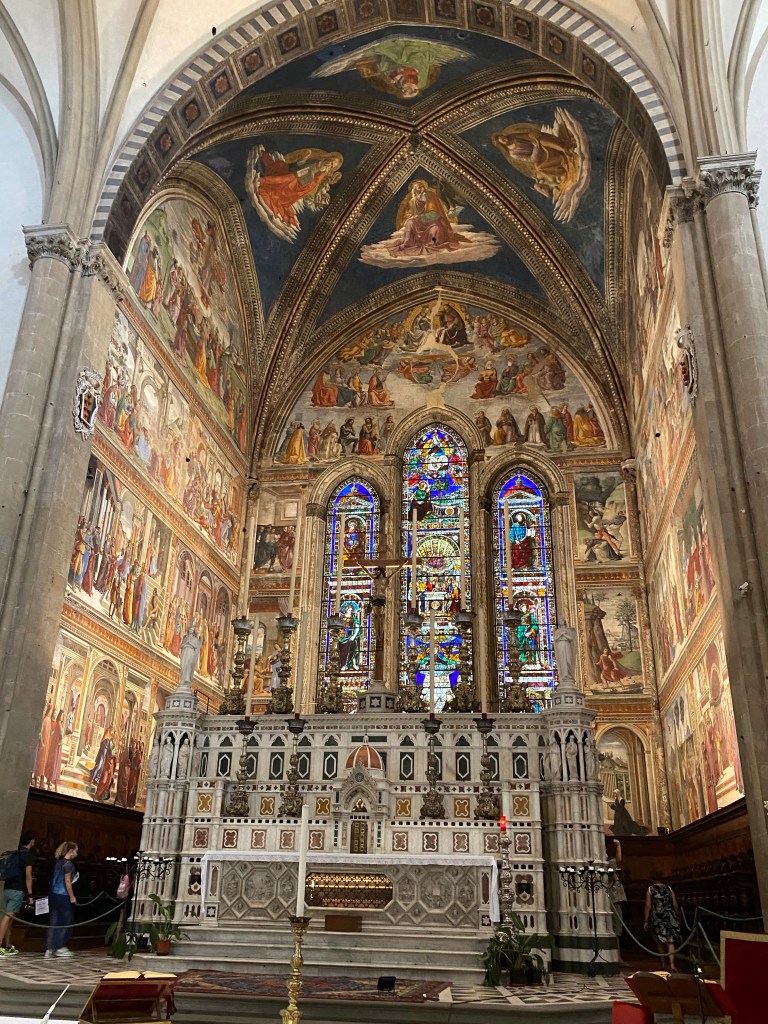

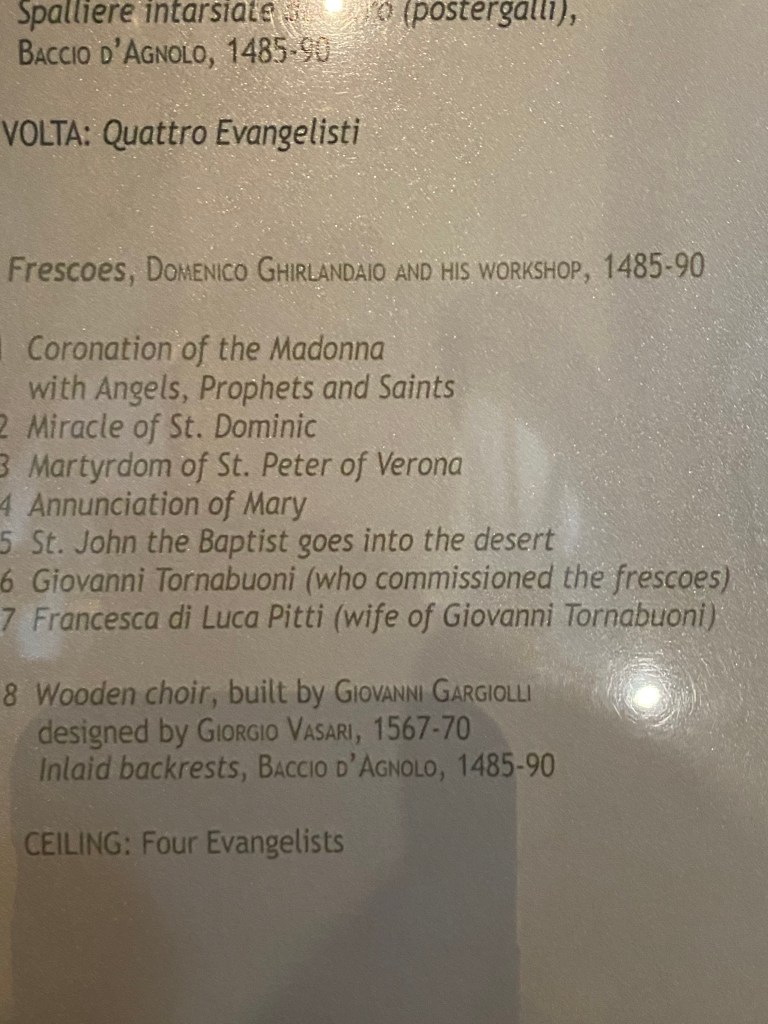
Ghirlandaio’s fresco cycles on the left and ride sides of the chapel depict the lives of the Virgin Mary and St. John the Baptist. In the diagram below, we are looking at the proper left hand wall, which treats the subject of Mary’s life.
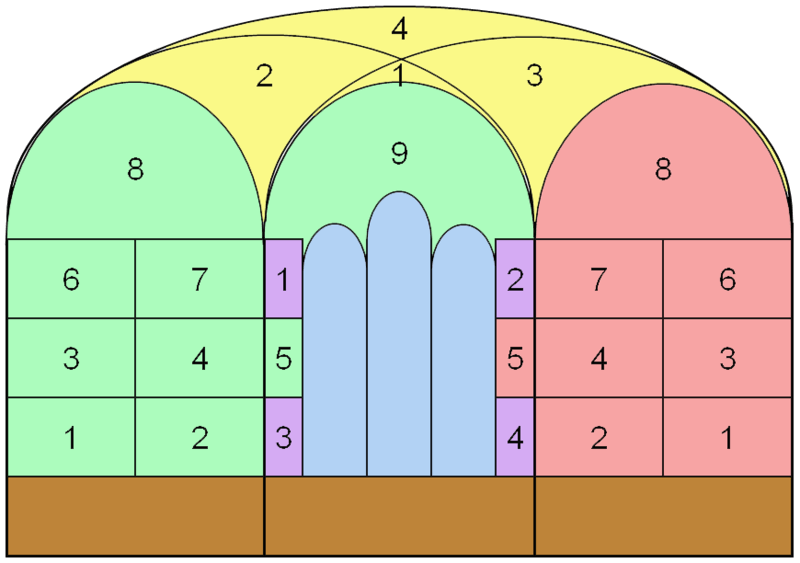
Evangelists.
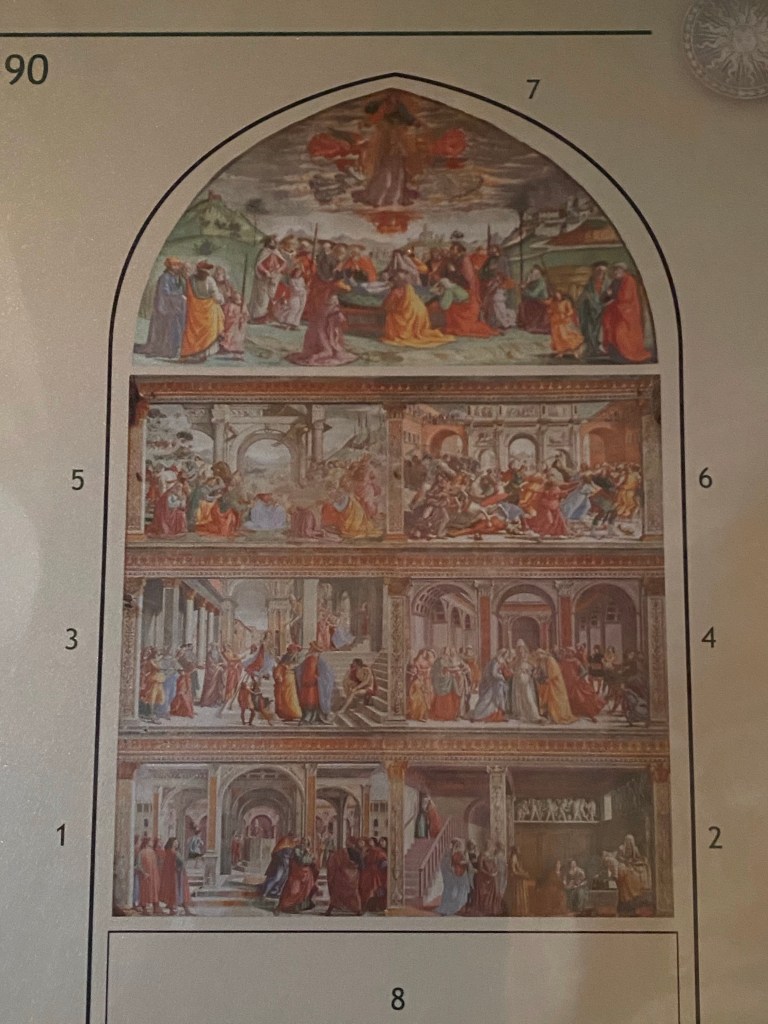
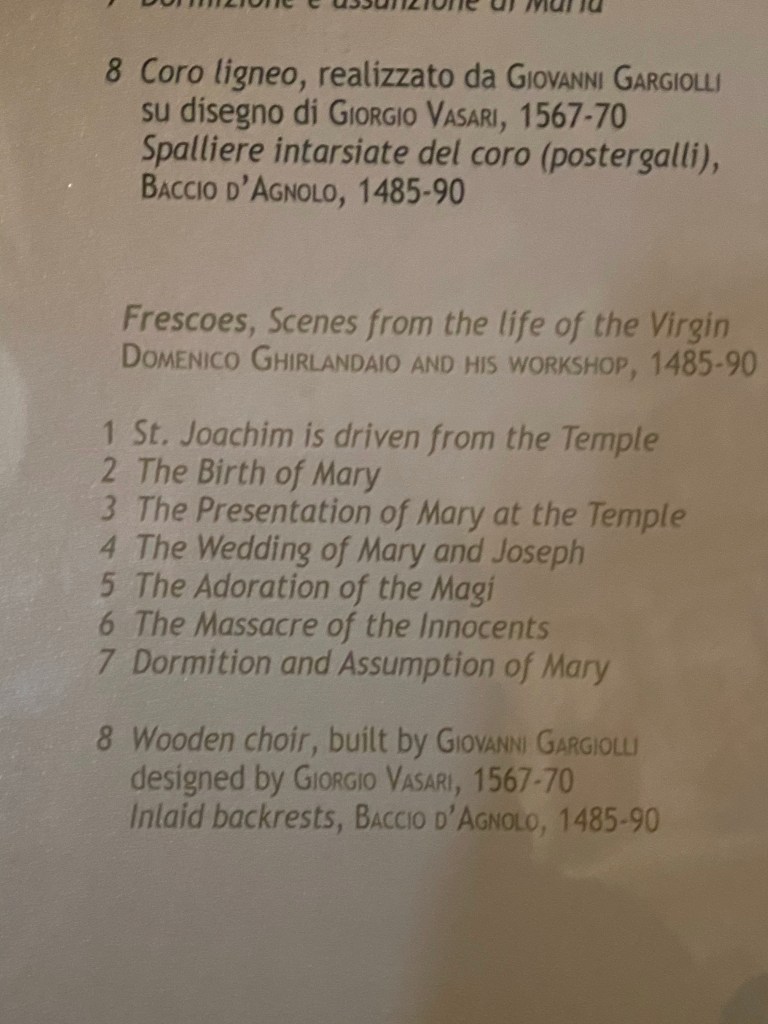
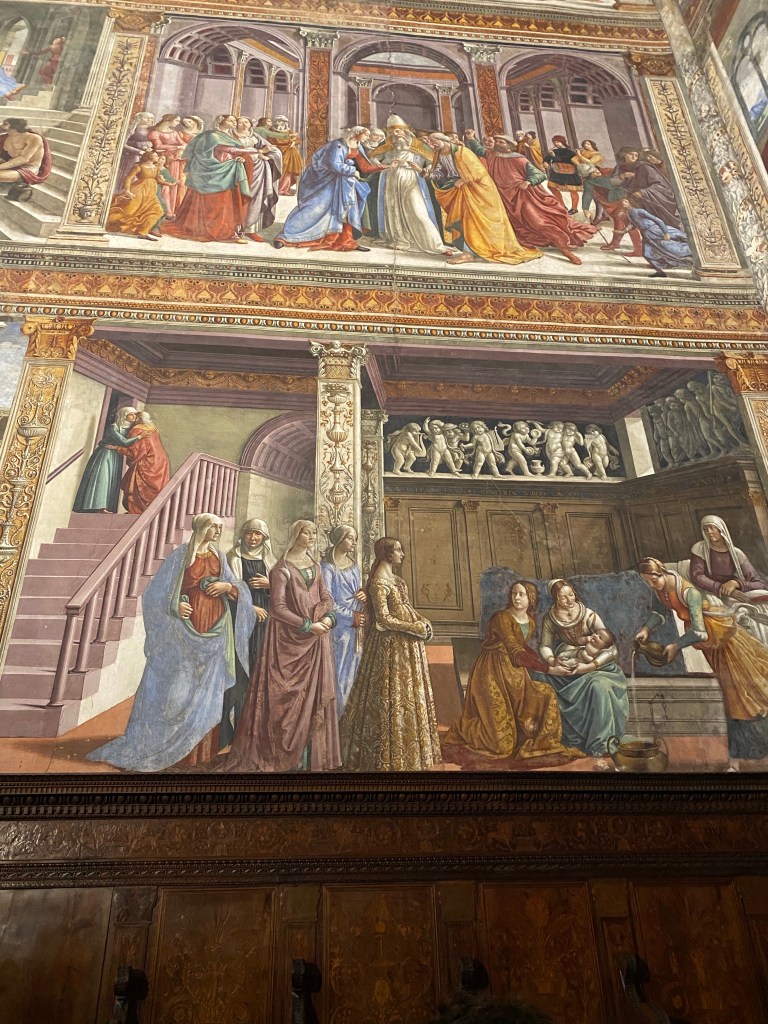
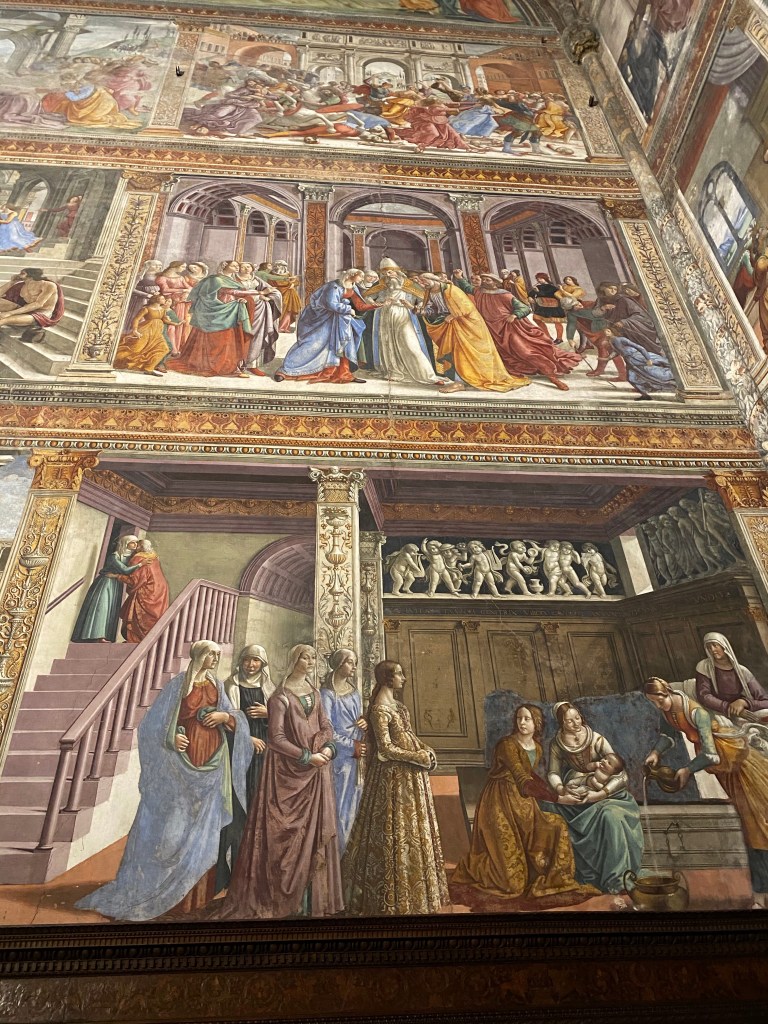
Below is the fresco panel depicting the birth of the Virgin Mary. The rectangular panel above it shows the marriage of the Virgin to Joseph.
WordPress, with whom I write my blog, has recently changed the formatting style of their website and I am still getting used to it. In the image block below you can have a look at Mr. and Mrs. Tornabuoni, the patrons of the Ghirlandaio painting cycle. In theory, you can move the line with the arrows to the left and right and see all of each picture. Good luck. Let me know if you have any problems.
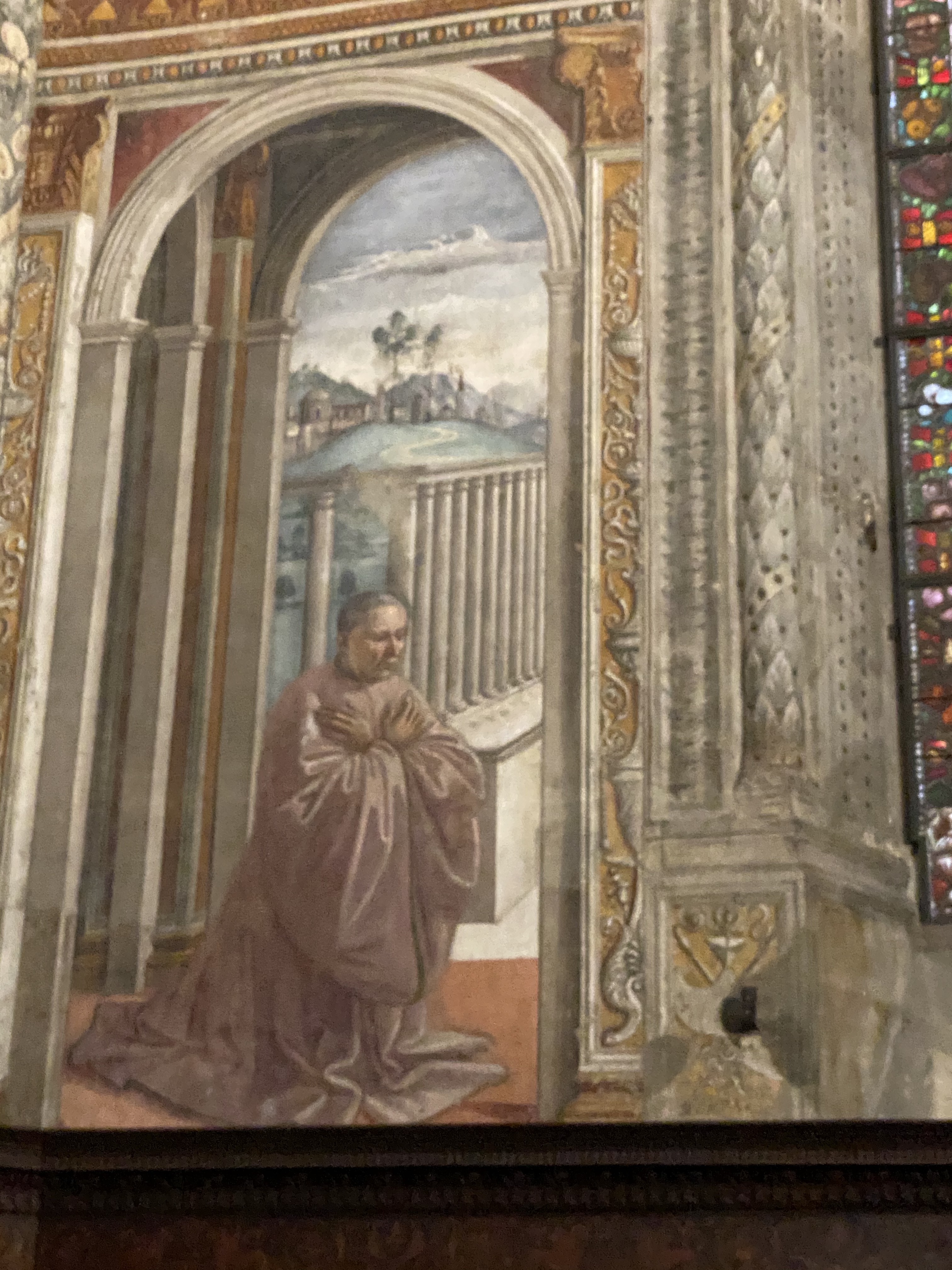
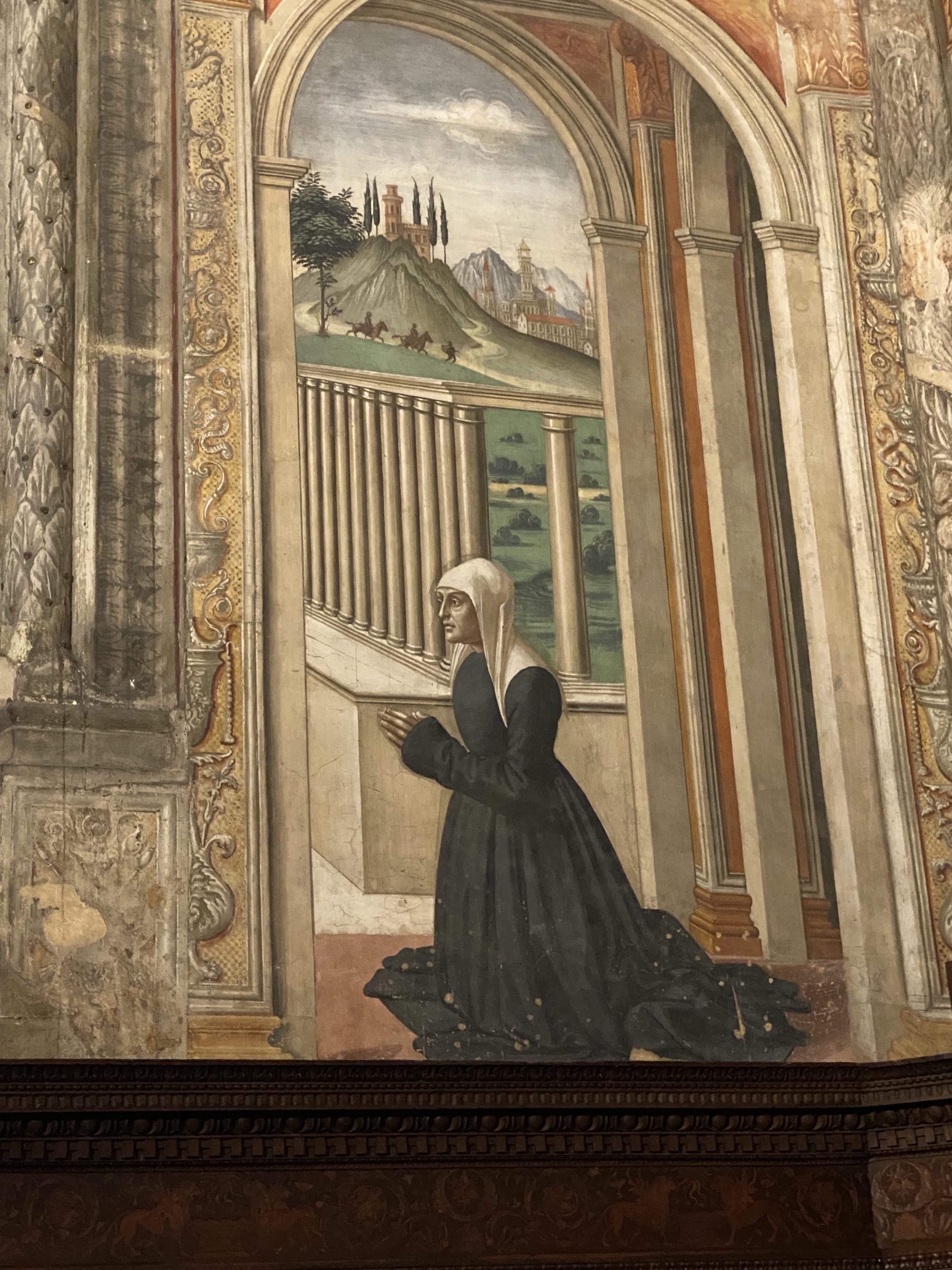
The donor portraits above show Giovanni Tornabuoni and his wife Francesca Pitti.
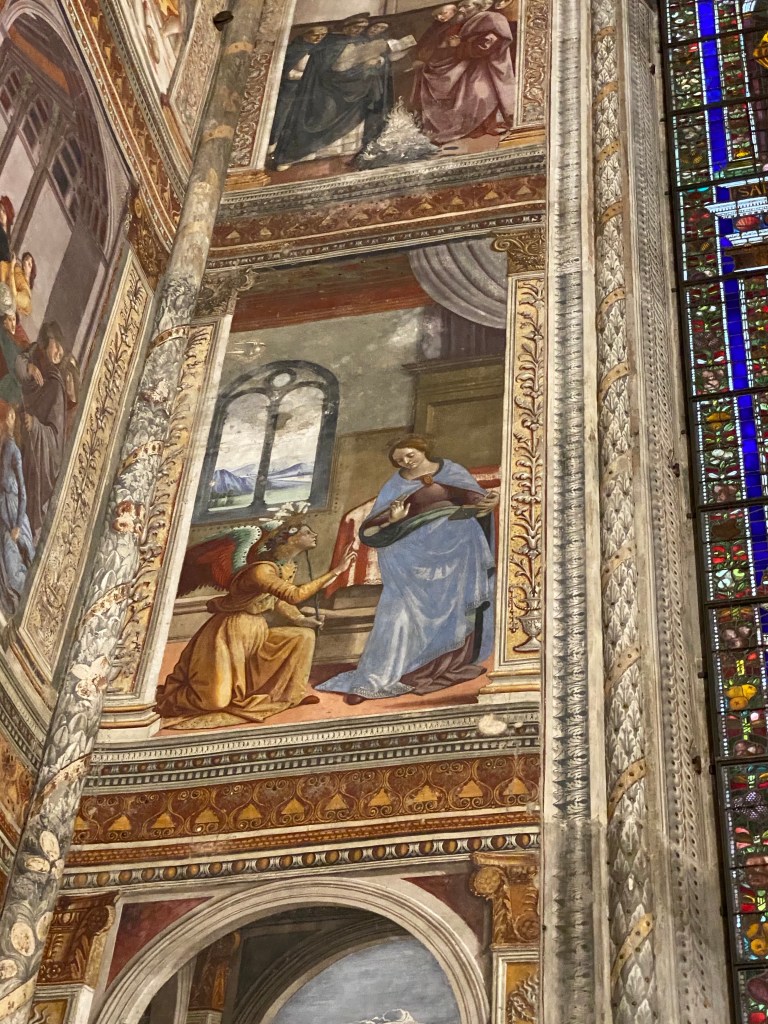
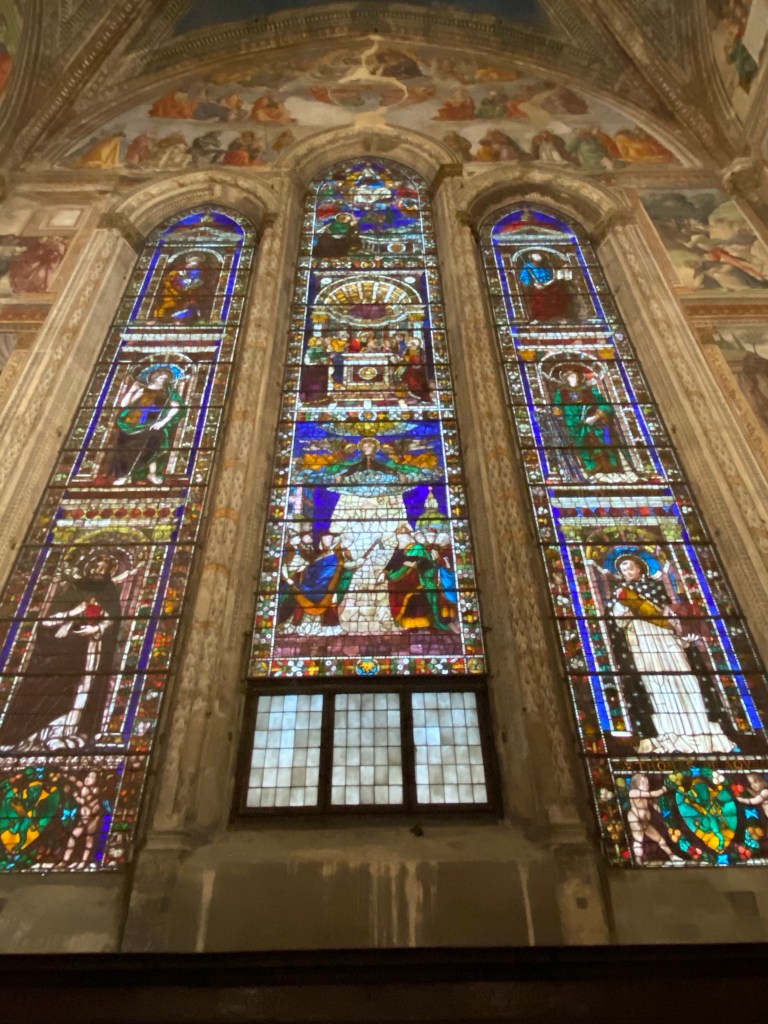
If you are familiar with Italian Renaissance art, you will know that stained glass didn’t place the role here that it had, for example, in France. You will rarely find a major stained glass series in Florence. One of the most elaborate examples is here at Santa Maria Novella in this chapel. It was designed in the quattrocento by Ghirlandaio, the same artist who painted the frescoes.
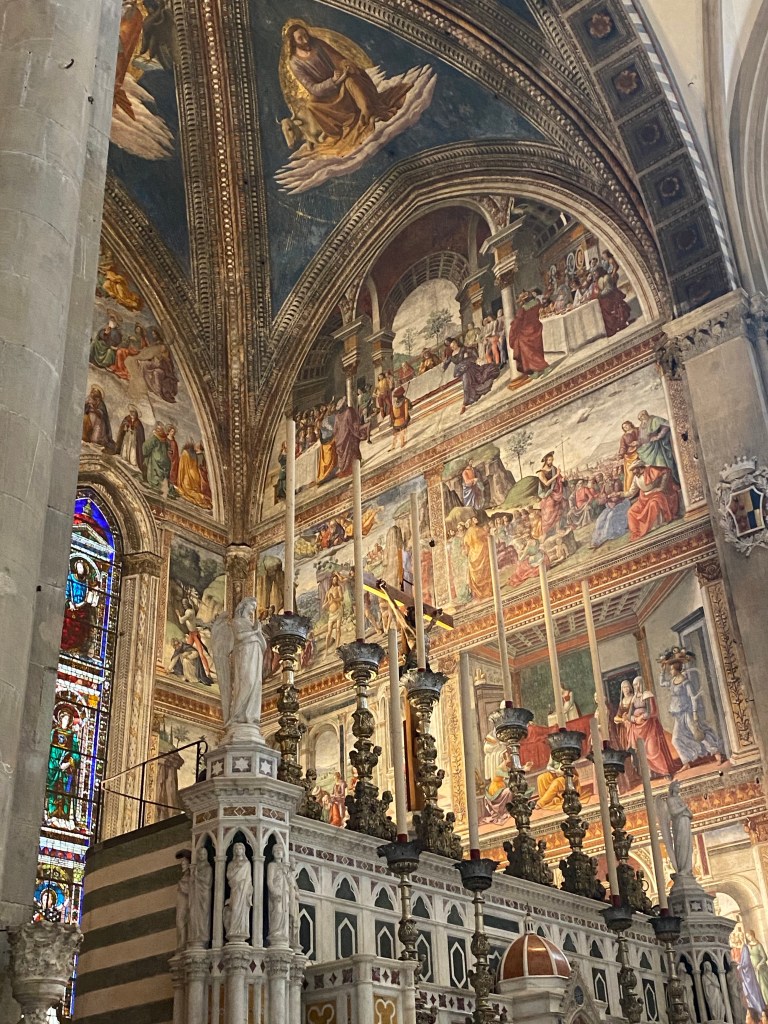
On the right hand wall, Ghirlandaio painted scenes from the life of St. John the Baptist. You see this 7 panel arrangement behind the main altar in the photo below:
For more information on this wonderful chapel, see
https://en.wikipedia.org/wiki/Tornabuoni_Chapel
I’ll be posting soon about another masterpiece within the walls of Santa Maria Novella. Stay tuned!
The Pope wishes you a “Buon pranzo” (a good lunch)!
I recently bought a tv. While this is hardly noteworthy, it is a departure for me. I’ve lived in furnished apartments in Italy that have tvs, but since I took my current, unfurnished, apartment in March of 2018, I’ve been tv free. Not a big deal, for in the past almost 4 years, while living in Florence, I haven’t watched one solid hour of Italian tv.
This is not to say I don’t watch tv, even without a set. I do. I watch American tv shows on my computer.
But, I recently learned that I’m paying for tv with my regular electric bill, and can’t get out of it. So, I thought to myself, if you can’t beat them, join them.
It took 4 people (including me) to get my new “smart tv” hooked up. But, on Friday, we got it connected. I’ve been watching some Italian tv shows and learning all kinds of new stuff.
What led me to write this post is that today I watched the Pope say mass from his window in the Vatican Palace on tv. It was fascinating to observe and, amazingly, is the first time I’ve ever watched it on tv or in person. I was amused when the Pope ended his sermon by wishing everyone a “Buon pranzo” (good lunch).
I just didn’t realize that the descendant of St. Peter, and the representative of God on earth, would be so folksy! I thought he only proclaimed really important stuff.
I was also entertained when, earlier in his remarks, the thin crowd in the piazza below the window (don’t forget its August, about 100 degrees in the shade in Rome today, and we are still dealing with Covid), clapped. I didn’t know the Pope was cheered for delivering his sermon.
Live and learn. Everyday here brings something new to remark upon!
Strength
The quirks of living in Italy
You get used to them after a while. But, they still leave me scratching my head.
I recently discovered that I am and have been paying for TV on my electric bill. For the past 3 years. And didn’t realize it. And, don’t have a TV.
I learn a lot about living in Italy from Facebook. Thank goodness. So, here’s a recent thread about the tv charge:

Welcome to Italy!
 get back, lauretta!
You must be logged in to post a comment.