It will be interesting to see what follows. Will mass tourism ruin the city again?
It will be interesting to see what follows. Will mass tourism ruin the city again?
In this imposing, Medieval Florentine city hall,
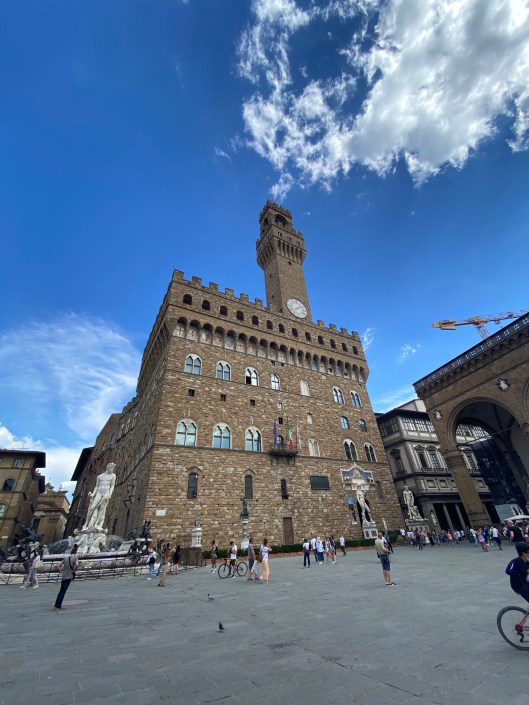
Reside 3 works by master sculptors of the Italian Renaissance:
First, The Genius of Victory by Michelangelo
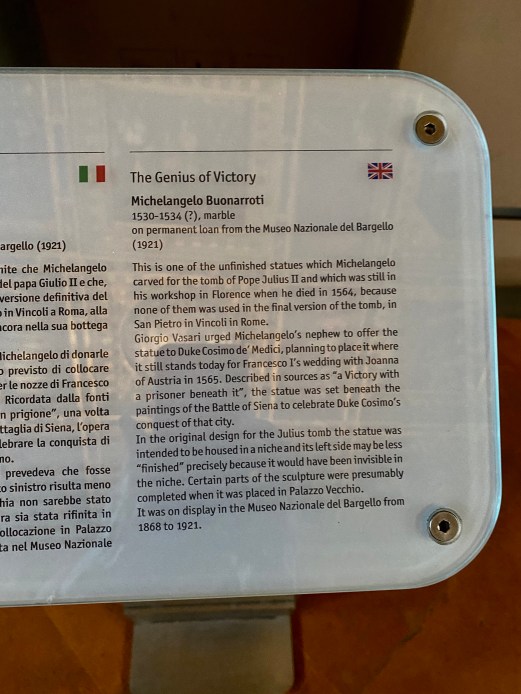

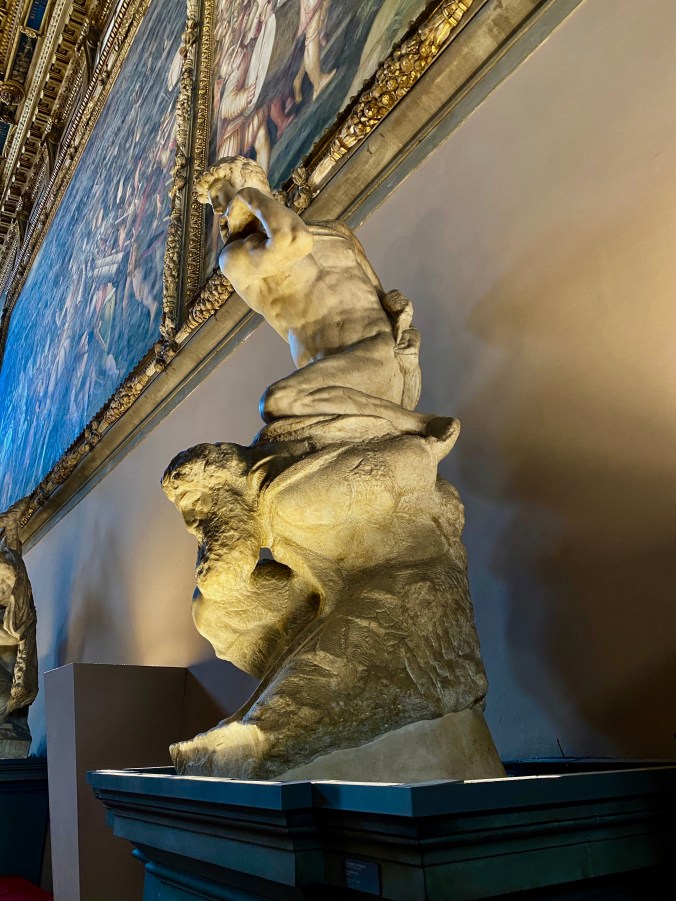

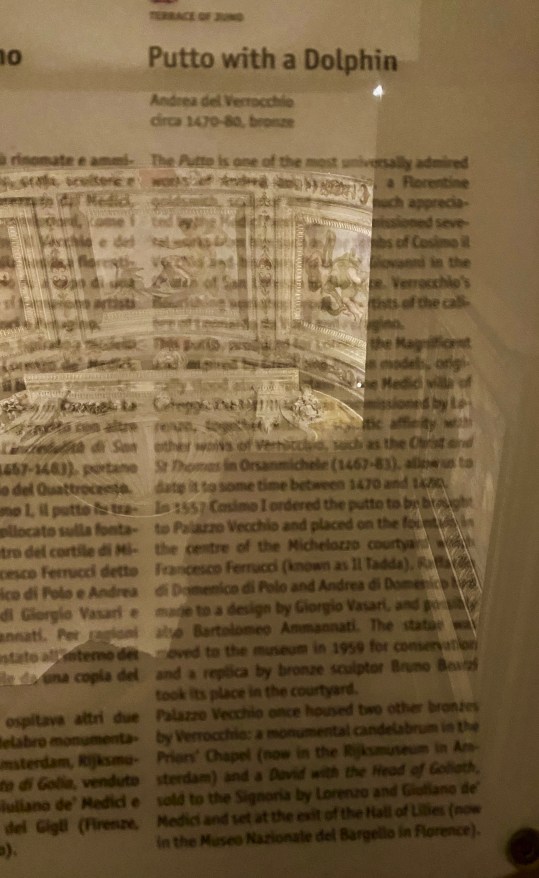
Andrea Verrochio is up next, with his wonderful Putto with a Dolphin:
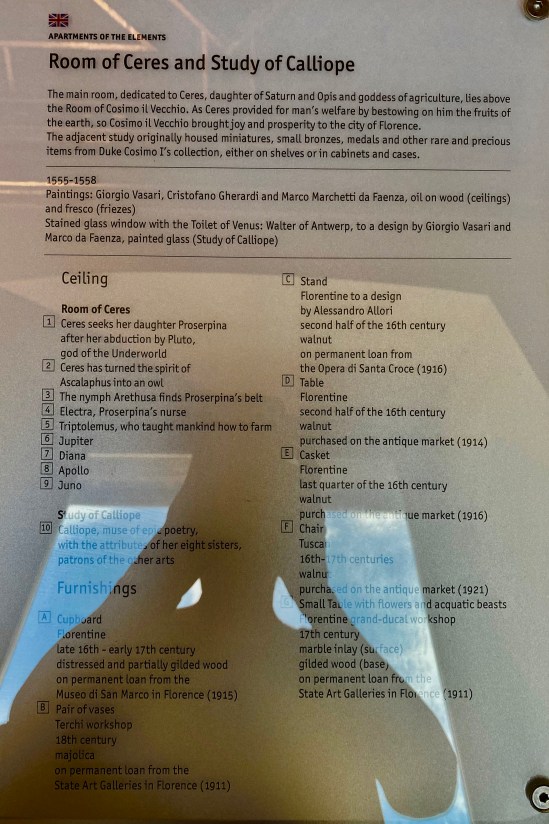


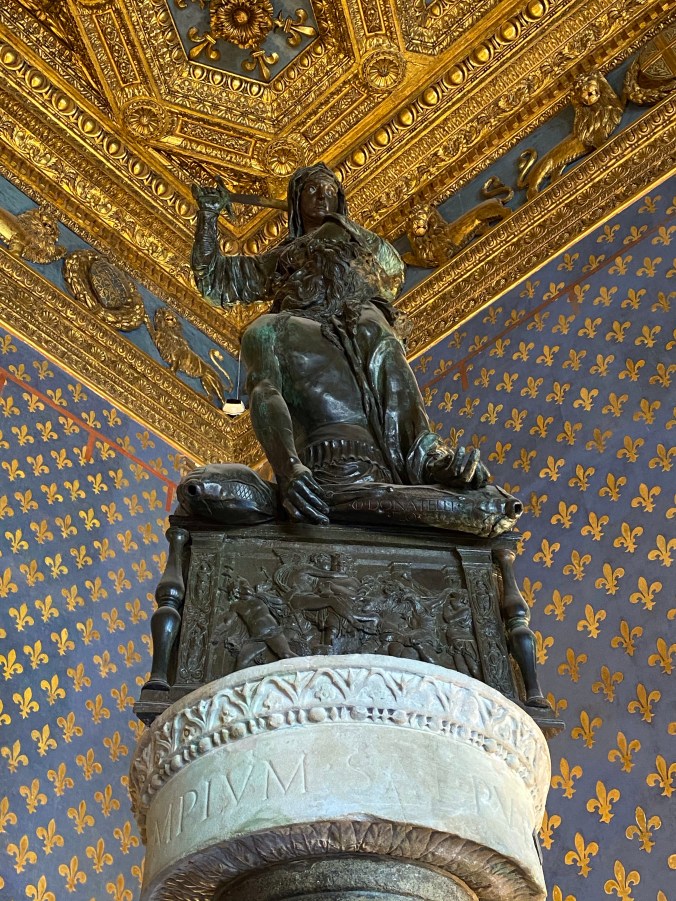
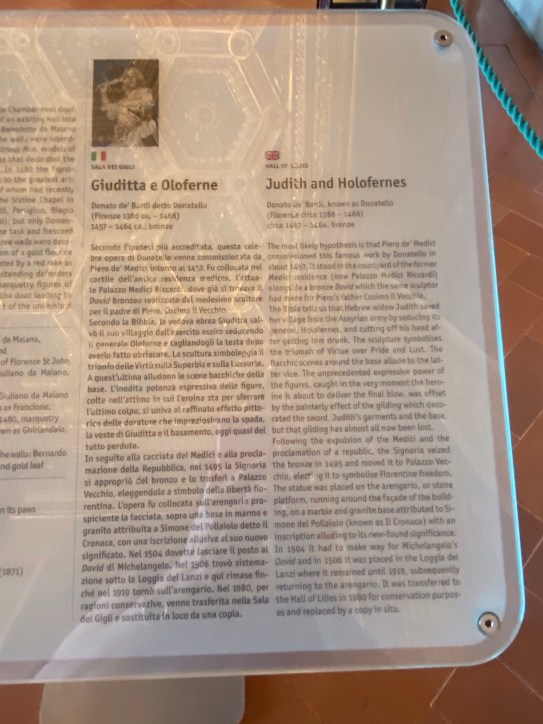
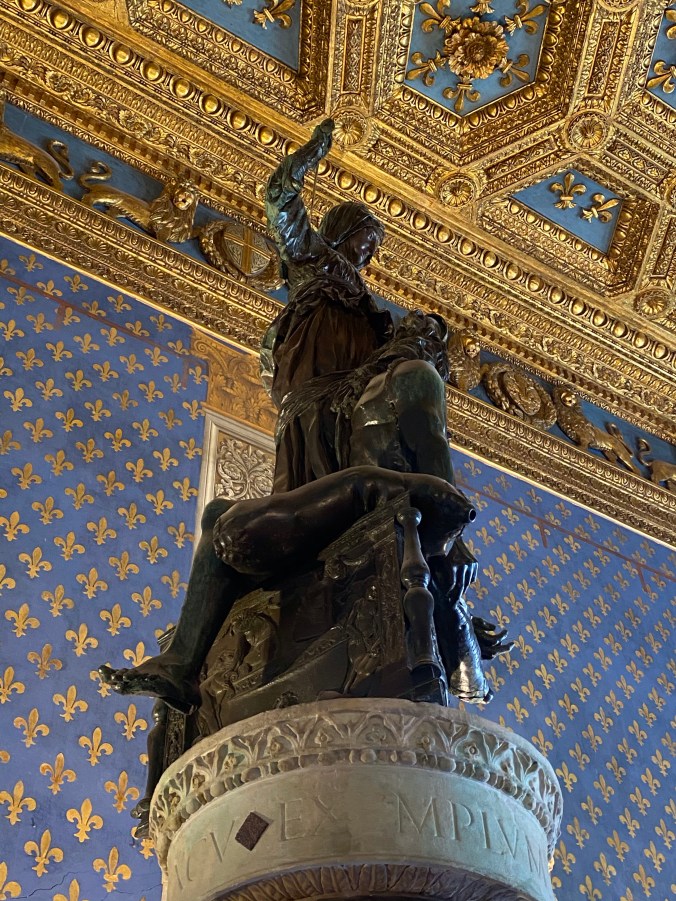
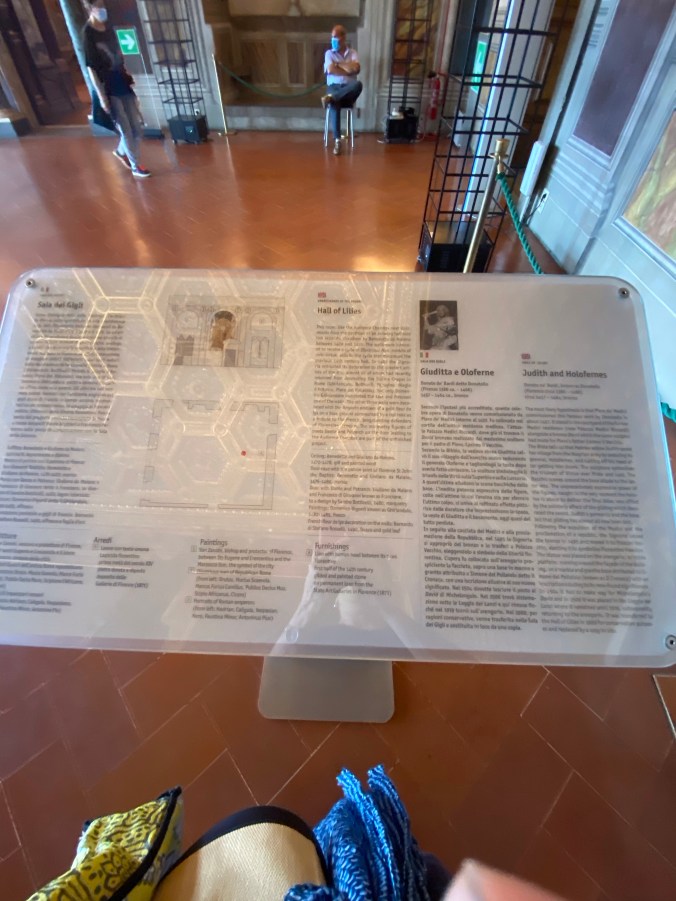
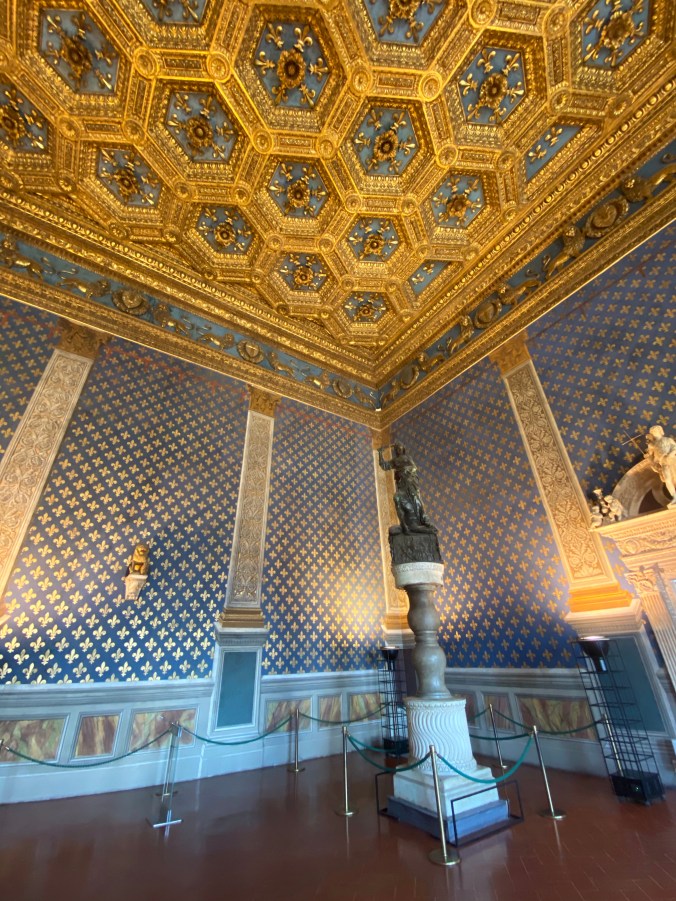
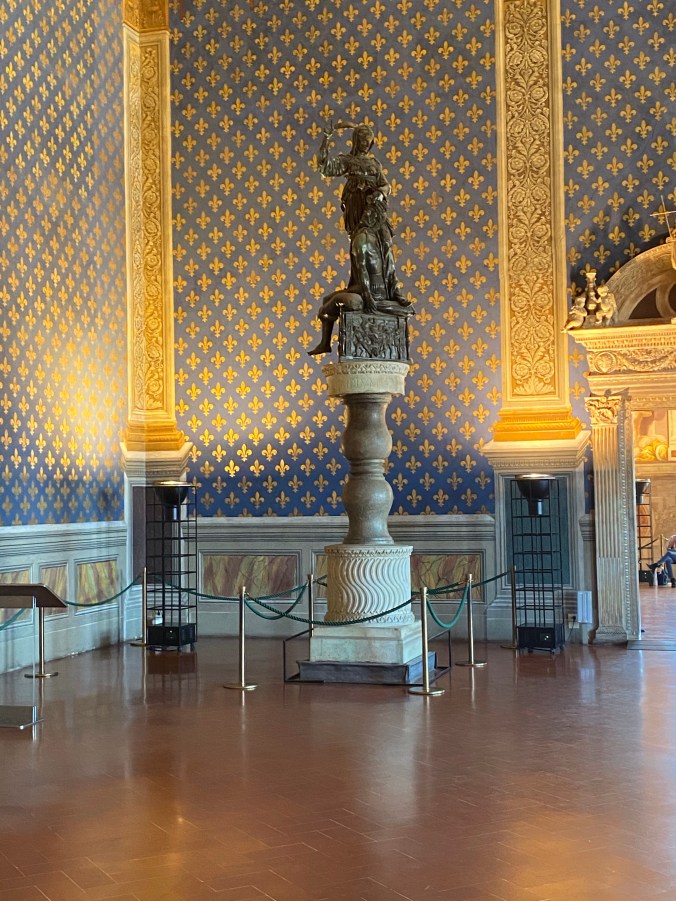
And, thirdly, Donatello. He is one of all-time favorite artists and this sculpture, Judith and Holofernes, is one of his masterpieces. It resides in this gorgeous room. You can see it on its pedestal to the right.



Continuing my recent visit of this august pile:
Great views of il duomo!


I love the clouds in Italian skies.


A long last look, before departing for the day.

Here’s the next part of my recent visit to the re-opened Palazzo Vecchio:

I love the view of the rustic stone through the glass.

What a wonderful sink below! Two spigots that look like fountains:

The sink is in this elaborate niche:

Below, you can see the shape of the sink itself:


Below: the death mask of Dante:


An amazingly elaborate reliquary:


Next up, the elaborate Audience Chamber:

Here’s the ceiling:


These frescoes “idealize” even war. I like the colorful tents that housed the troops. I doubt they were this lovely in real life.


Donatello’s Judith and Holofernes:


30 June 2020.
The only way to beat the heat of a Florentine summer is to walk the city early in the morning. Here are some pix from today’s path.
First up: some hot cars on a hot morning.

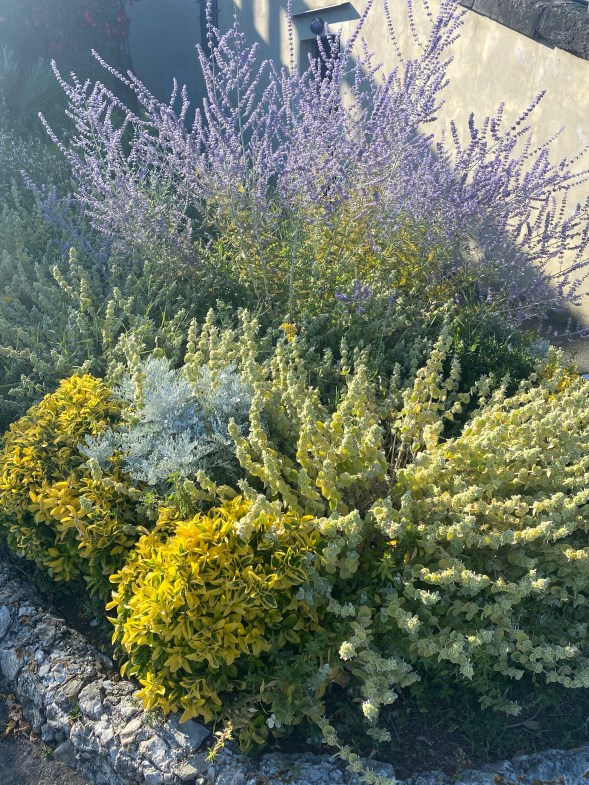
The area in front of the restaurant at the Piazzale Michelangelo has a beautiful and well cared for planting. I love the hues of greens/yellows and lavender.
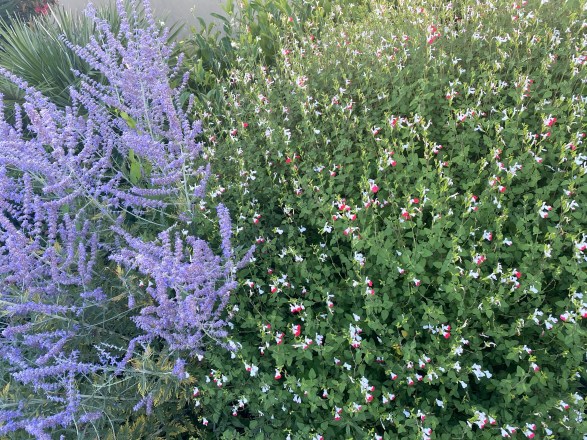
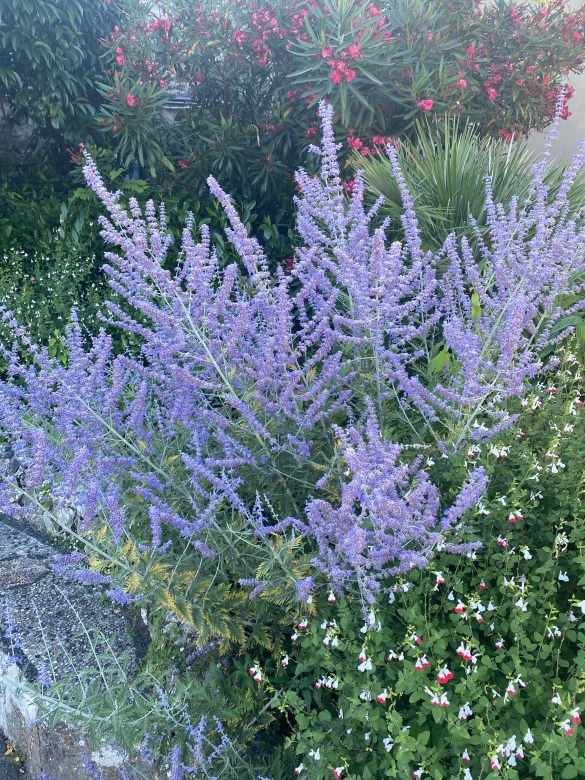
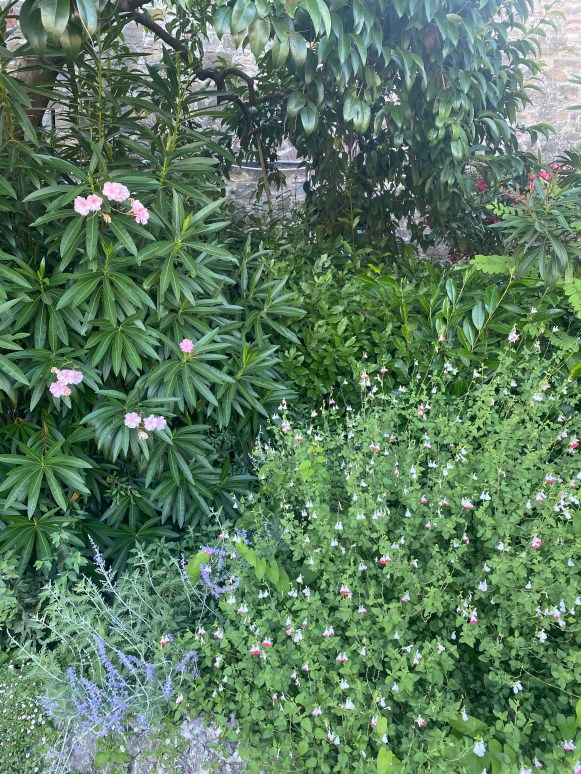
There’s a ubiquitous perennial I see all around Florence and I don’t know it’s name. But it has the prettiest white and vivid red blossoms. I love it.
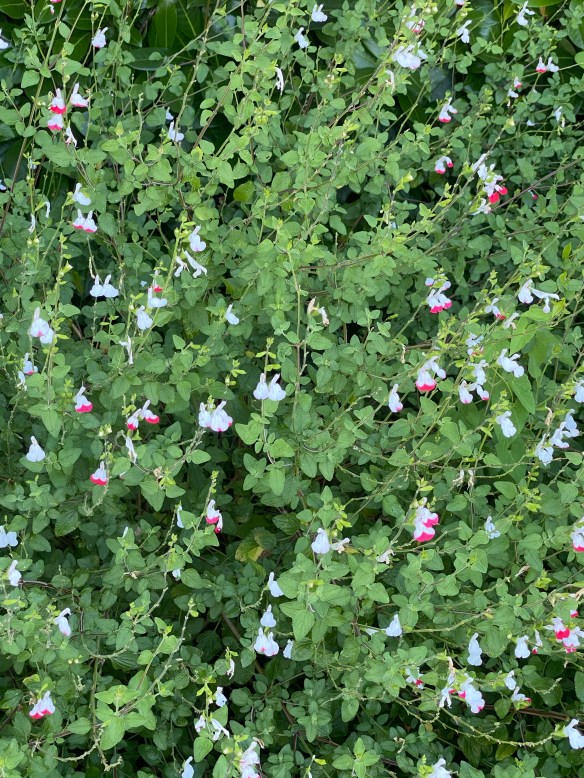

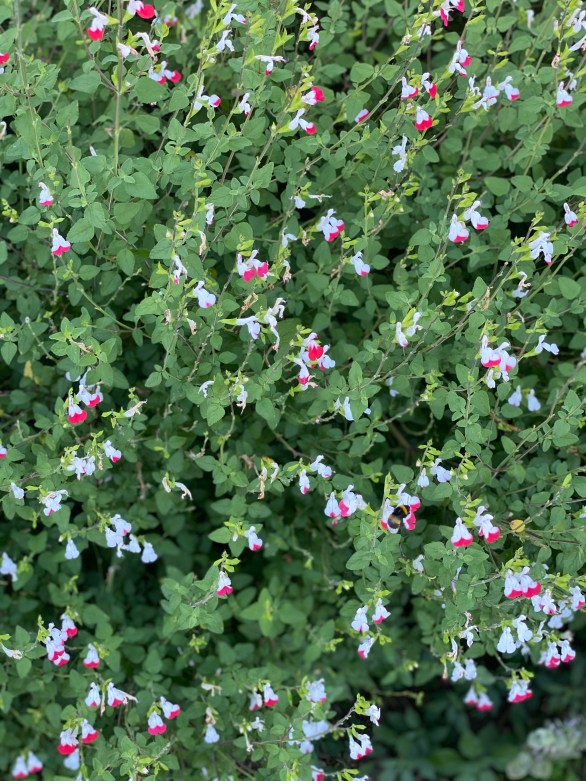
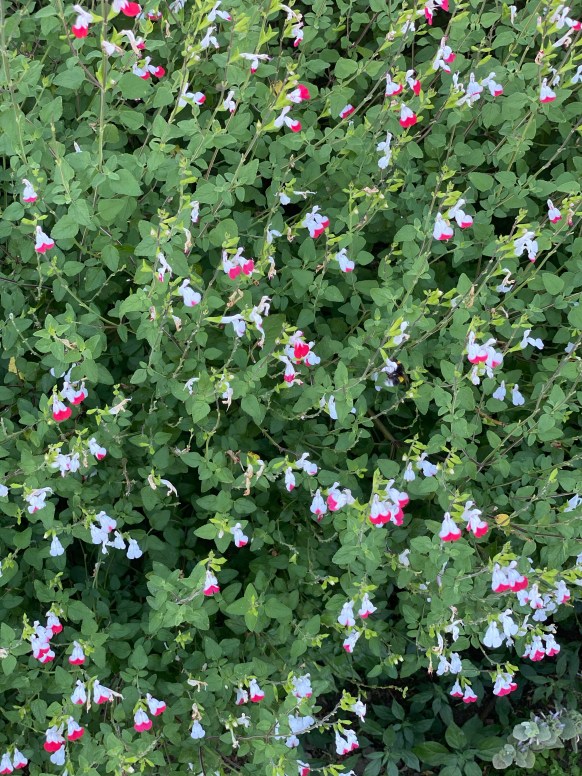
This bee loves these flowers as much–or more–than I do!
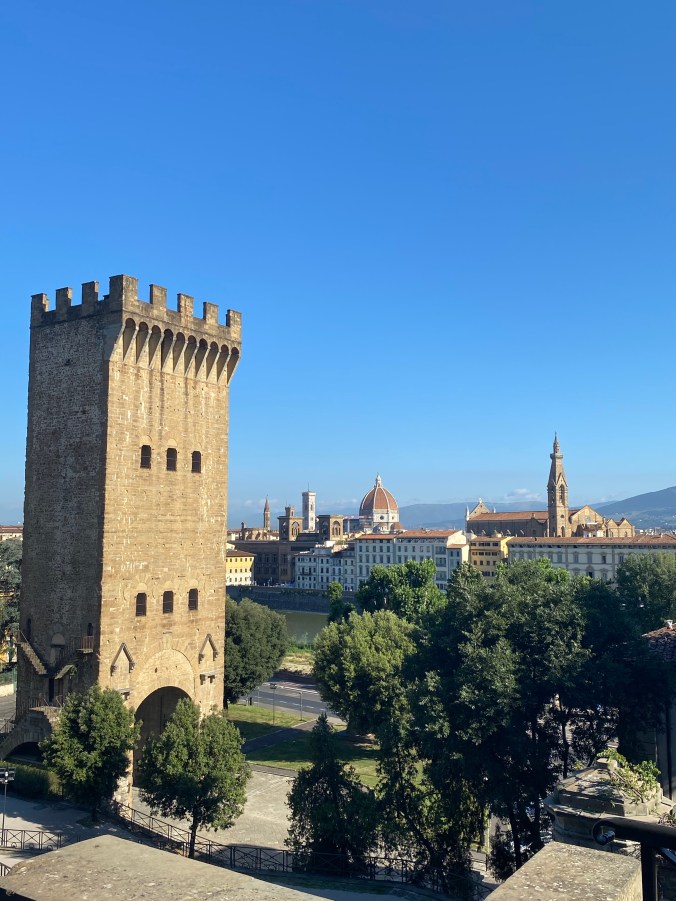
Every morning, I think I won’t take another picture of the duomo. And then I see another view that demands that I do!
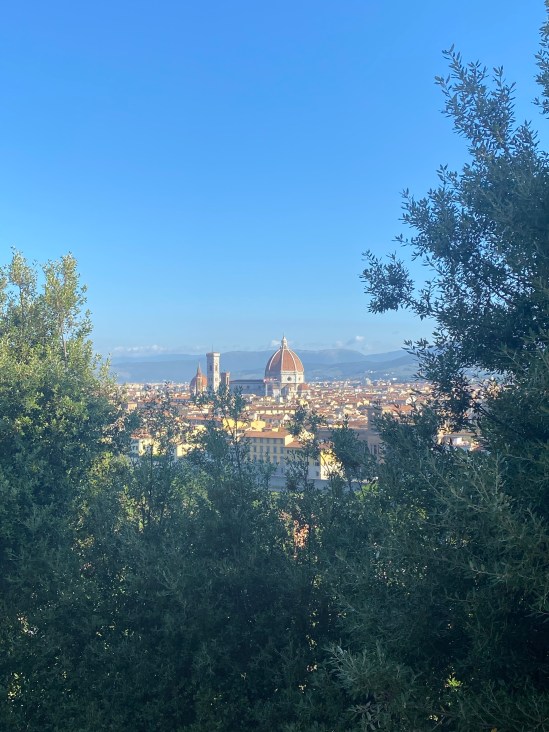
I love this view of Santa Croce and the aquamarine dome of the synagogue on the right side.
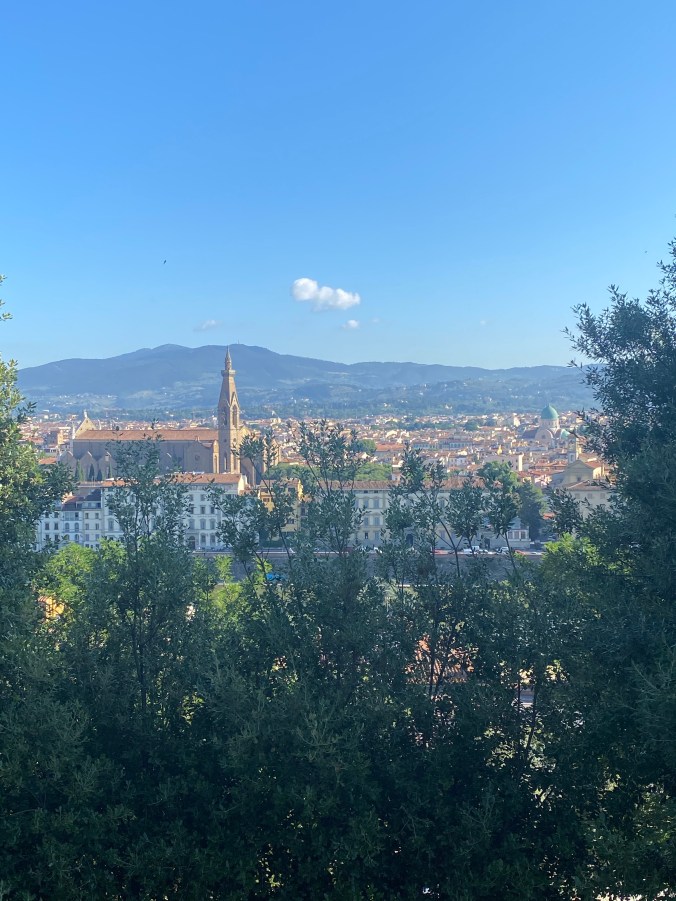
And then, walking down the ramps designed in the 19th century by Poggi, I see more incredible views from the Porta San Niccolo.
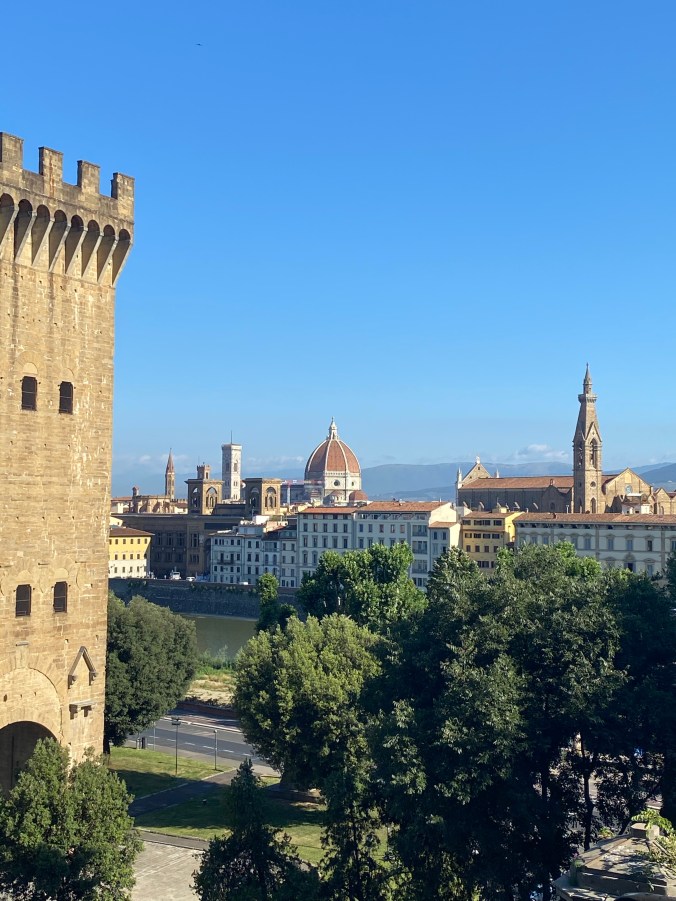
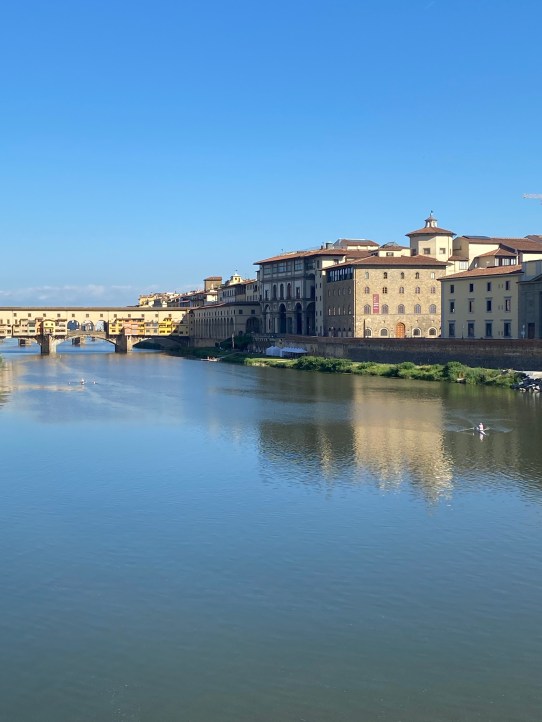
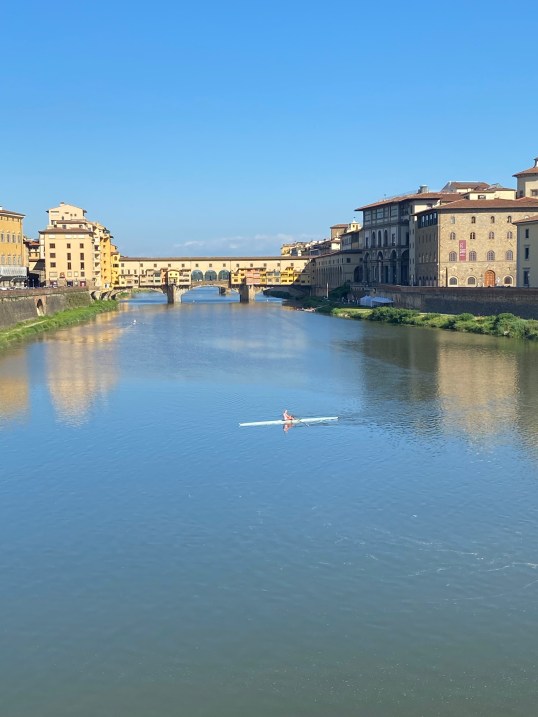
Walking across the Ponte alle Grazie, it is fun to see the boaters out on the water near the Società Canottieri down on the banks of the Arno.

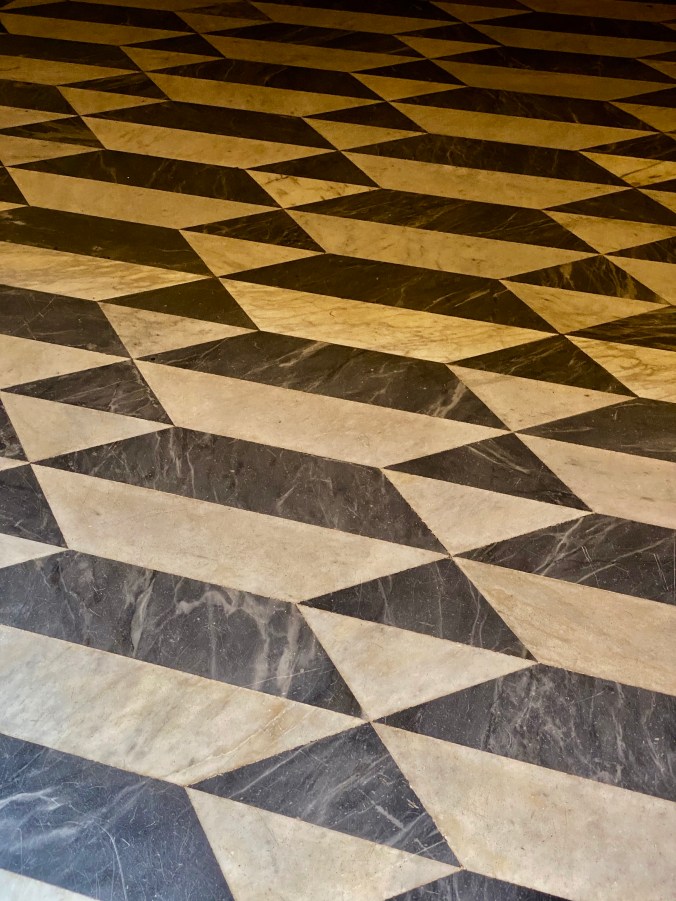
I spotted yet another pattern of marble inlay. I love these old patterns.
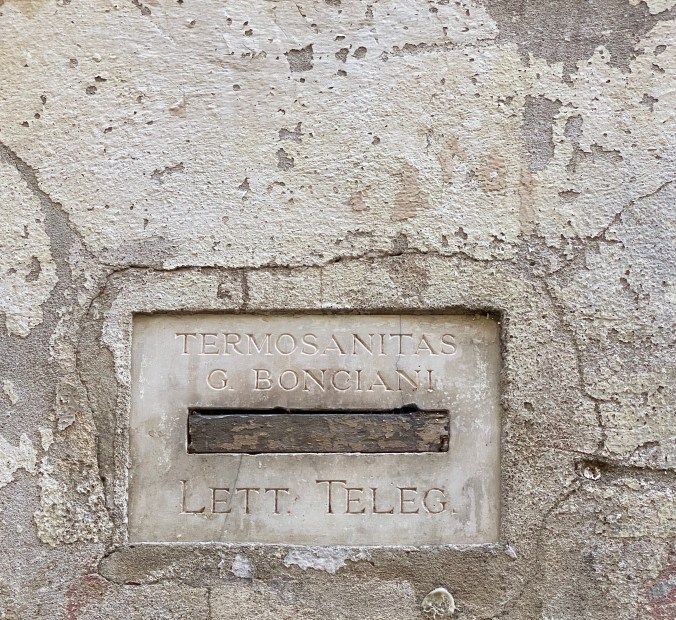
And, a reminder that a century ago, important news often came by letter and telegram.
One by one, the landmarks of Florence have been re-opening. With new rules and regulations, one can pay a visit to these famous sites. I recently enjoyed seeing the Palazzo Vecchio for the first time since the lock down. Very enjoyable to see old friends.

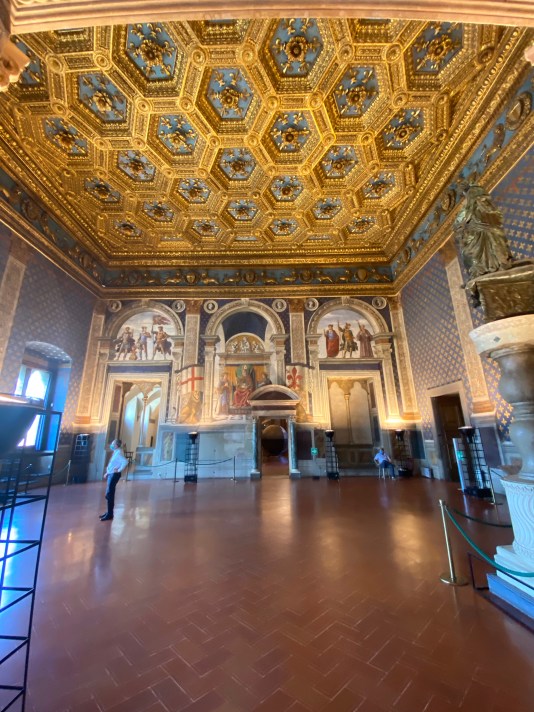
Il Salone dei Cinquecento:


The Salone dei Cinquecento (‘Hall of the Five Hundred’) is the most imposing chamber in the Palazzo Vecchio, with a length of 170 ft and width of 75 ft. It was built in 1494 by Simone del Pollaiolo, on commission of Savonarola who, replacing the Medici after their exile as the spiritual leader of the Republic, wanted it as a seat of the Grand Council (Consiglio Maggiore) consisting of 500 members.
Later the hall was enlarged by Giorgio Vasari so that Grand Duke Cosimo I could hold his court in this chamber. During this transformation, famous (but unfinished) works were lost, including the Battle of Cascina by Michelangelo, and the Battle of Anghiari by Leonardo da Vinci. Leonardo was commissioned in 1503 to paint one long wall with a battle scene celebrating a famous Florentine victory. He was always trying new methods and materials and decided to mix wax into his pigments. Da Vinci had finished painting part of the wall, but it was not drying fast enough, so he brought in braziers stoked with hot coals to try to hurry the process. As others watched in horror, the wax in the fresco melted under the intense heat and the colors ran down the walls to puddle on the floor. A legend exists that Giorgio Vasari, wanting to preserve Da Vinci’s work, had a false wall built over the top of The Battle of Anghiari before painting his fresco. Attempts made to find Da Vinci’s original work behind the Vasari fresco have so far been inconclusive.
Michelangelo never proceeded beyond the preparatory drawings for the fresco he was commissioned to paint on the opposite wall. Pope Julius II called him to Rome to paint the Sistine Chapel, and the master’s sketches were destroyed by eager young artists who came to study them and took away scraps. The surviving decorations in this hall were made between 1555 and 1572 by Giorgio Vasari and his helpers, among them Livio Agresti from Forlì. They mark the culmination of mannerism and make this hall the showpiece of the palace.
Here are some miscellaneous objets that caught my eye on this day. All of them are in the Salone dei Cinquecento, unless otherwise noted:


I see the coat of arts of the Medici family all over Florence, but this one is beyond extravagant:


A sculpture by Michelangelo takes a place of honor in this large hall:


OK, we have departed the Salone. All of the following pictures are from subsequent rooms.


One of the things I like about many Italian stairways is the use of these heavy cords. I like the way they look and the way they draw on Italian textile traditions.


The St. John’s Day Fireworks have been an ongoing Florentine tradition for centuries. It was fun to see this painting depict it from the 16th century.


Here’s another fanciful coat of arts for the Medici family, this one in fresco:

And putti carry the crown that will sit on Medici heads:


Here is the original Verrocchio statue. A copy sits in its original place in an open courtyard on the ground floor.


Eleonora’s private chapel is a gorgeously painted small room:


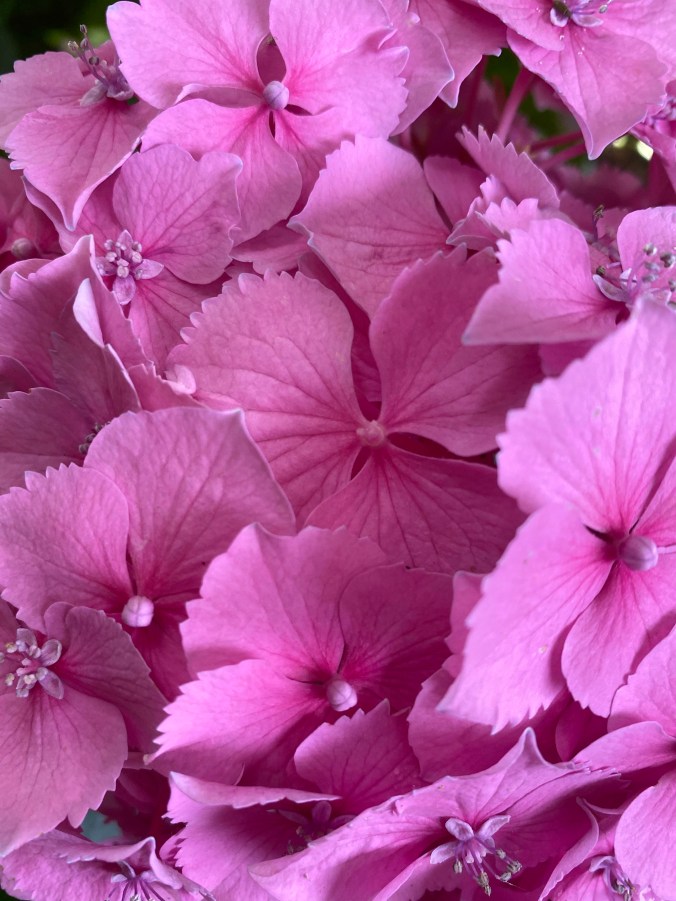
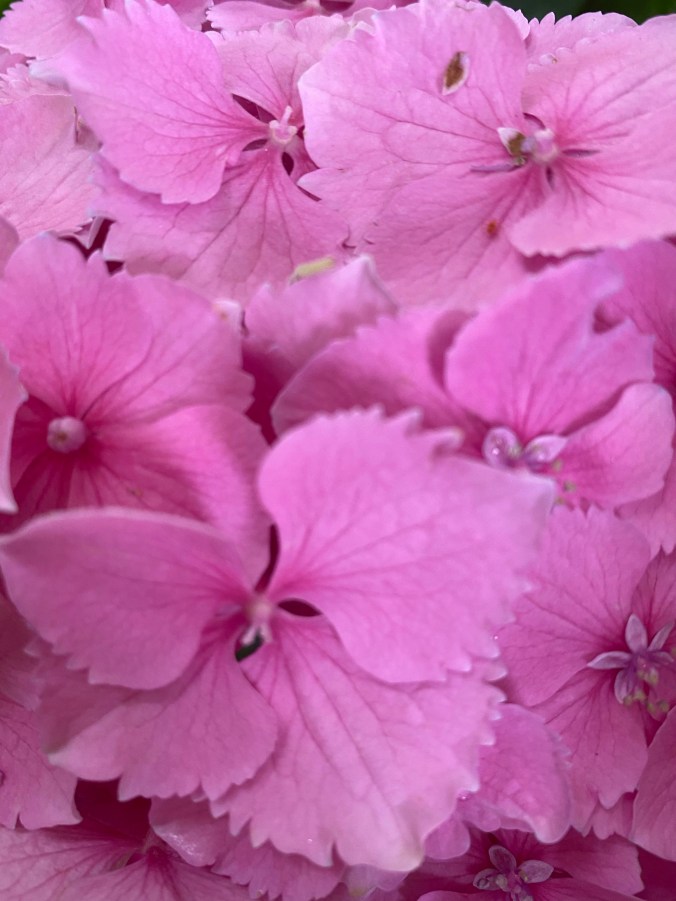
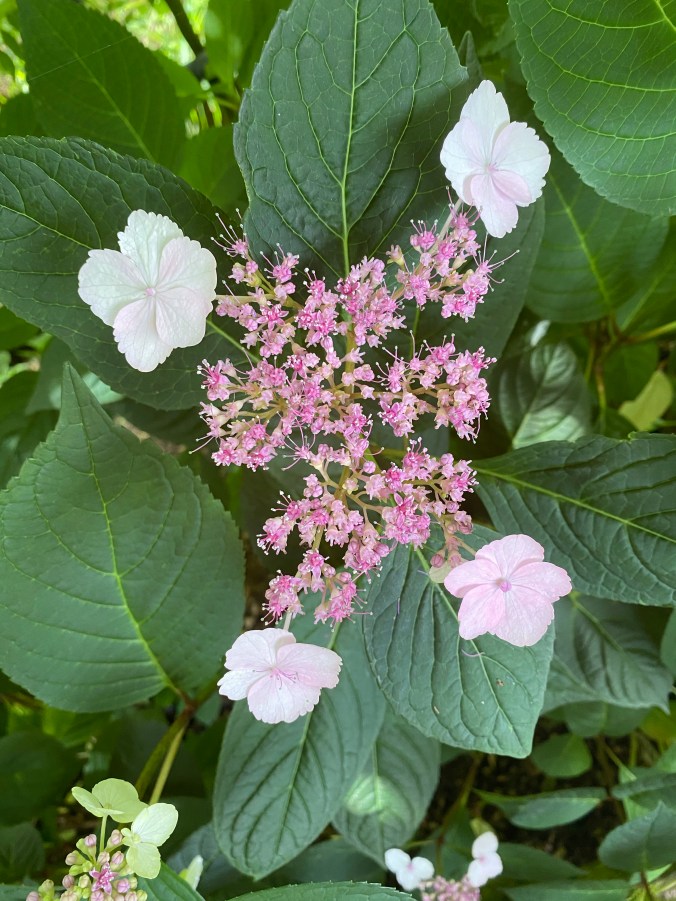
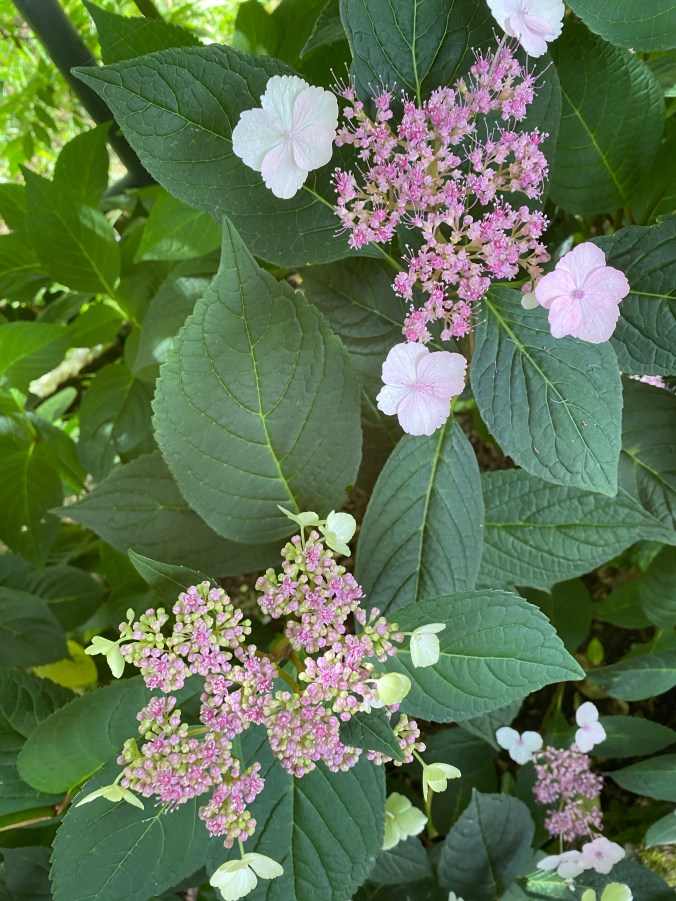
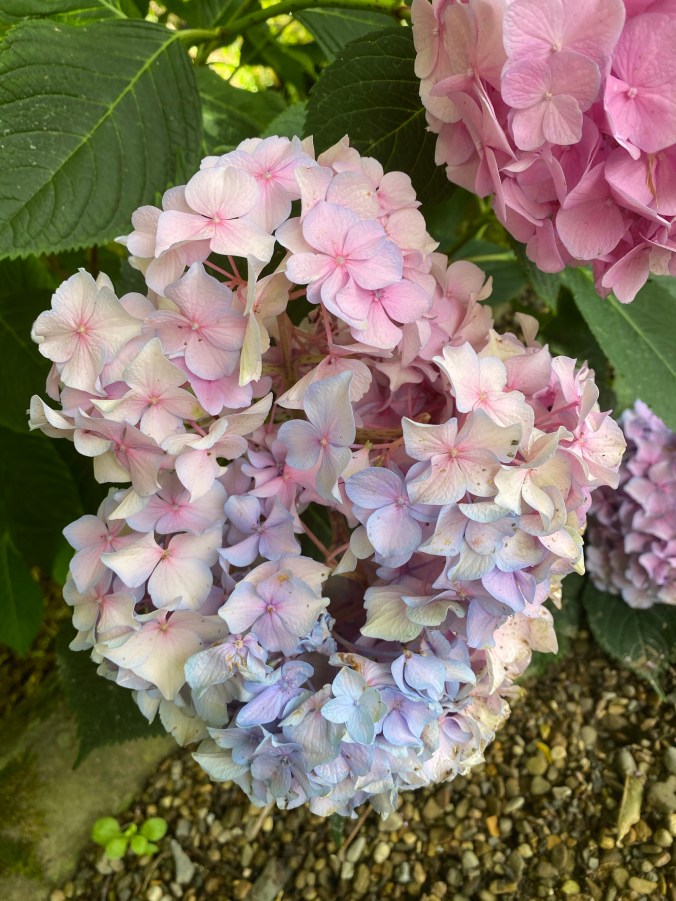


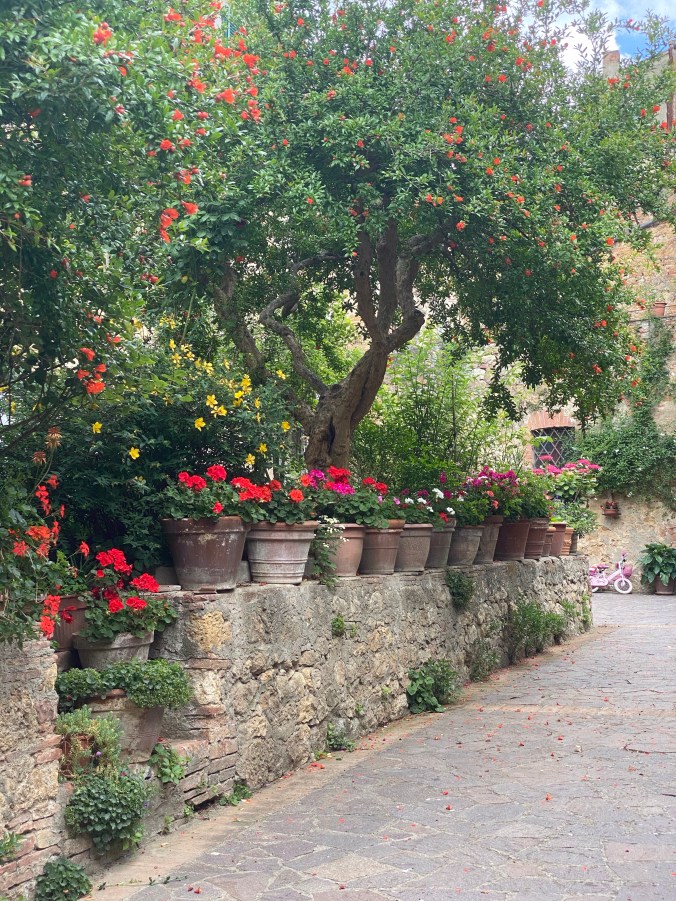


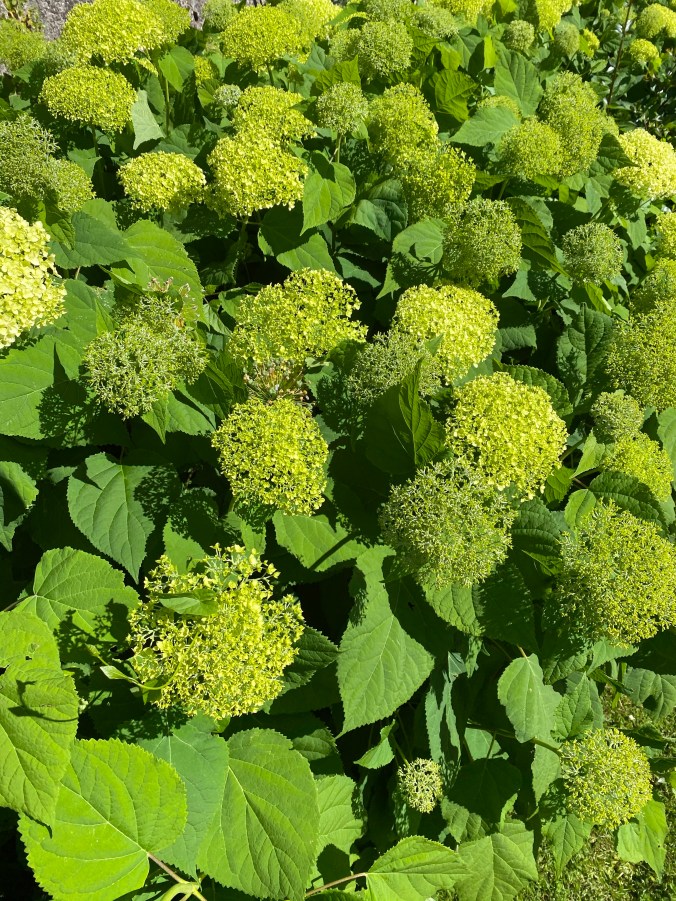
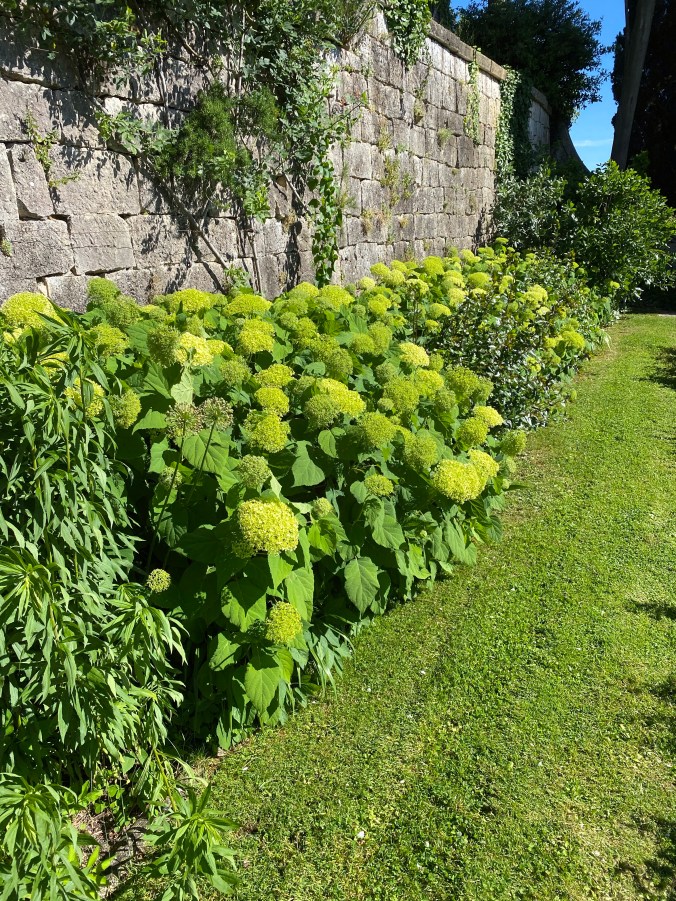

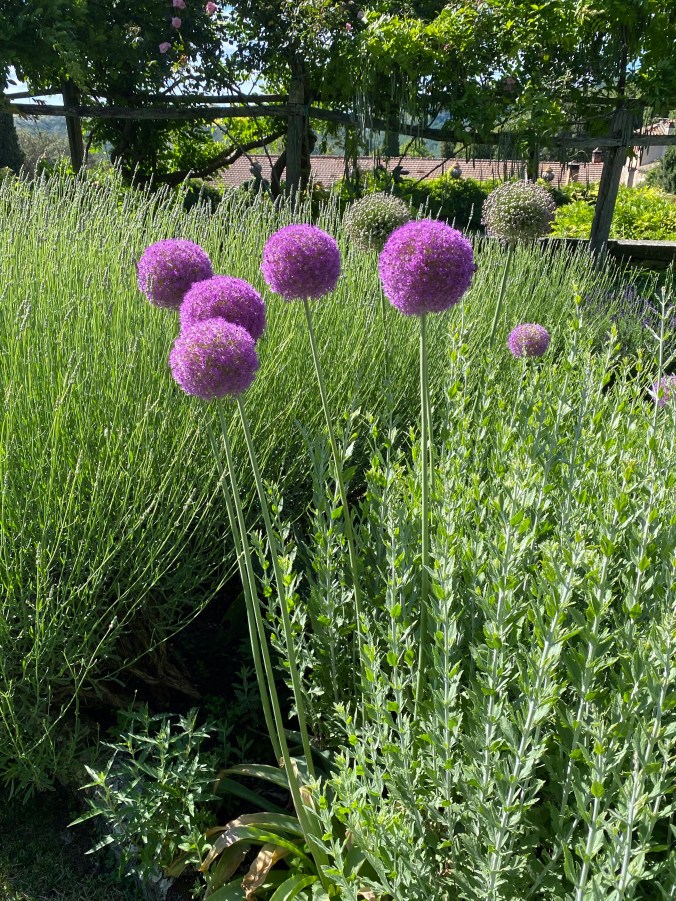
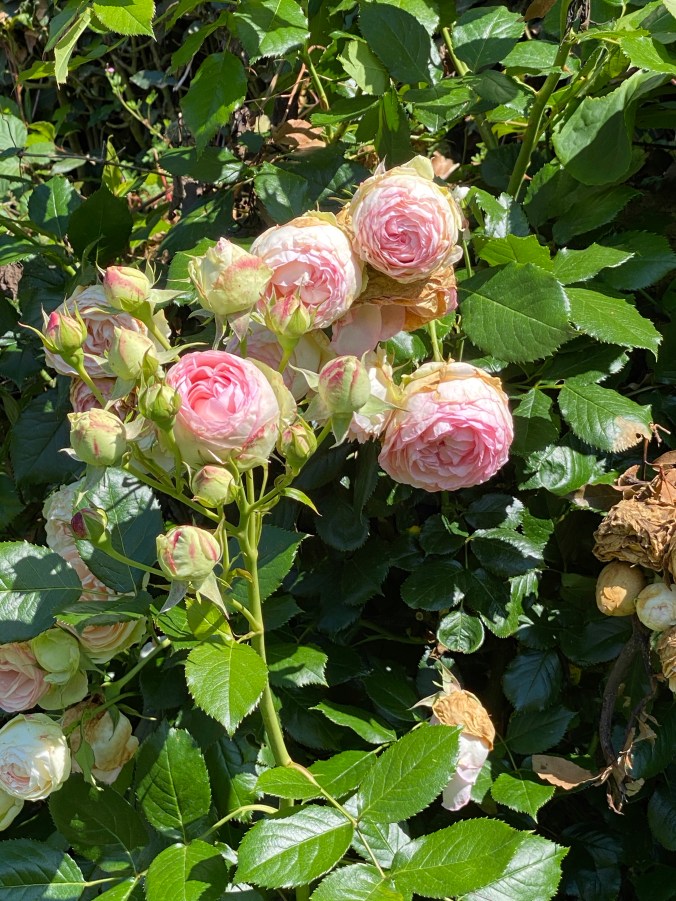
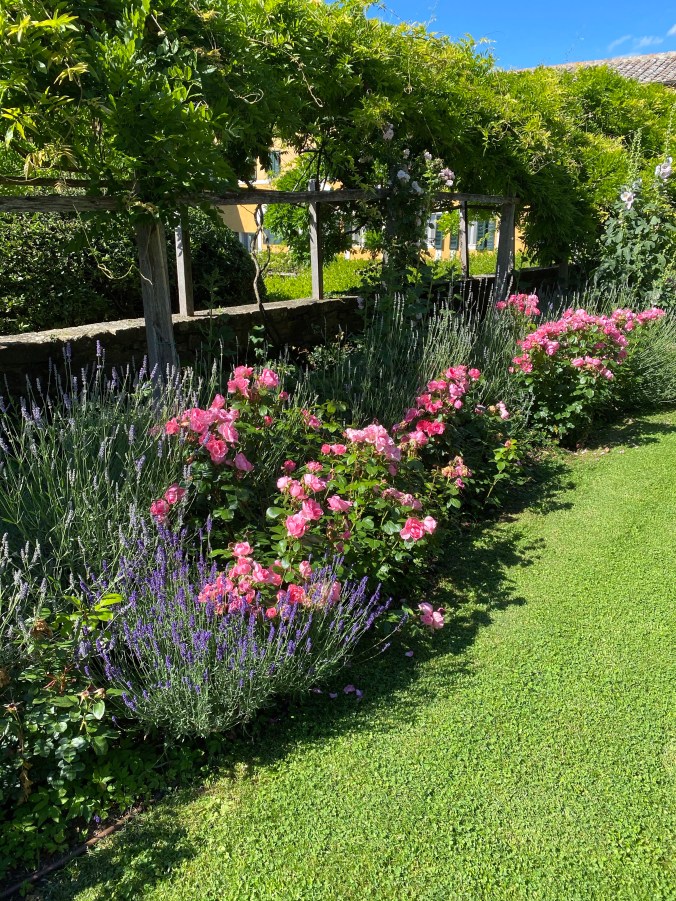

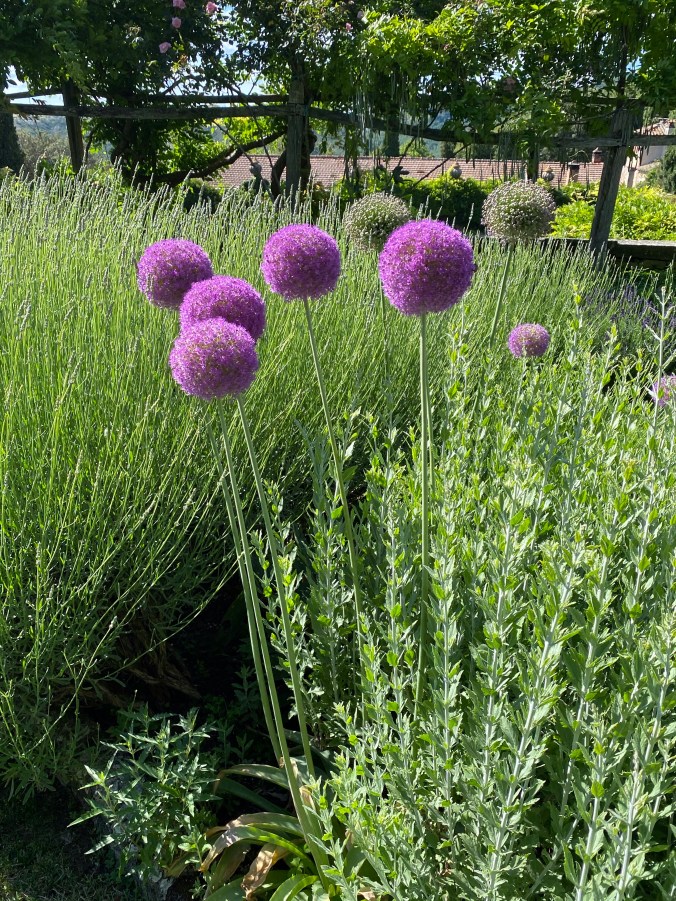
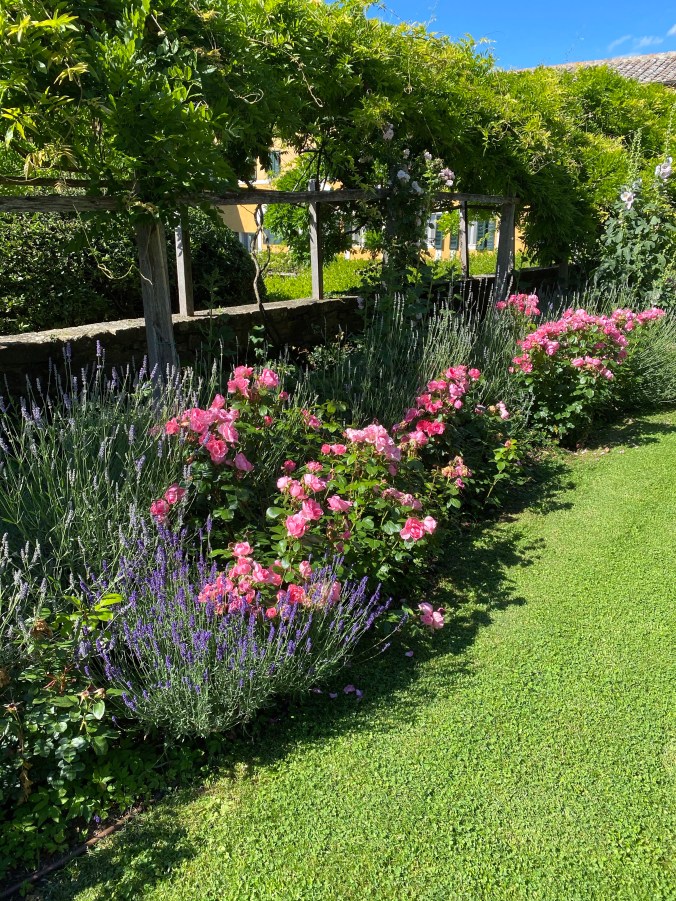
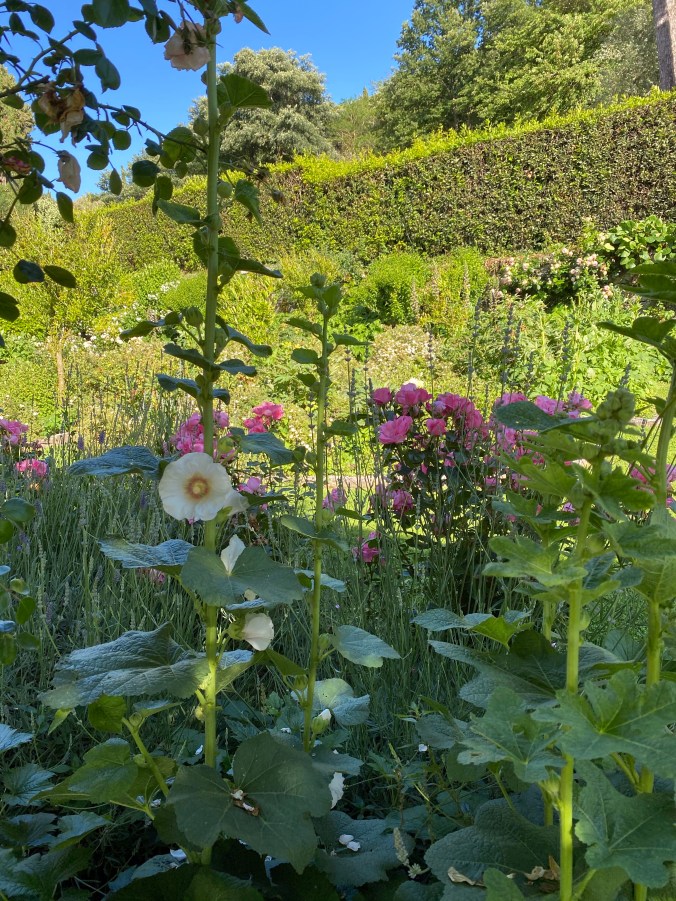

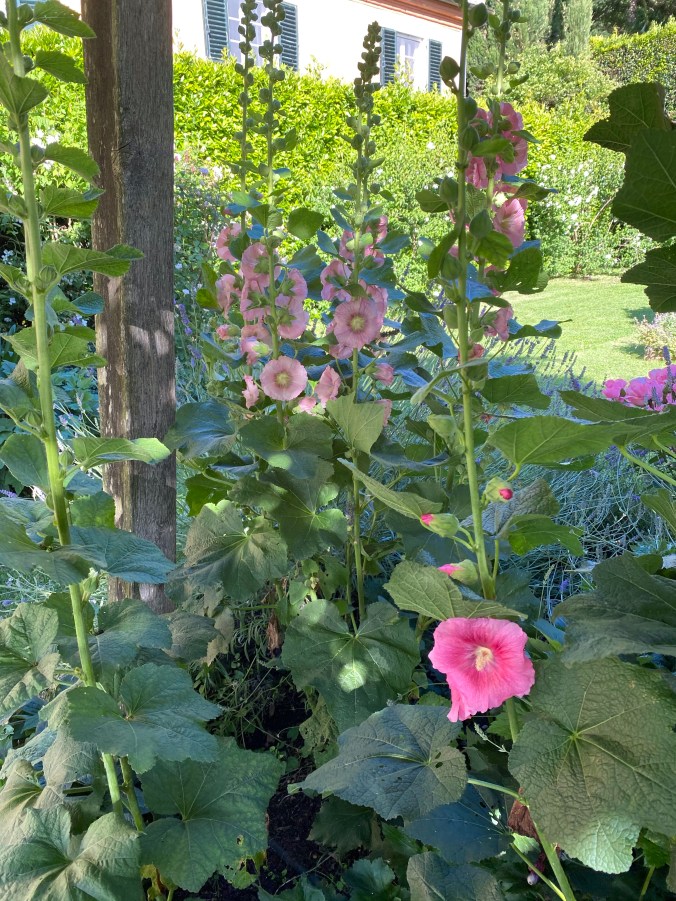
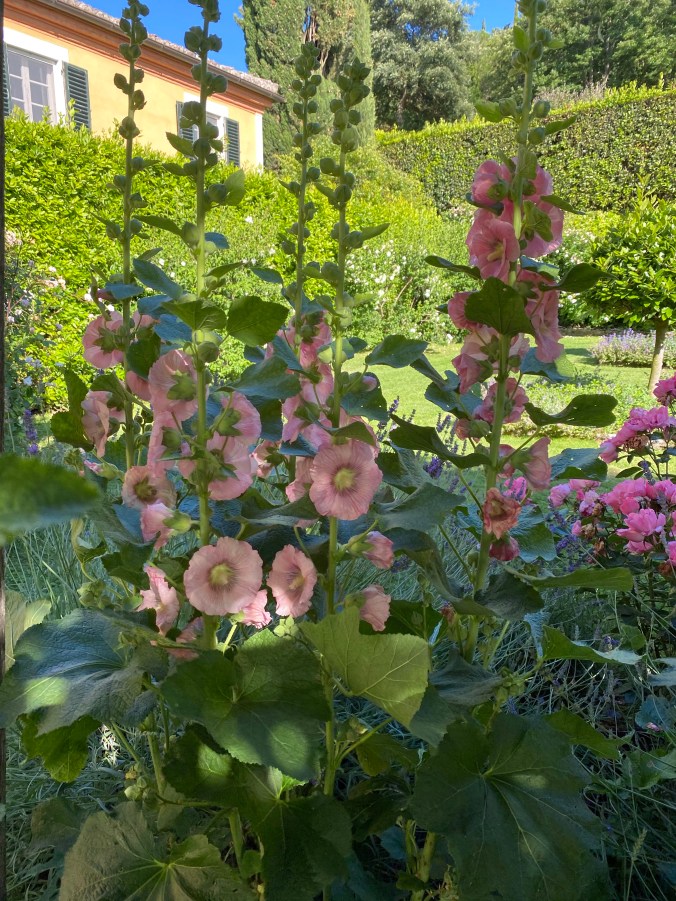


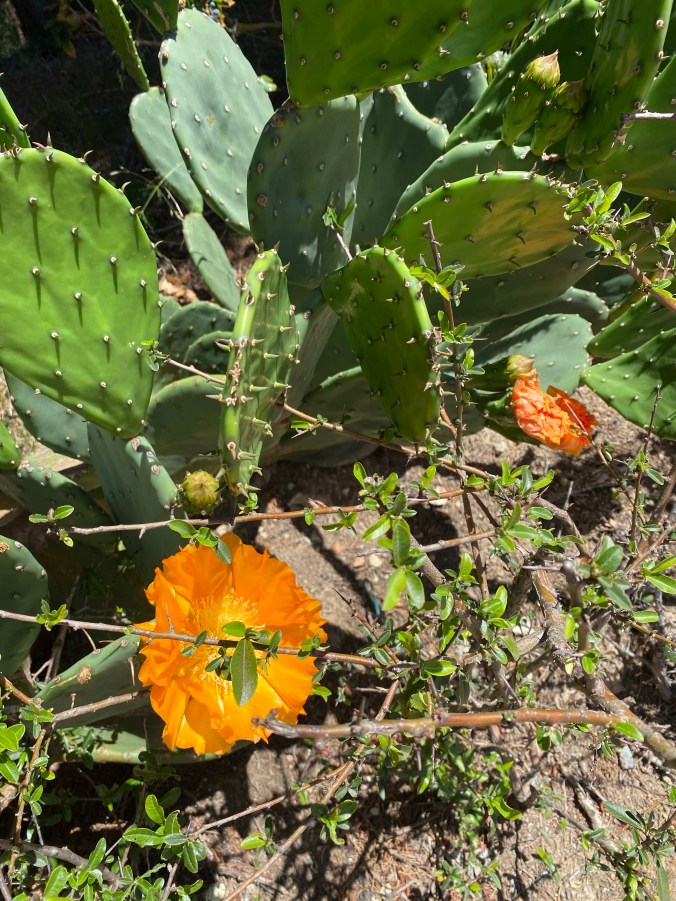
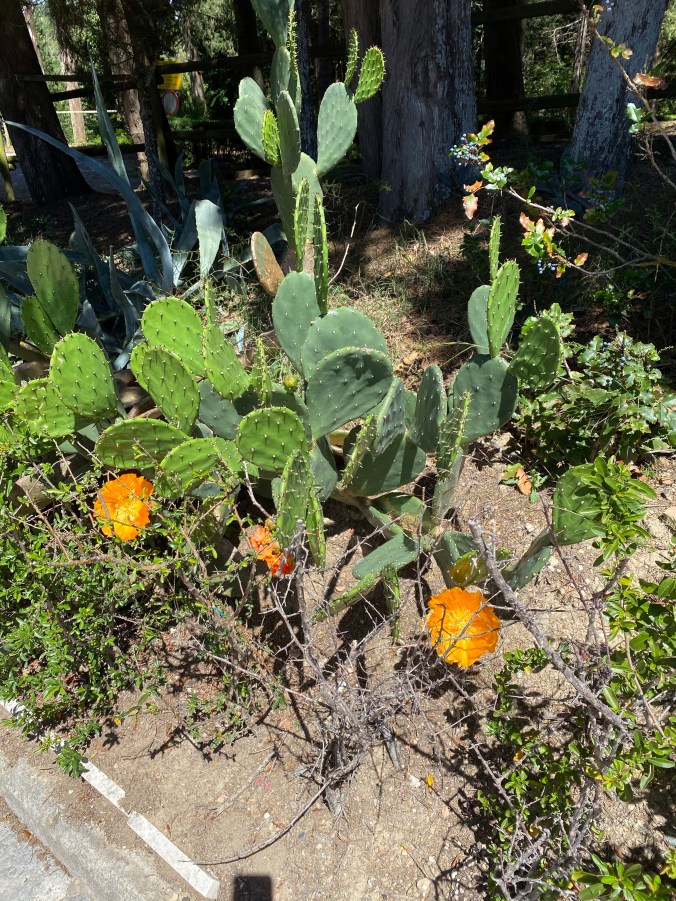




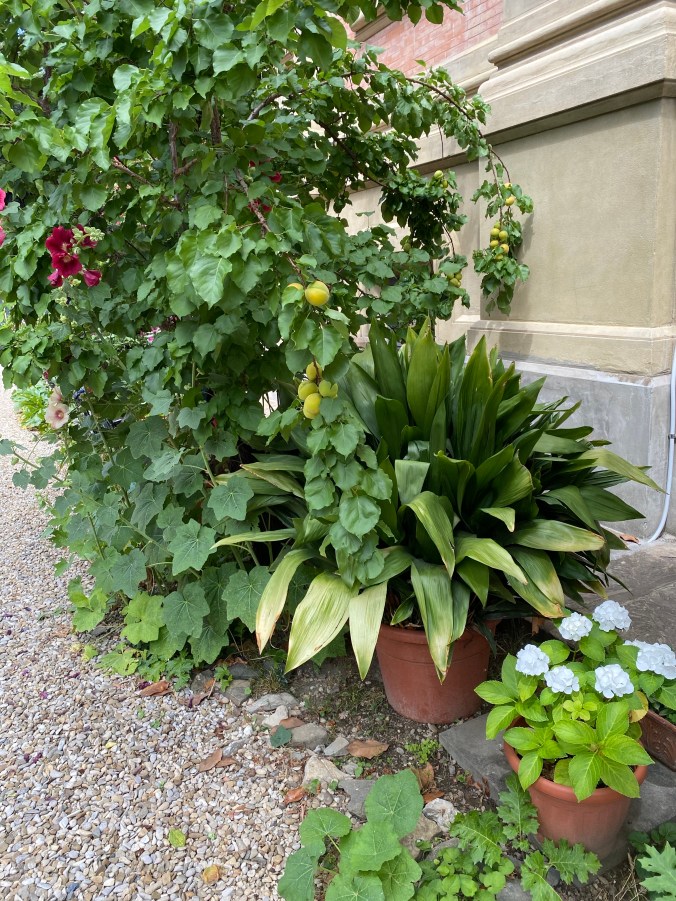

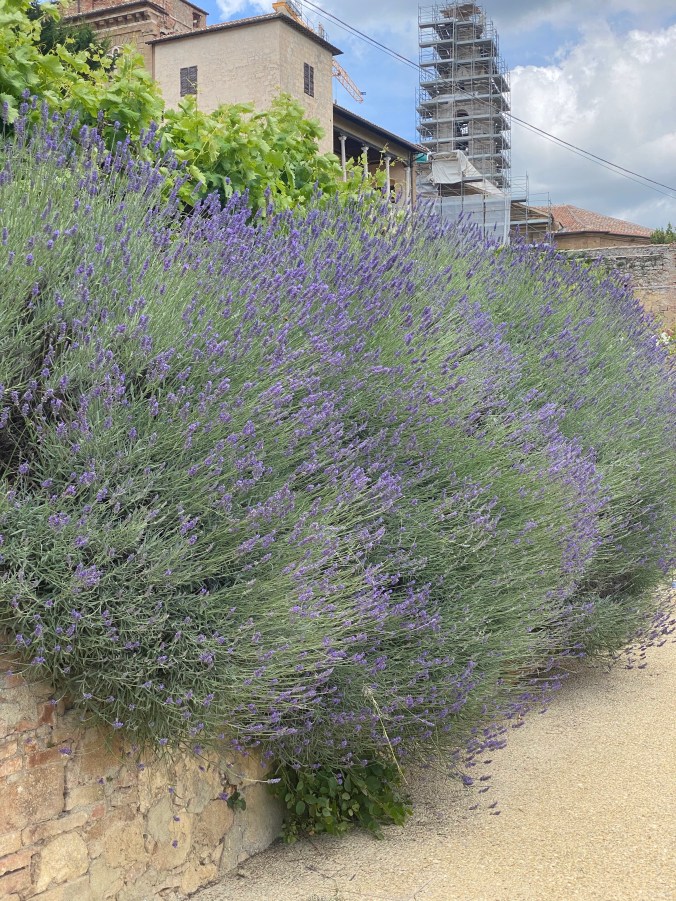

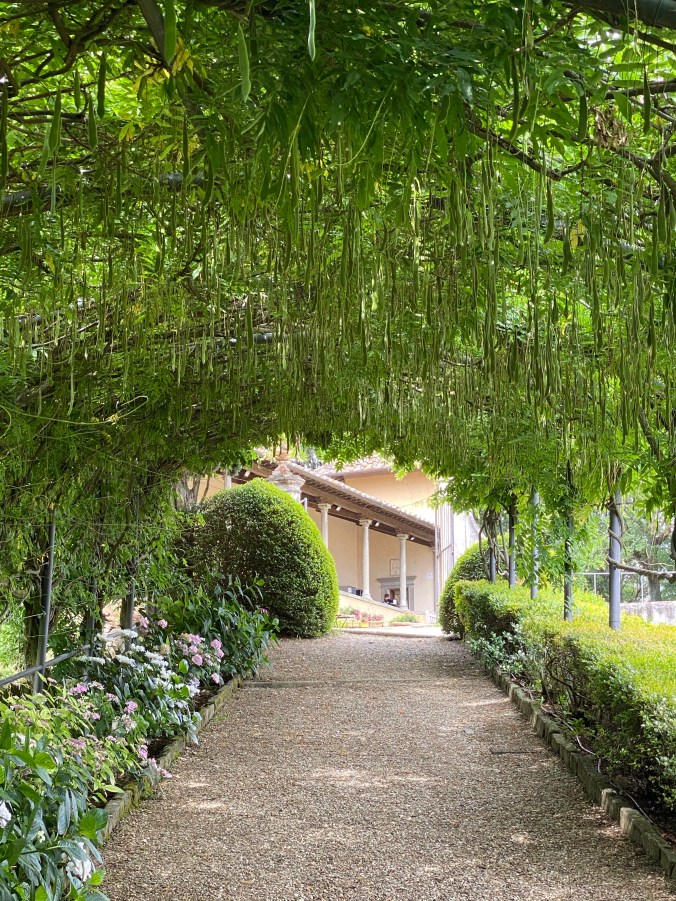
Little by little, Florence is returning to normal after the pandemic of Covid. This garden’s reopening was a very welcome moment. The wisteria extravaganza was over, but the garden is beautiful in any state.


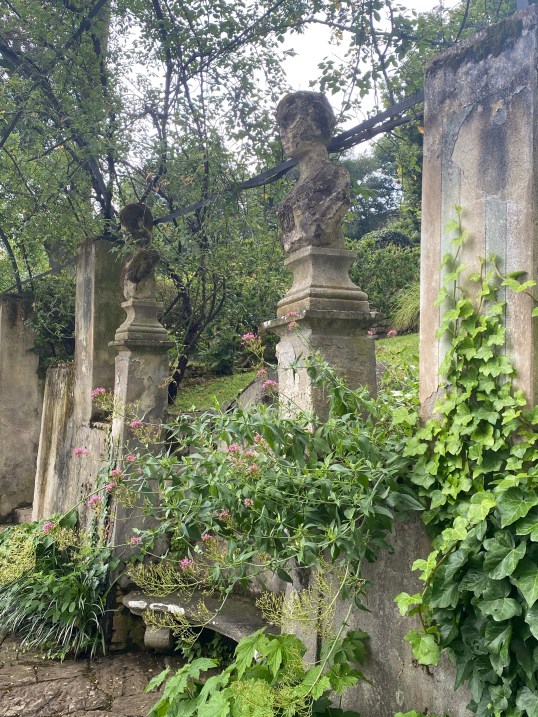


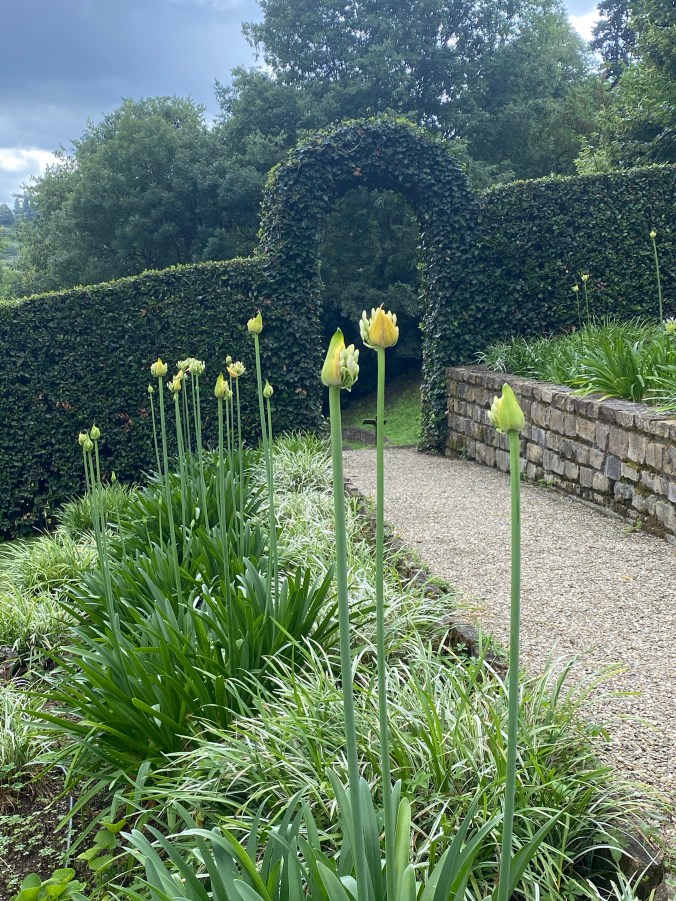


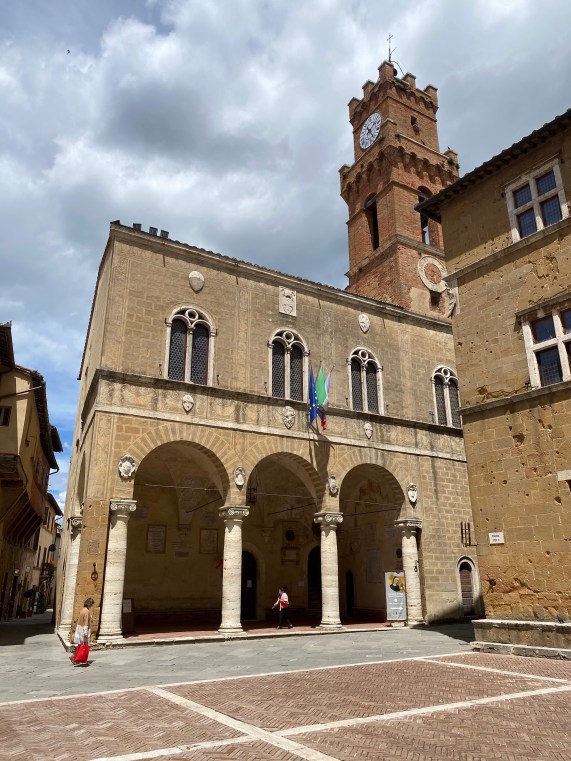
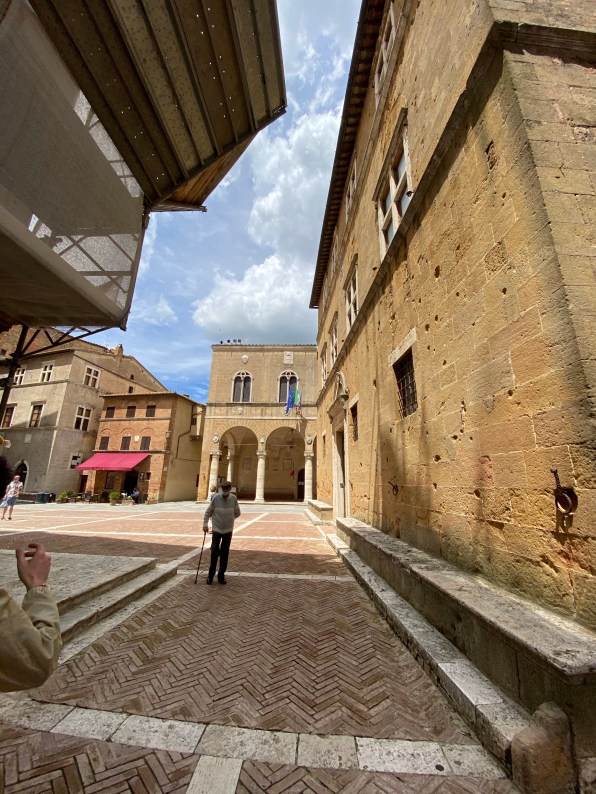
Let’s say you are the Pope. You’re from a small, Medieval village in Tuscany that really isn’t on the map and you want to do something really great for your hometown. In fact, you want to make it an important rest stop on a famous road that leads from Rome to Bologna and points north, or to Rome and Naples and points south. What would you do?
Would you create an “ideal city” and make sure it gets notoriety?
That’s exactly what Pope Pius II did.
Born Enea Silvio Bartolomeo Piccolomini, (18 October 1405 – 14 August 1464), he became the head of the Catholic Church and ruler of the Papal States from 19 August 1458 until his death. During his 6 year reign, he transformed his hometown into a marvelous Renaissance borgo.
You enter the city through this gate:


The picture above tells us that Pienza was destroyed on 15 June 1944 and restored by October 1955. If walls could talk.
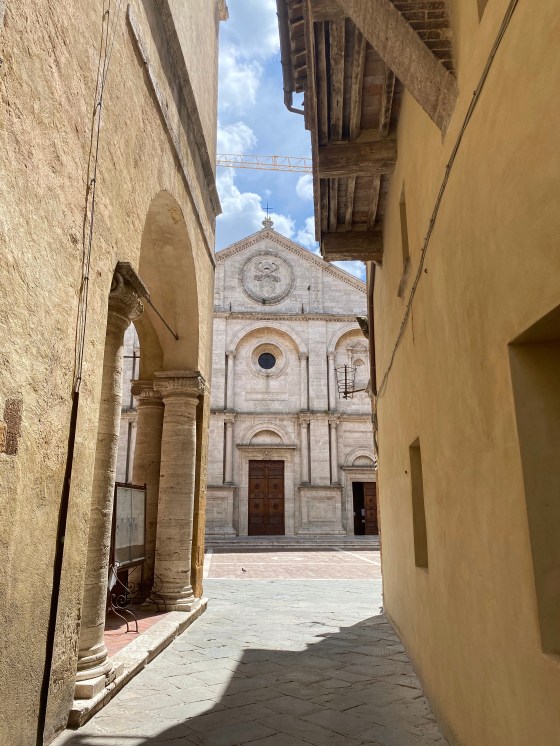
Here is the cathedral Pope Pius II built.









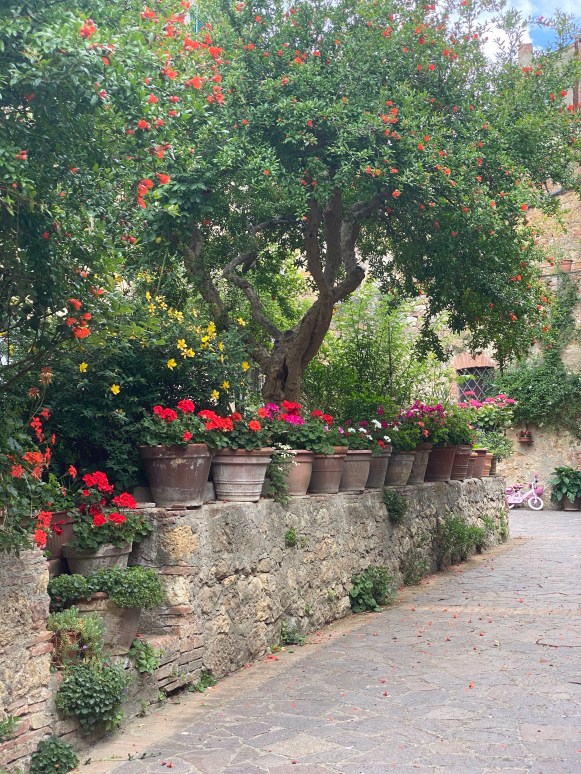


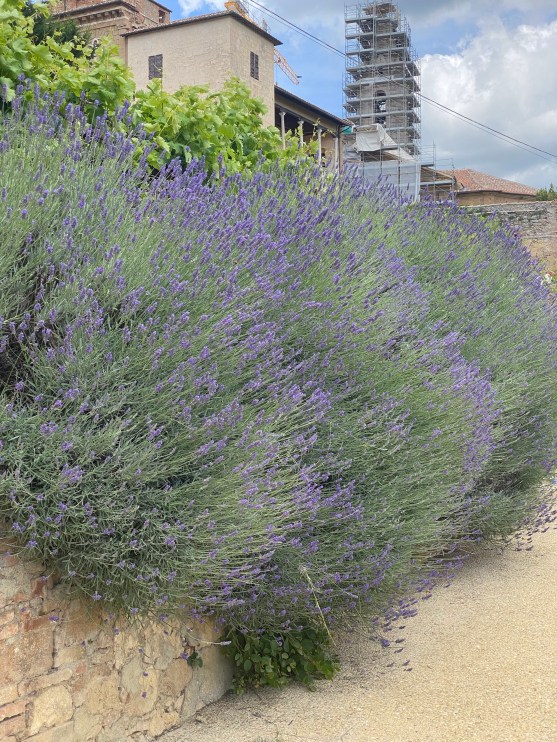


A visit on a gorgeous day to the Abbazia di Monte Oliveto Maggiore in Tuscany is about as good a day trip as I can think of. Leaving Florence on a soft, summer morning, it is a pleasure to drive through beautiful countryside. And once you reach the historic abbey itself, you’ve reached a little piece of heaven.
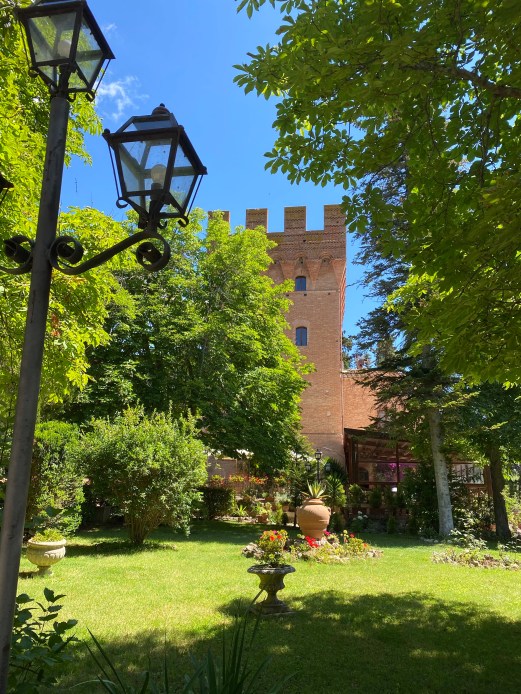
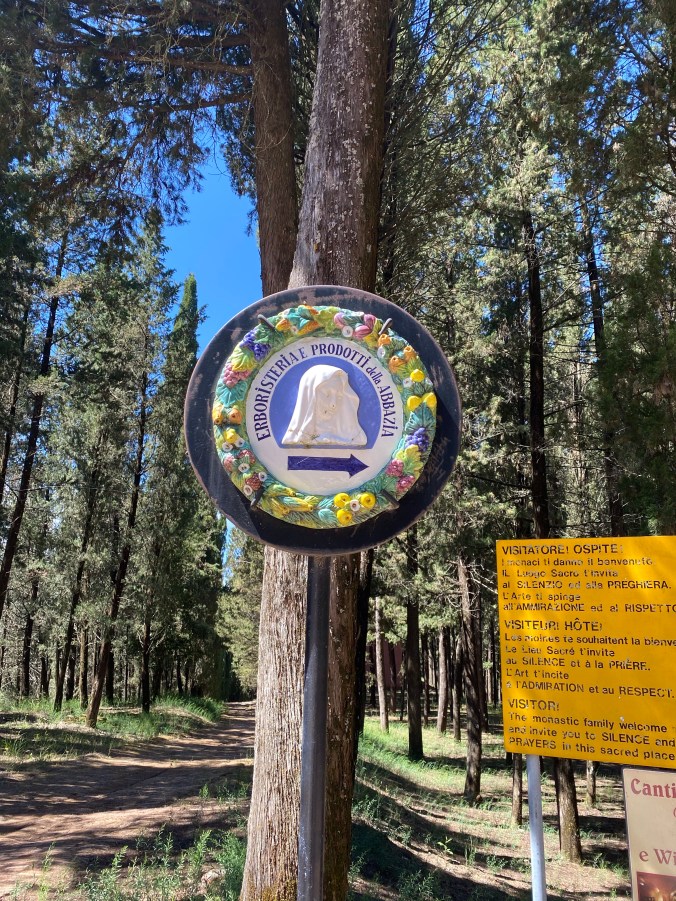

This large Benedictine monastery is constructed mostly of red brick, making it stand out against the grey clayey and sandy soil of the the Crete senesi, which give this area of Tuscany its name.
The territorial abbey’s abbot functions as the bishop of the land within the abbey’s possession, even though he is not consecrated as a bishop. It is also the mother-house of the Olivetans and the monastery later took the name of Monte Oliveto Maggiore (“the greater”) to distinguish it from successive monasteries at Florence, San Gimignano, Naples and elsewhere.
It was founded in 1313 by Bernardo Tolomei, a jurist from a prominent aristocratic family of Siena. By 1320, it was approved by Bishop Guido Tarlati as Monte Oliveto, with reference to the Mount of Olives and in honor of Christ’s Passion. The monastery was begun in 1320, the new congregation being approved by Pope Clement VI in 1344.
The abbey was for centuries one of the main land possessors in the Siena region. On January 18, 1765, the monastery was made the seat of the Territorial Abbacy of Monte Oliveto Maggiore.
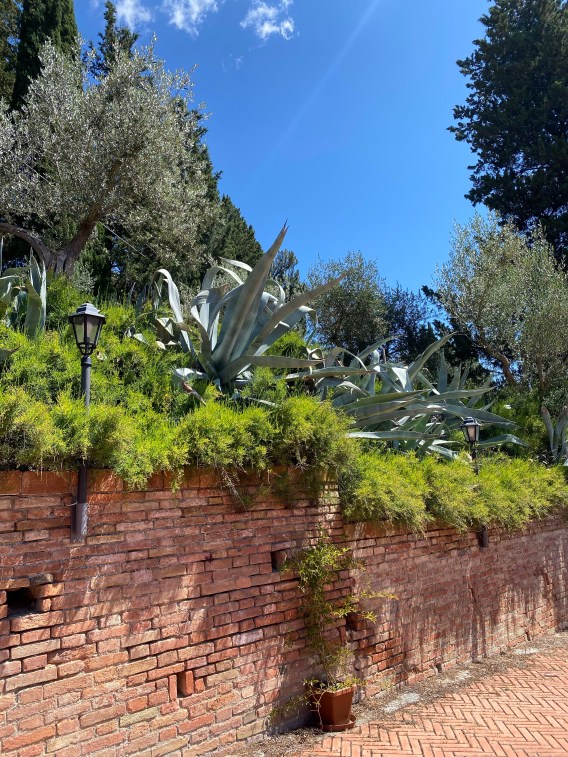
The monastery consists of a medieval palace in red brickwork, surmounted by a massive quadrangular tower with barbicans and merlons. Begun in 1393 as the fortified gate of the complex, it was completed in 1526 and restored in the 19th century. The church’s atrium is on the site of a previous church (1319). The Latin cross formed church was renovated in the Baroque style in 1772 by Giovanni Antinori.
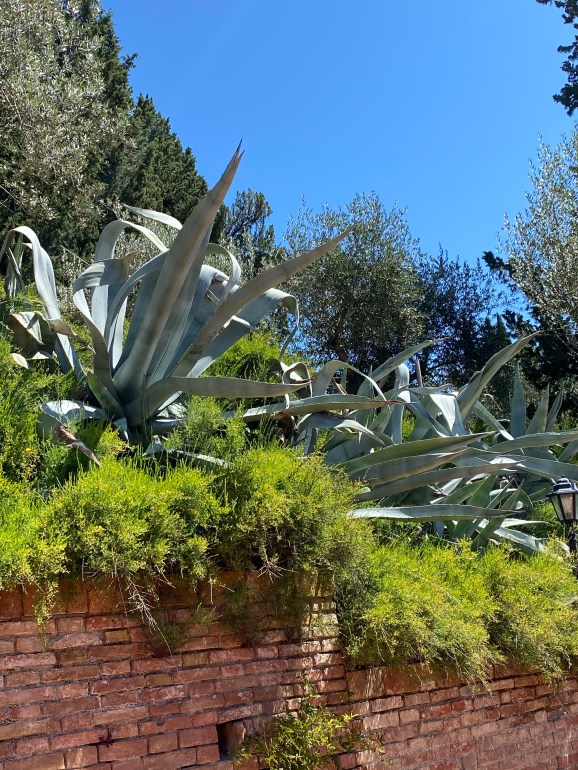
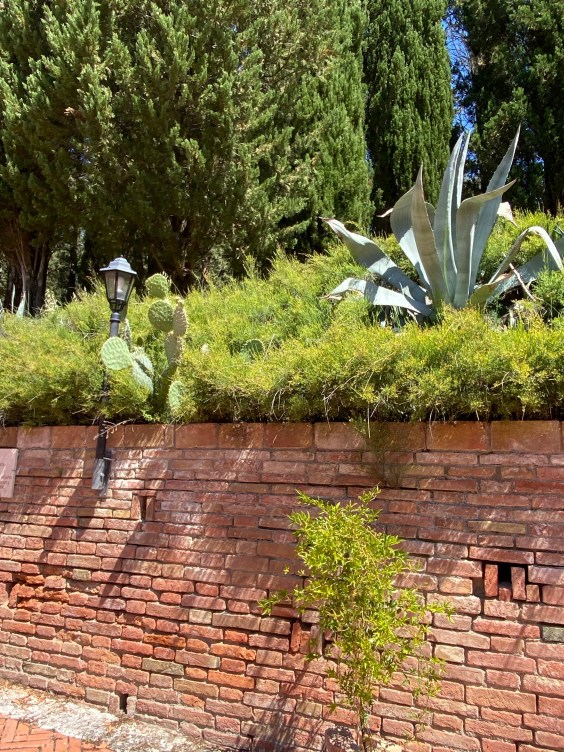
A long alley with cypresses, sided by the botanical garden of the old pharmacy (destroyed in 1896), with a cistern from 1533. At the alley’s end is the bell tower, in Romanesque-Gothic style, and the apse of the church, which has a Gothic façade.
The abbey’s monastic library, housing some 40,000 volumes and incunabula, gives way to the pharmacy, which houses medicinal herbs in a collection of 17th century vases.

For me, the rectangular Chiostro Grande was the highlight of the visit. The fresco cycle that adorns the walls of the lovely cortile was painted by Luca Signorelli (he created 8 lunettes between 1497-98) and Sodoma, who completed the cycle after 1505. Sodoma painted 26 of the lunettes.
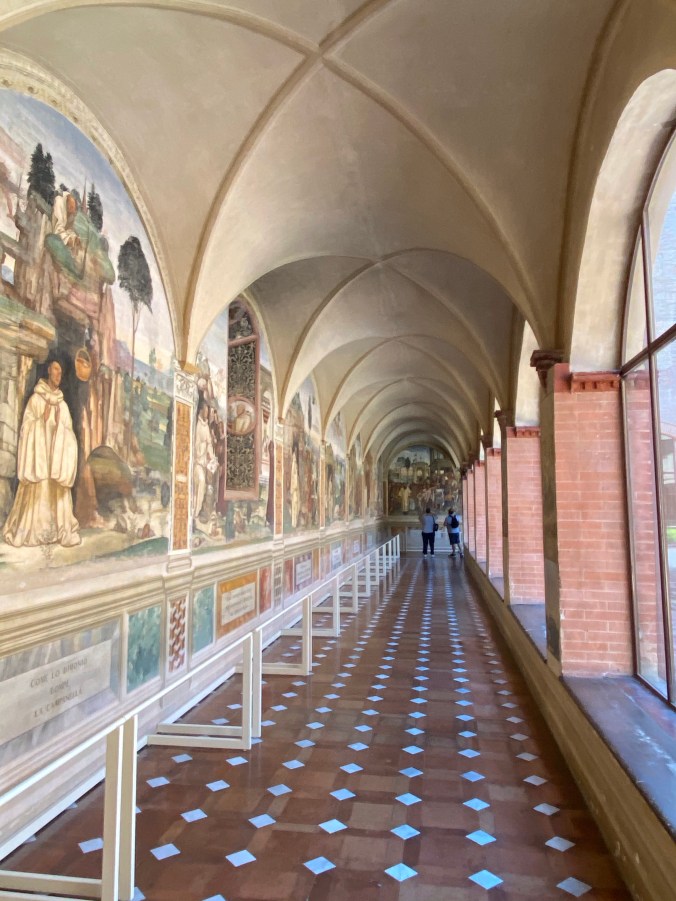
The cloister was constructed between 1426 and 1443. The notable fresco cycle of the Life of St. Benedict was painted between 1497 and 1510 by Luca Signorelli and il Sodoma.
Wikipedia has an excellent article on these frescoes, telling you the entire program of the frescoes and which artist painted which scenes.
https://it.wikipedia.org/wiki/Storie_di_san_Benedetto_di_Monte_Oliveto_Maggiore
Luca Signorelli (c. 1445-1523) was an Italian Renaissance painter who was noted in particular for his draftsmanship and his deft handling of foreshortening. His massive frescoes of the Last Judgment (1499–1503) in Orvieto Cathedral are considered his masterpiece. Considered to be part of the Tuscan school, Signorelli also worked extensively in Umbria and Rome.
In the Monastery of Monte Oliveto Maggiore Signorelli painted eight frescoes, forming part of a vast series depicting the life of St. Benedict; they are not in great condition.

Luca Signorelli, dettaglio di San Benedetto rimprovera due monaci che hanno violato la Regola
Il Sodoma (1477 – 1549) was the strange nickname given to the Italian Renaissance painter Giovanni Antonio Bazzi. Il Sodoma painted in a manner that superimposed the High Renaissance style of early 16th-century Rome onto the traditions of the provincial Sienese school; he spent the bulk of his professional life in Siena, with two periods in Rome.
Sodoma was one of the first to paint in the style of the High Renaissance in Siena. His first important works were these frescoes in the Benedictine monastery of Monte Oliveto Maggiore, on the road from Siena to Rome. The frescoes illustrate the life of St Benedict in continuation of the series that Luca Signorelli had begun in 1498. Gaining fluency in the prevailing popular style of Pinturicchio, Sodoma completed the set in 1502 and included a self-portrait with badgers and ravens.
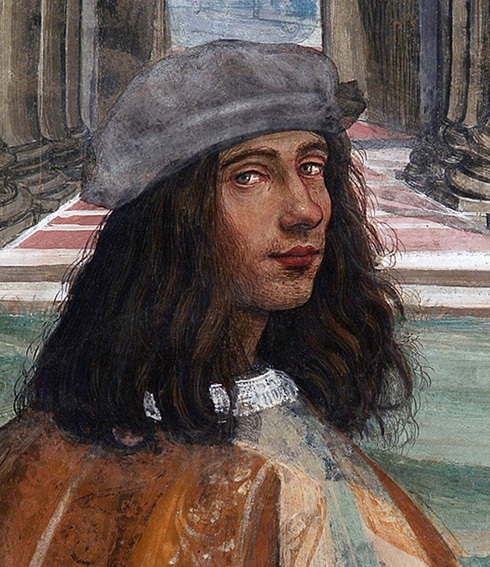
Autoritratto del Sodoma in un dettaglio da uno degli affreschi delle Storie di san Benedetto di Monte Oliveto Maggiore
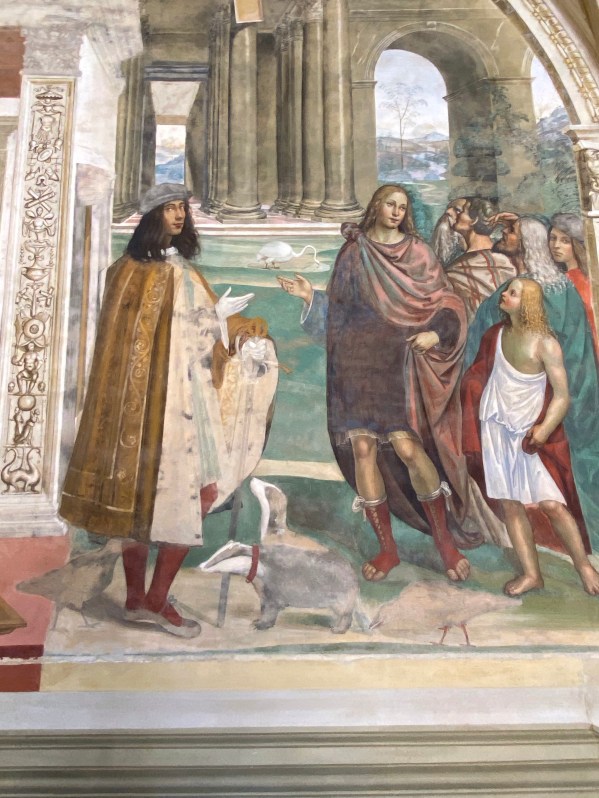
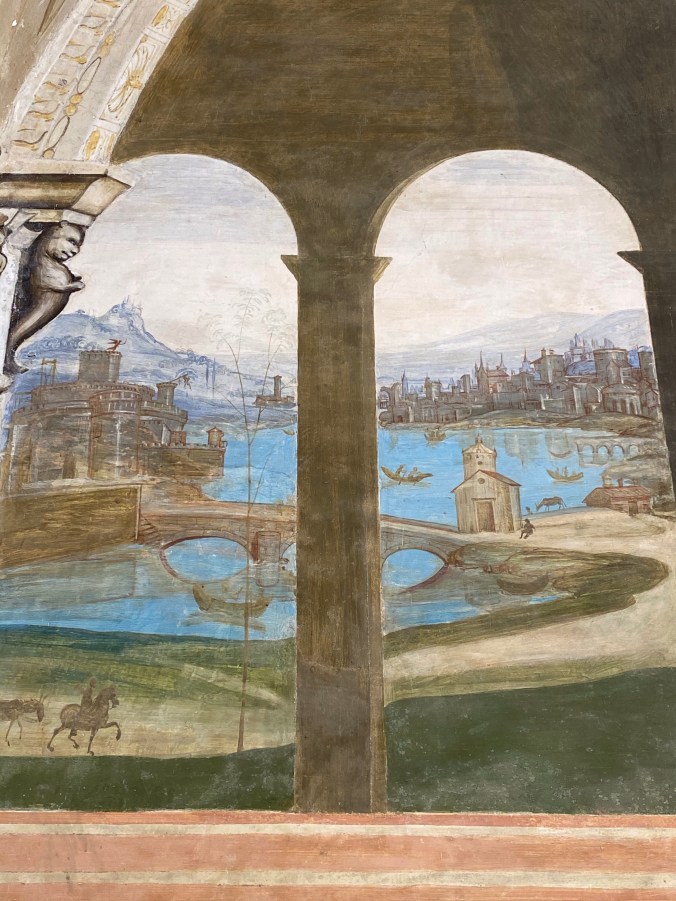
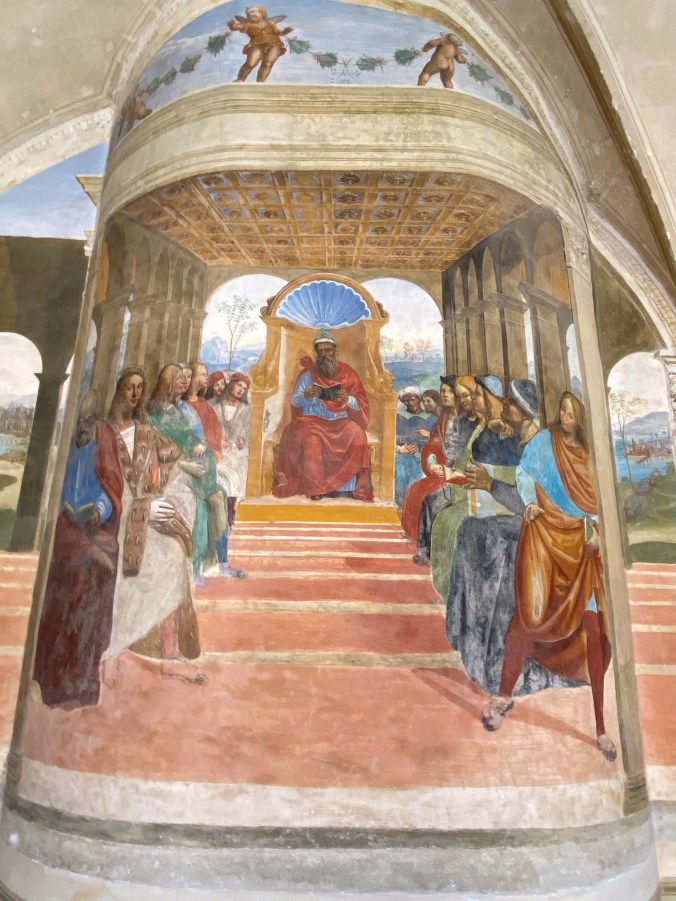
The fresco above is by Sodoma, showing Benedict leaving the Roman school.
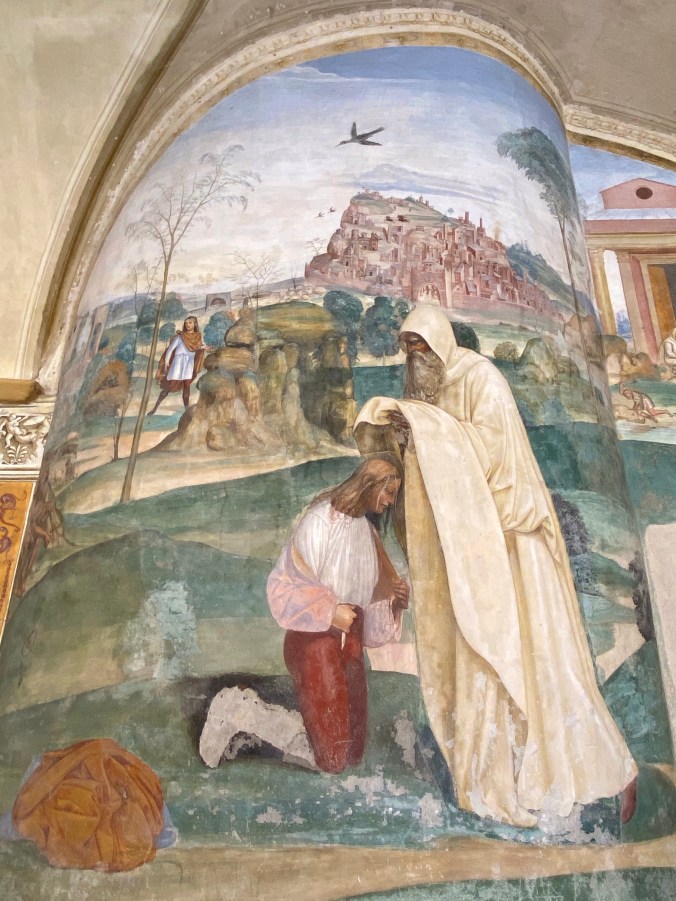
The fresco above is by Sodoma. It shows a Roman monk giving the hermit habit to Benedict.
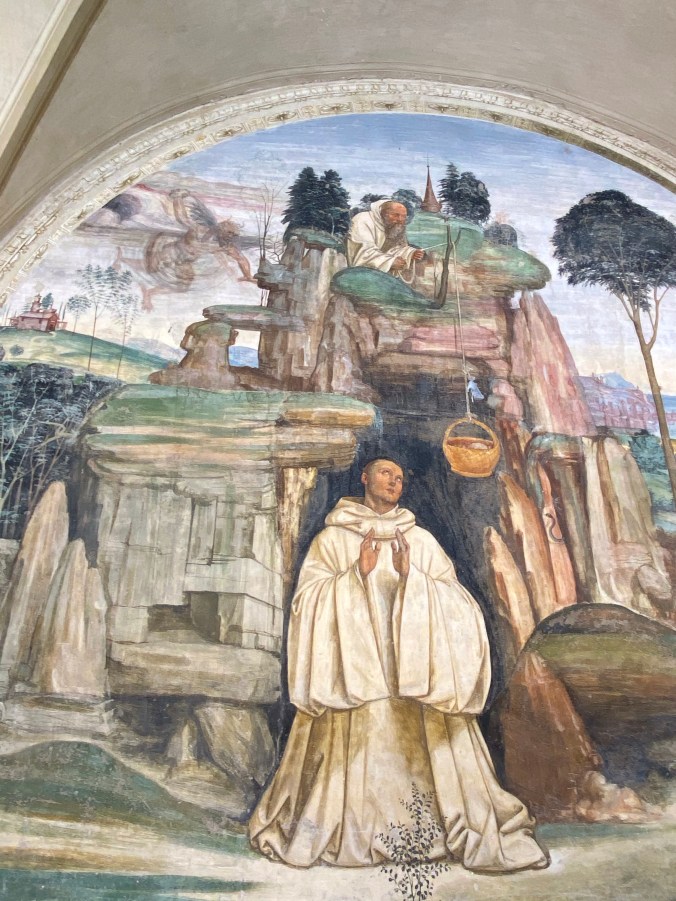
The fresco above, by Sodoma, shows the devil breaking the bell.
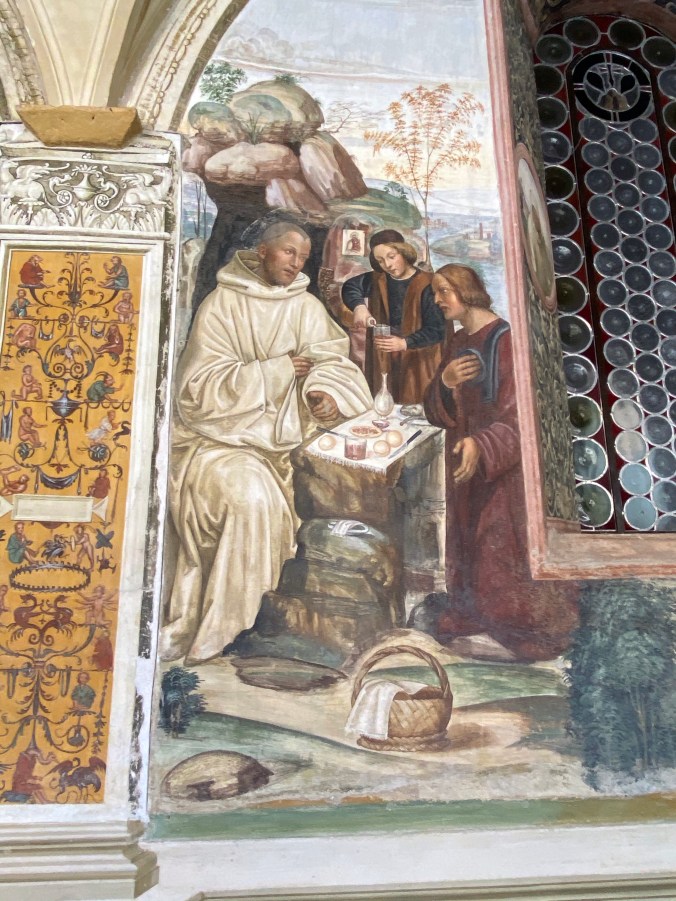
Above, by Sodoma, shows Benedict as a god-inspired priest bringing food to blessed on Easter.

Love the window in this lunette.
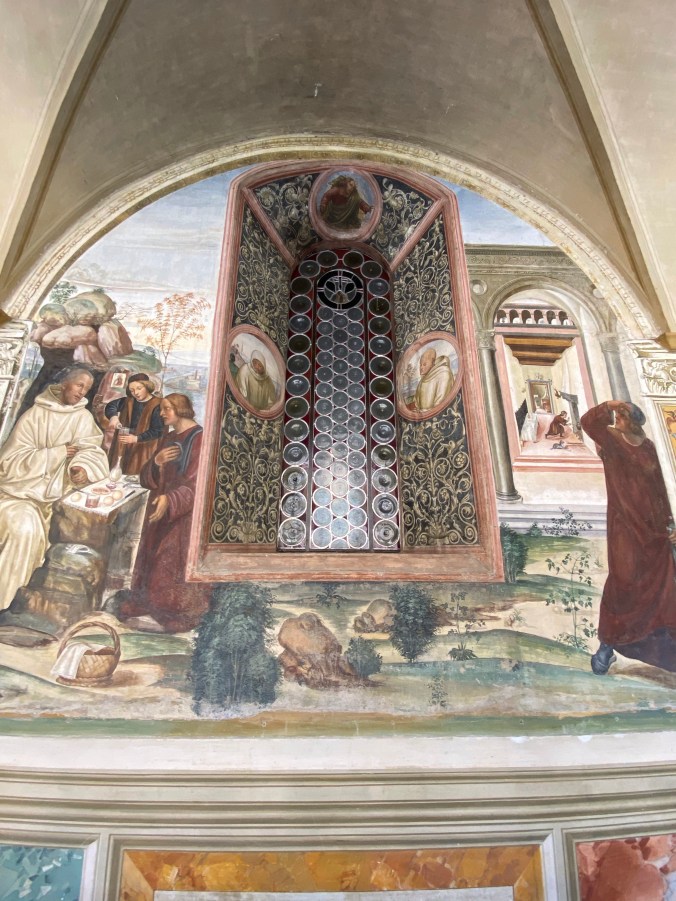
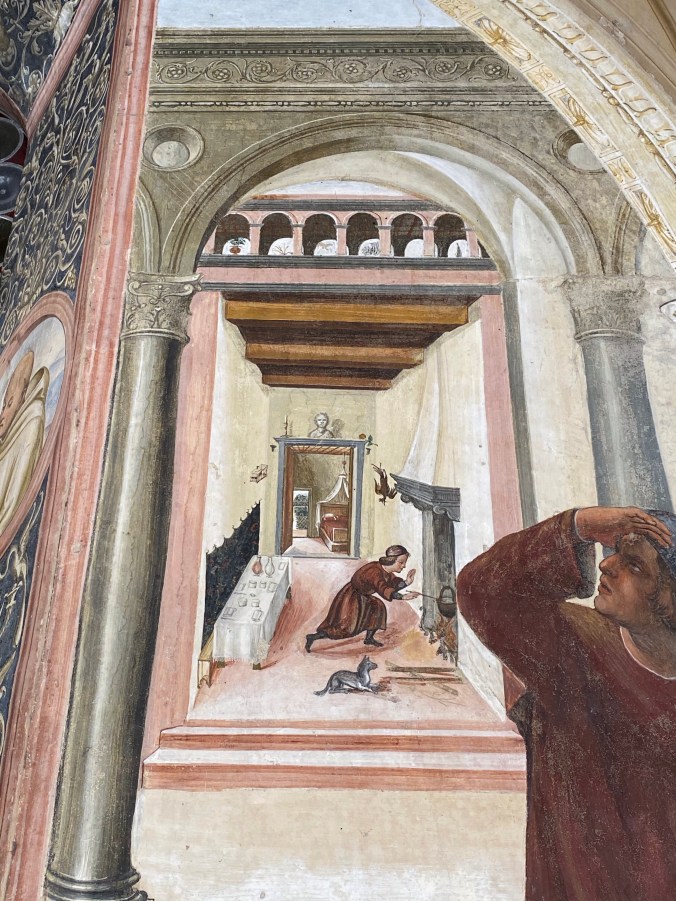
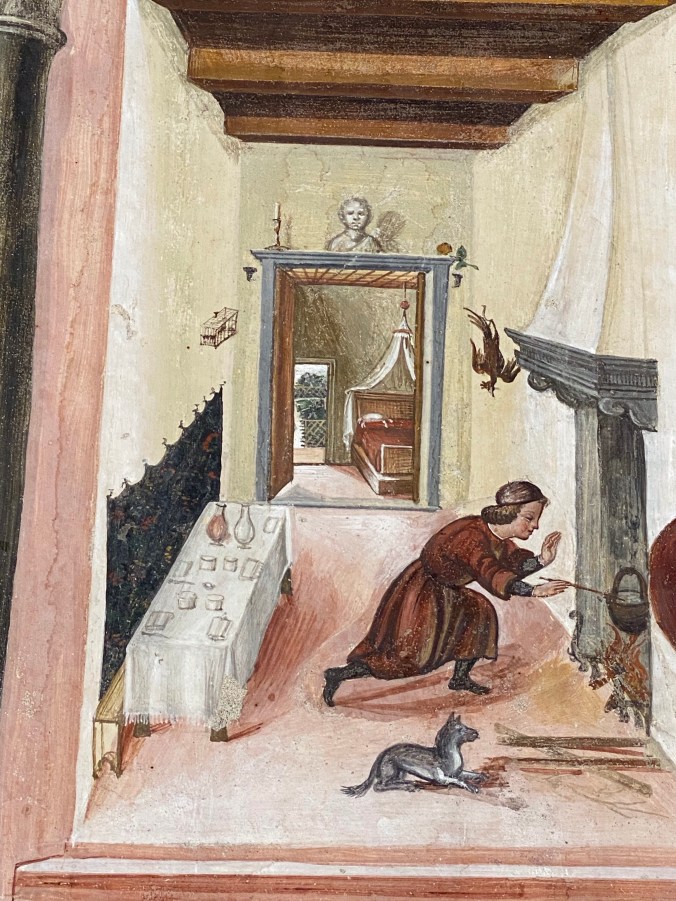
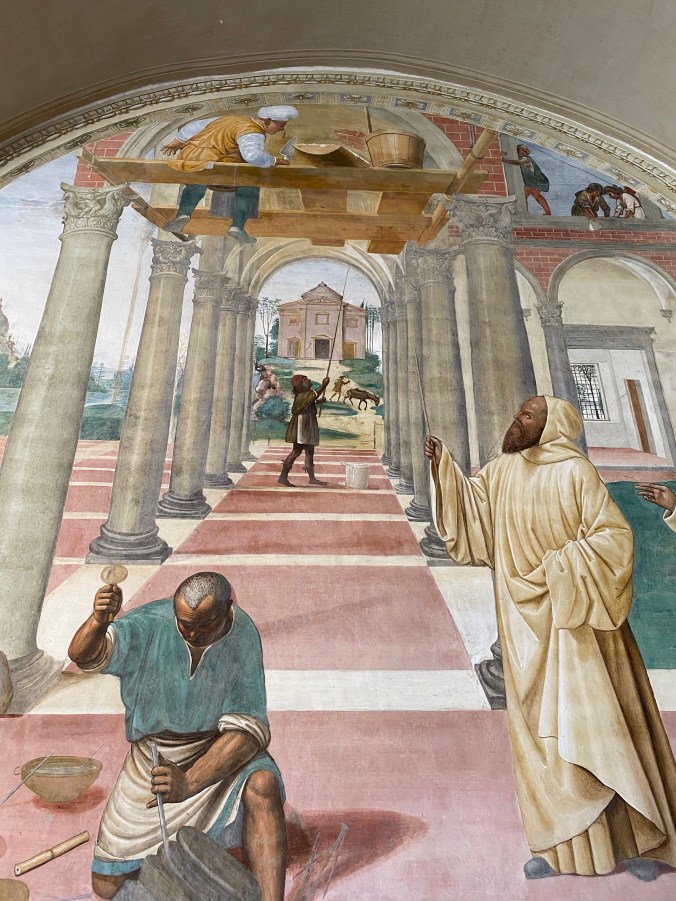
In this lunette, above and below, painted by Sodoma, shows How he blessed the building of twelve monasteries.
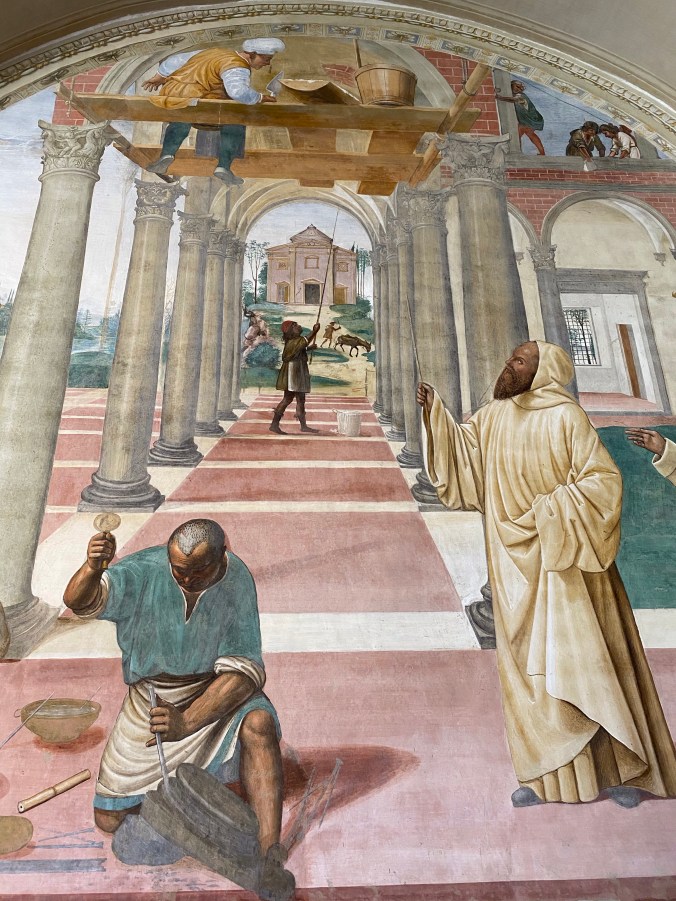
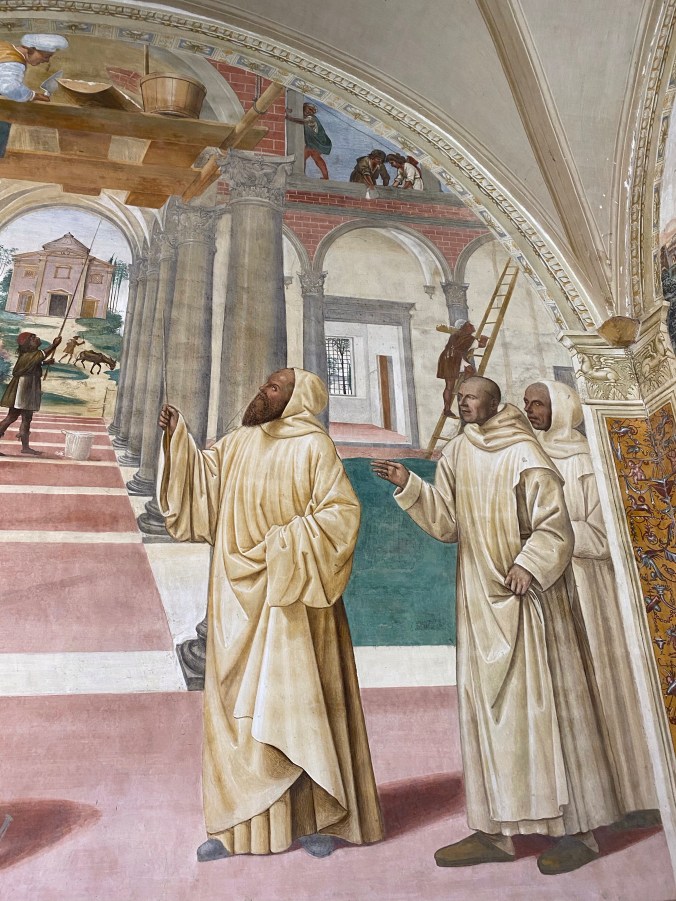
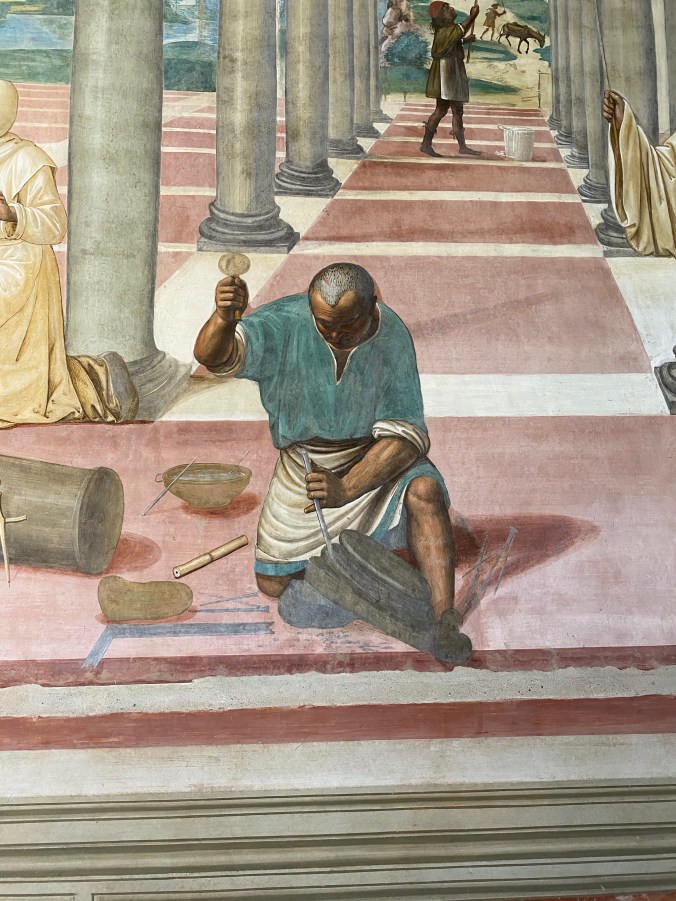
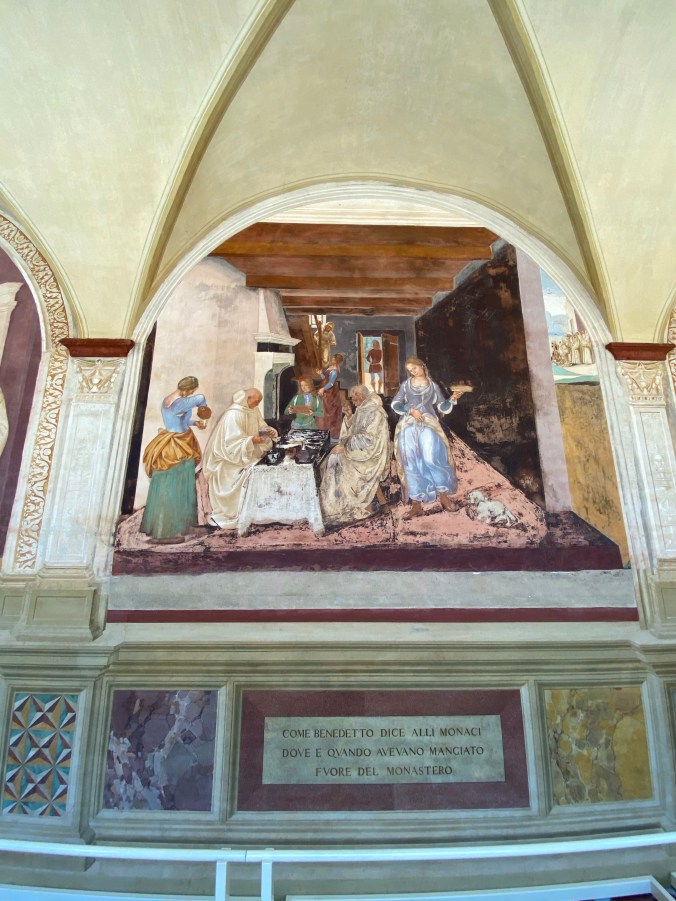
The painting below is by Signorelli and depicts Benedict talking to the monks after they had eaten outside the monastery
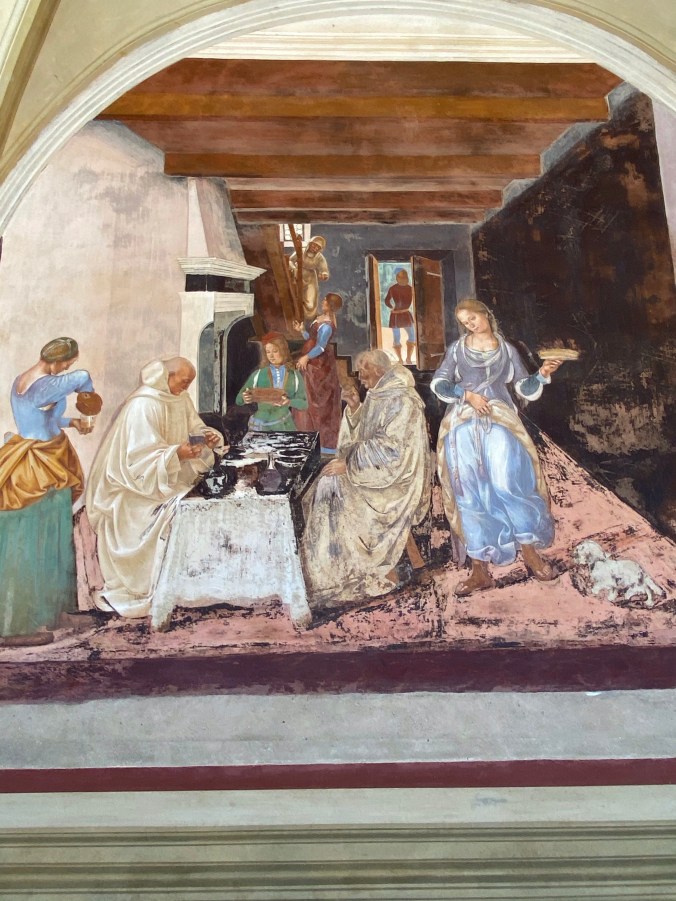
Below: How Benedict discovers Totila’s fiction. In the scene Riggo is seen, disguised as Totila to deceive Benedetto, who arrived in front of the figure of the saint who invites him to take off his clothes; the crowd around composed of monks and warriors expresses his amazement; in the background Riggo tells the story to Totila. It is a crowded scene and set to a theatrical taste [2].
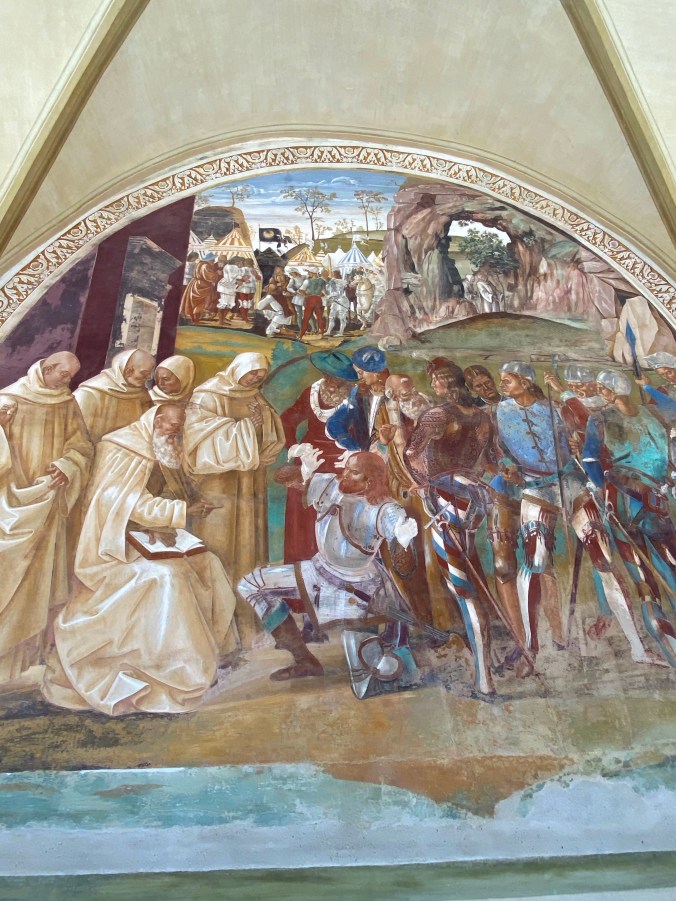
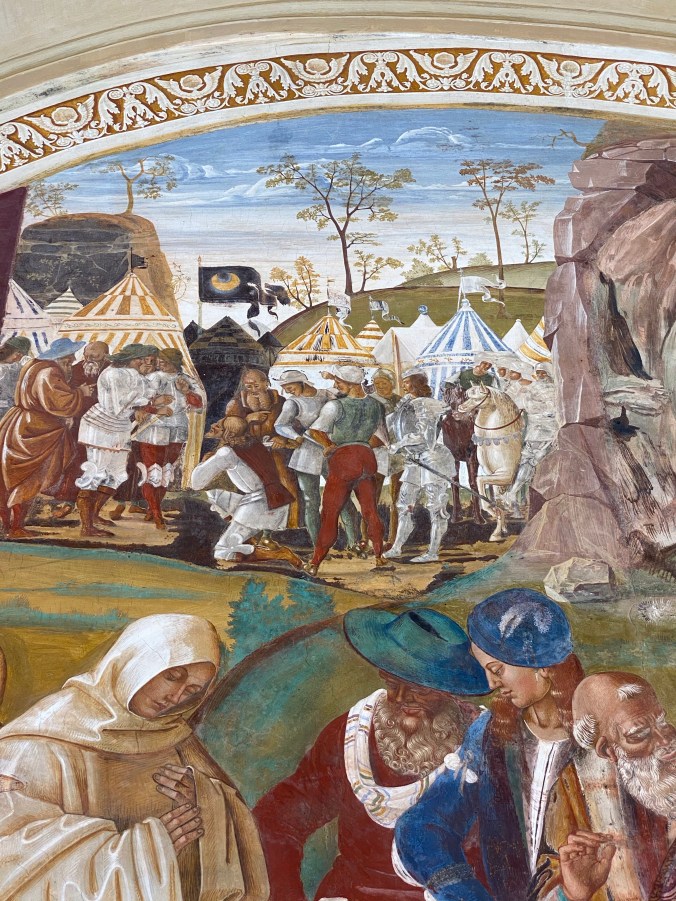
In the scene Riggo is seen, disguised as Totila to deceive Benedetto, who arrived in front of the figure of the saint who invites him to take off his clothes; the crowd around composed of monks and warriors expresses his amazement; in the background Riggo tells the story to Totila. It is a crowded scene and set to a theatrical taste [2].
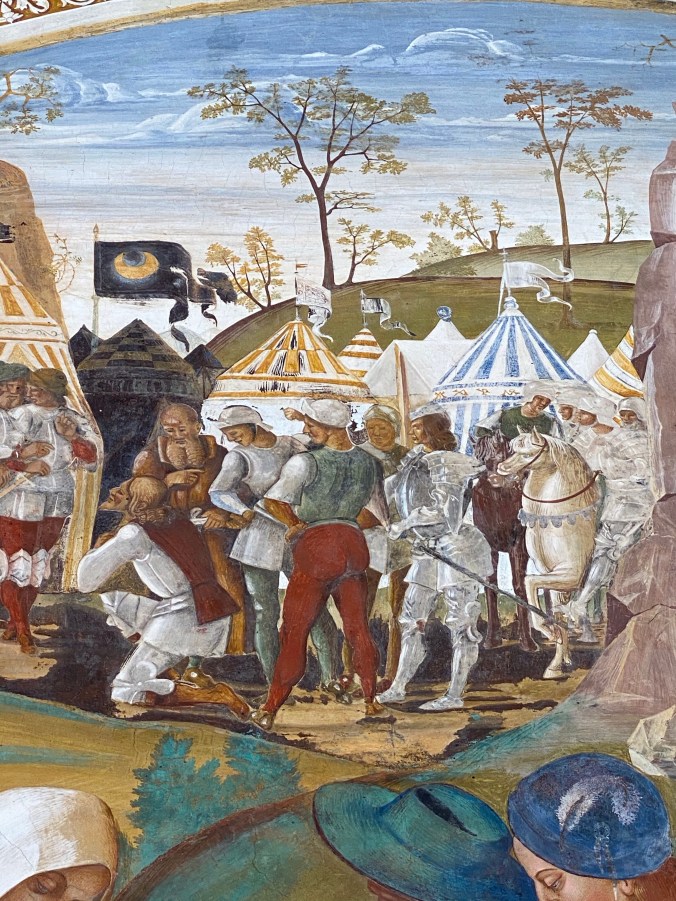
How Benedict recognizes and welcomes Totila


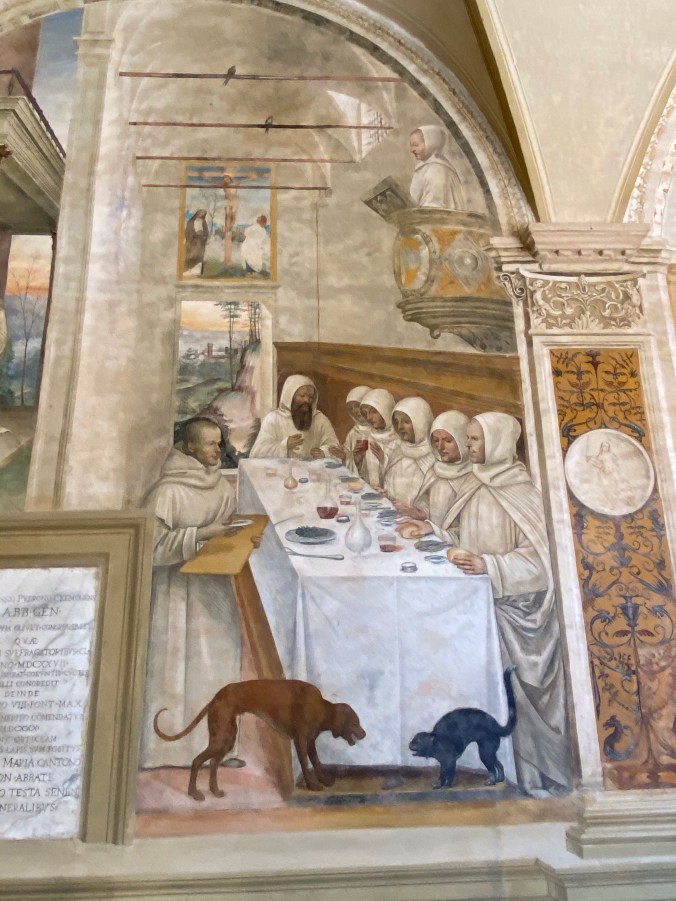
How Benedict gets plenty of flour and restores the monks


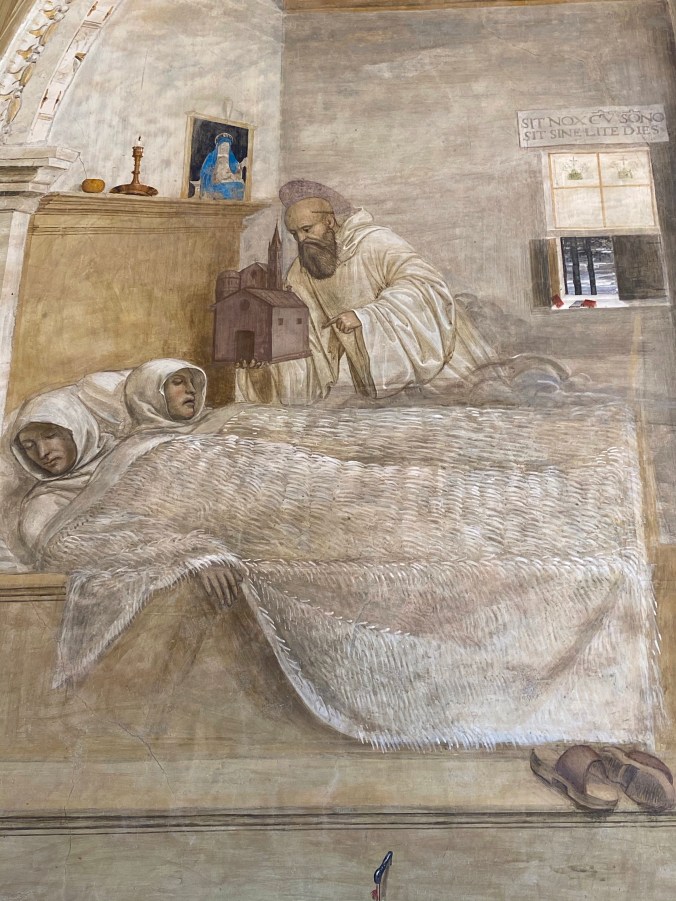
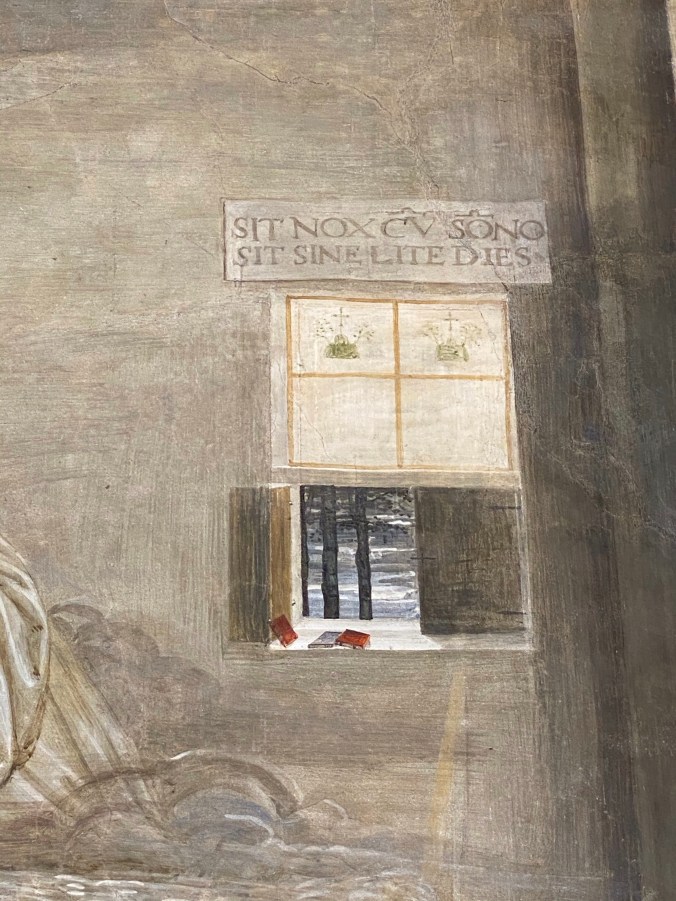
How Benedict appears to two distant monks and he designs the construction of a monastery.
The scene takes place in two stages. On the left the saint appears to one of the two sleeping monks while on the right the work is accomplished

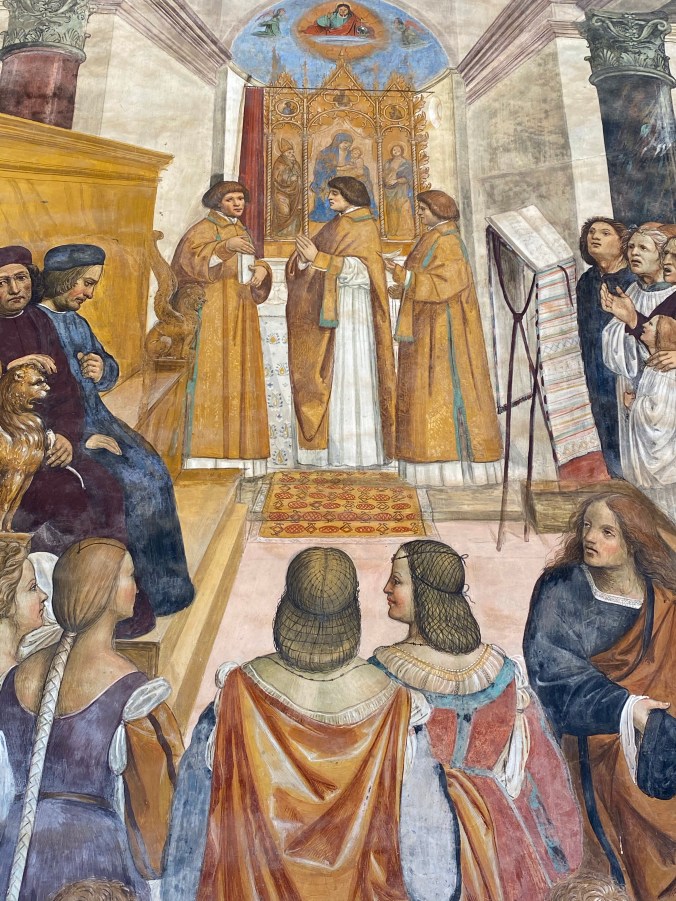
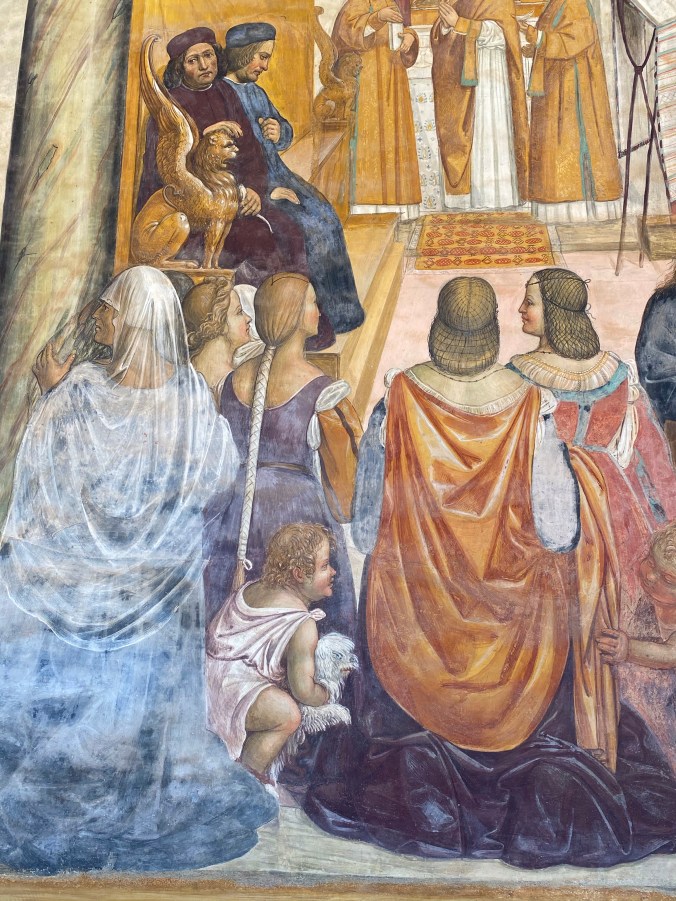
Like Benedict, he excommunicates two nuns and then acquits them that they were dead
Inside a church during the celebration of a mass; to the deacon’s words: If anyone is excommunicated, go out, a woman sees two nuns excommunicated by Saint Benedict come out of the tomb. On the right, in small, the saint reconciles the nuns

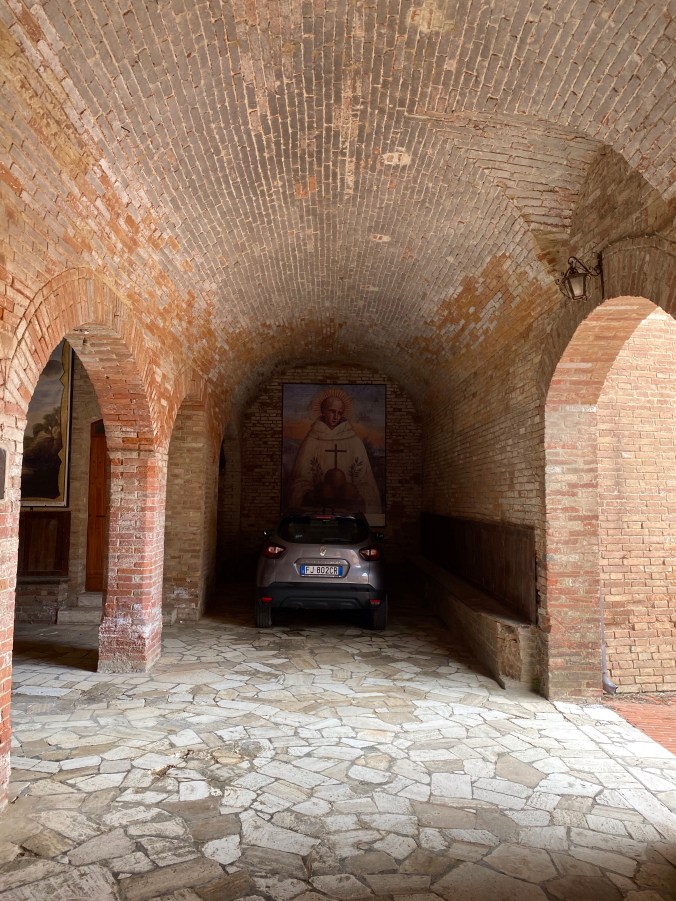
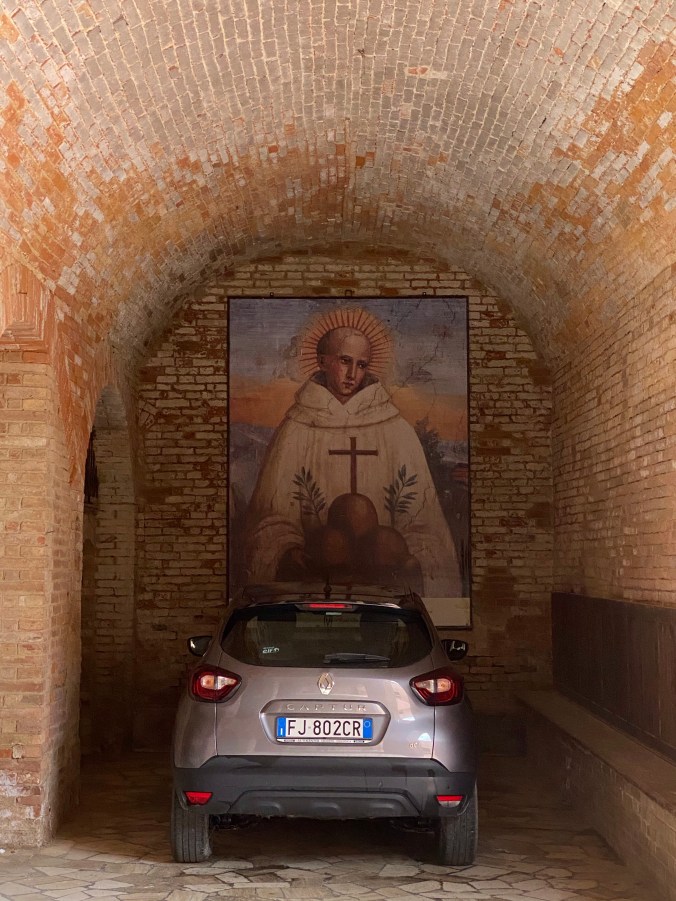
And, last, but not least, the modern incursion into the abbey. A garage where there used to be a stable. Complete with frescoes.


You must be logged in to post a comment.