The wifi at my hotel is not working well. I’ll fill the pictures in later.
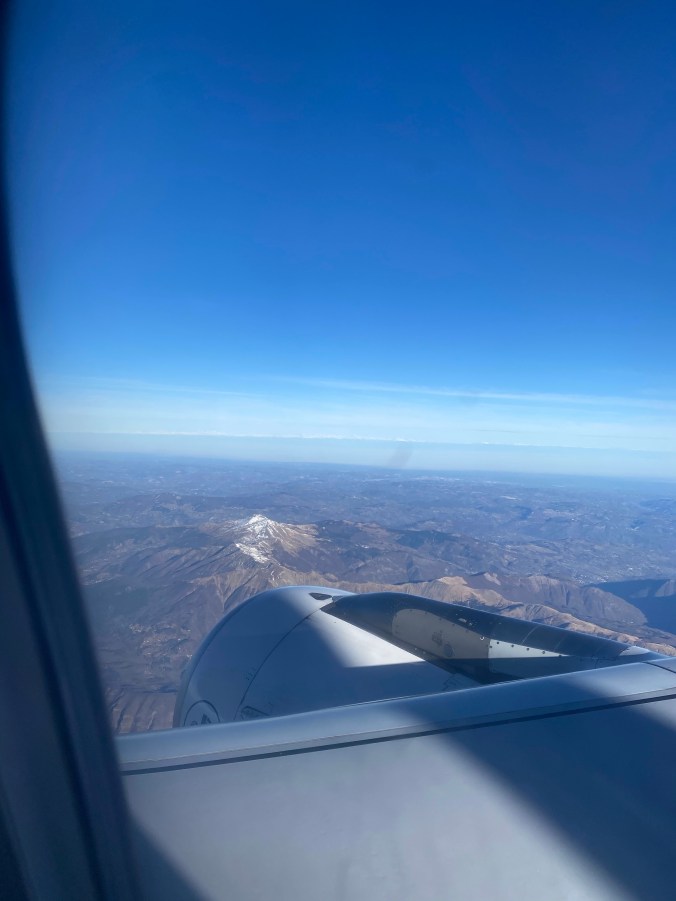
The wifi at my hotel is not working well. I’ll fill the pictures in later.
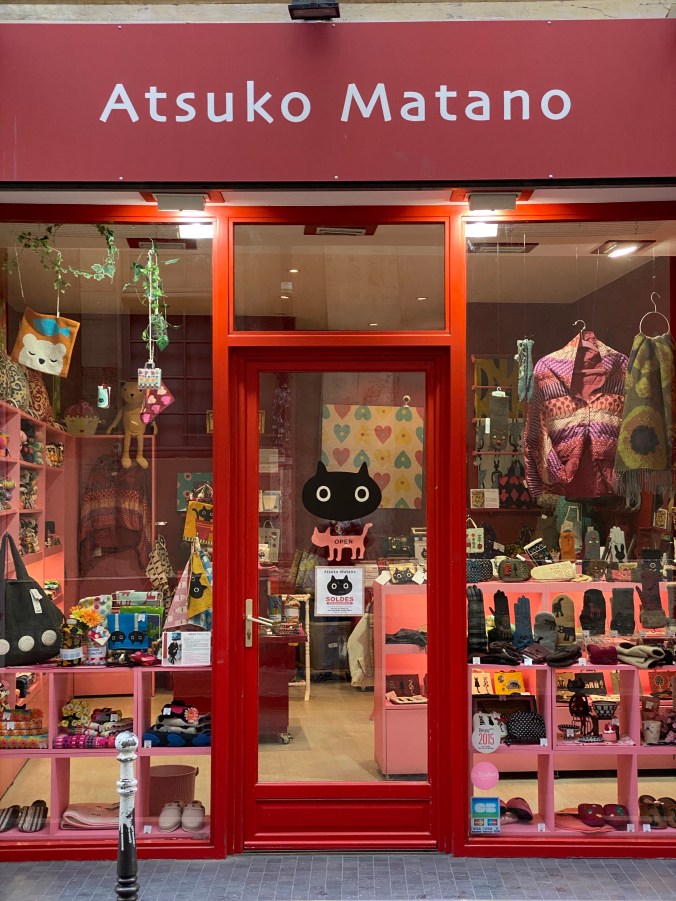
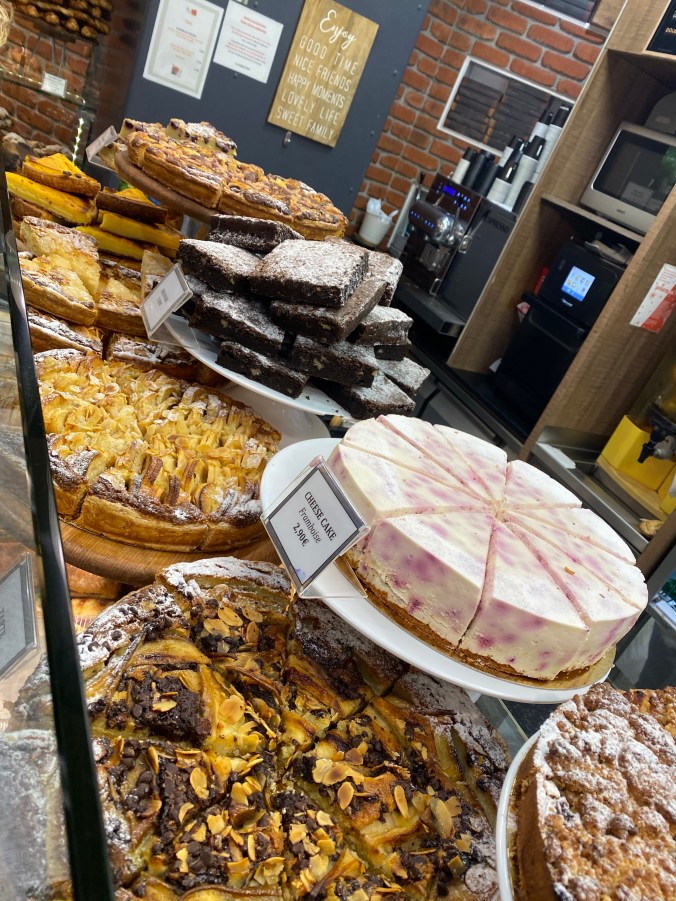
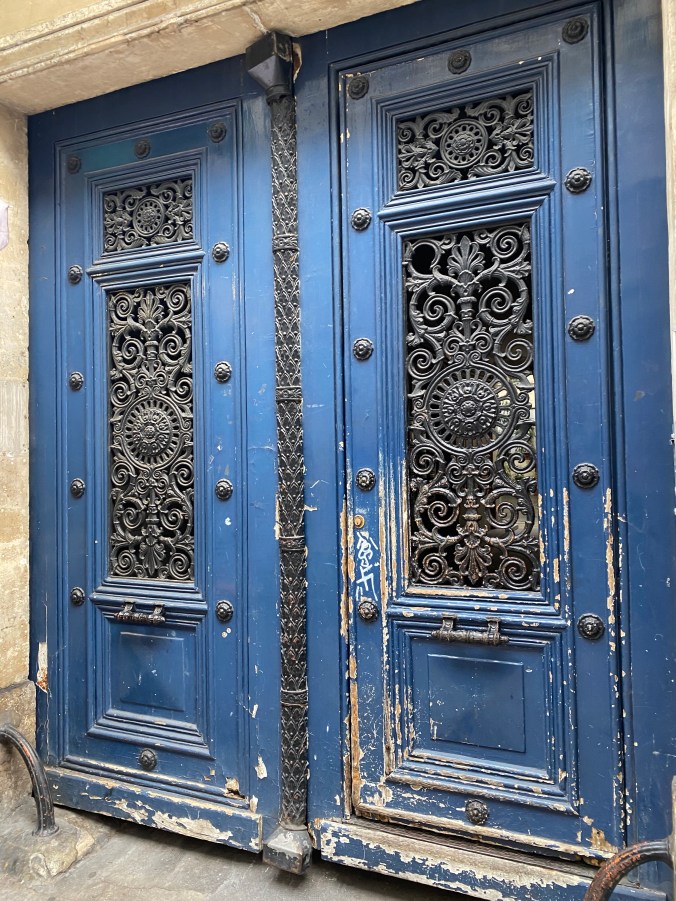
The Canal Saint-Martin is a 2.86 mile long canal in Paris, connecting the Canal de l’Ourcq to the river Seine. Almost half of the canal, the section between the Rue du Faubourg du Temple and the Place de la Bastille, runs below the surface.
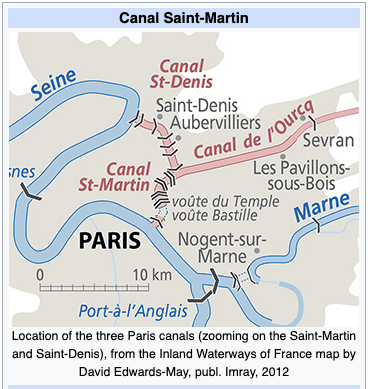
Gaspard de Chabrol, the prefect of Paris, proposed building a canal from the river Ourcq, 100 km northeast of Paris, to supply the city with fresh water to support the growing population and help avoid diseases such as dysentery and cholera, while also supplying fountains and allowing the streets to be cleaned. Construction of the canal was ordered by Napoleon I in 1802; it was finished in 1825 and was funded by a new tax on wine.
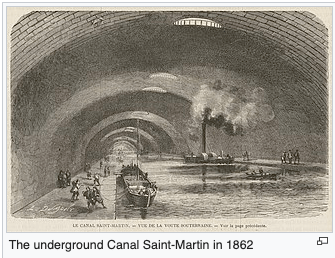
The canal was also used to supply Paris with grain, building materials and other goods, carried on canal boats. Two ports were created on the canal in Paris to unload the boats: Port de l’Arsenal and the Bassin de la Villette.
By the 1960s, traffic had dwindled to a trickle and the canal narrowly escaped being filled in and paved over for a highway.
If you’ve seen the very charmant Amélie, Jean-Pierre Jeunet’s 2001 movie, you’ll be interested to know that the Canal St-Martin forms the backdrop for some of the film’s most atmospheric scenes, including the iron footbridges and tree-shaded quays. Nowadays, this gentrifying, 19th-century waterway draws a trendy crowd to its shabby-chic bars and appetizing bistros – starting with Chez Prune.
Once you’ve crossed the quirky 1885 hydraulic lift bridge, pont de Crimée, you’re in Parc de la Villette. Futuristic and cutting-edge, this is where you can visit major science and music museums, picnic on the lawns (especially during the summer open-air film festival) and take in concerts at big venues.
https://theculturetrip.com/europe/france/paris/articles/the-history-of-paris-canals-in-1-minute/
Quando tutto era più sicuro! Gennaio 1953, questi signori stanno collaudando le panchine della stazione!
When everything was safer! January 1953, these gentlemen are testing the benches of the station !
Wow. Just wow. I don’t know why I never paid a visit to this astounding place before now!


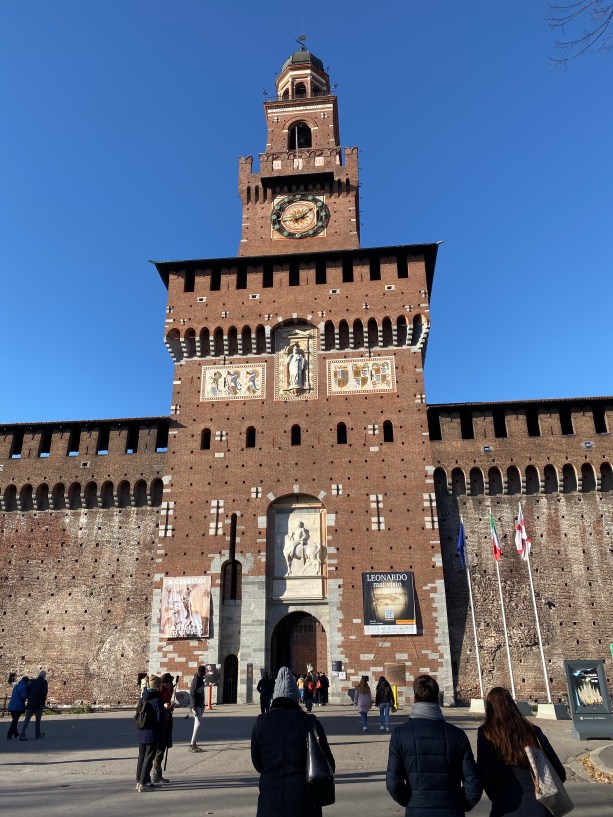


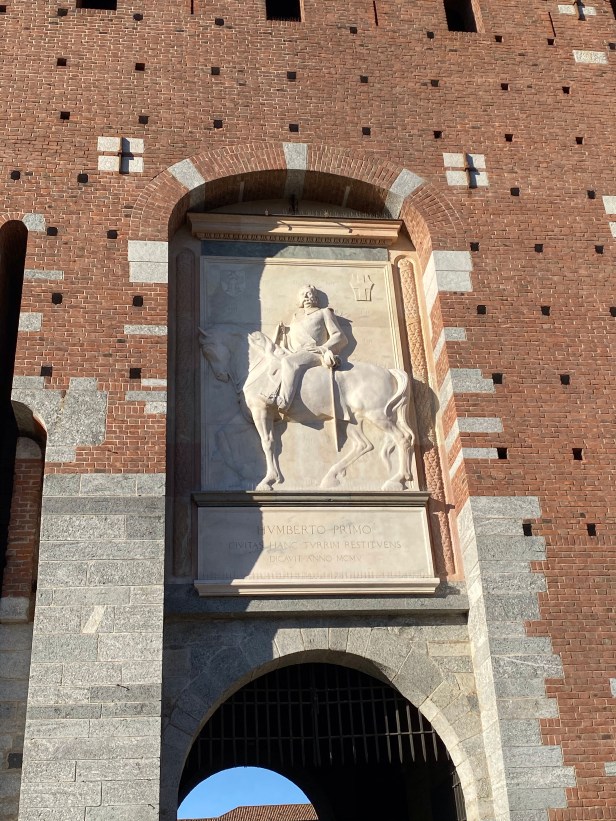




And, last, but certainly not least, you don’t see a lot of elephants in Italian art, but here is a big exception to the rule.


Poignant, charming, must see:
Yikes! Nothing like being met by an army! The outstanding collection of armor below is just one of the many parts of the Poldi Pezzoli Museum that will amaze you in Milan.

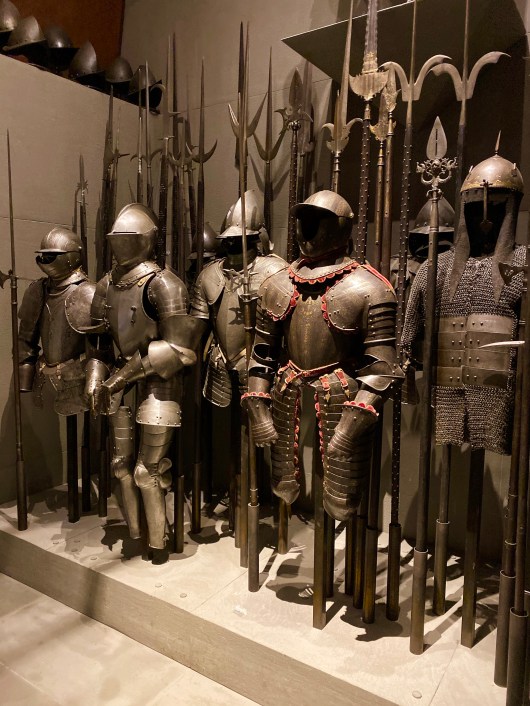
The Poldi Pezzoli Museum is housed in the original 19th-century mansion built by Milanese aristocrat, Gian Giacomo Poldi Pezzoli (1822-1879). His parents and grandparents had already begun the family’s art collection and he built his palazzo in this tony section of Milan to house the collection it as he continued to enlarge it. When he died, he left his collection and house to the Brera Academy. The Poldi Pezzoli Museum was opened to the public in 1881 on the occasion of the National Exposition in Milan and has since become an archetype for other famous collectors.


The Poldi Pezzoli is one of the most important and famous house-museums in the world. Located near the landmark Teatro La Scala and the world-renowned fashion district, this house-museum is beloved by the Milanese and international public.
The Poldi Pezzoli is a member of the Circuit of Historic House Museums of Milan, a city network established in 2008 with the aim of promoting the Milanese cultural and artistic heritage.
During World War II, the museum was severely damaged and many paintings were completely destroyed. The palazzo itself was rebuilt and in 1951 it was reopened to the public.
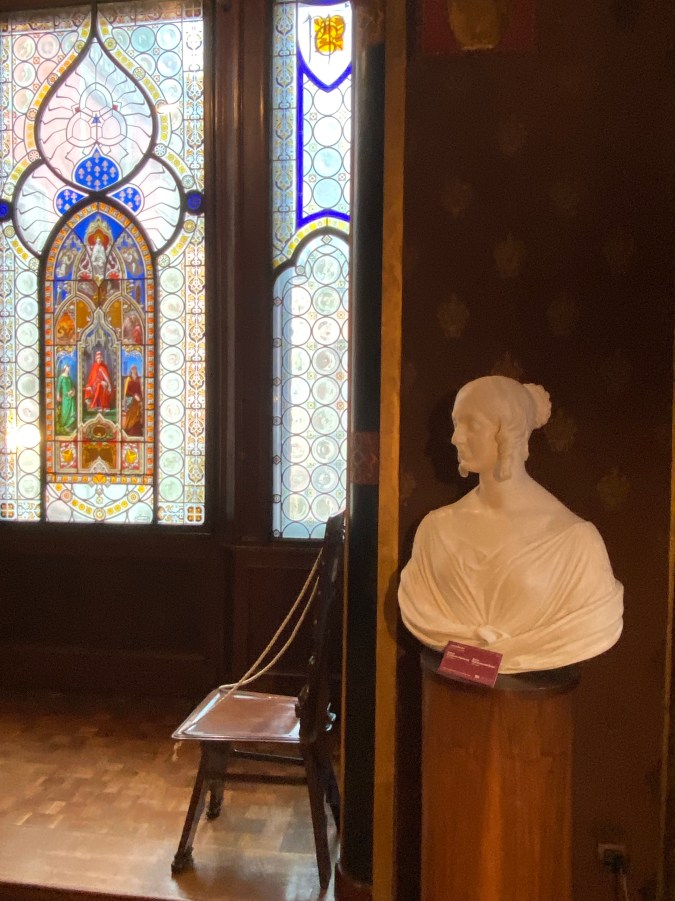
Not all of the house was restored as it appeared during Poldi Pezzoli’s life, but it was instead fitted out as a museum. The grand entryway, with its fountain filled with koi and its spiral staircase are original, as are at least 2 of the piano nobile galleries. You’ll recognize them right away in the pictures below.
The outstanding collection includes objects from the medieval period to the 19th century, with the famous armor, Old Master paintings, sculptures, carpets, lace and embroidery, jewels, porcelain, glass, furniture, sundials and clocks: over 5000 extraordinary pieces.
Let’s begin at the entry way. What a greeting!


Below: the view of the fountain from atop the staircase:

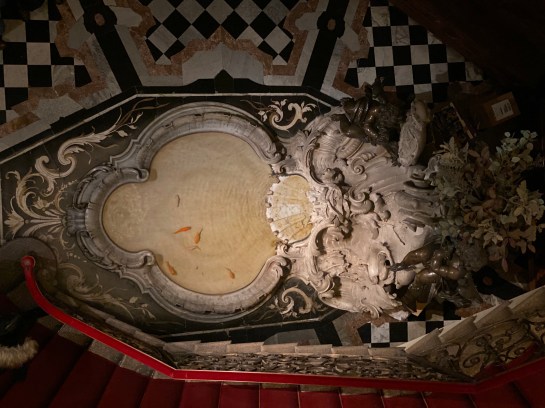
I was a bit obsessed by the fountain; can you tell?
Allora, moving on:


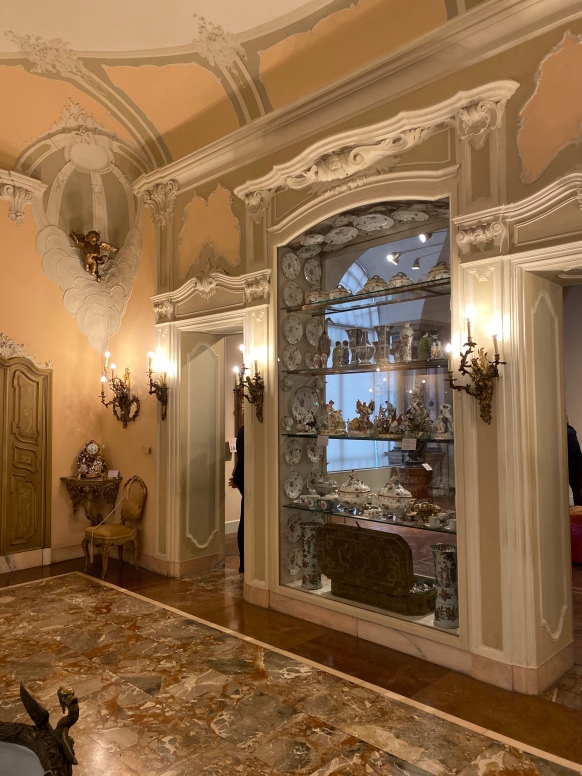


Angels in the architecture:

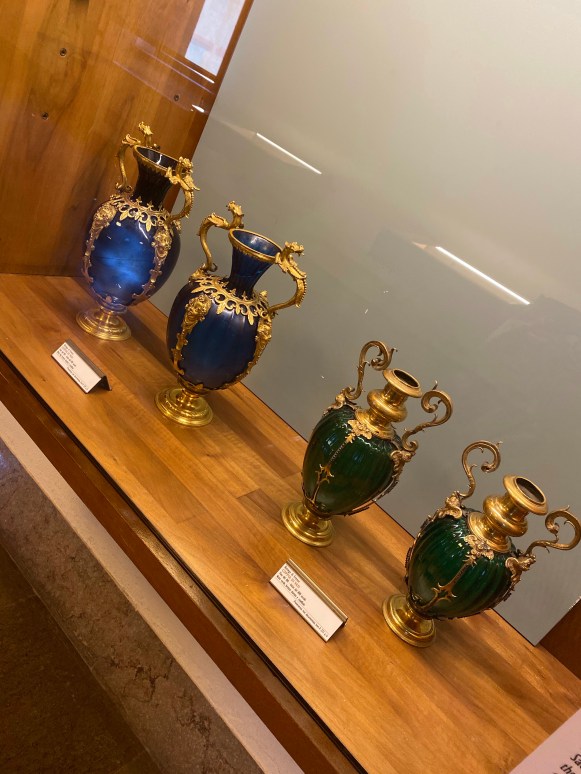
Dragons on the pottery:
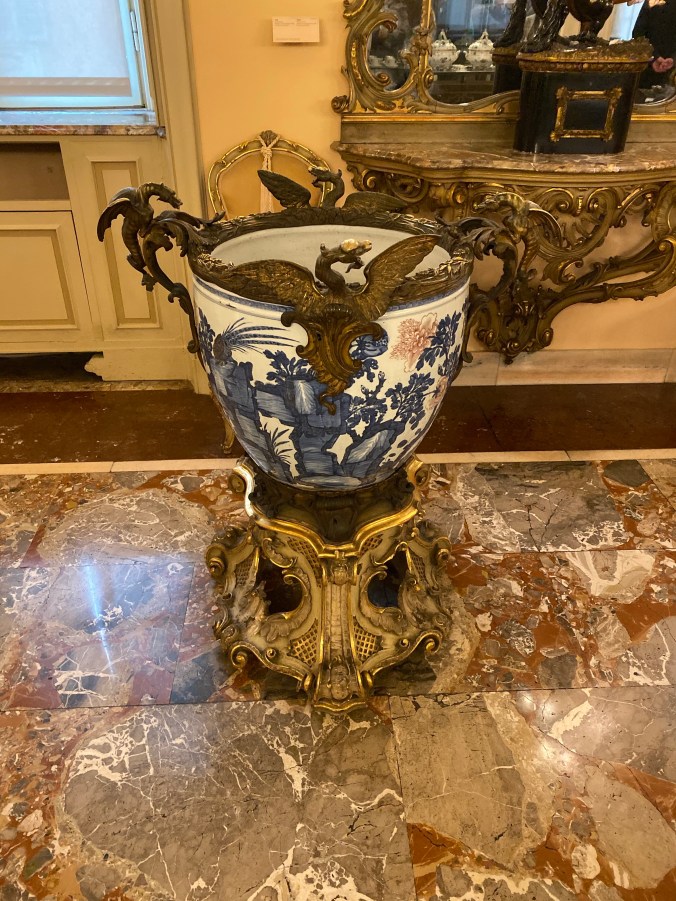


I love the way they display the ceramics: why not affix objets to the ceiling? It is a wasted flat space otherwise. Genius.


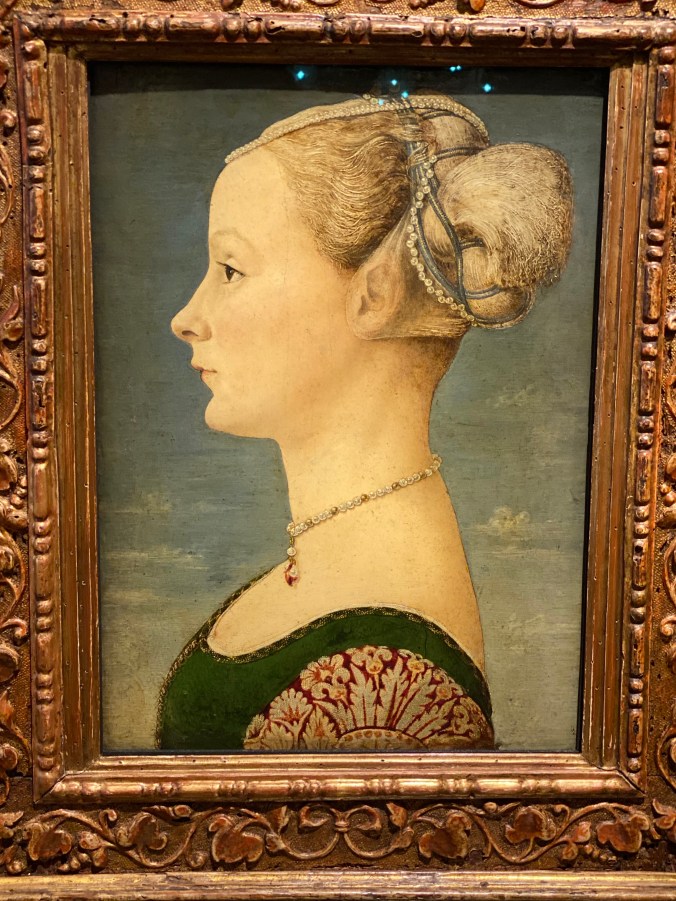
Moving on to the important objets: Piero del Pollaiuolo magnificent Portrait of a Young Lady.


Botticelli’s The Dead Christ Mourned:


Bellini:


Ah, the glass. It gets me every time:


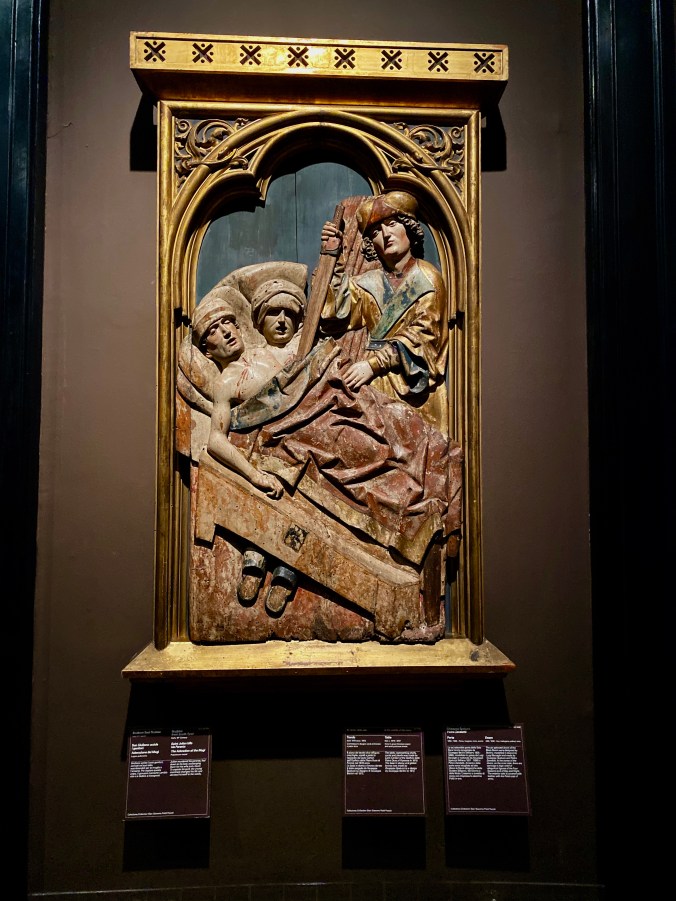
The panel below made me laugh. I love how the sculptor included the slippers at the side of the bed! In this dastardly scene of homicide, don’t forget the slippers!




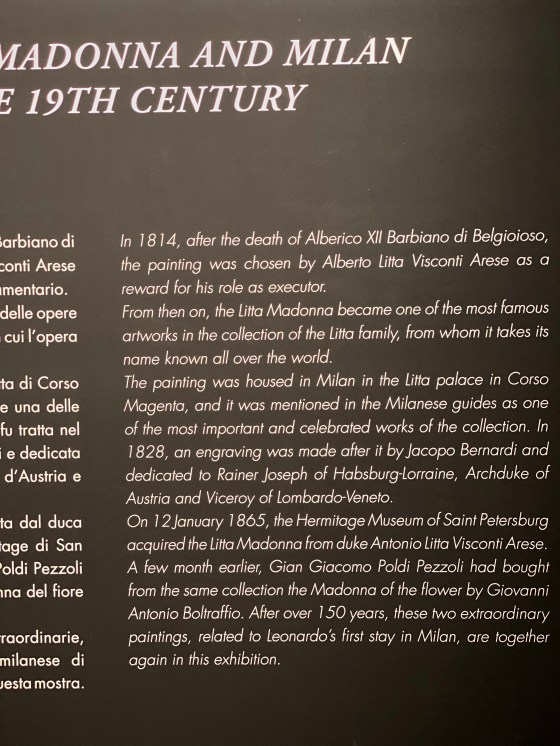
Since 2019 marks the 500th anniversary of Leonardo da Vinci’s death, the world is paying homage to the great artist with myriad exhibitions. The Poldi Pezzoli joins them with a major painting, on loan from the Russian Hermitage Museum, just for the occasion. Leonardo painted this work during his time living in Milan.




Milano’s beautiful Palazzo di Brera was created along with the Accademia di Belle Arti in 1776 to serve the students studying at the University.
The Jesuits built the Baroque palace at the end of the 17th century as a convent (the word convent is used for monasteries in Italy). After they were unceremoniously expelled, the Palazzo Brera was remodeled in the neoclassical style.
Napoleon took control of Italy and declared Milan the capital. He filled the Brera with works from across the territory. As a result, it is one of the few museums in Italy that wasn’t formed from private collections, but rather by the Italian state.


When the Palazzo di Brera was taken away from the Jesuits by Queen Maria Teresa of Austria, it was meant to become one of the most advanced cultural institutions in Milan. It still lives up to that status today. Besides the Academy and the beautiful Art Gallery, the palazzo holds the Lombard Institute of Science and Literature, the Braidense National Library, the Astronomical Observatory and a Botanical Garden maintained since he 1700s.
Inside the cortile, Canova’s heroic statue of Napoleon:

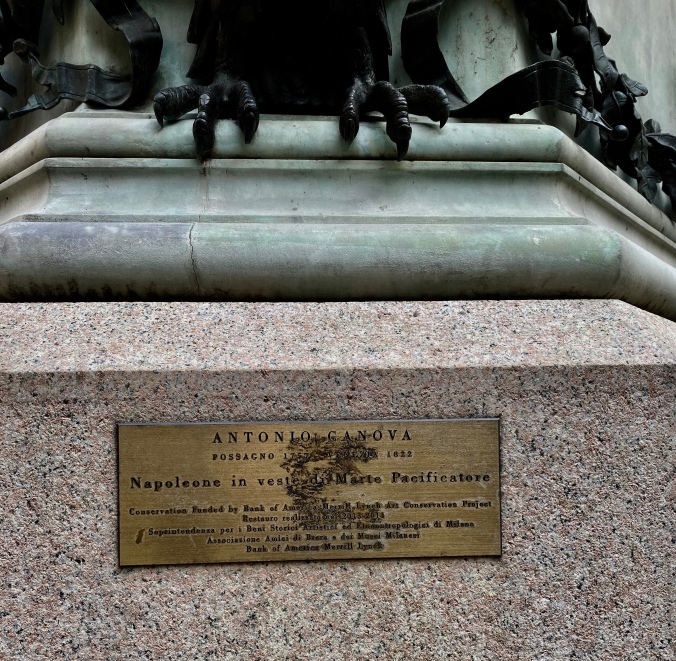

The entrance to the palazzo:


There is a garden at the back of the palazzo. The fortified walls and turrets of the building complex seen back here are massive and medieval, and very unlike the sophisticated facade of the palazzo. This Orto Botanico comprises a tiny corner of the hectic city has aromatic herbs, wildflowers and a small vegetable garden for research.


The Palazzo di Brera started life as a Jesuit college built on green land just outside the old city walls and its name reflects the location. In fact, the district, palace, and gallery all take their names directly from their locale as the Medieval dialect. The word “brayda” means “grassy clearing”. The word slowly evolved into “brera” or “bra;” it is also the root word of Vernona’s Piazza Bra.
Inside the Palazzo di Brera resides the beautiful Biblioteca Braidense:


More about Canova’s statue of Napoleon:

The plaster model for the bronze statue:


What caught my eye at the Brera? These works:
Andrea Solario, Madonna of the Carnations:


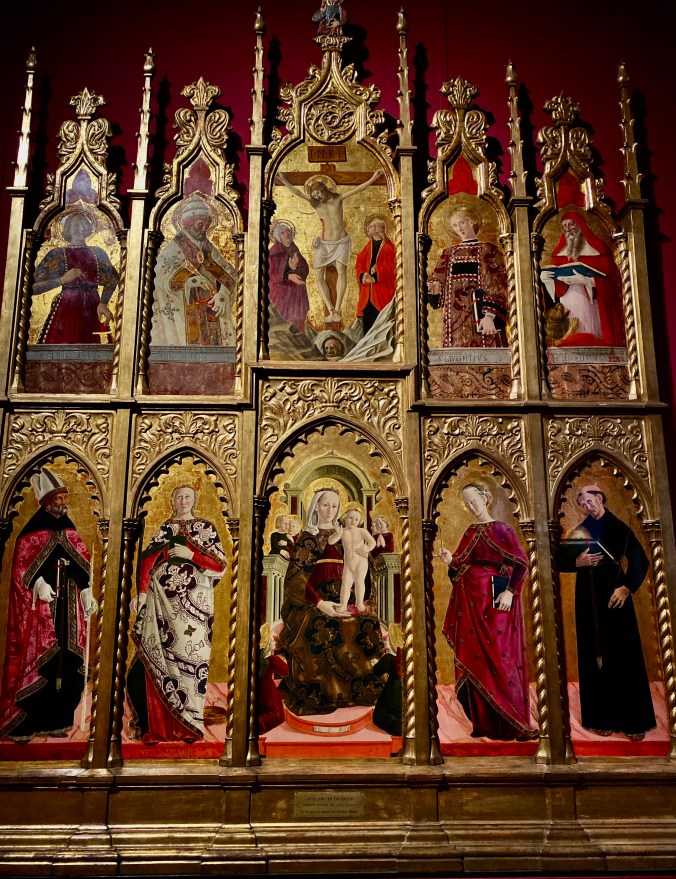
I loved Carlo Crivelli’s amazing panel paintings, which are actually somewhat 3-d. I’ve not seen that before in paintings of these kinds:


Another luscious work by Carlo Crivelli: Madonna and Child.


Some of the altarpieces in the Brera collection are sumptuously beautiful; breathtaking, actually.

This random lion caught my eye and I don’t even remember from what painting! I was a bit agog at the Brera. I started feeling the Stendhal syndrome, big time.

Raphael:


Piero della Francesca:


A ubiquitous scene, all over Europe:


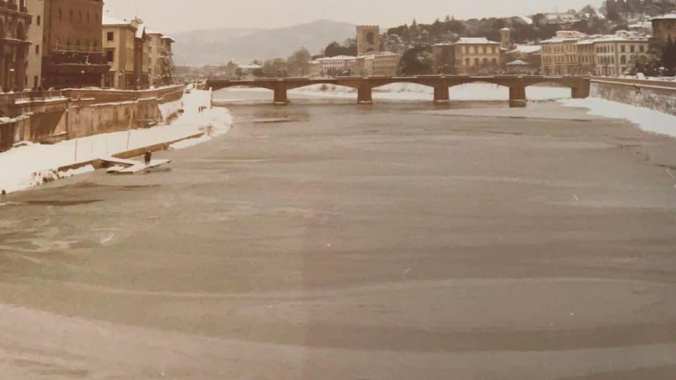
L’Arno ghiacciato nel gennaio 1985 dopo la grande nevicata. Visto da Ponte Vecchio
The frozen Arno in Jan 1985 after the big snow. View from Ponte Vecchio (looking east towards Ponte alle Grazie.)
 get back, lauretta!
You must be logged in to post a comment.