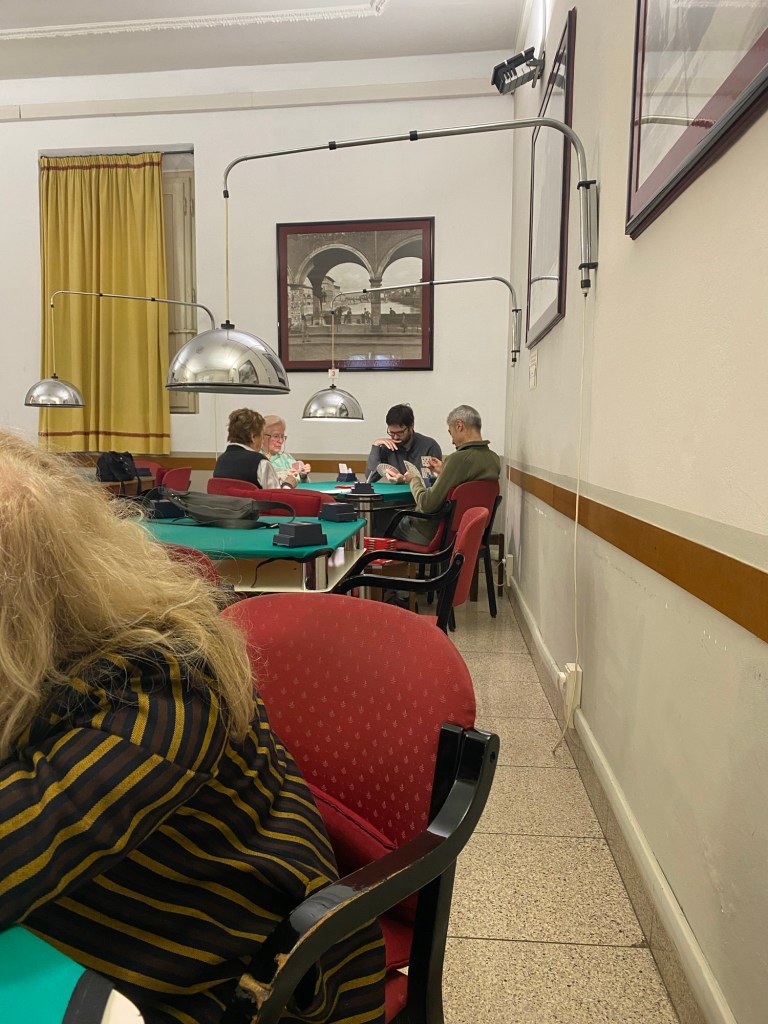
Ever since beginning my bridge journey just over 2 years ago in Denver, it’s been my goal to join other aficionados of the game in Italy. It’s a daunting prospect. I’m still learning the game and my Italian isn’t great. I can read it fairly well, can understand it well enough, but speaking is the issue for me. Regardless, I carry on and I’ve found a couple places to play in town., This place is the one that means the most to me, so far. My Italian has got to improve through this! It’s got to!
The players argue (but don’t seem to get mad) after almost every hand! I just sit and listen and hope to understand. Sometimes I get the gist of it.
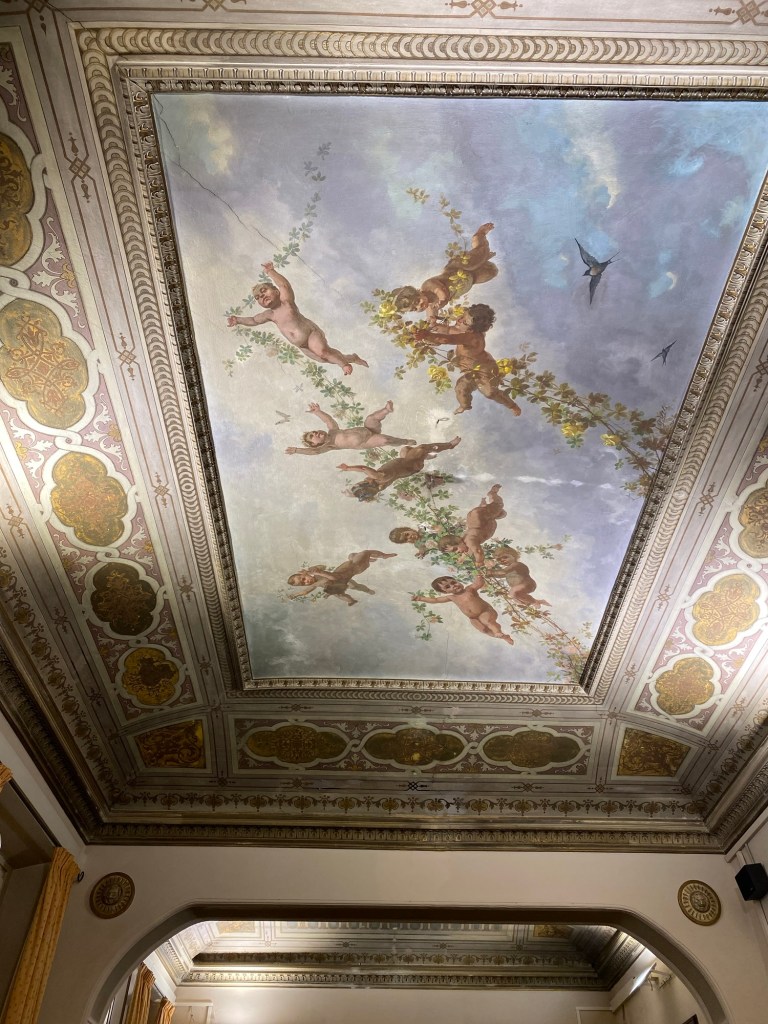
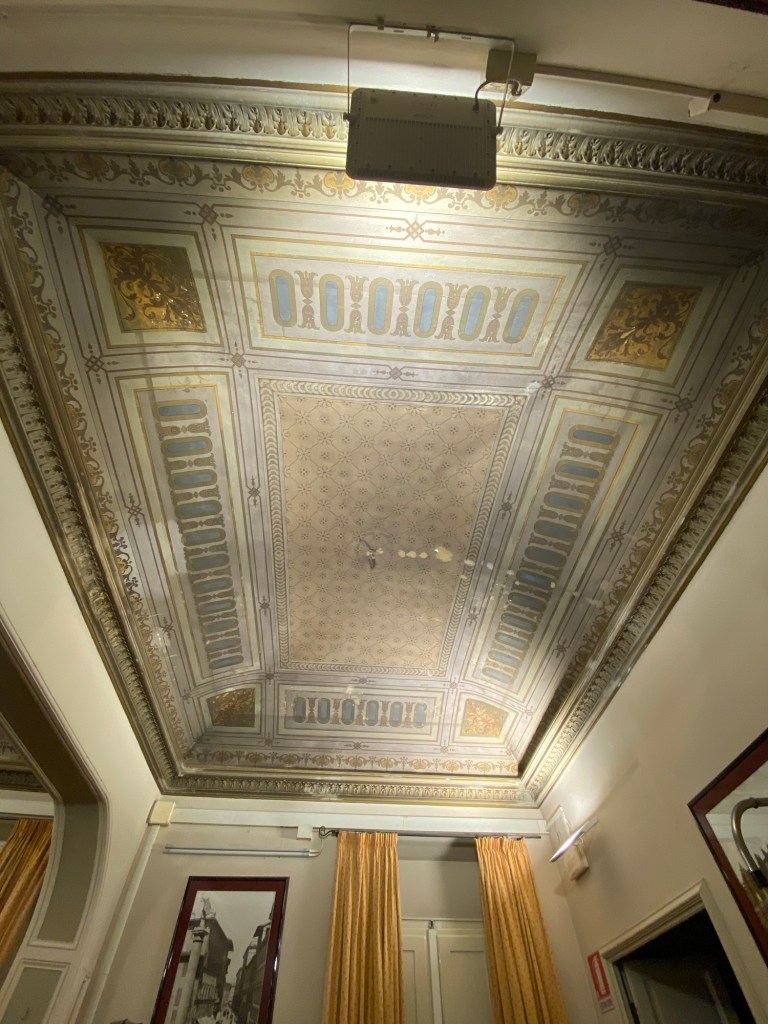
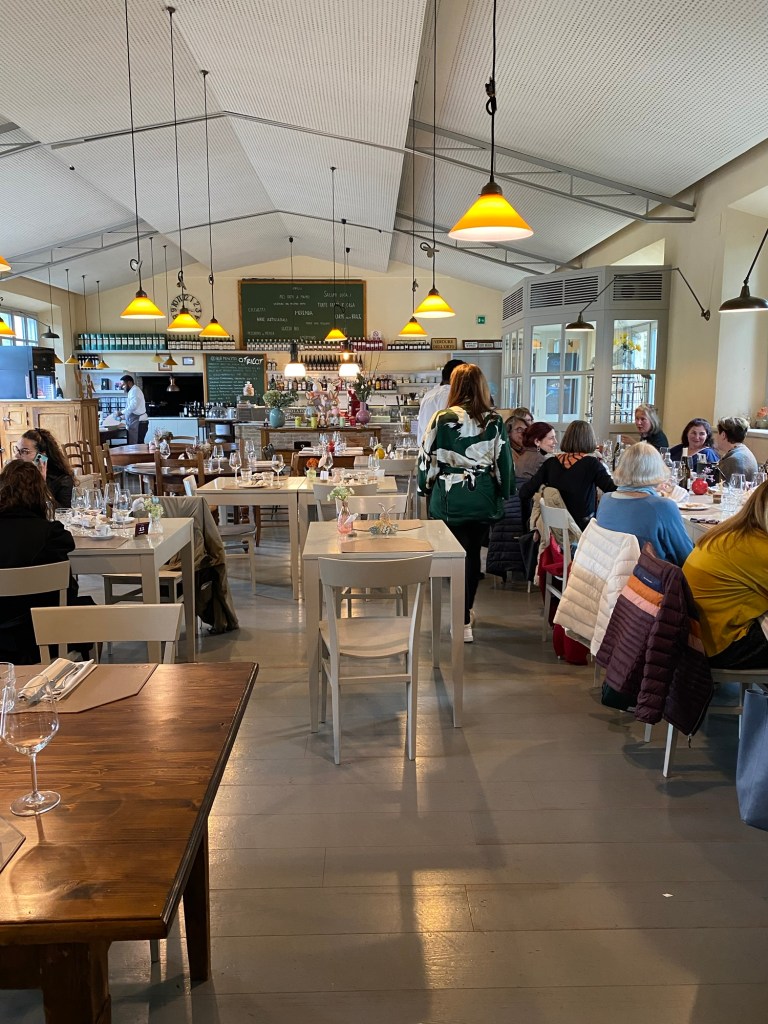
But, who cares! I’m playing my favorite game and look at the club’s ceilings! I mean, come on!
Happy in Florence! Sono contenta di essere qui!
Funny thing: In English we call “the dummy” the hand that is laid down by the inactive partner in a winning bid. In Italian they call it il morto or “the dead one.” Italians are serious about bridge! Don’t doubt it per unosecondo! The jack is called il jolly. The queen is called la donna. Spades are picche, hearts are of course cuori, diamonds are known as quadri which means 4 sides, and clubs are called I fiori or flowers. Piano piano sto imparando.
Alla prossima!
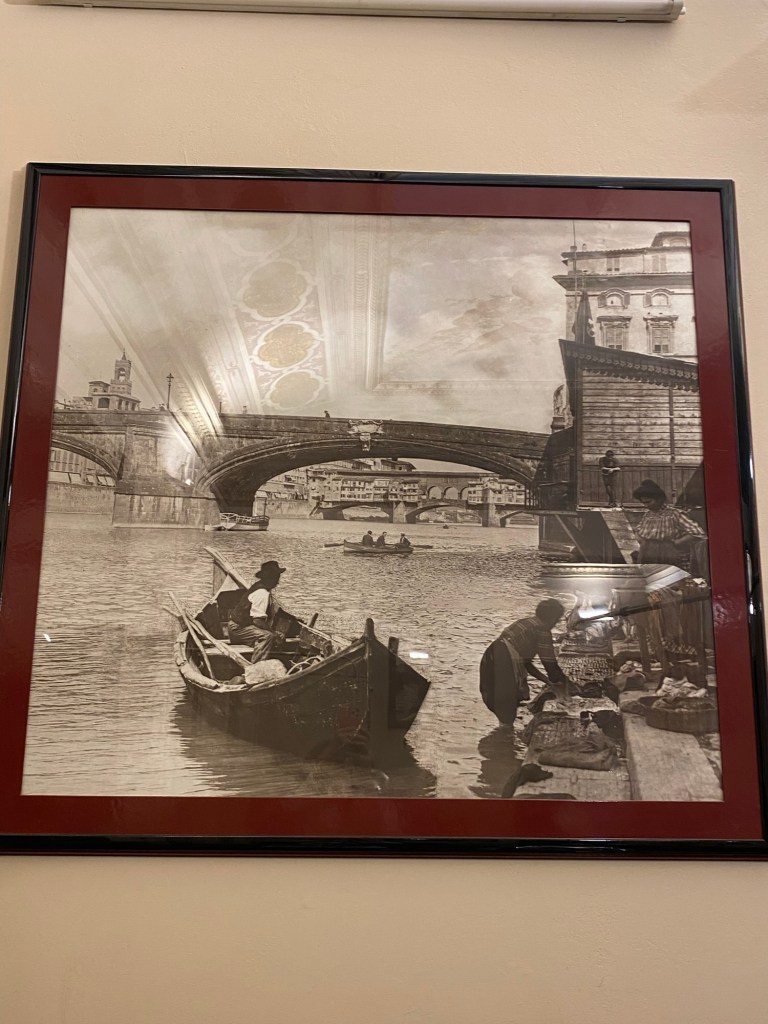
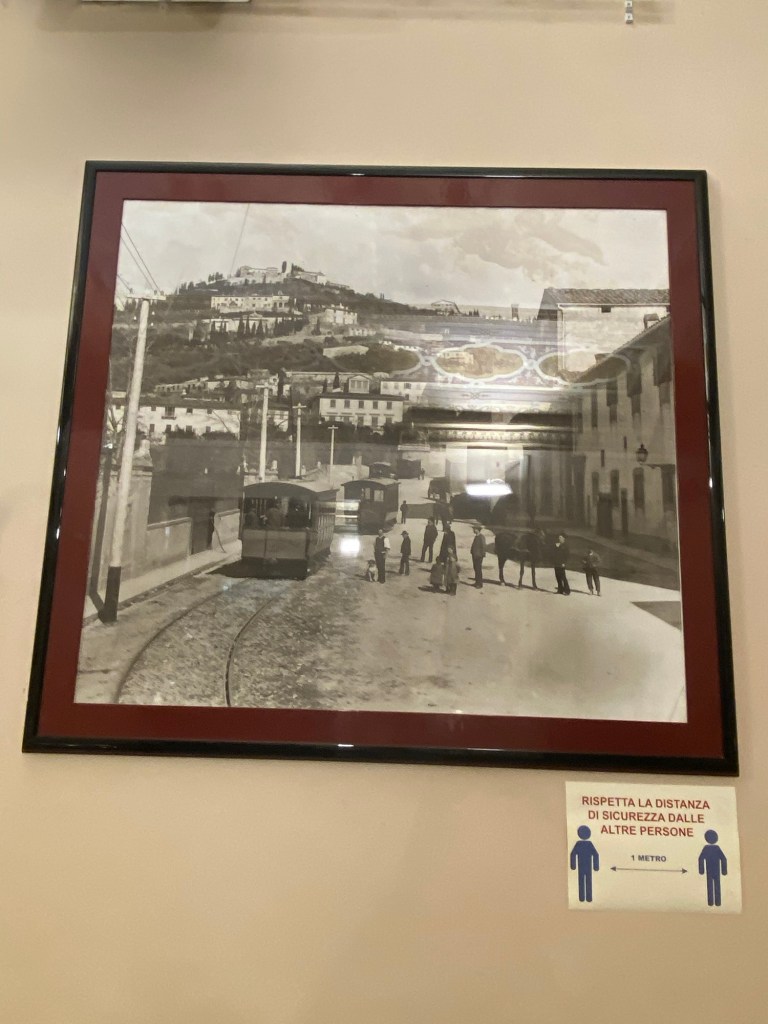
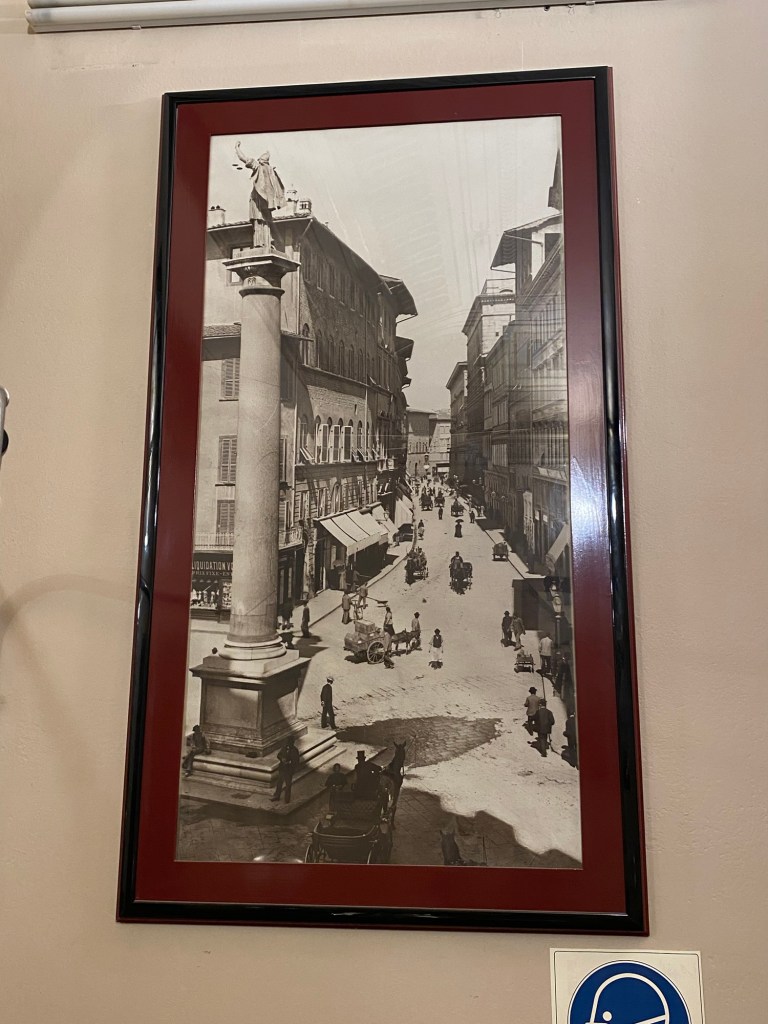
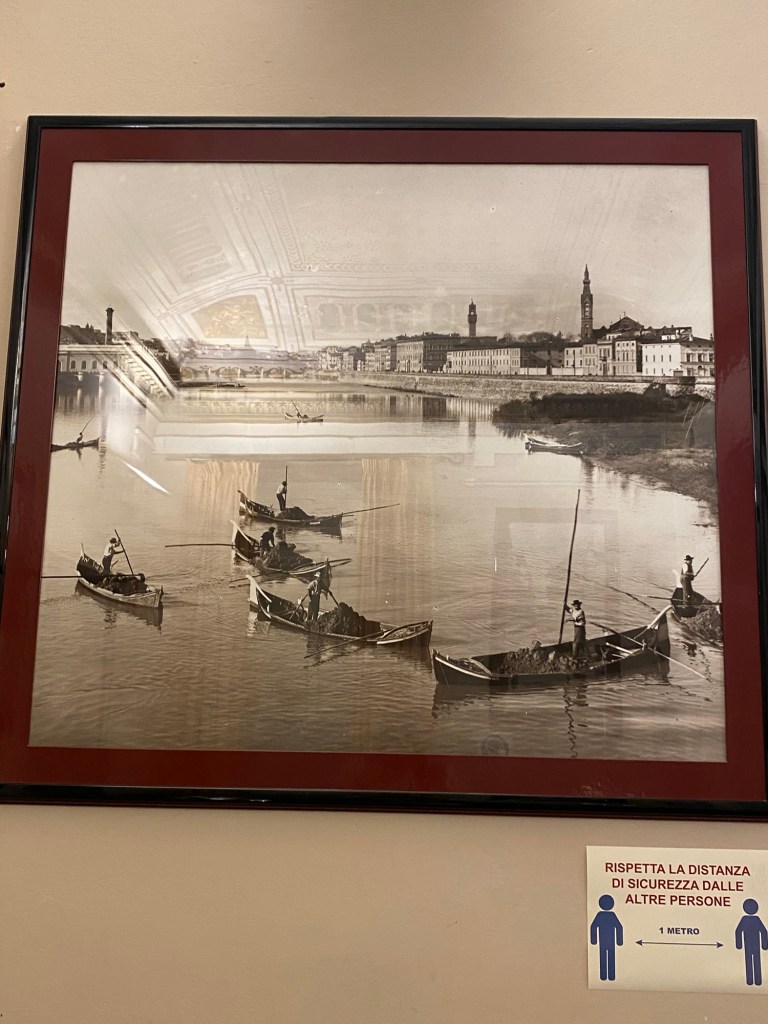
P.S. Plus there are historic photos of Florence scattered throughout the rooms. Heaven!
Happy Easter, everybody everywhere! My good friend, Cynthia, who has just been through a very trying ordeal and is on the road to recovery, asked me what I’d be up to on Easter and I realized that it was time for a new post about Easter in Italy! Thanks, C., for reminding me and take care of your sweet self!
Easter is a VERY big deal in Italy! Second only to Christmas. It is such a big deal that the Monday after Easter is called Pasquetta (little Easter) and is a national holiday!
Each region and city and town in Italy has its own unique way of celebrating the holiday, the very holy day in the liturgical calendar. Florence stands proudly near the front of this tradition.
I’ve posted in the past on this blog about Easter celebrations in Florence, complete with videos and photos I took on one of the first Easter Sundays I spent in this beloved city. I’ll try to find one of those posts from my archives and link it here. I’m not a great record keeper anymore, though, so if you don’t see a link, well….
Easter in Italy is not a short celebration but rather, celebrated over five days starting the Thursday before Easter Sunday and finishing the following Monday.
The first of the celebrations, starting on Holy Thursday, will have churches opening their doors and welcoming followers to visit their altars. If you are walking around on Good Friday or the Saturday before Easter, you may catch a glimpse of one of the many religious processions that parade through the city centers of many towns in Tuscany.
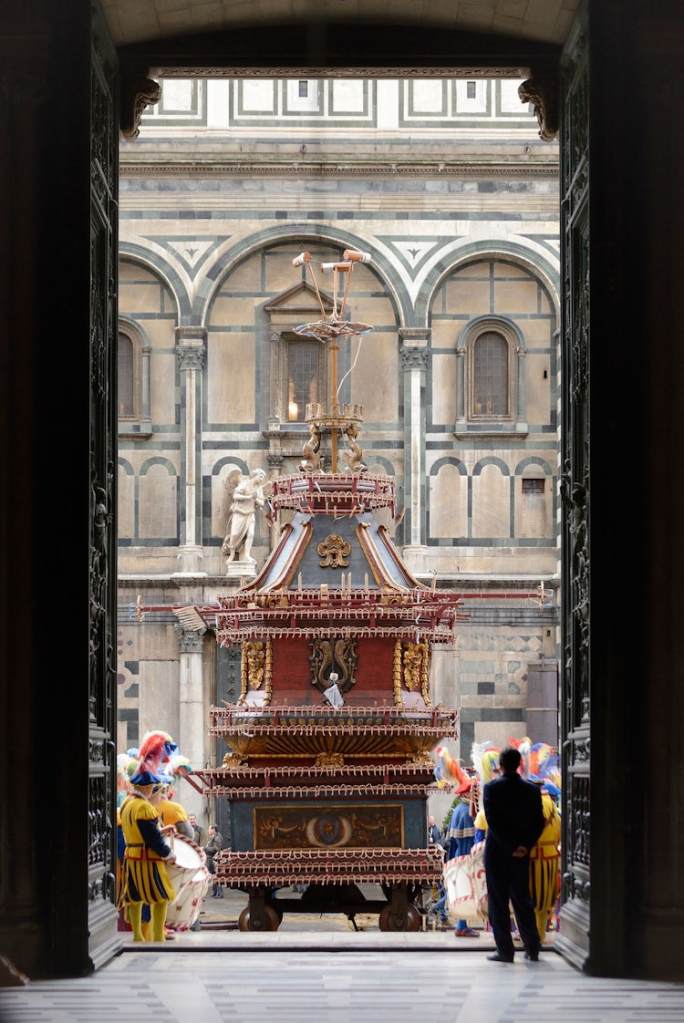
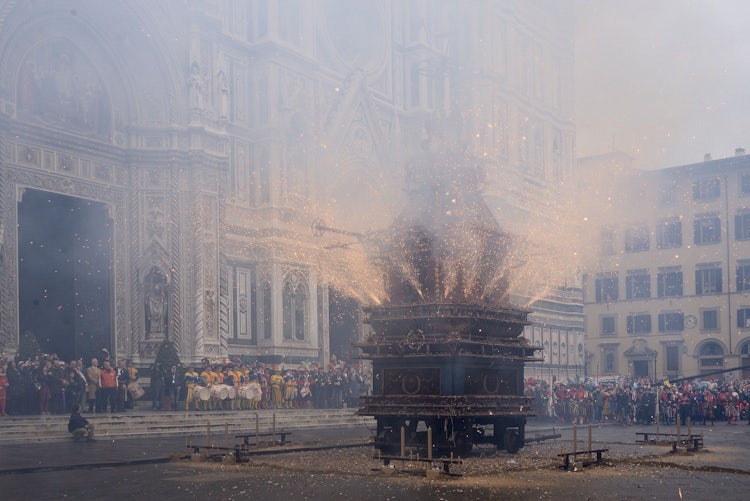
On Easter Sunday, Florence celebrates with the Scoppio del Carro, or the Explosion of the Cart, a tradition dating back to the Middle Ages. On the morning the 30-foot-tall antique cart called Brindellone in use for over 500 years moves from the Porta al Prato to the Piazza del Duomo. It is hauled by a team of white oxen festooned with garlands of the first flowers and herbs of spring, the cart is escorted by 150 soldiers, musicians, and people in 15th century dress.
Around 11am, as part of the Easter Mass being celebrated in the Cathedral, the Archbishop of Florence at the altar lights the Colombina, a rocket shaped like a dove which symbolizes the Holy Spirit, and this runs along a cable that has been attached in the meantime to the Brindellone which with luck it will hit, setting off the fireworks mounted on top it. Therein is the Explosion of the Cart you’ve been hearing about! It is a great event to witness, both for visitors as for Florentines, who wait to see the return of the Colombina back to the altar inside the Duomo. According to tradition, if the Colombina returns all the way back to the altar the year will be positive, meaning good crops, no droughts, and the usual things that made up a good year in the past.
During all of these stages, the bells of Giotto’s campanile ring out. The complex fireworks show that follows lasts about 20 minutes.
To really know a country or a city, you have to get in touch with its culinary tradition, don’t you agree?
The Mass is the time to bring the boiled eggs (better if decorated) to the church to receive the holy touch, before to be eaten for example sliced into a simple brodo with tortellini. Chocolate eggs can be brought too, to join the Christian tradition.
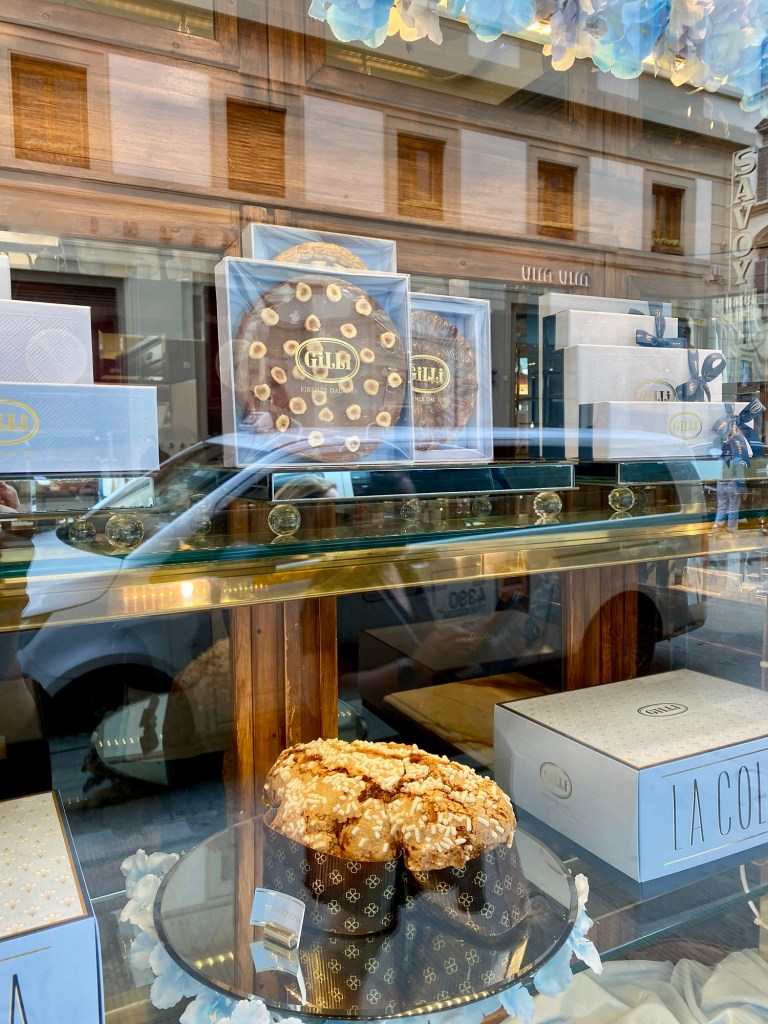
The other notable cake is the Colomba, a leavened cake shaped like a dove with candied fruit inside and covered with almonds and icing on top.
Colomba cake, also known as Colomba pasquale, is a traditional Italian Easter cake. It’s a sweet bread, similar to panettone, but with a dove shape and often topped with almonds and pearl sugar. The cake’s shape symbolizes peace and renewal, making it a festive treat for Easter celebrations.
The day after Easter is called Pasquetta and in Italy it’s holiday too. Locals generally do the gita fuori porta – day trip to the beach of Versilia (Viareggio, Lido di Camaiore) or in the Siena countryside, all together around a table for the first outside lunch of the season.
Italians usually enjoy a picnic with family or friends outdoors with typical food of the season such as pecorino cheese, fresh fava beans, olives and red wine. If you want to visit the main museums in Florence on these days, there is no problem as many stay open for both Easter Sunday and announce special openings for Pasquetta (if they are normally closed on Mondays).
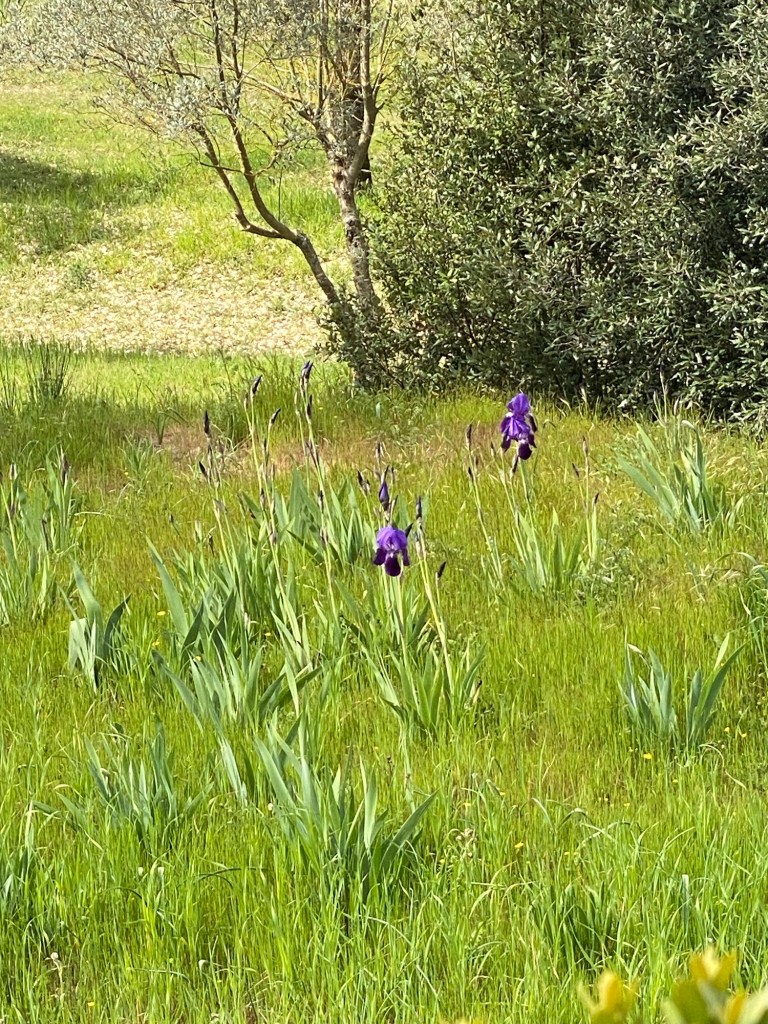
I asked Katia if her grandmother, Iris Origo, had a particular fondness for the plant iris. She said indeed she did, although she was named for Iris the messenger of the gods. I can only imagine that there were a lot more irises planted on the estate during her lifetime.
The Origos established a restaurant/pub type place to service their community which they called Dopolavoro, or after work. It is a beautiful place just off the main estate that is nowadays open to the public. We enjoyed an excellent pranzo there after our tour and Katia joined us.
One of the things Katia stressed to us is that while her grandparents most certainly established one of the finest private gardens in Italy, their main goal was to lift up the community. When they purchased the estate in the 20s, it was a very difficult time for the local people. There had been droughts, Mussolini was in power, and while he stressed agriculture and “the people”, the less fortunate rural people were struggling. The Origos established schools for the young, medical clinics for the community, and countless other programs to serve the community. This was their primary goal and they were very successful.
What a grand day! Highly recommend a visit. This was my 3rd. I’ve now seen the gardens in early spring as well as high summer and fall. Very lucky indeed!
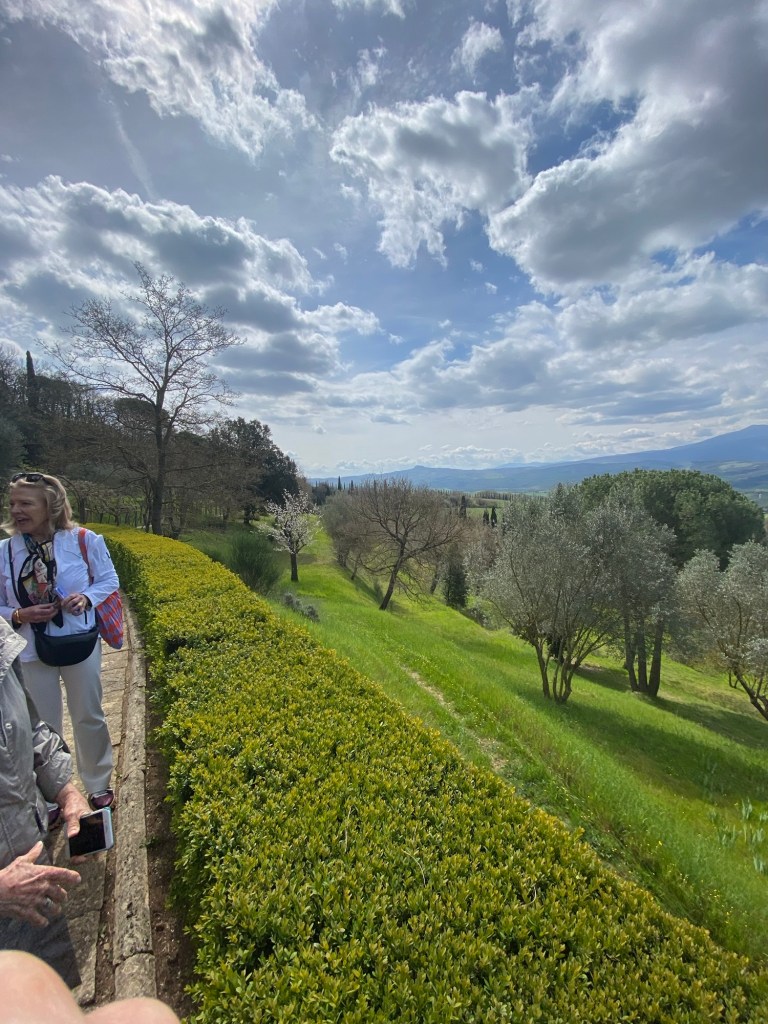
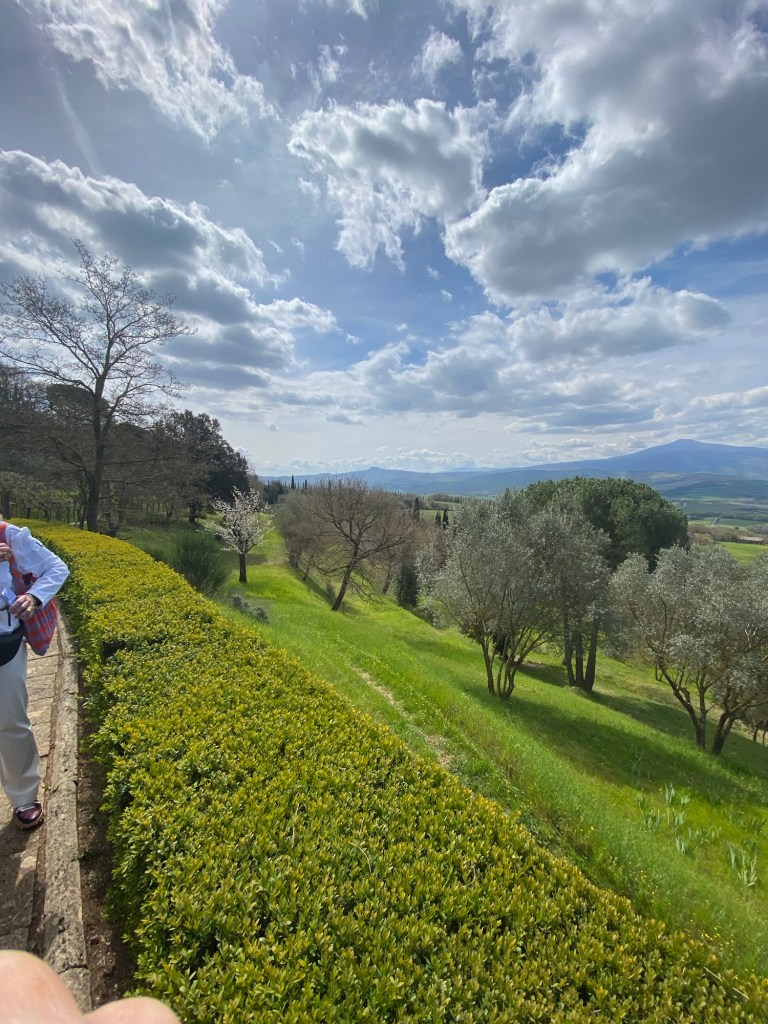
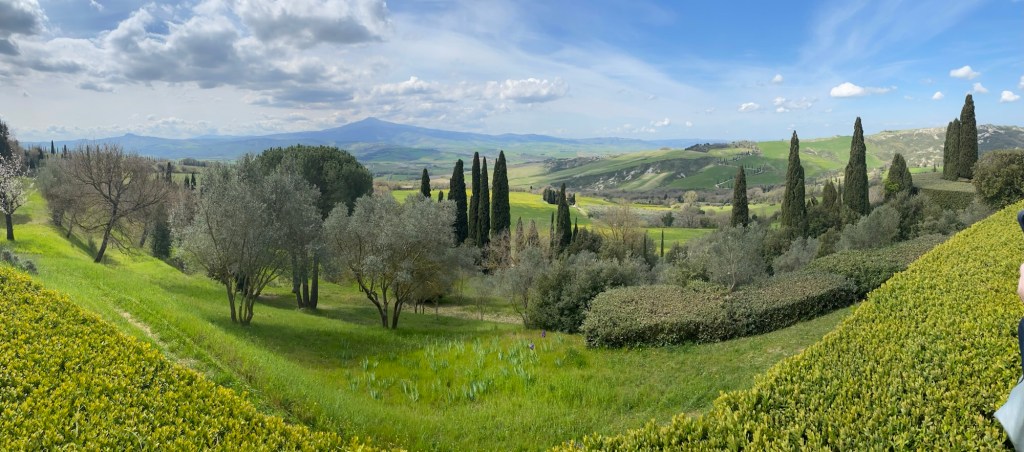
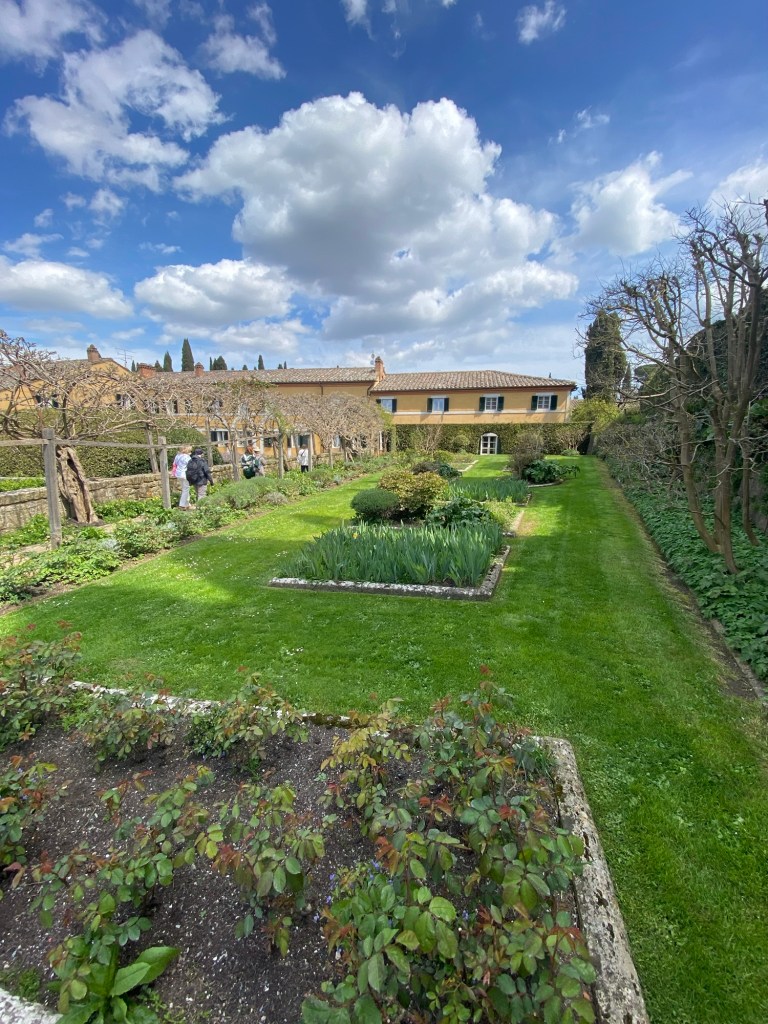
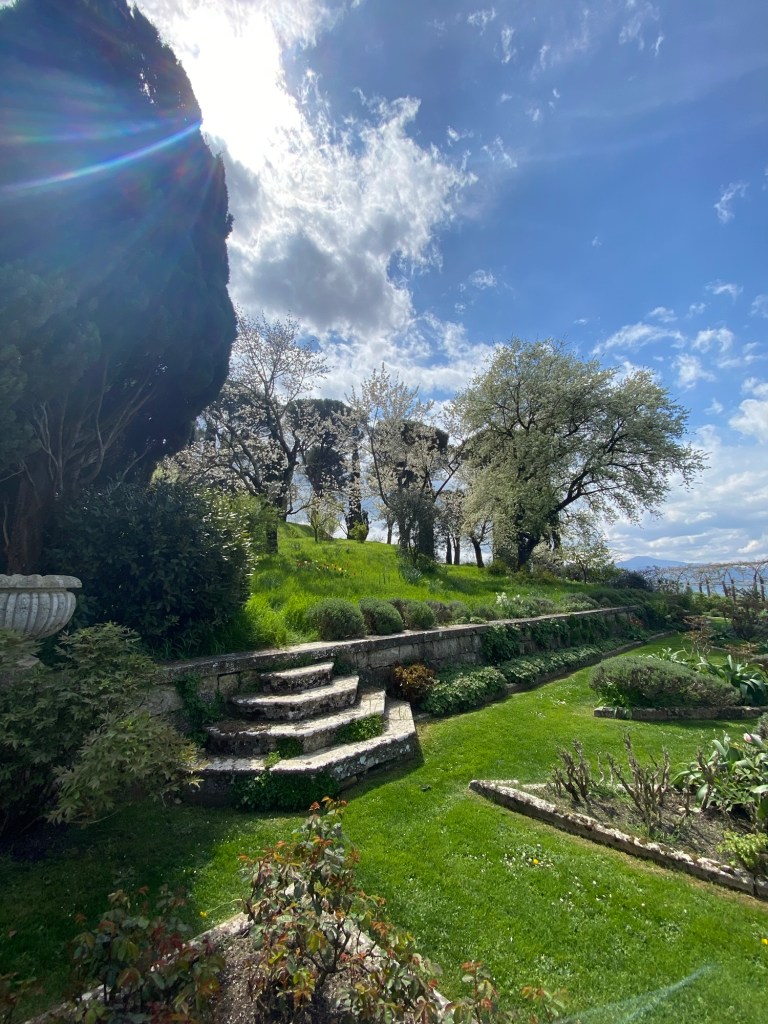
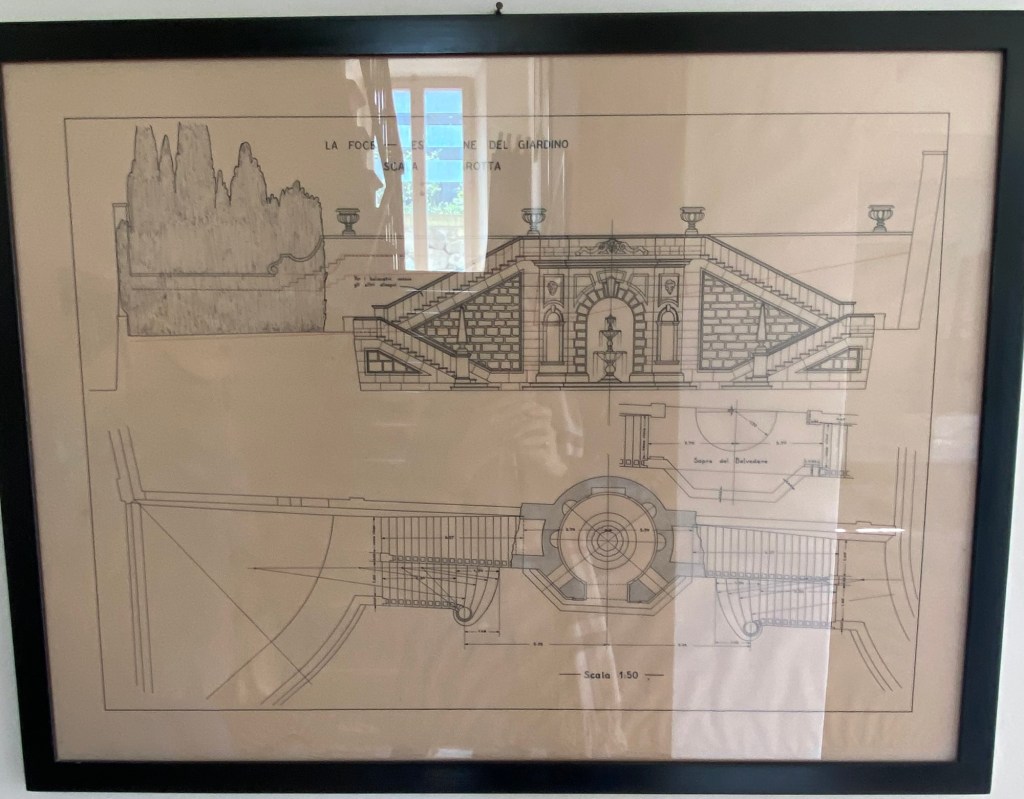
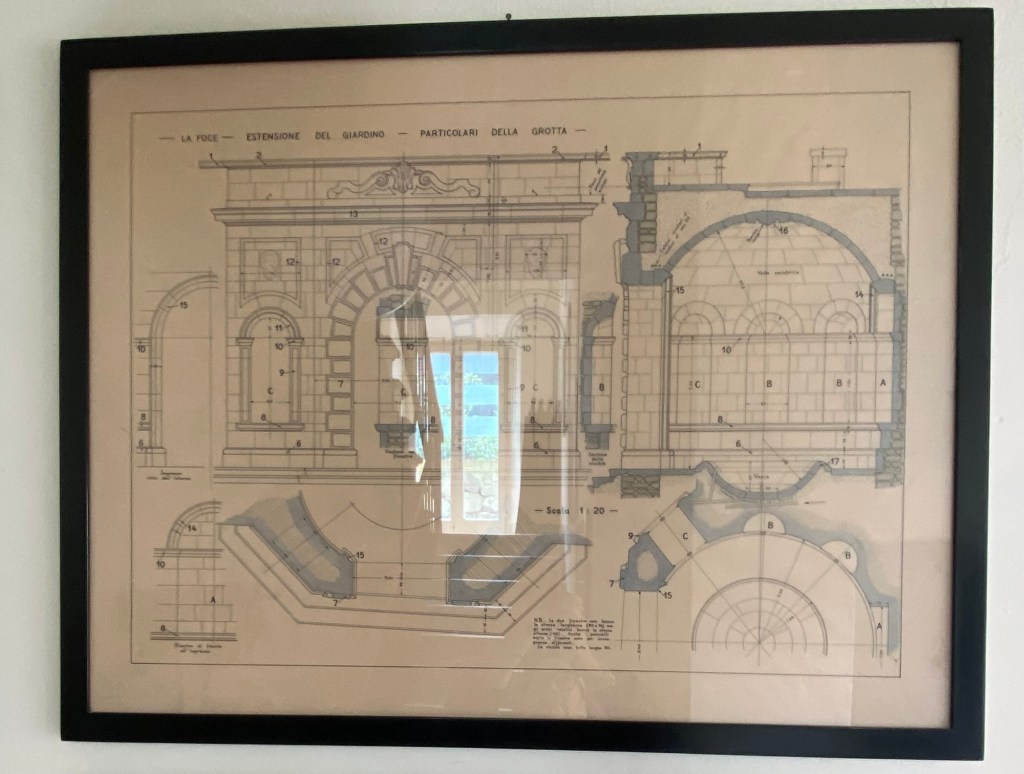
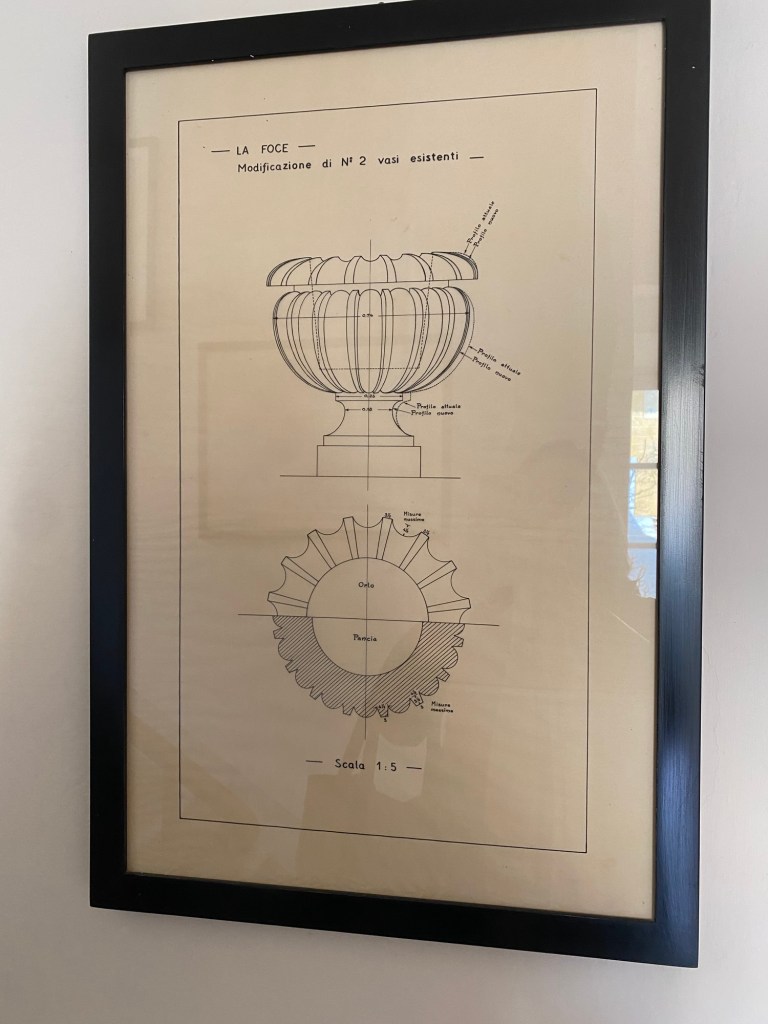
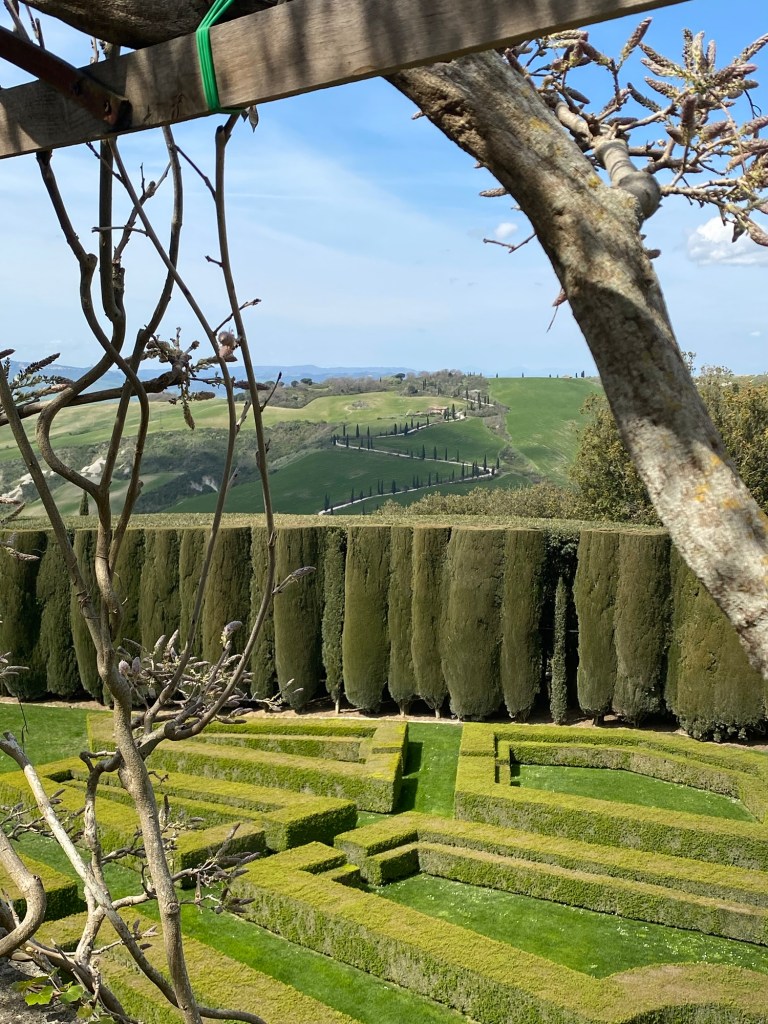
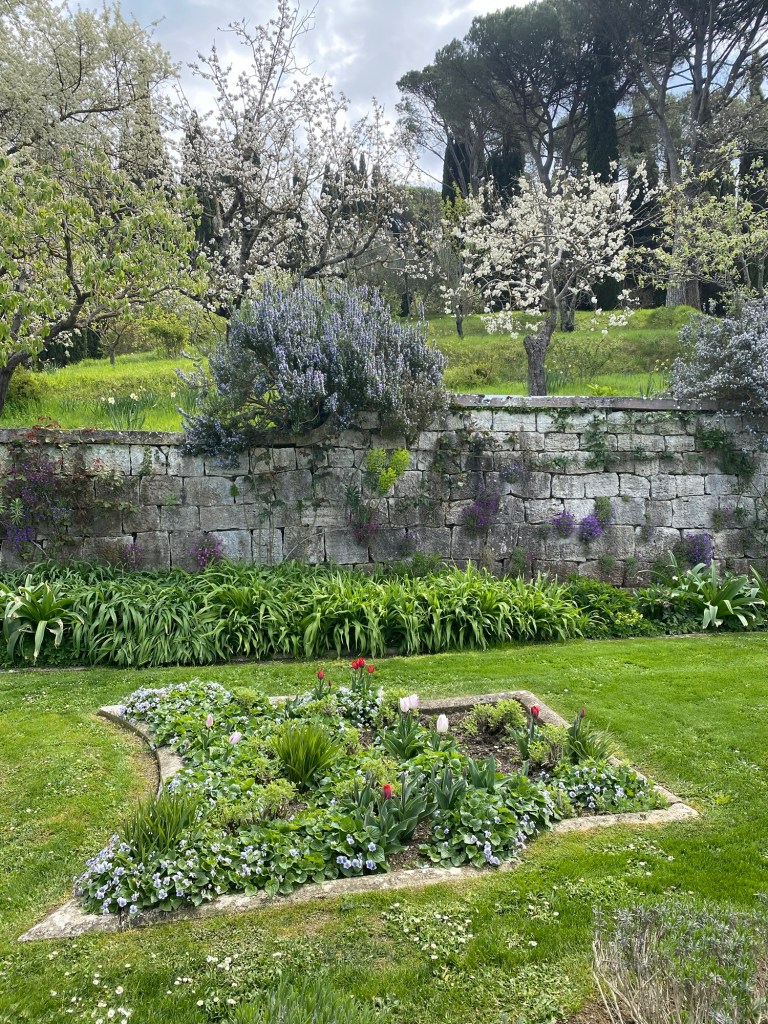
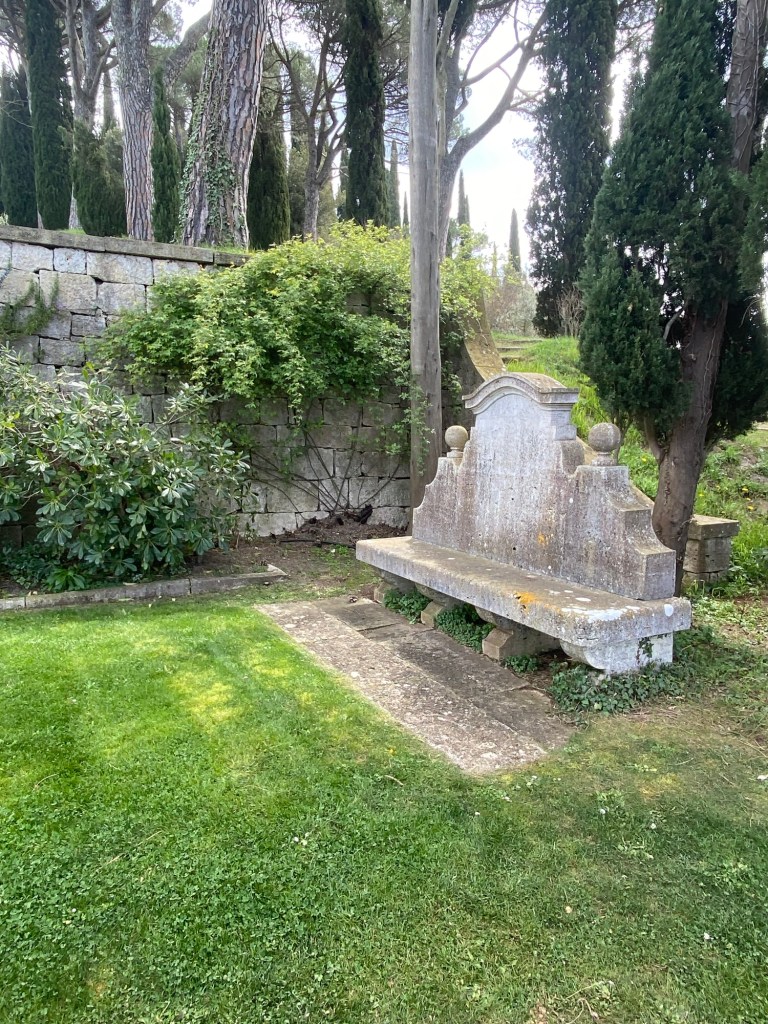
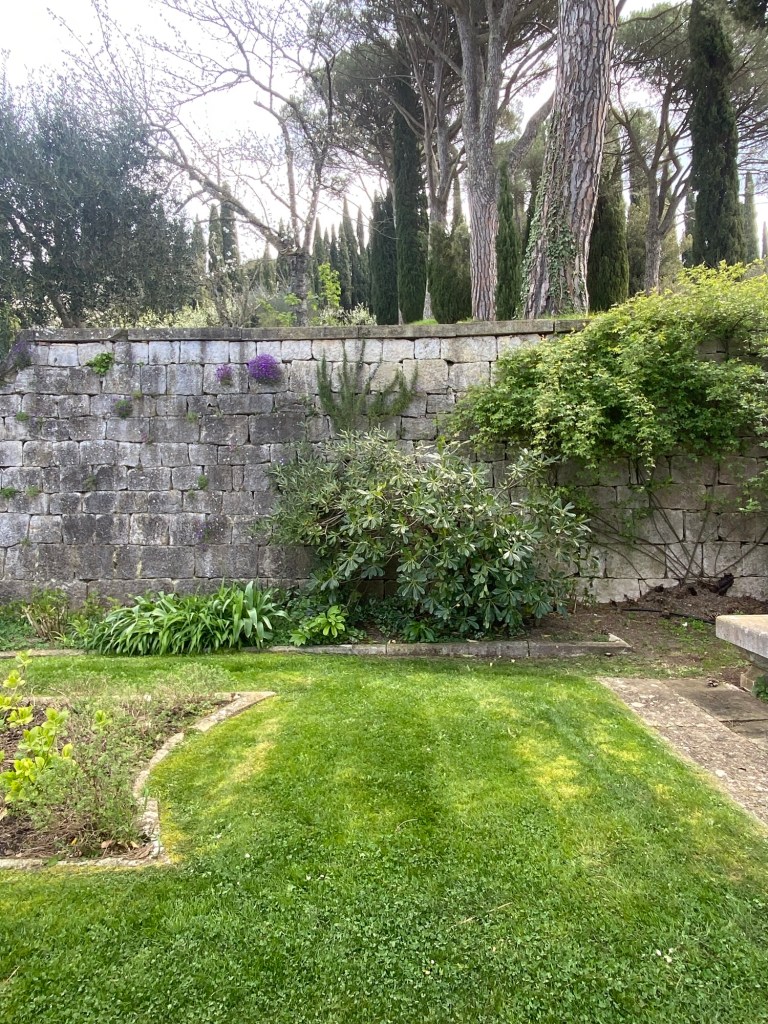
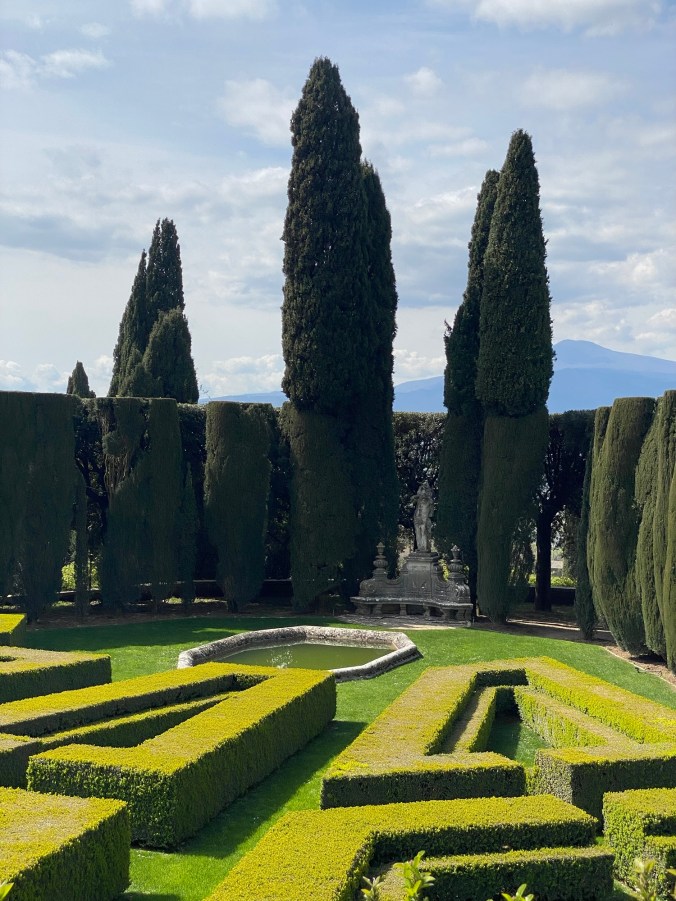
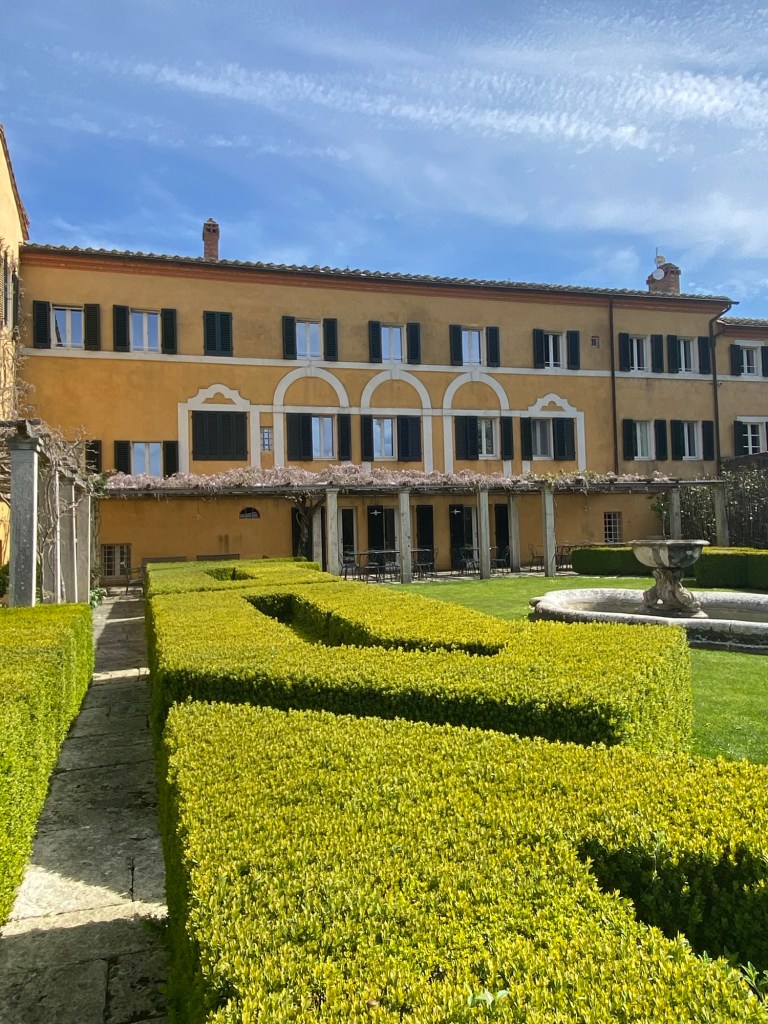
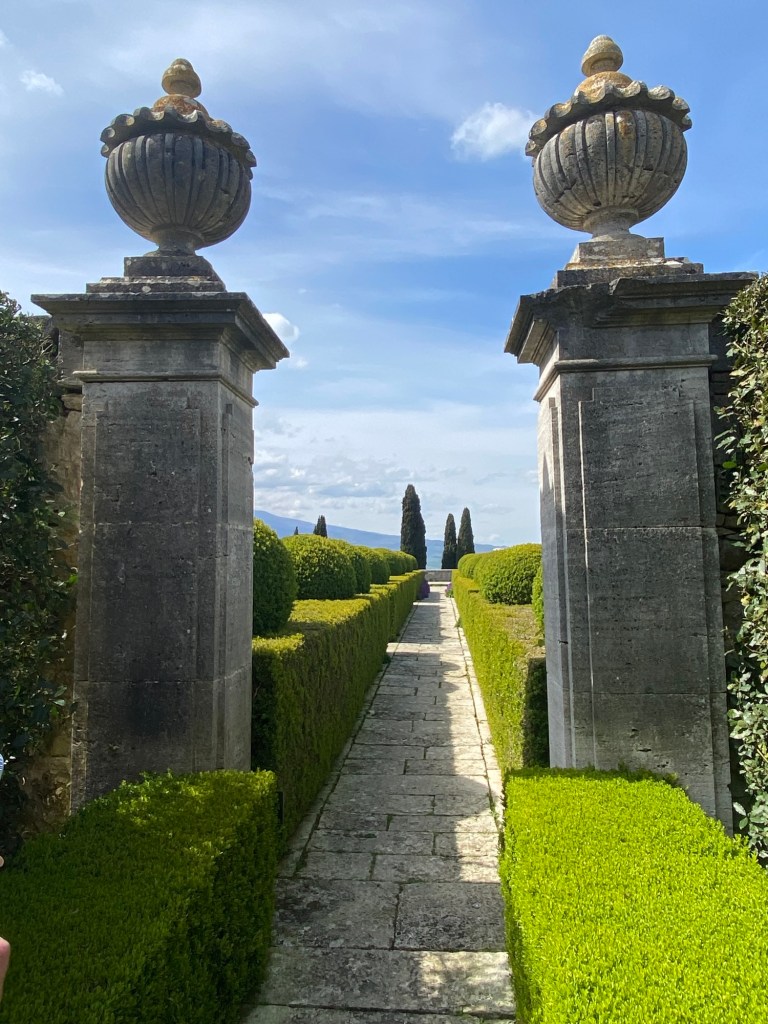
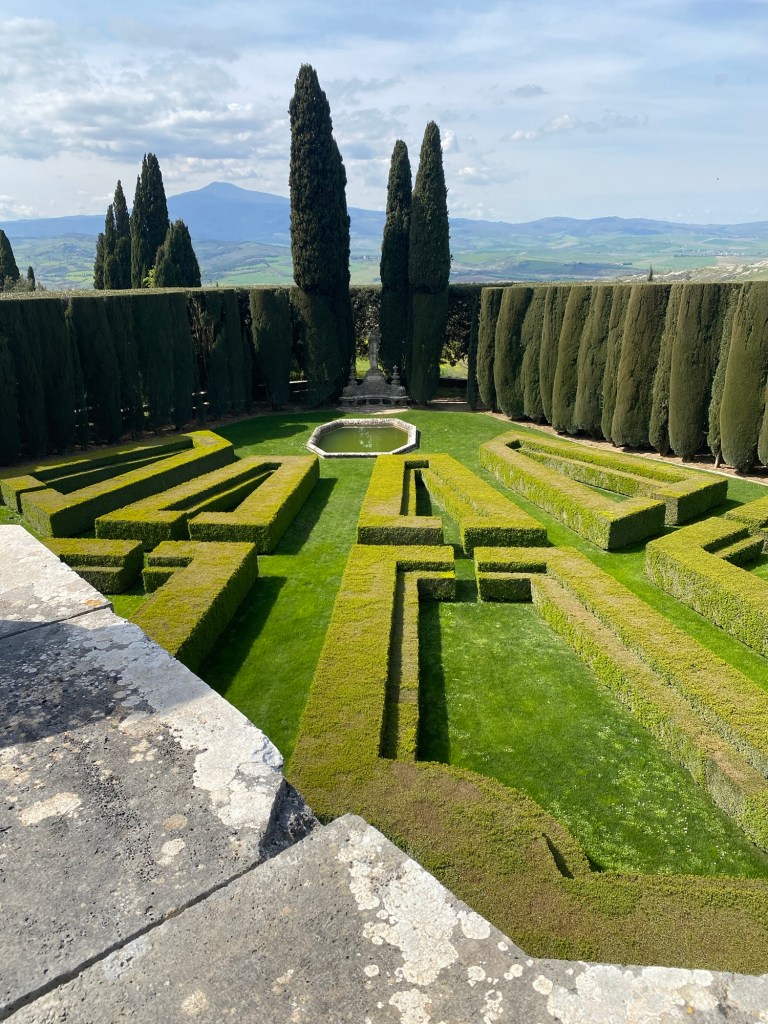
There are many components to the grand scheme of the gardens at La Foce. They were composed by Cecil Pinsent as partly French formal gardens, partly English border and bed style, and part staying close to the original wildness of the site.
I’ll leave it to you, my sophisticated reader, to distinguish from the photos which part you are looking at.
All the parts are marvelous in their own way.
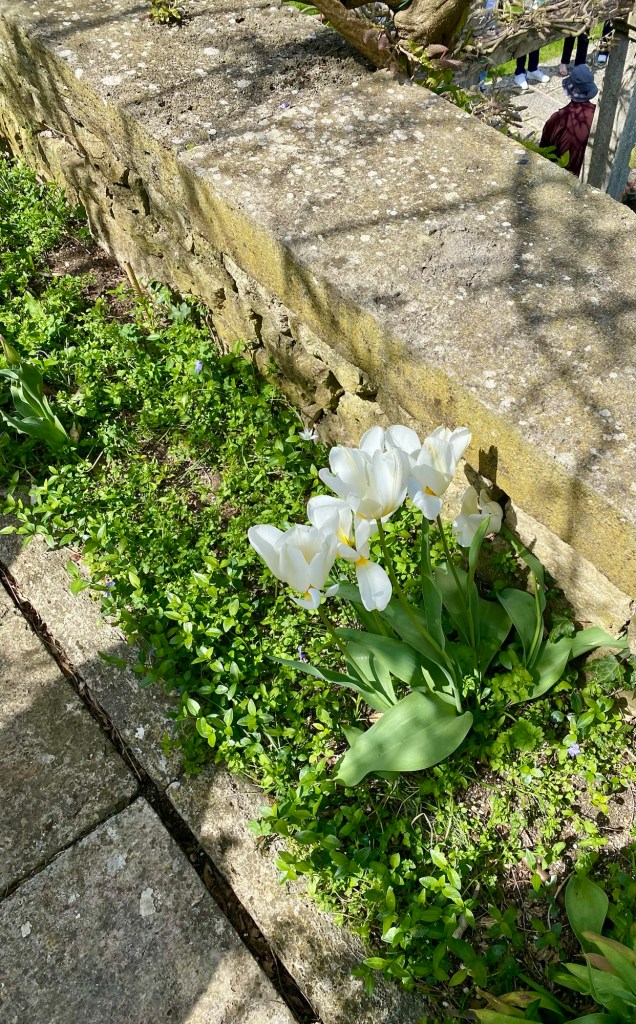
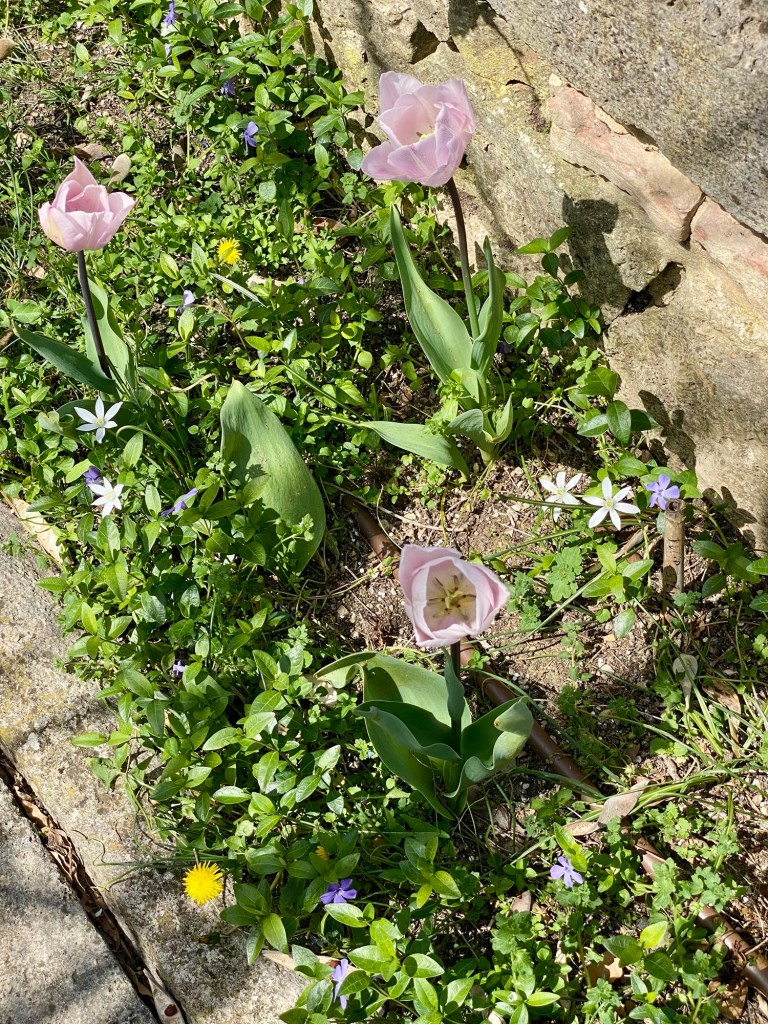
Did you see the dandelion in the picture above? Not even La Foce is perfect! But, it’s close!
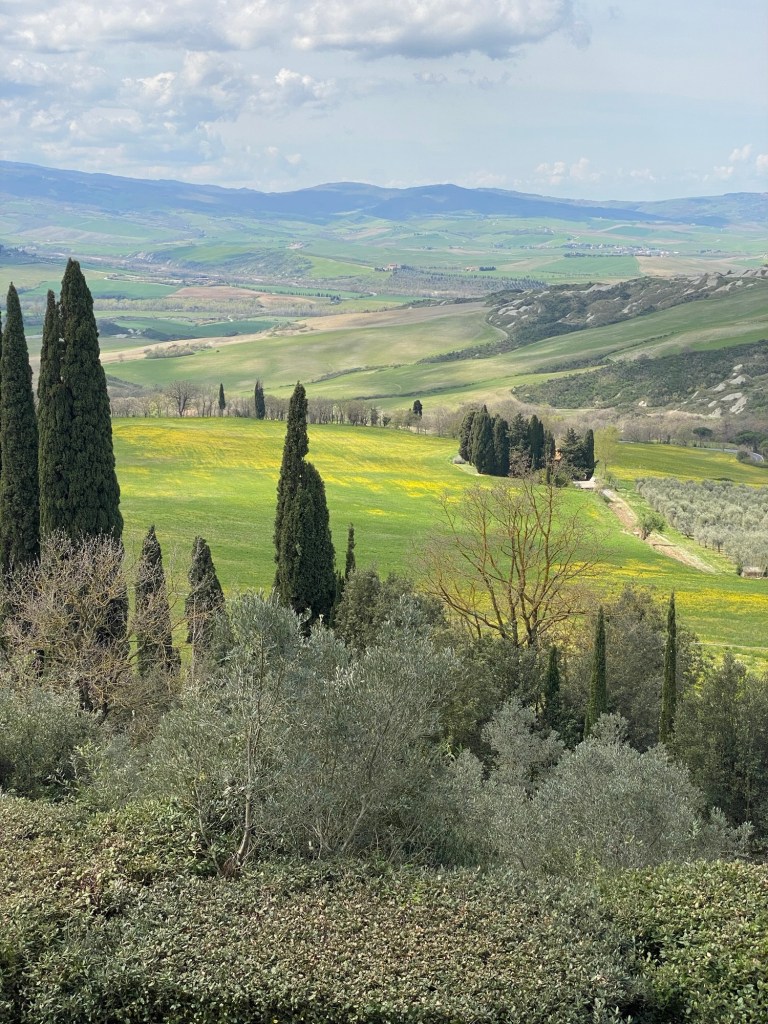
In the next few photos you can tell we are walking through a tunnel covered by a wooden arbor that has wisteria growing over it. You can see the wisteria buds. But the thing you really want to notice is the iconic zig-zag road that is on the opposite side of the valley below, where the cypress trees follow along. What a view!
You cannot beat the vista!
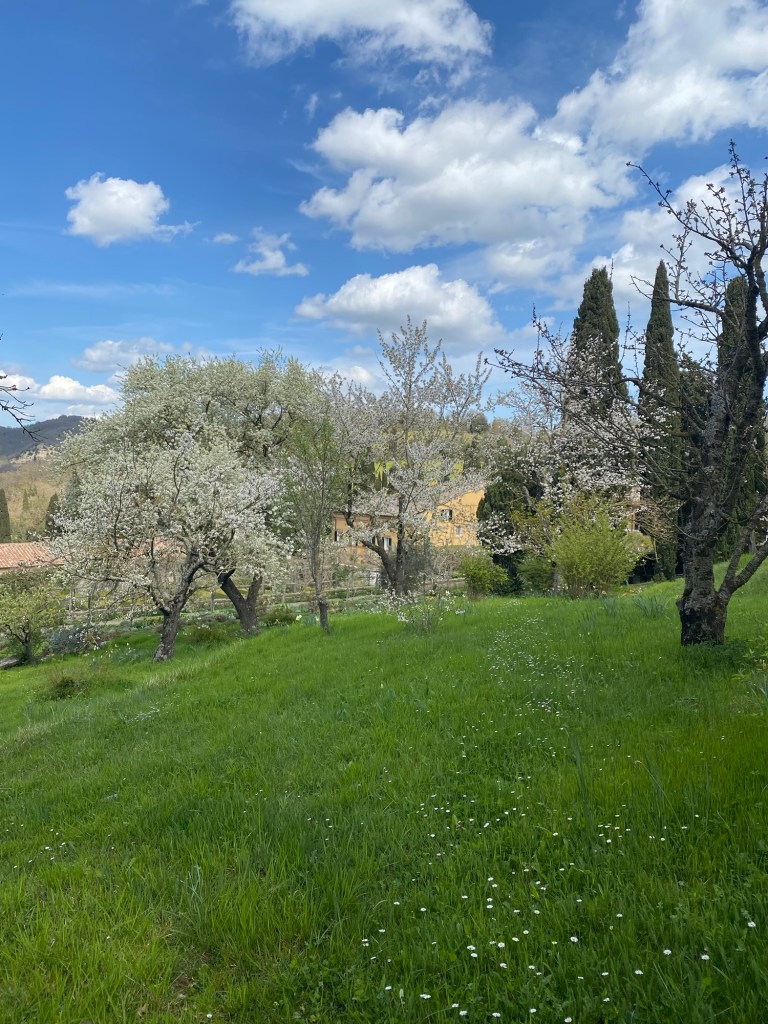
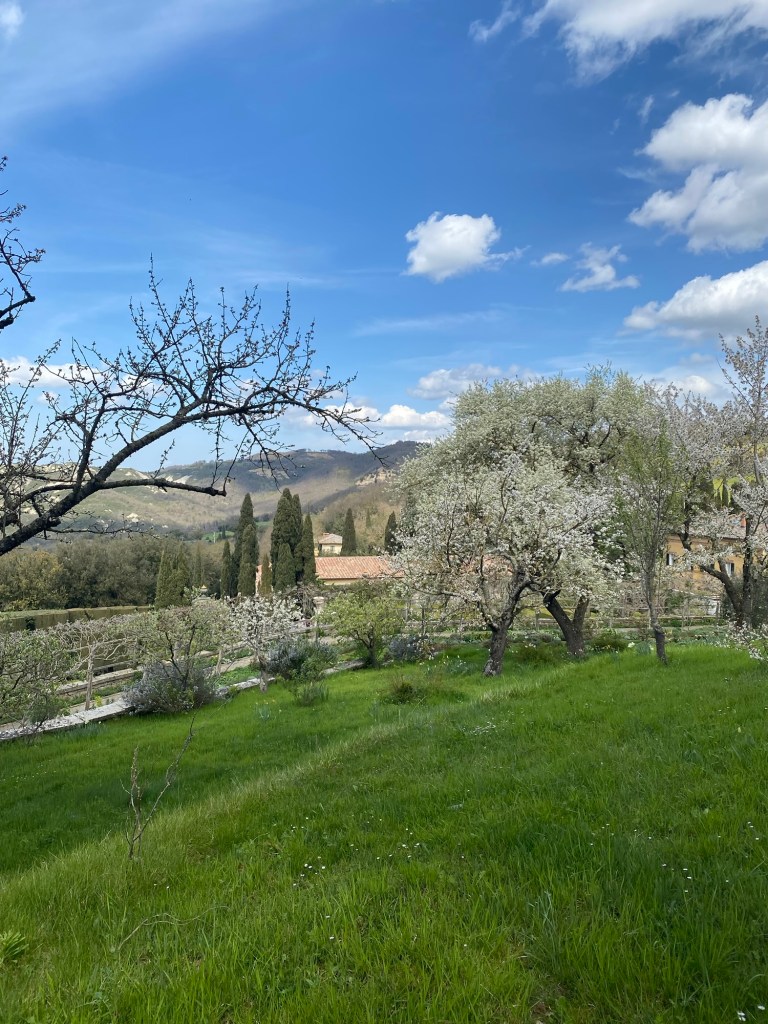
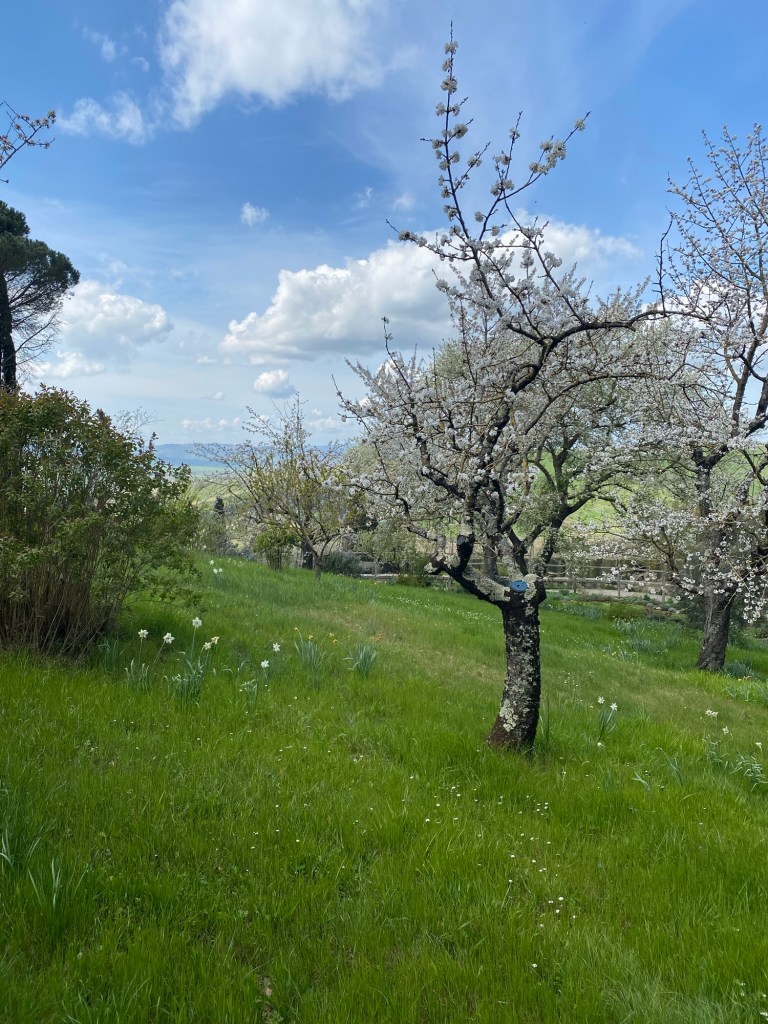
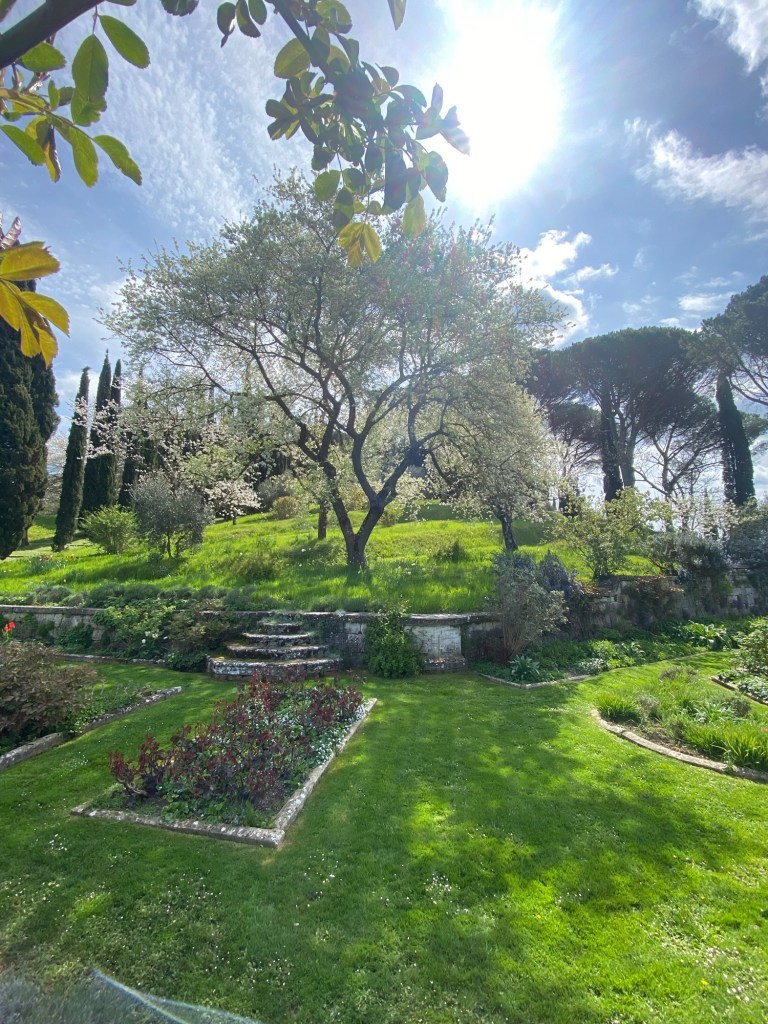
Then, looking in the opposite direction, we encounter the wilder, more English garden. Pinsent left the hillside as he found it, and planted it with fruit trees and an occasional bulb. In the foreground is the true English style garden with beds with curbs, planted with peonies and roses and a few bulbs.
There’s more to come in Part 3. See you later! Alla prossima!
Midway between Florence and Rome lies a large estate named La Foce (the mouth of rivers). If you know Tuscany, it sits close to the towns of Montepulicano, Chiusi, and Chianciano Terme in the Southern Tuscan region of Val d’Orcia.
It may lie in Tuscany, but I swear it’s a piece of heaven!
La Foce lies on the Via Francigena, the ancient road and pilgrim route running all the way from France to Rome. It has been inhabited continuously for many centuries. The Villa was built in the late 15th century as a hospice for pilgrims and merchants traveling on the Via Francigena. It is located near an Etruscan settlement, and a burial-place from the 7th century BC to the 2nd century AD has been excavated there.
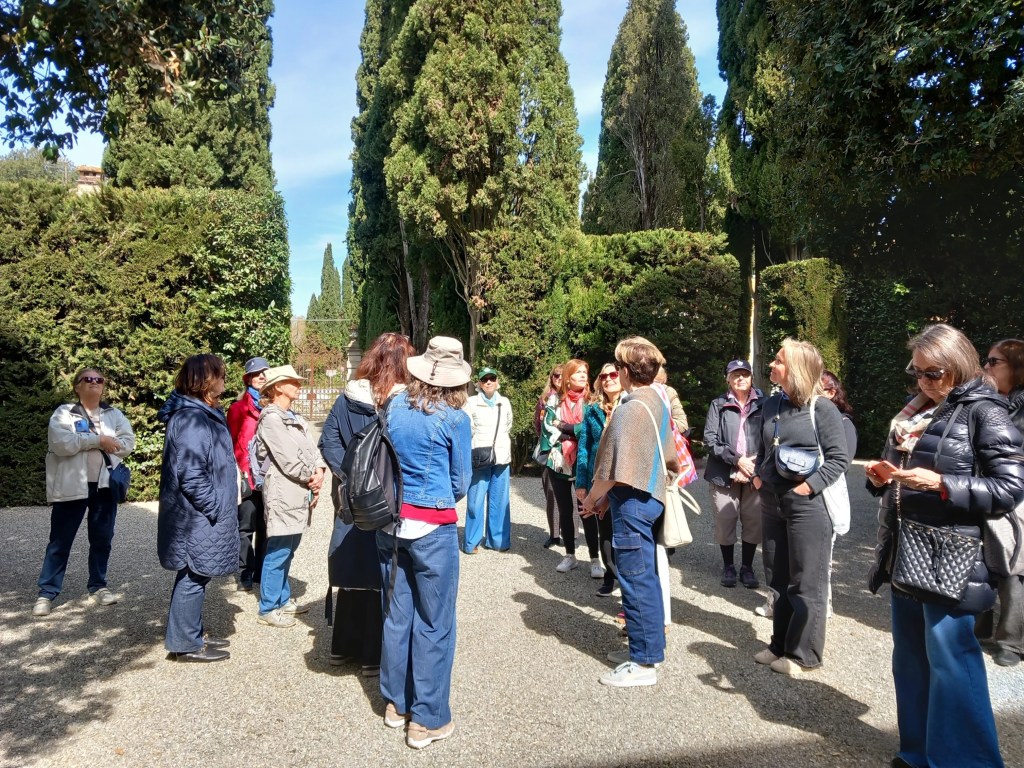
Last week I joined an excellent group of Italophiles on a day trip from Florence to this heavenly locale, and we had the great fortune of having as our guide the granddaughter of the founders.
In 1924, writer Iris Origo, granddaughter of William Bayard Cutting and Hamilton Cuffe, the 5th Earl of Desart, joined Antonio Origo, son of Marchese Clemente Origo, in buying what was by then a very dilapidated estate. They moved there after their marriage. The late 15th-century villa was restored by the Origos in the 1920s with government financial assistance. The fine gardens were designed by the English architect Cecil Pinsent: “the last great Italian garden by Pinsent” in the words of horticulturist television presenter Monty Don. Pinsent had created several other gardens in Tuscany, including those at Villa Le Balze and Villa I Tatti, where Iris’s mother was a frequent guest of Bernard Berenson. Berenson had commissioned Pinsent’s first Italian garden about twenty years earlier.
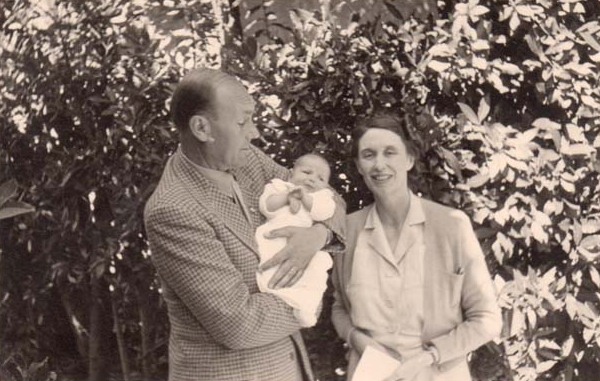
Antonio and Iris Origo with daughter Donata at La Foce, 1943
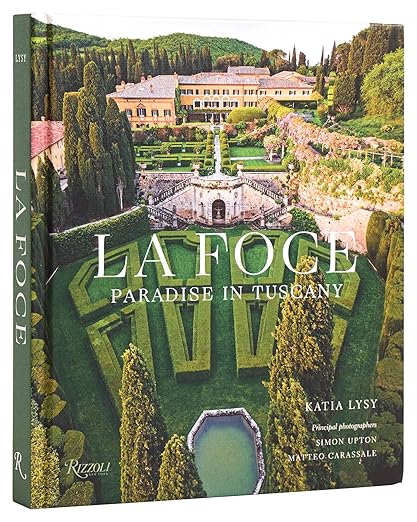
Below is a picture of the original villa and our guide, Katia Lysy, the granddaughter of Iris and Antonio Origo. Ms. Lysy has just published a beautiful book on La Foce and it was a true pleasure to hear her take on the estate and her grandparents. What a lucky woman she is!
It was a splendid early spring day and I can speak for everyone there that we were enchanted.
Katia is discussing Cecil Pinsent in the video above.
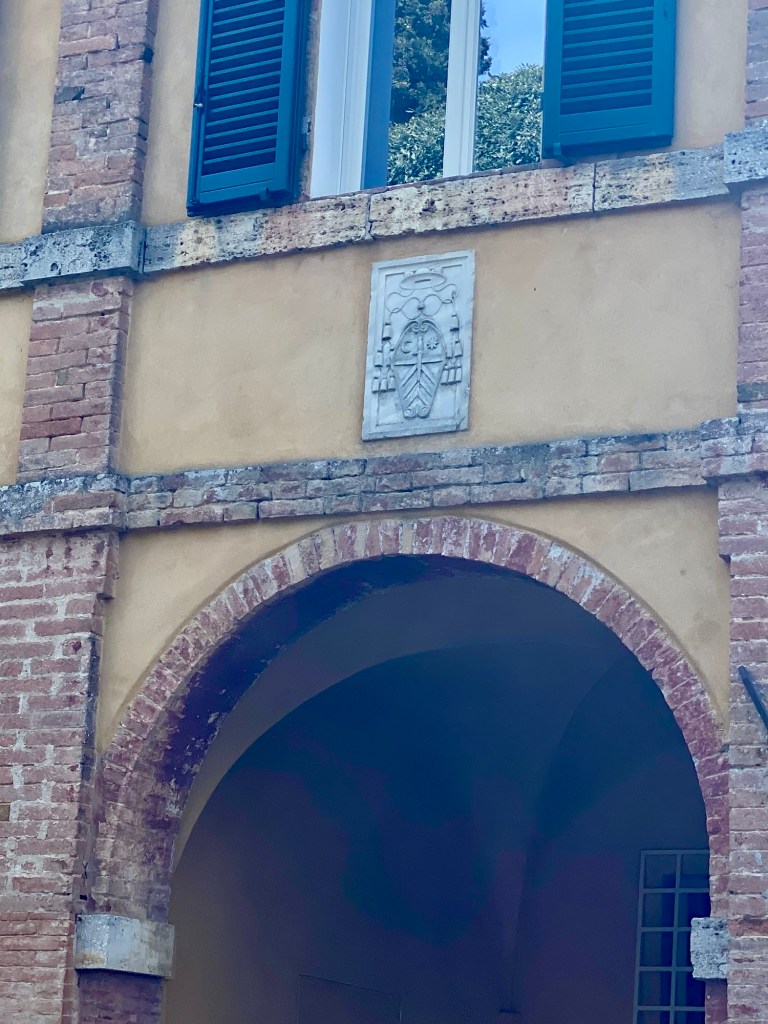
Below: the Origo coat of arms.
I’m not going to walk you through the gardens because if you are interested, you can read all about it online. But I am going to share some of the shots I took of this amazing place.
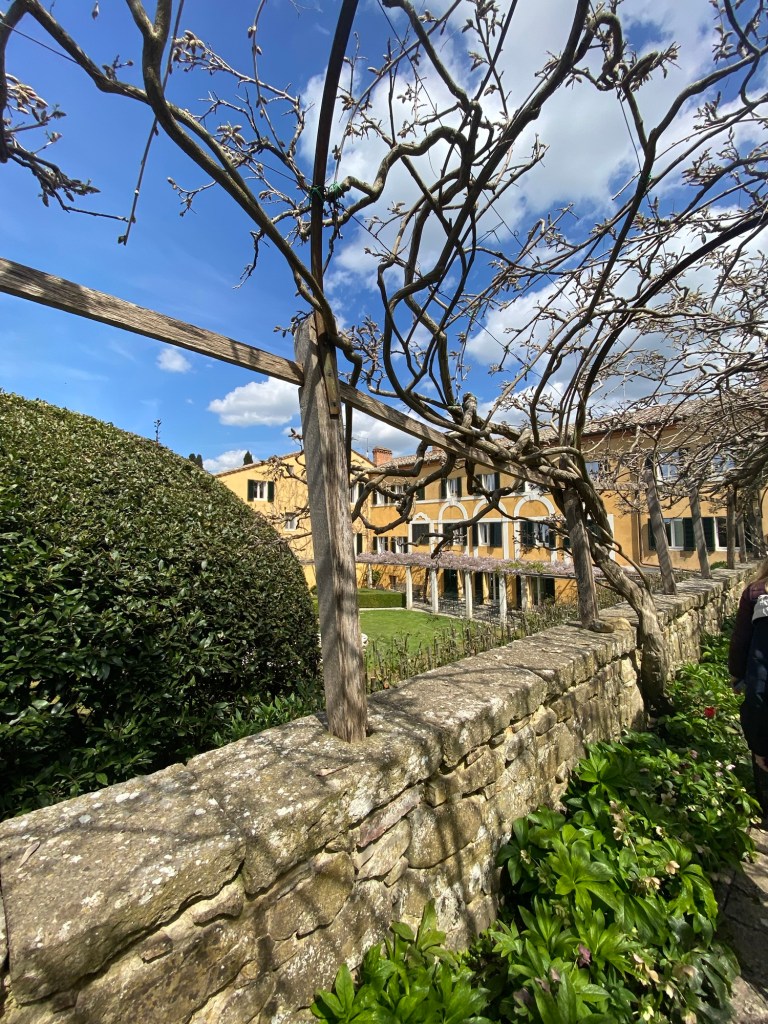
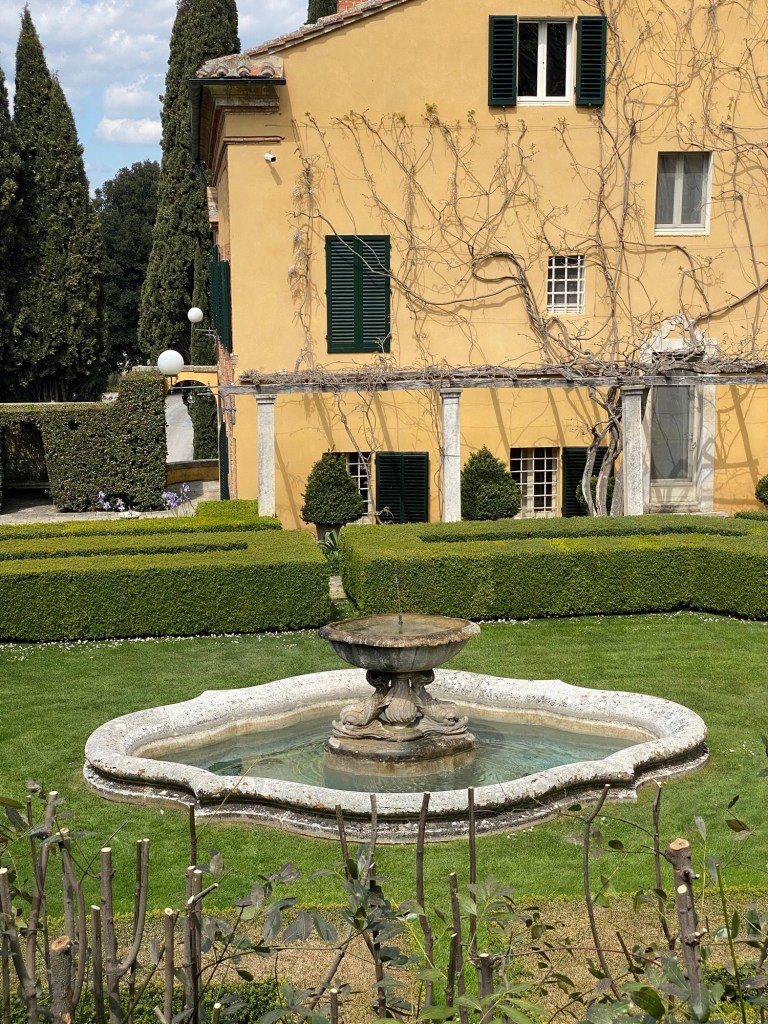
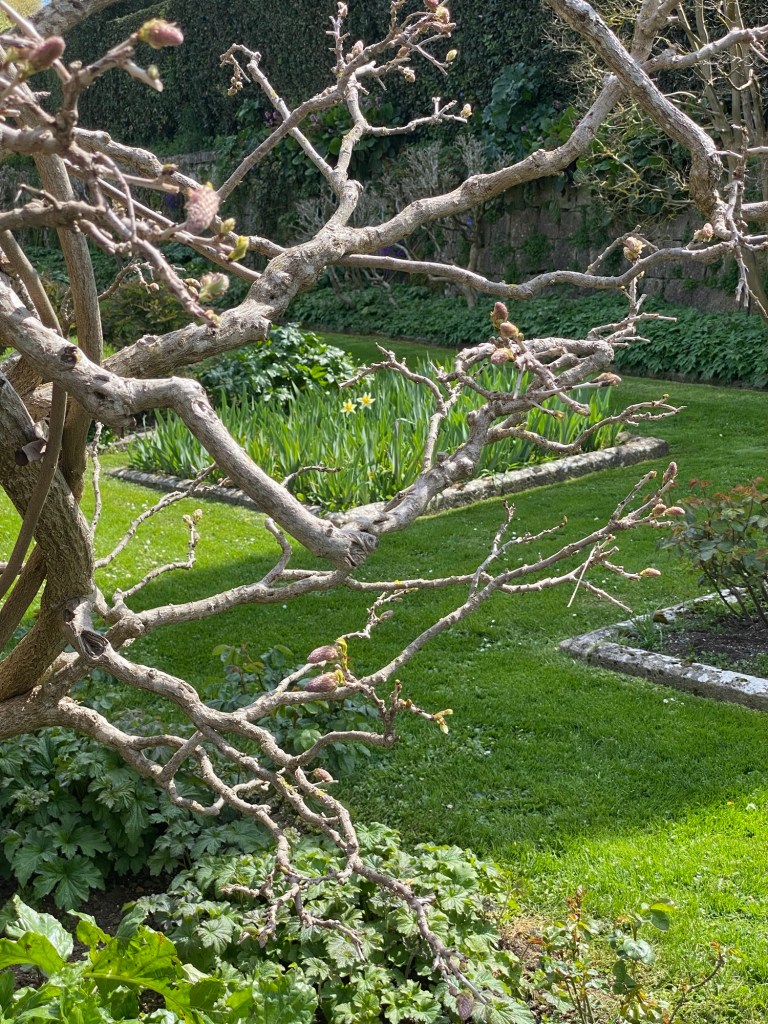
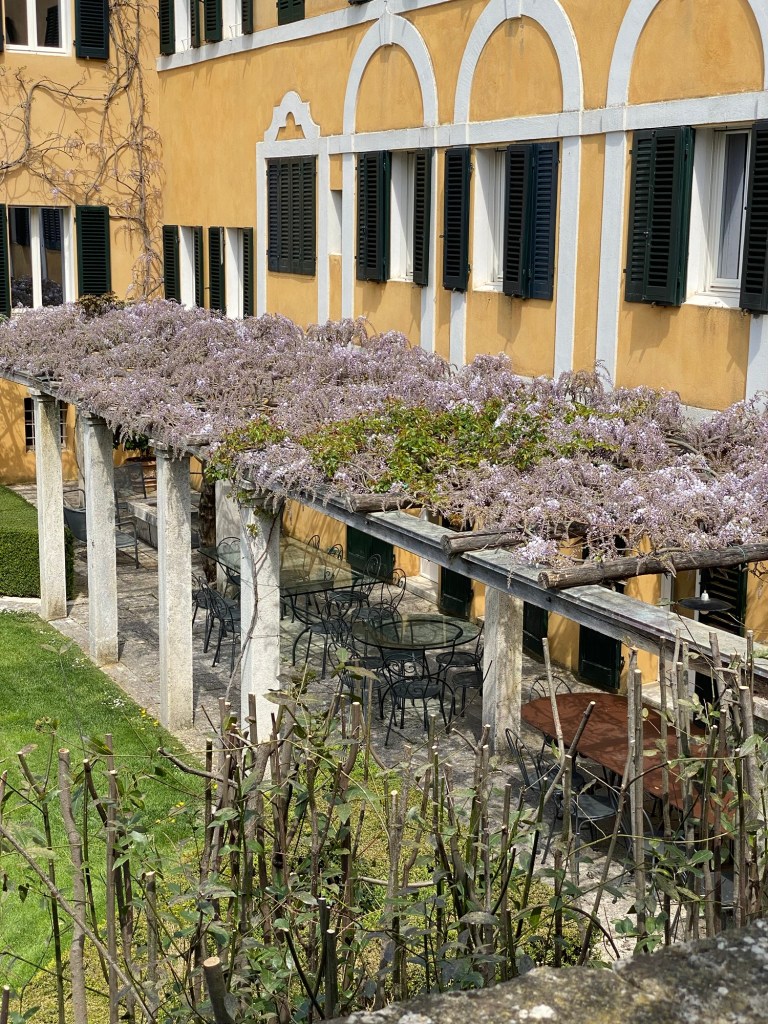
Unfortunately, our visit was not timed for the bloom of the wisteria that makes such a statement on the arbor which you can see in the photos above and below. If you look closely and use your powers of perception, you can just make out a lavender haze running along the flat surface of the arbor that exists just above the first floor and below the second.
Can you imagine this exterior wall when the attached vines of wisteria are in bloom?!!
Yes, we are in monumental garden territory here.
I have more great pictures to share with you, check back soon. Alla prossima!
If you have the great fortune of living in Florence and you are not oblivious to your surroundings, you can learn something new every single day. I try to keep my eyes wide open.
On a favorite walk along the Arno River as I walk east of the city, I encountered this sign post in one section of the pretty gardens that align the walkway.
I must admit, I knew nothing about who the Victims of Via Fani were.
So, of course I looked it up.
The Via Fani ambush (or Via Fani massacre) was a terrorist attack carried out by militants of the Red Brigades on the morning of March 16, 1978 in Via Mario Fani in Rome to kidnap Aldo Moro, President of the National Council of the Christian Democrats, killing all the members of his escort. The kidnapping lasted 55 days and ended with the discovery of Moro’s body in the trunk of a red Renault 4 in Via Michelangelo Caetani.
The precise modalities of the ambush (codenamed within the Red Brigades operation “Fritz”), the operational details, the circumstances before and after the attack, the responsibilities, the members of the terrorist fire group, the possible presence of other components external to the Red Brigades or of external connivance and aid, are all aspects of the affair bitterly debated in court, parliament and in the press.
Lessons from the past and memories. It’s all here. Live and learn.
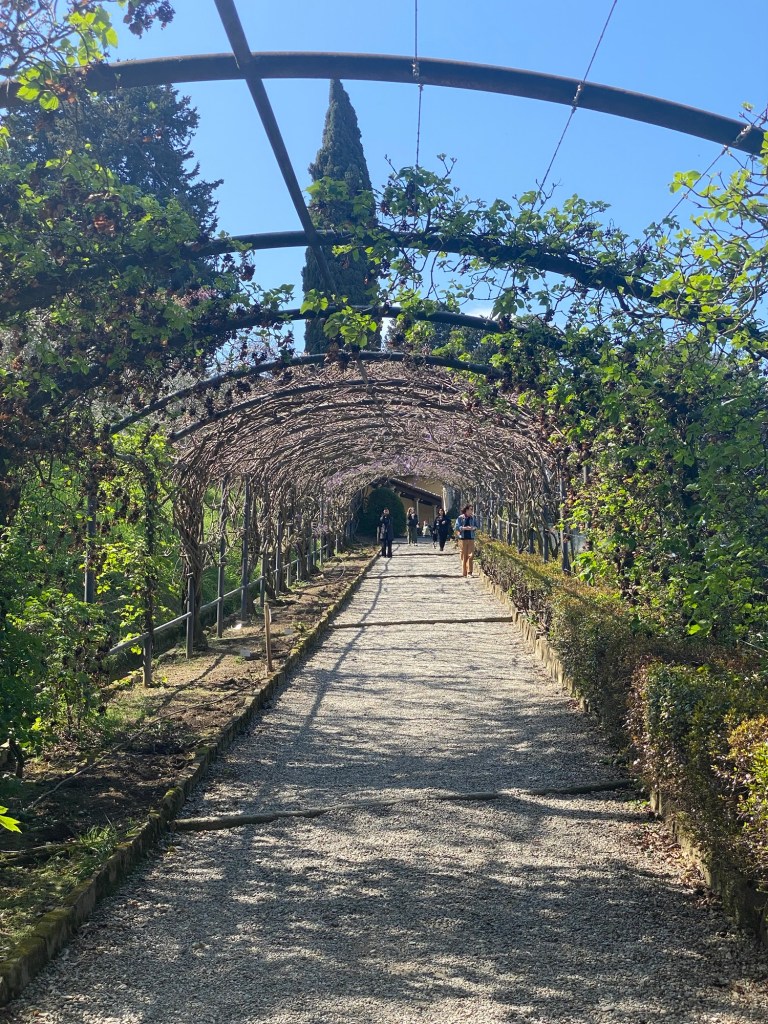
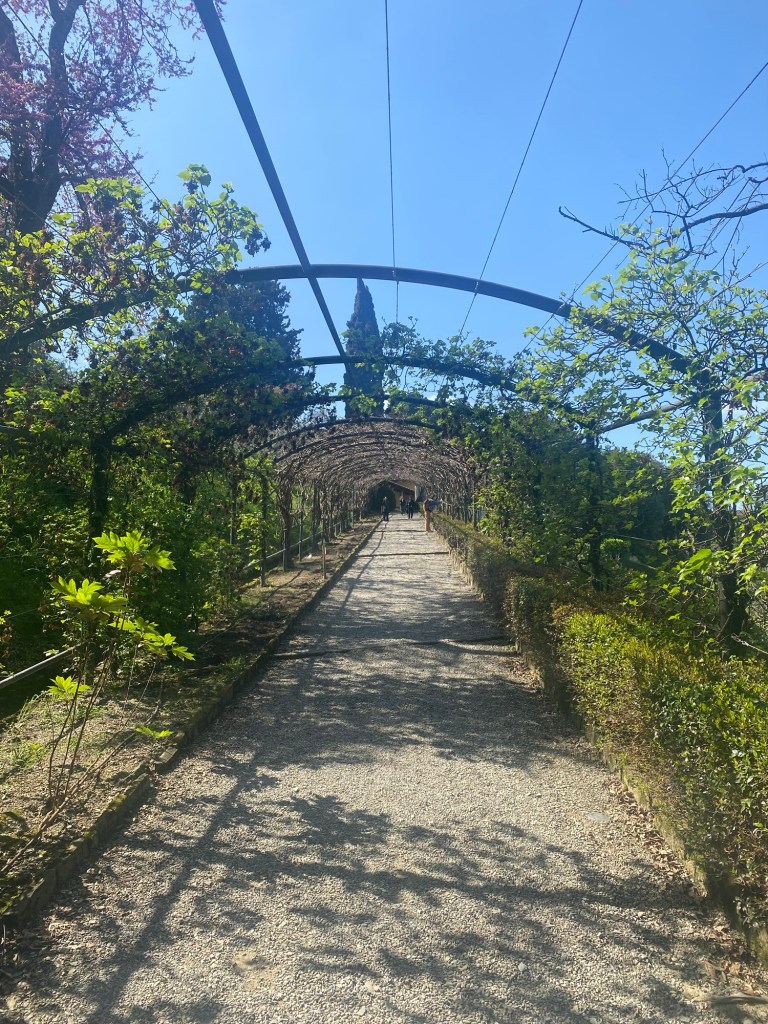
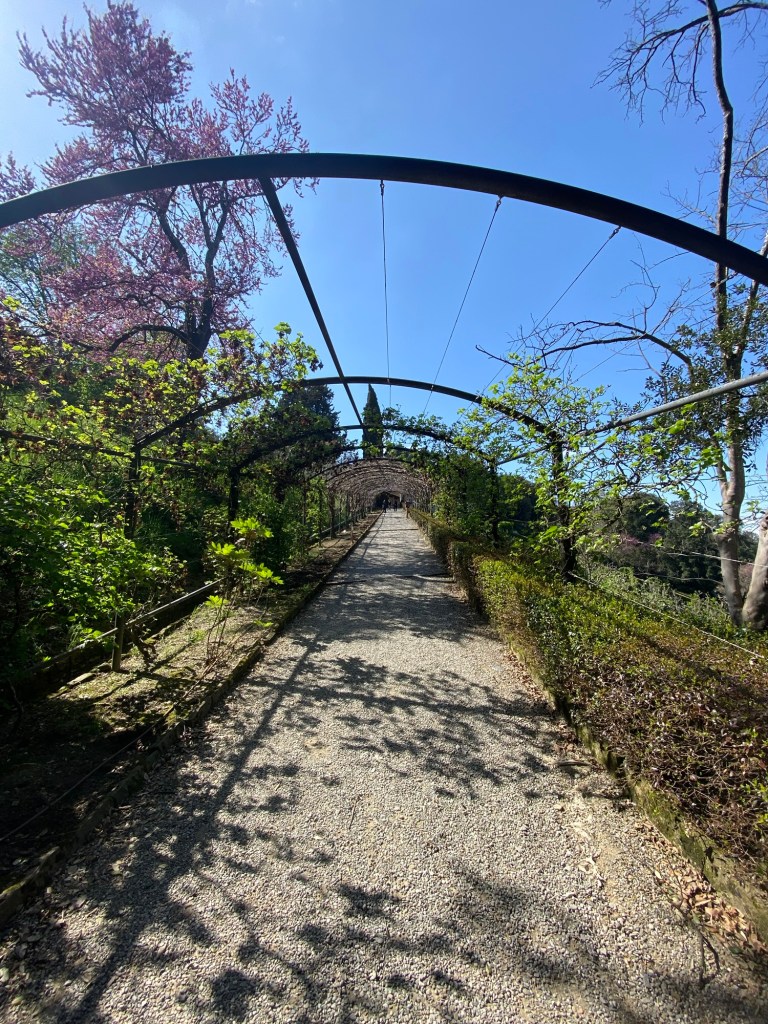
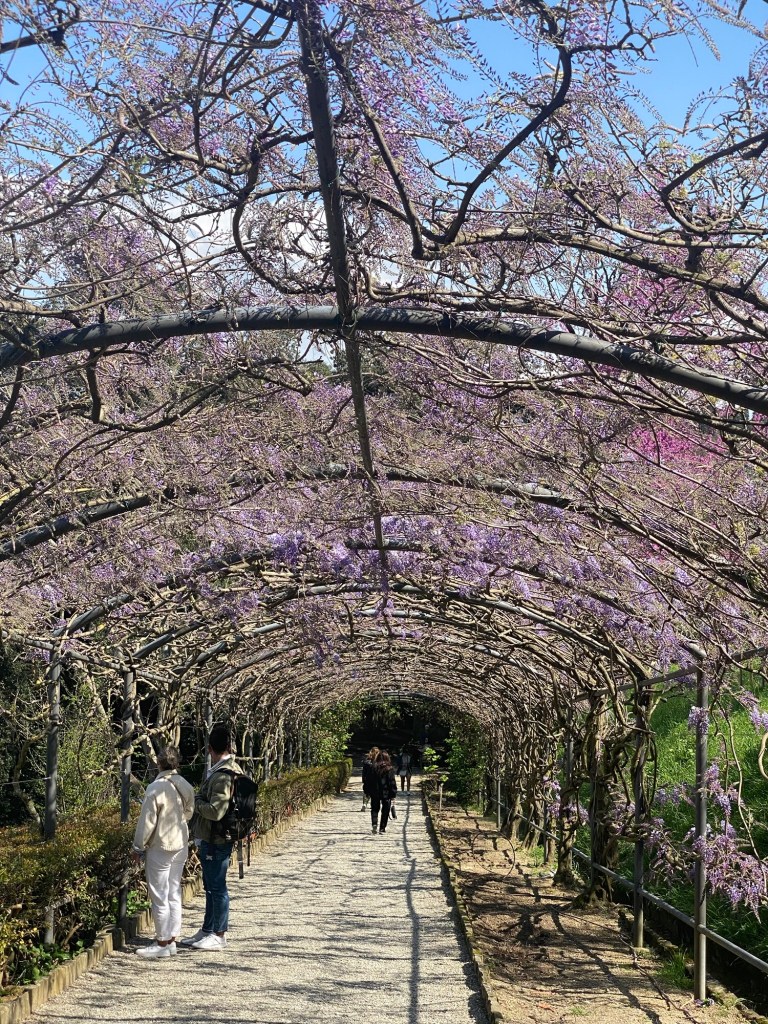
You knew I made it to the wisteria tunnel, didn’t you? Certo!
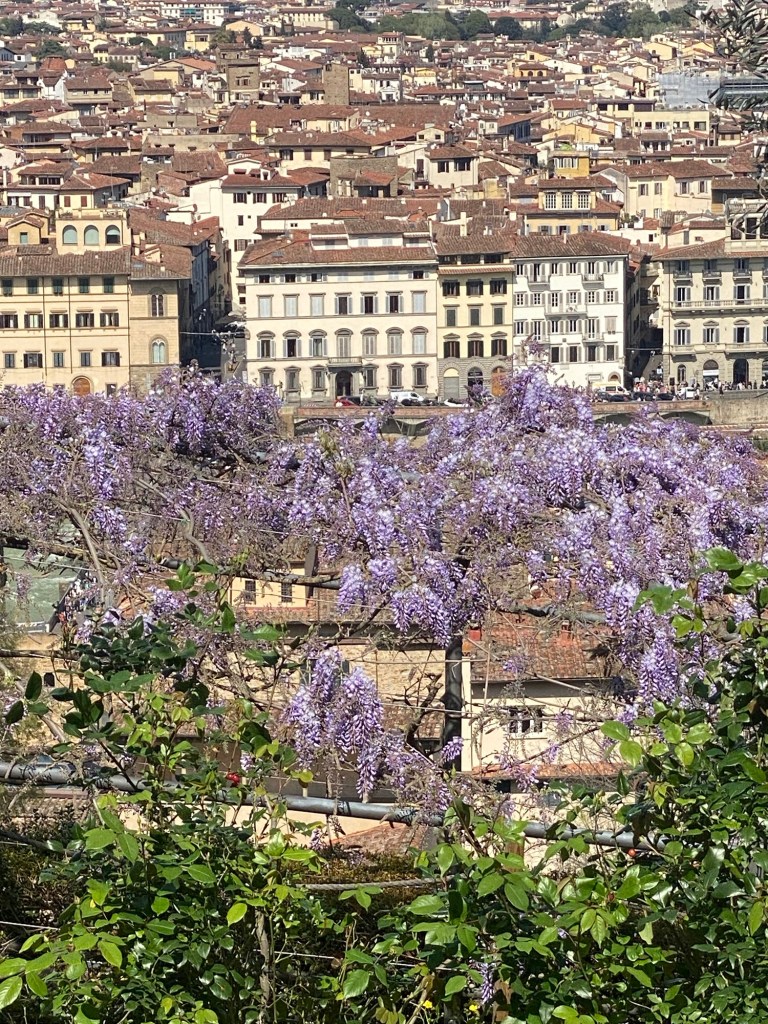
It just goes to show you that the Bardini is slightly higher than the city of Florence, and less warm, so the wisteria that is blooming all over the city right now has yet to catch up way up here! I was honestly surprised to find that.
But, take heart, the best is yet to come in a week or 2.
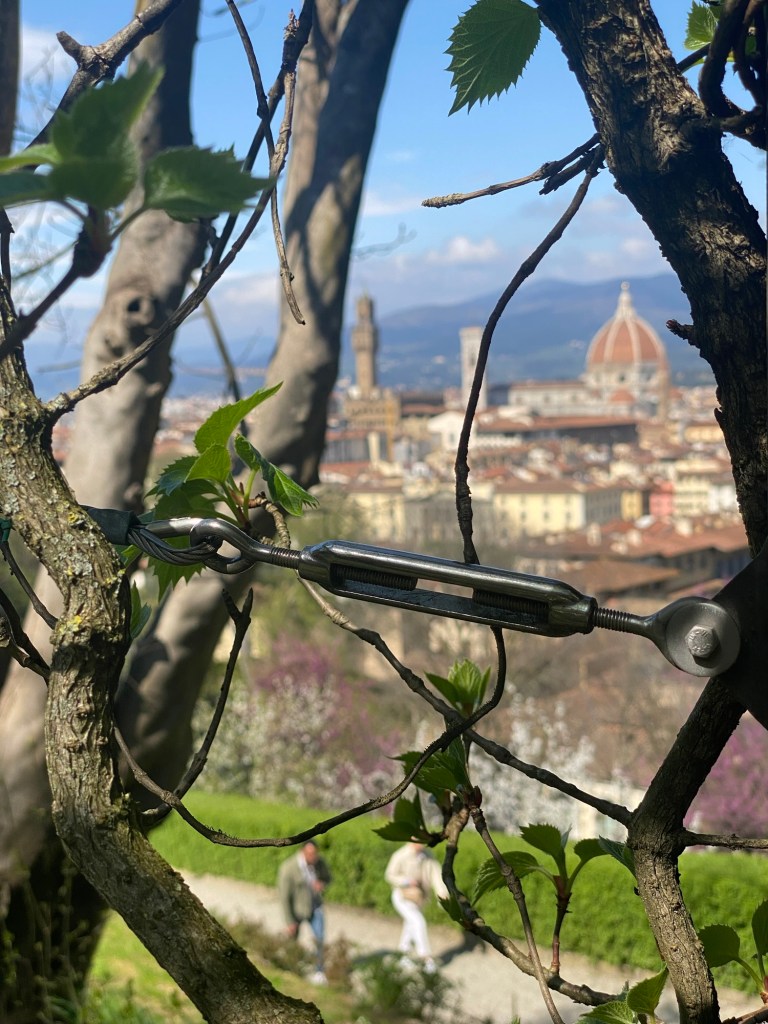
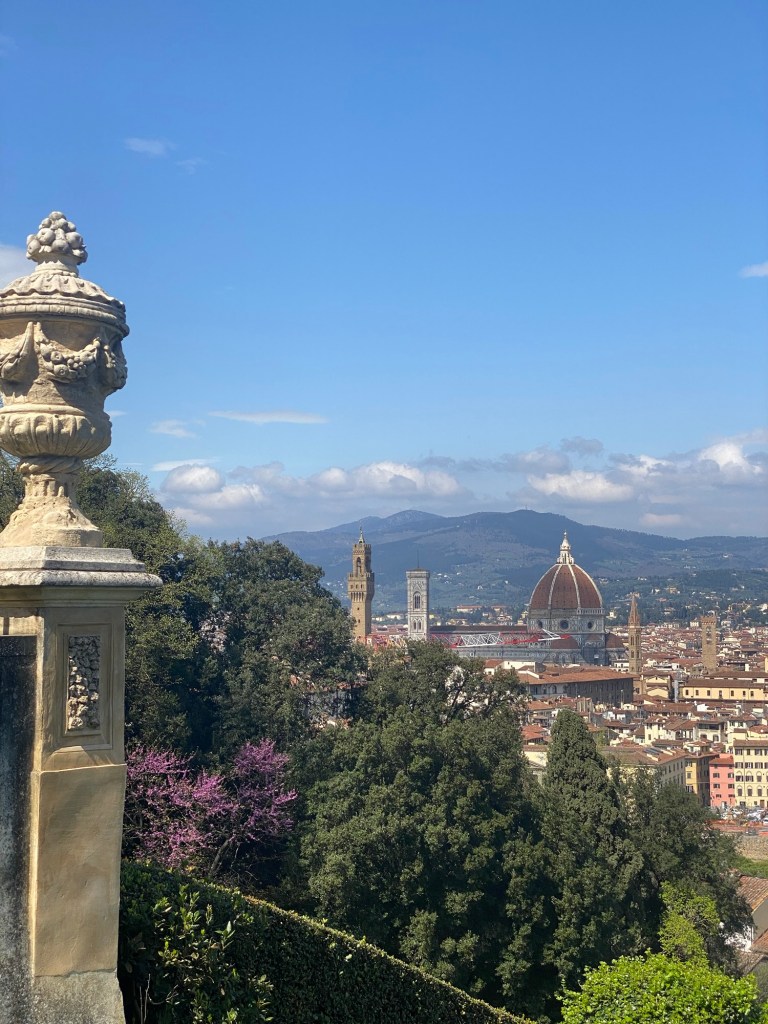
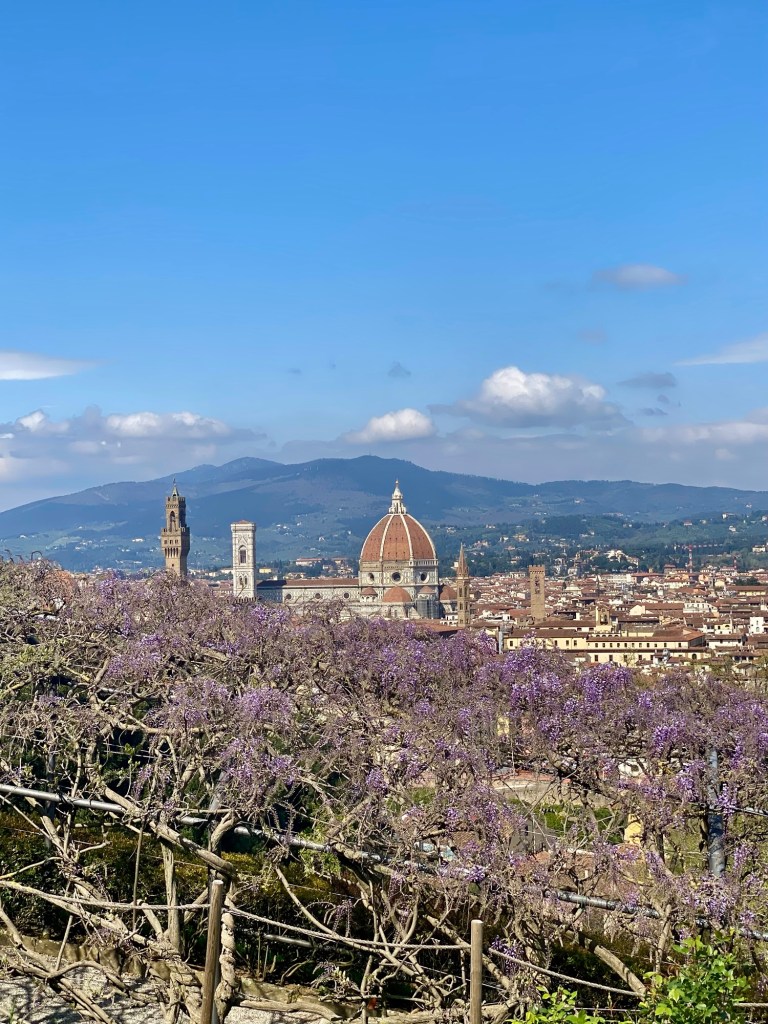
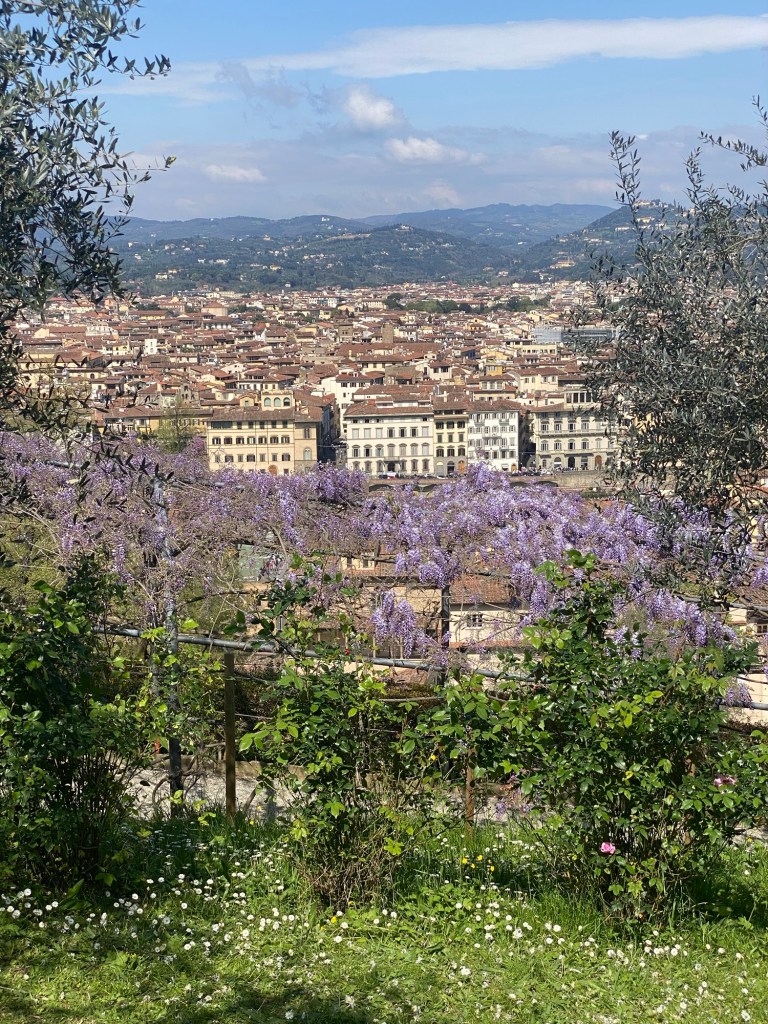
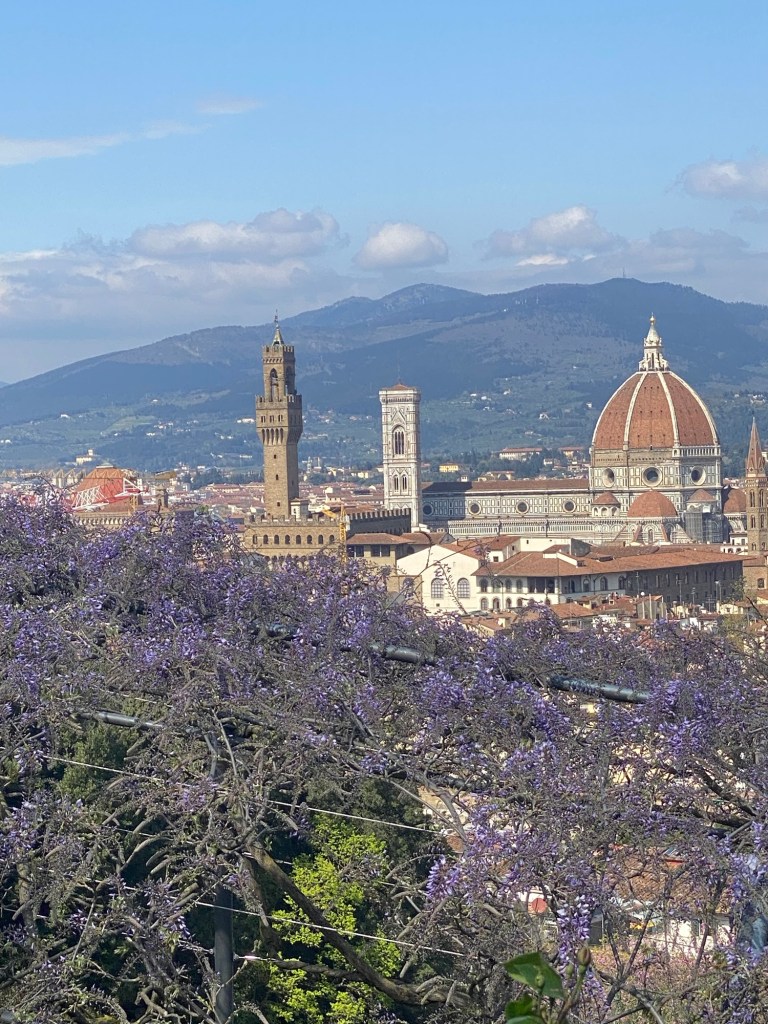
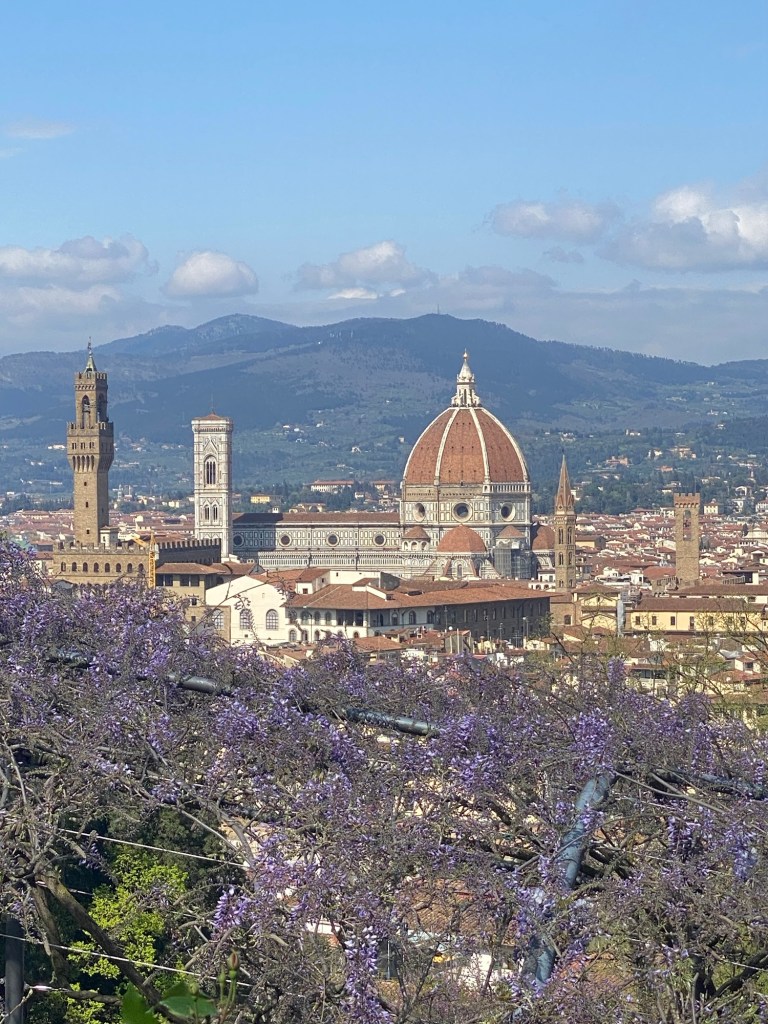
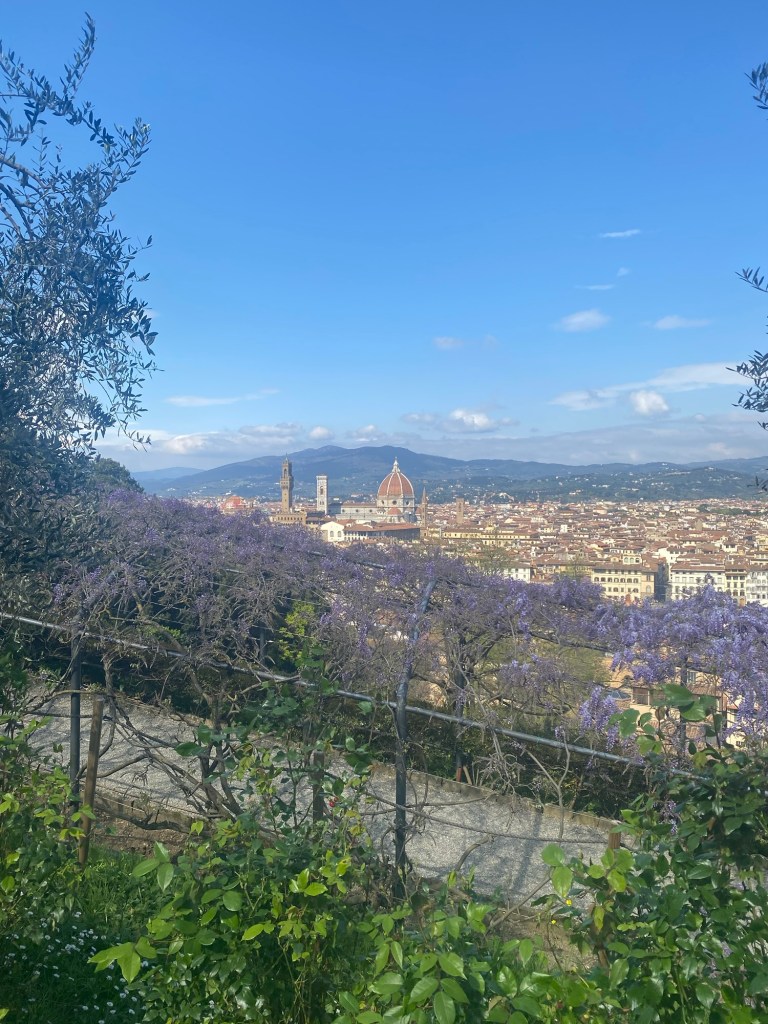
Still, I was rewarded 10x over for my trouble. Look at this view!
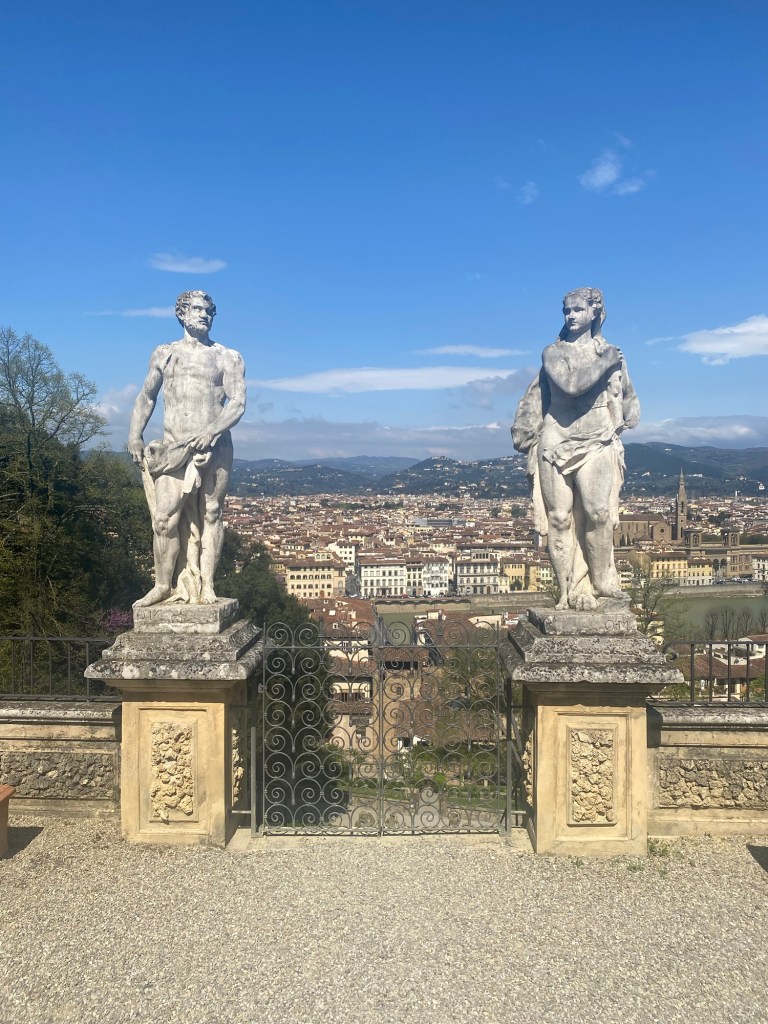
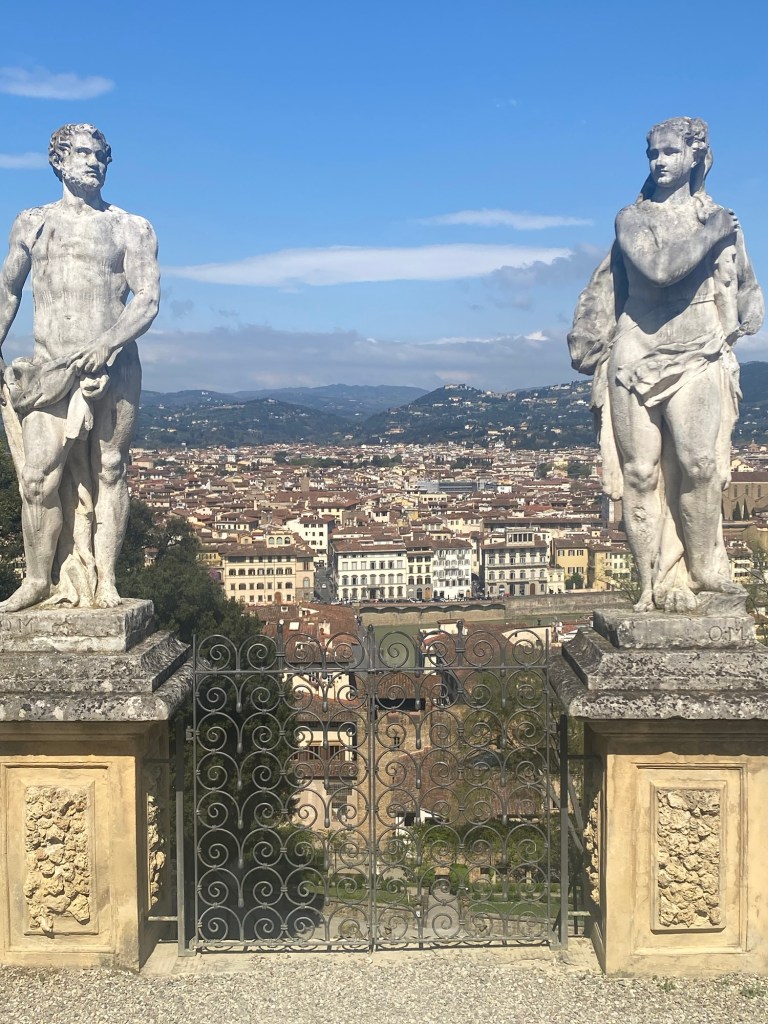
Passing from the tunnel to the next parterre, vistas galore!
These two guardians of the city stand watch through thick and thin, through winter and summer. Hello old friends!
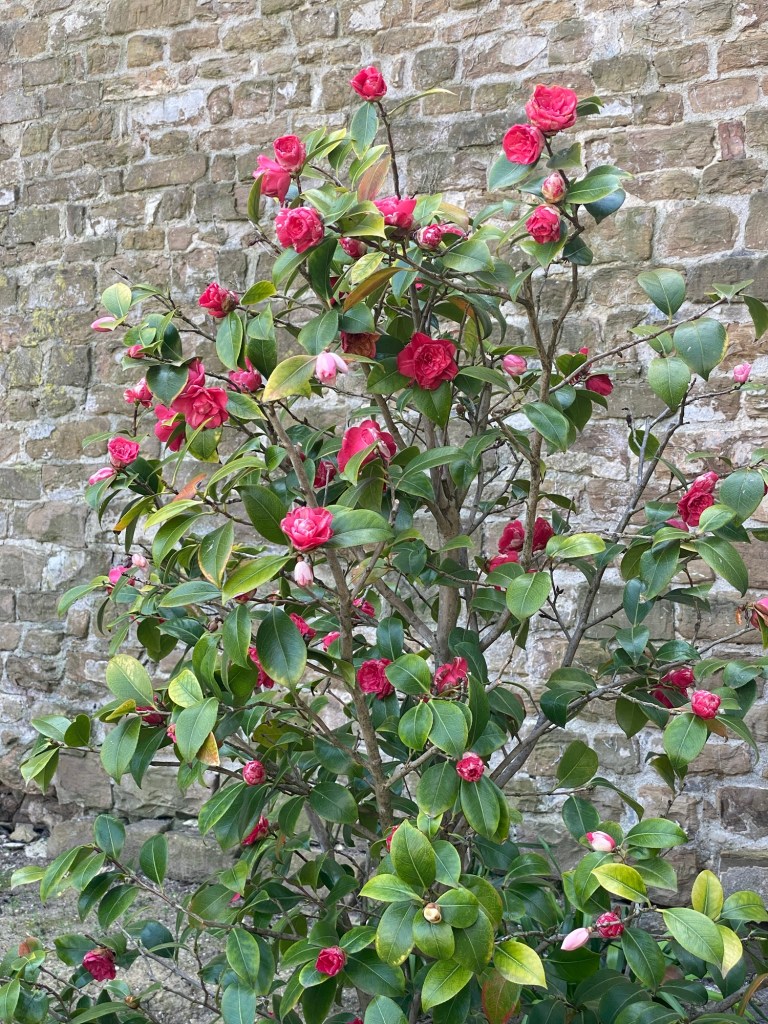
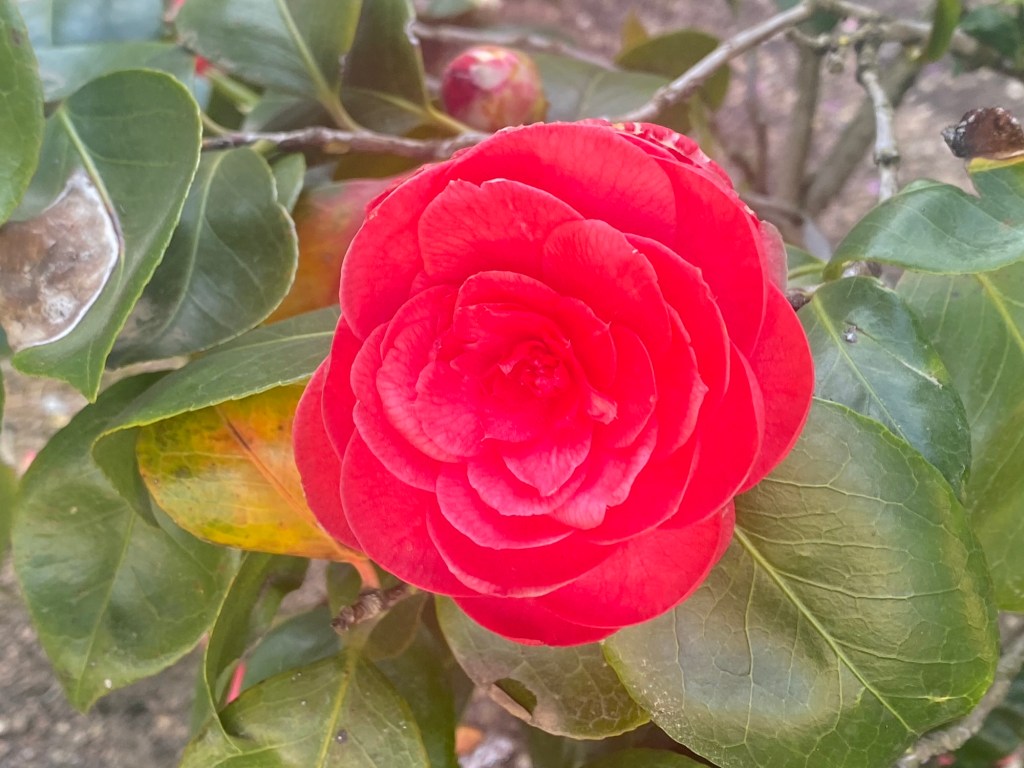
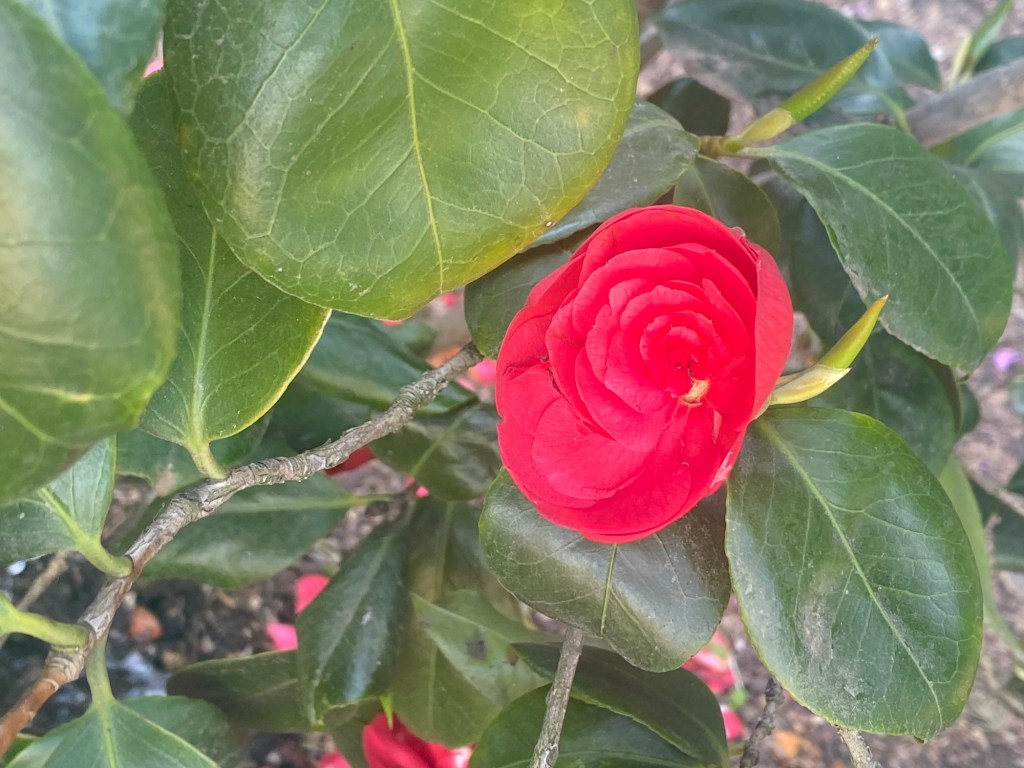
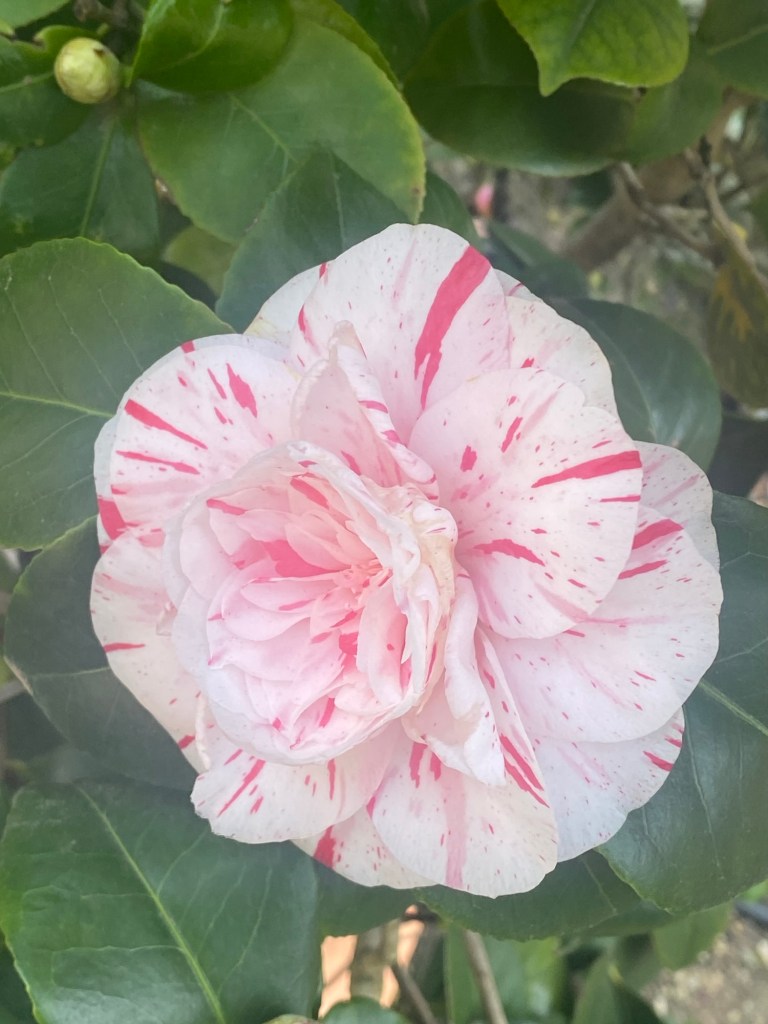
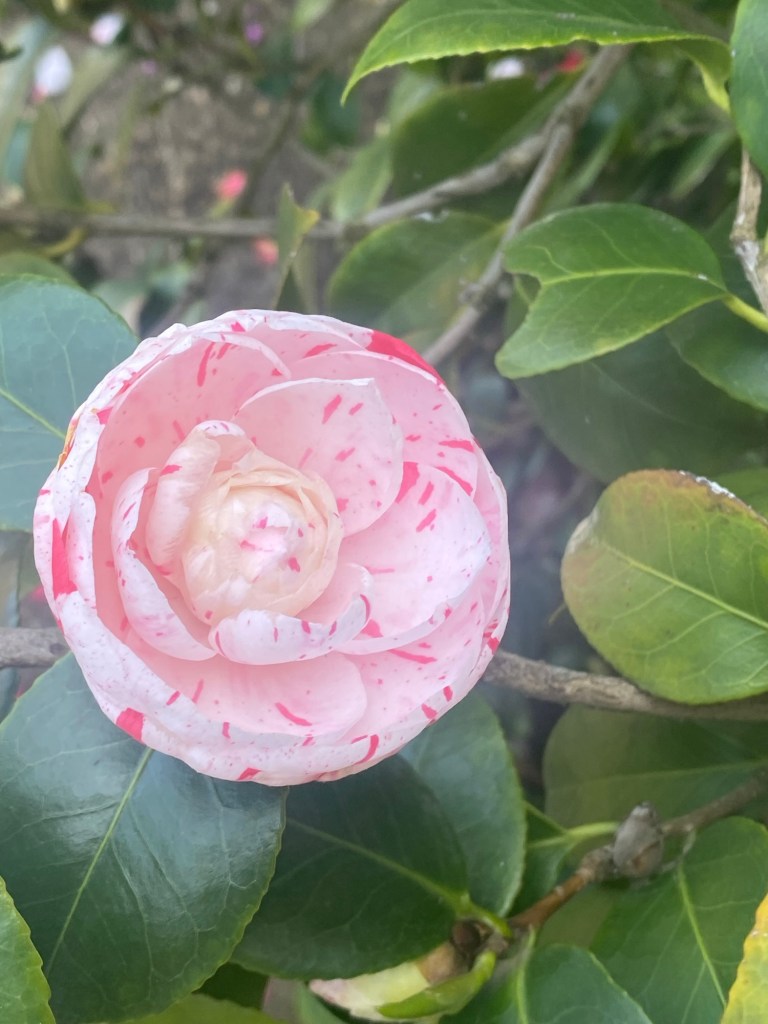
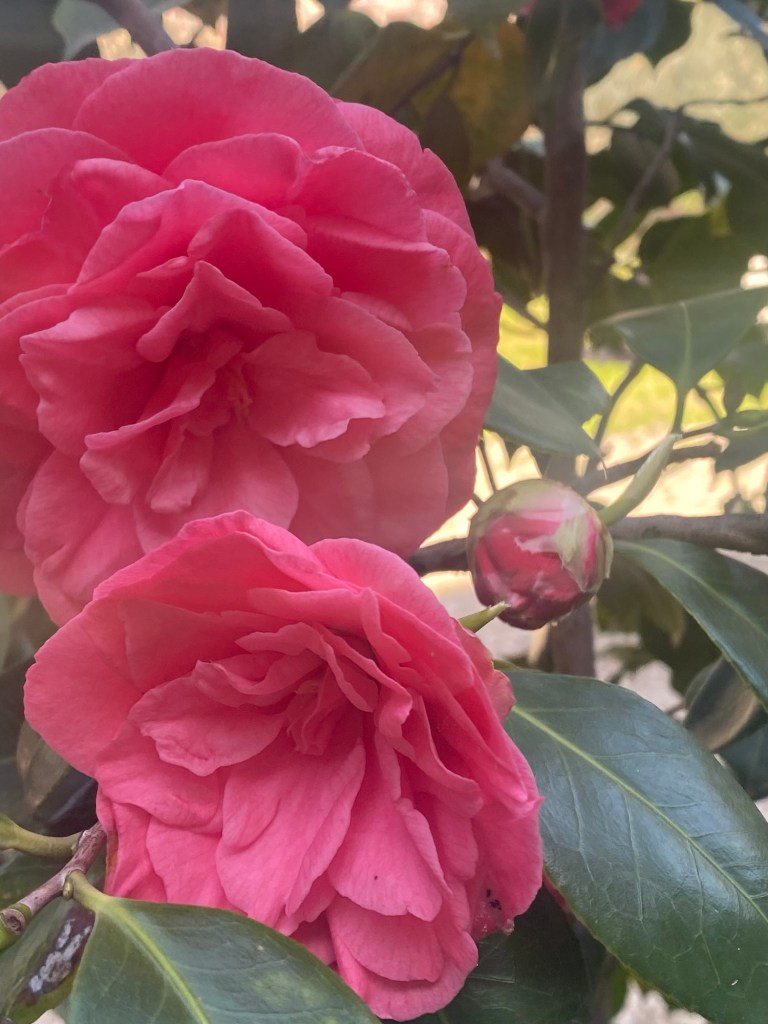
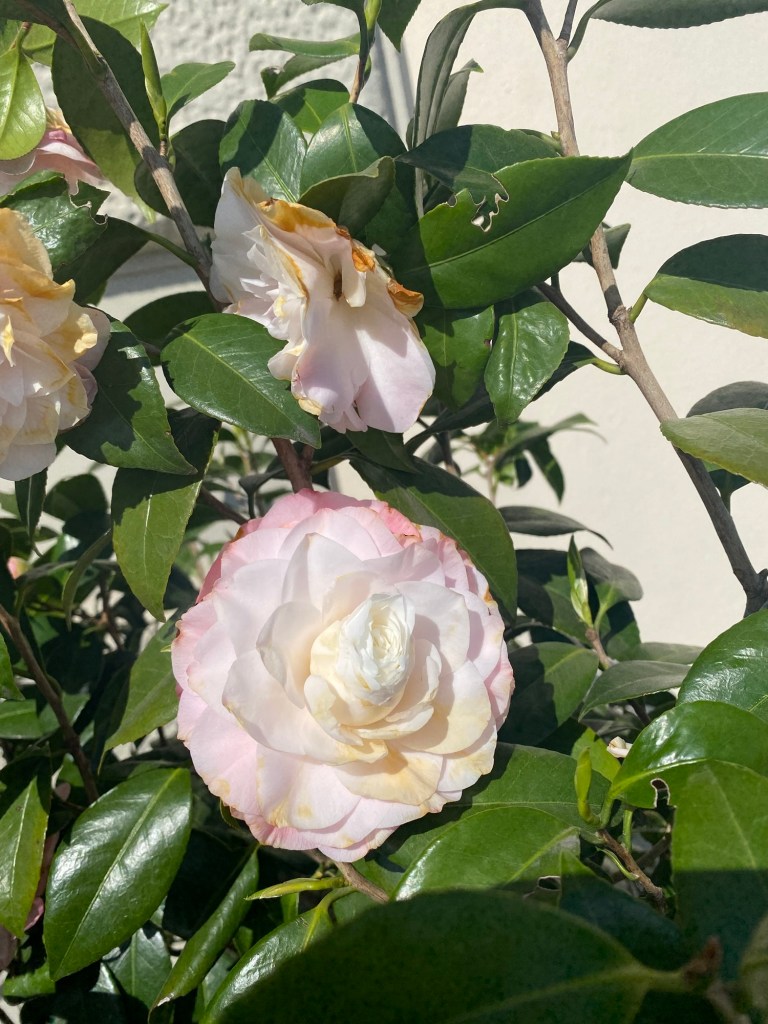
And you knew, didn’t you, that if there were camellias in bloom, I would find them? They are like a magnet to me. Never prettier than when located in front of the medieval walls of Florence.
And an even better view of il duomo from above the tunnel.
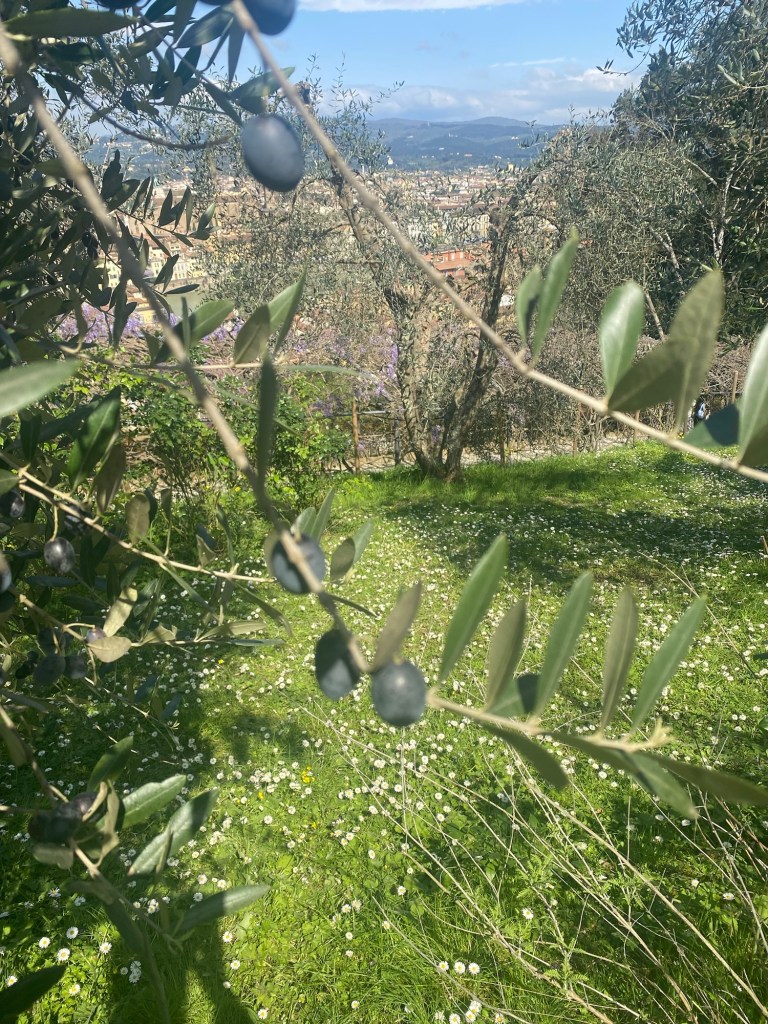
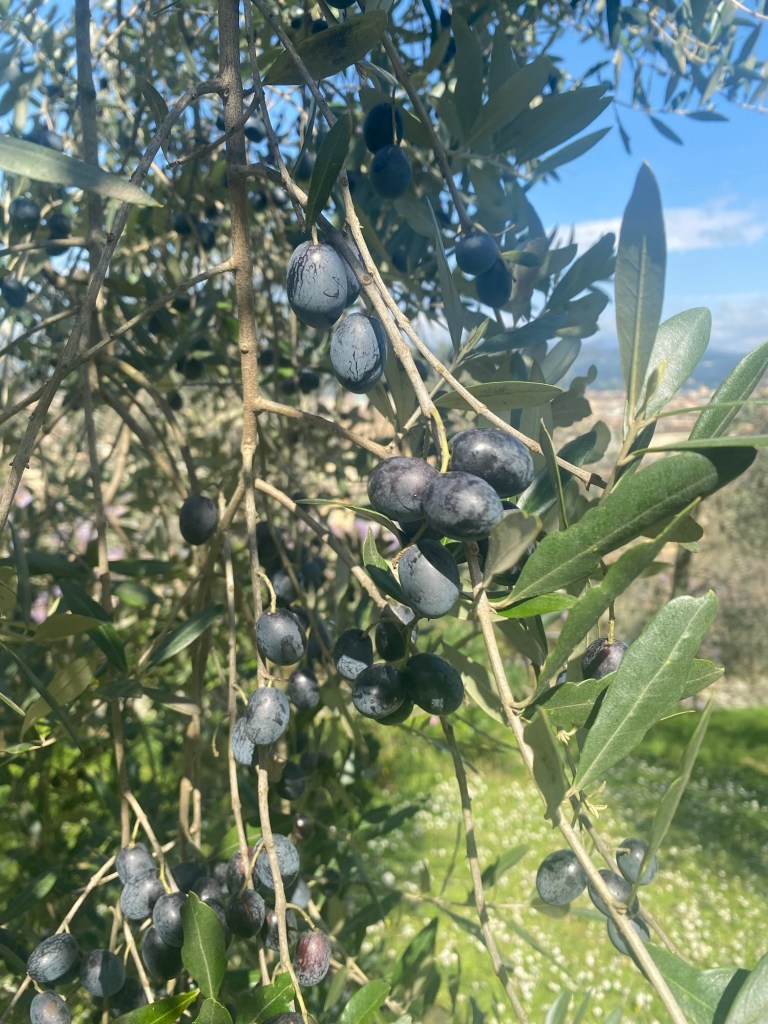
Below, I was surprised to see olives still on a few ancient trees away up here.
Florence. Can it take a bad picture? Not to my mind.
Grandfather and granddaughter? Father and daughter? What do you think?
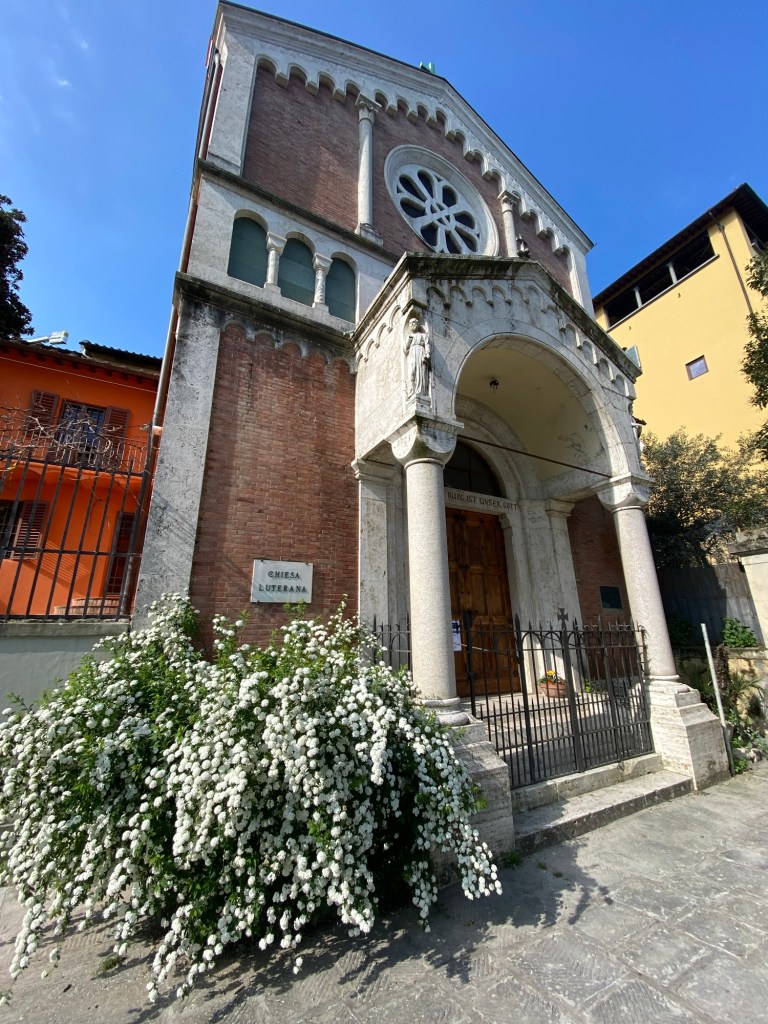
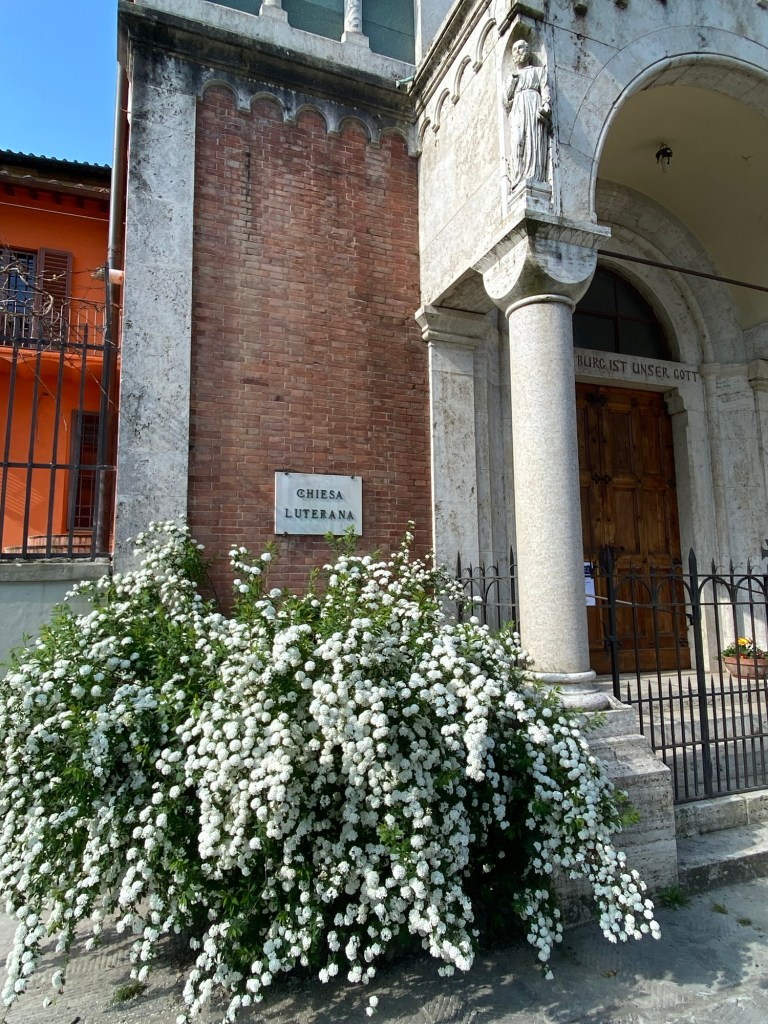
Above and below, the Lutheran Church of Florence.
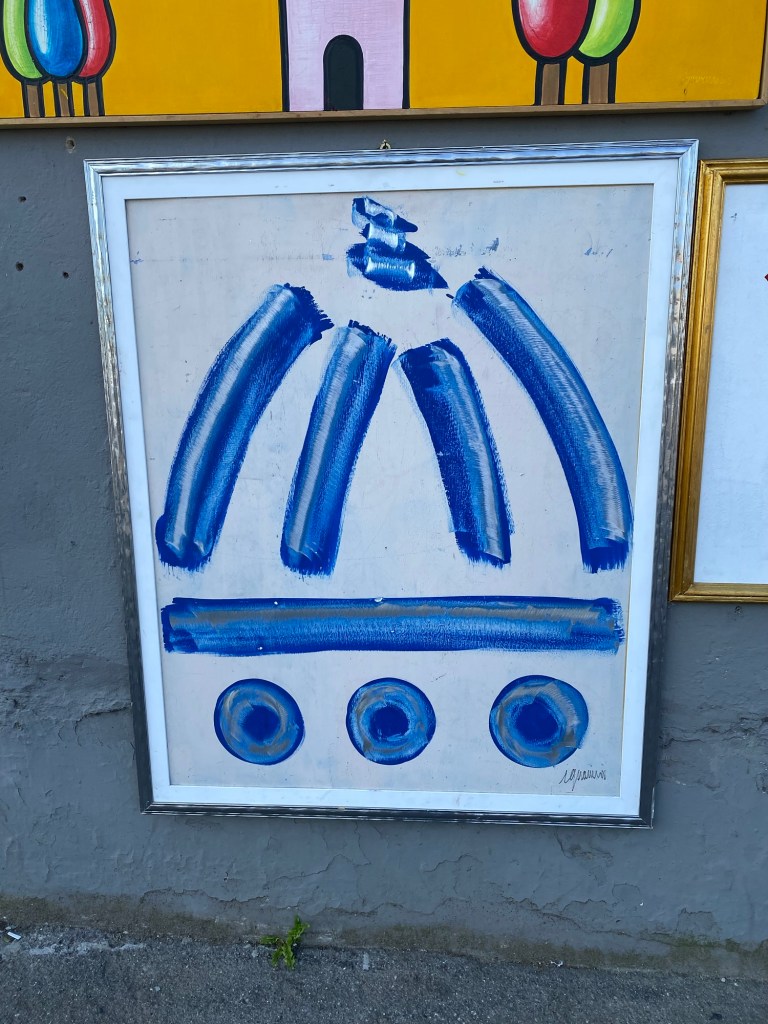
Below: I outta be able to paint this kind of version of the duomo!
Below, the horse appears everywhere throughout Florence. Times gone by, still remembered.
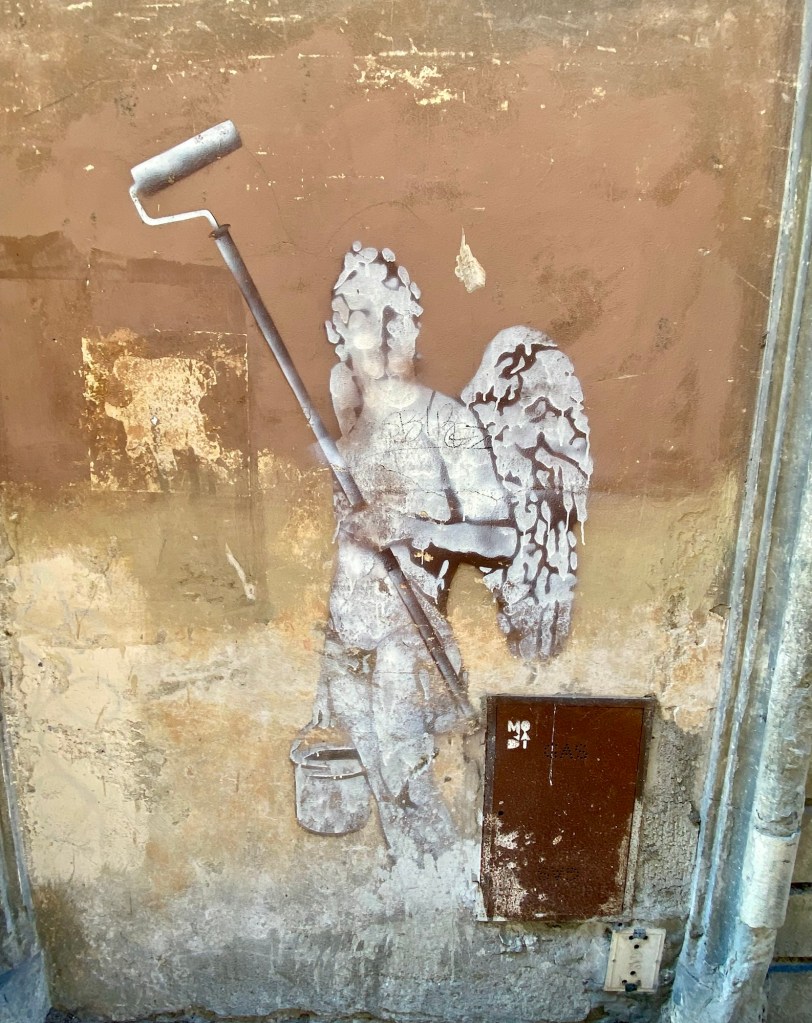
My kind of street art!
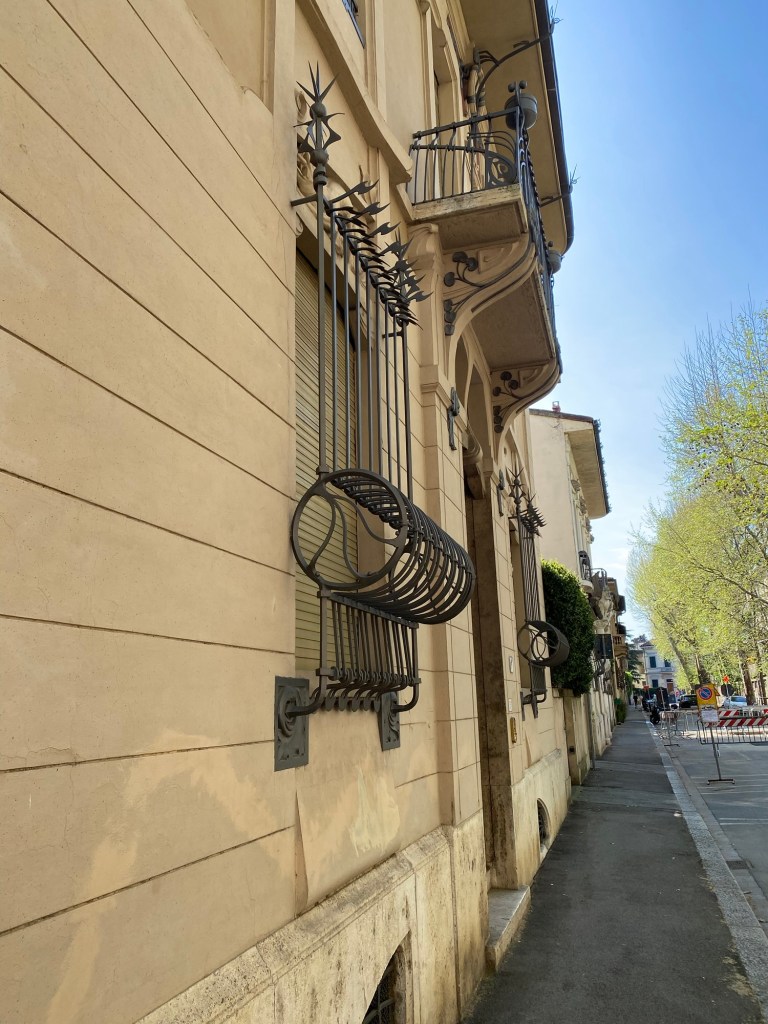
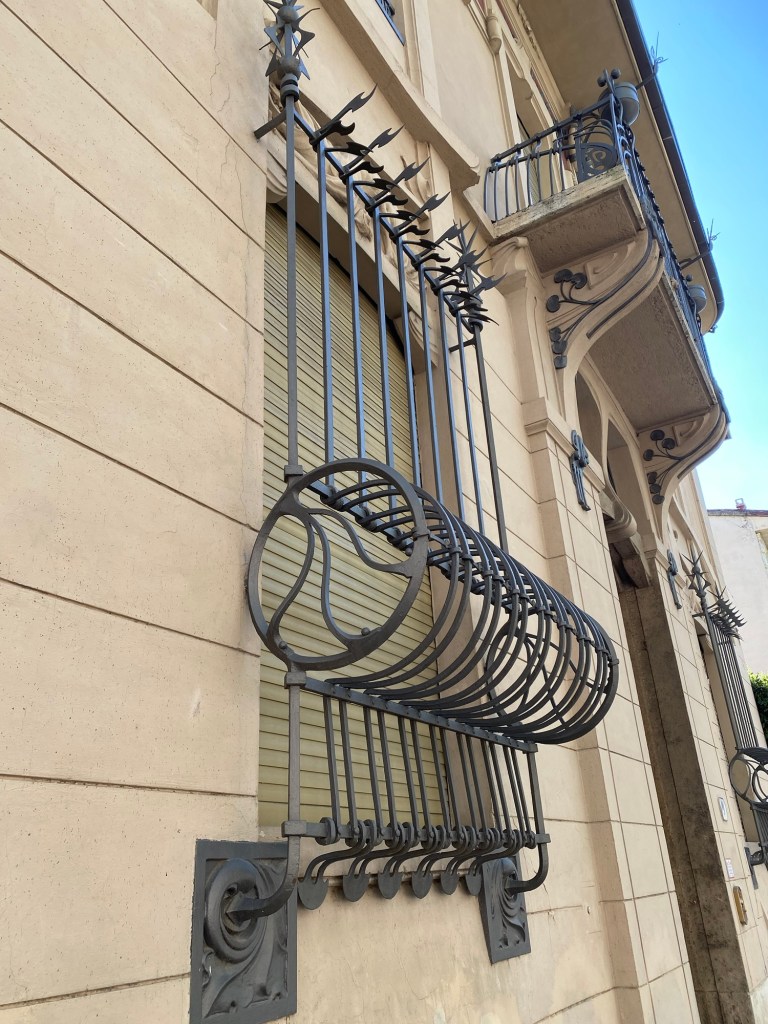
Many fine homes in Italy have these elaborate grates over the windows. Usually there is a big oval space created towards the bottom, but this building had rather unique round spaces. Have never seen this before.
All over the city, wisteria reigns!
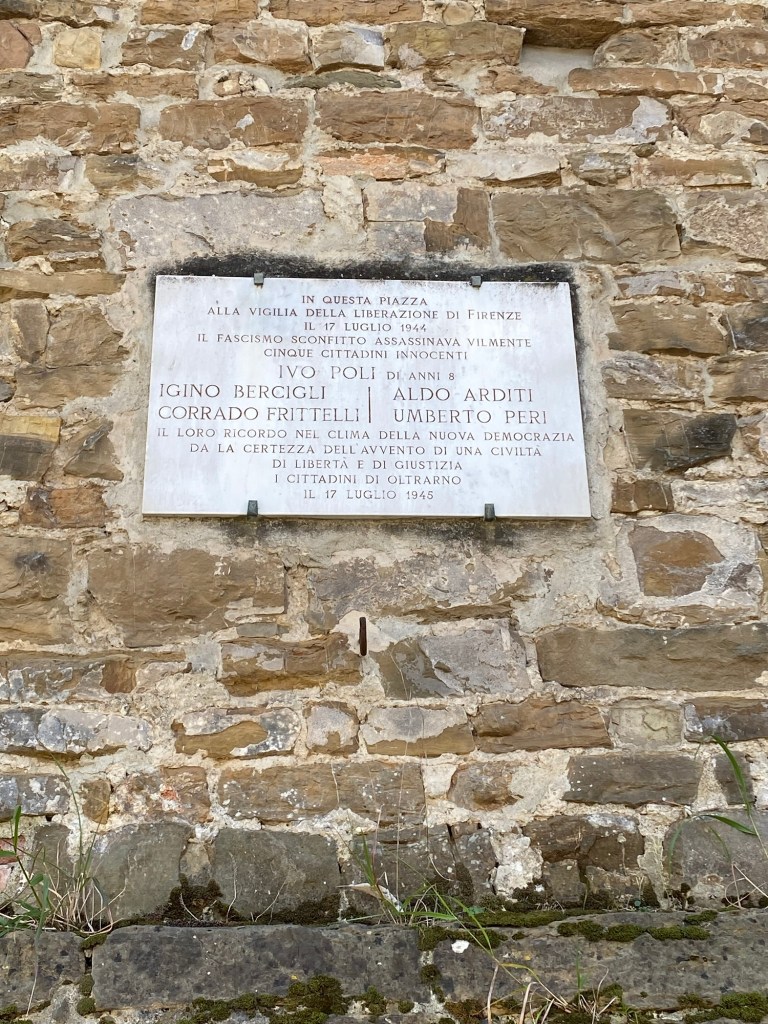
Below, on the fabric of the old walls that once encircled Florence, we find a plaque that moves me very much. In English is says: In this square on the eve of the liberation of Florence, July 17, 1944, defeated fascismn cowardly murdered five innocent citizens: Ivo Poli, aged 8, Igino Bercigli, Corrado Frittelli, Aldo Arditi, and Umberto Peri. Their memory in the climate of the new democracy gives certainty of the advent of civilization of Freedom and Justice. The citizens of the Oltrarno, July 17, 1945.
Wow. Horrendous history. It’s a remarkable testament that the citizens got this plaque up in place in exactly a year when you stop and consider how awful the circumstances of life were immediately following the war. Bravissimo!
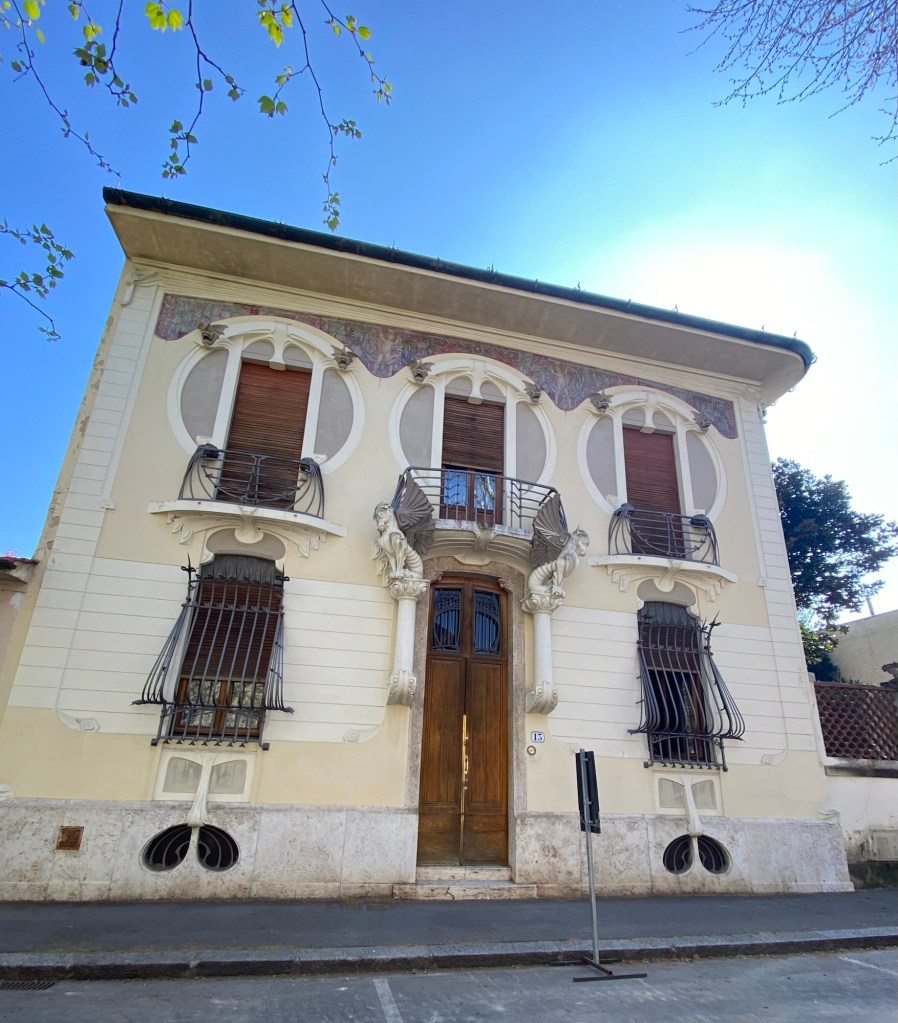
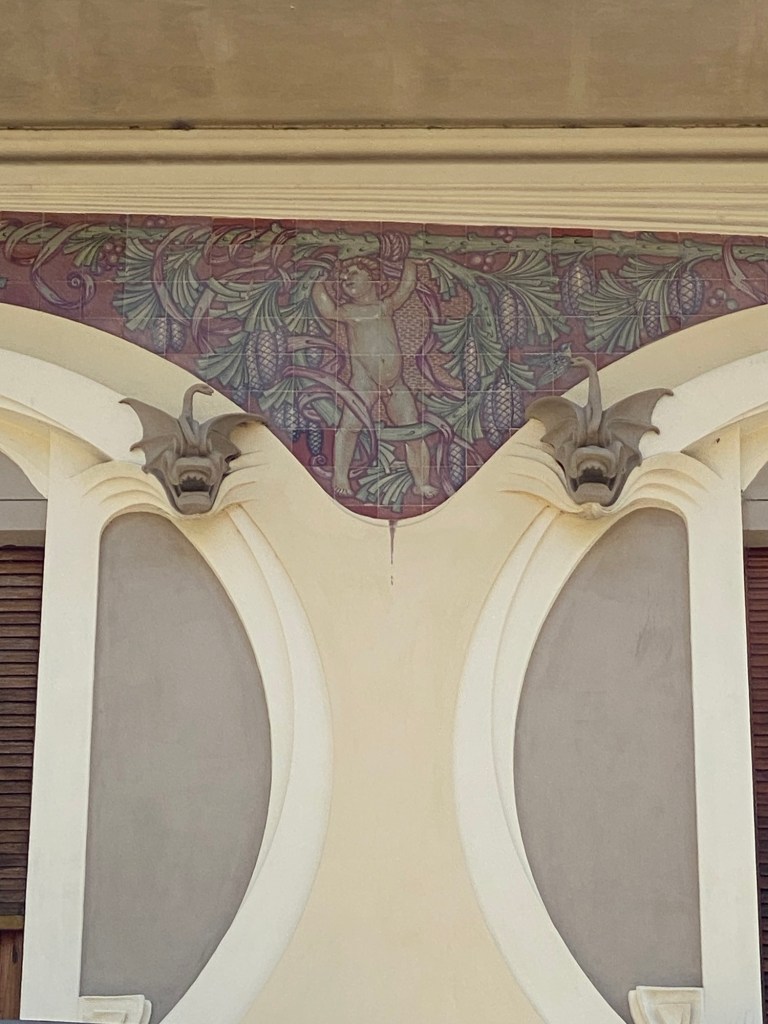
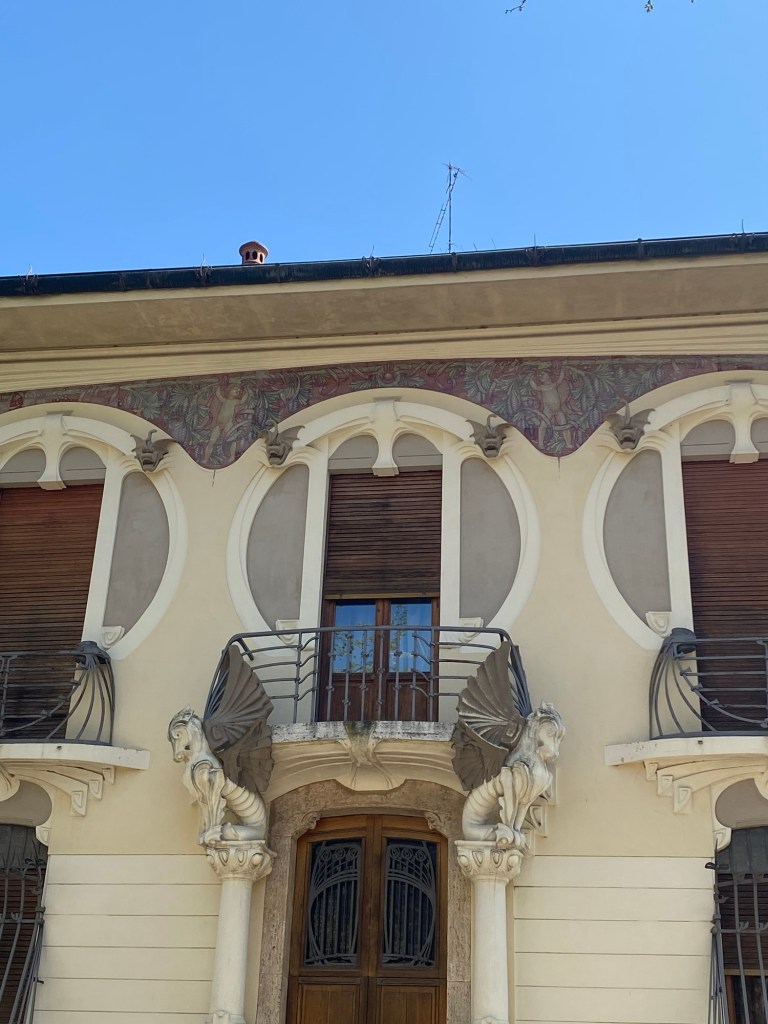
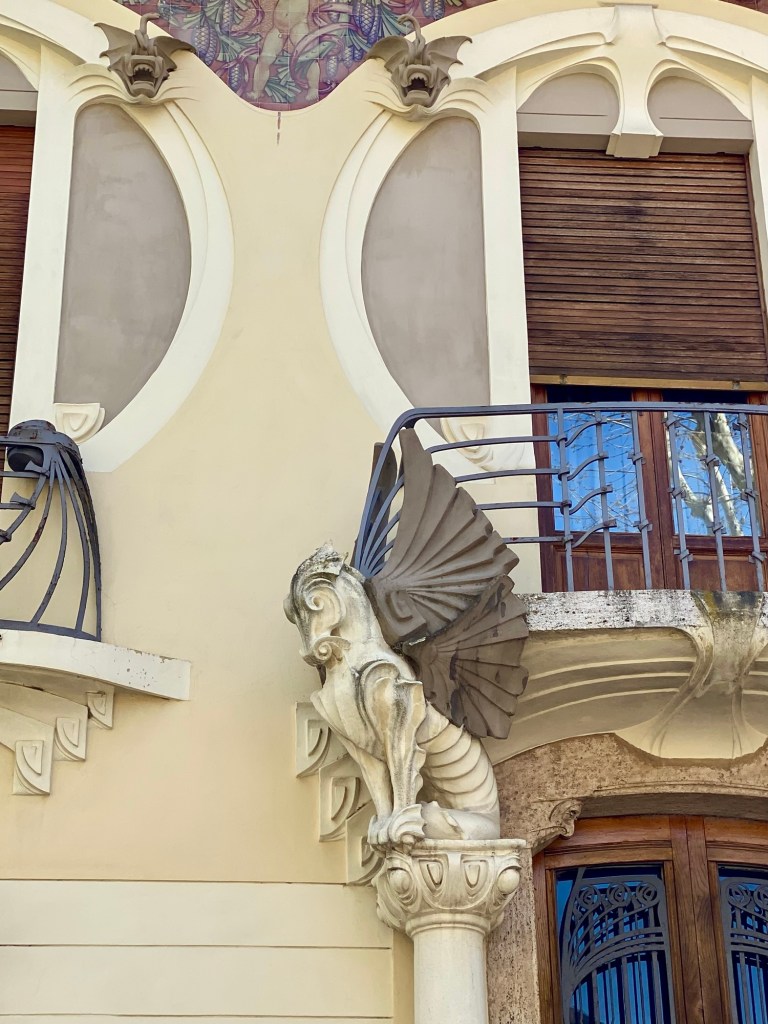
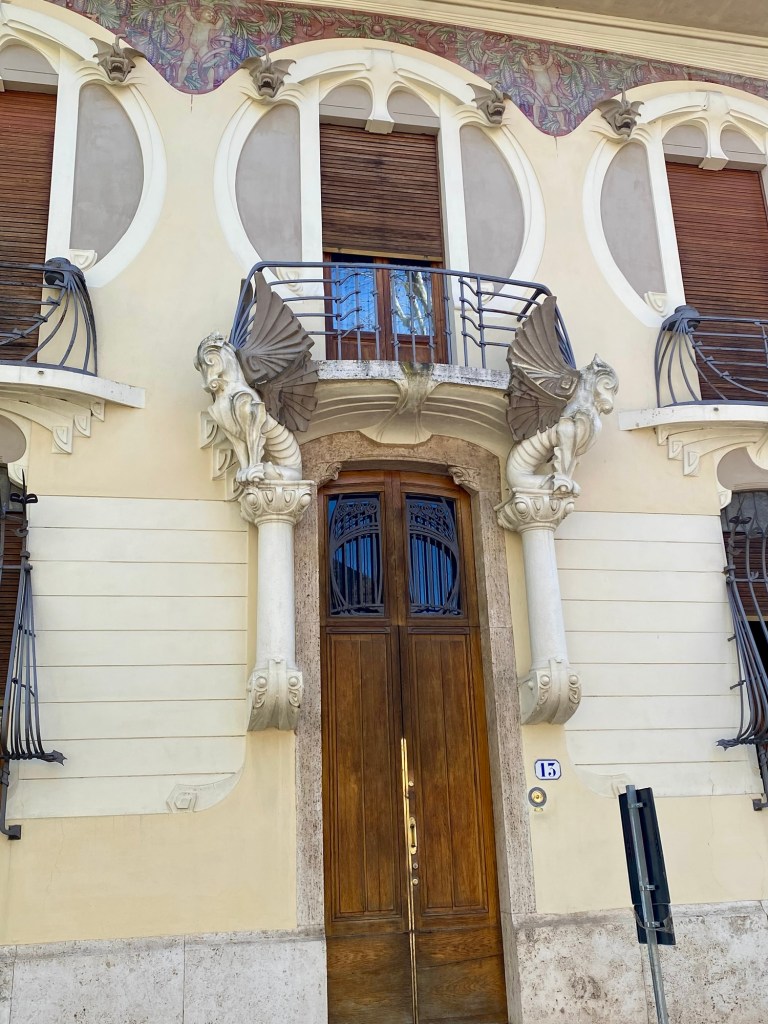
A villino (little villa) in the Oltrarno built with a decidedly art nouveau appearance. Surely built between the 2 world wars.
More wisteria. Look at the closeup, with that background!
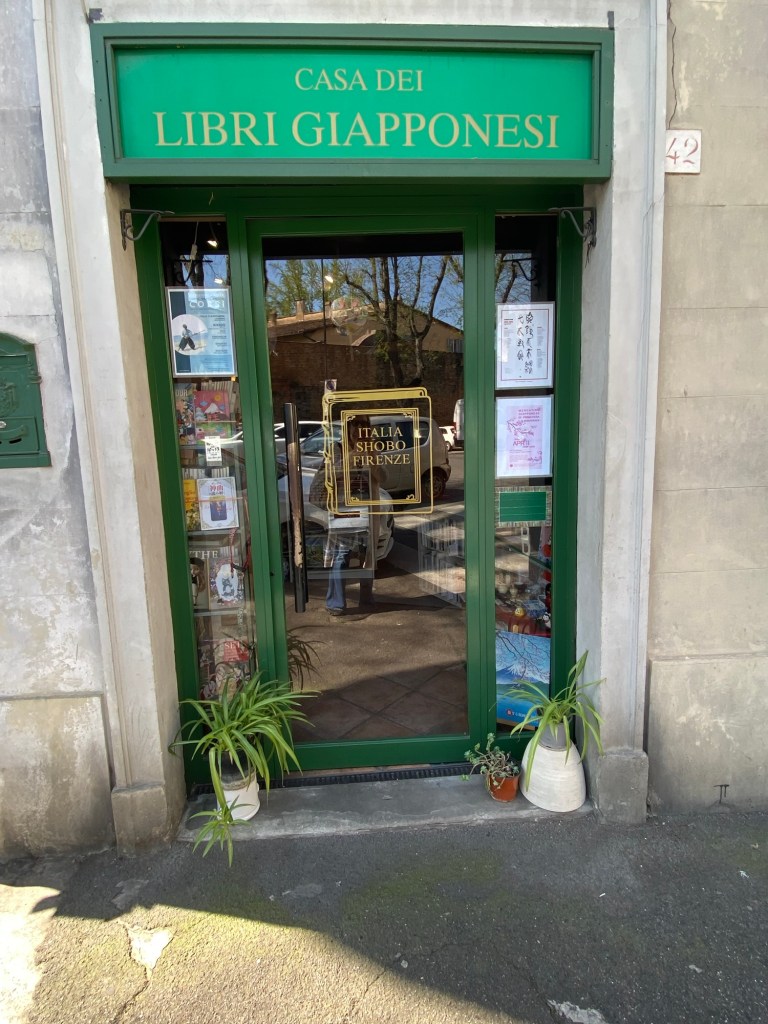
Lots of interesting shops in Florence. This a a Japanese language bookstore, not something you’d automatically expect!
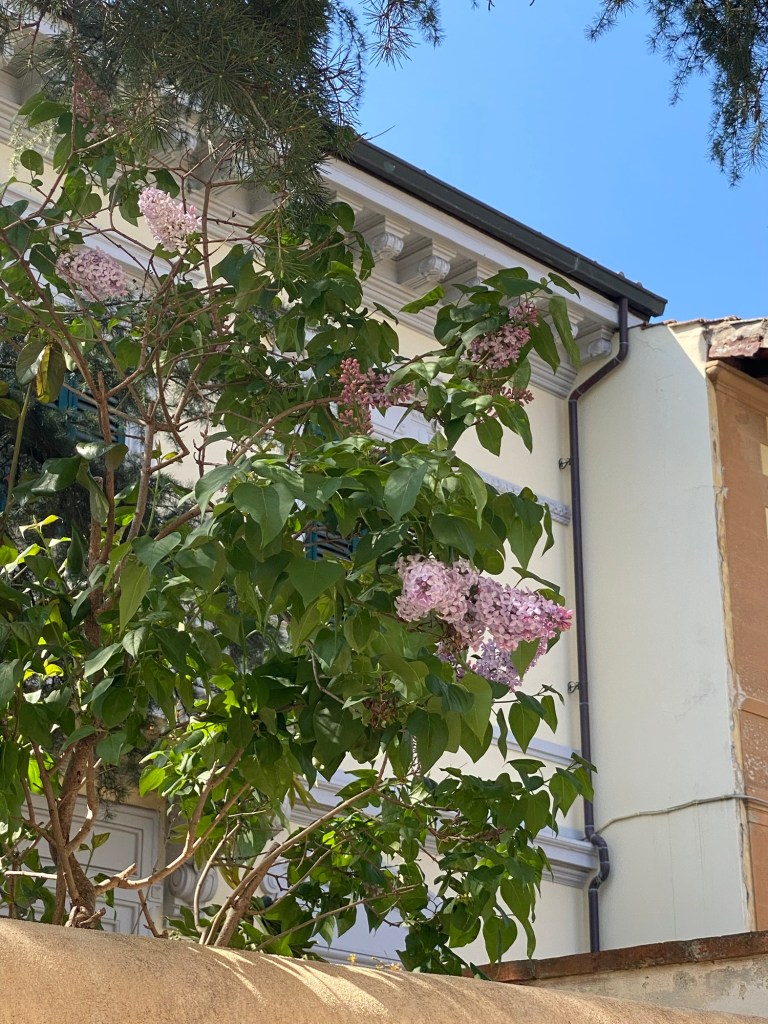
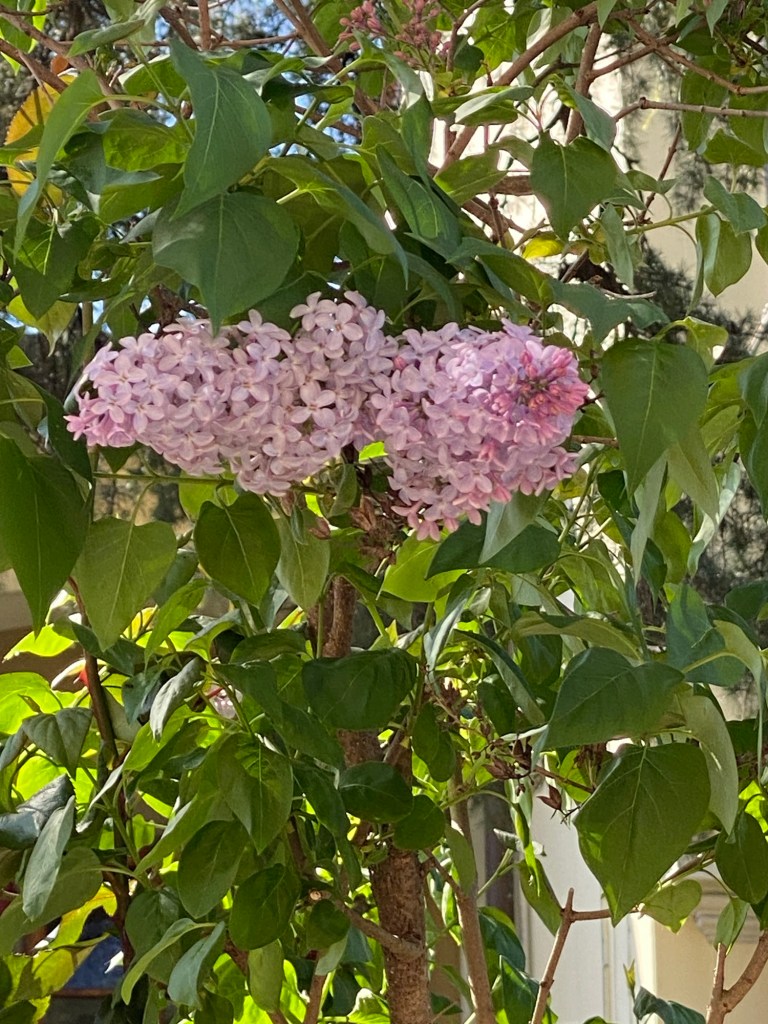
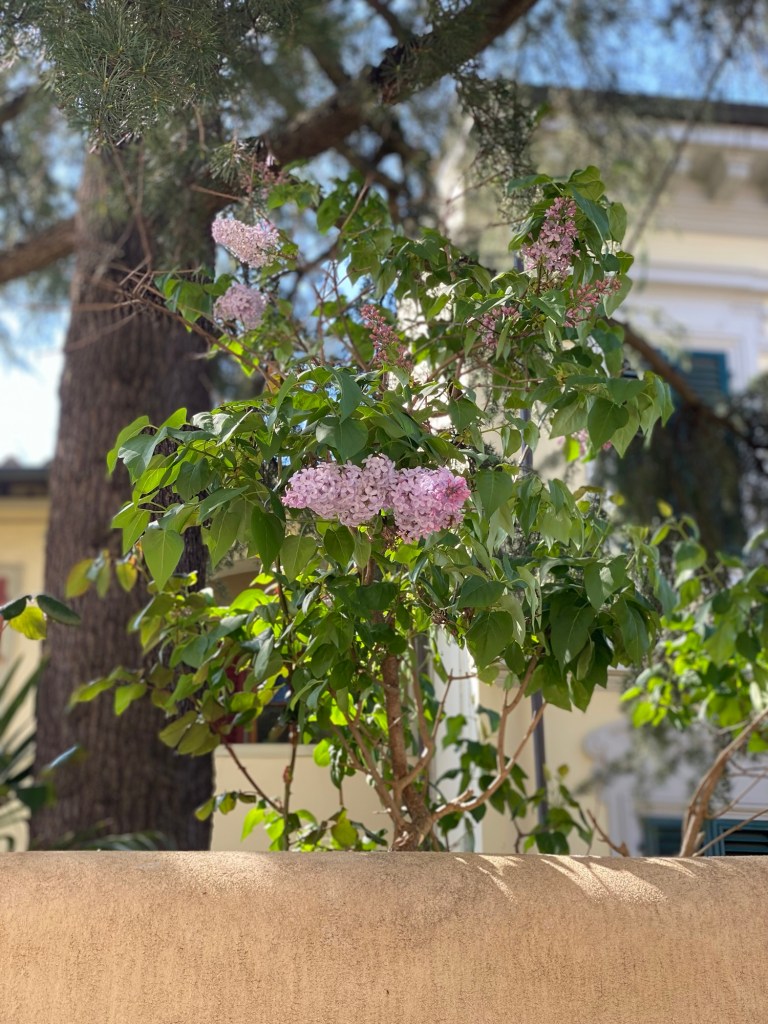
I spotted some lilac growing above the wall around this palazzo. I adore lilac and there isn’t a big use of it here. It made me think of the bunch of lilac I bought on the street in Paris in April of 2022. Sweet memories of that perfect month in Paris. You don’t see bunches of lilac for sale here.
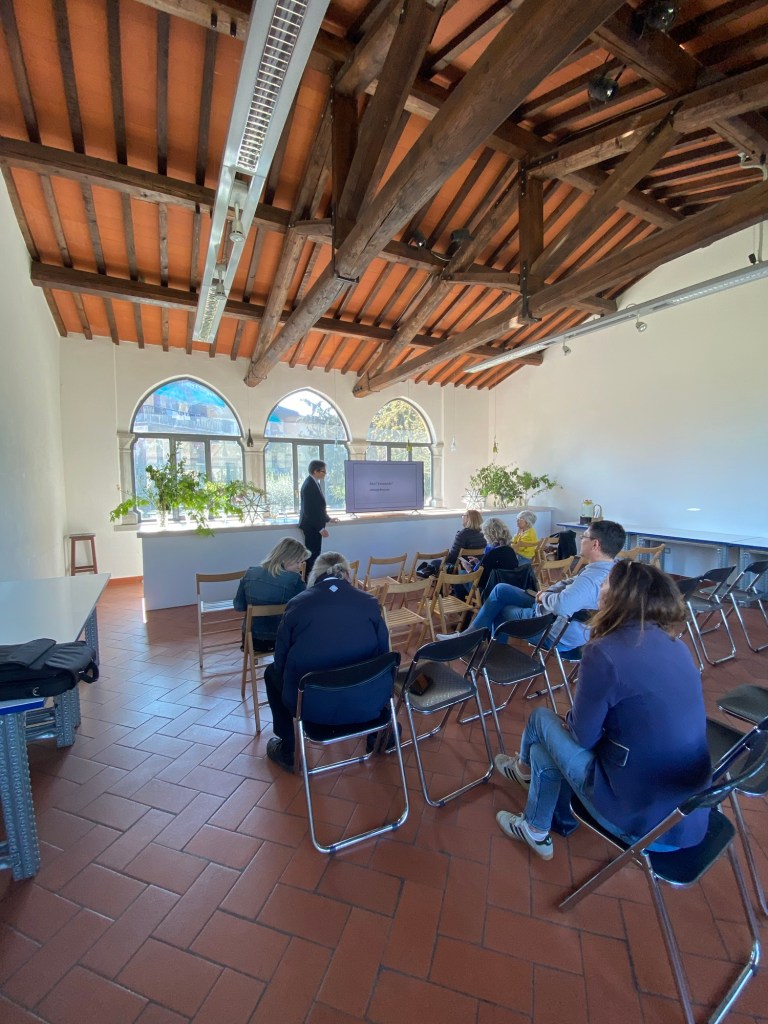
And, last but most certainly not least, the whole reason I was out in Florence on this gorgeous morning was to attend a lecture on the new scholarly art history discoveries on Florence’s 1000 year old baptistry. It was held in a great space, seen below. The lecture hall had wonderful views! But the talk itself was great and fired my mind! I’m so fortunate to be living here, where this kind of interplay is possible.
Oh, the good fortune to be alive this day in Florence! What a gift!
It’s the very best time of the year for a visit! I’m sure you will agree!
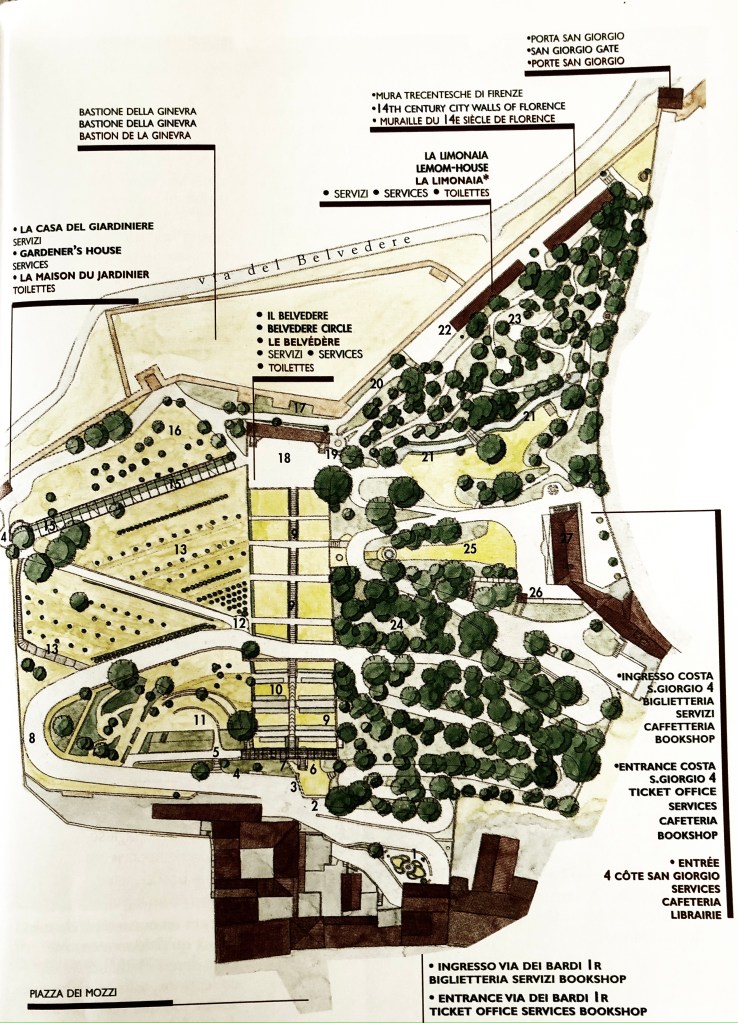
Above is an overview taken from Google and likewise here is a plan of this unusual site.
Once inside the premises, the thoughtful viewer will notice this wonderful lunette-shaped painting by Utens that depicts this unique garden in a most delightful fashion.
The 2 pix below of the Utens painting are my snapshots.
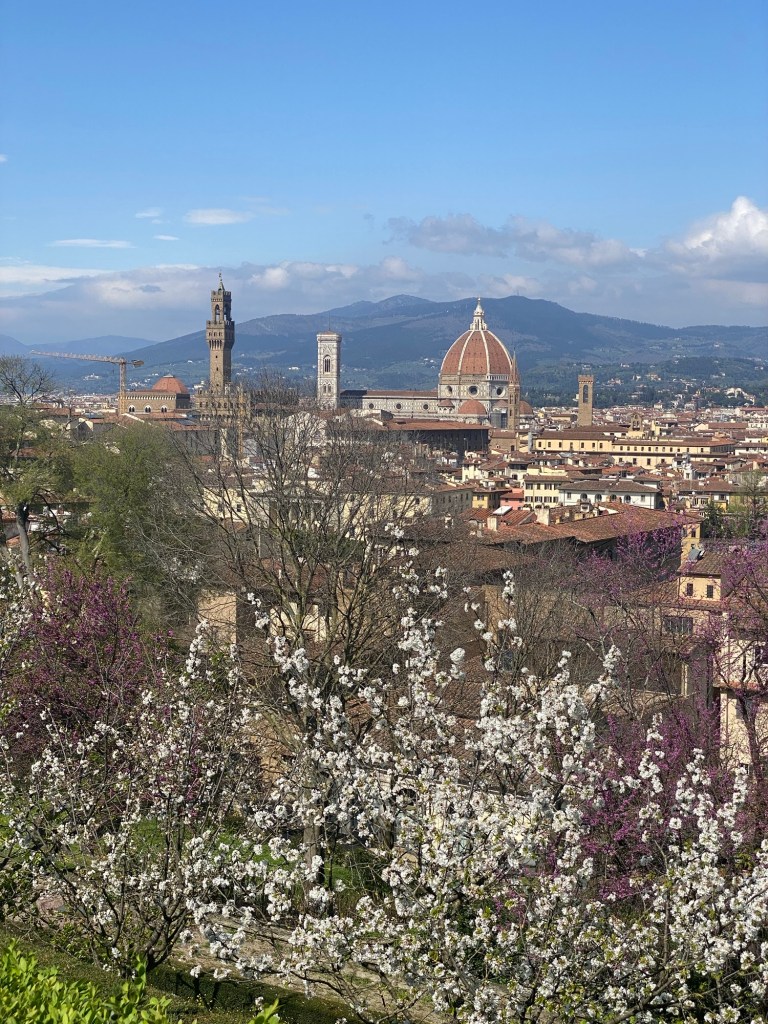
As I have remarked in another post, Florence is above all a city of brown stone and medieval architecture, so the fleeting delicate beauty of a flower blossom is a glorious thing!
One of the first “rooms” one encounters is this lovely landing. It was a little breezy that day! Quel giorno tirava un po’ di vento!
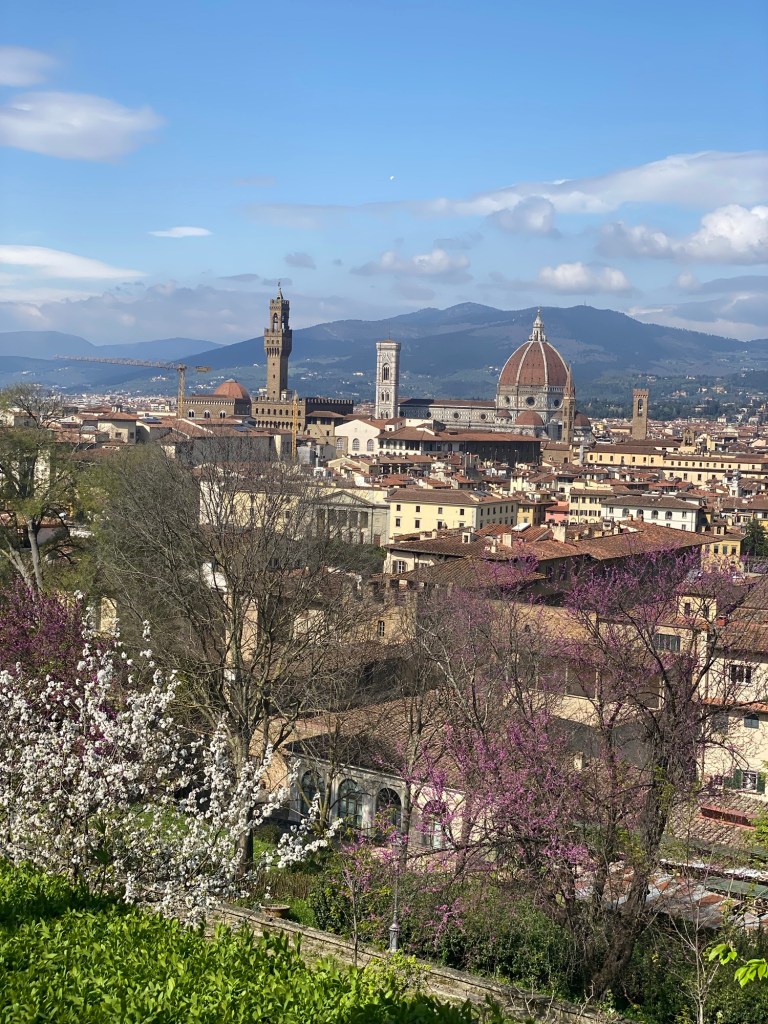
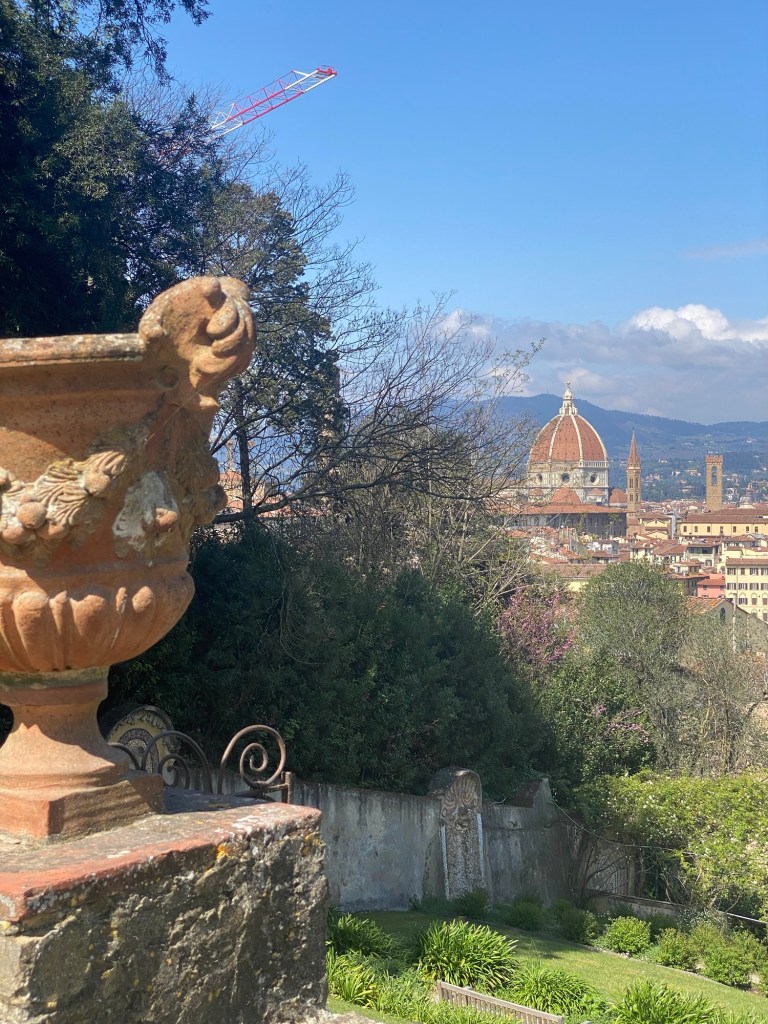
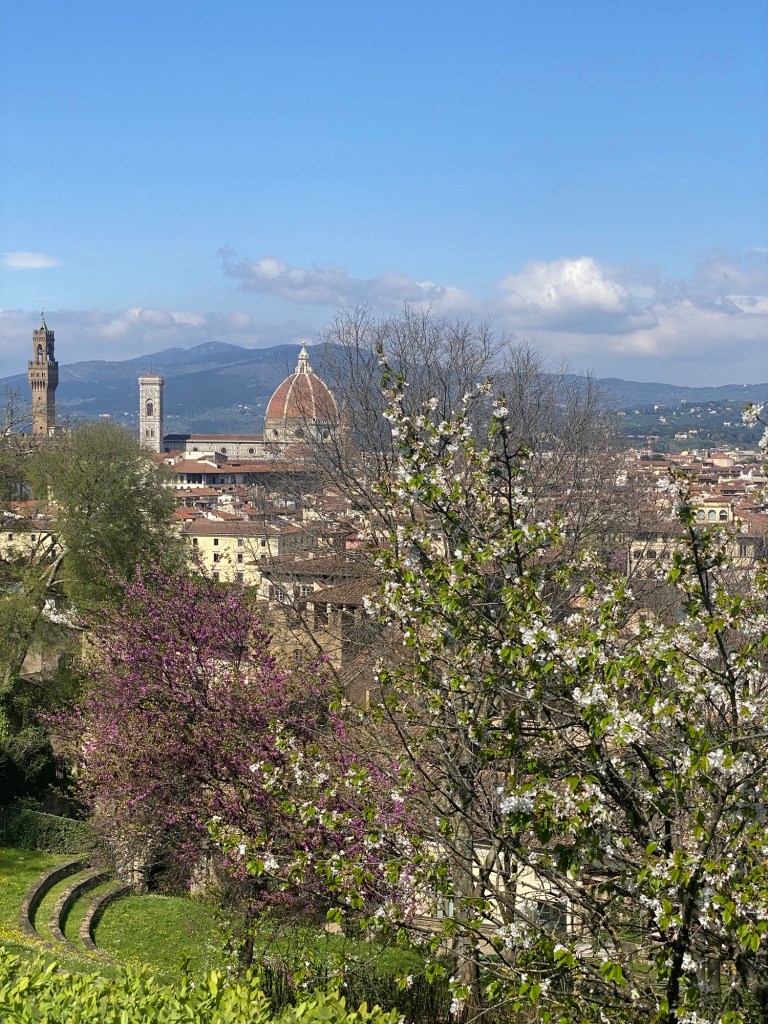
There it is! The dome of Florence cathedral. It looms over the city like a flying saucer. I don’t know why that particular turn of phrase comes to my mind, but it always does.
The first view of the marvelous steps to the top.
The willowy wisps of the yellow blooming shrub.
The steps to the top! Marvelous vista!
Turn around while climbing the stairs and this is your reward!
Turn around again and continue climbing!
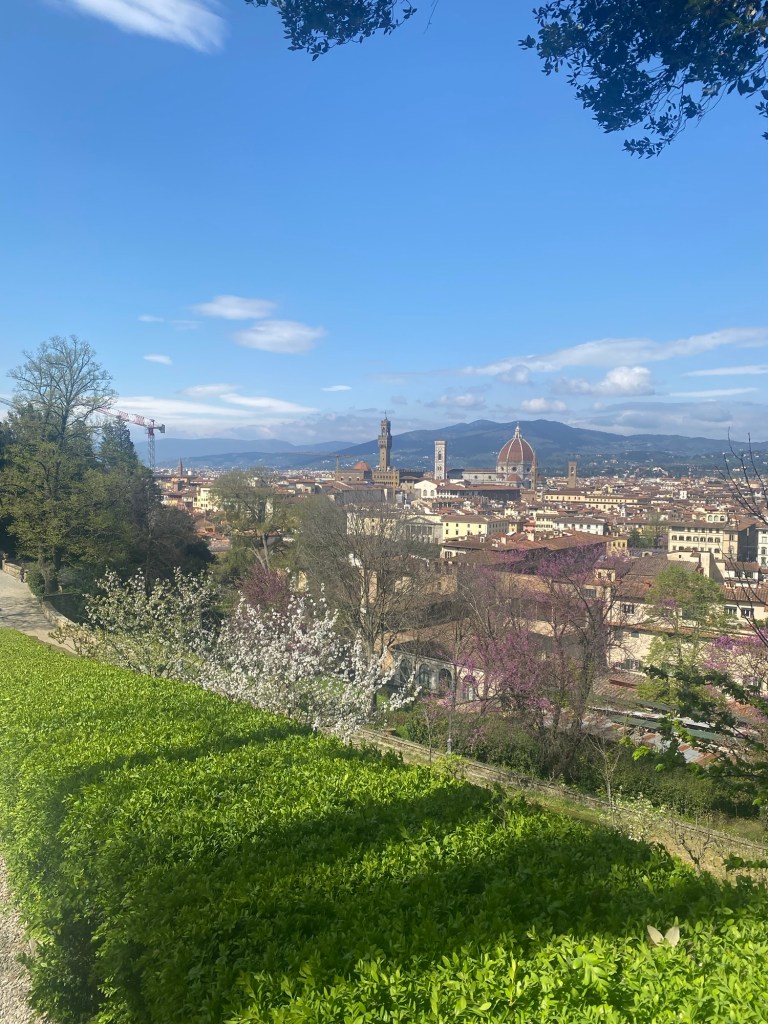
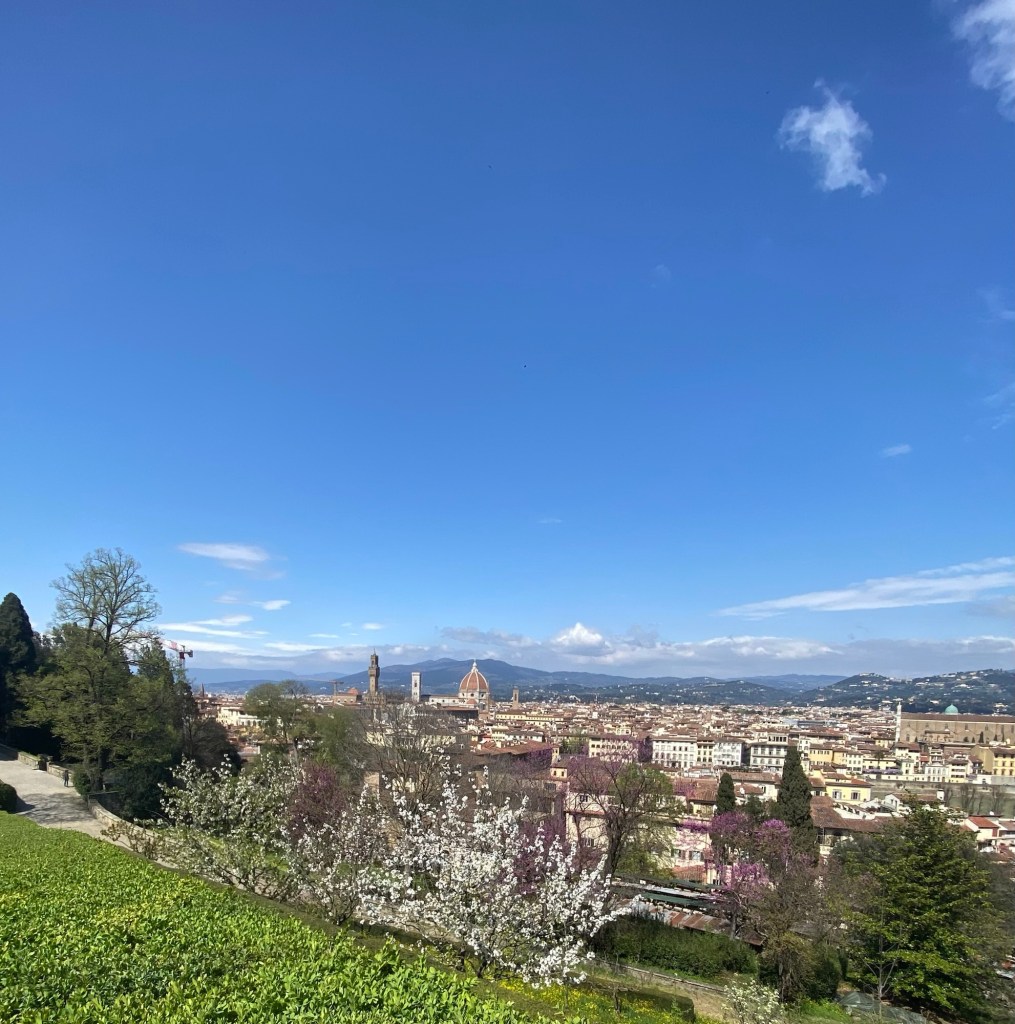
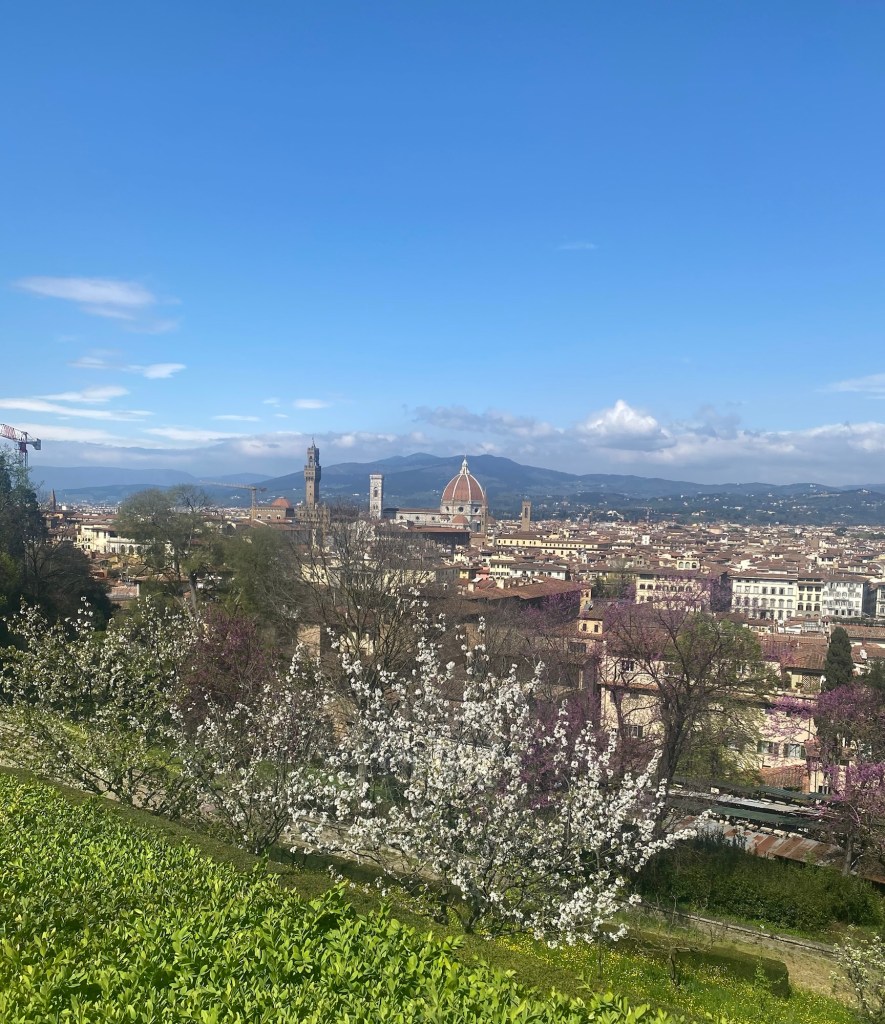
There are more cranes in Florence, busy building or restoring, than I’ve ever seen before. I guess the economy post-covid is growling if not roaring.
Now we angle off to this steep incline (steeper than the photo suggests) to get to the wisteria tunnel.
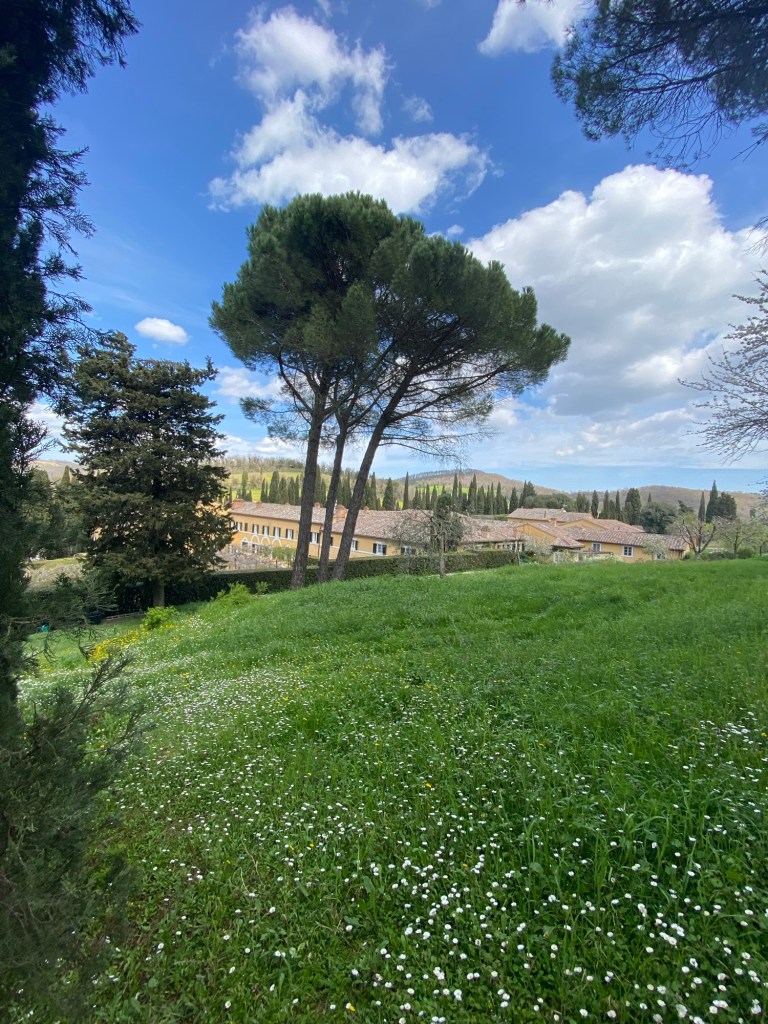
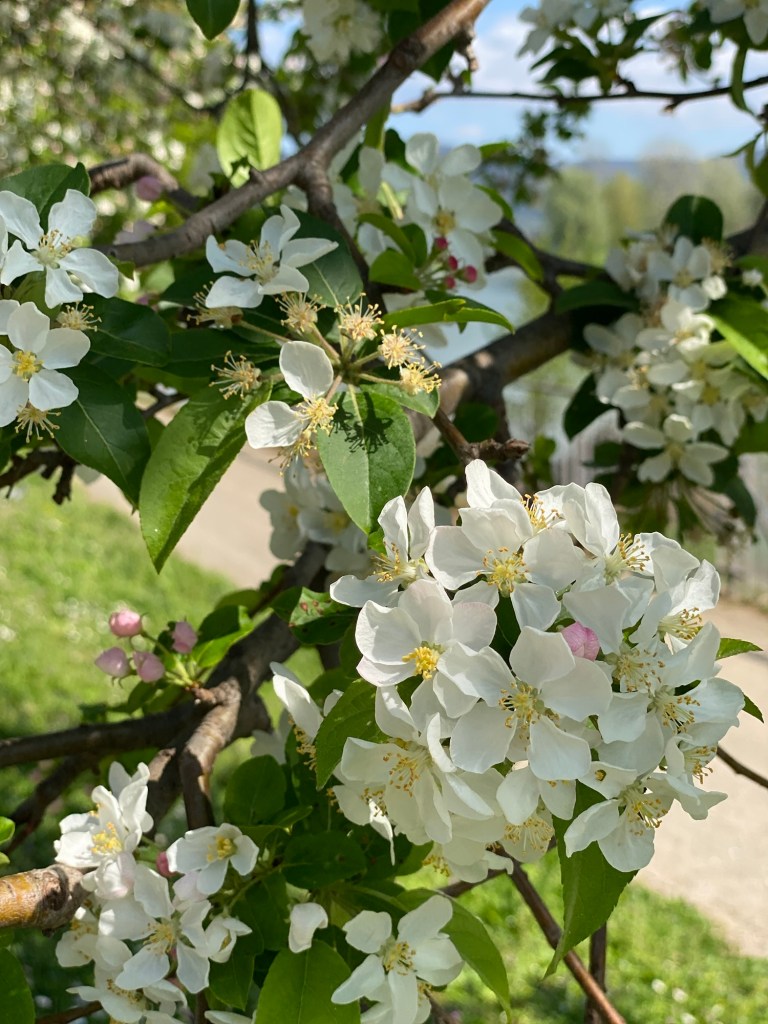
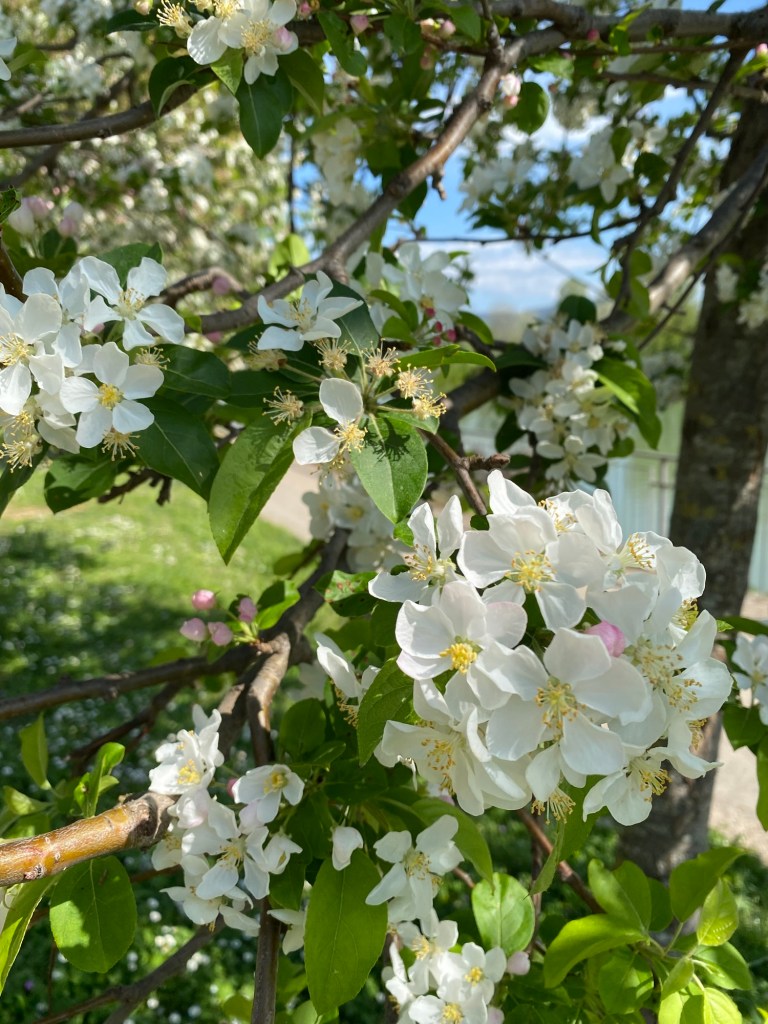
All along the way I am distracted by the gorgeous blooming fruit trees and the views they offer of my favorite city.
Did I make it to the wisteria tunnel? Was it in bloom? Check back soon for Part 2.
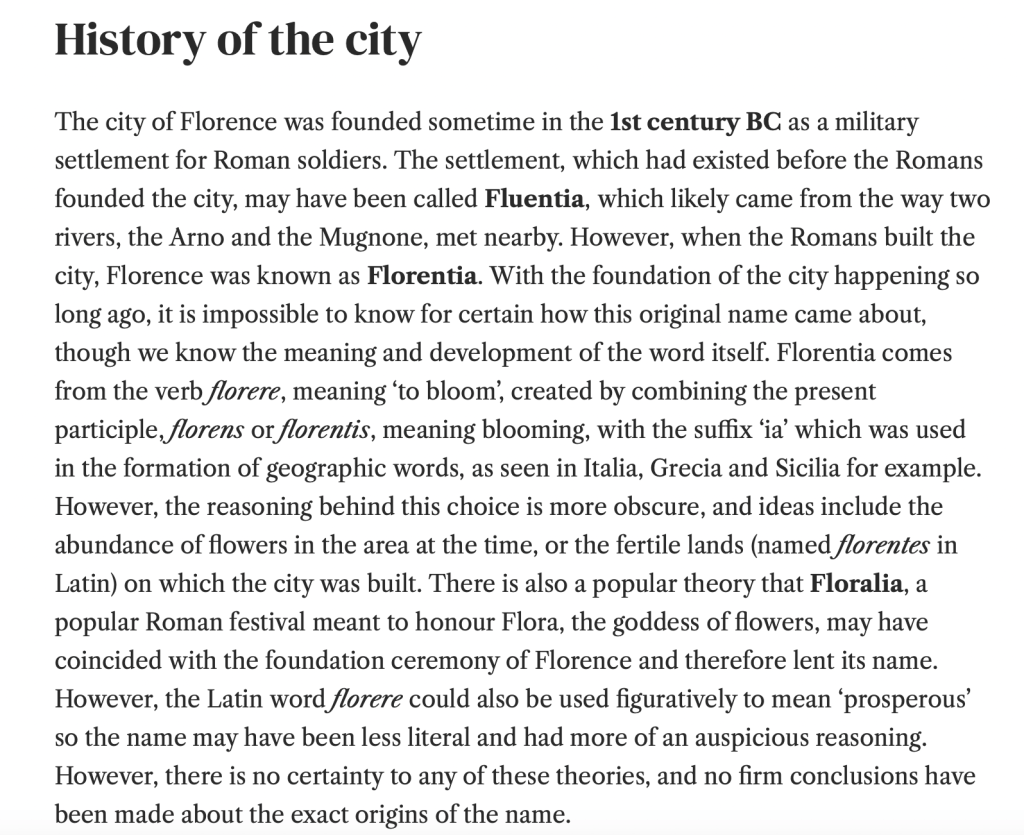
There are several scholarly opinions on from what the name of Florence originated, but the theory I like best relates the city to the natural world of blooming.
Here’s what the local English language newspaper, The Florentine, says about the origin of the name:
I also love the fact that the Florence Cathedral is truly called the Cathedral of Saint Mary of the Flower (Italian: Cattedrale di Santa Maria del Fiore). It would seem that in la primavera, the city sets out to show us where its name came from! How can anyone deny it?
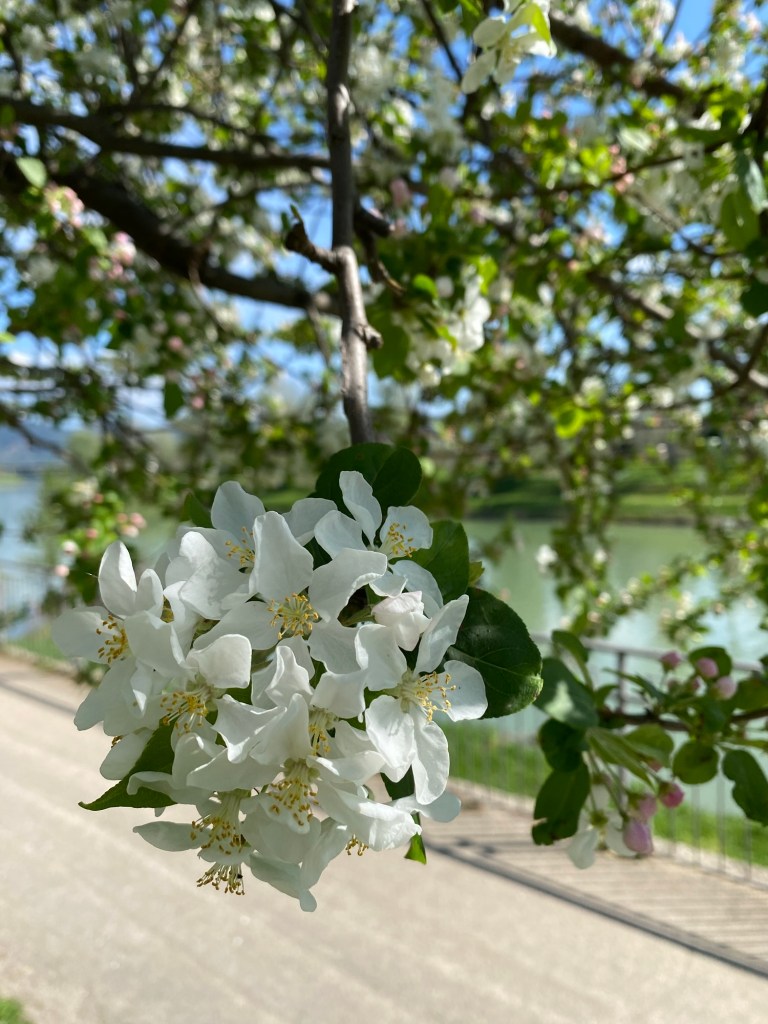
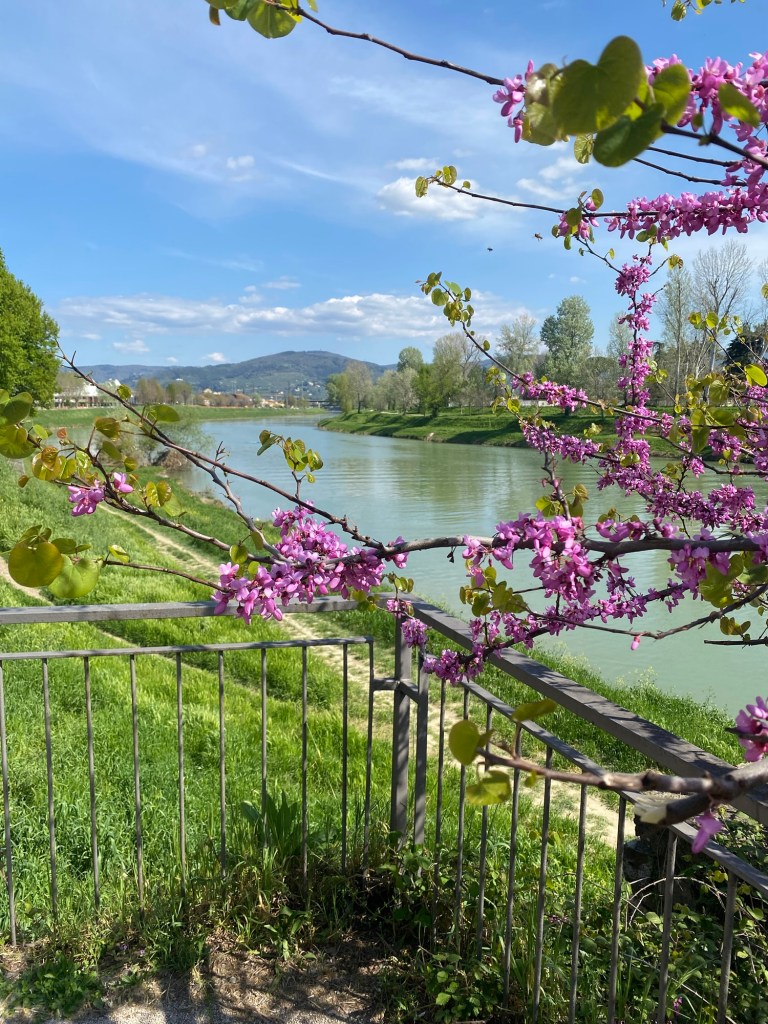
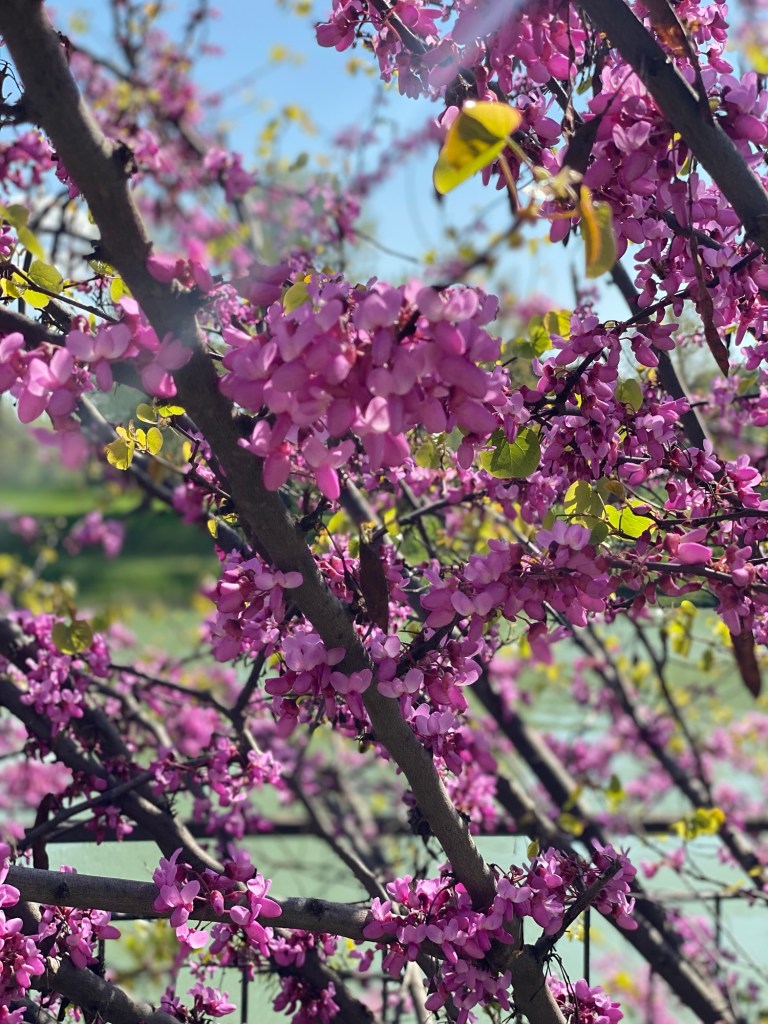
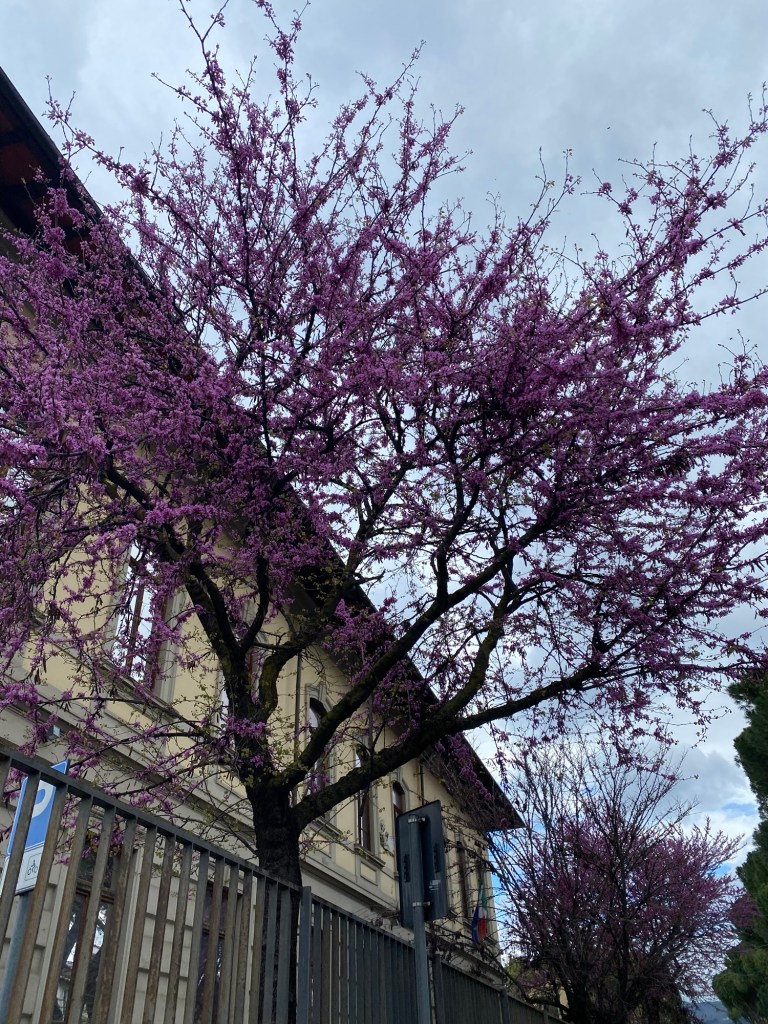
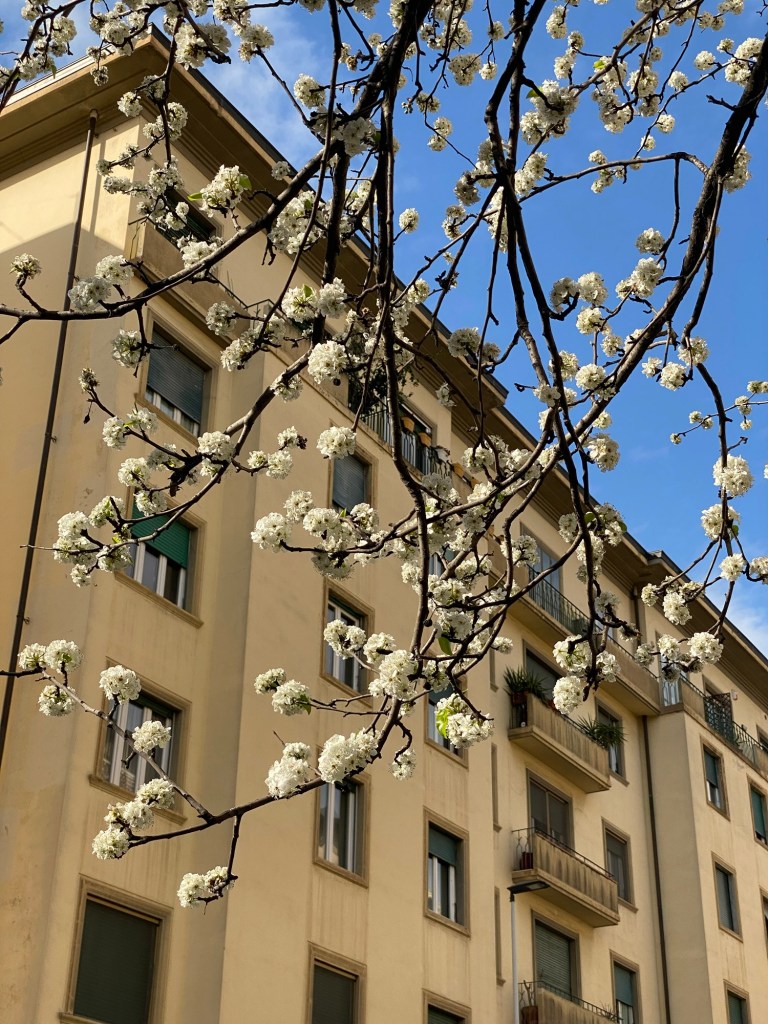
These pretty blossoms and blooms speak for themselves. All you need to do is wander around the city and its environs and you will be richly rewarded.
The photos below are from a different tree, although the color of the blossoms is almost identical to the ones above. But the plant’s habit is entirely different.
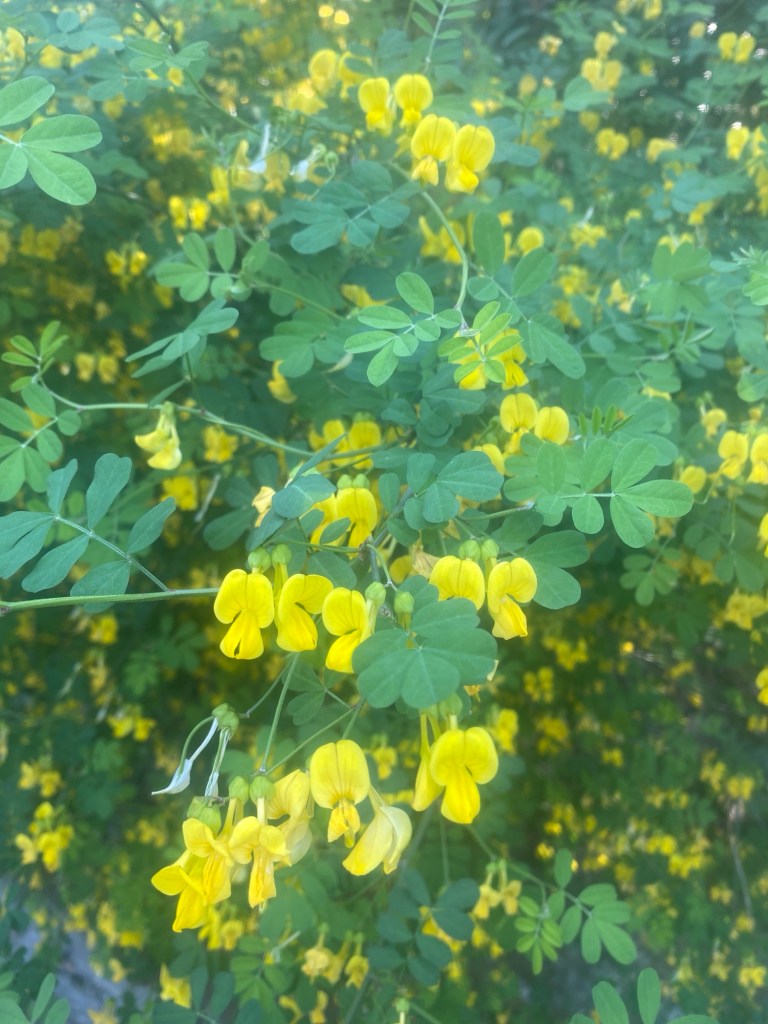
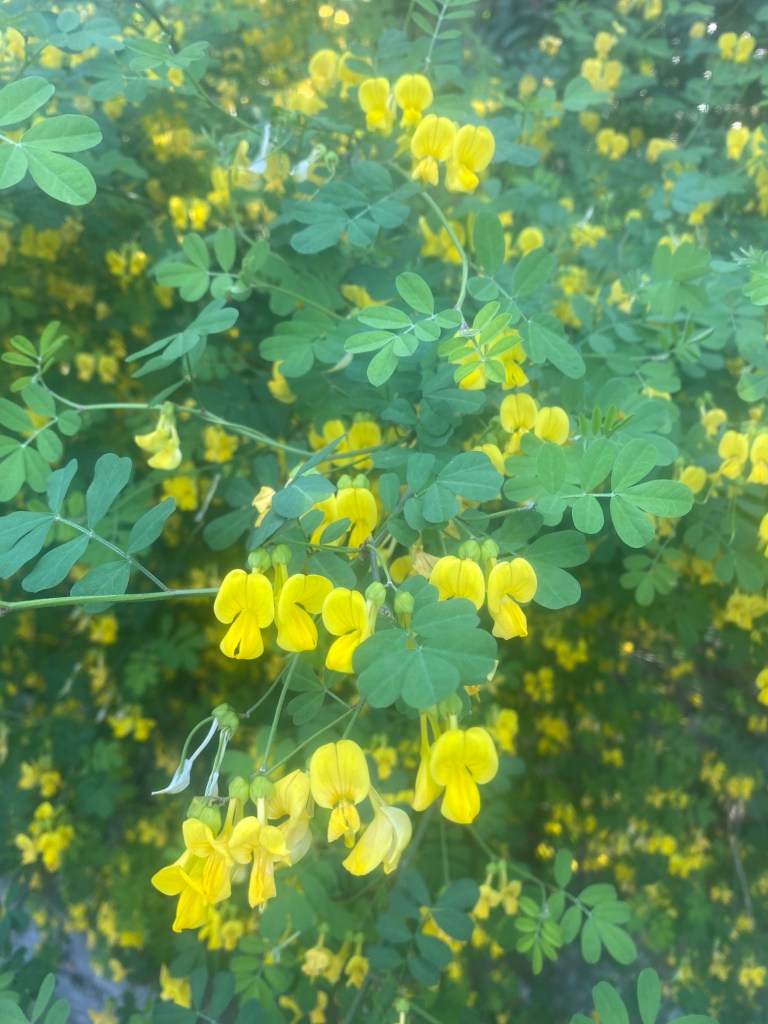
Then there is this prolific shrub which is so lovely!
Many people have asked me the name of this brightly colored shrub, so here it is:
Above, I love the contrast of the old tree trunk, pruned to perfection, bearing its young branches and veil of blossoms, all set against the old fabric of the city. Florence is quintessentially a city of stone; brown rock quarried locally makes up the fabric throughout area. The juxtaposition of rough stone with delicate, ephemeral blossoms is so fascinating.
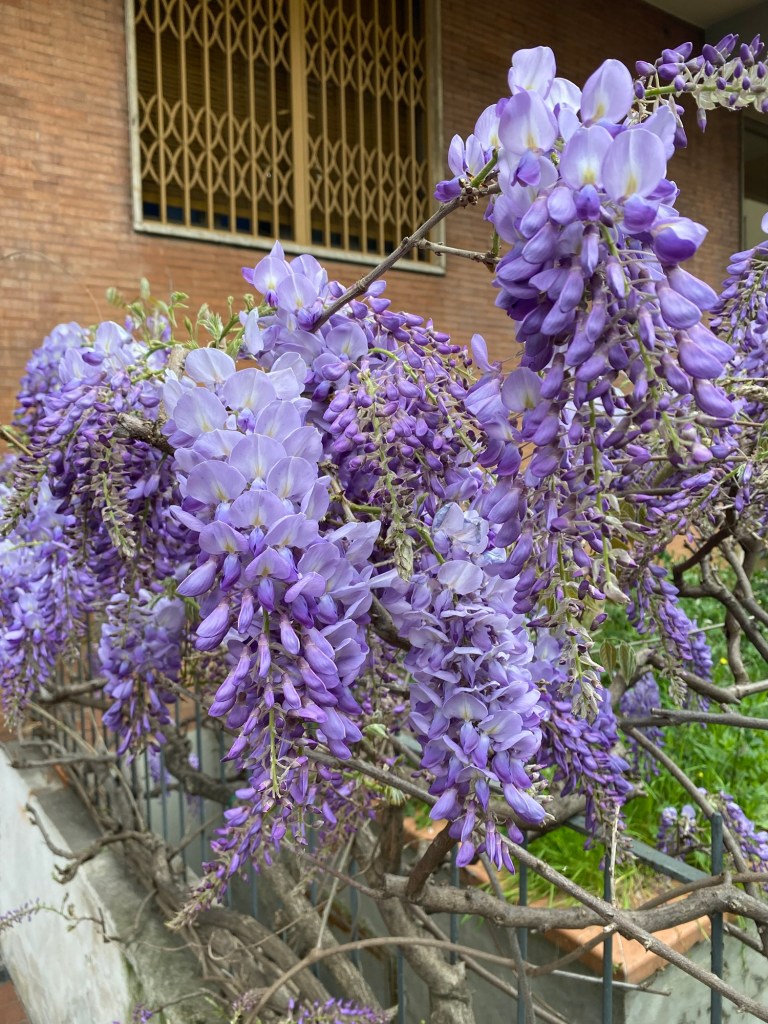
And then there is the wisteria. Oh my god, how I do love this vine!
Above, and again, I love the contrast of the old architecture with the delicate blossoms. Here the architecture is tamer, more classically treated, but the poignancy of the flowers against stone remains the same for me. The stems of wisteria tell you that while this plant blooms afresh, it’s actually very old (and probably very wise, I mean, think of what it has witnessed).
To end this post, I’m throwing in a bonus of 2 short videos filled with birdsong.


























































 get back, lauretta!
You must be logged in to post a comment.