Author: get back, laurettadimmick
The church and convent della Calza, with a Last Supper by Franciabigio
Just inside the ancient gate of Porta Romano, lies a simple church and attached convent (in Italy, convent can mean monastery or convent or both) dating to the 13th century. An almost unknown (relatively speaking, at least, to the hordes of tourists who descend on Florence every year) masterpiece of Renaissance paintings is housed here: a beautiful cenacolo, or a painting of The Last Supper. Florence is so fortunately rich in these frescoed depictions of that fateful dinner.


The church dedicated to San Giovanni Battista, in Piazza della Calza, was founded as a hospital in 1362. There were once many oratories, hospitals and shelters for pilgrims and travelers along the present via Senese and via Romana. These were major roads leading to Florence.
At the end of the 14th century, the convent was established by the Gerosolimitan nuns. They commissioned Franciabigio to paint The Last Supper in 1514 in their refectory. Unfortunately, the sisters soon had to leave the hospital, during the 1529 siege of Florence.
The nuns were replaced in 1531 by Jesuati friars (not Jesuits) who changed the dedication of the church from Hospital of Saint John the Baptist to San Giusto. They used the hospital as a charity for children, an ecclesiastic boarding-house, and eventually as a seminary. The church and the convent became known by the name “della calza” (sock) which was a name derived from the long white hoods that the monks wore over their left shoulders. The hood was shaped like a sock and the name stuck.
The picture below is not authentically one of the della calza habits, but it shows the shape of the hood and how it was worn.
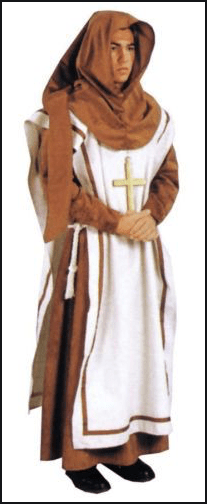
From this nickname of “the sock” came the name of the church, the convent, and even the square.

The true hidden gem kept inside is the Cenacolo by Franciabigio, still preserved in the ancient refectory.

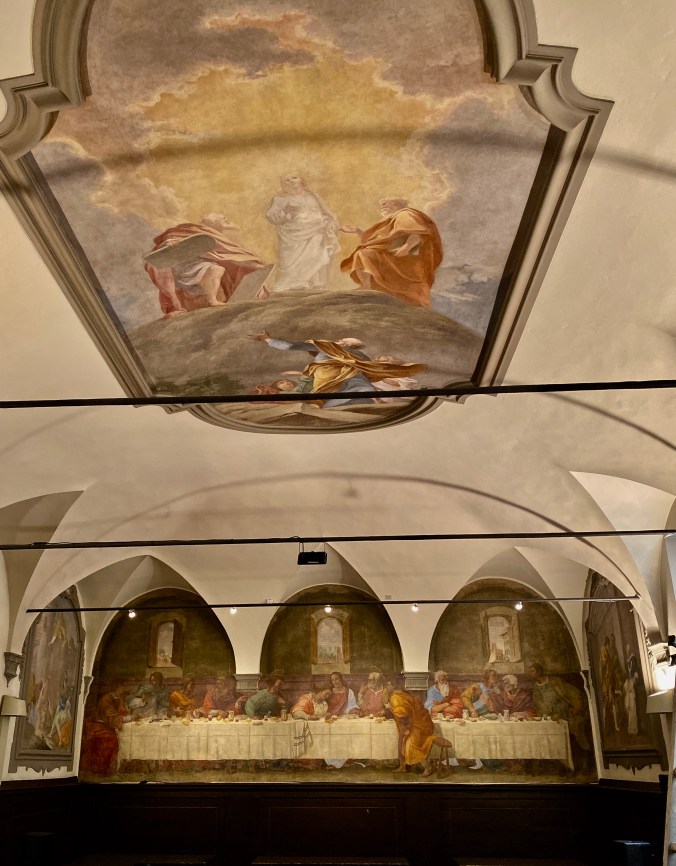

Mother Superior Antonia de’ Medici entrusted Francesco di Cristofano, called Franciabigio (1482-1525), to portray a specific scene, during the Last Supper, just after Christ says: “Truly, I tell you, one of you will betray me.”

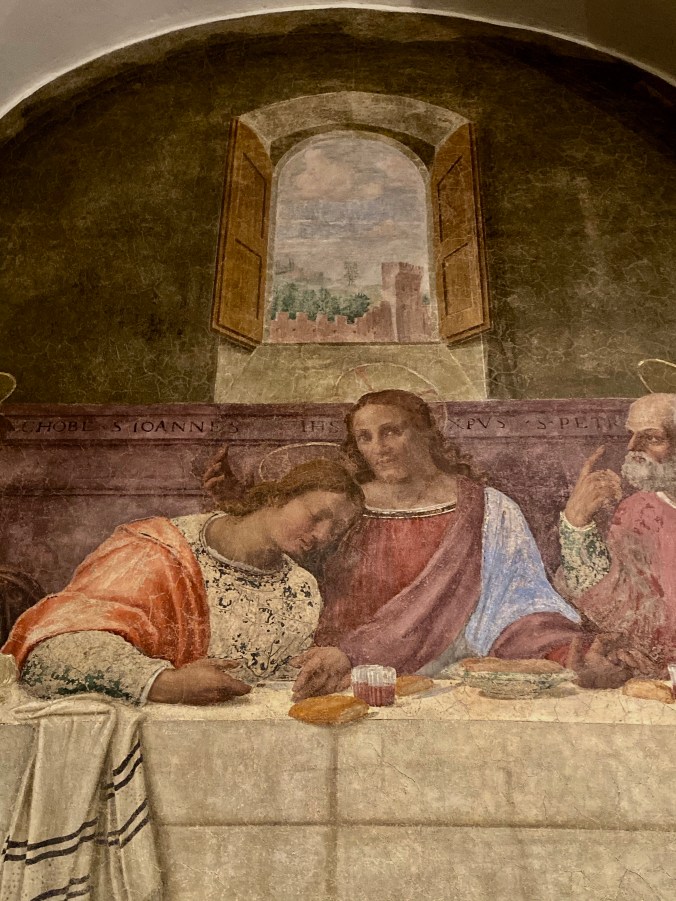

Franciabigio thus knowing, deep sadness in the countenance of Christ. Judas, the only figure on the outer side of the table, reacts strongly to the words of Jesus: his sudden movement causes his wooden stool to tip over. All around the table, the expressions of the Apostles register various states of confusion.


One can notice each reaction and recognize each Apostle because the artist added their names, painted along the strip which runs above their heads. The painter added here the date A(nno) S(alutis) MDXIIII (A.D. 1514) and his signature, through a twisted shortened monogram (FRAC).

On the painted floor, you can even distinguish the name of the Mother Superior Antonia (SVORA AN), marked on the lower left side, under the table, between the second and third Apostle.
Franciabigio carefully fashioned magnificient details; along the fine linen tablecloth you see ceramic jugs, breadrolls, glasses with red wine, and sliced watermelon. Some of the jugs feature the typical Medici coat-of-arms (the one with the red spheres) referring to Mother Superior Antonia and the Red Cross of the Order of Knights of Malta to whom the nuns originally belonged.
Giorgio Vasari describes (Lives of the Most Excellent Painters, Sculptors and Architects) how Franciabigio “was very keen on studies of perspective” and human anatomy. We see that throughout and especially in the accurate position of the wooden shutters painted along the wall.


A fascinating contrast is given by the dark green wall and the light of the crystal clear sky in the background, where the painter depicted the old Florentine town walls (the destroyed gate of San Pier Gattolino).
For the Jubilee in 2000, the fresco was restored.
Just a quick word about the Church of San Giovanni Battista della Calza:
My quick walk through the church introduced me to this arresting sculpture near the entrance to the small church.

I was alone in the church and had free rein to poke around. In a small room off the church itself I noticed an amazing della Robbia fountain. You never know what treasures you will happen upon in this fascinating city.


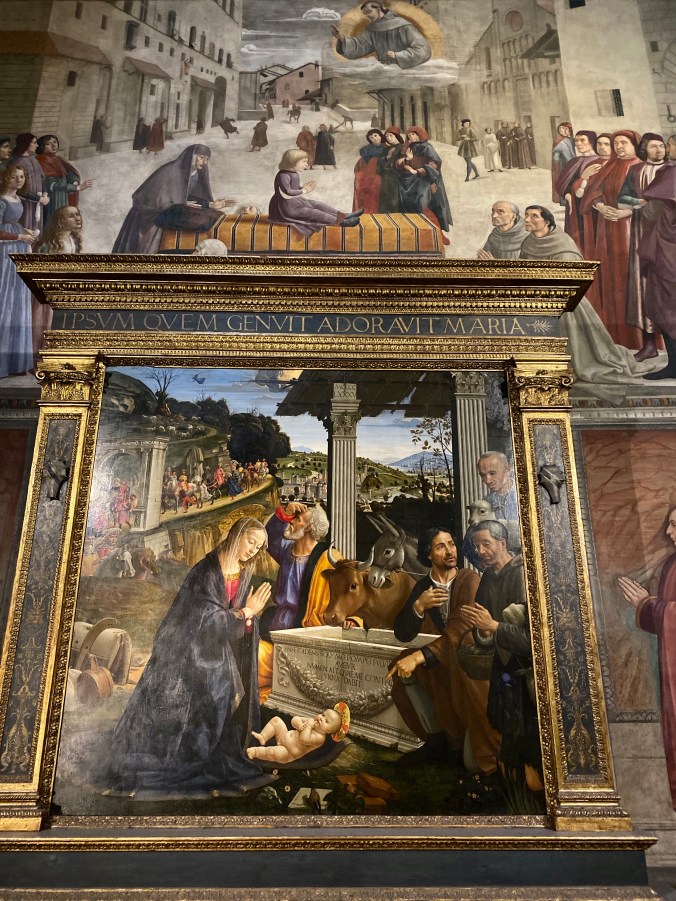
And, finally, I can’t leave this post without mentioning that, depict the austerity of this church, some major paintings were once a part of the church. They are now in the Uffizi:

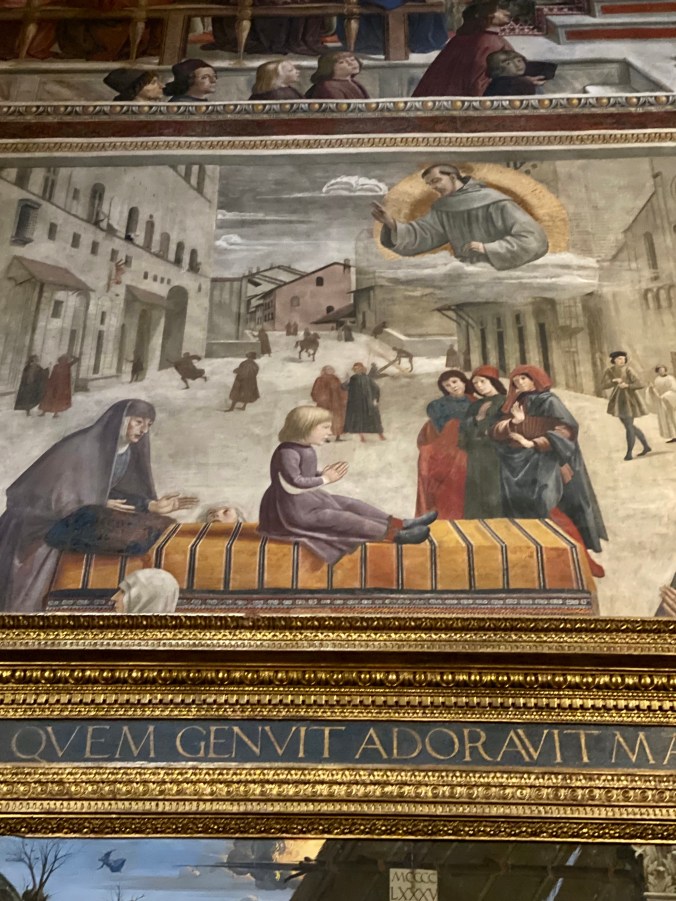
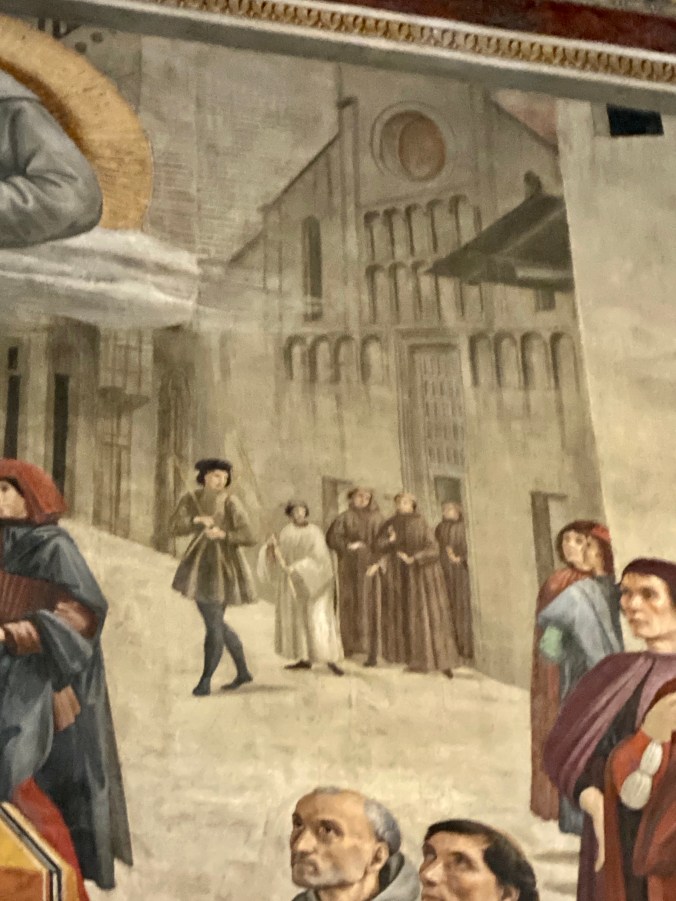
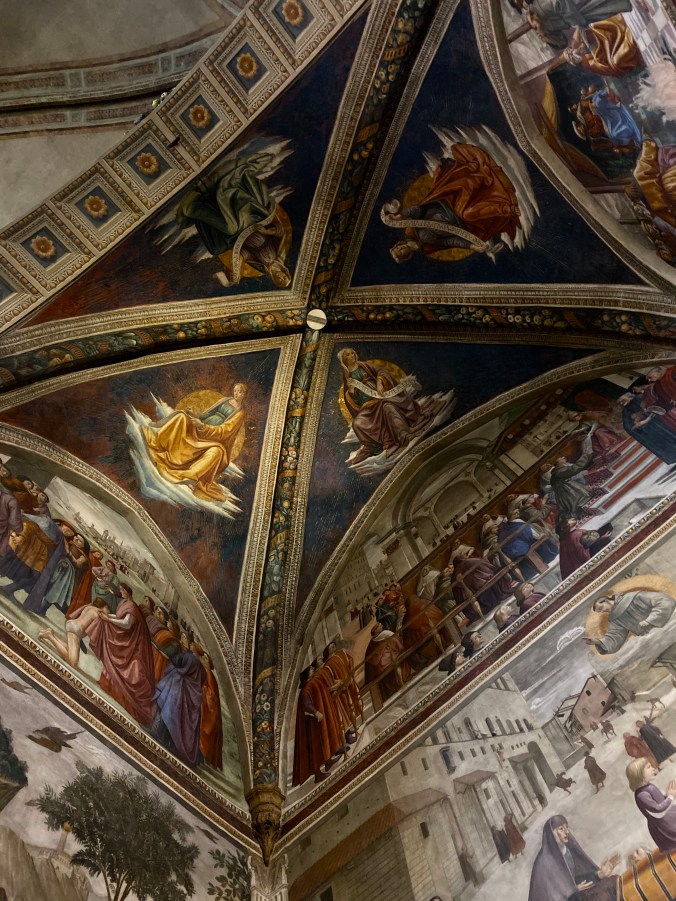
Domenico Ghirlandaio at Santa Trinita, Florence
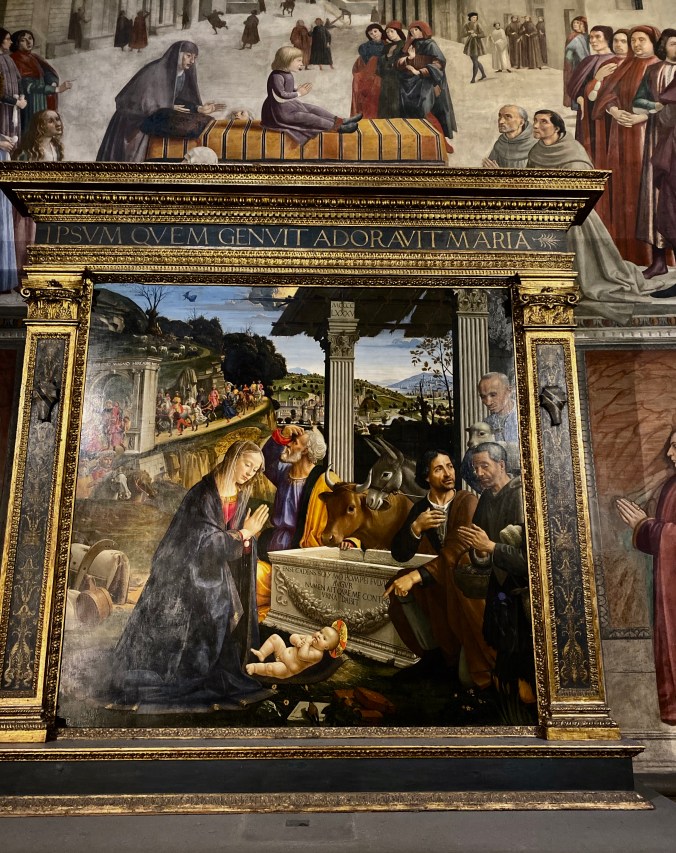

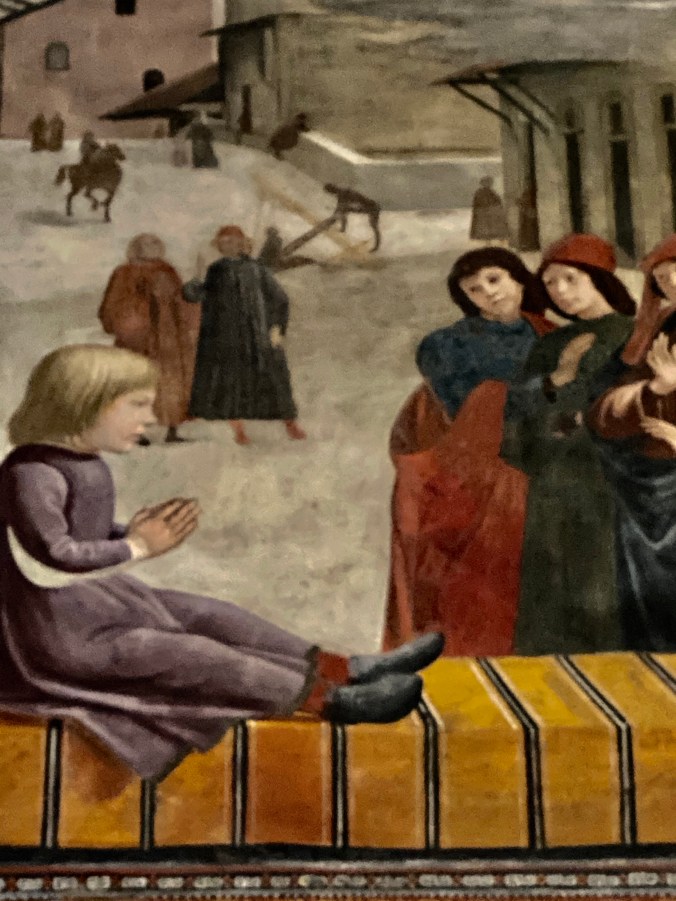
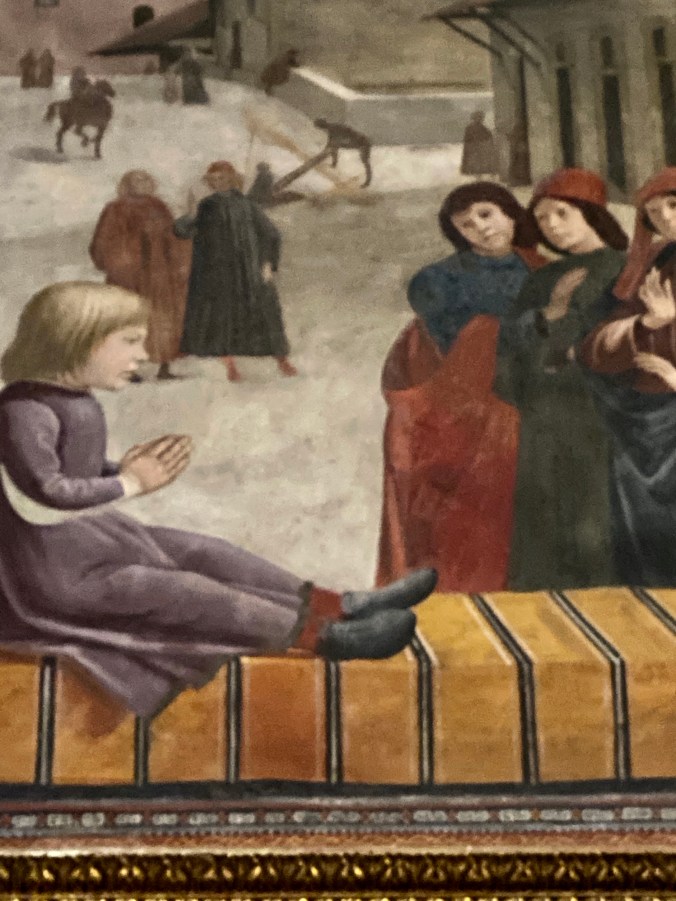

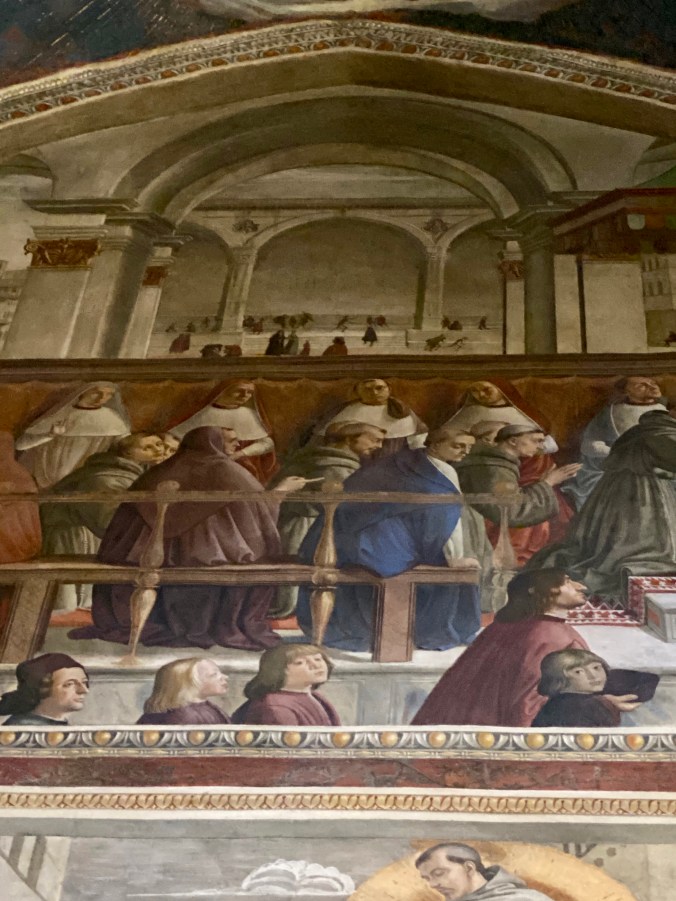

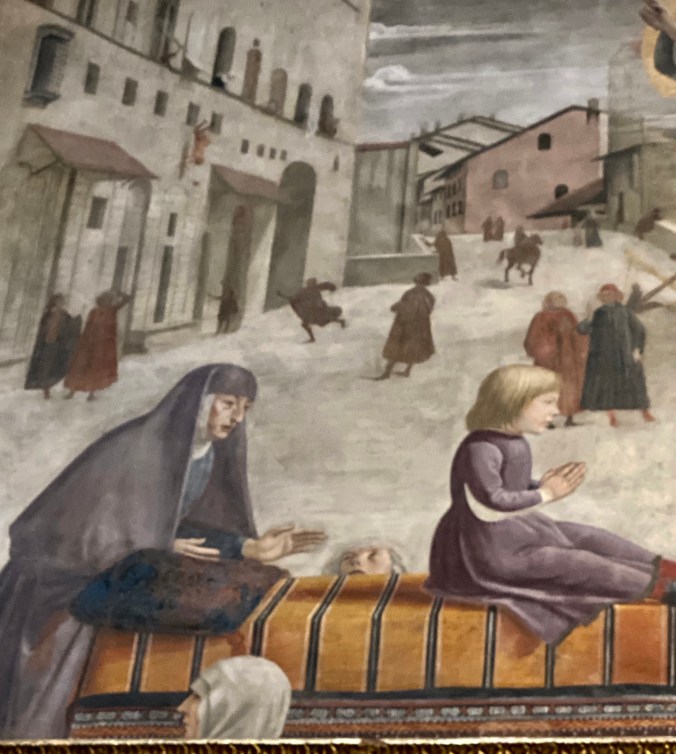

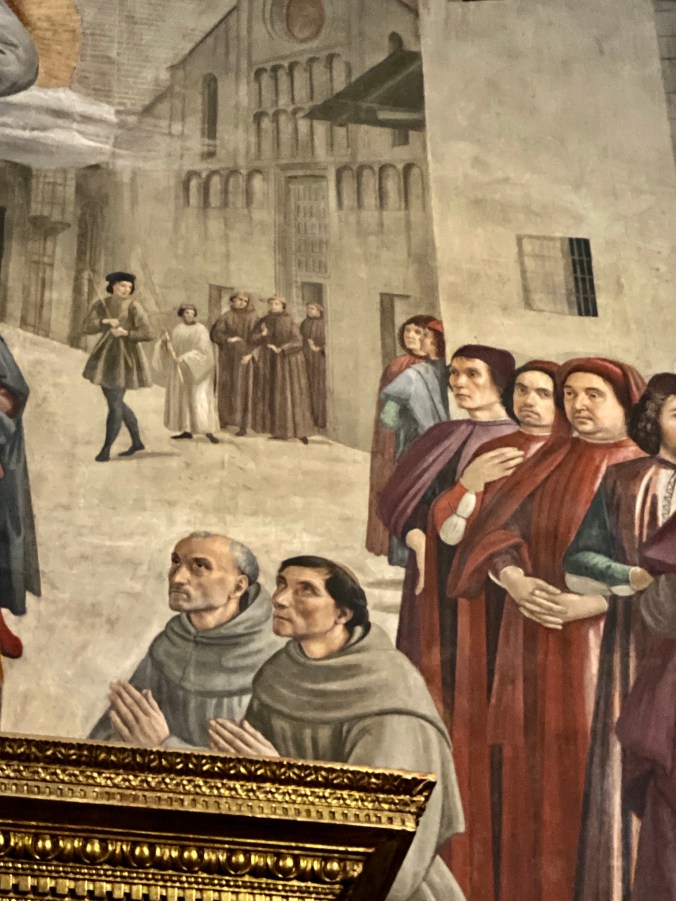
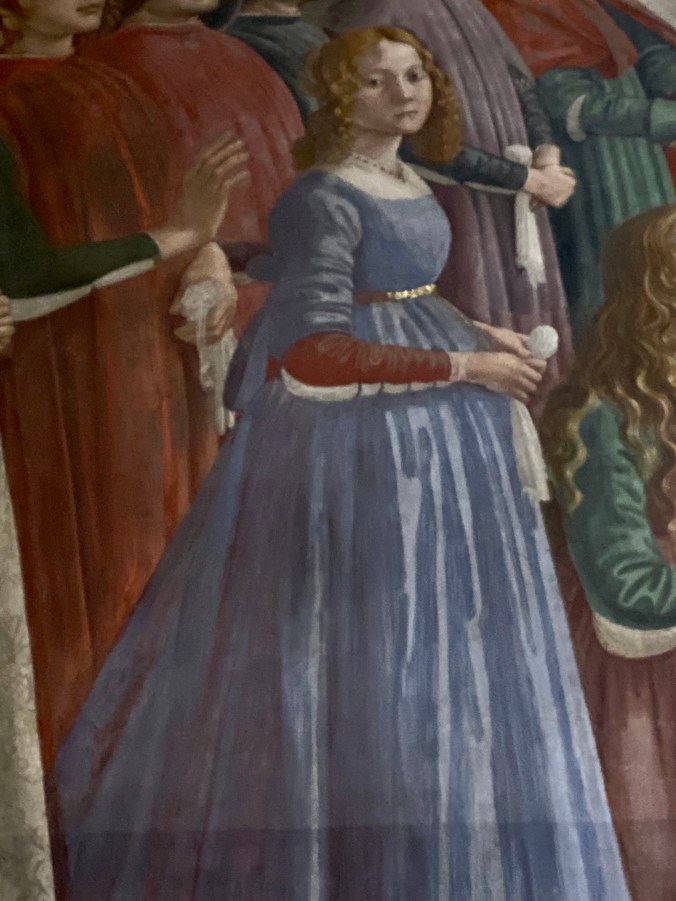

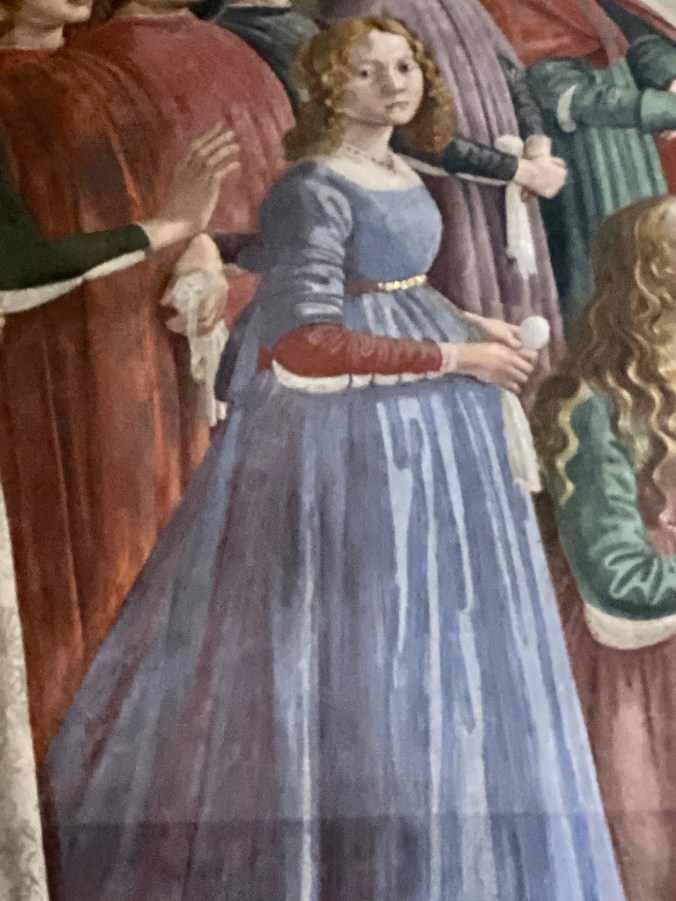
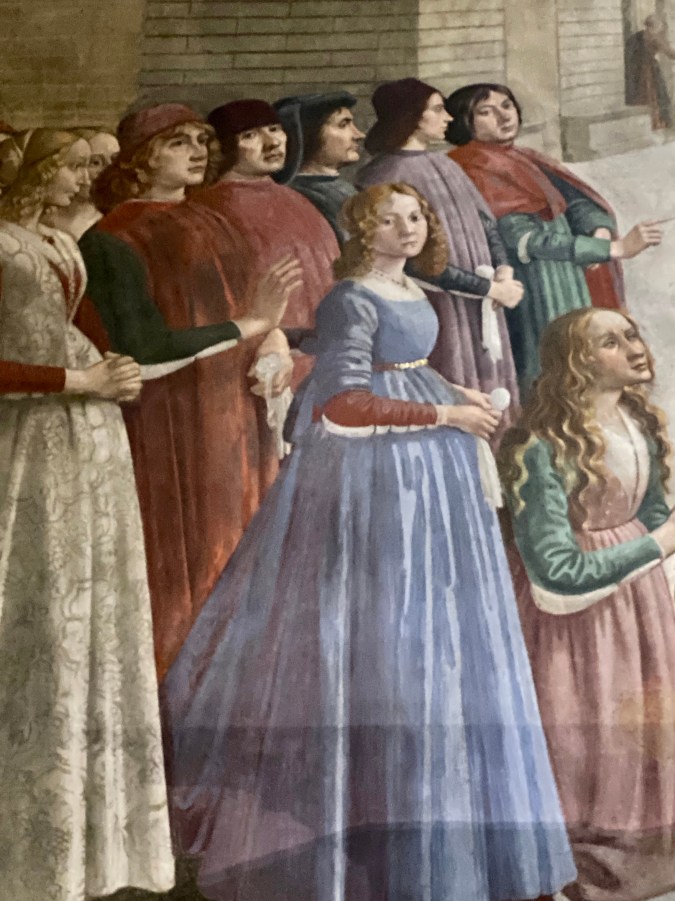

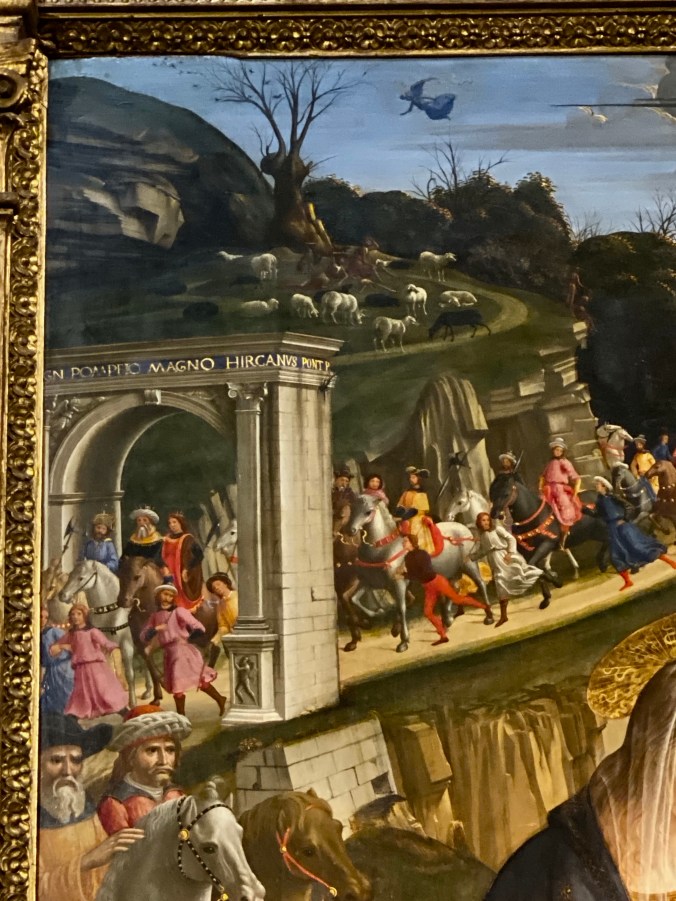
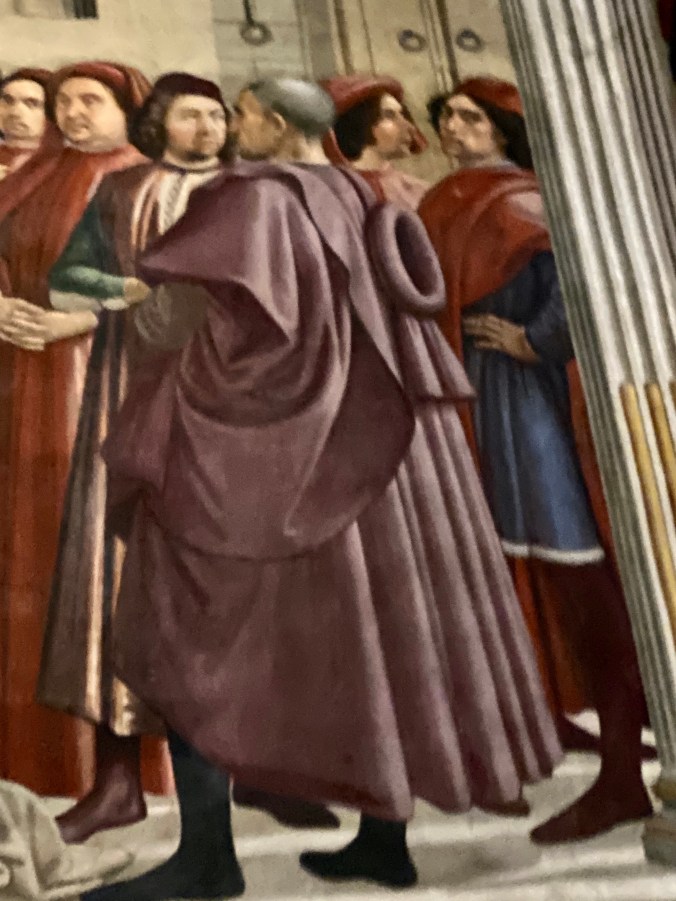


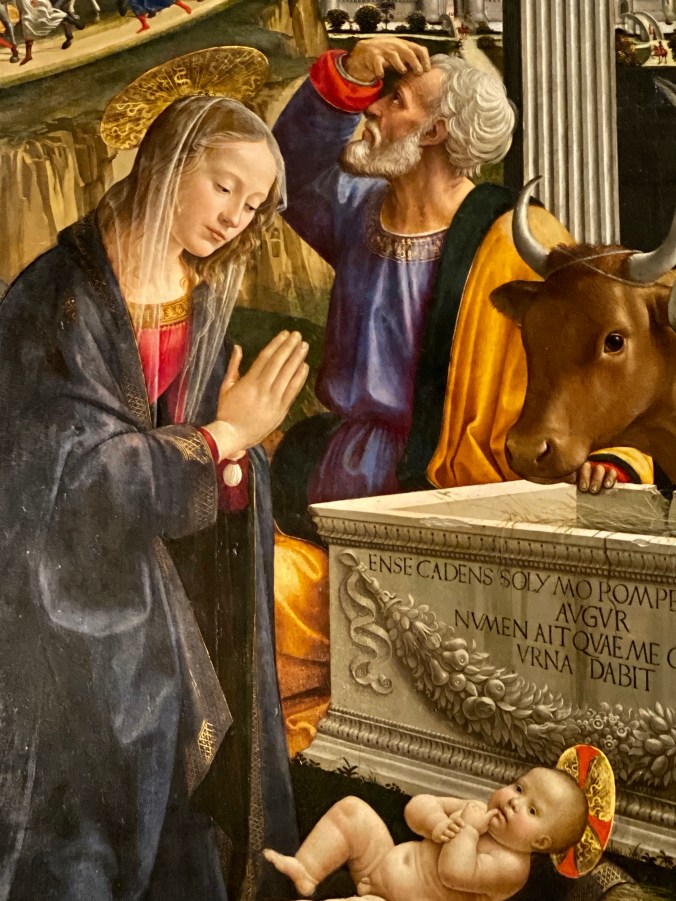


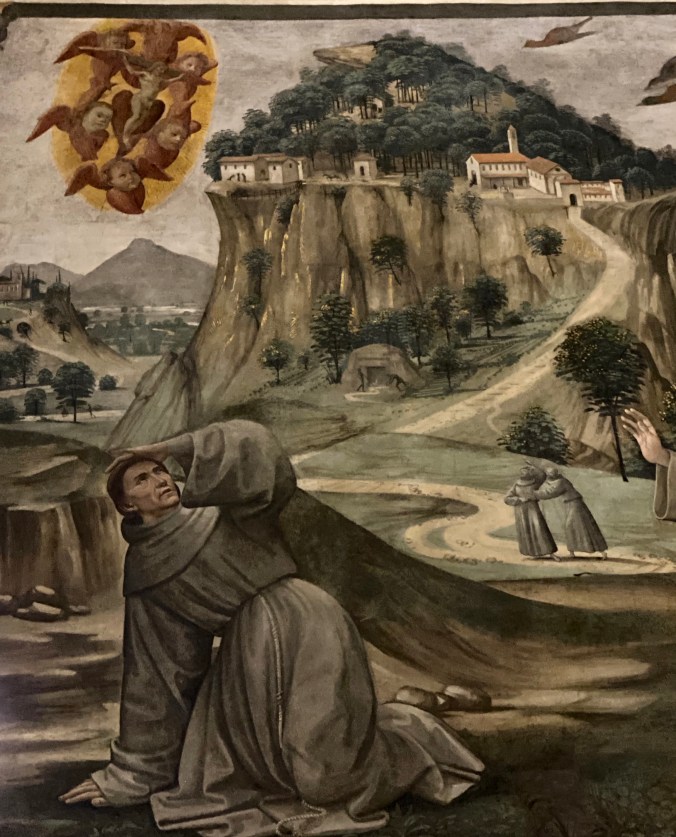
Lorenzo Monaco at Santa Trinita, Florence

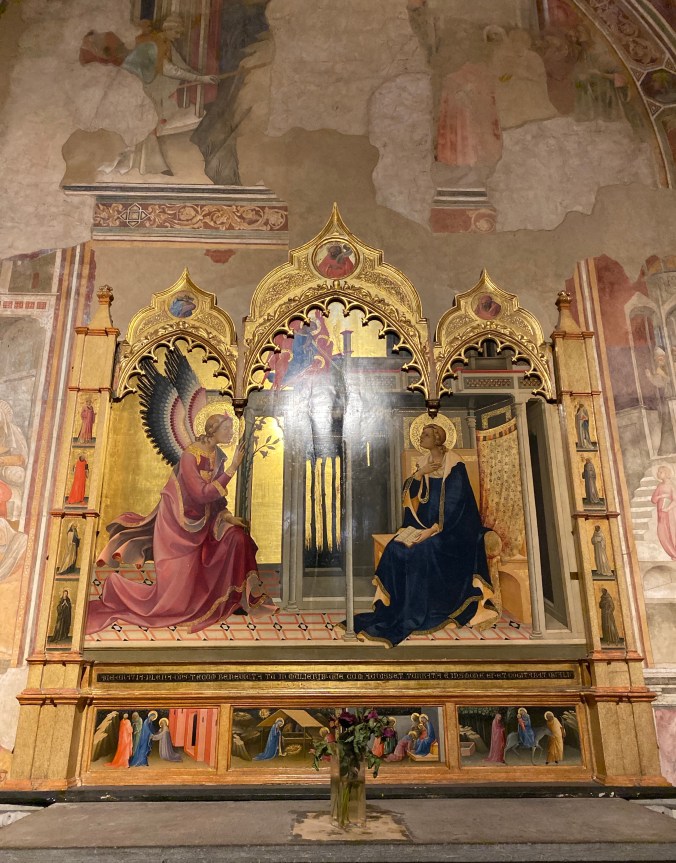
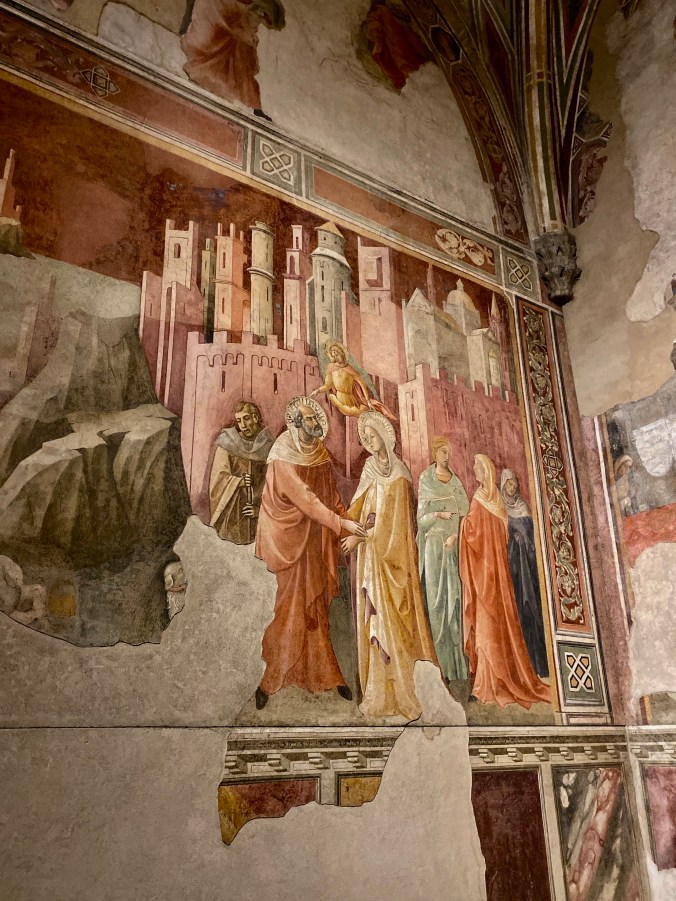
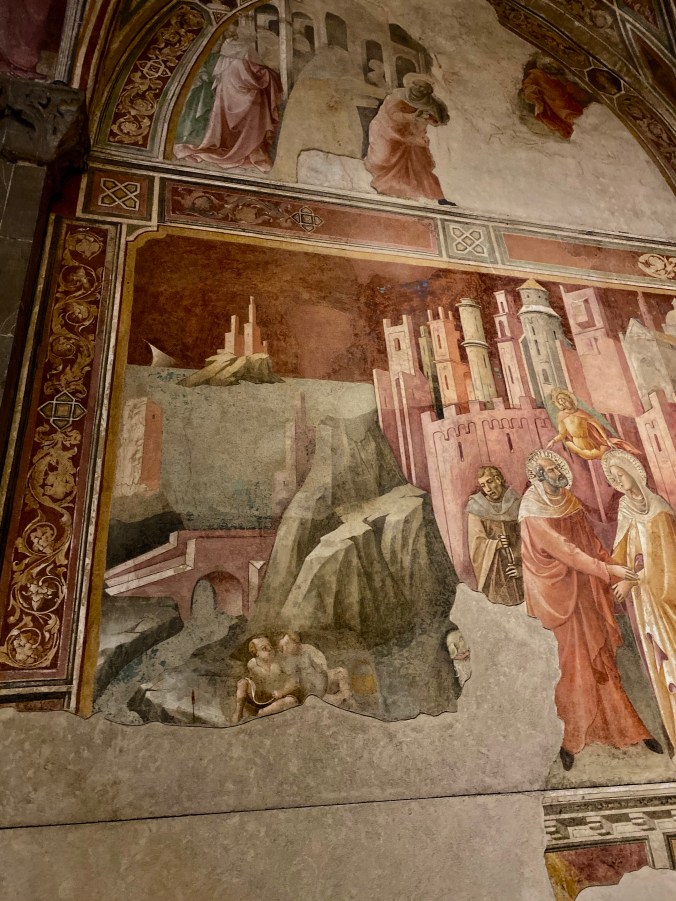
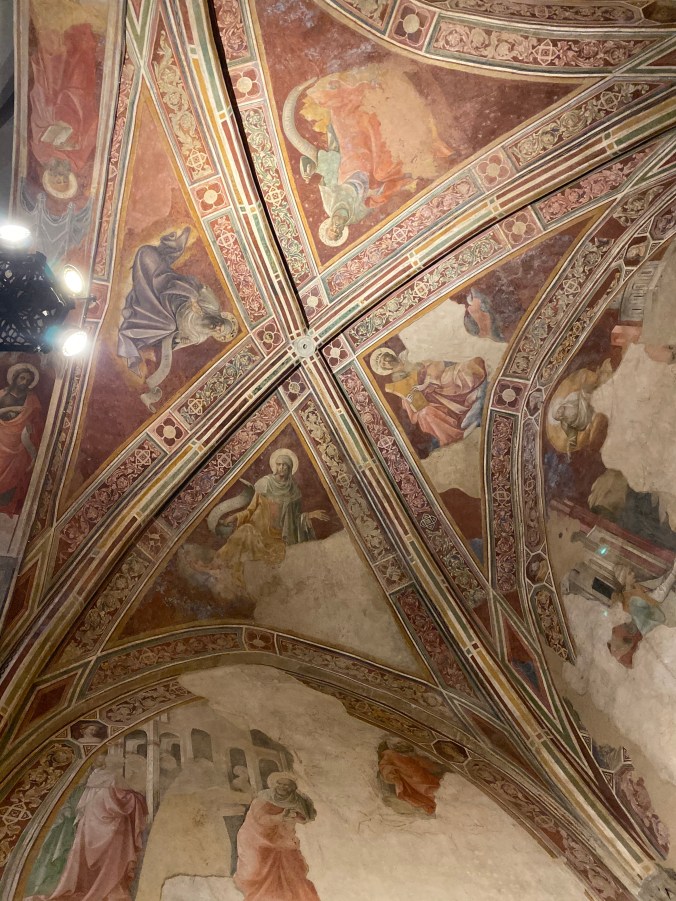
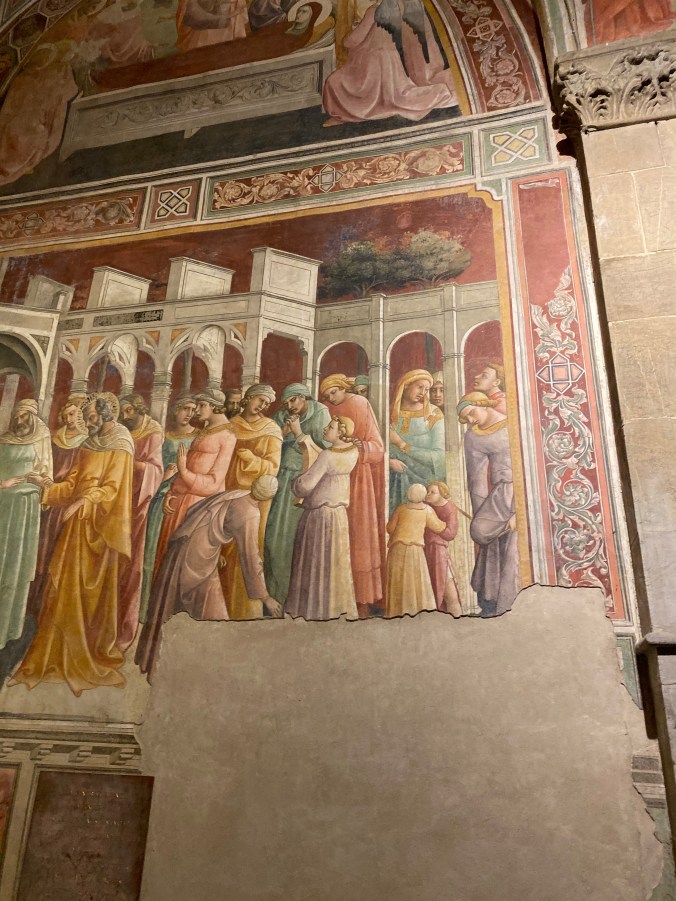
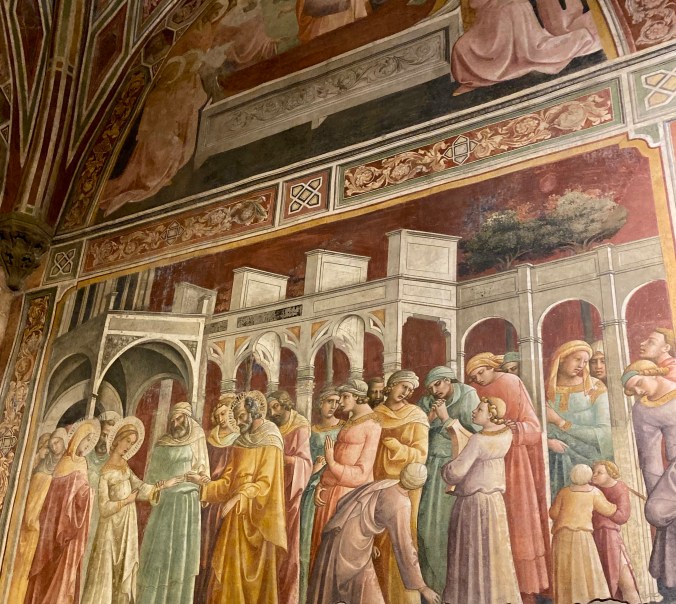
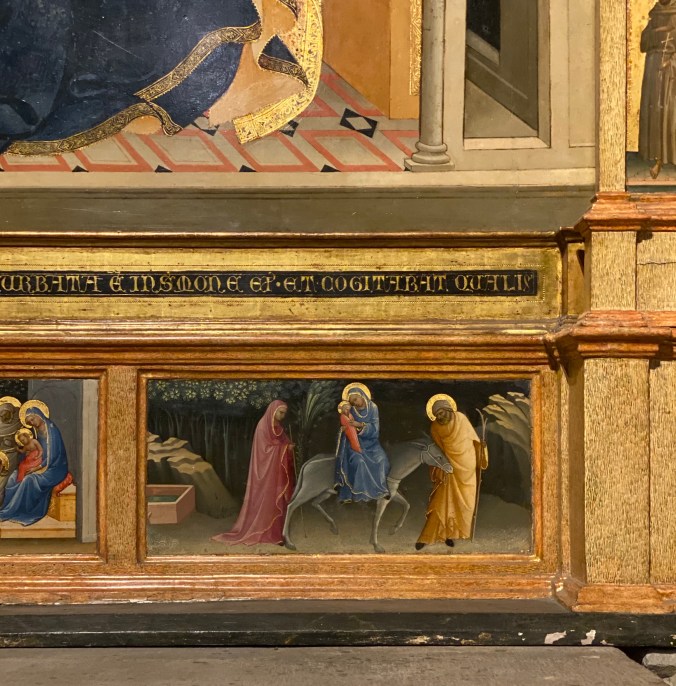

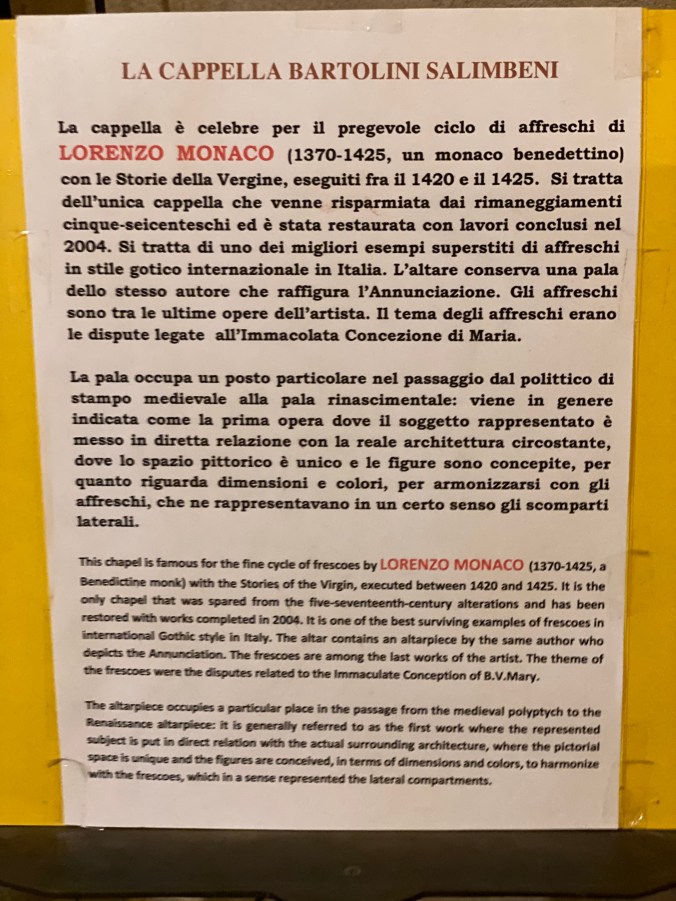
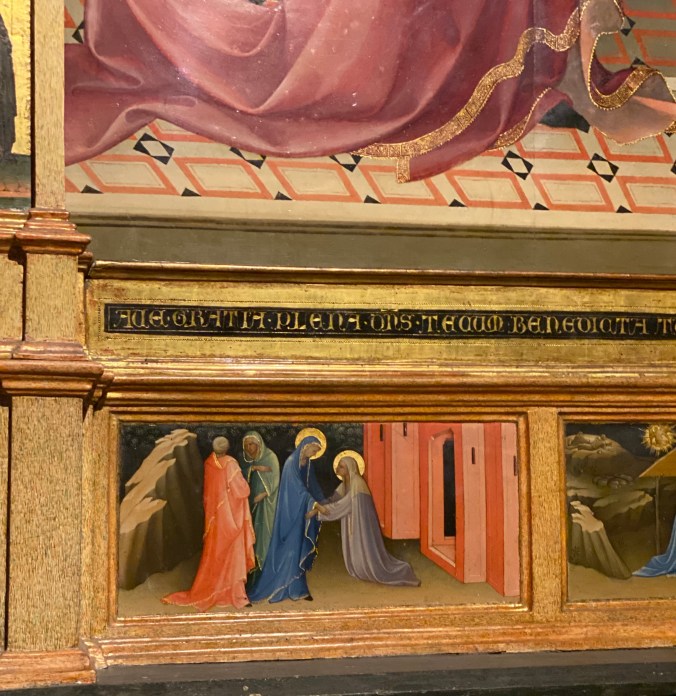
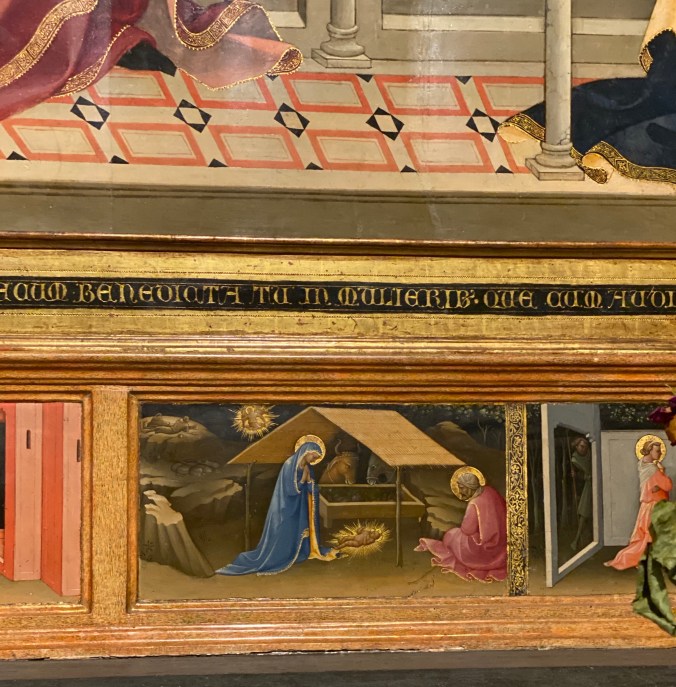
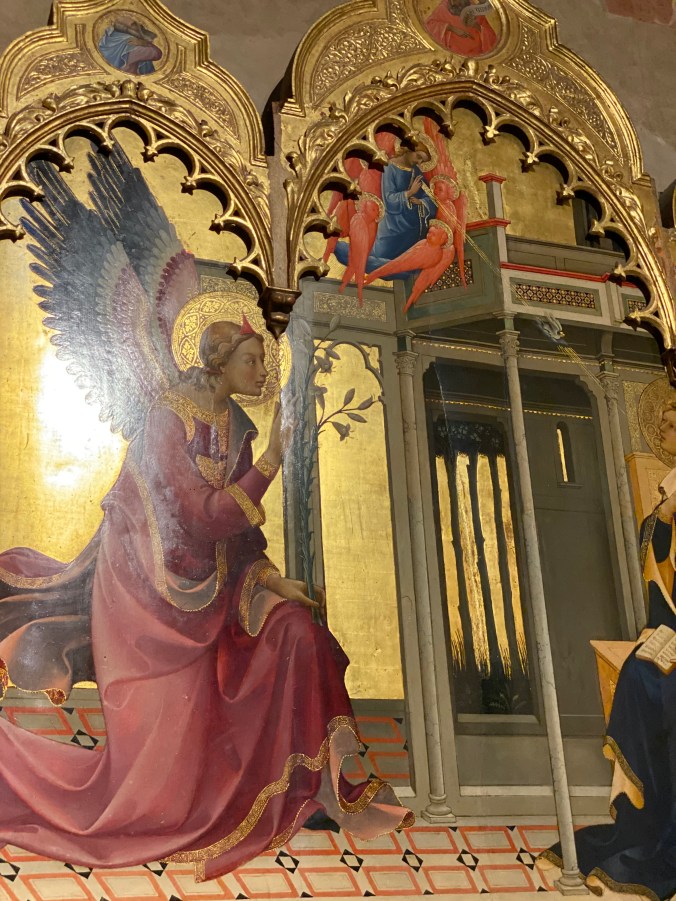
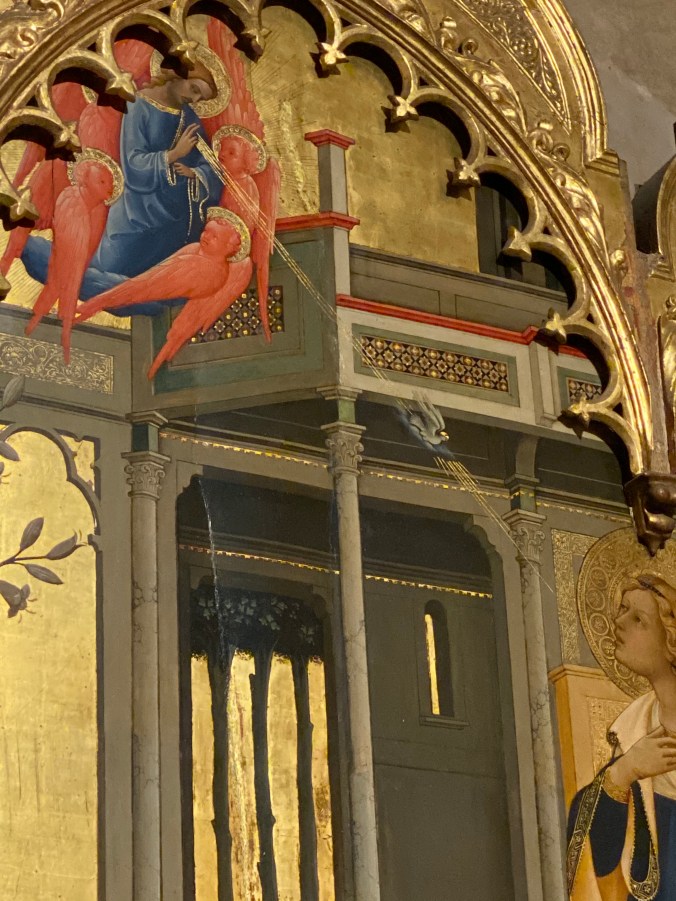
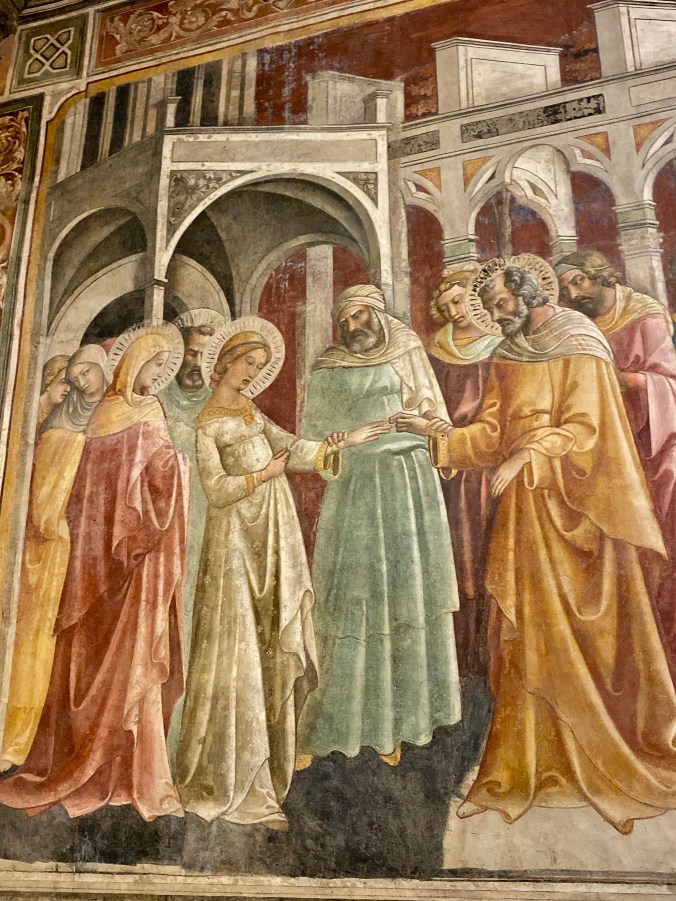
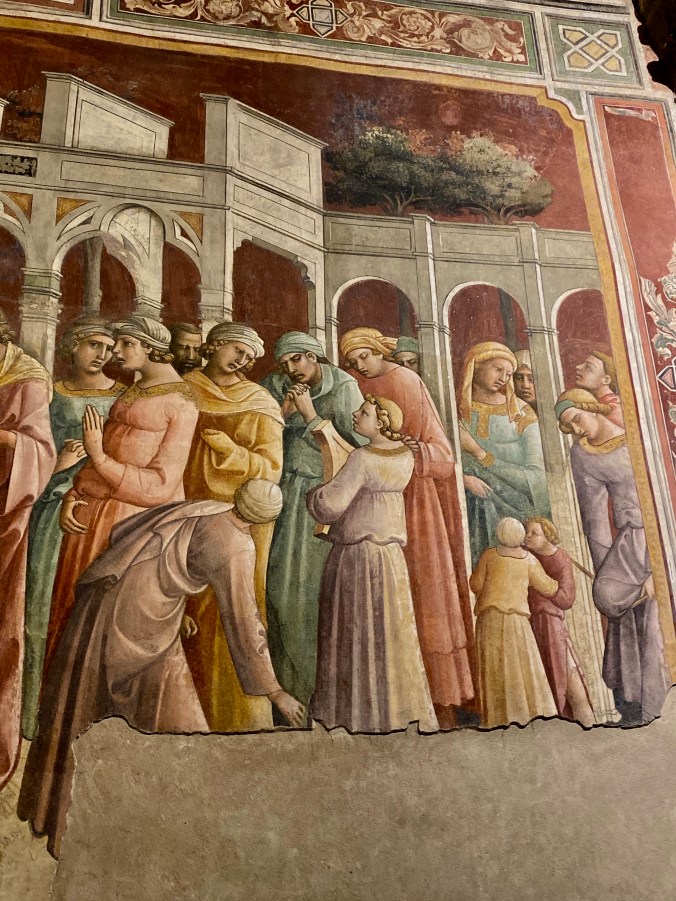

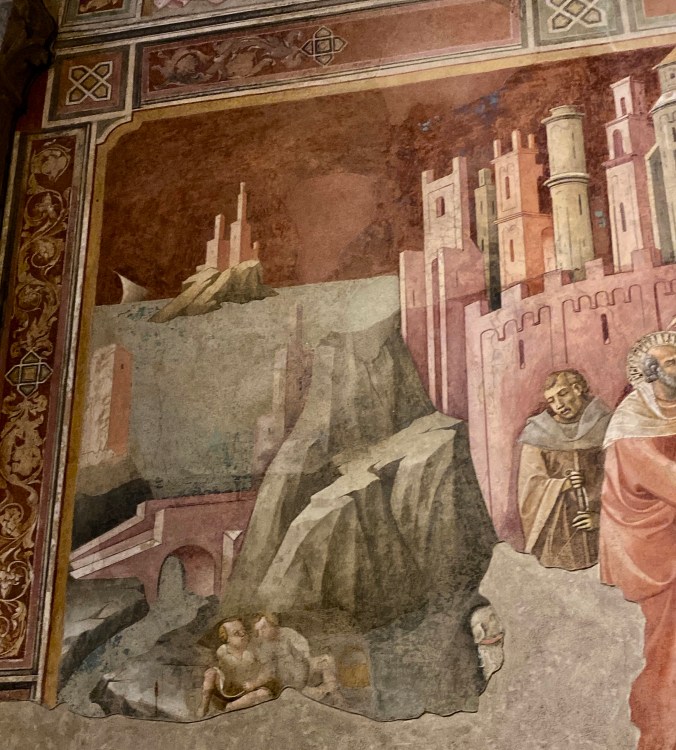
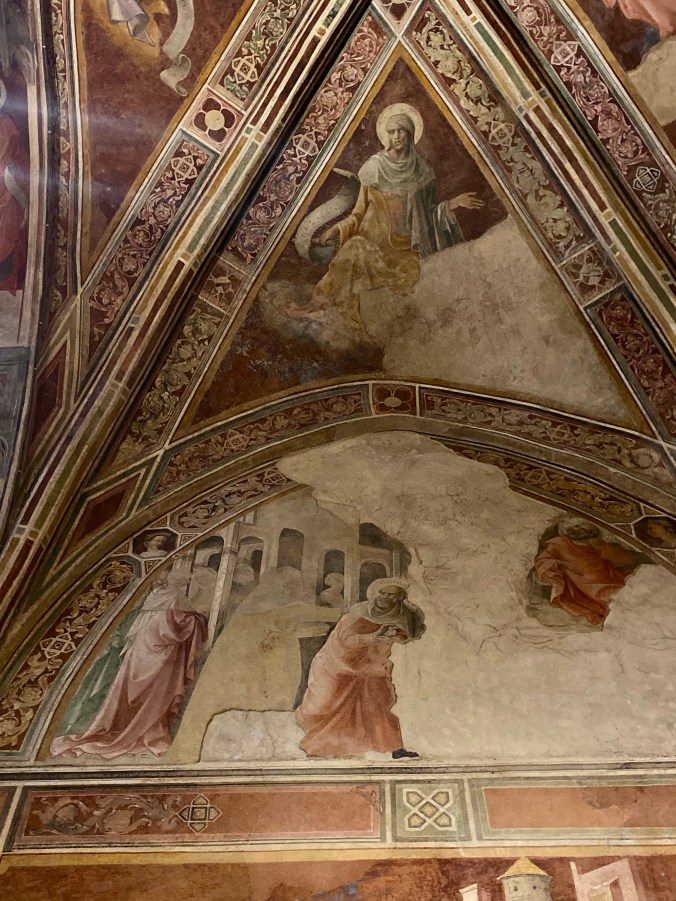
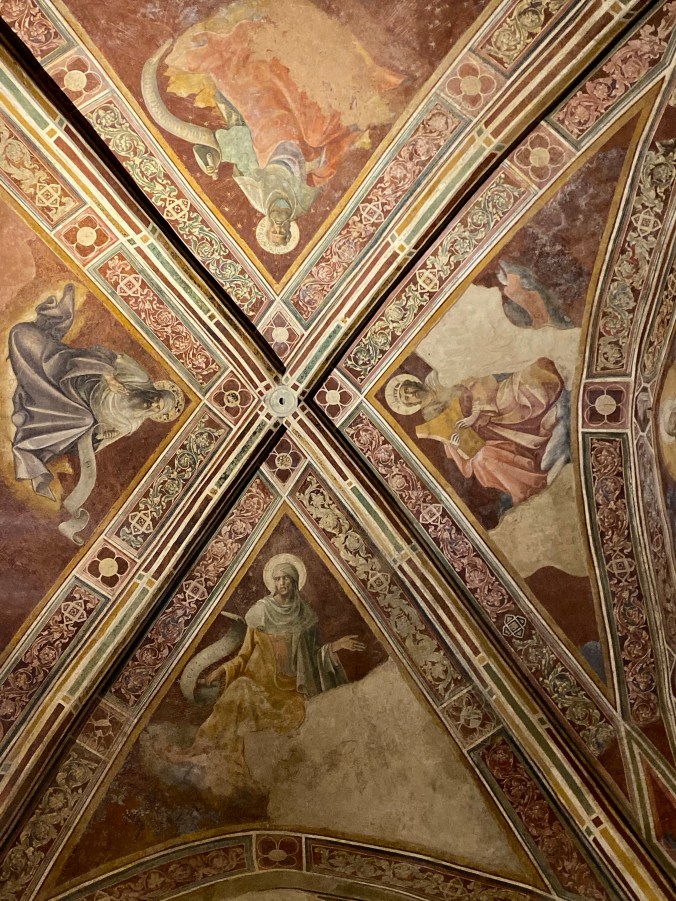
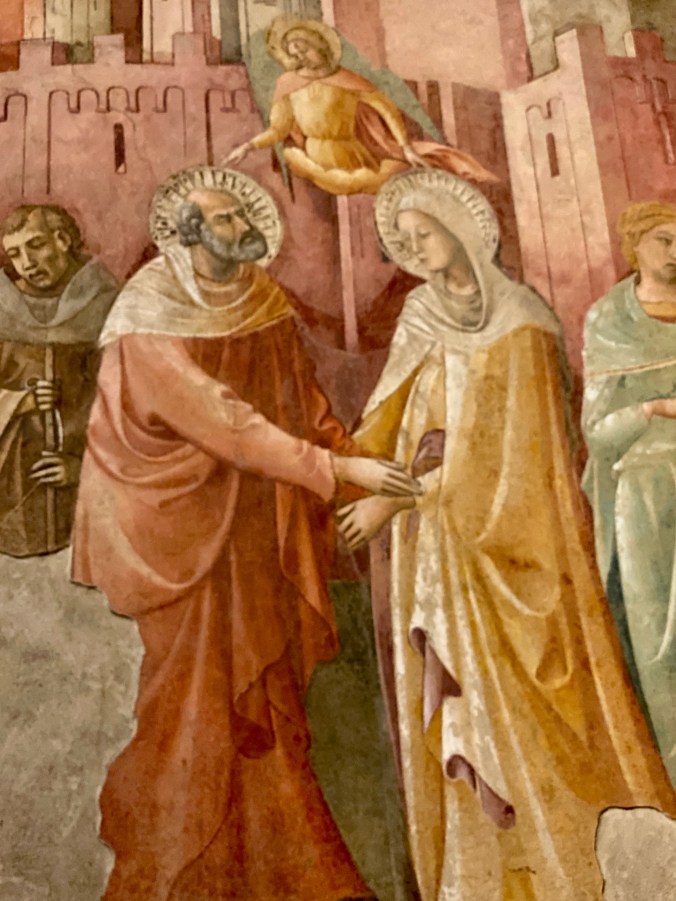

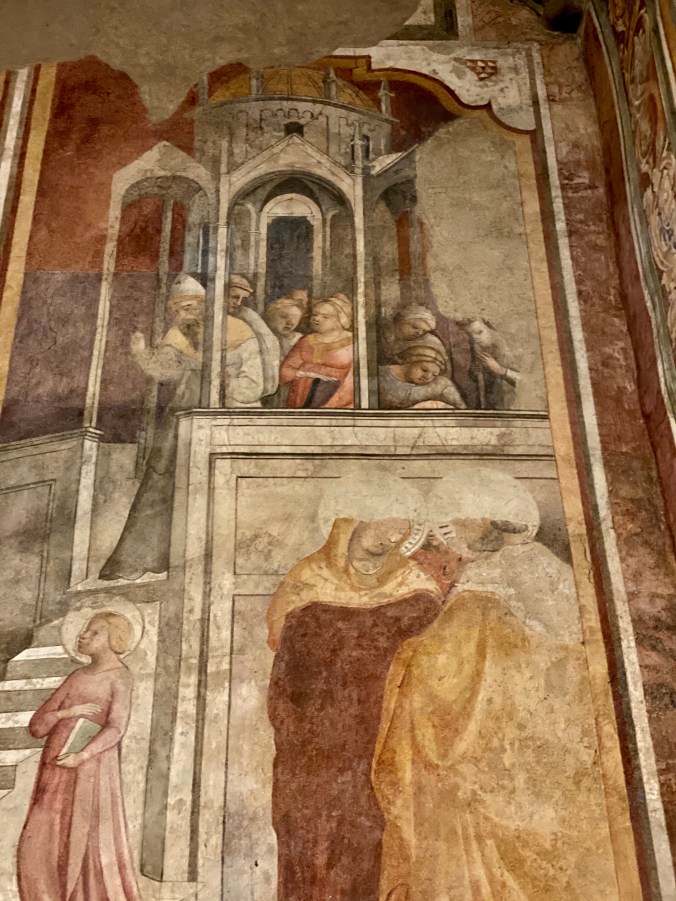
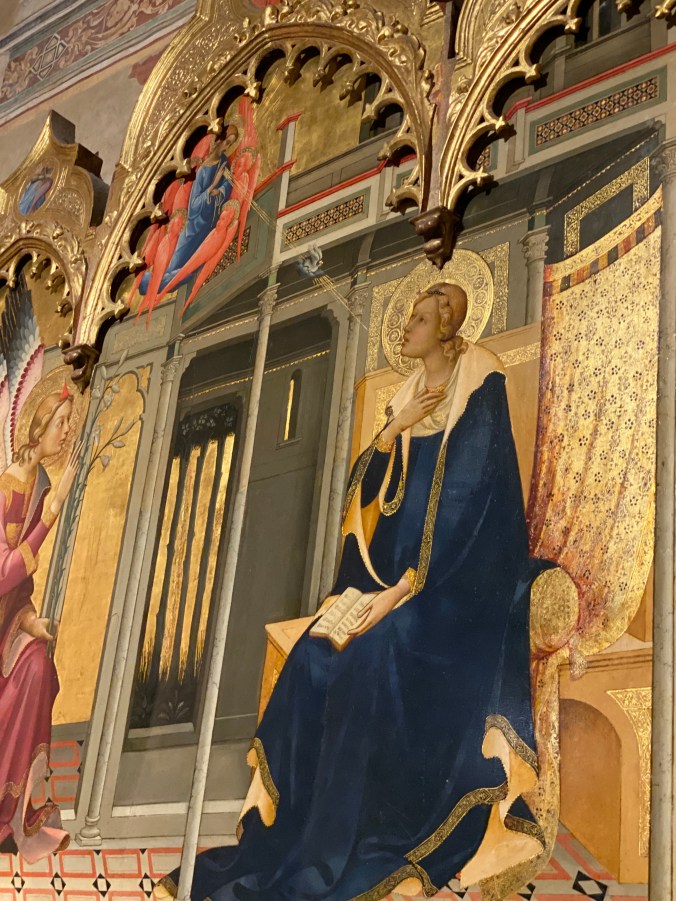
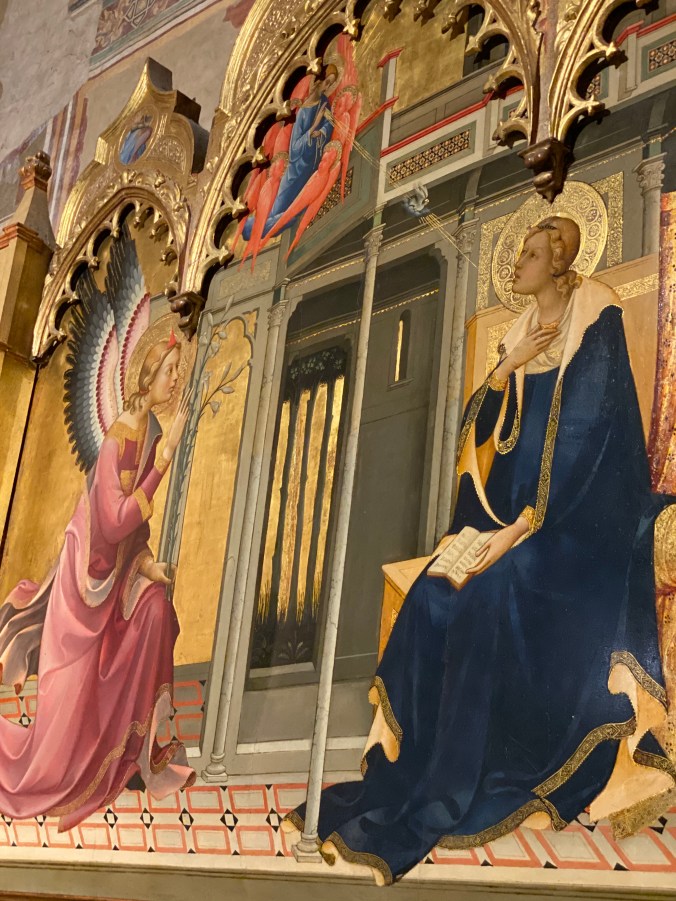
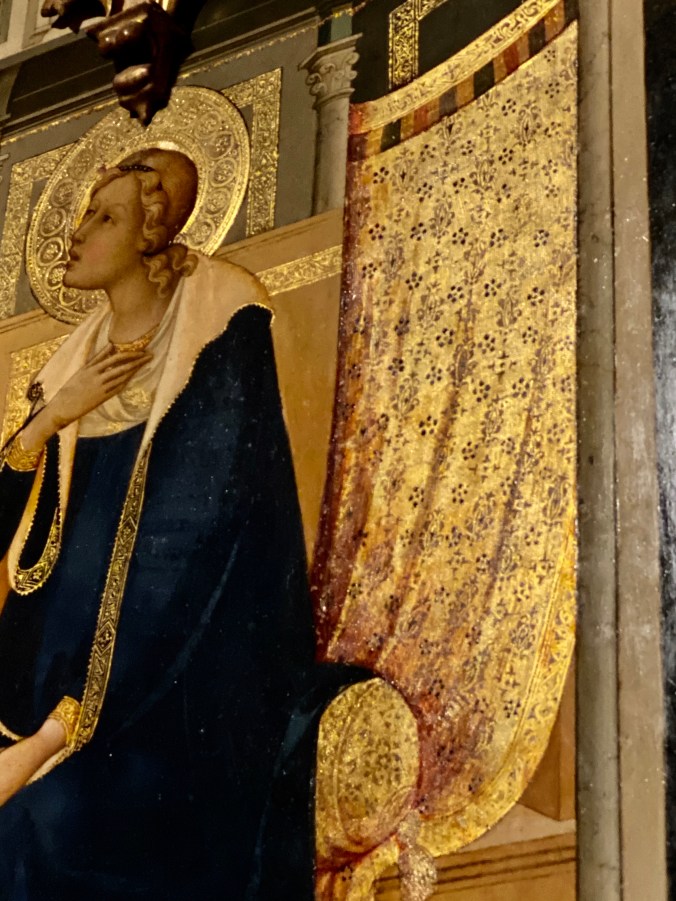

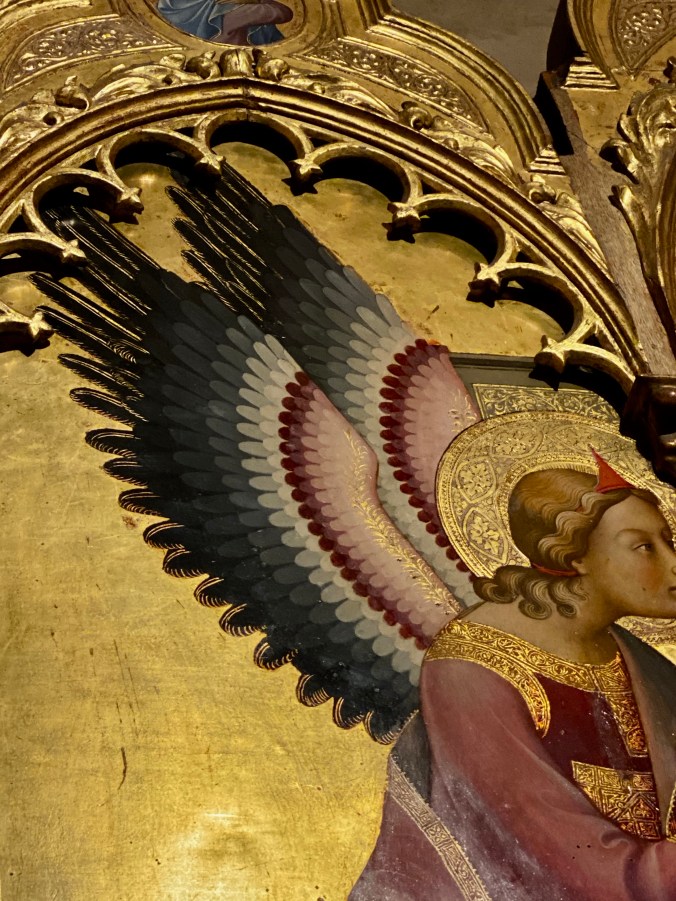

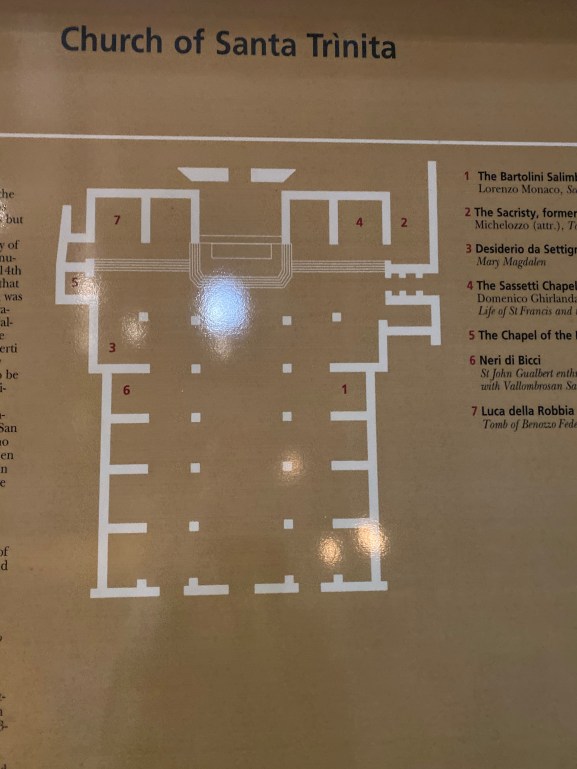
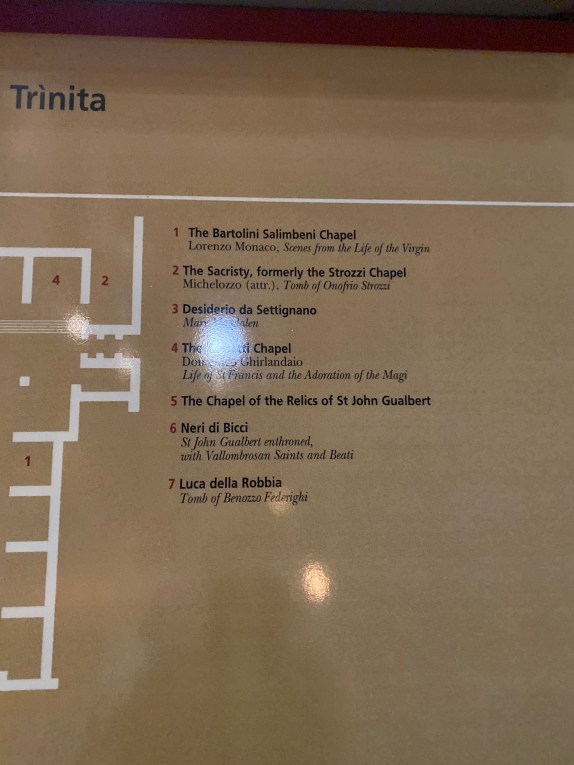
Santa Trinita, another look
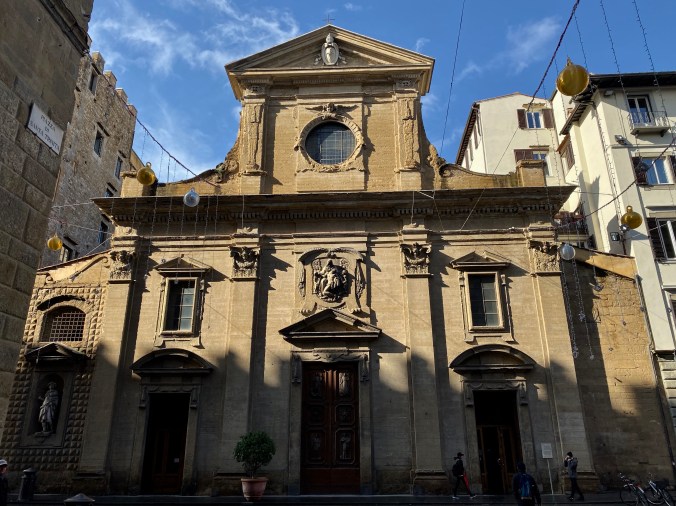
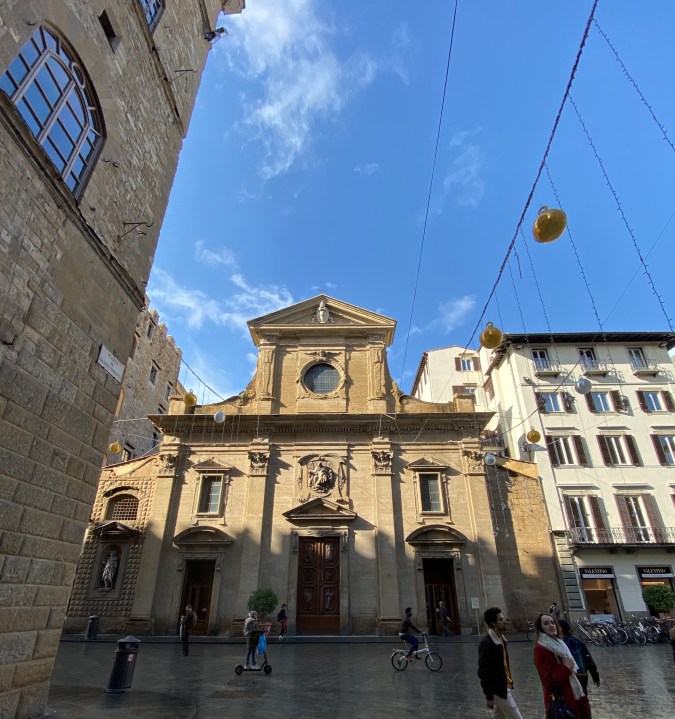
Recently I posted about Santa Trinita and I just had another chance to pay it another visit. It was a sunny day following a week of rain, and it just felt good to be out and in the sunshine. You might notice that the city of Florence has begun decorating for Christmas already!
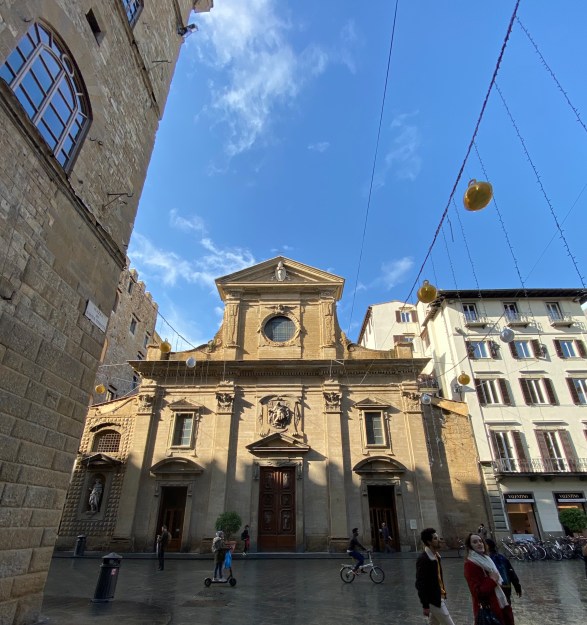
The Mannerist facade by Buontalenti:

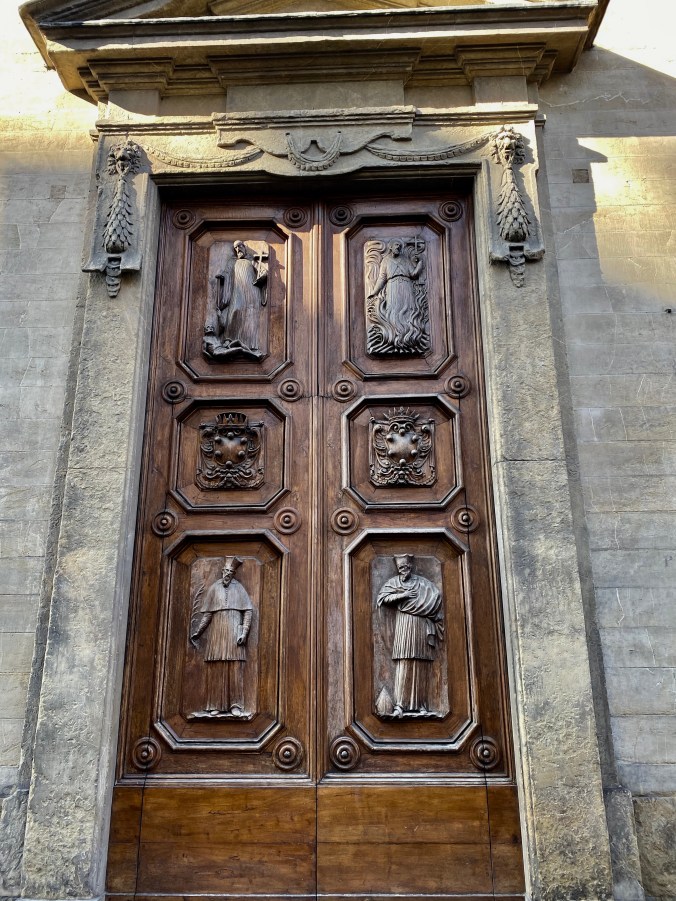
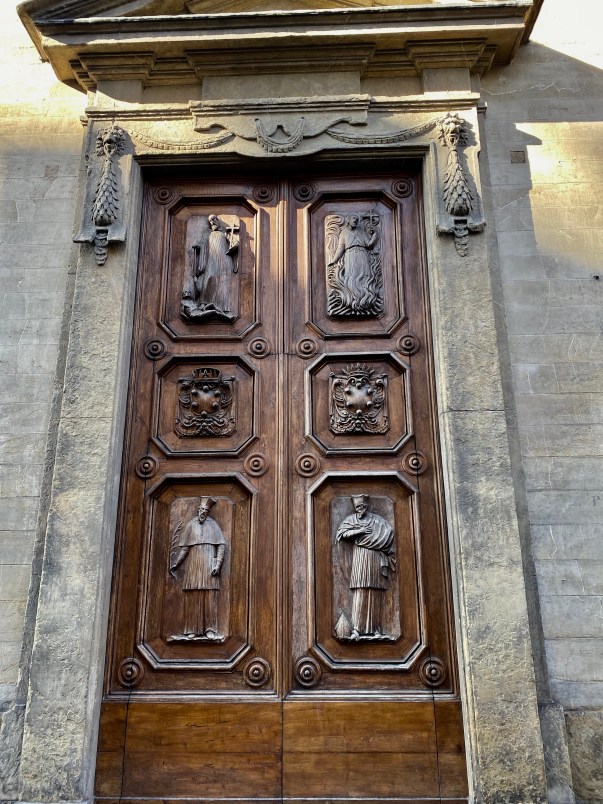
The beautifully carved central doors:
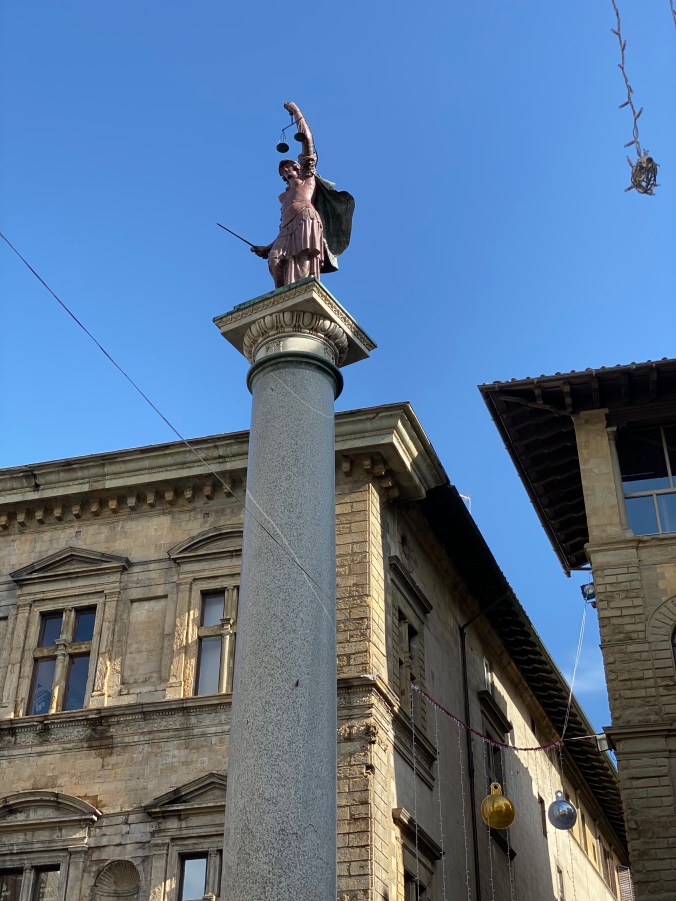
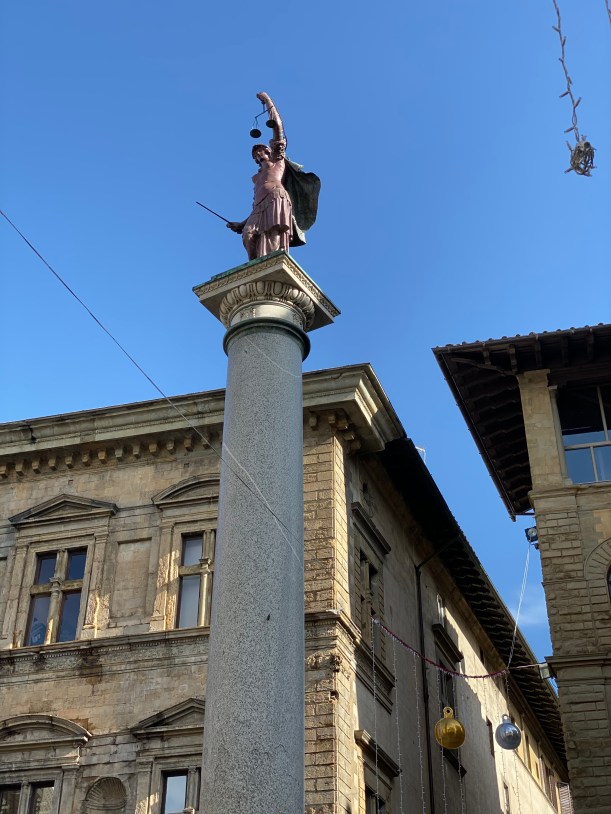
You must never forget the fabulous column and Roman statue in the piazza outside the church:
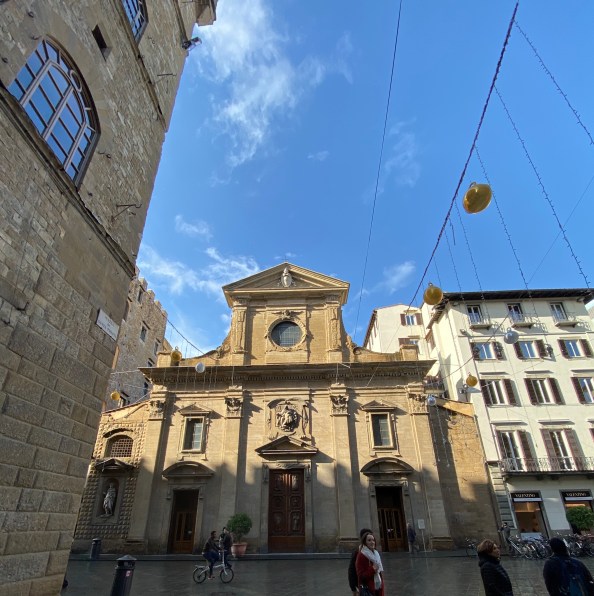
Once more, the facade:
Inside the church we are fortunate to see the extant old Romanesque facade of the church. Luckily for posterity, they didn’t destroy it when they constructed the new front for the church:

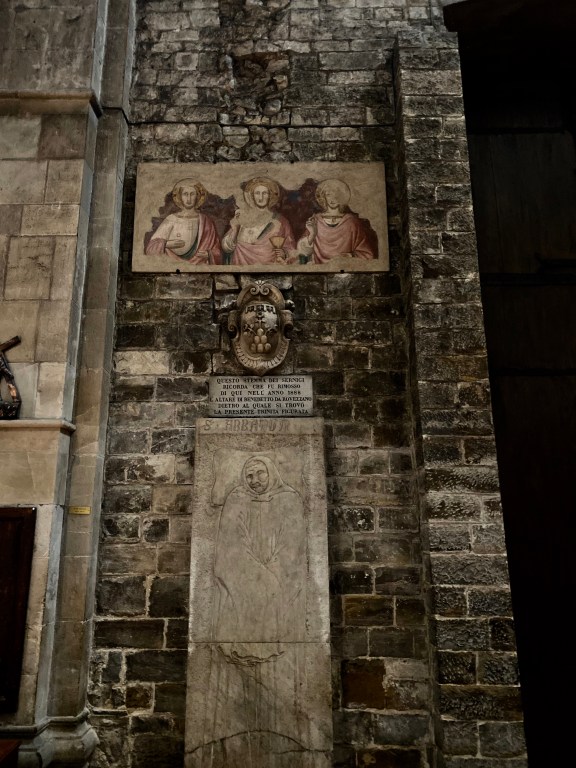
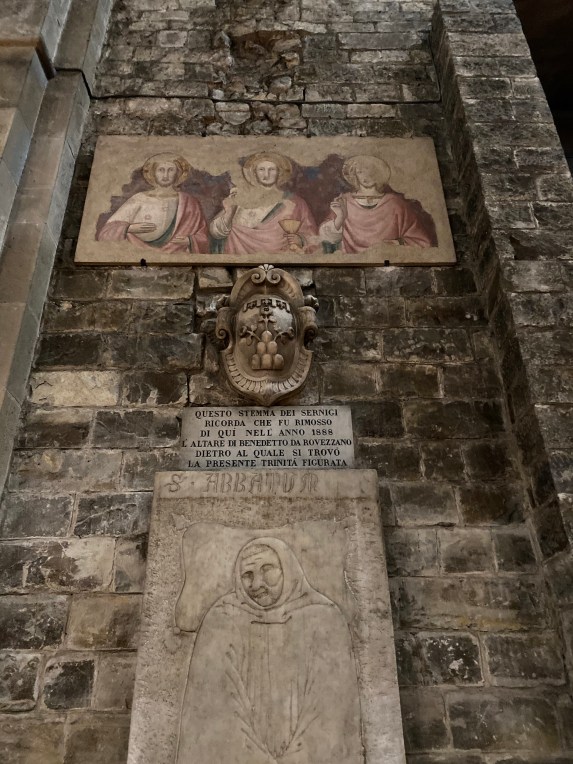
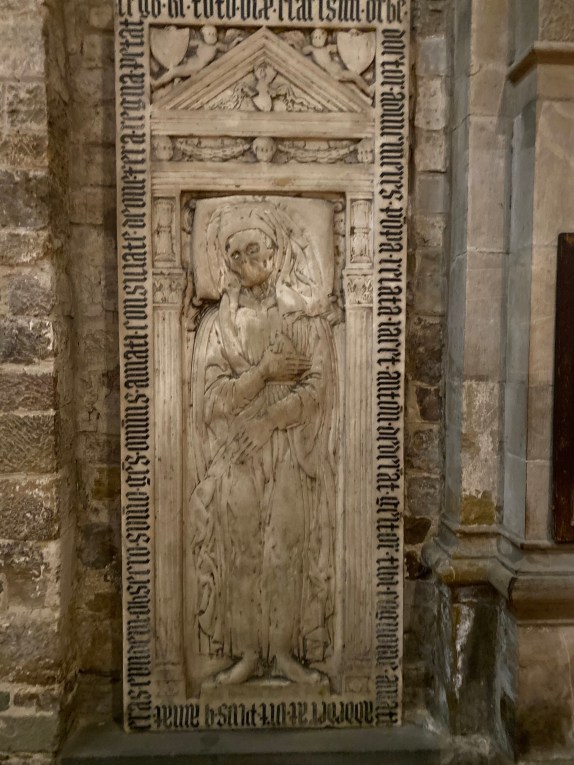
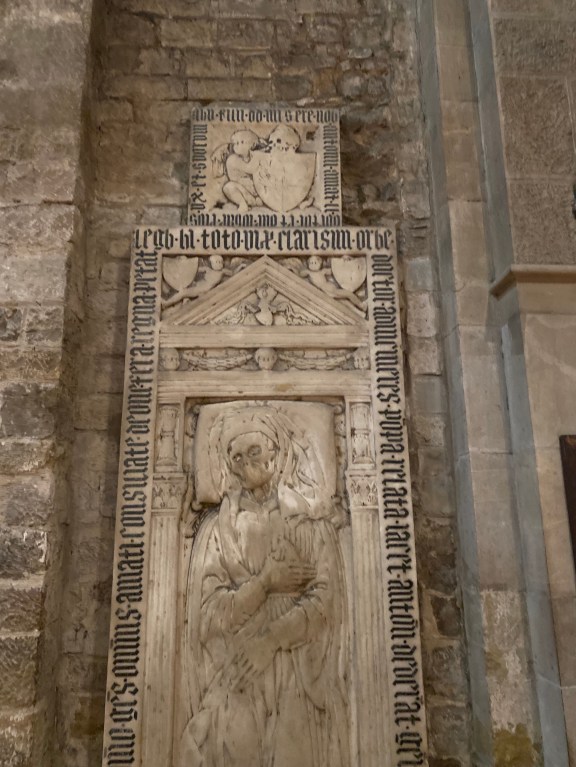
One either side of the central door, inside the church are these tombstones and paintings:
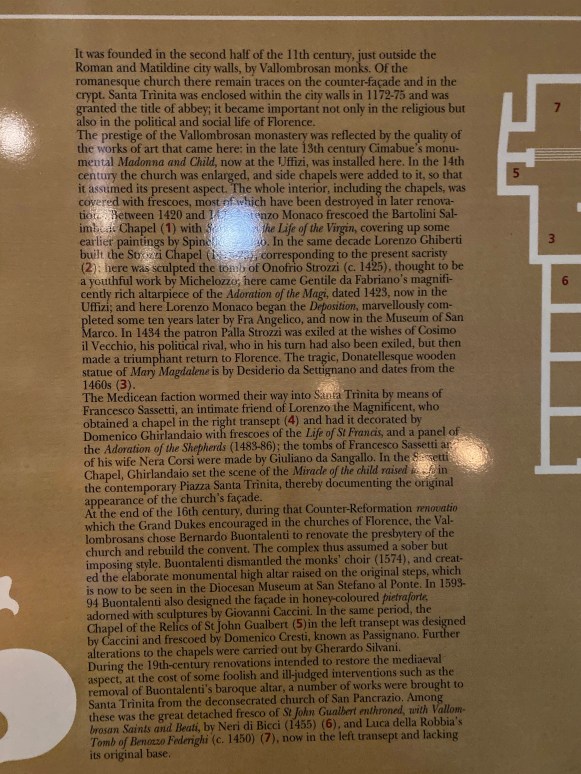
The interior:


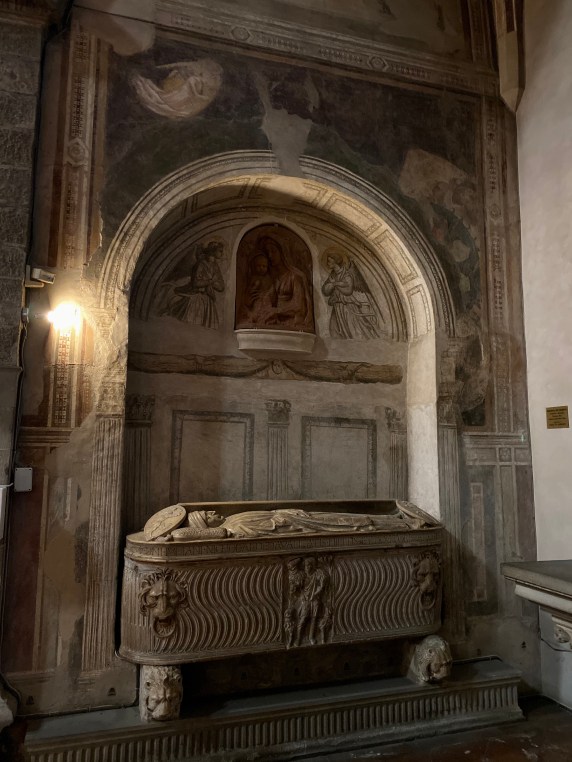
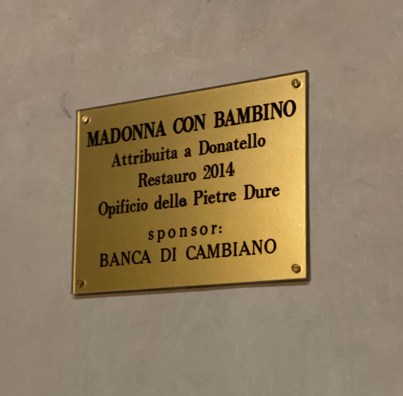
The Chapel containing the (presumed) Donatello:

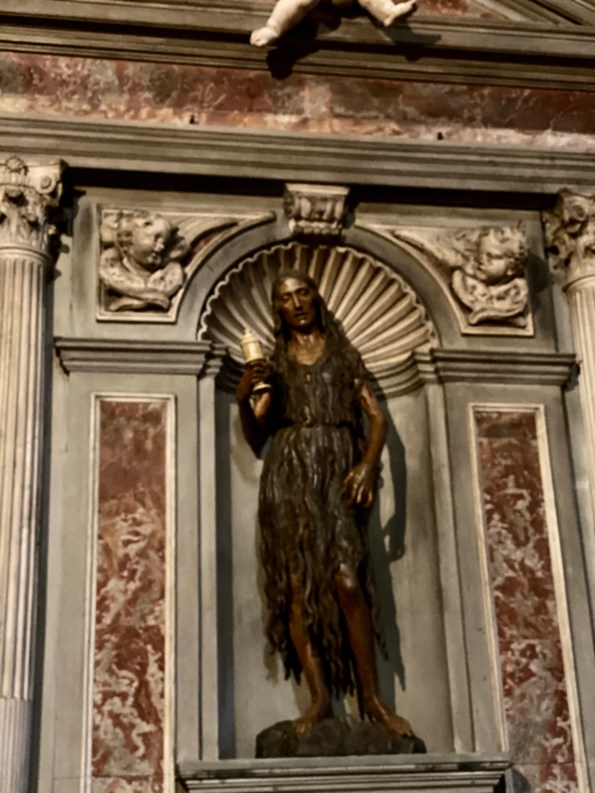
The statue of Mary Magdalene by Desiderio di Settignano:

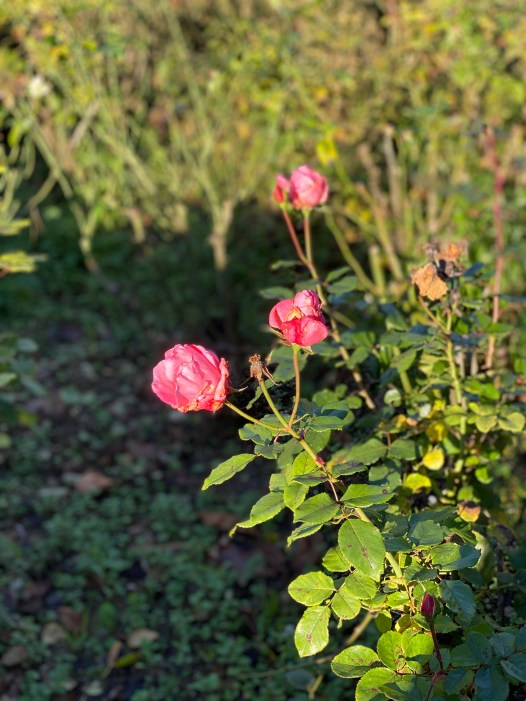
December 4, 2019; this week at the Boboli






Ginevra Cantofoli, who are you?
On a recent visit to Padova, I was arrested by some paintings in the Museo Civici, both done by Ginevra Cantofoli. I vowed to write a post on this intriguing painter, and here it is. It isn’t much…I hope someday to add more.

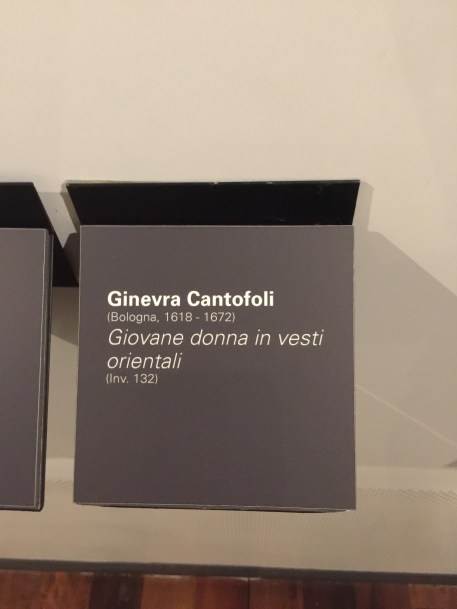


All I can add right now is this info from Wiki:
|
Ginevra Cantofoli
|
|
|---|---|
| Born | 1618
Bologna, Italy
|
| Died | 1672 (aged 53–54) |
| Nationality | Italian |
| Known for | Painting |
| Movement | Baroque |
Ginevra Cantofoli (1618–1672) was an Italian painter. She was active in the Baroque period.

Scena Allegorica. Date unknown.
Cantofoli was born in Bologna, Italy in 1618.
Cantfoli received her training as an artist from Elisabetta Sirani in Bologna. She painted works for several churches. These works included a Last Supper for the Church of San Procolo, a St. Thomas of Villanova for San Giacomo Maggiore, and a St. Apollonia for the Church of La Morte.
 |
Wikimedia Commons has media related to Ginevra Cantofoli. |
- Bryan, Michael (1886). Robert Edmund Graves (ed.). Dictionary of Painters and Engravers, Biographical and Critical(Volume I: A-K). York St. #4, Covent Garden, London; Original from Fogg Library, Digitized May 18, 2007: George Bell and Sons. p. 227.
A very Italian Christmas tradition, an elaborate crèche
Walking down the Via Maggio in the Oltrarno today, I spotted this elaborate crèche. I tried to capture it, but think I must return and try again.
In the meantime, here’s what I captured so far…
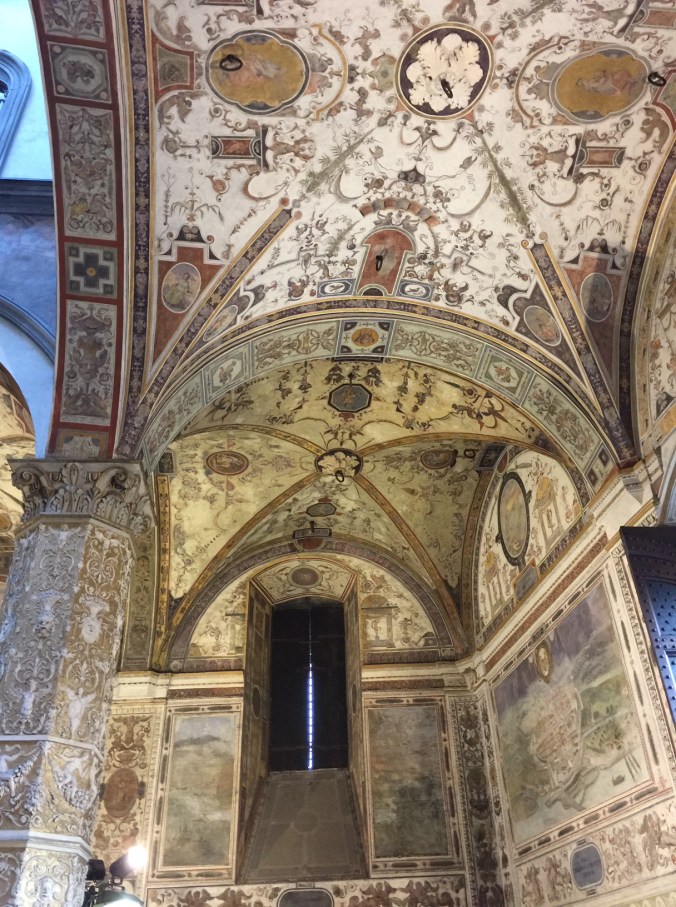
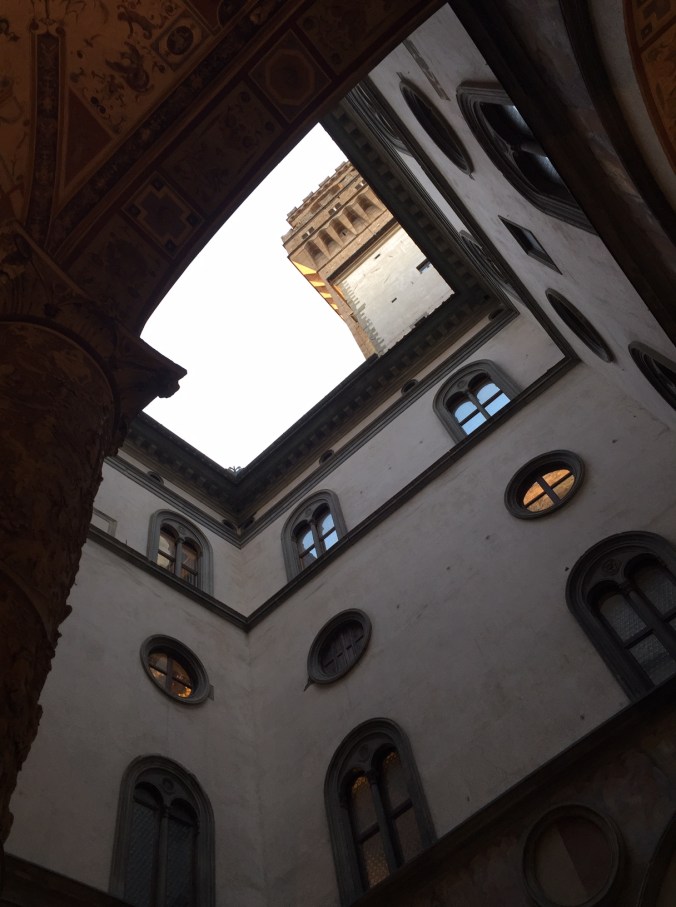
The Michelozzo cortile, Palazzo Vecchio, Florence, a snapshot





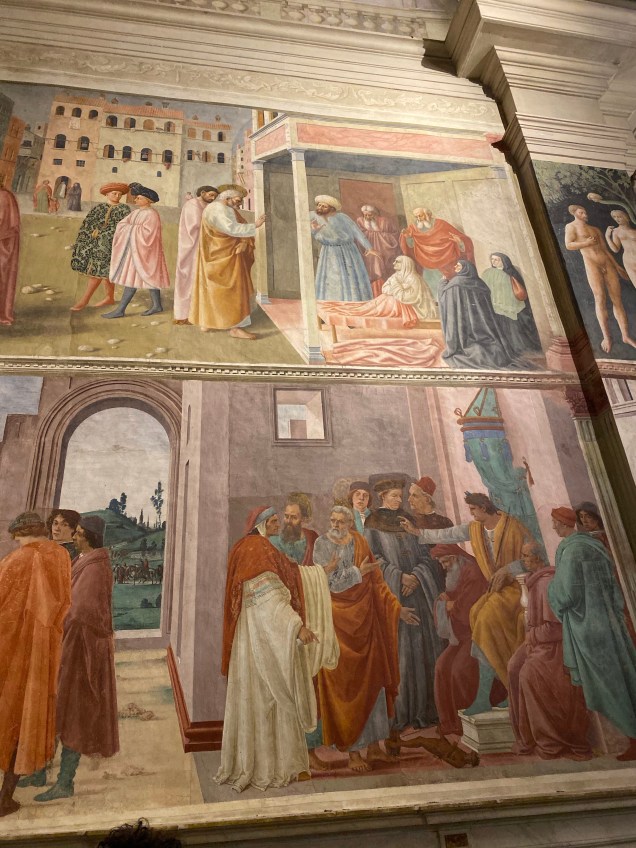
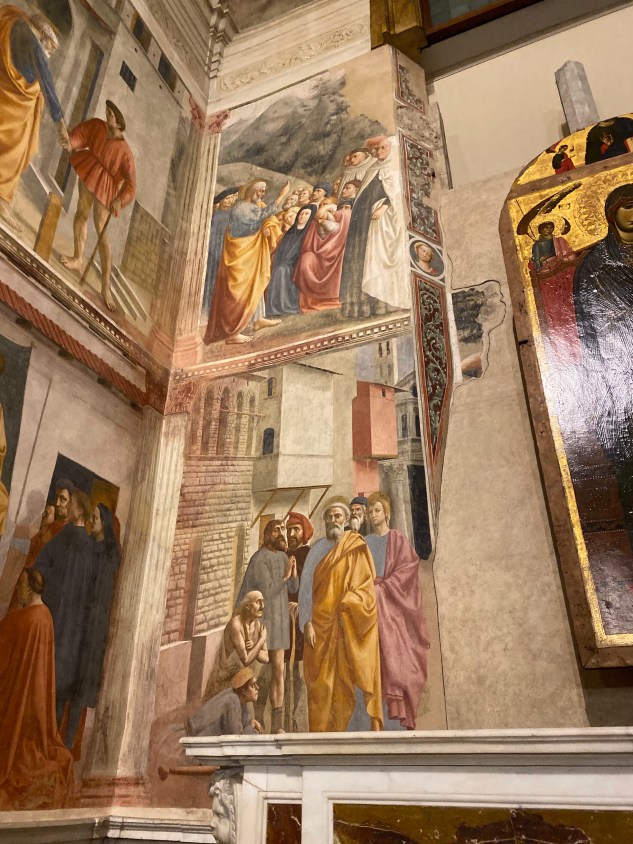
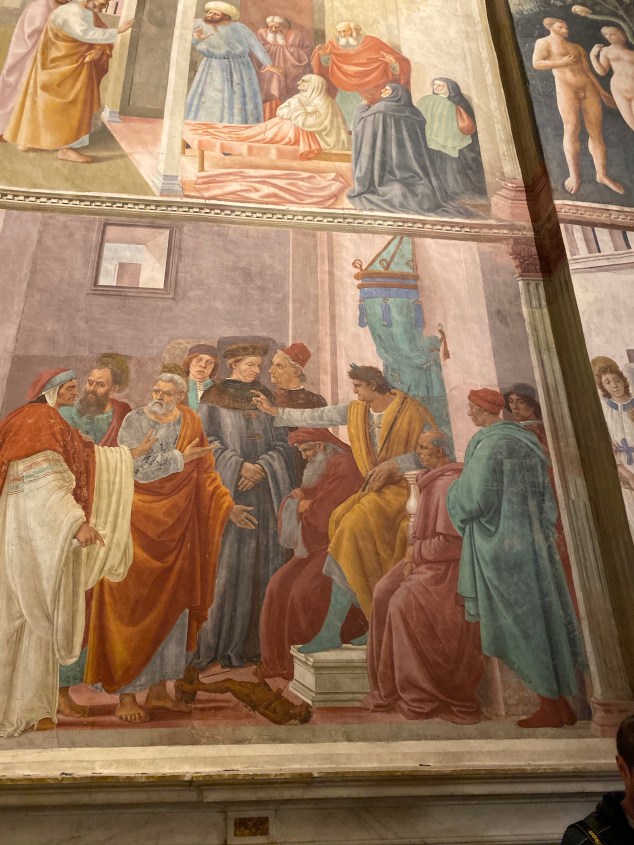
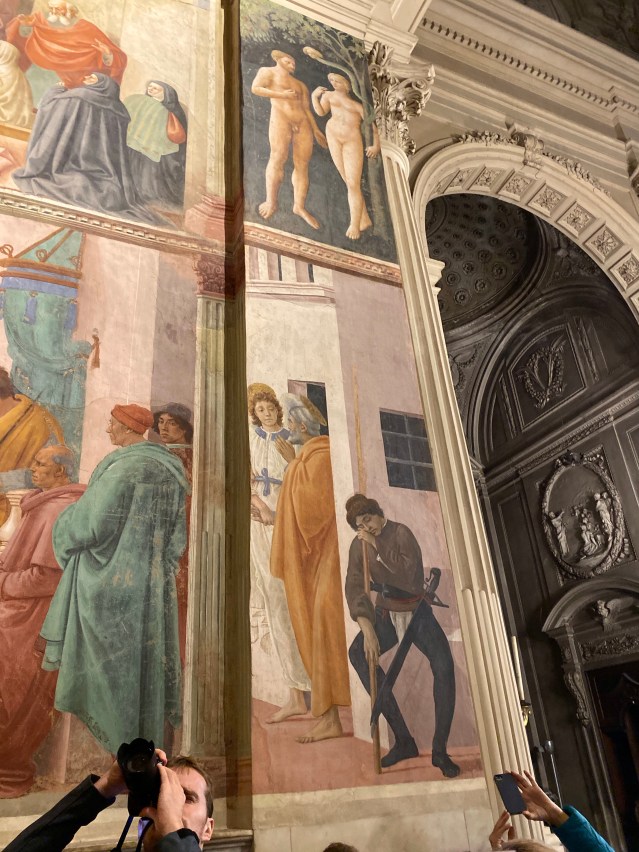
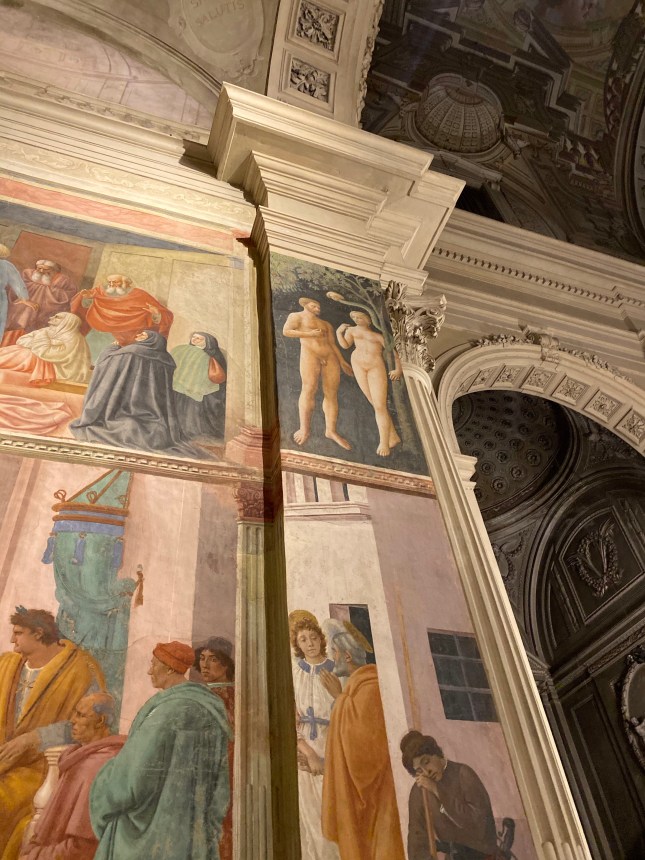
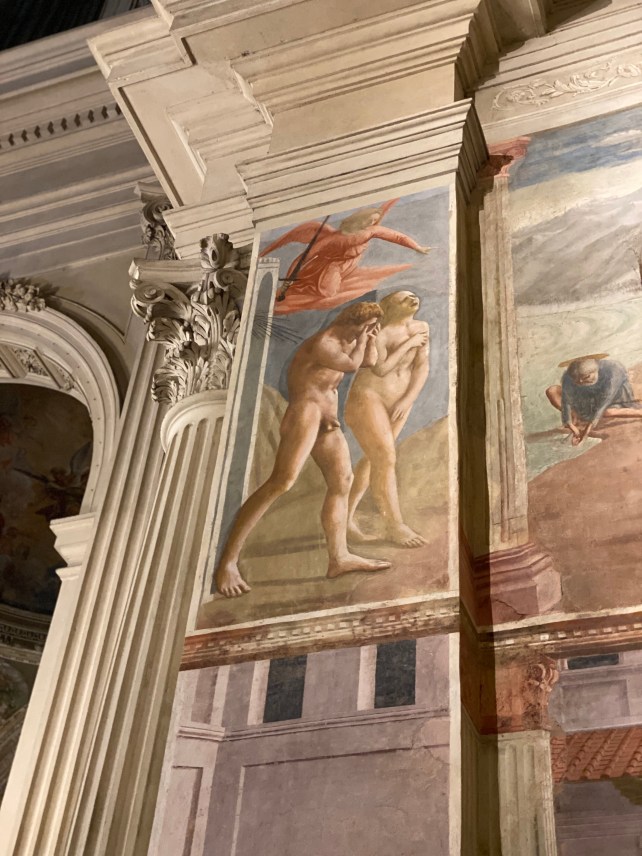
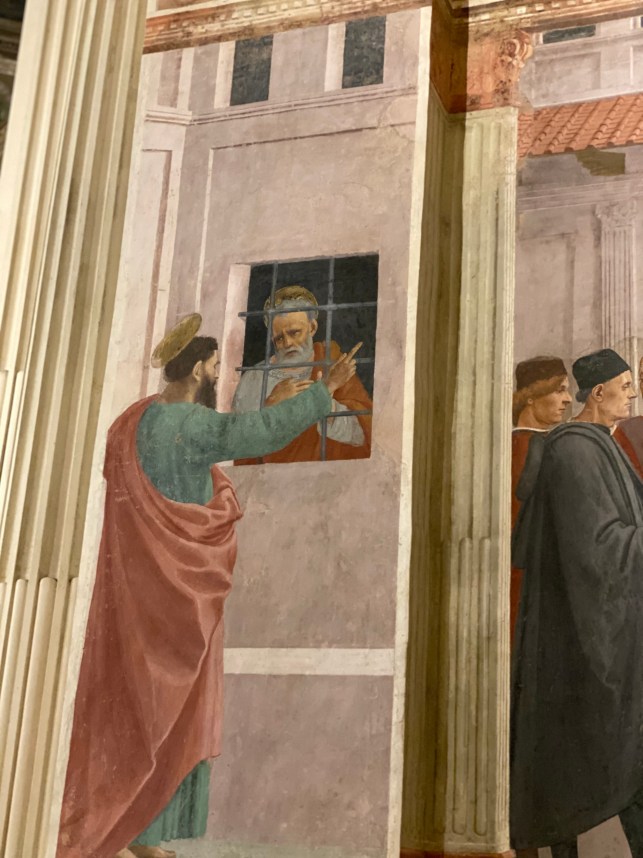
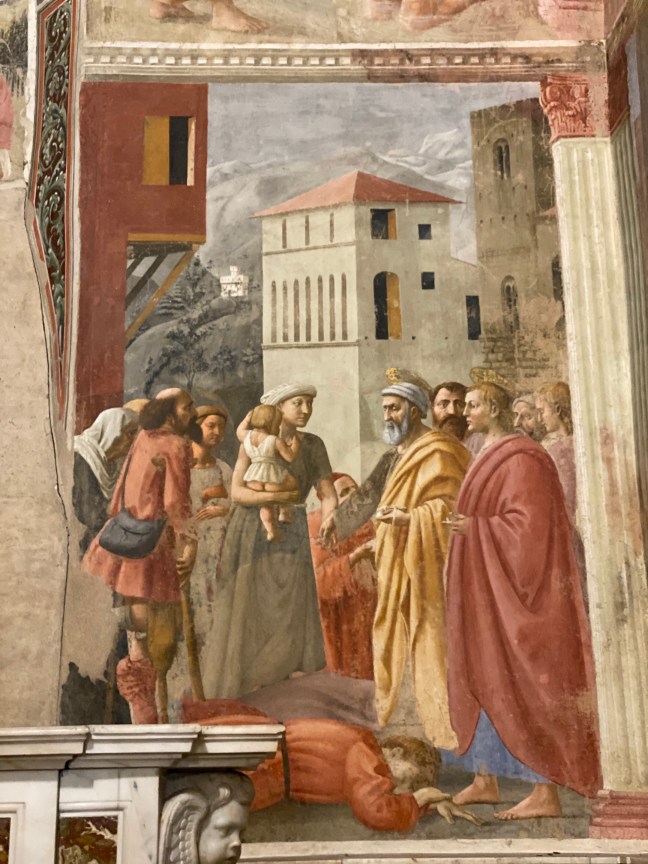
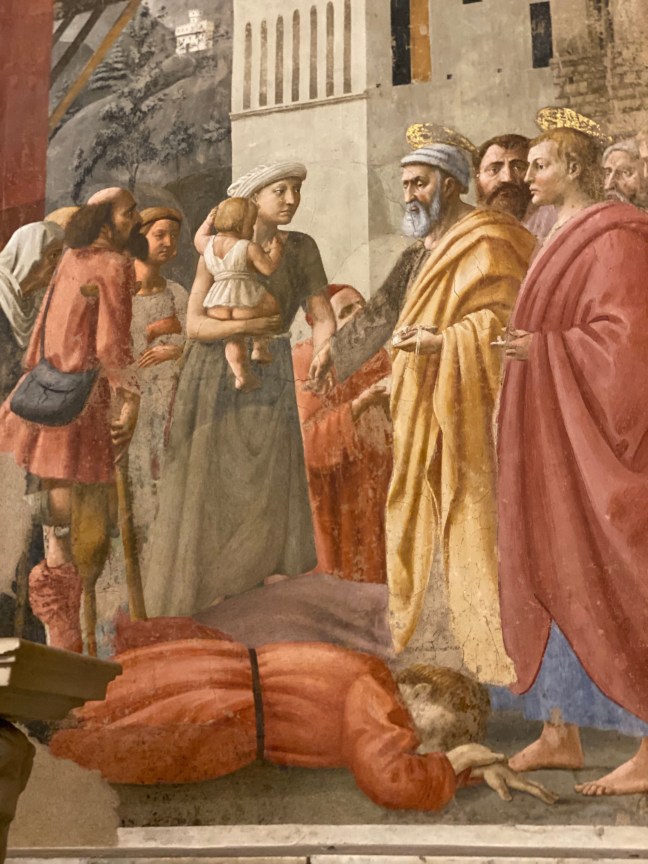
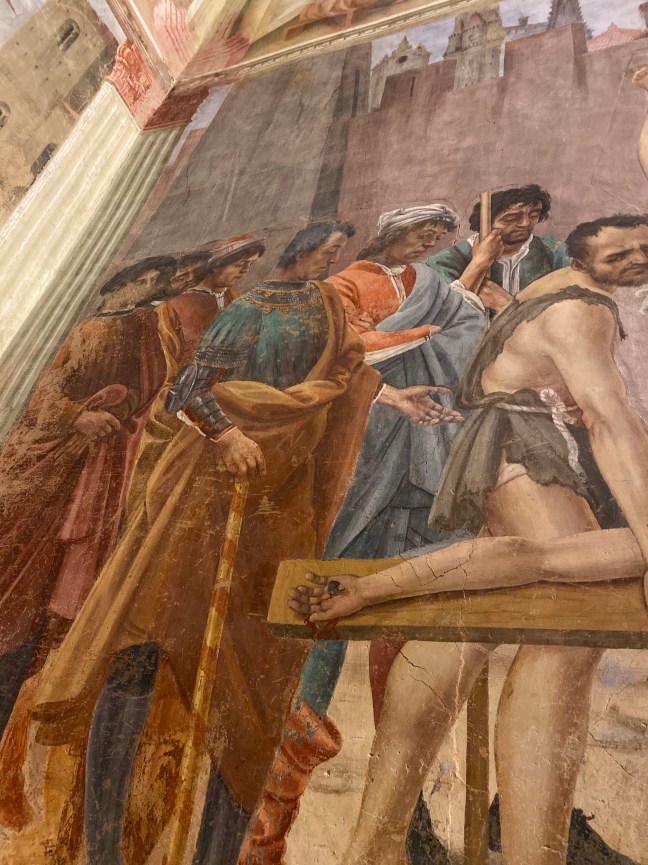
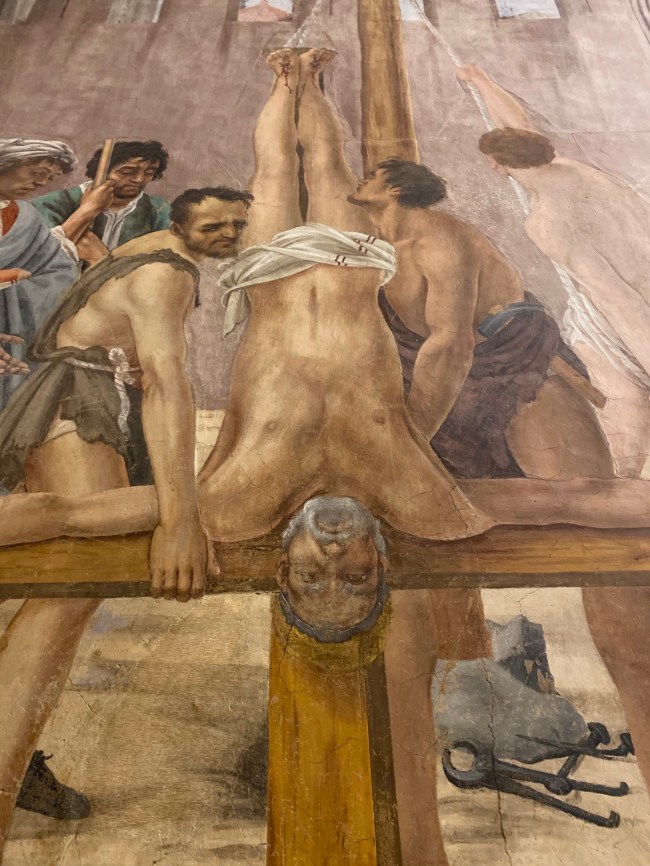
The Brancacci Chapel, Florence
How lovely to stop by and see this old friend for an hour or so on a winter afternoon. Masaccio’s work is always a joy to behold!



You must be logged in to post a comment.