The past is a foreign country; they do things differently there.
L.P. Hartley, British writer
The past is a foreign country; they do things differently there.
L.P. Hartley, British writer
In the grand and stately Florentine church, the Chiesa dei Santi Michele e Gaetano, worshippers are invited to honor the month commemorating the souls in Purgatory. These customs fascinate me.
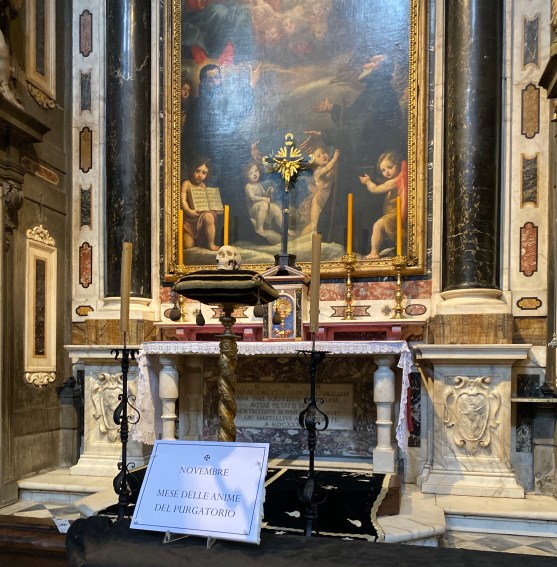

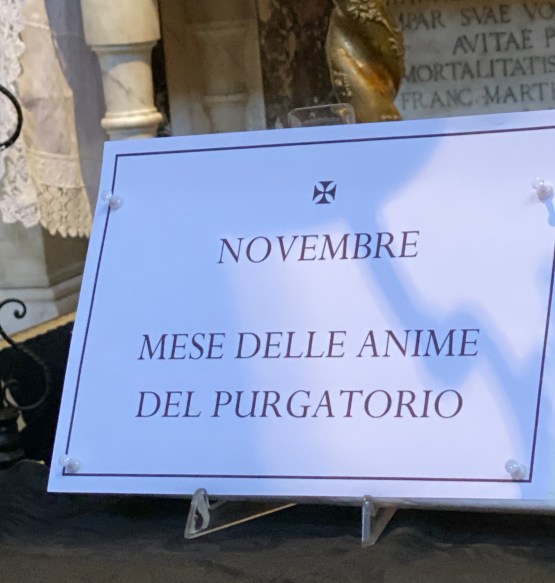
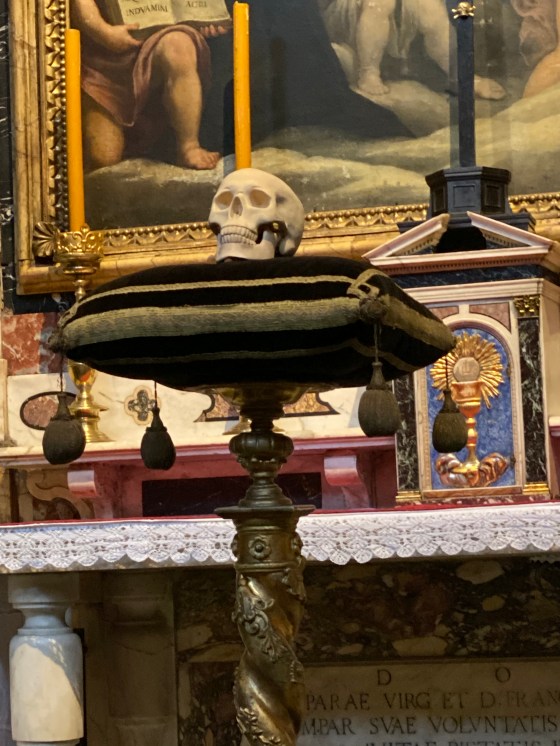

… while wearing your chic boots. Very talented!

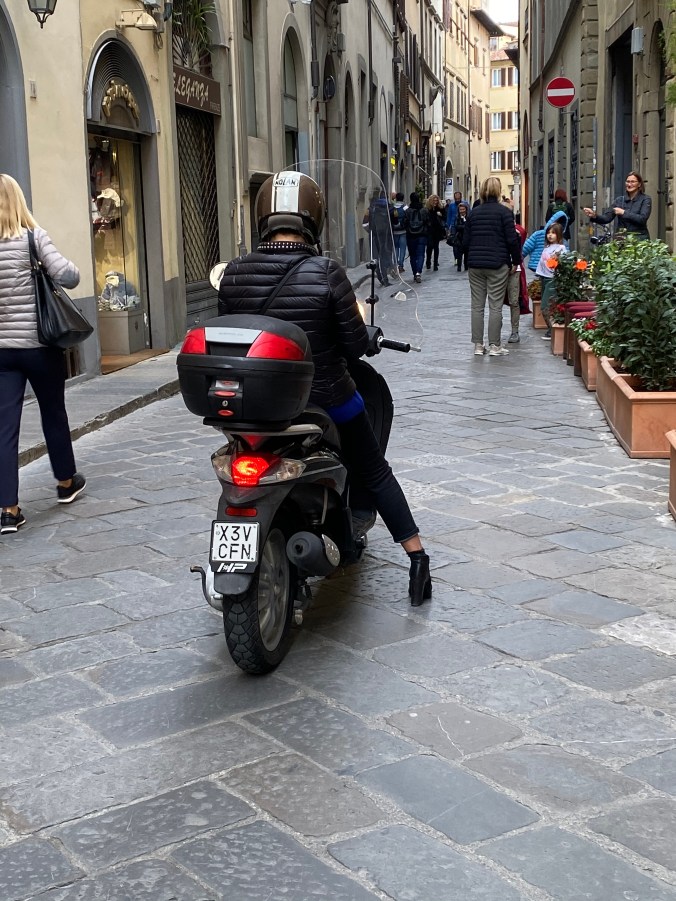
Among the most charming of all customs in Italy is that of the newly minted graduate wearing a laurel wreath, called a corona. You may see these graduates at any time of year; I cannot figure out a rhyme or reason for the miscellaneous dates they appear in the city.
But, they are always happy and it is always a treat to see them!
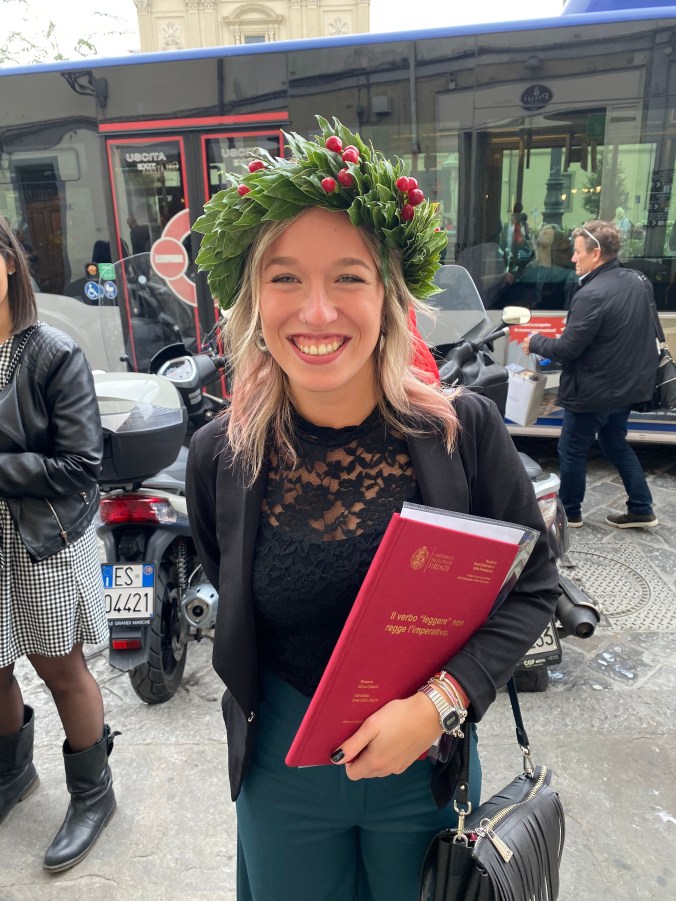
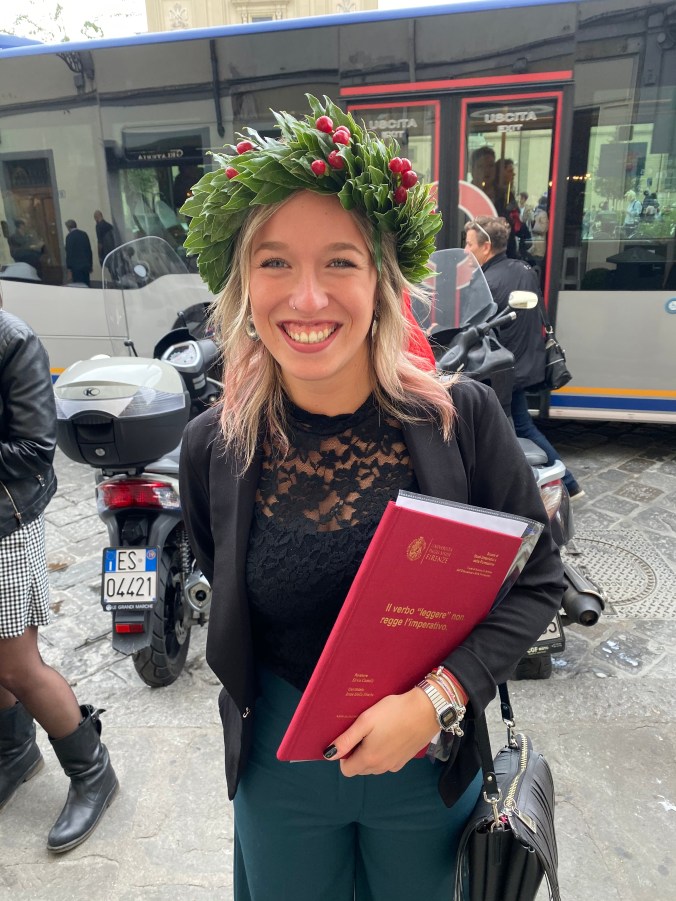
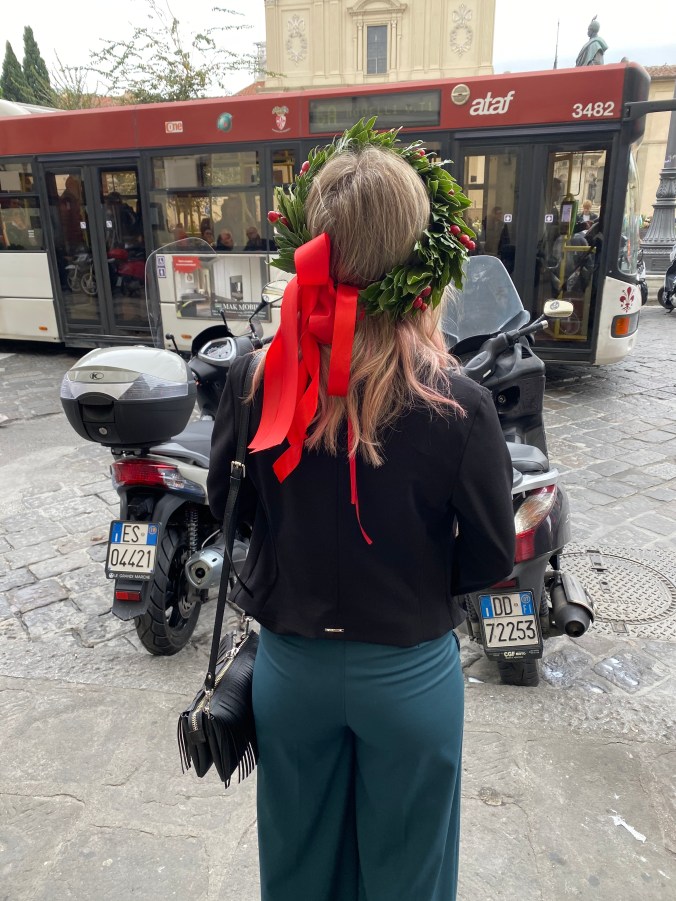
When I was in Padova a month or so ago, I discovered there is a special custom there for graduates as well. It involves costumes and short street performances. I prefer the corone!
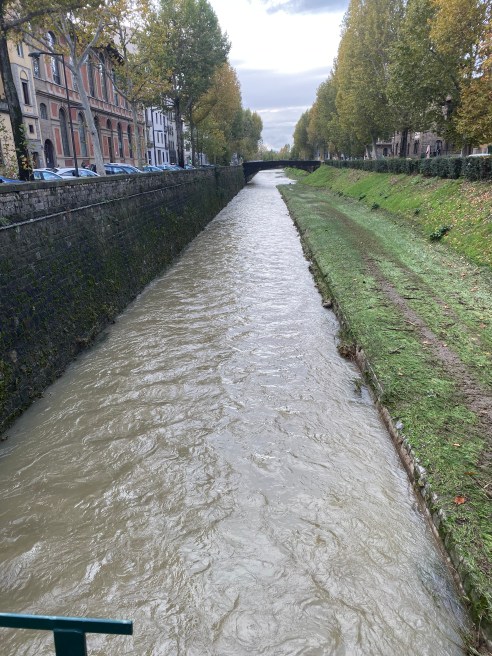
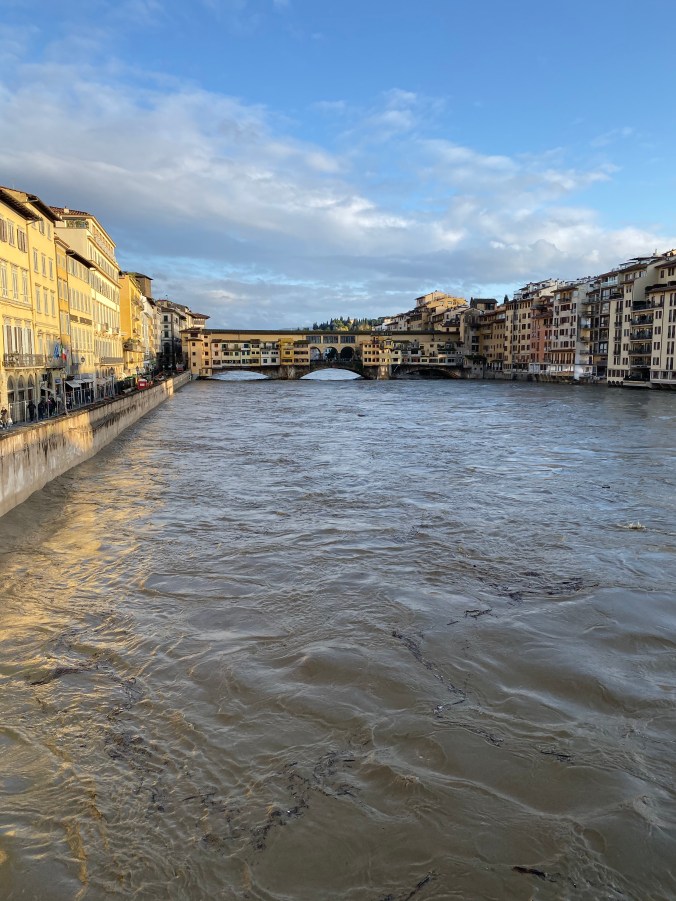
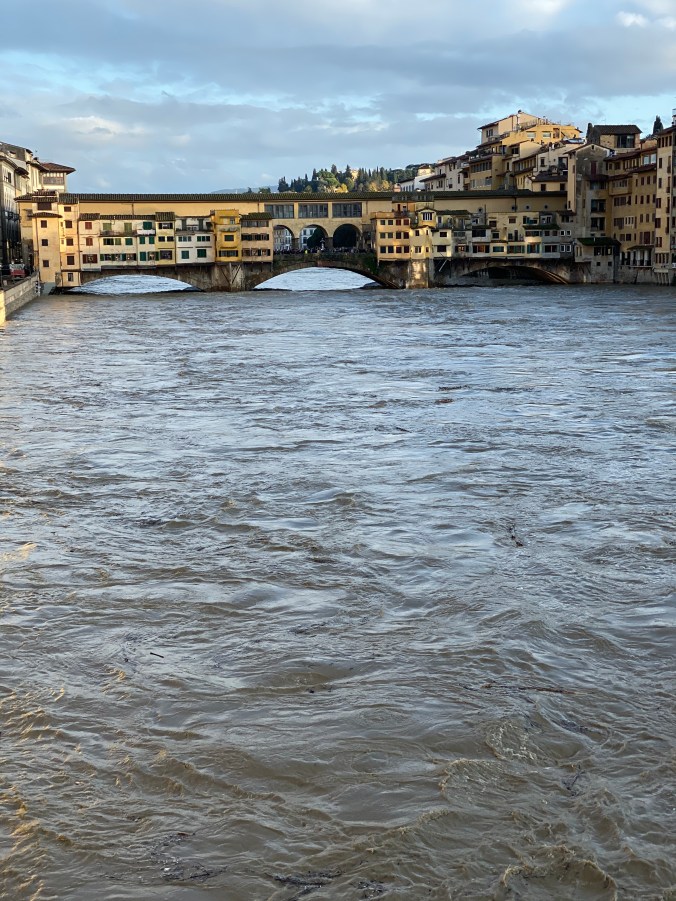
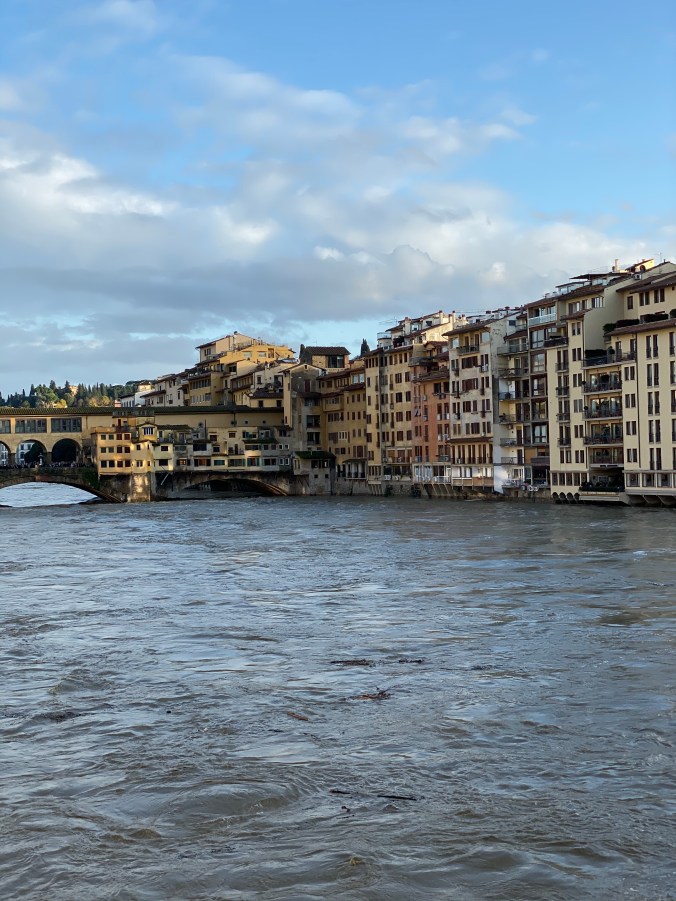
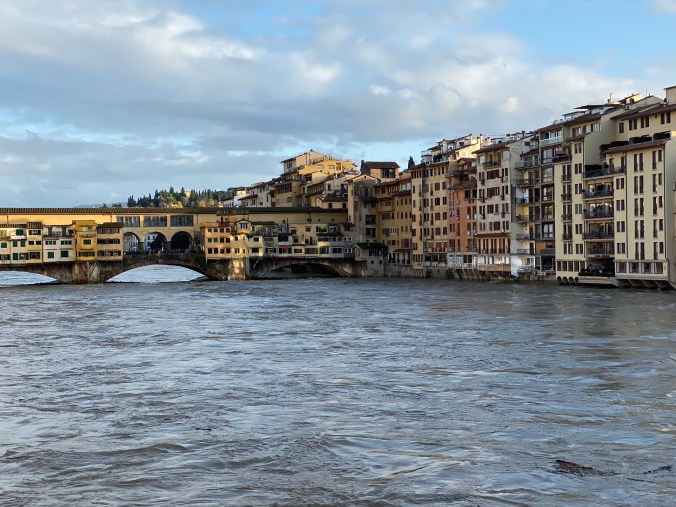
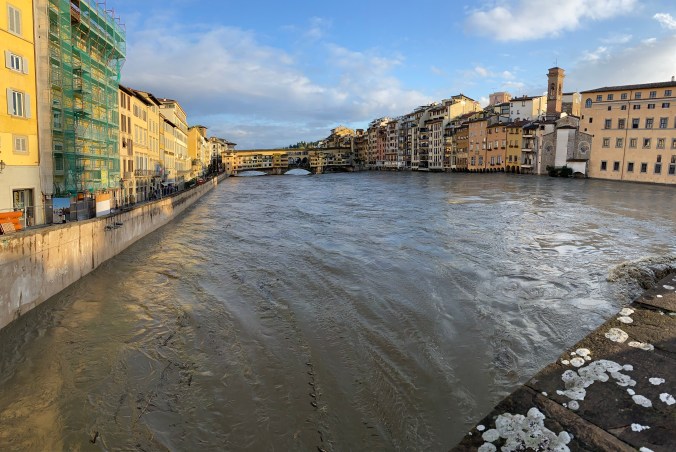
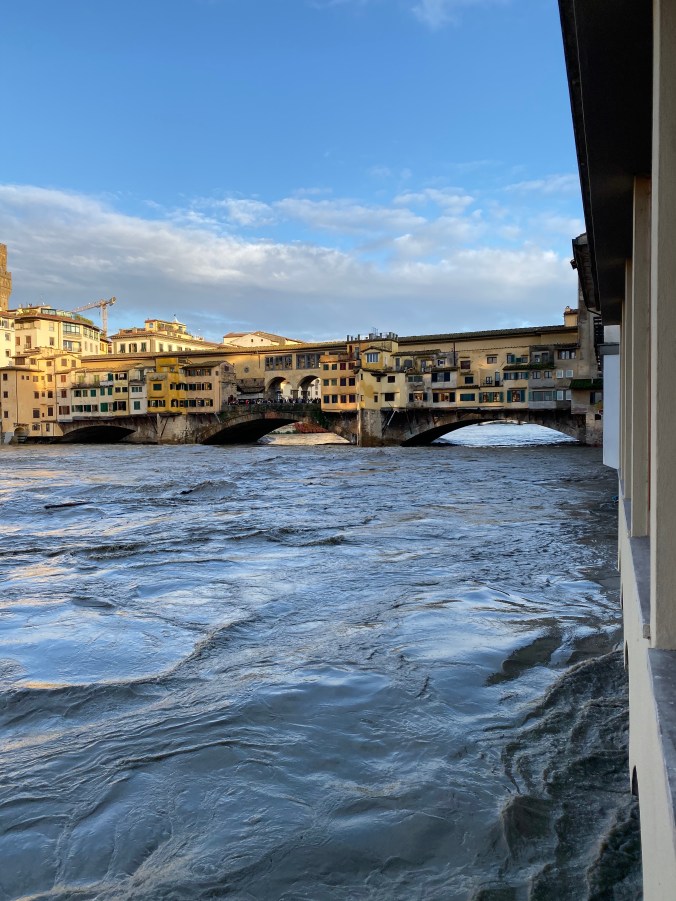
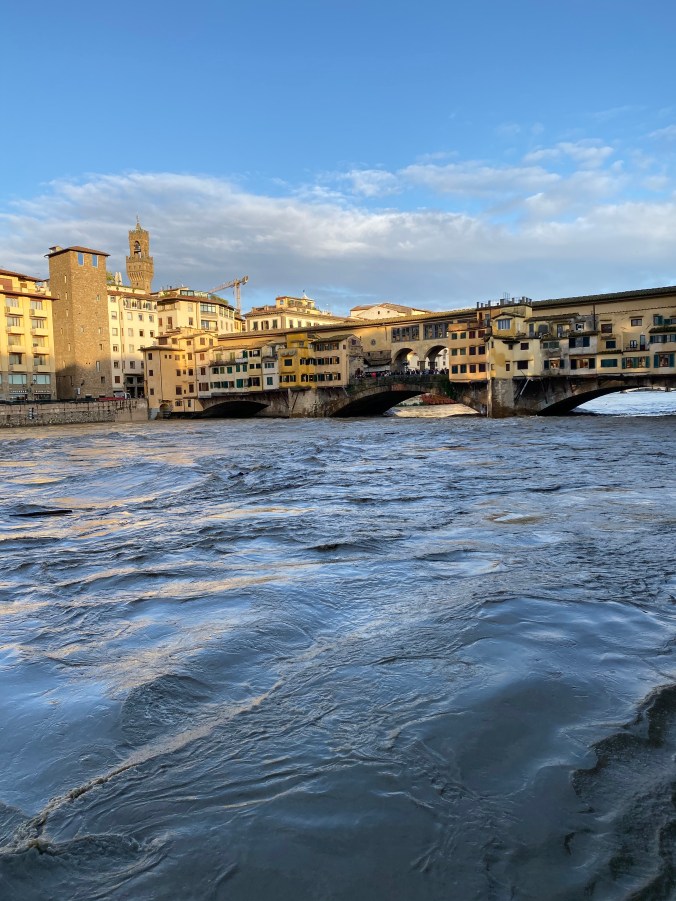
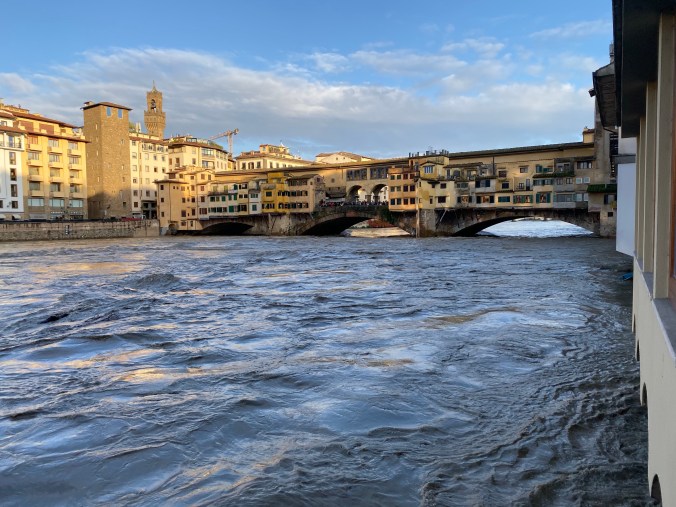
Italy has been getting drenched. Venice is underwater. Florence is soaked and the city’s 2 rivers show the extent. These pictures were all taken this afternoon.
UPDATE: 20 November: https://www.theflorentine.net/news/2019/11/flooding-tuscany-florence/?fbclid=IwAR2hELiei0_Sk_5ukX7cDlNuaAqT_qiViMwFDFZfe5Z2546RgxhqpuDYNEg
First, the torrente Mugnone, which is the little river that runs in front of my apartment. Most of the time it resembles a creek more than a river. But not now! It is higher and running faster than I have ever seen it.
And then there is the Arno! It is very full and moving swiftly. Standing on the Santa Trinita Bridge today, it felt eerie: it makes you think of the 1966 flood.
UPDATE on 18 November:



Today is a great day for all lovers of Monet’s art.
We celebrate the birthday of one of the greatest impressionists in the world.
HAPPY BIRTHDAY, MAESTRO !
14.11.1840 – 05.12.1926

There’s an interesting place in Florence that was, when it was founded in 1828, an extremely bucolic locale.

Today, it stands isolated as an island (Piazzale Donatello) in a ring road system, which is really too bad. Nevertheless, knowing how land development works all over the world, it is a comfort that the place still survives.


The cemetery was founded to provide a solution to a very real problem. Before 1827, non-Catholics who died in Florence had to be buried in Livorno. The cemetery acquired the name ‘English’ because Protestants, most of whom were English, had to be buried outside the medieval city walls.


The English Cemetery was officially closed in 1877, when the medieval walls of Florence came down, making burials within the city boundary illegal, and for a century and a quarter the mini-necropolis remained locked and neglected.
Fortunately, Julia Bolton Holloway, a literary scholar specialising in the works of Elizabeth Barrett Browning – whose Penguin Classic Anthology she co-edited – took on responsibility for the cemetery. It was reopened to the public in 2003 for the reception of ashes but not bodies, and Holloway is actively raising restoration funds.
Ted Jones, wrote the following in his book, Florence and Tuscany: A Literary Guide for Travellers:
When I called, she [Julia Bolton Holloway] was re-lettering a gravestone, and she has set up a number of charitable institutions to ensure its future maintenance. Today, with the gardens replanted and well-maintained and the memorials inscribed and re-erected, it is a pleasure to visit, and well worth the slalom through the traffic – safe in the knowledge that if you don’t make it to the cemetery, there is a hospital next door.
If you’ve been to Florence, you know how the hordes of tourists can dampen the spirit of art appreciation. Think of the Uffizi and you know what I mean.
But, there are several places in Florence where you can view Renaissance art up close and personal and rarely have another soul in the room with you.
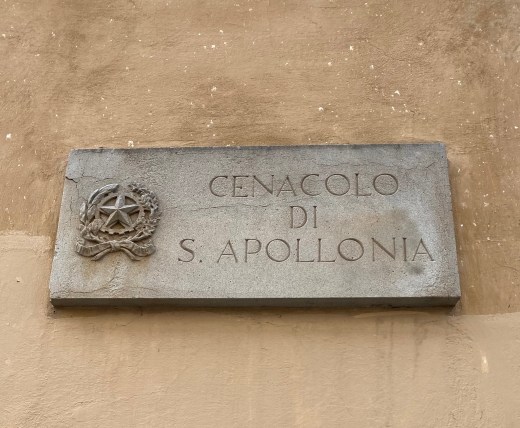
One of the most amazing of these places is housed within this entrance:

I mean, really, would you even know there was anything at all inside, let alone a masterpiece?
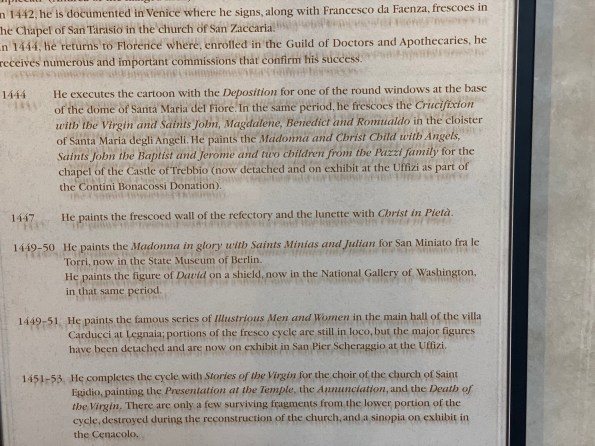
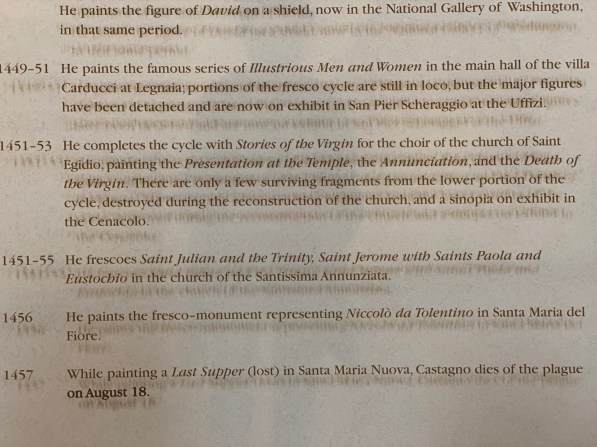
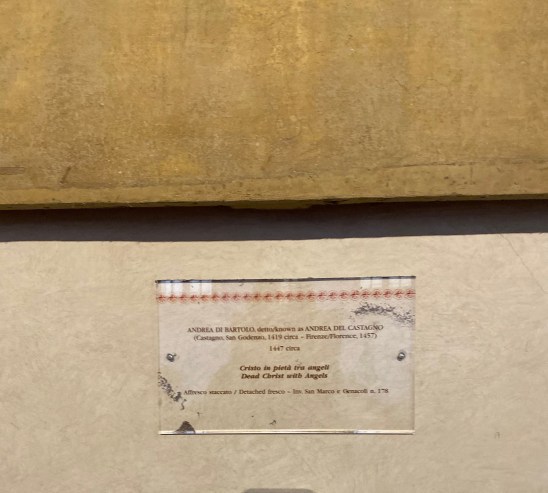
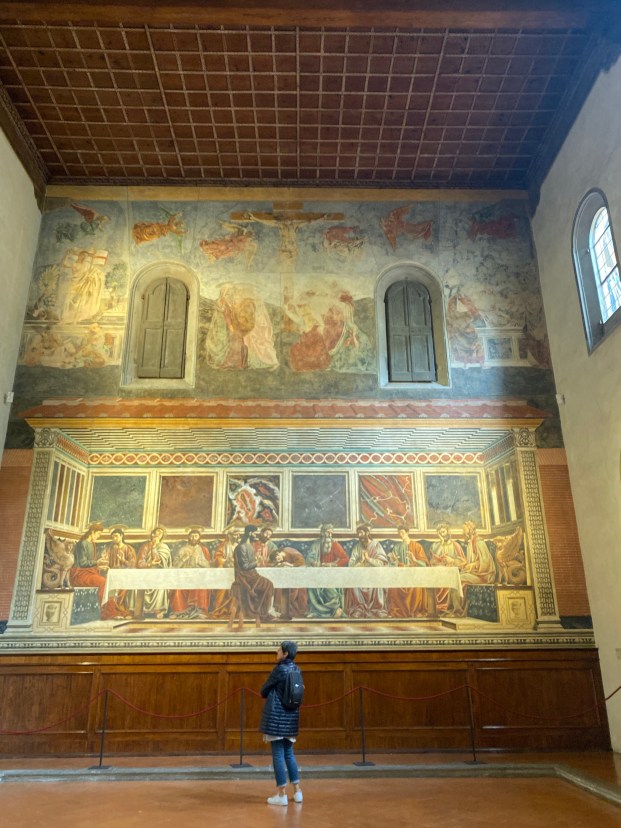
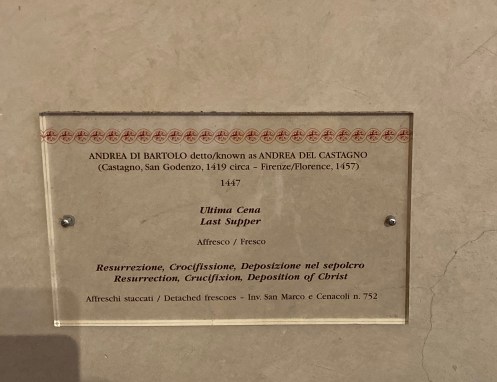
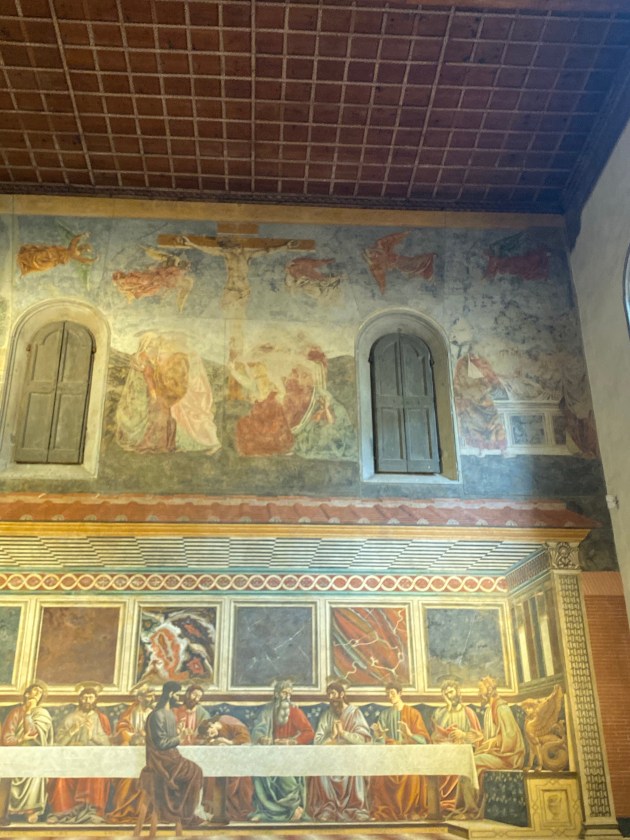
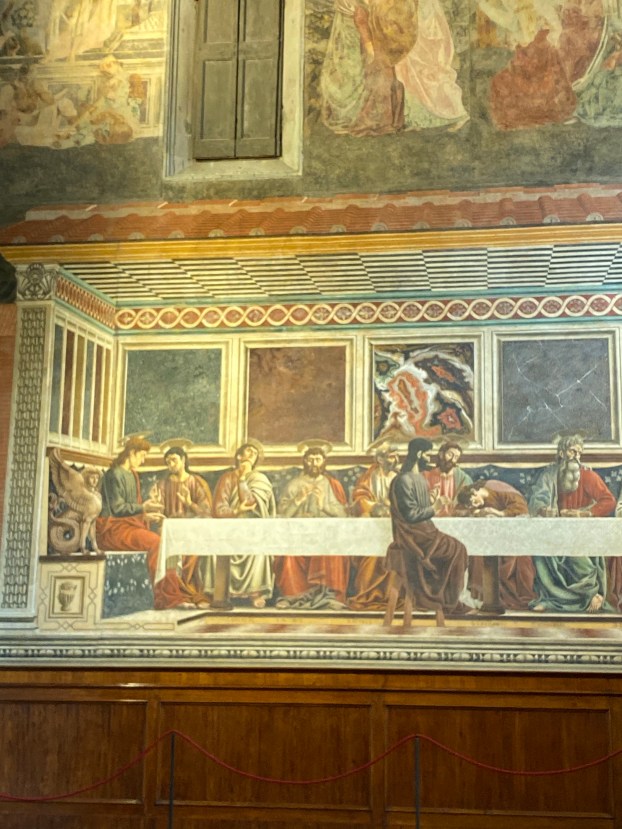
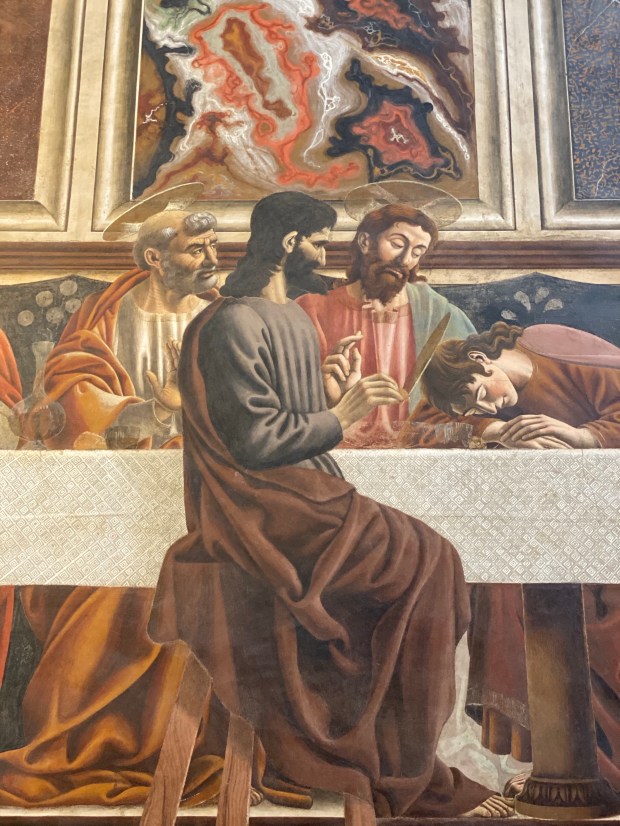
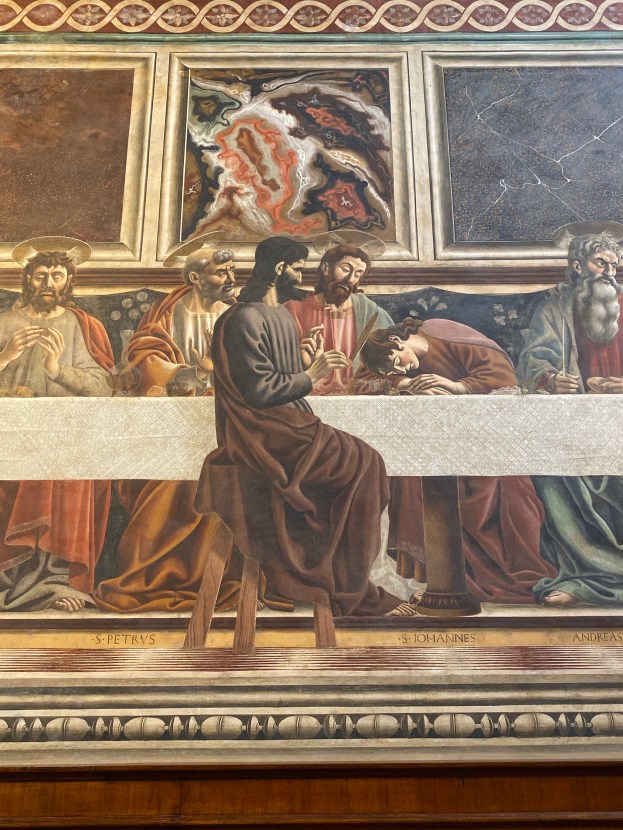
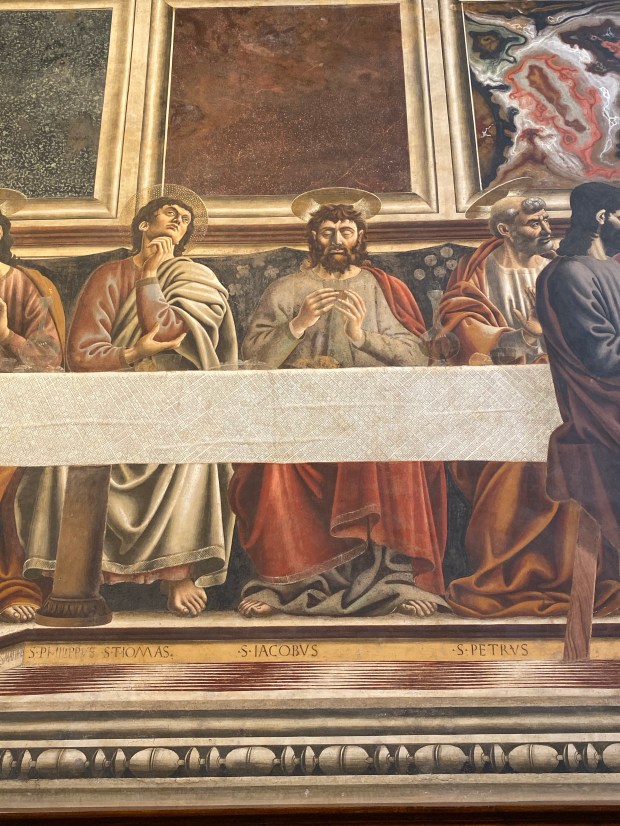
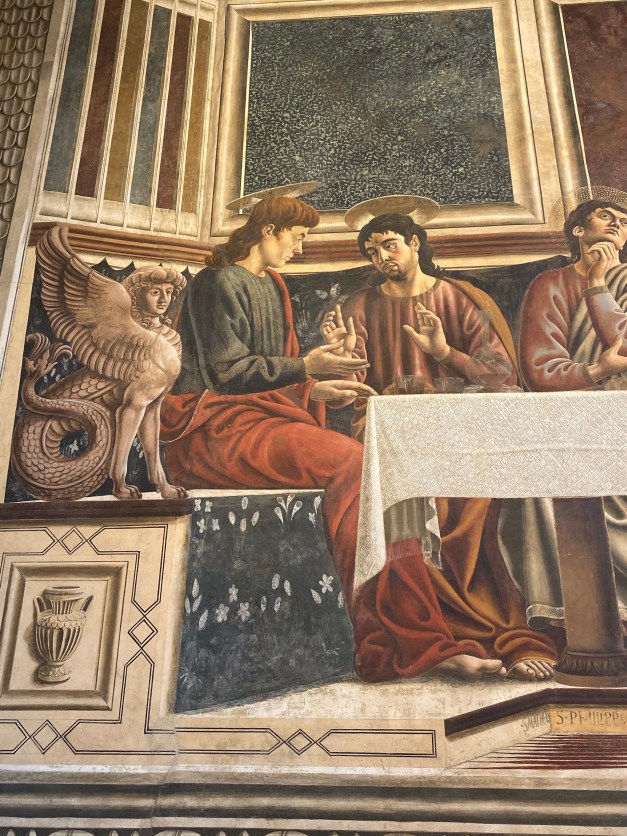
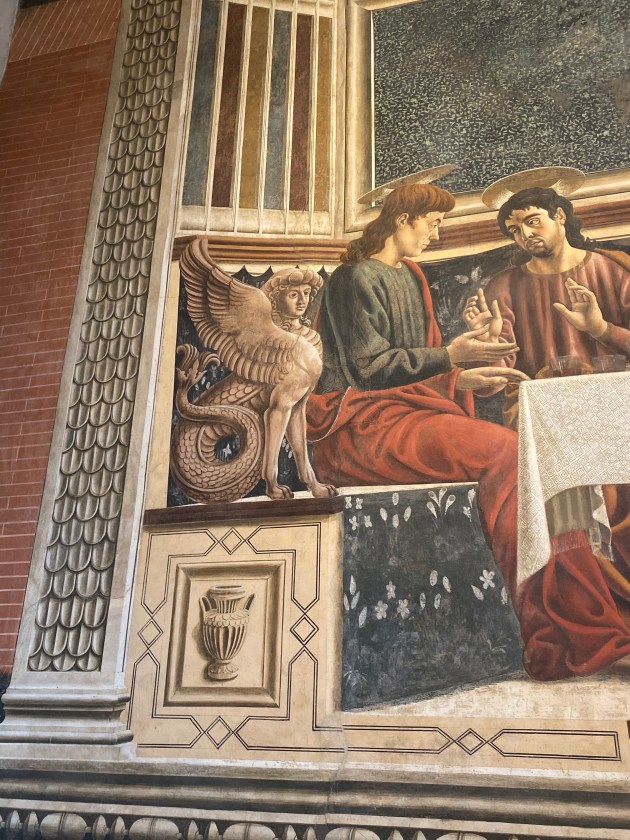
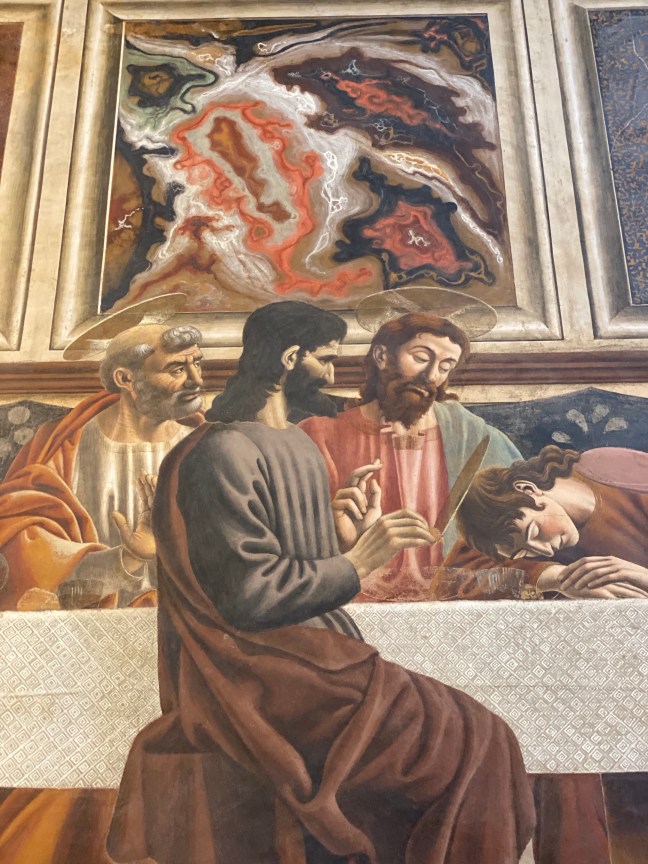
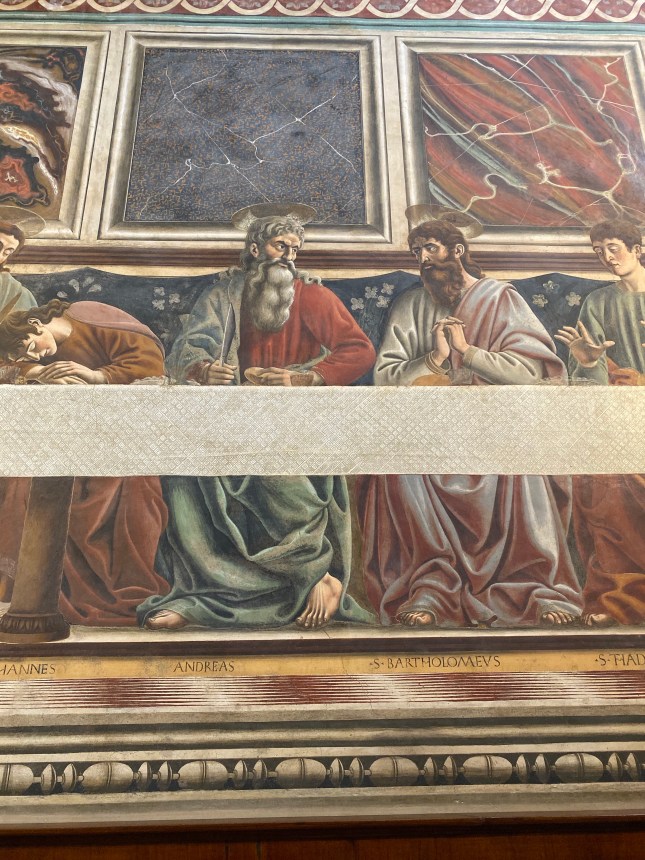
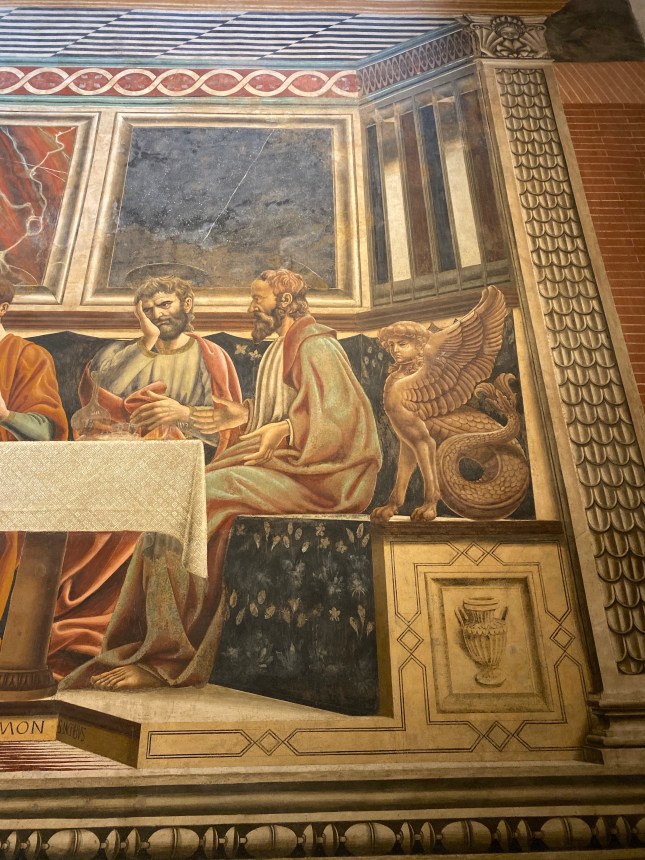
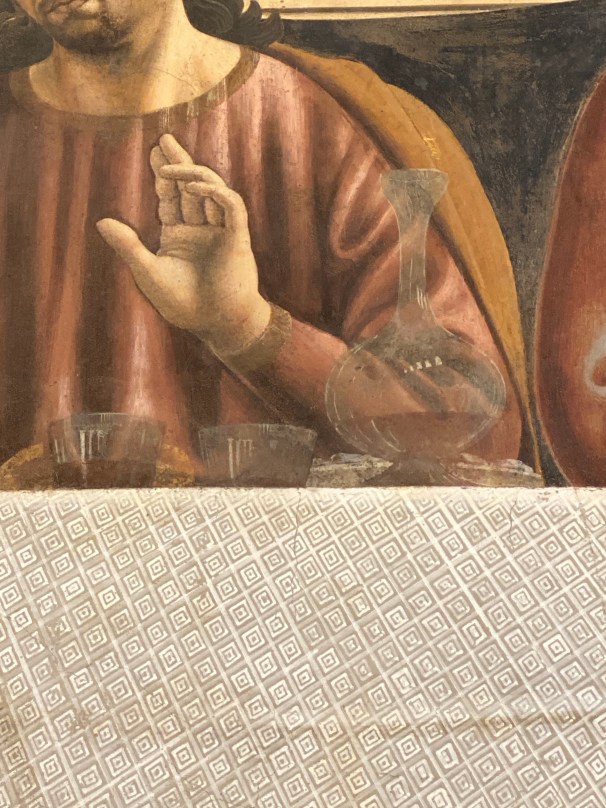
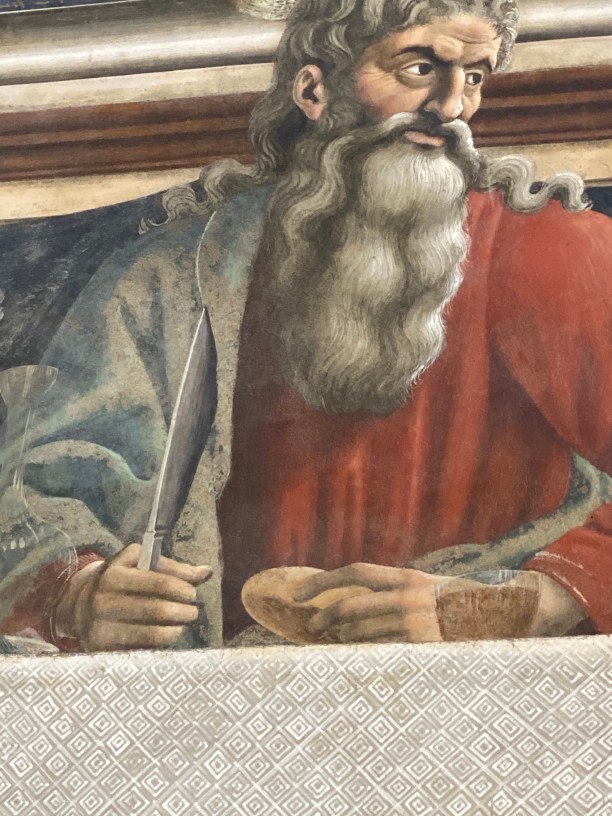
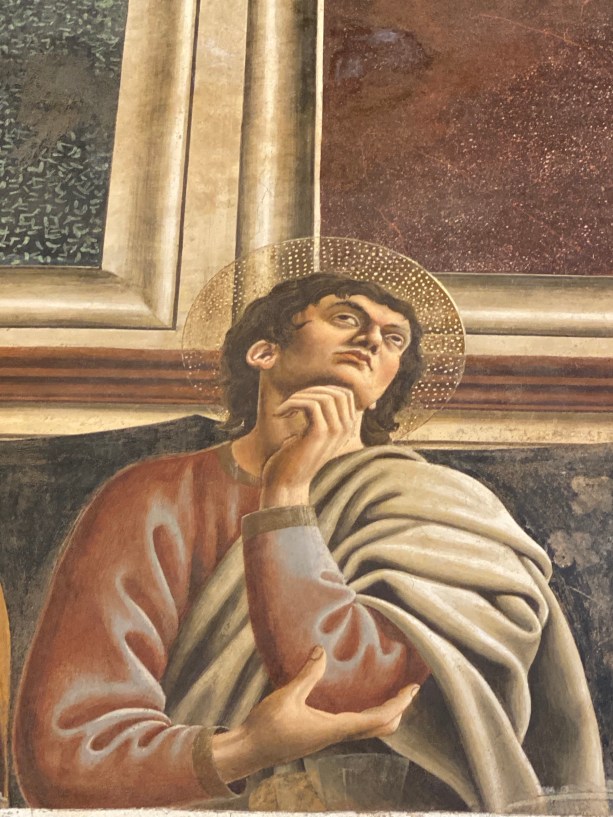
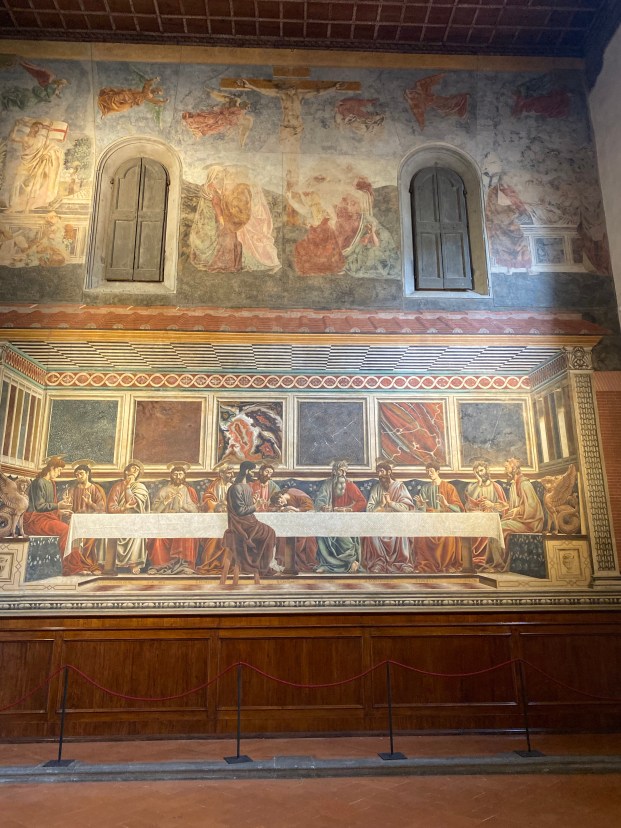
There are no lines at this former convent and no crowds. Few people even know to ring the bell at the nondescript door. What they’re missing is an entire wall covered with the vibrant colors of Andrea del Castagno‘s masterful Last Supper (c. 1450).
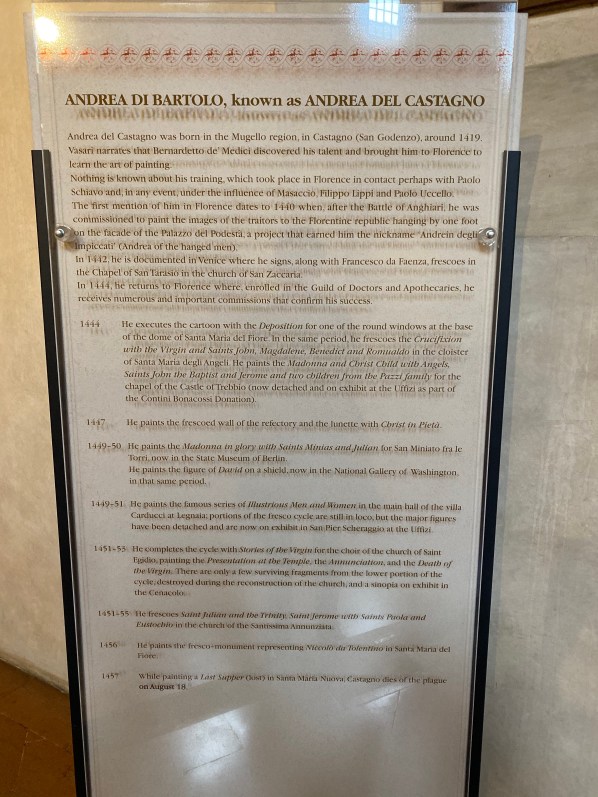
The end wall of the large refectory was decorated with frescoes, although these were never known to the outside world since the nuns were strictly cloistered. It was only with the suppression of the convent in 1860 that the existence of this masterful fresco of the Last Supper was revealed. Interestingly, it was initially attributed to Paolo Uccello, but then finally to the true painter, Andrea del Castagno (1421-1457).
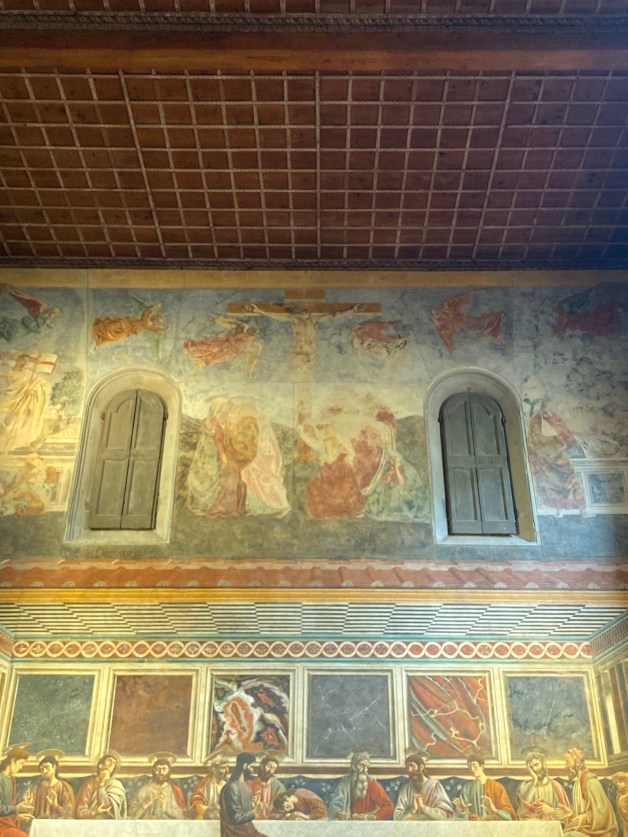
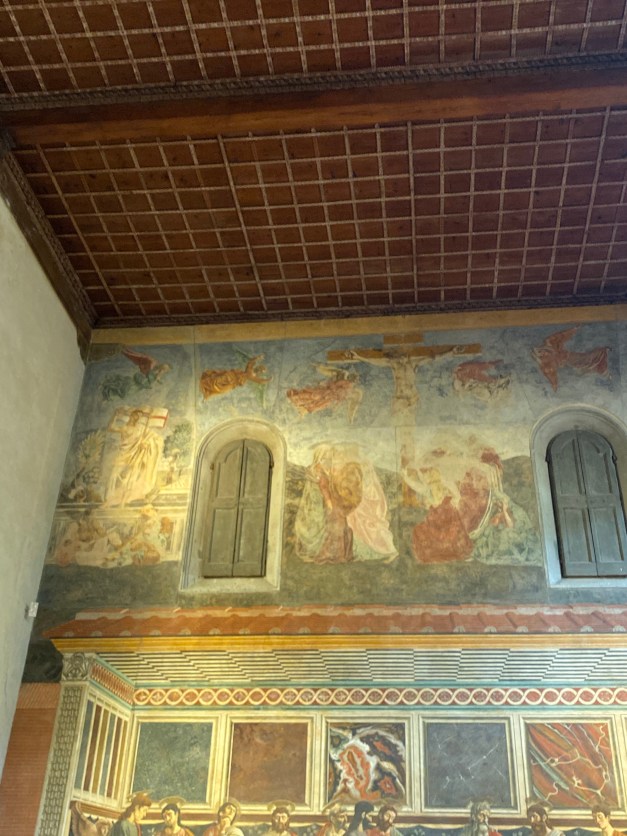
Castagno created a richly colored composition, filled with interesting details. For one, the deeply colored “marble” panels fill the middle-ground register and the depiction of black and white ceiling tiles follow a strict linear perspective system. The long white tablecloth sets off only one figure: the darkly hued figure of Judas the Betrayer, whose face is painted to resemble a satyr, an ancient symbol of evil.
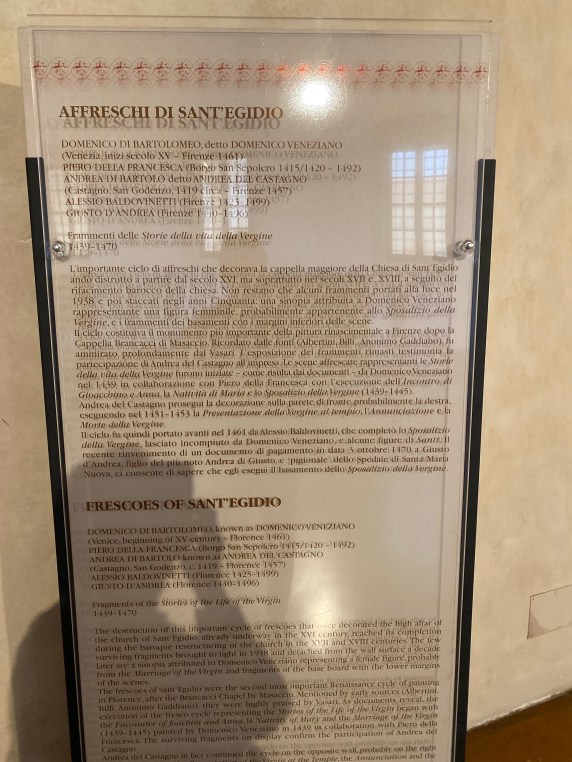
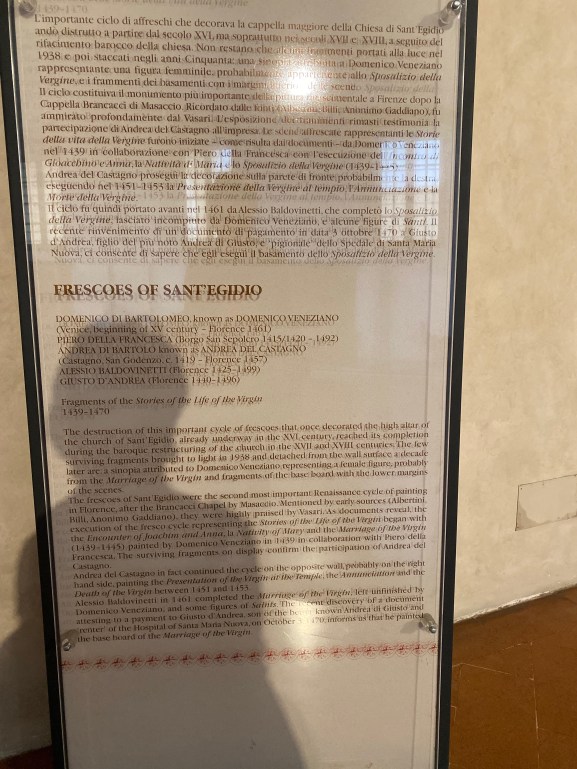
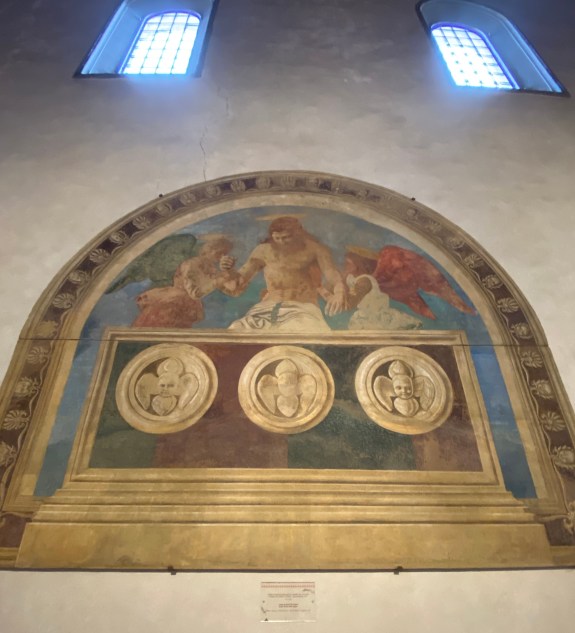
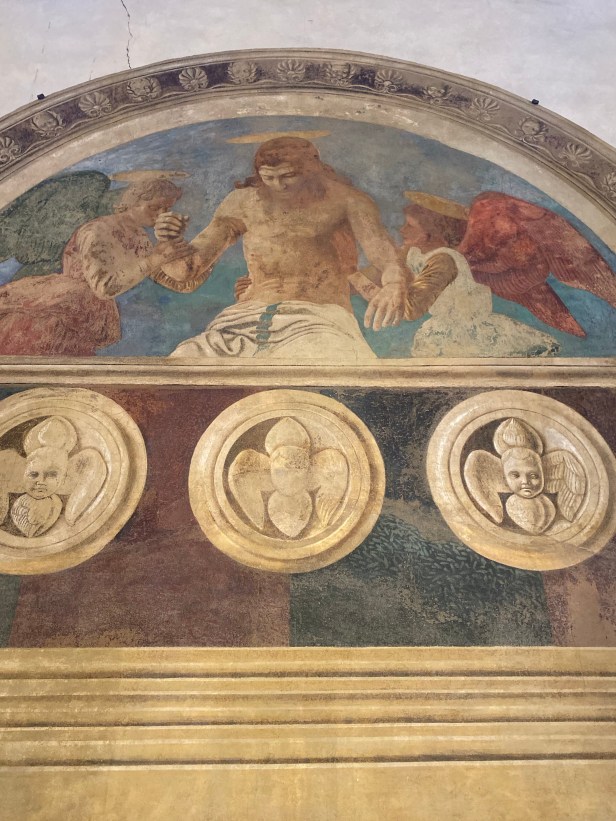
Another three frescoes were discovered above this one in the 1950s. Three scenes are represented: the Resurrection, the Crucifixion, and the Entombment of Christ. At the time of the restoration in 1952, the three frescoes were removed to be preserved, thus revealing the splendid sinopie that were painted over.
So, here’s the single sign that tells the observant visitor that something wonderful is kept within this sober facade.

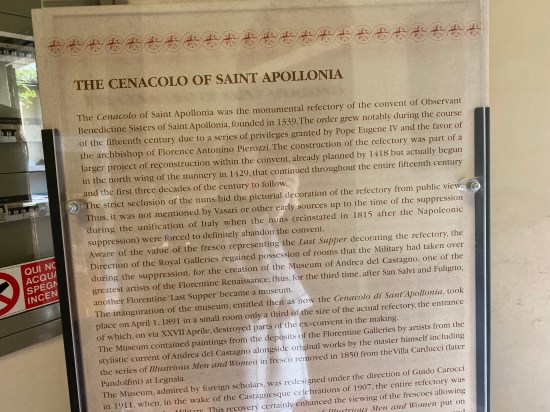
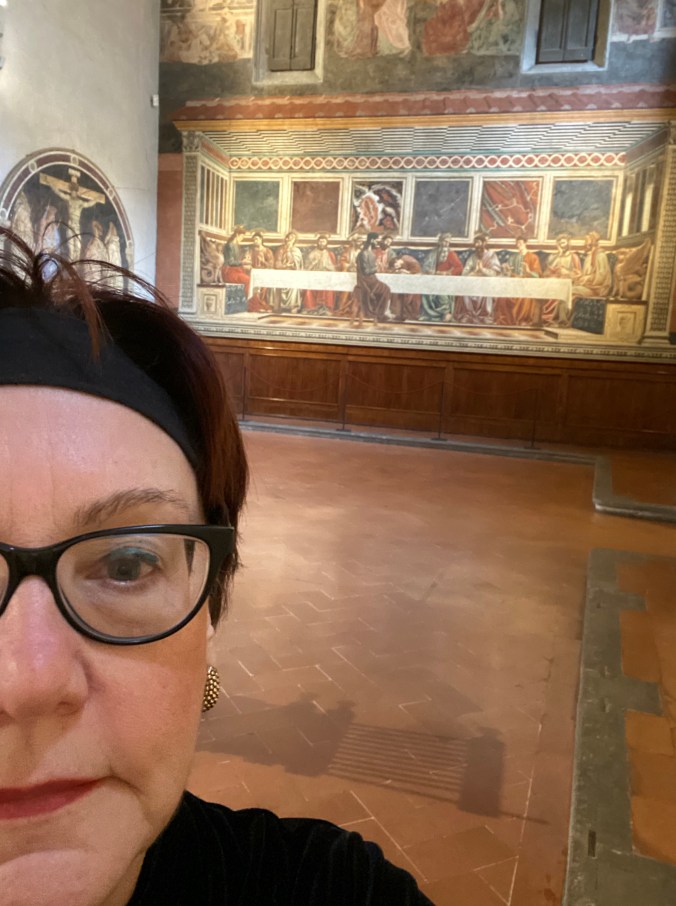
Here is the experience of the refectory:
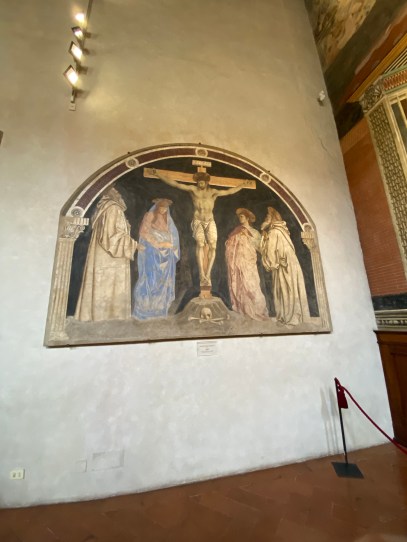
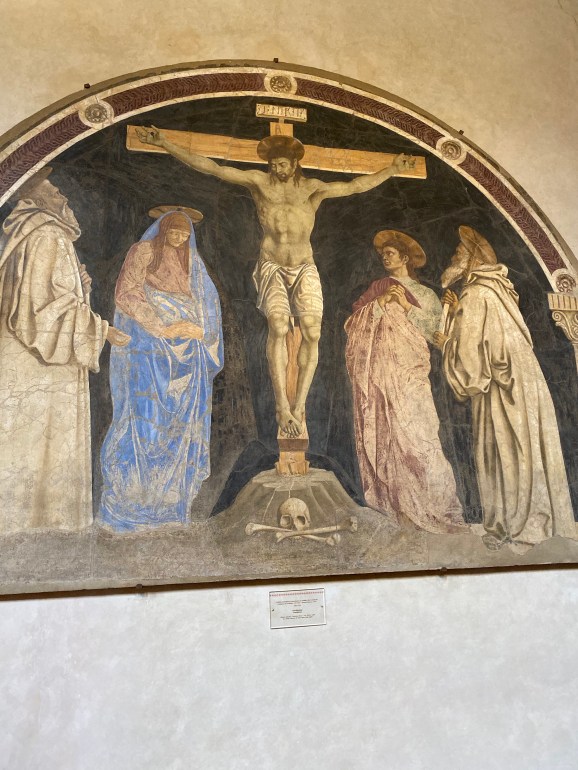
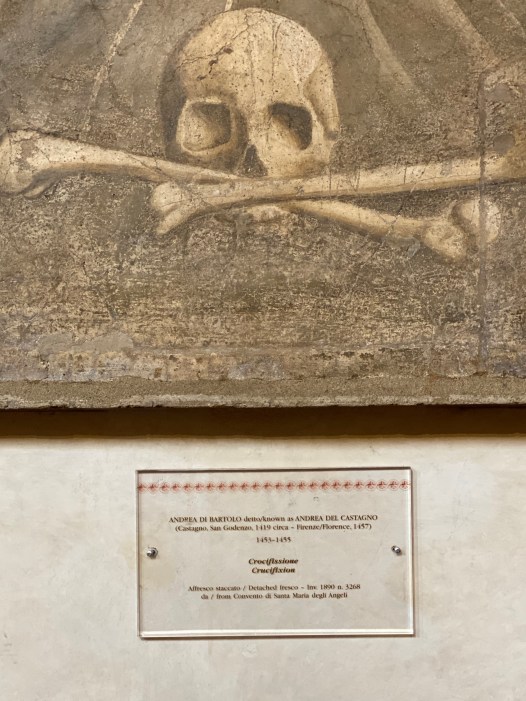
Some introductory information about the artist:














You must be logged in to post a comment.