A 20th century palazzo in Florence, designed to look like a Renaissance palace

Warning: before reading this post, please find a comfortable seat in a quiet place and a hot beverage. You are going to need some time and focus to take in all the details! Don’t say I didn’t warn you!

I’m setting up housekeeping in my new apartment in Florence and it takes a lot of trips to the local grocery and hardware stores. I like to go down new streets once in a while as I’m beating my way to a negozio, and I am usually rewarded with something truly interesting.

Recently I walked by this palazzo with its very attractive signage over a main door. I recognized it immediately as a former butcher shop and was amazed by the magnificence of the edifice that housed what I think of as a fairly pedestrian business. I stepped across the street to take in the full view and was really impressed. Clearly, this was a very lucrative trade for the person/family that commissioned this building.

In the photo below we see the elaborate sign that proclaims “butcher shop” and in case there was any question, the products are specifically named on either side of the door. We have agnello (lamb), suino (pork), vitella (veal) and pollame (poultry).

Also, check out the elegant door.

The street number of 35 is given above both groups of meat types in an elaborate art nouveau (in Italy the style is known as Liberty) script. Have you ever seen prettier numbers? I haven’t.

Below, to increase the feeling of antiquity in the building, we see the metal objects attached to traditional Italian palazzi. Some of it was to hold torches. Some of it was to tie horses to. I know that when this building was built, neither use was needed. Still, the metal is created and attached in the traditional way, to give a sense of of antiquity to this actually modern structure.

On the right end of the building, as seen below, is a tower detail, and even though it isn’t much taller than the rest of the palazzo, it makes a reference back to the heyday of Florentine commerce and wealth, which fell in the 11th and 12th centuries. At that time many Florentine towns and cities were filled with tower houses. If you’d like to know more about these tall structures, here’s a great source: https://www.feelflorence.it/en/node/16855. Florence used to be full of really tall towers but most were razed. It’s a quick trip to San Gimignano in Tuscany where you can still see a town filled with Medieval towers if you want to get a sense what a medieval town was like.

Between the first and second windows from the bottom up on the “tower” is a frieze in sgraffito. This refers to an artistic or decorative technique of scratching through a coating on a hard surface to reveal parts of another underlying coating which is in a contrasting color. It is produced on walls by applying layers of plaster tinted in contrasting colors to a moistened surface. Sgraffito on walls has been used in Europe since classical times. It was popularized in Italy in the 15th and 16th centuries (see Wikipedia for more). So, now our “historical” tower makes reference not only to the 12th century, but also the Renaissance era as well! What a mighty tower!

.

The pastoral scene depicted in the frieze is totally appropriate to a Florentine citizen. With Cosimo de’ Medici the Elder as our reference, wealthy Florentines often/usually had country estates as well as city houses (palazzi), and would go to the country to escape the heat of the Florentine summer as well as the oft-recurring plagues. Likewise, the country provided the harried businessman with farming activities to act as a therapy and ease the mind. Cosimo liked to tend his grape vines for just that reason.

In the frieze we see on the left the matriarch of the family (this is all my supposition) with one of her children. We can only guess that she is as fertile as the farm itself and has many offspring. Sitting in a gladed forest, the wife and her daughter seem to be playing with the family dog. To the right of them stand two healthy Chianina breed steers which are pulling the two wheeled carrozzo, into which workers (could it include the man of the house? I think so because if the two men loading the cart were farmworkers I don’t think the woman and her daughter would be freely sitting near them. It just wouldn’t have happened) are dumping baskets of grapes.

One of the steers seems to look at the mother and daughter and the other looks backwards to the activity behind. Next, an additional worker is cutting the grapes clusters from the overhead vines in the annual rite of passage known as the vendemmia, or grape harvest. The worker to his left seems to have begun the pressing of the grapes with a long paddle. Further to the right and only halfway depicted in the frieze is another lady who reaches to pluck a ripe grape. Who can resist the sweetness of a ripe grape in summertime? I know I can’t and being near the ripe plants loaded with clusters doing the heat of August and September is positively intoxicating. You really don’t even need the wine!

Because this is an Italian home, one needs to add a religious image to make the ensemble complete. In a nod again to the Renaissance, the patron of this building program selected a ceramic relief panel gracefully depicted the Virgin Mary and Christchild. They are attended by 2 cherubim, who provide the figures with some implied heavenly protection. But, beyond the usual subject matter, this work of art makes another reference to the Florentine past: Luca della Robbia (1400-82) was a sculptor from Florence and is noted for his colorful, tin-glazed terracotta statuary, a technique that he invented and passed on.

Now moving to the left side of the palazzo, we see an entirely new set of motifs. Here it seems that the patron wanted to celebrate his city home in grand style. Here we find what I surmise would have been the main entrance to the home of the patron on the upper floors of this grand but rather modern edifice. The family needed a doorway to reflect their status and they got it. Outlined by trim in a semi Gothic arch the grand wooden double doors make us take notice. They are topped by a metal grill which covers a window to let light into the building. The large use of plate glass alone tells me that this is a 20th century building.

Every worthy Renaissance family needed a balcony from which to see and be seen and this significant decoration would have held several family members at one time. The highly decorated exterior sides of the balcony with its dental molding carries three medallions with Medieval or Renaissance looking carve outs. You might want the pleasures of a modern build, but you want to tie yourself visually to the rich Italian Renaissance background of which you are an entitle heir as a Florentine. Even if you are living in the 20th century.

To reach the balcony from the piano nobile, one needed a doorway and the architect provided a grand one here. Outlined in trim that matches that of the entrance below, this time a round arch is employed as the top. And in the semi-circle enclosed by the arch is more sgraffiti, this time not harkening back to country pastimes, but depicting a contemporary motif of an oversized stylized floral design.

Above the balcony ensuite are the windows demarcating the 2nd floor. (In Italian architecture, if you didn’t know, the first floor of a building is designated as O. What in American would be called the second floor is the what Italians call the piano nobile, also called the first floor. This is where the noble family had their living quarters.)

Early spring; the 2nd half of Febbraio, strolling through my neighborhood

Oh! how lucky I feel! to live in a place where spring starts before April!

Look at the blooming roses! This is not standard even here at this time of year; this shrub is in a particularly sunny location.

Along the way Lungarno, the weeping willows are coming to life!

Willows are always the first to leaf out and I love the little fragile chartreuse growths that appear in late winter.

The photos below are of one of my favorite early spring blossoming shrubs: commonly called the flowering quince but beautifully known in Latin as Chaenomeles japonica. I love the bright coral-colored blooms! I grow one in my garden in Denver. It blooms much much later than February in that climate.

Unfortunately for me, these gorgeous shrubs are planted down the meridian of a very busy highway and I couldn’t get any good pix because of the zooming traffic. But, you know I did my best!

I spotted one magnolia bud on a tree in my hood. Somebody needs to get out the pruning shears and shape this tree up! It’s got a lot of old growth that needs chopped off.

One of the avenues in my new neighborhood is graced with tens of mature umbrella pines, perhaps my favorite tree of all. It’s hard to get a good picture of these massive things, but I did my best!

Along this avenue I spotted this sculpture. Know nothing about it…yet.

Found a tabernacle, almost impossible to see, attached to a fairly modern building. The Italian tradition of erecting tabernacles along busy walkways has continued at least until the 1950s.

Closer to my apartment building, I came across this interesting juxtaposition of buildings on a block nearby. From what I am learning, my neighborhood was planned by Giuseppe Poggi, a famous architect who made many decisions about how the city of Florence would be developed in the 2nd half of the 19th century. He designed the famous area known as the Piazzale Michelangelo, for example. The first two buildings seen below from my neighborhood, from left to right, look to be original to the late 19th century. The 3rd one down is obviously 20th century. I like the history and being attached to this historic area.

Life is nothing if not interesting here.

Sunday afternoon stroll: Passeggiata della Domenica pomeriggio

In my new home I’m 2 blocks from the Arno river. This last Sunday I decided to take advantage of the glorious afternoon and check out what surprises the Arno near me held. I was not disappointed!

For one thing: little flower blossoms! Oh! what a sight for sore eyes! Three weeks ago I was living in snow and ice in Illinois. Though I do miss seeing my donkey.

One last look at my long winter legs. Pretty soon the shadows will change and I’ll be regular sized again.

Across the Arno I spotted this proud graffiti.

In English is says: Pride and glory to be a Florentine
Above: A rowing club on the left side of Arno River. It’s a terrible picture because of the angle of the sun, but its a very nice club.

A man walking his dog was throwing bread up in the air and attracted these seagulls. We’re not far from the Mediterranean, as the bird flies.

Where the same passageway changes names. This is so Italian.

And, last but not least, a poster advertising a play soon to be staged in Florence.

The title of this play is: An Average Little Man (Un borghese piccolo piccolo) Taken from Wikipedia.

An Average Little Man (Italian: Un borghese piccolo piccolo, literally meaning a petty petty bourgeois, also known in English as A Very Little Man) is a 1977 Italian drama film directed by Mario Monicelli. It is based on the novel of the same name written by Vincenzo Cerami. The movie mixes “Italian-Style Comedy” (commedia all’italiana) with psychological drama tragedy. The film was an entrant in the 1977 Cannes Film Festival. In 2008, the film was included on the Italian Ministry of Cultural Heritage’s 100 Italian films to be saved, a list of 100 films that “have changed the collective memory of the country between 1942 and 1978.”

Plot
Giovanni Vivaldi is a petty bourgeois, modest white-collar worker nearing retirement in a public office in the capital. His life is divided between work and family. With his wife Amalia he shares high hopes for his son, Mario, a newly qualified accountant, not a particularly bright boy who willingly assists his father’s efforts to make him hired in the same office.

The father, in an attempt to guide his son, emphasizes the point of practicing humility in the presence of his superiors at work, and he enrolled himself in a Masonic lodge to help him gain friendships and favoritisms that, at first, he would never hope to have.

Just as the attempts of Giovanni Vivaldi seems to turn to success, his son Mario is killed, hit by a stray bullet during a shootout that erupts following a robbery in which the father and son are accidentally involved.

Misfortune and sufferings consequently distort the lives, beliefs and morality of the Vivaldis. Amalia becomes ill, loses her voice and becomes seriously handicapped. Giovanni, now blinded by grief and hatred, throws himself headlong into an isolated and desperate quest. He identifies his son’s murderer, abducts him, takes him to a secluded cabin and submits him to torture and violence, eventually bringing the killer of his child to a slow death.

Then, for Giovanni arrives – at his set date – his retirement and, only a day later, the death of his wife, who had by now been overcome by her disability.

Giovanni is now prepared with serenity and resignation to live into old age, but a spontaneous verbal confrontation with a young idler revives in him the role of an executioner who will, presumably, kill again.

BTW, I found the movie on Youtube and watched it tonight. It was so 70s: weird and kind of wonderful both.

And that, my friends, was my interesting, sunny and warm Sunday afternoon in Firenze! I had to take off my puffer coat to stay cool.

The Italian way

Walking through a middle class, rather modern (1930s-40s I would guess) neighborhood in the outer reaches of Florence, I spotted this somewhat grand entryway. It was remarkable for its elaborate stone trimming and I stopped to have a look.

Then I noted the plaque announcing that this building is home to the office of Doctor A. Nistri. He is a specialist in sick children. Just the phrasing and the way the announcement is handled is interesting to me. I hope I never lose the ability to see this kind of thing with fresh eyes.

I’m haunted by the idea of the sick children who must have come here over the years. It’s sad to think of and I hope the good doctor was able to cure most of them.

It won’t be long! Magnolia edition and the Medieval walls around Florence

Shortly after I arrived in Florence on February 1, I posted about the magnolia tree that was just budding out. Today I had a chance to check on its progress and wow! it’s close!

The video below shows the walk up to Piazza Beccaria in Florence, with the 13th century gateway visible in the center with the flat roof. You heard me correctly. That is the 13th century gate into Florence called the Porta alla Croce. It was originally a part of the walls constructed in the 1200s that completely surrounded the little city of Firenze.

The image below shows some of the remaining walls that weren’t razed in the modern era.

During the 19th century expansion of the city, most of the walls were torn down but thank goodness the gates were left pretty much intact.

In the next video, I’m near the tree which is well into its annual flowering!

More of the tree.

Nothing really does the magnificence of this tree justice, but here are some stills to show the plethora of blooms that will break out with our next warm days! We’ll be in the mid to high 50s F (which reminds me, I gotta start thinking C soon) this week, so I’ll be watching this magnificent tree like a kettle about to boil!

The impressive architectural backdrop of Piazza Beccaria, which encircles the piazza, adds to the scene.

Stay tuned!

My reading lately

The first two I read on the American side of the Atlantic in January.

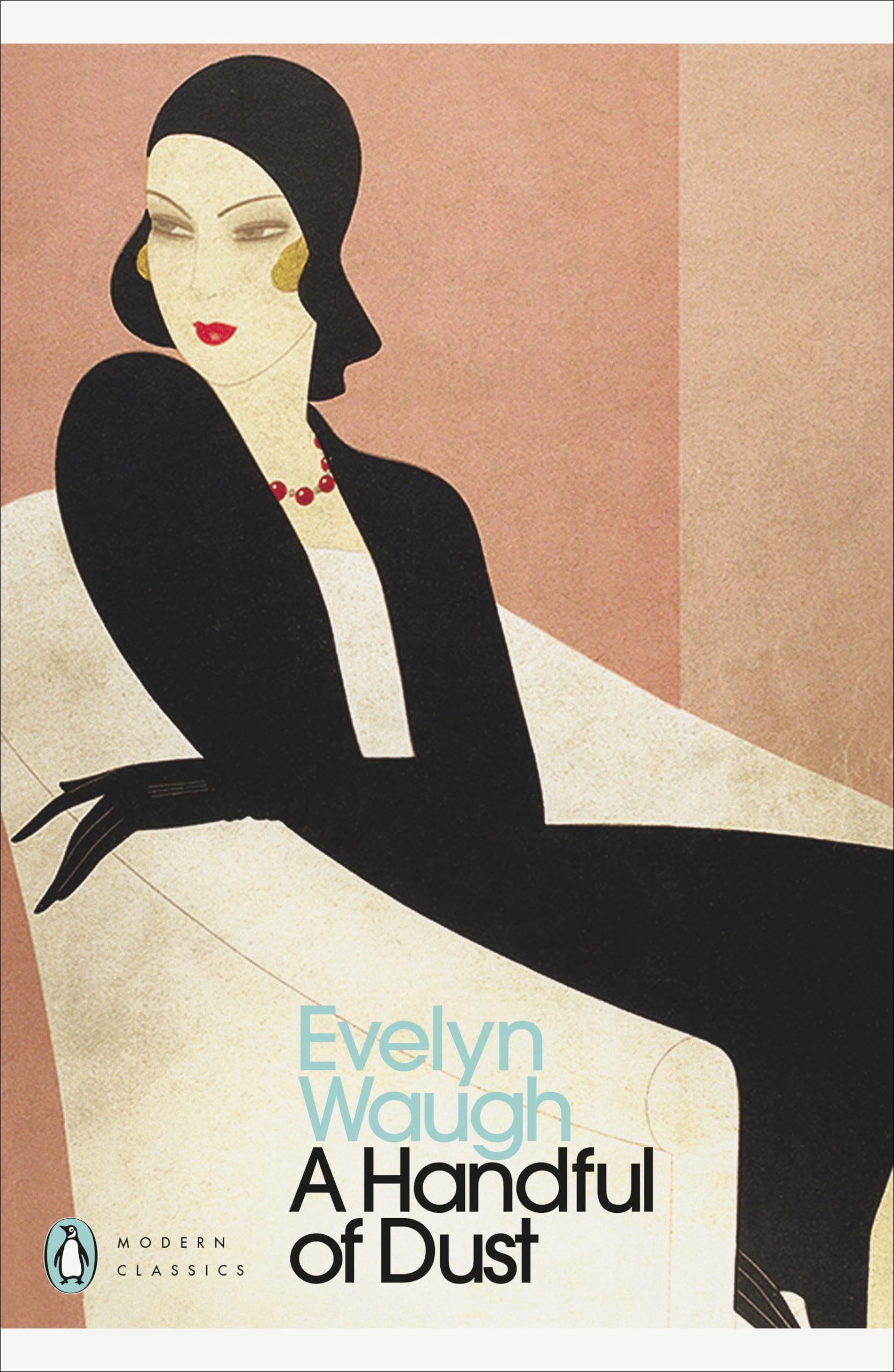
Love Maestra! Reminded me of the Talented Mr. Ripley but with a feminine protagonist.

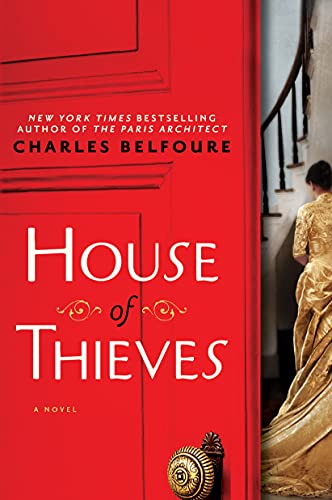
Loved this book! My favorite kind of historical fiction.

The first book I’ve read in Italy. It’s short, it’s beautifully written, and it shocks. I could not put it down.

In the Garden of the Beasts by Erik Larson. Superb non-fiction on an endlessly fascinating subject.

It just made sense to read Benedict’s book about a Jewish actress during WWII after the Larson book. I enjoyed it. Benedict is so readable.

Another good book recommended to me by friend Cindy. Thanks girl! I liked it because it introduced me to a new line of thought about Tiffany, but it lagged and was too long. IMO it could have been edited down 100 pages at least. Still, I liked it.

I’d love to have new recommendations for books you’re reading. Please like the post and comment with book recs! Thanks!

A new site open in Florence: The Chapel of St Luke, at the Church of Santissima Annunziata

The Chapel of the Painters

I’ve spent a lot of time in Florence over many decades and I’ve never seen this chapel open before this week. I don’t know when it reopened, but it must have been within the last 3 years while I’ve been away. It looks brand-spanking new, but with historic artwork. In other words, I think it’s been restored recently.

I wandered into this historic place kind of by accident on a recent day when I was in a daze following an unpleasant but necessary visit to the local post office. I’ll be posting about that soon. Being an ex pat is not all sunshine and camellias! Sometimes it’s a brutal thunderstorm and thorns.

But then you enjoy the serendipity of finding a place like this by accident and it all seems worthwhile.

I knew I was in the right place when I saw upon entering the chapel the famous painting by Vasari of St. Luke painting the Virgin Mary. I’ve seen this painting in more slide shows and textbooks over the years than I can shake a stick at. What a surprise to see it in person!

According to Catholic lore, St. Luke is the saint of artists because he himself was a painter. I know darn well St. Luke would not have been painting on an easel with a palette and brushes before the Christian era, but we can let facts disappear and enjoy the feeling Vasari was creating.

Trinity by Alessandro Allori

Construction of Temple of Solomon by Santi di Tito

I love the tights and shoes on this figure above!

The sculptures placed in niches seemed to break out of their designated spaces. It was a little arresting!

Moses by Montorsoli

St Luke by Vincenzo Danti

In the photo below is the painting from the chapel’s ceiling.

Here’s a source for more info: https://en.wikipedia.org/wiki/Chapel_of_St_Luke,_Annunziata

The Cappella di San Luca (Chapel of St Luke), also called dei Pittori is a chapel found in the cloisters of the convent of Santissima Annunziata in Florence, Italy. It was built to serve as the burial chapel for members of the Accademia delle Arti del Disegno, and was donated by the Servites to the Academy in a document from 1565. It contains a collection of terracota statues from a number of prominent Florentine Mannerist sculptors.

The servite cleric and sculptor Giovanni Angelo Montorsoli arranged with Vincenzo Borghini and Giorgio Vasari to build a burial chapel for the Academy of Design, with the support of the Medici Duke. Immediately plans were also made to decorate the chapel. Originally, the chapel entrance was from the north, under the Trinity fresco by Allori, and the chapel was dedicated to the Trinity. But in time, the chapel became associated with St Luke, patron saint of painters. Tradition holds that the apostle Luke created the first painting of the Virgin Mary, a story depicted in the chapel’s fresco on the east wall, painted by Vasari. During the Napoleonic occupation of Tuscany, the French archbishop named to lead the archdiocese of Florence, Eustache d’Osmond, was housed in the convent, made this his private chapel, and opened a new entrance which currently serves.

Many Florentine artists were buried here, including Montorsoli, Pontormo, Cellini, Franciabigio, Lorenzo Bartolini. Apparently there was a burial there as recently as 1983. The chapel still belongs to the Academy and holds memorial services here.

Plaque in the floor leading to burial crypt.

This is the kind of serendipitous excursion I live for!

Walk with me across the Ponte Vecchio!

From south side to north, heading toward the historic center.

I always enjoy walking over this historic bridge, the oldest one existing in Florence. It dates to the 14th century.

.

Jewelry stores line the 2 sides of the bridge, with a gap in the center that houses some statues and is a perfect place from which to view the city and the Arno, east and west. The 2 sides were originally lined with butcher shops and they dumped the blood and entrails into the water. The Medici dukes put an end to such things in the 16th century when they decreed that only gold dealers could have these shops!

Out and about in beautiful Florence

Or, in Italian: Nella splendida Firenze! I’m so happy to see these old friends again!

I’m noticing a number of changes around town. For one thing, the octagonal building by Brunelleschi is opened for the first time in my memory. It now houses a small museum dedicated to the Medici that was formerly housed in a palazzo on Via Cavour. I haven’t visited the new site yet, but I will soon. The collection it houses isn’t anything remarkable (at least it wasn’t in its former digs), but I am very eager to see the Brunelleschi building for the first time. You can see the octagonal building in the background below. It’s in great shape for a 600 year old building!

They are in the process of building a pedestrian piazza near the Brunelleschi building, which looks like it will be very nice. They’ve already planted 8 or more mature orange trees: always a welcome sight!

Vasari’s arcade dedicated to a former fish market is looking spiffy near by. You’d never think it is 500 years old!

And just look at this iron work, would ya? How many people and how many hours/days do you think this masterpiece took to create? The photo doesn’t give scale, but you could drive a large truck through these gates.

I’m so happy to be back here, in case it isn’t obvious!

Welcome to my terrazza!

I’m thrilled I have a fairly large, travertine paved terrace connected to my new apartment in Florence. Before I even bought myself food to eat, I found myself buying plants. For people who know me, this is not a surprise!

I mean, camellias are my very favorite flower in the world and when I saw them for sale the first week I was here in my local grocery store, how could I resist?

Almost before I fed myself, I was out planting my two new camellia shrubs in the planter box that rings my terrazza. They had buds but no blossoms. I chose two pink blooming shrubs. The only other color on offer that day was white and since white makes me think of snow and I’ve spent so much of my life dealing with that sometimes pretty but always inconvenient white substance, I prefer flowers with vibrant hues. Not very long ago I was snowed-in at my cabin home on the lake in rural Illinois.

Supposedly the shrub I’ve shown in bloom above is called Nuccio’s Cameo. You never know for sure when you are buying plants that are labeled if the label is the right one. I’ve seen behind the scenes at plant wholesalers and farms, and it is easy for a mistake to be made when adding the label. In fact, I question whether the blooms above are Nuccio’s Cameo. The picture in the label looks a little more coral than pink and my blossoms are pure, unadulterated pink, so chissa’? For me it is unimportant, I love it no matter what you call it!

The second shrub I bought, seen below, was this variety, called Nuccio’s Pearl. Isn’t it interesting that the plant label is in English? I’d like it better if it were in Italian. This shrub has many buds and you can be sure I’ll be back with photos as soon as it blossoms. I wonder if it will have the paler center like the photo on the label or whether, like my first shrub, it will be all pink, glorious pink?

Here’s the backside of one of the passaporto delle piante. I love that designation for a label of this kind. You can see it at the bottom left. And here, at least, we have a little Italian. Grazie a dio. How am I ever gonna learn without seeing it??!!