The kind of life I have always longed for

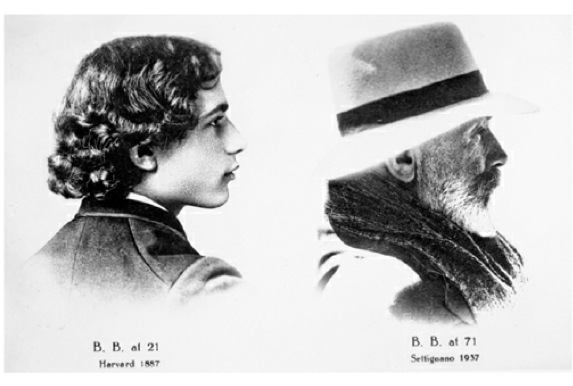
Mary Berenson later wrote about the strong draw Bernard Berenson had for her early on: she said his letters “made me feel I was taking part in the kind of life I longed for; free, devoted to beauty, fortified by study and leading to endless spiritual and aesthetic adventures.”

Screen Shot 2018-05-23 at 1.06.45 PM

Bernard Berenson at twenty-one and seventy-one. Biblioteca Berenson, Villa I Tatti—The Harvard University Center for Italian Renaissance Studies, courtesy of the President and Fellows of Harvard College.

Source: Rachel,Cohen. Bernard Berenson (Jewish Lives) (pp. 8-9). Yale University Press. Kindle Edition.

It’s 8 a.m., do you know where your fruits are?

Or, at least where they’ve been?

One of the thousands of things I love about living in Italy is how seriously they take their food.  I have seen conversations in restaurants between customers and waitstaff about where the salami originated before the customer orders.  It is endlessly entertaining to me.

IMG_9537

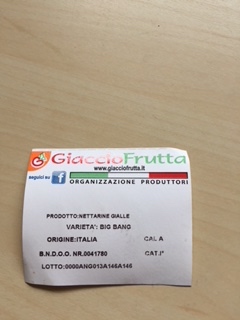
But, with every bit of packaged fruit that you buy here, you get a little tag like the one above, telling you where the fruit originated and other info. The variety of nectarine that I purchased this morning, I learn from this tag, is a variety called “Big Bang” in English.  (English is taking an evermore firm stand in Italy, which is both good and bad news.)

And best of all, the tag tells me the nectarines were grown in Italy.  Sometimes the tag even tells you what province in Italy.  I sometimes see foods like these originating in Spain (esp. for oranges) and even Egypt and Turkey.  Fun to think about.

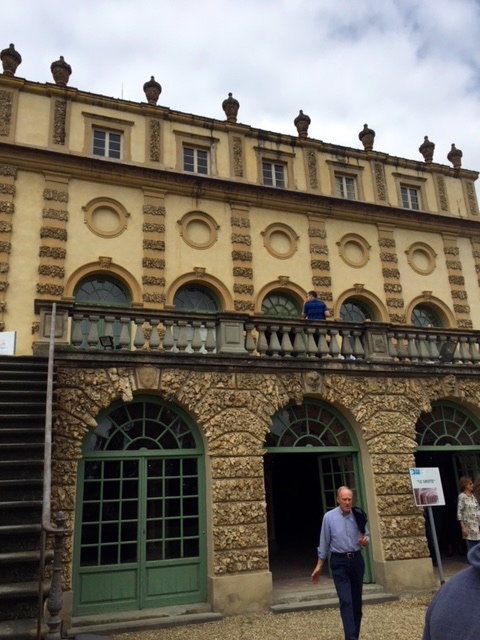
Villa Salviati

IMG_8979

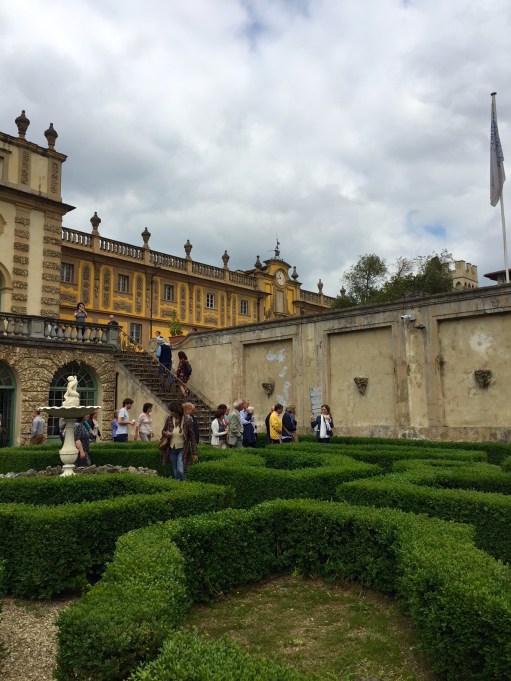
A couple of weekends ago, I had the pleasure of visiting a famous villa in Fiesole, the Villa Saliviati.

IMG_8980

IMG_8978

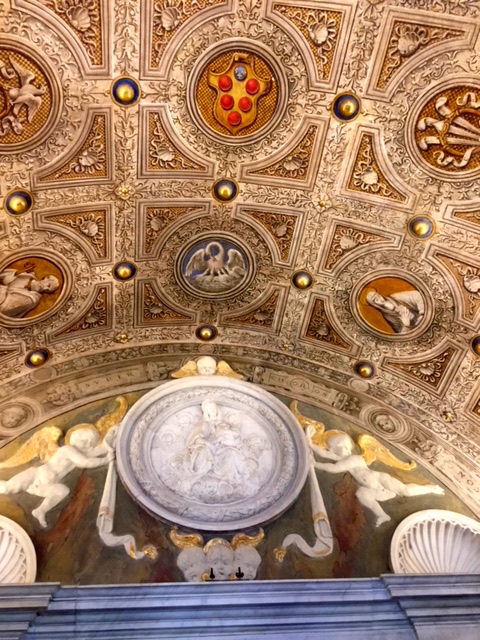
Of course the villa has its own (gorgeous) chapel; here is a detail of the ceiling:

IMG_8965


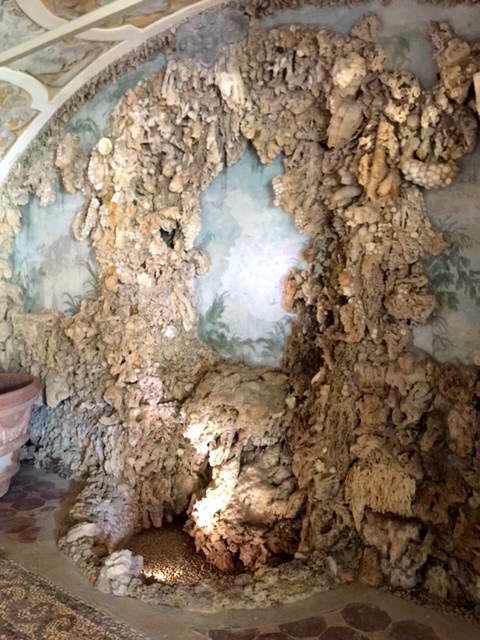
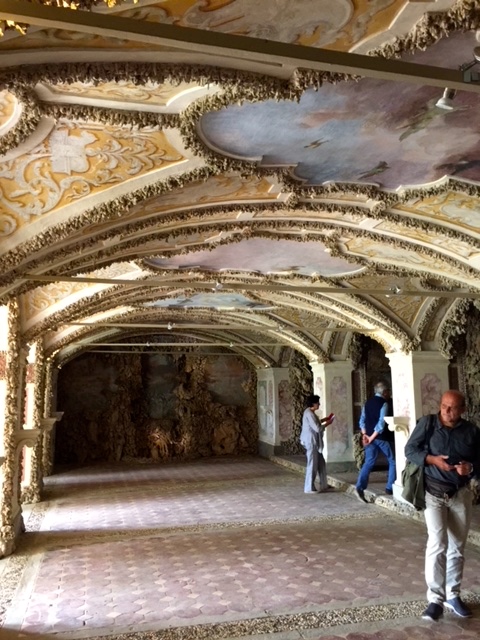
And the villa also has a grotto:

IMG_8972IMG_8973


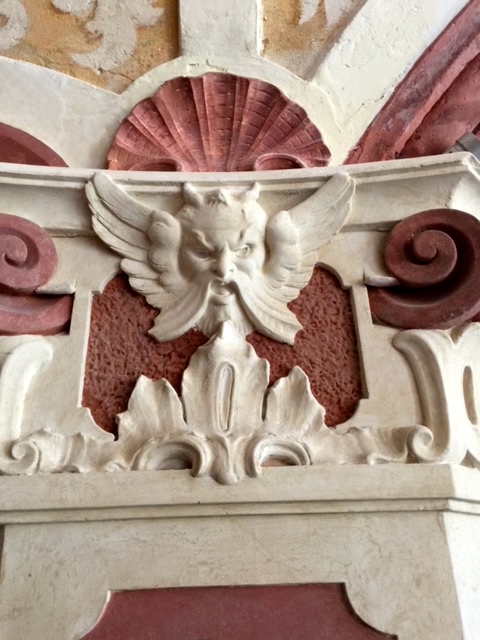
There is a lot of interesting interior detailing:

IMG_8971


So, now you’ve seen my pictures, let’s get some info from Wiki on the Villa:
From Wikipedia, the free encyclopedia.

History [ edit | wikitesto change ]

In the 14th century, the castle of the Montegonzi was built on this property land already belonged to the Del Palagio. In 1445, Arcangelo Montegonzi sold it to Alamanno Salviati , the man who introduced the cultivation of salamanna and jasmine grapesin Tuscany.


Alamanno commissioned Mielcozzian workers to reduce the castle to a villa, with a garden and woods . In 1490, the nephews of Alamanno, dividing their uncle’s assets, and gave the villa to Jacopo, who was related to Lorenzo de ‘Medici.


In 1493, new, considerable renovations were undertaken, to which perhaps Giuliano da Sangallo took part and which lasted about a decade.


Giovan Francesco Rustici also took part in the works. Between 1522 and 1526 he created for the villa a series of terracotta roundels with mythological subjects (such as Apollo and Marsyas or Jupiter and Bellerophon ).

Today the Villa’s  Limonaia is the the headquarters of the Historical Archives of the European Union.

In 1529, the house was sacked by the anti-cult faction and between 1568 and 1583 Alamanno di Jacopo Salviati and his son Jacopo further enlarged and embellished the villa, with the gardens ( 1570 – 1579 ) and the buildings that border the northern border and create a scenic backdrop connected to the villa.

New Year’s eve, 1638, was an event to remember. That evening, in this villa, the severed head of the lover of Caterina Canacci, was brought to the villa, hidden under the linen that the wife of Salviati, Veronica Cybo, sent him weekly.

The villa then passed to the Aldobrandini – Borghese and on December 30th 1844 it was bought “with a closed gate” (ie with all the furnishings) from the Englishman Arturo Vansittard.

Then came the tenor Giovanni Matteo De Candia aka Mario, who lived there with his wife, the soprano Giulia Grisi , the Swedish banker Gustave Hagerman and finally, in 1901, the Turri.

The grotto: 

During the WWII, the grotto was used as the post of an allied command: Lensi Orlandi recounted the memory of nocturnal visits of “kind and rich Florentine, often mature matrons”, who “crossed the threshold of those rooms to give honor to the admired winners” [2 ] .

There followed a long semi-abandonment, in which the villa was not accessible even to scholars (he visited Lensi-Orlandi in 1950, but could not Harold Acton in 1973 ).

In 2000 the monumental complex, together with its gardens, was purchased by the Italian Government to be destined for the European University Institute , which made it the seat of the Historical Archives of the European Union ; one can mention, among the various documents contained in them, the personal papers of the founding fathers, such as Alcide De Gasperi , Paul-Henri Spaak , Altiero Spinelli and Ernesto Rossi .

The end of the renovations took place in October 2009 and on December 17, 2009 the President of the Republic Giorgio Napolitanoinaugurated the Historical Archives of the European Union .

This villa was in communication with Villa Emilia (which was higher up) – which in ancient times was a convent of Cistercian nuns suppressed in 1453 – through an underground gallery : hence the other name with which the villa is known, “del Ponte at the Badia “.
Architecture [ edit | wikitesto change ]

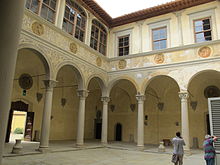
The courtyard

The main body of the villa reveals its military origins, especially in the two crenellated turrets, in the corner, and in the crowning with the walkway on corbels , very similar, for example, to that of the villa of Careggi . It is made up of two adjacent buildings, but with similar architectural features: the east one is more massive and tall, the west one is of smaller volume and height.

The building is arranged around the central courtyard, portico on three sides with columns in pietra serena with Corinthian capitals ;the entablature towards the inside is decorated with graffito friezes, with the rounds of the Rustici inserted into this strip in correspondence with the round arches.

The interiors are often covered by vaulted , barrel and cross vaults .

Gardens [ edit | wikitesto change ]

The gardens

You get to the south facing of the villa through a long cypress avenue that once led to the Via Faentina and that after the construction of the railway was modified, creating a passage on it.

The Italian garden , in front of the villa, is built on three terraces at different levels and, although it is being restored, it is made up of geometric flower beds in boxwood with flowery essences. The property is then surrounded by a large English park , where there are, among other things, a bamboo grove, two ponds and, scattered here and there, various items of furniture, such as statues, temples, caves, fountains, pavilions and more.

Villa Salviati , or villa of the Ponte alla Badia , is located along the homonymous street near via Bolognese in Florence , [1]
 

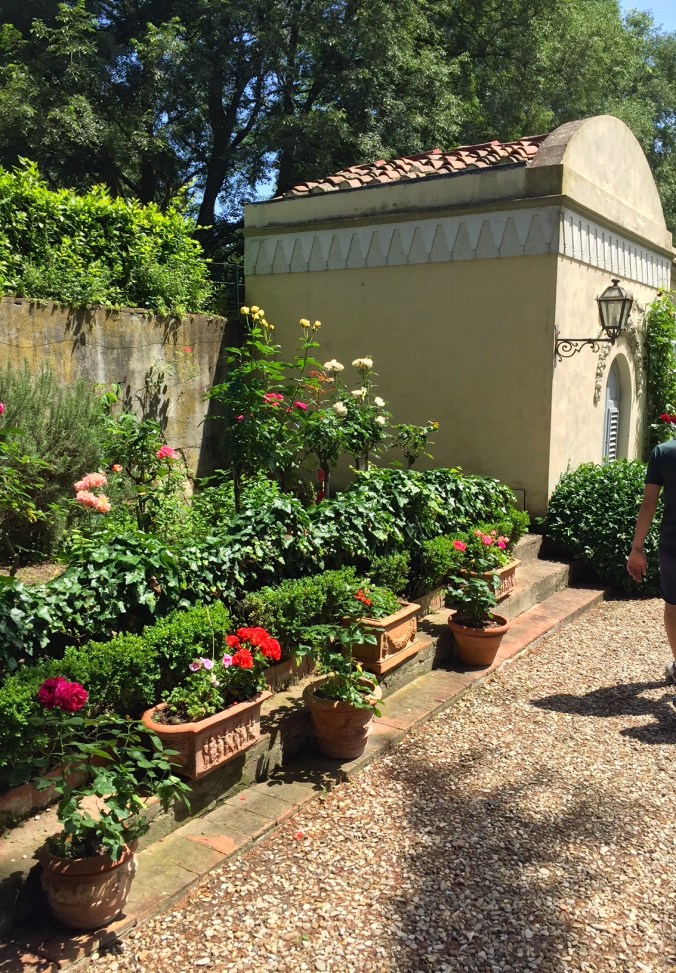
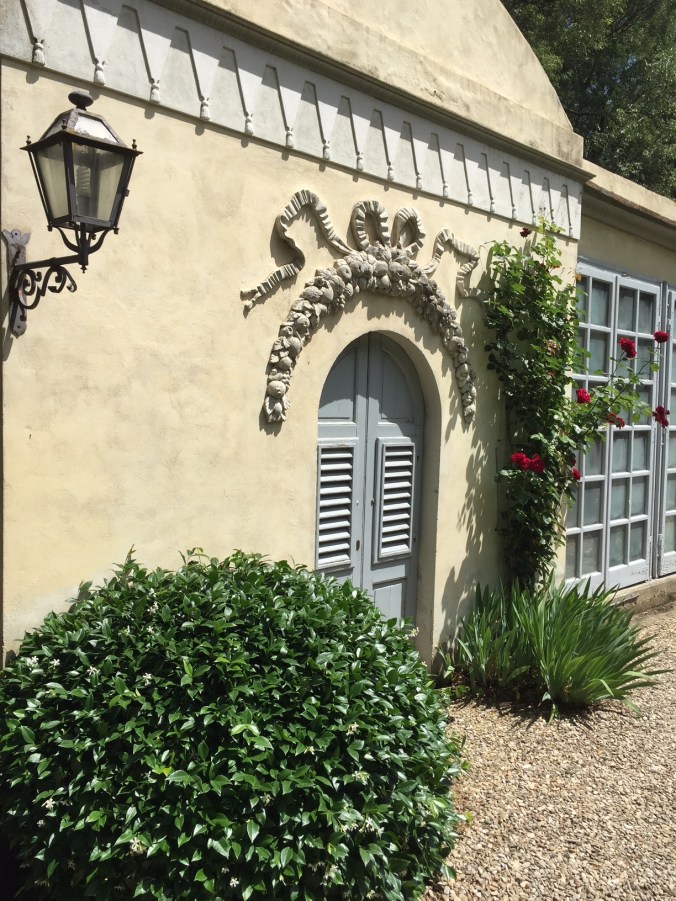
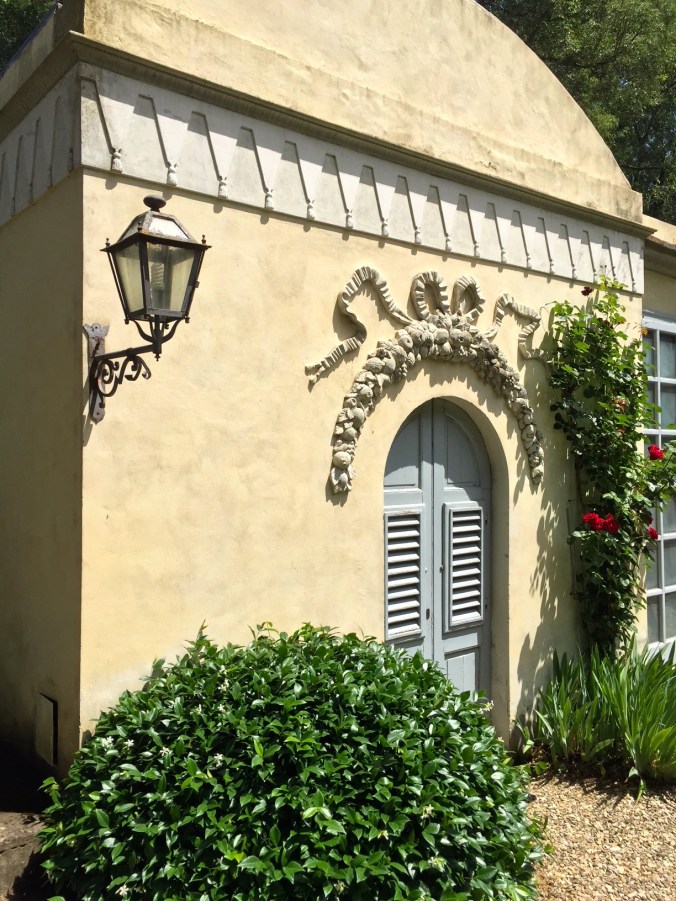
When I grow up…

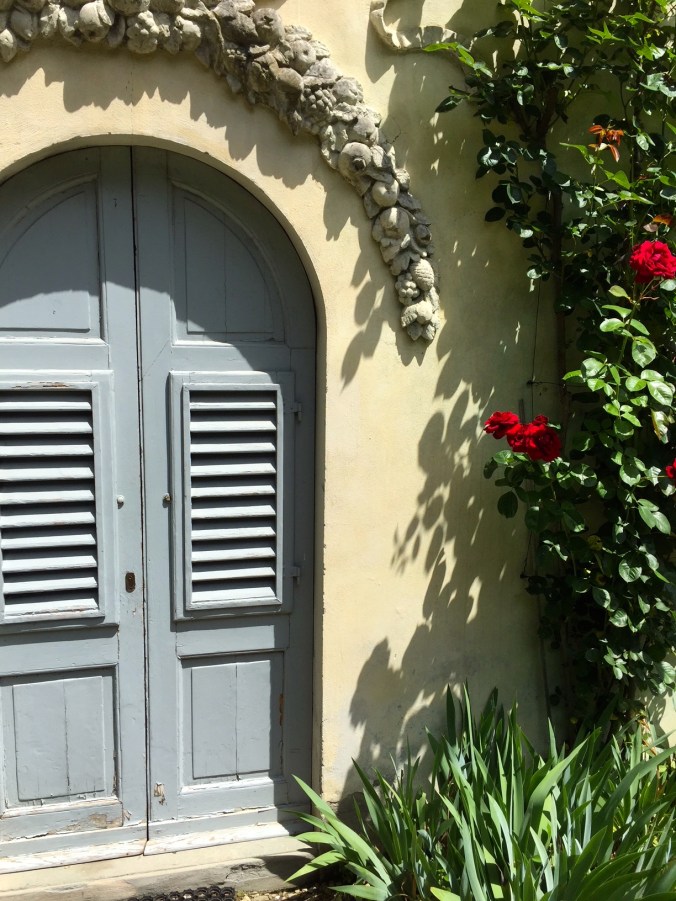
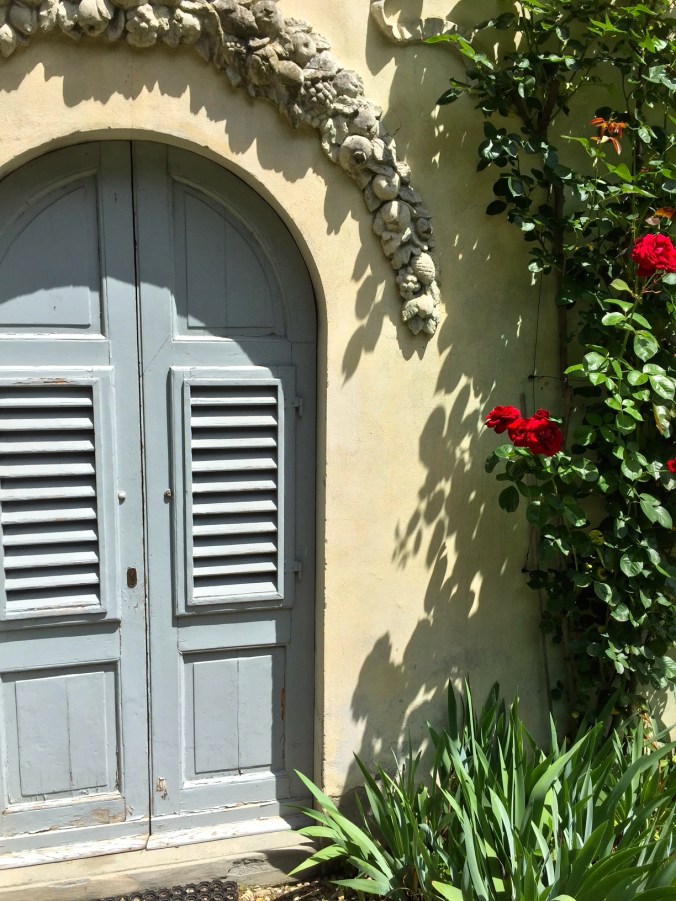
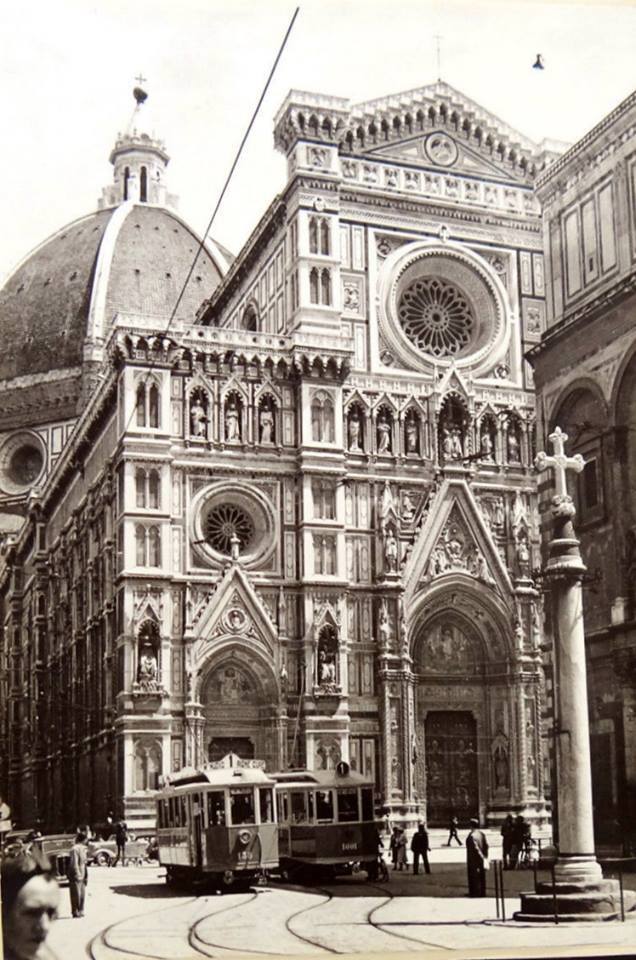
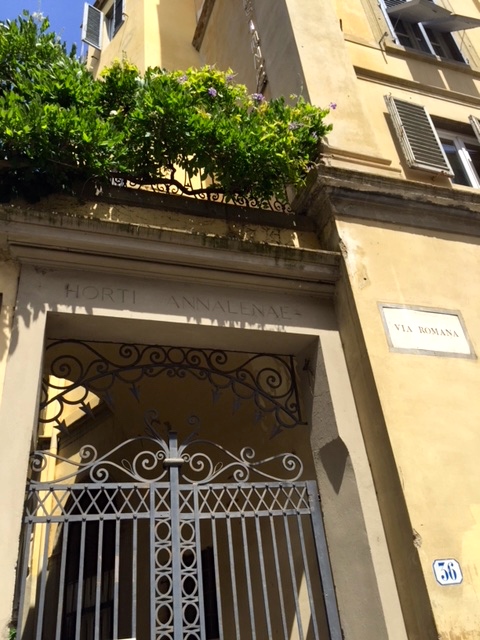
I want to live here, in Florence:

IMG_9421IMG_9422


Or, maybe I’ll live here, which is right next door:

IMG_9405IMG_9406IMG_9407IMG_9408IMG_9410

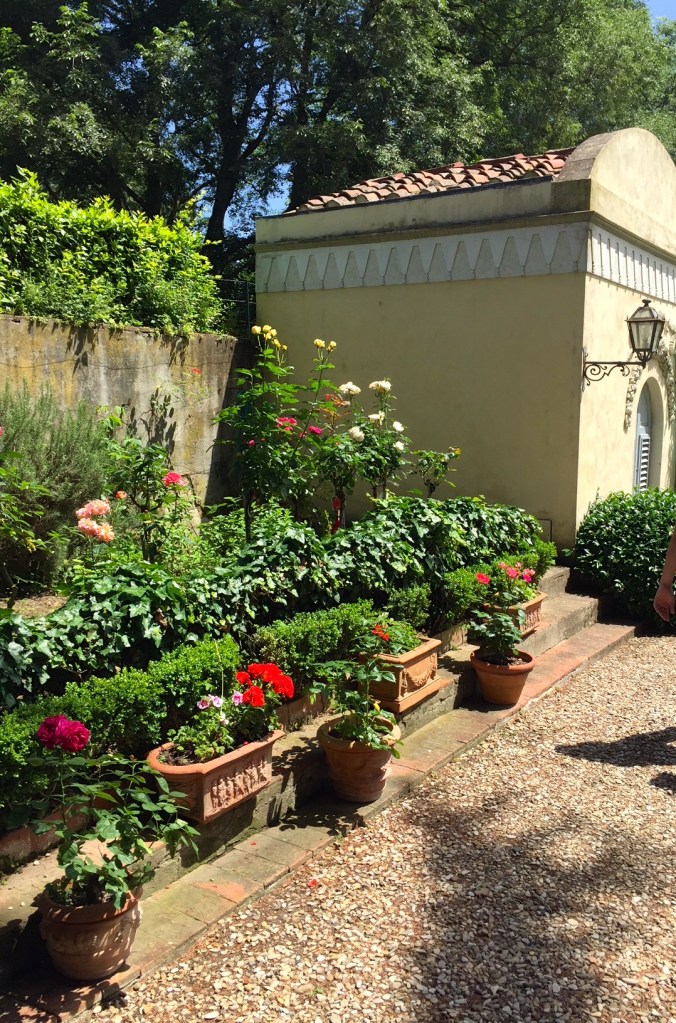
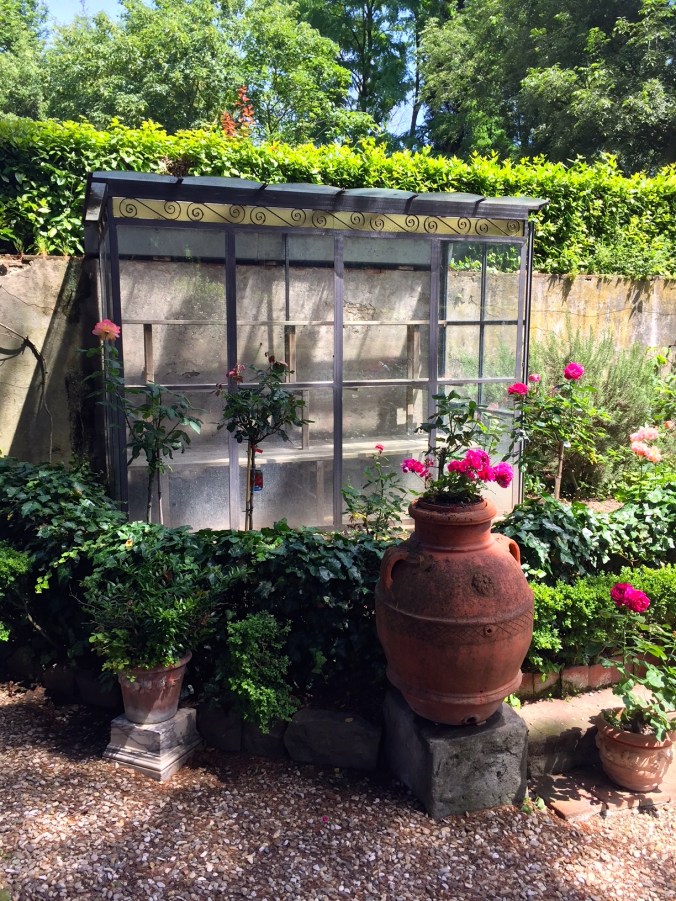
Yes, I think I’ll choose the 2nd one, because it has a fantastic glass house and room to garden right next to it:

IMG_9404


If I can live in Florence, in one of these 2 neighboring houses, I think I could just spend my days reading and writing and gardening and listening to the birds, inhaling the roses and jasmine. It looks to me like paradise.

And, lest I forget where I found this place, which could happen because every day brings new wonders and it is hard to keep track of all this splendid stuff:

IMG_9457


Palma Bucarelli

Palma Bucarelli (1910 –  1998) was an Italian arts administrator, the director of the Galleria Nazionale d’Arte Moderna (GNAM) in Rome from 1942 to 1975.
853cde6a-e421-11e3-8e3e-8f5de4ddd12f

Early life

Palma Bucarelli was born in Rome. She earned a degree in art history at the Sapienza University of Rome.[1]
Career

As a young art historian she worked at the Galleria Borghese and in Naples. During her thirty-three years as head of the Italian National Gallery of Modern Art, Bucarelli was responsible for protecting the gallery’s collections from damage while it was closed during World War II; she arranged to place paintings and sculptures in historic buildings including the Palazzo Farnese and Castel Sant’Angelo.[2] She was one of the Italian delegates to the First International Congress of Art Critics, held in 1948 in Paris.[3]

13790

After the war, she oversaw such events as exhibitions of works by Pablo Picasso (1953), Piet Mondrian (1956), Jackson Pollock (1958), Mark Rothko (1962), and the Gruppo di Via Brunetti (1968). She defended controversial works such as Piero Manzoni‘s ‘”Merda d’Artista” and Alberto Burri‘s “Sacco Grande” (1954).[1] Her strong support for abstract and avant-garde works made international headlines in 1959, when she was accused of a bias against figurative art in a public debate.[4] In 1961 she was in the United States, where she gave a lecture in Sarasota, Florida[5] and attended the opening of a major exhibit on Futurism at the Detroit Institute of Arts.[6]
Personal life

Palma Bucarelli married her longtime partner, journalist Paolo Monelli, in 1963. She died in Rome in 1998, from pancreatic cancer, aged 88 years. Her personal collection of art was donated to the National Gallery. Her famously elegant wardrobe was donated to the Boncompagni Ludovisi Decorative Art Museum in Rome. A street near the GNAM was renamed in her memory.[2] The Gallery mounted a show about her influence, “Palma Bucarelli: Il museo come avanguardia”, in 2009.[7]

palma-bucarelli

References

  1. ^ Jump up to: a b Lucia Livia Mannella, “Palma Bucarelli” Vogue Italia Encyclo.
  2. ^ Jump up to: a b “Palma Bucarelli” Dictionary of Art Historians.
  3. Jump up ^ Denys Sutton, “The First International Congress of Art Critics” College Art Journal 8(2)(Winter 1948): 130.
  4. Jump up ^ Paul Hofmann, “Art Impartiality Pledged by Italy” New York Times (March 7, 1959): 43.
  5. Jump up ^ “Italian Art Expert’s Talk is Tonight” Tampa Bay Times (9 November 1961): 13. via Newspapers.comopen access publication – free to read
  6. Jump up ^ Kathie Norman, “VIPs Impressed” Detroit Free Press (17 October 1961): 17. via Newspapers.comopen access publication – free to read
  7. Jump up ^ Laura Larcan, “Un Direttore di nome Palma Bucarelli, la Guggenheim di Roma” la Repubblica (26 June 2009).


https://en.wikipedia.org/wiki/Palma_Bucarelli