Oh, the places you’ll build! Hadrian’s Villa,Tivoli

Sometimes you just need some space for yourself.
Especially if you need to get away from the hustle and bustle of running an Empire.  This is really important when you feel you are not appreciated by those you rule.  Ungrateful is what they are.
images-3
That’s exactly the position Hadrian found himself in, so he built the modest little Villa Adriana (at Tivoli, near Rome) for himself.
images-2
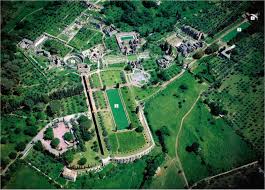
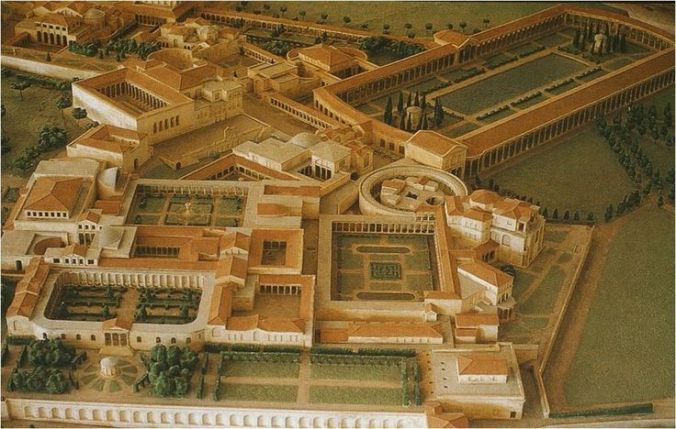
Well, I understate it a bit: his villa was an exceptional complex of classical buildings created in the 2nd century A.D.. Hadrian’s villa combined the best elements of the architectural heritage of Egypt, Greece and Rome as Hadrian attempted to build himself an ‘ideal city,’ albeit in the country, as his personal retreat.
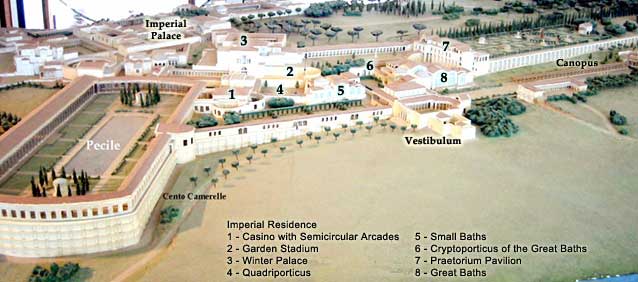
Representation of the West-side of Hadrian's Villa
The villa was a sumptuous complex of over 30 buildings, covering an area of at least 100 hectares (c. 250 acres), maybe even 300 hectares. Although Hadrian’s Villa is a Unesco world Heritage Site, much of it remains unexcavated.
images-4
Hadrian’s choice of an imperial palace outside Rome, instead one of the several palaces in the city, was probably influenced by the miserable relations he had with the senate and the local Roman aristocracy!
25ac4f3298254a6923fb1663b70a39b7
Hadrian was born in Spain, just like his predecessor Trajan, and the senate and the local aristocracy had trouble coming to terms with another provincial on the imperial throne.
VirtualHadriansVilla_IDIALab_Login

The way Hadrian had assumed power only reinforced their opposition to him. Trajan adopted Hadrian on his deathbed; this was immediately cast in doubt, and when four military leaders, all Roman aristocrats who had been close to Trajan and hence possible contenders for the throne, were assassinated immediately after Trajan’s death, the senate immediately suspected Hadrian of having ordered the killings.
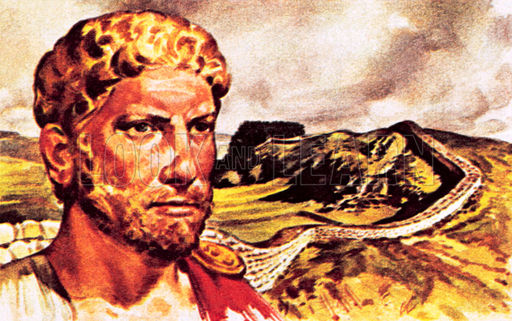
The Roman Emperor Hadrian and Hadrian's Wall

Hadrian didn’t return to Rome until eleven months after Trajan’s death, and denied any wrongdoing, but his relationship with the senate never recovered from the crisis. As a consequence Hadrian stayed very little in Rome. He travelled extensively throughout most of the empire in two prolonged periods, in 121-125 CE and in 128-134 CE, and when in Italy he avoided Rome.  You see him in the picture above with a representation of his famous wall, built wherever he felt it was needed in his Empire.
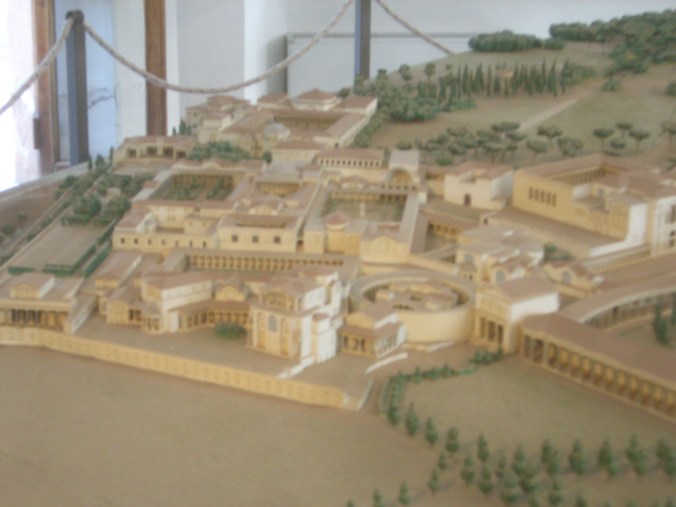
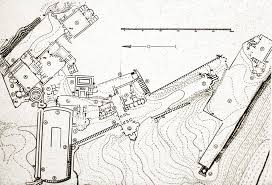
Representations of Hadrian's Villa site maps 1

When he absolutely had to be in Rome, he had his villa in Tivoli. Located some 28 km E. of Rome, Tivoli stood on a hillside, surrounded by two minor tributaries to the Aniene.  Thus Tivoli and the villa were easily reached from Rome by land via the Via Tiburtina and by boat on the Aniene, which was navigable at the time.

While I still don’t have access to my pictures from my camera, here’s what I can post until I get them.

In fact, to show off his tastes and inclinations, Hadrian reproduced inside this residence the places and monuments that had fascinated him during his innumerable travels.
images-4

IMG_2726

IMG_2727

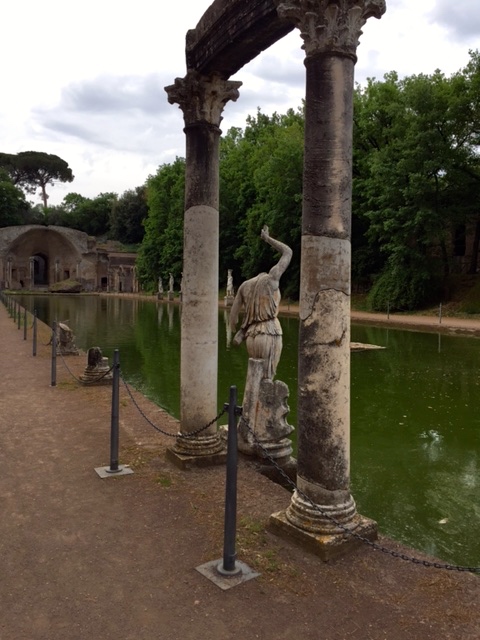
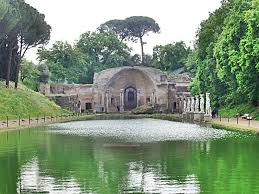
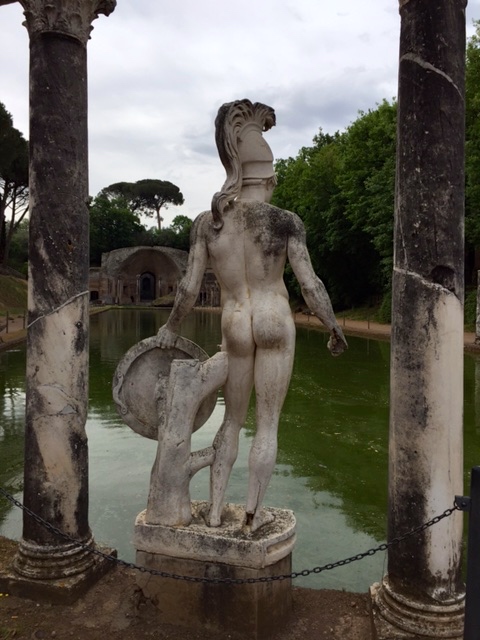
Then there is the Canopus, a long water basin embellished with columns and statues that culminates in a temple topped by an umbrella dome.
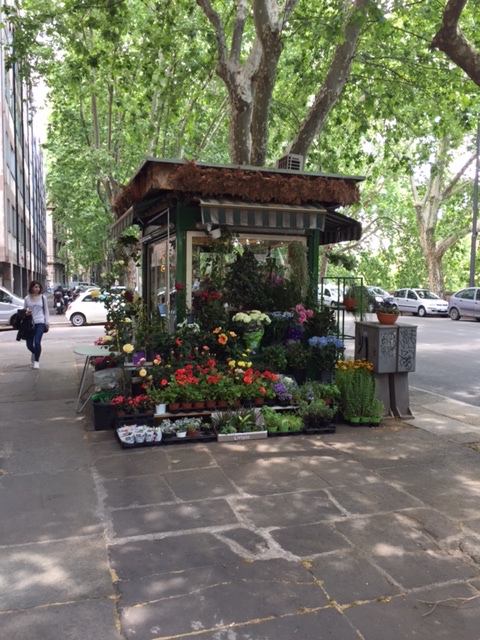
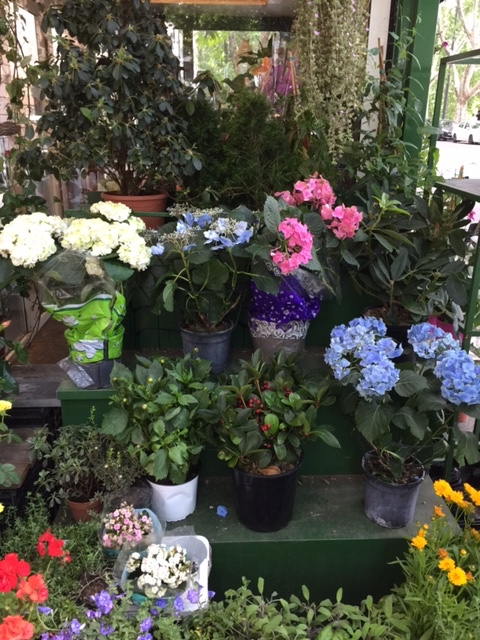


5 Maggio, beautiful day, some greatest hits

(As I posted yesterday, I can’t use my best photos until I get home to my camera cord!  Coming soon!)

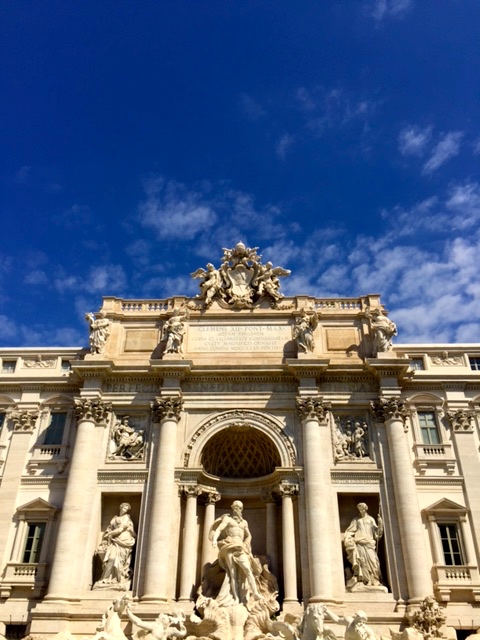
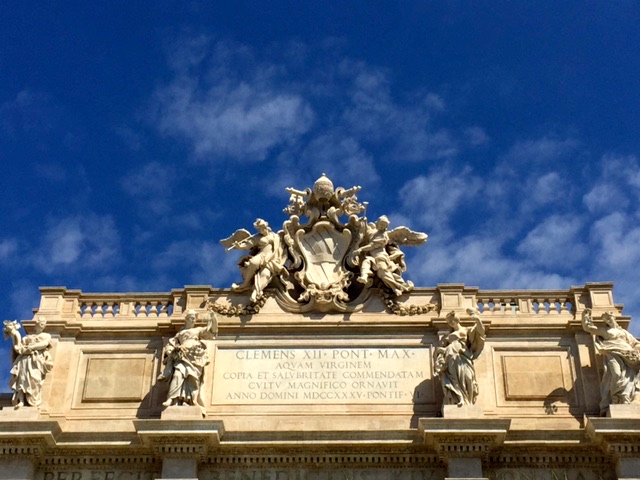
Trevi Fountain, always spectacular.

IMG_2672


IMG_2673


IMG_2674


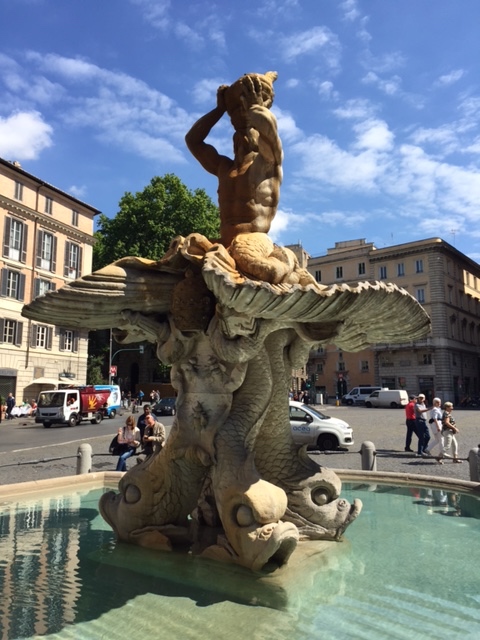
Bernini’s Triton Fountain.  Always enjoyable, even without the water flowing as today.

IMG_2675


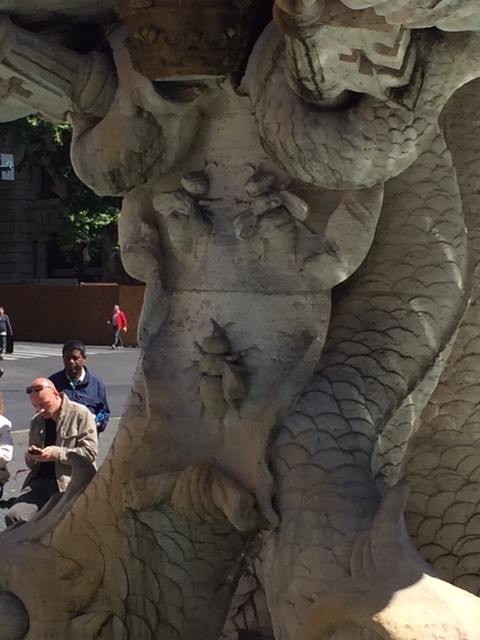
Love those Barberini bees!

IMG_2677


Quattro Fontane.  Always requires risking your life to look at on one of Rome’s busiest streets!


500px-Piazza_Quattro_Fontane_270deg_Pano

IMG_2684


Borromini’s lovely church, San Carlo alle Quattro Fontane.

IMG_2685


IMG_2688


IMG_2689


IMG_2690


IMG_2691


IMG_2693


Some light-hearted levity is required…

at least now and then, when in Rome….

I love Mark Twain and I need him today; in Innocents Abroad he wrote:

In this connection I wish to say one word about Michelangelo Buonarroti. I used to worship the mighty genius of Michelangelo–that man who was great in poetry, painting, sculpture, architecture–great in everything he undertook….

In Genoa, he designed everything;

in Milan he or his pupils designed everything;

he designed the Lake of Como;

in Padua, Verona, Venice, Bologna, who did we ever hear of, from guides, but Michael Angelo?

In Florence, he painted everything, designed everything, nearly, and what he did not design he used to sit on a favorite stone and look at, and they showed us the stone.

In Pisa he designed everything but the old shot-tower, and they would have attributed that to him if it had not been so awfully out of the perpendicular.

He designed the piers of Leghorn and the custom house regulations of Civita Vecchia.

But, here [Rome]–here it is frightful.

He designed St. Peter’s;

he designed the Pope;

he designed the Pantheon,

the uniform of the Pope’s soldiers,

the Tiber,

the Vatican,

the Colosseum,

the Capitol,

the Tarpeian Rock,

the Barberini Palace,

St. John Lateran,

the Campagna,

the Appian Way,

the Seven Hills,

the Baths of Caracalla,

the Claudian Aqueduct,

the Cloaca Maxima–

[Michelangelo] the eternal bore designed the Eternal City, and unless all men and books do lie, he painted everything in it!

I never felt so fervently thankful, so soothed, so tranquil, so filled with a blessed peace, as I did yesterday when I learned that Michelangelo was dead.

Roman era Rome.
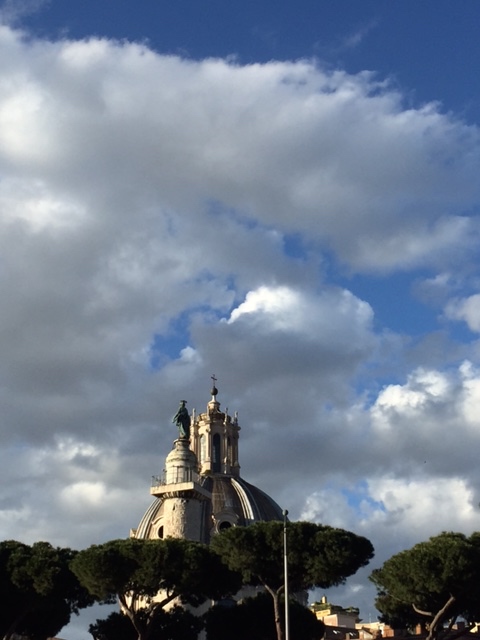
Deus meus! this city is overwhelming!  Follow my posts as 
I attempt (and not for the first time) to get some sort of 
handle on it for myself!

800px-Roma_Plan


By Unknown (H. Jordan ?) – G. Droysens Allgemeiner Historischer Handatlas, Public Domain, https://commons.wikimedia.org/w/index.php?curid=1105993


400px-Seven_Hills_of_Rome.svg


The Servian Wall was constructed around the city of Rome in the early 4th century BC. The wall was up to 10 metres (32.8 ft) in height in places, 3.6 metres (12 ft) wide at its base, 11 km (7 mi) long, and is believed to have had 16 main gates, though many of these are mentioned only from writings, with no other known remains.

The map below show the Servian Wall and its gates in Blue.
250px-Map_of_ancient_Rome.svg

The Aurelian Walls (red) were constructed in the 3rd century AD.
 

The Servian wall was built from large blocks of tuff (a volcanic rock made from ash and rock fragments ejected during an eruption) quarried from the Grotta Oscura quarry near Rome’s early rival Veii. In addition to the blocks, some sections of the structure incorporated a deep fossa, or ditch in front of it, as a means to effectively heighten the wall during attack from invaders.

Along part of its topographically weaker northern perimeter was an agger, a defensive ramp of earth heaped up to the wall along the inside. This thickened the wall, and also gave defenders a base to stand while repelling any attack. The wall was also outfitted with defensive war engines, including catapults.

The wall was still maintained through the end of the Republic and in the early Empire.  By this time, Rome had already begun to grow outside the original Servian Wall. The organization of Rome into regions under Augustus placed regions II, III, IV, VI, VIII, X, and XI within the Servian Wall, with the other sections outside of it.

The wall became unnecessary as Rome became well protected by the ever-expanding military strength of the Republic and of the later Empire. As the city continued to grow and prosper, it was essentially unwalled for the first three centuries of the Empire.

When German tribes made further incursions along the Roman frontier in the 3rd century AD, Emperor Aurelian had the larger Aurelian Walls built to protect Rome.