Isn’t it beautiful?! These pix and videos are from my trip to the countryside south of Munich in mid August. I loved seeing this gorgeous part of Bavaria, just north of Austria.
Above and below, I even saw a cemetery. Look at how groomed each plot is. That’s Germany!
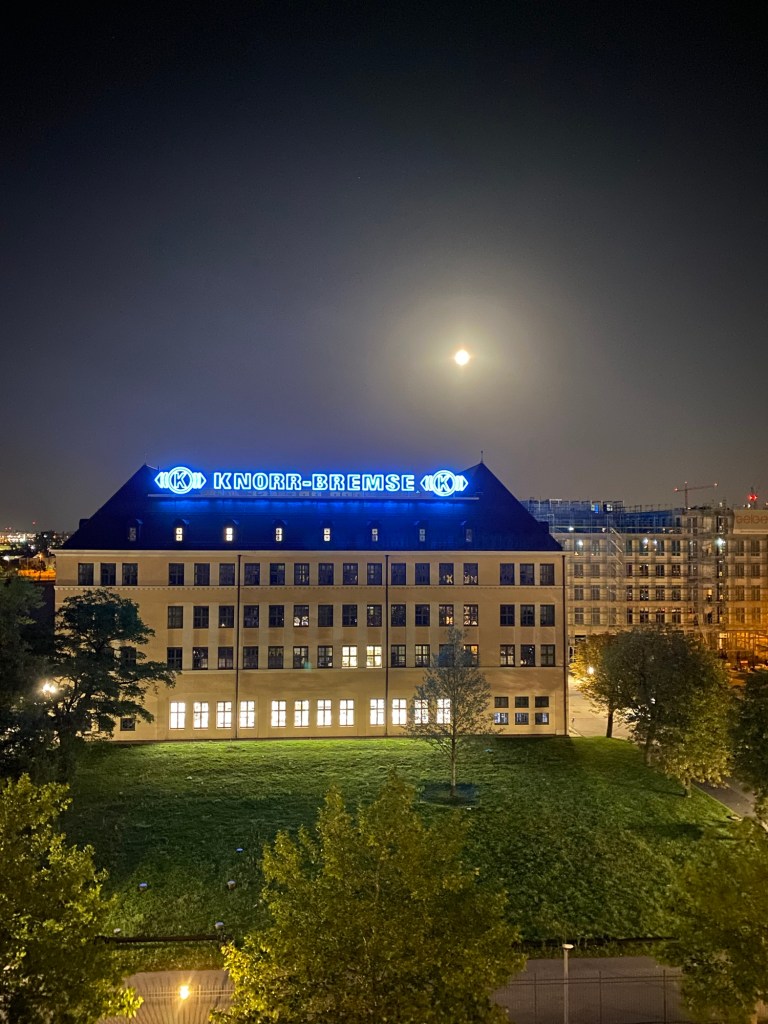
Goodbye to Munich. This was my view there for over a month. I actually liked this view a lot and I really enjoyed being in both Berlin and Munich. I caught the moon one night in a photo in the latter.
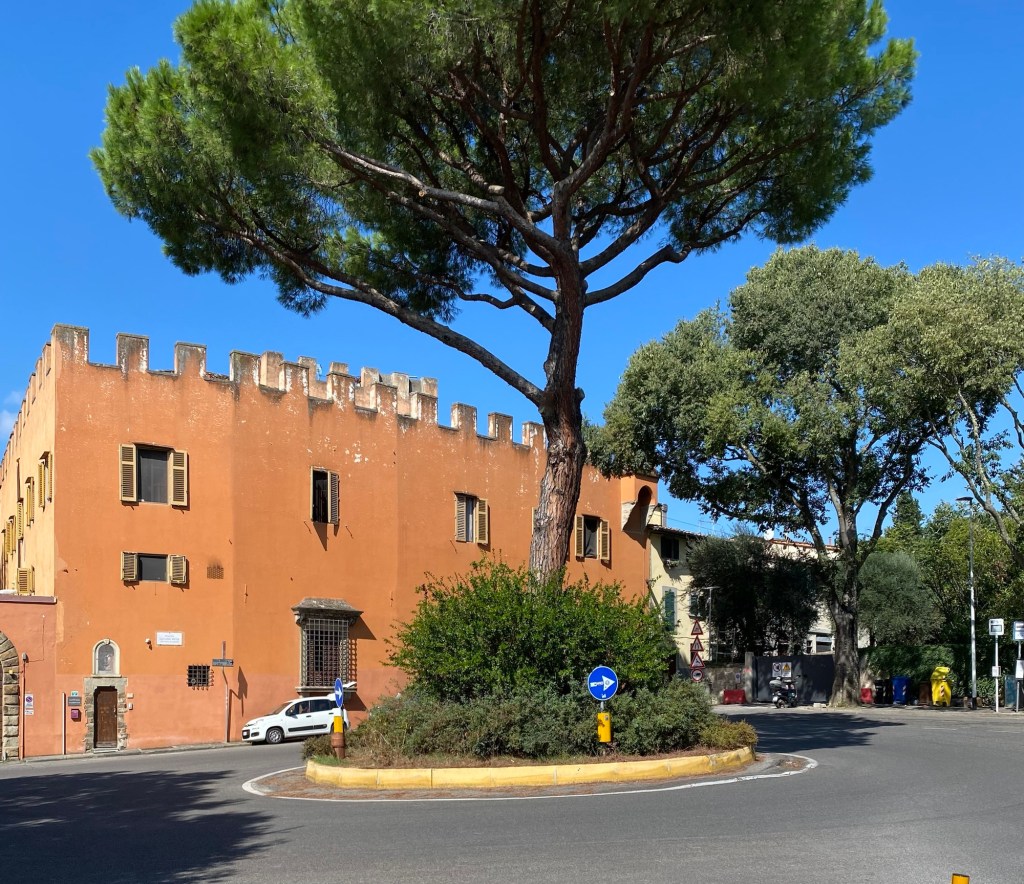
And hello to Florence!
This happened overnight of course because Europe is relatively small to us Americani!
But I traveled through Milan where I caught one cool poster while walking quite a distance from my hotel to the train station because the subway was on strike—welcome to Italy! (Although I’ve had the same experience in Paris to be fair!)
I love the poster. It says: “invitation to the theater! At the theater you will see the most beautiful things!”
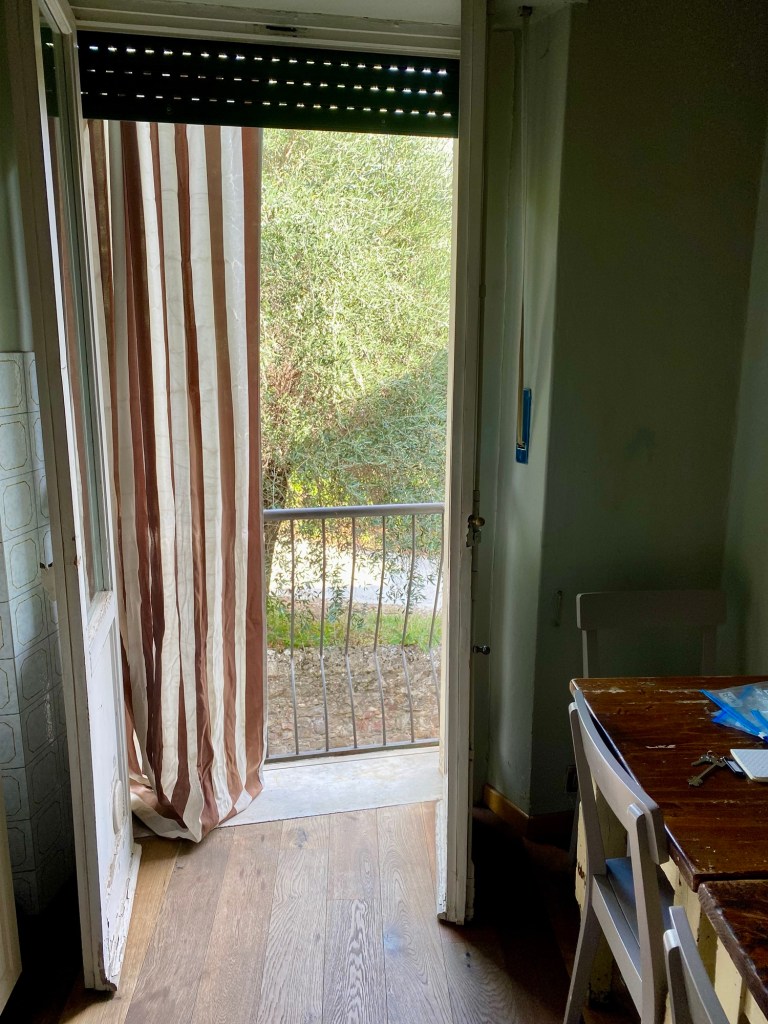
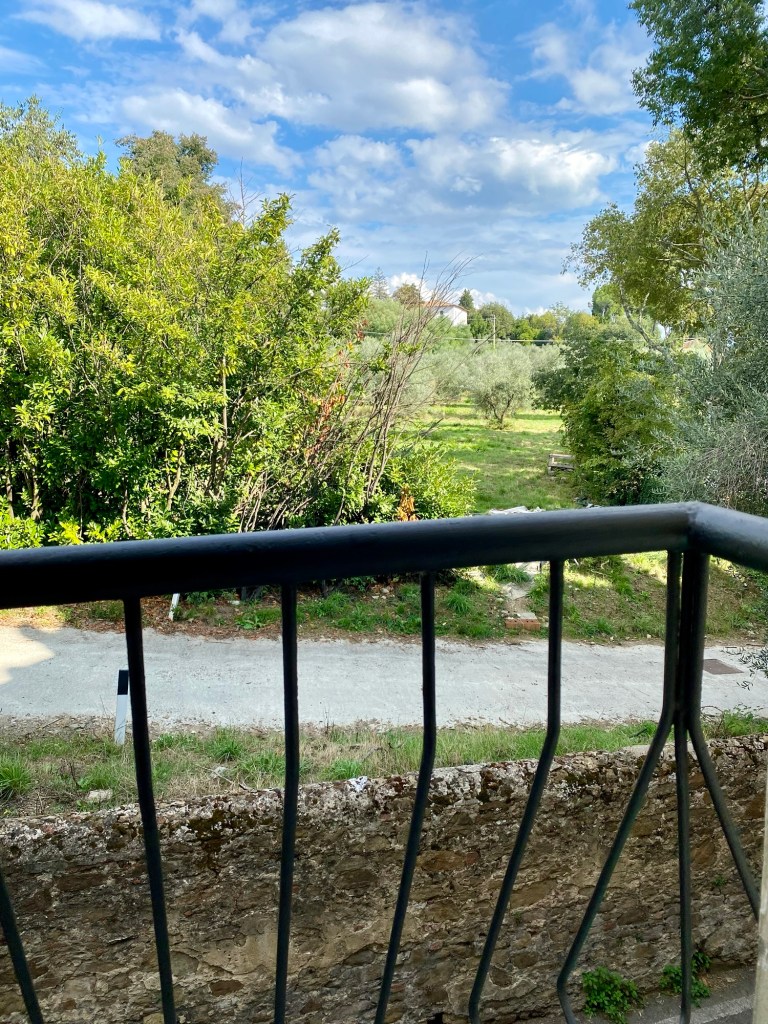
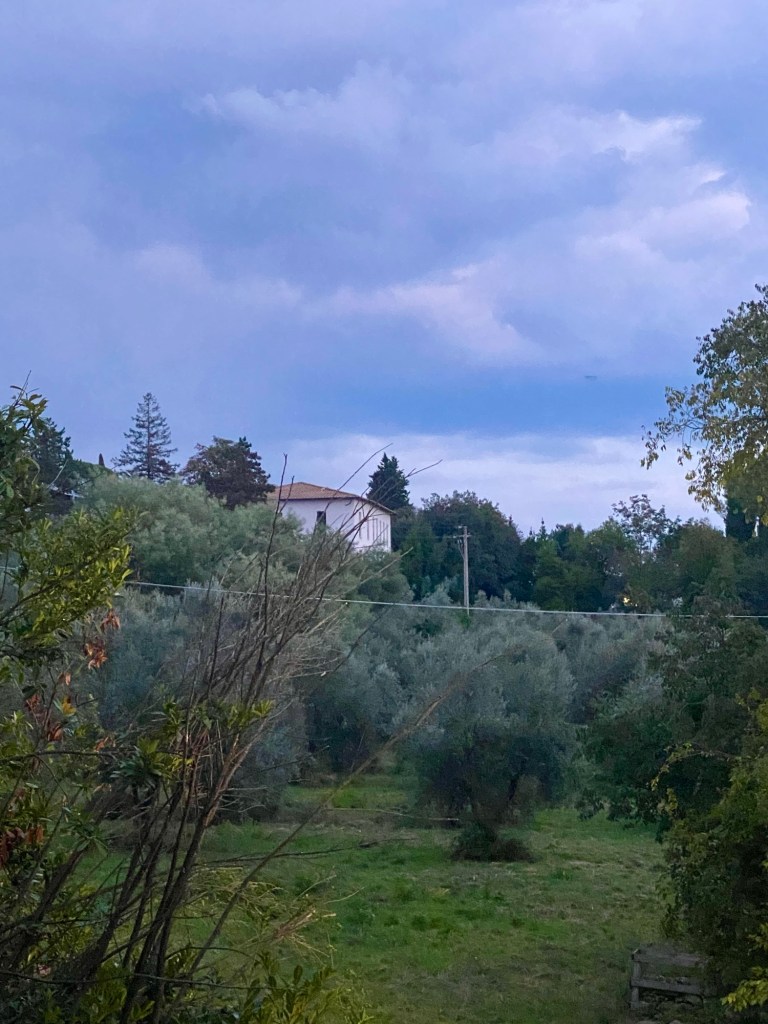
I’m staying in a sweet Airbnb apartment just outside Florence; I have a lovely olive tree outside my kitchen window and the view of a grove of olives outside my bedroom window. I’m awaiting my own apartment which should be available next week, finalmente!
My kitchen view.My bedroom view.
And while it may seem like a beautiful dream, there are also strikes you contend with in Florence, but honestly it’s a small price to pay for the opportunity to live here. I’m so happy to be here at last and the summer heat is just a memory.
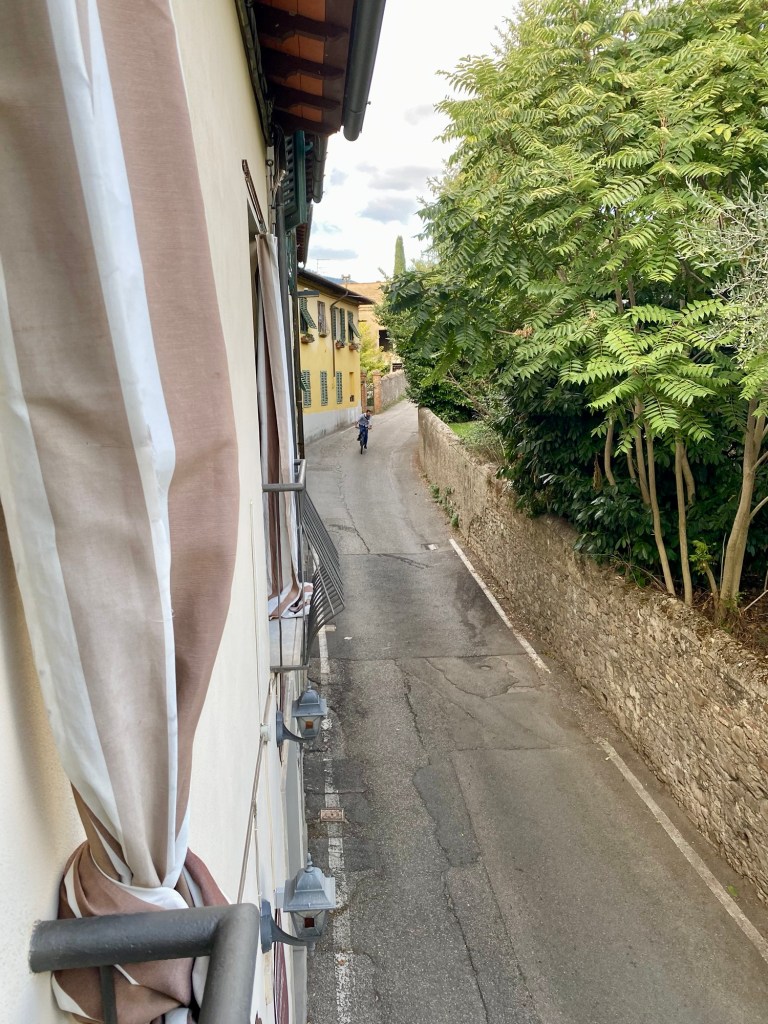
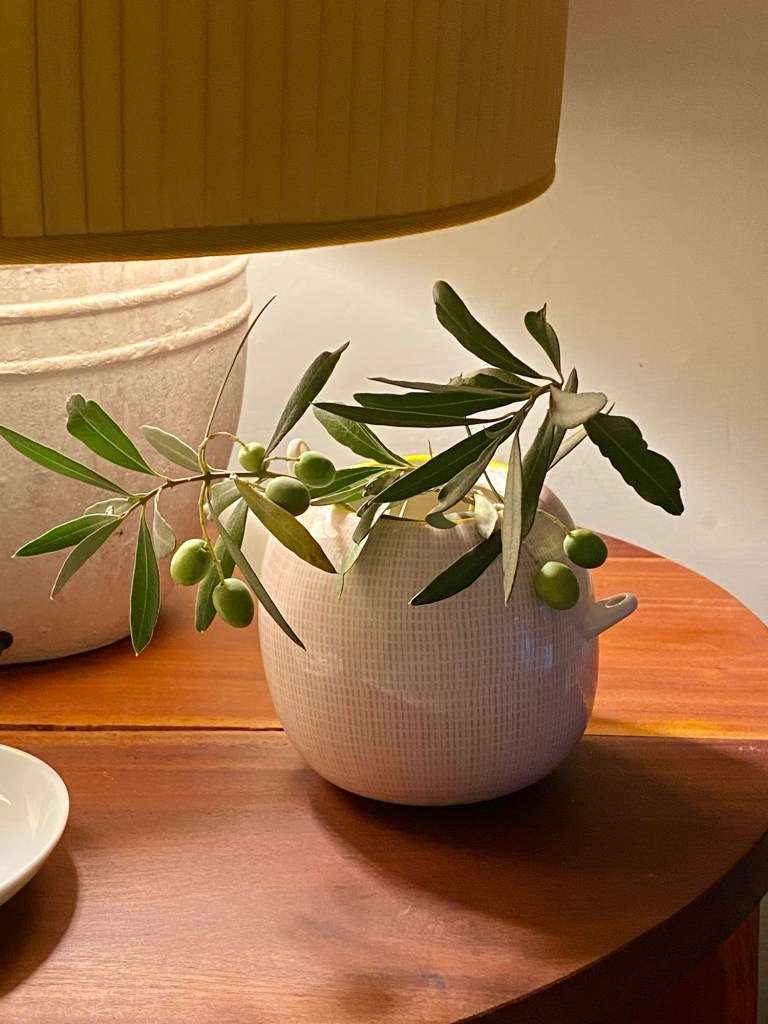
Sciopero=Italian for strikeLooking up and down the little street outside my windows.I had to pluck some olive branches! I prefer this evening view to the one in Munich, with or without the moon!
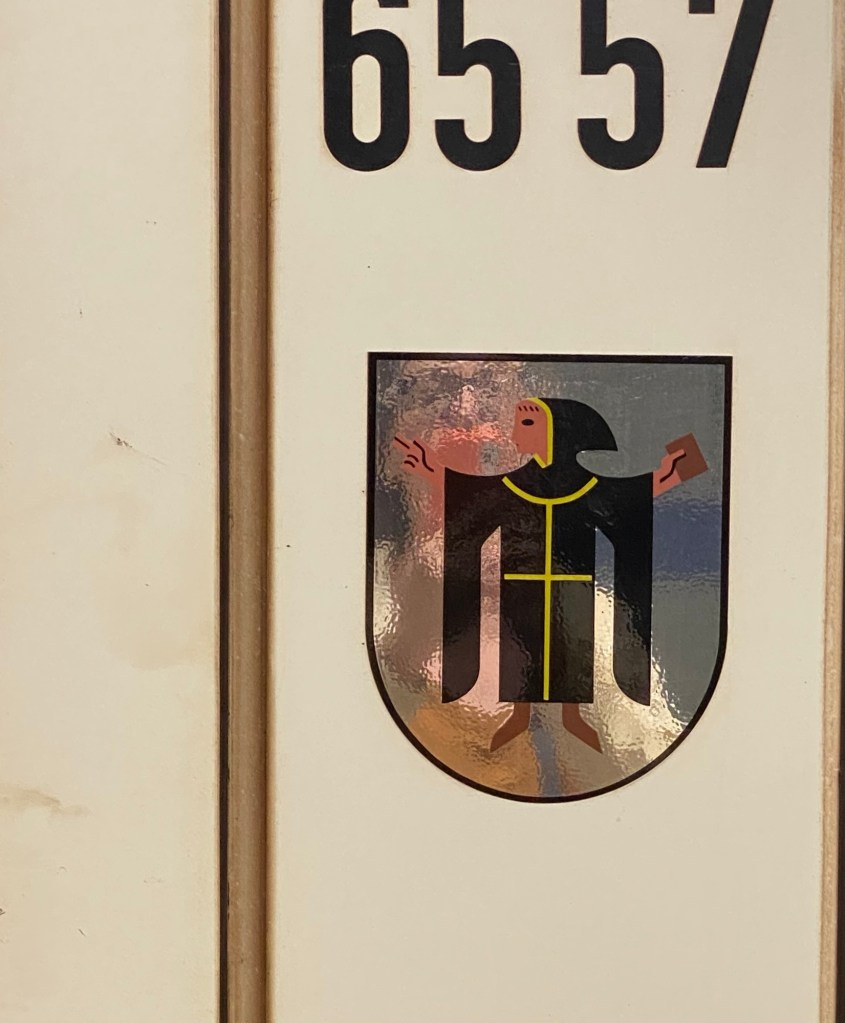
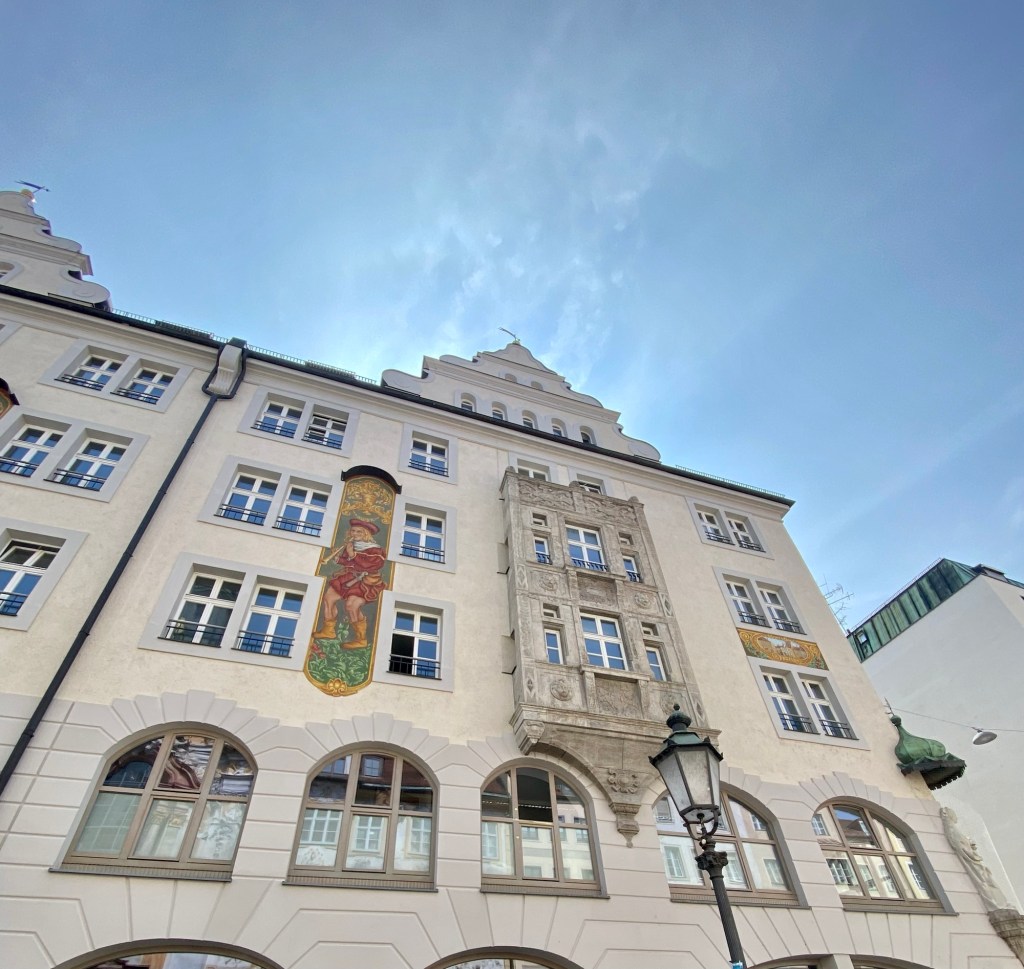
Munich is the city of monks, which is what the name means in German. I like this symbol of the heritage as spotted on a Ubahn car.
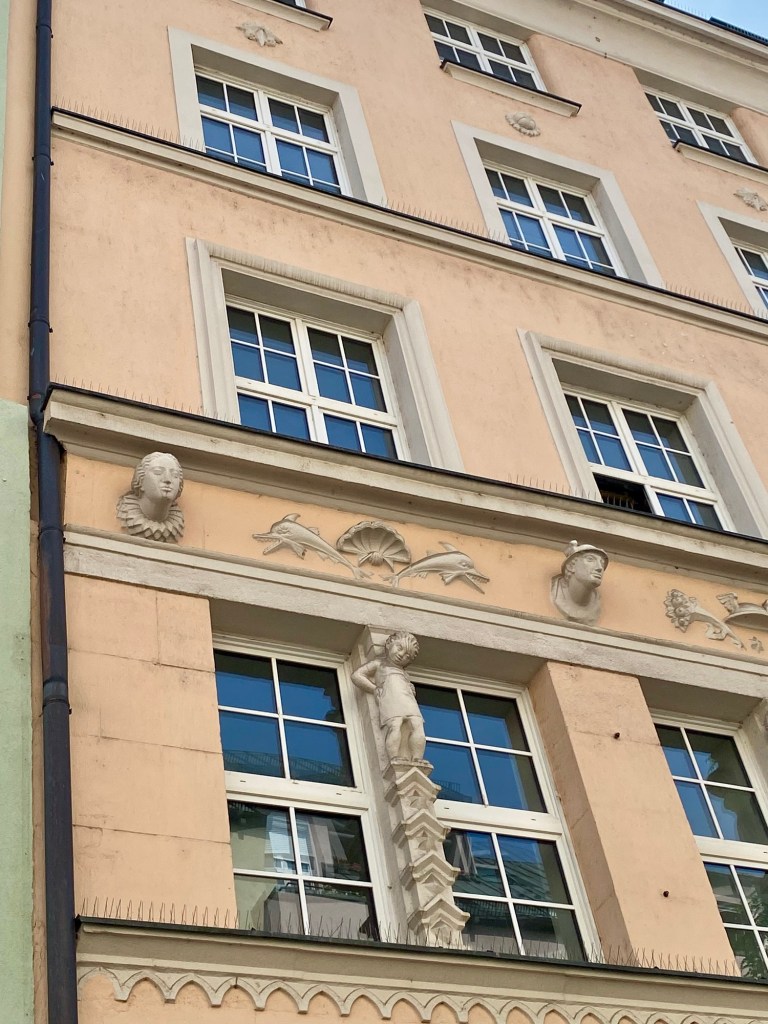
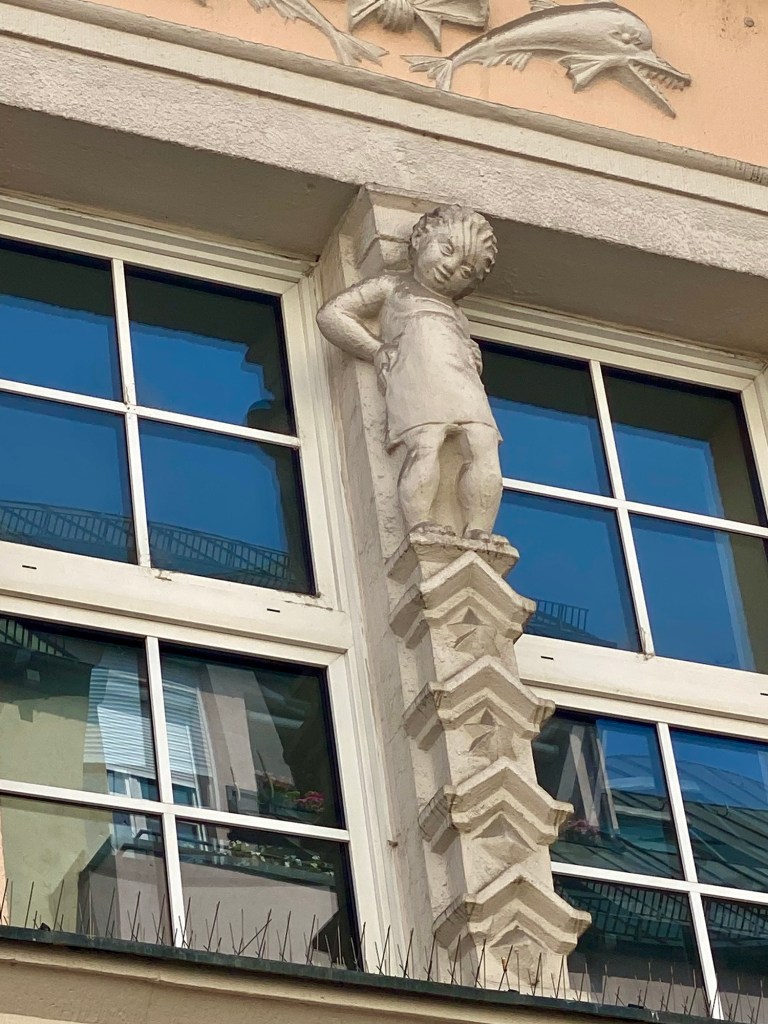
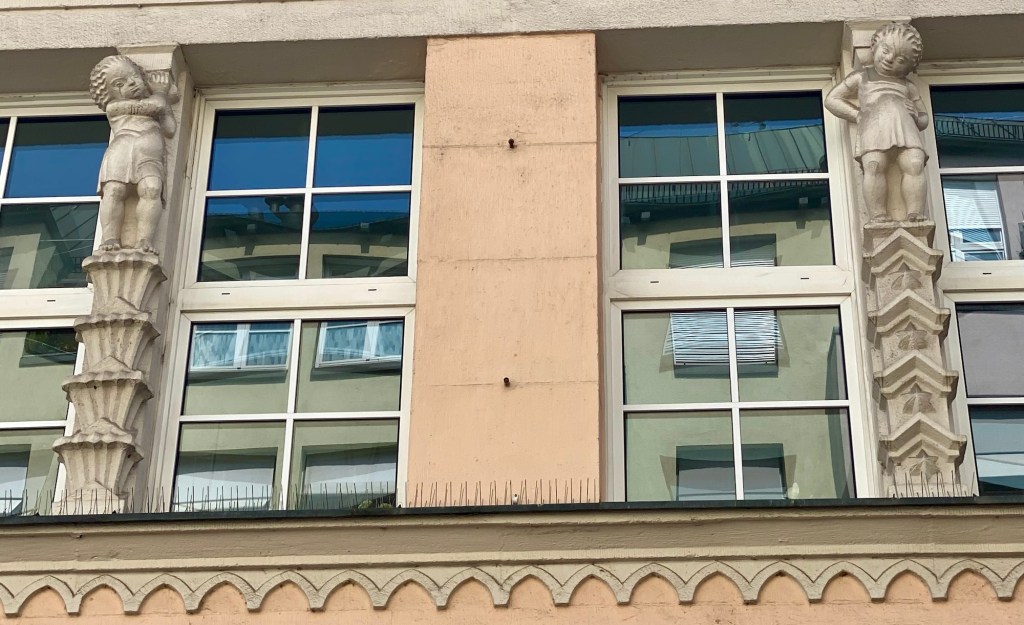
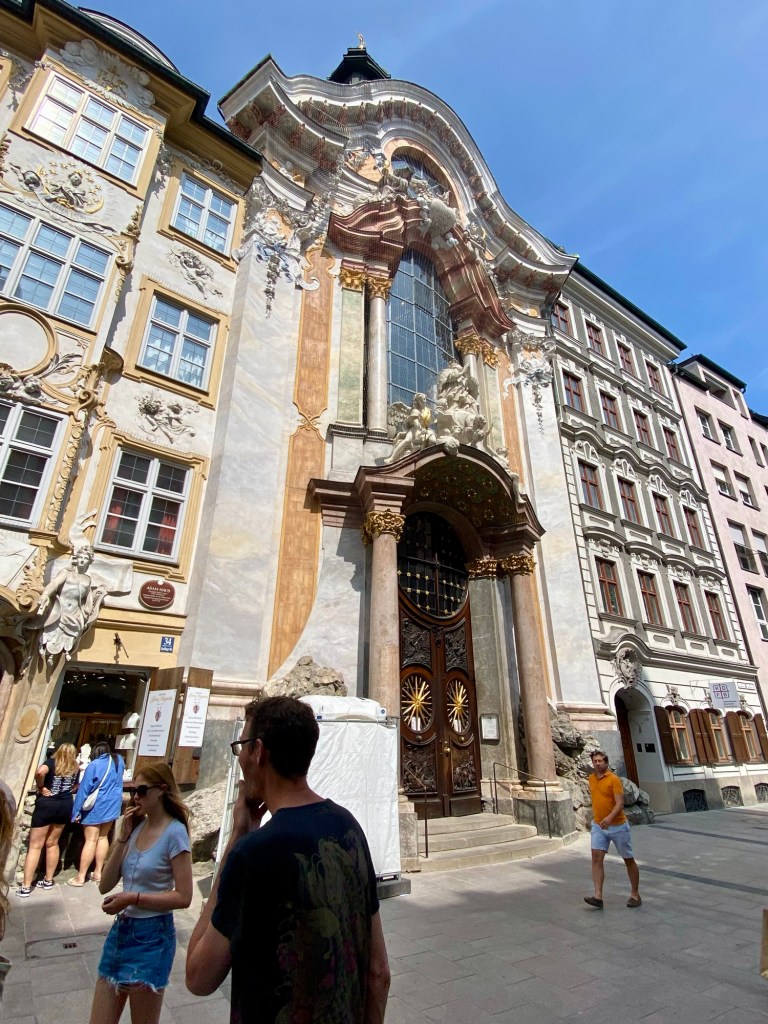
Never before have I seen children represented as caryatids. It is unique and wonderful!
Munich is a lot of fun to walk around in the pedestrian only city center. I feel so lucky to have had this time here to get to know this great city! Bitte und danke!
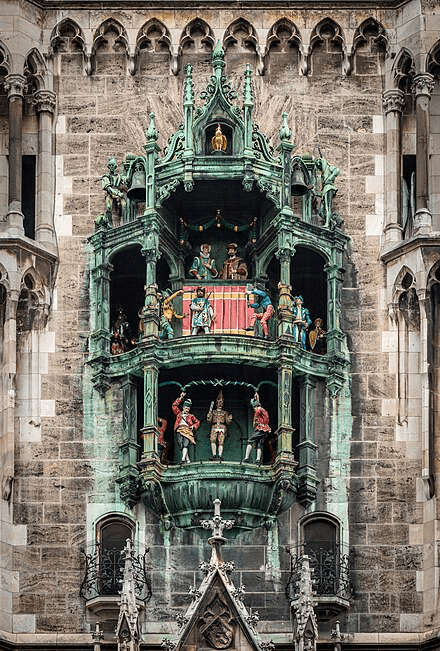
I got to see this famous clock dance! It was a sunny morning and I was in Marienplatz at just the right time. I joined hundreds of other people to watch the mechanical clock play out its drama.
The Rathaus-Glockenspiel is a large mechanical clock located in Marienplatz Square, in the heart of Munich. Famous for its life-size characters, the clock twice daily re-enacts scenes from Munich’s history. First is the story of the marriage of Duke Wilhelm V to Renata of Lorraine in 1568, followed by the story of the schäfflerstanz, also known as the coopers’ dance.
The clock, with 43 bells and 32 life-size figures, was added during the completion of the Neues Rathaus (New Town Hall) in 1908. Every day at 11 a.m. and 12 p.m. (as well as 5 p.m. from March to October) the clock re-enacts two stories from Munich’s history from the 16th century, taking about 15 minutes.
The top half of the Glockenspiel tells the story of the marriage of the local Duke Wilhelm V (who also founded the noted Hofbräuhaus) to Renata of Lorraine (Renate von Lothringen). In honor of the happy couple, there is a joust with life-sized knights on horseback representing Bavaria (in white and blue) and Lothringen (in red and white); the Bavarian knight (Bayerische Ritter) wins.
This is followed by the second story, the Schäfflertanz otherwise known as the coopers’ dance, which plays out on the bottom half of the clock. This story depicts the end of a severe plague that took place in 1517. The coopers are said to have danced through the streets, encouraging residents to leave their homes again after being frightened by the plague. The coopers remained loyal to the duke, and their dance came to symbolize perseverance and loyalty to authority through difficult times. By tradition, the dance is performed in Munich every seven years. This was described in 1700 as “an age-old custom”, but the current dance was defined only in 1871. The dance is performed during Fasching (German Carnival); it was performed in 2019.
At the very end of the show, a very small golden rooster at the top of the Glockenspiel chirps quietly three times, marking the end of the spectacle.
On a mid August afternoon, late in the day, I got the chance to ride through the countryside of Bavaria and it was so lovely. I’ve been in Germany for about a month now, but most of my time has been spent in the city centers of Berlin and Munich. It was very nice to see something of the countryside. I love how green it is and all the land is so well cared for.
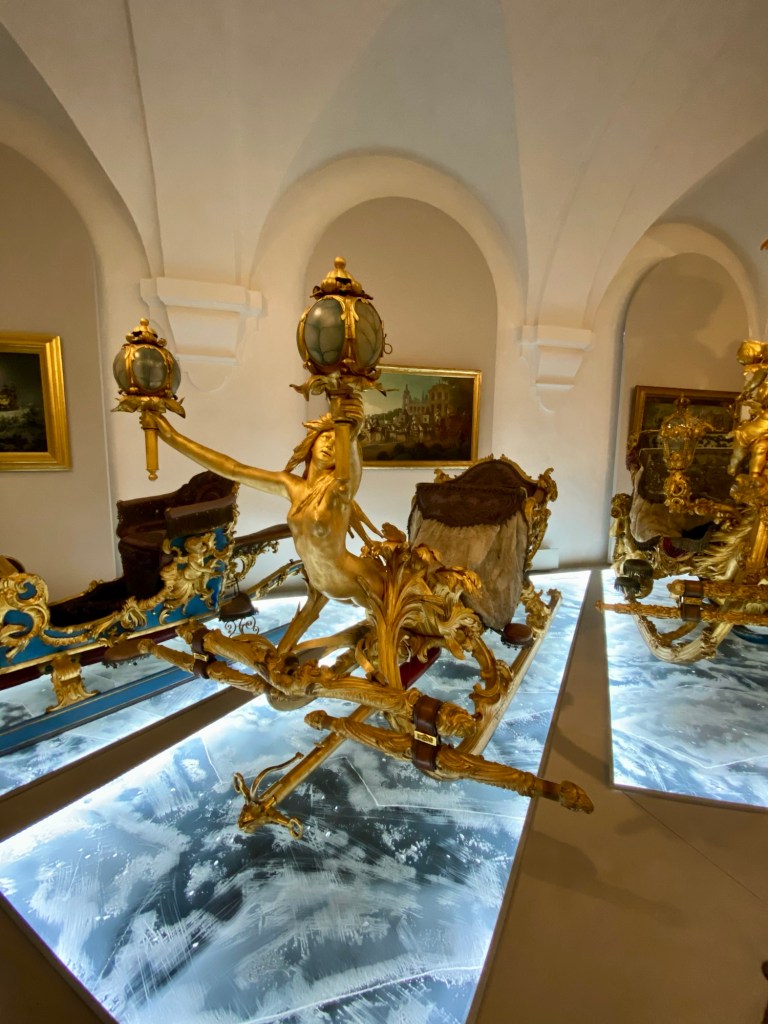
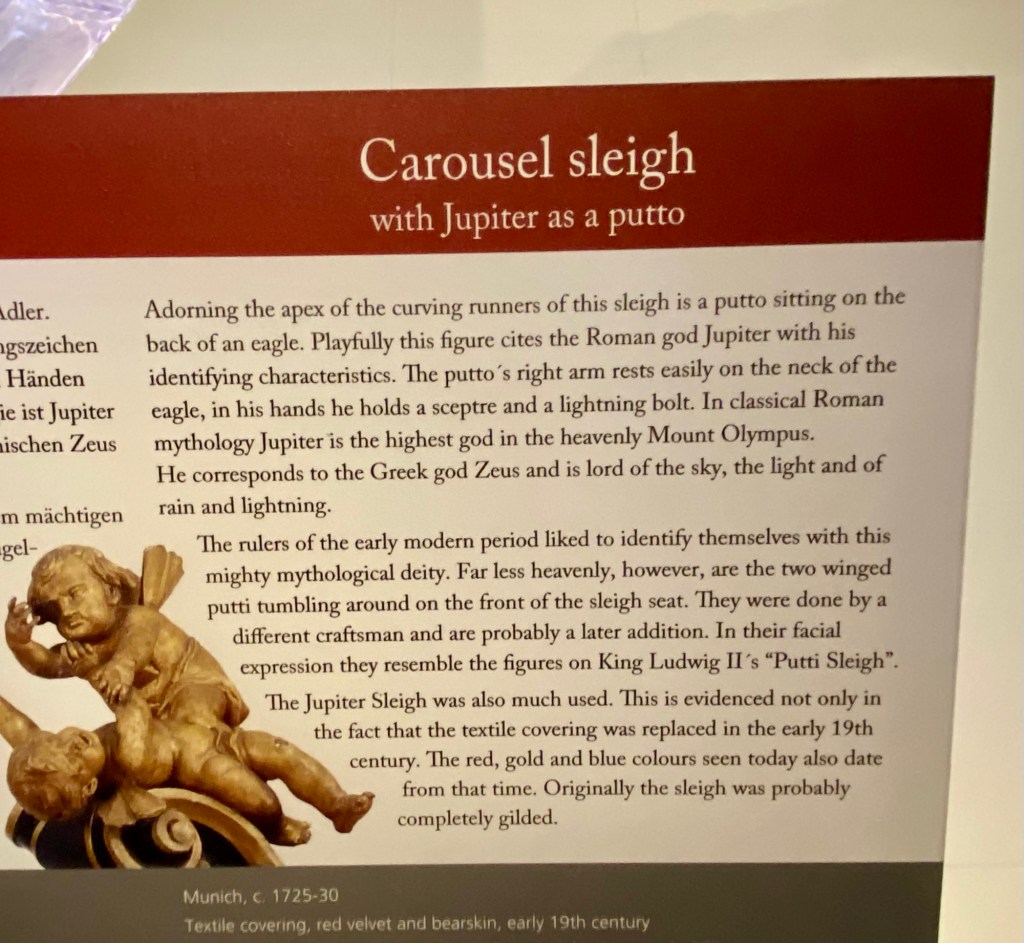
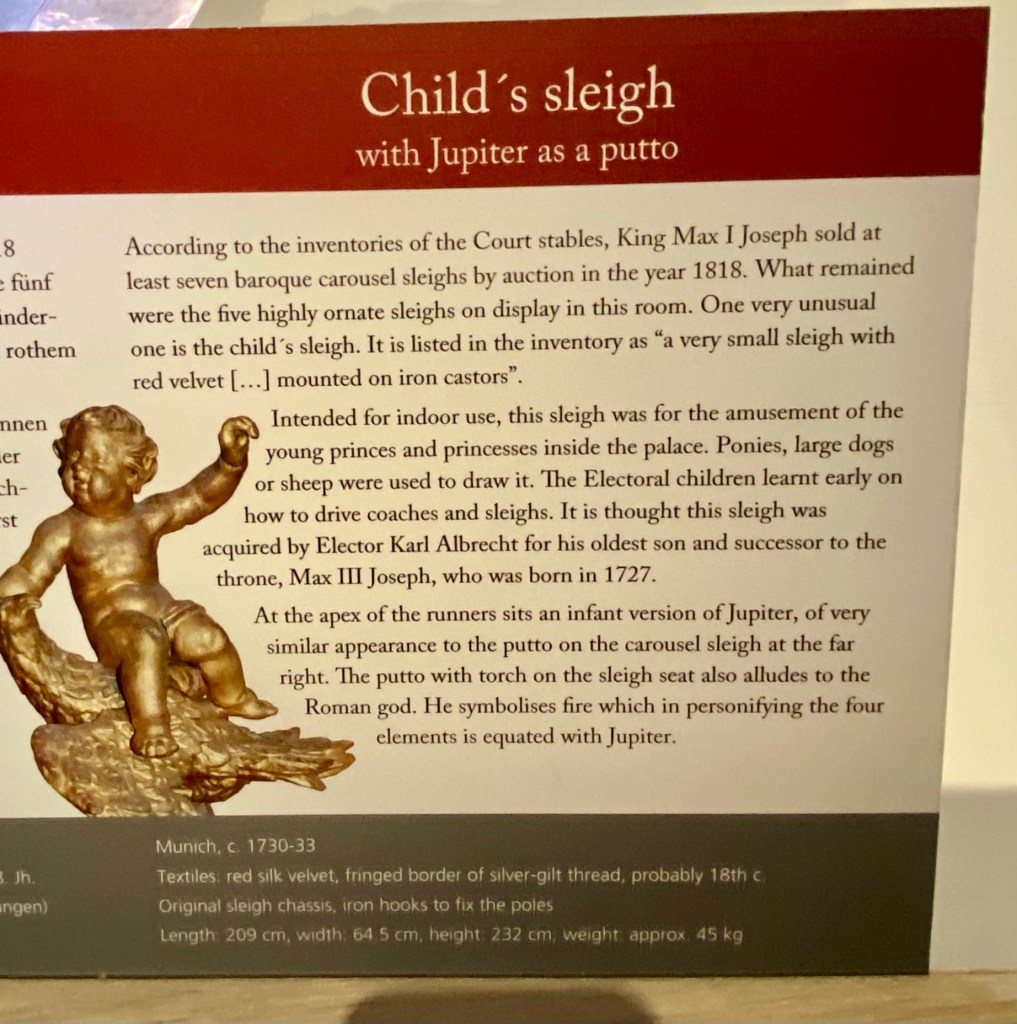
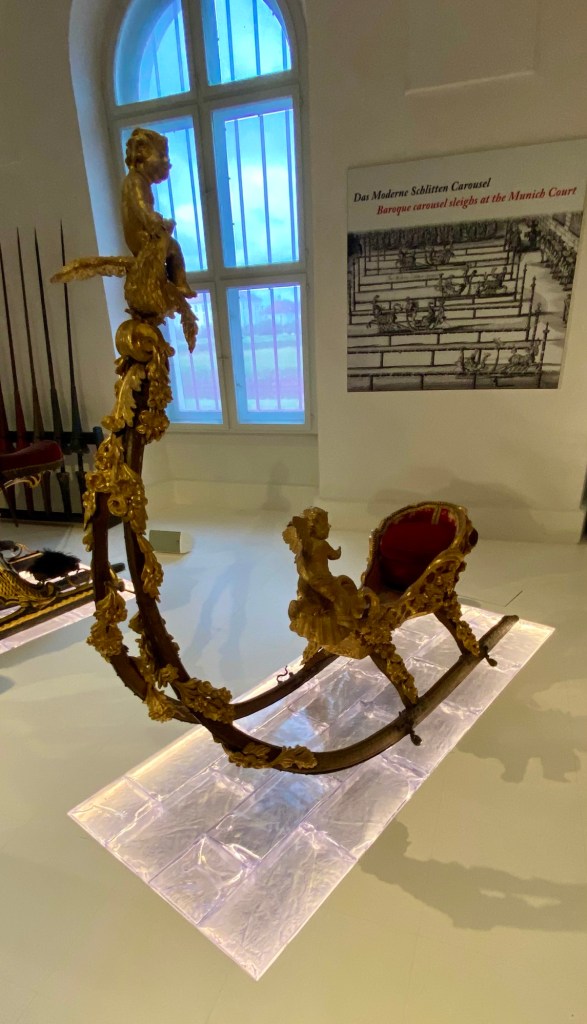
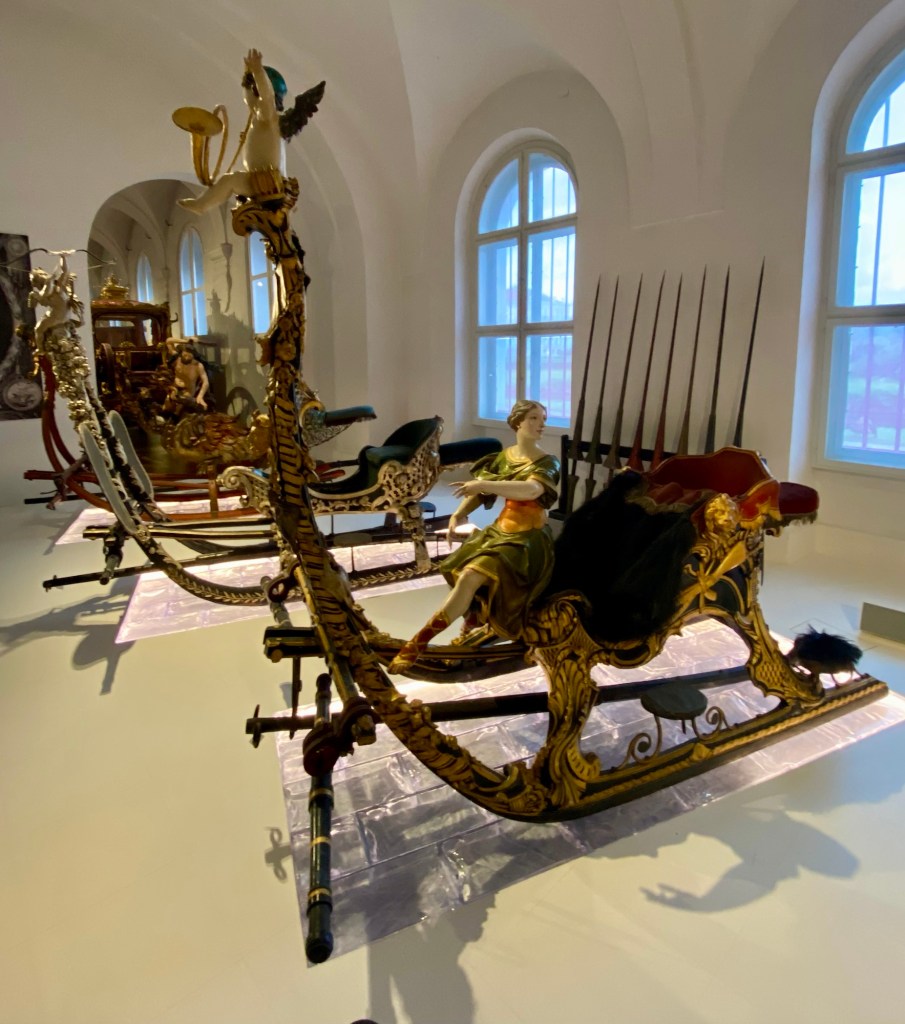
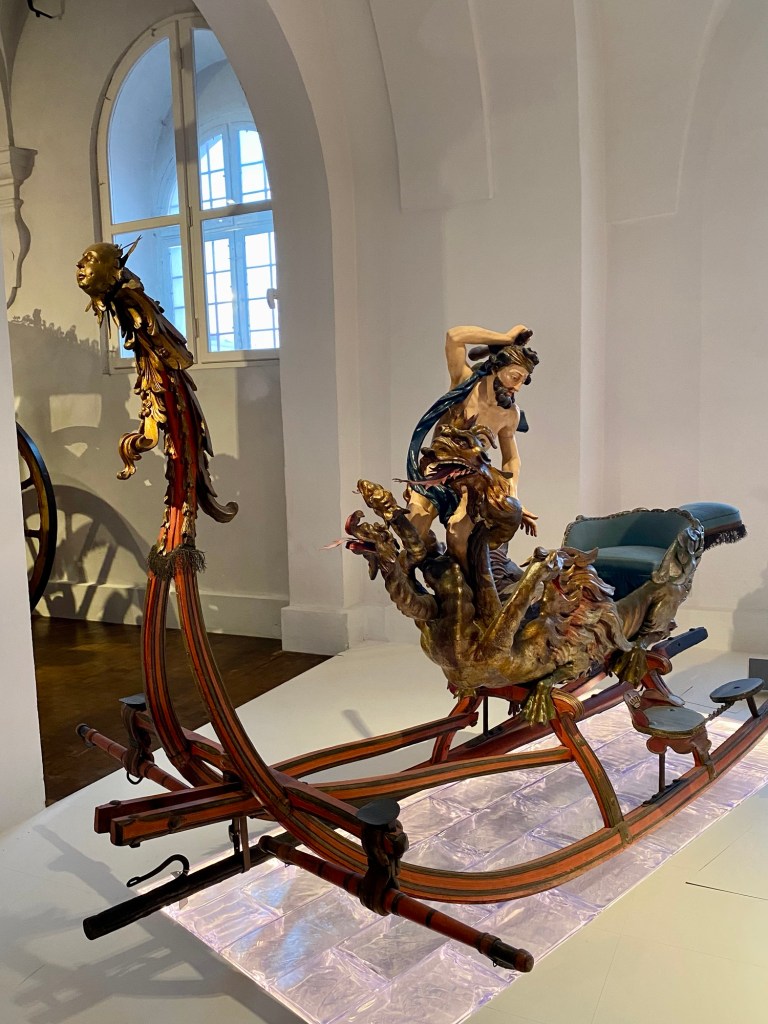
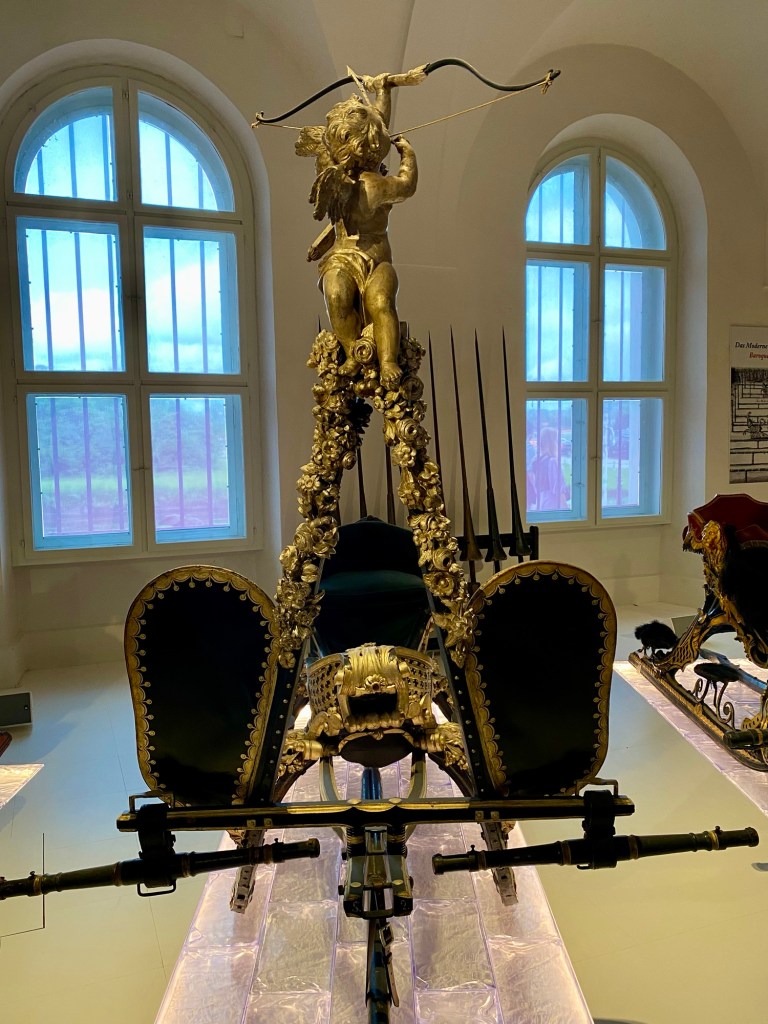
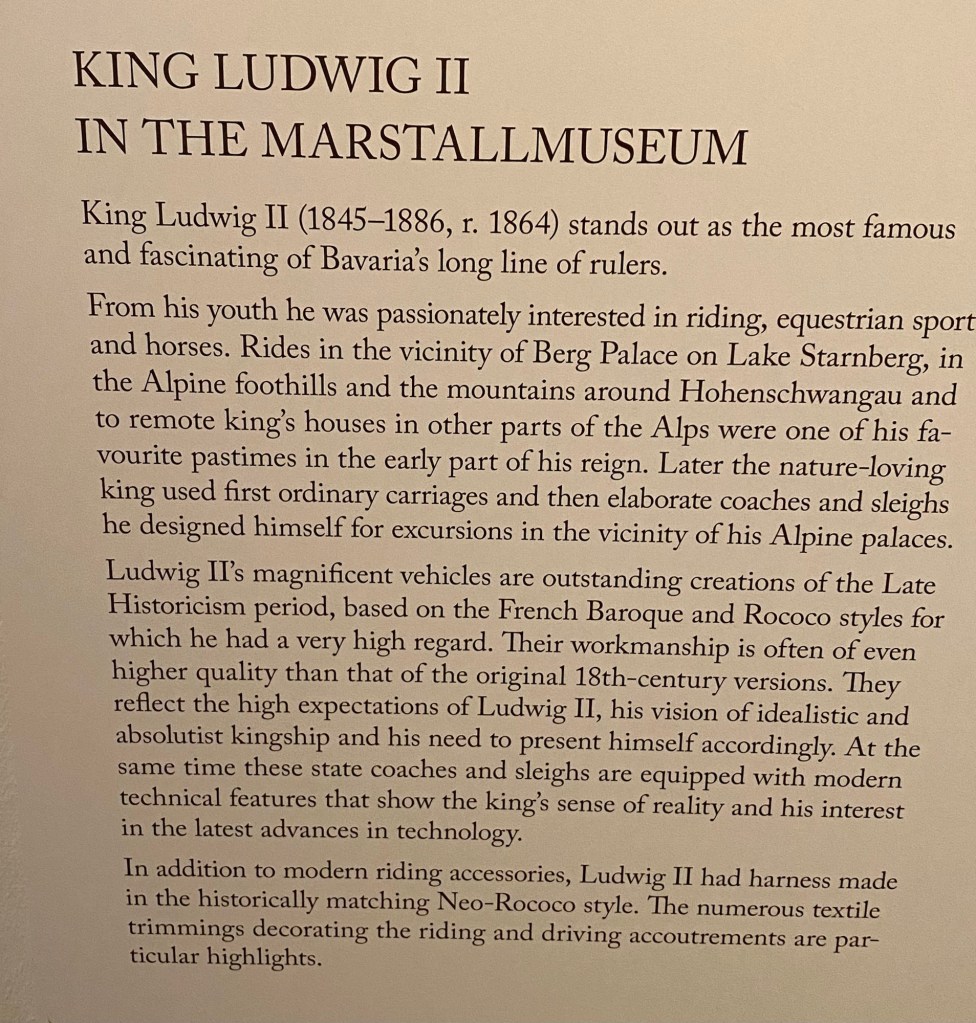
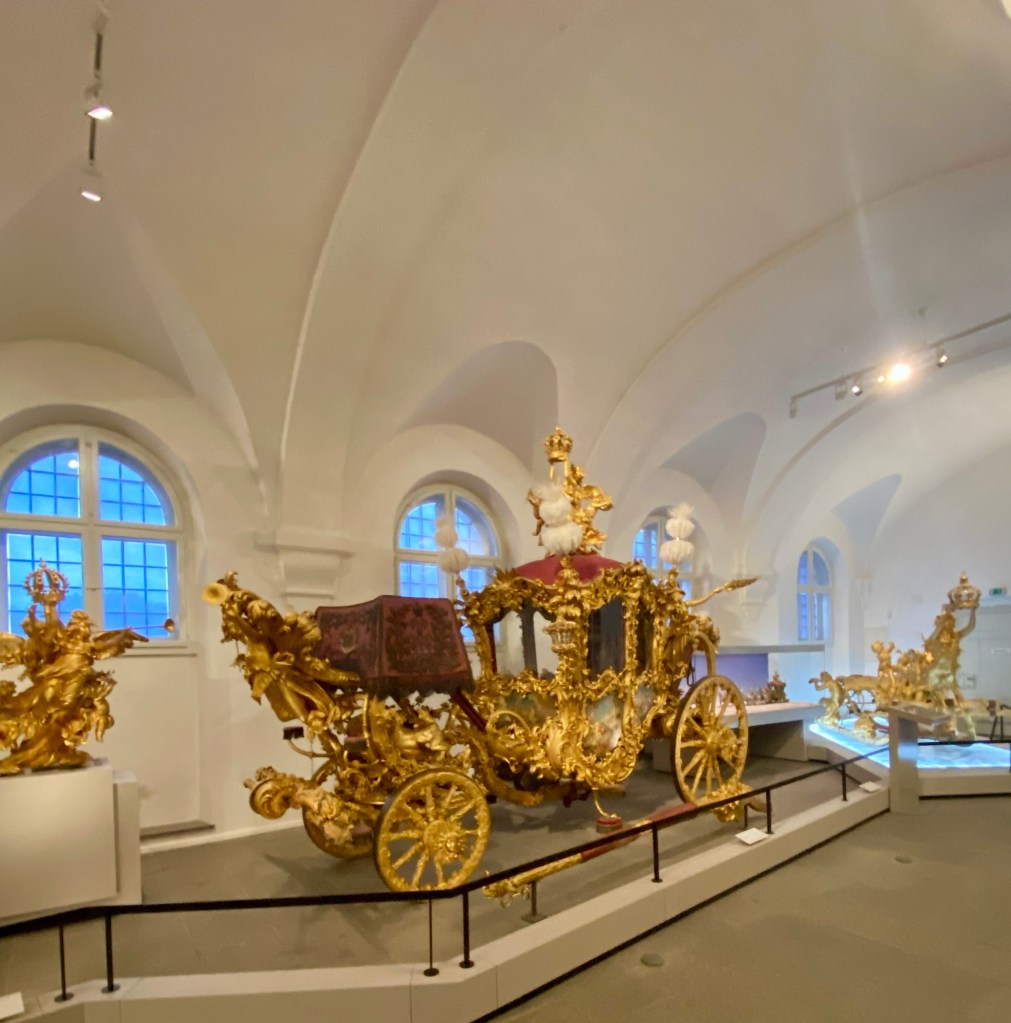
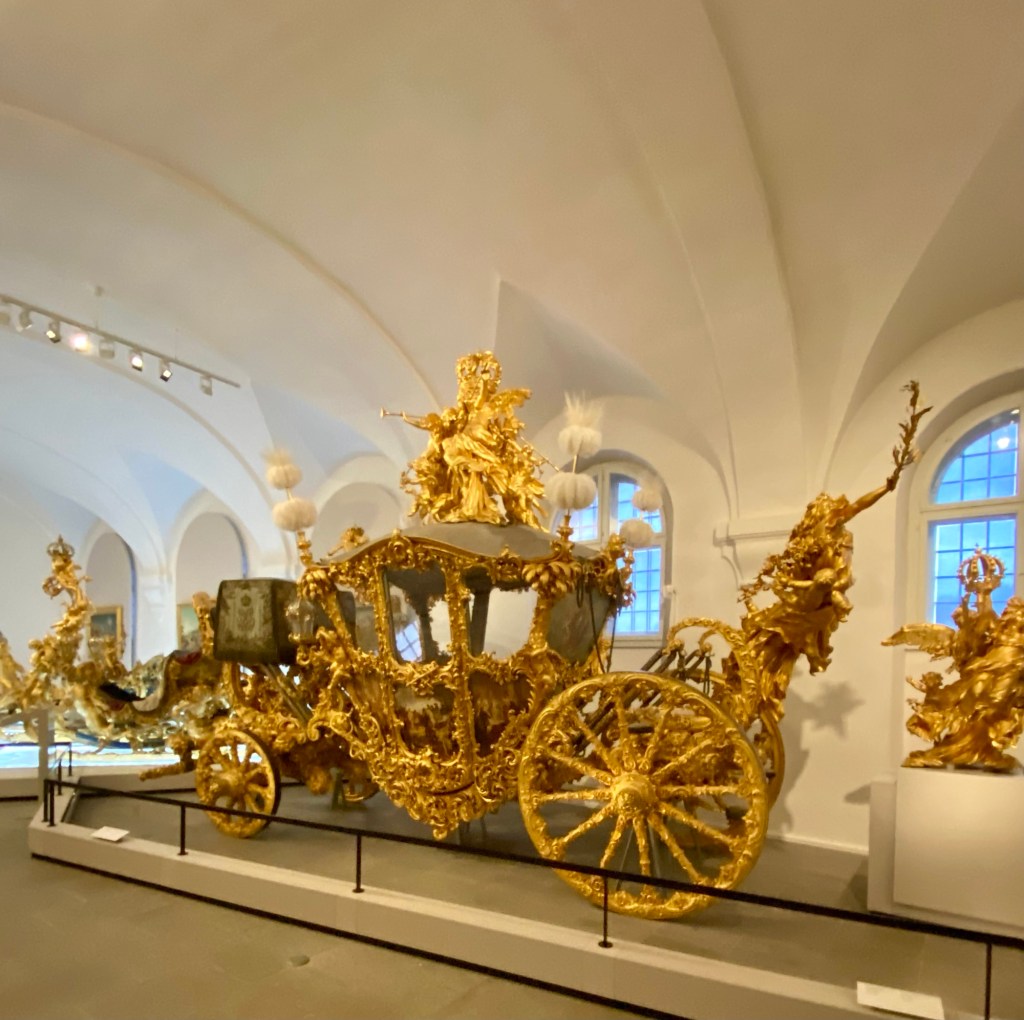
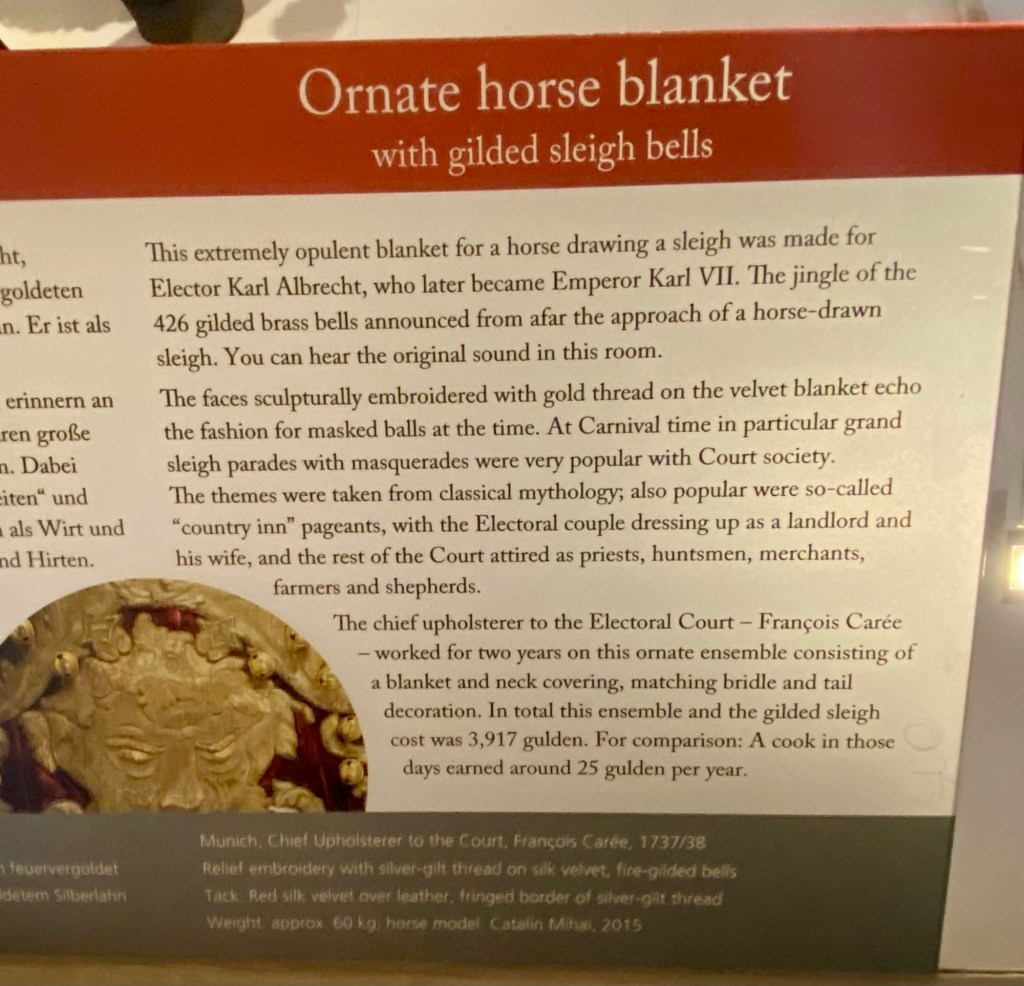
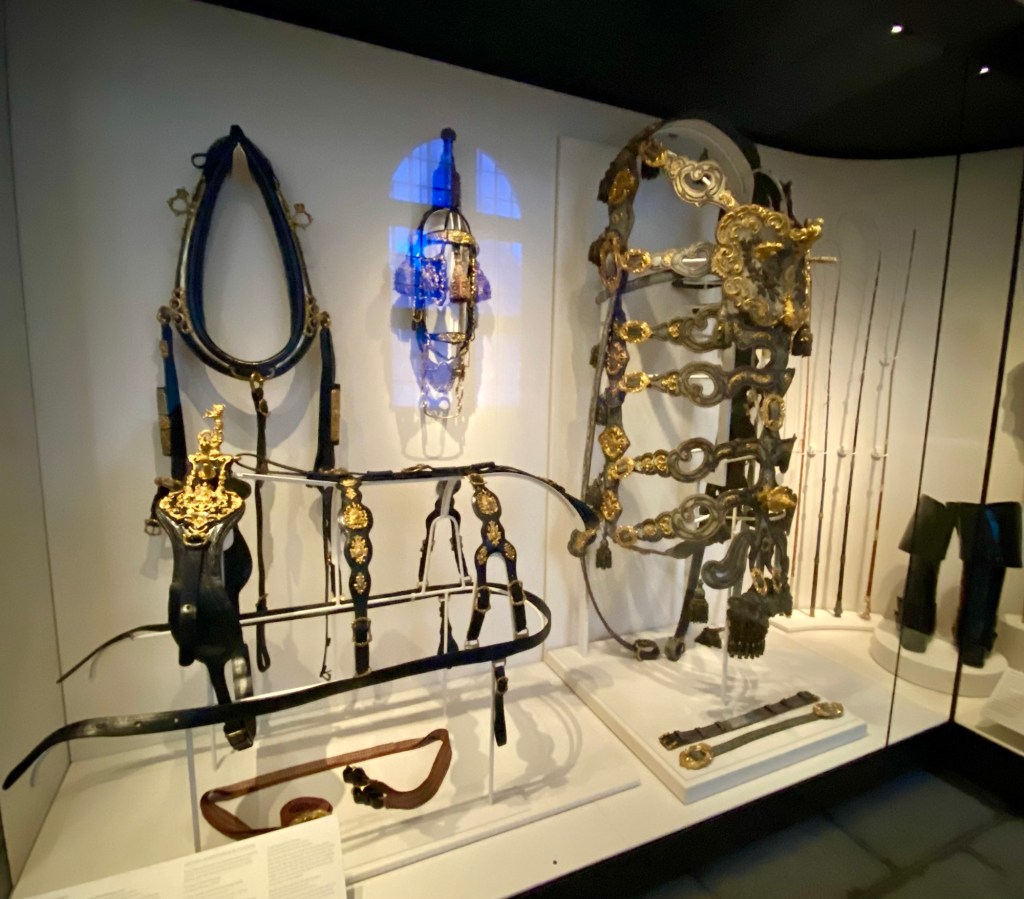
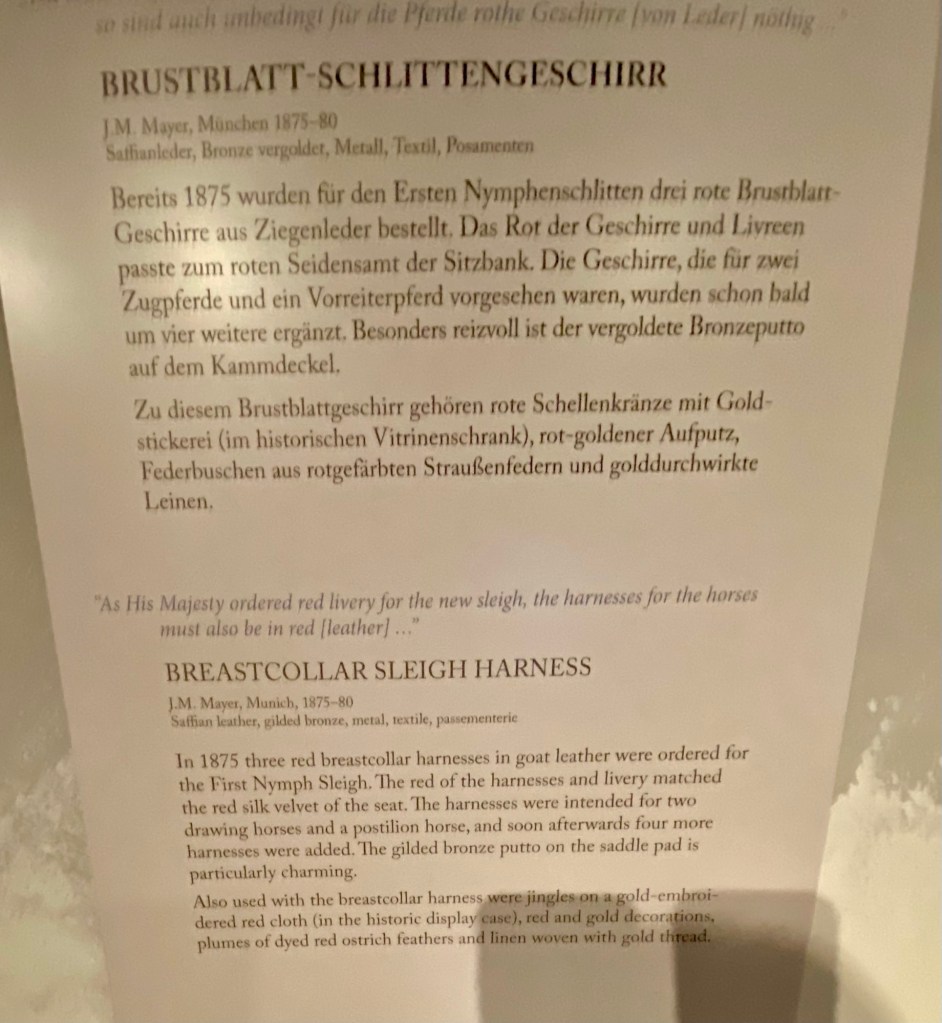
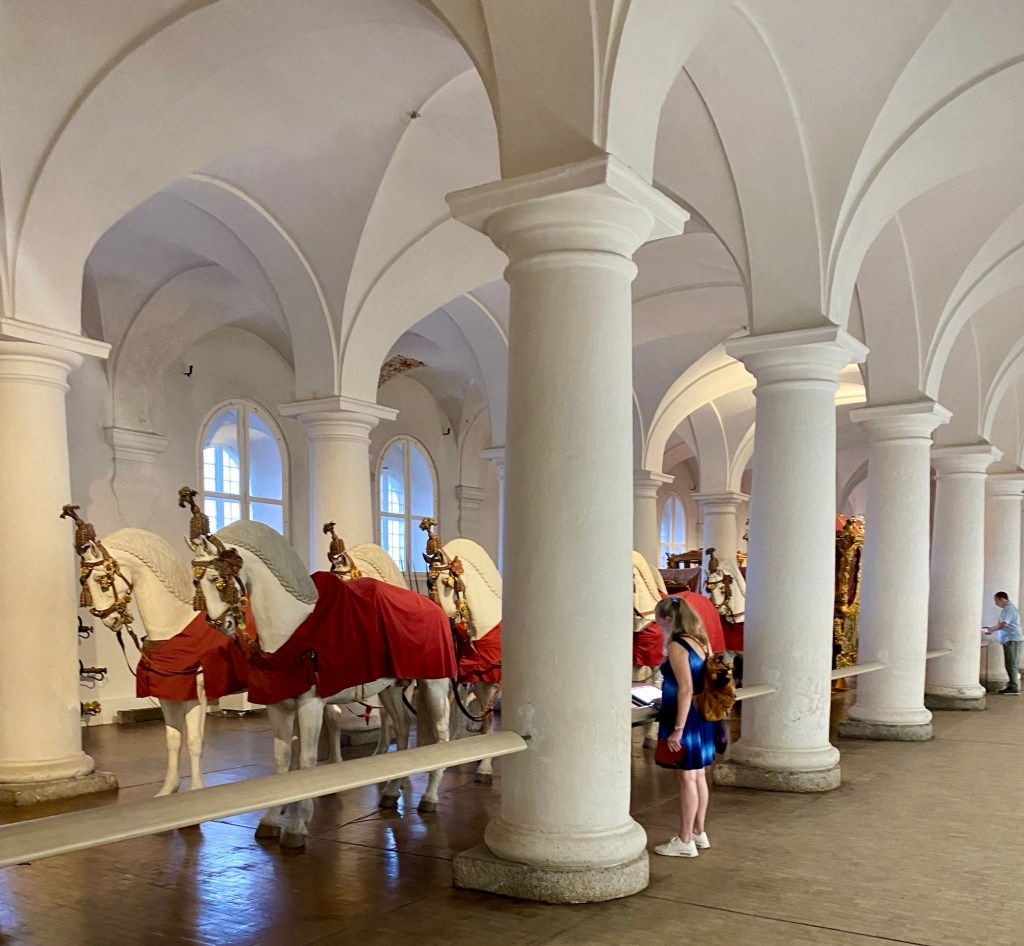
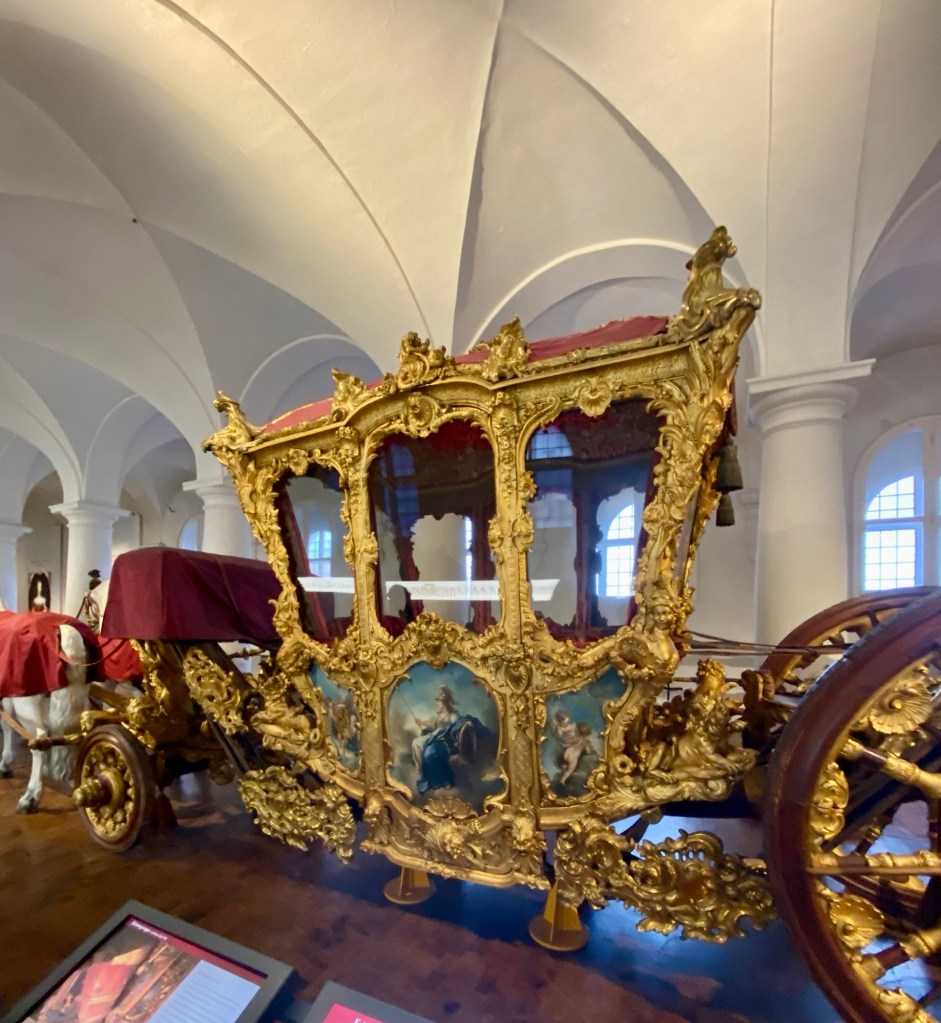
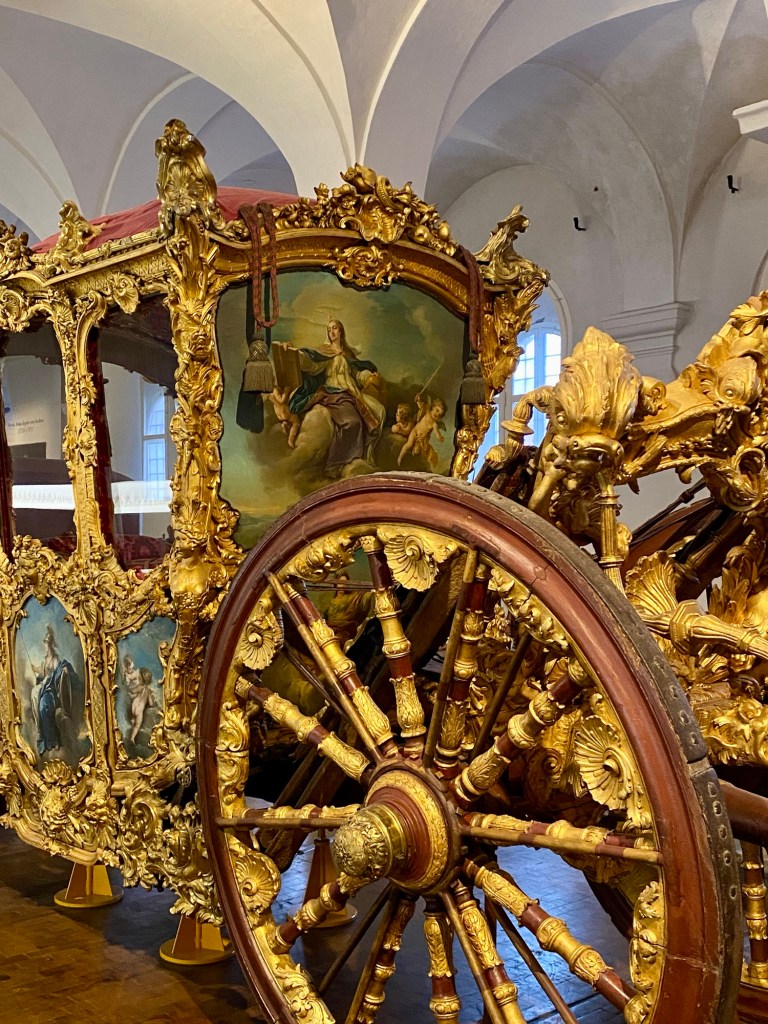
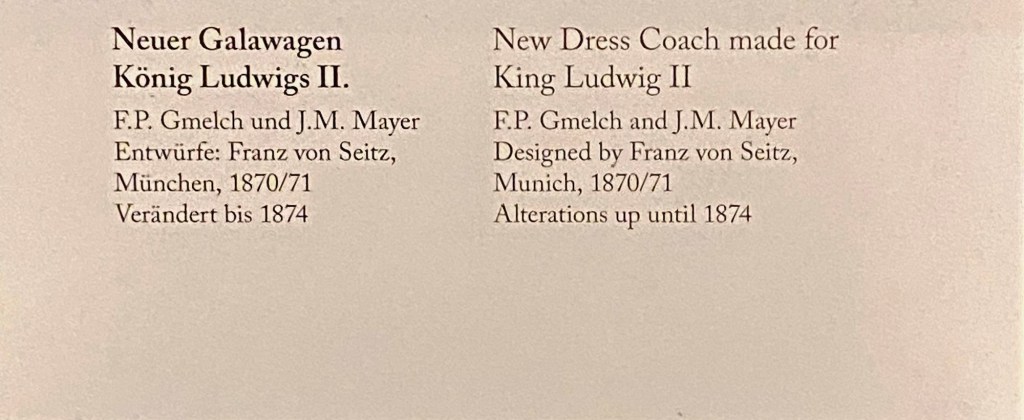
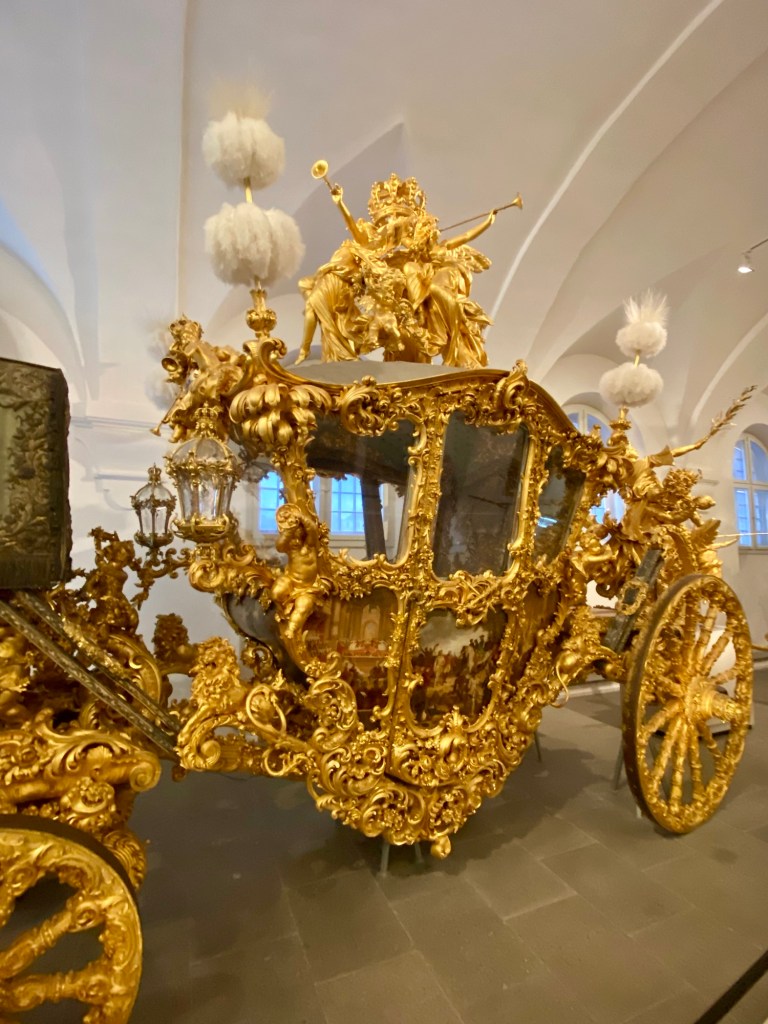
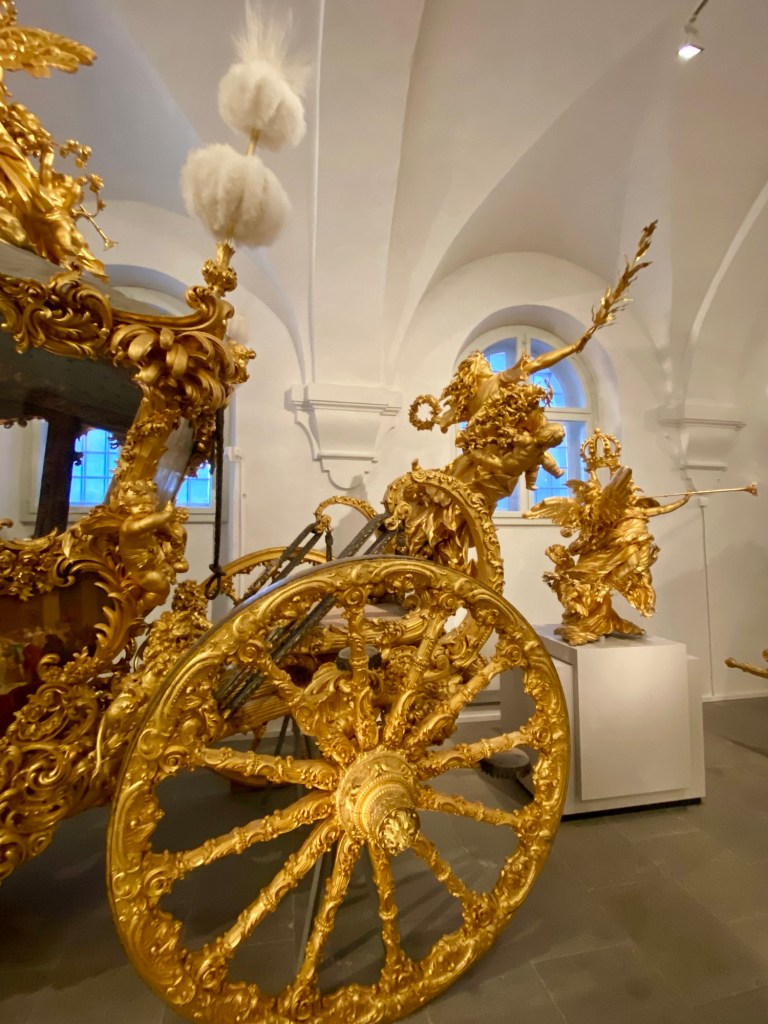
The sleighs. In my last post on this museum, I showed you a hearse carriage. But, did you ever stop to think about what princes and princesses did in wintertime? Well, they went sleigh riding of course! And this amazing collection houses some of their incredible sleighs!
There is something else I want to remark upon before I close out these posts on the Marstall Museum. The exhibit of the sleighs is particularly well done! Note the icy looking glass upon which the sleighs are displayed. Also, as one walks through the mews in this area, you hear, just barely, the sound of sleigh bells ringing. It isn’t obvious and I doubt everyone notices it. But, it’s there and I say, hat’s off to the curators of this fabulous collection! From one curator to another, bravo!
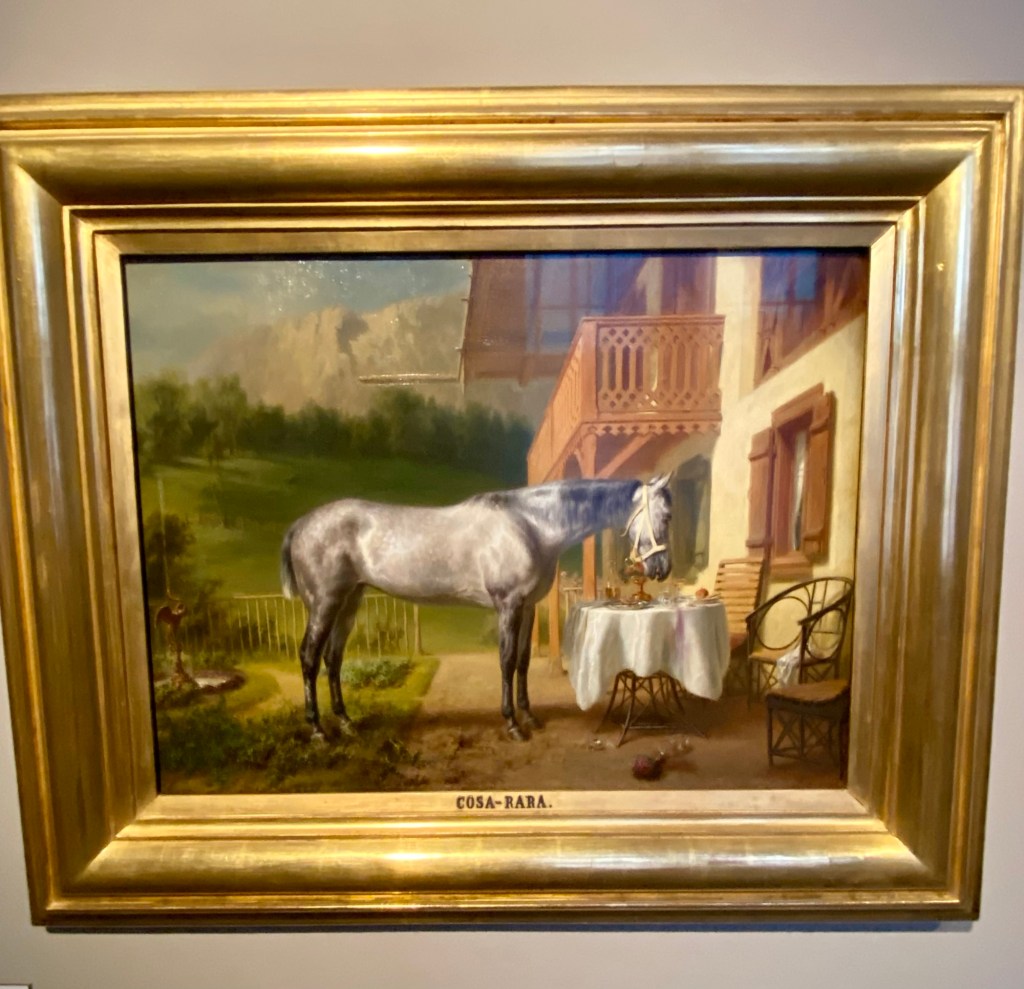
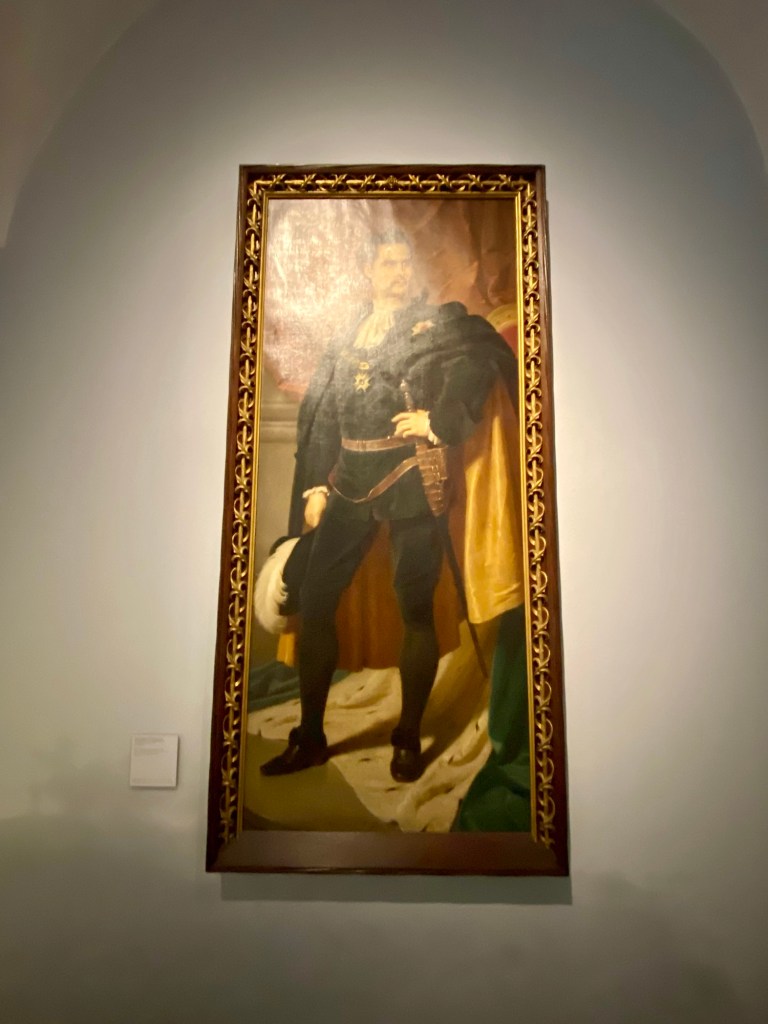
I’ve seen a lot of paintings in my lifetime. This is the first one that I’ve ever observed in which a horse is eating from a table. He was obviously considered a pet, not just a means of transportation.
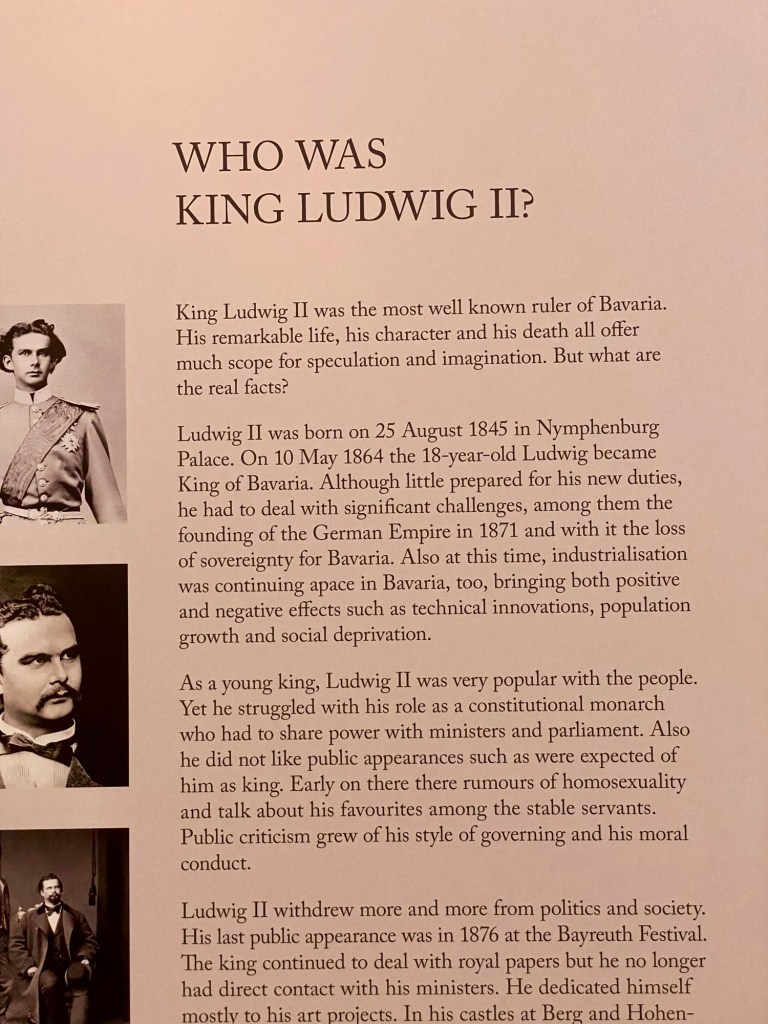
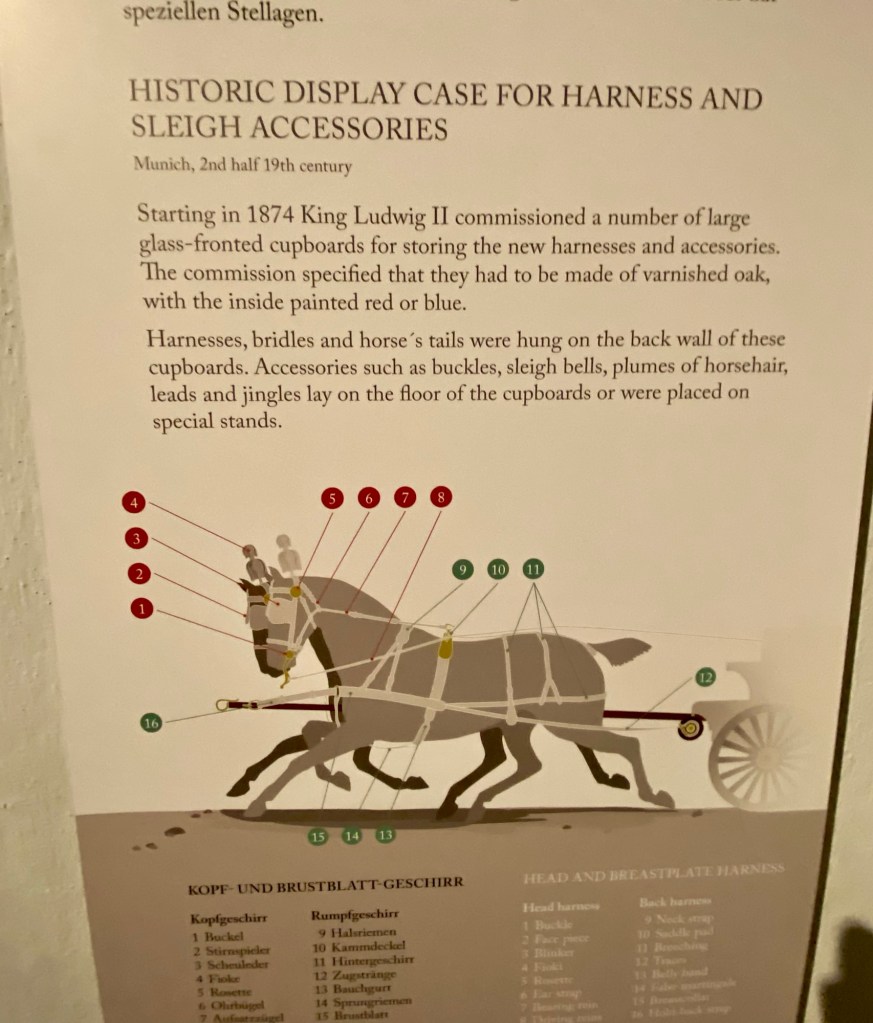
If you’ve read my earlier blog posts on the Nymphenburg Palace, you will know that Ludwig had a gallery hung in the building with painted portraits of the most beautiful women. When I saw these galleries in the mews, I thought that he treated his horses as well as his women.
When we think of princes and princesses, I doubt we typically think of them dying. I know I never have. But, the Marstall Museum will make you understand that it did happen, and I assume any well-fitted palace would have to be prepared.
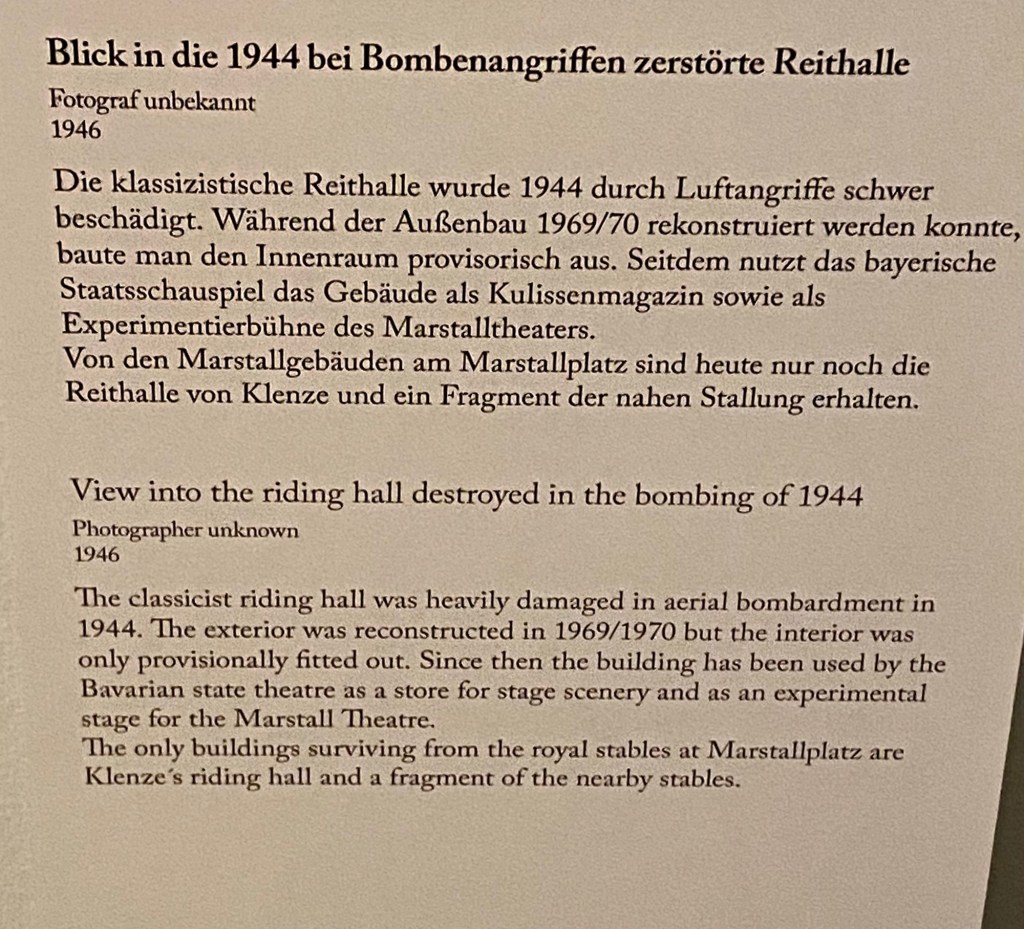
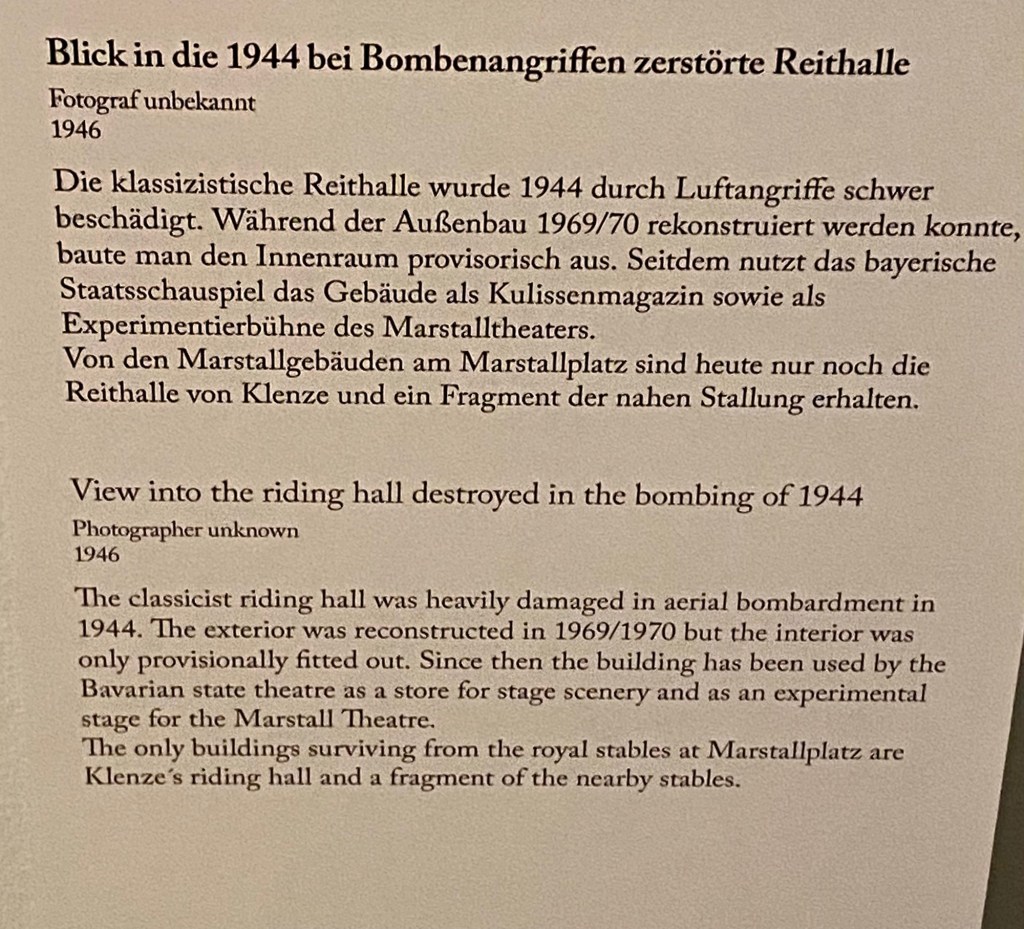
And, finally, a reminder of the recent past. The Nymphemburg Palace was nearly destroyed during WWII bombing, being so close to the center of Munich. The rebuilding is quite astounding, when you stop to consider all aspects. I salute the men and women who were able, during that tragic time, to save these and all the other collections in Germany.
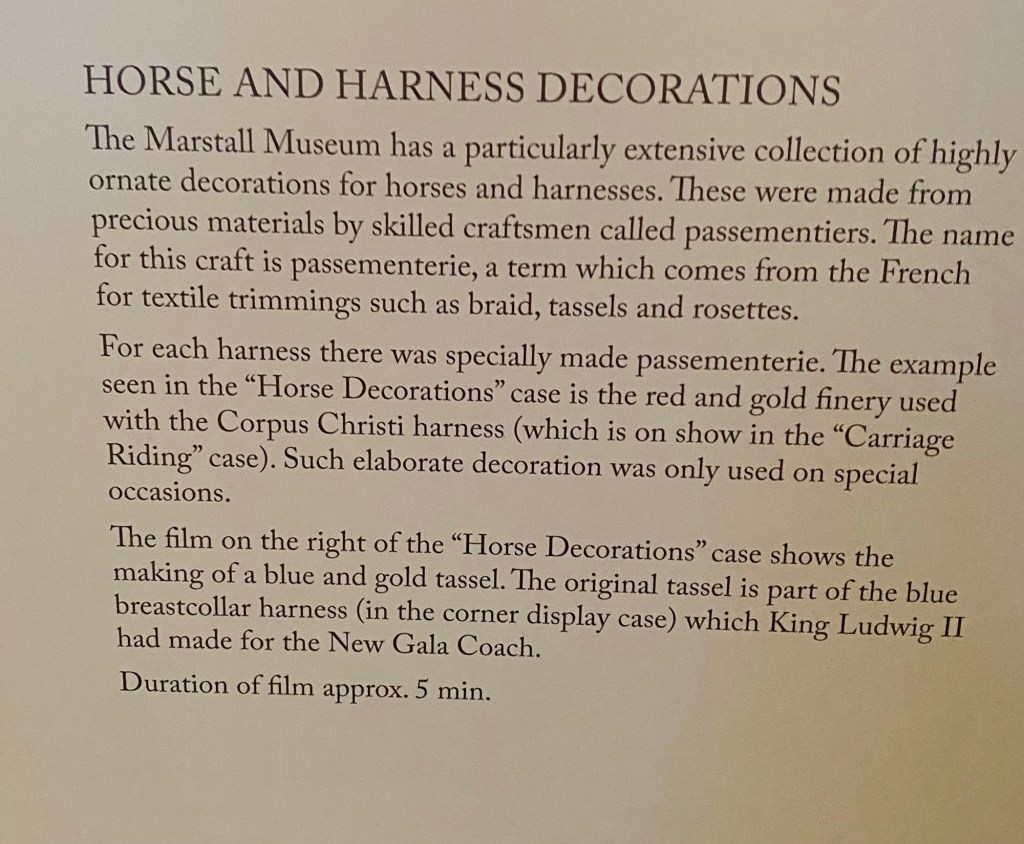
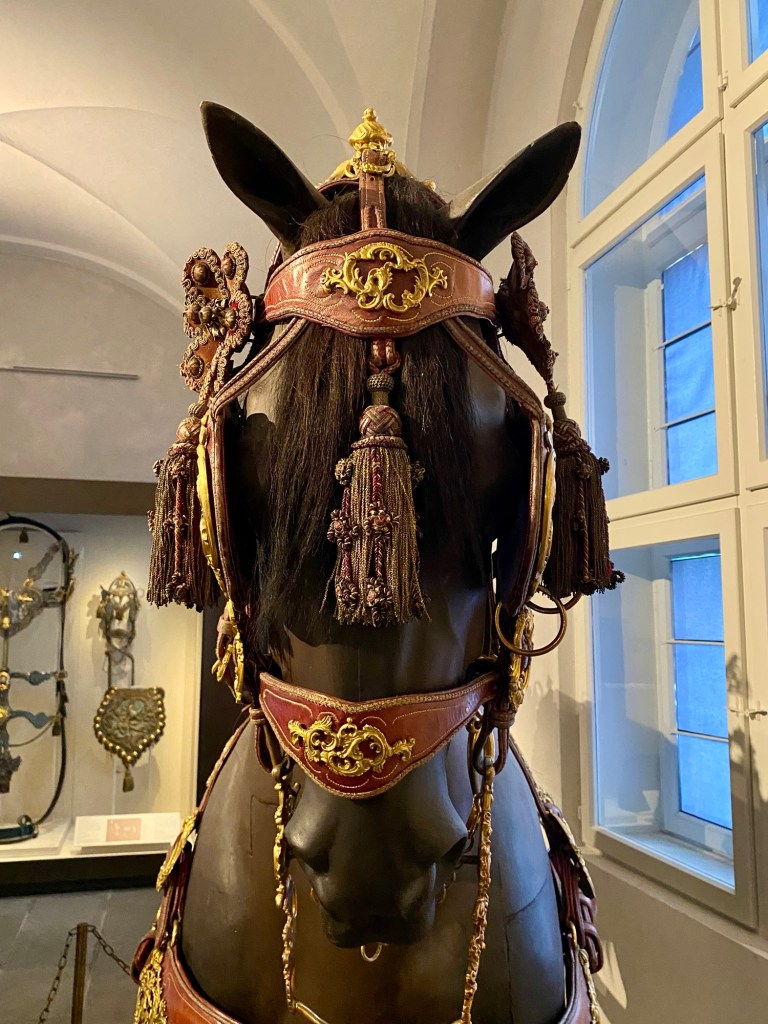
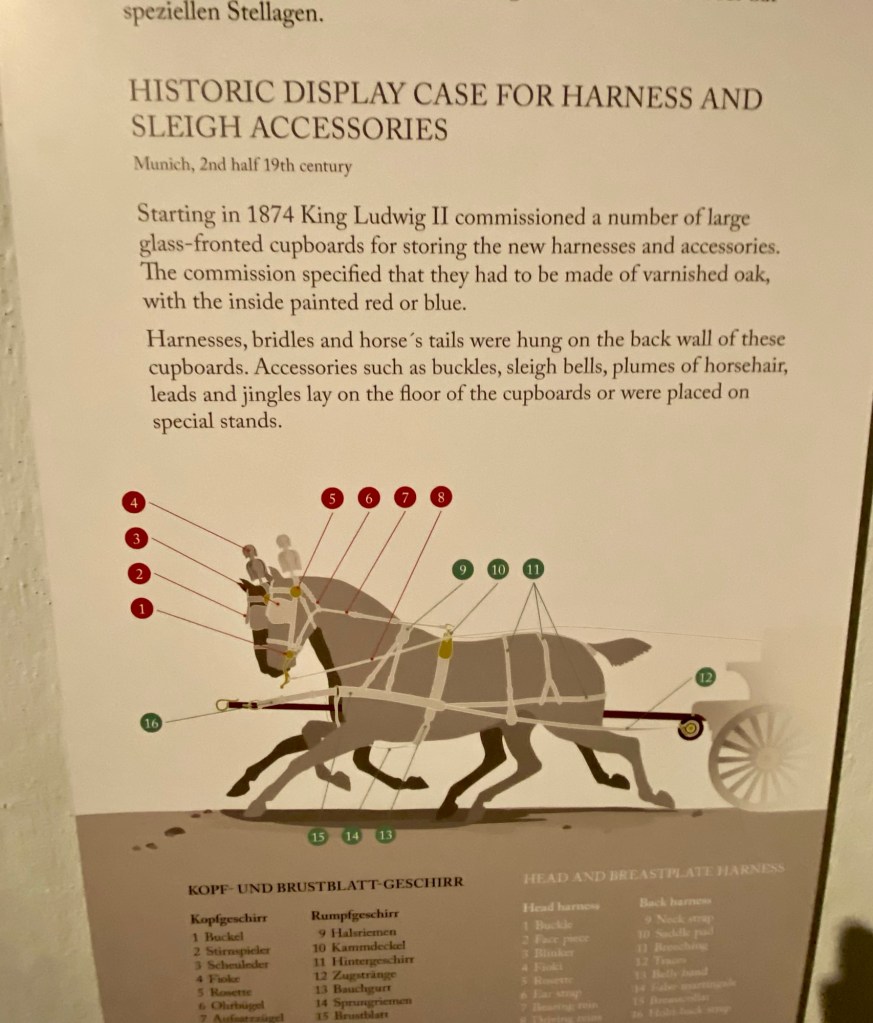
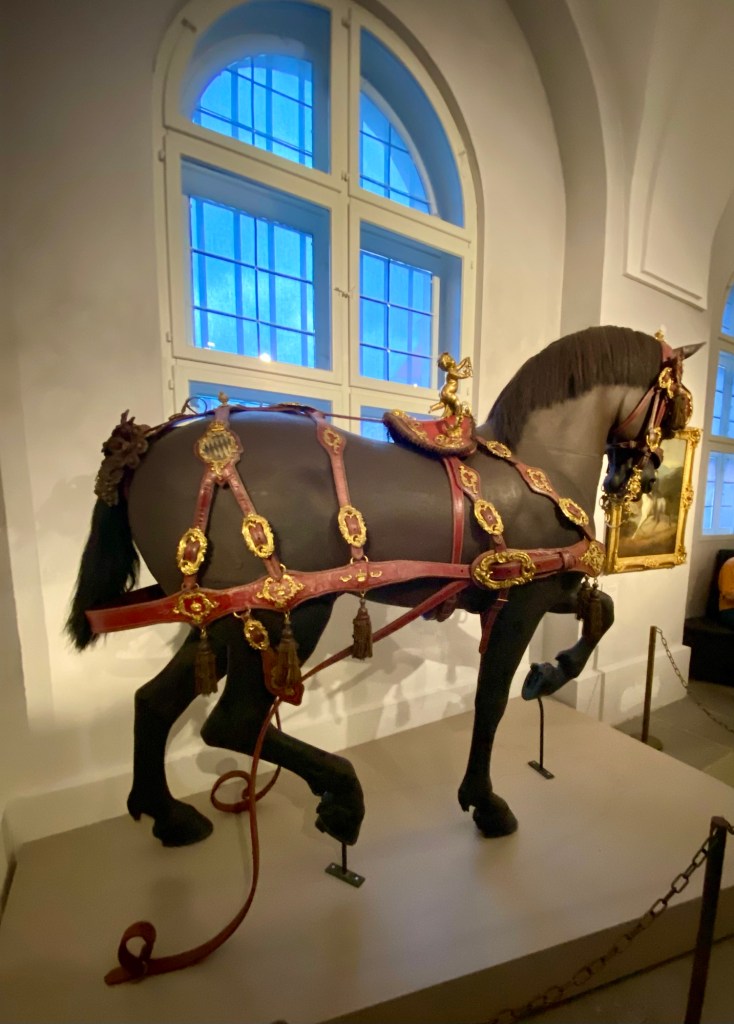
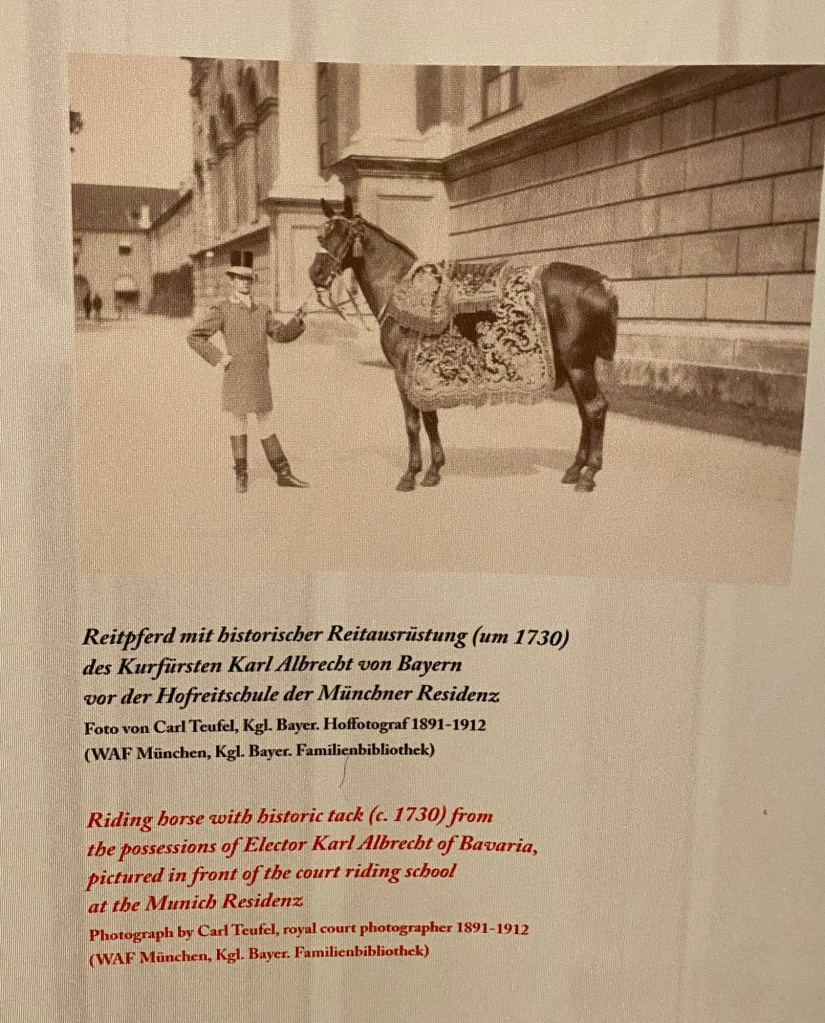
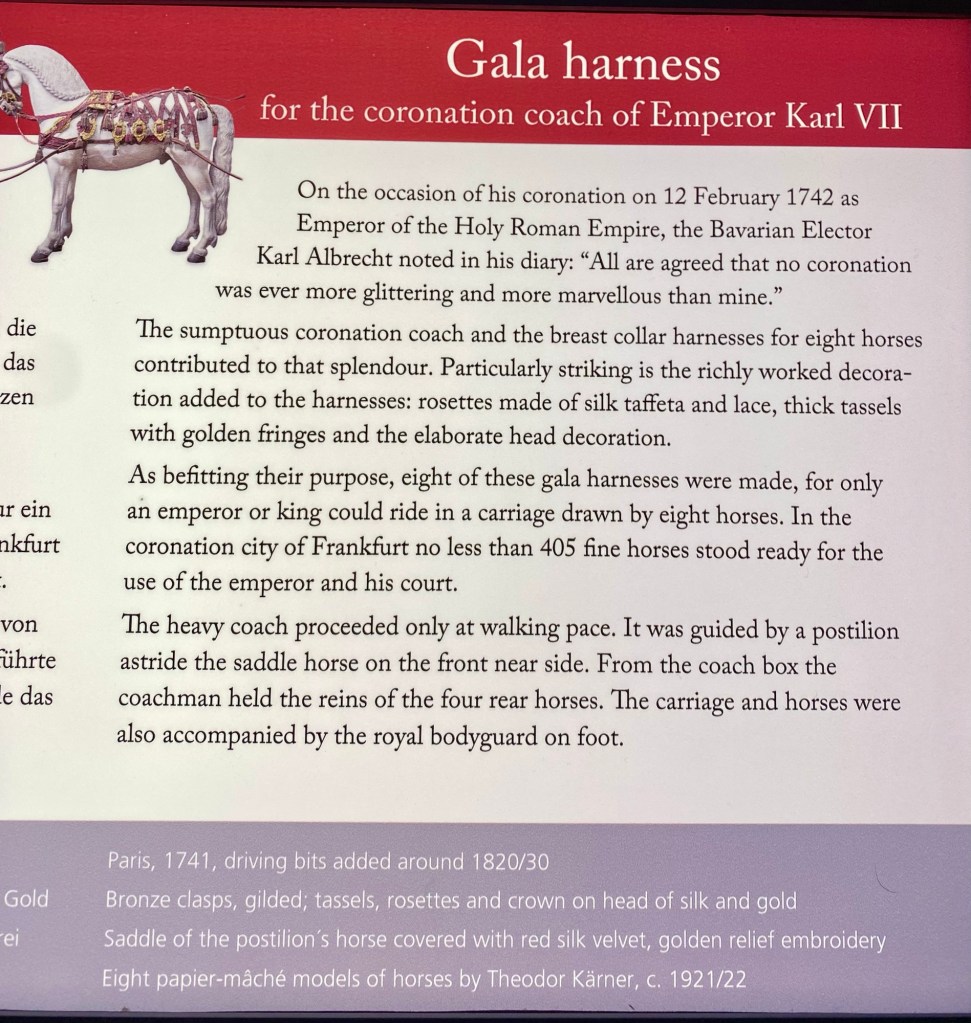
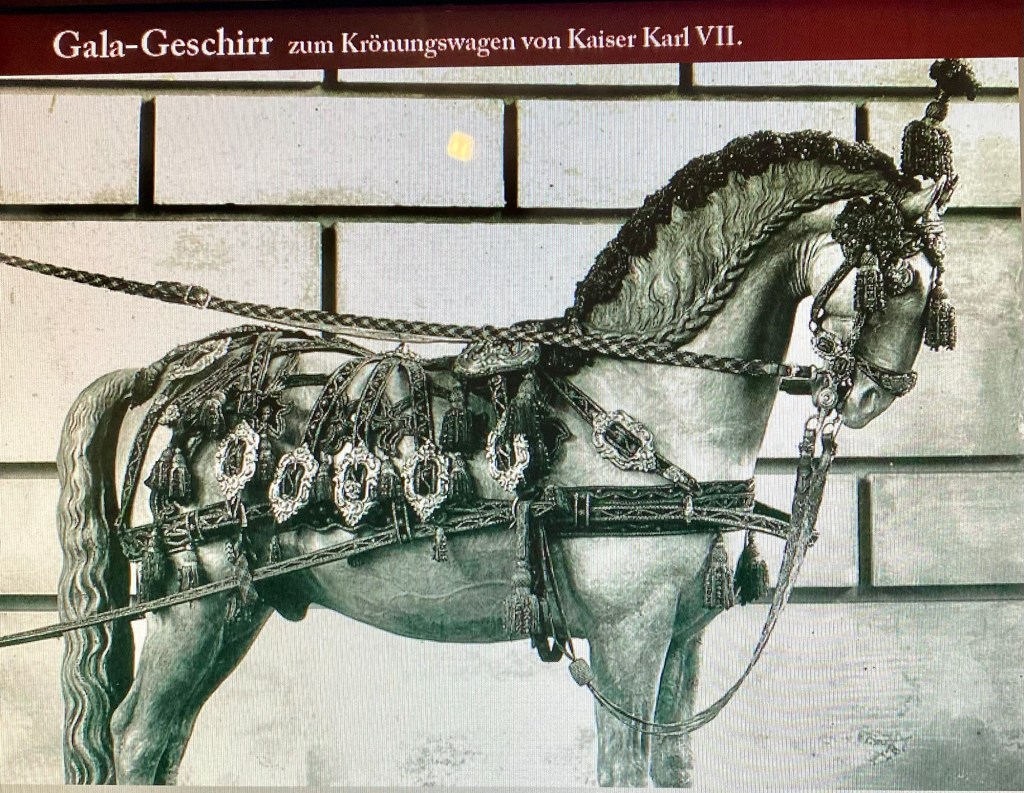
Above is a mane cloth. I grew up in the American west, riding horses from the time I was 3. You can tell I love decorative things from this blog. If only it had occurred to me to decorate my horses, life would have been much more interesting!
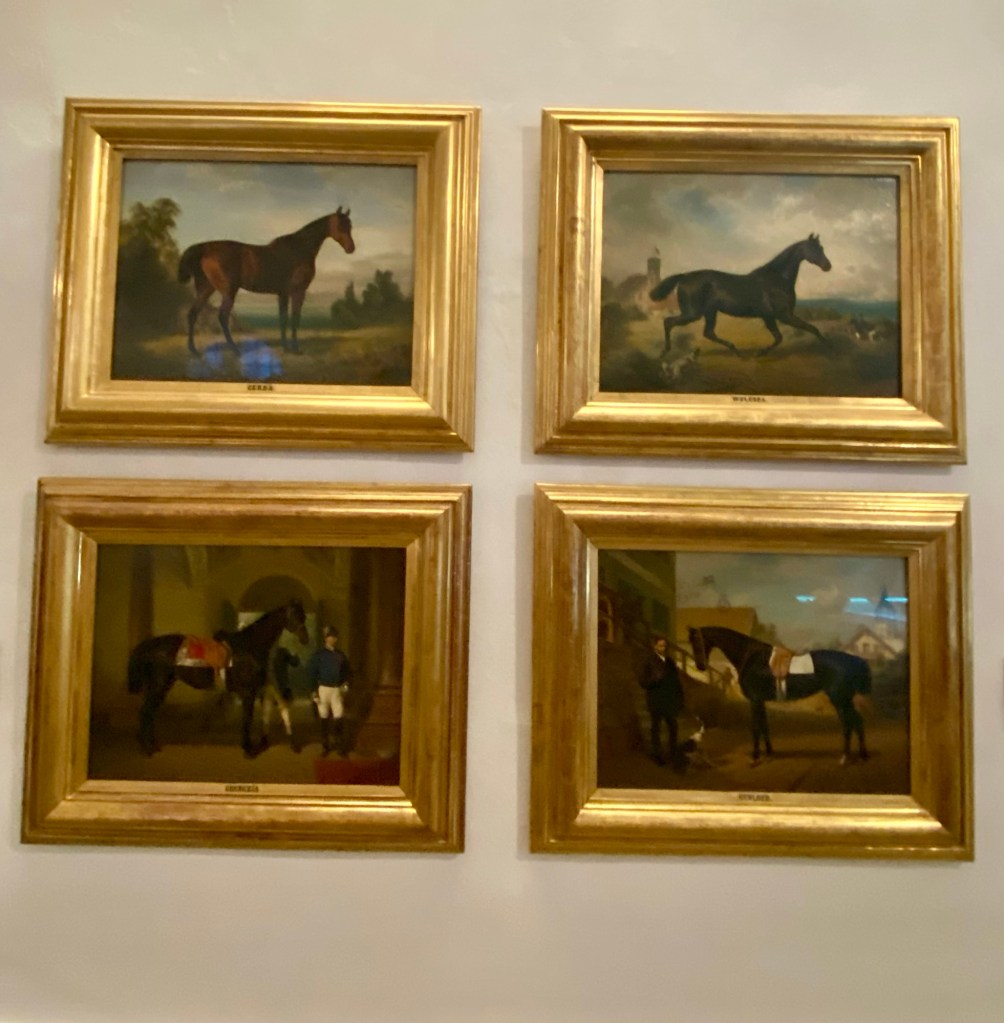
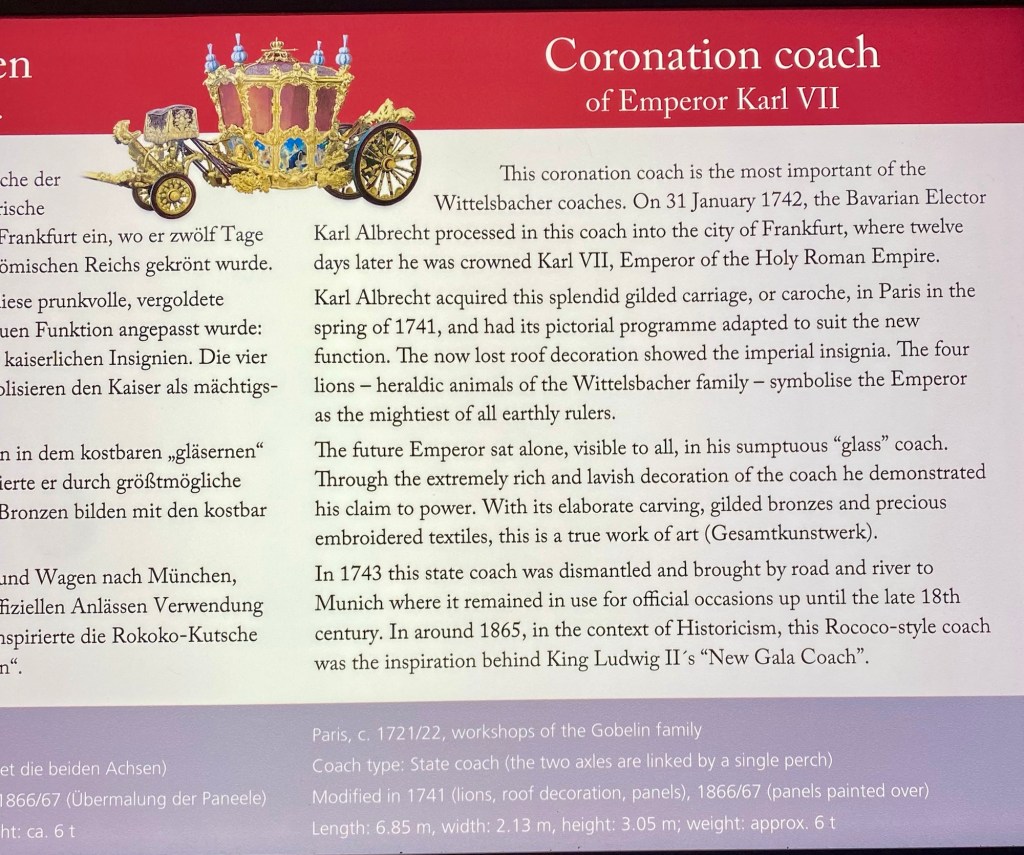
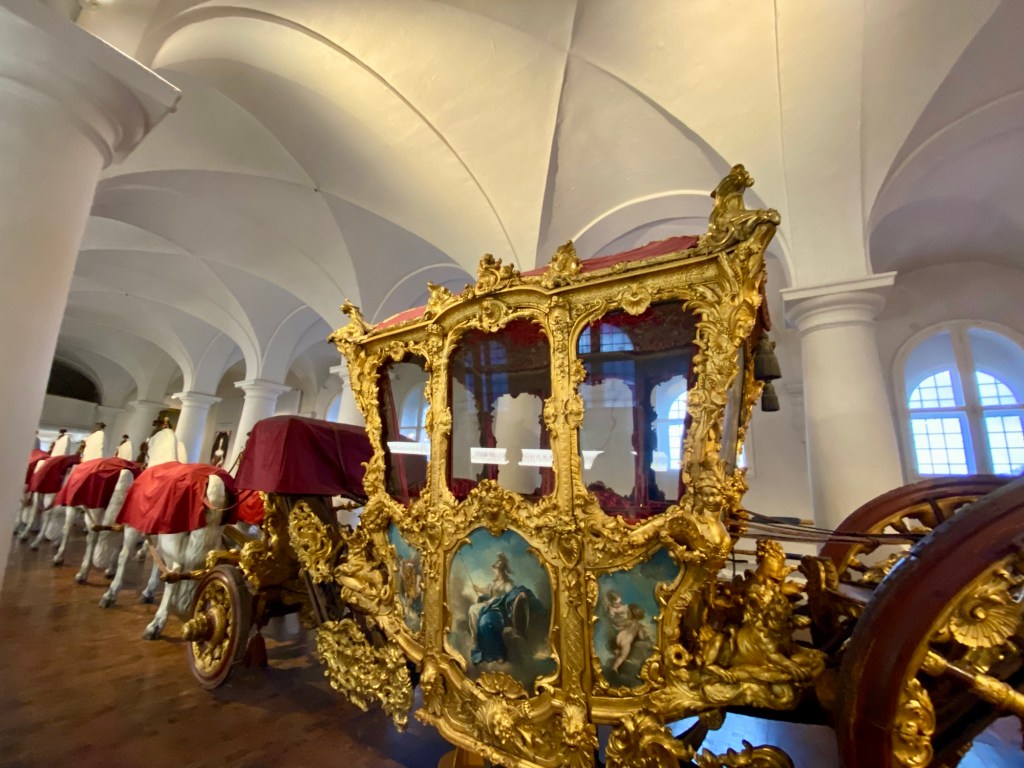
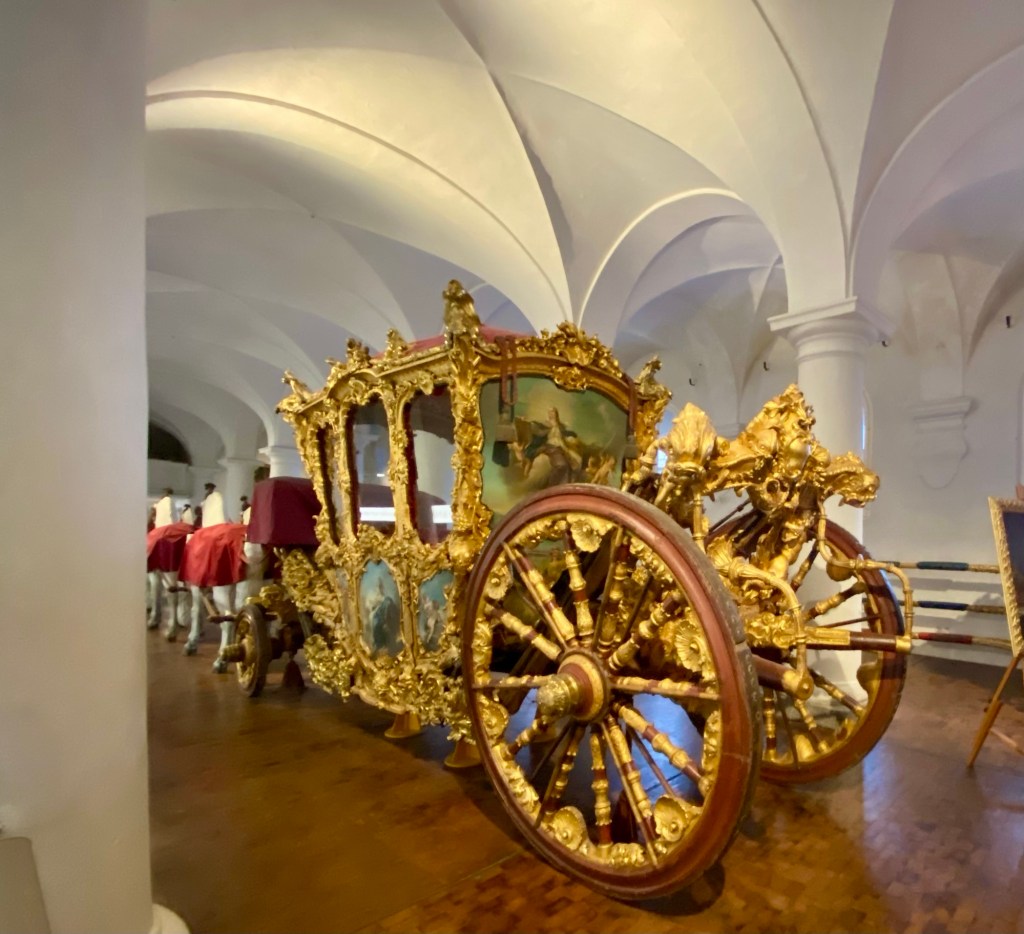
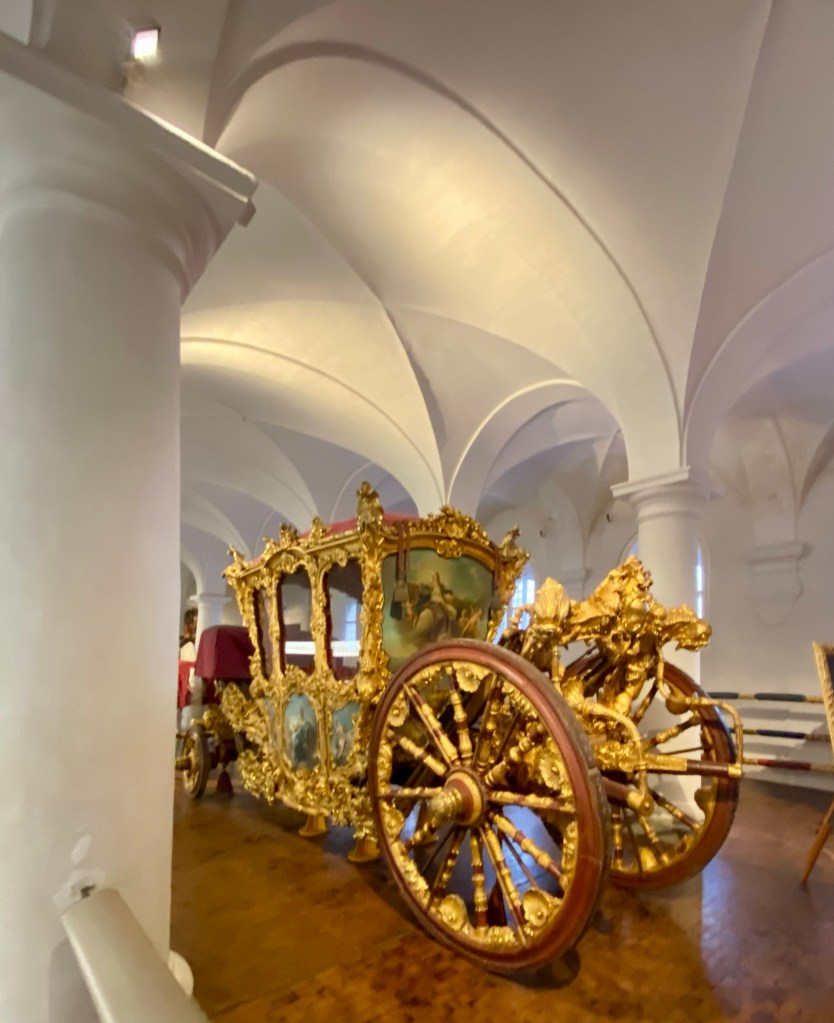
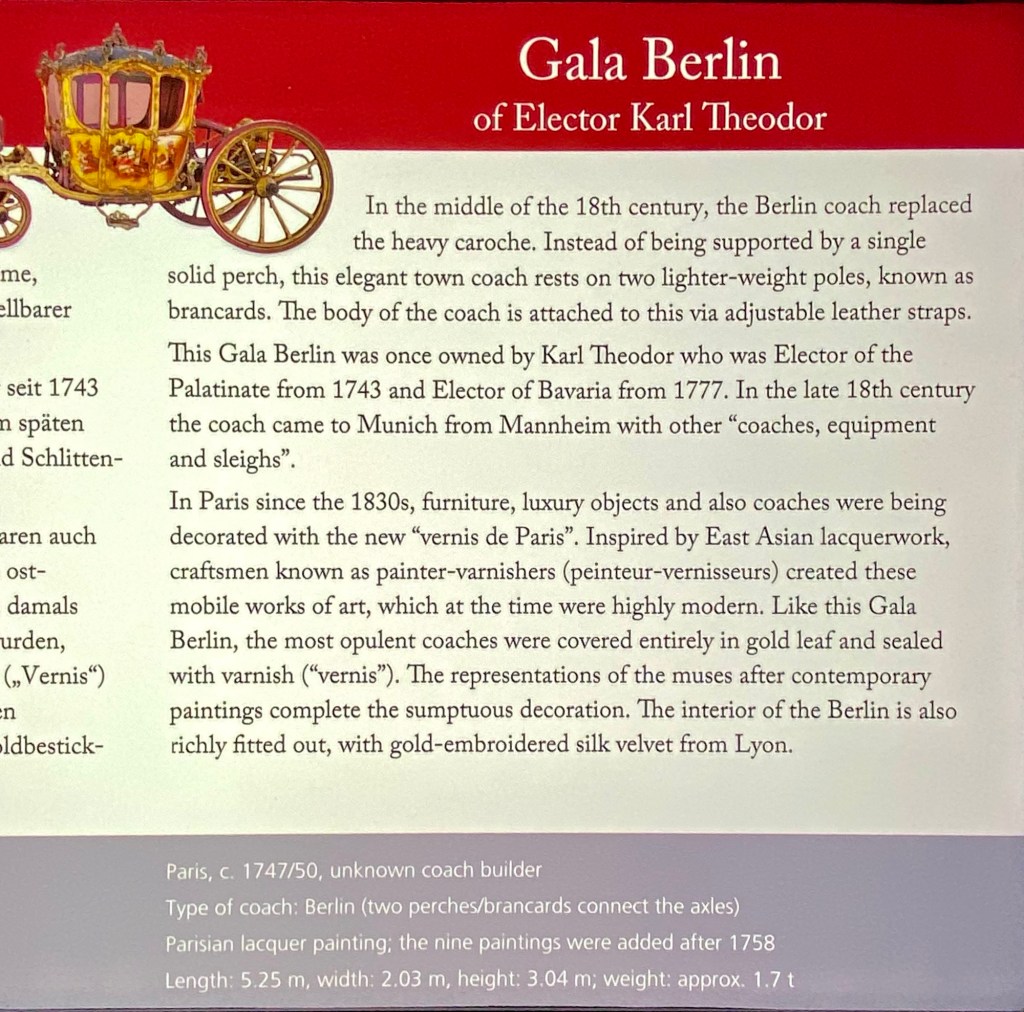
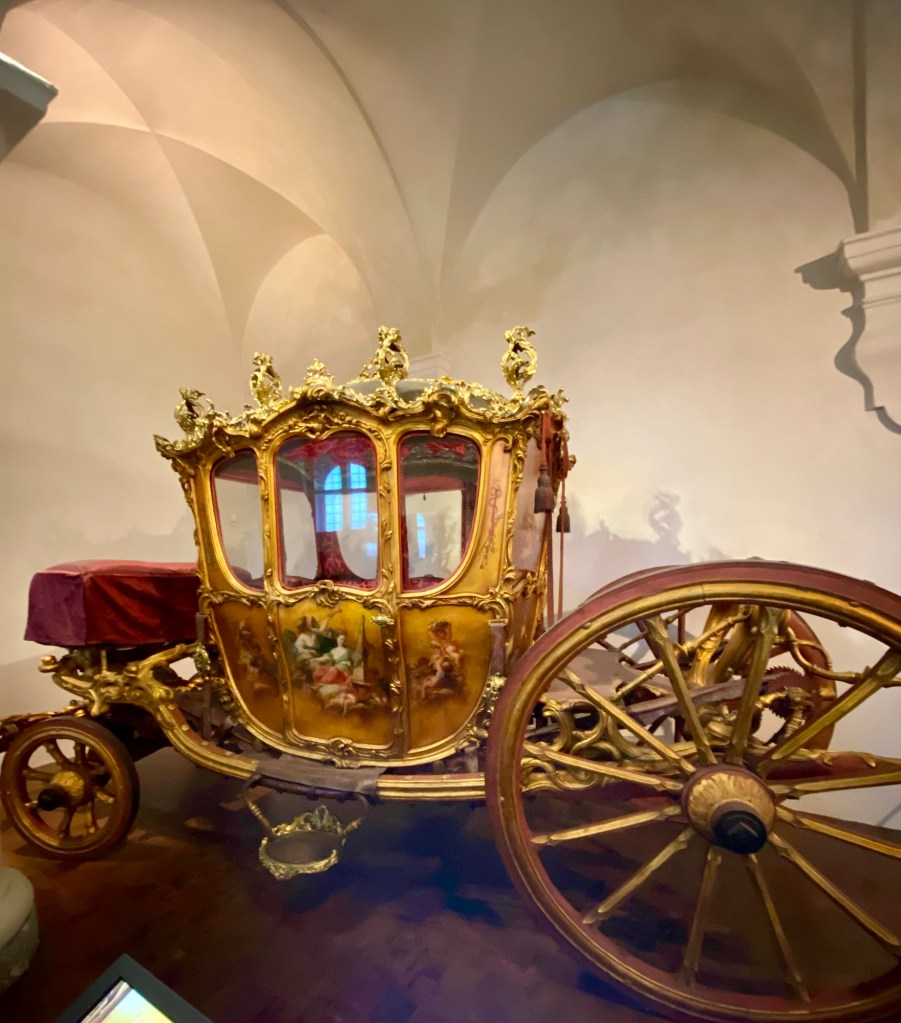
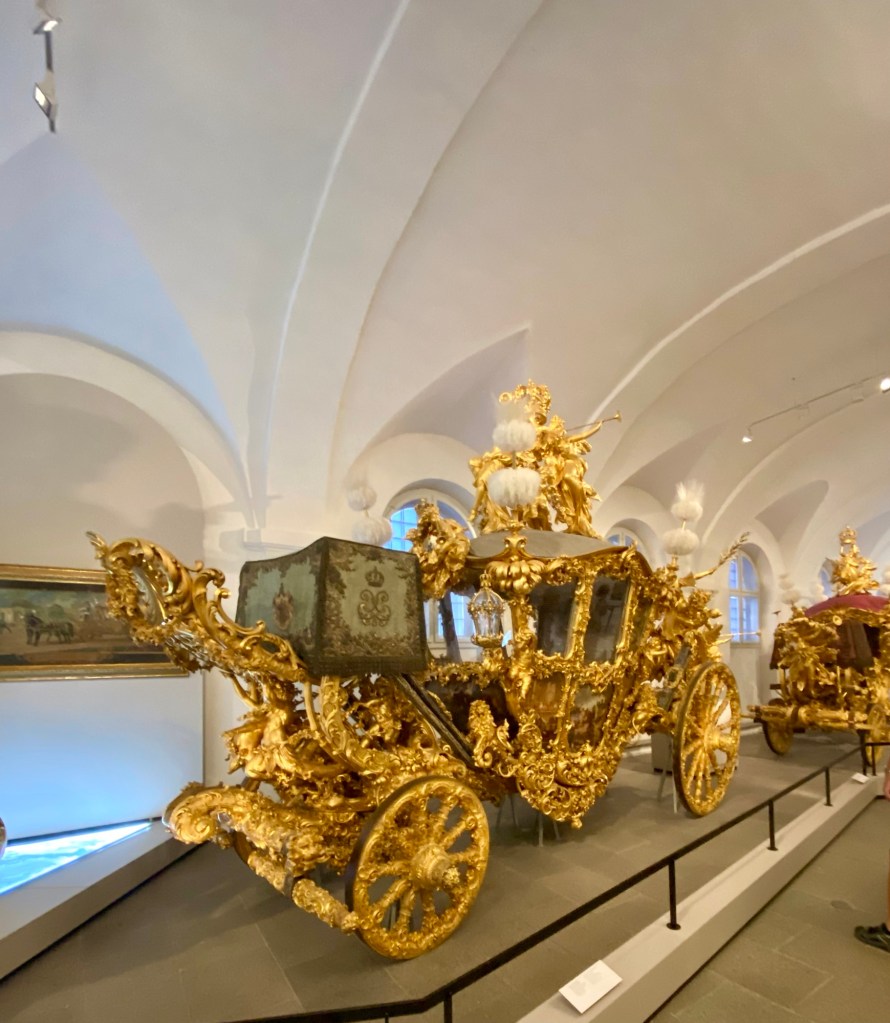
What a splendid collection! I was amazed and, in spite of myself, delighted. I mean that I was fatigued by the time I arrived at the equestrian section of the Palace, yet, fascinated.
As you scroll through these photos, I think you will be impressed as well!
In the 1920s and 1930s, Berlin was a hub for technology enthusiasts. Simultaneously, traffic grew at a rapid pace. In fact, Potsdamer Platz was a crossroad with more traffic than any other in Europe. The traffic jams were just getting worse and there were lots of accidents, many involving pedestrians. Every day, for example, 83,000 passengers used the overground and underground station at Potsdamer Platz alone, not to mention more than 20,000 cars, 26 tram lines and 5 bus lines. The police, armed with trumpets!, could not keep this chaos under control. Consequently, in 1924, the first traffic lights in Berlin were ceremonially put into service on Potsdamer Platz.
Go
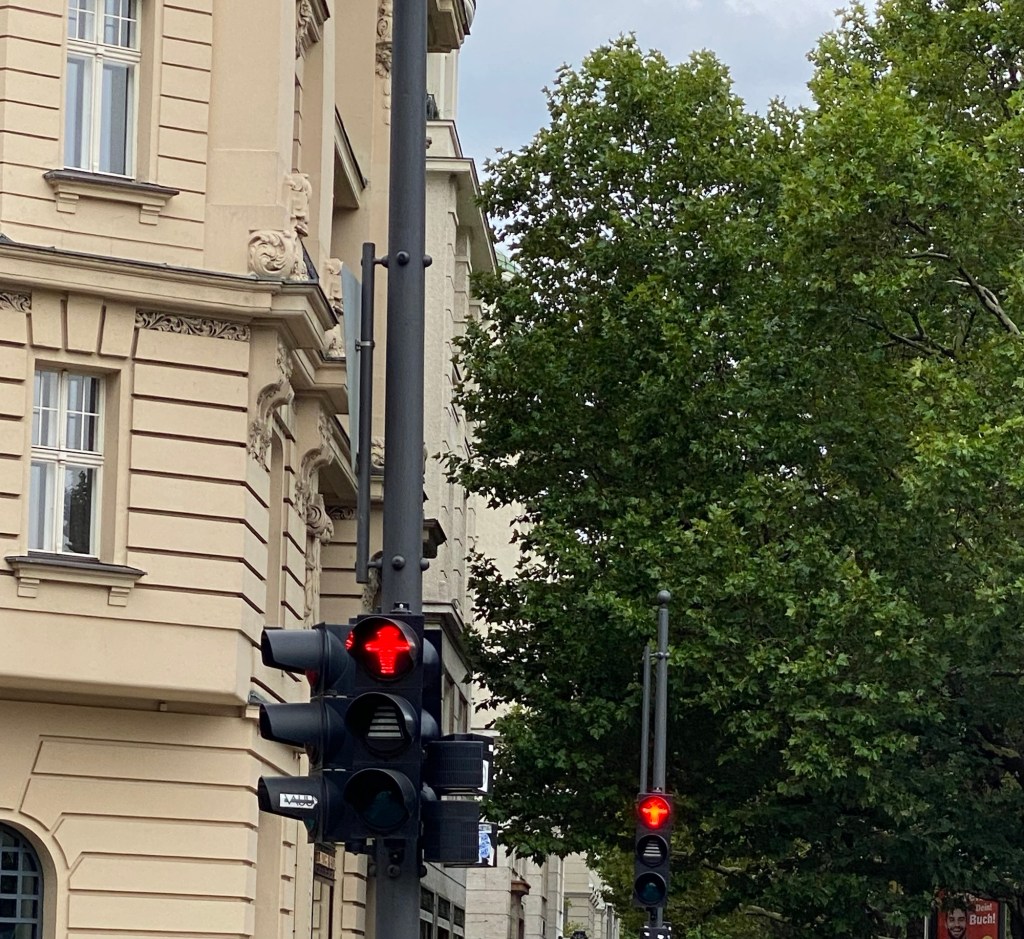
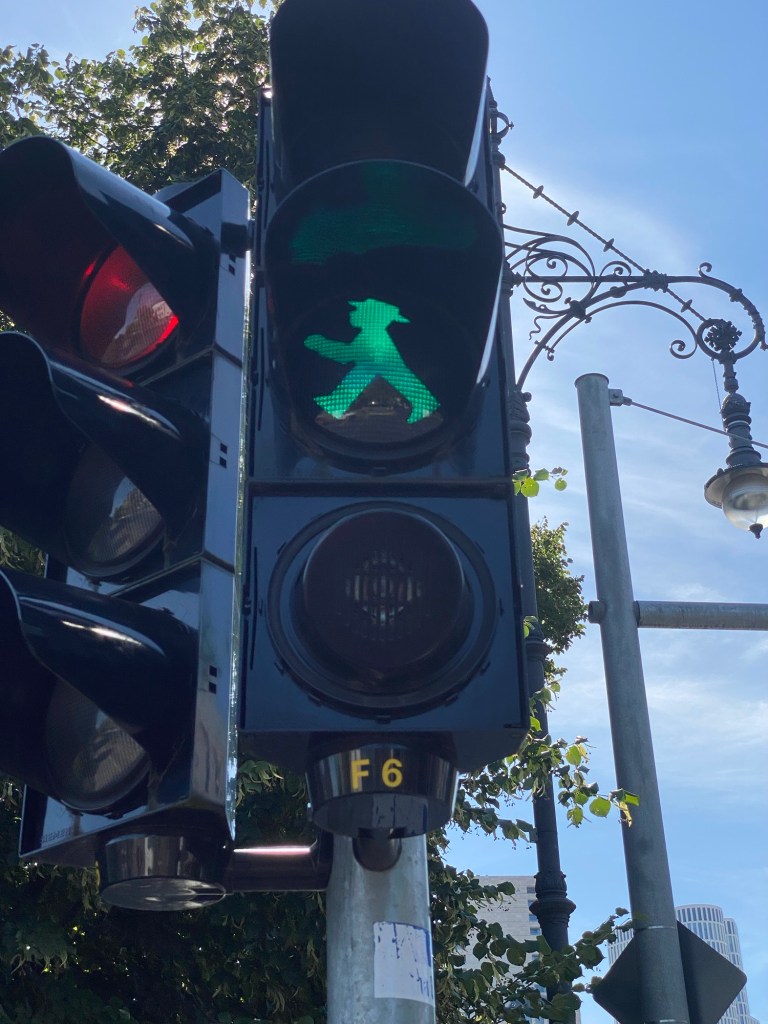
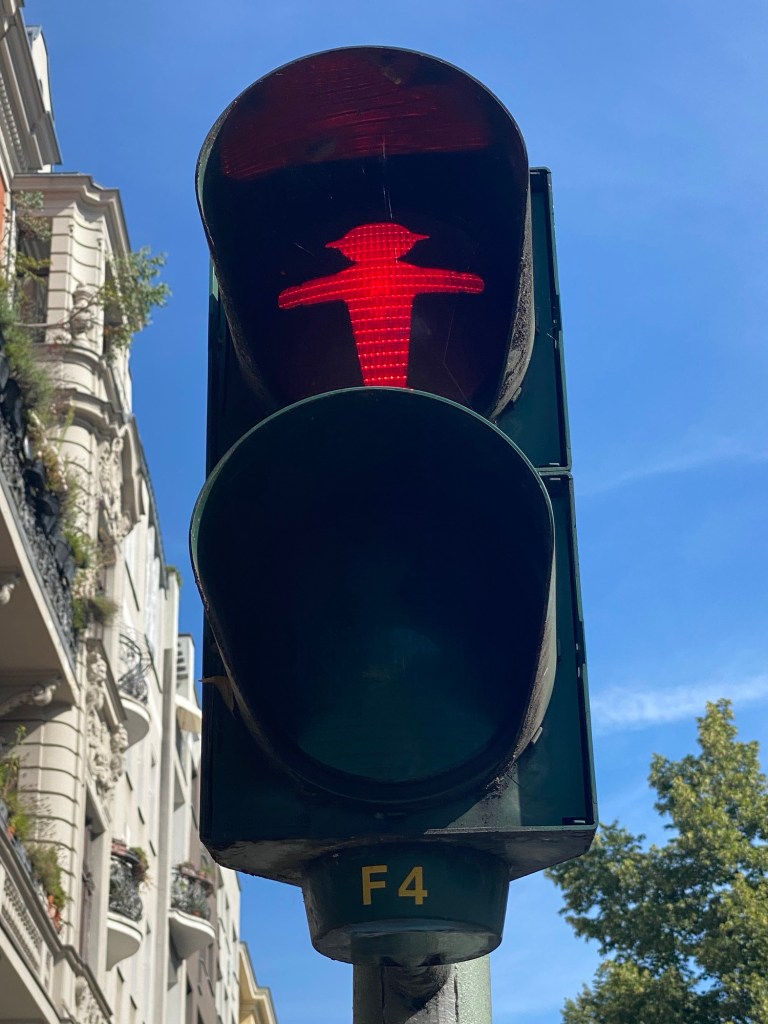
Across the world, pedestrian traffic lights were created in a variety of versions. But no other symbols were as well researched as the famous East German Ampelmännchen. Berlin’s symbols were preceded by extensive, well-founded development on the basis of traffic psychology.
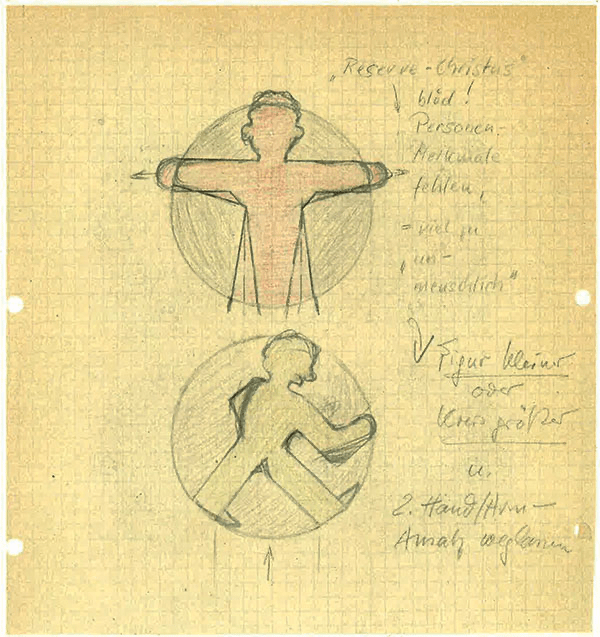
The developer of the Ampelmännchen, Karl Peglau, was a traffic psychologist and technical draftsman. His wife Hildegard was frequently the first person to test his new developments. His secretary Anneliese Wegner had a gift for drawing; she added a few details at Peglau’s request, making her contribution to the personality of the Ampelmännchen. Peglau credited her with the shape of the hat in the symbols.
Stop
Go
Peglau submitted his suggestions in Berlin for new traffic light symbols, including very specific ones for pedestrians; thus, the little East German traffic light men were born.
On the basis of these suggestions Peglau had submitted, he “was commissioned in 1962 by the Chairman of the Permanent Transport Committee of the City Council of Greater Berlin to develop a concept for control and safety in road traffic.”
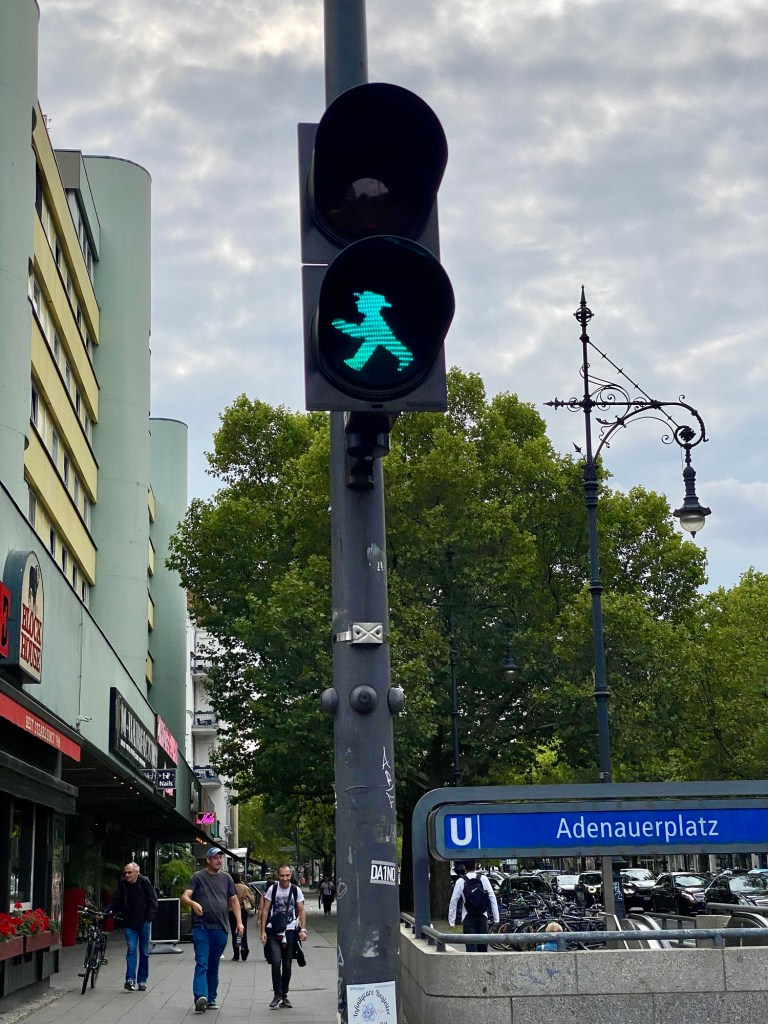
They endure to this day, fortunately.
Dr. Claudia Peschke of Jacobs University in Bremen stated in her study of the visual effectiveness of the East and West German Ampelmännchen: “Our findings show that the East German Ampelmännchen are not just iconic of the East German nostalgia, but actually have an advantage over the West German Ampelmännchen in terms of the signal being perceived.”
In the years following the fall of the Berlin Wall, amongst the turmoil that accompanied the phasing out of many East German institutions, the Ampelmännchen became cult figures: “Symbols standing against the unreasonable post-fall mentality of getting rid of things,” Karl Peglau remembered. “They were originally – and will hopefully remain – figures of the street, psychologically thought out symbols of the rules of behaviour for pedestrians in street traffic.”
He saw no reason to drive the symbols out of their traditional places in the East – but “plenty of good reasons to introduce them in the West.”
And, Berliners preferred the 1960s pedestrian traffic signals! That they have been maintained throughout the city seems to me to be one of the most charming things about the contemporary city. I love them!






































 get back, lauretta!
You must be logged in to post a comment.