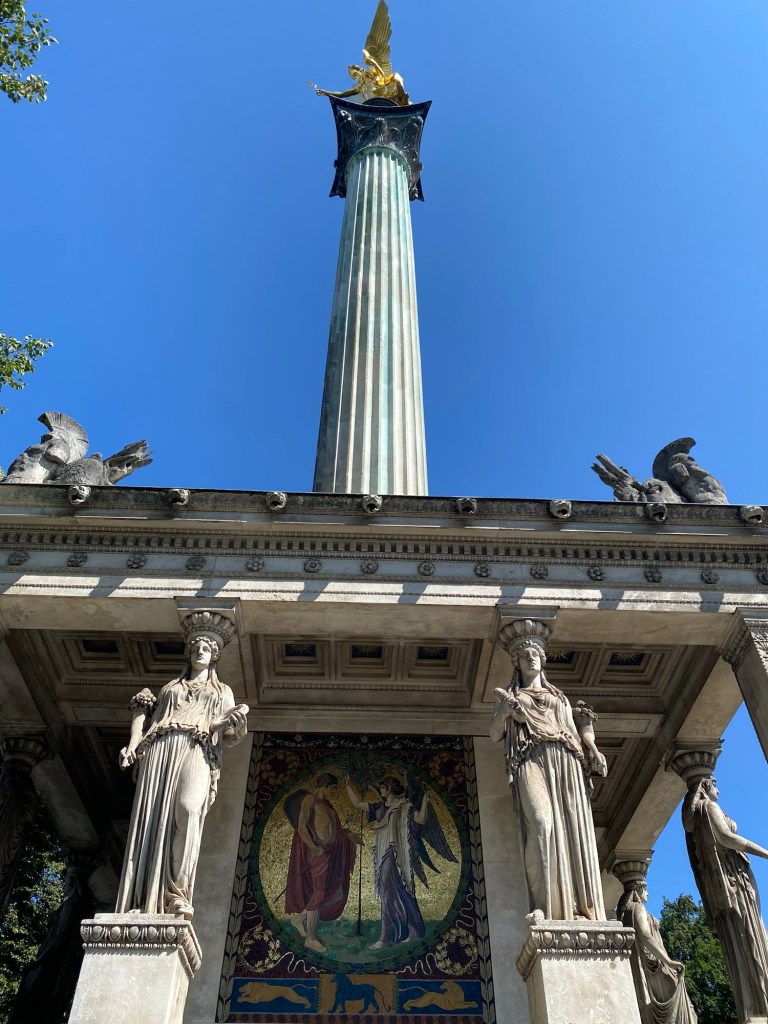
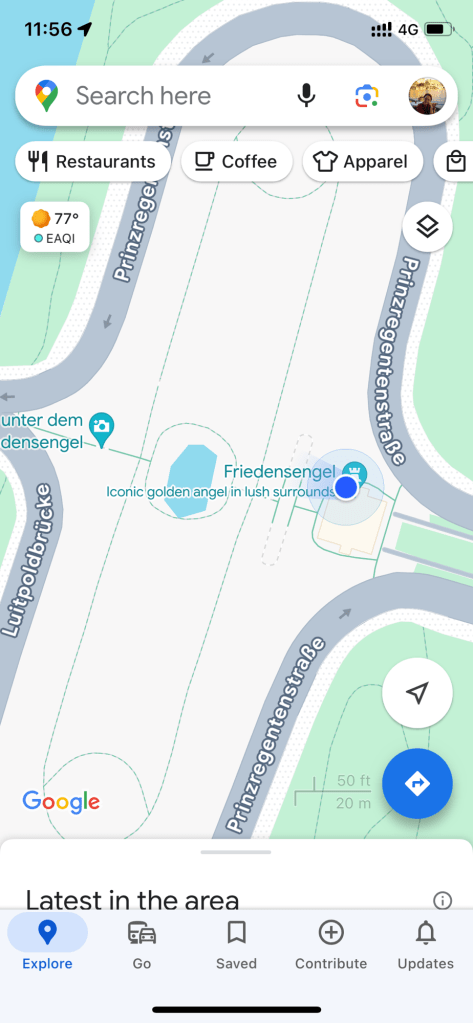
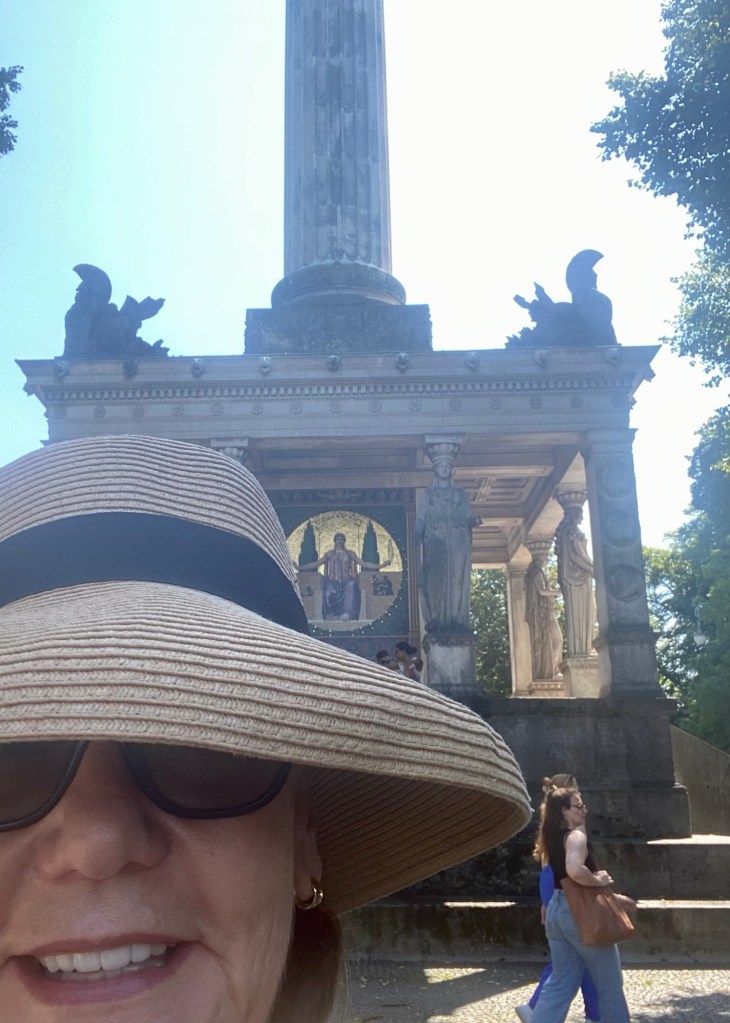
Iconic golden statue in lush surroundings: the Freidensengel, Munich

I couldn’t resist using the stilted English with which Google maps describes this neoclassical monument in Munich.
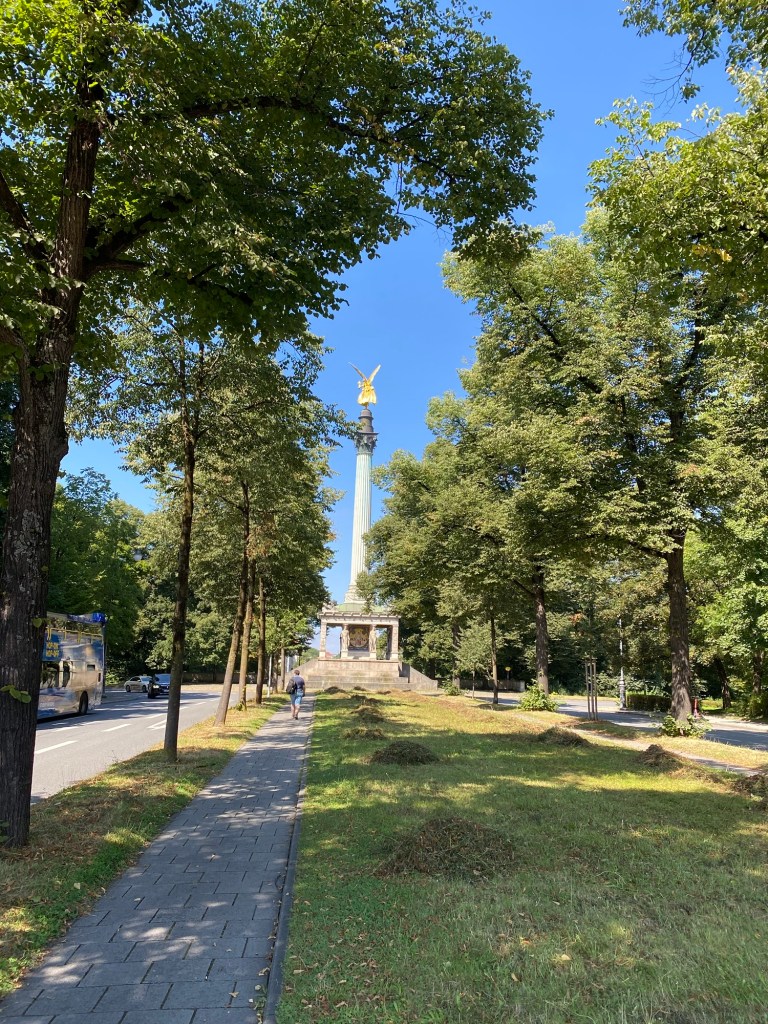
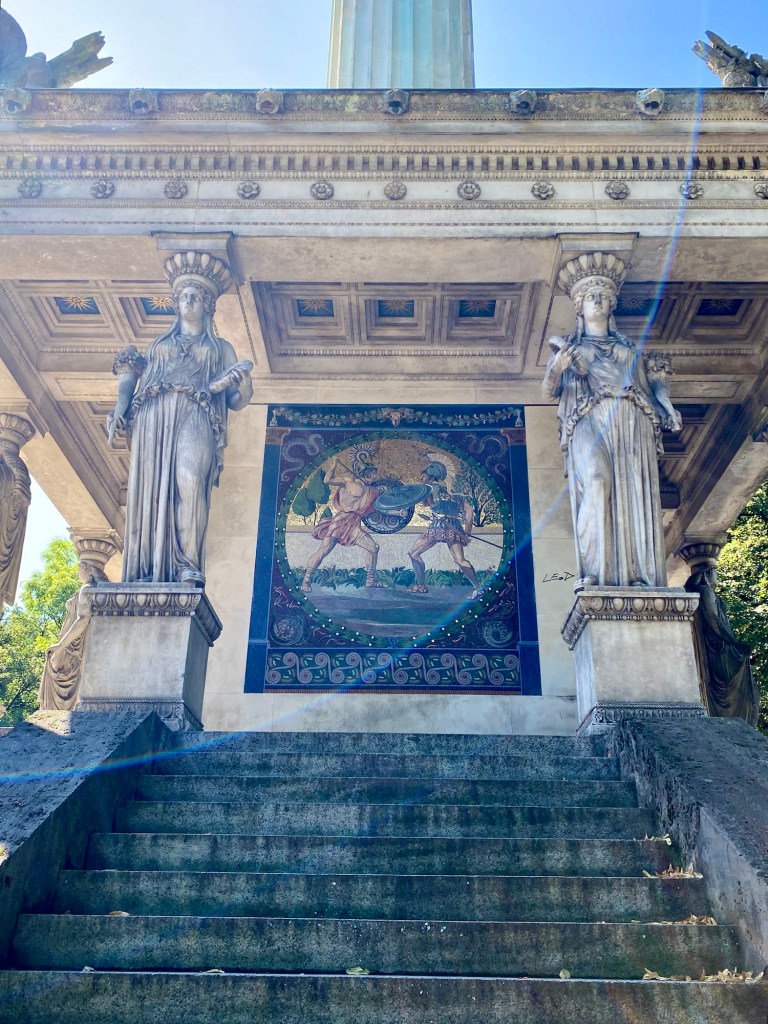
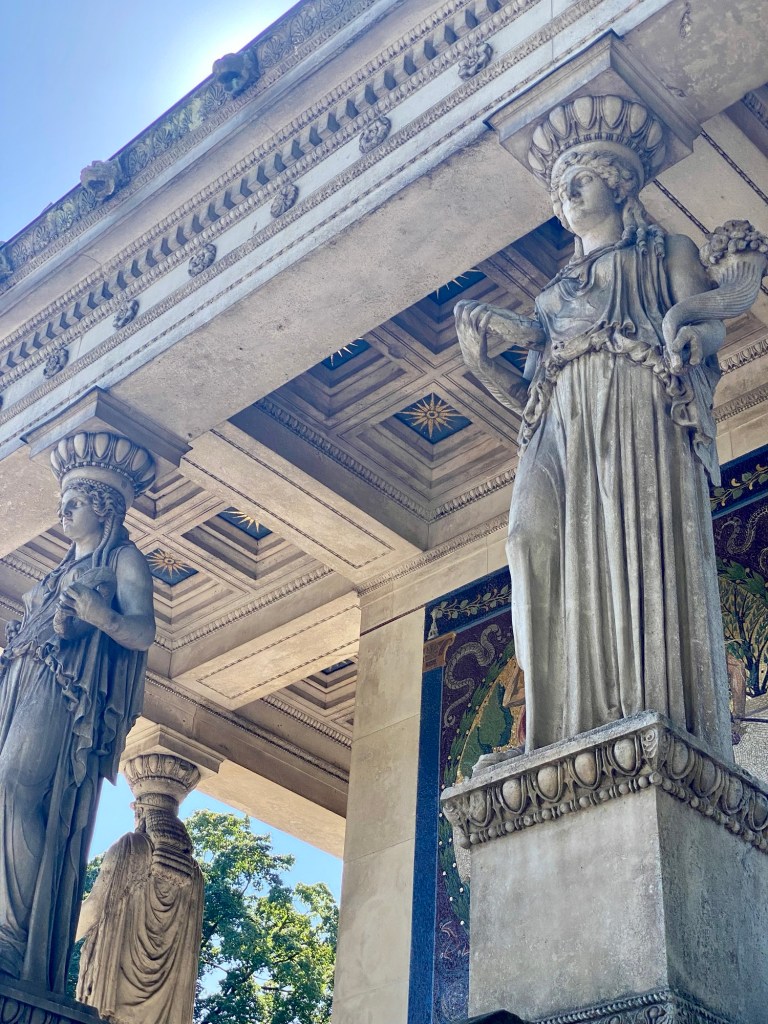
I was on my way to visit the Villa Stuck in the city when I was new to Munich, when I happened upon this striking monument. For a brief moment, I thought I was in Athens on the Acropolis! The caryatids! But no, I’m in Bavaria.
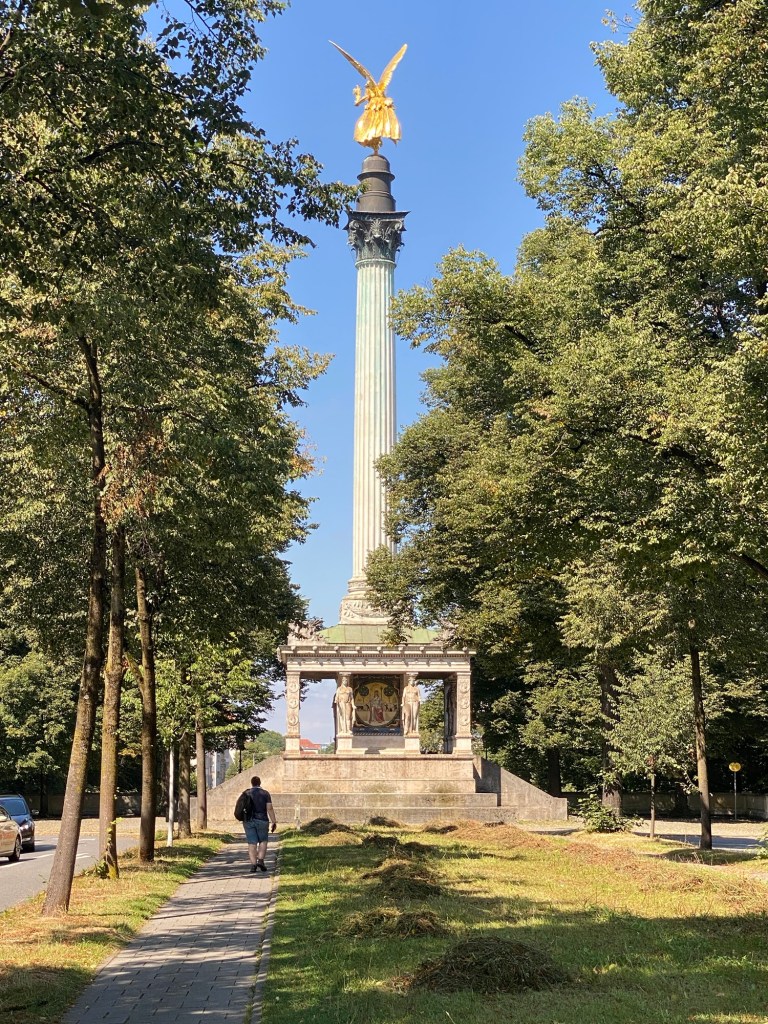
I approached the monument from the back, because Villa Stuck is closed for renovation despite the fact that the internet says it is open. For a second I felt like I was in Italy, where this kind of thing happens all of the time. And now I’m finding this in Germany as well.
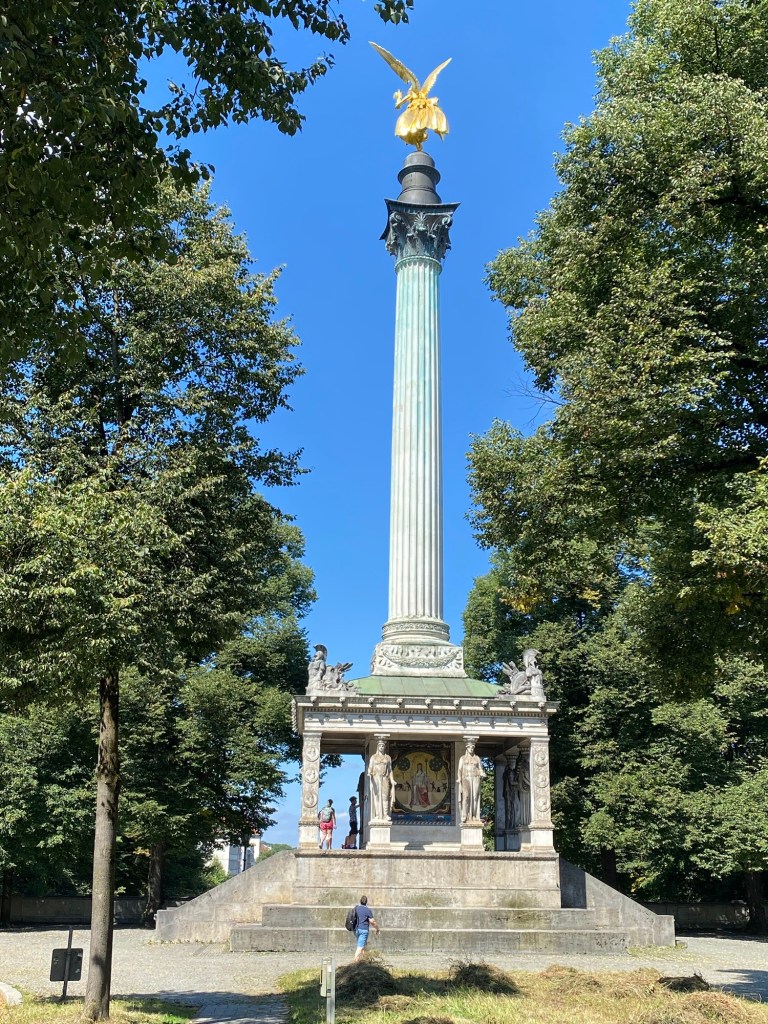
Let’s ask Wikipedia to tell us about this monument:

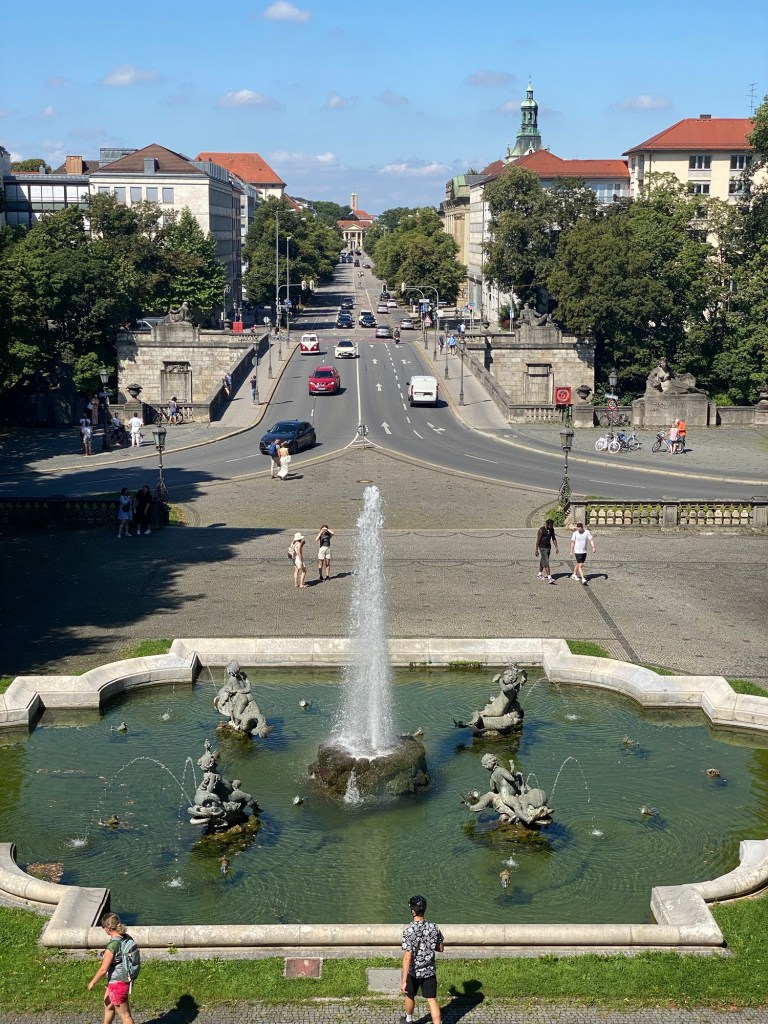
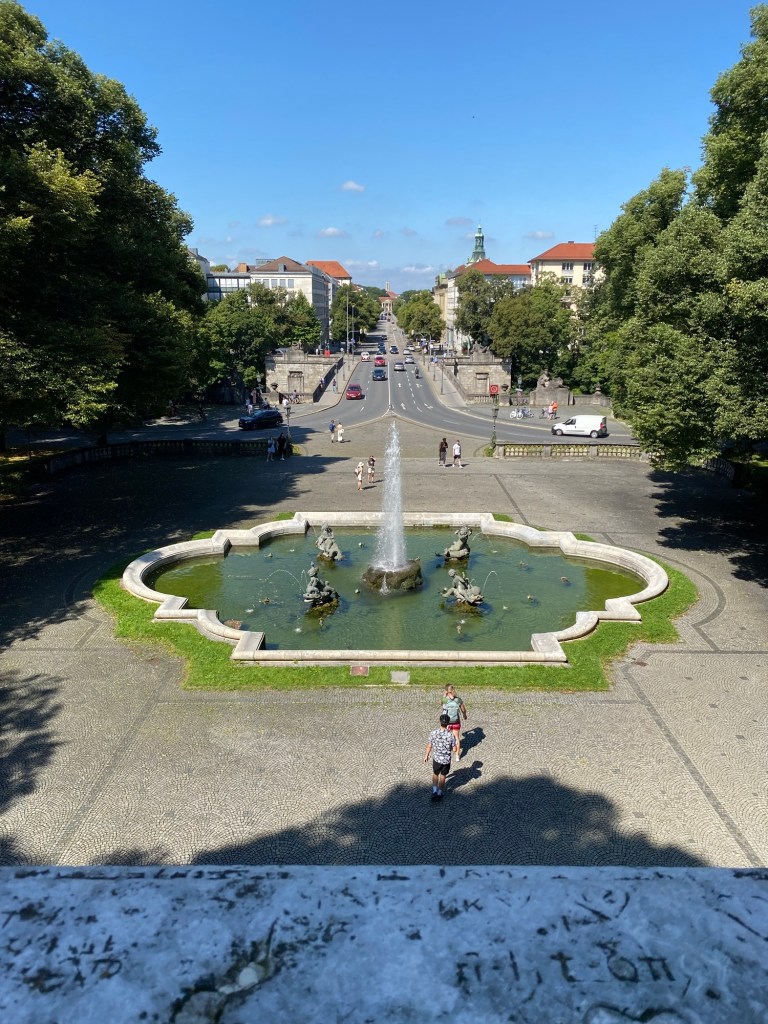
The Angel of Peace (Friedensengel) is a monument in the Bogenhausen district of Munich. The architects were Heinrich Düll, Georg Pezold and Max Heilmaier. It is part of Maximilian Park and a point at the eastern end of a line of sight forming Prinzregentenstrasse. Next to the Isar River, slightly elevated above street level, is an open space with a fountain; this has a dolphin waterspout surrounded by four smaller waterspouts. Two staircases lead to the observation deck . A column 38 metres high and in the Corinthian style is located here, on top of which is a six-metre statue of the Angel of Peace. It is a replica of the Nike of Paeonius.

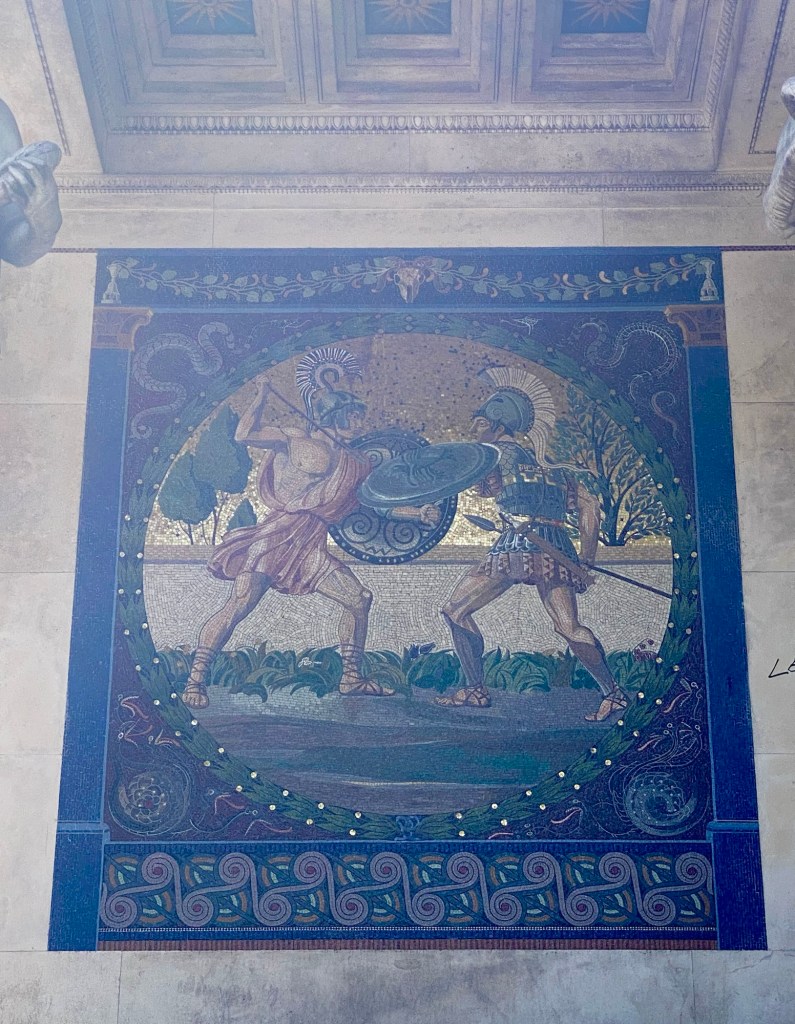
The Angel of Peace is a reminder of the 25 peaceful years after the Franco-German war of 1870/71.The monument with its small temple shows the portraits of the German Emperors William I, Frederick III, Wilhelm II, the Bavarian rulers Ludwig II, Otto and Luitpold, the Imperial Chancellor Otto von Bismarck and the generals Helmuth von Moltke, Albrecht von Roon, Ludwig von der Tann, Jakob von Hartmann and Siegmund von Pranckh. In the hall of the temple are gold mosaics which depict the allegories of war and peace, victory and blessing for the culture.

The foundation stone was laid on 10 May 1896; the unveiling was on 16 July 1899. The sculpture of gilded cast bronze was a collaborative work of the architects were Heinrich Düll, Georg Pezold and Max Heilmaier. The Putti Fountain is a work of Wilhelm von Rümann.
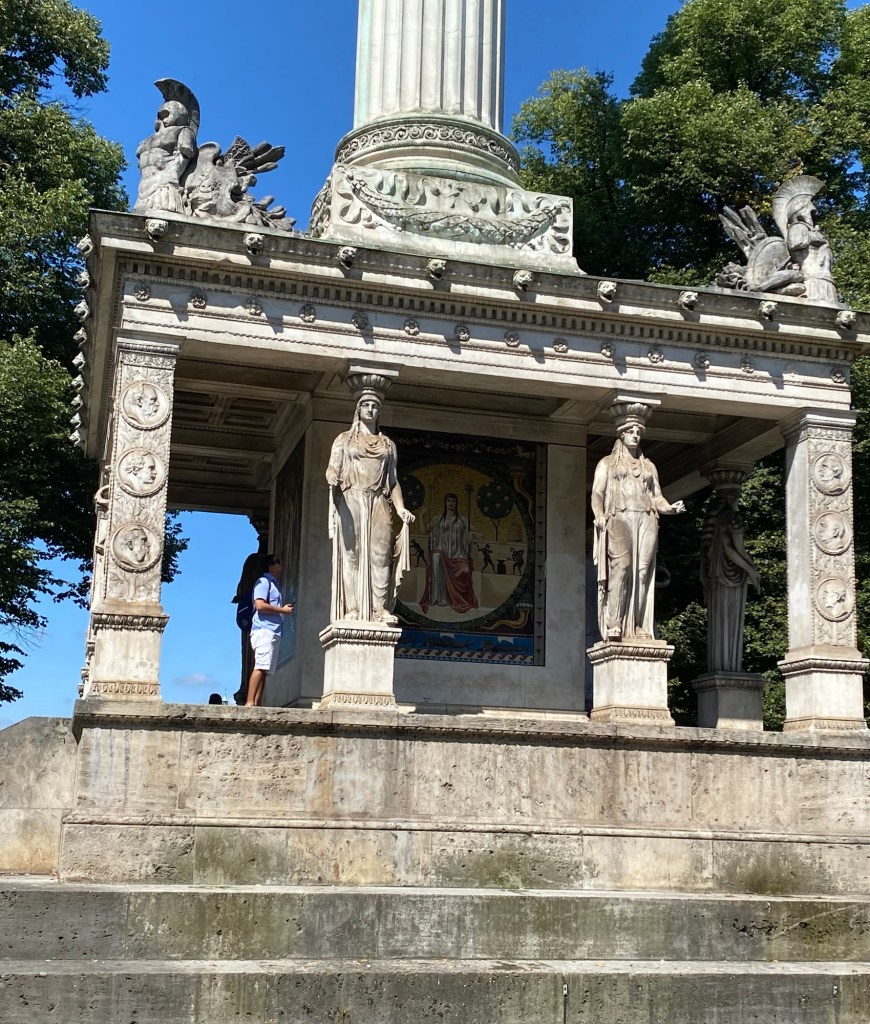
Below, I am looking from the monument towards the city. I never got a view of it in reverse, which is the way it is meant to be seen. Typical of that day.

Viktualienmarkt, Munich

We’ve had nothing but rain the past few days, so like hundreds of other people in Munich today, I had to get out and enjoy the city.

My time here is drawing to a close this week and I wanted another taste of the famous market, so away I went.

There are so many different types of apples for sale here! It’s apple season, of course.

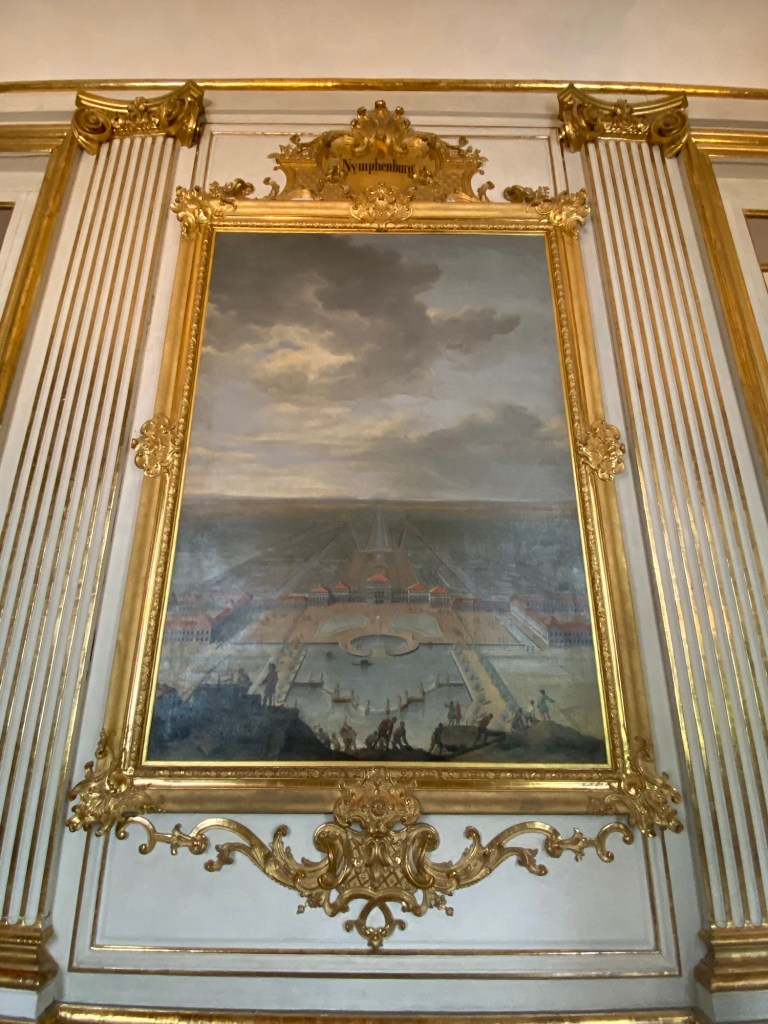
More interior views from Nypmphenburg Palace

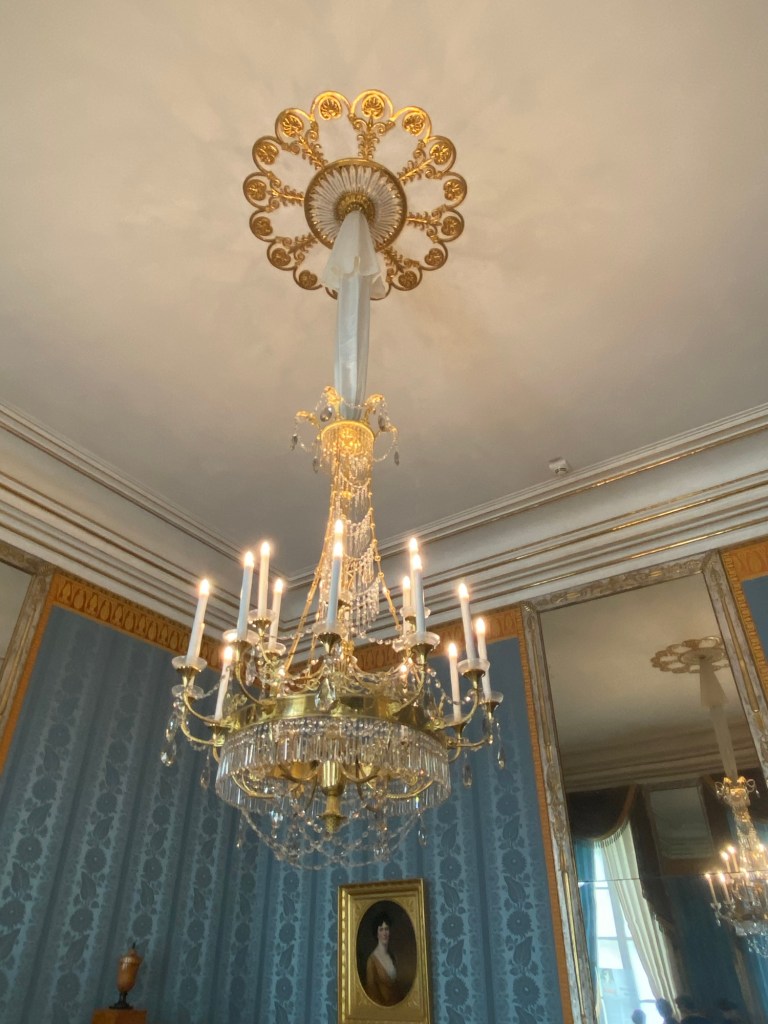
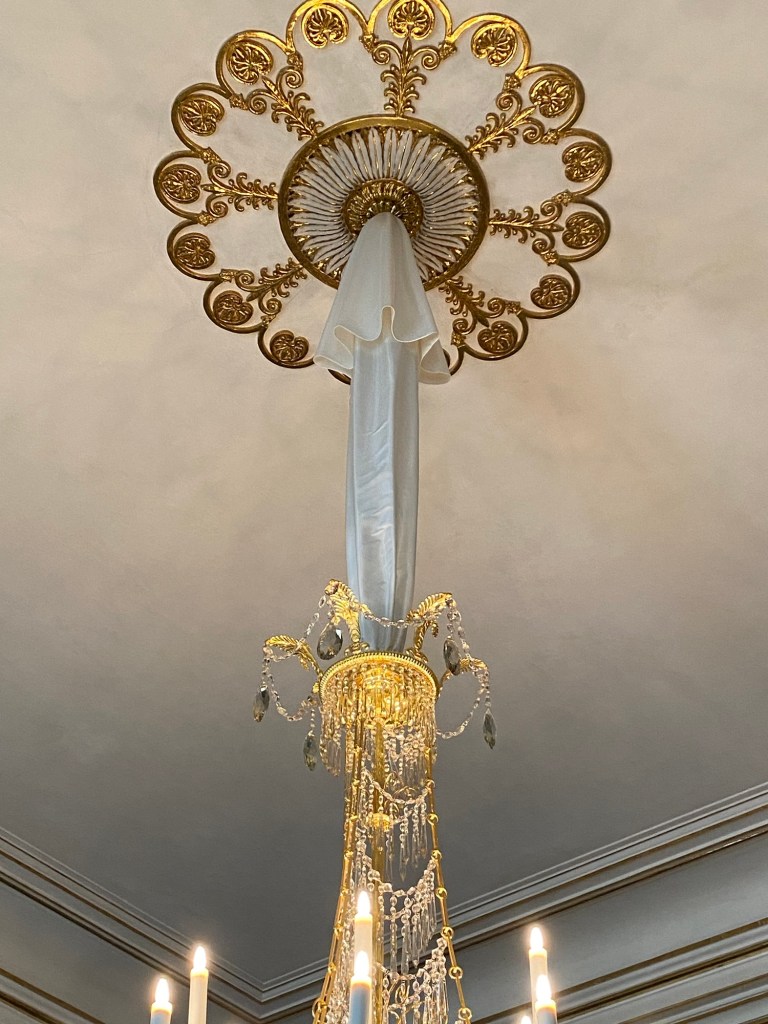
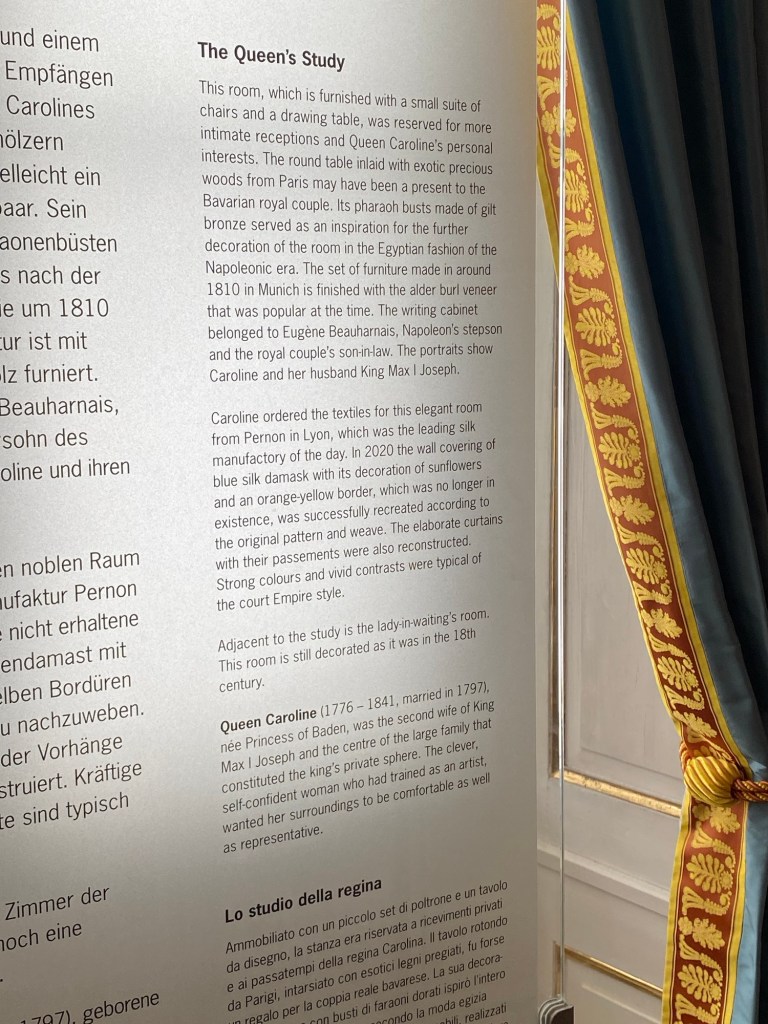
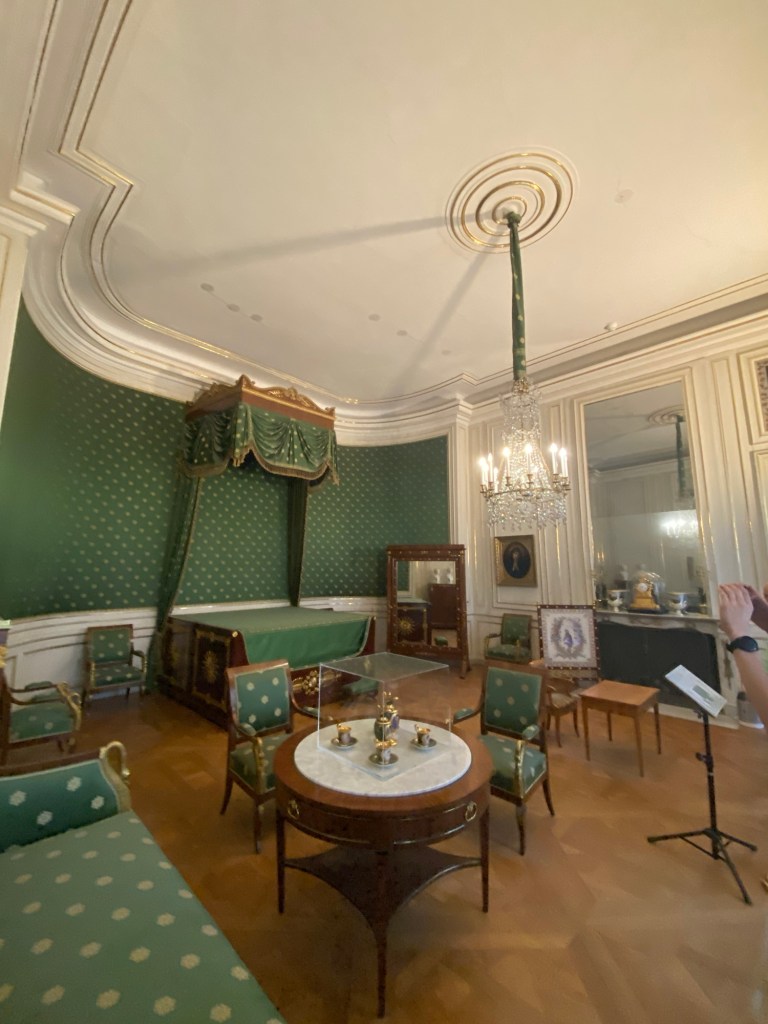
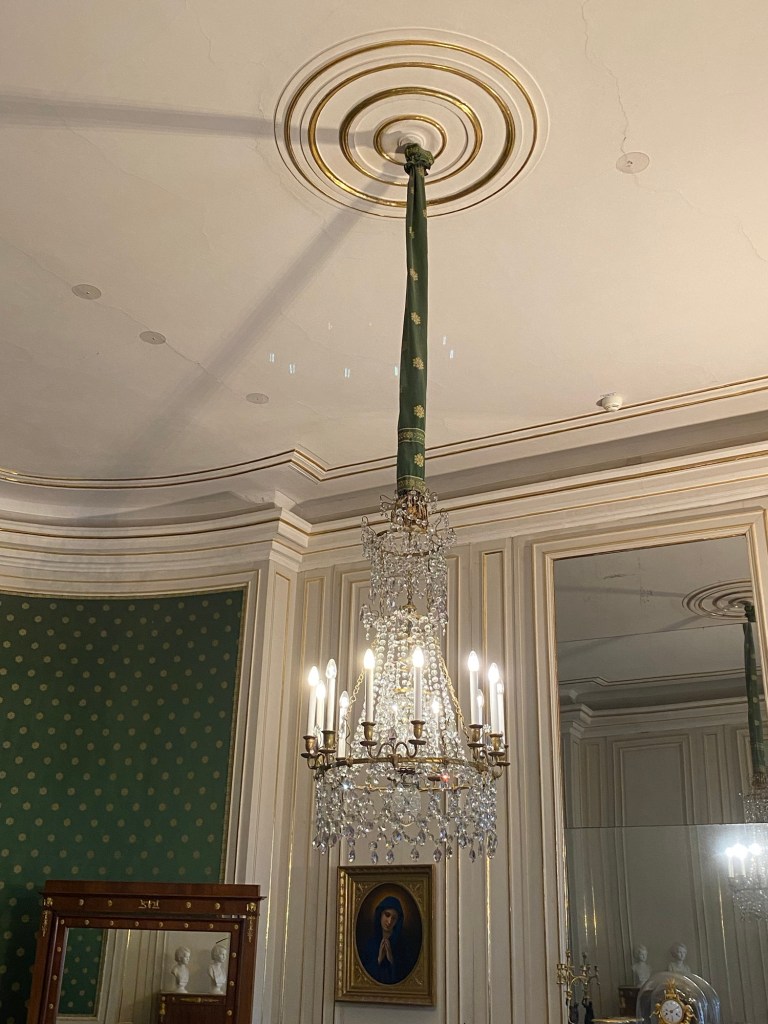
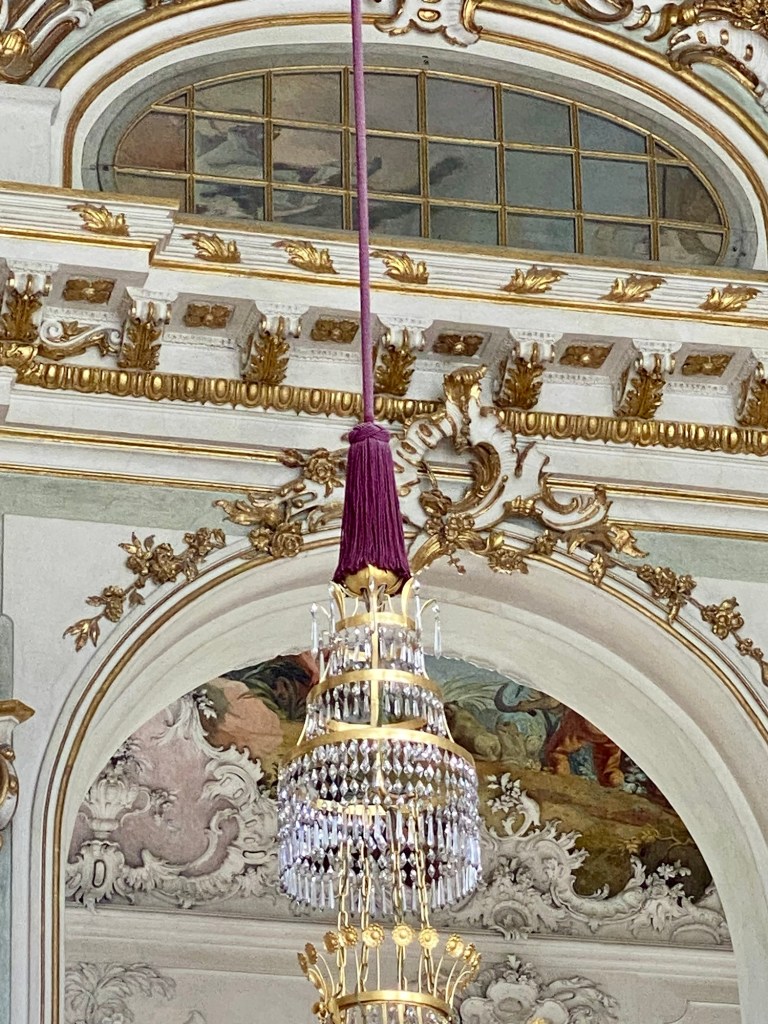
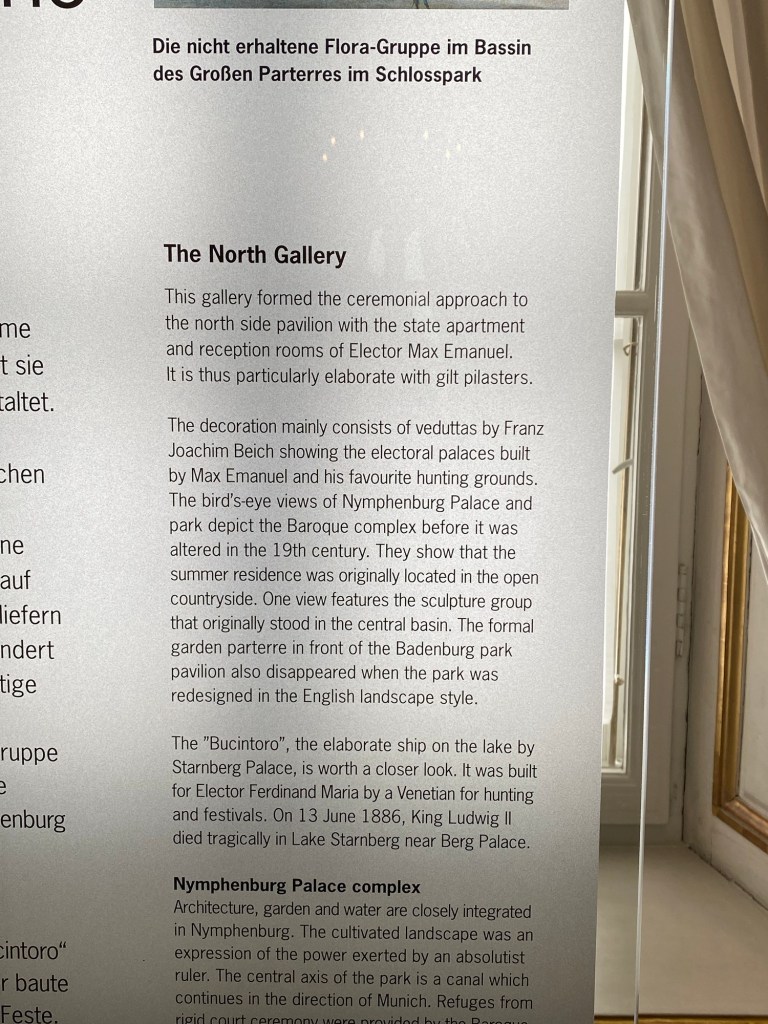
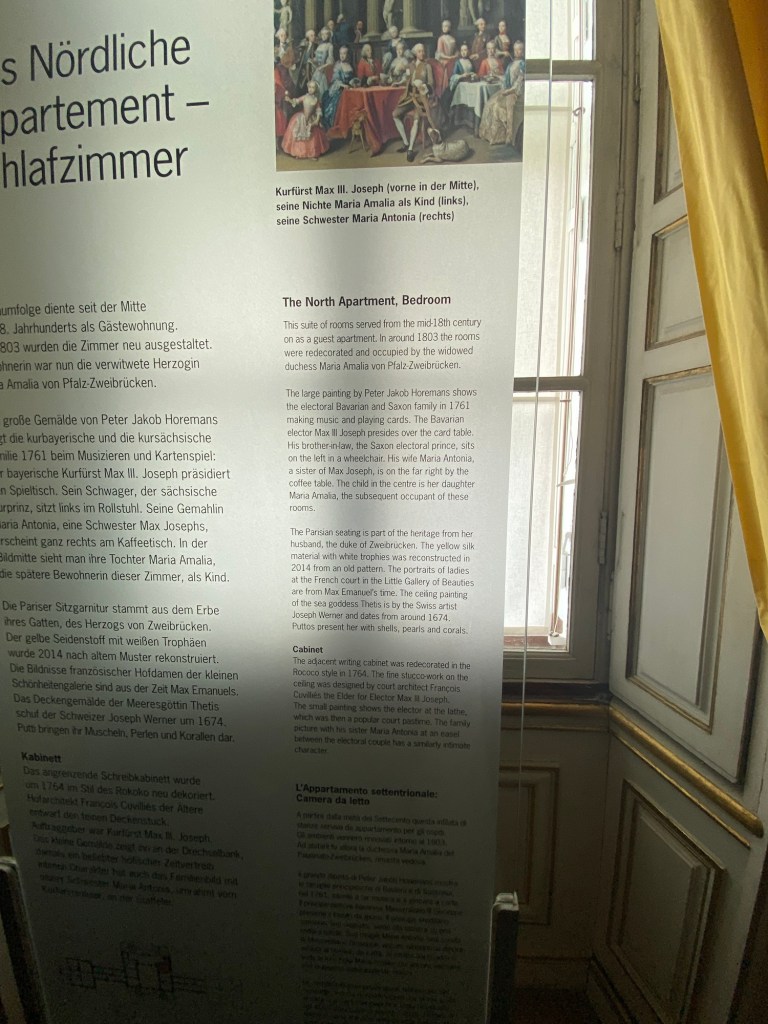
If you read my recent post on the Great Hall at this summer palace, you will recall that I said I was interested in the inventive way the chains/cords holding up the chandeliers are decorated. Here are some other examples of what I saw in the palace, along with a few other miscellaneous interior shots.

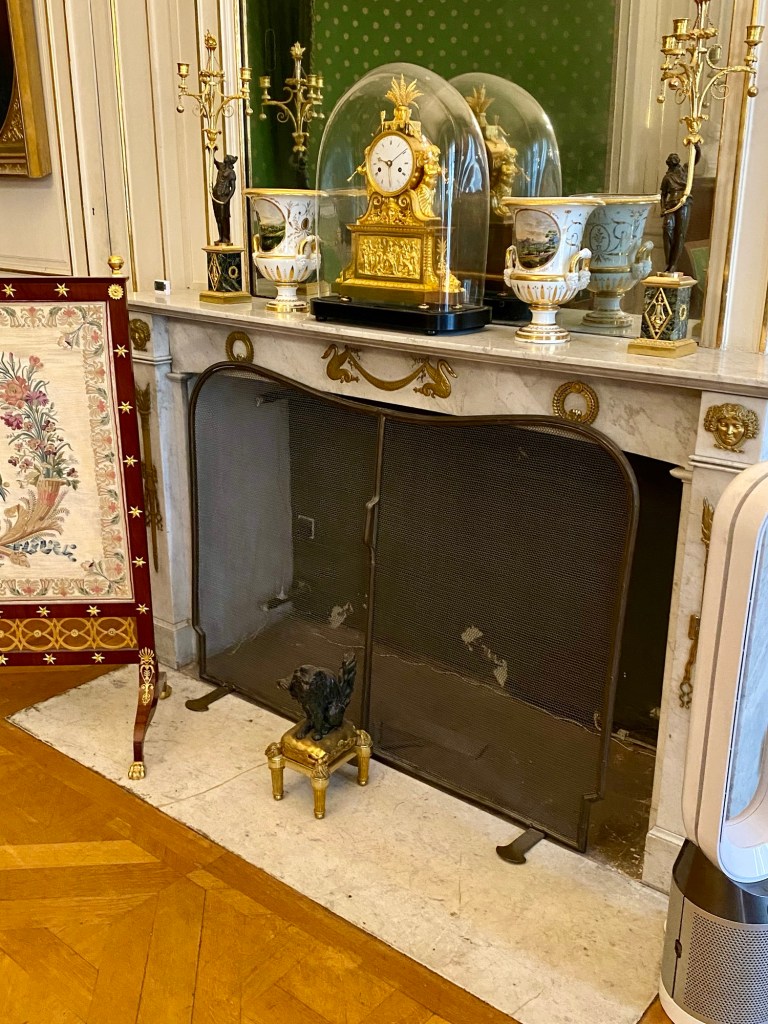
A little bronze kitten sits on a stool in front of the fireplace. I appreciate that someone took the trouble to decorate this room in this way.
Inside the Nymphenburg Palace; more rooms to dazzle

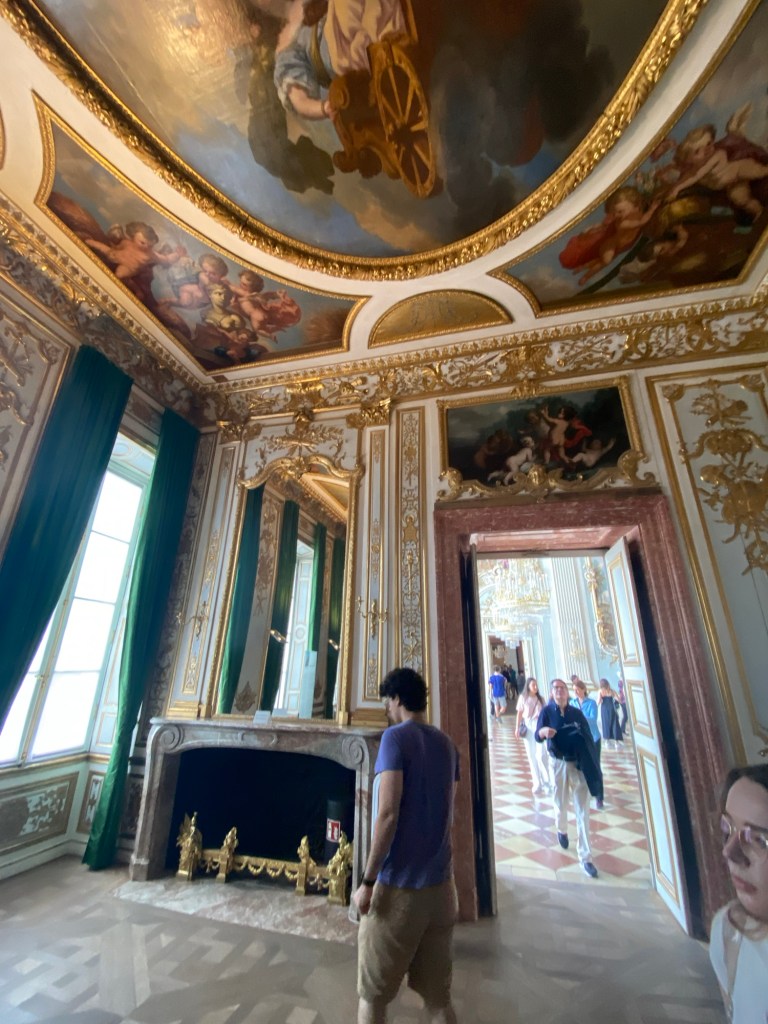
I’m going to very honest with you: I’ve seen enough royal palaces to hold me over for quite a while. It’s too much: too much gold, too many decorative arts, too too much.

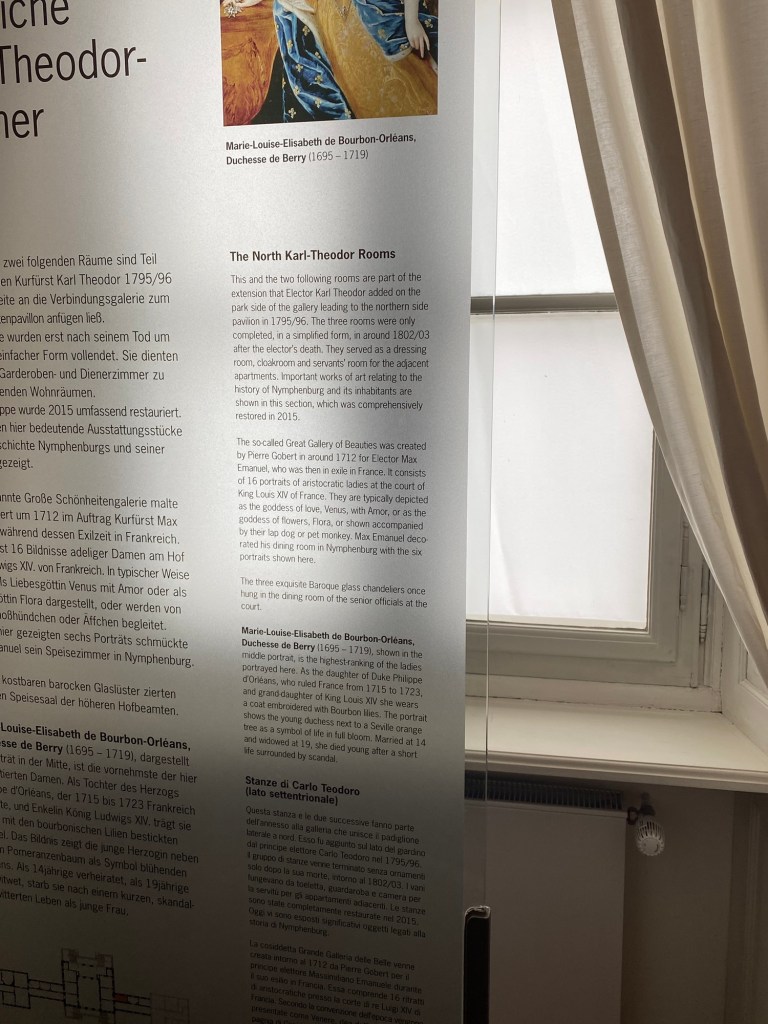
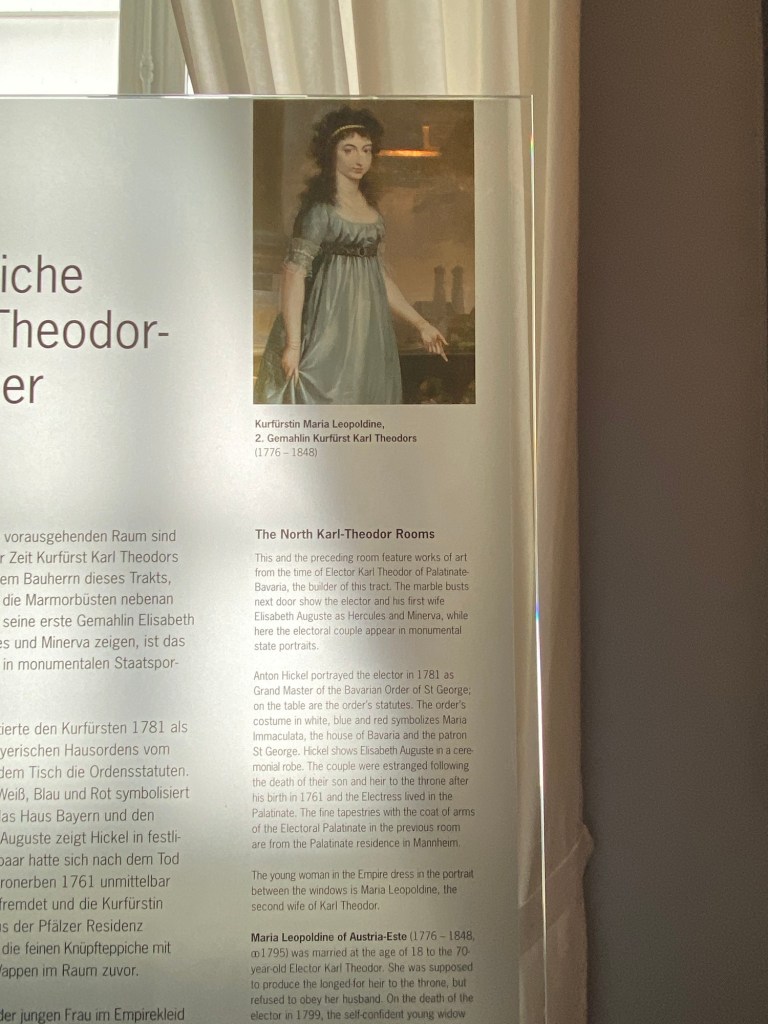
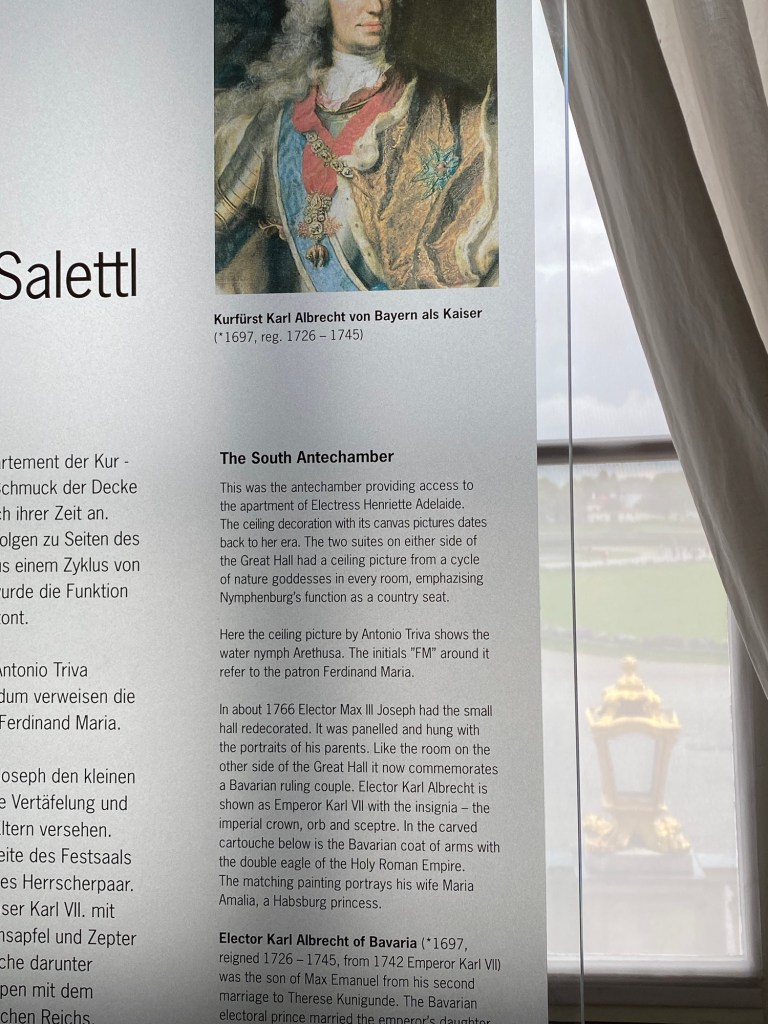
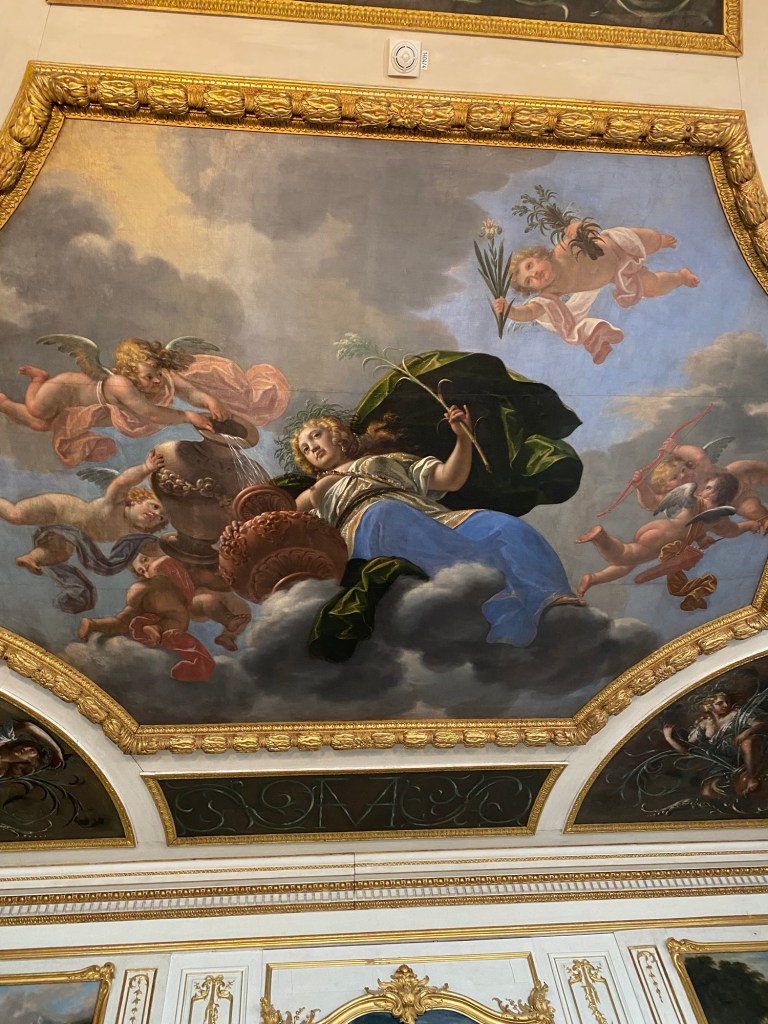
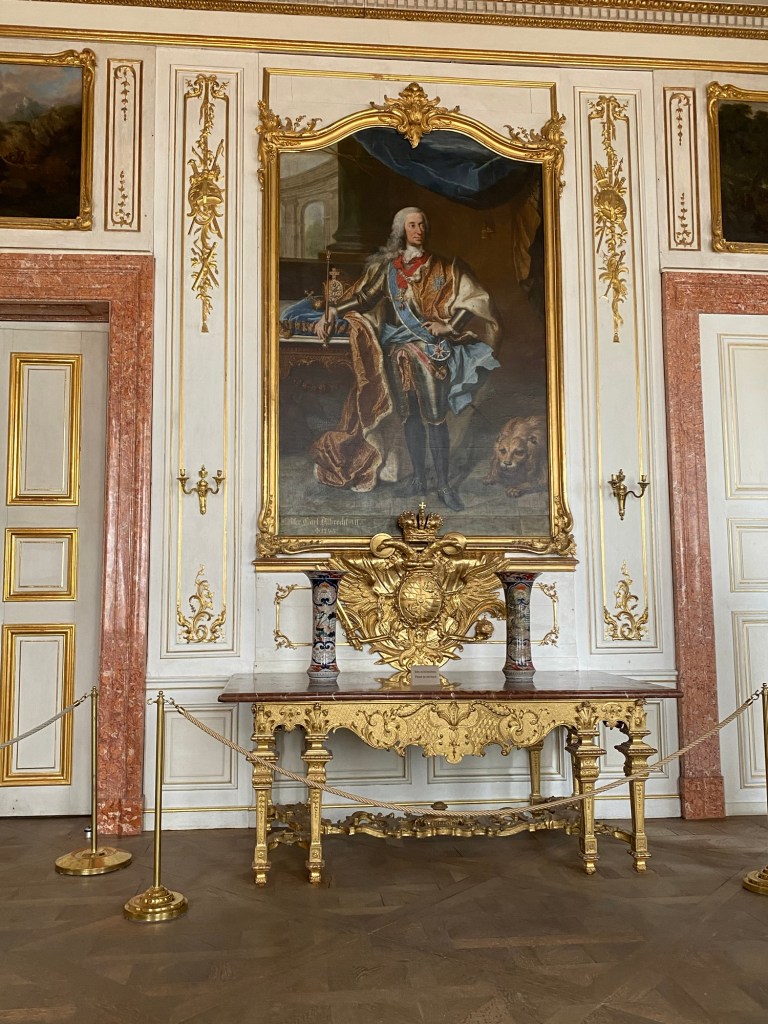
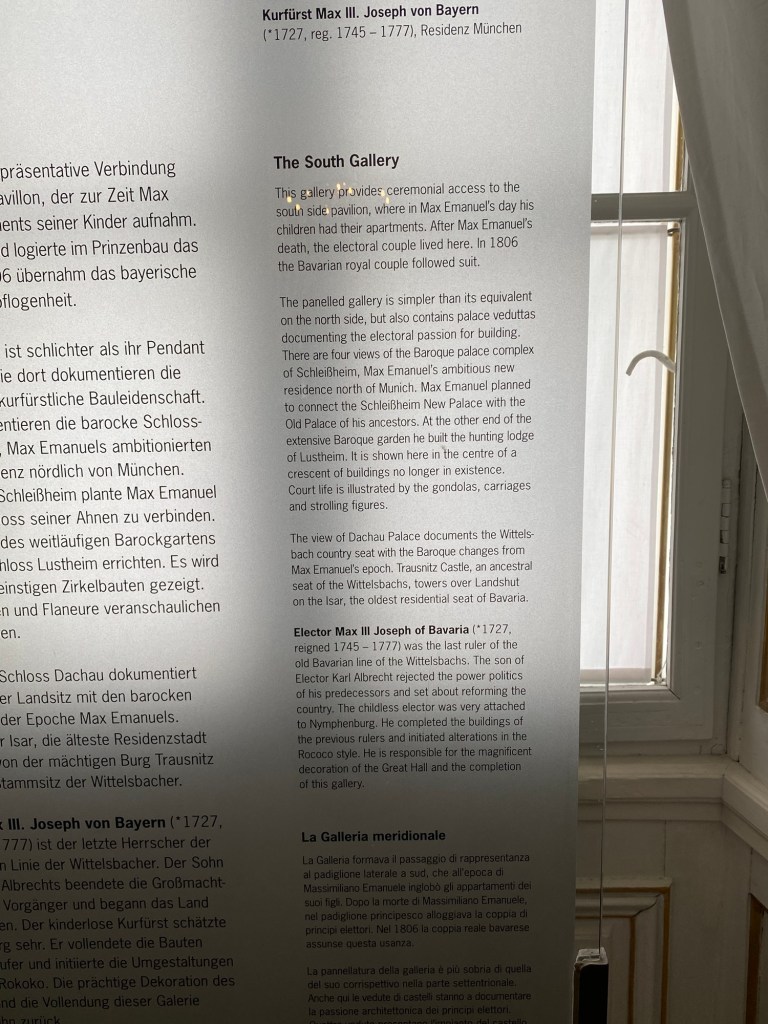
But, I’m in Munich and I’ve got to see the sights. So, here are some pictures from my recent tour inside the palace.

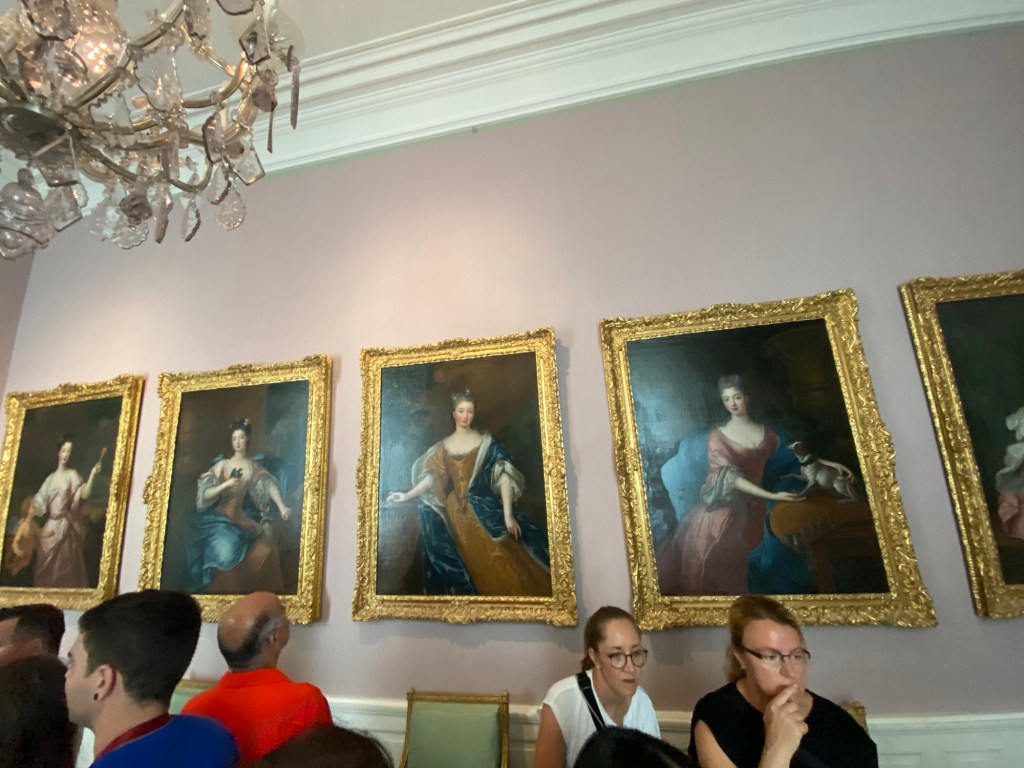
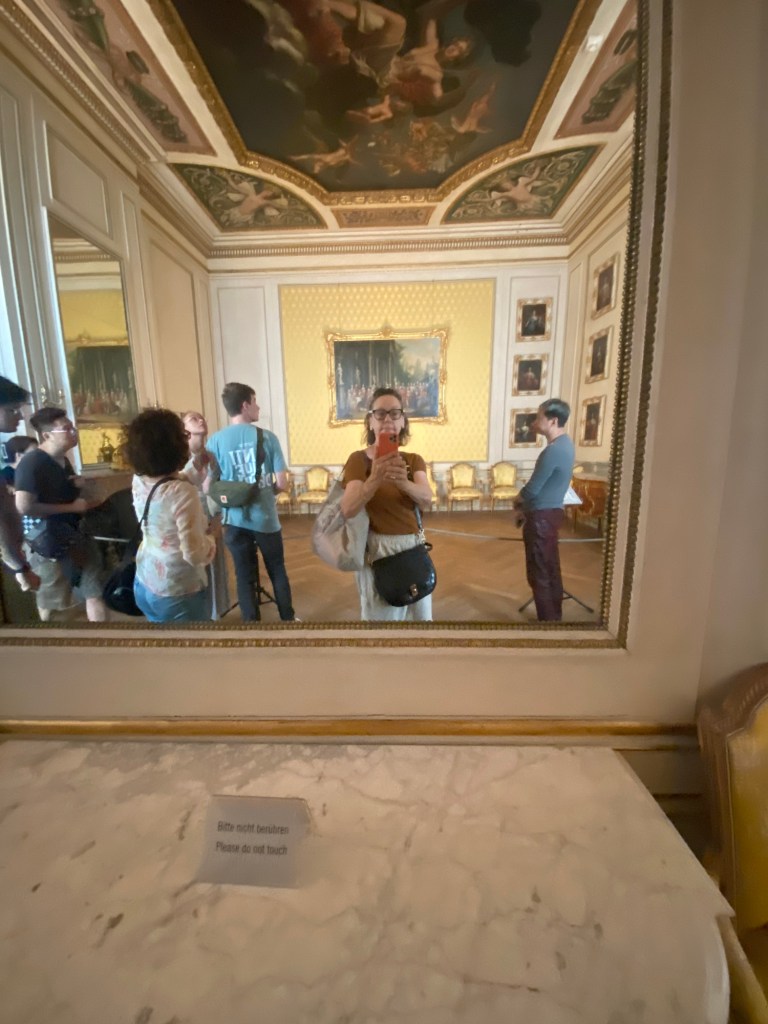
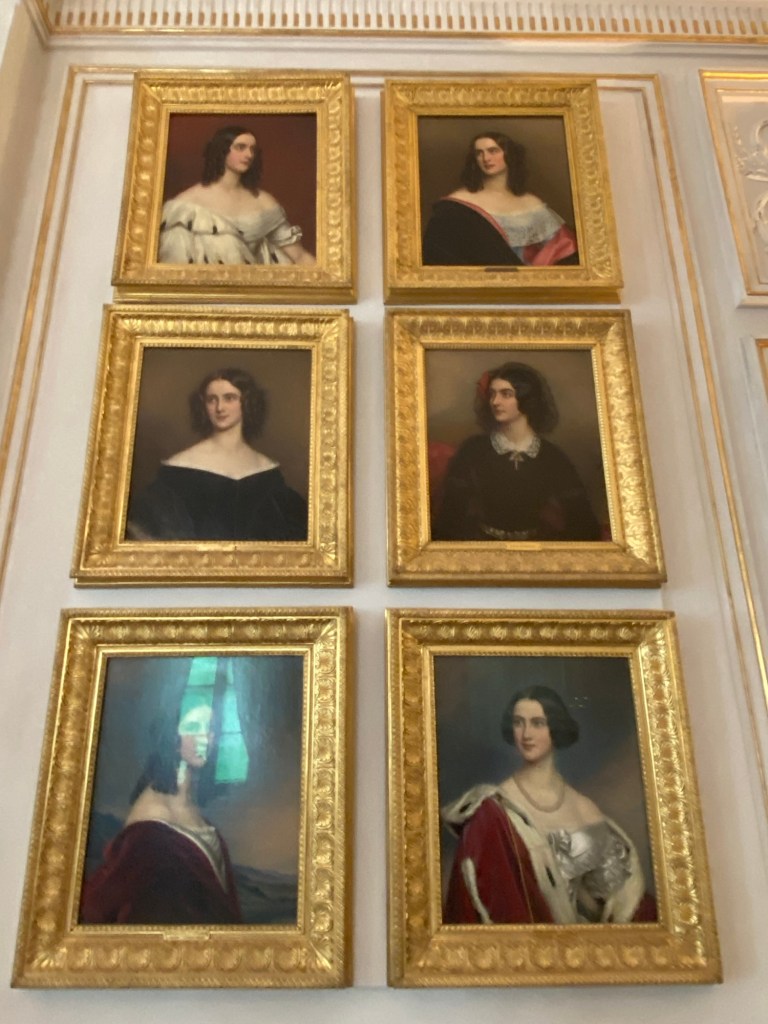
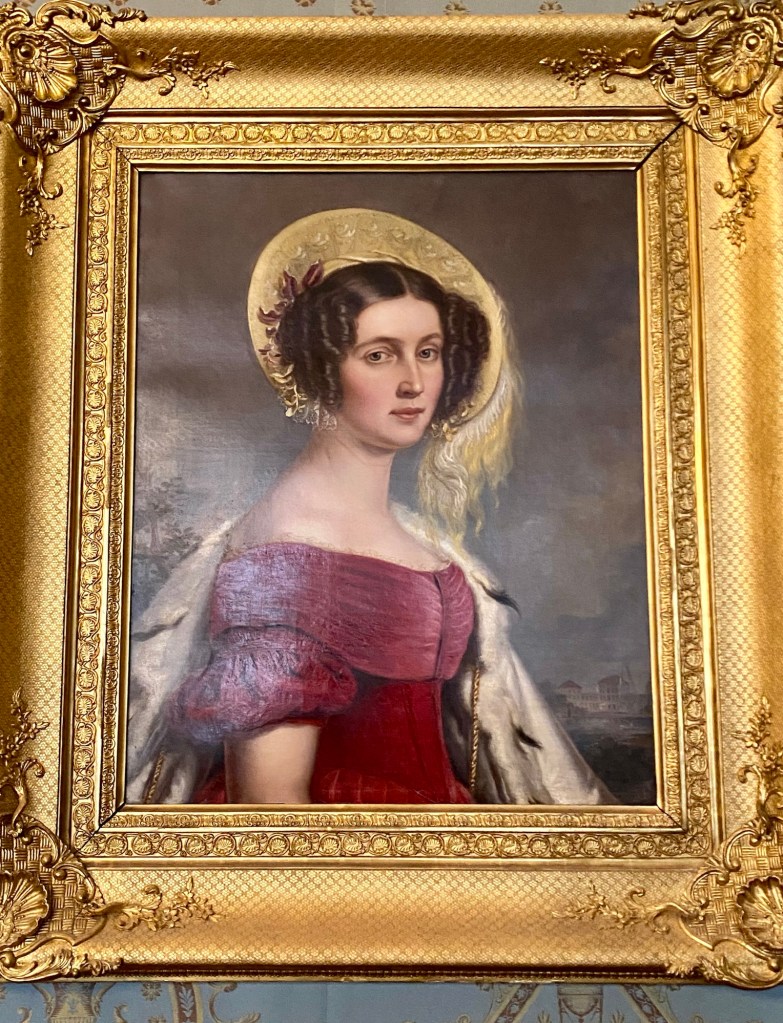
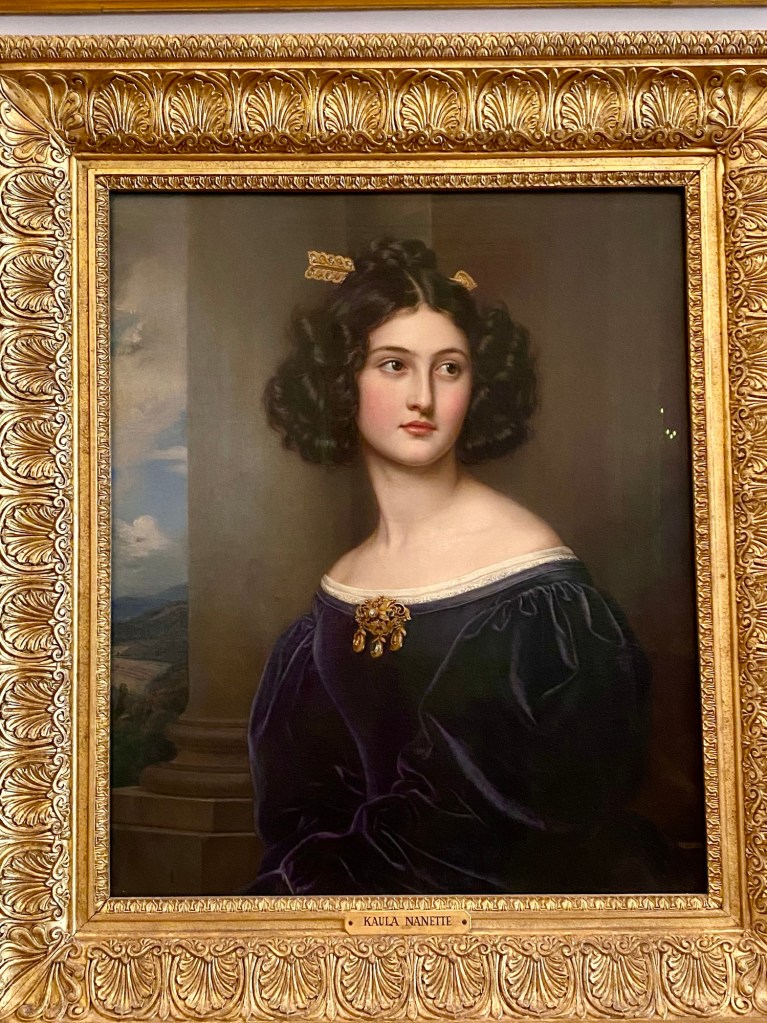
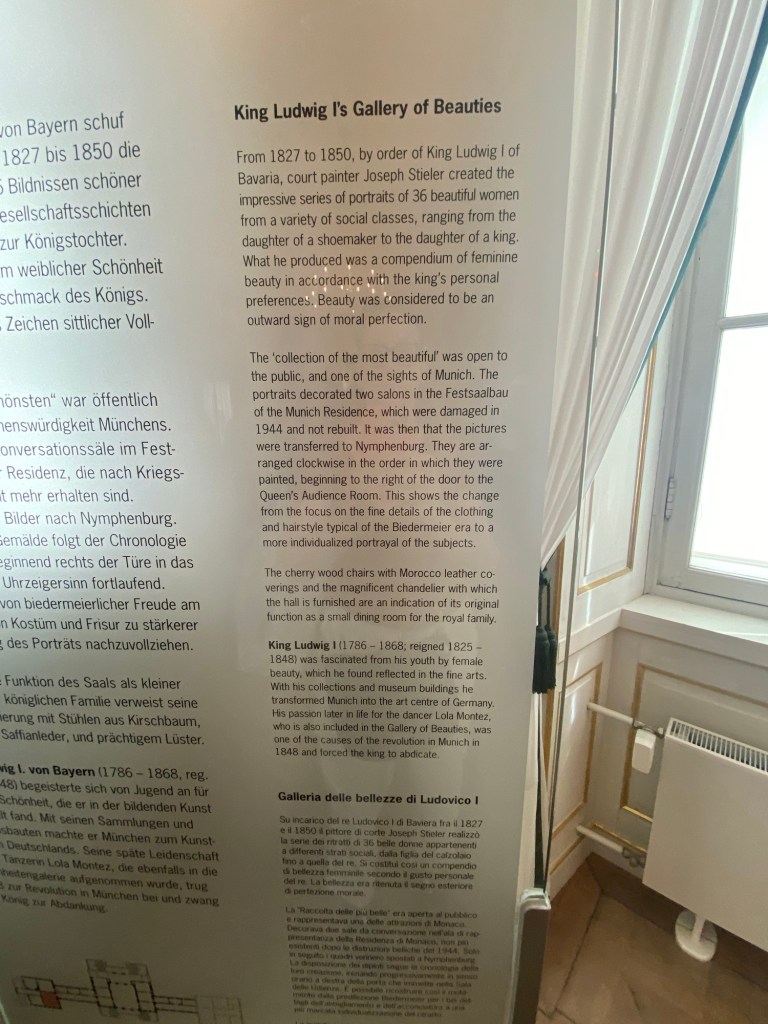
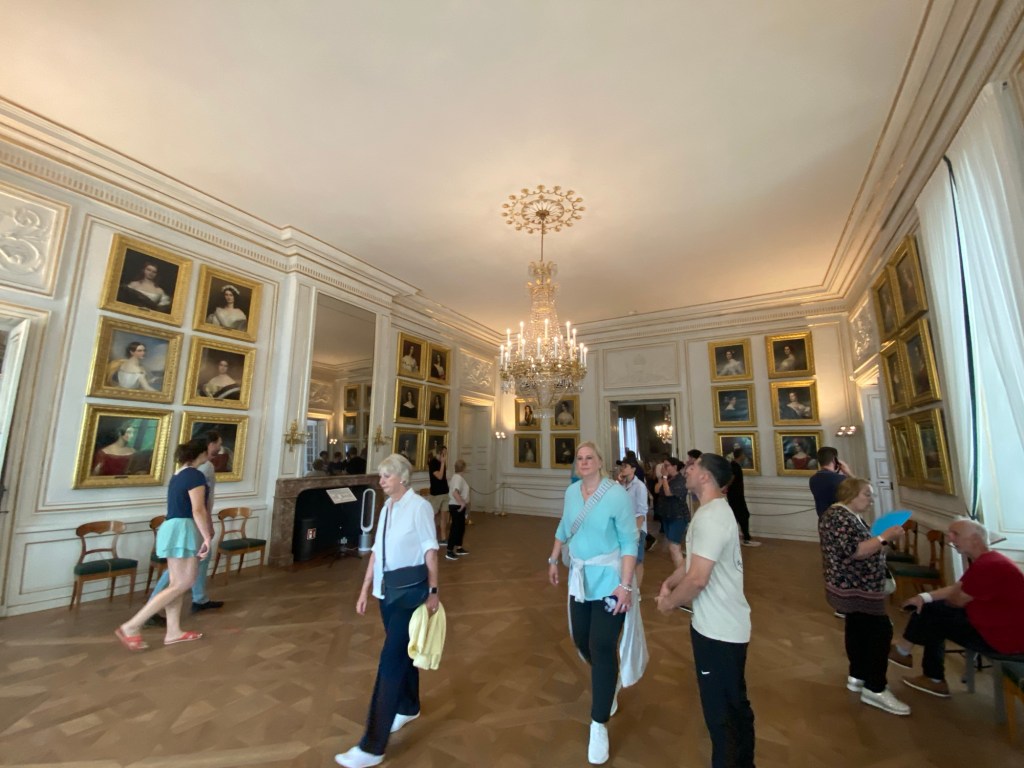
Now, the next gallery is interesting to me, because I’ve never seen anything quite like it. Apparently King Ludwig I admired beautiful women. Wow, that’s so unusual. Ha ha.

But, he ordered a gallery made up of paintings of women he considered to be beautiful. I’m not going to comment further, but will show you some of these.

And, because I’m a sick puppy, I added my own portrait to his gallery. Tee hee. Ludwig is rolling in his sarcophagus, no doubt.
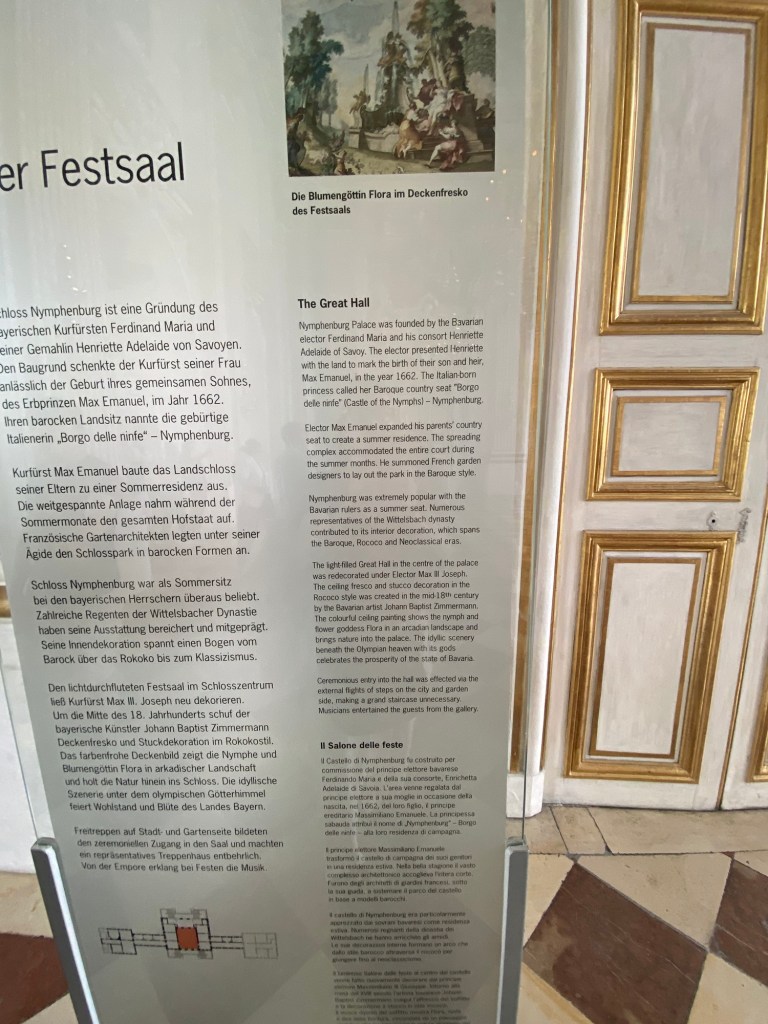
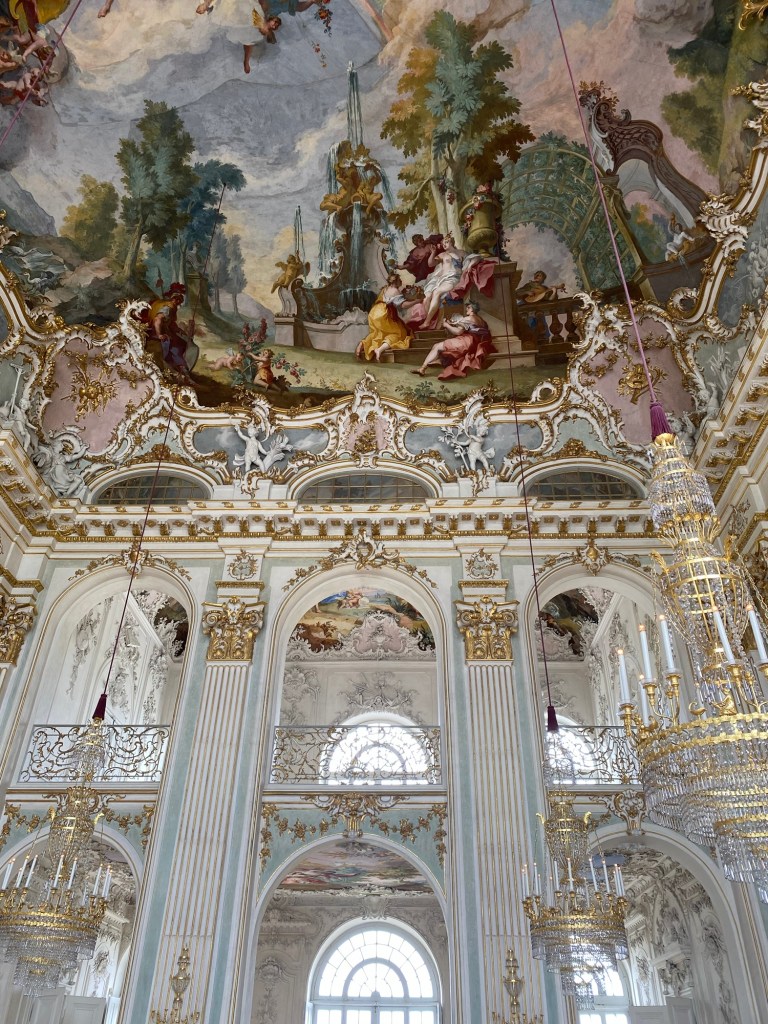
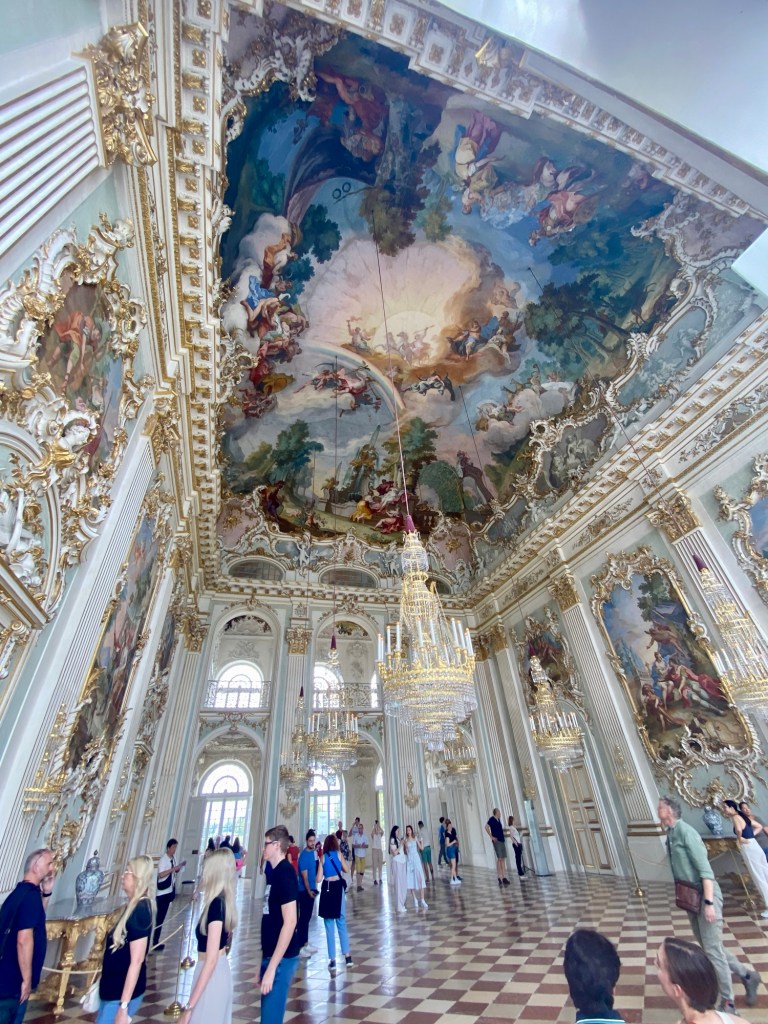
The Great Hall at Nymphenburg Palace, Munich

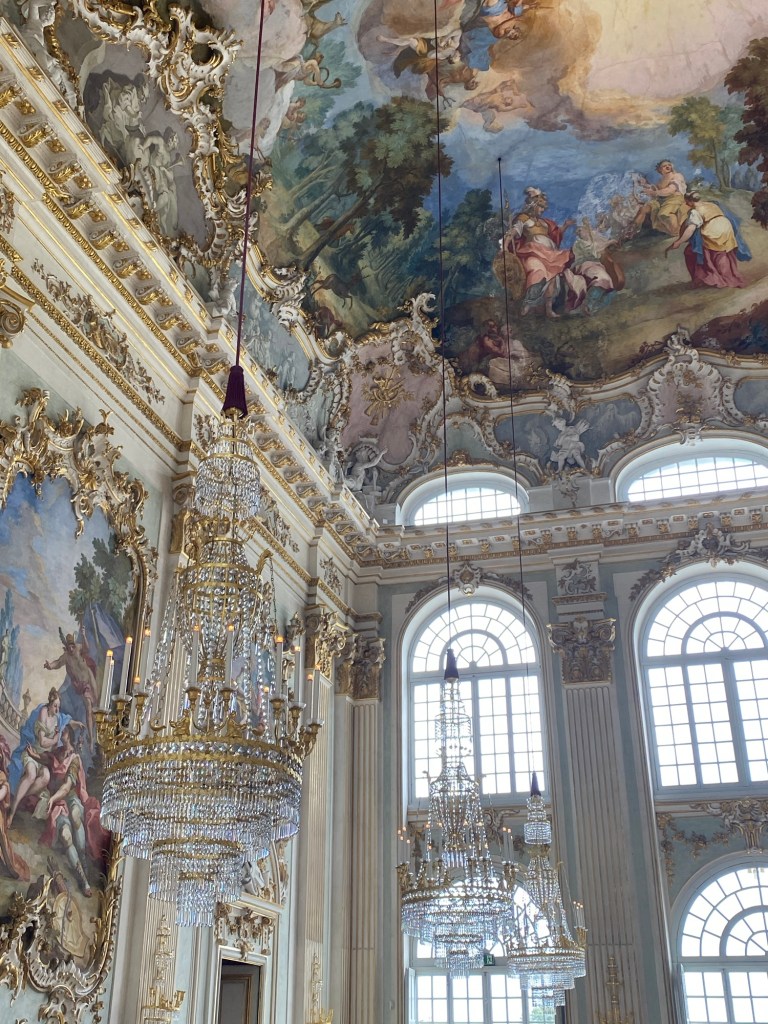
Wow! The great hall indeed. Feast your eyes, my friends. It’s quite something!

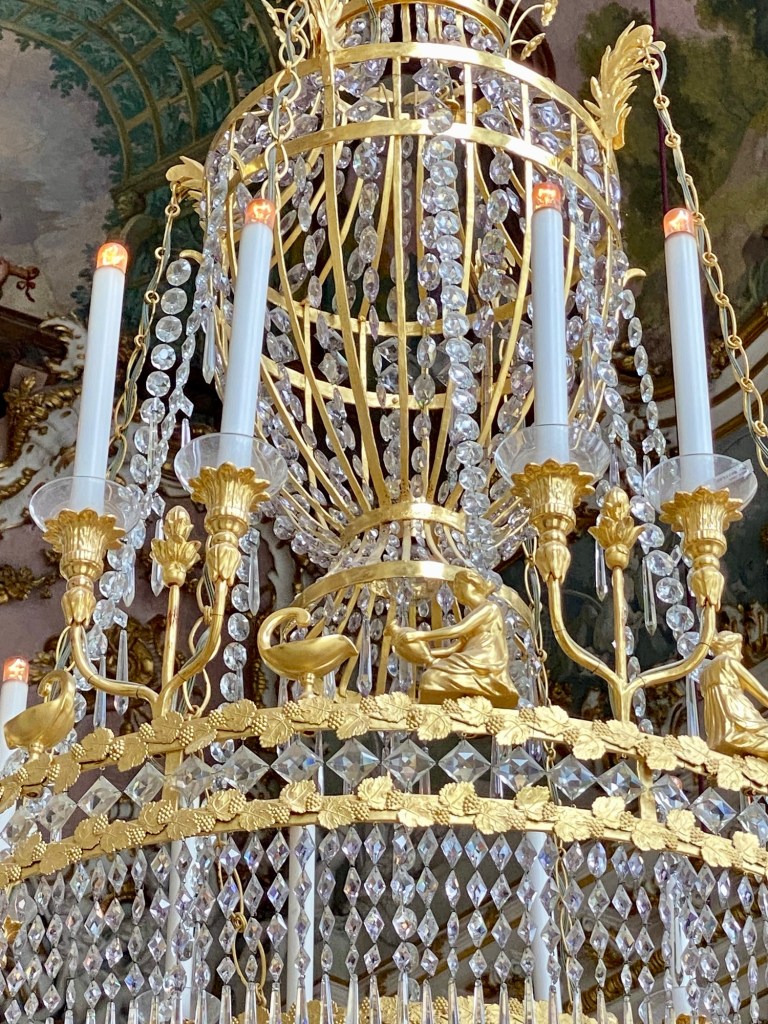
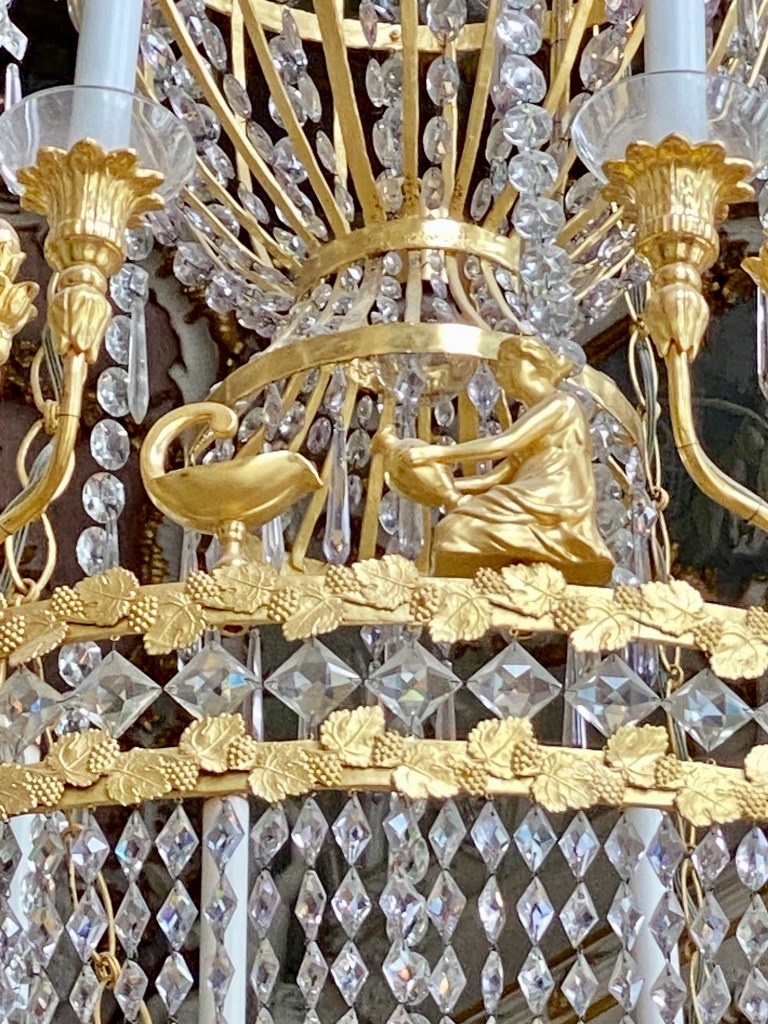
As I was resting on a bench in the great hall, trying to take in some of the 1,000,000 details, my eyes and mind kept resting on the cord from which the incredible chandeliers seemed to dangle. Of course, the cording and tassels just cover the electrical cords and chains that hold up the lights, but I swear, here in Munich, here at the Nymphenburg, I’m seeing inventive chandelier decoration that takes the art to a whole new level.

Then my eye rested on a repeating motif of a kneeling figure pouring wine (?) into a basin. Pretty, pretty.

When you leave this hall, your mind is still recovering from the splendid use of light reflecting surfaces. And I didn’t even visit on a sunny day!

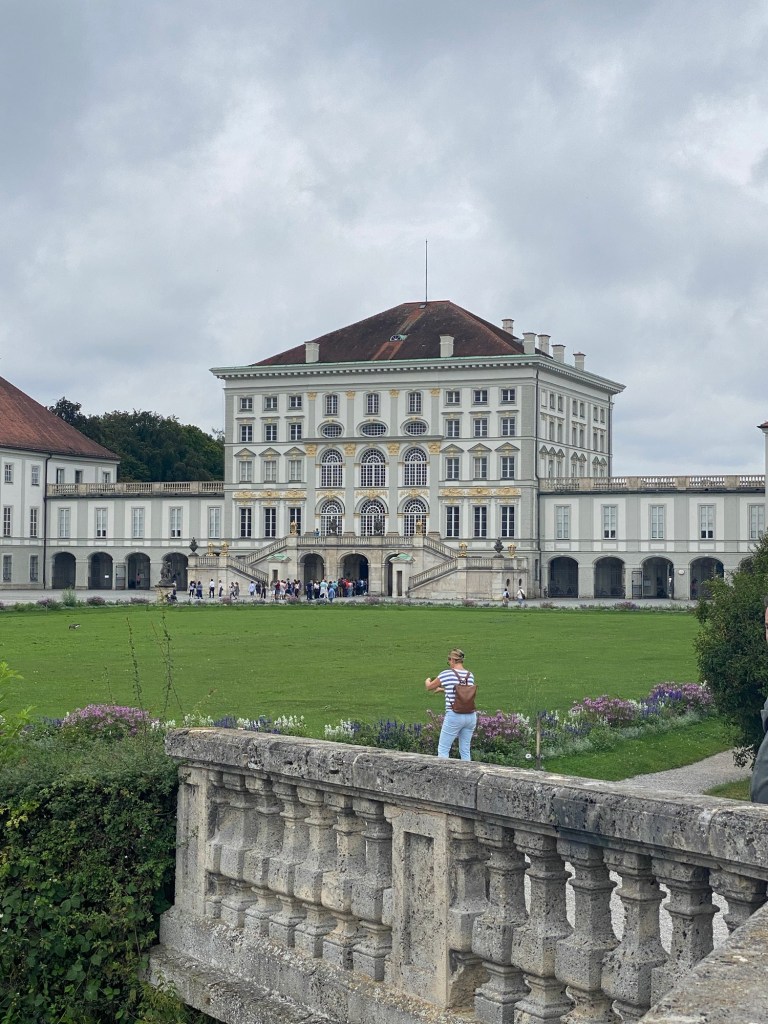
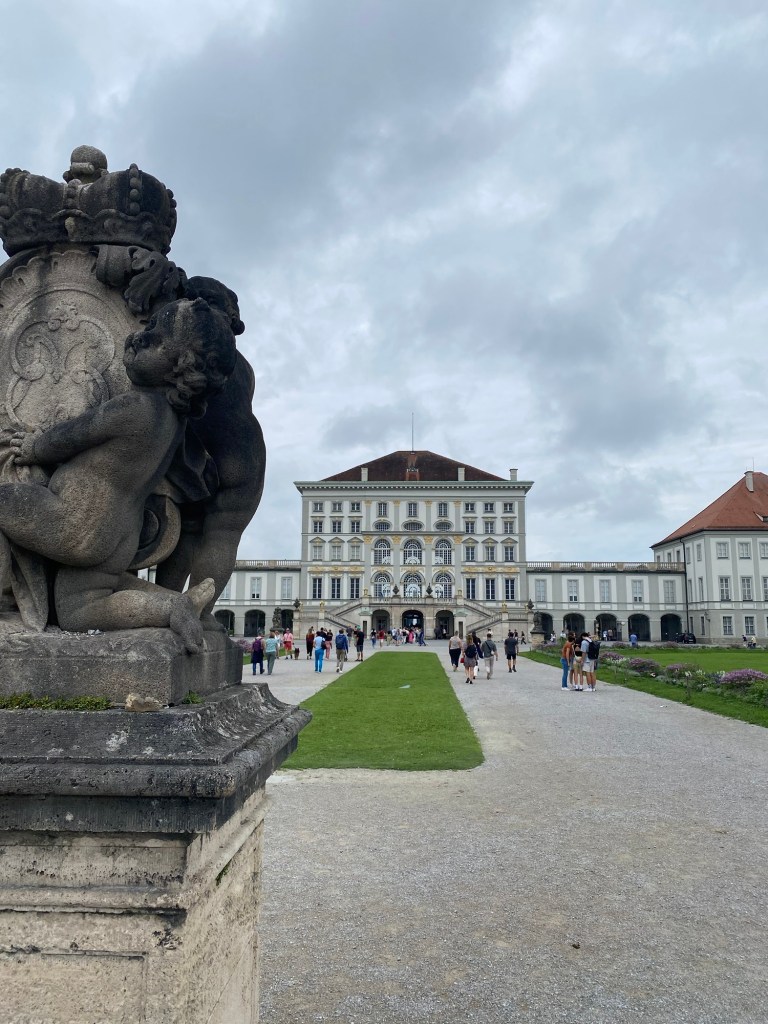
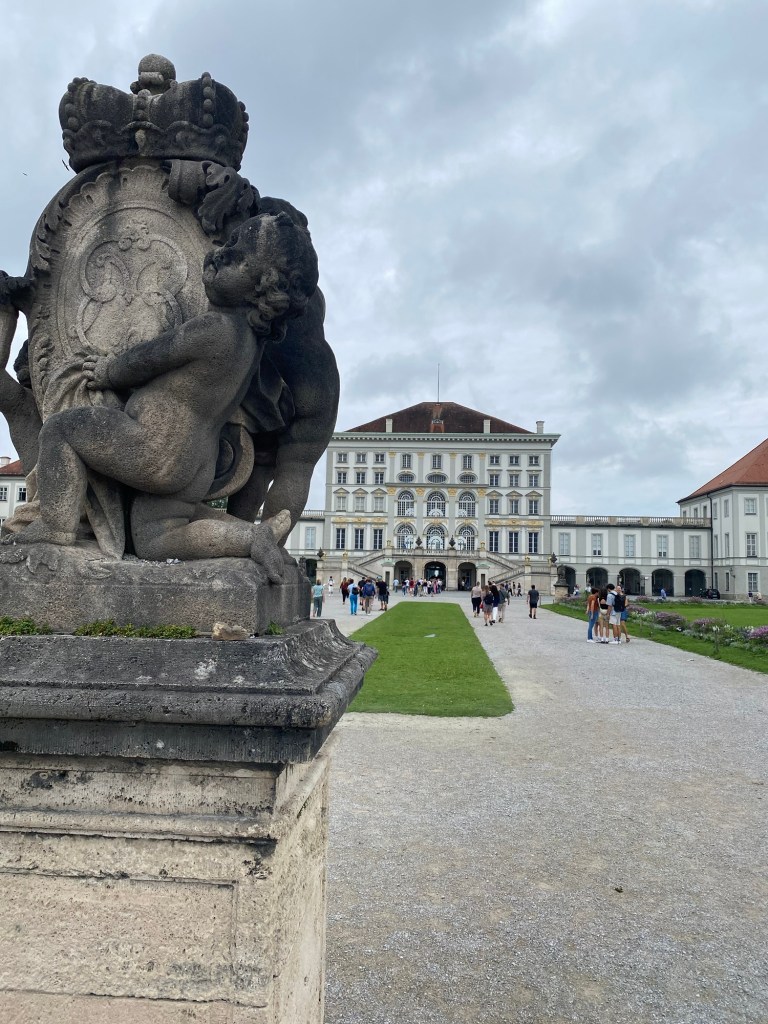
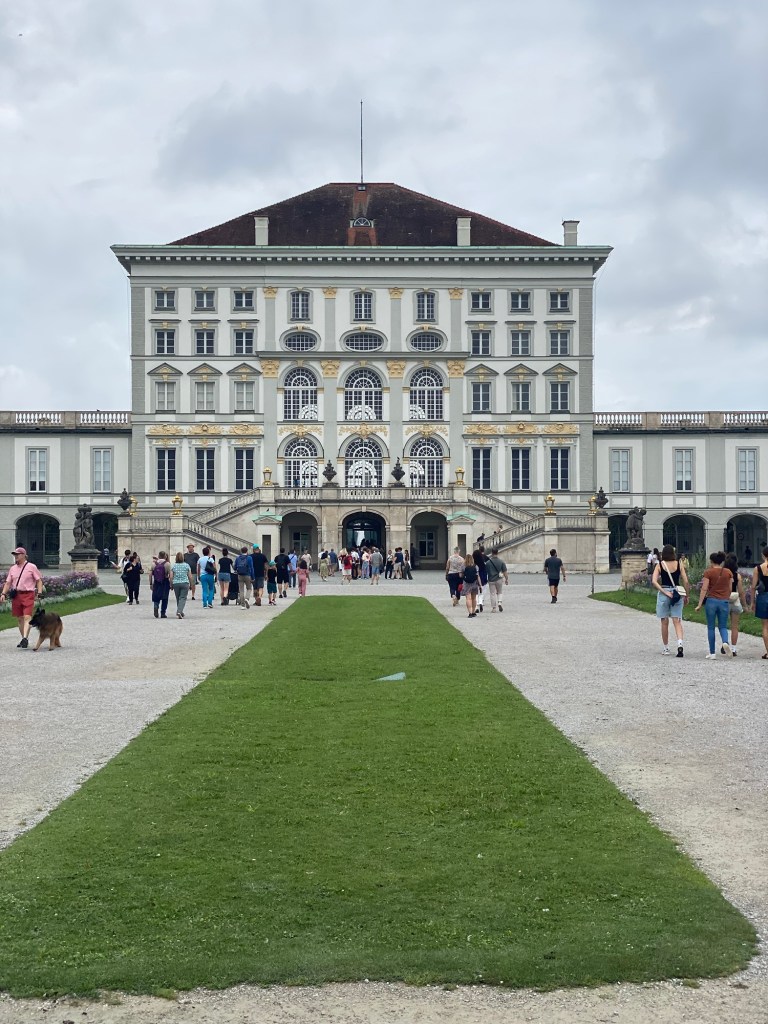
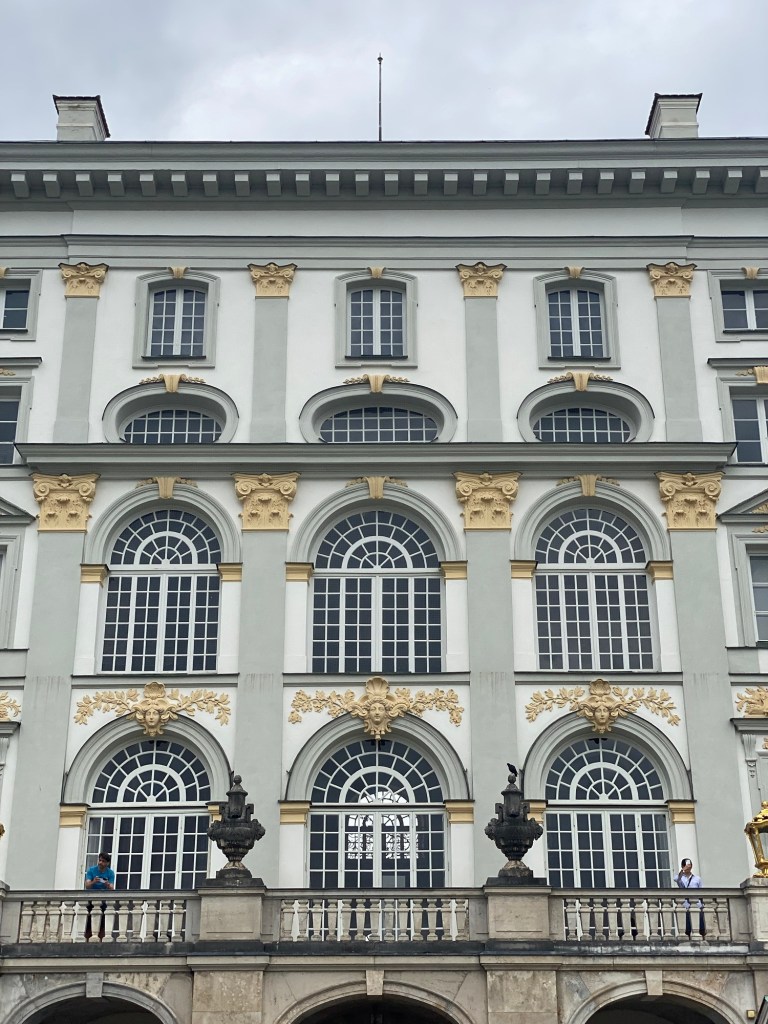
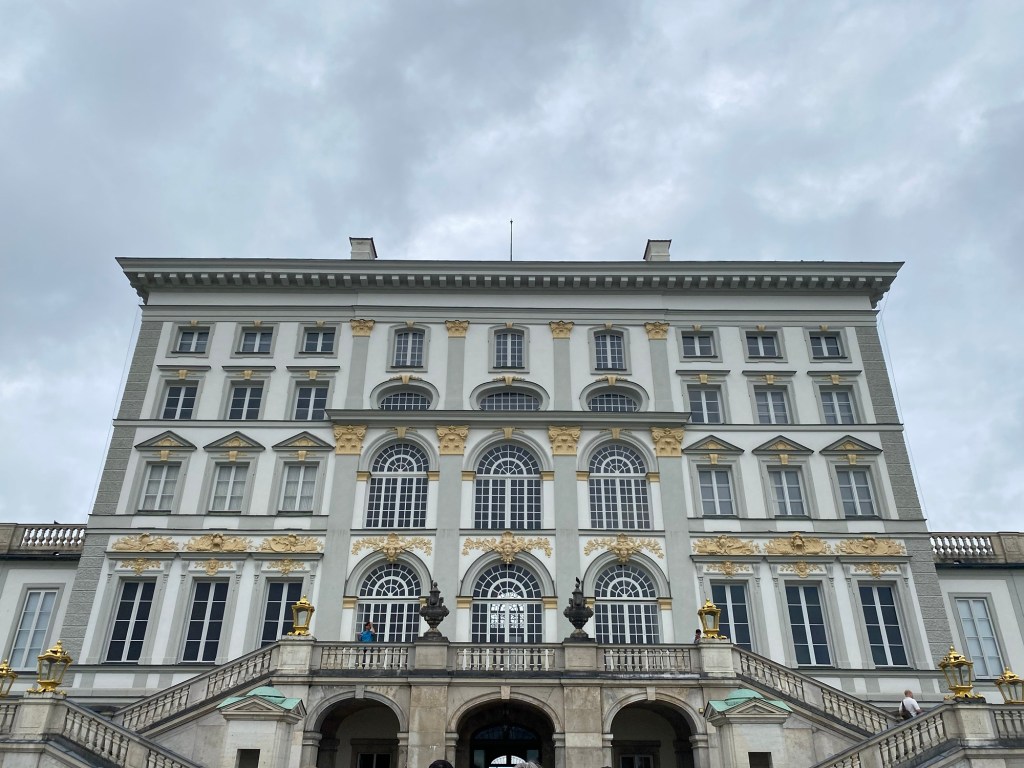
Nymphenburg Palace, Munich: the exterior

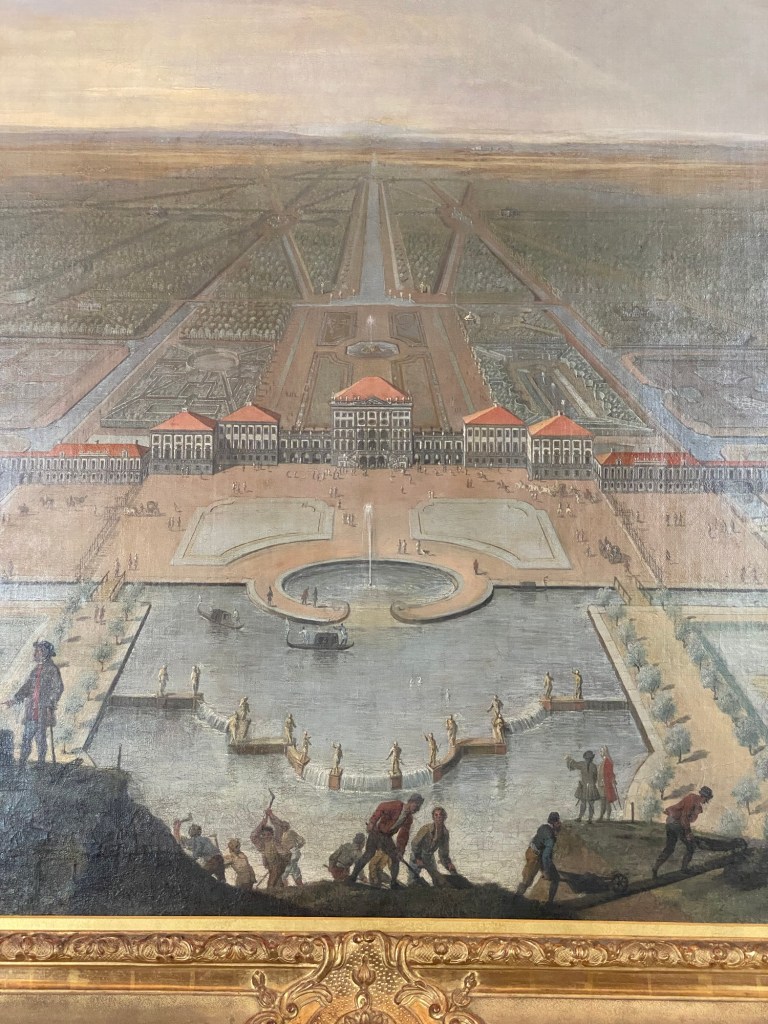
The Nymphenburg Palace (Schloss Nymphenburg, Palace of the Nymphs) is a Baroque palace situated in Munich’s western district Neuhausen-Nymphenburg, in Bavaria, southern Germany. The Nymphenburg served as the main summer residence for the former rulers of Bavaria of the House of Wittelsbach. Combined with the adjacent Nymphenburg Palace Park it constitutes one of the premier royal palaces of Europe. Its frontal width 2,073 ft (north–south axis) even surpasses Versailles.

I’m not going to give the history of the palace because anyone can look up anything on the internet. Instead, let me tell you that I enjoyed my visit to this incredible place recently and these are my picture. I hope you enjoy them and are inclined to look up more info. I’ll be posting about the interior treasures soon.

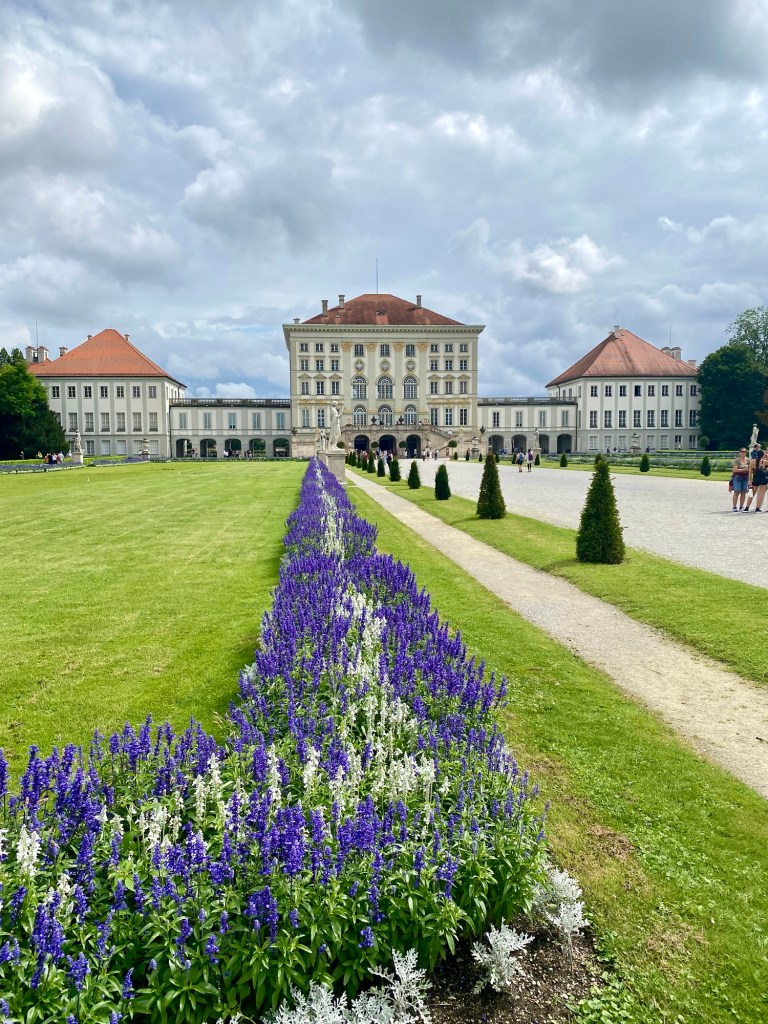
The front facade:

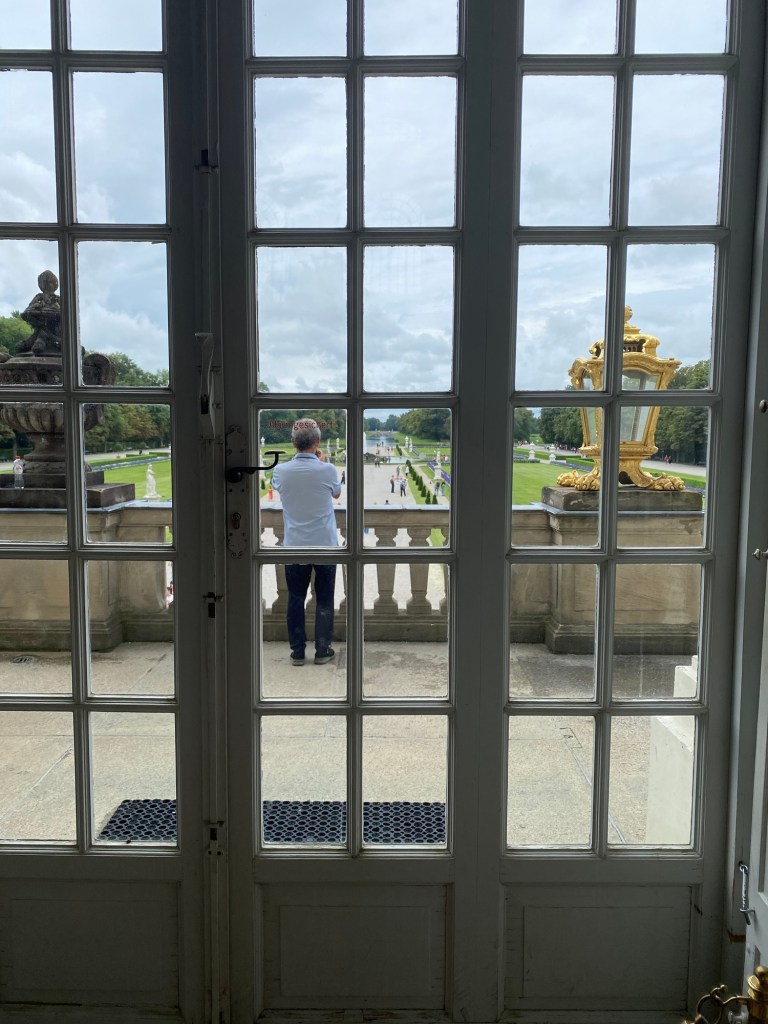
Looking outside towards the back:

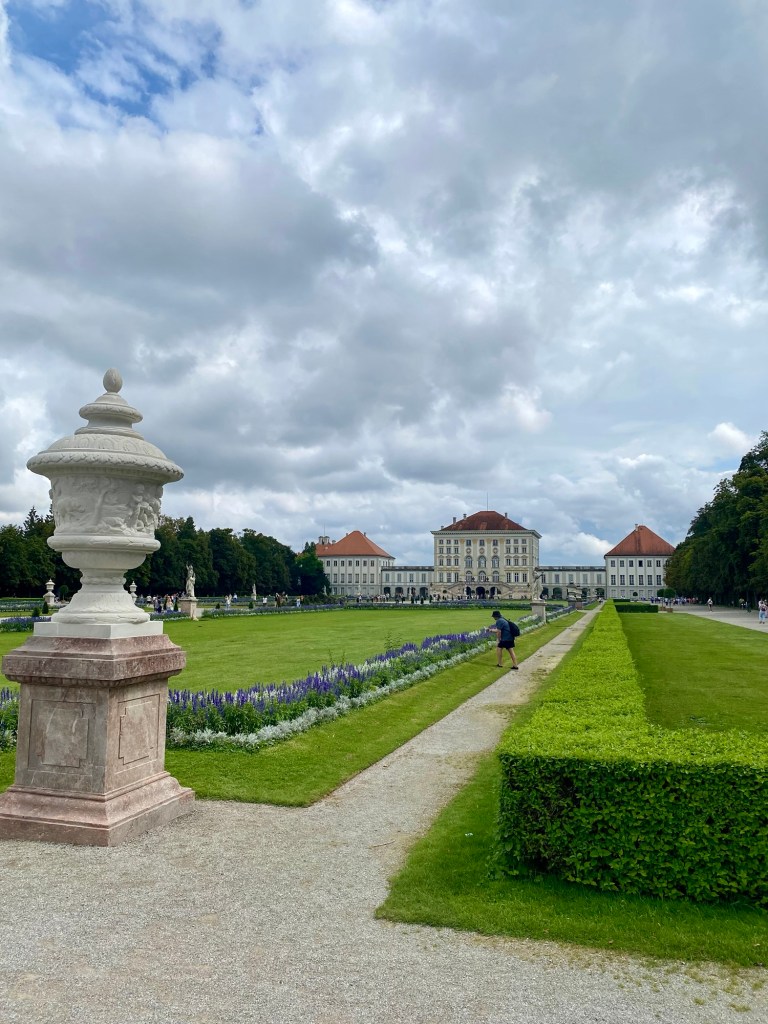
The back exterior