Lately, when I find my mind wandering when it should be conjugating Italian verbs, I like to waste time er refresh my brain by catching up on my favorite blogs. I am a big fan of Elizabeth Minchilli’s blog from Rome and culled the following images from her postings.
A few weeks back I posted a photograph showing what I believe the entrance to a heaven would look like. So, I decided to let my mind wander today into what my ideal room in a heaven would look like.
And here it is, a combination of details incorporating all the necessities with just enough and just the right style.
Of course, discerning visitors will know it is in Italy. Where else?!
First, it is always springtime so that your French doors can be open to the outdoors. Naturally, you have flowers from your garden on your desk, where you spend your days writing and reading. When your eyes tire from looking at the laptop screen you rest them with the beauty of the outdoors. Often your vision drifts to the gorgeous floor, where two tone tiles are inlaid in a Moroccan pattern.
Even though it is heaven, you still get thirsty and hungry, so you have an iced bottle of sparkling aqua minerale available at all times, as well as a plate of almonds from your orchard. The mineral water keeps your bones strong and le mandorle are full of excellent nutrients to keep your eyes sharp, your fingers ready to type, and your brain energized for thinking deep thoughts.
Sometimes you stop writing for a moment and let your eyes wander up the walls covered with tile sheets of naturally patterned marble from the area around Carrara, the same quarries where Michelangelo hand-selected the marble for his best sculpture. Up, up, up your eyes scroll, admiring the lines of gray strata swirling within the white marble. The ceiling is well worth your gaze, for it has been hand-painted with lovely colors and designs. How sweet to do nothing but look. Dolce far niente indeed! Looking is an activity too. To really look at something takes practice. It is, like everything, an acquired skill.
Later on, you take a bubble bath in your simple bathroom lined with Italian ceramic tiles that have a Spanish/Moorish flavor. While under the lavender scented suds, your mind wanders to the origins of these ceramic tiles and the eastern heritage to which they attest. Your mind is never happier than when gliding through thought like this. You have a lovely upholstered chair nearby to catch your bath towel or robe. Once again, the ceiling does not disappoint. If anything, it demands attention!
Later, you wander through your trellised garden.
You inhale the sweet scents of blooming vines like jasmine, various shrubs including roses, and fragrant perennials. Since this is paradise, everything blooms at once, so you have wisteria and dahlias, all in the same season. Perché no? You gaze happily at your limonaria and orangerie, maybe even plucking a few bergamot or Meyer lemons to wake up your taste buds. Heaven includes all of the senses, no?
Back to the room for a quick nap on this gorgeous bed. You can lose yourself in the fantastic frescoed ceiling.
Then, completely refreshed after an ideal day, you dress for the evening and meet someone at the bottom of these steps to the sea. Together you will enjoy an aperitivo aboard a nice boat on the water, watching the sun set.
It is almost time for the holiday season to begin! And, in Seattle, that means only one thing! The Pacific Northwest Ballet’s Stowell-Sendak version of the classic Nutcracker ballet.
The PNB’s Nutcracker is a very special work, a collaboration between famed children’s book author and illustrator, Maurice Sendak, and PNB Founding Artistic Director and choreographer, Kent Stowell and drawing from the classic story by E.T.A. Hoffmann and music by Tchaikovsky.
The Sendak and Stowell Nutcracker production premiered at the Seattle Center Opera House on December 13, 1983.
It was an instantaeous mega hit both in Seattle and nationally. Newsweek Magazine extolled: “Forget the Space Needle, forget the Ring Cycle, forget Mt. Rainier—this Nutcracker alone is worth a trip to Seattle.”
“Pacific Northwest Ballet broke all box office records in its nine-year history of performances with an incredible 99% capacity audience for the new Nutcracker. Twenty-six performances were presented December 13–31 to 78,000 people; approximately 16% of Seattle’s population!” PNB press release following 1983 Nutcracker premiere.
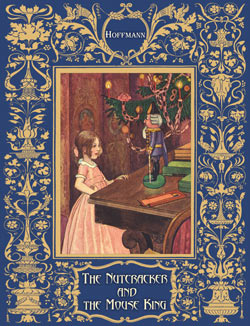
As most people know, the Nutcracker ballet is based upon a story written in 1816 by E. T. A. Hoffmann, entitled “The Nutcracker and the Mouse King.” The tale reveals that young Marie Stahlbaum’s favorite Christmas toy, a nutcracker, comes to life, defeats the evil Mouse King, and whisks the Fraulein away to a magical kingdom. In 1892, Russian composer Pyotr Ilyich Tchaikovsky collaborated with choreographers Marius Petipa and Lev Ivanov to turn Alexandre Dumas pere’s adaptation of the story into the ballet we all know and love. Over time, the Nutcracker became one of Tchaikovsky’s most famous compositions and arguably the most popular ballet world wide.
So, how did Seattle’s Stowell and famed illustrator Maurice Sendak decide to update the old ballet? It is a very interesting story, told here by the principals:
Maurice Sendak in 1984 said of his collaboration on the ballet: “My immediate reaction to the request that I design Nutcracker was negative. I was flattered, but my reasons for saying no were plentiful. To begin with, who in the world needed another Nutcracker? ….Of course I did it. Most of my doubts and worries were put to rest when Kent Stowell and I met for the first time early in 1981 in New York City. I liked him immediately for not wanting me to do Nutcracker for all the obvious reasons but rather because he wished me to join him in a leap into the unknown. He suggested we abandon the predictable Nutcracker and find a fresh version that did honor to Hoffman, Tchaikovsky, and ourselves. Later that year, Kent invited me to Seattle to see the company’s old Nutcracker. By then I had fallen in love with the project and after that Christmas of 1981, I set to work in earnest.”
Kent Stowell discussed the collaborative work in 1983, “Maurice and I went back to the original Nutcracker story by E.T.A. Hoffman and incorporated much more of the story into the production.”
Stowell and Sendak delved deeply into the original story of Hoffman’s “The Nutcracker and the Mouse King,” infusing their new ballet with a drama and strength that fully complements Tchaikovsky’s rich score, while creating a kaleidoscope of roles for all levels of the Company and School.
Stowell continued: “Clara and Herr Drosselmeier are the central figures though the story essentially remains the same. The essence of the Nutcracker story is really a fantasy dreamed by Clara, a young girl on the verge of growing up. The ballet is seen unfolding through her eyes, in an atmosphere tinged with mystery, where there are no boundaries between dream and reality. We worked on this new production for two years; seeing our plans become a reality for our company is an incredible accomplishment—one we feel will be well worth it for all our Nutcracker fans.”
In 1984, the year following the premier of the brilliant Stowell-Sendak Nutcracker in Seattle, a new edition of the original E.T.A. Hoffman story, illustrated by Sendak, was published and hit the New York Times Bestseller List. It remained there for eight weeks.
In 1986, a feature-length film of the Stowell-Sendak Nutcracker was produced, premiered in Seattle, and was released nationwide.
The important thing to remember about this ballet, however, is that this is the last year it will be performed.
All my life I have enjoyed watching any expert at any thing at work. I like watching dancers rehearse; I like watching a barrista steam milk and pull espresso; I like watching a mechanic’s hands run over an engine seeking the ping I hear when driving. It is all amazing to me.
So, here I share one of the videos she posted. It captures a rather unexpected art, but an art nonetheless! Hearing the Italian language backdrop is nice too! Enjoy!
In this day and age, when it seems as if no female under the age of 30 has a regularly spelled name, my first name might seem to be just one more example of the same.
However, it is not. I did not take the common name Loretta and pretty it up to make it Lauretta.
I am named after my paternal grandmother, Lauretta Belle Romjue. And, not only that, but I didn’t like my name when I was young and had, for like the first twenty years of my life, a love/hate relationship with it. Mostly I wished I could have had a more common name, something regular, like Julie. I even liked the more patrician version of that name, Julia. In first and second grade I longed for any name that was easier to write and spell.
But eventually, by the time I more or less grew up — around age 35 I’d say– I finally enjoyed my name. I thought it looked good in print and since I was publishing scholarly articles and book chapters, it was nice to have a solid, interesting, old-fashioned name. But, even then, what I did not know was that my name is Italian! Which is kind of weird, because….
I have had, for as long as I can remember, an affinity for Italy. Nothing about my association to things Italian makes logical sense. My ancestors did not come from Italy, but rather from France and England, and they were in the United States from at least the time the nation was first formed. So, why, I have often wondered, do I have this inexplicable love for all things Italian?
I still don’t have an answer for that question; I am not a believer but it does kind of make me wonder if I lived before this life and maybe I lived on the Italian peninsula? But, even though I can’t rationally explain my love for Italy, I have made a lot of trips there during my adult life, simply because I’ve always been happiest in il bel paese.
One autumn, many years ago, following a very trying summer, I made a trip to Umbria to restore my soul. While there, I spent time in Spoleto and visited the majestic Rocca Albornoziana, a fortress castle built for a cardinal in the 14th century. The Rocca was used by Spoleto’s Renaissance governors and many popes even took up residence there at various times, including Boniface IX in 1392 and Nicholas V in 1449. Even the colorful character, Lucrezia Borgia, is known to have stayed in the Rocca on several occasions.
By 1700, however, the castle began to lose importance, and from 1764 onward Spoleto’s governors no longer wanted to live in it, preferring to reside within the Spoleto city walls. In 1817, the fortress was transformed into a high security prison. How far the mighty fall!
In 1982, the prison was transferred to another location and a long, careful restoration process was begun on the castle. The Rocca was reopened in 2007 as the home of the National Museum of the Duchy of Spoleto. The fortress also houses the Cultural Heritage Diagnostic Laboratory and the European School of Preservation and Restoration (of antique books).
I took a guided tour of the Rocca one fine afternoon that restorative autumn and, while following my guide around, I almost fainted when I looked up high on the walls of the main room and there, in what looked like graffiti, was my name Lauretta. This was the first time in my entire life I had seen the correct spelling of my name outside of something connected to my grandmother or me. By the bye, I have never in my lifetime met another woman with the name Lauretta. I’ve met a handful of Lorettas, and even have one of them for a sister-in-law (how coincidental is that?), but never, ever a Lauretta.
When I had recovered myself and tuned back in to hear what the guide was saying, I asked him about the feminine names written in graffiti high up on the walls of this magnificent room. Oh yes, the guide explained, when the Rocca was used as a prison, some of the soldiers would write their sweetheart’s names as they pined away for them. One of the men apparently had a girlfriend named Laura, whom he affectionately called “little Laura” or Lauretta. Or, possibly her Christian name was Lauretta. The conservation teams uncovered the graffiti and left it as a reminder, for it gives a certain patina to the old monument, speaking as it does for its history as a prison.
I explained to the guide why I was so interested in the graffiti and he complimented me for having such a beautiful and such an “Italian” name. I was still doubtful, but he assured me that my name is a quite common Italian name. It is? I incredulously inquired, wanting to believe I had this lovely association to my favorite land on earth. When I was a very young girl, the priest of my friend’s family came for dinner on a night I was at their house. My friend’s mother introduced the priest and me and he said, “Oh Loretta, such a good, Catholic name!” Ha! I thought. What do you know? I am not Catholic. So, I was skeptical when my guide in Spoleto told me my name was Italian. Oh yes, certo, he continued. Do you not know the Puccini opera, Gianni Schicci, he asked me? Kind of, I answered. He said one of the main characters is a Lauretta and that I should check into it. I promised him I would.
Of course he was correct and Lauretta is a main character in Gianni Schicchi, a comic opera by Giacomo Puccini with an Italian libretto by Giovacchino Forzano, composed in 1917–18. The libretto is based upon an incident mentioned in Dante’s Divine Comedy. This opera includes one the maestro’s most famous, and indeed one of opera’s most beloved arias, O mio babbino caro (oh, my dear papa or daddy).
Was the aria ever performed more beautifully than by Renee Fleming? Who could answer such a silly question?, but I doubt it!
And so that is how I came to know that my unusual name is Italian. I still don’t know if that explains why I am in love with Italy, but it is a start!
So, I started researching my name and, sure enough, it was at its height of popularity as a name for girls in the United States during the very early 20th century, as you can see in the chart below. Not coincidentally, my grandmother was born in 1902, so it all begins to makes sense.
Lauretta is an Italian diminutive of Laura. Laura originates in Latin language and means “bay laurel tree”. It is taken from the name of an aromatic evergreen large shrub. In the Greco-Roman era, laurel was used as a symbol of victory, fame and honor. As a feminine given name Laura has always been one of the most popular names not only in English-speaking countries. Laura was the name of the 9th century Spanish saint, as well as the name of the woman in whom Francesco Petrarch, an Italian humanist, found inspiration.http://babynames.net/names/laurettahttp://www.at-a-site-theater.com/news/2014/7/20/at-a-site-theater-presents-a-summer-project-celebrating-birt.html
“. . . The senses reign, and reason now is dead;
from one pleasing desire comes another.
Virtue, honor, beauty, gracious bearing,
sweet words have caught me in her lovely branches
in which my heart is tenderly entangled.
In thirteen twenty-seven, and precisely
at the first hour of the sixth of April
I entered the labyrinth, and I see no way out.”
“Laura, illustrated by her virtues and well-celebrated in my verse, appeared to me for the first time during my youth in 1327, on April 6, in the Church of Saint Claire in Avignon, in the first hour of the day; and in the same city, in the same month, on the same sixth day at the same first hour in the year of 1348, withdrew from life, while I was at Verona, unconscious of my loss…. Her chaste and lovely body was interred on the evening of the same day in the church of the Minorites: her soul, as I believe, returned to heaven, whence it came.”
Dante Gabriel Rosetti: The Day Dream, 1880.
Back in the 1300’s, before card stores and chocolate manufacturers all conspired to commercialize the true spirit of love, passion, and romance, Francesco Petrarca (1304-1374) literally wrote the book. His collection of verses, Rime in vita e morta di Madonna Laura (after 1327), translated into English as Petrarch’s Sonnets, were inspired by his unrequited passion for Laura, probably Laure de Noves, a young woman he first saw in church.
Head-over-heels in love with his Laura, Petrarca wrote 365 sonnets, one passionate poem per day, over the course of a year, all dedicated to his true love. Considered the first modern poet, Petrarch perfected the sonnet form, a lyric poem of 14 lines with a formal rhyme scheme, expressing different aspects of a thought, mood, or feeling.
When Love within her lovely face appears
now and again among the other ladies,
as much as each is less lovely than she
the more my wish I love within me grows.I bless the place, the time and hour of the day
that my eyes aimed their sights at such a height,
and say: ‘My soul, you must be very grateful
that you were found worthy of such great honour.From her to you comes loving thought that leads,
as long as you pursue, to highest good,
esteeming little what all men desire;there comes from her all joyous honesty
that leads you by the straight path up to Heaven-
already I fly high upon my hope.~~~~~~~~~~~~~~~~~~~~~~~~~~~~~~~~~~~~~~~~~~~~~~~~~~~~~~~~~~~~~~~~~~~~~~~~~~~~~~~~~~~~~~Quando fra l’altre donne ad ora ad ora
Amor vien nel bel viso di costei,
quanto ciascuna è men bella di lei
tanto cresce ‘l desio che m’innamora. I’ benedico il loco e ‘l tempo et l’ora
che sí alto miraron gli occhi mei,
et dico: Anima, assai ringratiar dêi
che fosti a tanto honor degnata allora.Da lei ti vèn l’amoroso pensero,
che mentre ‘l segui al sommo ben t’invia,
pocho prezando quel ch’ogni huom desia;da lei vien l’animosa leggiadria
ch’al ciel ti scorge per destro sentero,
sí ch’i’ vo già de la speranza altero.
Back to my post:
And I made one more discovery about my name when my son was small and I was reading all the classic children’s literature out loud to him. In the charming book, Anne of Green Gables, Lauretta is one of the characters. I now have a great fondness for this sweet book as well!
To close this rambling post on where in the world my name came from, the following sentiment from Anne of Green Gables shares that awesome feeling that, just when you think the world has already revealed all of its charms to you, you can still be surprised by the most amazing things about even the closest things that you take for granted. Thanks world!
And to my great-grandmother, Estelle, I say grazie mille for giving her lovely daughter such a beautiful name filled with such happy associations to gorgeous italia! To my own mother I say thank you for your generous spirit in naming me after the woman we both admired and loved.




You must be logged in to post a comment.