The exhibition goes to Venice when it closes in D.C. Hope you get a chance to see it!
Author: get back, laurettadimmick
I had this exact 1960s dress!!
I’m the 1960s when I was a tween! My mother made it for me in this exact floral material from this McCalls pattern. We shopped for both at our local JC Penney’s in Pierre, SD, where I grew up.
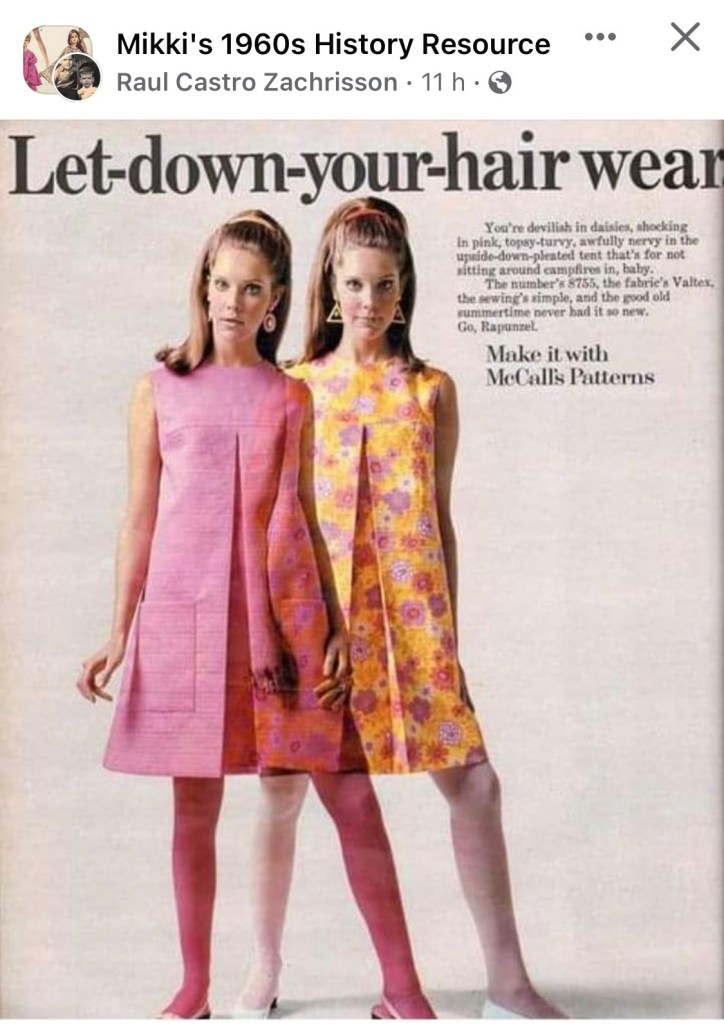
I also had bright orange strapped shoes. Ever since that time, orange/yellow/pink has been my favorite color combination.
I love and loved the 1960s!!
Bridge, bridge, and more bridge.


Koi in Japan in January
My friend Rudy in Japan sent these pictures from a recent garden visit in Okayama.
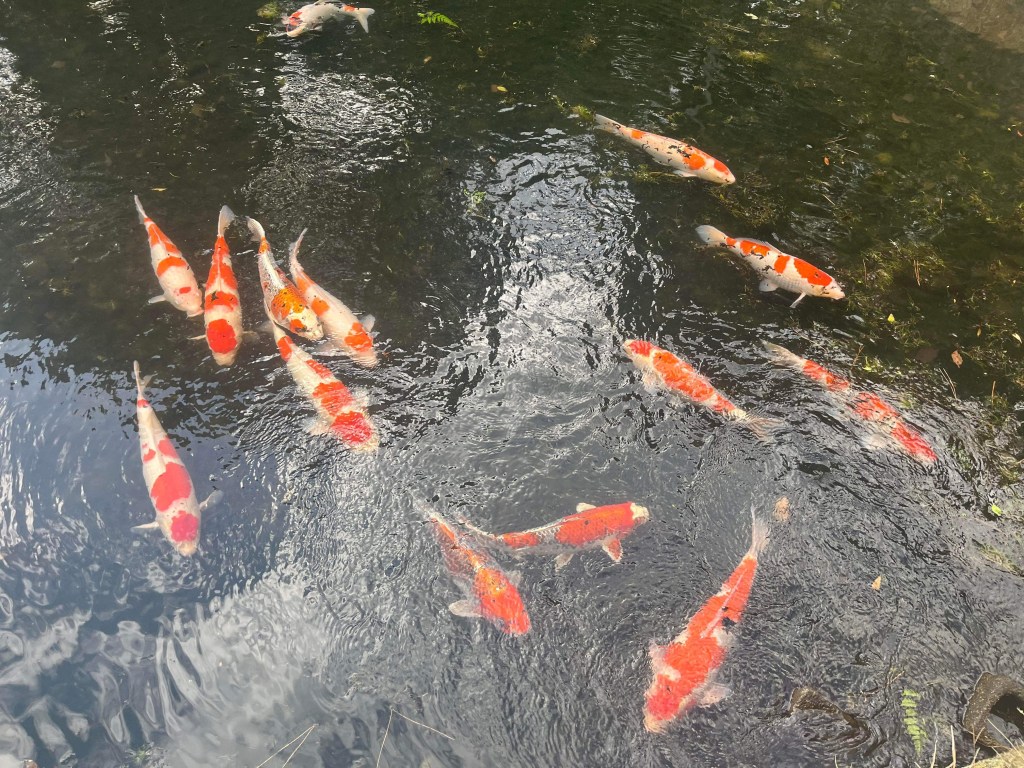

The koi in winter remind me of my winter walks through the Rose Garden in Florence. There are 2 tanks attached to fountains in that beautiful place, both full of koi.
My winter garden
Deep in the snows of winter, spring is just a fantasy.

Against this cold, white backdrop…
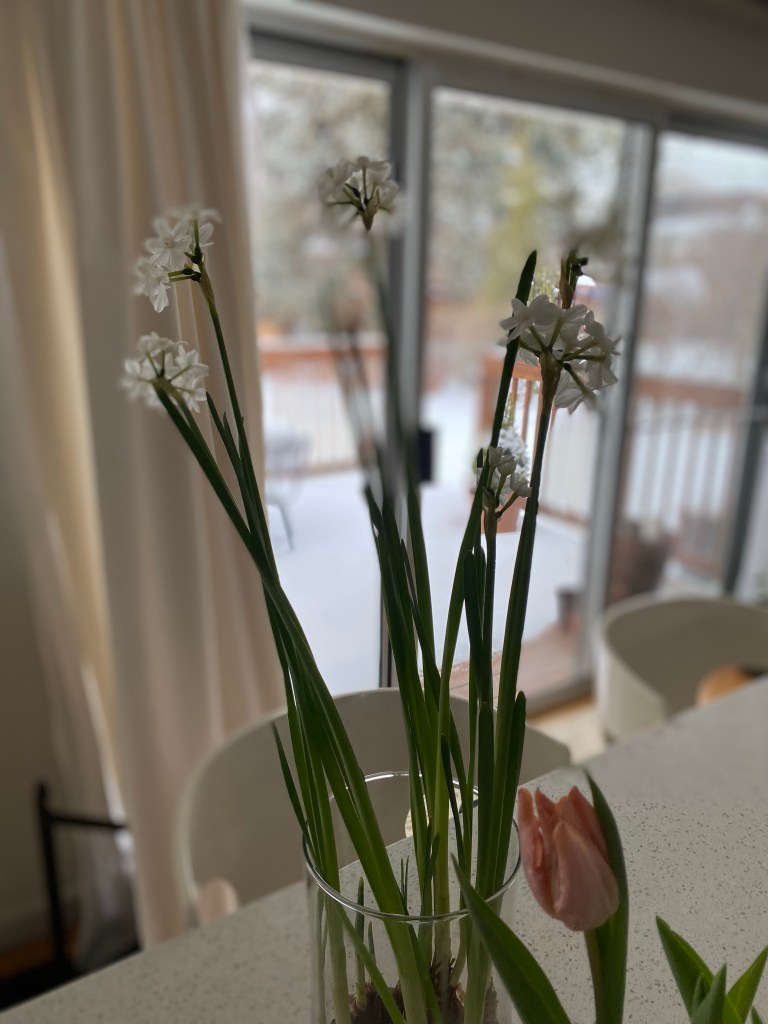
I’ve got spring bulbs blooming in my house to brighten up this dreary month.
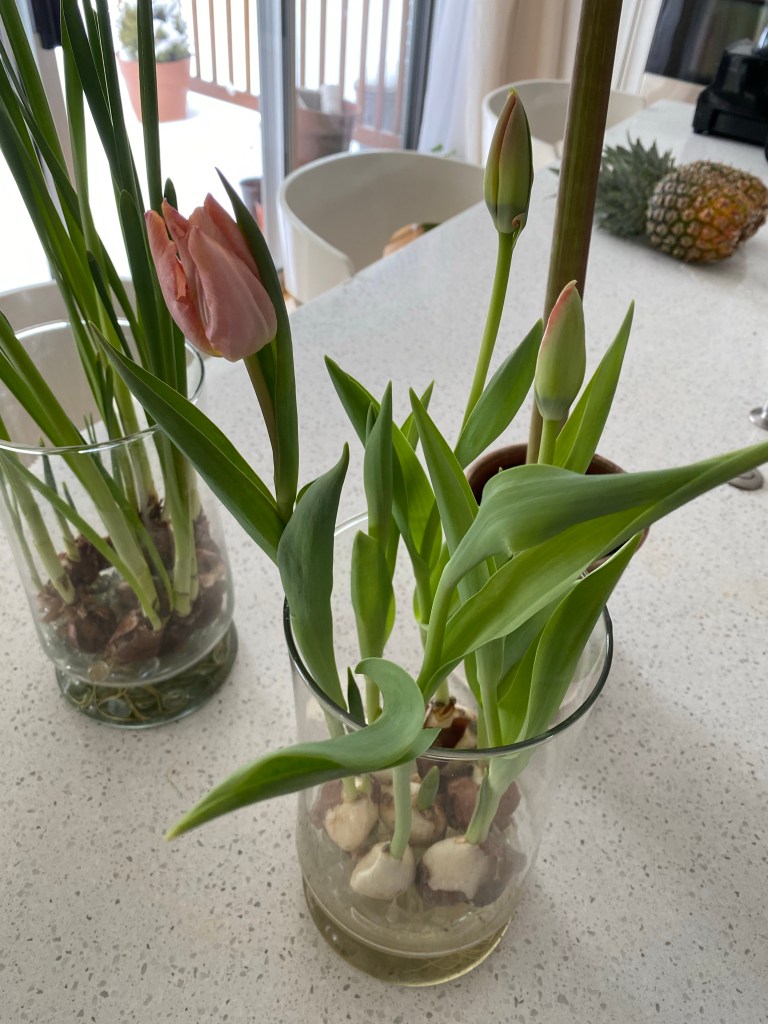
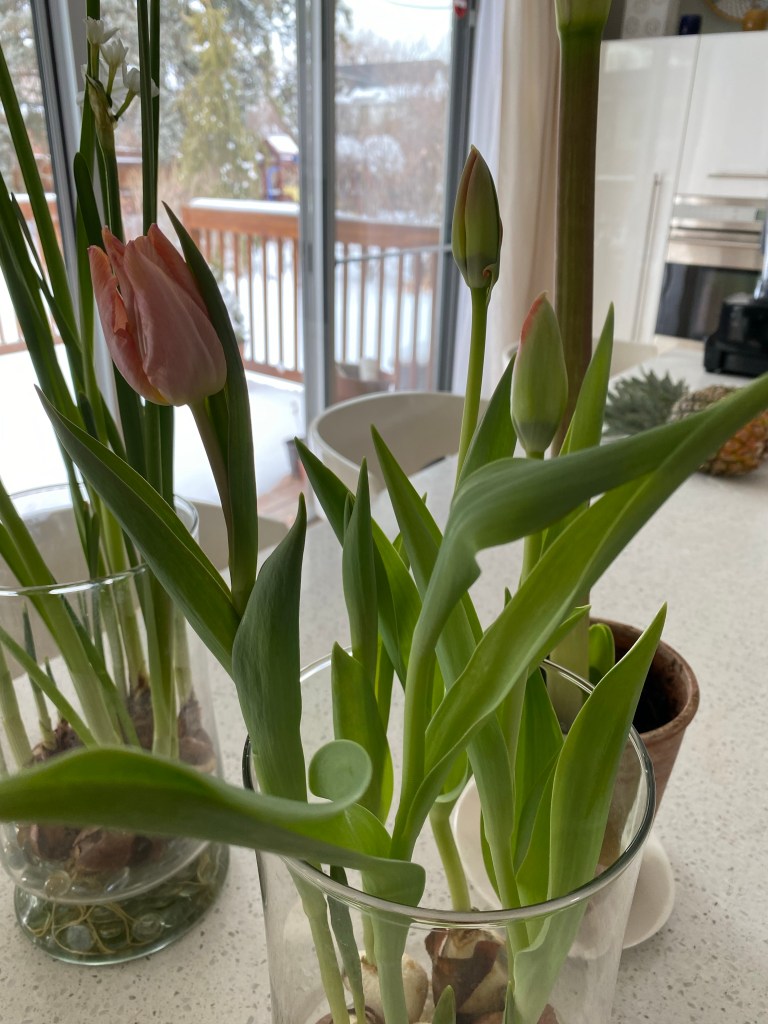
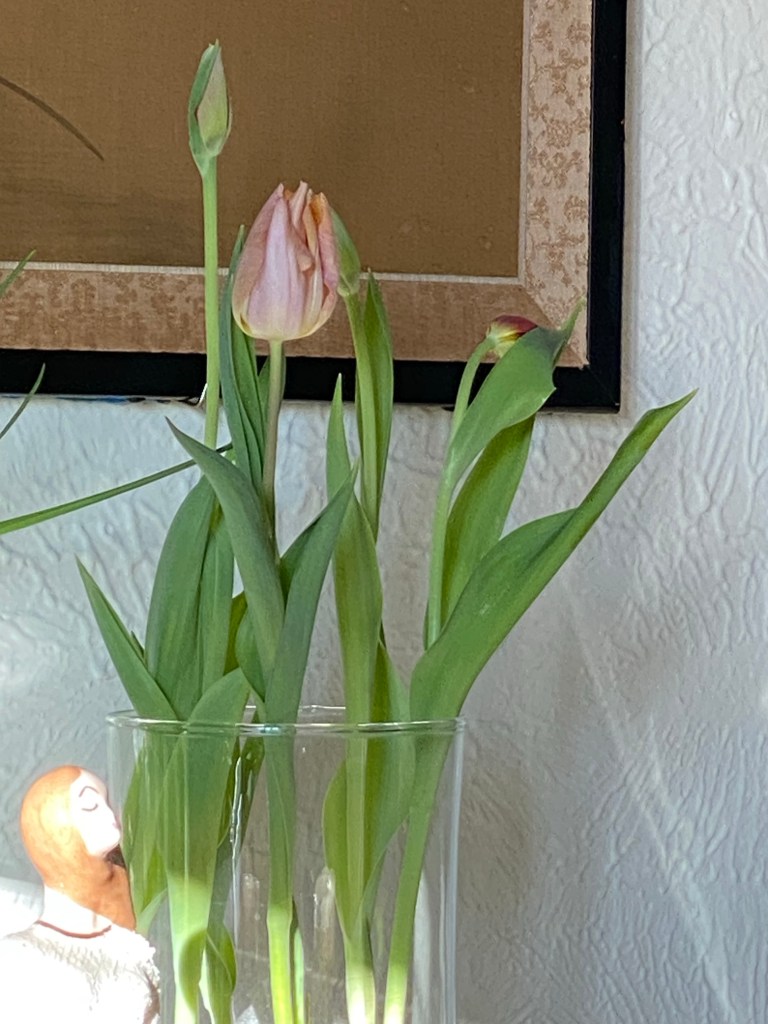
I’ve got tulips ready to bloom!
And paper whites already putting on a show and a scent extravaganza!
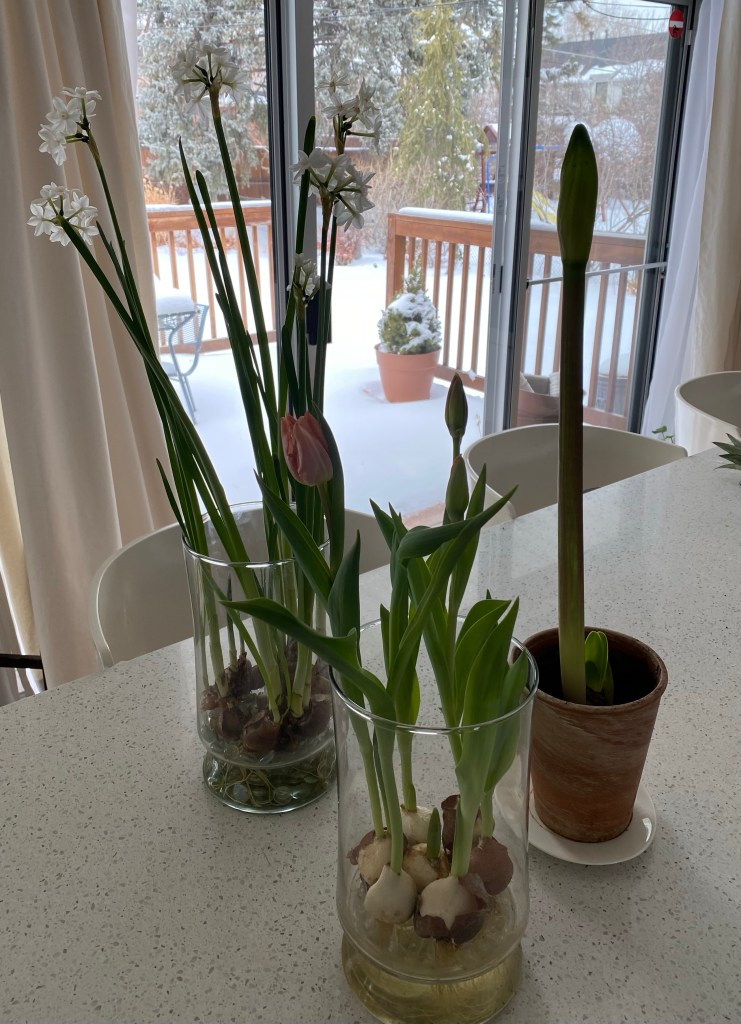

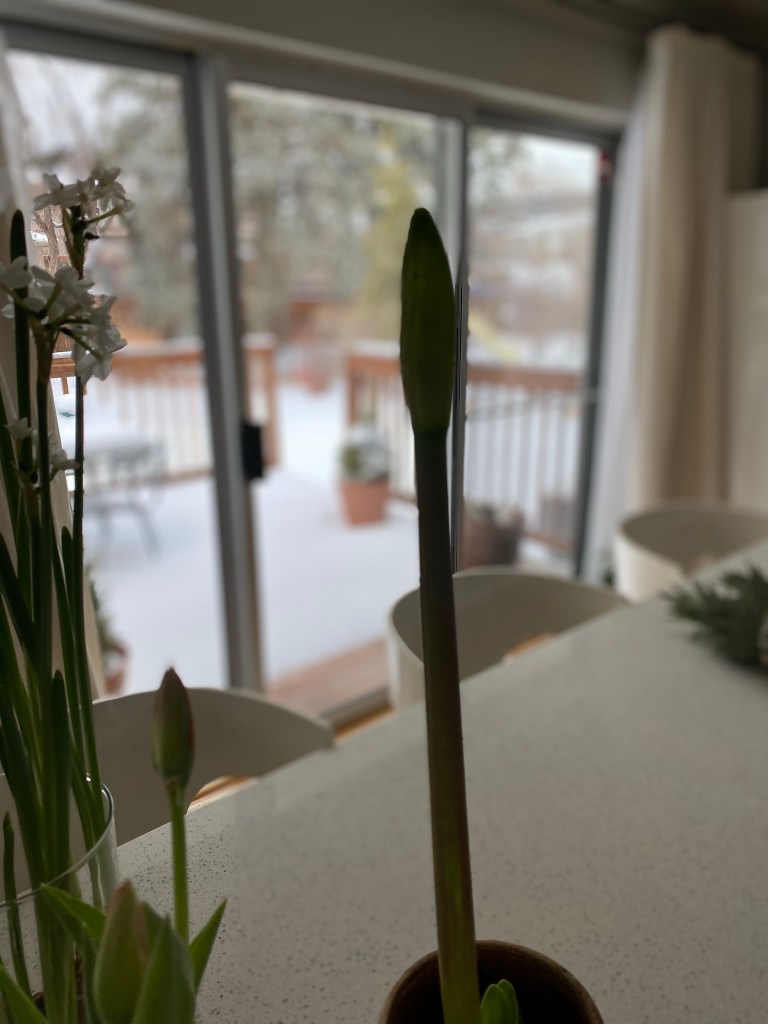
And 2 amaryllis bulbs about ready to pop open.
Thank goodness for bulb forcing! It saves me this time of year!

Everything you ever wanted to know about the Florentine Baptistry
Dr. Timothy Verdon knows and explains everything about this building and its site. Superb!
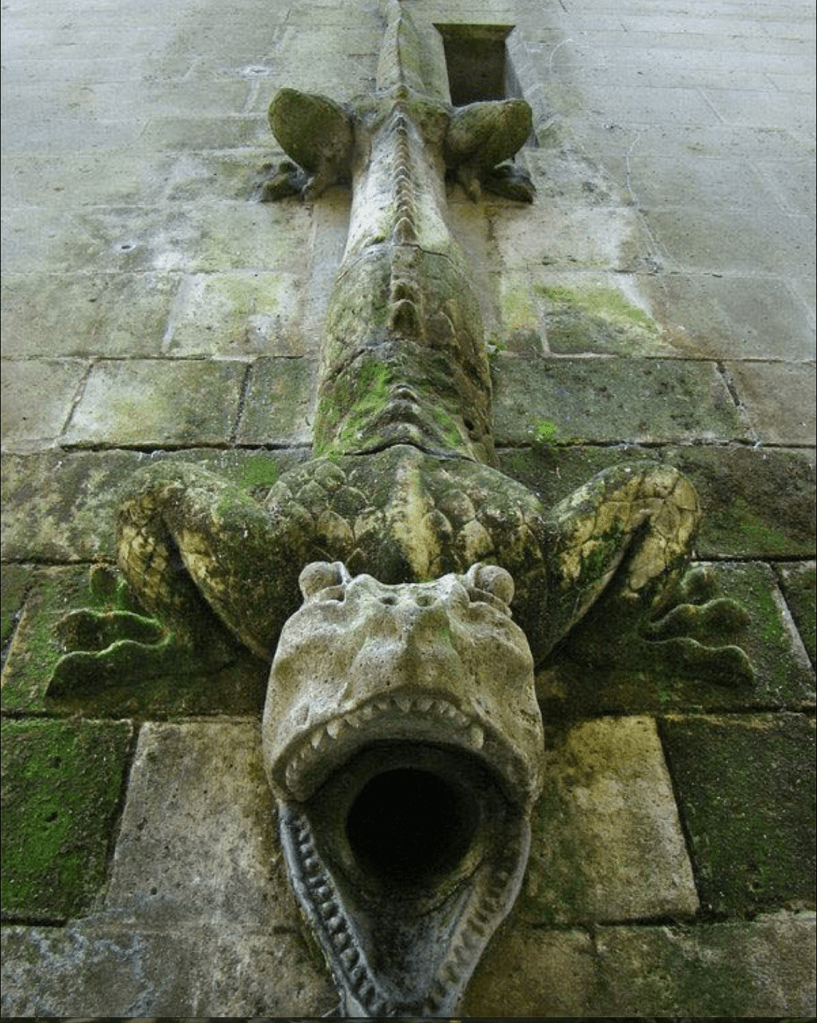
Even the downspouts in France…
Are something to behold. Not all of them, but some are amazing!

And check out this drainage pipe: The donjon drain pipe of Château de Pierrefonds in France, 1393-1407.
World’s oldest bank, the Monte die Paschi in Siena
Reading: honorable mention
Not every book is a hit, even though you know it is excellent. Maybe it was just the mood I was in, but as much as I admired the gorgeous arrangement of words and the story telling, I couldn’t get into this fine book in 2 sittings. That’s all I have time for at this point. Maybe I’ll try again another season. Still, it’s obviously a great book!

Omikuji: finding your fortune in Japan

Omikuji (御御籤/御神籤/おみくじ) are random fortunes written on strips of paper at Shinto shrines and Buddhist temples in Japan. Literally “sacred lot“, these are usually received by making a small offering and randomly choosing one from a box, hoping for the resulting fortune to be good.
My source for the printed information in this post is Wikipedia. My photo source is Shikets Kou.
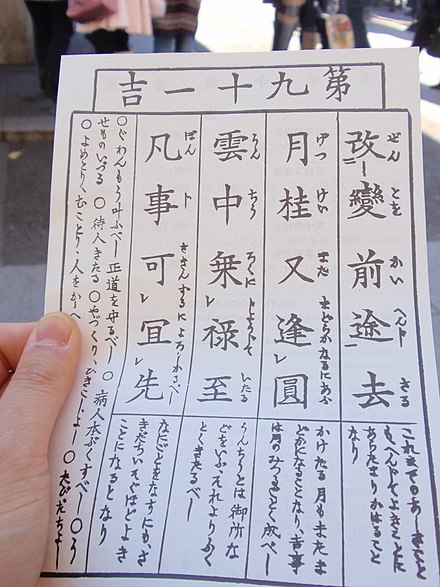
The omikuji predicts the person’s chances of their hopes coming true, of finding a good match, or generally matters of health, fortune, life, etc. When the prediction is bad, it is a custom to fold up the strip of paper and attach it to a pine tree or a wall of metal wires alongside other bad fortunes in the temple or shrine grounds. A purported reason for this custom is a pun on the word for pine tree (松, matsu) and the verb ‘to wait’ (待つ, matsu), the idea being that the bad luck will wait by the tree rather than attach itself to the bearer.
In the event of the fortune being good, the bearer has two options: they can also tie it to the tree or wires so that the fortune has a greater effect or they can keep it for luck. Omikuji are available at many shrines and temples, and remain one of the traditional activities related to shrine or temple-going.
A similar custom of writing a prayer on a specially-prepared wooden block called an ema, which is then tied to an ad hoc scaffold, also exists.


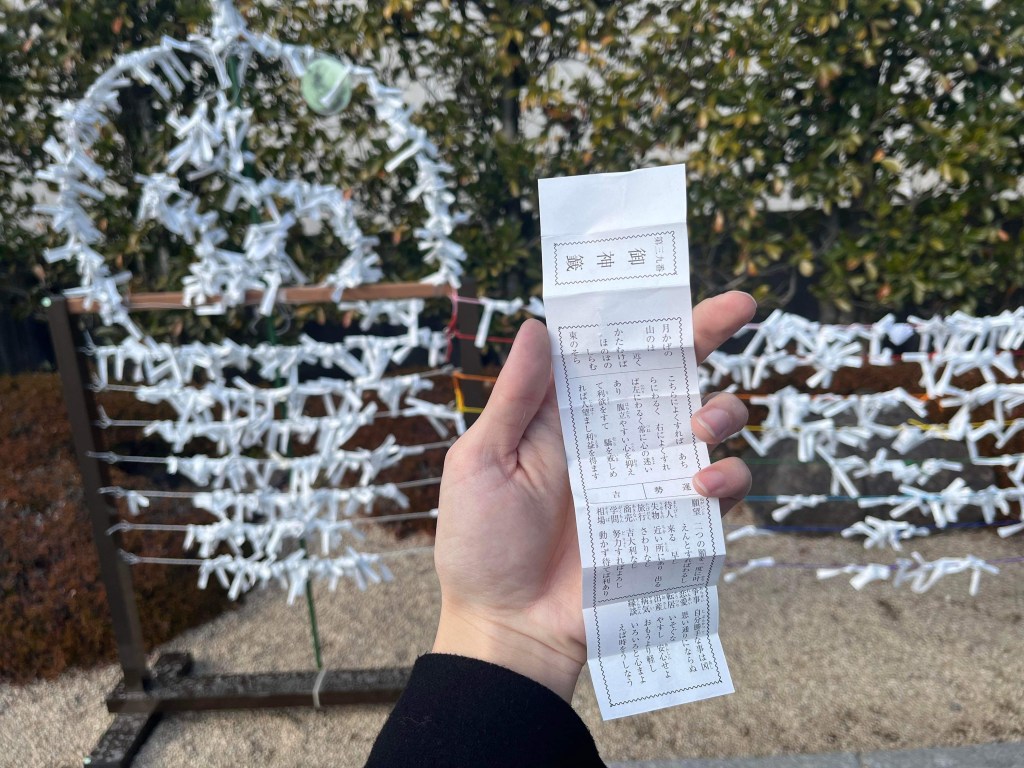
What type of fortunes may you hope to obtain? In Japan, it’s very specific:
Fortunes
Omikuji at Hokkaido Shrine Tongu in Sapporo
The standard Ganzan Daishi Hyakusen sequence contains the following fortunes (from best to worst):
Great blessing (大吉, dai-kichi)
Blessing (吉, kichi)
Small blessing (小吉, shō-kichi)
Half-blessing (半吉, han-kichi)
Future blessing (末吉, sue-kichi)
Future small blessing (末小吉, sue-shō-kichi)
Misfortune (凶, kyō)
Other sequences may include additional degrees such as “middle blessing” (中吉, chū-kichi), “great misfortune” (大凶, dai-kyō), or “blessing [and] misfortune still undetermined” (吉凶未分, kikkyō imada wakarazu, i.e. one’s fortune could end up being either good or bad depending on one’s actions).
It then lists fortunes regarding specific aspects of one’s life, which may include any number of the following among other possible combinations:
hōgaku (方角) – auspicious/inauspicious directions (see feng shui)
negaigoto (願事) – one’s wish or desire
machibito (待人) – a person being waited for
usemono (失せ物) – lost article(s)
tabidachi (旅立ち) – travel
akinai (商い) – business dealings
gakumon (学問) – studies or learning
sōba (相場) – market speculation
arasoigoto (争事) – disputes
ren’ai (恋愛) – romantic relationships
tenkyo (転居) – moving or changing residence
shussan (出産) – childbirth, delivery
byōki (病気) – illness
endan (縁談) – marriage proposal or engagement
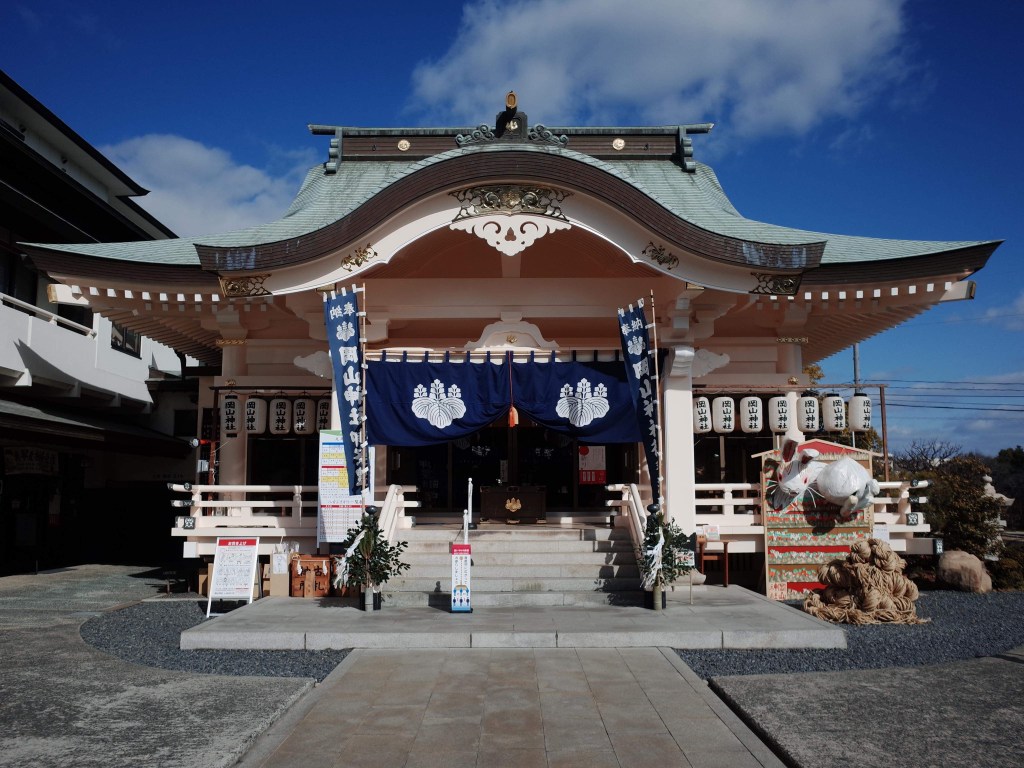
My friend, Shiketsu, visited the Okayama Shrine yesterday and took these photos then.
 get back, lauretta!
You must be logged in to post a comment.