Archaeology
Palazzo dei Mozzi, Firenze
The Palazzo dei Mozzi is a grand old palace beautifully situated on the piazza of the same name, in the Oltrarno section of Florence. It was built around the middle of 13th century as a part of the fortifications guarding the old Ponte di Rubaconte (today’s Ponte alle Grazie): hence its fortress-like structure.
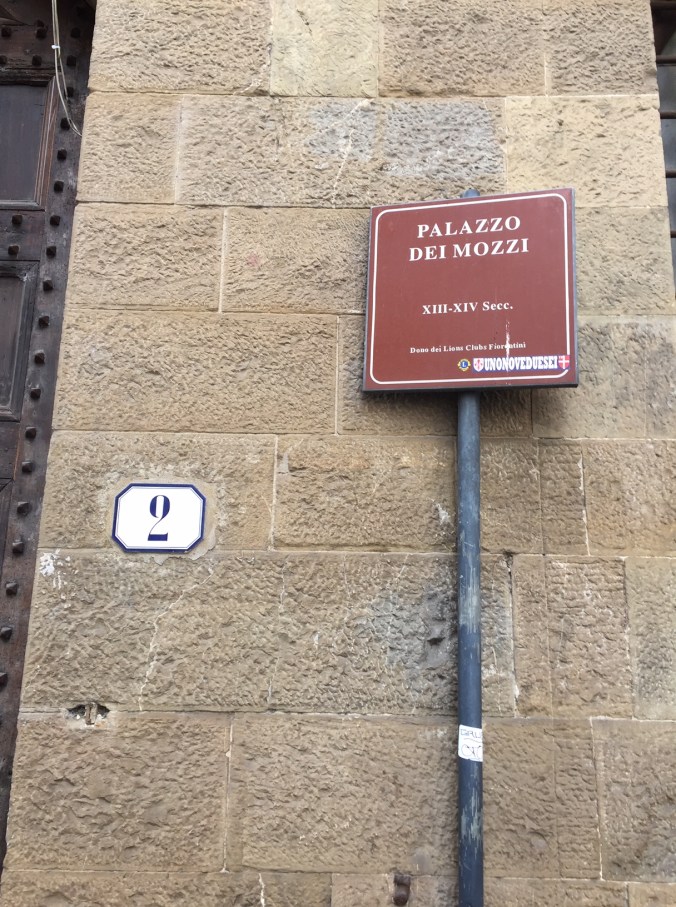
The palazzo is an early Renaissance building, located at the south end of the Piazza dei Mozzi that emerges from Ponte alle Grazie and leads straight to the palace where via San Niccolò becomes via de’ Bardi in the Quartiere of Santo Spirito (San Niccolò).


The Mozzi family was among the most important and powerful families in the city in the Medieval period, and many important persons were received in the palace during their official visits in Florence; Pope Gregory X, for example, visited the palazzo in 1273.

On the facade facing the Via de’ Bardi, we see the tower and the large coat-of-arms of the Mozzi family. Also note the tower’s crenellation, covered nowadays by a roof.
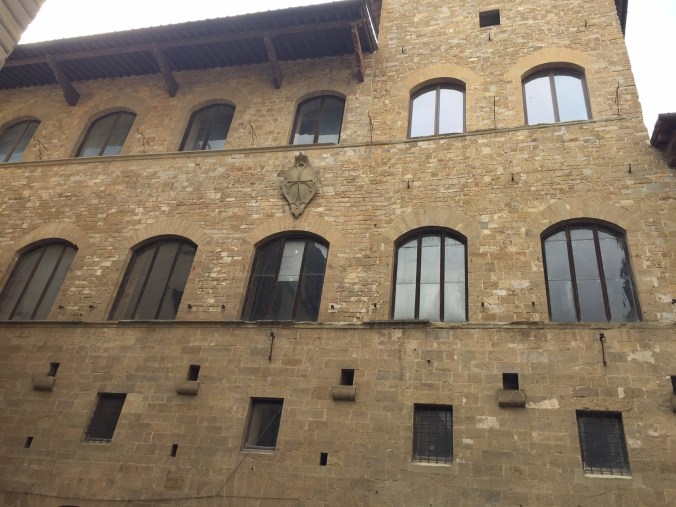
The large garden on the rear of the palace was built in 16th century, when the Mozzi bought a wide plot of ground in order to transform it into an olive-grove.
Around the middle of 19th century, the palace was purchased by the antiquarian Stefano Bardini, who owned another palazzo across the street (see pictures below). Today that amazing garden is open to the public as a part of the Museo Bardini complex. It is one of the most spectacular gardens in all of Florence, especially in spring when the trees and wisteria are in full bloom!
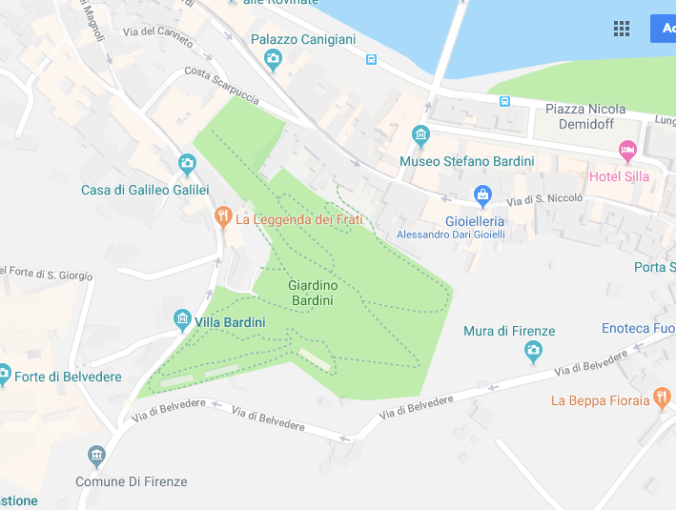
Bardini transferred his extensive art collections and laboratories to the Palazzo dei Mozzi and changed the olive-grove into a garden; he decorated the garden with statues and elements he saved from the demolition of ancient buildings in the center of Florence. In a subsequent time the garden was futher decorated with a loggia and big stairs.
After the death of Ugo Bardini, the son of Stefano, the palace remained closed for a long time, until it was bought by the Italian State; it is currently under restoration and will become a centre for exhibitions and cultural events.
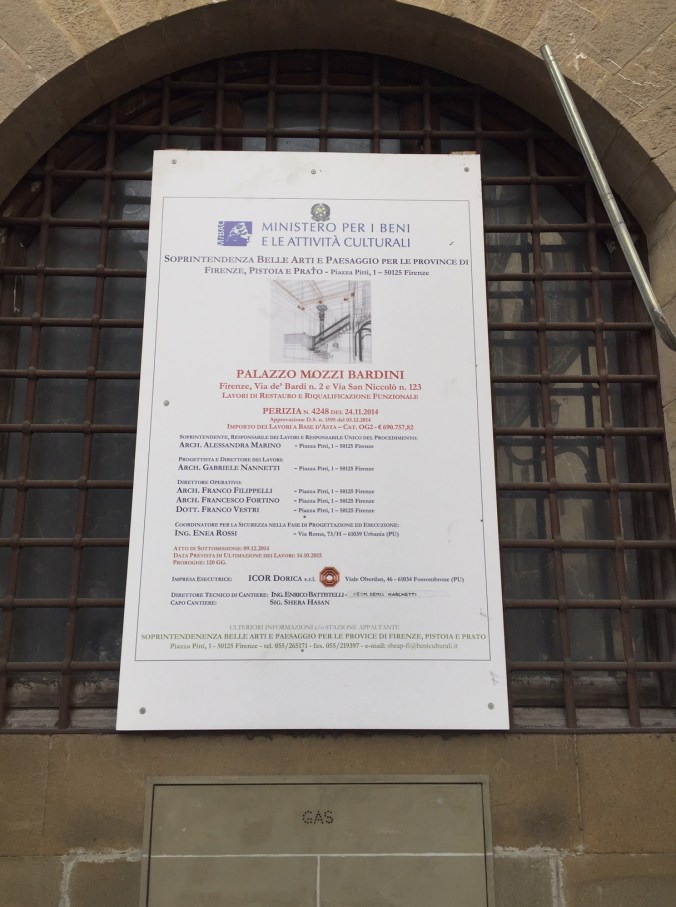
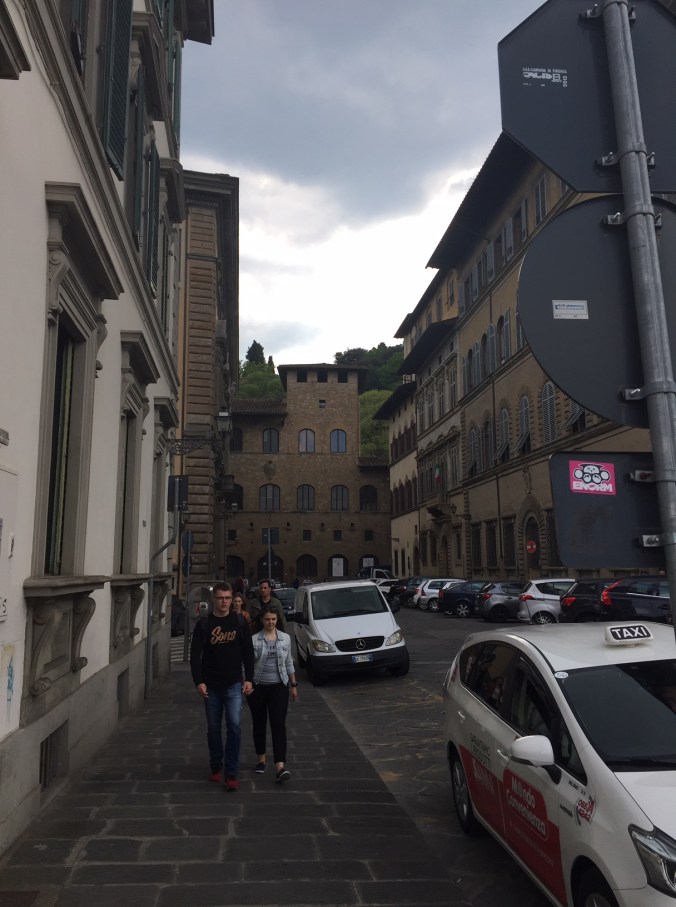
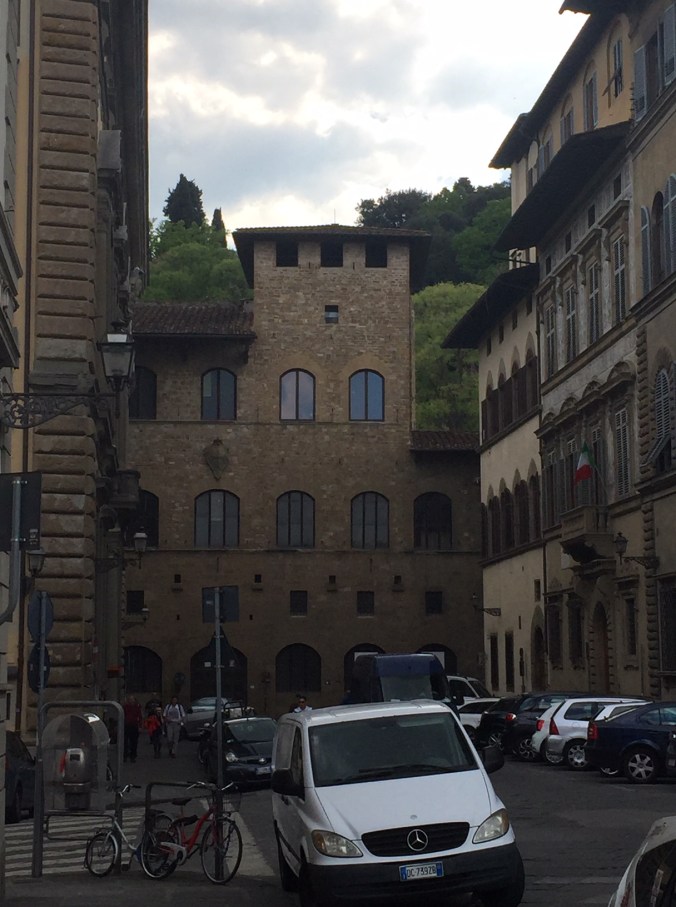
Palazzo Bardini on left, Palazzo dei Mozzi at far end.
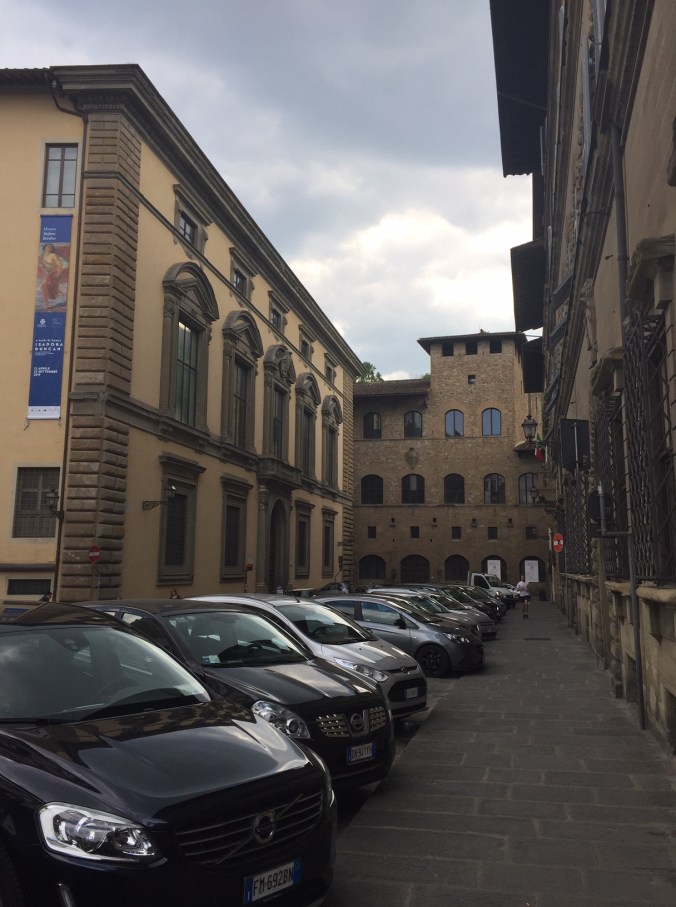
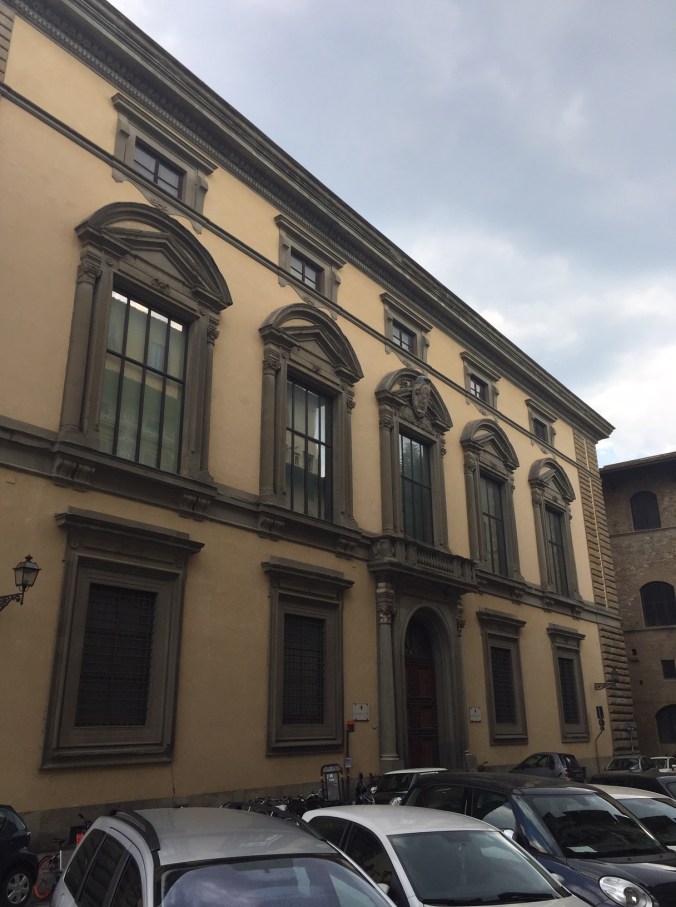

Below, another view of facade of Palazzo dei Mozzi, looking eastward along via San Niccolò.

Venice Pink
VENICE PINK paper design by Giulio Giannini e Figlio
Hand printed paper cm 50×70, pink flowers in the vase.
Xilography by Eleonora Gallo reproducing ancient Italian regional motifs

Fra Fillipo Lippi fresco cycle in Prato duomo; Prato cathedral Part 2
Late last week I had the great pleasure of visiting Prato with a new friend who was born and raised there. There is nothing like visiting a lovely small Italian town with someone who knows their way around. My friend showed me things I would have found on my own!


I wrote a post on the Duomo of Prato, where I discussed the architecture and sculpture. The Duomo is such a rich repository of masterworks that it needs several posts. Today I will deal only with the Far Fillips Lippi frescoes created between 1452-66.
Let’s start with this basic premise: these paintings are gorgeous and in excellent condition! I have waited an art historian’s lifetime to see them and they did to disappoint.
This is the apse end of the basilica in all of its glory. The Far Fillipo Lippi frescoes are in the chapel in the center:

These frescoes show the master, Fra Filippo Lippi, at his finest. They were produced slowly and sporadically between 1452 and 1466.
The enormous scale of the choir, and consequently the painted subjects, were a far cry from the intimacy of the Brancacci Chapel. The cycle has been restored recently, revealing powerful yet sensitive images produced with verve and facility during a late period in Lippi’s development.
The Prato frescoes were both an artistic and a physical challenge for the aging painter, and, particularly in the large scenes on either side of the choir with stories of St John the Baptist and St Stephen, scholars believe that a significant share of the execution may be attributed to workshop assistants.
Below: View of the chapel filled with the fresco cycle


South Wall
Below: overview of the right (south) wall of the main chapel

Beginning at top, coming down, we begin with “The Birth and Naming St John”
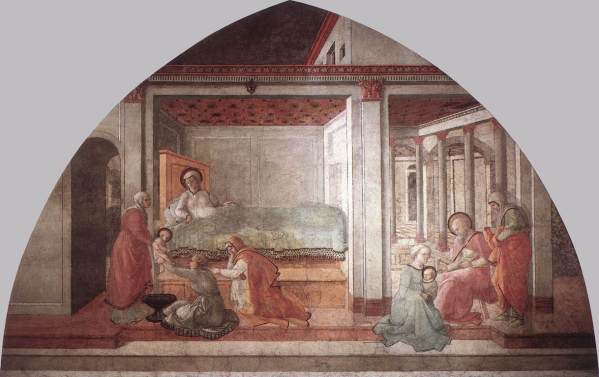
The Birth and Naming St John (detail)

The 2nd fresco down from the top: “St. John Taking Leave of His Parents”
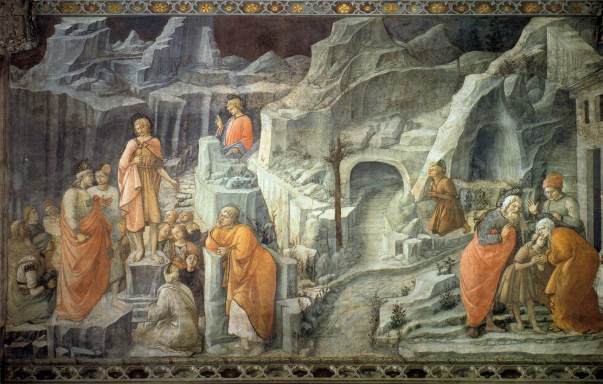
St. John Taking Leave of his Parents (detail)

St. John Taking Leave of His Parents (detail)

Third scene down from the top: Herod’s Banquet

Herod’s Banquet (detail)
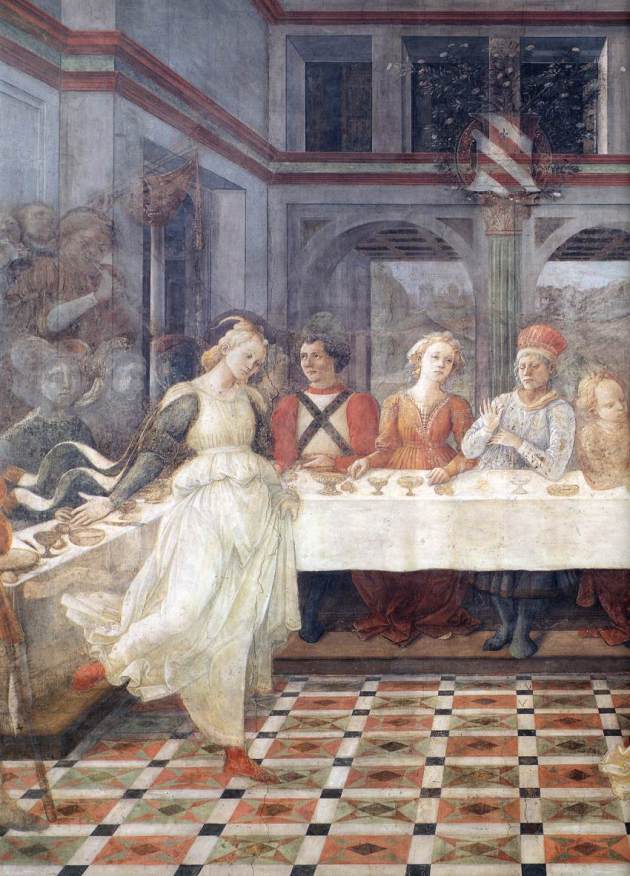
Herod’s Banquet (detail)
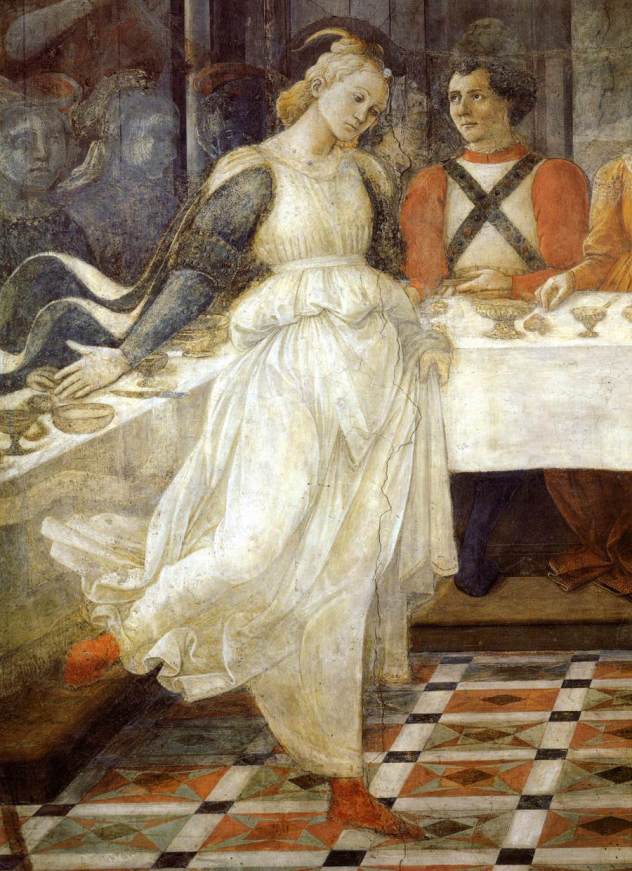
Herod’s Banquet (detail)

Herod’s Banquet (detail)

Herod’s Banquet (detail)

The Beheading of John the Baptist, scene to the far left of the main fresco

North Wall:
View of the left (north) wall of the main chapel
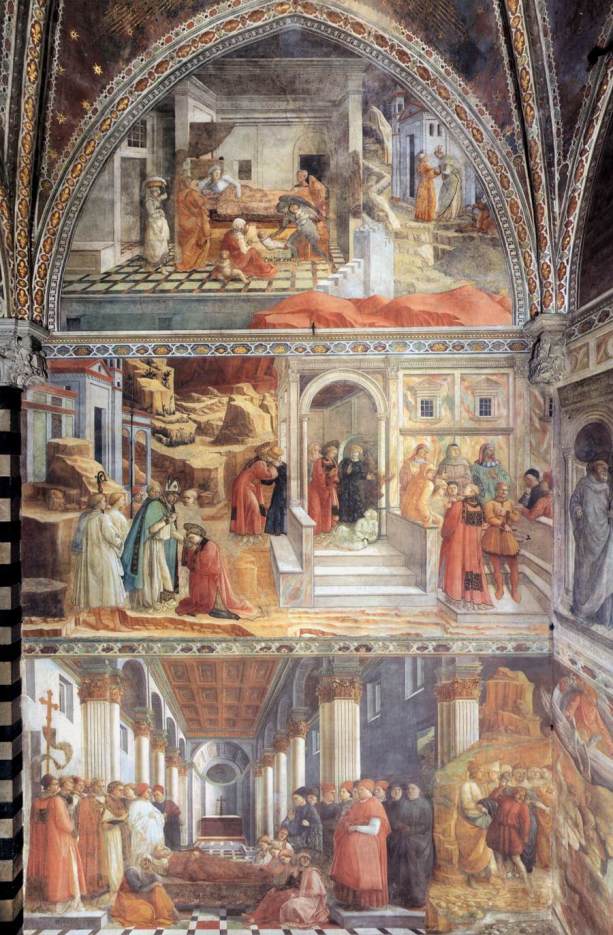
Beginning at top of fresco on North wall: St Stephen is Born and Replaced by Another Child

St Stephen is Born and Replaced by Another Child (detail)

St Stephen is Born and Replaced by Another Child (detail)

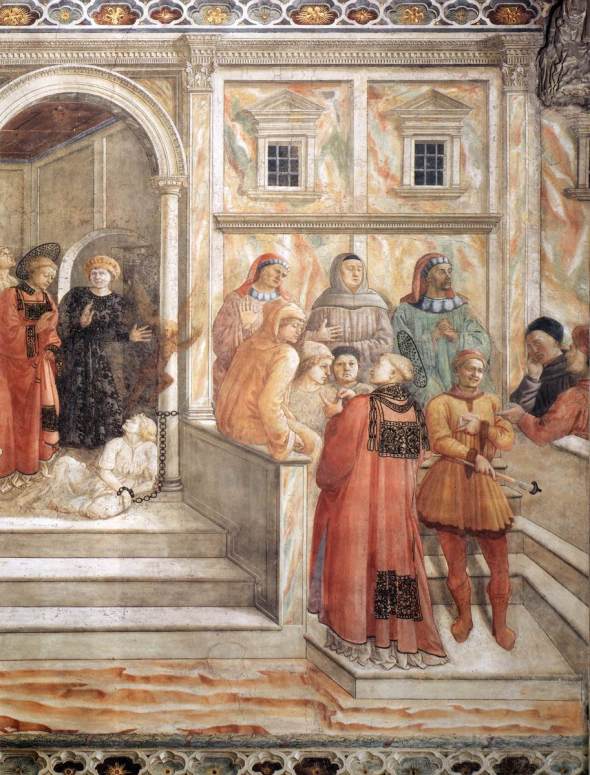
2nd Fresco down from top, The Disputation in the Synagogue
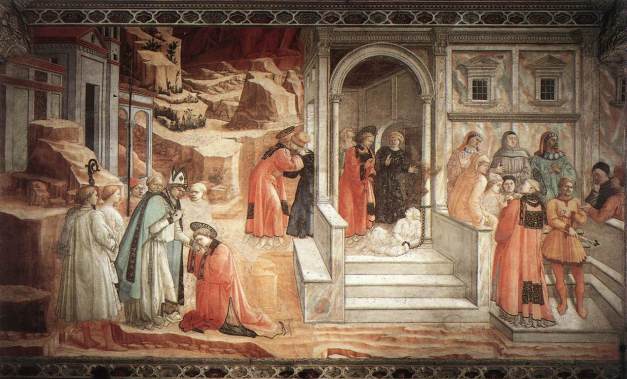
The Disputation in the Synagogue (detail)
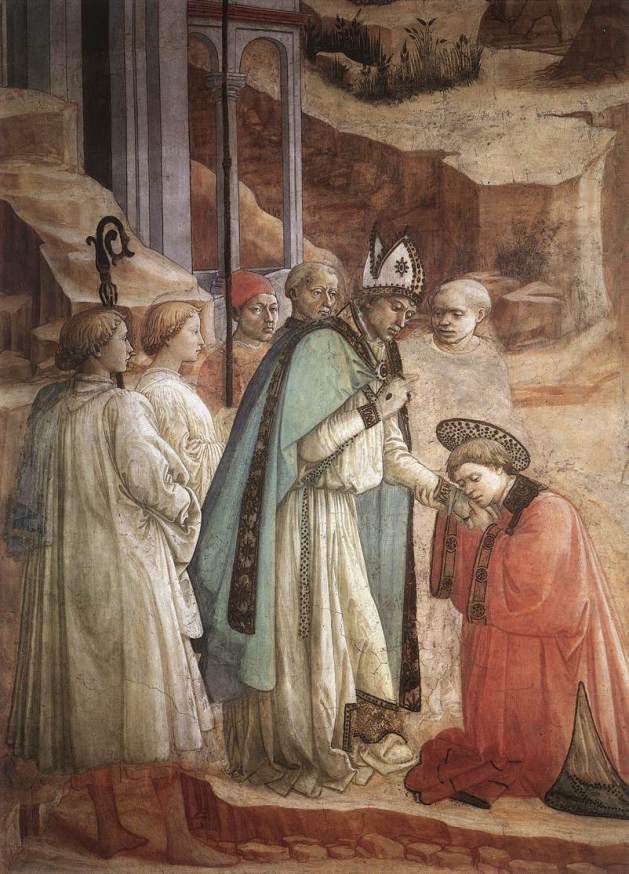
The Disputation in the Synagogue (detail)

The Disputation in the Synagogue (detail)

The Disputation in the Synagogue (detail)
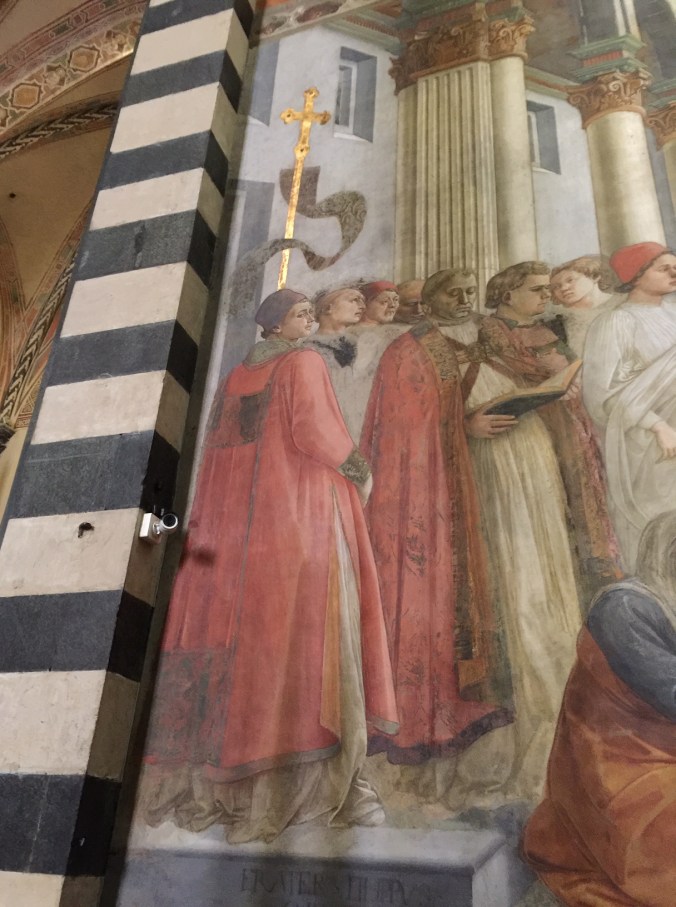
Third fresco down from the top: The Funeral of St Stephen
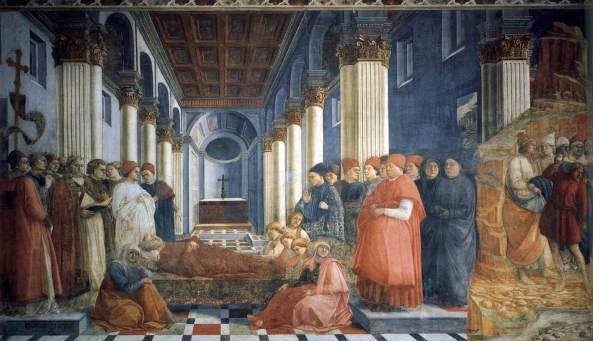
The Funeral of St Stephen (detail)
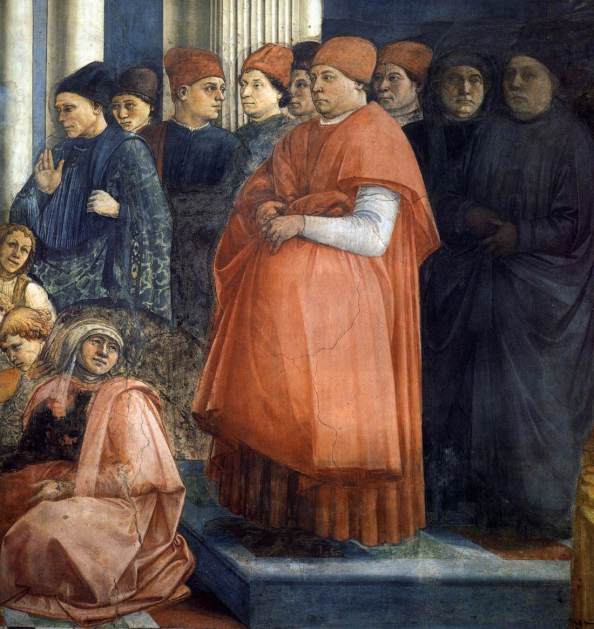
The Funeral of St Stephen (detail)

The Funeral of St Stephen (detail)

The Funeral of St Stephen (detail)
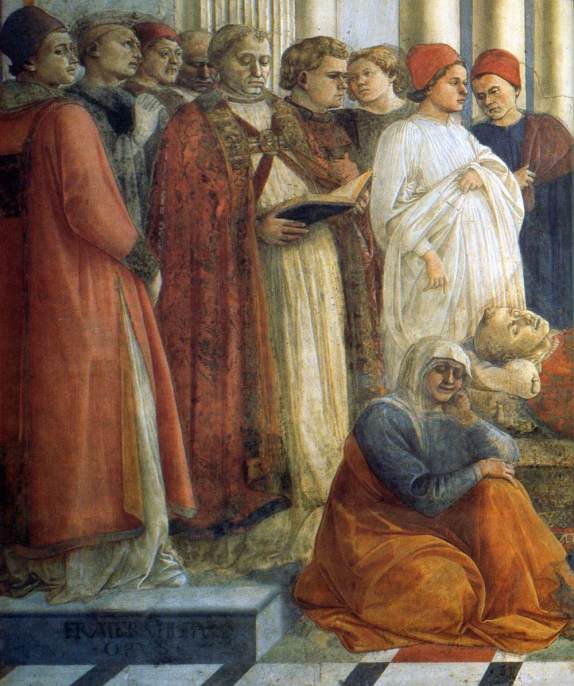
The Funeral of St Stephen (detail)

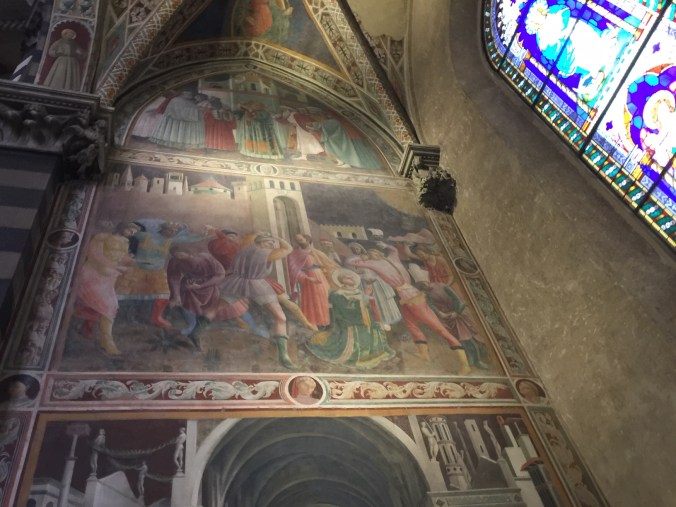
Scene to the far right of the main fresco: The Martyrdom of St Stephen

St Alberto of Trapani

St Alberto of Trapani

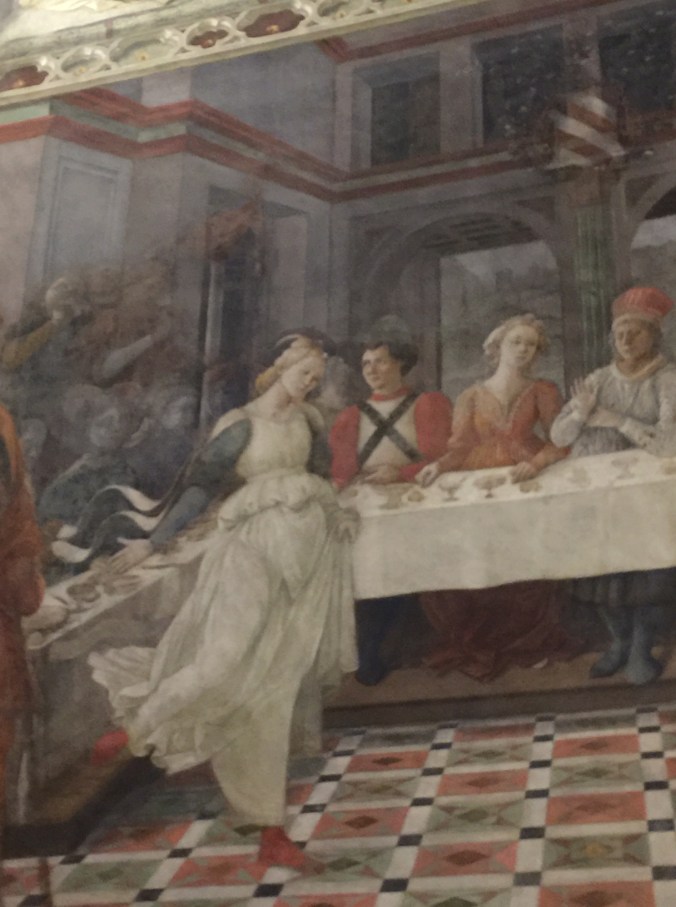
Allora, I have shown you the main paintings within this fresco cycle and explained the location. Now let me simply share the pictures I took with my phone. My phone was never pointed at anything more beautiful…and that is saying something!


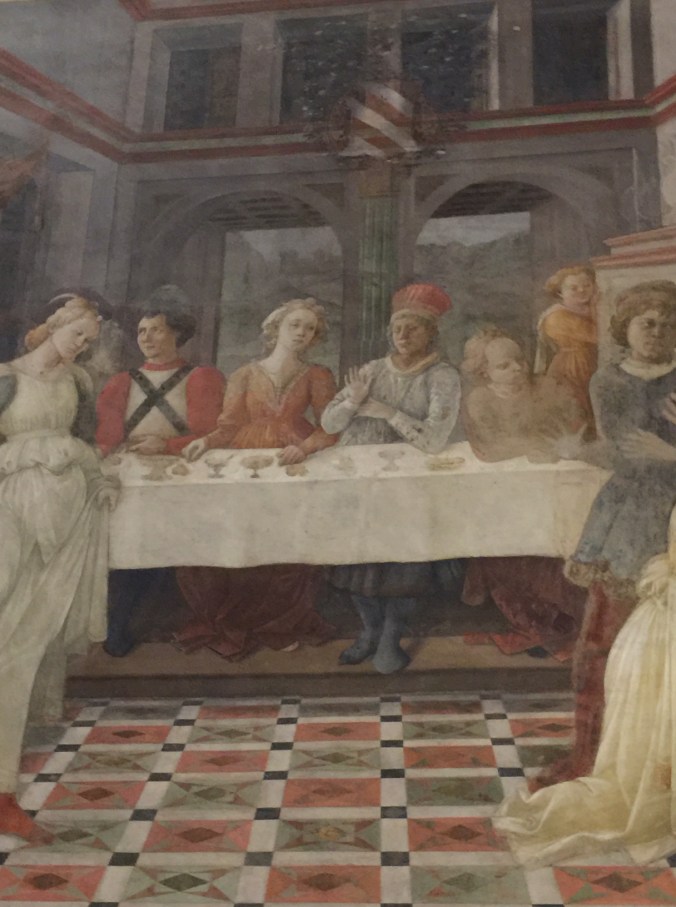


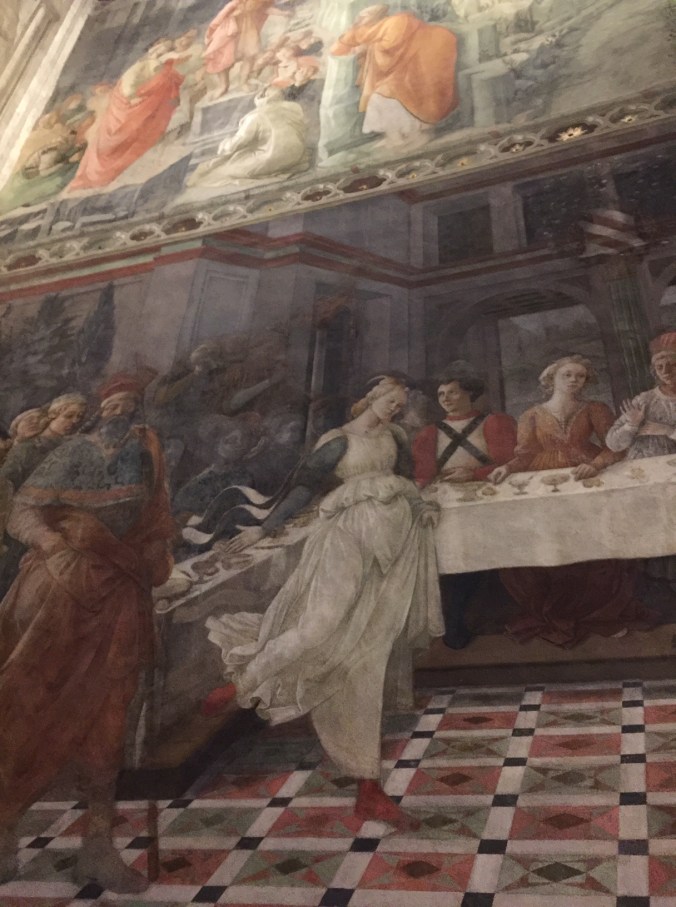


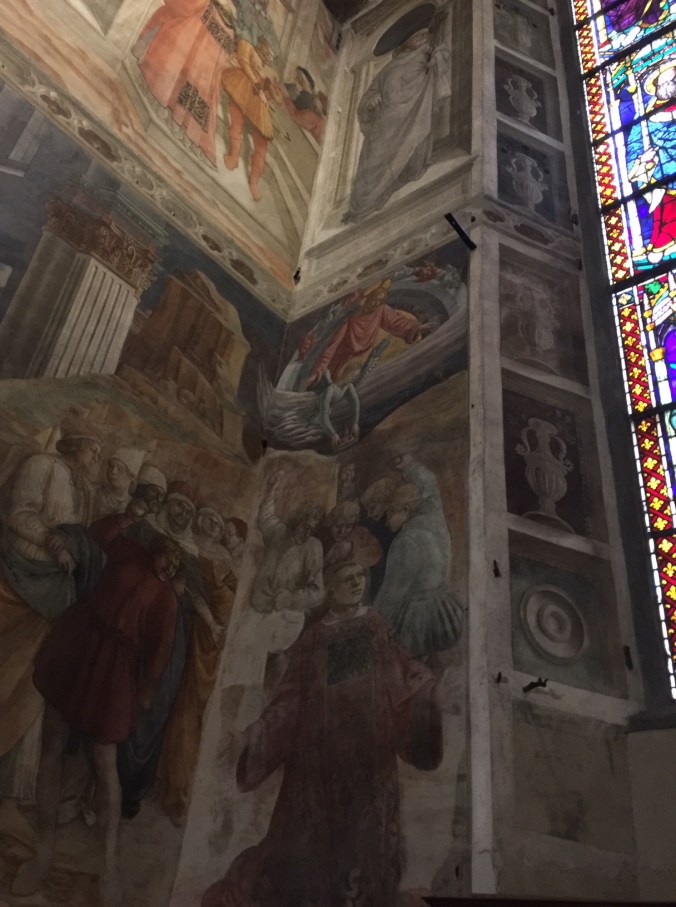
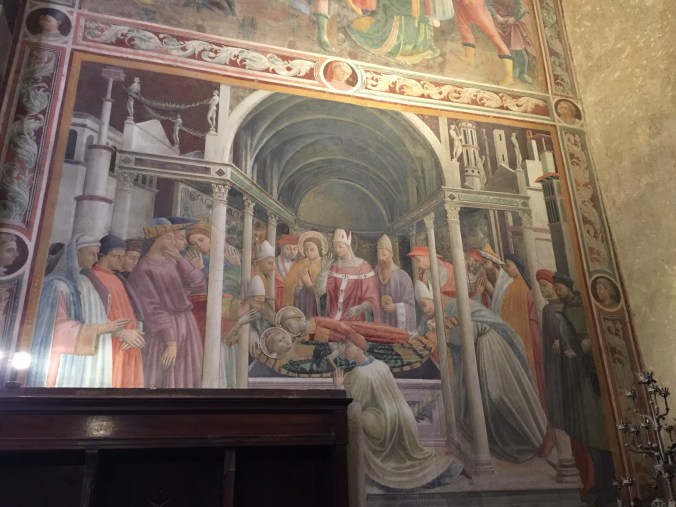



A short note on Pietrasanta and the artist Romano Cosci
Yesterday I had the chance to see the Carnevale parade in Pietrasanta. I want to add a short note on the town itself.

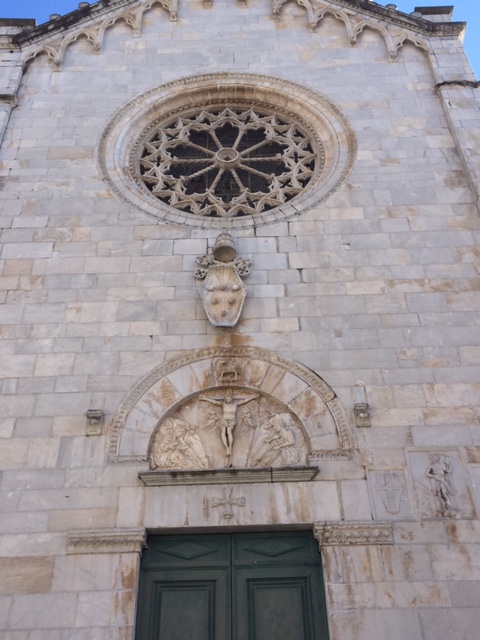
Above and below are picture of Pietrosanta’s duomo. A service was ongoing when I stopped inside. It is actually a pretty rare event that I find a service going on in the many churches I visit throughout this country. Who’d a thunk it?
It was nice to observe. And, il duomo is quite wonderful, filled with interesting paintings and sculptures.



As ever, the simple local bars serve cappuccino to die for. Starbucks, eat your heart out.


The deconsecrated church of Sant’ Agostino today serves Pietrasanta and environs as a beautiful exhibition space for local artists. I first had the pleasure of joining my dear friend, Grayce Murabito and her friend, the actor Eddie Albert (was in Roman Holiday), in viewing an exhibition there about 35 years ago. I hadn’t been back until yesterday. Somewhere I have photos of lovely Grayce standing in front of the sign advertising the exhibition of her husband’s works: the painter and sculptor, Rosario Murabito.
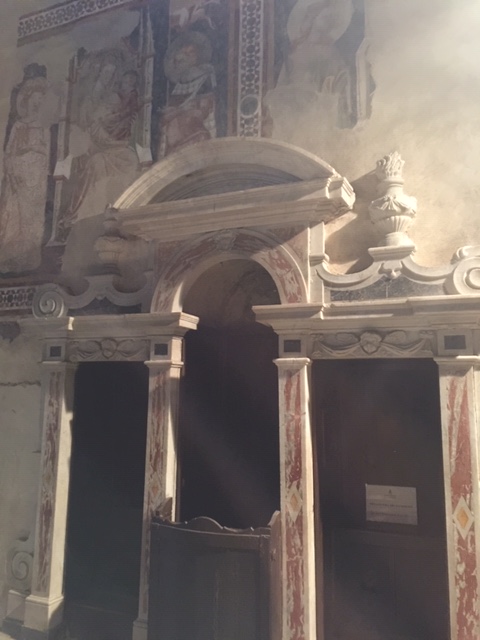
(The church itself is fascinating: Built in the 14th century, it was annexed to the convent and the ospedale dei Mercanti. The façade recalls architectural and sculptural decoration of the Cathedral of San Martino di Lucca. There are numerous tombstones on the floor and sections of fresco cycles from the 14th-15th centuries. The former church was deconsecrated before the mid 1980s, and has subsequently been used for temporary exhibitions, especially in the summer months. For information you can contact the “Russo” cultural center, in via sant’Agostino 1, call 0584.795500 or visit the website http://www.museodeibozzetti.it. See also www.comune.pietrasanta.lu.it and official page http://www.facebook.com/comunedi.pietrasanta?fref=ts )

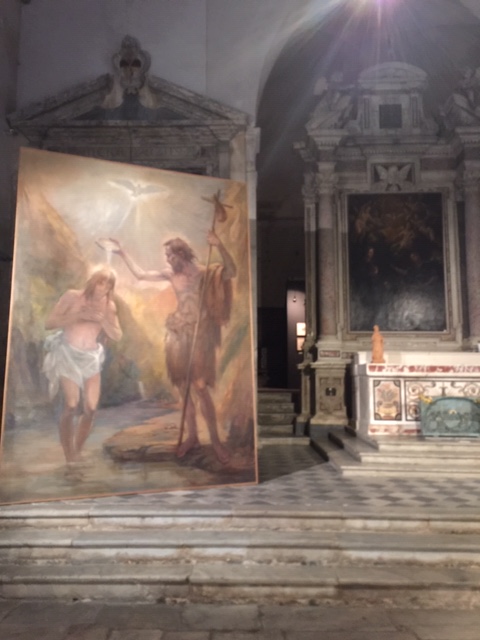
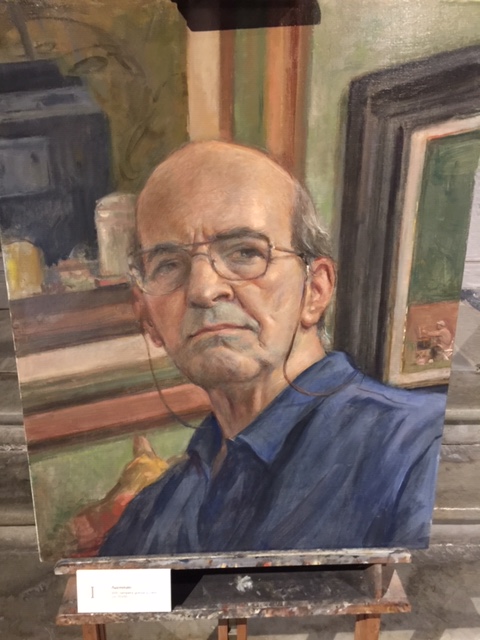
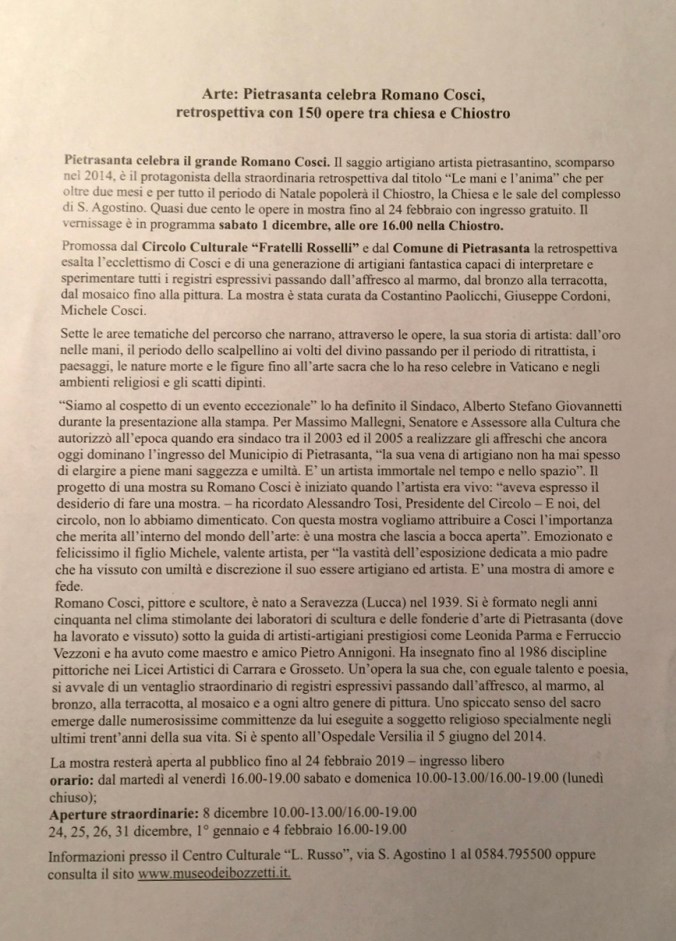
Romano Cosci, painter and sculptor, was born near Lucca in 1939. He was trained in the fifties in the stimulating atmosphere of the sculpture workshops and the art foundries of Pietrasanta (where he worked and lived) under the guidance of artists – prestigious artisans like Leonida Parma and Ferruccio Vezzoni and had as a teacher and friend Pietro Annigoni. Until 1986 he taught pictorial disciplines in the artistic high schools of Carrara and Grosseto. His work, with equal parts of talent and poetry, make use of an extraordinary range of expressive media, passing through fresco, marble, bronze, terracotta, mosaic and every other kind of 2-d design. He died in 2014.




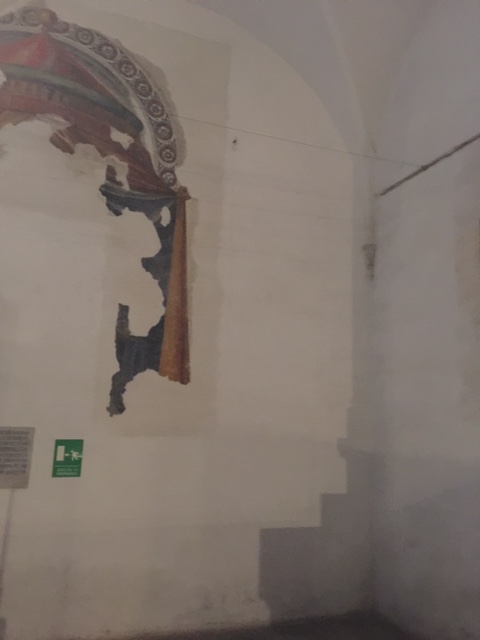

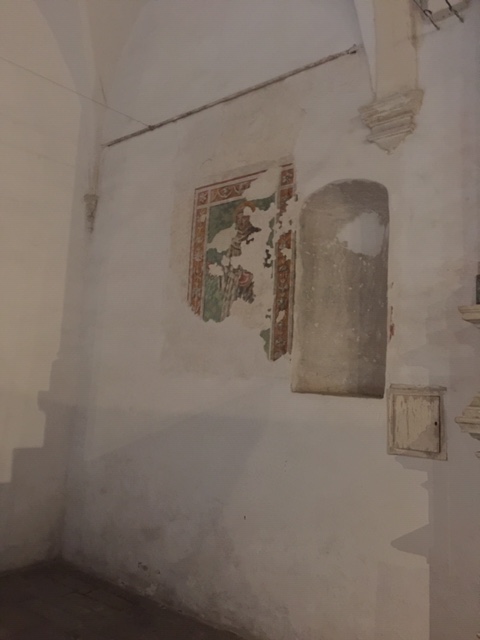

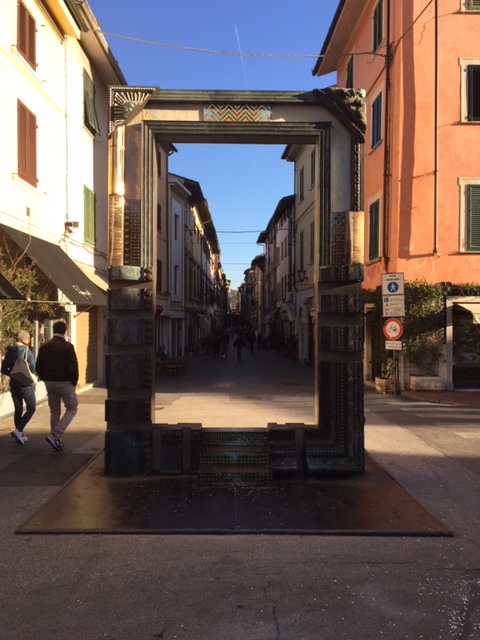
A couple other views of lovely Pietrasanta:


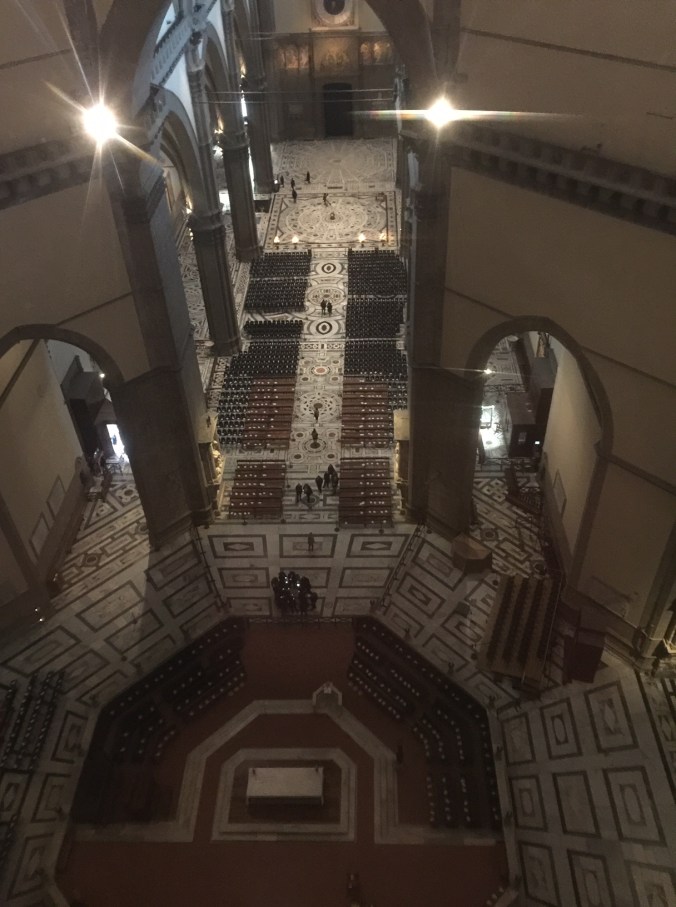
Inside Brunelleschi’s dome, Florence
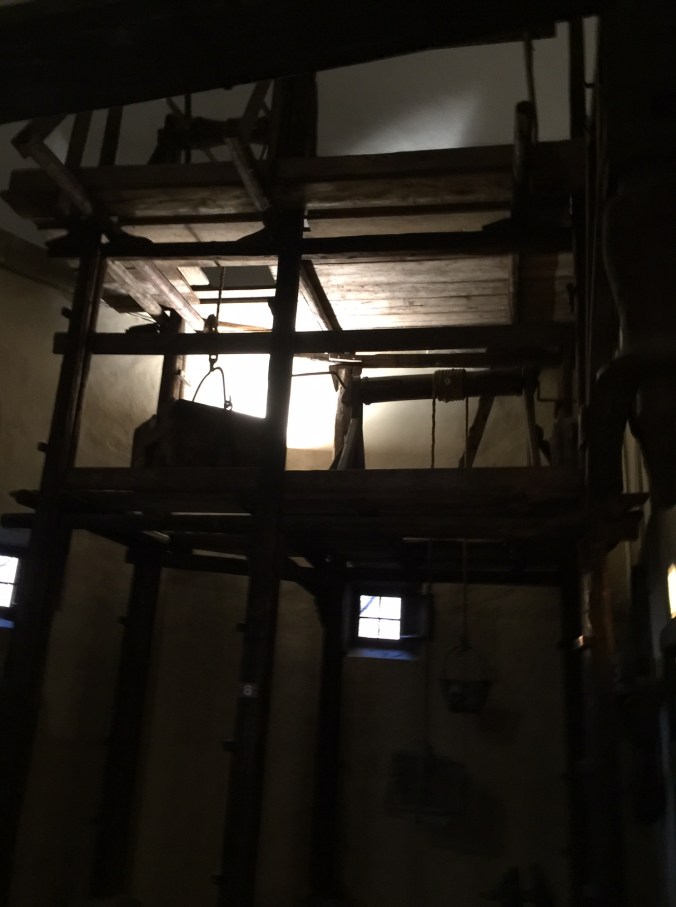
Last month found me climbing the millions of steps to the top of the Florence cathedral dome. Wow, what a hike and what an incredible view from the top!
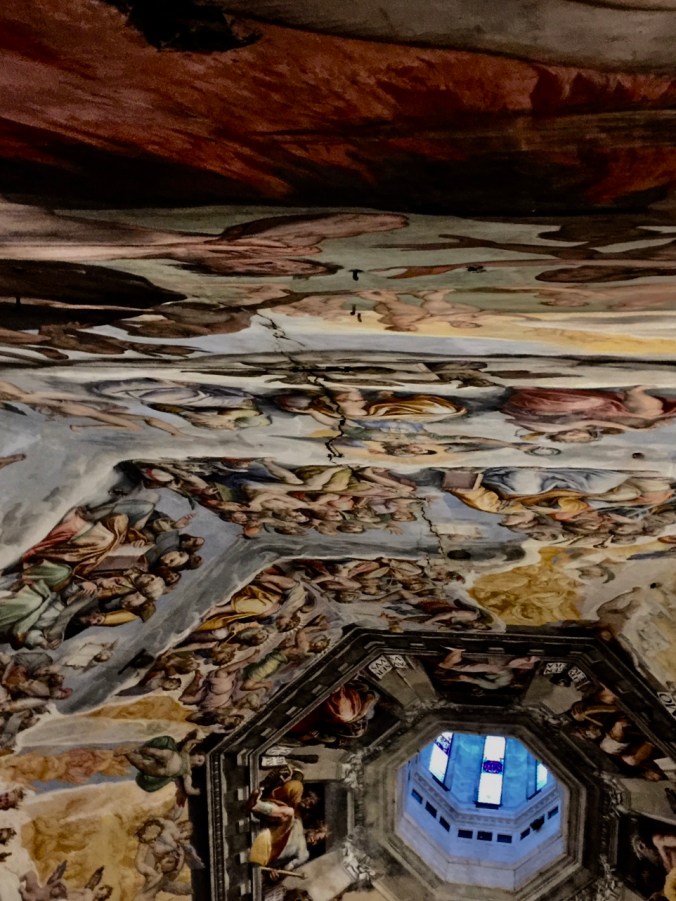
One of the many treats of that worthwhile climb is the opportunity to see the Vasari frescoes of the Last Judgement, that adorns the interior of Brunelleschi’s magnificently engineered dome. This post is dedicated to the Vasari paintings.







Il Duomo, Firenze: urban climbs
My birthday was last month and I marked it in a big way this year. A fellow-January birthday girl and I got tickets to climb to the top of the Florence cathedral dome. It is a bit of a hike. You climb up more than 1200 steps, many very steep, and, even in January, the stairways are crowded. It was worth every step!
You must be very careful on these stairways, some narrow, some steep, some filled with people going down while you are going up. I was very, very careful, bc who wants to fall on a stairway from the roof of the duomo?
This post covers the exterior, a separate post is coming soon on the interior of the dome.
So, the first stopping place is the terrace level below the dome, as seen here:


The views, even from this lesser level, are outstanding! There’s the dome of San Lorenzo:


Beguiling views of the baptistry:


So, as I said, I was extremely careful as I climbed up the duomo stairways. And then, 2 days later, I missed a step on a small stairway in my apartment building, lost my balance and twisted my ankle. And I’ve been laid up ever since! I finally got an X-ray and nothing was broken, thank goodness, but the ligaments were torn, so we think.
Anyway, feeling sorry for myself with my foot elevated for several weeks, I haven’t felt like talking about the dome climb. I am almost back to walking well by now, and this is my post to celebrate that fact!

Above and below, shots of the January skies over Florence:

Ahoy down there!


Looking to San Lorenzo: when I’m high up above Florence I realize again how small this city really is!

Looking toward Fiesole:

Looking up and thinking: “can I climb that many more steps to get up there?” Not completely convinced.


The quality of the sculptural details at this height was amazing to me. The architects and sculptors could have been excused for skimping on details: I mean, how many people will ever see the work from close-up?

But they skimped on nothing:


So, okay, chicken, let’s keep climbing. You made it this far. So, up we go, and the climb got more severe:


This sweet woman encouraged me every step of the way, which was a lot of steps!

Above: Looking south, way across Florence, we see Forte Belvedere with its tower:


Below: looking across Florence to San Minato al Monte:

Looking over to the synagogue with the green dome:

Looking towards Santa Croce:
O

In the middle ground, the Bargello and Badia:
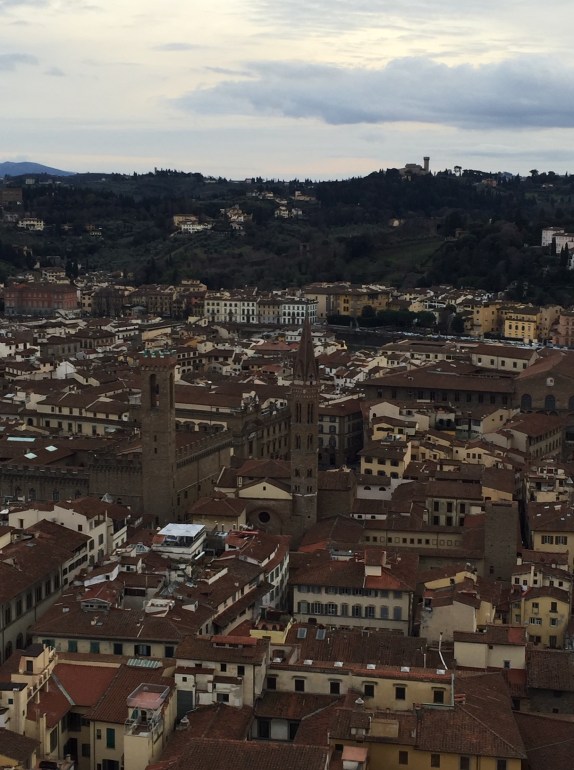


Looking toward the Mercato Centrale, with the green roof:

San Lorenzo with train station in background:


Looking way across town to the church of Santa Maria Novella:


Another shot of San Lorenzo with its entire complex shown:


Orsan Michele in foreground, Palazzo Pitti in front of forest (Boboli Gardens).


Below: looking to Piazza della Repubblica:


Below: details inside the Giardino Boboli:


Versailles in 3 minutes
Few tourists making their first trip to France go home without having seen Versailles. But why do so many want to see Versailles in the first place? Yes, its history goes all the way back to the 1620s, with its comparatively modest beginnings as a hunting lodge built for King Louis XIII, but much in Europe goes back quite a bit further. It did house the French royal family for generations, but absolute monarchy hasn’t been a favored institution in France for quite some time. Only the most jaded visitors could come away unimpressed by the palace’s sheer grandness, but those in need of a hit of ostentation can always get it on certain shopping streets in Paris. The appeal of Versailles, and of Versailles alone, must have more do with the way it physically embodies centuries of French history.
You can watch that history unfold through the construction of Versailles, both exterior and interior, in these two videos from the official Versailles Youtube channel. The first begins with Louis XIII’s hunting lodge, which, when the “Sun King” Louis XIV inherited its site, had been replaced by a small stone-and-brick chateau. There Louis XIV launched an ambitious building campaign, and the half-century-long project ultimately produced the largest chateau in all Europe.
A new way to see Ancient Rome
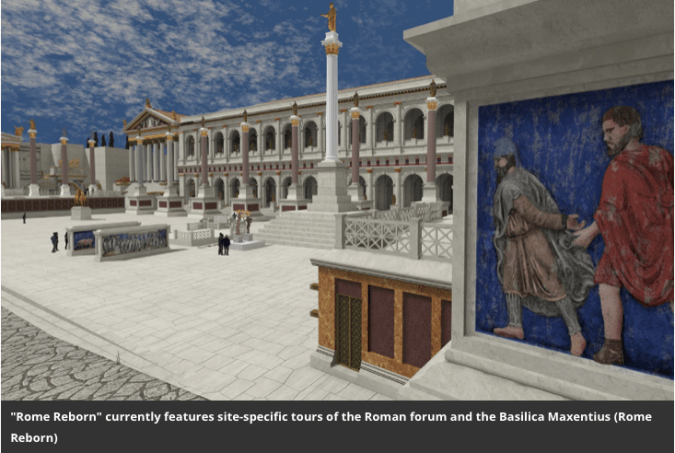
Ambitious VR Experience Restores 7,000 Roman Buildings, Monuments to Their Former Glory
You can take an aerial tour of the city circa 320 A.D. or stop by specific sites for in-depth exploration
Read more:
Le Marais, Paris, partie un (1): Place des Vosges
Behold Le Marias!

This famous district began its life in the history of Paris as the home of the king and the capitol city’s many aristocrats. Le Marais spreads across parts of the 3rd and 4th arrondissements in Paris, on the Rive Droite.
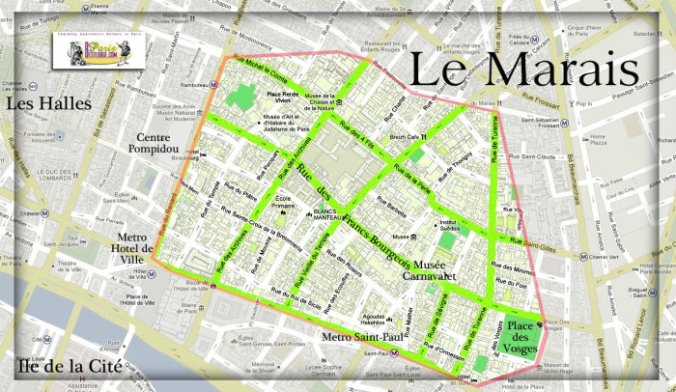
Today Le Marais is enjoying the latest of its many incarnations as the trendiest shopping district in Paris with the top stores in Rue des Francs-Bourgeois and Rue des Rosiers. The most famous stores are BHV Marais, Merci, and Uniqlo Le Marais.
From the 13th century forward, Le Marais was developed as the French nobility’s favorite place of residence. Things reached a crescendo in 1605 when King Henri IV of France built Place Royale (today called the Place des Vosges), and subsequently French nobles built their urban mansions, or hôtels particuliers, such as the Hôtel de Sens, the Hôtel de Sully, and the Hôtel de Beauvais, throughout the district, so they could be near the seat of power.

The Royal Square is also notable because it was the oldest planned square in Paris. Comprised as a true square (140 m × 140 m), the Place embodied the first European program of royal city planning.

One of the many new aspects about the Place Royale in 1612 was that the house fronts were all built to the same design, probably by Jean Baptiste Androuet du Cerceau.
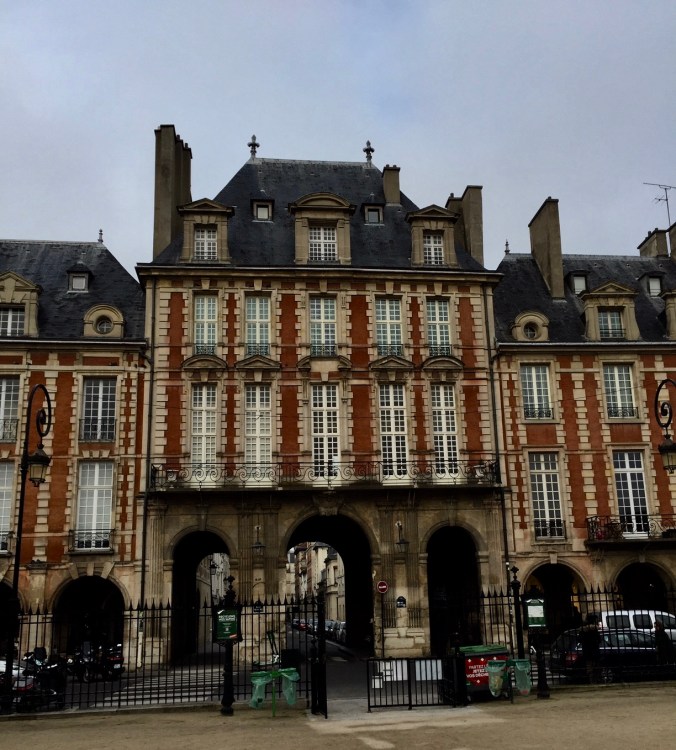
The facades are all composed of red brick with strips of stone quoins over vaulted arcades that stand on square pillars. The steeply-pitched blue slate roofs are pierced with discreet small-paned dormers above the pedimented dormers that stand upon the cornices.
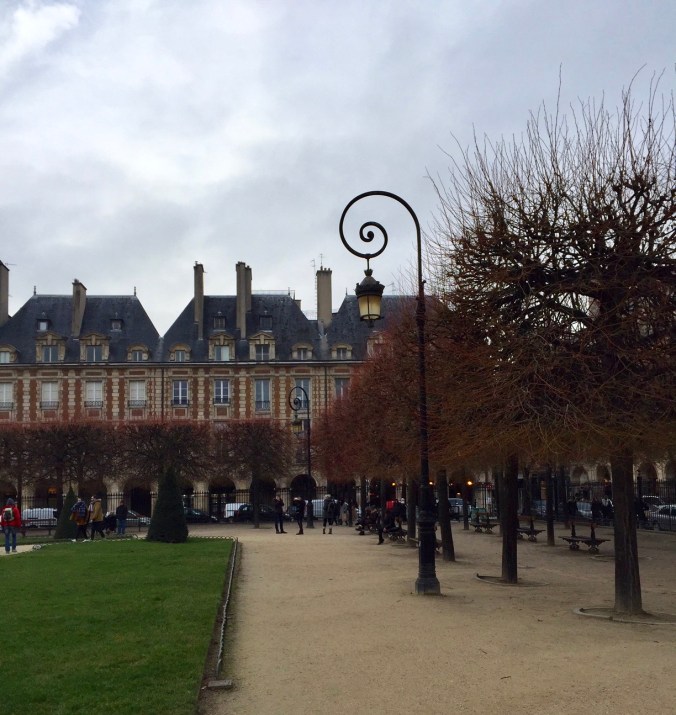
One section of the square’s 4 long vaulted arcades:
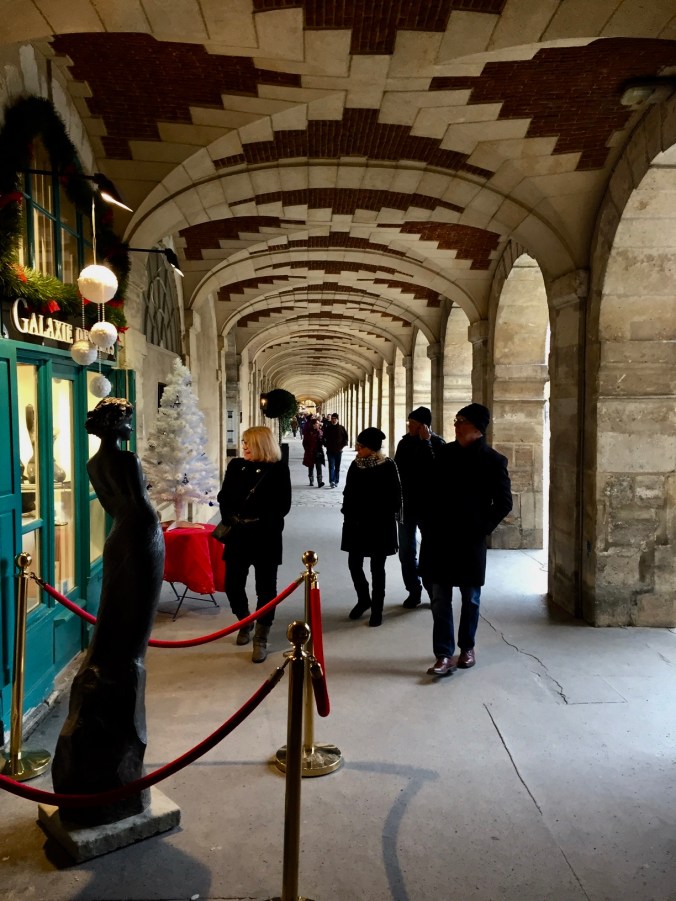
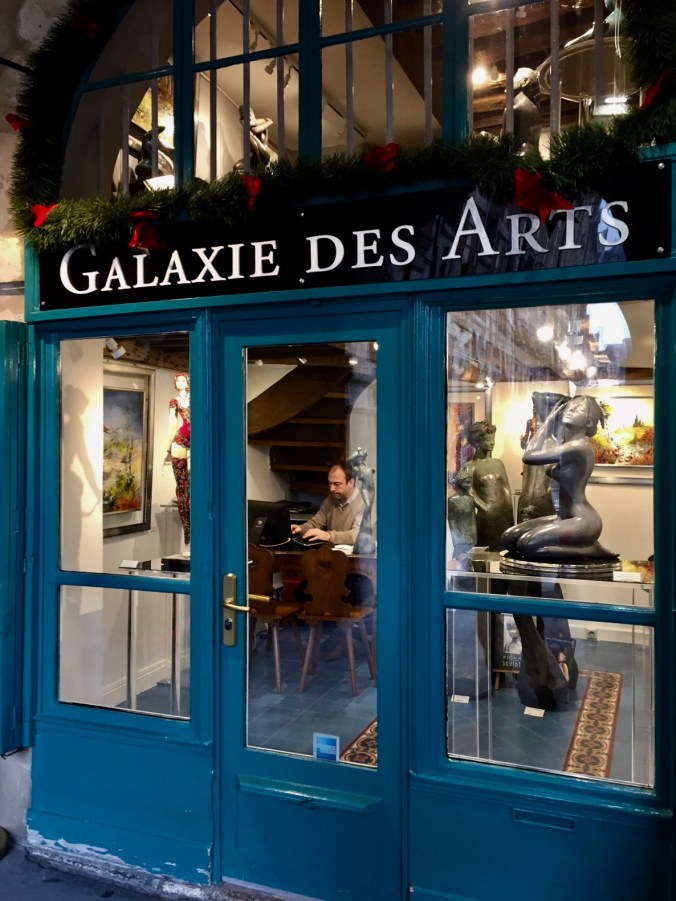
This section of the arcade is the home to this small but fine art gallery:
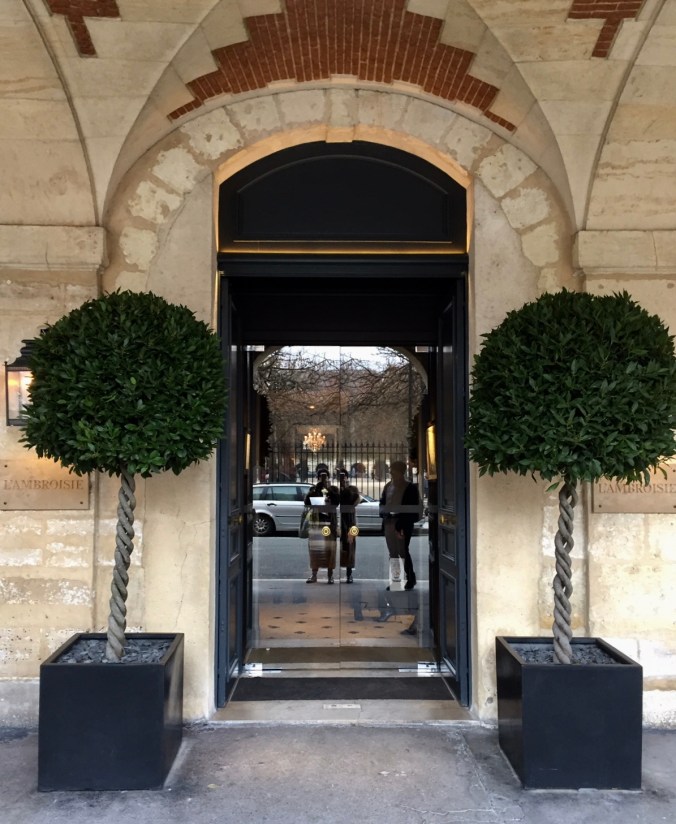
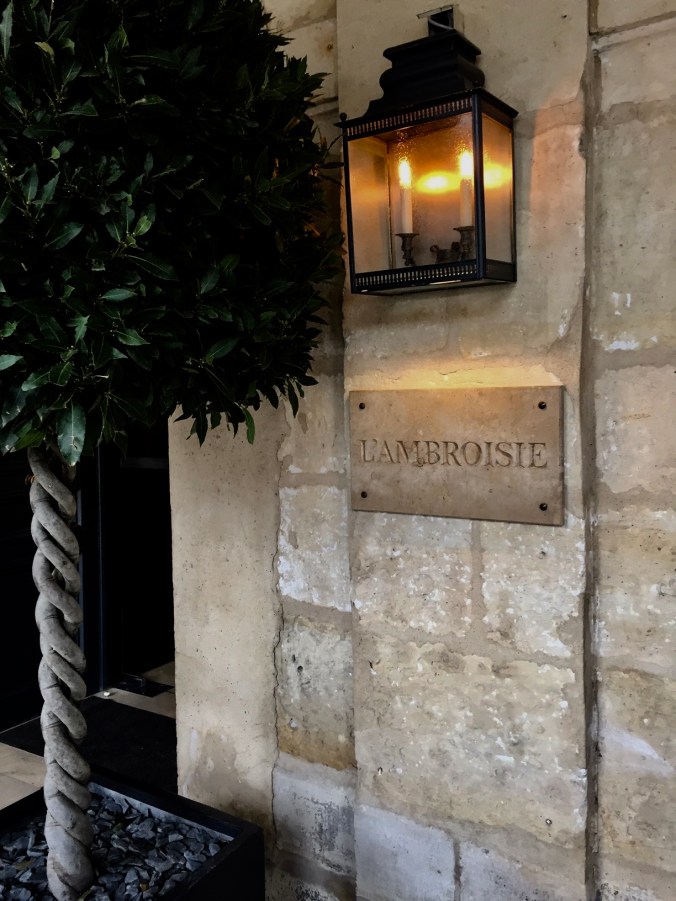
This section of the arcade is also home to one of the city’s most exclusive restaurants. Our guide told us that Michelle and Barack Obama were taken here during their state visit. He promised us that they won’t let Trump come there…just checking to see that you are still reading my text!
Le Marais is the closest you will get to the feel of medieval Paris and has more pre-revolutionary buildings and streets left intact than any other area in Paris. A glance at some of the beautiful buildings and houses indicates the wealthy status of the former residents. After the French Revolution, much of the area was abandoned by the rich, and poor bohemian types moved in. You should keep in mind that before Napoleon showed up the Marais is what most of Paris looked like— a labyrinth of cobblestone alleys.
The rest of Paris was razed by Napoleon and Haussman who wanted to build huge avenues and gigantic squares such as the Place Concorde. These are now the glory of Paris, but they were originally conceived so that armies and artillery could be moved around the city to keep the poor in check and defeat invaders.
On a more metaphysical level, the purpose of such broad space is to make the citizen feel small and powerless when faced with the giant civic machine of government, or an obedient army. In the Marais we are privy to the small and approachable Paris of the past, the place to wander in maddening circles and never find your way, the place to hole up and read Sartre or Camus in a café window or watch the Parisian life go by.
The Marais is also the most famous Jewish quarter in Paris and in much of Europe, still maintaining strong traditions.
The area was considered so squalid at this point it was nearly destroyed by city officials who wanted to modernize Paris. (A huge avenue cutting through the center of the Marais was only avoided by the start of WWI.) Fortunately, Le Marais was one of the first areas in Paris to establish very strict preservation laws. Beginning in the 1960’s, efforts have been made to restore and preserve the façades of historically important (in the case of The Hotel Albert for instance) and typically Parisian (in the case of charming early 20th-century boulangeries for instance). That’s why in this neighborhood, you’ll see bars with Boulangerie signs and a Nike store that looks like a bookstore from the outside.
.
 get back, lauretta!
You must be logged in to post a comment.